Kangerlussuaq
Kangerlussuaq, Greenland
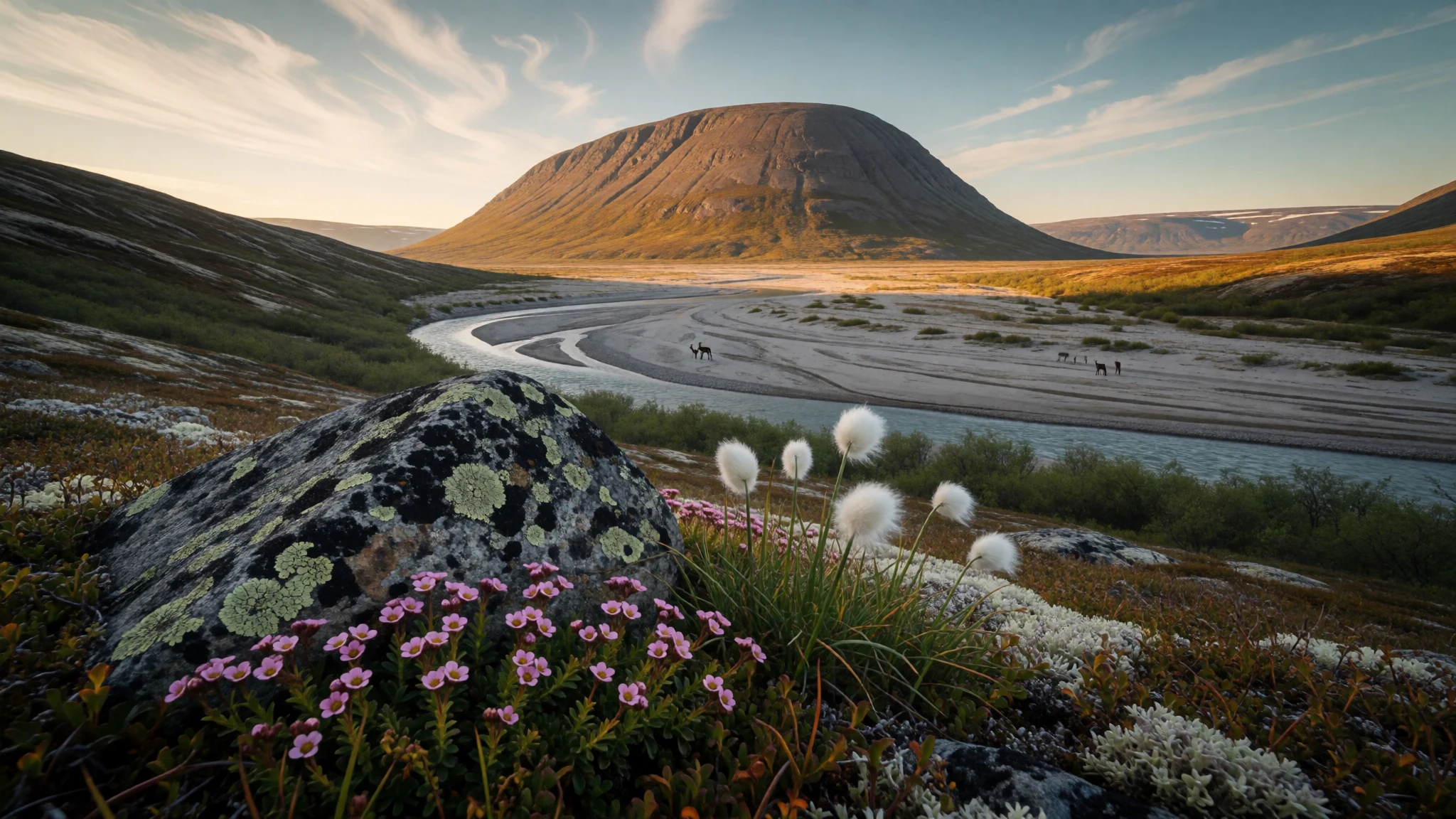
Kangerlussuaq is a former US air base turned Arctic gateway, where tundra wildlife, an ice-sheet road and winter aurora sit within easy reach.
The place
Kangerlussuaq sits in western Greenland, in Qeqqata municipality, on flat river-built ground at the inner end of a very long fjord of the same name. The Greenlandic name means 'big fjord', and Danish maps call it Søndre Strømfjord. With a population of 508, it is a small settlement, and almost all of its work comes from the airport and from visitors passing through. Unusually for Greenland, it does not face the open ocean but lies far up an inlet, so the sea feels distant and the landscape reads as dry tundra, with low rounded hills closing in on both sides. Rain is scarce. The climate is subarctic, edging towards tundra, and skies are often wide and clear. Two glacial rivers meet east of the settlement, and their valley holds broad plains of quicksand that are best admired from a distance. Both rivers begin at the Russell Glacier, whose edge can be reached from town, and beyond it lies the ice sheet itself. The surrounding land supports a good variety of animals, including muskoxen, caribou and gyrfalcons. The built town is functional rather than pretty: a straight main street with a church and congress centre, airport buildings left from the air-base years, a supermarket and a few small eateries. Summers are the warmest part of the year by Greenlandic standards, while winters are cold, dark and the real test of the weather.
Its story
Kangerlussuaq's story starts in 1941. Denmark had been occupied by Germany, so the United States took over Greenland's defence and began carving out airfields along the coast. The one at the head of this fjord was laid out under Colonel Bernt Balchen of the US Army Air Forces and went by a military codename rather than a place name. Danish control returned briefly after the war, but as Cold War fears grew the Americans came back and renamed the field Sondrestrom Air Base. It became a supply and control hub for the DYE stations, including outposts on the ice sheet, which extended a chain of early-warning radar across the Arctic. Civil aviation soon found the long runway useful. Airliners on polar routes between Copenhagen and the American west coast stopped here to refuel, and Scandinavian Airlines built a hotel and support buildings on the north side, some of which are still in use. As aircraft gained range, those refuelling stops faded away. The military eventually left, and the base became a civilian Greenlandic settlement before the century ended. For many years the airport was the country's main international gateway, a role that passed to Nuuk once its enlarged airport opened. The land has its own history of surprises too: in one warm summer, glacier meltwater surged down the Watson River and swept away the bridge beside the town.
What to see
- Greenland Ice Sheet — End of the gravel road east of the runway
A gravel road leaves town near the east end of the runway and climbs the valley to the edge of the ice sheet. The ground changes from tundra to bare rock and meltwater streams, then a white wall of ice. Go with a guide or a tour if unsure of the road conditions.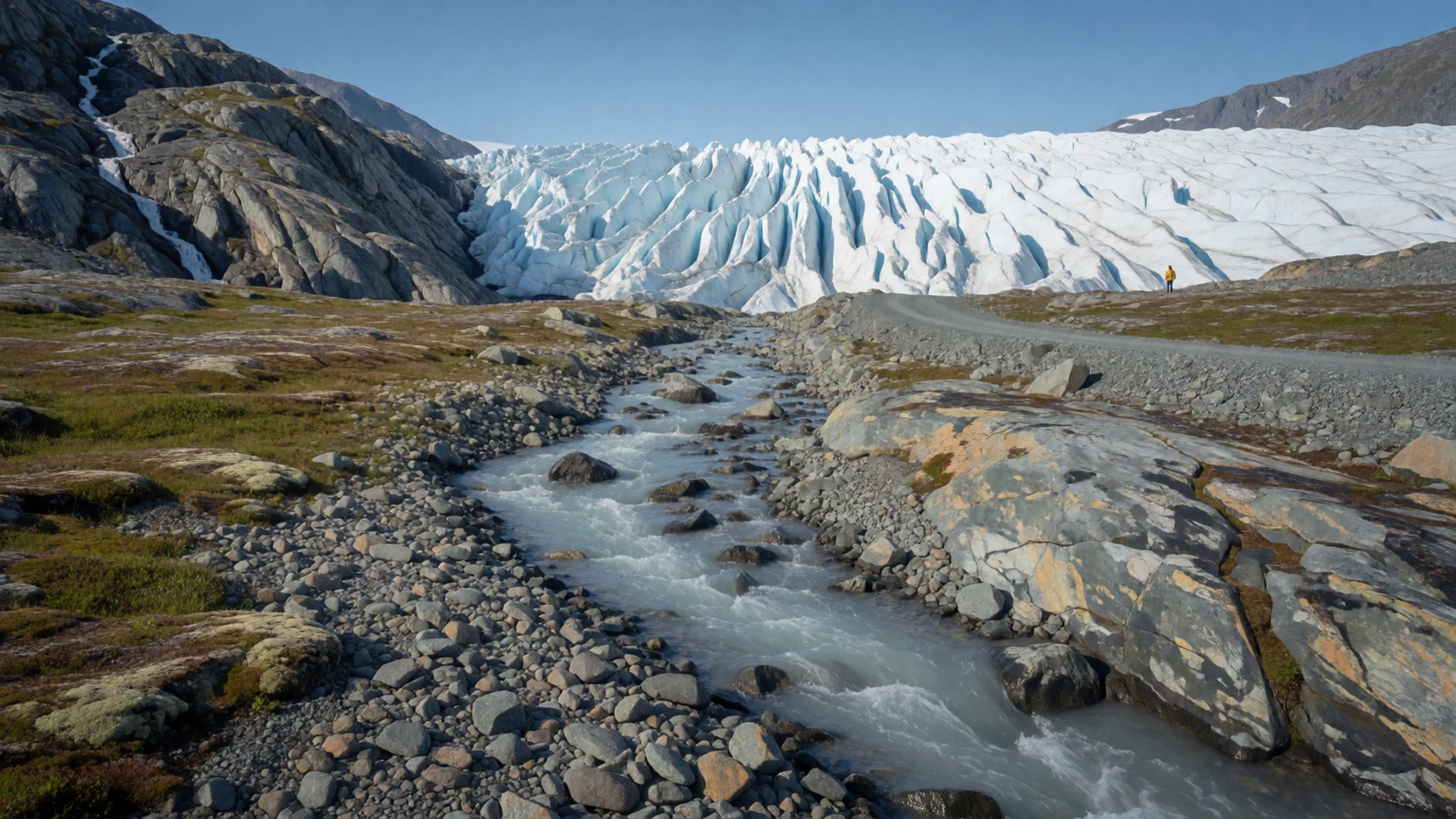
- Russell Glacier — Valley east of town
The Russell Glacier is the source of the two rivers that feed the plain at Kangerlussuaq, and its edge is reachable from town. Meltwater runs grey with rock flour, and ice sometimes breaks away from the front. Keep a safe distance from the face, as chunks can fall without warning.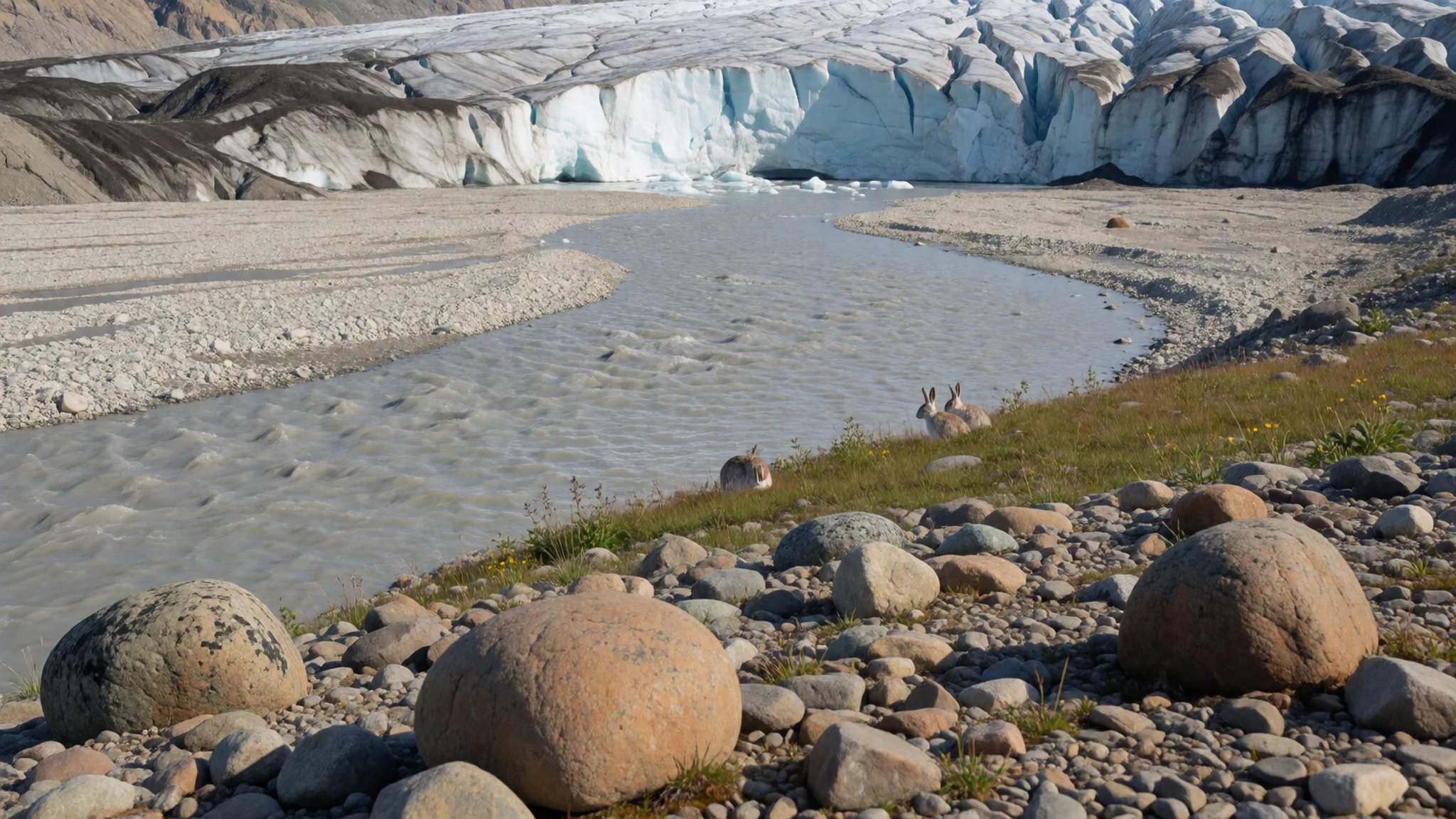
- Sugar Loaf (Sukkertoppen) — East of town, along the valley
Sugar Loaf is a rounded, steep-sided hill that rises from the valley floor east of the settlement. Photographs of it under the midnight sun show low gold light on the tundra. It makes a good short outing for hikers wanting a landmark to aim for.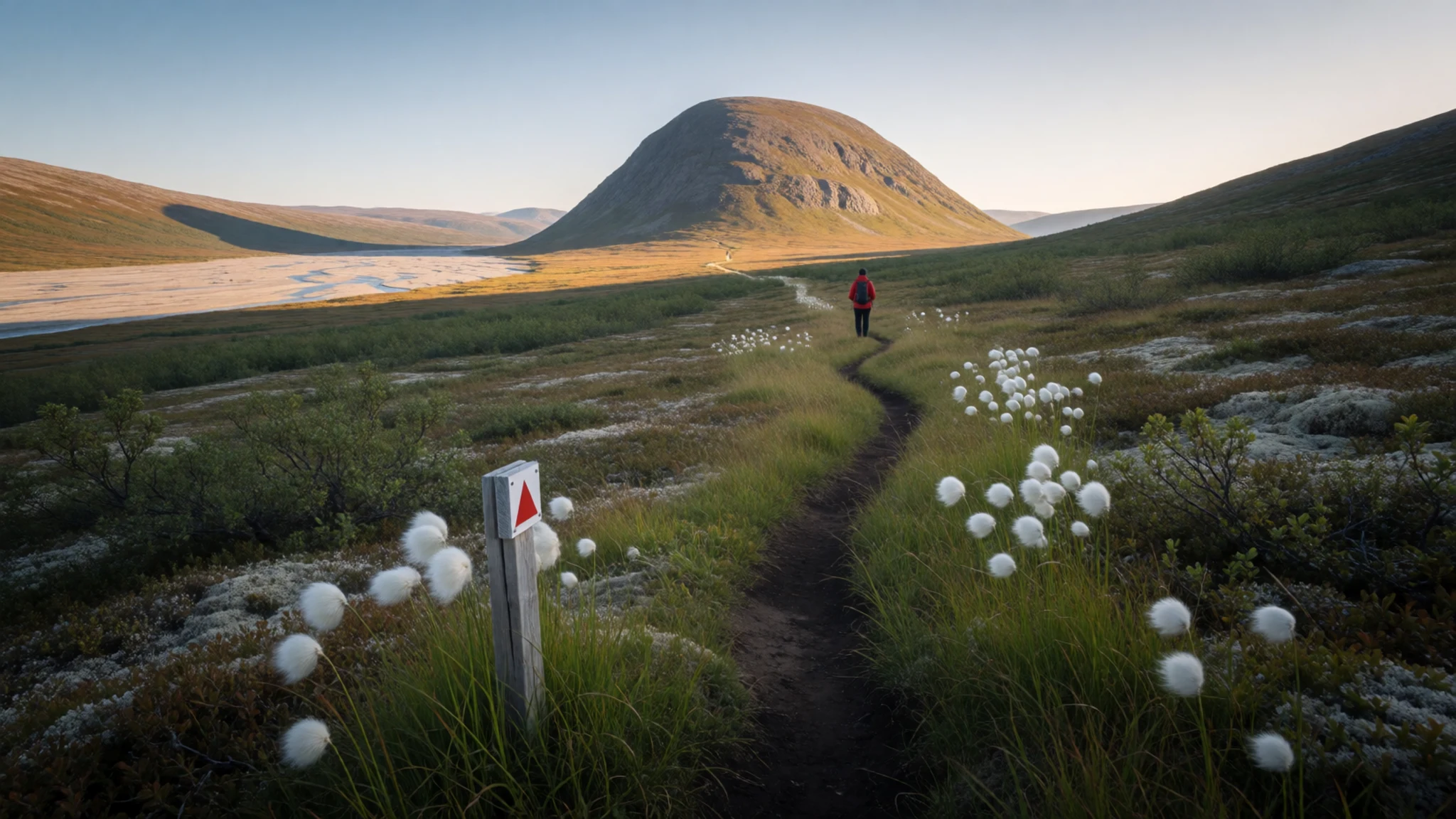
- Tundra walks and wildlife — Hills and flats around the settlement
Paths and tracks lead out across the tundra around town, where caribou, muskoxen and arctic hares can be seen with patience. Binoculars help more than a long lens. The area is also the usual starting point for the long trek to Sisimiut, which needs real hiking experience.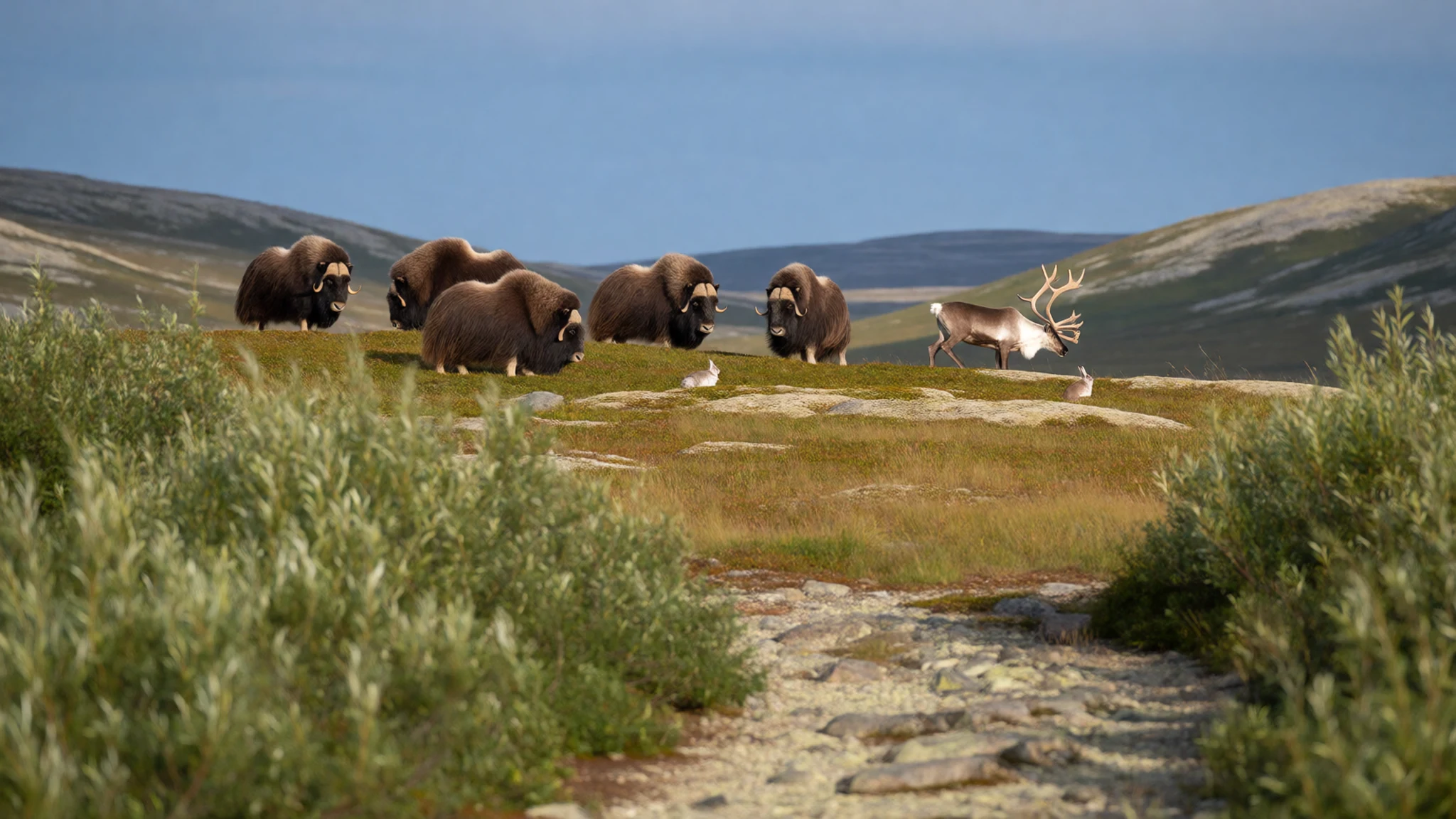
- Northern lights — Open ground away from the town lights
Kangerlussuaq lies under a stretch of sky with strong auroral activity, so winter nights can bring green curtains of light. Clear weather matters more than anything else. Many visitors arrange a short evening outing while waiting between flights, and winter also allows dog sledding.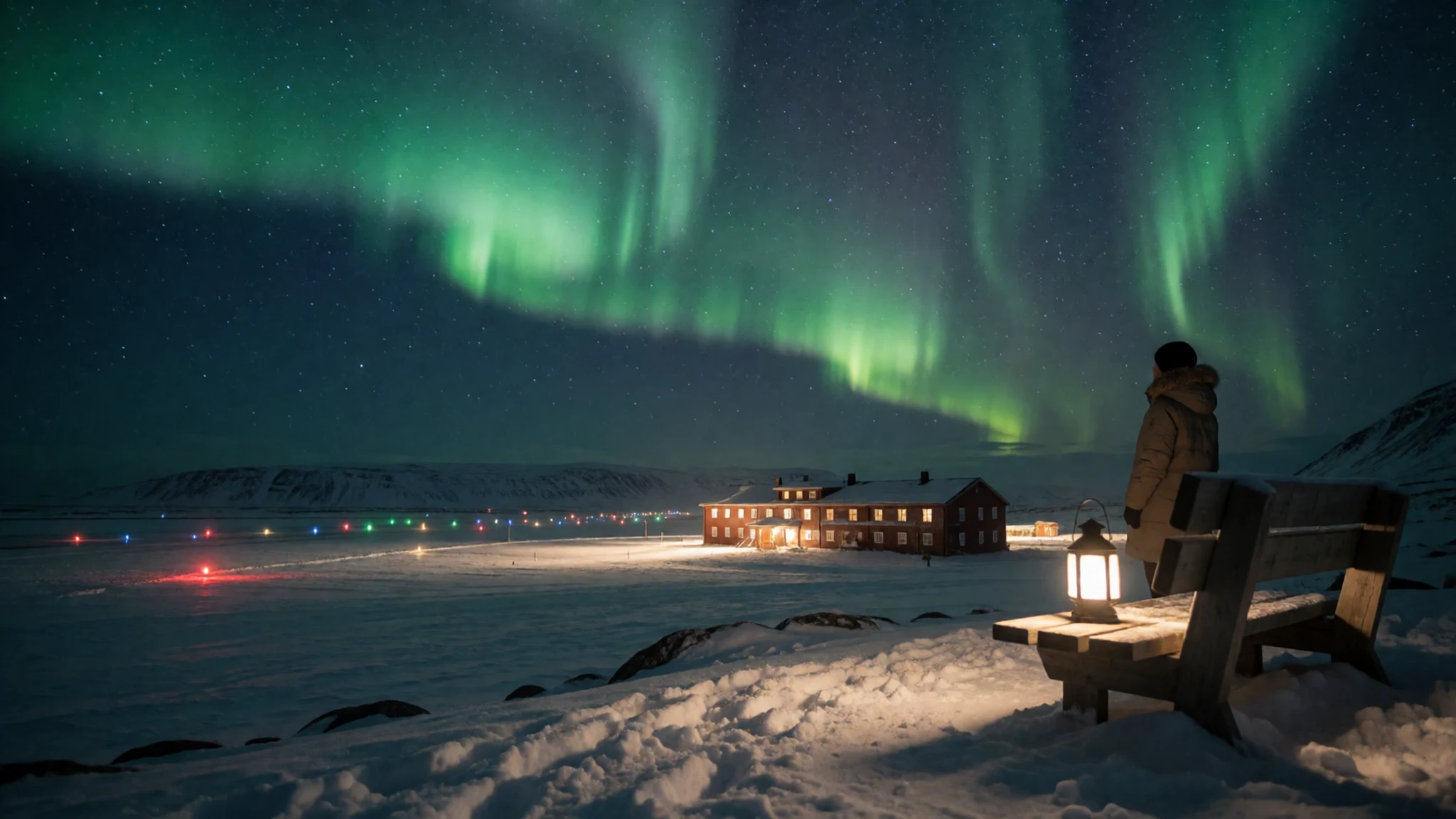
- Kangerlussuaq Museum — Near the centre of the settlement
This small local history museum is run by the museum in Sisimiut. It is a quick stop, but a useful one for understanding how a wartime airfield became a civilian settlement. Opening times can change, so check locally before planning a visit around it.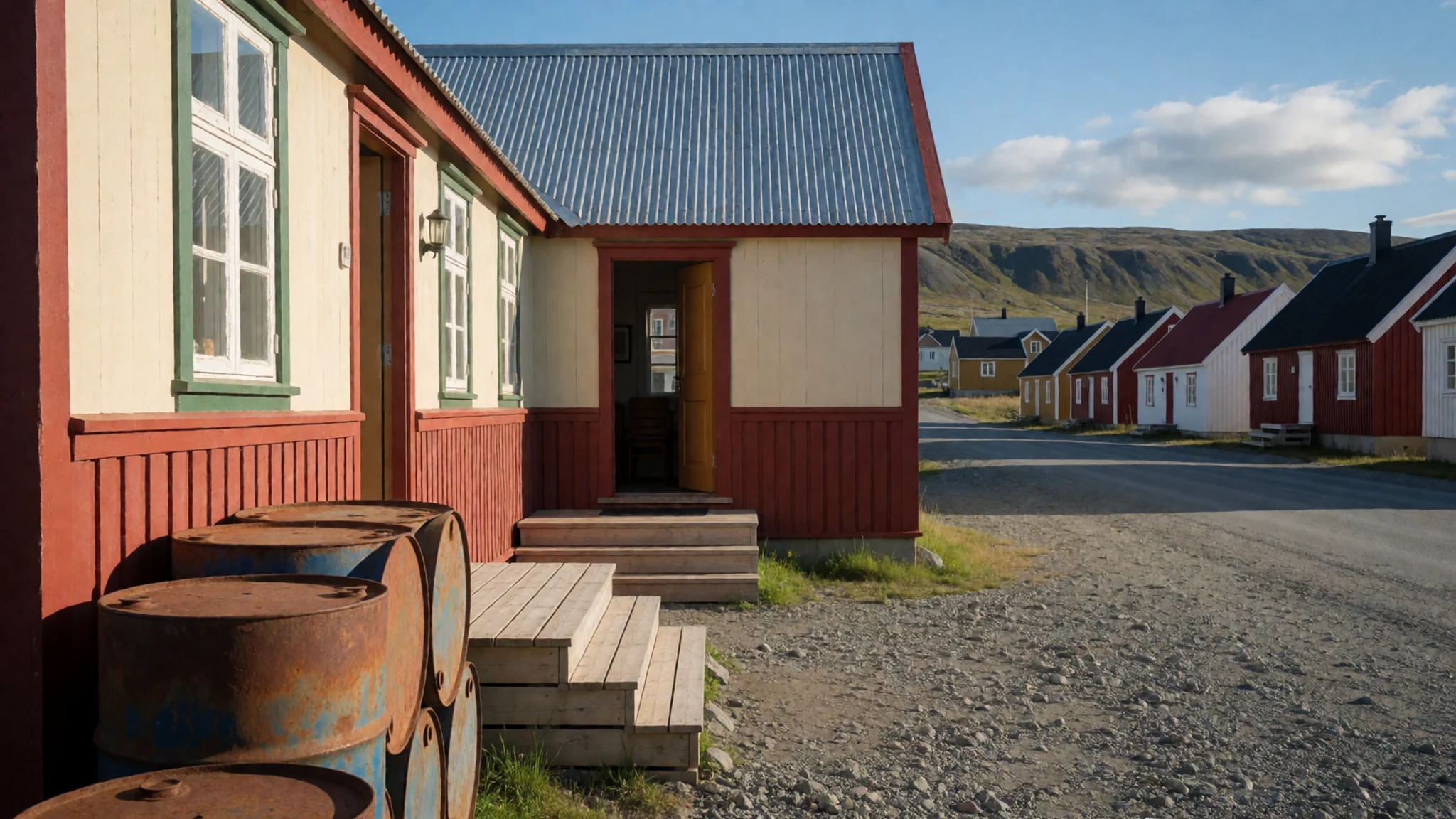
Culture
Kangerlussuaq is unusual among Greenlandic places because its roots are military and aviation rather than a long-standing hunting community. Most of its residents work in airport services, tourism or the supermarket and school, and many have family links to other parts of the country. Greenlandic (Kalaallisut) is the main language of the Inuit population, and Danish and English are widely used in the airport and tourism trade. Hunting and fishing remain part of Greenlandic life well beyond the settlement, and muskox and caribou meat appear on local tables. The sea, sled dogs and open land shape how people talk about the seasons. The town is quiet, with little nightlife and a small-community habit of greeting people you recognise, so visitors tend to notice the pace more than any show of heritage. The legacy of the air base still shows in the street layout and old buildings, and the hotel from the Scandinavian Airlines years is a reminder of the era when travellers crossed the pole here. Nearby settlements such as Sisimiut have a longer-established cultural life, and the Arctic Circle Trail links the two for those walking between them. Ask before photographing residents, and stay well clear of hunters and their quarry on the tundra during the hunting season.
What to wear
Kangerlussuaq follows Greenlandic dress traditions, though everyday clothing here is mostly practical. The national costume, kalaallisuut, is made from sealskin and other skins, with kamik boots, and is topped by a wide collar of glass beads in bold colour patterns. It is worn for confirmations, weddings and national day, and the women's version is the more elaborate, with its beadwork often made or passed down within families. Day to day, people wear what the weather demands: insulated jackets, fleece, wool hats, windproof trousers and sturdy boots, with a lot of work wear around the airport. Brighter colours stand out against the pale landscape and are common. A visitor needs layers above all. Summer can be mild by Arctic standards, but wind off the ice sheet is cold, so bring a windproof shell, a warm mid-layer and a hat. Sturdy waterproof walking boots suit the gravel, rock and boggy tundra. In summer, mosquitoes can be a nuisance on still days, so a head net and repellent are worth packing. In winter, an insulated parka, thermal base layers, lined boots and good gloves are essential. Dress is relaxed and there are no modesty rules for the town, though a church service calls for tidy, covered clothing.
What to eat
- Muskox — Seasonal menus at local restaurants such as Roklubben
Muskox is a local red meat with a rich, slightly gamey flavour, often served roasted or in a stew. Ask restaurants what is on the current menu, as dishes change with the season and with what has been hunted nearby.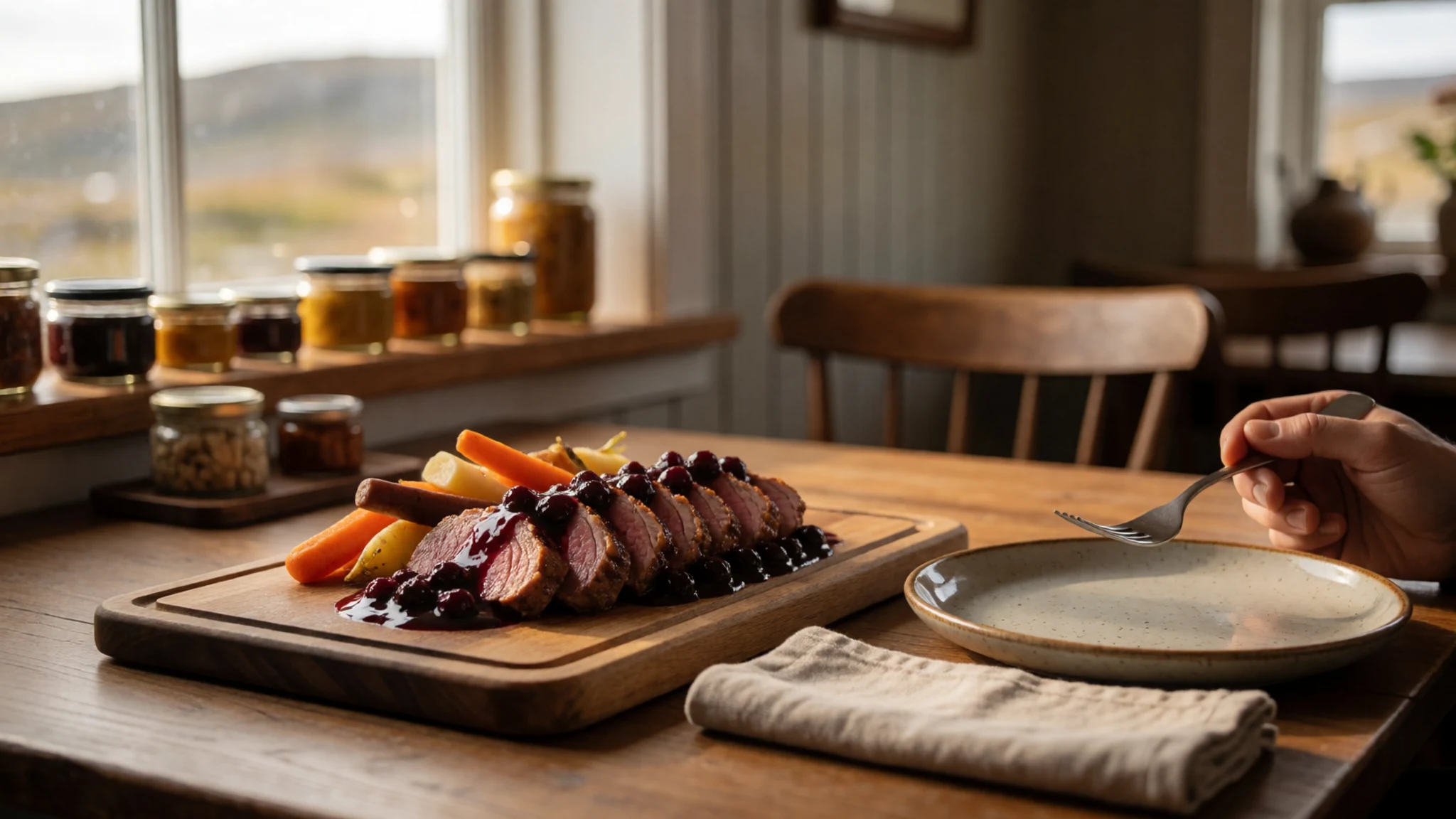
- Caribou — Seasonal menus at restaurants in and around the settlement
Caribou is lean and tender when cooked gently, and it shows up on menus in the hunting season. It is often paired with root vegetables or berry sauces. Availability is limited, so treat it as a seasonal treat rather than a certainty.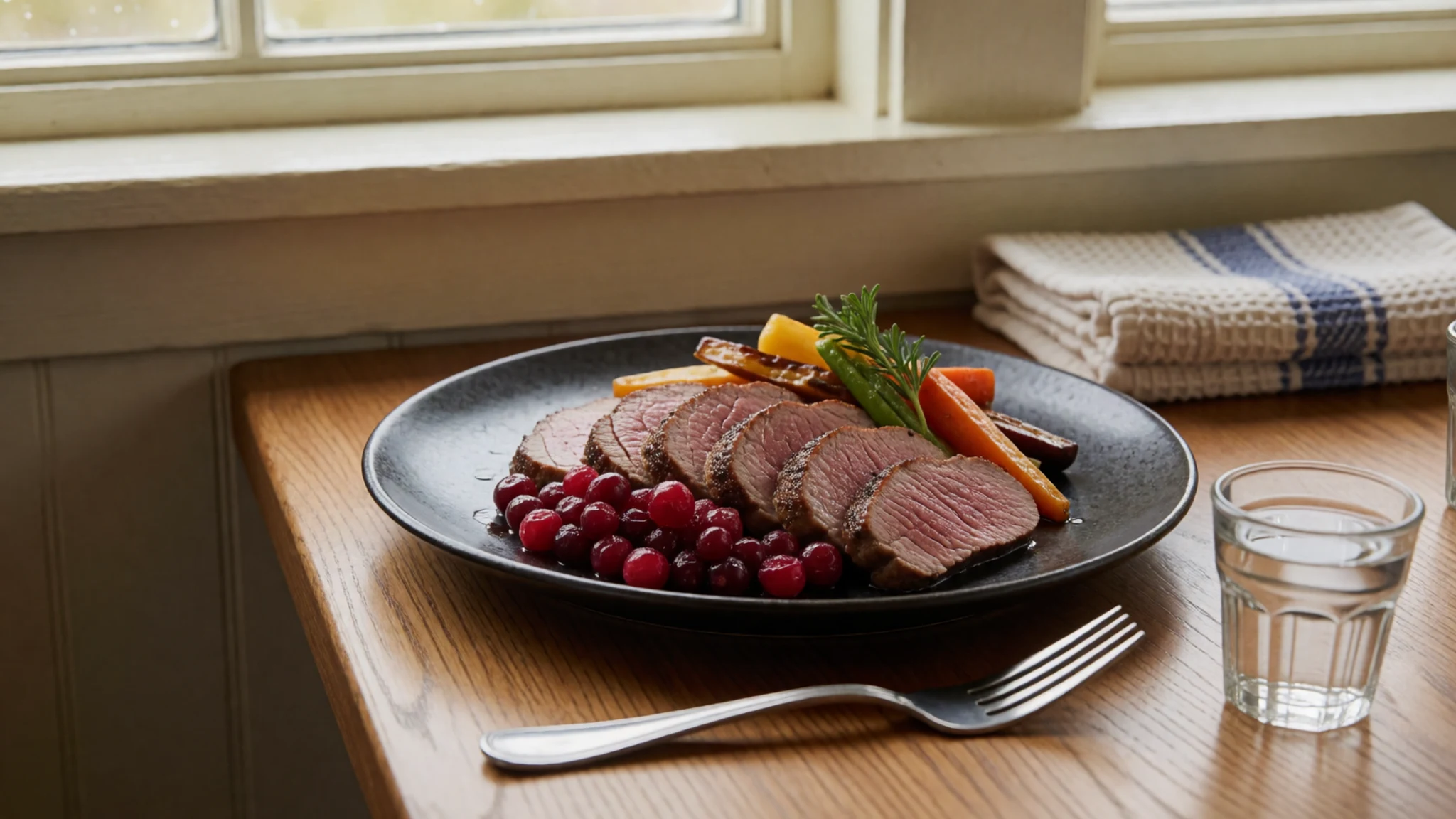
- Suaasat — Cafes and restaurants offering Greenlandic dishes
Suaasat is a traditional Greenlandic soup, usually made with meat or seafood and thickened with rice or oats, often with onion and simple seasoning. It is warming after a cold day on the ice and is worth asking about wherever local food is served. - Cafeteria curry — The cafeteria at Kangerlussuaq Airport
The airport cafeteria is one of the few places to eat in town and serves sandwiches, burgers, curries and European dishes. Quality and variety are good, and prices are fair when you remember that nearly everything here arrives by air. - Hot dogs and burgers — The small convenience store south of the runway
A small shop on the far side of the runway sells fast food such as hot dogs and burgers, a quick and cheap fix for hikers and travellers between flights. Services here have moved before, so confirm what is open on arrival. - Reheated hot meals — The Pilersuisoq supermarket
The local supermarket keeps a small range of hot dishes that are warmed up at the counter, useful when other places are shut. It is also the place to stock up on trail snacks, bread and basics for a walk.
Plan it
Best time. July–September for the mildest weather, tundra walking and wildlife; February–March for aurora and dog sledding in cold, dry, clear conditions. Rainfall is low all year, and winter weather is the main hazard.
How long. 2–3
Getting there. Fly into Kangerlussuaq Airport itself, which Air Greenland serves from other Greenlandic towns; check the official airline and airport sites for current routes. The town is small, and the last leg to the ice sheet is a gravel road from near the east end of the runway, usually done on a tour or with a guide.
Budget. high
Tips
- Book ice-sheet tours, dog sledding and aurora trips ahead, especially if you have only a short layover between flights
- Bring a head net and repellent in summer, as mosquitoes can be bad on still days
- Carry food and water from the supermarket, as eateries are few and prices are high because everything is flown in
- Check weather and daylight before winter outings, and allow slack in your schedule in case of delays
- Do not attempt the long hike to Sisimiut without experience, as trails fade and traffic is sparse
Etiquette
- Ask before photographing local people
- Keep to tracks and do not disturb animals on the tundra
- Take care in hunting season and stay visible in bright clothing
Nearby
Sources
- Wikidata Q1007098 (CC0)
- Wikipedia: Kangerlussuaq (rev 1382869965) (CC BY-SA 4.0)
- Wikivoyage: Kangerlussuaq (rev 5406246) (CC BY-SA 4.0)
- Photo: Myers Avenue in Kangerlussuaq (Vincent van Zeijst) (CC BY 3.0)
- Photo: Kangerlussuaq, Greenland (Quintin Soloviev) (CC BY 4.0)
- Photo: Sugar Loaf, Kangerlussuaq (Algkalv) (Public domain)
- Photo: Russells Gletscher (Algkalv) (Public domain)
- Photo: Sondrestrom Air Base, August 1974 (Miranda.Kopetzky) (CC BY-SA 4.0)
- Photo: Kangerlussuaq population dynamics (Algkalv) (Public domain)
- Photo: Air Greenland A330-800neo at Kangerlussuaq Airport (Quintin Soloviev) (CC0 1.0)
- Photo: Kangerlussuaq Port (Chmee2) (CC BY 3.0)


Wildlife
- Muskox (animal)
The muskox is a shaggy, hoofed Arctic animal, rather like a woolly cloak on four legs. Its Inuktitut name, umingmak, means the bearded one. Around Kangerlussuaq you may spot one by following the trails that wander over the open tundra beyond town, though nothing here names a season or hour, so ask locally. Watch with patience, keep a respectful distance, stay quiet and calm, and consider going with a guide. Never feed it; let it graze as it pleases.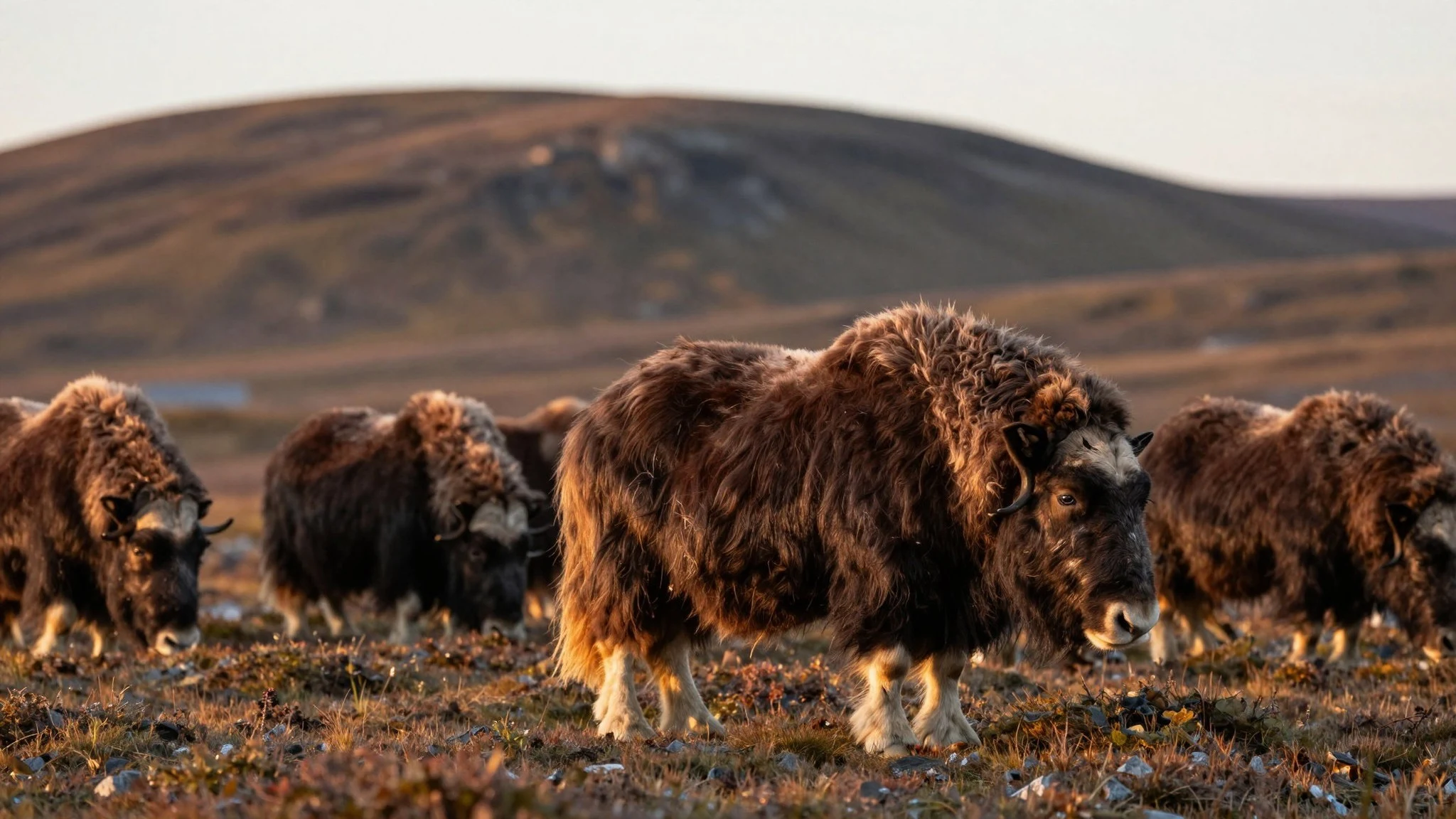
- Caribou (animal)
The caribou is a deer of the cold northern lands, and it is the very same species as the reindeer. Near Kangerlussuaq, walkers may meet one out on the tundra, along the trails leading away from town, if they are patient. Nothing here says which season or time of day is best, so ask a local guide. Keep well back, speak softly, move slowly, and never offer food, so the animals stay wild and undisturbed.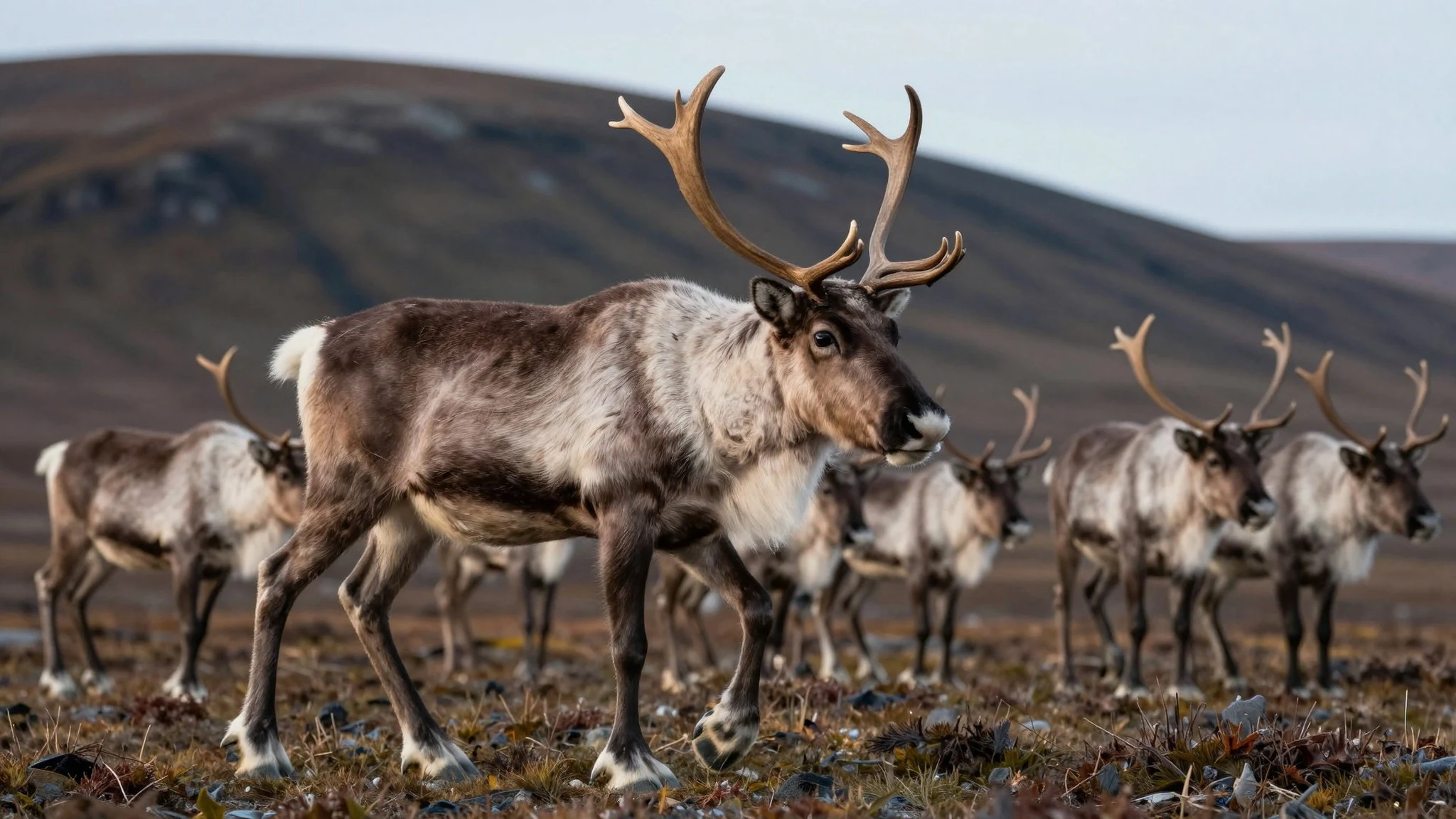
- Gyrfalcon (bird)
The gyrfalcon is the biggest falcon of all, a hunting bird that looks like a swift, fierce hawk in a feathered coat. Its colours range from pure white to dark greyish brown. Around Kangerlussuaq it shares the wild country with muskoxen and caribou, though nothing here says when or exactly where to look. Bring binoculars, stay far back, keep quiet, and join a guide if you can. Never feed it.