Ilulissat Icefjord
Ilulissat Icefjord, Greenland
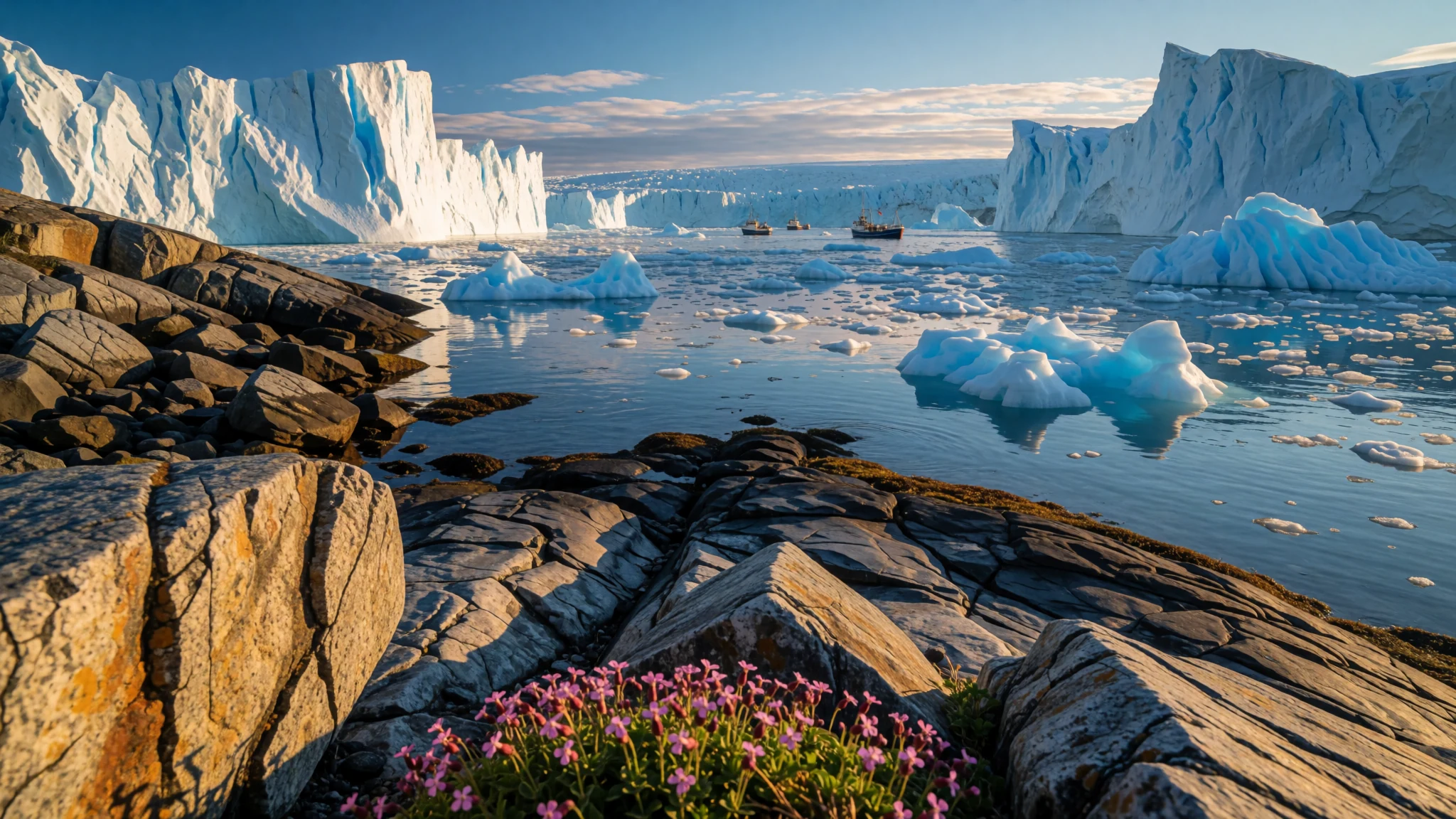
Witness towering glacial icebergs calve from the fastest glacier in the Northern Hemisphere into a stark Arctic fjord.
The place
Ilulissat Icefjord cuts a deep blue channel through the western coast of Greenland, carrying monumental blocks of ice from the immense inland ice sheet out towards Disko Bay. Situated well north of the Arctic Circle, the landscape is defined by the sheer scale of moving ice and the quiet presence of the adjacent town of Ilulissat. The waterway traces a path from the mouth of the Sermeq Kujalleq glacier, renowned for its extraordinary output of frozen mass. Enormous chunks of ancient ice calve continuously from the glacier face, filling the waters with crystalline monuments that range from sparkling white to deep sapphire. Because many of these calved masses are too immense to clear the shallower sills near the glacier mouth, they ground out on the bottom, remaining stationary for months or even years until subsequent pressure shatters them free. The resulting drift carries these bergs past the town and out into Baffin Bay, where they begin a long journey southwards on ocean currents. Visitors encounter an environment where stone, water, and ice exist in extreme balance. Walking the wooden boardwalks and granite paths along the shoreline reveals an endless procession of sculptural shapes shifting in the northern light. Whether under the endless brightness of the midnight sun or the low angled glare of shoulder seasons, the fjord presents a raw expanse of Arctic wilderness that feels entirely untouched by modern industry.
Its story
For centuries, the shores of this western channel have supported human communities adapted to the margins of the polar sheet, drawing sustenance from the rich marine life nurtured by the mixing of glacial melt and ocean currents. Long before modern research stations mapped the mechanics of polar retreat, indigenous hunters navigated the complex maze of shifting floes using traditional skin boats and dog sleds. The region gained intense scientific significance as glaciologists realised that the ice emerging from the fjord holds a frozen archive spanning hundreds of thousands of years. By examining trapped air bubbles and isotopic layers within the recovered cores and floating fragments, researchers unlocked vital data regarding historical shifts in global climatology. The area's extraordinary geological processes and its central role in documenting anthropogenic climate shifts led to its international recognition. Yet beyond its scientific value, the valley carries the quiet weight of ancient survival in a landscape dictated by frost. Sagas and oral histories echo across the wider coast, recalling early explorers and settlers who named the territory to entice migration from across the northern seas. Today, the fjord remains a living laboratory and a sanctuary of stillness, where the audible groans and sudden fractures of shifting bergs remind every observer of the immense, dynamic forces shaping our planet's frozen crown.
What to see
- Sermeq Kujalleq Glacier Viewpoint — Head of the icefjord
Overlook the mouth of the most productive glacier in the Northern Hemisphere, where massive walls of white ice fracture and tumble into the dark water with a thunderous roar. The vantage offers an unobstructed perspective on the sheer magnitude of the inland sheet feeding the channel.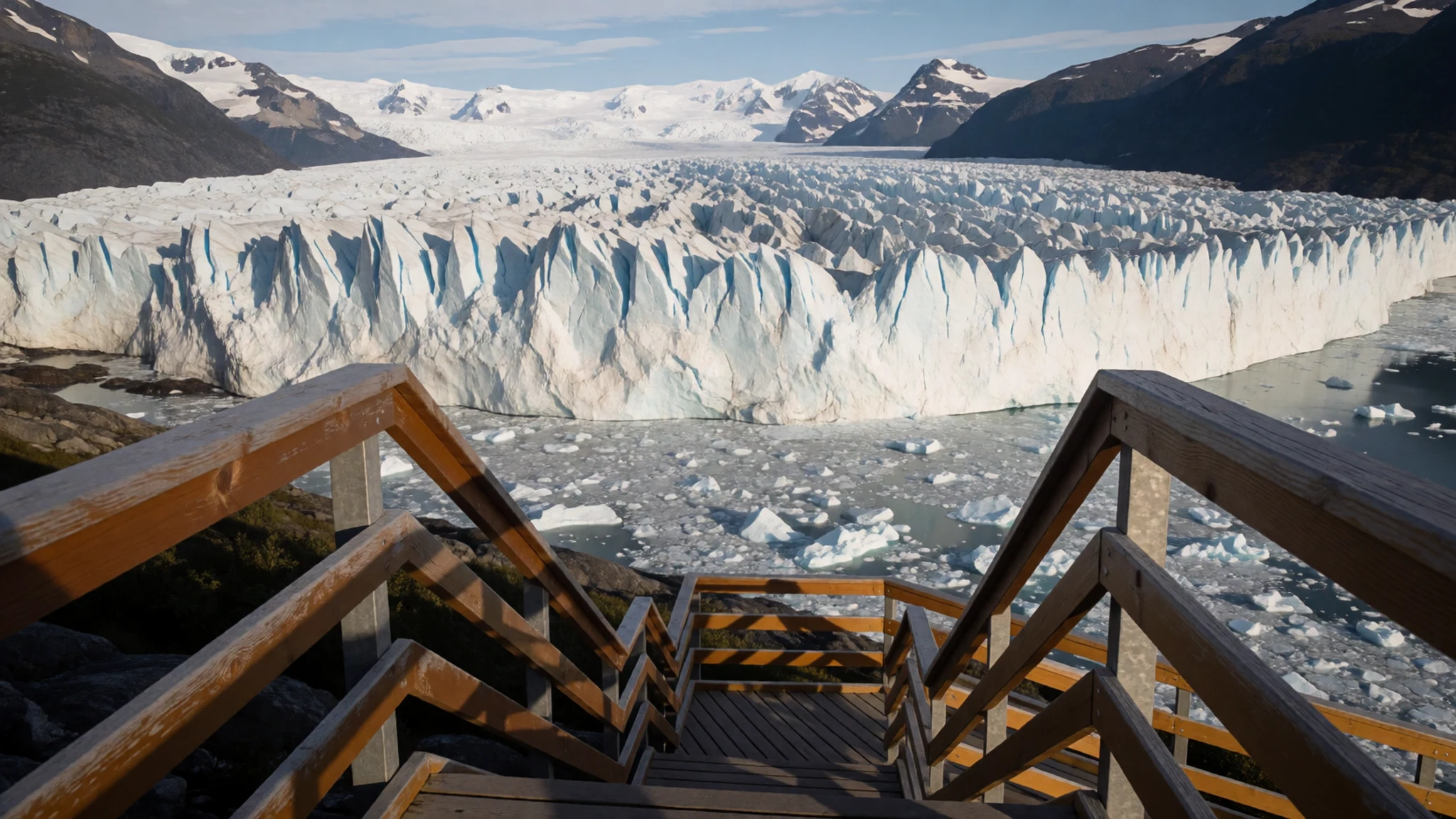
- Disko Bay Shoreline — Off the coast of Ilulissat town
Wander the rocky coastal paths where colossal icebergs drift past after escaping the shallow sills of the inner fjord. The shore provides incredible spots for watching how light plays across floating towers of crystal and deep blue meltwater pools.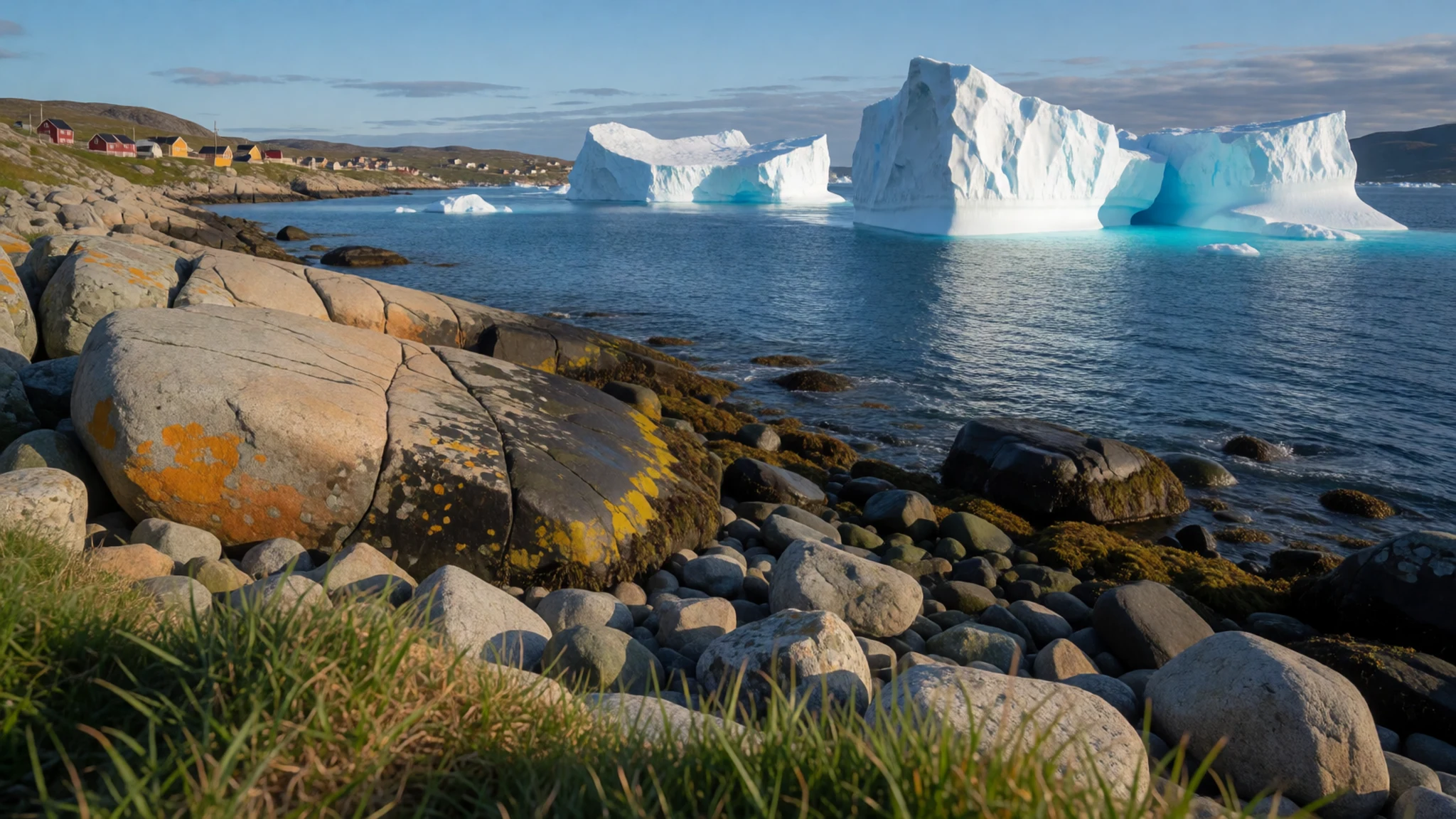
- Meltwater Lakes on Floating Ice — Open waters of the icefjord
Observe rare geological phenomena where summer warmth carves vivid turquoise pools and drainage channels directly into the surfaces of drifting bergs. These fragile freshwater lakes demonstrate the complex thermodynamic processes occurring as giant blocks slowly rotate and decay.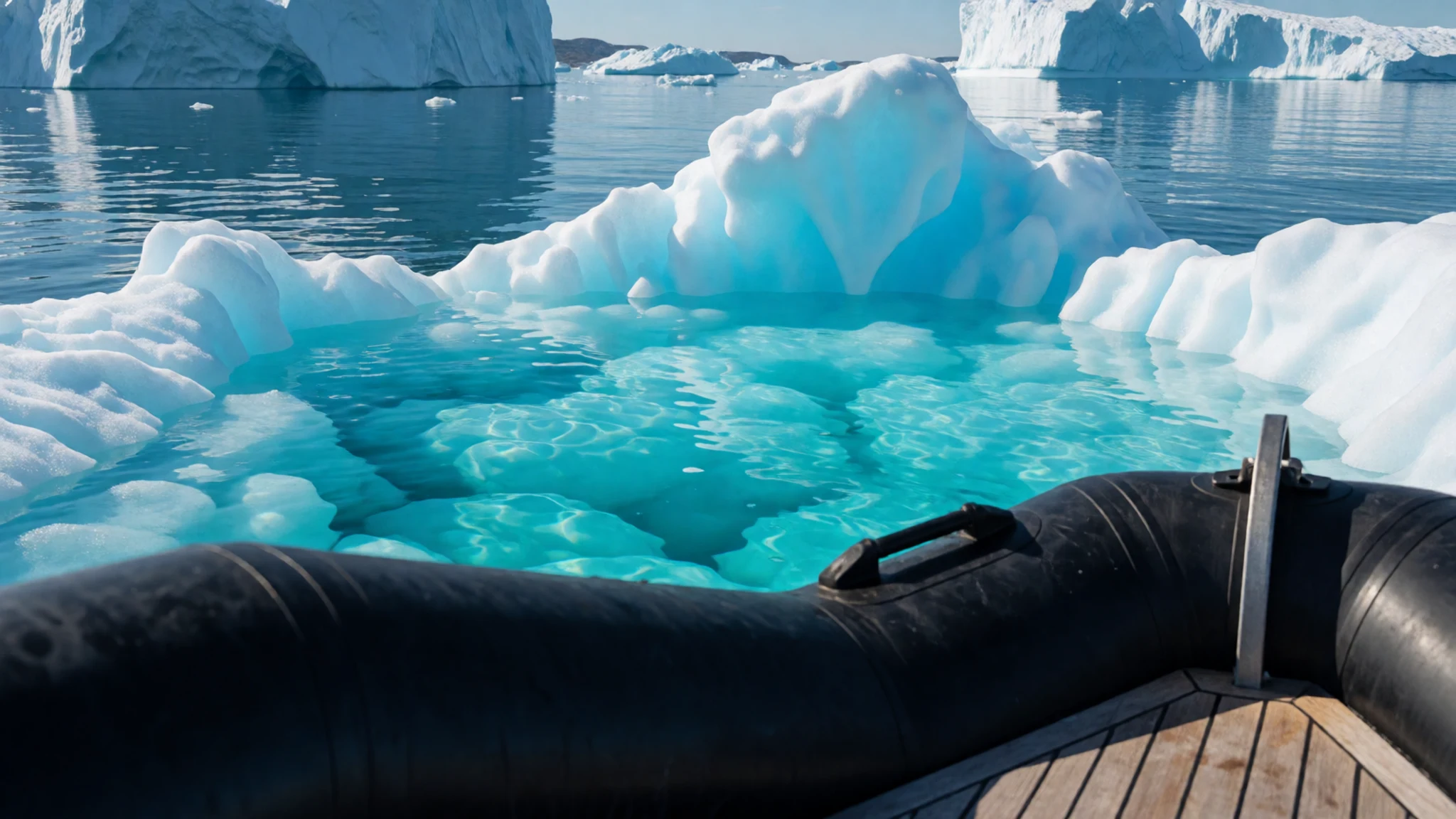
- Sled Dog Crossings — Outskirts of Ilulissat town
Encounter working Greenlandic dogs tethered near settlements or watch for wooden warning signs marking traditional sled paths across the terrain. These powerful working animals are an essential part of local transport across a coastline where sea ice persists year round.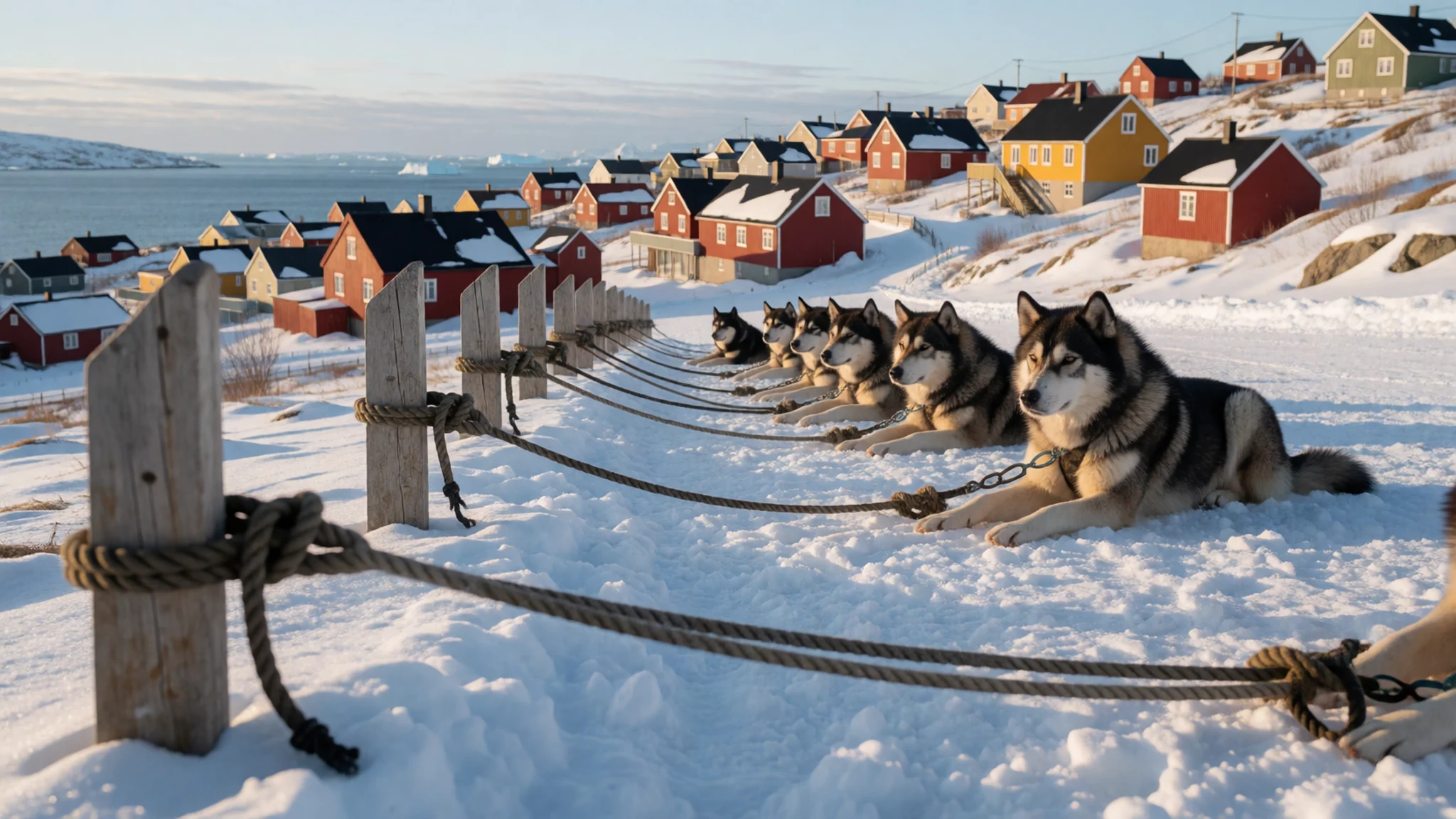
Culture
The human presence in this region is defined by a resilient indigenous heritage and a distinct national identity. The native inhabitants refer to themselves as Kalaallit in their own language, and visiting travellers should take care to use correct terminology rather than outdated historical labels. People here consider themselves a separate nation rooted within the broader Kingdom of Denmark, meaning visitors should avoid casually referring to the territory as simply part of Denmark. Social interactions are generally warm, quiet, and grounded in mutual respect for community ties that have endured extreme seasonal pressures for generations. Traditional knowledge regarding sea ice, weather patterns, and marine wildlife remains deeply woven into daily life alongside modern comforts. Local customs emphasise cooperation and quiet observation of nature rather than hurried schedules. When interacting with residents, a polite greeting and a respectful appreciation of local autonomy set the right tone for conversation. Never use outdated racial slurs to describe indigenous residents, and always respect local sovereignty and cultural identity.
What to wear
Traditional clothing in polar regions evolved out of absolute necessity, relying historically on carefully prepared animal skins and furs to trap warmth against severe sub-zero winds. While modern garments have largely replaced seal-skin trousers for everyday errands, traditional parkas and beaded collars remain important cultural garments worn with great pride during national holidays, confirmations, and family celebrations. For everyday life today, locals dress in practical, durable layers suited to rapid weather shifts, including sturdy windproof jackets, heavy fleece, and insulated boots. Visitors must pack with equal pragmatism, focusing entirely on function over form. Essential gear includes a high-grade windproof and waterproof outer shell, thermal base layers of wool or synthetic fleece, sturdy walking boots with deep tread for uneven granite, and woollen accessories to protect extremities from biting Arctic drafts.
What to eat
- Local Seafood and Marine Harvests — Local markets in Ilulissat
Sample freshly caught fish, shrimp, and other cold-water delicacies sourced directly from the icy coastal currents at town markets and local eateries.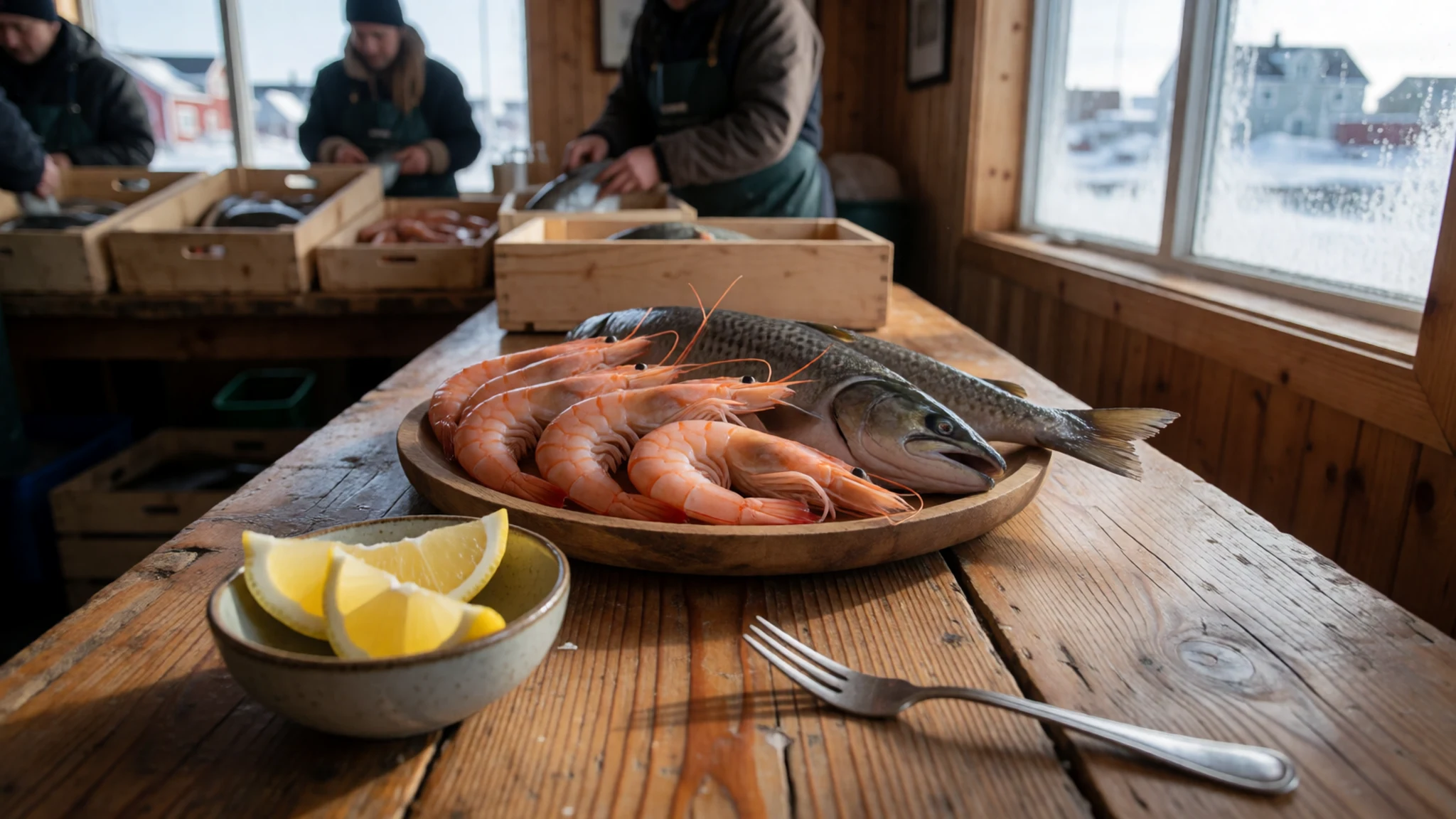
- Arctic Game Delicacies — Town restaurants and diners
Taste traditional land meats including muskox and reindeer, often featured in creative fusion dishes that blend local ingredients with international culinary styles.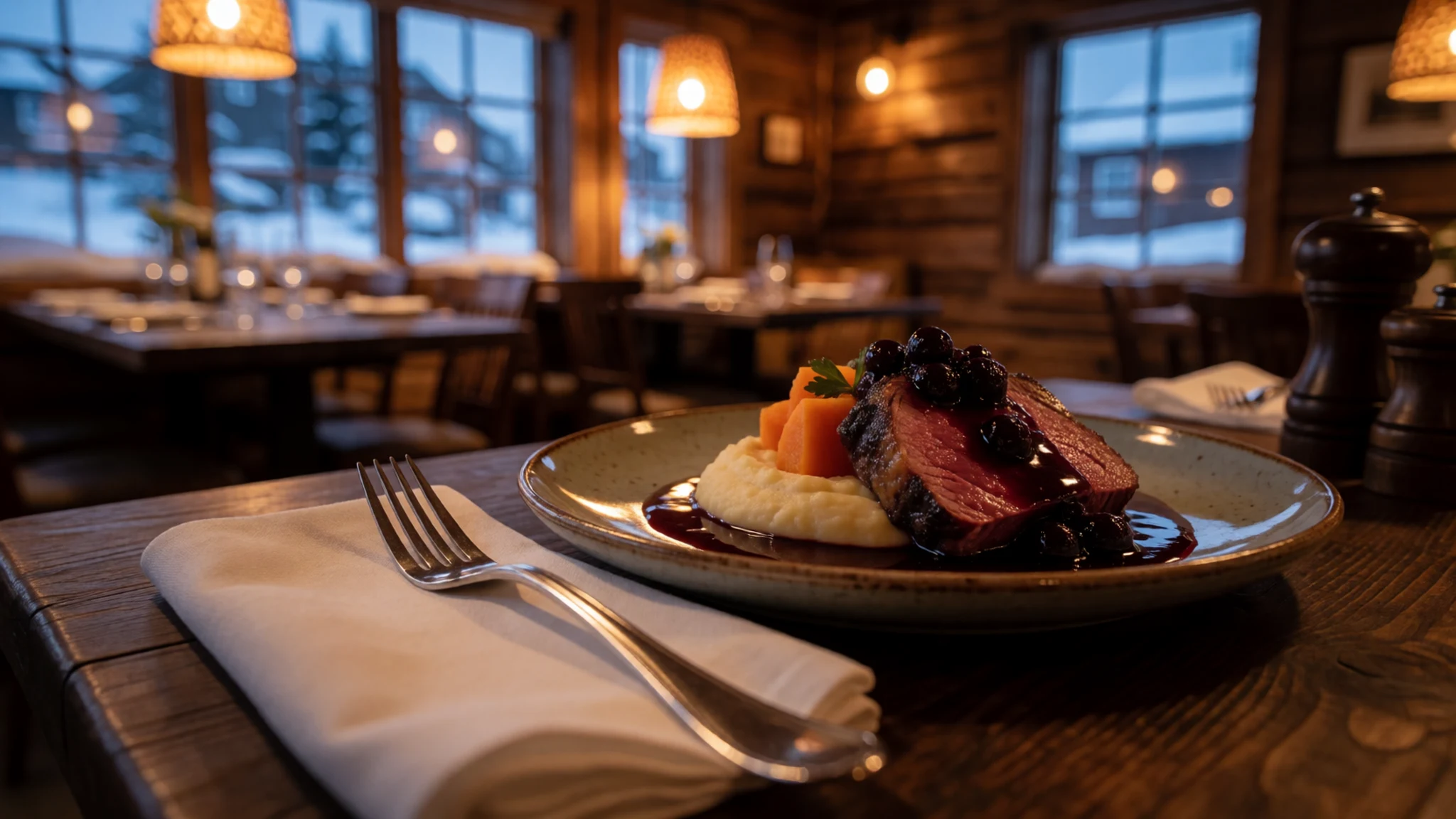
- Greenlandic Coffee — Select local restaurants and hotel lounges
Experience a potent traditional after-dinner drink layered with coffee, whisky, Kahlúa, and Grand Marnier, often served with a dramatic flame ritual. - European and Fusion Fare — Eateries across Ilulissat
Find hearty continental European staples, burgers, and comfort food designed to provide ample calories for outdoor exploration in cold weather.
Plan it
Best time. June through August offers midnight sun and accessible hiking trails, while late winter brings snow and dog sledding conditions.
How long. 3–4
Getting there. Fly via regional connections to Ilulissat Airport, situated a short distance from the town centre.
Budget. high
Tips
- Pack windproof and waterproof layers regardless of the season
- Book accommodations well in advance as high-end hotels fill quickly
- Respect local working dogs and keep a safe distance from tethered teams
- Check visa and passport entry requirements well ahead of departure
Etiquette
- Always refer to native inhabitants as Kalaallit or Greenlanders
- Acknowledge local autonomy and avoid calling the territory simply Denmark
Nearby
Sources
- Wikidata Q828071 (CC0)
- Wikipedia (rev 1375616727) (CC-BY-SA 4.0)
- Wikivoyage (rev 5381839) (CC-BY-SA 4.0)
- Photo 01 (CC BY 3.0)
- Photo 02 (CC BY 4.0)
- Photo 03 (CC BY-SA 4.0)
- Photo 04 (CC BY 4.0)
- Photo 05 (CC BY 4.0)
- Photo 06 (Public domain)
- Photo 07 (CC BY 3.0)
- Photo 08 (CC BY-SA 4.0)


