Qaqortoq
Qaqortoq, Greenland
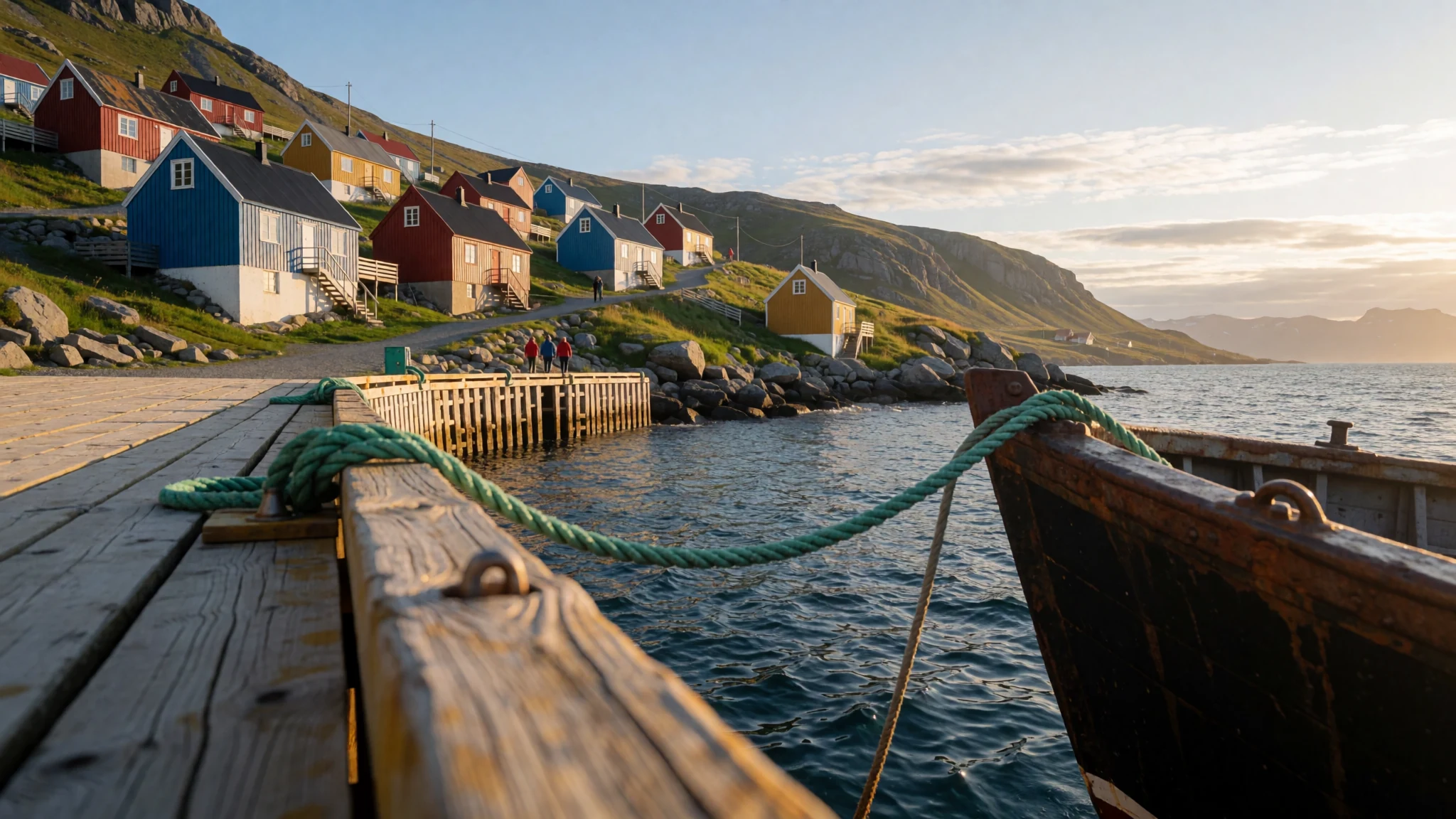
A small, working town on the southern coast of Greenland, where Norse ruins, Inuit history and fjord farming sit within easy reach of each other.
The place
Qaqortoq sits on the shore of the Qaqortoq Fjord in southern Greenland, beside the Labrador Sea, and serves as the capital of the Kujalleq municipality. Most people use its Greenlandic name, though older maps and some Danish sources use Julianehåb. With a population of about 3,000, it is the largest settlement on the southern coast and draws much of its life from the surrounding fjords and farms. The town is compact enough to walk end to end in an afternoon, with brightly painted houses climbing the slopes above the harbour and a central square that forms the heart of the place. Its position gives it a surprisingly mild character for a town so far north. Coastal air keeps winters far milder than the same latitude inland would suggest, and summers stay cool rather than cold, so a few sheltered gardens and small groves of trees manage to survive here, which is rare in Greenland. The town sits about 16 metres above sea level, so the harbour and the hillside homes are never far apart. Sheep, cattle and reindeer farms line the fjords nearby, and the town acts as their supply centre. Fish processing, tanning and administration keep most people in work. It is a working town first, and its lived-in, friendly character tends to surprise visitors who arrive expecting a museum village.
Its story
People have lived around Qaqortoq for thousands of years. The earliest traces date from the Saqqaq culture, roughly 4,300 years ago, although sites from that period are sparse here compared with other parts of Greenland. Small chipped stone drills and carving knives are among the clearest evidence. Later, the Dorset people settled the area and left low rectangular dwellings built from peat, whose outlines can still be picked out across the wider landscape. The Thule culture, ancestors of the Inuit, arrived in the southern part of the island around the twelfth century and lived largely by hunting and fishing, leaving few large buildings behind. The Norse arrived in the late tenth century, and their settlement is the best-documented chapter of the early story. Their farms and churches lay in the fjords, and the most prominent Norse ruins in Greenland lie about 19 km northeast at Hvalsey, reached by boat or on foot. Trade between the Norse and the Thule was thin for a long time, although the southern Norse later supplied ivory to northern Europe. Their presence lasted nearly five hundred years and ended around the mid-fifteenth century. The last written record of Norse life here is a wedding held in a church at Hvalseyjarfjord in 1408. The modern town grew from a trading post founded in 1775 by Anders Olsen for the General Trading Company, which the Danish named Julianehåb. That name reflects the colonial period, and the Greenlandic name came back into everyday use later on.
What to see
- Qaqortoq Museum — Town centre
The town museum is the most useful first stop for context on the region's long human history. Its collection follows the successive cultures that lived around the fjord, from early hunting communities through to the Norse and the Inuit farmers who came after. The rooms are small and focused, so an hour is usually enough. Opening times change with the season, so check the official site before you plan the day.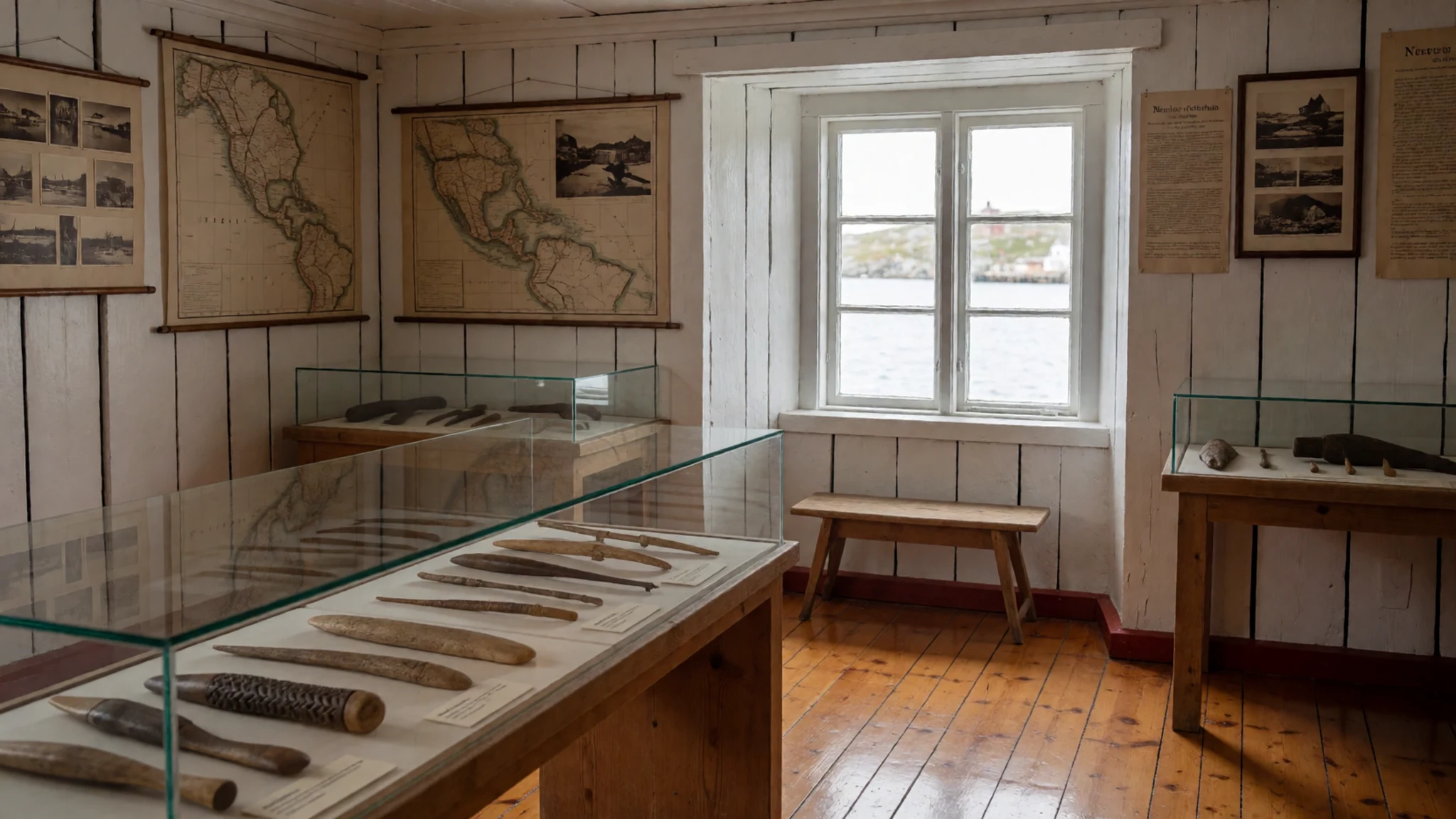
- Qaqortukulooq — Qaqortoq area, within the Kujataa landscape
Qaqortukulooq is part of the wider Kujataa World Heritage landscape, recognised for Norse and Inuit farming at the edge of the ice cap. The setting shows how farms, grazing land and fjords were worked over centuries. Visitors get the most from it by walking the shoreline and looking at the land itself rather than searching for large buildings. Pack for wind and rain.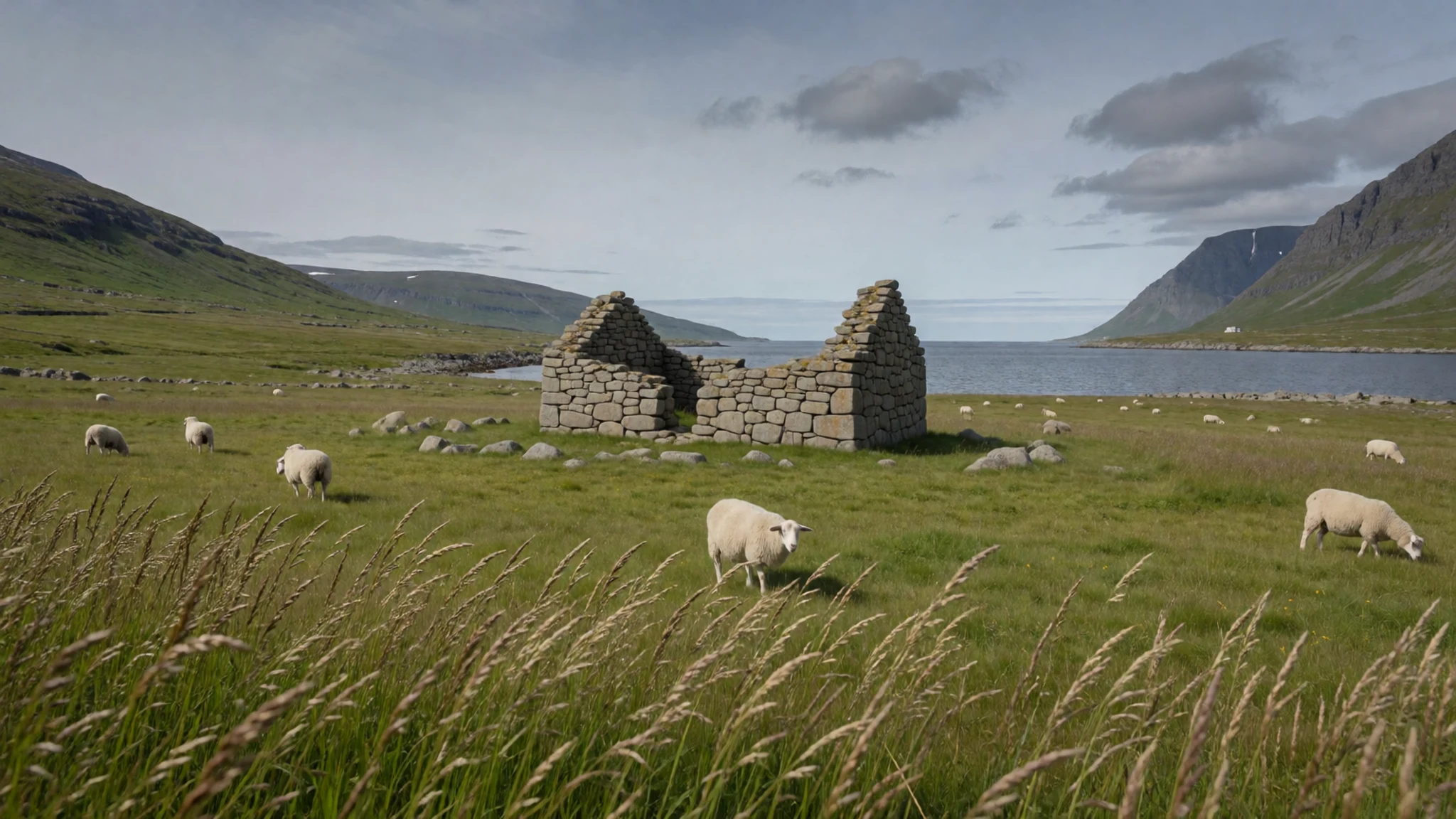
- Gertrud Rask Church — Above the town centre
The newer church is a modern building that serves as a landmark from the harbour. Its design is clean and plain, and the interior is calm, which suits a community that still gathers here regularly. Visitors can often step inside outside services, but worship comes first, so keep voices low and check locally before going in during a funeral or wedding.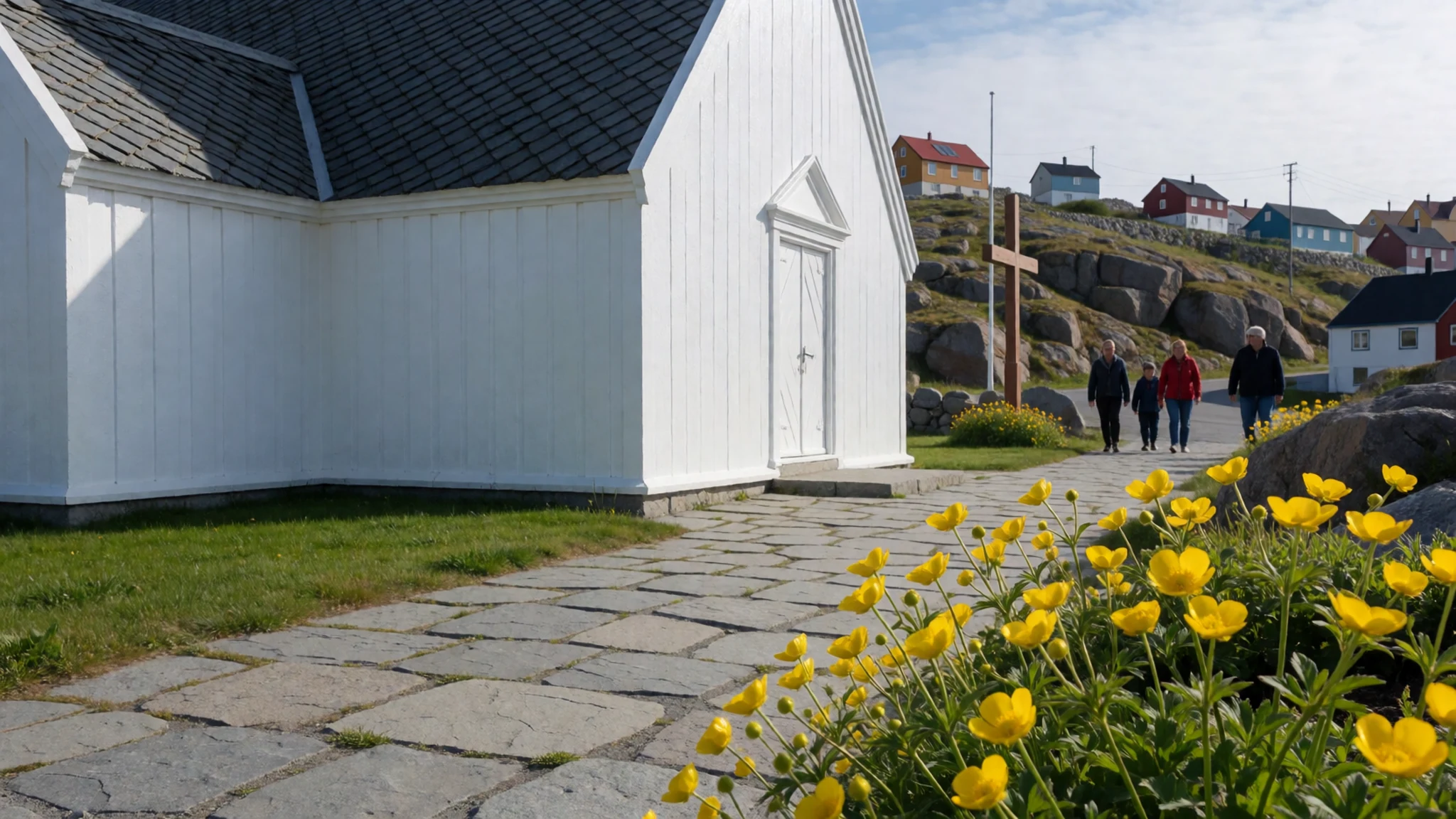
- The market square and fountain — Town centre
The market square is the town's social centre, and its fountain makes a good orientation point. On a summer afternoon, sit on a bench and watch walkers, dogs and children pass through. Cafés nearby spill out onto the pavement when the weather lifts. It is less a sight in its own right than a place to slow down for an hour.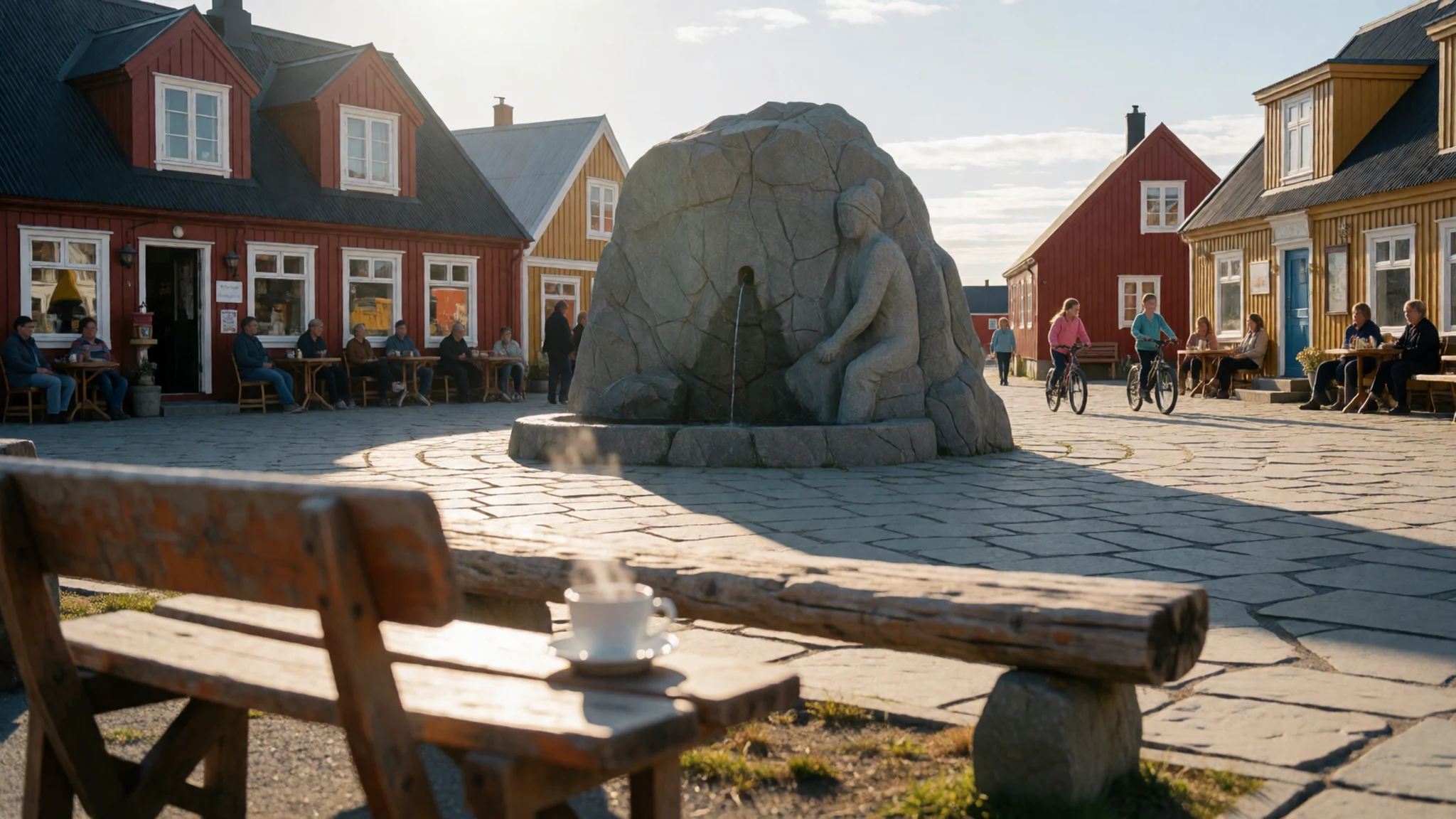
Culture
Qaqortoq is a small town where most people know one another, and daily life moves at a steady, unhurried pace. Greenlandic is the first language for most residents, and Danish is widely spoken alongside it, so a greeting in either language is welcome. Hunting, fishing and the sealskin trade are part of everyday working life, and conversations about them are normal rather than sensitive. Many residents are direct and not inclined to small talk with strangers, which visitors from larger cities sometimes mistake for coolness. Asking a local about their work usually brings a warm and open answer. Respect for the sea and for animals matters here, so buy sealskin goods knowingly and ask about where the skins came from. When photographing people at work on the harbour, ask first, and keep your voice down in residential streets late at night.
What to wear
Traditional dress in southern Greenland is built around skins and furs. Sealskin was the core material for clothing, boots and gloves, and garments were often finished with coloured trim and careful stitching. The sealskin trade shaped the local economy for generations, and the Great Greenland Furhouse, the only tannery in Greenland, still processes skins in the town today, so the material is part of working life rather than only a heritage craft. Sealskin is worn now, but many people in Qaqortoq dress in practical clothing: waterproof jackets, wool layers and sturdy boots suited to wind and wet ground. Knitwear is common for everyday wear. For a visitor, layers are the sensible approach. Summer days can feel mild in sunshine but turn cold on the water, and rain can arrive quickly off the sea. Bring a waterproof shell, a warm mid-layer and gloves even in July. Walking boots with good grip suit the rocky paths and wet grass around the fjords. Formal dress is not expected in town, but a hat and a warm jacket will carry you through most weather.
What to eat
- Arctic char — Harbourside eateries and the quay
Arctic char is one of the most common fish on local plates, usually poached, grilled or smoked. Boats bring it into the harbour, and it appears on restaurant menus and at casual lunch counters. Ask whether the fish is local, as supply changes with the season.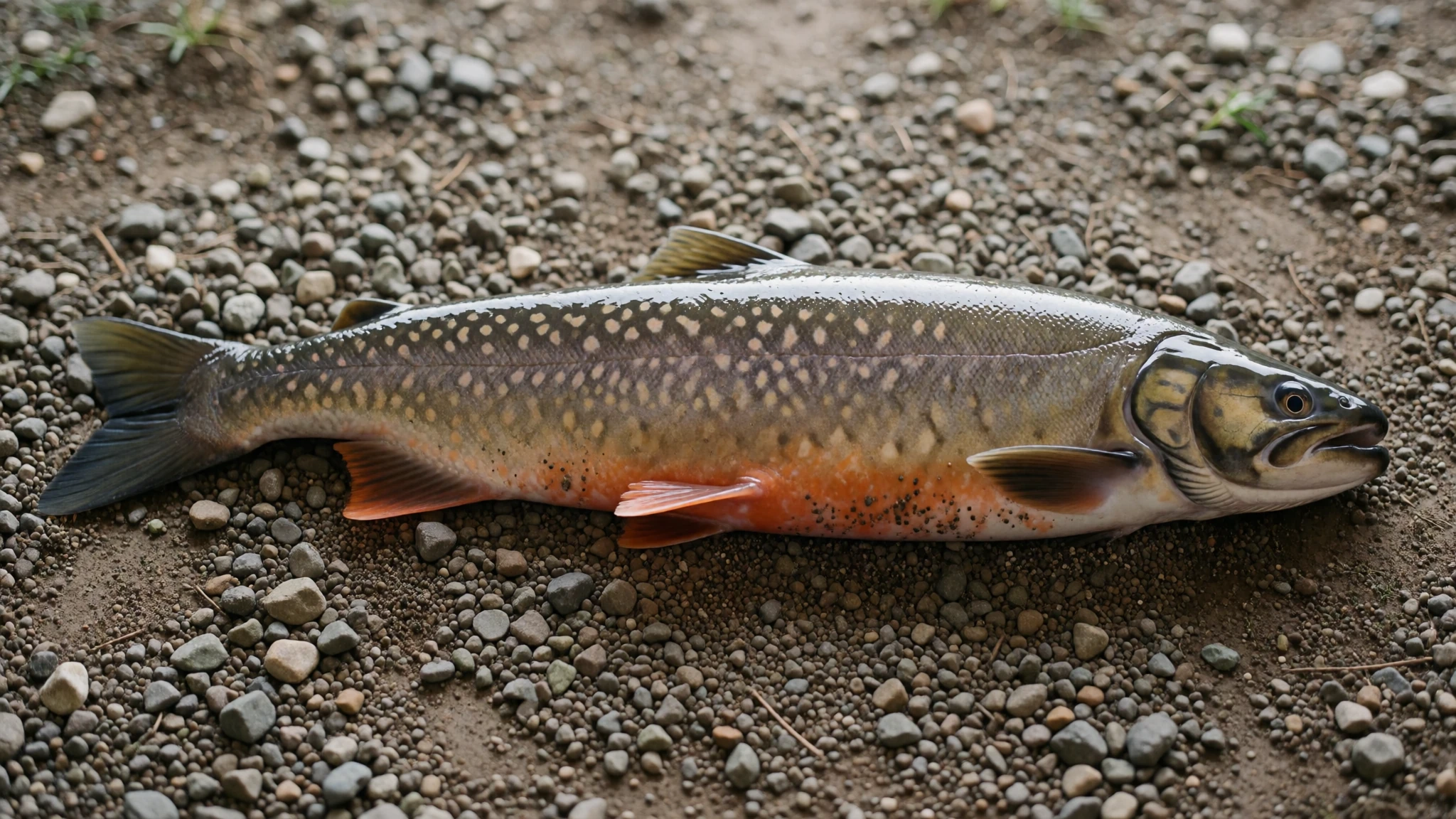
- Reindeer and lamb — Restaurants around the town centre
Reindeer and lamb reflect the herding and sheep farming on the fjords around the town. Reindeer is lean and is often roasted or served in a stew, while lamb frequently comes from the farms that supply the town. Look for both on a traditional-style menu.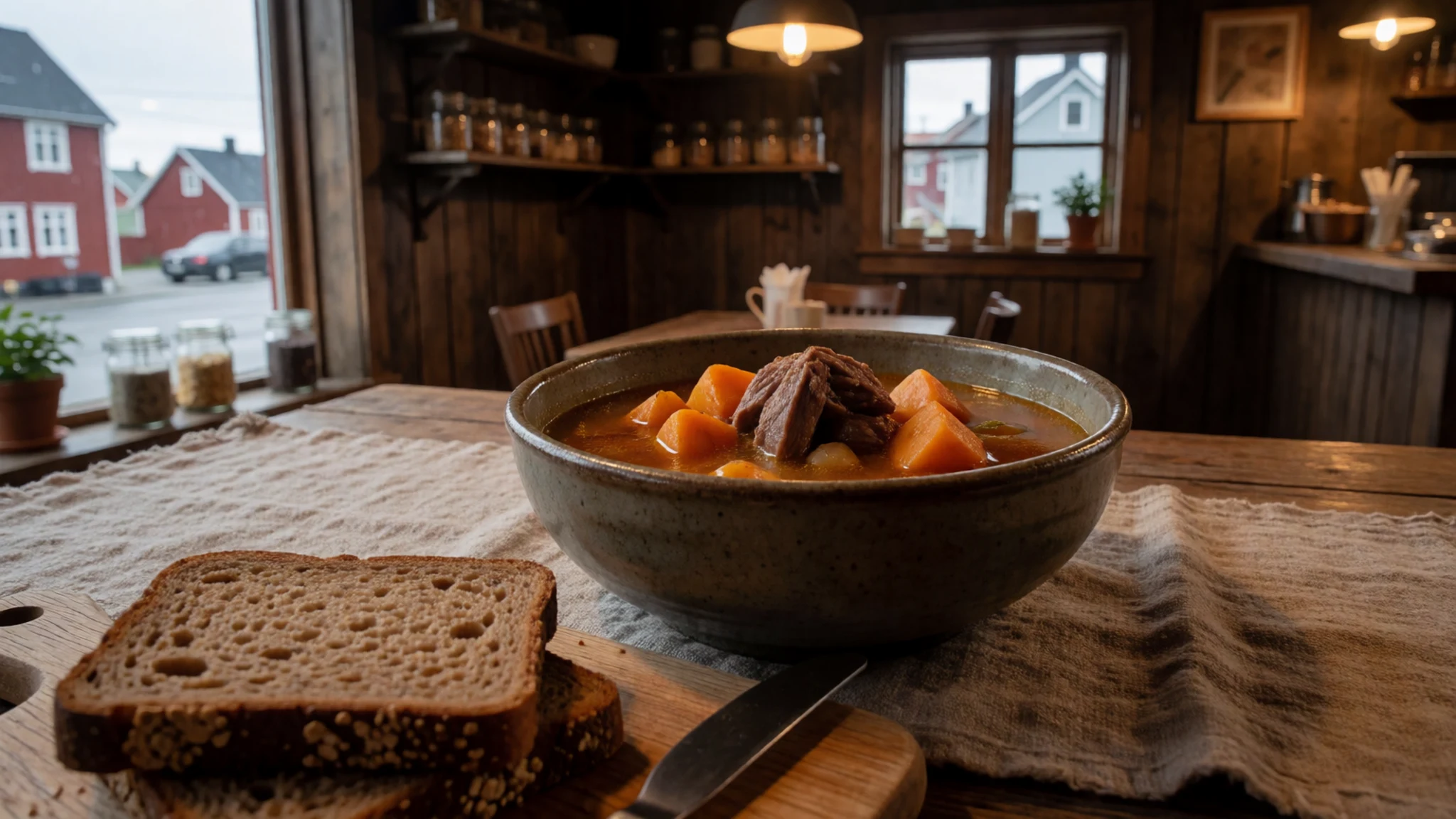
- Suaasat — Guesthouse breakfast tables and home-style cafés
Suaasat is a traditional Greenlandic soup of meat simmered with onion and other simple ingredients. It is a home dish that many families still prepare, and it is filling after a cold walk. It appears more often at home tables than on menus, so ask a guesthouse host about it. - Danish-style pastries and coffee — Cafés on or near the market square
Danish-style pastries and strong coffee are a daily habit, reflecting long ties with Denmark. Cafés around the square serve them through the morning, and many people stop for a cup in the afternoon. It is an easy way to warm up between sights. - Fish from the harbour — Harbourside eateries and the quay
Cod and other fish are landed at the quay, and fish processing means catches often reach local plates quickly. Ask harbourside eateries what came in that day. Simple grilled or fried fish is usually the most reliable order.
Plan it
Best time. June to August bring the mildest weather and the longest days, though summers are cool rather than warm. Winters are cold and snowy but milder than inland at this latitude, and the shoulder months bring unsettled weather. Plan for wind and rain whatever the season.
How long. 2–3
Getting there. Fly from Narsarsuaq or Narsaq to Qaqortoq Airport, about 5 km north of town, or take a regular boat from Narsarsuaq to the ferry stop in Qaqortoq.
Budget. mid
Tips
- Book internal flights early, since schedules are limited and weather can delay departures
- Check whether cards are accepted before buying local goods, and carry some cash as a backup
- Pack layers and waterproofs whatever the forecast says
- Walk the town in an afternoon and leave time for the fjord paths
- Check the official site at http://www.qaqortoq.gl for current services and opening times
Etiquette
- Ask before photographing people, especially at work on the quay
- Keep noise moderate in residential streets late at night
- Greet people in Greenlandic or Danish if you can
Nearby
Sources
- Wikidata Q221203 (CC0)
- Wikipedia: Qaqortoq (rev 1376559708) (CC BY-SA 4.0)
- Wikivoyage: Qaqortoq (rev 5254279) (CC BY-SA 4.0)
- Qaqortoq2008.JPG (Public domain)
- Qaqortoq Market Square (CC BY-SA 4.0)
- Fox-Expeditionen i Aaret 1860 (illustration) (Public domain)
- Qaqortoq in Summer (CC BY-SA 2.5)
- Qaqortoq 2008-10-28 (CC BY 3.0)
- Gertrud Rasks Kirke (Kenny McFly) (CC BY 3.0)
- Qaqortoq Regional Hospital 2021 (CC BY-SA 4.0)
- Qaqortoq (Julianehåb) December 2005 (CC BY-SA 2.5)


