Eqi Glacier
Eqi Glacier, Greenland
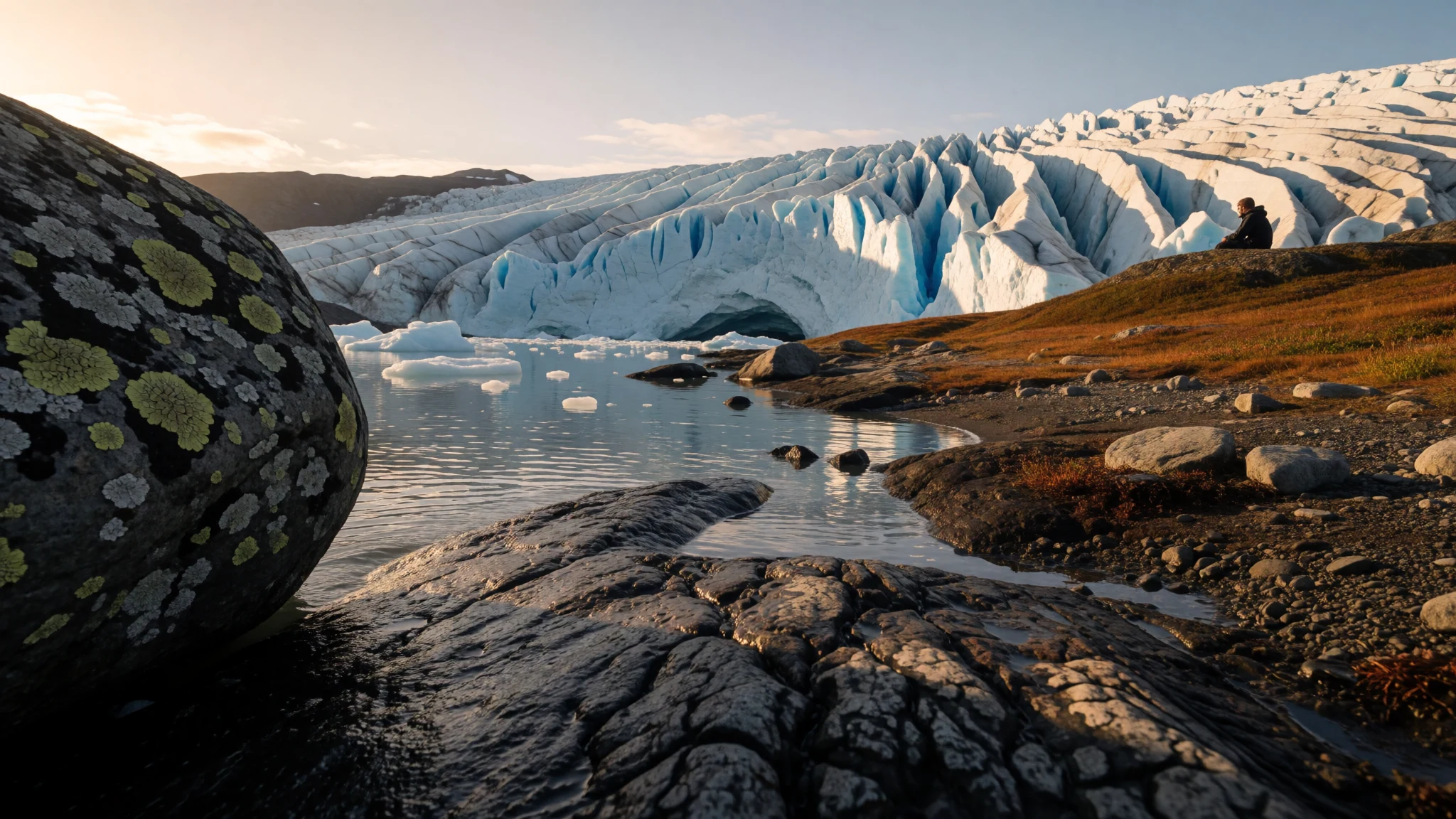
Eqi Glacier is a live edge of the Greenland ice sheet, where a wall of blue ice breaks into the sea several times a day.
The place
Eqi Glacier, shown on many maps as Eqip Sermia, is a tidewater glacier on Greenland's west coast, about 80 kilometres north of Ilulissat. It is one of the outlets through which the Greenland ice sheet drains: snow that fell far inland is slowly pressed into ice, pushed towards the coast, and finally broken off into the water as icebergs. The meeting point is a tall, cracked wall of white and deep blue, and it is loud. Several times a day pieces of the face give way and crash into the sea, and the boom reaches the shore a moment after the collapse is seen. There is no town here and no road. Visitors come by boat, either on a small-group trip from Ilulissat or on an expedition cruise that sends inflatable boats towards the ice. On land the ground is bare rock, low tundra and meltwater streams, with hilltops that give a wide view over the glacier front and the icebergs drifting down Ataa Sound. Summer is the working season. Weather is the real organiser of any trip: fog, wind or crowded floating ice can change a boat's plans at short notice. Eqi is a place for watching a landscape move rather than ticking off sights, and the best visits leave time to sit still and wait for the next fall of ice.
Its story
The story of Eqi Glacier begins with its name. Eqip Sermia is Greenlandic, and sermia refers to a glacier, so the label simply points at a feature of the land. That is how many Greenlandic place names work: Kangerlussuaq, for instance, just means Big Fjord, and the same word can belong to more than one place. Reading a map here means reading descriptions. The country's own name is a tale of persuasion. According to the Icelandic sagas, Erik the Red called it Greenland to attract settlers from Iceland. About 84% of the island is under ice, yet the southern coasts the Norse farmed do turn green in summer, and were probably greener during the Medieval Warm Period. Eqi lies far north of those farms, in country that belongs to the Kalaallit, the people who call themselves by that name and have lived with this ice for generations. The modern political story runs alongside. Greenland is part of the Kingdom of Denmark but won self-government in 1979, and a vote in 2008 widened its autonomy further, so that it works in practice as a separate country with formal ties to Denmark. Some Greenlanders now talk openly about full independence. The glacier has its own slow story, told in ice rather than documents. Its front is never fixed. It advances, calves and retreats, so a photograph taken a few years ago may show a coastline that no longer exists, and every visitor sees a version of the face that will not be repeated.
What to see
- The hilltop viewpoint — Hills beside the glacier front
A rocky hilltop beside Eqi Glacier gives the widest view of the whole scene: the broad grey-white tongue of ice, the dark water in front of it, and the sheet rising inland behind. Go up in calm weather and stay long enough for the light to change. It is also the best place to hear the ice.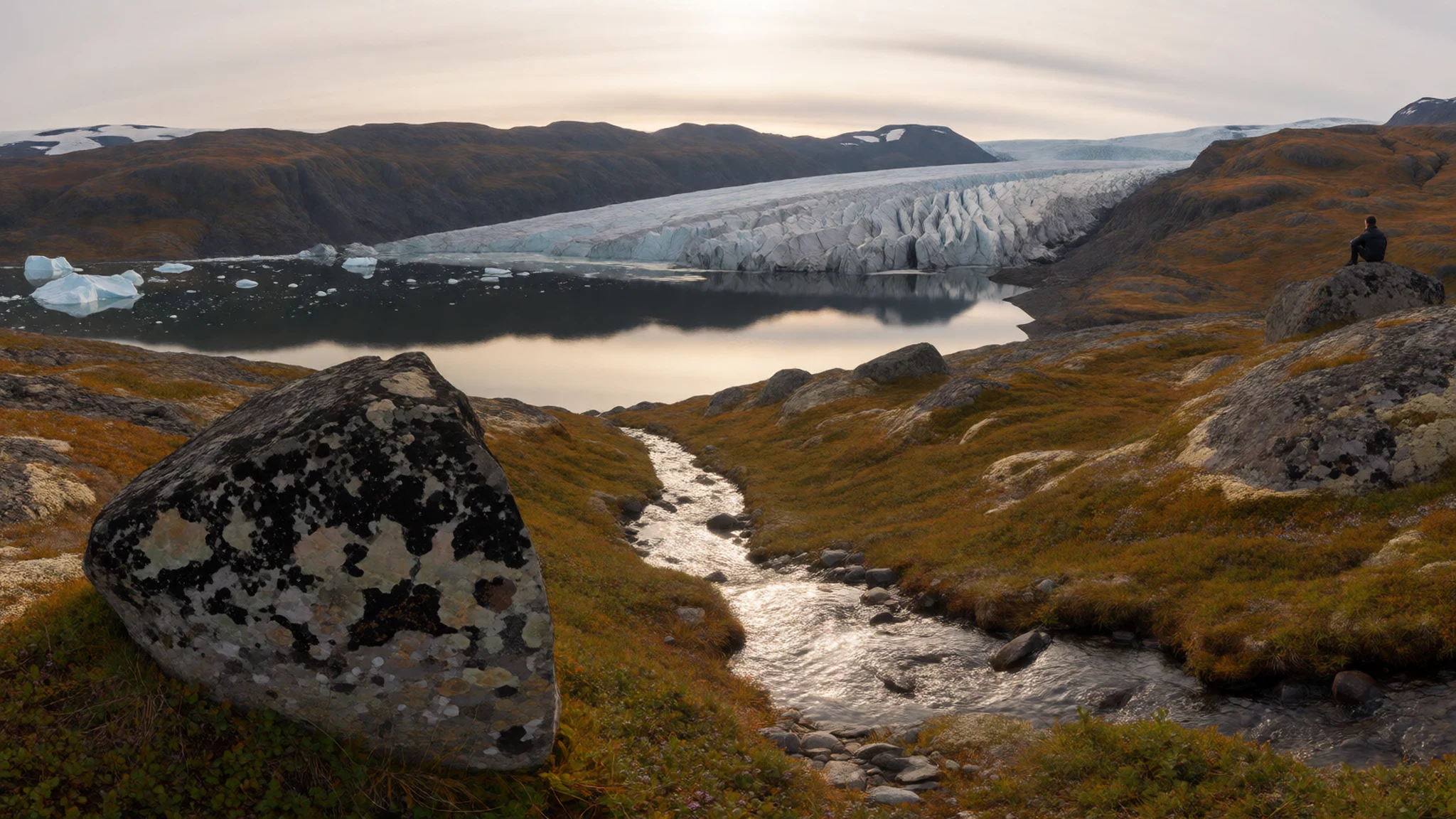
- The calving front — Glacier face at the water's edge
The glacier's face is a jagged wall, and several times a day sections of it fall into the sea with a crack and a delayed roar. Watch from a safe distance on land or from a boat, and expect to wait. Falls come without warning, and the waves they make travel far.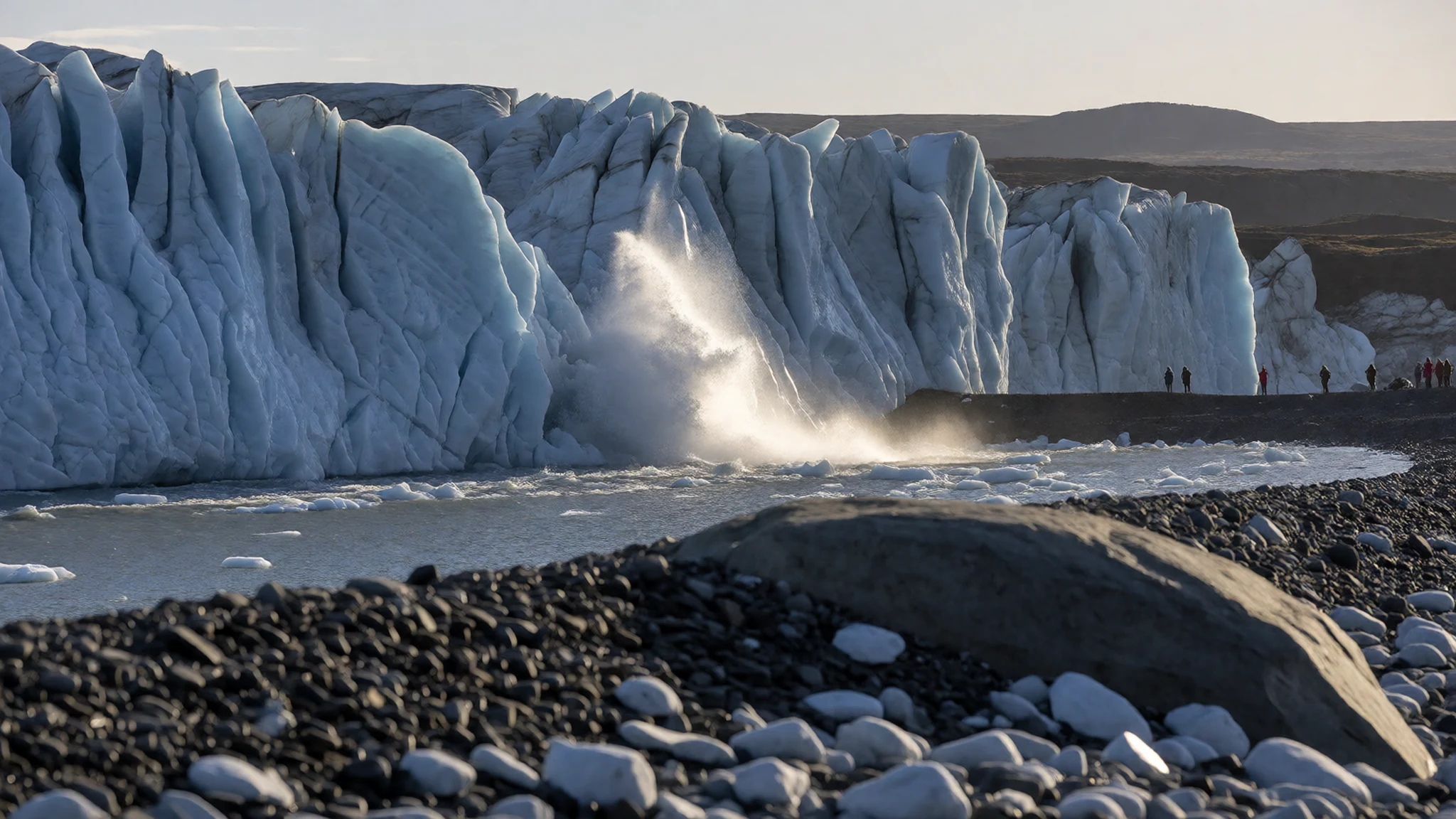
- Ataa Sound and its icebergs — Ataa Sound, in front of the glacier
Ice that breaks from Eqi drifts into Ataa Sound, where icebergs sit like sculptures: flat-topped slabs, pinnacles, and low shapes streaked blue. Seen from a boat or the shore, they change shape through the day as they melt and roll. Their size is much greater below the water than above.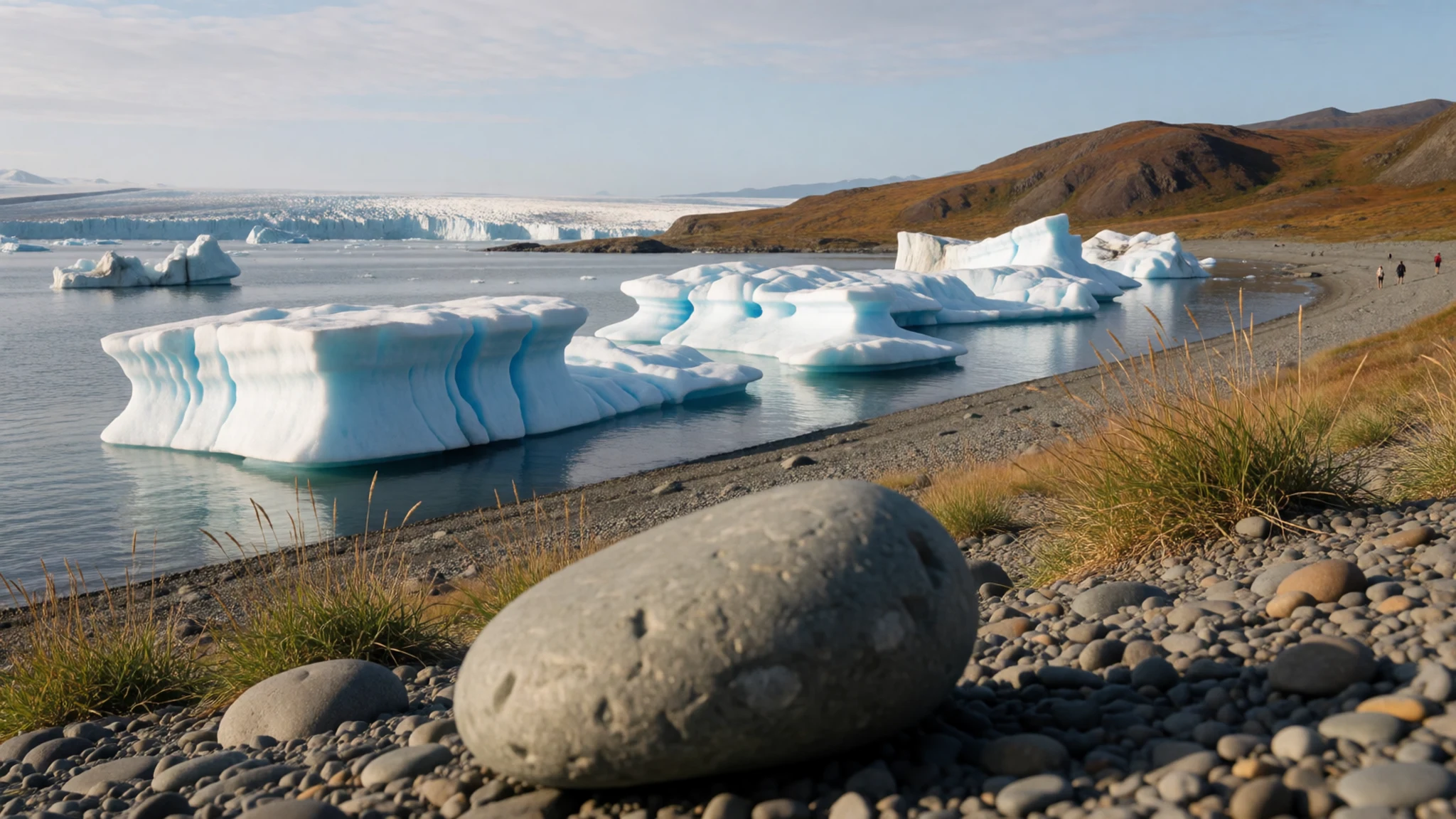
- By inflatable boat to the ice — The water in front of the glacier
Expedition cruises launch inflatable boats that move slowly along the glacier face, giving a close look at the cracks, the water-carved caves and the layered ice. Operators set the distance from the front according to conditions, and they will turn back if the ice is restless. Follow the guide's instructions exactly.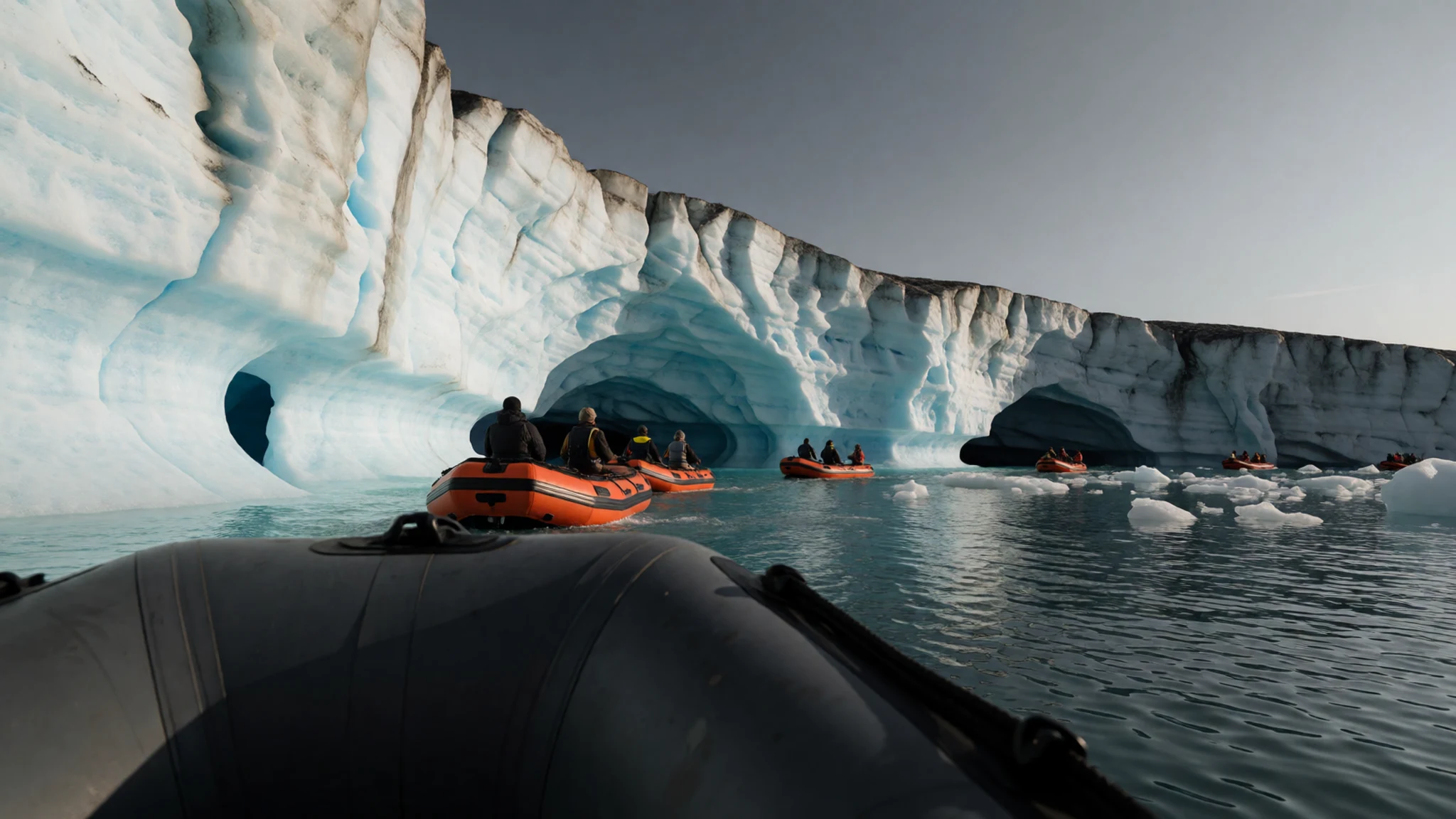
- Blue ice up close — Glacier edge and fresh icebergs
Compressed old ice absorbs the red end of the light and glows a deep blue, most clearly in fresh breaks and in the meltwater pools along the edge. Overcast days often show it better than bright sun. Admire it from where you stand: ice near the edge is unstable and sharp.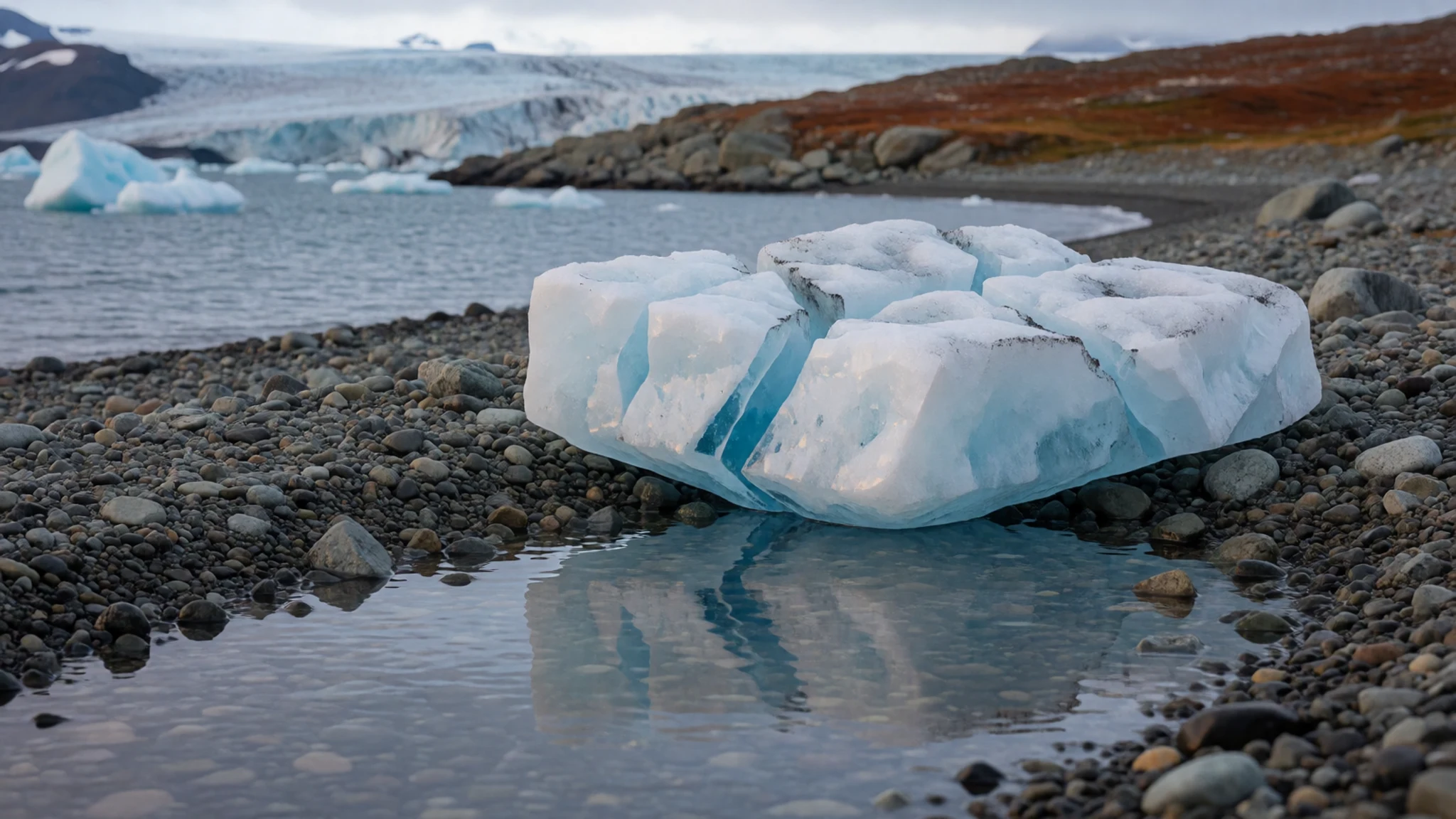
- Ilulissat, the gateway town — Ilulissat, to the south
Most independent visitors start from Ilulissat, a town of colourful wooden houses beside a famous icefjord, and take a boat north from there. It is worth a day or two before or after Eqi for walking the shoreline and booking transport, since the town has the nearest airport.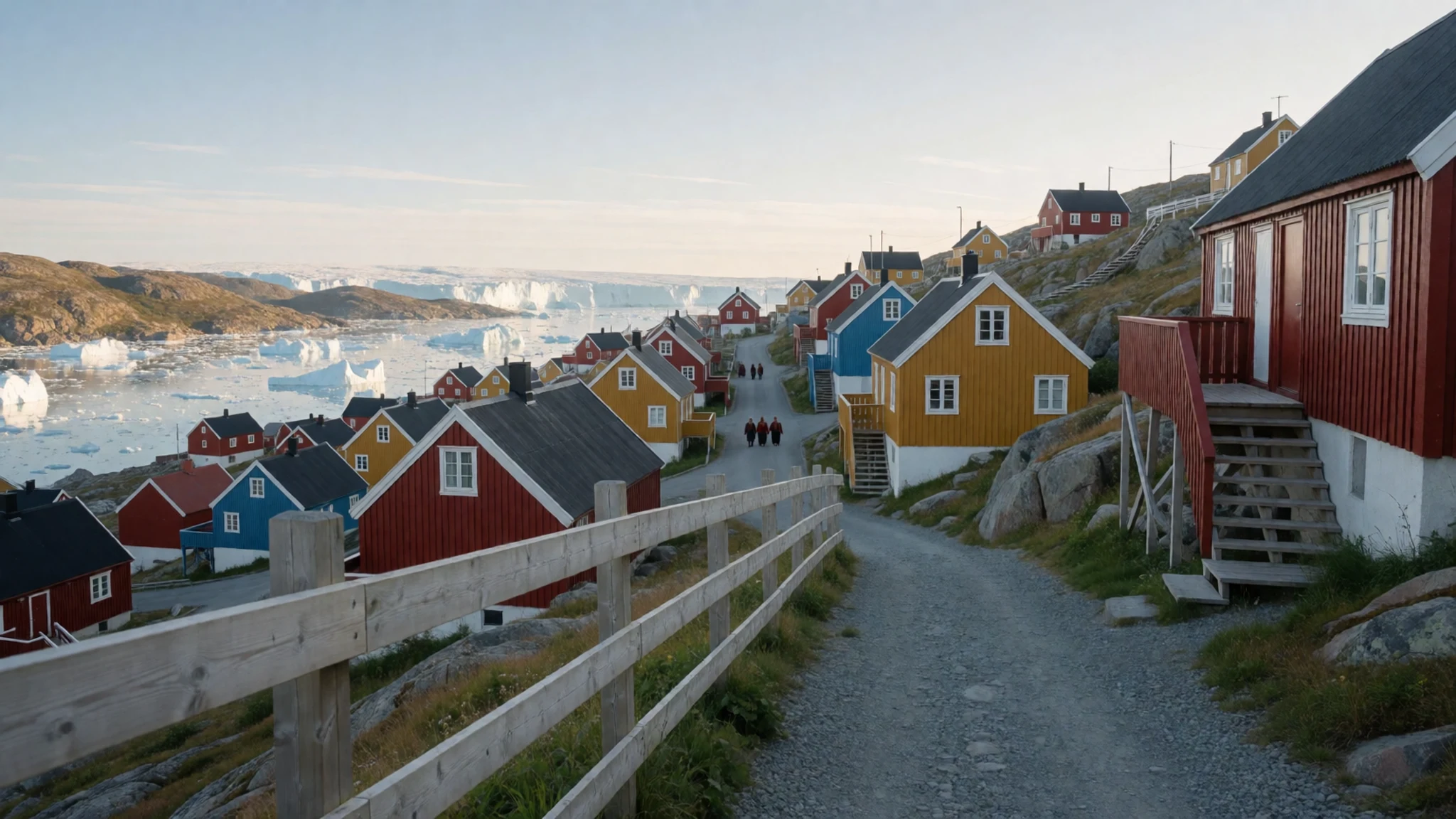
Culture
Eqi Glacier lies in Kalaallit Nunaat, as Greenlanders call their country, and the people whose home it is call themselves Kalaallit (singular Kalaaleq). 'Greenlander' is also accepted. The word 'Eskimo' is now regarded as a slur and should not be used. Greenlanders also see themselves as a separate nation, so it is better not to say you are in Denmark. If you need to mention the sovereignty question, say the Kingdom of Denmark. Greenland is part of that kingdom and has had self-government since 1979, but it is not in the European Union or the Schengen Area. Daily life in the small settlements around Disko Bay revolves around fishing, hunting and the weather, and a lot of ordinary business happens informally. Shops can be tucked into plain grey buildings with little signage, and asking someone is usually the quickest way to find anything. Land here has no private owners, which is why walking away from the few marked paths is normal, though the government requires expedition permits for travel on the ice cap and in some protected areas, so ask your operator what applies. Crime and hostility towards visitors are rare, and basic courtesy goes a long way. Tour operators know the local ice conditions better than any guidebook, and their rules on distance from the glacier front exist for safety. Keep well back from the ice face as your guide directs, ask before photographing people in nearby settlements, and never call Greenlanders 'Eskimos'.
What to wear
Eqi Glacier has no village of its own, so the clothing story here is told by the towns around Disko Bay and by the people who work on its boats. Traditional Greenlandic dress, kalaallisuut, is made from sealskin, often dyed and sewn into trousers, boots (kamik) and anoraks, and finished with a wide, bright beaded collar. Women's versions are the most colourful, and each region has its own pattern and palette. It is worn for confirmations, weddings, national day and other celebrations, and many families treasure and hand down their sets. Everyday wear now is practical and Nordic in style: wool jumpers, fleeces, waterproof shells, rubber boots in town and sturdy walking boots on the hills. Fishers and boat crews wear heavy-duty oilskins and insulated overalls. For a visit, think layers. A warm base layer, a fleece or light down jacket, and a windproof, waterproof outer shell will cover most summer days, and boat trips feel much colder than the shore because of wind over the water. Bring a hat, gloves and sunglasses, since glare off ice and sea is strong even when overcast. Waterproof walking boots with good grip suit the rocky, boggy ground. In summer the mosquitoes can be fierce away from the ice, so a head net and repellent are worth packing. There is no formal dress code, but clean, modest outdoor clothes are normal in the towns.
What to eat
- Greenlandic prawns — The harbour and local market in Ilulissat
Cold-water shrimp, caught locally and often eaten simply, peeled and piled on bread or served with a little mayonnaise. They are a good, light introduction to the local catch and turn up at harbour-side stalls and in town cafés.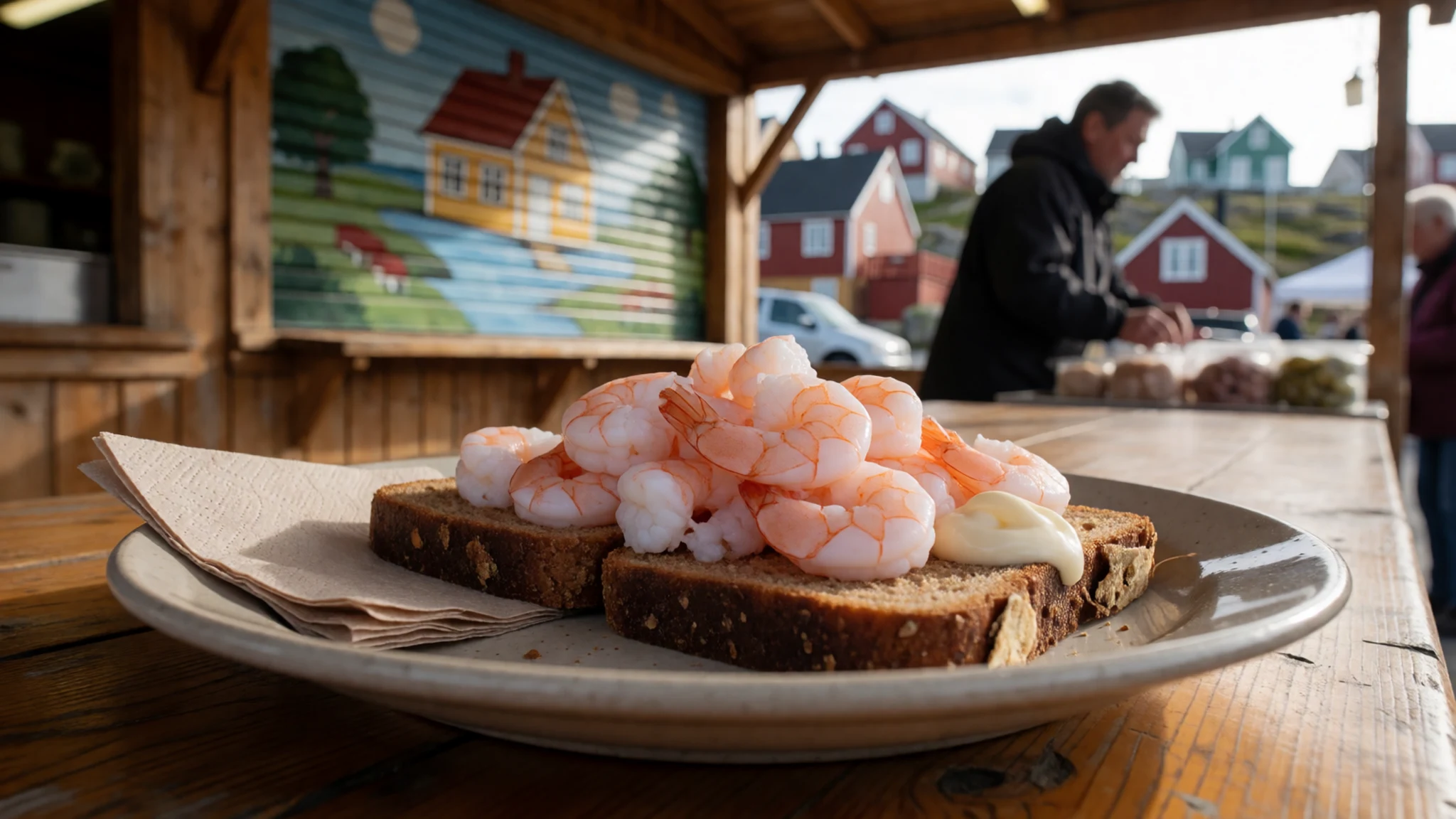
- Fresh and dried fish — Local markets and any café near the harbour
Fish is the backbone of the local diet. Expect halibut, cod or Arctic char, served grilled, boiled or air-dried. Dried fish is a chewy snack that locals eat plain, and it travels well on a long boat day.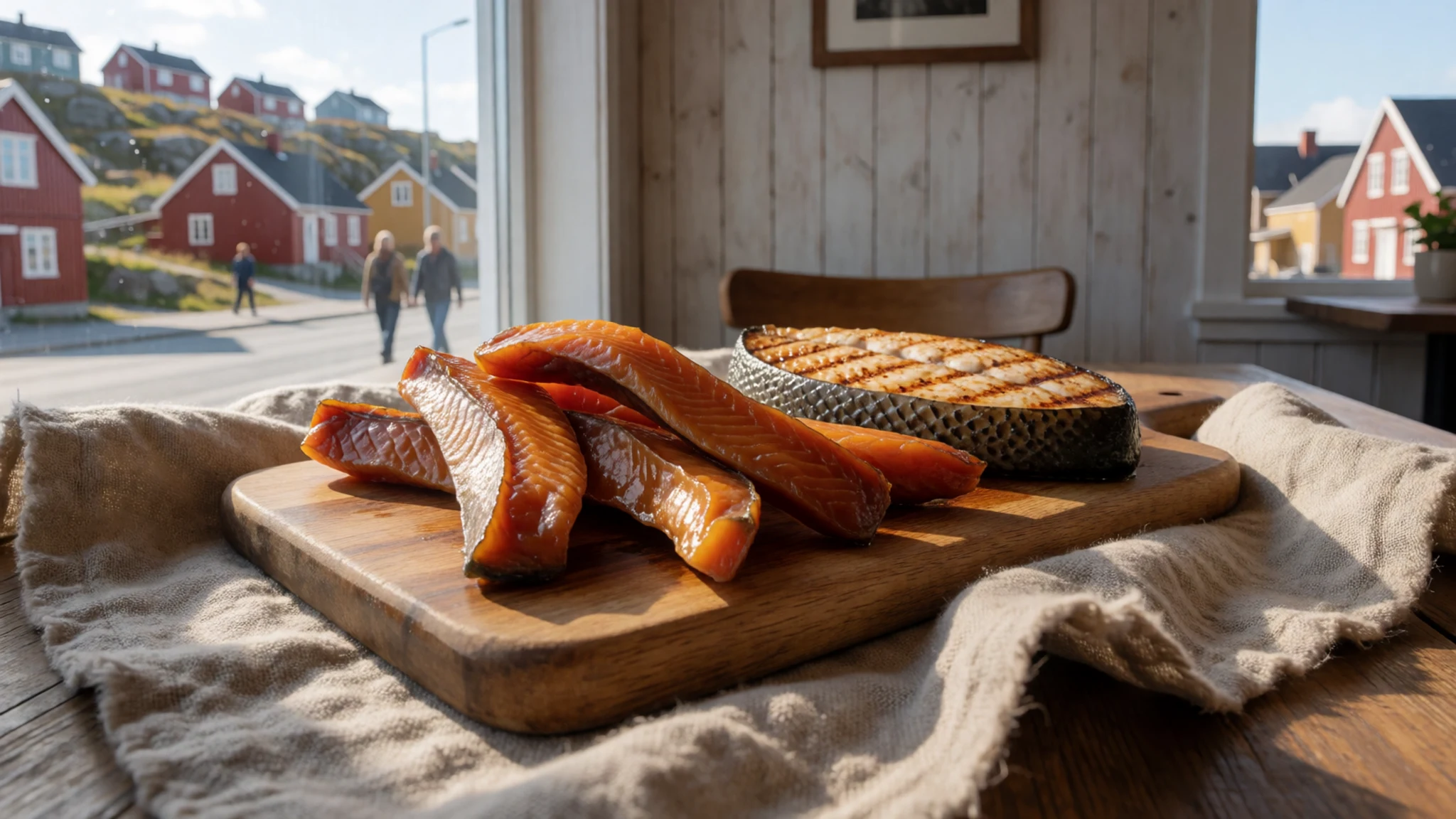
- Muskox — Restaurants in Ilulissat and other larger towns
Muskox is a dense, flavourful meat from the shaggy animal of the northern tundra, usually roasted or served as a steak with potatoes. It appears on the menus of many restaurants that mix traditional ingredients with familiar European dishes. - Reindeer (caribou) — Restaurants and eateries in the towns
Reindeer, called caribou in some countries, is another lean meat that Greenlandic cooks pair with rich sauces or serve as stew. Portions are generous, and chips often come alongside. Restaurants may offer it next to the more familiar fare. - Greenlandic coffee — Restaurants and bars in the larger towns
A showy drink, sometimes prepared with a flourish at the table: coffee laced with whisky, Kahlua and Grand Marnier. It is strong and warming, and it is meant to be sipped slowly after a cold day on the water.
Plan it
Best time. June to September, when the sea is open enough for boats to reach the ice and daylight is long, with the midnight sun around midsummer. Winters are cold and dark, and boat access to the glacier is limited, so most visitors come in summer. Expect cold wind on the water even in July.
How long. 2–3
Getting there. Fly to Ilulissat, the nearest town with an airport, usually via Nuuk or Kangerlussuaq on domestic Greenlandic flights. The last leg is by boat from Ilulissat, on a small-group excursion or an expedition cruise. Check current schedules and booking with the operator, as services depend on weather and ice.
Budget. high
Tips
- Book boat trips and accommodation well ahead, since choices are limited and prices are high across Greenland.
- Allow a spare day in the plan, because fog, wind or ice can cancel or delay boat departures.
- Carry your passport: Greenland is outside the EU and the Schengen Area, and most visitors can stay up to 90 days without a visa, though your passport should be valid for at least three months beyond departure.
- Bring warm layers, waterproofs and insect repellent, and keep water and snacks with you, as there are no shops at the glacier.
- Check the official site of your tour operator and the Greenland tourism board for permit rules if you plan to hike or travel on the ice.
Etiquette
- Follow your guide's instructions on how close to go to the ice face; falling ice and waves can be dangerous.
- Take all rubbish back with you and leave the tundra undisturbed.
- Ask before photographing people in settlements, and say 'Kingdom of Denmark', not just Denmark, if you need to mention the sovereign state.
Nearby
Sources
- Wikidata Q24831491 (CC0)
- Wikipedia, Eqip Sermia and Greenland articles (CC BY-SA 4.0)
- Wikivoyage, Greenland (rev 5381839) (CC BY-SA 4.0)
- David Stanley, Overlooking Eqip Sermia, via Wikimedia Commons (CC BY 2.5)
- David Stanley, Active Glacier, via Wikimedia Commons (CC BY 2.5)
- David Stanley, Ataa Sound Iceberg, via Wikimedia Commons (CC BY 2.5)
- David Stanley, Blue Glacial Ice, via Wikimedia Commons (CC BY 2.5)
- Petr Kraumann, Calving Front of the Glacier, Eqip Sermia, via Wikimedia Commons (CC BY 3.0)
- David Stanley, Eqip Sermia Glacier, via Wikimedia Commons (CC BY 2.5)
- David Stanley, Expedition Tourists, via Wikimedia Commons (CC BY 2.5)
- David Stanley, Glacial Calving, via Wikimedia Commons (CC BY 2.5)


