Evighedsfjord
Evighedsfjord, Greenland
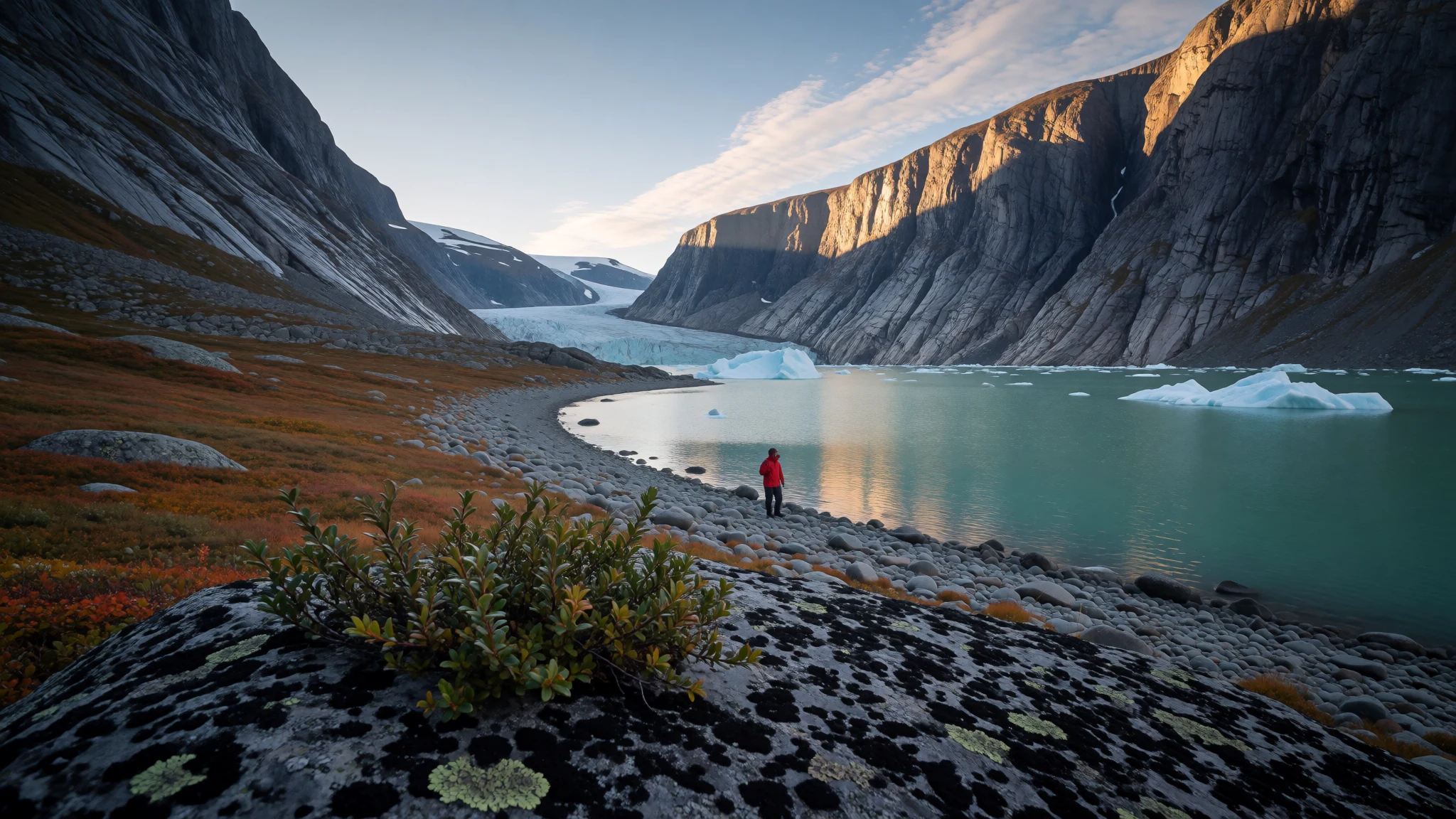
Evighedsfjord is a deep, empty Greenland canyon of glacier water and sheer rock, reached only by boat, helicopter or skis.
The place
Evighedsfjord, now usually called Kangerlussuatsiaq Fjord on Greenlandic maps, cuts through western Greenland in the Qeqqata municipality. Its water begins at tidewater glaciers that drain the Maniitsoq ice cap, and it runs about 75 km to Davis Strait through country with no permanent residents. The only settlement of note is Kangaamiut, near the mouth. The head of the fjord splits into two arms. The southern one, Qingua Kujalleq, is a short icefjord. The northern one, Qingua Avannarleq, comes down a valley and is plugged at its far end by outflow from the ice cap. Below the point where they join, the fjord turns south-west between cliffs that climb above 2,000 m, while the water beneath them is about 700 m deep, so the walls carry on far below the surface. Further along, the channel makes a sharp right-angle turn to the north-west, then swings south-west again where small icefjords from more glaciers feed in. Sermitsiaq Glacier sits in this stretch and drops its ice into two separate fjords, this one and a neighbour to the north. Past there the walls sink to a lower, gentler profile, the water widens, and the fjord reaches the open sea through a scatter of skerries. This is a place of scale rather than facilities: no roads, no town to stay in, and movement by boat, helicopter, ski or on foot. Visitors come as part of a guided or fully self-sufficient trip, not as a day out.
Its story
Evighedsfjord is the Danish-language name, Evighedsfjorden, and it reads as a poetic label for a fjord that seems to have no end. The Greenlandic name, Kangerlussuatsiaq, has had several spellings; older maps write it Kangerdlugssuatsiaq, which is the same word in the earlier orthography. It is a close relation of Kangerlussuaq, which simply means Big Fjord, and that is a useful warning. Many Greenlandic place names describe a feature rather than identify one spot, so two quite different fjords can share a name and a careless map reading can send a traveller to the wrong coast. The name Greenland itself has a story. The Icelandic sagas say Erik the Red picked it to tempt settlers from Iceland. The island is in fact about 84% ice, though the southern coasts the Norse settled turn green in summer and were probably greener still in the Medieval Warm Period. Evighedsfjord lies in a different, emptier landscape, where the main character is ice. The Maniitsoq ice cap that feeds the fjord is now separate from the Greenland ice sheet, known in Greenlandic as Sermersuaq. That detail says something about how the margins of the ice shift over time, and it is why the heads of the two arms look so different from one visit to the next. The fjord's history is mostly one of geography and naming, written by ice and by the people who travelled around it.
What to see
- The southern arm, Qingua Kujalleq — Head of the fjord
Qingua Kujalleq is the short icefjord at the southern head of Evighedsfjord, where glacier ice reaches the water. It is a place for watching ice calve and drift from a safe distance, ideally from a boat with an experienced skipper. Expect cold air coming off the ice even in a mild summer.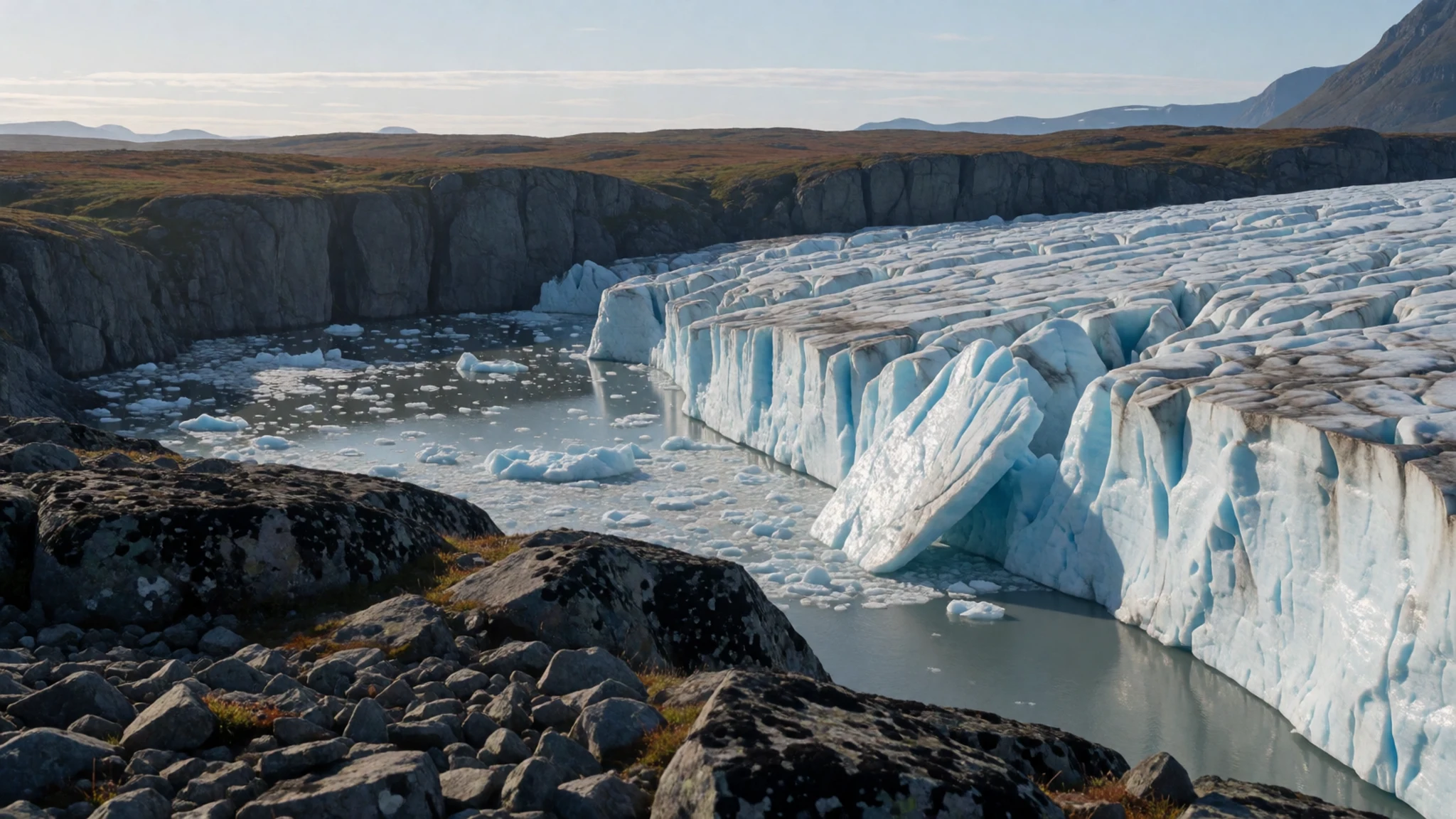
- The northern arm, Qingua Avannarleq — Northern head of the fjord
The northern arm comes down a long valley and ends against outflow from the Maniitsoq ice cap. It is wilder and less visited than the southern arm. Reaching it takes planning, a guide or an operator, and good local advice on ice and weather before anyone sets out.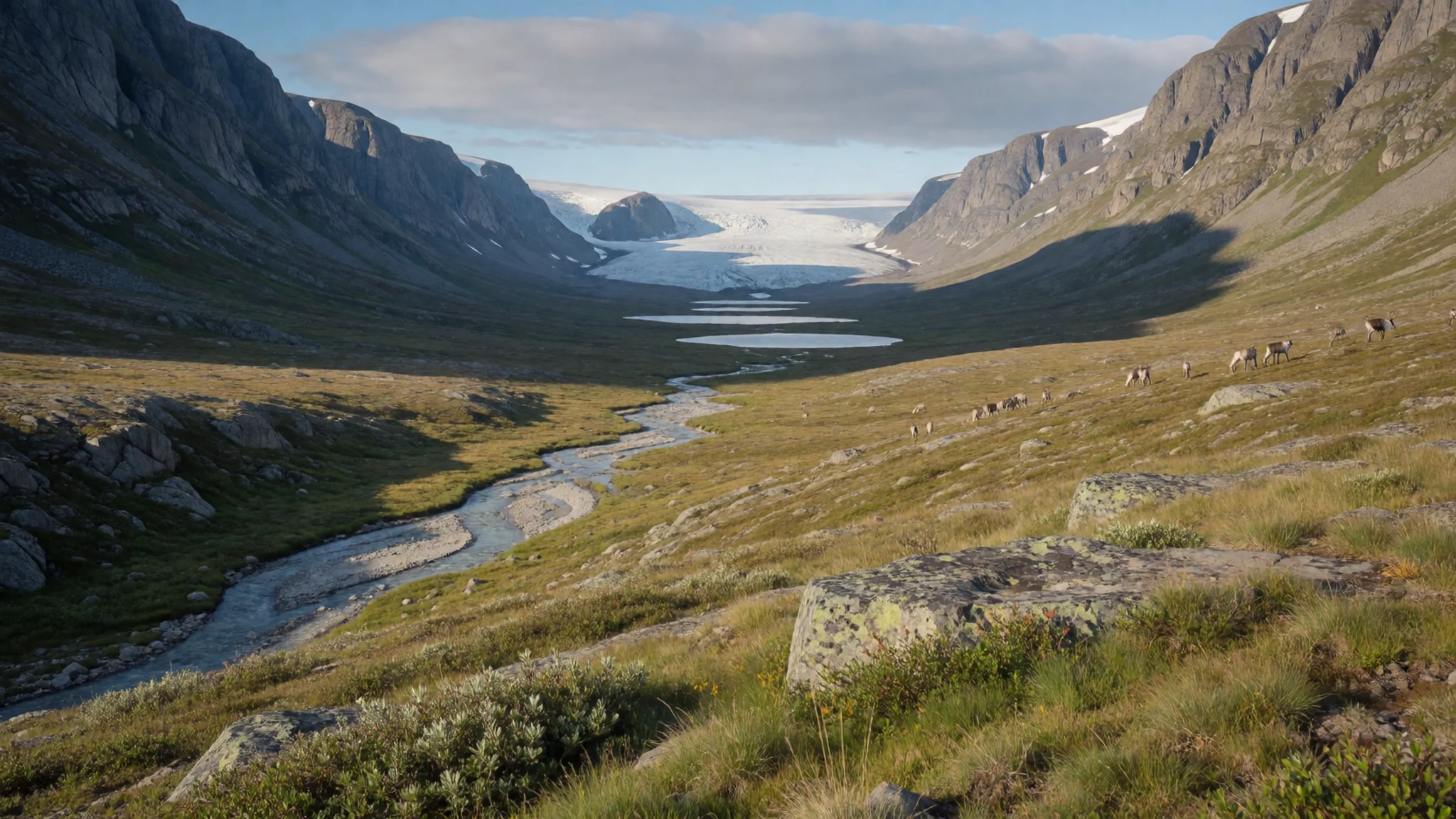
- The canyon walls — Middle section of the fjord
Beyond the junction of the two arms, the fjord runs between cliffs above 2,000 m. The sheer scale is best taken in from the water, where the rock appears to rise straight from the surface. This middle section is also where mountaineers and heliskiers focus their trips.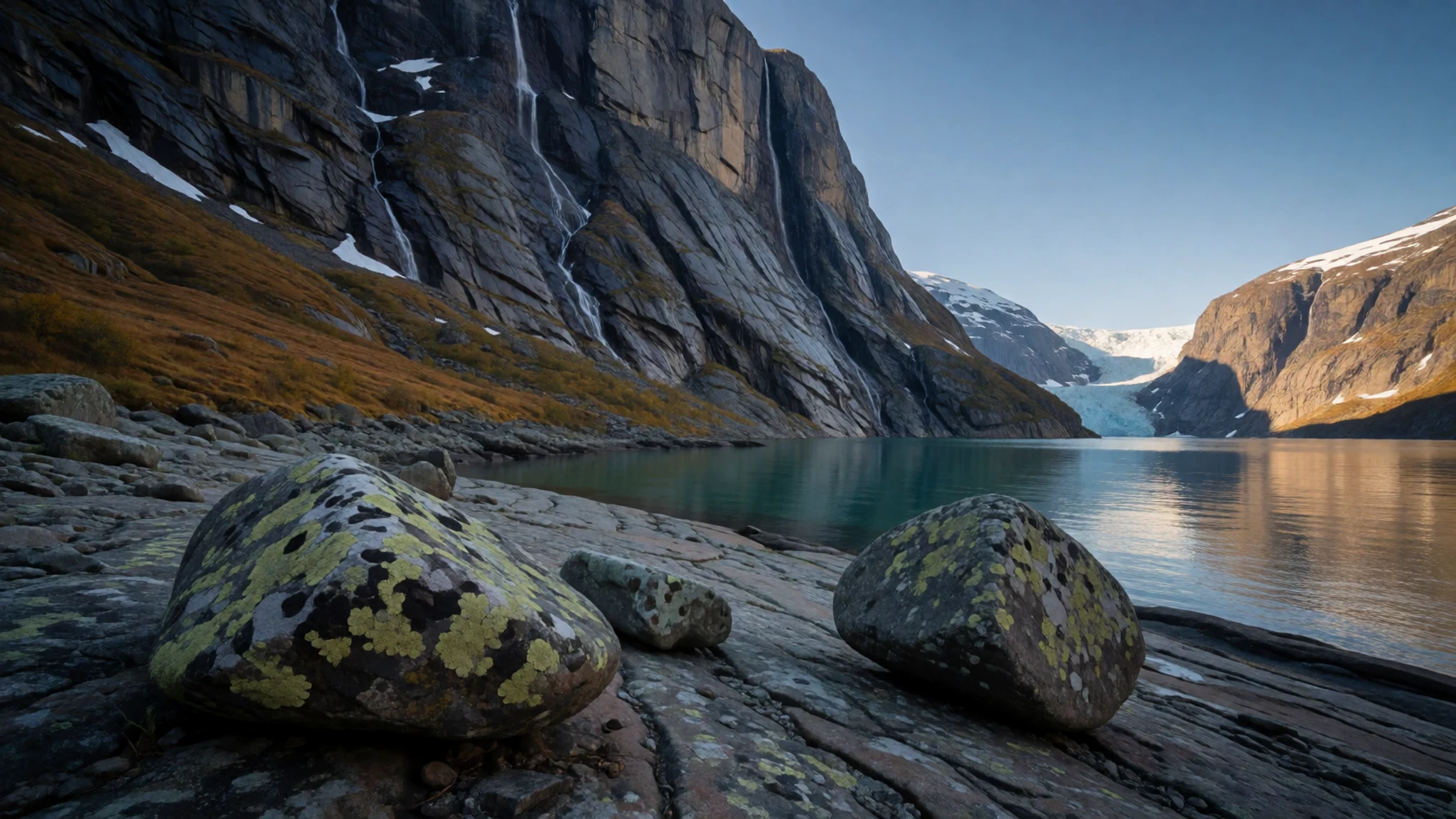
- Sermitsiaq Glacier — Lower fjord
Sermitsiaq Glacier feeds the fjord in the lower half, and also drains into a neighbouring fjord to the north. Small icefjords converge here, so the water can carry brash ice and the light changes quickly. A boat trip here gives a close look at how glaciers shape separate valleys.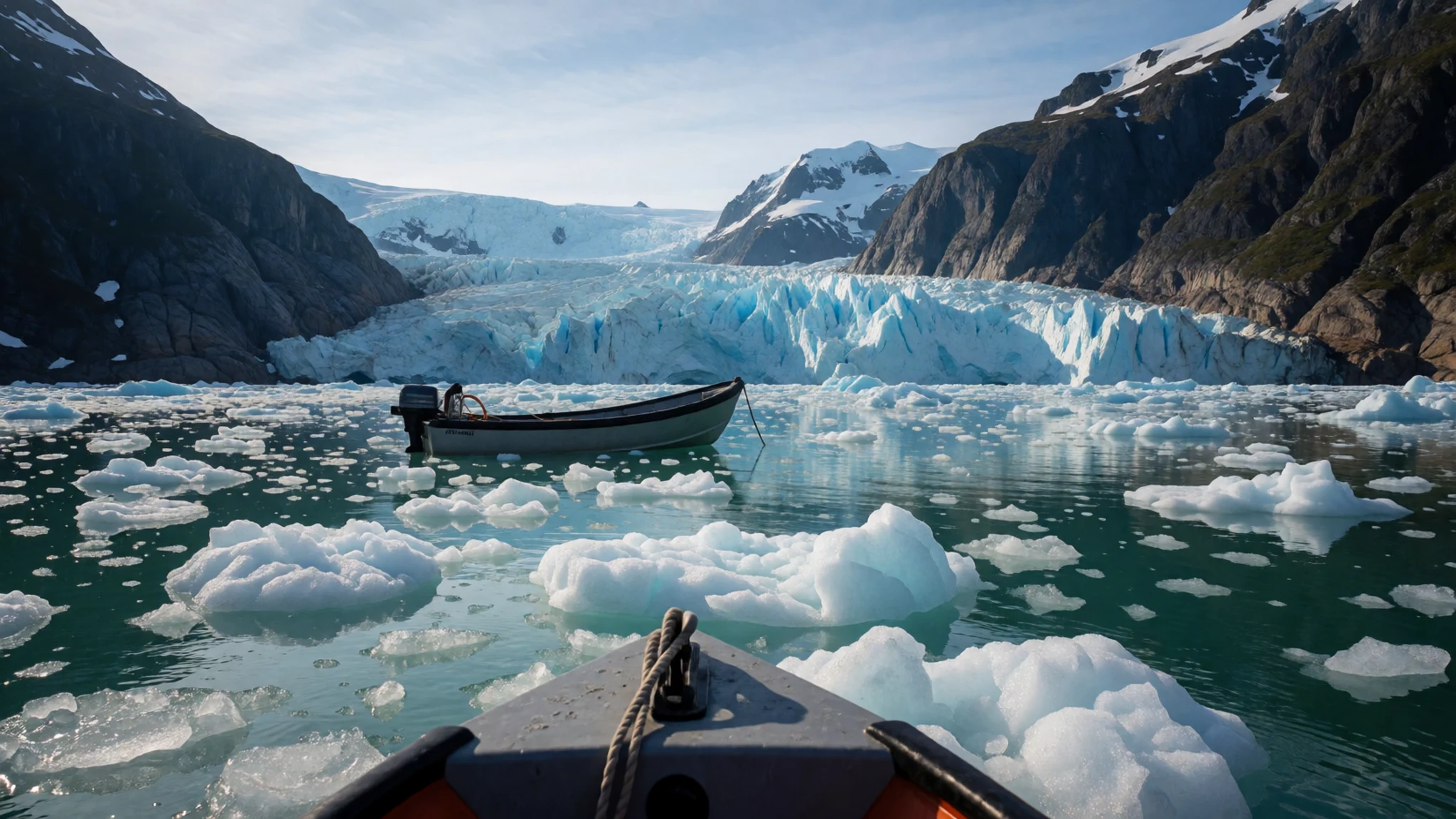
- The skerry-studded mouth near Kangaamiut — Fjord mouth, Davis Strait
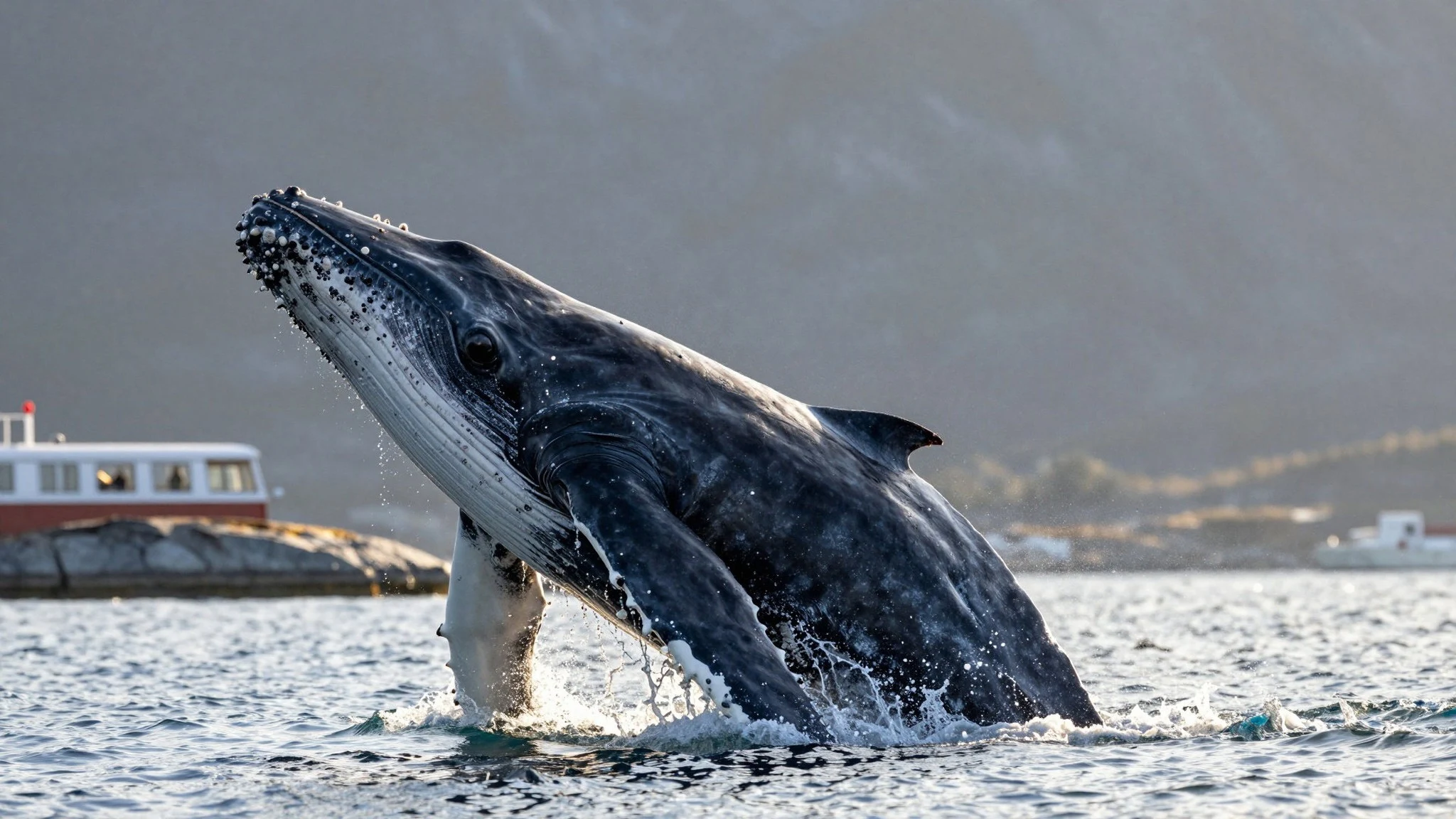
At the seaward end the fjord opens into Davis Strait among small rocky islands. Kangaamiut, the nearest settlement, is the practical base for boat trips here. Seabirds, seals and sometimes whales can be seen in the cold, productive water, though sightings are never guaranteed.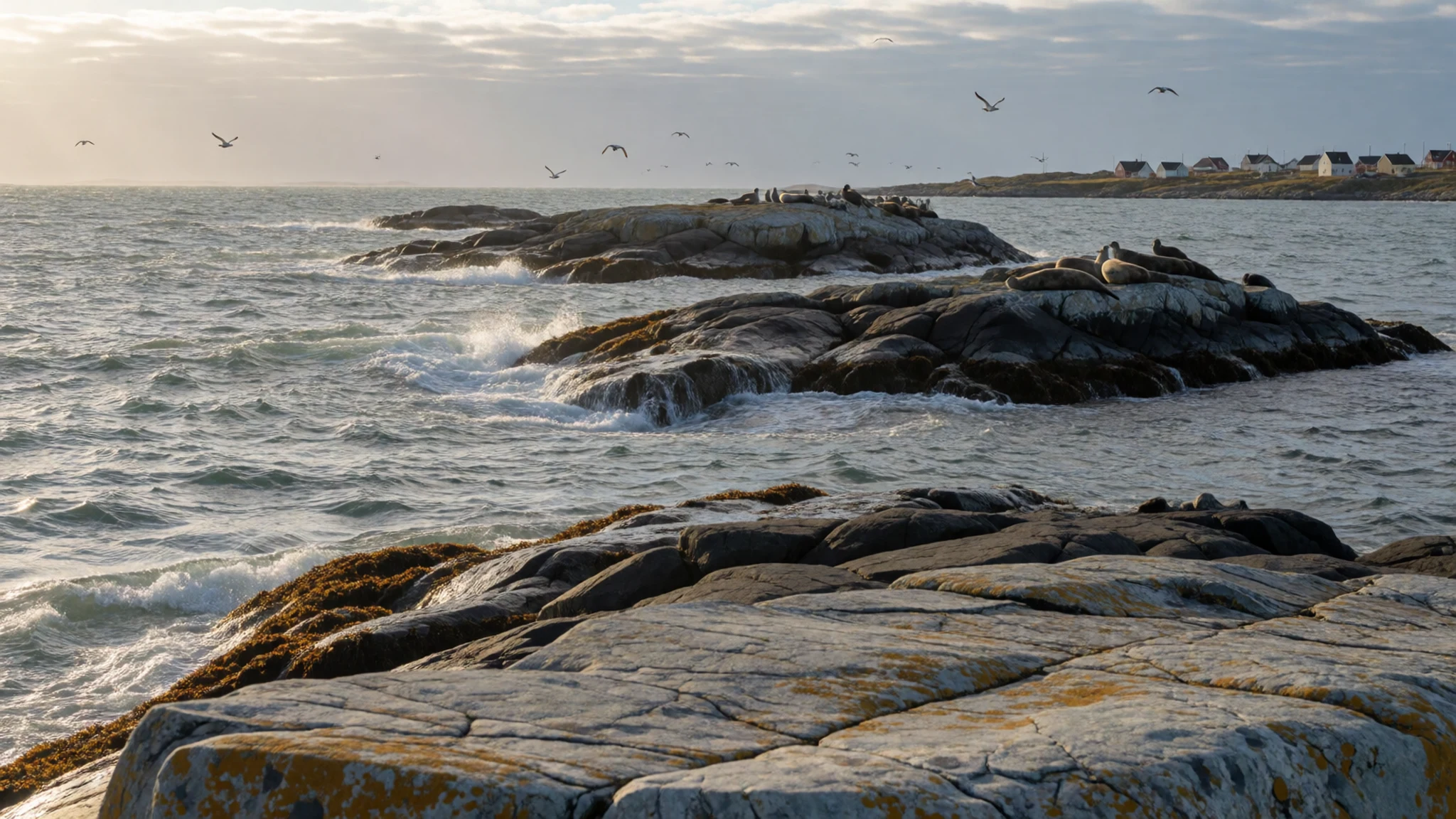
Culture
Evighedsfjord has no residents of its own, so the culture a visitor meets is that of the Kalaallit in nearby settlements such as Kangaamiut and the larger towns along the coast. Kalaallit is the word Greenland's native inhabitants use for themselves, and Greenlander is also acceptable. The old outsider term Eskimo is now considered a slur and should not be used. Greenlanders also see themselves as a nation separate from Denmark, so describing Greenland as part of Denmark causes offence; if the political link comes up, the correct phrase is the Kingdom of Denmark. Life along this coast has long rested on hunting and fishing, and seal, fish and sometimes whale remain part of everyday meals. That is a normal part of local life, not a spectacle, and visitors are best off listening rather than arguing. Greenland has no private land ownership, so walking is generally free away from settlements, though permits are needed for some areas, notably glacier travel and national park routes. Locals are used to visitors who are self-reliant, and a quiet greeting goes a long way in small communities where everyone knows everyone. Always call people Kalaallit or Greenlanders, never Eskimo, and say you are in Greenland rather than in Denmark.
What to wear
Evighedsfjord sits far from any town, so fashion here is mostly a matter of what the Kalaallit wear in the settlements around it. Traditional dress, called the national costume, is worn on special days such as confirmations, weddings and national holidays. Women's versions use sealskin for trousers and boots, with a broad, brightly beaded collar over a tunic, while men's versions are simpler and darker. Kamik, the soft sealskin boots, are the best-known piece. Sealskin and, in places, wool and cotton are the traditional materials. In daily life people wear modern outdoor clothing: fleece, windproof shells, wool hats and sturdy boots, with the national costume reserved for celebrations. Visitors should dress for the weather and terrain, not for style. Layers matter most: a wool or synthetic base layer, a warm mid-layer, and a waterproof, windproof outer shell, even in summer, because wind off the ice and the water is cold. Waterproof, ankle-supporting boots suit the rocky shoreline and wet tundra. Bring gloves and a warm hat in every season, sunglasses for the glare off ice and water, and a head net for the summer insects. There is no formal dress code, but modest, practical clothes are normal when visiting a settlement.
What to eat
- Fresh fish — Local market or landing stage in a coastal settlement
Locally caught fish is the everyday staple along this coast, usually boiled, fried or dried. Fish from the nearby sea turns up wherever there is a small shop, a boat landing or a family kitchen. Ask in Kangaamiut what was landed that day.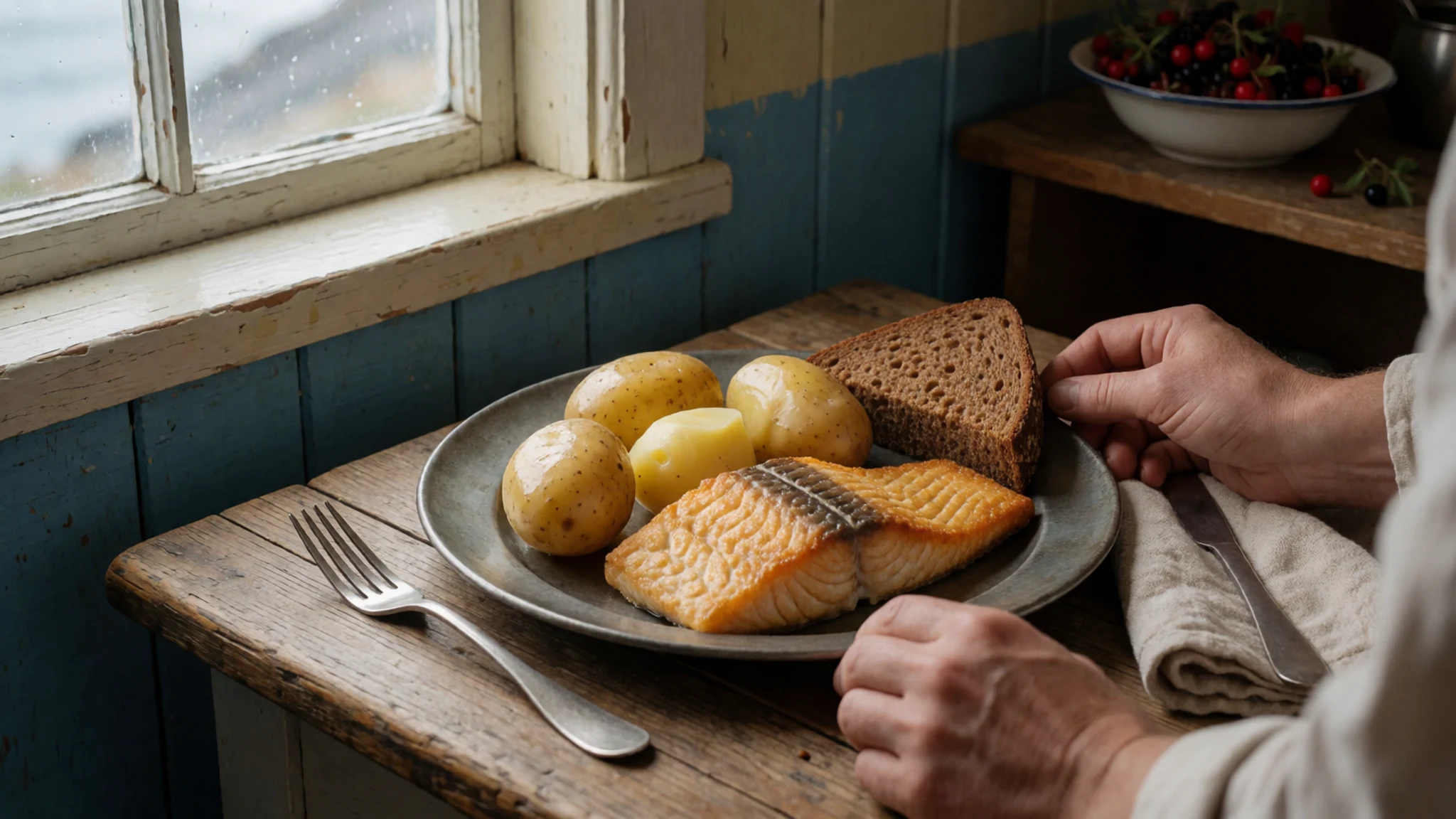
- Shrimp — Market stalls and restaurants in towns such as Nuuk
Cold-water shrimp are a Greenlandic export and are widely eaten at home. They are small, sweet and often served simply, with bread or in a salad. They are an easy first taste of local food for visitors who are cautious about unfamiliar meat.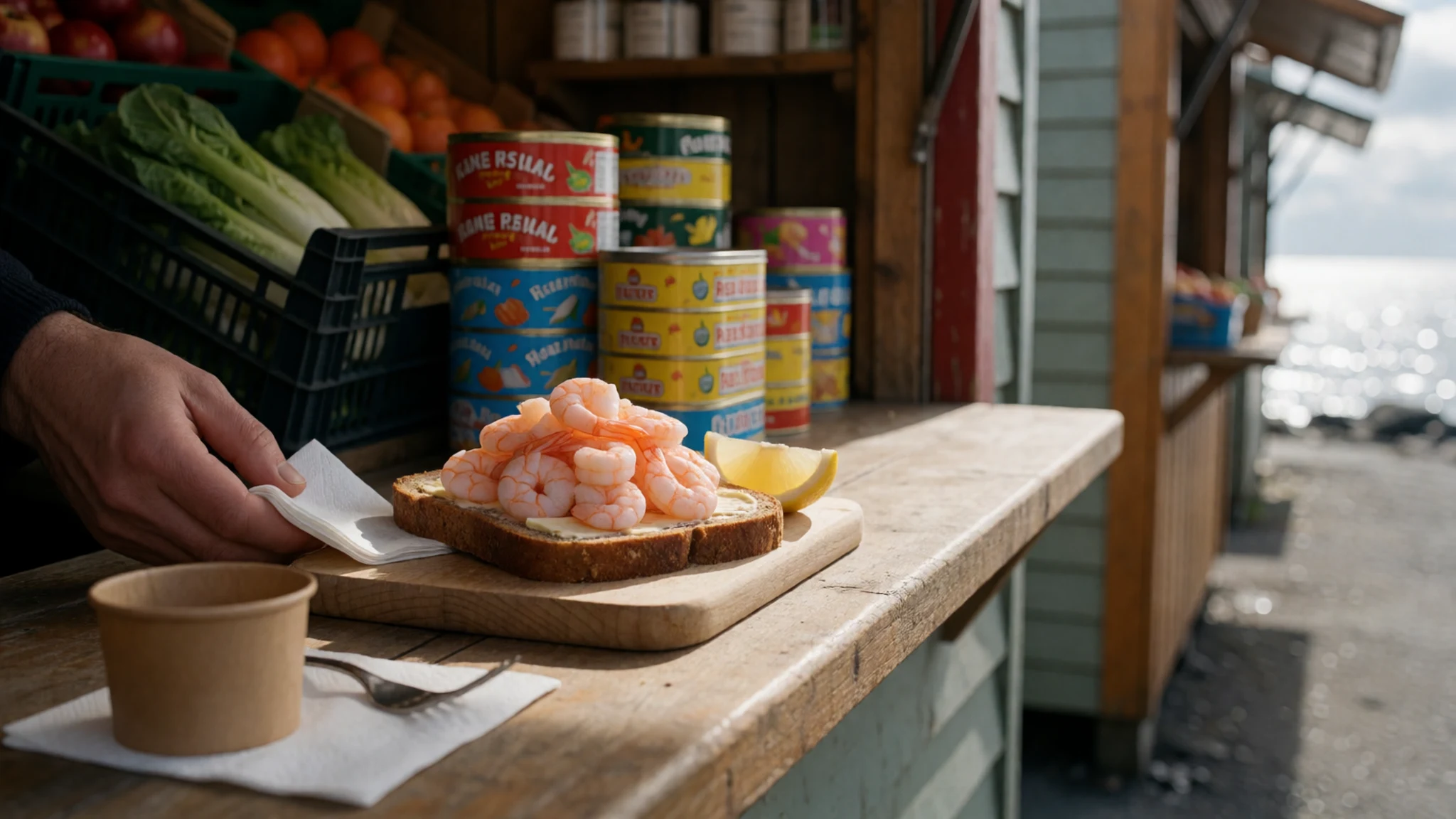
- Muskox and reindeer — Restaurants in larger towns, or the local market
Muskox and reindeer appear on menus alongside familiar dishes, often as a stew or a roast. Both are lean and strongly flavoured. Many Greenlandic restaurants mix traditional meats with European-style cooking, so they can sit next to burgers or pasta. - Seal and whale meat — The market hall in each town
Seal and whale are traditional foods and can be bought at local markets in each town. Visitors who choose to try them should do so respectfully and ask how they are usually served. Seal in particular is rich and dark, with a strong, gamey flavour. - Greenlandic coffee — Restaurants in Nuuk and other towns
Greenlandic coffee is a showpiece drink, made with coffee and a generous measure of several liqueurs and whisky. In some places it is prepared at the table as a small performance. It is stronger than it tastes, so it suits a cold evening after a day outdoors.
Plan it
Best time. June to September, when the days are long and the weather is milder; around the summer solstice on 21 June the sun barely dips below the horizon at night. Winter and spring suit skiers and mountaineers on guided trips, but cold is the main hazard.
How long. 4–7
Getting there. Fly to Kangerlussuaq or Nuuk, then take a domestic Air Greenland flight or helicopter and onward boat to Kangaamiut or the nearest coastal town. The fjord itself is reached by chartered boat, helicopter or an expedition operator. Check the Air Greenland site and local operators for current routes.
Budget. high
Tips
- Book flights, boat transfers and any guide well in advance, as services are limited and weather delays are common
- Check whether you need an expedition permit for glacier travel or national park areas before you leave
- Pack warm layers and waterproofs even in July and August, and bring a head net for summer insects
- Carry cash and cards, and expect few shops outside the larger towns, so bring snacks and essentials with you
- Build a spare day or two into the schedule, because fog and wind can ground helicopters and boats
Etiquette
- Call people Kalaallit or Greenlanders, never Eskimo, and say you are in Greenland, not Denmark
- Ask before photographing people, hunting gear or catches
- Keep a respectful distance from calving glaciers and leave the shoreline as you found it
Nearby
Sources
- Wikidata Q24831540 (CC0)
- Wikipedia, Evighedsfjord (rev 1366035645) (CC BY-SA 4.0)
- Wikivoyage, Greenland (rev 5381839) (CC BY-SA 4.0)
Wildlife
- Ringed seal (animal)
The ringed seal is a small seal with no ear flaps, and its dark spots are each circled by a pale ring, like tiny pebbles dropped in puddles. In Evighedsfjord, seals may appear in the cold, food-rich water, though the reading cannot promise a sighting. Watch from a respectful distance, ideally with a local guide, and keep voices low and movements slow. Let the seal go about its day, and never offer it food.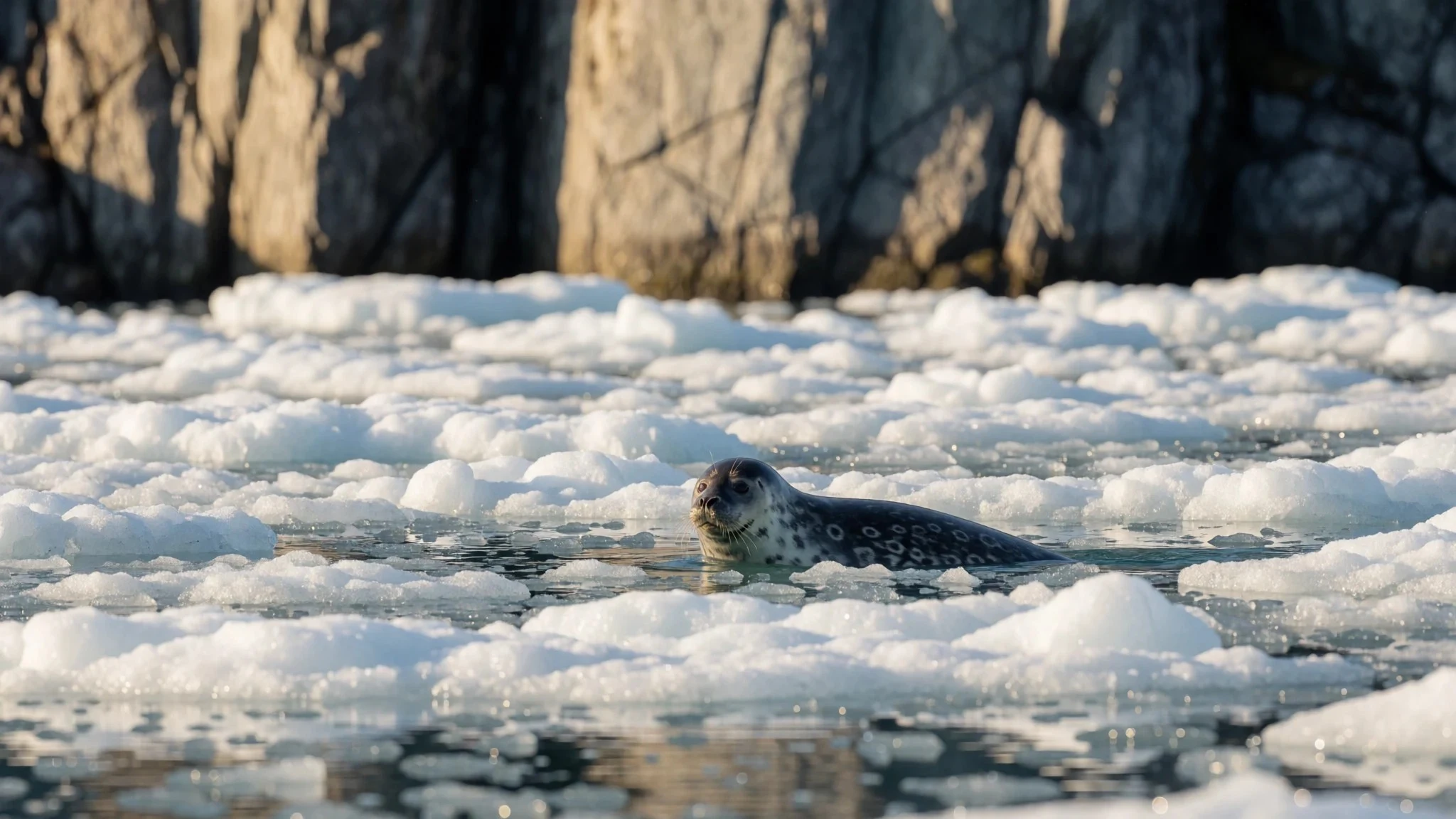
- Humpback whale (animal)
The humpback is a huge whale that filters its food from the sea and is famous for leaping out of the water, and the males sing long, complex songs. In Evighedsfjord, whales are only sometimes seen in the cold, rich water, and no sighting is ever guaranteed. Watch from a generous distance, ideally with a guide, and stay quiet and calm so as not to disturb it. Never try to feed a whale, and let it choose how close to come.