Disko Bay
Disko Bay, Greenland
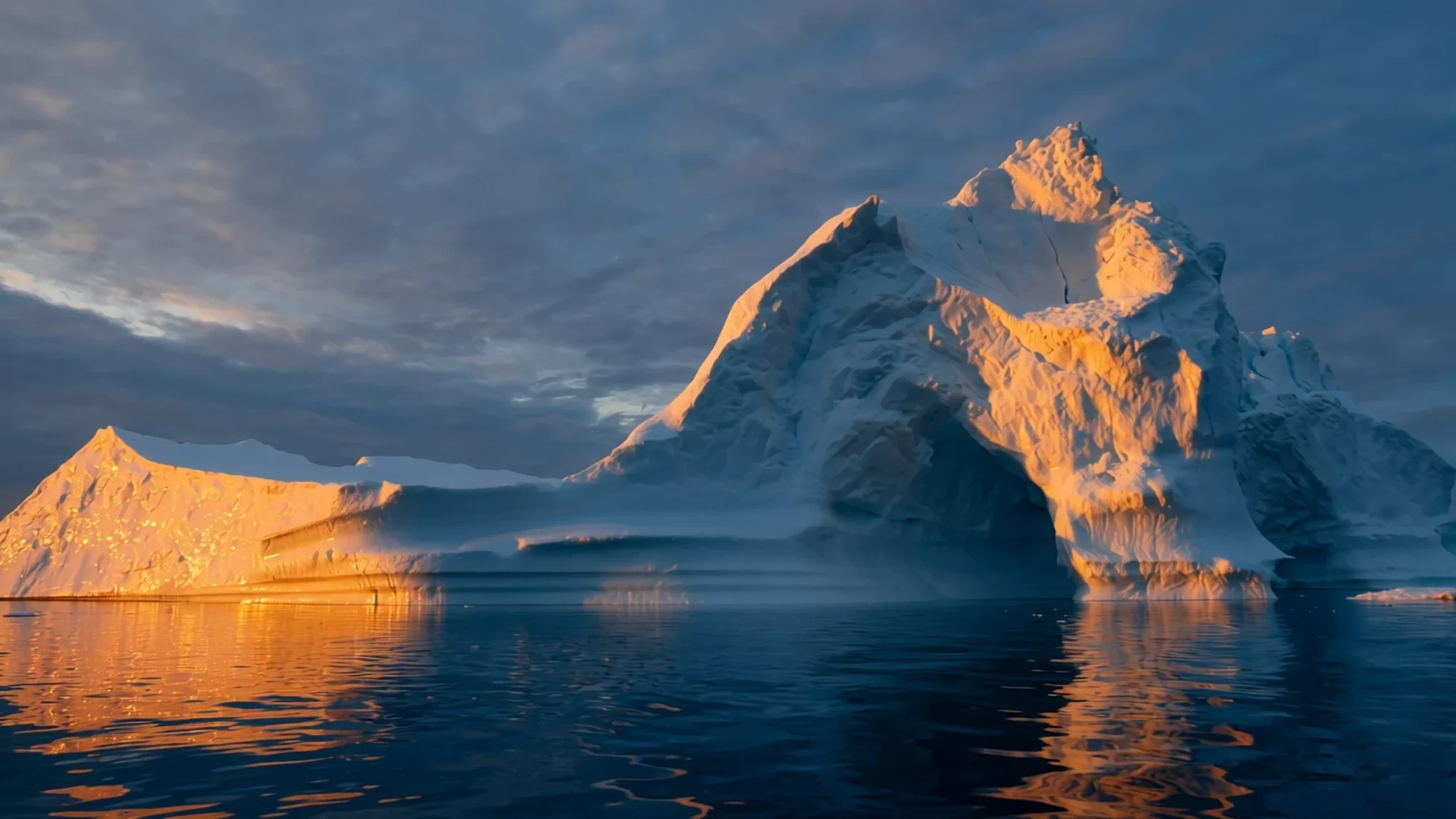
Disko Bay is a vast western Greenland bay of drifting icebergs, humpback whales and long summer daylight.
The place
Disko Bay sits on Greenland's western coast, a wide inlet of Baffin Bay that stretches roughly 150 kilometres from north to south and about 100 kilometres across. Its average depth is around 400 metres, and the water stays cold for most of the year, close to freezing in winter and reaching perhaps 12 °C at the height of summer. Recent decades have seen the bay gradually warming. Heading south, the coastline splinters into a tangle of rocky islets and tiny isles belonging to the Aasiaat island group. The main settlements lie along the southeastern shore, including Qasigiannguit and Ilimanaq, and Ilulissat, the best-known town, sits beside the outflow of its famous icefjord. The northern edge of the bay is closed off by Qeqertarsuaq, or Disko Island, the largest island on this coast, which is separated from the mainland by the narrowing Sullorsuaq Strait. The landscape is rock, ice and open water, with few trees and little road linking the communities. Boats and small aircraft do much of the travelling. Greenland has no private land ownership, so walking away from the towns is generally open, though marked tracks are scarce and the ground is rough.
Its story
Disko Bay has drawn people for a very long time. The Saqqaq culture was living around its shores thousands of years ago, while it is unclear when Inuit groups first ventured into the bay. Norse settlers from Iceland arrived later and founded farming communities on the more fertile western coast. Soon afterwards, their sailors pushed north during the short summer thaw and found the bay itself. What drew them was its wealth of marine resources. Walrus tusks yielded ivory, seal skins were prized, and whales supplied several useful materials. These goods were the chief way the settlers earned their living, and they carried on trade with Iceland, the British Isles and continental Europe. The Norse settlements would most likely have died out sooner had that trade not been there. Early Norse accounts describe the bay as empty when they first sailed in, but later records show an exchange with Inuit arriving from the north and west. For a time the two groups shared the waters and hunting grounds peacefully. The setting is shaped by geology as much as by history. Glaciers flow down from the Greenland ice sheet and break into the water, so the bay is full of icebergs that calve from the ice front and drift out to sea. Today the coastline still supports hunting and fishing, with towns built on the same shore that once fed the trade.
What to see
- Ilulissat Icefjord — Ilulissat
The Ilulissat Icefjord draws most visitors, and it is where many of the bay's icebergs begin. Glaciers feed the fjord from the ice sheet and push great blocks of ice into the water, which then drift out past the town. The best views come from the shoreline or from a small boat among the floes. Go early or late in the day when the light is low and the crowds thin, because the ice changes shape with wind and tide.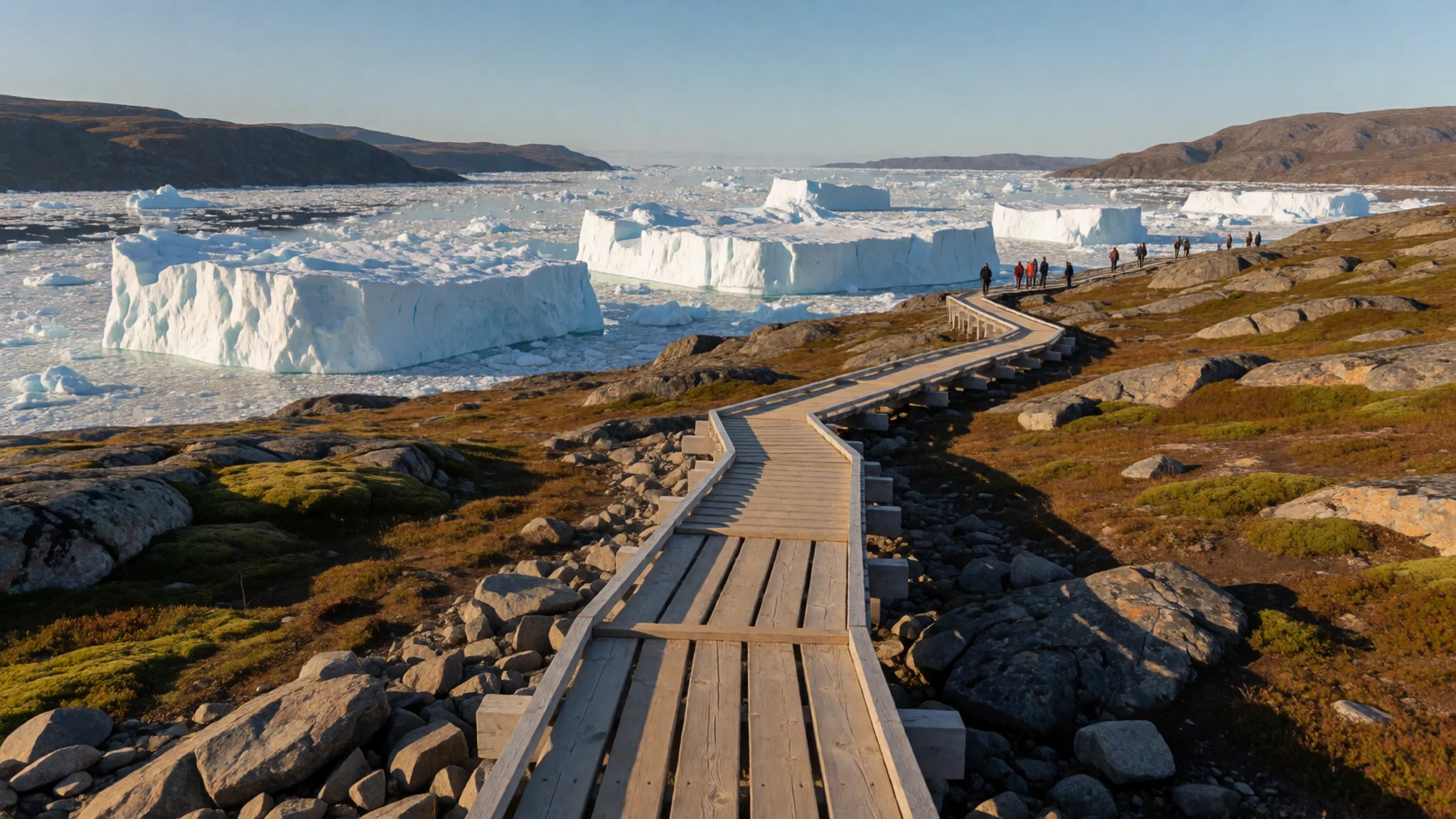
- Whale watching — boat trips from the towns
Humpback whales visit the bay in spring, and boat trips from the towns offer the best chance of seeing them. Sightings are never guaranteed, so treat a day on the water as a bonus rather than a promise. Ask the operator about its distance rules before booking, and choose a company with a sound reputation.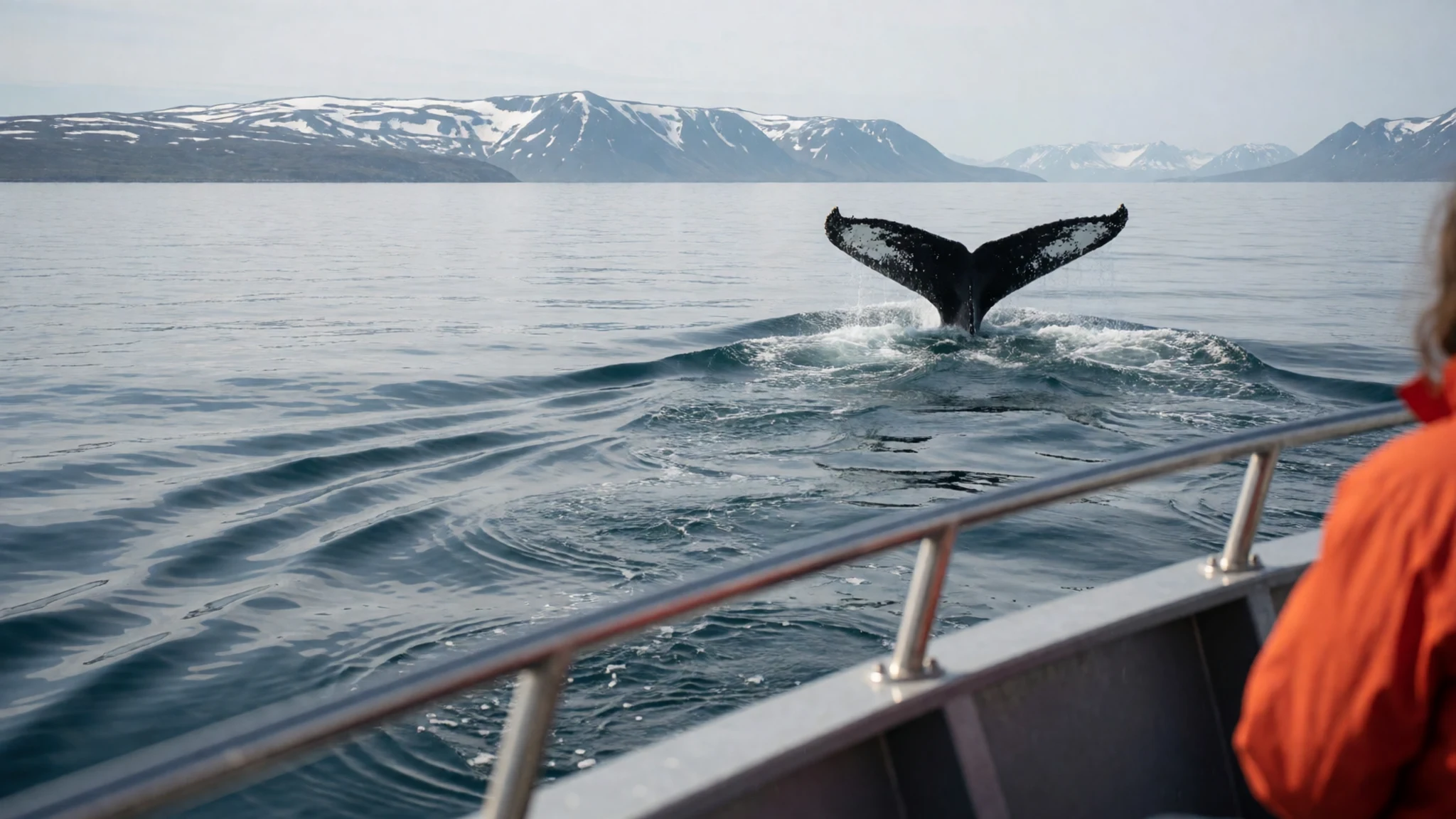
- Qeqertarsuaq (Disko Island) — the northern side of the bay
Qeqertarsuaq, or Disko Island, is the largest island on Greenland's western coast and closes the northern side of the bay. Its hills and coves look across the water towards Ilulissat, and the views back over the bay are a strong reason to stay longer than a day trip. Boat connections depend on the season and the weather, so plan around them and expect cold wind even in summer.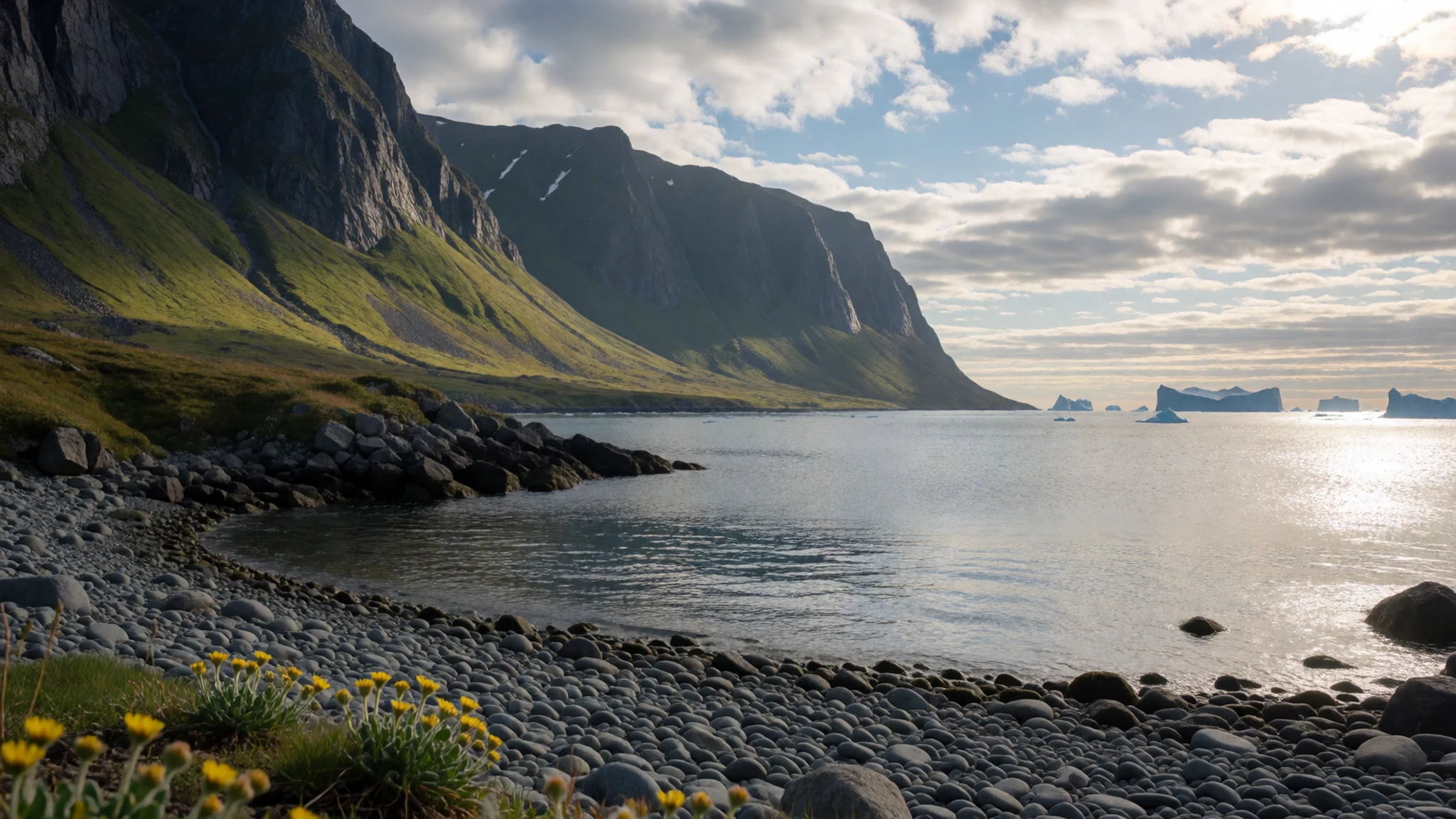
- Aasiaat archipelago — the southern shore
The Aasiaat archipelago lies to the south, a maze of skerries and small islands that makes the coastline hard to read from the water. Narrow channels wind between the rocks, and calm days suit slow boat trips. The islands see fewer visitors than the icefjord, which makes them good for quiet walks near small settlements. Bring warm layers, a waterproof jacket and sturdy shoes.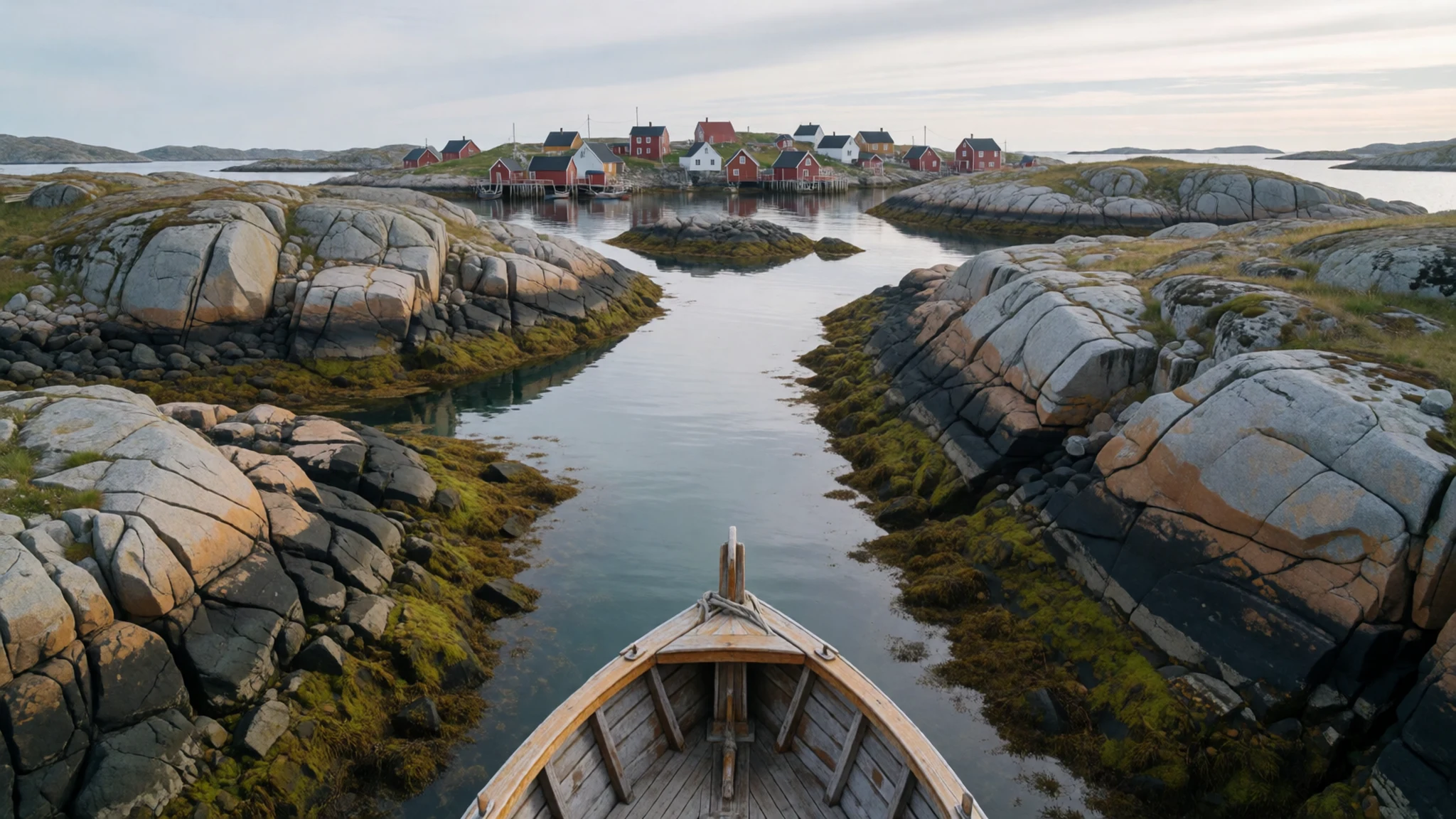
- Midnight sun and walking — around the settlements
In summer the sun stays above the horizon for long stretches, and in parts of Greenland it stays up for days or weeks at a time. Walking near most settlements is open, but stick to the few small paths, because the ground is soft and easy to lose. Some routes, glacier travel included, need permits, so check before setting out on anything serious.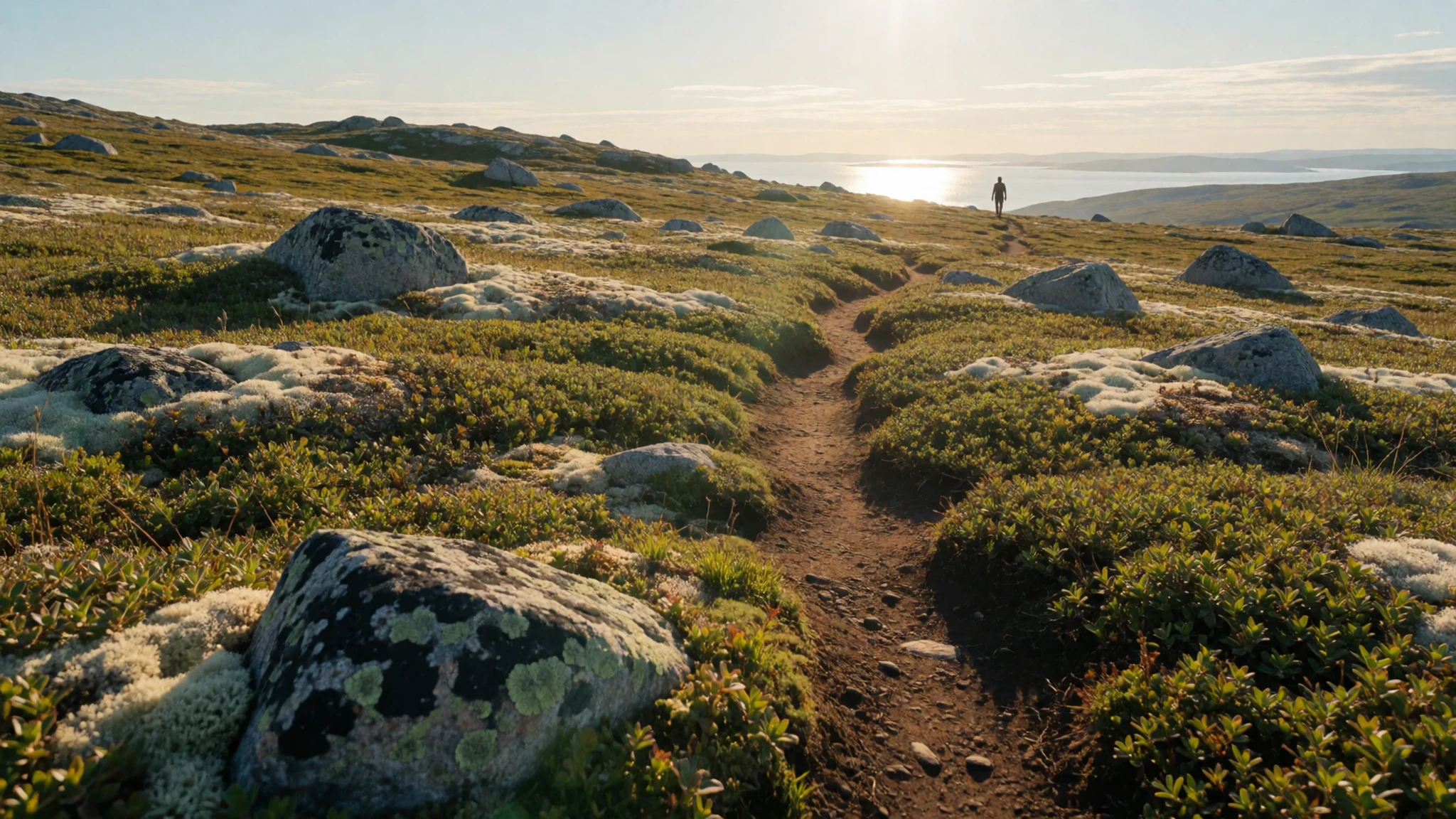
Culture
Disko Bay lies in a country whose people call themselves Kalaallit, the plural of Kalaalleq, and the name matters to local people. Greenlanders see themselves as a distinct nation with their own language and society. Their homeland is part of the Kingdom of Denmark, and it is not treated as a Danish province in everyday speech. Towns around the bay are small and close-knit, and many residents work in fishing, hunting, transport or public services. Hunting remains part of daily life, and the seal, whale and fish served in restaurants often come from local catches. Greenlandic is the everyday language in most homes, with Danish widely understood. Visitors who want to learn a few words are warmly received. Avoid the word Eskimo, which Greenlanders regard as a racist slur, and describe Greenland as part of the Kingdom of Denmark rather than as Denmark.
What to wear
Around Disko Bay, traditional dress was built for cold water and long winters, and its materials came from the hunt. The women's parka, the qulittaq, is a hooded garment of skin or cloth, often trimmed with fur and sometimes banded in contrasting colours. Men wore a shorter anorak-style jacket. Footwear was the kamiik, a sealskin boot sewn to keep feet dry on wet ground and snow. Seal skin, sinew thread and fur were the core materials, and beadwork and embroidery decorated collars and cuffs, especially for festivals and special occasions. Today most people wear modern winter clothing, much of it from European outdoor brands, but traditional garments still appear at celebrations, national holidays and performances. Many younger Greenlanders mix the two, pairing a knitted sweater with a sealskin hat or boots. For a visitor, the key is layering. Summer days near the bay can be windy and cold even when the sun is bright, so pack a waterproof outer shell, a fleece or wool midlayer, a warm hat and gloves, and sturdy waterproof shoes for rocky ground. Grip matters more than style on wet rock and ice. Modesty is not a formal concern, though warm clothing is sensible around settlements.
What to eat
- Greenlandic coffee — bars and cafés in the towns, often in the evening
Greenlandic coffee is a local favourite in bars and cafés, sometimes made as a small show. Hot coffee is laced with liqueur, whisky and orange liqueur, and it hits hard, so sip slowly.
- Northern shrimp — the harbour and fish market in Ilulissat and other towns
Cold-water shrimp, small and sweet, are landed in the harbours around Disko Bay and sold fresh or boiled. Buy them by the bag in season and eat them with bread and butter, as many locals do. Shrimp also turns up in simple sandwiches and salads.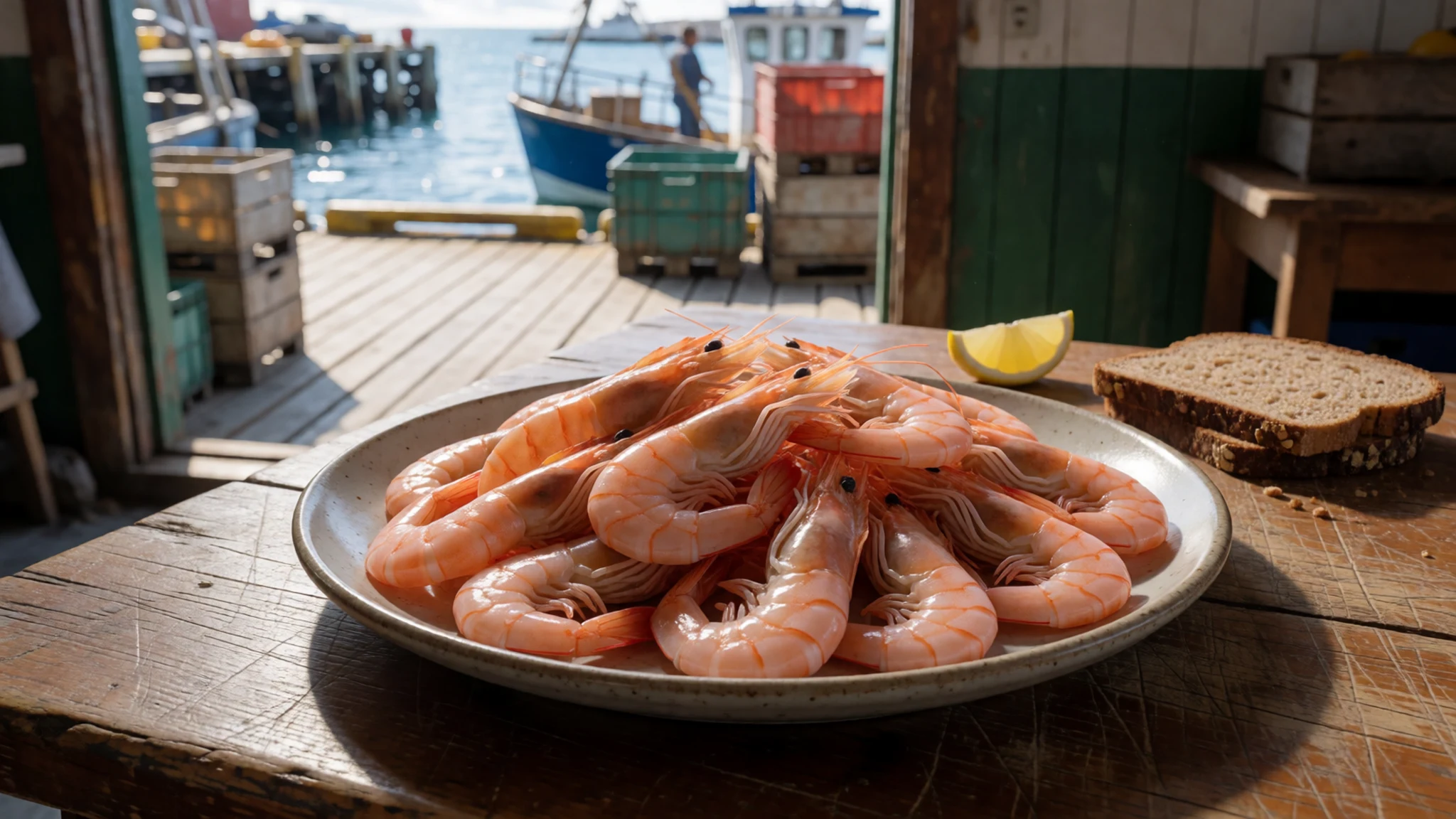
- Halibut and Arctic char — any eatery that cooks the local catch, especially harbourside
Halibut, cod and Arctic char appear across the region, grilled, smoked or pan-fried. Fish is often the most dependable choice on a menu, and the fish on local plates is usually landed nearby. - Seal and whale — Greenlandic restaurants in the towns
Seal and whale meat are part of the traditional diet and still appear on menus, especially in Greenlandic restaurants. Expect a dark, rich flavour and a firm texture. Ask staff how the meat was caught and prepared, and order a small portion first if the taste is unfamiliar. - Muskox and reindeer — restaurants in Ilulissat and the other towns
Muskox and reindeer, or caribou, are served as steaks, stews and smoked slices. Both are lean and mild, and muskox often comes with a rich gravy. Menus often show whether the meat is local, so check before ordering.
Plan it
Best time. June to September, when the water is open, boats run and daylight lasts long into the night. Shoulder months bring more ice and colder weather, and winter is dark and very cold, with the bay frozen at its edges.
How long. 4–6
Getting there. Fly into Ilulissat Airport with Air Greenland, usually connecting through Kangerlussuaq or Nuuk. Flights depend on the weather, and the final leg is a short domestic hop. Check current routes before booking, because schedules change.
Budget. high
Tips
- Book flights and boat trips early in summer, when seats fill quickly
- Build spare days into your plan, because flights and boats are often delayed or cancelled
- Head out on the water in calm mornings, when the sea is usually quieter
- Carry some cash as well as cards, since small operators and shops may not take cards
- Pack for cold wind and rain even on bright days, and bring sun protection
Etiquette
- Keep a respectful distance from whales, seals and icebergs, and never walk on floating ice
- Ask before photographing people, especially in small communities
- Say Kalaallit or Greenlander rather than Eskimo, and describe the country as part of the Kingdom of Denmark
Nearby
Sources
- Wikidata Q1135227 (CC0)
- Wikipedia (rev 1365987925), Disko Bay (CC BY-SA 4.0)
- Wikivoyage (rev 5381839), Greenland (CC BY-SA 4.0)
- Photo photos/01-disko-bay-rays.jpg (CC BY 3.0)
- Photo photos/02-disko-bay-icebergs.jpg (CC BY 3.0)
- Photo photos/03-panoramic-views-of-icebergs-off-greenland-in-the-greenland-s.jpg (CC BY-SA 4.0)
- Photo photos/04-tail-of-humpback-whale-megaptera-novaeangliae-in-disko-bay-g.jpg (CC BY-SA 4.0)
- Photo photos/05-024-aerial-view-of-jakobshavn-glacier-at-disko-bay-greenland.jpg (CC BY-SA 4.0)
- Photo photos/06-025-humpback-whale-at-disko-bay-greenland-photo-by-giles-lau.jpg (CC BY-SA 4.0)
- Photo photos/07-066-abendstimmung-diskoinsel-vom-hotel-icefjord.jpg (CC BY 4.0)
- Photo photos/08-christian-benjamin-olsen-parti-fra-diskobugten-i-gr-nland-19.png (Public domain)


