Kanchipuram
Kanchipuram, India
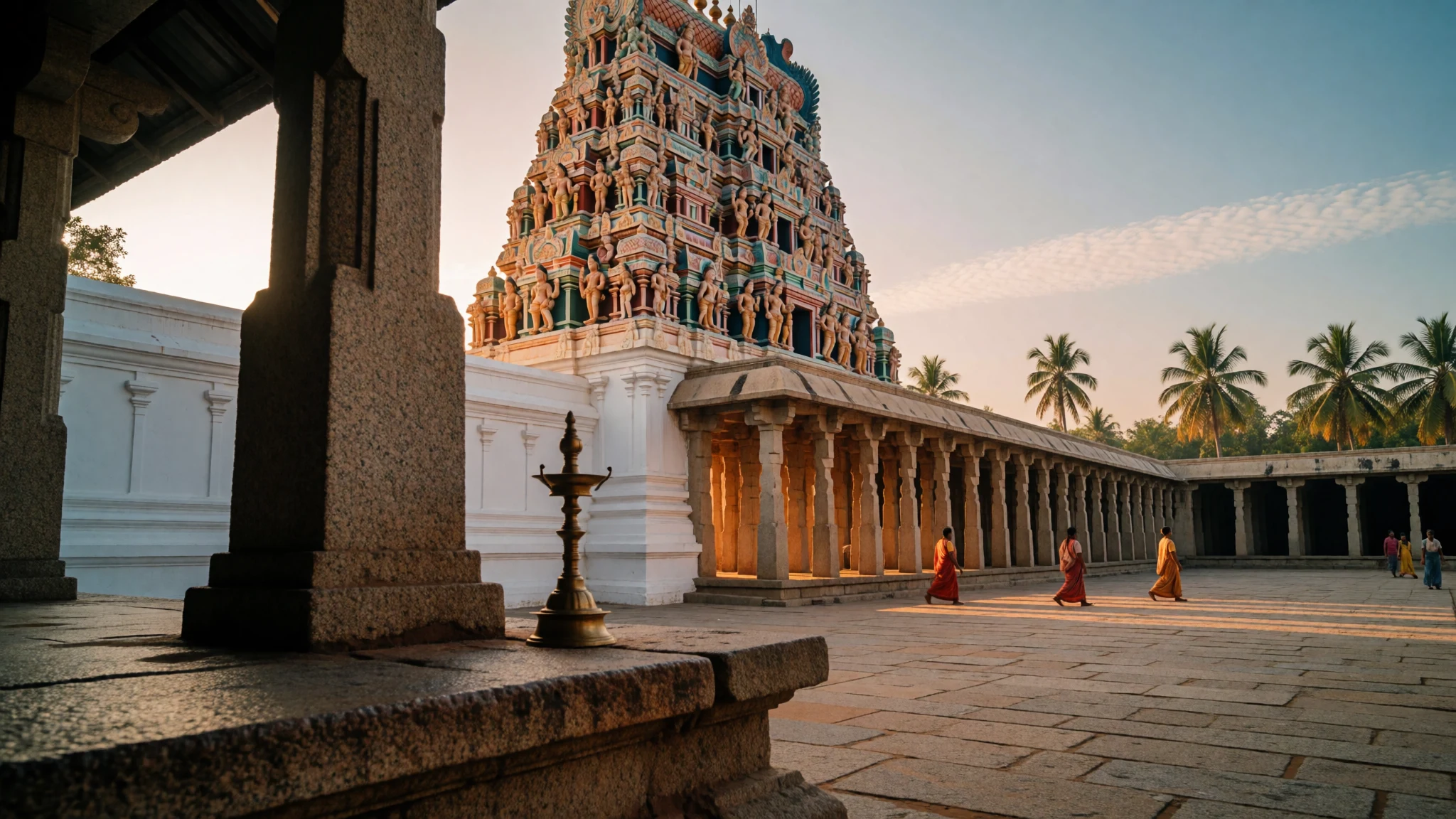
Kanchipuram packs working Pallava-era temples and handloom silk weaving into one small Tamil Nadu town, easy to reach from Chennai.
The place
Kanchipuram sits in northern Tamil Nadu, inside the Chennai metropolitan area, on the banks of the Vegavathy and Palar rivers. It is a working town of about 164,000 people at an elevation of 88 metres, and it is the administrative seat of its district. Visitors come for two things that share the same streets: temples and silk. The temples belong to both main strands of Tamil Hindu worship, so Shiva shrines and Vishnu shrines stand within a short auto-rickshaw ride of each other. Tall gateway towers, called gopurams, rise above low concrete buildings, and behind them lie temple tanks and long pillared halls. The nickname City of Thousand Temples is a figure of speech rather than a count, though the density is real. The silk is the other half of the picture. Weaving families live in the lanes around the temples, and the saris that carry the town's name are sold in shops along the main roads. The name is usually read as 'city of kanchi flowers', and British writers once spelt it Conjeeveram. Kanchipuram was also known for centuries as a place of learning, a ghatikasthanam. Today it works well as a day trip from Chennai, but an overnight stay pays off: temples are quietest at dawn, and the evening rituals are worth waiting for. The pace is gentler than the capital's, the heat is serious for much of the year, and the centre is compact enough to cover on foot between rickshaw hops.
Its story
Kanchipuram turns up in writing very early. The grammarian Patanjali refers to it, Tamil Sangam works such as the Manimegalai mention it, and the Sanskrit poet Kalidasa called it the best among cities. Historians disagree about whether it was ever an early Chola capital. One scholar argued that Sangam-era Tamil culture never spread through this district, and pointed to the Sanskrit roots of the town's name as evidence. The picture is clearer from the 6th century, when the Pallavas, worried by raids from the north, moved their capital here. They gave the city ramparts, wide moats, planned roads and stone temples. During the reign of Mahendravarman I the Chalukya king Pulakesin II drove deep into Pallava lands, as far as the Kaveri, but the defenders kept hold of Kanchipuram and turned back later attempts as well. After the Pallavas the town passed through Chola, Pandya and Vijayanagara rule, then the Carnatic kingdom and finally the British. For a visitor, the Pallava chapter matters most. Here the move from shrines cut into rock to free-standing built temples can be read in stone, and later dynasties borrowed from it. India added eleven temples in Kanchipuram to its World Heritage Tentative List in 2021, citing that precise shift in architecture. The town's old role as a school, where scholars gathered around temples and monastic centres, belongs to the same long story.
What to see
- Ekambareswarar Temple — Central Kanchipuram
Dedicated to Shiva, this Pallava-era temple is a natural first stop for its sheer scale, with a towering gateway and long, shaded corridors. It represents the earth element among Shiva's five elemental abodes. Come early, when the courtyards are calm and the light on the stone is soft. - Kamakshi Amman Temple — Central Kanchipuram
This is the shrine of Kamakshi, a form of Parvati and consort of Shiva, and it draws a steady stream of local devotees rather than just tourists. The atmosphere is busy and devotional, with flower sellers outside and queues at festival times. Allow time to sit and watch the rituals. - Kailasanathar Temple — Western edge of town
Kanchipuram's Pallava-era Shiva temple in carved sandstone is the one to see for architecture. Its small cells, animal-based sculptures and quiet enclosure feel closer to the shore temples at Mahabalipuram than to the grand gateways elsewhere in town. It is a good place for photography and slow looking.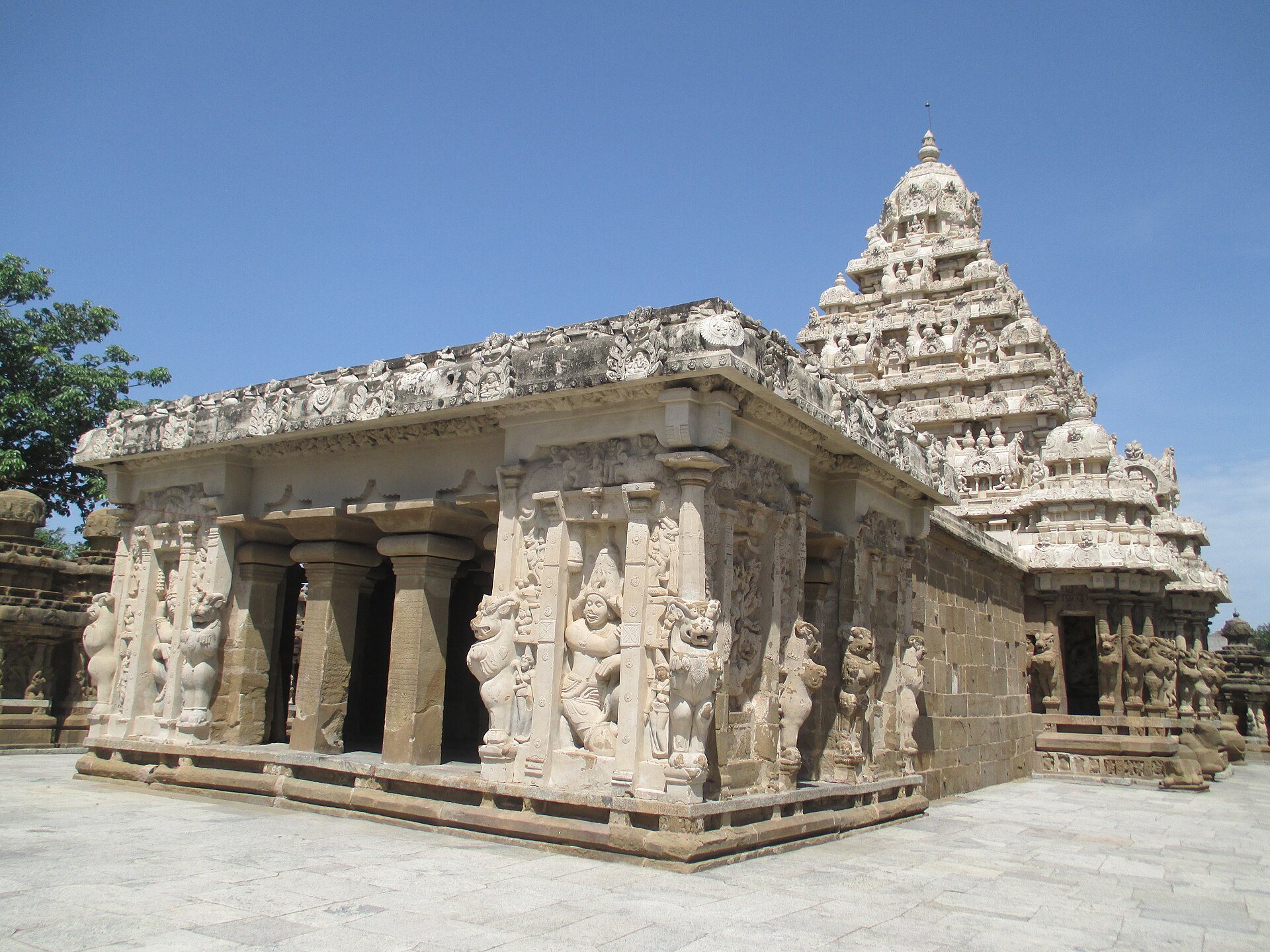
- Vaikunta Perumal Temple — Old town
A Vishnu temple of the Pallava period, known for the pillared corridors that circle its sanctum. The carved columns reward patient walking, and the interior is cooler and calmer than the busier shrines. It pairs well with the Kailasanathar temple for anyone interested in how Pallava building developed. - Varadharaja Perumal Temple — Eastern Kanchipuram
This is the biggest Vishnu temple in Kanchipuram, with broad courtyards, a long pillared hall and a tank. It is part of the group of temples proposed for World Heritage listing. Crowds build through the day and at festival times, so aim for the morning. - Kanchi Kudil — Kanchipuram town
A small traditional house opened to visitors, set up to show everyday heritage and domestic Hindu culture. It takes little time, costs little effort and gives useful context after the big temples. The photograph shows the house as it appears from the lane.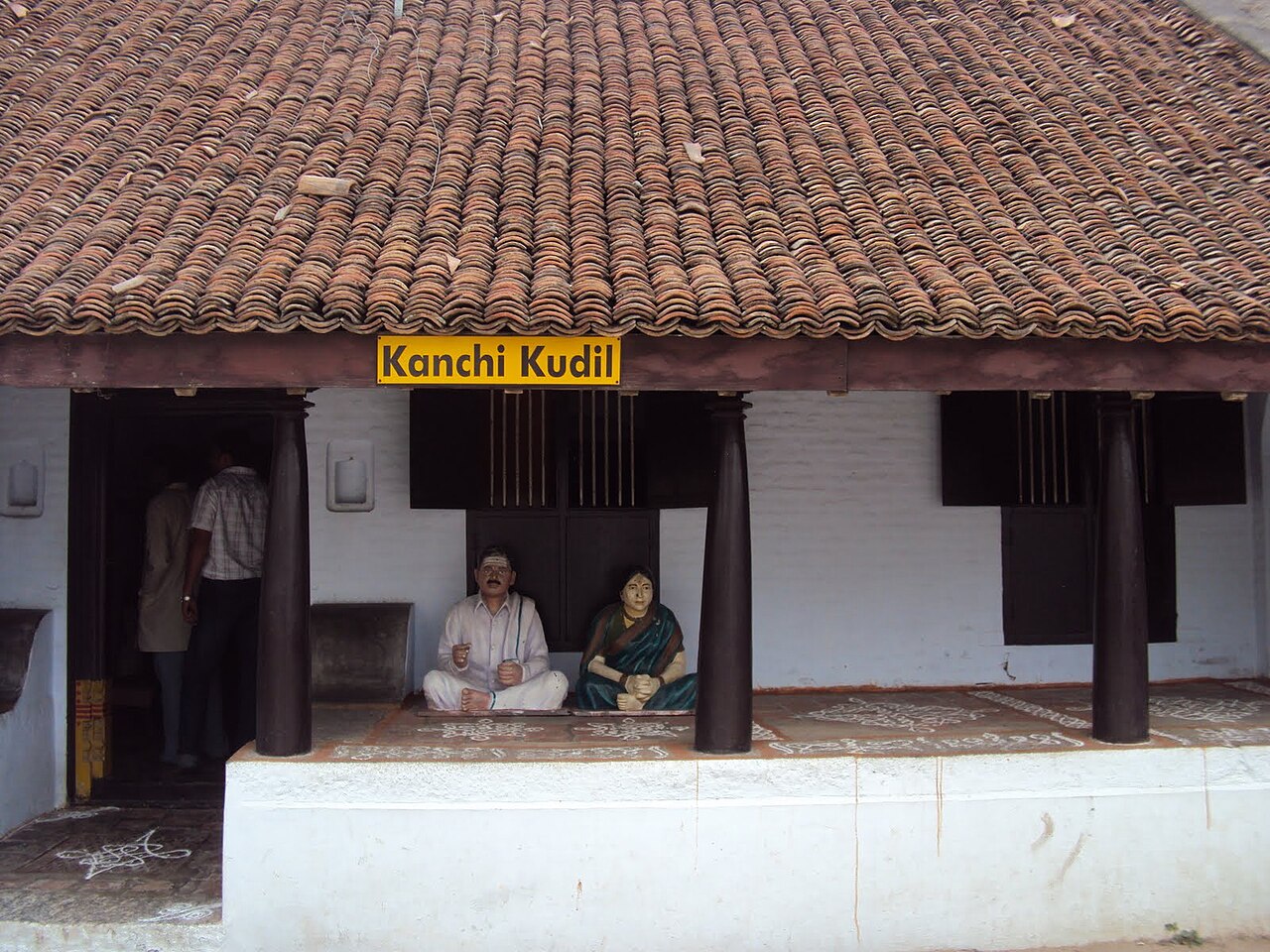
Culture
Kanchipuram is counted by Hindus among the seven holiest cities of India, the Sapta Puri. Tradition holds that dying or worshipping in such a place can lead to moksha, release from the cycle of rebirth, and the Garuda Purana lists the city among those seven. What sets it apart is that two devotional traditions share it. Shaivites, who revere Shiva, and Vaishnavites, who revere Vishnu, both treat the town as a pilgrimage centre, and each has major temples within walking distance of the other's. Daily life follows the temple calendar. Mornings begin with bathing, flowers and lamps, and festival processions with chariots and drummers can block streets for hours. The town has long been a centre of Sanskrit and religious learning, and monastic institutions such as the Kanchi Kamakoti Peetham still shape its religious life. Temples are active places of worship rather than museums, so visitors are guests in a congregation. Many shrines have areas open only to Hindus, and some restrict photography inside the sanctum. Priests may offer blessings or guide a visit and expect a small donation in return. Silk weaving is part of the culture too: for many families the loom is a hereditary craft, linked to temple festivals and weddings. In every temple, take off your shoes at the gateway, cover your shoulders and knees, and follow the posted signs about photography inside the inner shrine.
What to wear
Kanchipuram is best known in dress for the silk sari that carries its name. It is woven by hand from mulberry silk, with zari, a metallic thread, in the borders and body, and the border is often woven in a contrasting colour with temple, checked or floral motifs. These saris are worn for weddings, festivals and temple ceremonies across South India and beyond, and many families treat them as heirlooms. Men dress for ceremonies in a veshti, a wrapped lower garment, usually white or cream with a coloured border, plus an angavastram, a shoulder cloth. Everyday wear in Kanchipuram is far simpler. Women wear cotton saris or salwar kameez, many men wear shirts with trousers or a plain veshti, and students and office workers look much as they do in Chennai. Silk saris appear mostly at festivals, weddings and temple visits. Visitors should dress for heat and for sacred spaces. Light, loose cotton that covers the shoulders and knees works best, in both sexes, and a scarf or shawl is useful to cover up quickly. Wear sandals or slip-on shoes that come off easily, since footwear is left outside each temple, and carry socks or stay on shaded paths, as stone floors get very hot in the sun. Add a hat and sunscreen for the long walks between shrines.
What to eat
- Banana-leaf meal — Vegetarian restaurants near the bus stand and temple streets
Kanchipuram's classic vegetarian lunch is rice served on a banana leaf with sambar, rasam, vegetable curries, pickle and curd. Plenty of long-established vegetarian restaurants serve it, especially around the bus stand and near the main temples. - Kanchipuram idli — Breakfast eateries near the main temples
A local style of steamed idli, seasoned with ginger, pepper, cumin and cashew, which gives a spicier, more fragrant bite than the plain version. Look for it in temple-area eateries and breakfast spots. - Pongal — Breakfast spots and temple prasadam counters
A comforting morning dish of rice and lentils cooked soft with pepper, cumin and ghee, served with coconut chutney and sambar. It is a staple of South Indian breakfast menus and is often offered as temple prasadam. - Curd rice — Any traditional vegetarian restaurant
Cool, creamy rice mixed with yoghurt, tempered with mustard seeds and curry leaves, sometimes with pomegranate or grated carrot. It suits the heat well and is the usual end to a South Indian meal. - Filter coffee — Tea and coffee stalls and vegetarian restaurants across the town
Strong coffee with hot milk, dripped through a metal filter and served in a small steel tumbler and dish. A short stop for it breaks up a morning of temple walking.
Plan it
Best time. November to February is the most comfortable stretch, with cooler days; the coolest nights fall between December and February, with an average minimum of 16 °C. April to July is hot, with average maximums of 37.5 °C. The northeast monsoon brings the heaviest rain in the later part of the year, so November can still be wet.
How long. 1–2
Getting there. Fly into Chennai, the nearest major airport, then continue to Kanchipuram by road or rail; the town is well connected by both, and the last leg is usually a taxi, bus or auto-rickshaw from the station or bus stand.
Budget. low
Tips
- Start with the big temples early in the morning, when the heat is lower and the courtyards are quiet
- Many temples close for a break in the middle of the day, so check timings locally or on the district website, http://kanchi.tn.nic.in
- Carry small change for shoe stands, offerings and rickshaws, and cash for weavers' shops
- Drink plenty of water and wear a hat, as stone floors and open courtyards get very hot
- If buying silk, ask to see the weaving first and compare shops before deciding
Etiquette
- Remove your shoes at the temple gateway and cover your shoulders and knees
- Ask before photographing people, and follow the signs on photography inside shrines
- Accept prasadam with your right hand and do not point your feet at a shrine
Nearby
Sources
- Wikidata Q212332 (CC0)
- Wikipedia: Kanchipuram (rev 1385974043) (CC BY-SA 4.0)
- Wikivoyage: Kanchipuram (rev 5406234) (CC BY-SA 4.0)
- Kailasanathar temple — Ssriram mt (CC BY-SA 4.0)
- Parameswara Vinnagaram — Sridhar.selvaraj (CC BY 3.0)
- India location map 3 — Uwe Dedering (CC BY 3.0)
- Kailayanathar10 — Ssriram mt (CC BY 3.0)
- Rocket warfare — Charles H. Hubbell (Public domain)
- Kancheepuram Lok Sabha constituency — Nader85021 (CC BY 3.0)
- Kanchi Kudil — tshrinivasan (CC BY 3.0)
- Agricultural field works, Kanchipuram — mckaysavage (CC BY 2.5)


