Kanas Lake
Kanas Lake, People's Republic of China
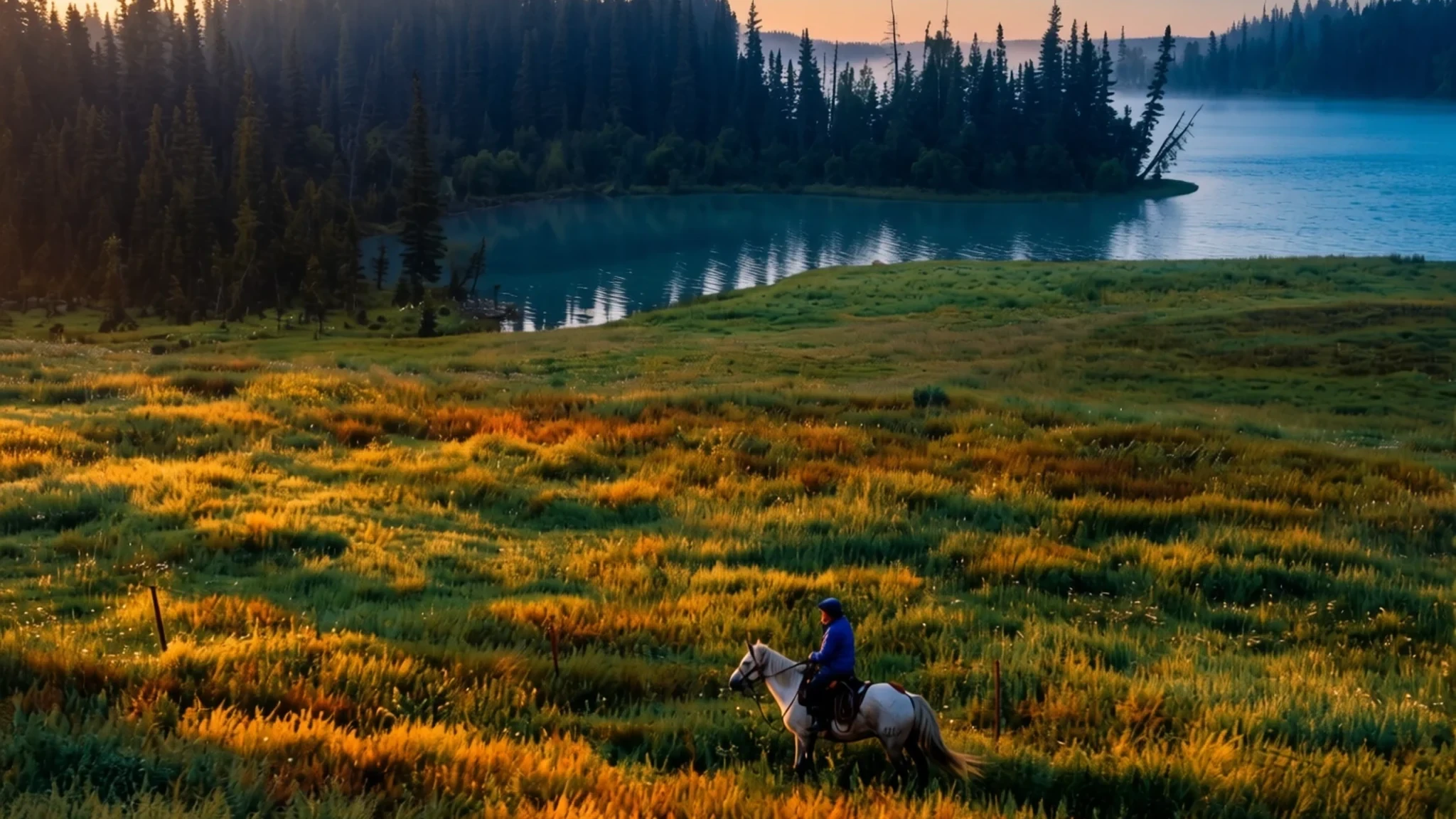
Kanas Lake is a deep, dark crescent of water in the Altai Mountains, where Tuvan and Kazakh herding life carries on beside a growing tourist trade.
The place
Kanas Lake sits in a mountain valley in the Altai range, in Altay Prefecture at the far northern tip of Xinjiang. Russia, Kazakhstan and Mongolia all lie close by, which explains why this corner of China feels more like Central Asia than the east of the country. The lake is crescent-shaped and, at 1,374 metres above sea level, cool even when the plains to the south are hot.
Glacier movement shaped the basin, and the water is deep enough to look nearly black under cloud and green or blue in sunlight. Peaks mirror in it on still mornings. The Kanas River drains the lake, then joins the Hemu River to form the Burqin River, which eventually reaches the Irtysh at Burqin Town.
People live here as well as visit. Tuvans and Kazakhs make up a large part of the valley's population. Many still keep to farming and herding, while others have moved into tourism, running guesthouses and offering hiking, rafting, climbing, paragliding and camping. The scenic area carries China's top AAAAA rating, so expect organised entry arrangements, shuttle transport and boardwalks at the busiest viewpoints.
Burqin Town, the county seat, is the usual gateway and has the practical services. Hemu village, further along the valley, is a quieter Tuvan settlement. The two ends of the visit feel very different: a managed, well-trodden lakeshore, and a wooden-house village where horses are still part of daily life.
Its story
The land around Kanas Lake has long belonged to people on the move. Burqin was nomadic territory in the Western Han period, home to the Xiongnu. Later it passed to the Xianbei, then the Western Turks under the Sui, and in the Tang era it fell under a protectorate based at Beiting before coming under the Western Liao. Each power left the herding economy of the mountains and valleys largely intact.
After the Qing defeated the Dzungars, the Burqin area was administered through military officials answering to the frontier command at Uliastai, and it remained grazing country for Altai Uriankhai groups. In 1905 the Qing court reorganised the region and created an Altai minister's office, placing Burqin under it.
The lake itself is far older than any of these polities. It formed around 200,000 years ago, in the Quaternary period, as glaciers moved through the valley. The Mongolian name Kanas is usually glossed as a beautiful and mysterious lake, and the dark water explains why the name stuck.
Today the story is one of adaptation. Tuvan and Kazakh families who kept horses and livestock now also take guests, offer sleigh and saddle rides, and cook for visitors. The nature reserve around the lake protects the setting, while the tourism boom has brought a ski resort, cafés and a Russian-style street in Burqin. The old herding calendar and the new visitor calendar now share the same valley.
What to see
- Kanas Lake shore — Kanas scenic area, northern Burqin County
The lake is the reason for the trip. Viewpoints and boardwalks give the classic crescent, with forested slopes dropping to dark water. Go early, before tour groups arrive, when the surface is most likely to be still and the peaks reflect cleanly. Weather changes the colour dramatically.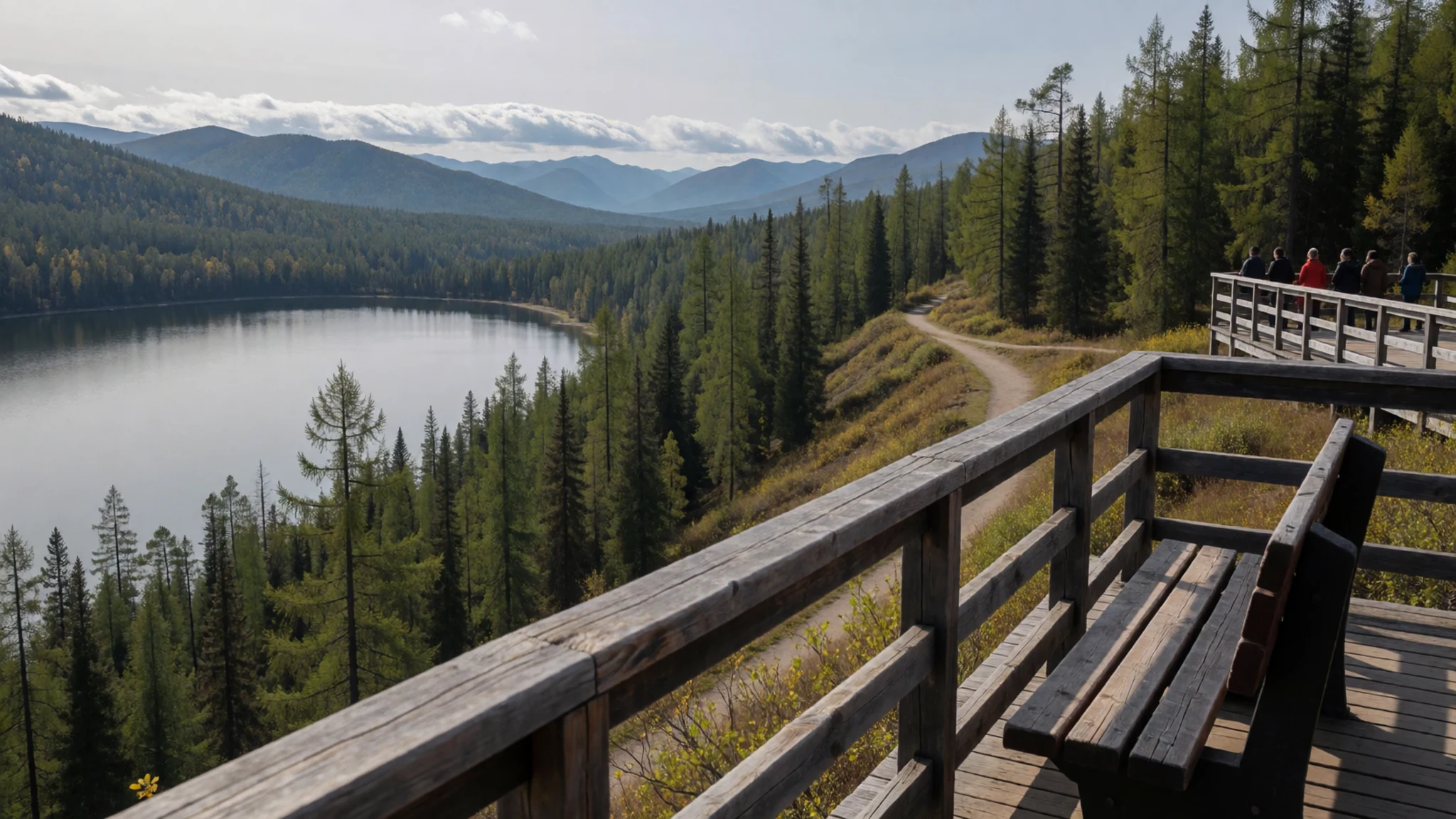
- Hemu village — Hemu, Hemu Hanas Mongolian Township
Hemu is a Tuvan village of timber houses, reached by road along the valley. It is described as the northernmost township in western China and is one of the best-known Tuvan settlements. Walk the lanes, look at the log architecture and the grazing land around it, and ask before photographing people or homes.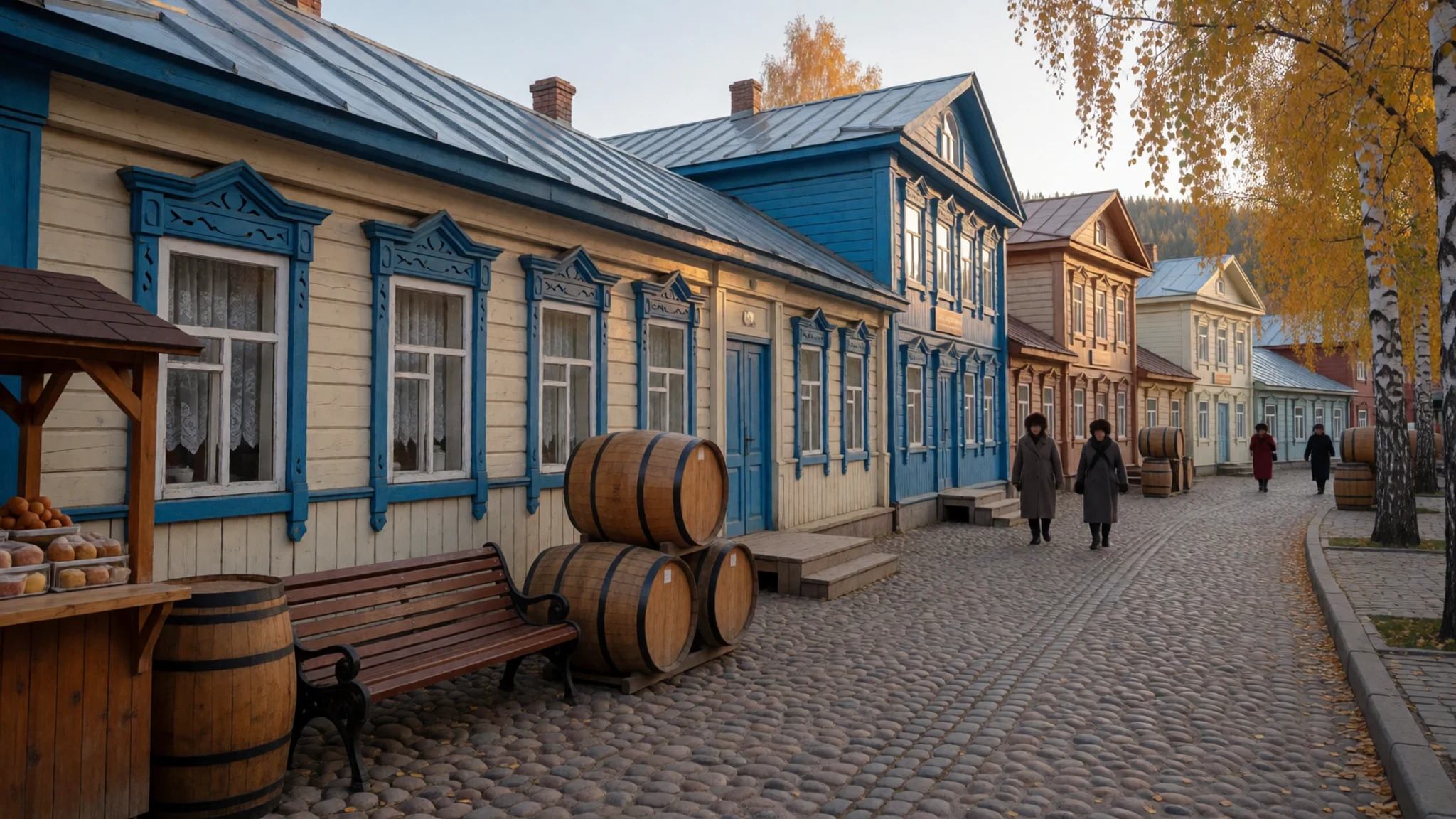
- Horse riding and horse sleighs — Hemu area
Many Hemu households keep horses and offer rides, either alone or led by a handler. When snow falls they switch to horse-drawn sleighs. It is a direct way to see the landscape at herders' pace. Agree the route and duration beforehand, and check current arrangements locally.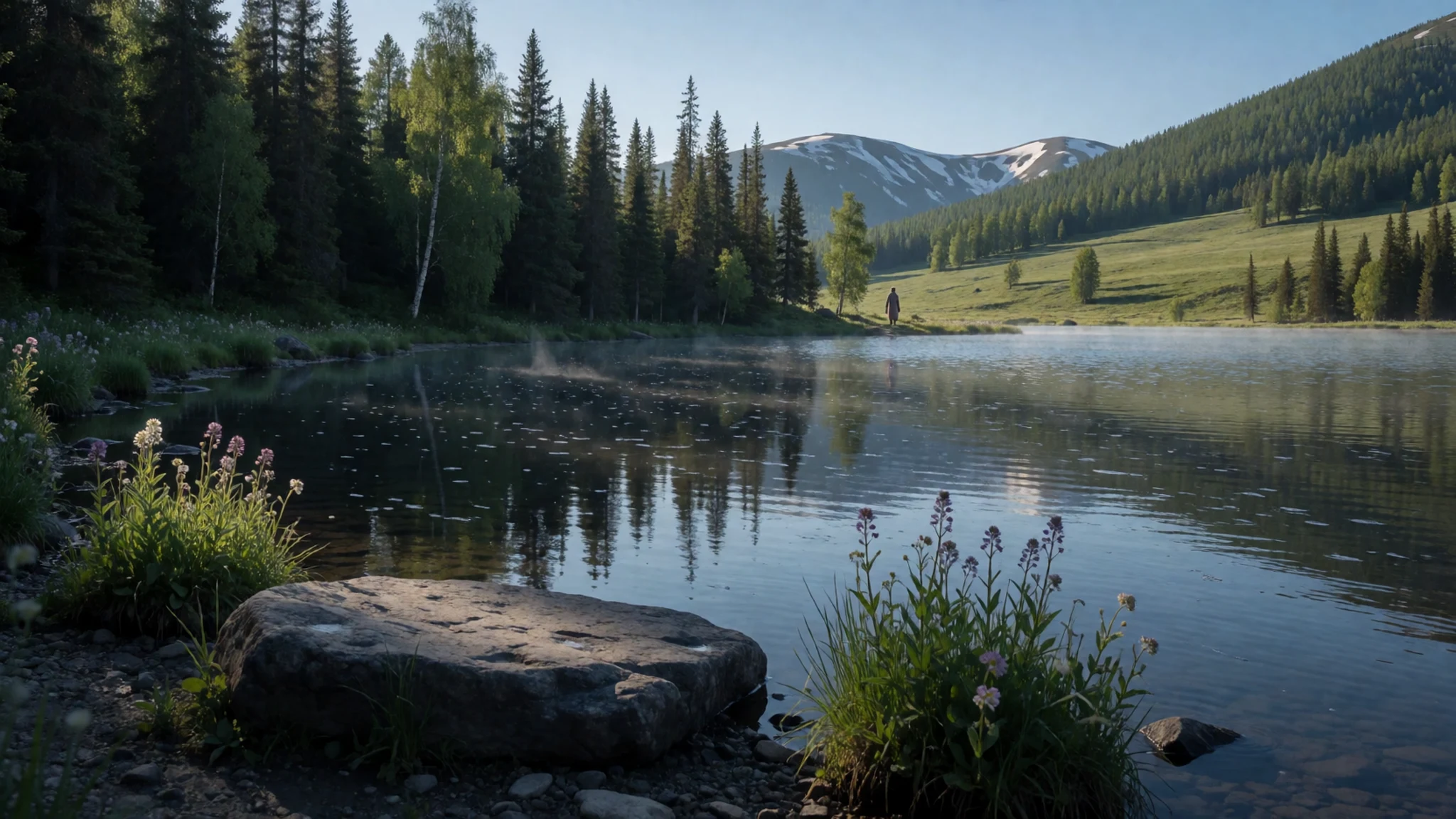
- Winter snowfields and ski area — Hemu mountains
Snow starts in mid-September and lasts until about April, with an average depth of around a metre in the mountains and more in the deepest places. A ski resort near Hemu uses this. The frozen valley looks completely different from the summer lake, and is much colder.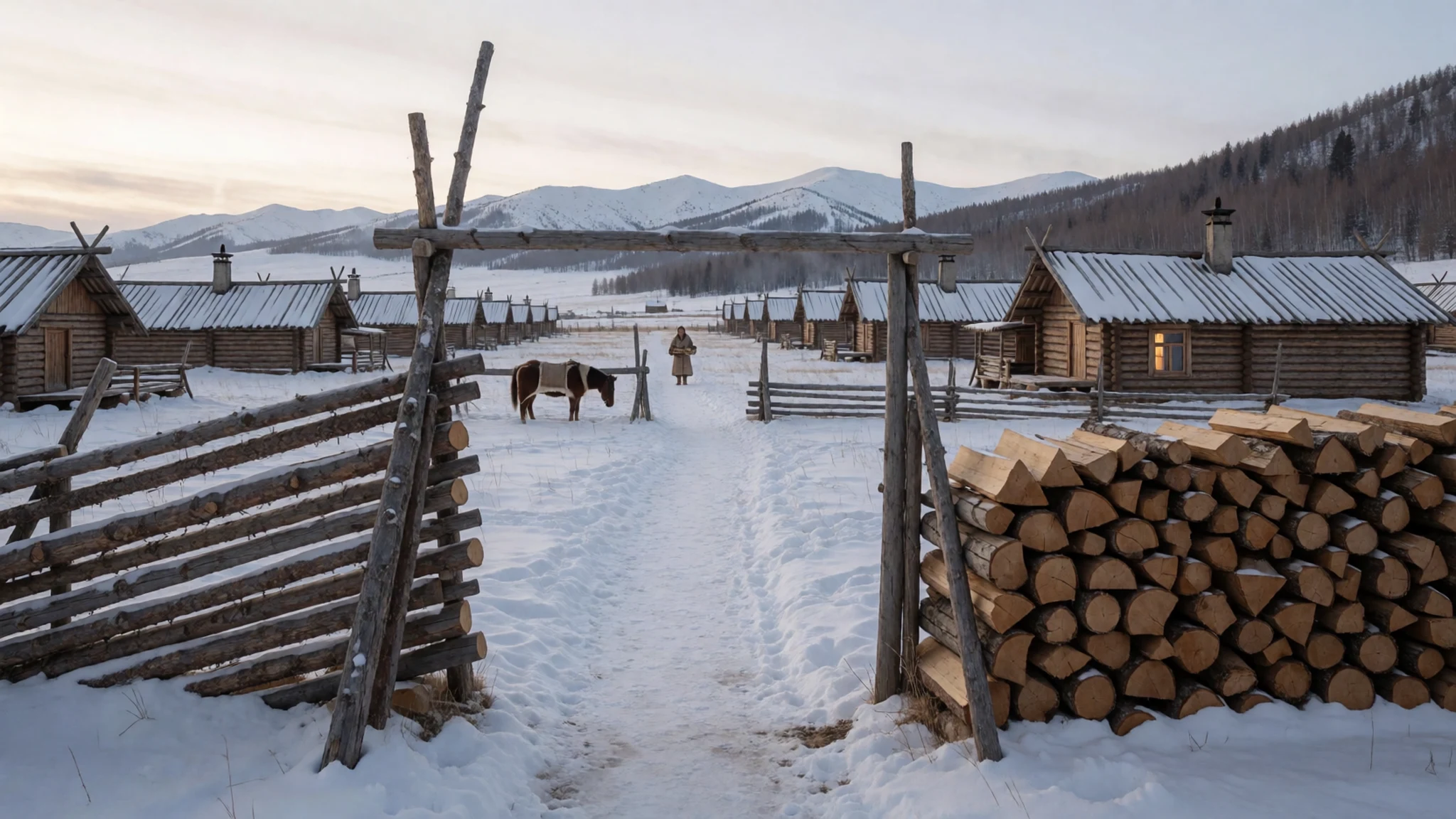
- Burqin old wharf-style street — Burqin Town
Down in Burqin, this themed area has a Russian-style food street, with cold-water fish, kvass and yoghurt on offer. It is a useful evening stop before or after the mountain, and a way to see how the region's cross-border links have shaped its cooking and its tourist trade.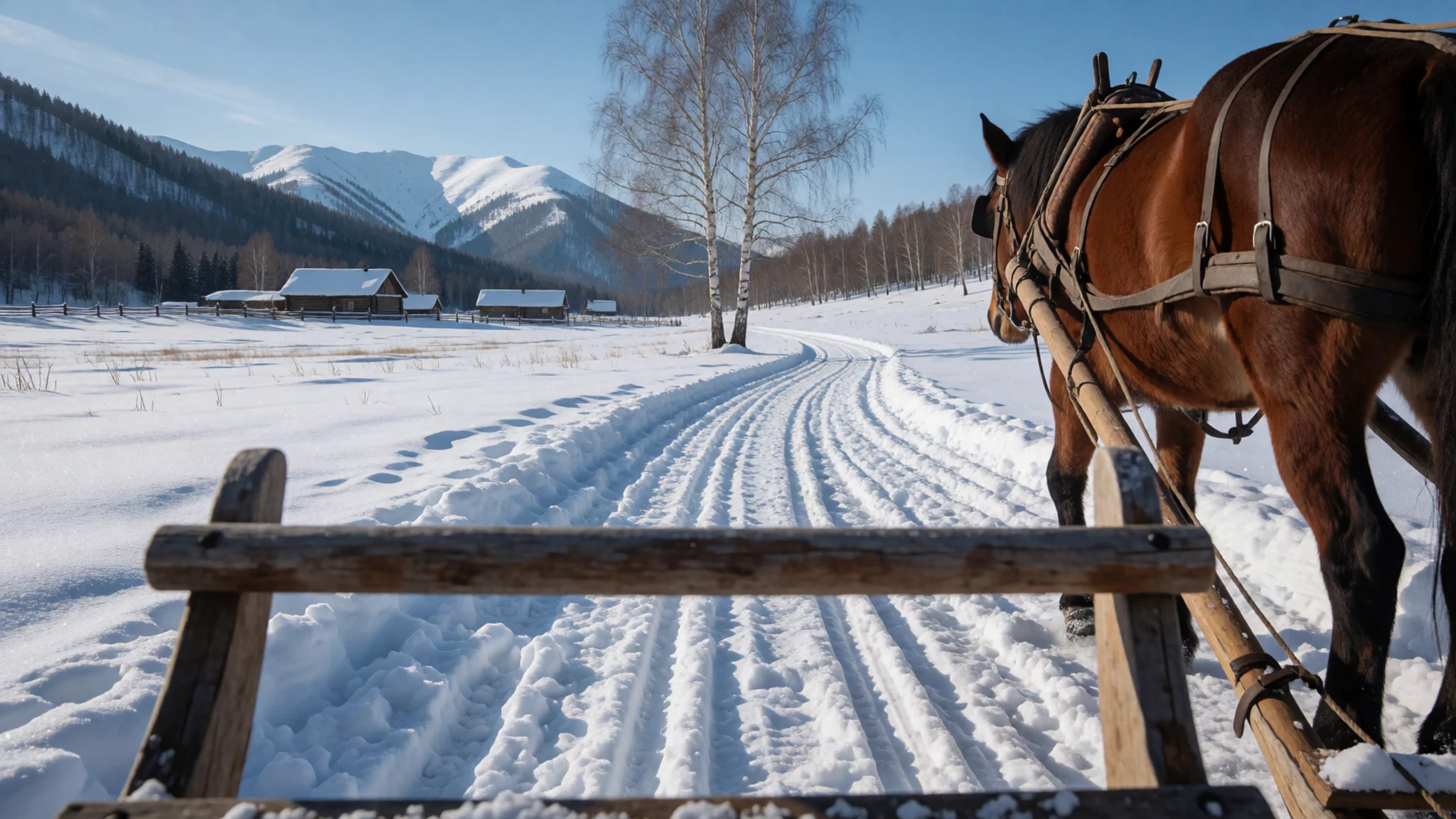
Culture
Kanas Lake lies in country shared by Tuvan, Kazakh and Mongolian communities, and the culture here is herding culture. Livestock, horses and seasonal pasture structure the year, and many families still follow that rhythm even as they take in visitors. Tuvan villages such as Hemu are among the best-known, with wooden homes and a way of life distinct from the rest of Xinjiang.
The Tuvans are often described as one of the few groups of their kind in China, and their language, music and customs are a point of local pride. Kazakh families add their own hospitality traditions, with tea, bread and dairy at the centre of welcome.
Islam matters across Burqin. The residents are mainly from ethnic minorities, and Eid al-Adha is among the most important festivals, treated by some communities almost as a new year. If you visit around it, expect businesses to change hours and families to gather.
The lake itself carries a sense of mystery in local lore, hence the Mongolian name. Tourism now shapes daily life, but the valley is still home first and attraction second, so ordinary courtesy goes a long way.
Ask before photographing people, their homes or their animals, and accept a cup of tea or a seat in a home graciously if it is offered.
What to wear
Around Kanas Lake, traditional dress follows herding life. Tuvan and Kazakh families have historically worn heavy coats, felt, leather and fur against the cold, with boots suited to riding and wide belts or sashes. Embroidery and trim mark festive clothes, and hats are an important part of the outfit. Such garments appear mainly at festivals, weddings and performances for visitors, and some are made by hand from wool and hide.
Day to day, people dress practically. In villages and Burqin you will see jackets, jeans, sturdy boots and fleeces. Some women wear headscarves in keeping with local Muslim custom, and herders add layers and waterproofs in bad weather. Guides and hosts at tourist sites may wear stylised traditional outfits.
Visitors should plan for a mountain climate at 1,374 metres. Even in summer, mornings and evenings are cool and rain can arrive suddenly, so bring a warm fleece, a waterproof shell and a hat. Comfortable, grippy walking shoes suit boardwalks and trails. In winter, add thermal layers, insulated boots, gloves and a face covering for wind and snow. Dress modestly in villages and around mosques, with shoulders and knees covered. A scarf is useful for both sun and cold.
What to eat
- Roast mutton — Burqin night market and local home-style restaurants
Mutton roasted over fire is the staple of Xinjiang eating and a regional favourite. Expect it with naan and tea. Burqin's night market and home-cooking restaurants serve it, and it suits the cold mountain evenings well.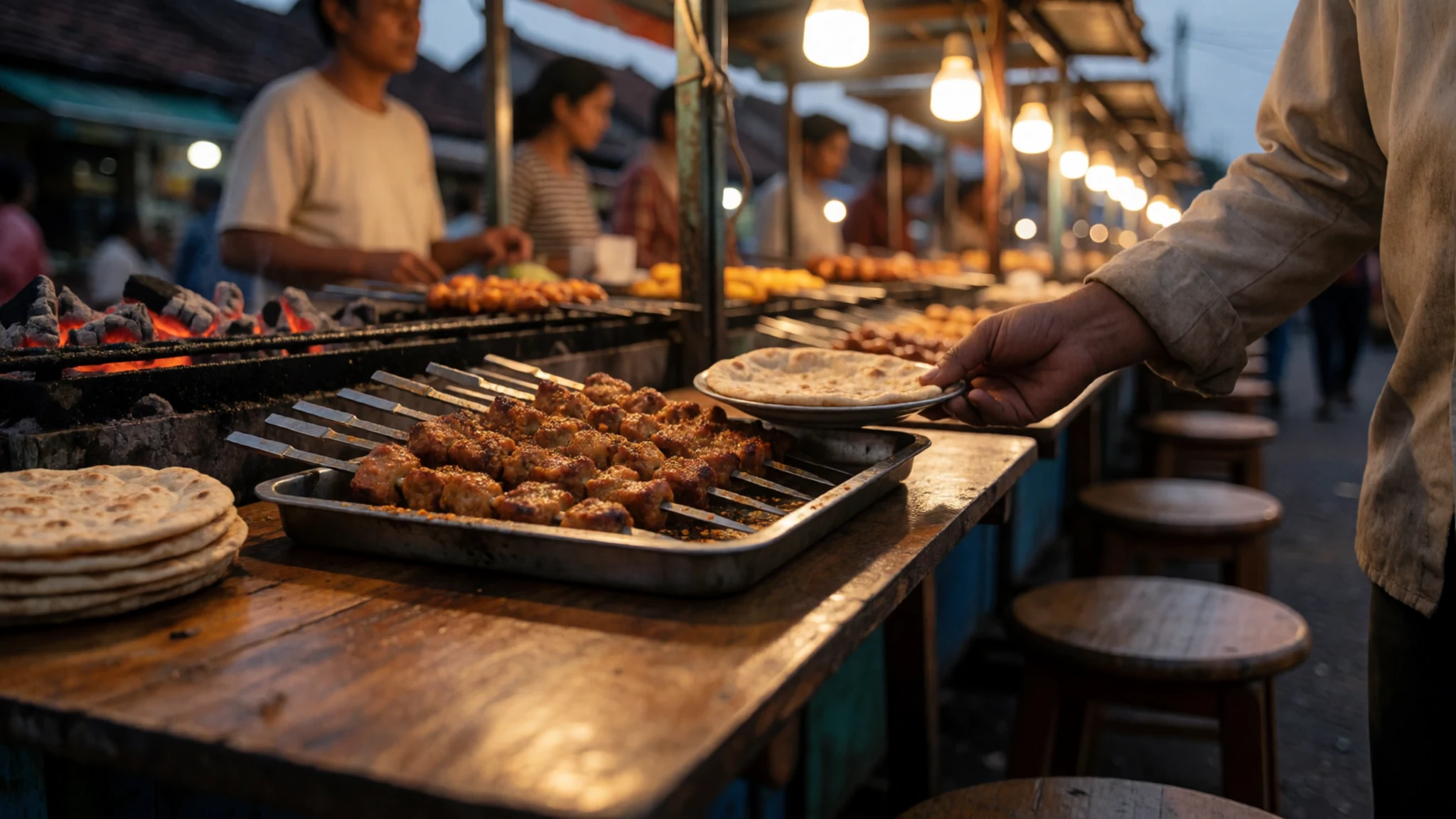
- Cold-water fish — Silk Road-style restaurants in Burqin
Fish from the cold rivers and lakes of the Altai are a local speciality, often grilled or stewed. Burqin restaurants advertise them prominently, and local pike is also served. Fish is a pleasant change from the lamb-heavy menus elsewhere in Xinjiang.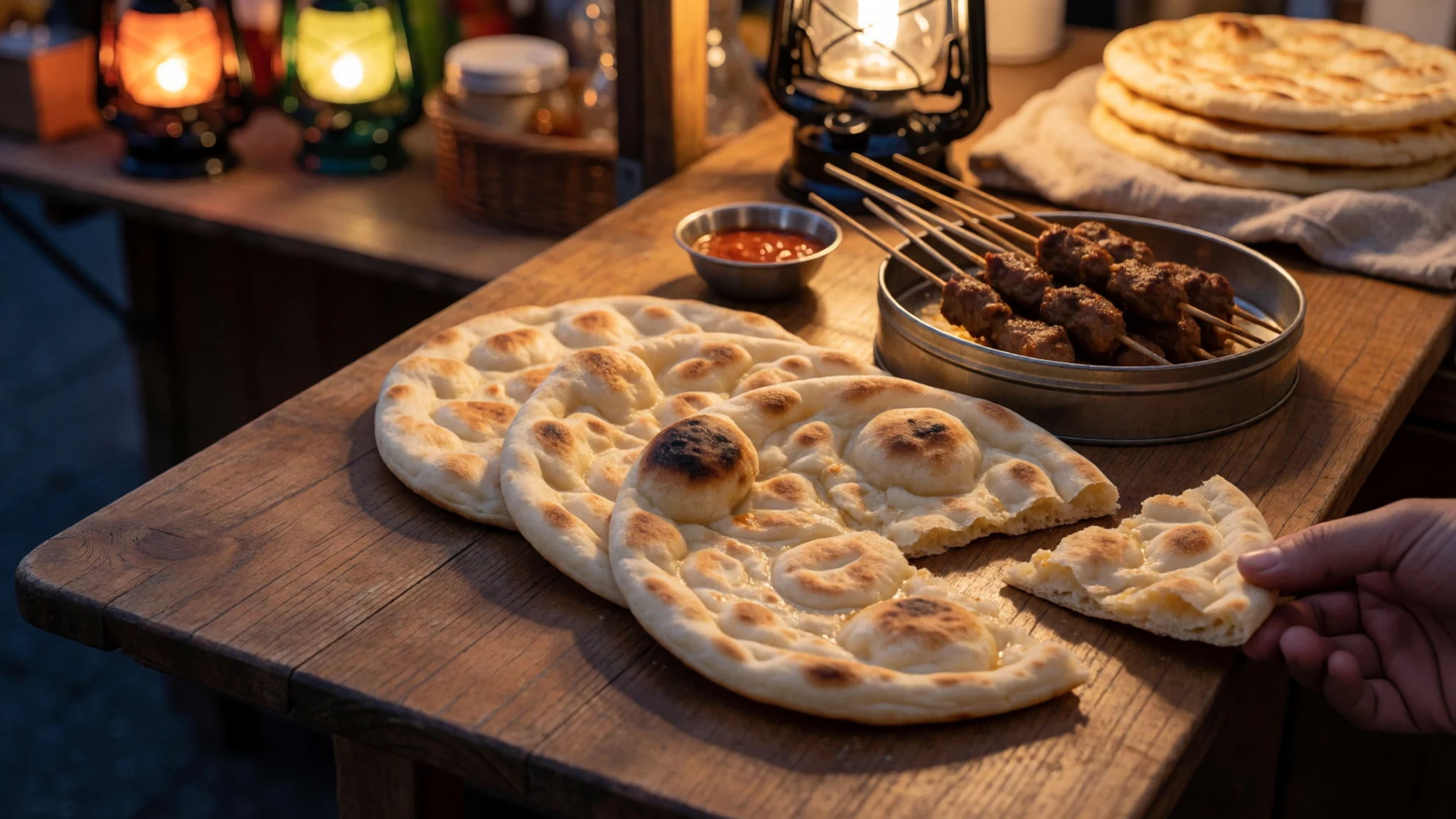
- Naan — Burqin night market and bakeries
Round, thick, oven-baked bread is on almost every table and sold fresh at markets. It is eaten with meat, soups and tea, and travels well, so it makes a reasonable snack for a day on the trails. - Big plate chicken — Xinjiang-style restaurants in Burqin
Dapanji is a Xinjiang dish of chicken stewed with potatoes and peppers, served over or with wide noodles. It is built for sharing, so it suits groups and makes a hearty dinner after a long day. - Kvass and yoghurt — The Russian-style food street in Burqin
Russian-influenced drinks and dairy reflect the nearby border. Kvass is a lightly fermented bread drink, and thick yoghurt is common across the region. Try both as refreshing accompaniments, especially in summer.
Plan it
Best time. June to September is the main season, with the valley green and roads open. Autumn colour comes in September. Winter snow begins in mid-September and lasts until about April, so a winter trip is possible but very cold.
How long. 2–3
Getting there. Fly to the nearest regional airport serving Altay or Burqin and check current schedules, then take a road transfer or shuttle to Burqin Town and on into the Kanas scenic area. Many visitors also fly to Urumqi and continue by road or domestic flight. Check the official scenic-area channels for current entry and shuttle arrangements.
Budget. mid
Tips
- Book transport and accommodation well ahead in the summer peak and national holidays
- Arrive at the lake early for stiller water and fewer crowds
- Carry some cash as well as cards, as small villages and stalls may not take cards
- Bring layers and rain gear, as mountain weather shifts quickly
- Check current rules for foreign visitors, permits and identity checks before you travel
Etiquette
- Ask before photographing people, homes and animals
- Dress modestly in villages and near mosques
- Keep to marked paths and take your rubbish with you
Nearby
Sources
- Wikidata Q1723644 (CC0)
- Wikipedia: Kanas Lake (rev 1366035524) (CC BY-SA 4.0)
- Wikivoyage: Burqin (rev 5349345) (CC BY-SA 4.0)
- Photo 01-11.jpg (CC BY-SA 4.0)
- Photo 02-lake-kanas.jpg (CC BY 3.0)
- Photo 03-lakekanas.jpg (CC BY 3.0)
- Photo 04-dsc-altay-khanas-lake-lake-view.jpg (CC BY 4.0)
- Photo 05-hanas-national-nature-reserve-banner.jpg (CC BY-SA 4.0)
- Photo 06-kanas-lake-winter.jpg (CC BY 4.0)
- Photo 07-kanas-lake-altay-china-unsplash.jpg (CC0 1.0)
- Photo 08-kanas-lake-xinjiang-chin-darwings.jpg (CC BY 3.0)


