Kakunodate
Kakunodate, Japan
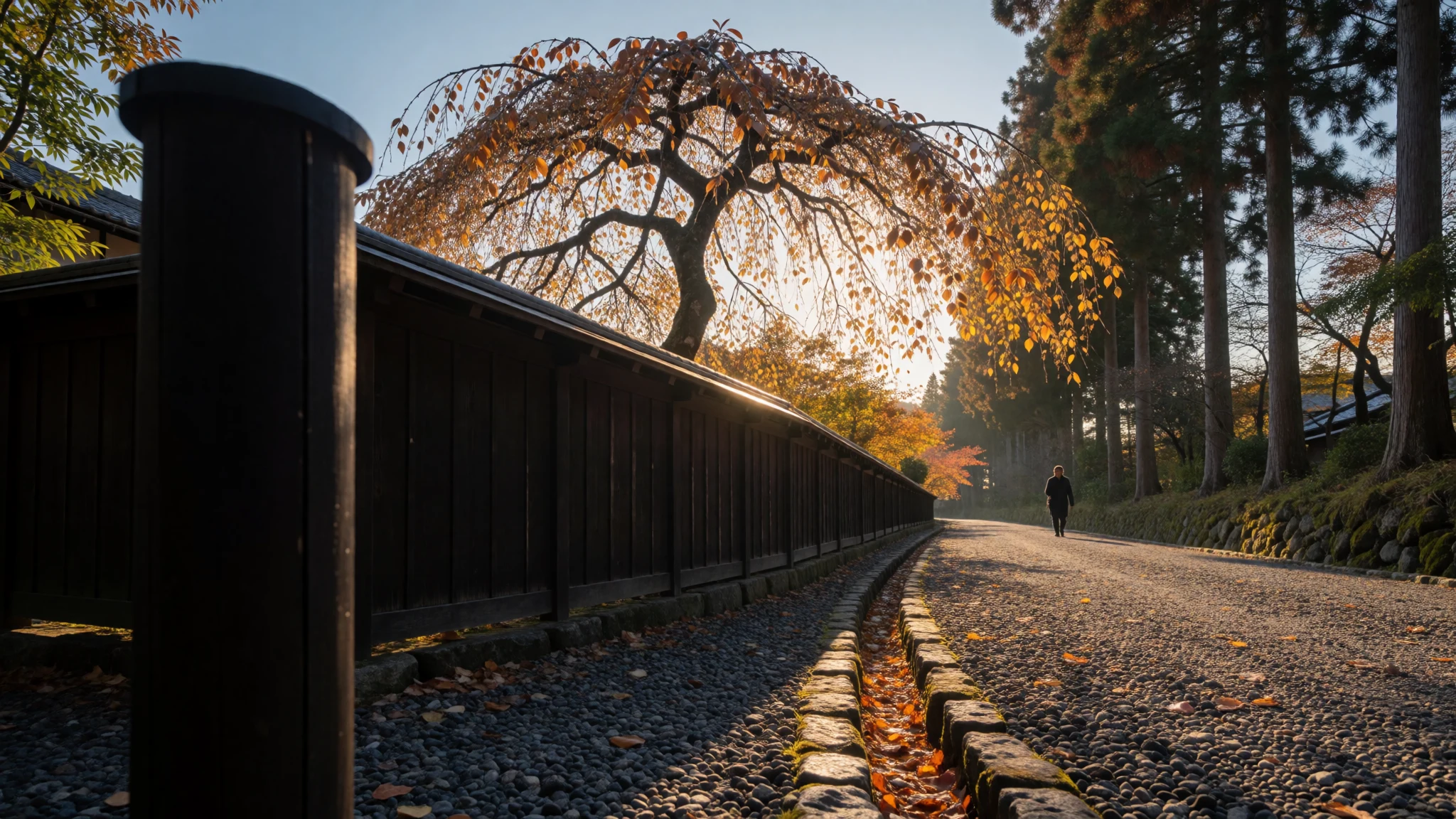
Kakunodate is a small northern castle town where black-fenced samurai houses and weeping cherries make spring one of the loveliest walks in Tōhoku.
The place
Kakunodate (角館) lies in Semboku, Akita Prefecture, in the Tōhoku region of northern Honshu. It was a town in its own right until 2005, when it was merged with Tazawako and Nishiki to form the city of Semboku. The name now survives as the label for the old castle-town district, the railway station and a good deal of local pride. The facts on record give the former town a population of 14,138, and its municipal founding as 1955, though the settlement it grew from is far older.
What draws visitors is a compact quarter of samurai houses along Bukeyashiki Street, where dark timber fences, tall trees and quiet lanes make it easy to picture the town as the warrior class knew it. Several of the houses are open to the public, with Ishiguro and Iwahashi among the best known. The trees do the rest. Weeping cherries arch over the samurai street, and a long embankment of Somei-Yoshino cherries follows the Hinokinai River, so blossom time is when the town fills.
The nickname 'little Kyoto of Tōhoku' (みちのくの小京都) appears on most leaflets, usually with a smile, because Hirosaki makes its own claim to be the bigger Kyoto of the region. The comparison is loose. Kakunodate is small enough to cover on foot in a morning, has no cluster of grand temples, and feels more like a working country town than a museum. Beyond the old quarter are the castle ruins, the Tama River gorge, and the onsen country around Lake Tazawa and Nyuto, which pair well with a night or two here.
Its story
Kakunodate began as a castle town, a settlement planned around a lord's stronghold, with the warrior families who served him given one district and the merchants and craftspeople another. The castle tower is long gone and only stone walls survive on the hill, but the split between the two worlds is still easy to read on the ground, in the wider, quieter samurai lanes beside the tighter streets where trade went on. The surviving samurai quarter is now treated as a protected district of traditional buildings, and its weeping cherries carry national natural monument status.
The town kept its own identity until the modern wave of municipal mergers. It became a municipality in 1955 and, in 2005, joined Tazawako and Nishiki to form Semboku, so the old name is now carried by the district, the station and the nickname rather than by a town hall.
Tradition continues mostly through festivals. The Kakunodate festival, held in early September, is recognised as an Important Intangible Folk Cultural Property. Heavy floats are hauled through the streets with dancers following behind, and the custom has run for several centuries. In winter, a fire and snow festival has people swinging burning bundles of straw on strings as a purification rite, among kamakura snow domes. Sasara is the local word for the lion dance, and the name comes from the wooden percussion played during it.
Today Kakunodate trades on that past as a cherry-blossom destination and a calm stopover on the Akita line, its 'little Kyoto' label cheerfully contested by Hirosaki.
What to see
- Bukeyashiki Street — Samurai quarter
The core of Kakunodate is this lane of former samurai residences, set behind dark timber fences and old trees, with weeping cherries that carry national natural monument status. Houses here are a mix of open museums and private homes, so look for signs before stepping through any gate. Go early, before tour groups arrive and while the gravel is quiet.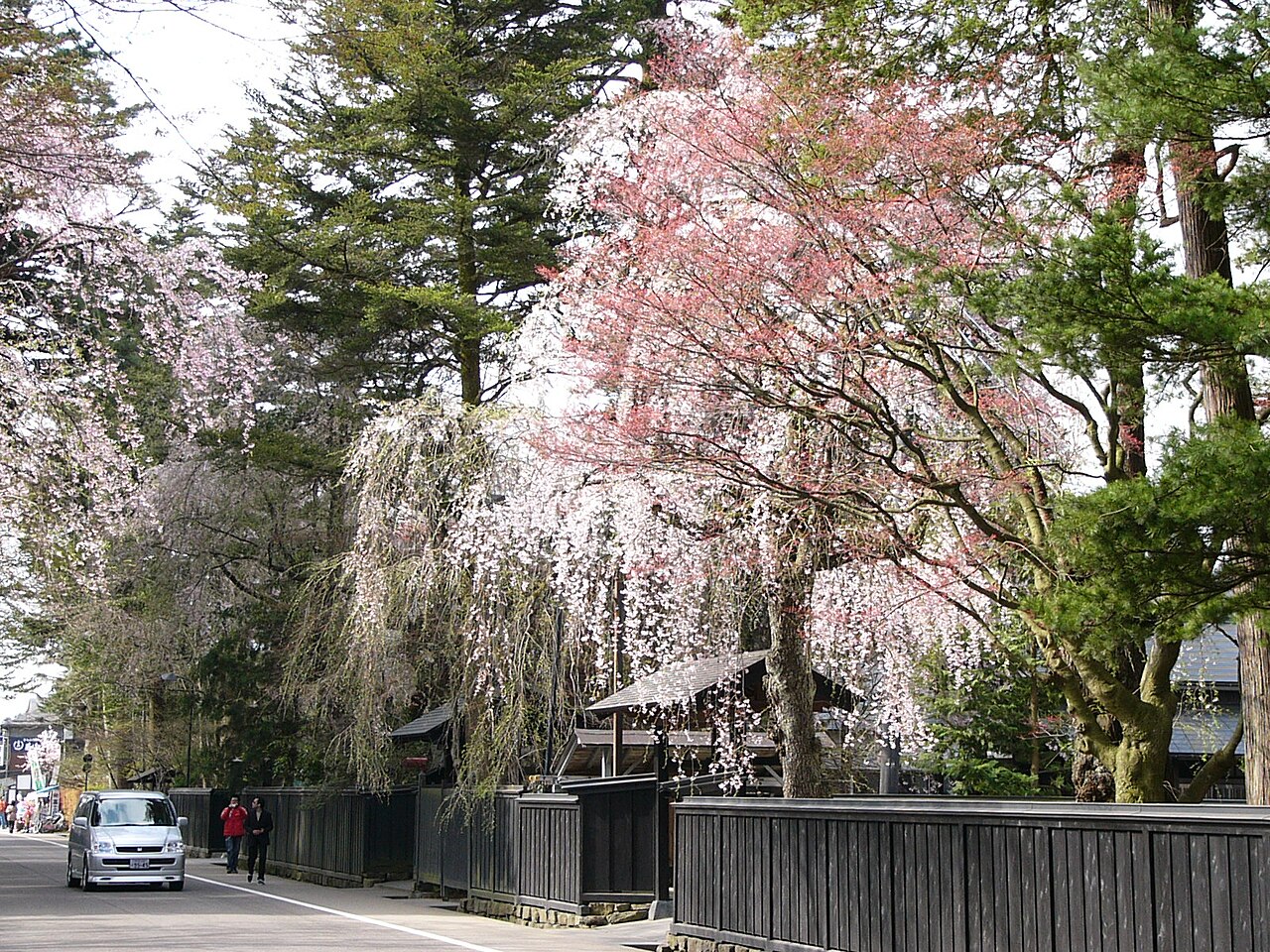
- Ishiguro House — Samurai quarter
One of the samurai houses on the street, listed by local guides as open to visitors. The appeal lies in the plain wooden rooms, the entrance and the garden, which show how a warrior family lived without display. Opening arrangements change, so check with the local tourist association or the signs on the day. - Iwahashi House — Samurai quarter
Another samurai residence, a short walk away along the same lane. Seeing two or three houses in a row shows differences in size and layout, but most visitors find one or two enough, as the designs are similar. Check which are open when you arrive, since access varies by season. - Kakunodate Castle Ruins — North of the samurai quarter
Only the stone walls remain of Kakunodate Castle, and there is no tower to climb. The reward is a quiet rise of old stonework and trees, a short walk north of the samurai lanes, and a sense of where the town's lord once looked down on the district he governed. - Hinokinai River embankment — Along the Hinokinai River
In blossom season the river bank is lined with Somei-Yoshino cherry trees along a long stretch, forming a pale pink tunnel that locals and visitors walk beneath. It is the busiest spot in town during hanami, so aim for early morning or a weekday, and expect slow-moving crowds at the weekend. - Dakigaeri Valley — East of Kakunodate
A gorge along the Tama River east of the town, with a promenade for walking and strong autumn colour. It needs a vehicle or local transport from Kakunodate, so it suits a half-day in late October or November rather than a quick stop. Check transport options before setting out.
Culture
Kakunodate's culture is that of a samurai town that became a festival town. The warrior households are gone, but their houses, gates and gardens remain, and some are still lived in, which gives the old quarter a quiet, residential feel rather than a theme-park one.
The festival calendar is where local tradition is most visible. The Kakunodate festival in early September, an Important Intangible Folk Cultural Property, sends decorated floats through the streets with traditional dancing behind them. Sasara, the local word for the lion dance, is part of that tradition, and takes its name from the wooden instruments played to keep time. In winter, the fire and snow festival offers a very different mood: people whirl flaming straw on strings above their heads as a purification ritual, while kamakura snow domes glow in the cold. Onlookers are sometimes invited to take part.
Spring belongs to hanami, the custom of gathering under cherry trees to eat, talk and look at the blossom. Locals take it seriously but without fuss, and the weeping cherries on the samurai street are admired as much as the long river embankment. Craft shops in the old quarter sell regional goods, and conversation tends to be gentle and low-voiced.
In the samurai quarter, treat each house as someone's home unless it is clearly open: keep to the lane, ask before photographing residents, and take off your shoes wherever a raised step or a row of slippers shows you are entering.
What to wear
In Kakunodate, as across Japan, traditional dress means the kimono, a wrapped robe of silk for formal occasions, and the yukata, a lighter cotton version worn in summer and at festivals. Neither is a local weave in the way some regions have their own cloth, and it would be wrong to claim one. At the September festival, participants wear happi coats, loose cotton jackets with dyed crests, and carry the cheerful bustle of a working town rather than a costume parade.
What people wear day to day is simple and practical: jeans or trousers, sweaters and fleece, and sturdy waterproofs. Winters in this part of Akita are snowy and cold, so padded coats, hats, gloves and snow boots are normal, while summer brings light cotton and sun hats. Older residents may be seen in neat, muted clothes on formal occasions, and kimono appears at weddings and festivals rather than on the street.
Visitors should dress in layers: spring can be cool in the mornings and warm by midday, summer is warm and humid, and winter calls for proper insulation and boots with good grip. The gravel lanes of the samurai quarter suit comfortable walking shoes that slip on and off easily, because shoes come off inside houses and museums. Wear whole socks, as feet are on show. There is no strict dress code, but modest, tidy clothing fits a quiet residential district. At the fire and snow festival, bring a close-fitting hat to keep hair clear of sparks.
What to eat
- Kiritanpo — Country-style eateries around the samurai quarter and the station
Freshly cooked rice is mashed, pressed onto cedar skewers and grilled until crisp outside and soft within. In Akita it is often served in a hot pot with chicken, mushrooms and vegetables, which makes it a good winter meal after a cold day outdoors. - Inaniwa udon — Noodle shops and lunch eateries near the old quarter
Thin, flat wheat noodles from the Akita region, smooth and delicate, served cold with a dipping sauce in warm weather or hot in broth in cooler months. They are a light lunch and easy to find around the town. - Iburigakko — Souvenir shops and local produce stalls
Daikon radish is smoked over a fire and then pickled, giving a crunchy, savoury and slightly sweet snack with a smoky edge. It is a classic regional pickle served alongside rice and tea, and is also sold packed for travel. - Hinai-jidori chicken — Lunch eateries in the town centre
A regional chicken breed prized in Akita for its firm, flavourful meat. It appears grilled, in hot pots or over rice as oyakodon, and is a reliable choice at a sit-down lunch. - Sakura sweets — Tea rooms and sweet shops along the samurai street
In blossom season, cherry-flavoured treats appear: soft rice cakes wrapped in salted cherry leaves, tea-room sweets and seasonal confections in pale pink. They pair well with green tea and make easy gifts.
Plan it
Best time. Late April to early May for cherry blossom, when the town is at its busiest; late October to November for autumn colour, especially in Dakigaeri Valley; early September for the town's main festival. Winters are cold and snowy but suit the fire and snow festival.
How long. 1–2
Getting there. Most visitors arrive by the Akita Shinkansen Komachi, which stops at JR Kakunodate station every hour: about four hours from Tokyo, two and a half from Sendai, and about an hour from Morioka or Akita. Akita Airport is the nearest airport, with onward travel via Akita city. The samurai quarter is a short walk or taxi ride from the station.
Budget. mid
Tips
- All seats on the Komachi are reserved, so book ahead, and note that the Japan Rail Pass is accepted
- Visit the samurai street and river embankment early in the morning during blossom season to avoid the crowds
- The local tourist association's guide site is in Japanese only, so check house opening arrangements on the day
- Carry some cash for small shops and craft stalls, as not all accept cards
- In winter, bring waterproof boots with grip and plan for shorter daylight
Etiquette
- Remove shoes where you see a raised step or slippers waiting
- Treat private samurai houses as homes and ask before photographing residents
- Keep to paths and avoid touching or climbing the cherry trees
Nearby
Sources
- Wikidata Q2054493 (CC0)
- Wikipedia: Kakunodate, Akita (rev 1346640027) (CC BY-SA 4.0)
- Wikivoyage: Semboku/Kakunodate (rev 5417725) (CC BY-SA 4.0)
- Photo: Bukeyashiki Street in Kakunodate (Hiroshi Sakamoto) (CC BY 3.0)
- Photo: Akita 42384028512 (bryan...) (CC BY-SA 2.0)
- Photo: Akita 42434252591 (bryan...) (CC BY-SA 2.0)
- Photo: Akita Bank 325 Kakunodate branch (掬茶) (CC BY-SA 4.0)
- Photo: Akita prefectural Kakunodate high school (掬茶) (CC BY-SA 4.0)
- Photo: Akita prefectural Omagari special support school Semboku branch (掬茶) (CC BY-SA 4.0)
- Photo: Akita Prefectural Road Route 257 in front of Kakunodate Station (小石川人晃) (CC BY-SA 4.0)
- Photo: Akita-Fureai Shinkin Bank Kakunodate (Wakkubox) (CC BY-SA 1.0)


