Kaiping Diaolou
Kaiping Diaolou, People's Republic of China
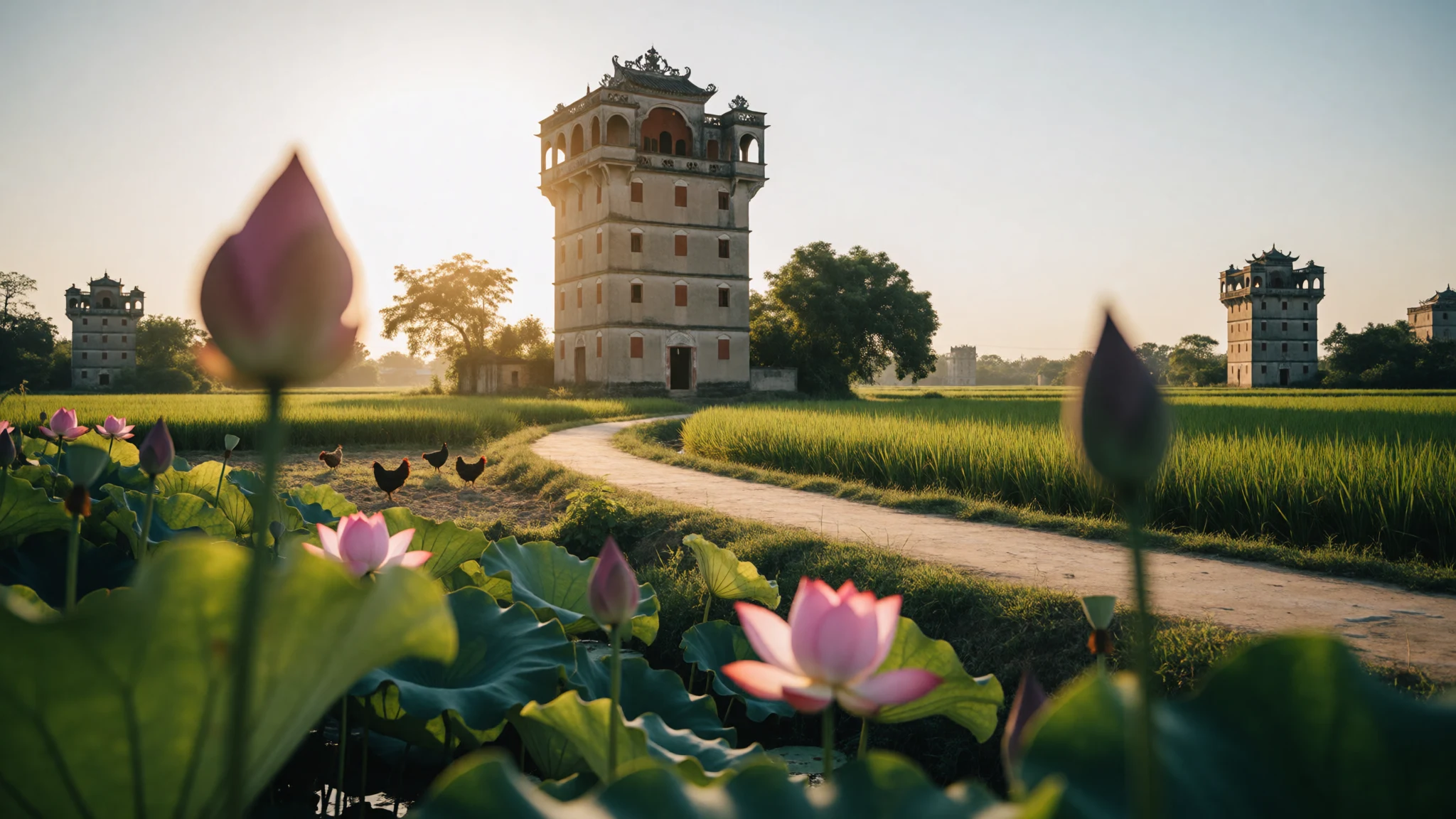
Kaiping Diaolou is a landscape of fortified village towers, built with emigrant money, where Chinese and Western ornament share the same rice-field skyline.
The place
Kaiping Diaolou is a scatter of fortified tower-houses across the farmland around Kaiping, a small city under Jiangmen in the Pearl River Delta, on the Tanjiang River and about 140 km from Guangzhou. The towers are tall, narrow and mostly built of reinforced concrete. Lower floors are plain and heavily walled, with slit windows for defence. The upper floors are where the fun starts: corner turrets, domes, colonnades, Islamic-style arches and Chinese roof ornaments, sometimes all on one building. UNESCO inscribed the group in 2007 as Kaiping Diaolou and Villages, covering four clusters: Sanmenli, Zilicun, Jinjiangli and the Majianglong villages. Each has its own character. Zilicun has towers standing over rice fields and lotus ponds and is popular with tour groups. Majianglong is quieter, with towers among bamboo and hardly anyone about. Jinjiangli is close to town, and Sanmenli is a larger, livelier village. The surrounding country is flat, humid and green, with fishponds, banyan trees and rows of brick houses. About 1,800 towers still stand, most of them empty, so a visit mixes tidily restored showpieces with ones being slowly taken over by roots and creepers. Kaiping itself is a working town with a high-speed rail station, markets and plenty of clay pot rice eateries. The clusters are spread out, so choosing two or three and giving each time works better than trying to see them all.
Its story
Kaiping Diaolou began long before the famous towers. The oldest survivor, Yinglong Lou in Sanmenli, dates from the Ming dynasty and is a squat, thick-walled three-storey block, quite unlike the slender towers that came later. The real building boom followed poverty and unrest in the late nineteenth century, when Kaiping became one of the main sources of Chinese emigrants heading abroad. Men who worked overseas sent money home, and part of it paid for towers that could shelter a family, a lineage or a whole village when bandits raided. Many served as homes as well as refuges. The towers multiplied through the chaotic warlord decades of the early twentieth century, and at their peak there were well over three thousand. Returning emigrants also brought ideas, photographs and catalogues from abroad, and builders worked them into the designs, which is why a farm tower might carry a Roman portico or a Mediterranean-style dome. Some were paid for by one family, others by several families or an entire village. Once the state administration reached down to village level after 1949, the towers no longer had a defensive job, and they were abandoned or put to other uses. Today they are remembered as a record of emigrant ties and of the resilience of Kaiping's farming families. Restoration has begun, though many towers remain empty and unmaintained.
What to see
- Zilicun — Tangkou Township
Zilicun is the village most people picture when they think of Kaiping's towers. Several diaolou stand among paddies and lotus ponds, with chickens, vegetable plots and villagers at work between them. It is also the busiest cluster, so go early or late, and walk the paths between the ponds rather than just the main lane.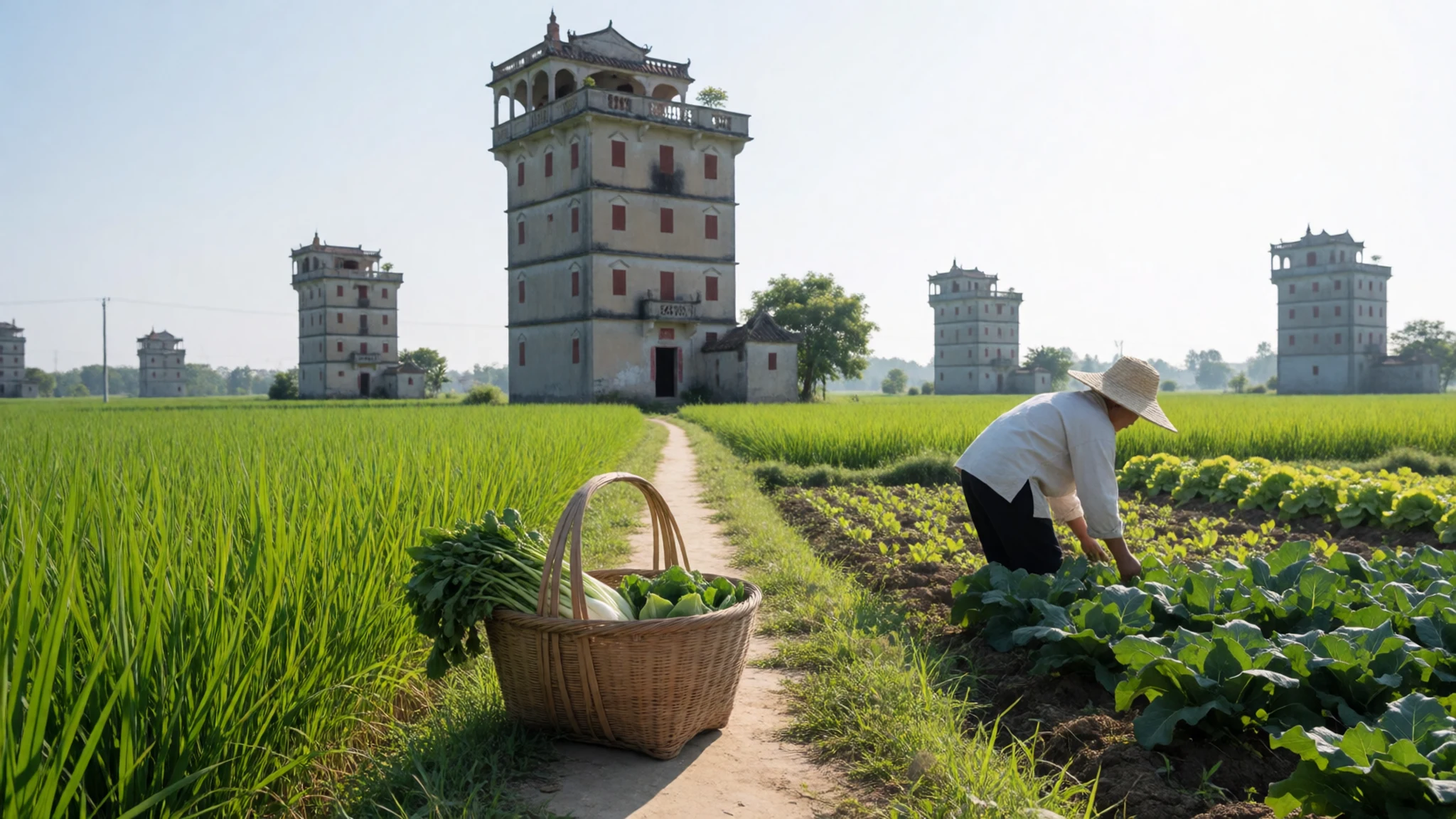
- Liyuan — Near Tangkou, northwest of Kaiping
Liyuan is a garden estate where neoclassical and baroque buildings are topped with Chinese ornamental roofs. The towers here are colourfully decorated and carefully restored, which makes it a good place to see how the mixed style looked when new. Allow a slow hour for the garden, pavilions and the interiors.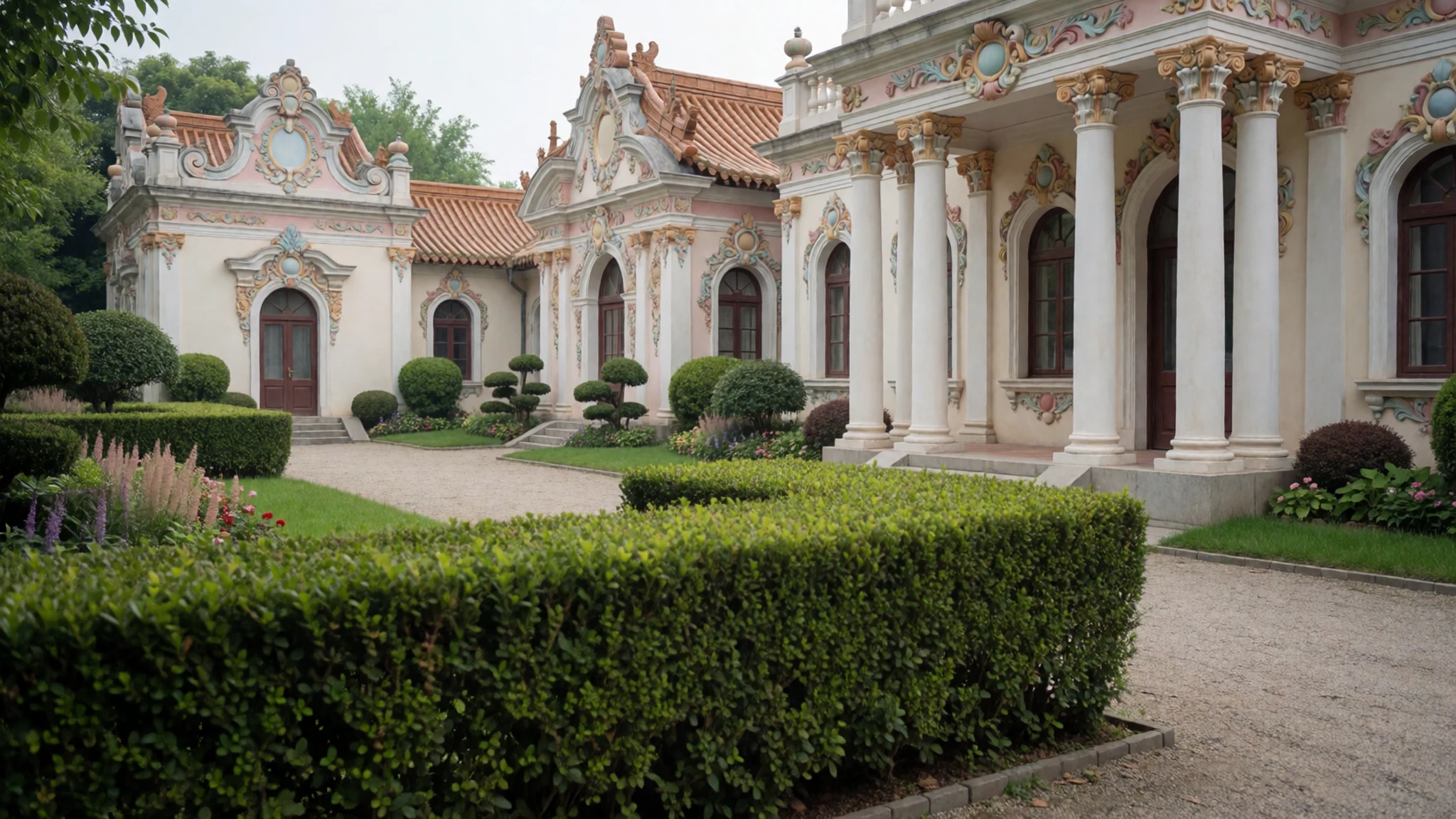
- Majianglong — South of Kaiping town
Majianglong is a group of villages with towers among bamboo thickets. It is very quiet: coops of chickens and geese show that people still live here, but few villagers and even fewer visitors are about. It suits a slow walk, and gives a better sense of everyday country life than the busier clusters.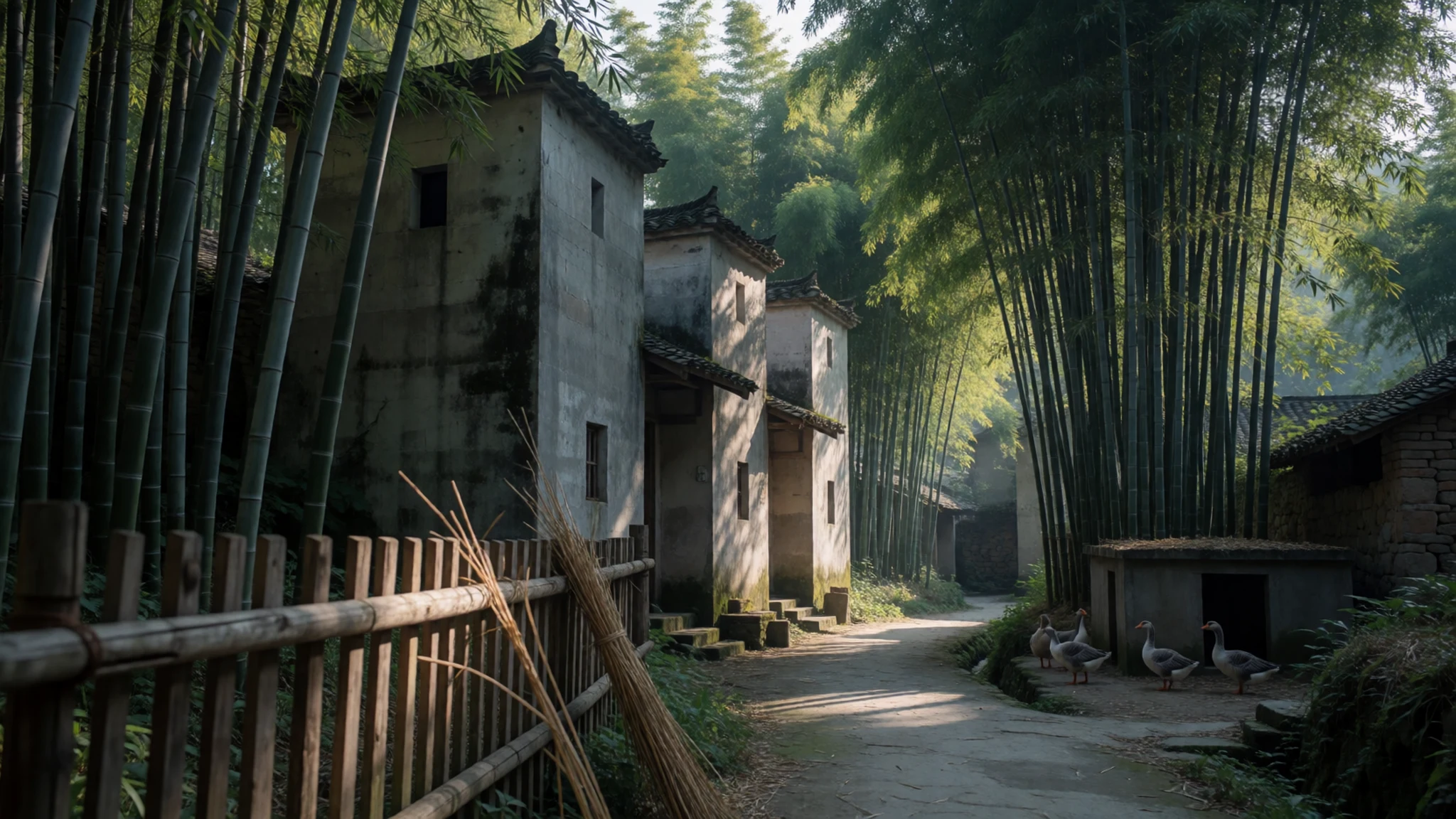
- Jinjiangli — Edge of Kaiping town
Jinjiangli lies right next to Kaiping and is the easiest cluster to reach. Two towers stand out for their bulbous, overhanging upper storeys, and one can be climbed for views over the fields. More towers nearby are in various states of disrepair, which makes the cluster a useful contrast with the polished sites.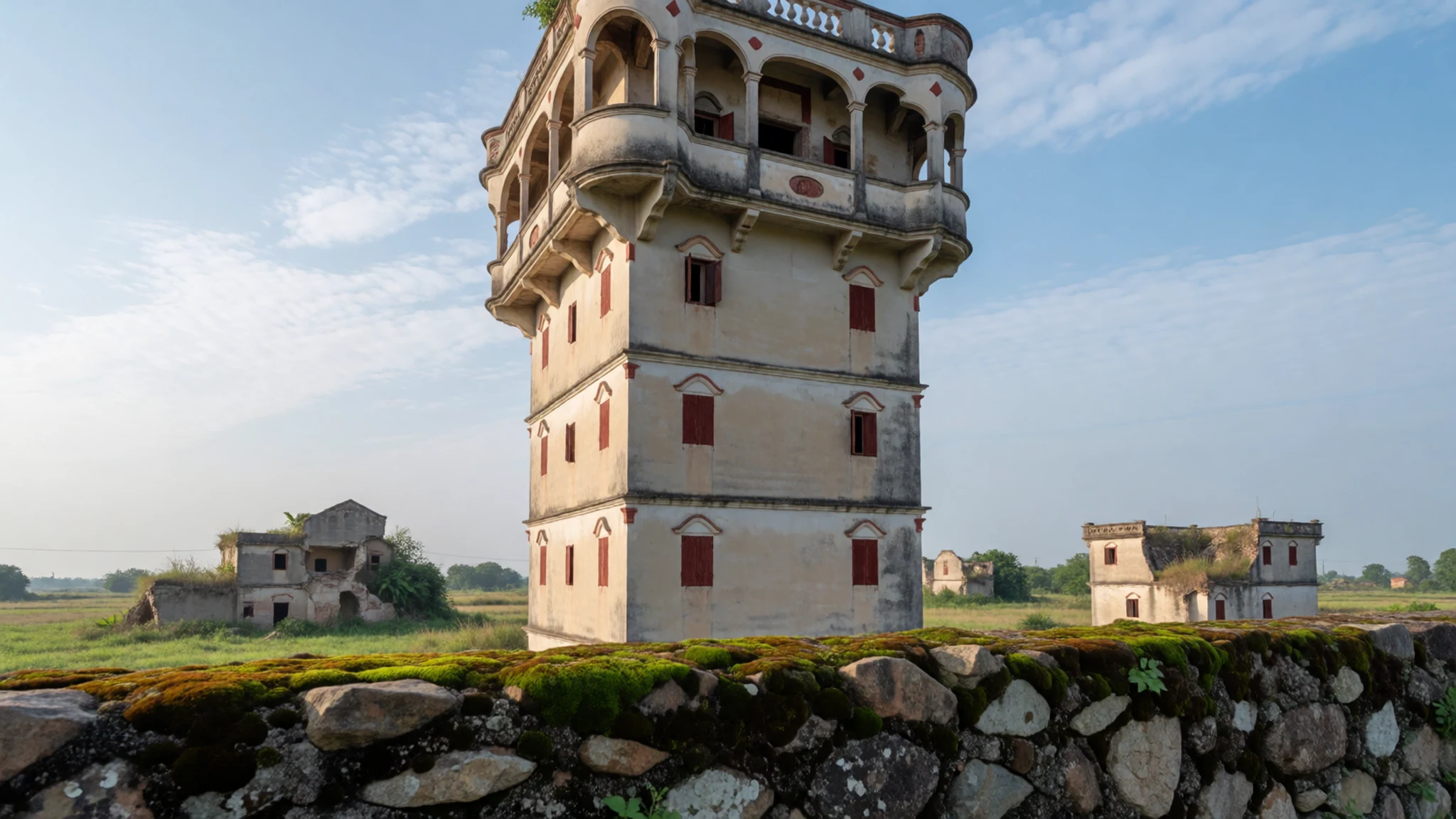
- Chikan — Chikan Township
Chikan is a market town on the river, lined with arcaded shophouses built by overseas Chinese in a blend of Western and Chinese styles. It is a good stop for lunch and a short riverside stroll, and a handy base for guesthouses if the plan is to explore the surrounding countryside by bicycle.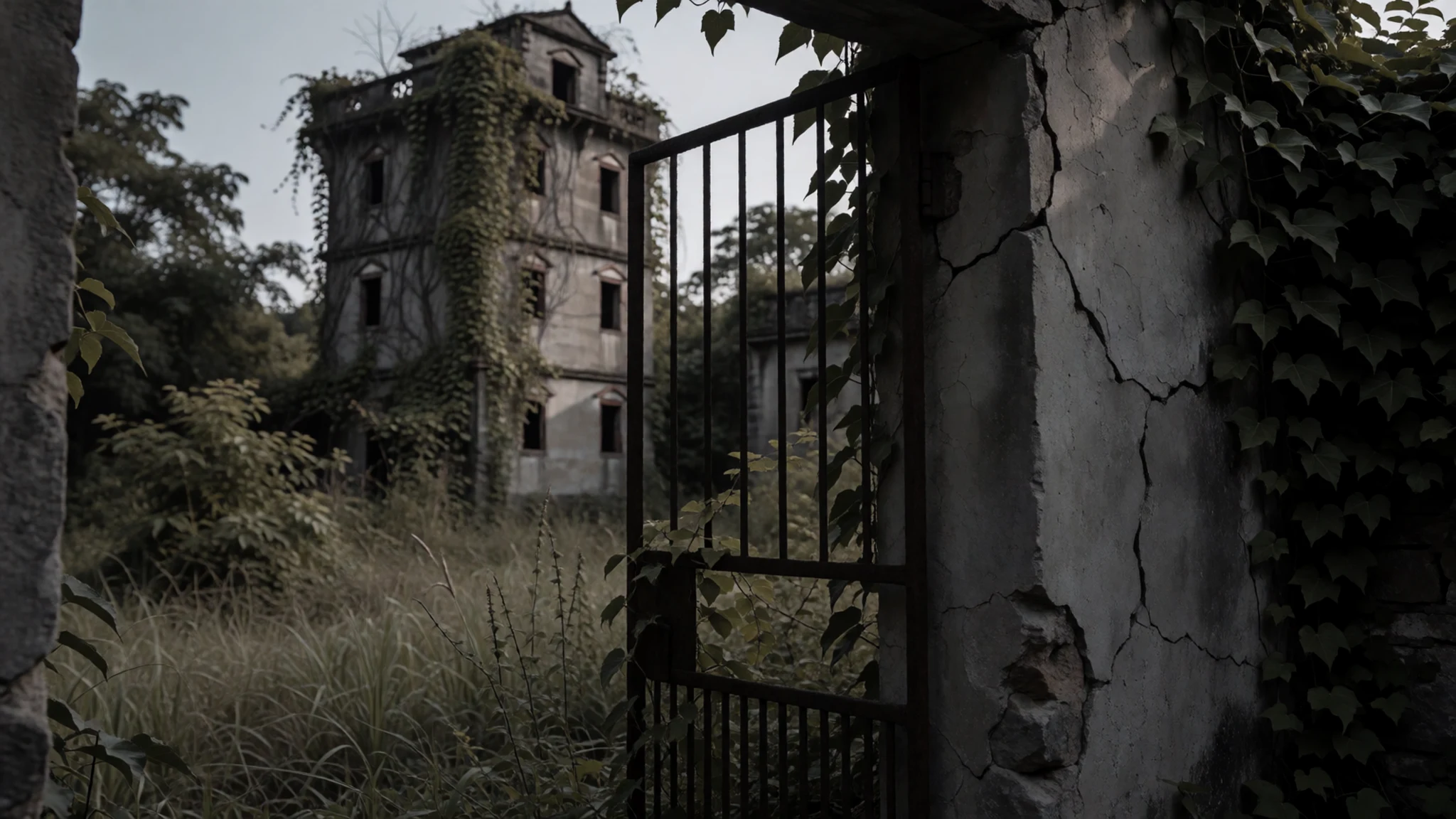
- Village Without People — Eastern Kaiping countryside
Dengbian village, nicknamed the Village Without People, is a ghost settlement. Its residents gradually moved to cities, and trees and vines have since taken over the houses. It sits well east of the main clusters, so it needs a dedicated trip, but it shows what the abandoned towers look like when nobody restores them.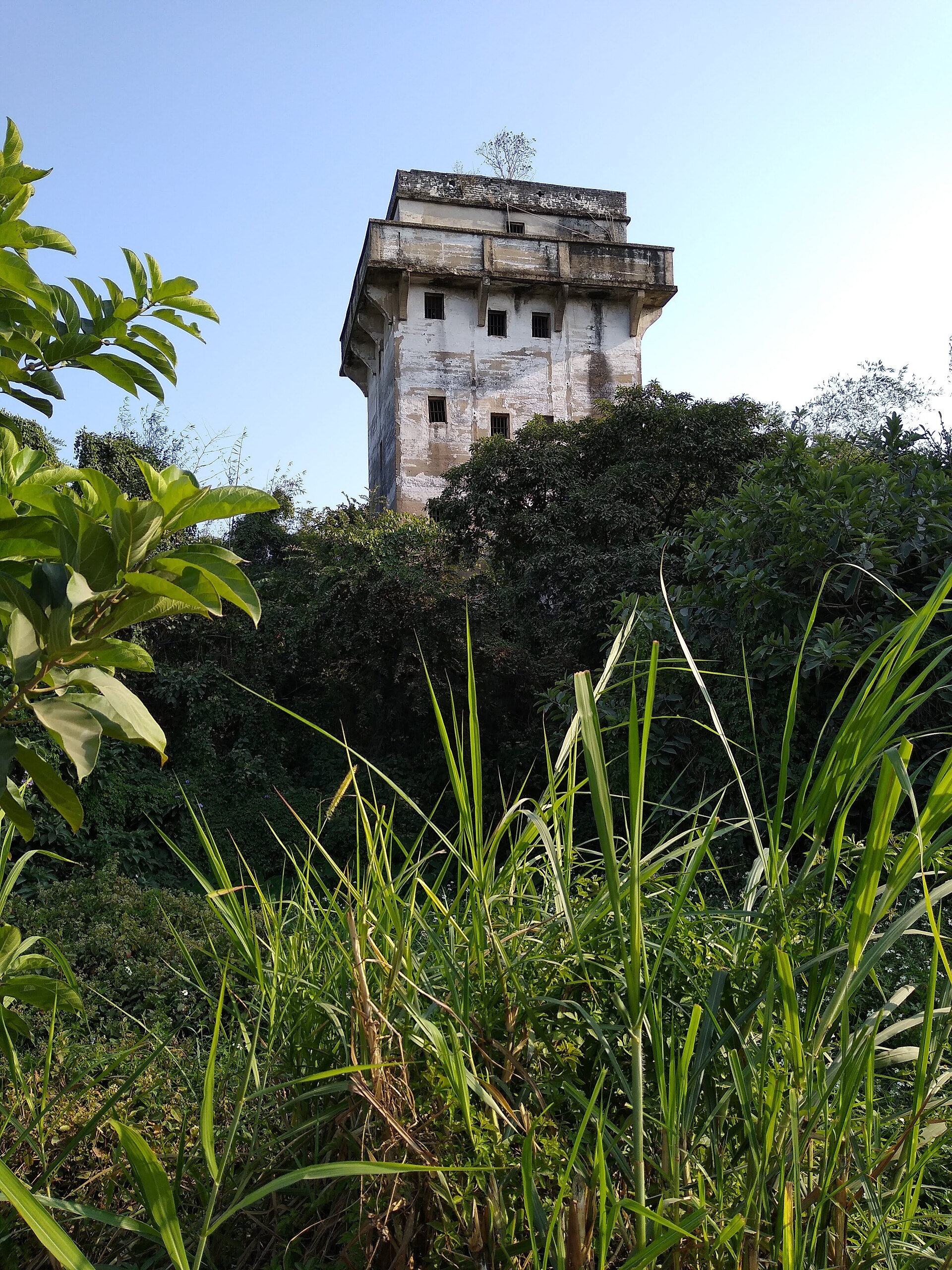
Culture
Kaiping Diaolou is as much about emigrant culture as about architecture. Kaiping families sent sons overseas for work, and the money, goods and ideas that came back shaped the villages: the Western columns and domes, the family halls with photographs from abroad, even the habit of building a tower to guard what remained at home. Many of these emigrant links are still alive, with relatives abroad returning for festivals or to repair ancestral houses. Village life itself follows the older pattern of lineage: families of the same surname live in the same village, ancestral halls hold tablets and photographs, and the calendar is marked by seasonal farming, ancestor-honouring and local festivals. Some towers have been turned into small museums, with household objects, letters and family histories that explain how a farming family could become part of a global network. Others still have the furniture and everyday goods left behind when people moved away. Seeing both sorts together makes clear that the towers were not only military structures but family projects, built to show success as well as to protect. A few, such as the tower where soldiers fought a long battle in the war against Japan, are now treated as sites of national memory, with a more solemn tone. Ask before photographing villagers or going into any tower that looks lived in, and keep noise down around ancestral halls and memorial sites.
What to wear
In Kaiping Diaolou country, traditional clothing is mostly a matter of history and farm work. Rural Cantonese families once wore plain cotton jackets and trousers, often in dark blue or black, with wide-brimmed bamboo or straw hats against sun and rain. Women in wealthier emigrant families, and returning emigrants generally, favoured tailored Western-influenced styles in the early twentieth century, including long fitted silk dresses, which can be seen in family photographs displayed in some towers. Today, people dress as they do across urban and rural southern China: T-shirts, light trousers, simple dresses, practical sandals and trainers. Farm workers still wear hats, long sleeves and rubber boots for the paddies and ponds. Visitors should dress for heat, humidity and a lot of walking. Choose light, breathable cotton or linen, with a hat, sunglasses and sunscreen, and carry a thin rain jacket or umbrella, since showers can arrive suddenly. Closed shoes with grip are better than flip-flops, because village paths can be muddy and tower stairs are steep and narrow. Shoulders and knees do not need covering as they do at temples, but modest everyday clothes are sensible in ancestral halls and memorial sites. Insect repellent matters near ponds and bamboo, especially in the warmer months.
What to eat
- Clay pot rice (煲仔饭, bāozǎifàn) — Busy local restaurants in Kaiping town
The local favourite is rice cooked in a lidded clay pot, then topped with meat, sausage or vegetables. Stir it through at the table so the sauce coats every grain, and try the crisp crust at the bottom. Look for it in busy, noisy local restaurants in Kaiping town.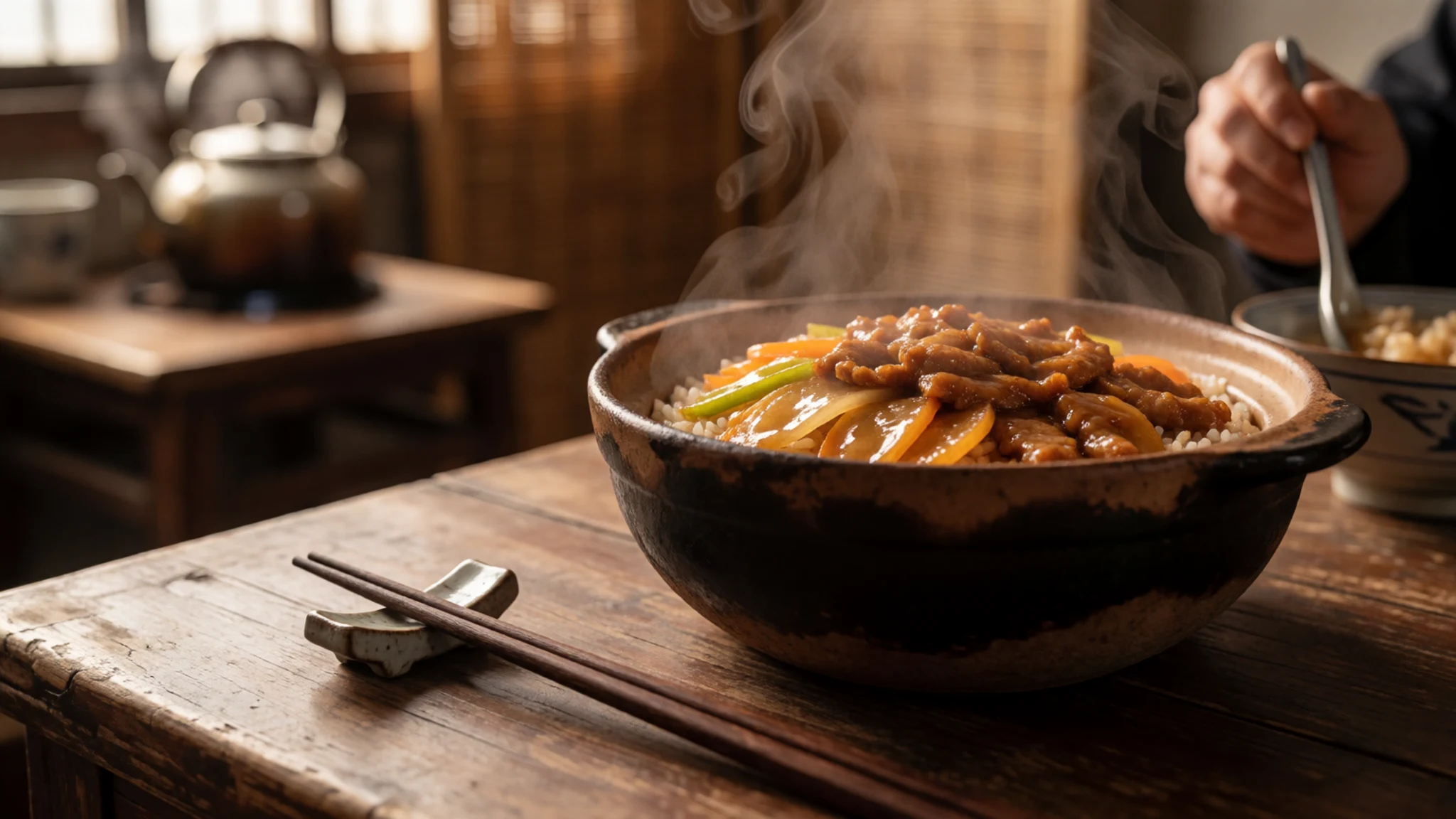
- Vegetarian clay pot rice — Local restaurants in Kaiping town that serve clay pot rice
Some restaurants will prepare the clay pot dish without meat, built on mushrooms, greens and tofu instead. It is worth asking for it when ordering, since the default version usually carries meat. The sauce and the crispy rice crust are still the pleasure here.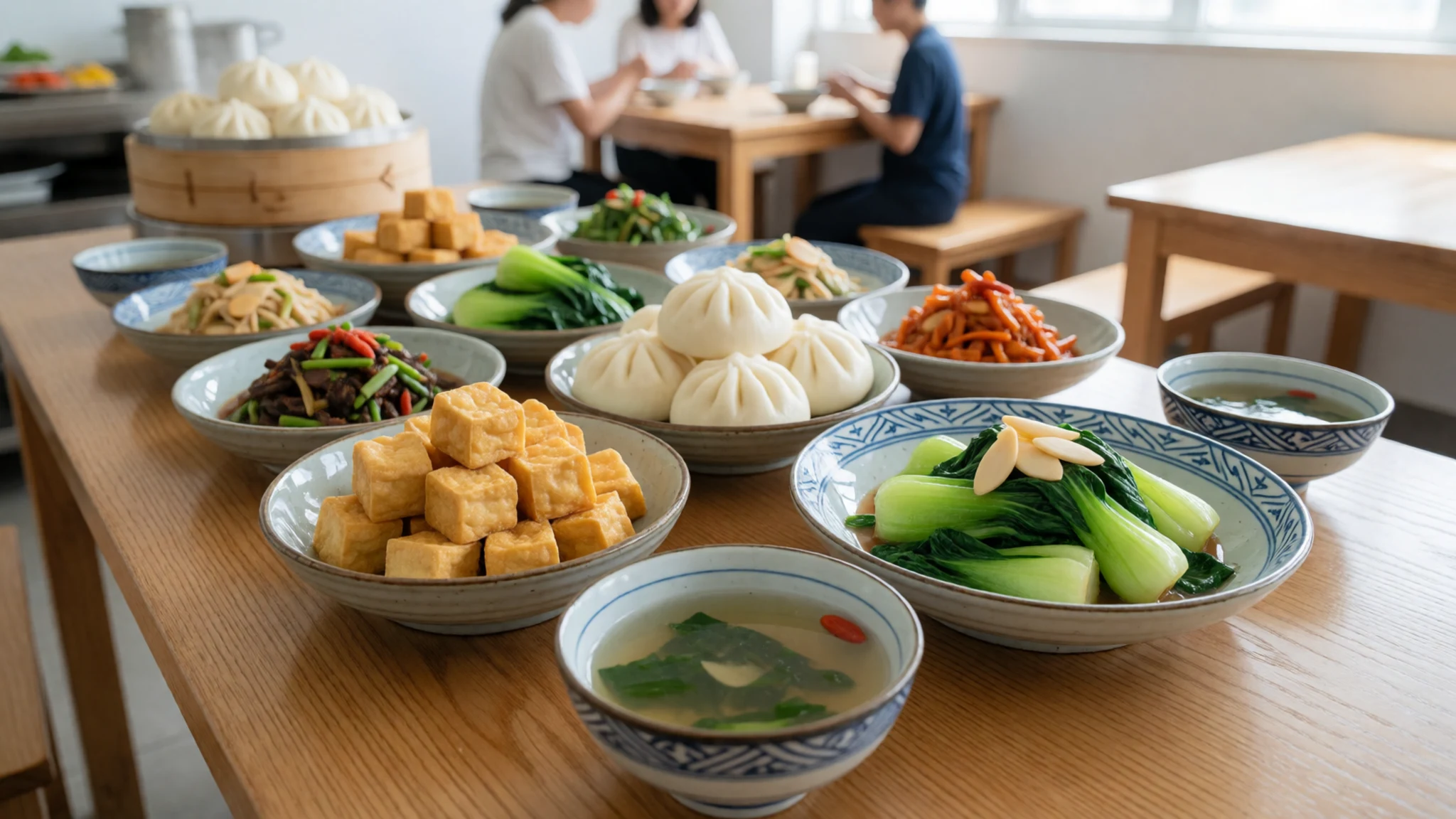
- Vegetarian lunch buffet — A vegetarian restaurant in Kaiping town, lunch only
A mainland Chinese-style vegetarian buffet offers a spread of vegetable, tofu and mushroom dishes, a useful stop for visitors avoiding meat. It runs only at lunchtime, so plan the day around it and arrive before the early afternoon. - Congee — Breakfast eateries and morning markets in Kaiping and Chikan
Rice porridge is a standard Cantonese breakfast, simmered until creamy and served with slices of fish, pork or preserved egg, plus spring onion and fried dough. It is warming, mild and good fuel before a morning among the towers. - Steamed pond fish — Family restaurants in the villages and in Chikan
With fishponds across the countryside, fresh steamed fish with ginger, spring onion and a splash of soy sauce is a natural order at a village or town restaurant. Cantonese cooks usually keep the flavours light so the fish itself stays the focus.
Plan it
Best time. October–November and March–April are the most comfortable, with milder, drier weather for walking between villages and climbing towers. Summer in this part of Guangdong is hot, humid and rainy, with a risk of typhoon weather.
How long. 2
Getting there. Fly into Guangzhou, then take a high-speed train to Kaiping South Station, which also has services from other cities across Guangdong. Long-distance buses link Kaiping with Guangzhou, Zhanjiang and Zhuhai. For the last leg, taxis wait at the station and buses run from the town bus terminal into the villages. A day trip from Guangzhou is possible, but staying overnight is better.
Budget. low
Tips
- Choose two or three clusters rather than all four, because the villages are well spread out
- Stay in Kaiping town for convenience, or in Chikan or Tangkou to be among the towers and rent a bicycle
- Check the official site for ticket arrangements and opening times before going, as access varies between clusters
- Carry cash and a mobile payment app, because small village shops and stalls may not take foreign cards
- Start early, as Zilicun fills with tour groups by midday, and carry water and insect repellent
Etiquette
- Ask before photographing residents or entering a tower that appears to be someone's home
- Keep to marked paths around ponds and fields, since these are working farmland
- Stay quiet and respectful at ancestral halls and memorial sites
Nearby
Sources
- Wikidata Q16303641 (CC0)
- Wikipedia: Kaiping Diaolou (rev 1383219976) (CC BY-SA 4.0)
- Wikivoyage: Kaiping (rev 5237043) (CC BY-SA 4.0)
- Photo: Yunhuan Lou and Yangxian Villa in Zili Diaolou Village, Stefan Fussan (CC BY 3.0)
- Photo: 18211-Kaiping, xiquinhosilva (CC BY 2.5)
- Photo: Liandeng West Gate Tower, Yumeto (CC BY-SA 4.0)
- Photo: _IGP7500s, Tomoaki INABA (CC BY-SA 2.0)
- Photo: The Village Without People (无人村), Mx. Granger (CC0 1.0)


