Jingpo Lake
Jingpo Lake, People's Republic of China
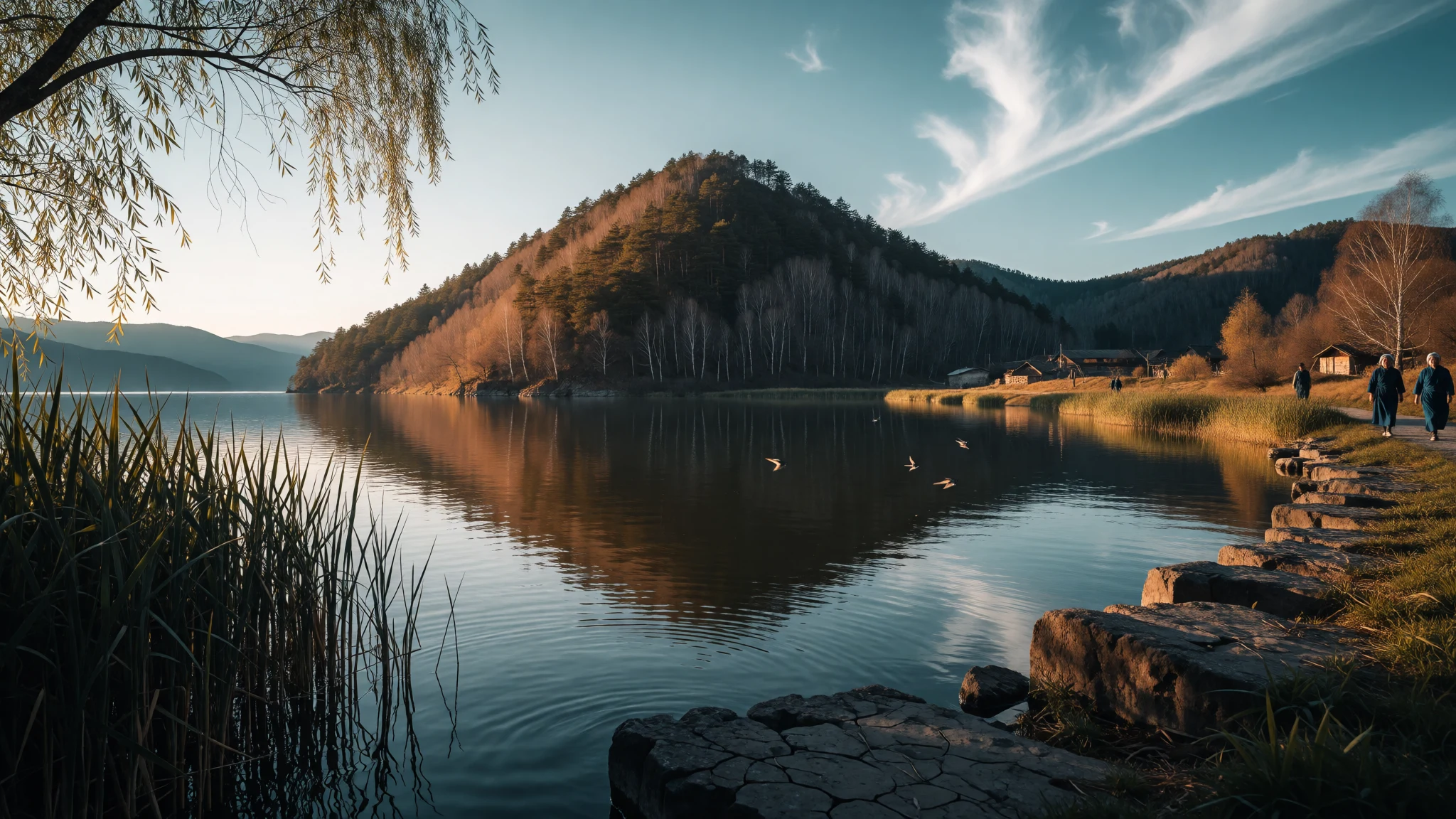
Jingpo Lake is a long ribbon of water among forested northeastern hills, with a lava-edged waterfall at one end and deep snow in winter.
The place
Jingpo Lake lies in Ningan County, in the south of Heilongjiang Province, in China's far northeast. It is a narrow body of water held among the Wanda Mountains, fed and drained by the Mudan River, and it sits about 350 m above sea level. From north to south it runs about 45 km, yet at its widest it is only about 6 km across. A boat trip therefore feels like travelling along a corridor of hills rather than crossing open water. The southern end is shallow, while the deepest water, about 62 m, lies in the north. Rounded, forested ridges come right down to the shore, and Maogong Mountain is the hill most often photographed rising from the surface. The scenery is gentle rather than dramatic, and the pleasure is in its calm and in the changes of season. Visitors usually stay around the northern end, where the river leaves the lake over the Diaoshuilou waterfall and where most boat landings and viewing platforms are found. The lake carries China's AAAAA tourist-attraction rating, so summer weekends and the national holidays in early October bring tour groups and queues. Weekday mornings and the shoulder weeks are far quieter. Summers are warm and short, winters long and severe, and the lake freezes. Earlier names for it include Meituohu, Huhanhai and the Manchu-derived Bilten, which hint at the different peoples who have lived on these shores.
Its story
Jingpo Lake owes its shape to volcanic activity. Lava from vents in the surrounding hills once flowed across the Mudan River's course and hardened into a barrier of basalt. Water backed up behind it and filled the valley, producing a lake that is long and narrow because the valley was. The river still finds its way out over the edge of the lava, and that spill is the Diaoshuilou waterfall. The old names tell another part of the story. Huhanhai echoes a medieval name for the Mudan River, from the time of the Bohai kingdom, whose capital stood not far away. Bilten reflects the Manchu presence in the region, and Meituohu is a third local name. For most of its history the lake was a remote feature of a frontier landscape, known to hunters, fishers and farmers more than to travellers. Roads, rail and the growth of Mudanjiang changed that, and the lake became a holiday destination for people from across the northeast who come to escape city heat in summer and to see snow in winter. Today the surrounding volcanic landscape is presented as a geopark, and the lake is among China's rated tourist attractions. Planetary scientists have even borrowed the name for Jingpo Lacus, a hydrocarbon sea on Titan, the moon of Saturn, so a quiet northeastern lake now appears on maps of another world.
What to see
- Diaoshuilou Waterfall — Northern end of the lake
At the northern end of Jingpo Lake, the Mudan River drops over a basalt lip into a rounded pool below. Diaoshuilou is the lake's outflow, so the flow follows the seasons: fuller after summer rain, thinner in dry months. Platforms stand at the top and bottom of the drop, and both are worth walking when crowds allow.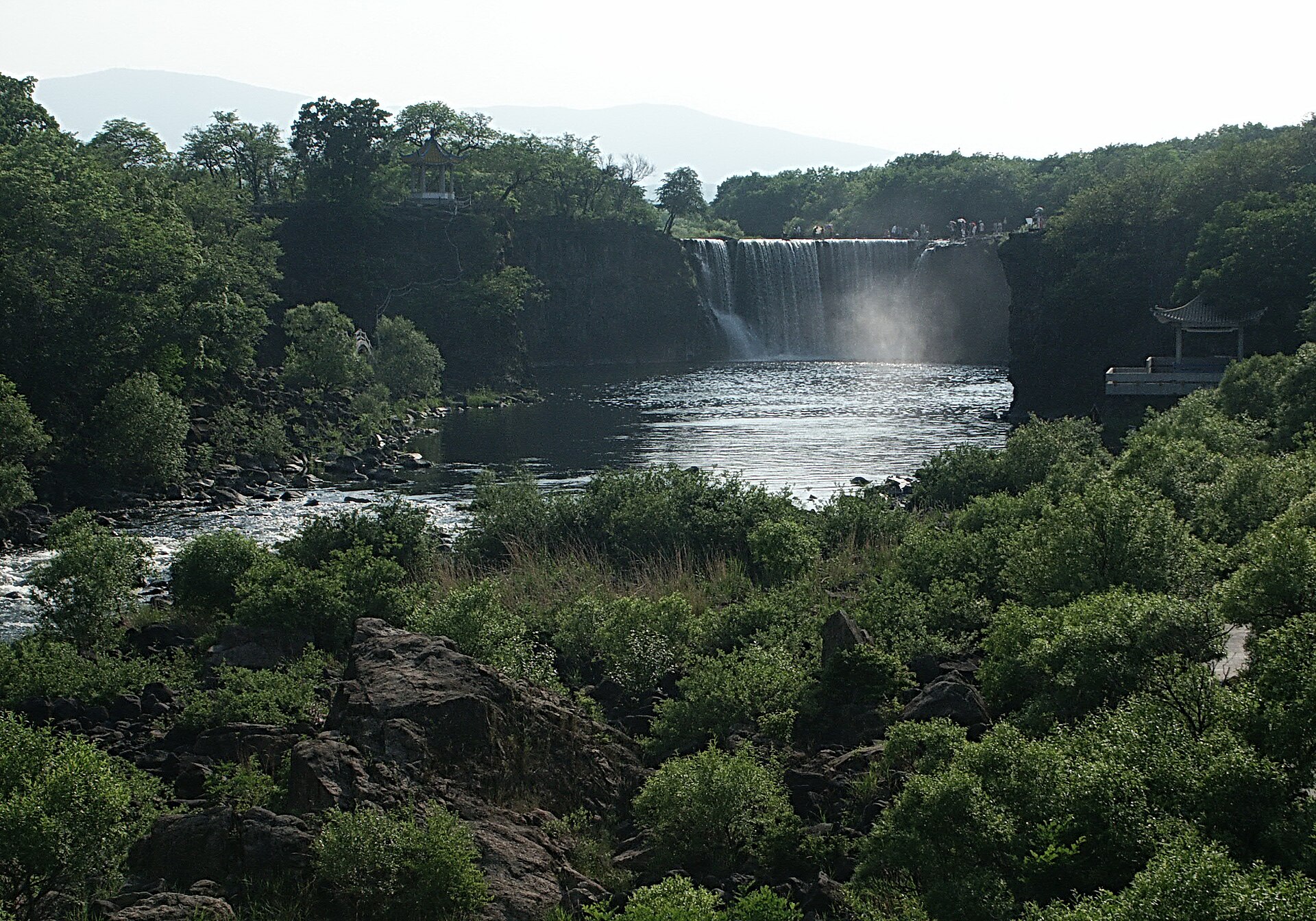
- Maogong Mountain — On the lake
Maogong Mountain is a forested hill that rises straight out of the water and appears in many photographs of the shore. Its reflection is clearest on still mornings. Boats pass close by, and the slopes shift from green to gold and rust in autumn. Early light, before wind ripples the surface, gives the best pictures.
- A boat on the lake — Landing points around the lake
A boat is the easiest way to understand Jingpo Lake's shape: a narrow channel between hills, with shoreline close on both sides. Small rowing boats and larger sightseeing vessels work from the landing points. Ask at the ticket office about routes and times, as services vary with the season and water level.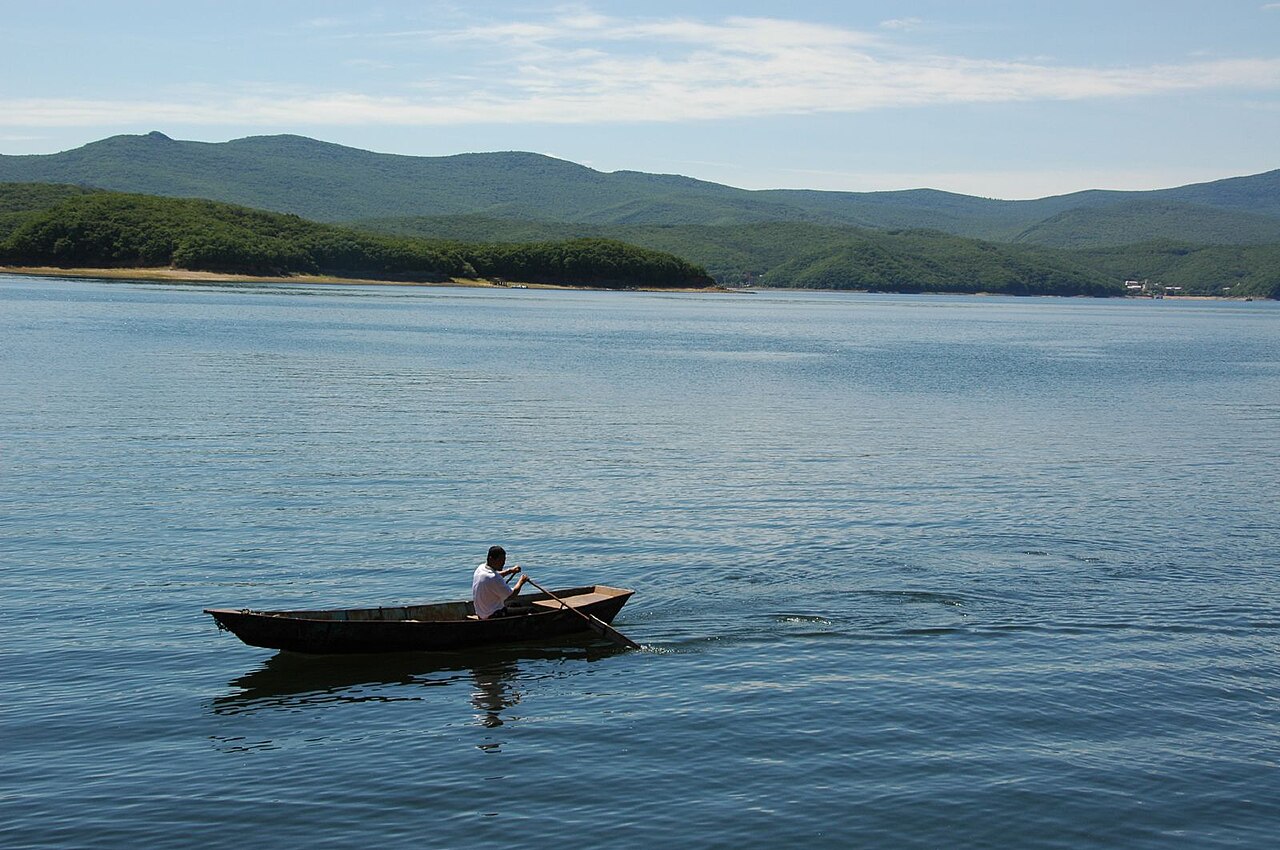
- The lake in winter — Lake and waterfall area
Jingpo Lake in winter turns white and quiet. The surface freezes, snow covers the shore, and the waterfall edges itself with ice while some water keeps flowing. It is far colder than most visitors from India or the UK expect, so go only with proper insulation and check which paths have been cleared.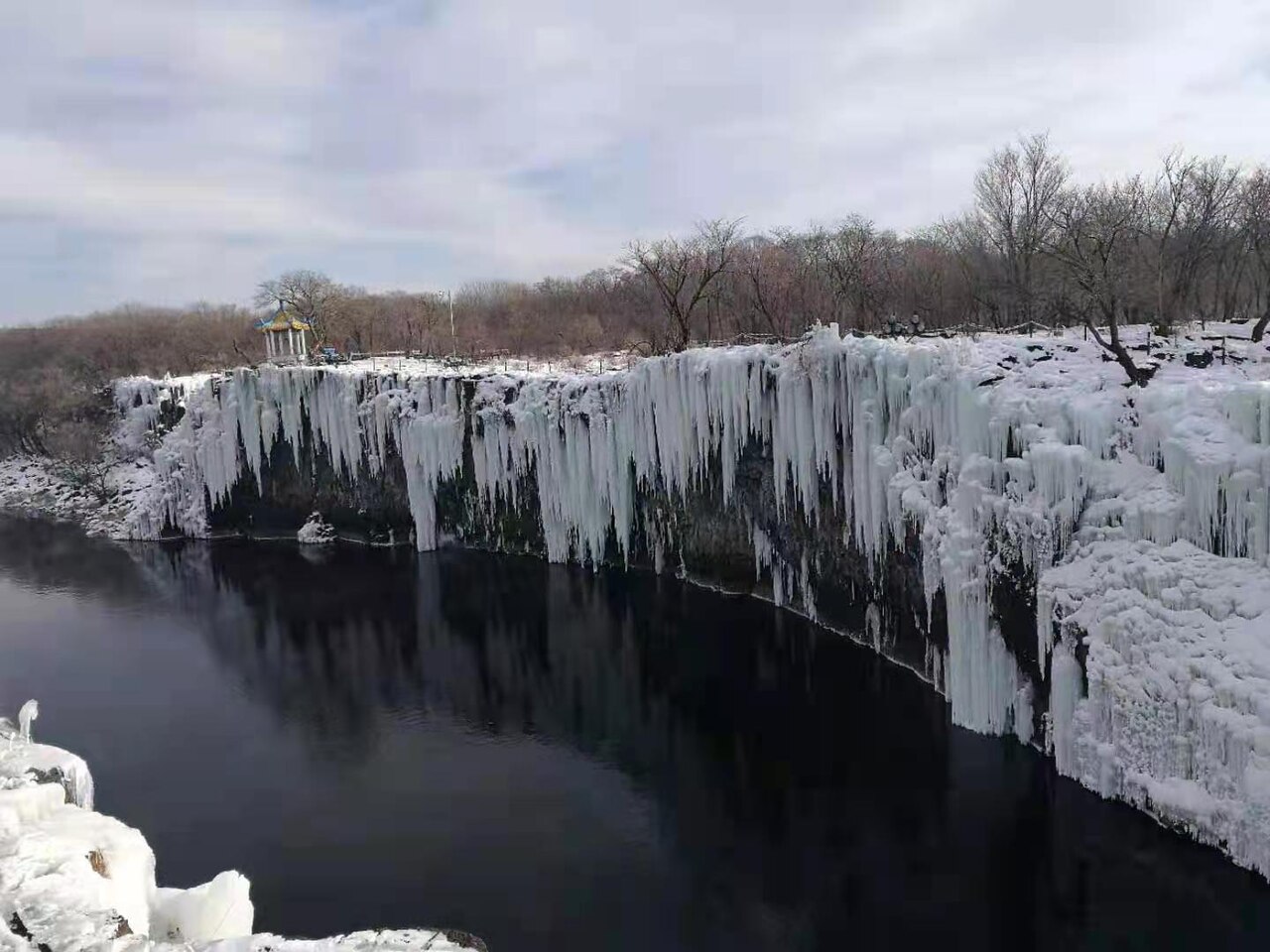
- Sunset on the shore — Lakeshore paths
Sunset over Jingpo Lake lights the long water in copper and pink, with hill ridges layering into the distance. Any quiet stretch of shoreline works, and because the lake runs north to south the light falls along its length. Bring a torch for the walk back, as the light fades quickly.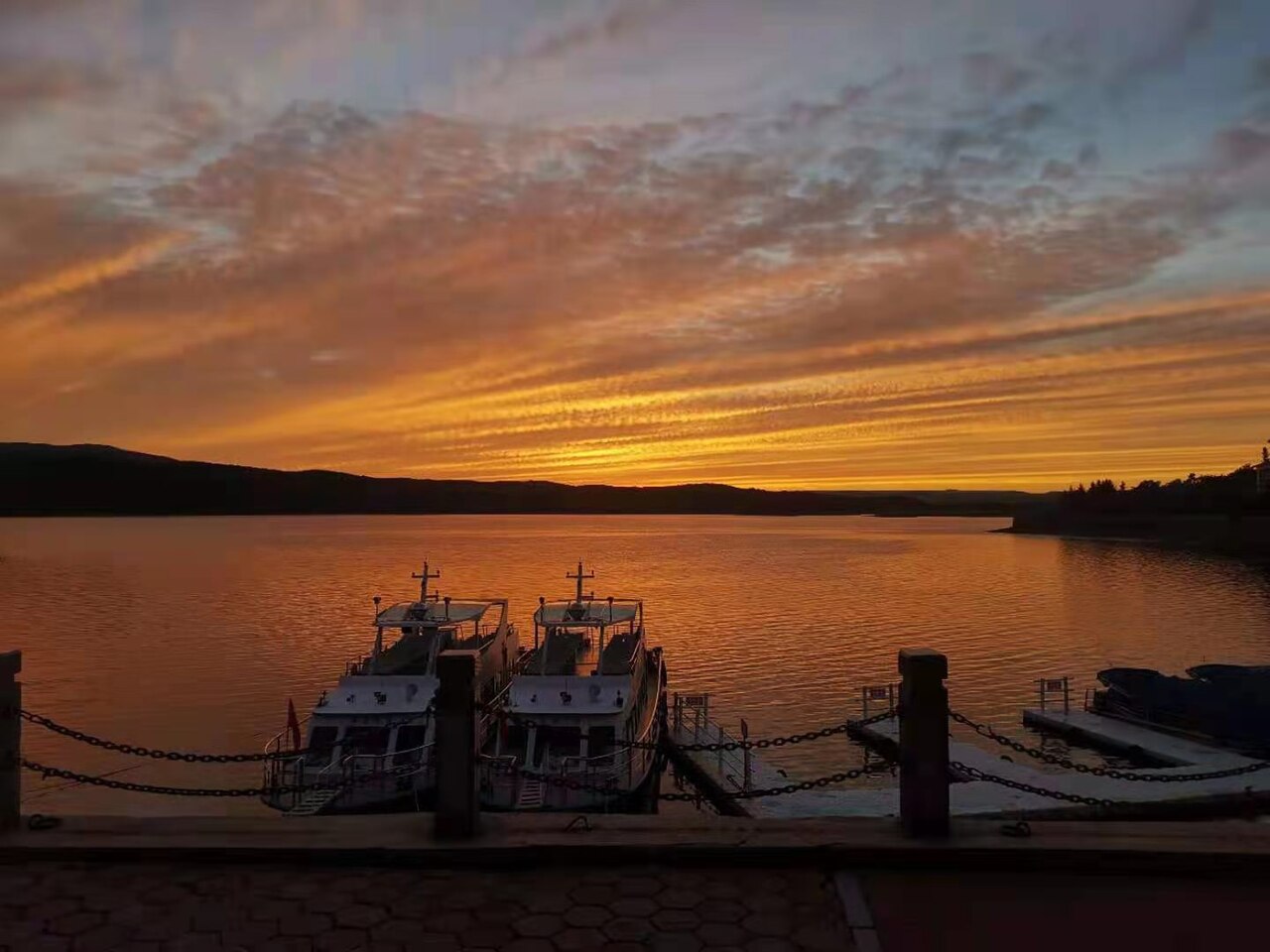
- Jingpohu Global Geopark — Ningan County
Jingpo Lake belongs to a wider volcanic landscape around Ningan that the geopark presents to visitors, including lava fields and craters. Allow a day beyond the lake to see them, and check the official channels for which parts are open and how to reach each by shuttle or taxi.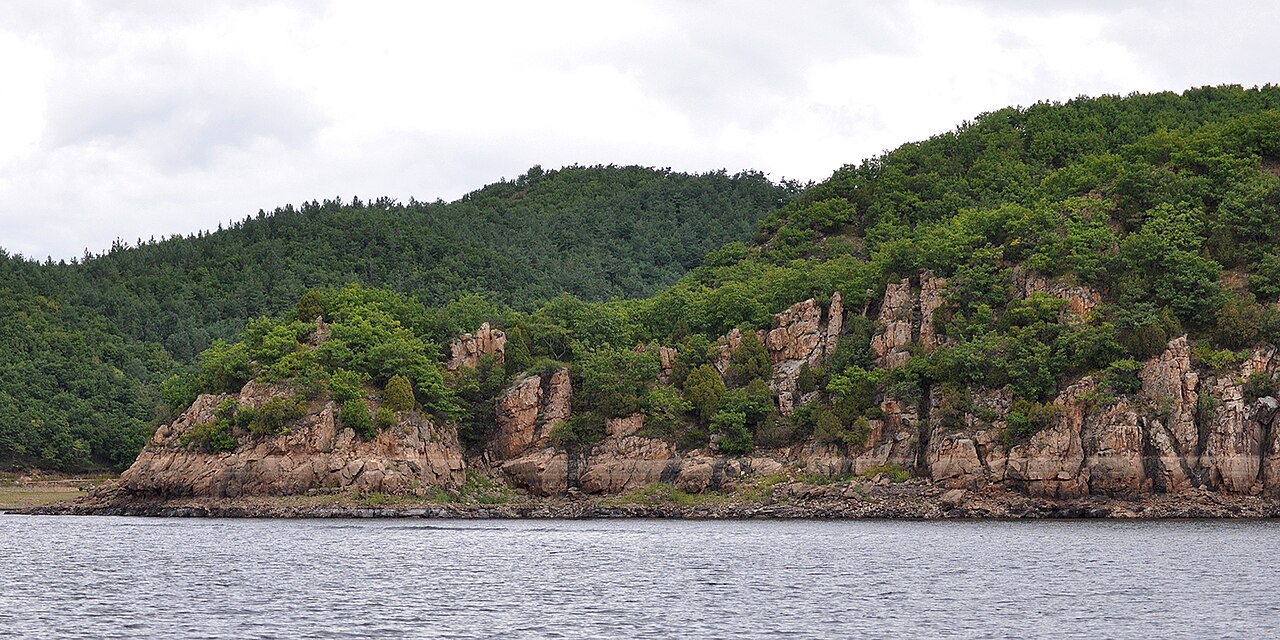
Culture
Jingpo Lake sits in a part of China where several cultures overlap. Han Chinese settlers from farther south form the majority, but Manchu heritage is visible in place names and in local history, and a Korean-Chinese community in the Mudanjiang area keeps its own language, festivals and cooking. The Bohai kingdom, which ruled this region in medieval times, left traces in old names, and local museums in nearby towns are the place to learn more about it. Northeastern people have a reputation across China for plain speaking, big portions and quick humour, and visitors often find conversation easy even without shared language, especially over a meal. Snow and ice are part of regional identity: winter festivals, ice fishing and sculpture are celebrated rather than endured. Domestic tourism shapes the lake's character. Most visitors are Chinese families and tour groups, so expect group photographs, loudspeaker commentary at popular platforms, and a cheerful, crowded atmosphere in holiday weeks. Mobile payment is the normal way to pay for almost everything, which is worth knowing before arrival. Meals are often shared from central dishes, with the host ordering generously and guests encouraged to keep eating. Wear the life jacket provided on every boat, stay behind the barriers at the waterfall edge, and take your litter with you.
What to wear
Around Jingpo Lake, traditional dress belongs to festivals and performances rather than daily life. Manchu women's long robes were the ancestors of the qipao, usually in silk or satin with embroidered edges. The Korean-Chinese community wears the hanbok, a short jacket with a high-waisted skirt in bright silk or ramie, for weddings, birthdays and holidays. Further north, the Hezhe people have historically made clothing from fish skin, now seen mainly in museums and craft shops. Day to day, people dress practically for a hard climate. Winter means padded cotton coats, long down jackets, fur-lined hats with ear flaps, thick gloves and insulated boots. Summer is light cotton, sun hats and trainers, with a layer for cool evenings by the water. Visitors in winter should wear thermal base layers, a windproof outer shell, a hat that covers the ears, liner and outer gloves, and boots with a deep grip or add-on spikes for ice. In summer and early autumn, bring breathable layers, a rain jacket and shoes with good grip for wet boardwalks and steps near the waterfall. There are no strict dress codes at the lake, but modest, practical clothing suits any temple or museum visit nearby. Waterproof shoes are worth having year round.
What to eat
- Suan cai stew — Family restaurants in Ningan and Mudanjiang
Pickled Chinese cabbage simmered with pork belly, glass noodles and sometimes blood sausage is the northeast's signature winter dish. The sourness cuts through the richness. Order it at family restaurants in Ningan and Mudanjiang, where it arrives bubbling in a large pot for sharing. - Di san xian — Any northeastern-style eatery
The name means 'three fresh things from the earth': potato, aubergine and green pepper, fried then braised in a glossy soy sauce. It is filling, vegetarian-friendly in many kitchens, and served at almost every northeastern eatery. Ask for it without meat stock if that matters. - Stewed lake fish — Lakeside eateries near the boat landings
Fish from the lake is braised whole in a soy-based sauce, often with tofu and potato, and eaten with local rice. It is a lakeside speciality, though the exact catch varies. Ask what came in that day at the eateries near the landing points. - Korean cold noodles — Korean-Chinese restaurants in Mudanjiang
Chewy buckwheat or starch noodles in an icy, tangy beef broth, topped with pear, egg and pickles, show the Korean-Chinese influence in this region. They suit hot summer days and are common in Mudanjiang's Korean-style restaurants. - Guo bao rou — Restaurants in Ningan town and Mudanjiang
Thin slices of pork are fried twice in a crisp starch coating, then tossed in a light sweet-sour sauce with ginger and spring onion. Northeasterners take pride in its crunch. It is easy to share, and a safe choice for first-time visitors.
Plan it
Best time. June to September for warm weather, green hills and full boat services, with July and August the busiest. Late September into early October brings autumn colour but also the national holiday crowds. Winter, from December to February, is for snow and ice and is severe, with temperatures far below freezing.
How long. 2–3
Getting there. Fly to Mudanjiang, or to Harbin for more connections, then take a train to Ningan and finish by taxi or local bus to the lake. Check current rail and bus timetables on the national rail booking app, as services change by season.
Budget. mid
Tips
- Book accommodation early for the national holidays in early October and for summer weekends
- Visit the waterfall and boat landings on weekday mornings, before tour groups arrive
- Carry some cash, and set up mobile payment before arrival, as foreign cards are not always accepted
- In winter, check with the scenic area's official channels which paths and boats are running
- Bring a water bottle and a rain layer, as summer showers arrive quickly
Etiquette
- Wear the life jacket provided on every boat
- Keep behind the barriers at the waterfall edge
- Ask before photographing people, especially children
Nearby
Sources
- Wikidata Q716287 (CC0)
- Wikipedia: Jingpo Lake (rev 1385232278) (CC BY-SA 4.0)
- Wikivoyage: Jingpo Lake (CC BY-SA 4.0)
- Maogong Mountain, Jingpo Lake — Tlrmq (CC BY 3.0)
- Jingpo Lake, rowing boat — drnan tu (CC BY-SA 2.0)
- Location map of Heilongjiang — Das steinerne Herz (CC BY 3.0)
- Diaoshuilou Waterfall — lienyuan lee (CC BY 3.0)
- Diaoshuilou Waterfall in winter — Kelly Zhang120 (CC BY-SA 4.0)
- Jingpohu Lake, Jingpohu Global Geopark — William L. Farr (CC BY-SA 4.0)
- Sunset of Jingpo Lake — Kelly Zhang120 (CC BY-SA 4.0)
- Jingbo Lake — lienyuan lee (CC BY 3.0)


