Jigokudani
Jigokudani, Japan
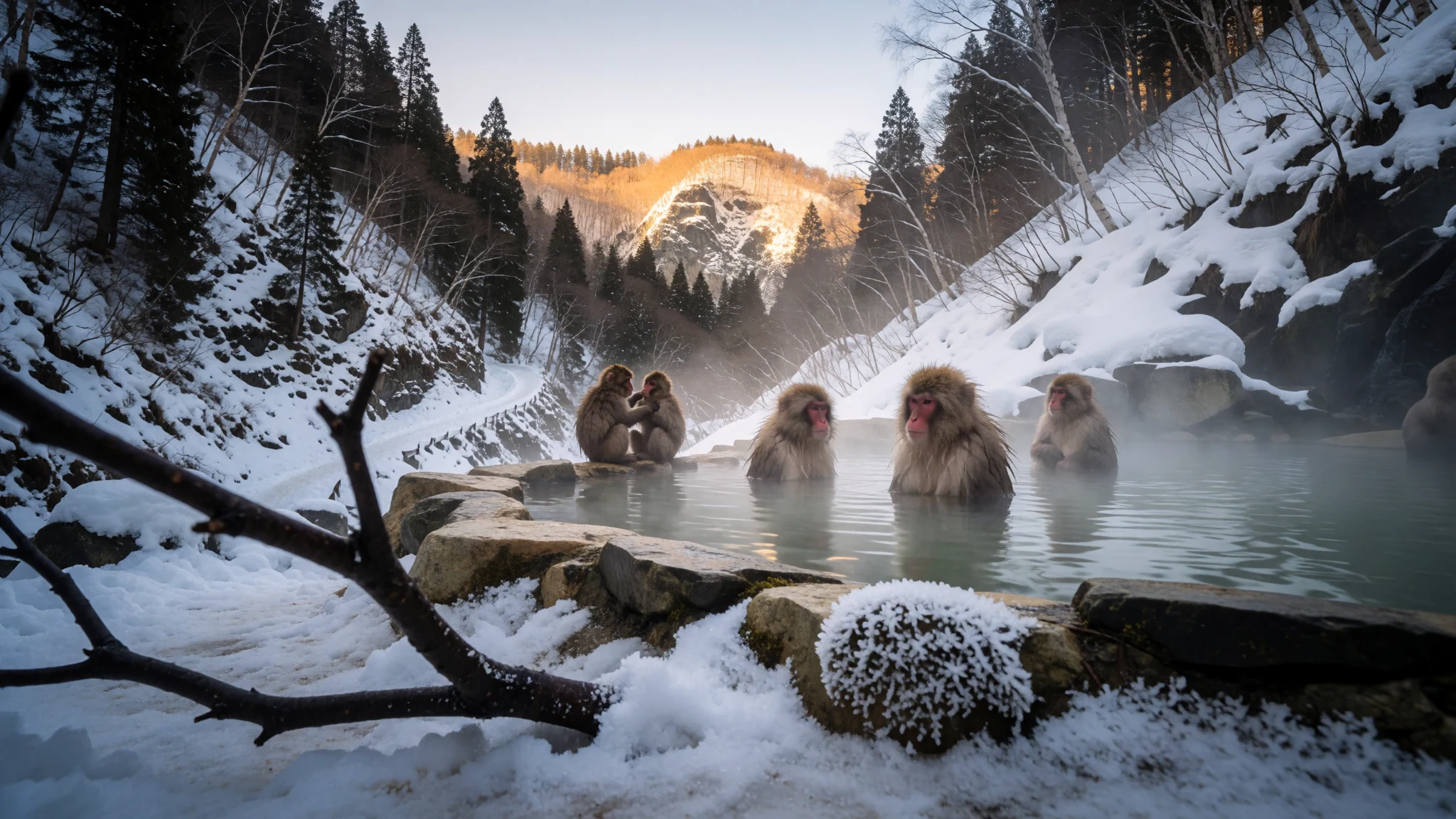
Jigokudani is a steaming Nagano valley where wild macaques soak in hot springs while snow settles on their fur.
The place
Jigokudani lies in the valley of the Yokoyu river in Yamanouchi, northern Nagano Prefecture, inside Joshinetsu Kogen National Park. Its full Japanese name is Jigokudani Yaen Kōen (地獄谷野猿公苑), and the first word, meaning 'Hell's Valley', fits the setting: steam and scalding water leak from small cracks in the ground, steep cliffs close in on both sides, and dark, cold forest covers the slopes above. The site sits at 850 m, and snow lies on the ground for roughly four months of each year. No road reaches the springs. Visitors are dropped about 1.6 km short and walk through woodland on a path that can be muddy or icy, an effort that keeps the place calmer than its reputation would suggest. The residents are wild Japanese macaques (Macaca fuscata), called snow monkeys by many foreigners. In winter they come down from the cliffs to sit in the warm water, then go back into the trees by evening. In warmer months they range over the wider national park, but staff put out food at the springs, so hundreds of animals are around whatever the season. The practical bases are the hot-spring towns of Yudanaka and Shibu Onsen nearby, and Nagano city is the rail gateway, with the whole journey from Tokyo taking about 3.5 hours. The monkeys are the draw, but the valley itself, all steaming rock and snow, rewards a slow look too.
Its story
Jigokudani Monkey Park has a short history, and it begins with a conflict. Japanese macaques originally lived in nearby mountains such as Shiga Kogen. In the 1950s, ski resorts and forest clearing there cut into their habitat, and troops drifted down towards villages and farmland, where people saw them as pests. The park, founded in 1964, offered a different arrangement: a valley where the animals could be watched and fed rather than chased away. That feeding is why the monkeys now stay near the springs through every season, instead of only in the coldest weeks. Fame beyond Japan came later, after the valley appeared in the documentary Baraka, which brought it to a wide international audience. The macaques are not at the edge of their range here. The species lives as far north as the Shimokita Peninsula on Honshū, roughly 500 km further north, which marks the northern limit of its habitat. So the snow monkey is a hardy animal by nature rather than a one-valley curiosity. What Jigokudani offers is closeness. The troops have grown used to people on the path, and they go about grooming, squabbling and bathing with little regard for an audience. The arrangement is a compromise born of the 1950s upheaval, and the animals remain wild, which is worth remembering whenever one wanders within arm's reach.
What to see
- The snow-monkey pool — Jigokudani Monkey Park
The park's main attraction is a rock-edged hot spring pool where macaques sit shoulder-deep in steaming water while others groom each other on the banks. Winter gives the postcard scene, with snow on the fur and steam in the cold air, but the animals gather here in every season. Expect to share the edge with photographers.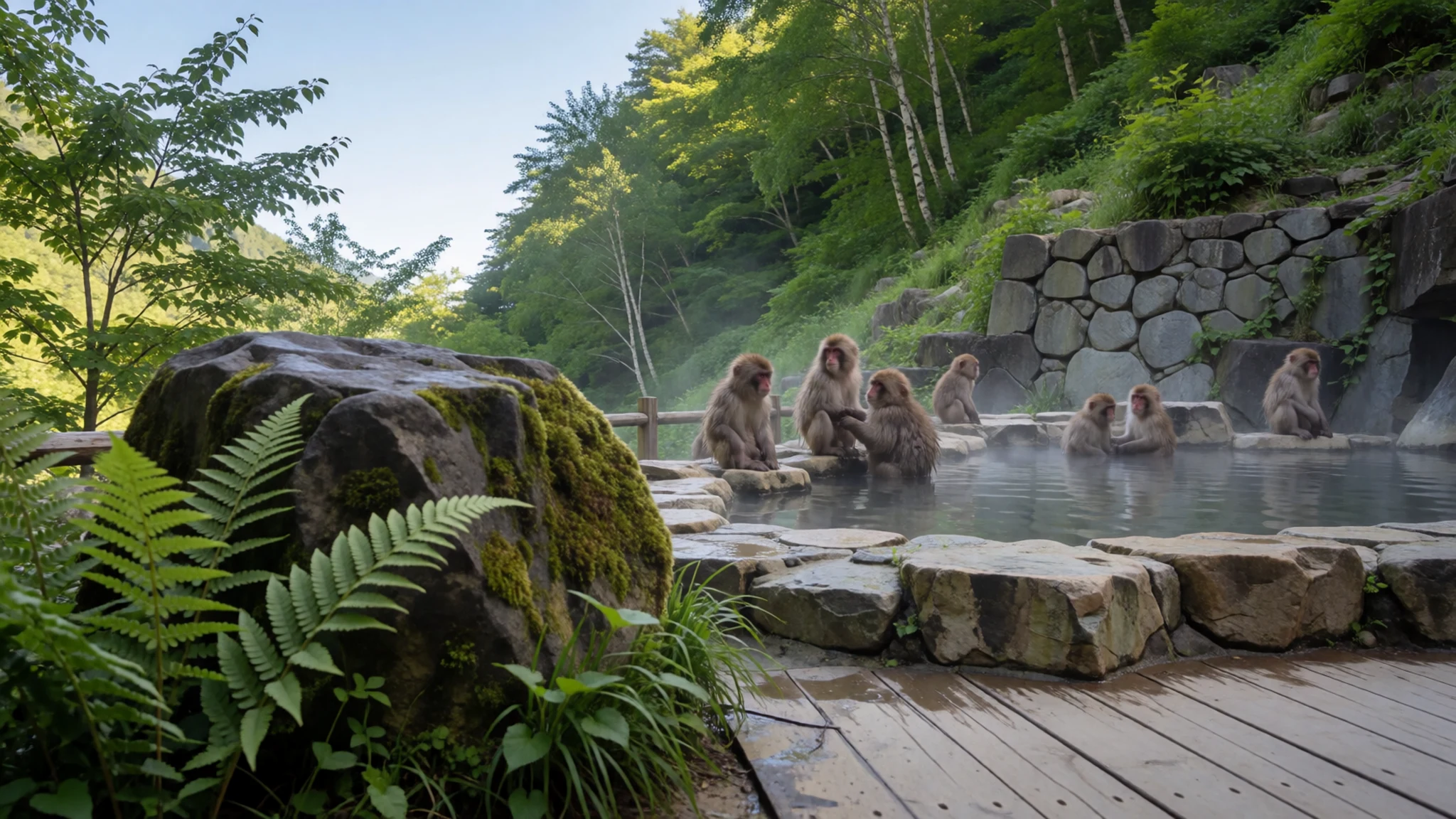
- The forest path — Between the road end and the park
The approach is a woodland walk of about 1.6 km from the point where buses and taxis stop. It is gentle rather than steep, though mud and ice are common. Steam from the ground and the first macaques sitting casually on the trail make the walk part of the visit, so allow time rather than rushing it.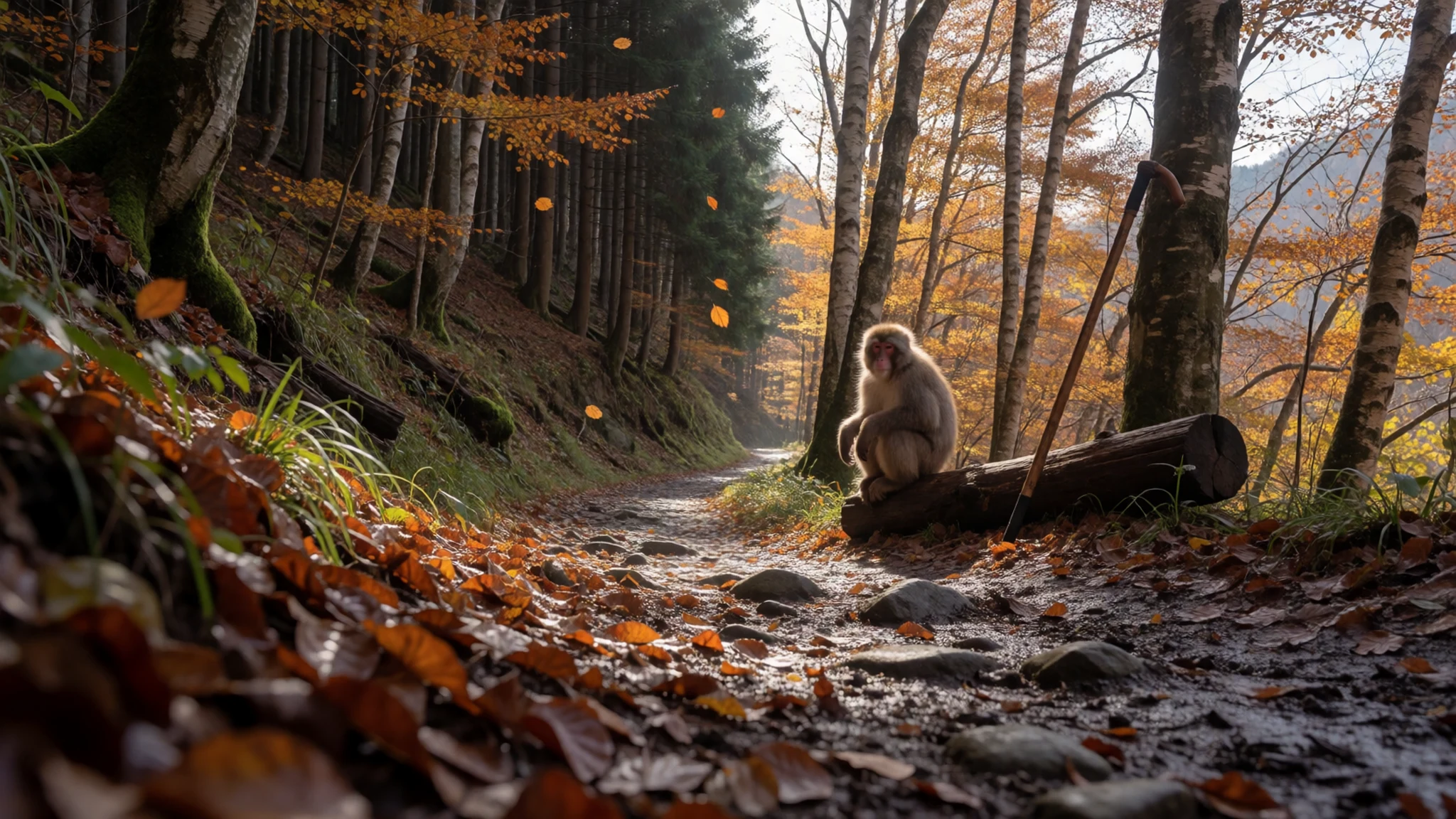
- The valley inn — Head of the valley, Yamanouchi
Close to the pool stands the ryokan Korakukan (後楽館), a traditional inn with its own hot spring baths in the same steaming valley. Even for those not staying, the building shows how near the human baths and the monkeys' bath sit, and it adds a warm, human note to a wild scene.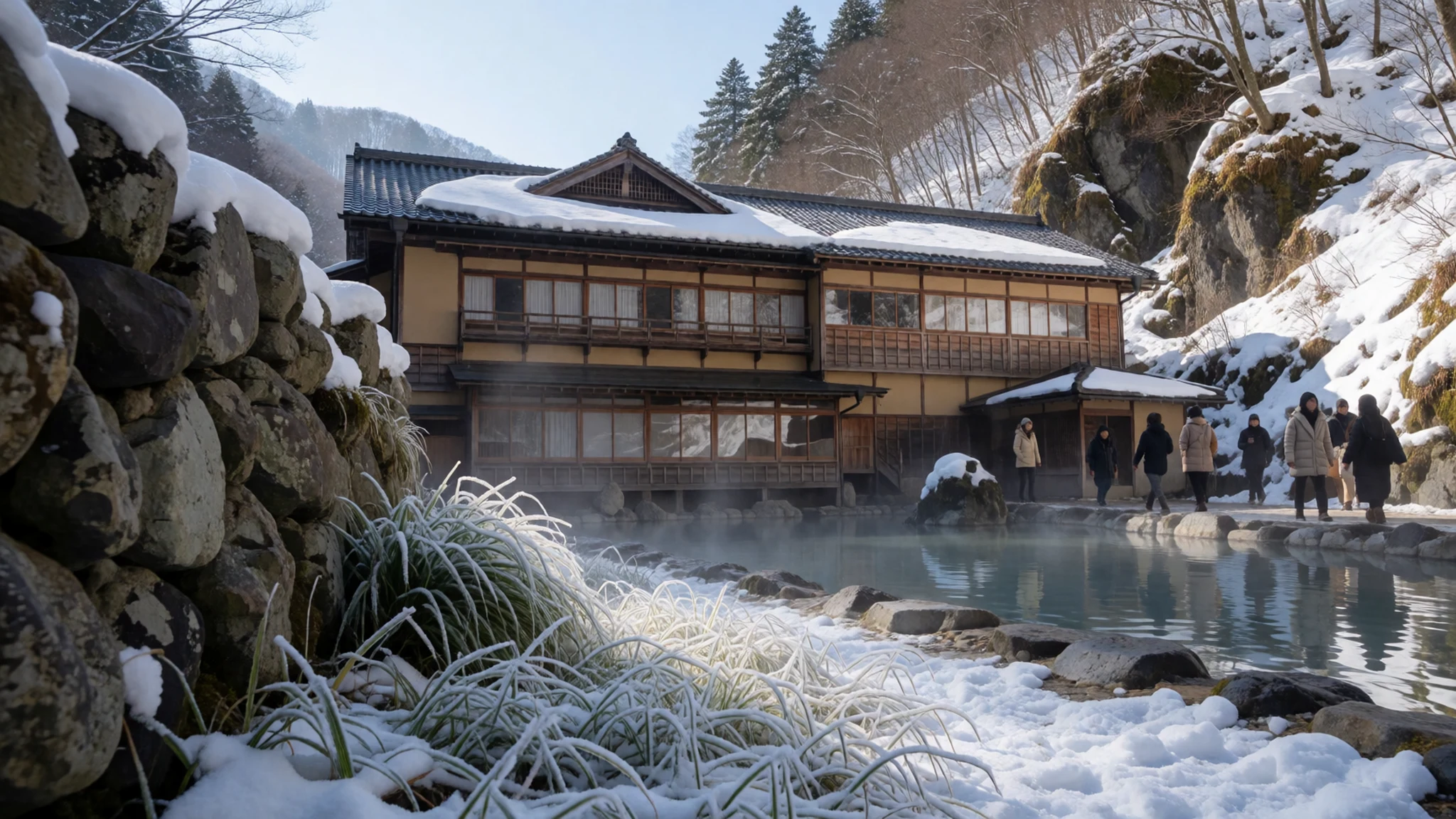
- Yudanaka and Shibu Onsen — Yamanouchi town
Two old hot spring towns lie at the foot of the valley road, with traditional ryokan, public baths and lanes made for strolling. They are the usual bases for the monkey park and suit an overnight stay, offering a hot soak and a proper meal after a cold day on the trail.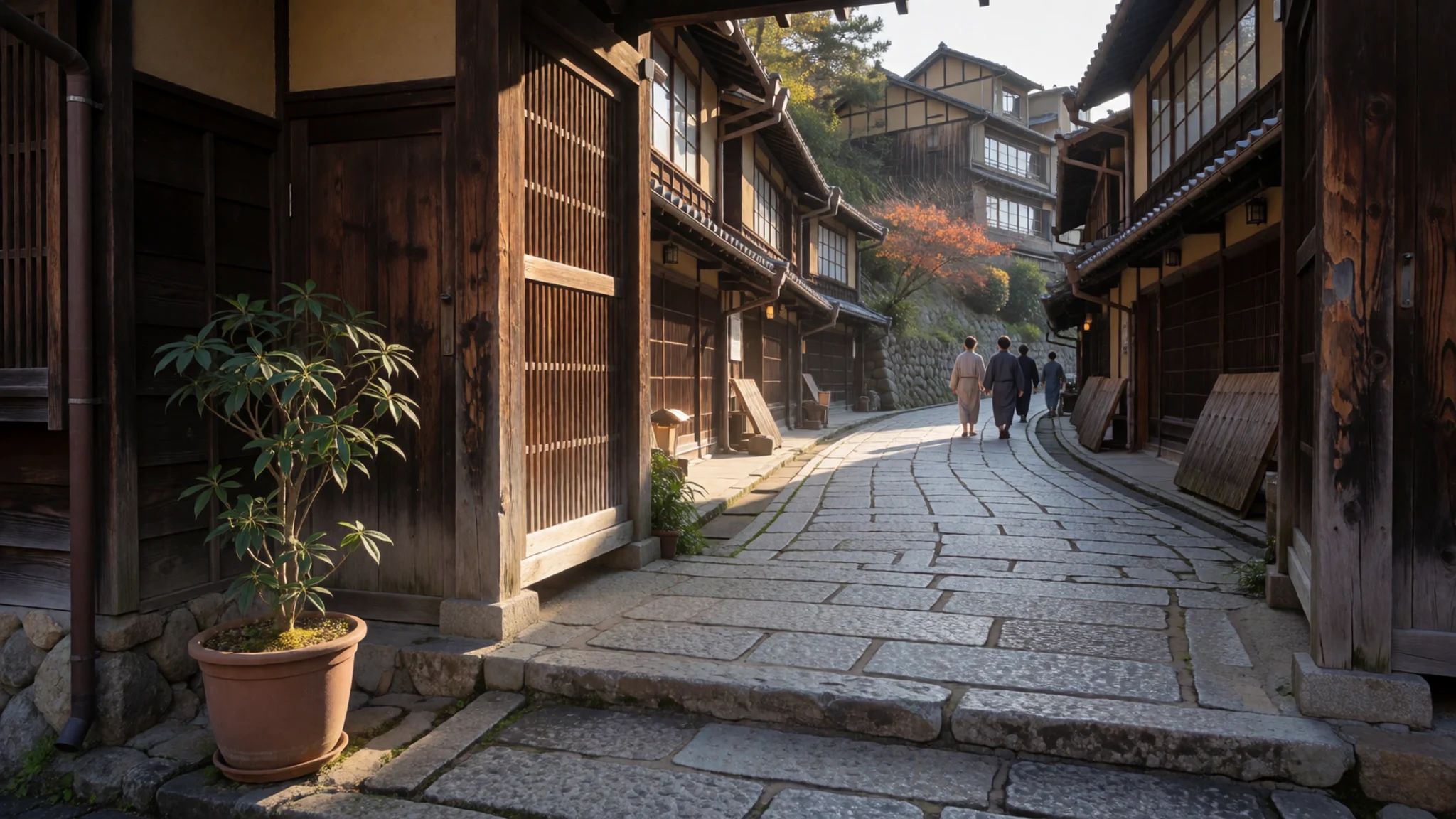
- Shiga Kogen — Joshinetsu Kogen National Park
Shiga Kogen is a mountain ski area above the valley, in the same national park. It matters to the monkeys' story, since the macaques once lived on these slopes before resort building pushed them down. Skiers and snowboarders often pair a day here with a visit to the monkey park.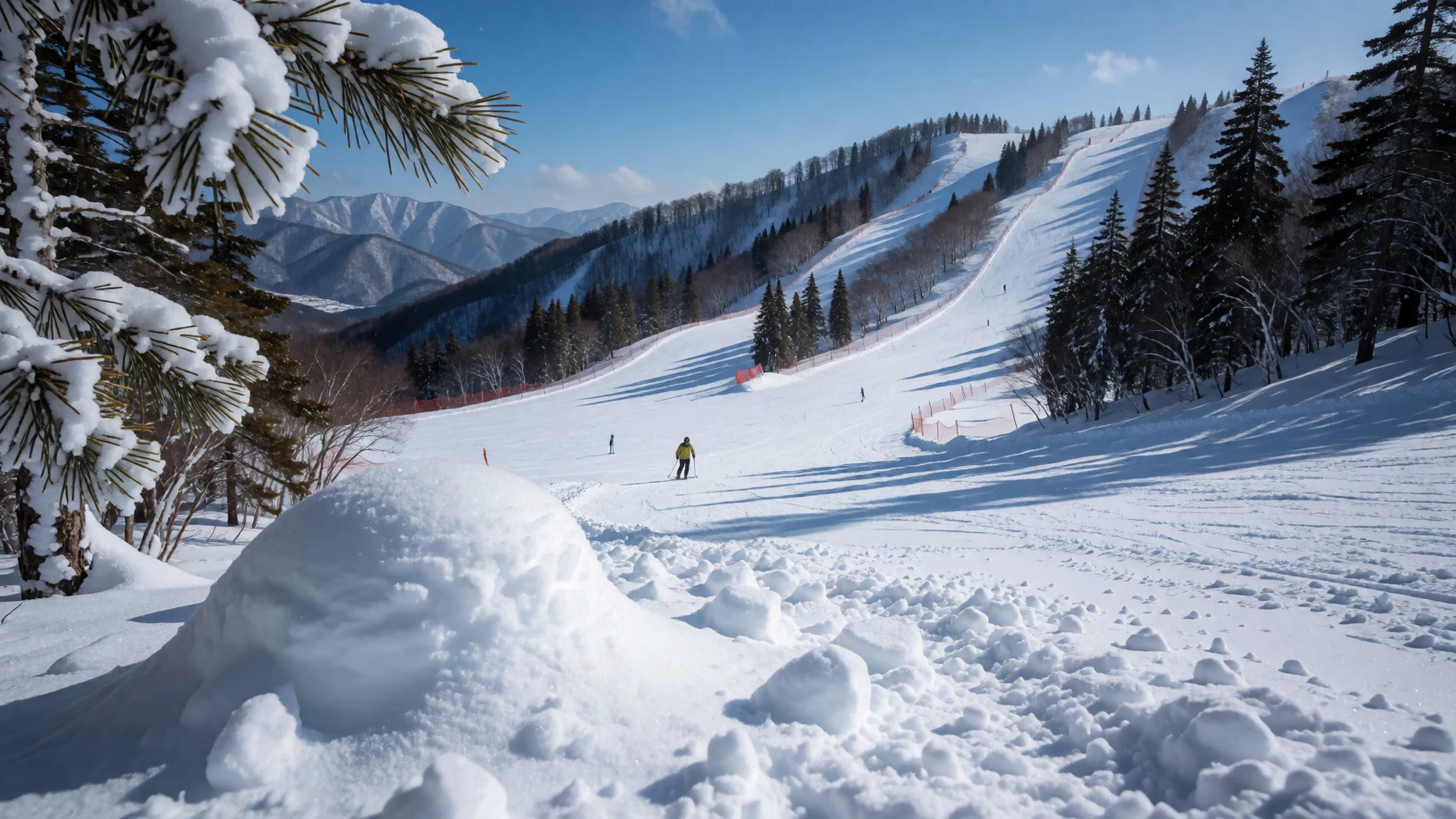
Culture
Jigokudani sits in a part of Nagano where bathing in volcanic hot water is an everyday habit rather than a novelty, which is why the monkeys' pool looks so natural to Japanese visitors. The nearby towns of Yudanaka and Shibu Onsen are old onsen settlements, where traditional ryokan inns offer shared baths, futon bedding and meals brought to the room. Many people come for the springs, ski at Shiga Kogen, and treat the monkeys as one outing among several. Human bathing follows rules that are worth learning before arrival: wash and rinse thoroughly at the tap area before entering a shared bath, keep towels out of the water, and ask at the inn if tattoos are a concern, since some baths restrict them. The monkey park has its own culture of watching. Staff manage the feeding and the flow of visitors, and the animals are treated as wild residents rather than performers. Photography is a large part of the experience, and the soft light of a snowy morning draws many people to the pool's edge. Patience and a longer lens give better pictures than a closer step ever will. Keep food out of sight, never touch or feed the monkeys, and step back if one approaches you on the path.
What to wear
Fashion around Jigokudani follows the mountain climate and the hot-spring habit. The traditional dress of the onsen towns is the yukata, a light, unlined cotton robe tied with an obi sash and worn with wooden geta sandals. Ryokan lend them to guests, and in Shibu Onsen people are often seen strolling the lanes in them between baths. The formal silk kimono is kept for weddings, festivals and tea ceremonies rather than daily wear, and in winter a padded jacket called a hanten goes over the top. Day to day, local people dress as in any snowy region: insulated jackets, wool hats, waterproof boots and gloves. Park staff are dressed for long hours in the cold. For a visit, boots with a good grip matter more than anything, because the path can be icy or muddy; the gift shop at the foot of the trail rents boots if yours are unsuitable. In winter, wear thermal layers, a waterproof outer shell, hat and gloves, and sunglasses against snow glare. Summer calls for light layers and a rain jacket. No dress code applies at the park, but ryokan baths and public bathhouses expect tidy, modest dress in the common areas, and loose scarves or dangling straps can tempt curious monkeys.
What to eat
- Shinshu soba — Soba shops around Yudanaka station and in Nagano city
Buckwheat noodles from the Nagano region, served cold on a bamboo tray with a dipping sauce, or hot in broth. The cold version suits a warm lunch after the walk, and the hot bowl is welcome after a day in the snow.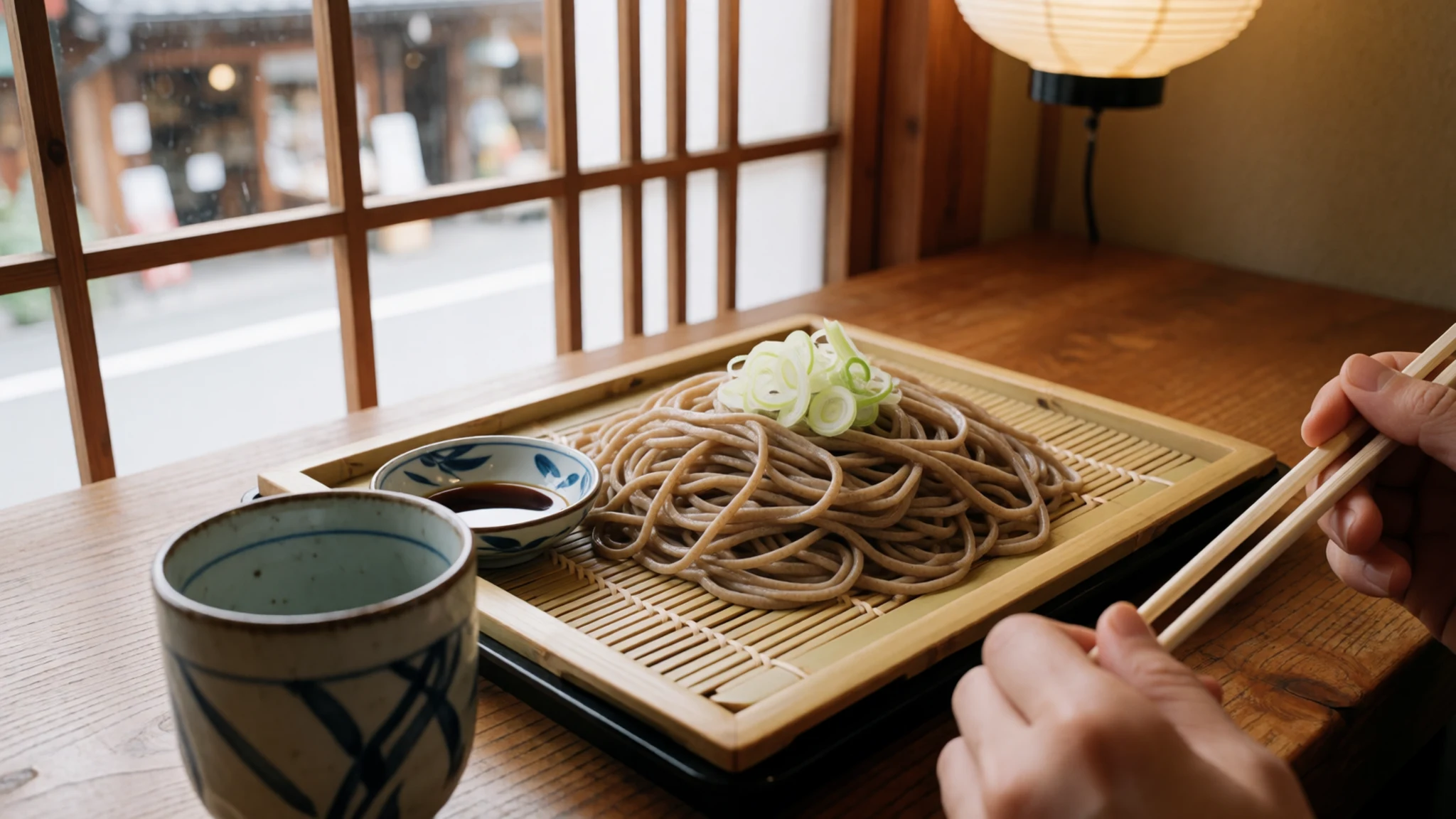
- Onsen tamago — Ryokan breakfasts and small stalls in Shibu Onsen
Eggs cooked slowly in hot spring water until the white is barely set and the yolk is creamy. They are a gentle, savoury start to the day and often appear on ryokan breakfast tables with a splash of soy sauce.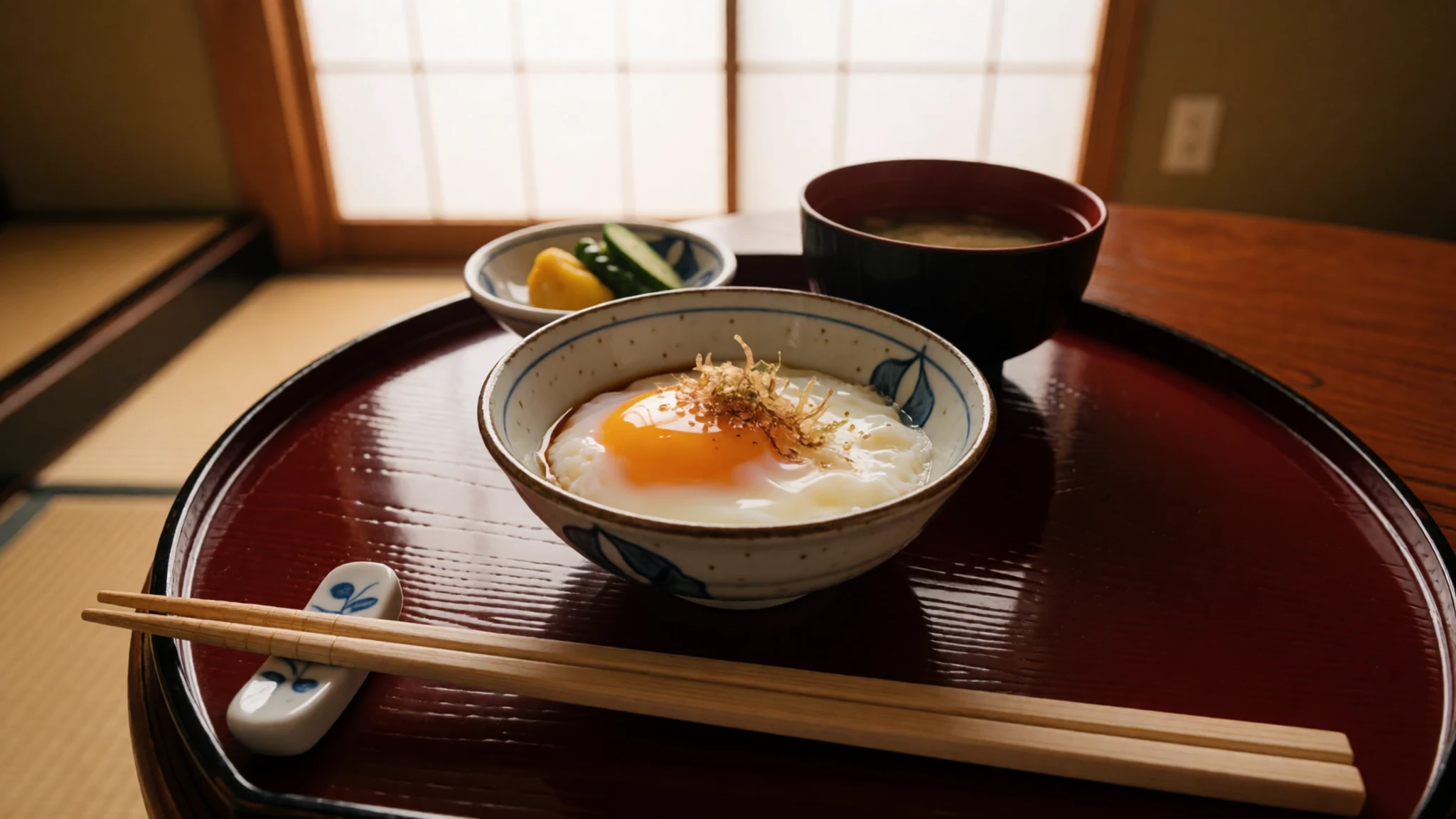
- Oyaki — Roadside stalls and station shops around Nagano
A Nagano dumpling made of wheat or buckwheat dough, steamed or baked, with a savoury filling of vegetables such as pumpkin, aubergine or pickled greens. It is a filling snack to carry on a cold walk. - Nozawana pickles — Village shops in Nozawaonsen and ryokan meal tables
Leaf mustard greens pickled in salt, a speciality of nearby Nozawaonsen. They taste sharp, a little peppery and slightly sour, and are eaten with rice, often at breakfast, or folded into oyaki. - Shinshu apples — Farm stalls and fruit shops along country roads
Nagano is a major apple-growing prefecture, and fruit sold along rural roads is crisp, sweet and good for the pocket on a long day. The harvest runs from autumn, so the best choice is in the cooler months.
Plan it
Best time. January–February for deep snow and the classic scene of macaques in steaming water, with December and March also good. Snow covers the ground for about four months a year, so boots are essential. Summer is greener and easier underfoot, and the monkeys stay in the area all year because staff feed them.
How long. 1–2
Getting there. Fly into Tokyo, then take the Asama bullet train to Nagano (about 95 minutes). From Nagano, the Nagano Electric Railway runs to Yudanaka (about 45 minutes; the limited express stops less often). From Yudanaka take a bus or taxi to the end of the road, then walk about 1.6 km through the forest.
Budget. mid
Tips
- Check the official site (https://jigokudani-yaenkoen.co.jp/) for opening hours, entry fees and trail conditions before you go
- Pick up a free map at the information desk at Yudanaka station and ask about bus tickets there
- Wear or rent boots with grip, because the forest path can be icy or muddy
- Stay overnight in Yudanaka or Shibu Onsen to arrive early and enjoy the hot springs
- Carry some cash for small shops, buses and snacks, as cards may not be accepted everywhere
Etiquette
- Never feed, touch or crowd the monkeys, and keep food and bags closed
- Wash before entering any shared hot spring bath and keep towels out of the water
- Keep to the path and stay quiet near the animals
Nearby
Sources
- Wikidata Q5302436 (CC0)
- Wikipedia: Jigokudani Monkey Park (rev 1381371213) (CC BY-SA 4.0)
- Wikivoyage: Yamanouchi (rev 5422846) (CC BY-SA 4.0)
- Photo: Jigokudani hotspring in Nagano Japan 001 (Yosemite) (CC BY 3.0)
- Photo: Jigokudani Hotspring Gorakuen (NY066) (CC BY 3.0)
- Photo: Baby snowmonkey (猿蔵) (CC BY-SA 4.0)
- Photo: Headshot of a Japanese macaque at Jigokudani Yaen Kōen (Frank Schulenburg) (CC BY-SA 4.0)
- Photo: Juvenile Japanese Macaque at Jigokudani Yaen Kōen (Frank Schulenburg) (CC BY-SA 4.0)
- Photo: Japanese Macaque Fuscata Image 370 (PMS2718) (CC BY 3.0)
- Photo: Hirao, Yamanouchi, Shimotakai District (::::=UT=::::) (CC BY 3.0)
- Photo: Jigokudani wild monkey park (alala_p) (CC BY 3.0)


Wildlife
- Japanese macaque (animal)
The Japanese macaque is the snow monkey: a brownish-grey monkey with a pinkish-red face and a short tail, which copes with winters colder than any other primate except people ever lives through. These wild monkeys are the residents of Jigokudani. Our notes do not say which season or hour suits watching them best, or how to behave around them, so ask locally before you go, and treat them as the wild animals they are.