Jiayuguan
Jiayuguan, People's Republic of China
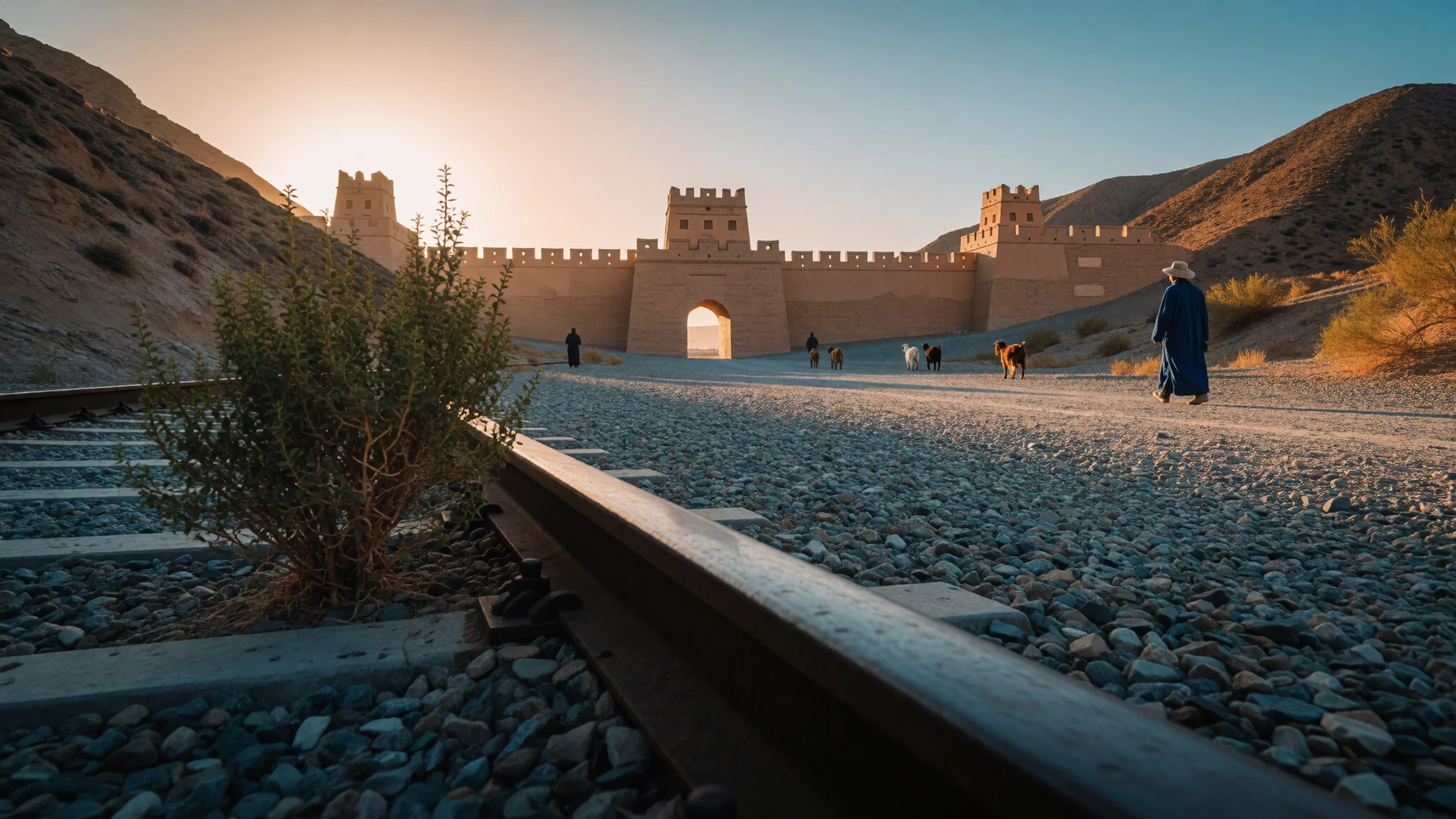
Jiayuguan is where the Ming Great Wall ends in the desert, a fortress gate on the old road out to Central Asia.
The place
Jiayuguan is a fortress pass in Gansu province, in north-western China, and the point where the Ming-era Great Wall finishes its run across the country. The fort stands about 6 km south-west of the modern city of the same name, wedged between two hills at a narrow point of the Hexi Corridor, the strip of oasis land that threads between the Gobi desert and the mountains to the south. Beyond it, the road leads on towards Central Asia. Chinese writers have long used a pair of nicknames for this geography: the pass is the 'mouth' of China, and the corridor running south-east from it is the 'throat'. The fort belongs to the Great Wall's UNESCO listing and carries China's top tourist grade, AAAAA, so it is run as a managed, ticketed attraction. Much of the structure has been rebuilt, and some travellers find the fort itself a little polished, with camel rides and archery stands filling the open ground inside. The setting does the heavy lifting: bare hills, a very big sky, and a real sense of a country running out of road. Wall sections and a few outlying sites are scattered around the area and are worth a further half day. Summers are hot and dry, winters cold and windy, and the season shapes a visit as much as any sight does.
Its story
Jiayuguan's fort dates to the early Ming dynasty, with building under way around 1372, when the new rulers were deciding where China's western limit should lie. The site made practical sense. An oasis supplied water for a garrison, and the two hills squeezed the approach so that a modest force could hold the gap. Later, the defences were thickened because the court feared an attack led by Timur, the Central Asian conqueror. He did set out eastwards, but illness ended his life on the march, and the pass never faced the assault it had been reinforced against. Through the Ming period the gate also served as a front door. Merchants and envoys from Central Asia and West Asia mostly came into China by this route, so the fort was as much a checkpoint and meeting point as a military post. Beyond its walls lay territory outside imperial control, which gave the place its reputation as the edge of the known world for travellers heading in either direction. Over the centuries the structure has been repaired and, in places, substantially rebuilt, so what stands today is a faithful but renewed version of the original. Reading the layout still helps: the hills, the oasis and the narrow corridor explain why a wall, a gate and a garrison all ended up in this one spot.
What to see
- Jiayu Pass fort — 6 km south-west of Jiayuguan city
The main attraction is the fort itself, a cluster of gate towers and courtyards inside thick earthen walls. Much of it is reconstruction, and the grounds carry camel rides and archery stalls. Climbing the ramparts gives the best view of the hills, the gravel plain and the line of wall.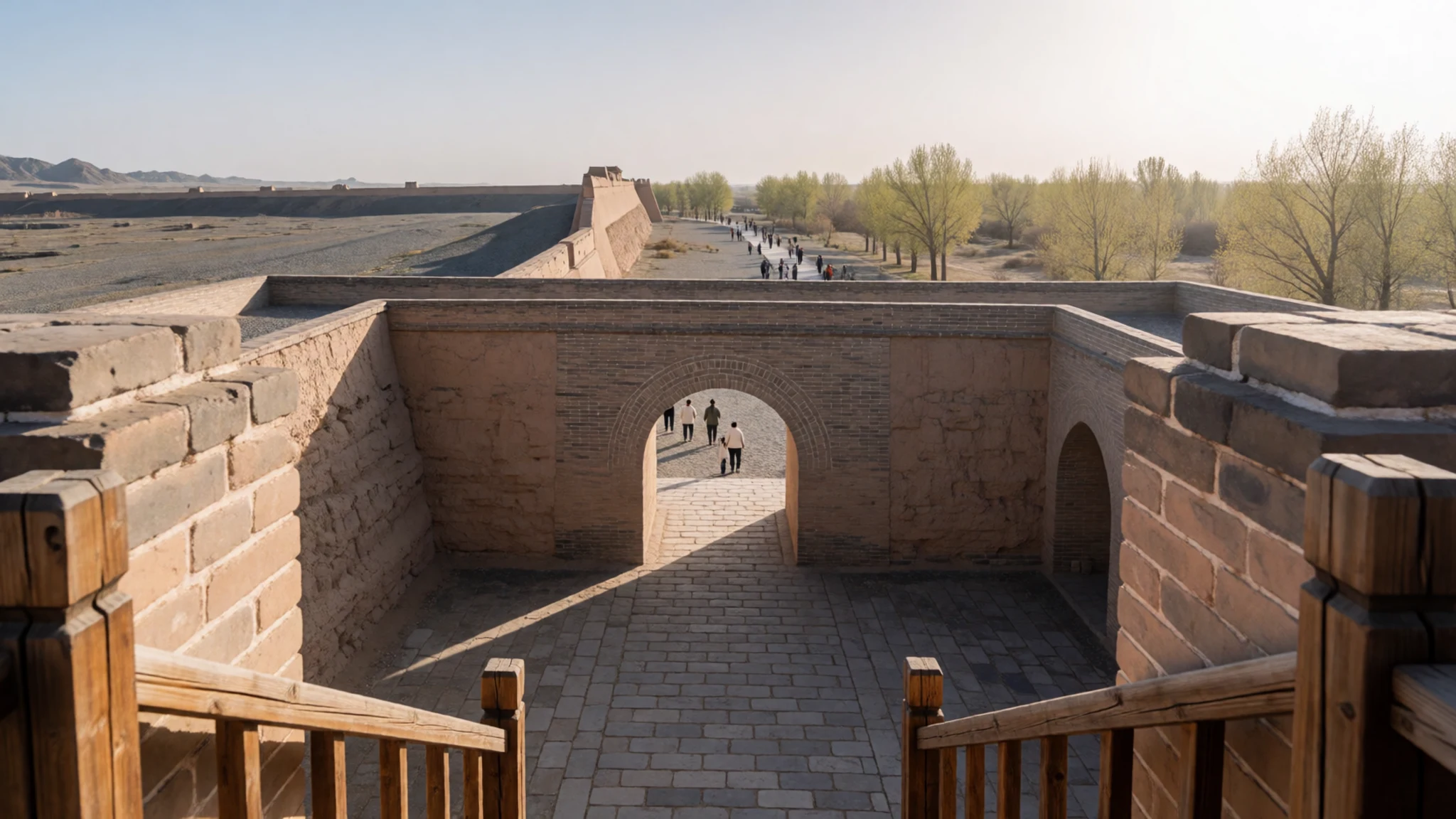
- Great Wall Museum — Within the pass area
Inside the pass grounds, this museum is devoted entirely to the Great Wall. It works well as a first stop to understand how the Ming defences were laid out before walking the real thing. Allow an hour or so, and check on the day for opening arrangements.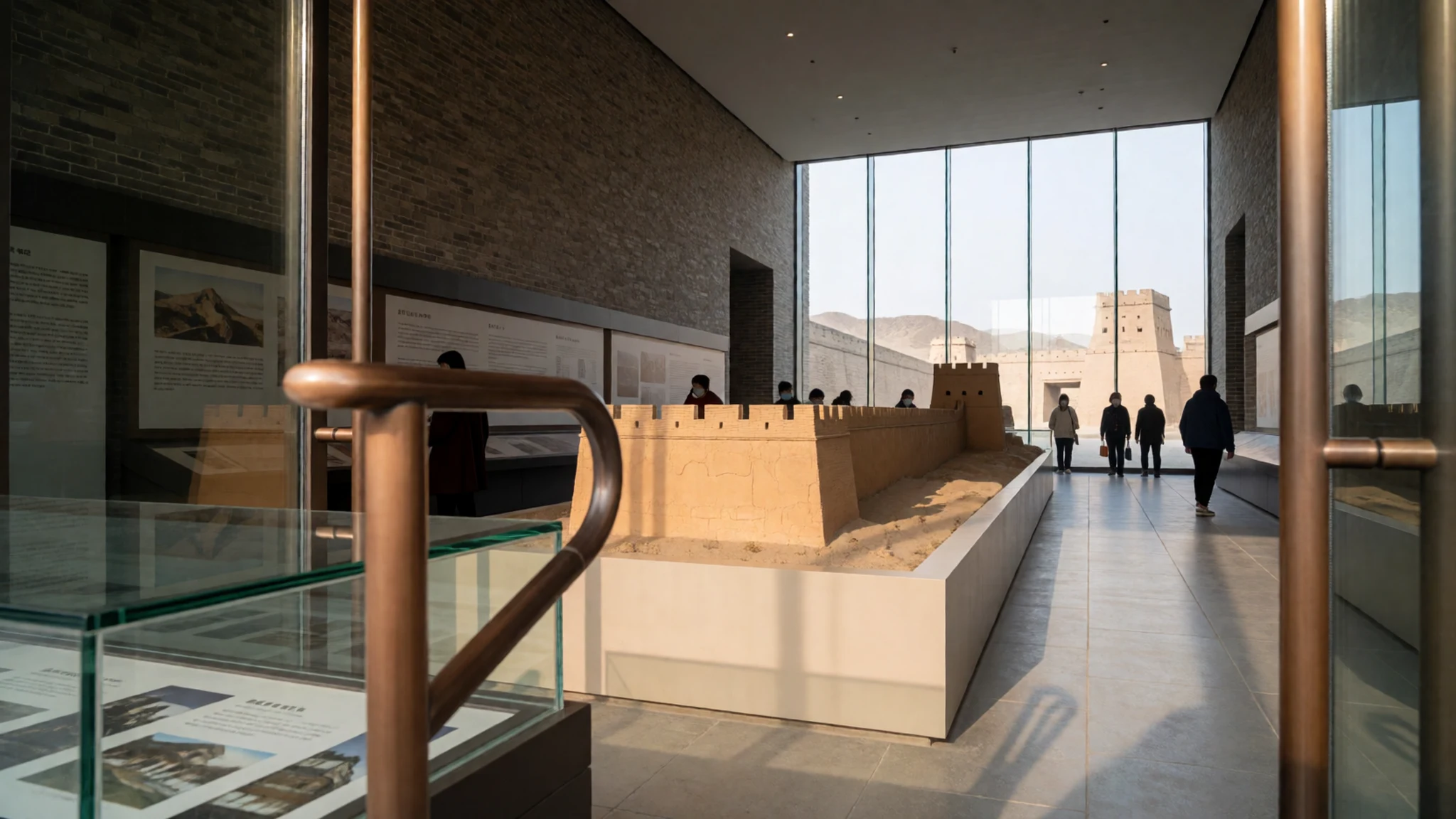
- Overhanging Wall (Xuanbi) — North of the pass
A stretch of wall climbing a steep ridge, about 7 km from the pass. Visitors can walk there from the fort in around an hour along the road, heading east, or take a taxi. The ridge is exposed, so go with water and sun protection.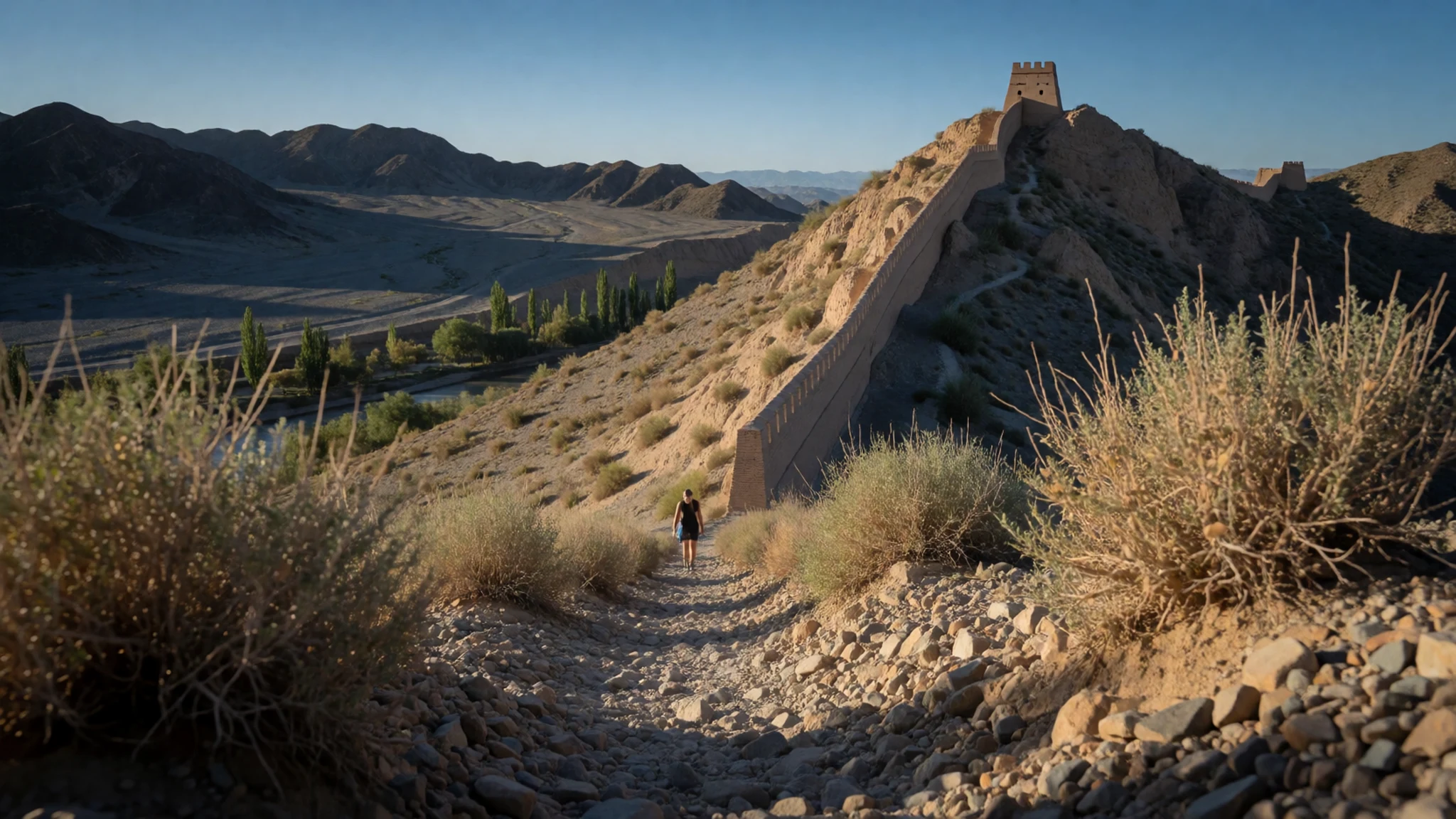
- First Pier of the Great Wall — South of the pass
Known locally as Dao Laihe pier, this earthen tower marks the southern end of the western wall at Jiayuguan, and is described as the westernmost point of the Ming wall. The setting is bare and quiet, and the view over the river gorge makes the trip worthwhile.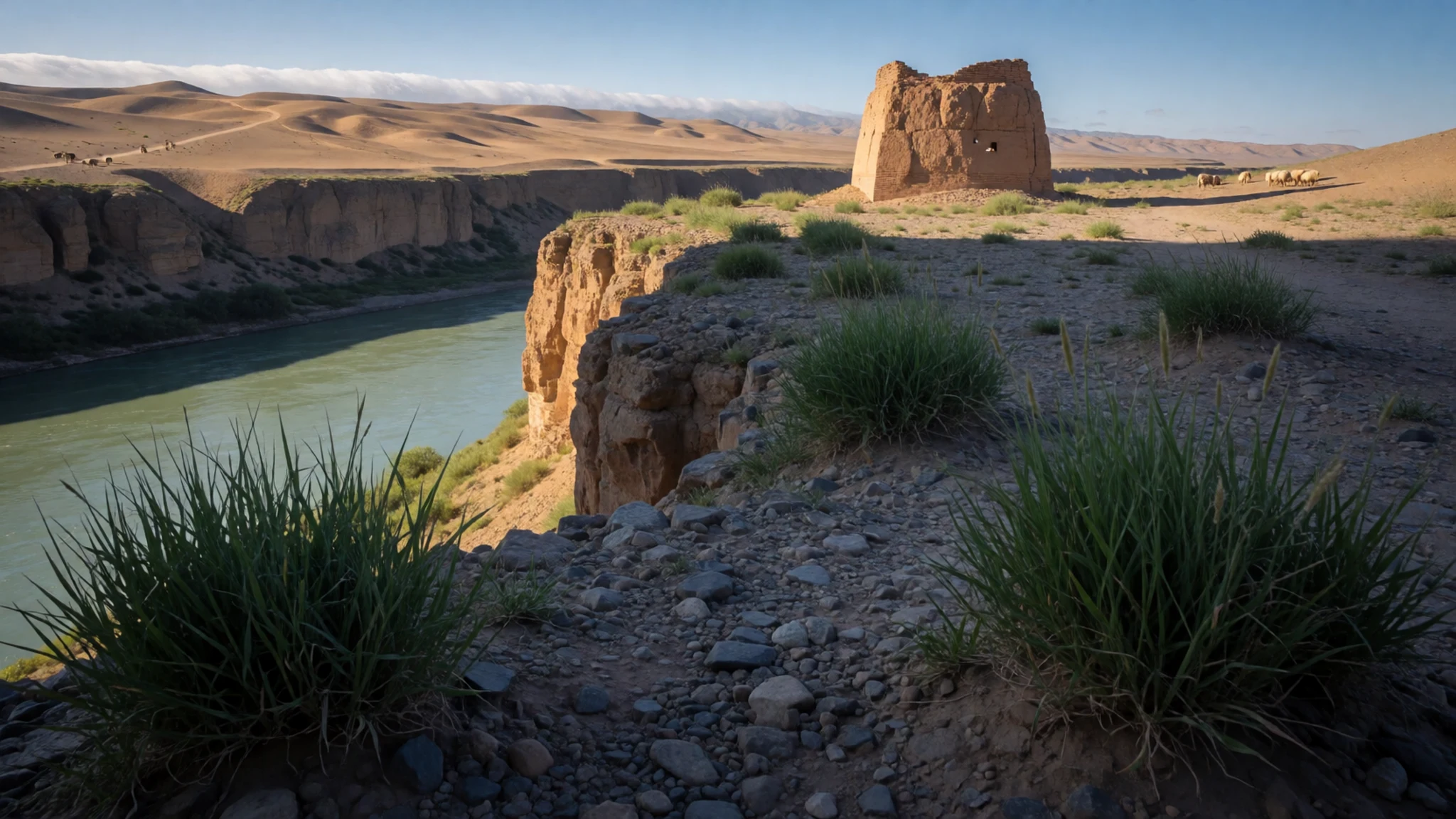
- Wei Jin Tombs — East of Jiayuguan city
Underground tombs from the Wei and Jin periods, decorated with small painted scenes. Only one is open to visitors, and it is just three small rooms, but the paintings give a glimpse of daily life in the desert corridor long before the Ming fort existed.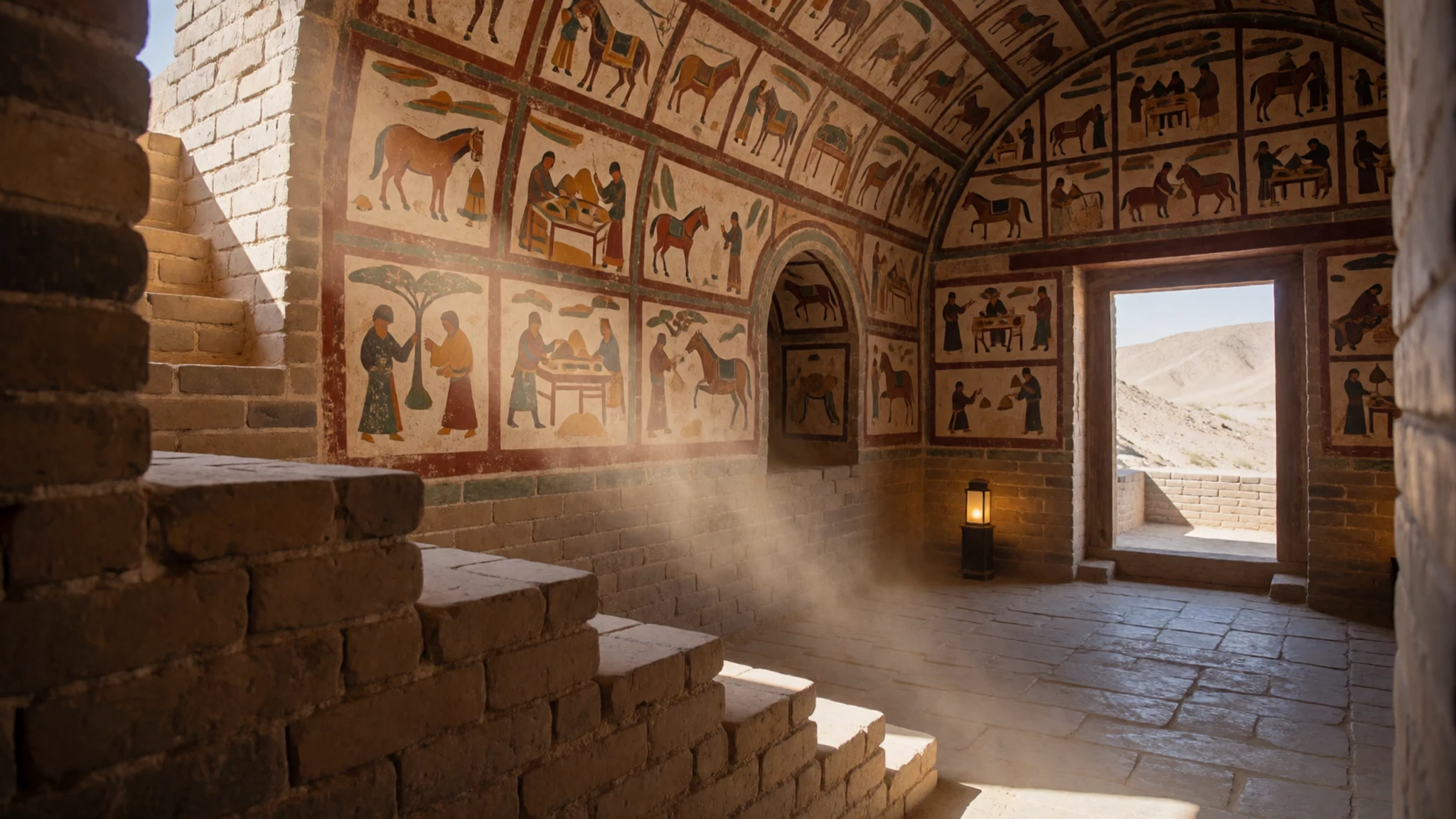
Culture
Jiayuguan sits on the old frontier between the Chinese heartland and the lands to the west, and that shapes how the place is understood. For many Chinese visitors it is a patriotic pilgrimage, a chance to stand at the end of the Great Wall and see how far the empire once reached. For historians it is a Silk Road gateway, where merchants, envoys and soldiers from very different worlds crossed paths. Gansu's Hexi Corridor is also a mixed region, with Han Chinese, Hui Muslim and other communities living along the oasis towns, which shows in the food, the mosques and the mix of faces in the street markets. A story told locally credits the fort's builders with exact calculation, so that a single spare brick was left over after construction; it is repeated as legend rather than record, and guides tell it with a smile. The tourist area leans into the frontier theme with costumed performers, camel rides and archery, which are fun for families but can feel staged. The quieter wall sections outside the main grounds feel closer to what the frontier was really like: wind, gravel, and the sound of nothing much. Do not scratch or write on the brickwork, and ask before photographing costumed performers or camel handlers.
What to wear
Jiayuguan has no single local costume, but the history of dress here is a story of the Silk Road. In the Ming period, officials and soldiers wore silk or cotton robes in the court style, and the costumed guards and generals seen at the fort today are modelled on that tradition. Wool and felt were common among the herding peoples of the wider region, and cotton and silk arrived with the caravans. The Hui community of Gansu traditionally wear white brimless caps for men and headscarves for women, still common at Friday prayers. Day to day, people in Jiayuguan wear what is practical for a dry, windy desert city: jeans or work trousers, jackets, fleeces and padded coats in winter, light long sleeves and caps in summer. Dress is casual and nobody expects formality. Visitors should plan for strong sun and sharp changes of temperature, with light layers, a wide-brimmed hat, sunglasses and sunscreen in summer, and a proper warm coat, gloves and a scarf in winter. Sturdy shoes with good grip are important, because the fort has steep ramps and uneven stone, and the outlying wall sections are rough gravel and dust. Shoulders and knees do not need covering, but a light scarf helps against sand and wind and is useful if visiting a mosque in the region.
What to eat
- Lanzhou-style beef noodles — Noodle shops across Jiayuguan city, especially near the main roads
A clear, spiced beef broth with hand-pulled noodles, slices of beef, radish, chilli oil and coriander. This is the standard breakfast and lunch of the province. Look for small noodle shops with a steaming pot at the counter and a line of locals at midday.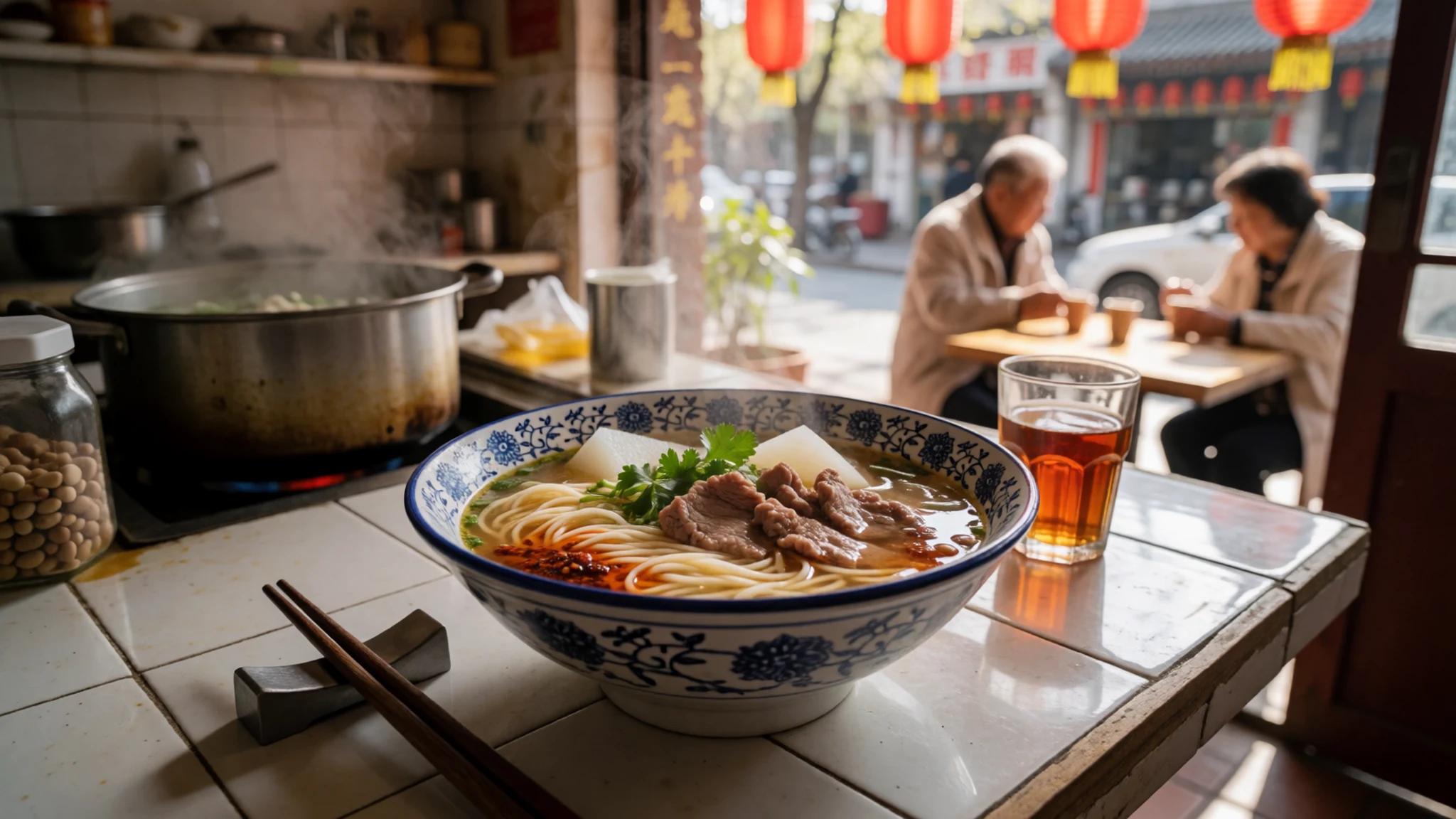
- Lamb skewers — The Night Market (Fuqiang Market) street stalls
Cubes of lamb on metal sticks, grilled over charcoal and dusted with cumin and chilli. They are a staple of the night-time food scene in north-west China, and are best eaten hot from the grill with a cold drink or flatbread on the side.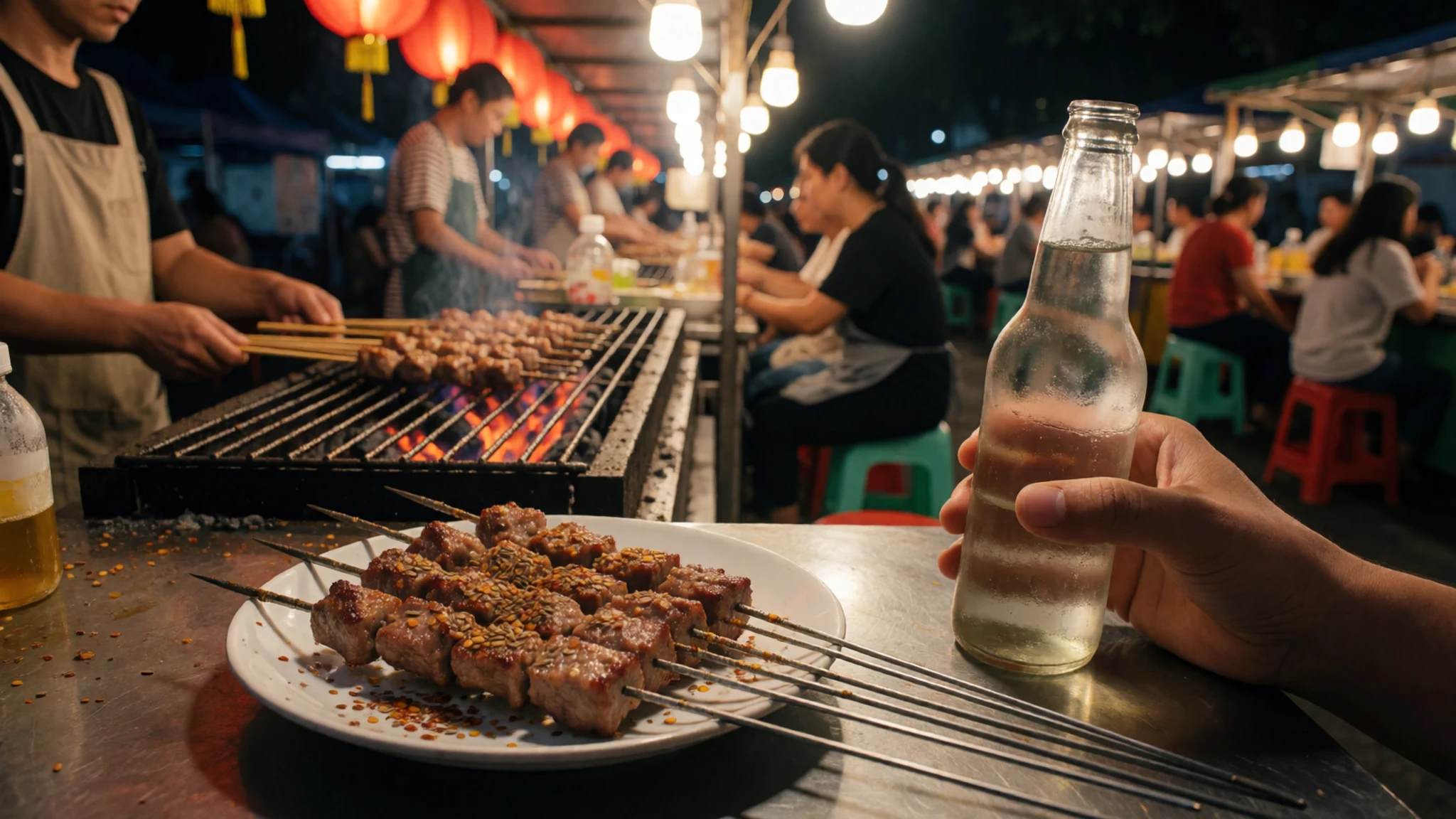
- Hand-pulled noodles with stir-fry topping — Small local restaurants and eateries around the city centre
Wheat noodles stretched to order and served with a saucy topping of lamb or beef, peppers and tomato. The portions are generous and the noodles chewy. This dish is ordered by weight or bowl size, so ask for a smaller bowl if eating alone. - Flatbread (nang) — Bakery stalls and Hui and Uyghur food corners in the market area
Round, dense, baked breads with a crisp crust, often sprinkled with sesame or onion seeds. They are sold warm from tandoor-style ovens and are useful for taking along on a day at the wall. They keep well and pair with tea or skewers. - Pastries and coffee — Bakery-cafes in the city centre
For a break from noodles, Jiayuguan has a handful of small bakery-cafes selling pastries, bread and coffee. Quality varies, and coffee is not the strength, but they are handy for a quiet sit-down with Wi-Fi before heading out to the fort.
Plan it
Best time. April–May and September–October are the most comfortable months, with mild days and clear skies. Summer is hot, dry and bright, with little shade at the fort. Winter is cold and windy, and the desert light is crisp but conditions are harsh on exposed wall sections.
How long. 1–2
Getting there. Jiayuguan South Railway Station, south-east of the city on the fast D-type line, links Lanzhou (about 4 hours) and Dunhuang (about 2.5 hours), with onward trains to Urumqi. The older Jiayuguan Railway Station is on Yingbin West Road, southwest of the centre. From either, take a taxi for the final leg to the pass, about 6 km out of the city.
Budget. low
Tips
- Go early in the day, before tour groups arrive and before the desert heat builds in summer
- Carry water, a hat and sun protection; there is very little shade at the fort or the outlying wall sections
- Check the official ticket arrangements on arrival, since one ticket may cover several sites such as the pass, Xuanbi Wall and the First Pier
- Hire a taxi for the outlying wall sites, since distances between them are too far to walk comfortably in one day
- Carry some cash as well as a phone payment app, since small eateries and taxis may prefer one or the other
Etiquette
- Do not climb on or carve into the brickwork, and stay behind barriers on fragile sections
- Ask before photographing costumed performers, camel handlers or local people
- Keep voices low and dress respectfully if visiting a mosque in the region
Nearby
Sources
- Wikidata Q1193122 (CC0)
- Wikipedia: Jiayu Pass (rev 1385246605) (CC BY-SA 4.0)
- Wikivoyage: Jiayuguan (rev 5405828) (CC BY-SA 4.0)
- Photo: Jiayuguan Fort, Gansu, China (User:Doron) (CC BY 3.0)
- Photo: Jiayu Pass, Gansu (Zhangzhugang) (CC BY-SA 2.5)
- Photo: 嘉峪关 (Huowax) (CC BY 3.0)
- Photo: The tail-end of the Great Wall (GwydionM) (Public domain)
- Photo: A general from a door at the Jiauguan Fort (GwydionM) (Public domain)
- Photo: A remote western section of the Great Wall (User:Doron) (CC BY 3.0)
- Photo: Jiayu Pass in west end of The Great Wall (Emcc83) (CC BY 3.0)
- Photo: Jiayu-Pass in west end of The Great Wall (Emcc83) (CC BY 3.0)


