Jiaohe Ruins
Jiaohe Ruins, People's Republic of China
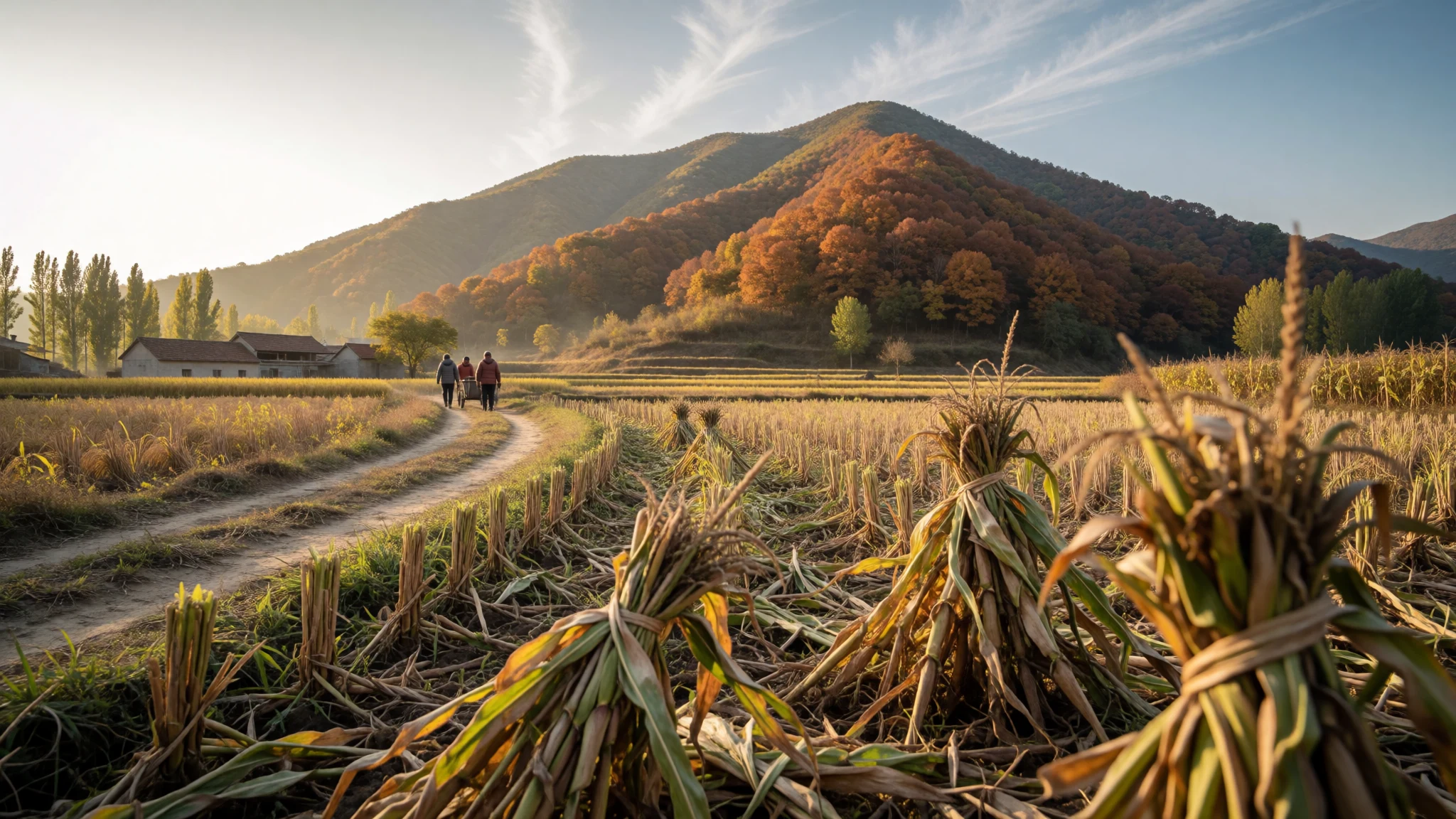
Jiaohe is a working river city in Jilin province, best for cold clear winters, rural northeast scenery and a quiet stop on the Dunhua–Jilin road.
The place
Jiaohe (蛟河, Jiāohé) is a county-level city in east-central Jilin province, in north-east China, with Heilongjiang just beyond its north-eastern border. About 329,000 people live here, at an elevation of 345 m, on land crossed by the Songhua and Mudan rivers. Administratively it answers to Jilin City, roughly 65 km to the west, and its neighbours are Dunhua to the east, Huadian to the south and Fengman District to the west. Readers looking for the ancient desert ruins also called Jiaohe, in Xinjiang, should note that this is a different place entirely.
This is a working town rather than a sightseeing one. Rice, maize and beans come from the surrounding farmland, tobacco is what the city is best known for, and the ground holds coal, copper, iron, nickel and granite among other minerals. Reference photographs show a plain main street, a modern railway station with a front square, and villages sitting under low forested hills, with Lafa Mountain visible from the expressway across winter snow.
The climate does most of the talking. Winters run from about November to March and are long, dry, windy and cold, with January averaging around −18 °C. Summers are warm and humid, July averaging 21.6 °C, and most of the year's rain falls between June and August. Spring and autumn are short and tend to be dry and breezy. There is no tourist trail here; the appeal is the landscape, the seasons and the food rather than monuments.
Its story
Jiaohe's story is tied to rivers and railways, and much of the recorded history of this part of Jilin belongs to the larger city that governs it. Jilin takes its Chinese name from a Manchu name usually glossed as 'along the river', and the river in question is the Songhua, which also runs through Jiaohe. During the Qing dynasty Jilin City guarded the frontier and built ships on the water, which is why a museum there is devoted to the naval barracks and the defence of the north-east.
The twentieth century arrived by rail. An old Japanese photo album of railway towns, now in the public domain, describes the nearby halt at Lafa as an almost empty, cold station before the line was laid, then a place that grew quickly, with Korean farmers working rice paddies along the river. That picture of a sparse valley turned into a transport and farming corridor still fits what the area looks like.
In the Second World War Soviet forces occupied Jilin, and the damage is said to have taken a long time to repair. Today the region is industrial and agricultural, and Jiaohe sits inside that pattern with its farms, tobacco, mining and river valleys. For the deeper history, the museums of Jilin City are the better place to fill in gaps, since Jiaohe itself offers little interpreted heritage for a short visit.
What to see
- Jilin City Manchu Museum — Jilin City
Jilin City Manchu Museum is the clearest introduction to the people whose name is bound up with this region. Its exhibitions follow Manchu history, everyday customs and the intangible heritage of Jilin, from crafts to ritual. It makes a sensible indoor stop on a deep-winter day before heading back out into the cold. - Jilin City Museum — Jilin City
Jilin City Museum covers both the natural and the human history of the area. The collection includes a meteorite from a shower that fell on the city in the twentieth century, which is a good conversation piece. Pair it with the Manchu museum for a full, unhurried indoor morning in Jilin City. - Wen Miao Confucian Temple Museum — Jilin City
The Wen Miao in Jilin City is a Confucian temple whose present buildings date from the early twentieth century, replacing an earlier temple on the site. Inside, an exhibition explains how candidates were tested under the Qing imperial examination system. It is calm, easy to cover quickly, and a good place for context on scholarship in the north-east. - Xuandi Temple — Jilin City
Xuandi Temple is a Taoist temple in Jilin City, founded in the Qing period and destroyed during the Cultural Revolution. Its history is as much about loss as survival, so it is worth asking locally what stands now and what has been rebuilt. Go for the atmosphere and the sense of how religious life in the region has changed. - Beishan Park — Jilin City
Beishan Park is a large green space of small hills and lakes where boating is possible in the warm months. Lotus flowers bloom in summer. In winter the trees along the water can become ice-rimmed, as warm river water meets very cold air and freezes into crystals on the branches, a striking sight on cold mornings.
Culture
Jiaohe sits in a region where Manchu, Han Chinese and Korean traditions overlap, and its culture is easiest to read through the museums and temples of nearby Jilin City. The Manchu Museum there covers history, customs and intangible heritage, and the name Jilin itself comes from a Manchu phrase about the river. Farming communities in the valleys, including Korean rice growers mentioned in old records, add another layer, while Qing frontier life left its mark on the region's character.
Religion is quiet and mostly urban. The Confucian temple in Jilin City is now a museum with an exhibition on the Qing examination system, the Taoist Xuandi Temple was destroyed in the Cultural Revolution, and an active Catholic church with a small community of nuns stands near the centre. These places feel less like tourist attractions and more like fragments of continuing local life.
Winter is the other local culture. Squares double as skating grounds, Jilin City's Ice Lantern Festival marks the cold season, and people keep gathering outdoors despite the temperature. Social life revolves around food: shared dishes, beer, loud tables and kebabs late into the evening.
At temples and at the active Catholic church, dress modestly, keep your voice low and ask before photographing worshippers or nuns.
What to wear
Jiaohe's traditional dress comes from the Manchu and Korean communities of the north-east. Manchu clothing is built around the long robe, the ancestor of the qipao, made in silk, brocade or cotton and padded or fur-lined against the cold. Korean families wear the hanbok, with its short jacket and full skirt in silk or fine cotton, at weddings, birthdays and festivals. Both are now seen mainly in museums, performances and celebrations rather than on the street.
Day to day, people dress for the weather. In winter that means long padded or down coats, thermal layers, fur-lined hats, gloves and thick-soled boots; in summer it is light cotton, shirts, and trainers or sandals, with umbrellas ready for the rain. Style is practical and fairly casual, with smarter clothes saved for work and family occasions.
Visitors should pack for the season. From November to March, bring a windproof insulated coat, a thermal base layer, a warm hat, gloves, a scarf that can cover the face, and waterproof boots with good grip, since pavements ice over. January averages about −18 °C. Summers are humid, so light breathable fabrics and a rain jacket suit June to August. For temples and the Catholic church, cover shoulders and knees, and wear shoes that are easy to slip off if asked.
What to eat
- Da bing — Home-style family restaurants in Jilin City and Jiaohe
Da bing are broad flat breads, served at family-style eateries around Jilin and Jiaohe alongside shared plates of stewed and stir-fried dishes. Order a few dishes for the table and tear the bread to mop up the sauces. Any busy home-style restaurant in the town centre will have them. - Chuan (kebabs) — Kebab houses near Century Square, Jilin City
Chuan are Chinese-style kebabs, grilled on skewers and eaten with beer. The places that serve them are loud, smoky and usually full by evening; the streets around Century Square in Jilin City have a busy kebab house. Go with a group and order skewers by the handful. - Dumplings (jiaozi) — Dumpling restaurants in Jilin City and Jiaohe town centre
Dumplings (jiaozi) are the north-east's comfort food, and Jilin has restaurants devoted to them. Expect boiled dumplings with meat or vegetable fillings, served in big portions with vinegar and chilli oil on the table. Look for dumpling restaurants in any town centre, especially in the cold months. - Manchurian dishes — Restaurants advertising Manchu cuisine in Jilin City
Manchurian cuisine is the regional cooking of the north-east, with hearty dishes built on local grain, beans, pork and preserved vegetables. Restaurants in Jilin City that advertise Manchu food are the place to try it; ask staff to recommend the house specialities. - Rice, maize and bean dishes — Home-style restaurants across Jiaohe and Jilin City
Jilin's farmland grows rice, maize and beans, and all three turn up in everyday meals, such as steamed rice with stews and bean or maize side dishes. Ordinary home-style restaurants are the place to find them.
Plan it
Best time. January–February for deep winter, snow and the ice-rimmed trees of Jilin (January averages about −18 °C, so dress seriously); September–October for the short, usually dry autumn. June to August is warm and humid, with most of the year's rain.
How long. 2–3
Getting there. Fly to Changchun Longjia International Airport (CGQ), then take the high-speed train to Jilin City, about half an hour. Jiaohe lies roughly 65 km east of Jilin City and has its own railway station; check current train and coach times locally, or look at the city website, http://www.jiaohe.gov.cn/.
Budget. low
Tips
- Winter lasts roughly November to March: pack thermal layers and grippy boots before anything else
- Carry some cash and set up a mobile-payment option before arriving, since small eateries may not take foreign cards
- Base yourself in Jilin City for museums and temples, and treat Jiaohe as a day trip into the countryside
- Drink bottled or boiled water, and check the official site for local events and updates
Etiquette
- Dress modestly and speak quietly in temples and at the Catholic church
- Ask before photographing worshippers, nuns or people at work in the fields
Nearby
Sources
- Wikidata Q1014635 (CC0)
- Wikipedia: Jiaohe, Jilin (rev 1376259789) (CC BY-SA 4.0)
- Wikivoyage: Jilin (city) (rev 5430338) (CC BY-SA 4.0)
- Photo: 新站主要街道 main street (wanghongliu) (CC BY 3.0)
- Photo: 蛟河站及站前广场 (斐愚) (CC BY-SA 4.0)
- Photo: 拉法 (Black Dragon Society) (Public domain)
- Photo: 敦化至吉林高速冬景-蛟河一小村庄 (迟鹏) (CC BY 3.0)
- Photo: 敦化至吉林高速冬景-远眺拉法山 (迟鹏) (CC BY 3.0)


