Jackson Hole
Jackson Hole, United States
Jackson is a small Wyoming town in a mountain valley, and the practical base for Grand Teton and Yellowstone national parks.
The place
Jackson, often called Jackson Hole after the valley it sits in, is a small resort town in Teton County, Wyoming, with a population of about 10,760 and an elevation of 1,901 m. The valley floor is broad and flat, and the Teton and Gros Ventre ranges rise on either side, so almost every street seems to end in a mountain view. The town itself is compact: a grid around a central square, wooden boardwalks, western-style shopfronts, and galleries and outfitters side by side. It is the county seat and the only incorporated town in Teton County, so the courthouse, the shops and most of the restaurants sit within a few blocks of each other. Its main job is as a gateway. Grand Teton National Park begins a few miles to the north and Yellowstone National Park lies beyond it, so many visitors use Jackson as a base for days in the parks and come back in the evening for dinner and a bed. In winter the draw changes to skiing, at Snow King on the edge of town, at Jackson Hole Mountain Resort in Teton Village, and at Grand Targhee across the pass in Idaho. The honest caveat is that this is a resort town. Summer weekends are crowded, rooms are scarce and costly when demand peaks, and the quieter weeks of spring and late autumn can mean some places are shut. The altitude and dry air also catch newcomers out more than they expect.
Its story
Jackson, Wyoming, and the valley around it were lived in by Native peoples long before the town had a name. The Shoshoni, Crow, Blackfeet, Bannock and Gros Ventre all had ties to the area. Trappers arrived in the early 1800s, and John Colter, who left the Lewis and Clark Expedition in 1806, was among the first to cross the valley in winter. Later mountain men, among them Jim Bridger, Jedediah Smith and William Sublette, gave names to many features that still appear on maps. David Edward Jackson's name stuck to the valley itself after he wintered beside Jackson Lake. Photography changed the story in the early 1870s. During the 1871 and 1872 Hayden expeditions, William Henry Jackson captured the first images of the Teton Range and Yellowstone. Along with Tom Moran's sketches, these visuals provided lawmakers in Washington with concrete evidence of the landscape's significance. Yellowstone was protected in 1872 and became the first national park. First given its name in 1894, Jackson was officially incorporated in 1914. Grand Teton National Park was created in 1929, and it grew substantially in 1950 once John D. Rockefeller Jr. bought land and donated about 12,000 hectares to it. The arc is a familiar western one: explorers, then trappers, then settlers, then a decision to keep large stretches of the landscape open. Much of what makes Jackson busy today follows from that decision.
What to see
- Town Square — Central Jackson
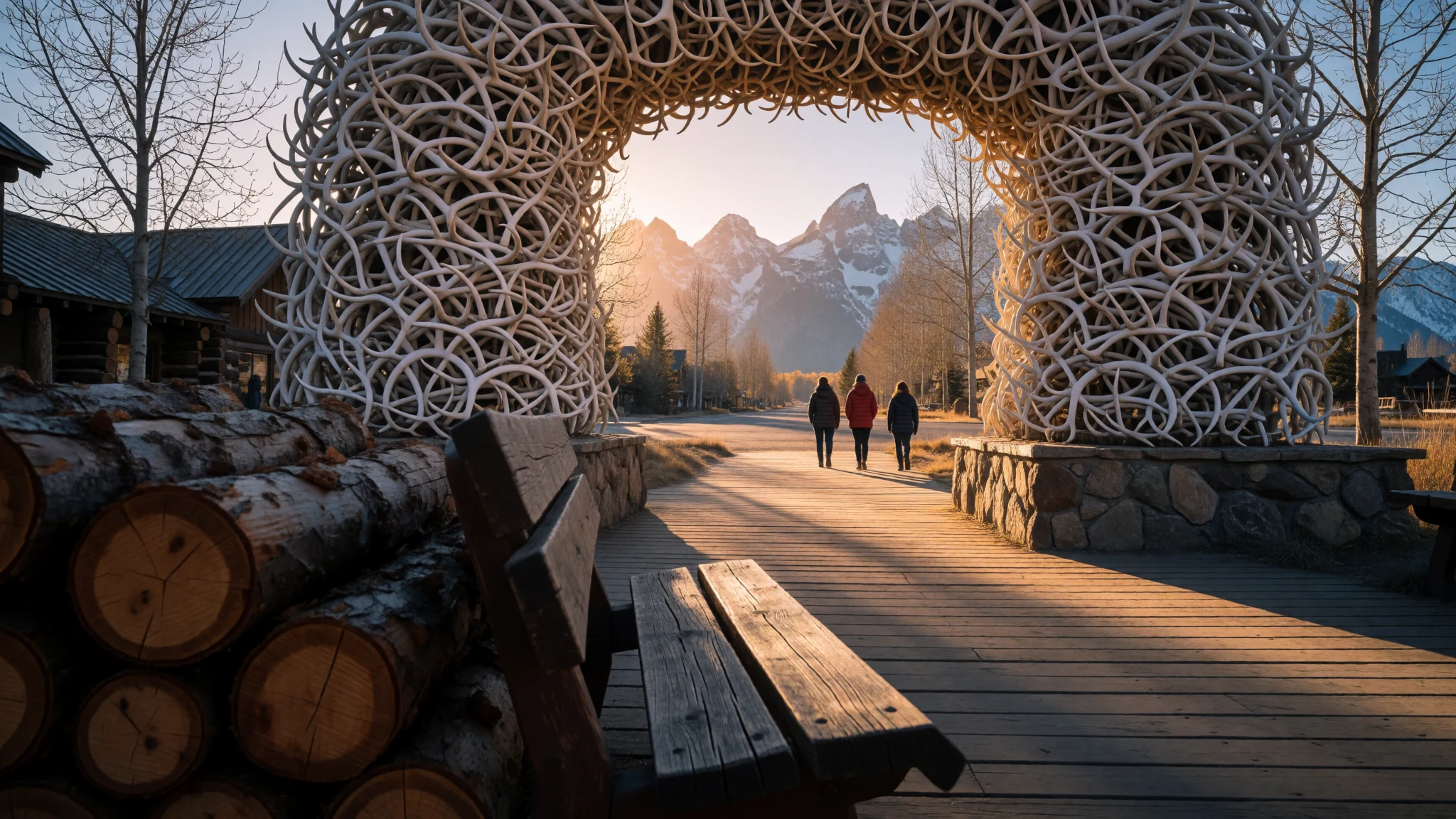
The square is the centre of Jackson, with an arch made of elk antlers at each of its four corners. It is a flat, easy place to start: boardwalks, galleries, outfitters and cafés all open onto it. Expect crowds and photographers at the arches in summer, and quieter, snowier mornings in winter.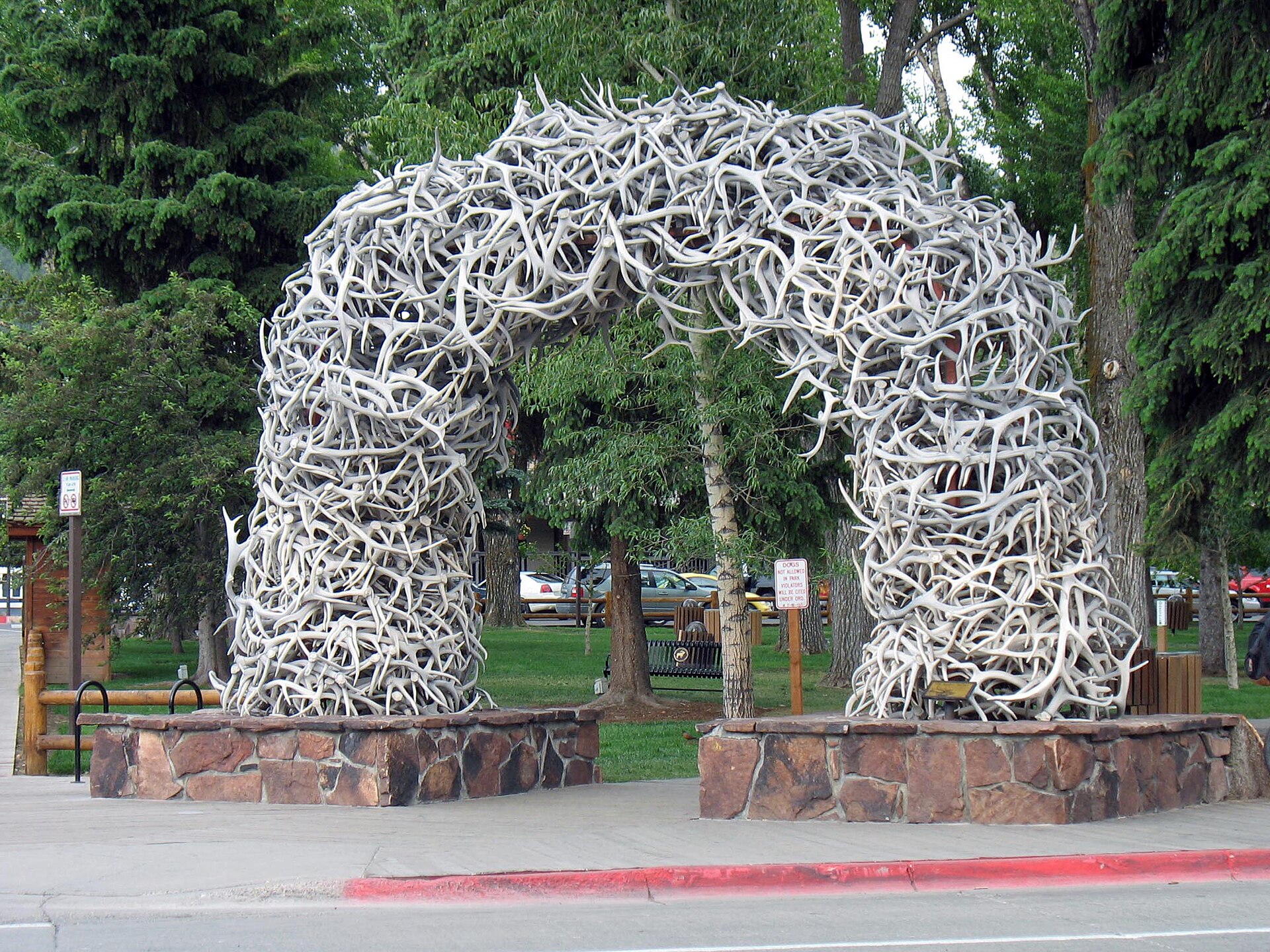
- Jackson Hole Museum — Central Jackson
A small museum a few steps from the square, holding thousands of objects that trace the valley's story, from Native American artefacts to the tools and belongings of early settlers and traders. It works well as a first stop for context, and as a rainy-day option. Check current opening times before going. - National Elk Refuge — North-east edge of town
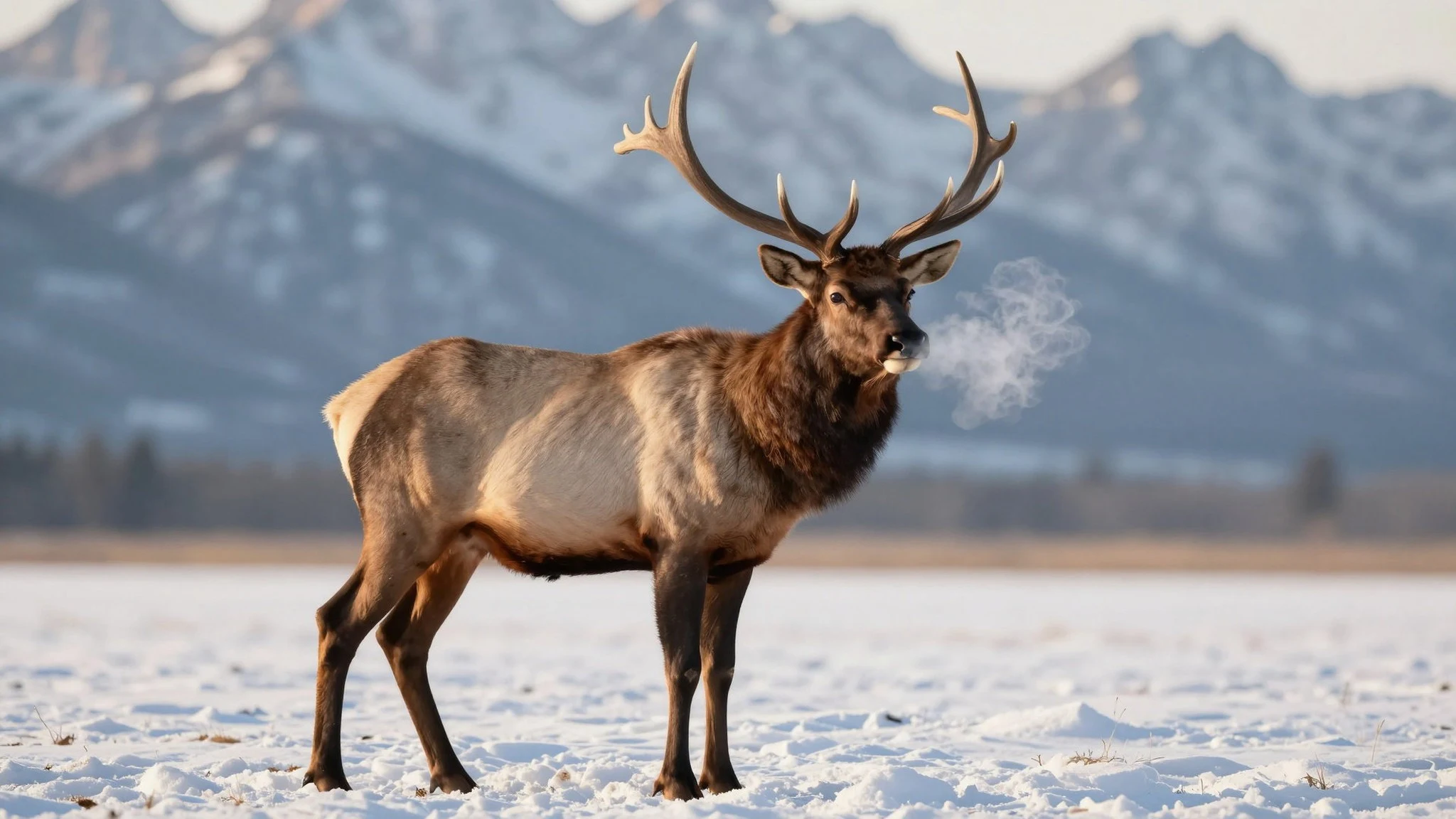
The refuge protects winter range on the edge of town for thousands of elk that migrate into the valley each year. The animals are easiest to see in the colder months, when they gather on the open flats. Bring binoculars, keep to marked areas, and check the official site for access and current rules. - National Museum of Wildlife Art — North of town, above the refuge
Set in the hills just north of the refuge, this museum is devoted to art about wildlife and nature, with paintings, sculpture and works on paper. It suits an afternoon when weather rules out the trails, and its windows look out over the same country the artists portray. Check the official site for current hours and fees. - Snow King Resort — Southern edge of town
Snow King is the smaller of the area's ski mountains, and its base lies only a few blocks from the square. Winter brings skiing, and green slopes dominate the town's backdrop in summer. The viewpoint above town gives a clear picture of how the town sits in the valley, with the Tetons beyond.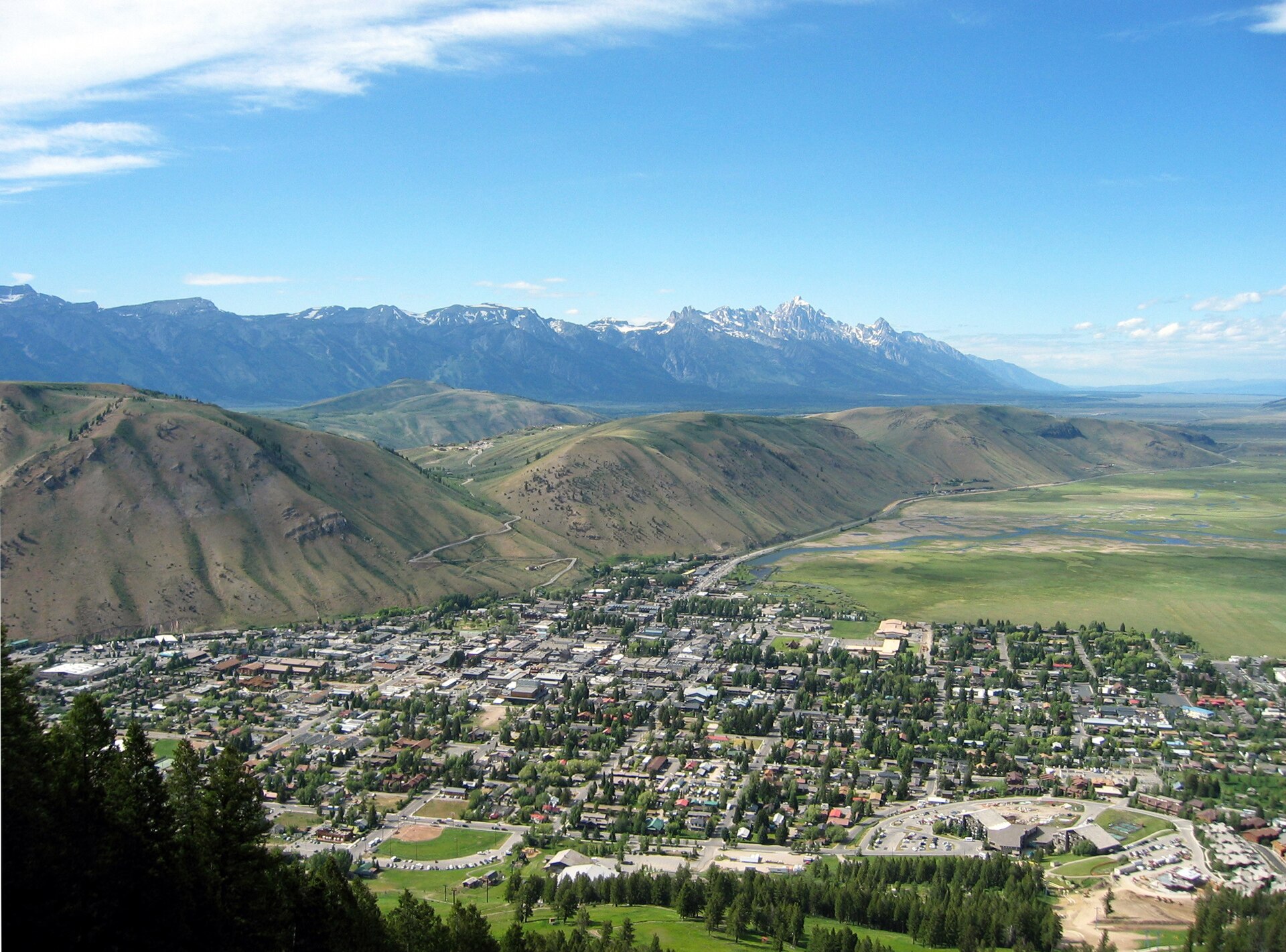
- Jackson Hole Mountain Resort — Teton Village, north-west of Jackson
This larger ski area is in Teton Village, around a quarter of an hour's drive from Jackson, and it has a very big vertical drop for winter skiers and snowboarders. In summer the lifts and trails still run for walkers and riders. Plan transport in advance, since parking and shuttles fill in busy periods.
Culture
Jackson, Wyoming, wears its cowboy past lightly, and its cultural life leans on the outdoors and the arts in roughly equal measure. The town's arts centre was founded in 1991 to support working artists, and its building was completed in 2007; it hosts exhibitions, performances and classes. Every summer the Grand Teton Music Festival fills seven weeks with classical concerts, bringing orchestral musicians into a town better known for hiking boots. Wildlife art is a strand of local taste in its own right, which is why a museum devoted to it stands just beyond the elk refuge. Each spring the Elkfest antler auction sells antlers gathered on the refuge after the elk shed them. Boy Scouts do the selling, and the money supports both the scouts and the refuge. The antler arches at the corners of the town square are a favourite photo stop and a neat summary of how closely the town ties itself to its wildlife. Conversation here turns quickly to snow, trail conditions and animals, and many residents work seasonally, so service is usually friendly but stretched in peak weeks. Park and refuge rules count as part of local manners, and residents expect visitors to follow them. Keep a respectful distance from elk and every other wild animal, never feed them, and follow ranger instructions in the parks and at the refuge.
What to wear
Jackson, Wyoming, has no single formal costume, so its clothing history is a layering of traditions. The Native nations of the region, including the Shoshoni, Crow and Blackfeet, have long made hide clothing decorated with beadwork and quillwork; today such pieces appear mainly at ceremonies, powwows and in museums rather than in daily wear. Ranch and cowboy dress is the second tradition: felt or straw hats, denim, leather boots, and wool or canvas coats made for wind and cold. In town, locals mix both of those with outdoor gear, so a fleece or down jacket, trail shoes and a sun hat look as normal in a restaurant as in a car park. Evenings are casual, and clean jeans and boots suit almost anywhere. Visitors should dress in layers, because mornings at this altitude are cold even in summer and the afternoon sun is strong; add a waterproof shell, sunglasses and sun cream. In winter, insulated boots, thermal layers, gloves and a warm hat are essential. For park trails, sturdy, broken-in walking boots matter more than any style. Nothing in town calls for special modesty dress, and ordinary casual clothing is fine in galleries, museums and churches.
What to eat
- Beef stew from the chuckwagon — Chuckwagon-style eateries on the road north towards Moose
Chuckwagon cooking means hearty ranch-style plates, and beef stew is the classic. It is filling after a day outdoors and comes with simple sides. Look for chuckwagon-style dining rooms along the main road north of town towards Moose, where meals are served in a rustic setting. - Ribs with beans and corn bread — Ranch-style restaurants and barbecue counters around Jackson
Slow-cooked ribs with baked beans and warm corn bread are standard western comfort food. Portions tend to be large, so sharing is sensible. They are easiest to find at ranch-themed restaurants outside the centre, and at barbecue counters in town. - Burrito with fresh guacamole — Casual burrito counters near the town centre
A burrito is the practical lunch for people heading to the trails or the slopes: quick, filling and cheaper than a sit-down dinner. Fresh guacamole is the usual extra. Casual counter-service places around the edges of the town centre serve them. - Stuffed mushrooms — Established dinner restaurants near the square
Stuffed mushrooms are a long-standing starter in the town's older dining rooms, served hot and rich before a main course. They are a good way to sample the town's traditional dinner style without committing to a full tasting menu. Book ahead in high season. - Mud pie — Traditional dinner restaurants close to the town square
Mud pie, a chocolate and coffee ice-cream dessert on a cookie base, is a well-liked way to end dinner in town. It is often large enough to share. Look for it on dessert menus at traditional restaurants close to the square.
Plan it
Best time. June to September is the easiest season for the national parks, with long days and open roads, though it is also the busiest and most expensive. Winter, roughly December to March, suits skiing and wildlife viewing at the elk refuge. Spring and late autumn are quieter, but some businesses and park roads may be closed.
How long. 3–4
Getting there. Fly to Jackson's own airport in the valley, or to Salt Lake City, which has many airlines and is about a five-hour drive away. The main highway runs through Jackson, a few miles south of Grand Teton National Park. Buses also link Jackson with Salt Lake City and Idaho Falls; check current timetables and operators before booking.
Budget. high
Tips
- Book rooms well ahead for summer, especially weekends, because availability and prices change sharply with the season
- Start park days early to beat crowds and see more wildlife
- Carry water and sun protection, because the valley sits at 1,901 m and the air is dry
- Check road and weather conditions before driving in winter, and allow extra time
- Check the official town site, https://www.jacksonwy.gov/, for local information
Etiquette
- Keep well back from elk and other wildlife, and never feed them
- Follow park and refuge rules and ranger instructions
- Stay on marked trails and take all litter away
Nearby
Sources
- Wikidata Q871285 (CC0)
- Wikipedia: Jackson, Wyoming (rev 1382306770) (CC BY-SA 4.0)
- Wikivoyage: Jackson (Wyoming) (rev 5430305) (CC BY-SA 4.0)
- Photo: View of Jackson, Wyoming from Snow King Resort (Mlewis2005) (Public domain)
- Photo: Downtown Jackson, Wyoming (Greg Tally) (CC BY 3.0)
- Photo: Jackson, Wyoming, elk antler arches (Monster1000) (CC BY 3.0)
- Photo: The Teton Theater at night (Acroterion) (CC BY-SA 4.0)
- Photo: Wort Hotel, Jackson, Wyoming (Acroterion) (CC BY 3.0)
- Photo: Van Vleck House, Jackson, Wyoming (Staib) (CC BY 3.0)
- Photo: Teton Theater in Jackson, Wyoming (Jen) (CC BY-SA 2.0)
- Photo: Another Jackson, Wy. Sunrise (David S. Ferry III) (CC BY-SA 2.0)


Wildlife
- Elk (animal)
The elk, also called the wapiti, is a huge deer, bigger than every other deer except one. In Jackson Hole, great herds, thousands strong, arrive in the valley each year and spend the cold months on protected ground at the edge of town, so winter is your best chance of meeting them. Watch from a respectful distance, keep quiet and still, think about going with a guide, and never feed them.