Izu Peninsula
Izu Peninsula, Japan
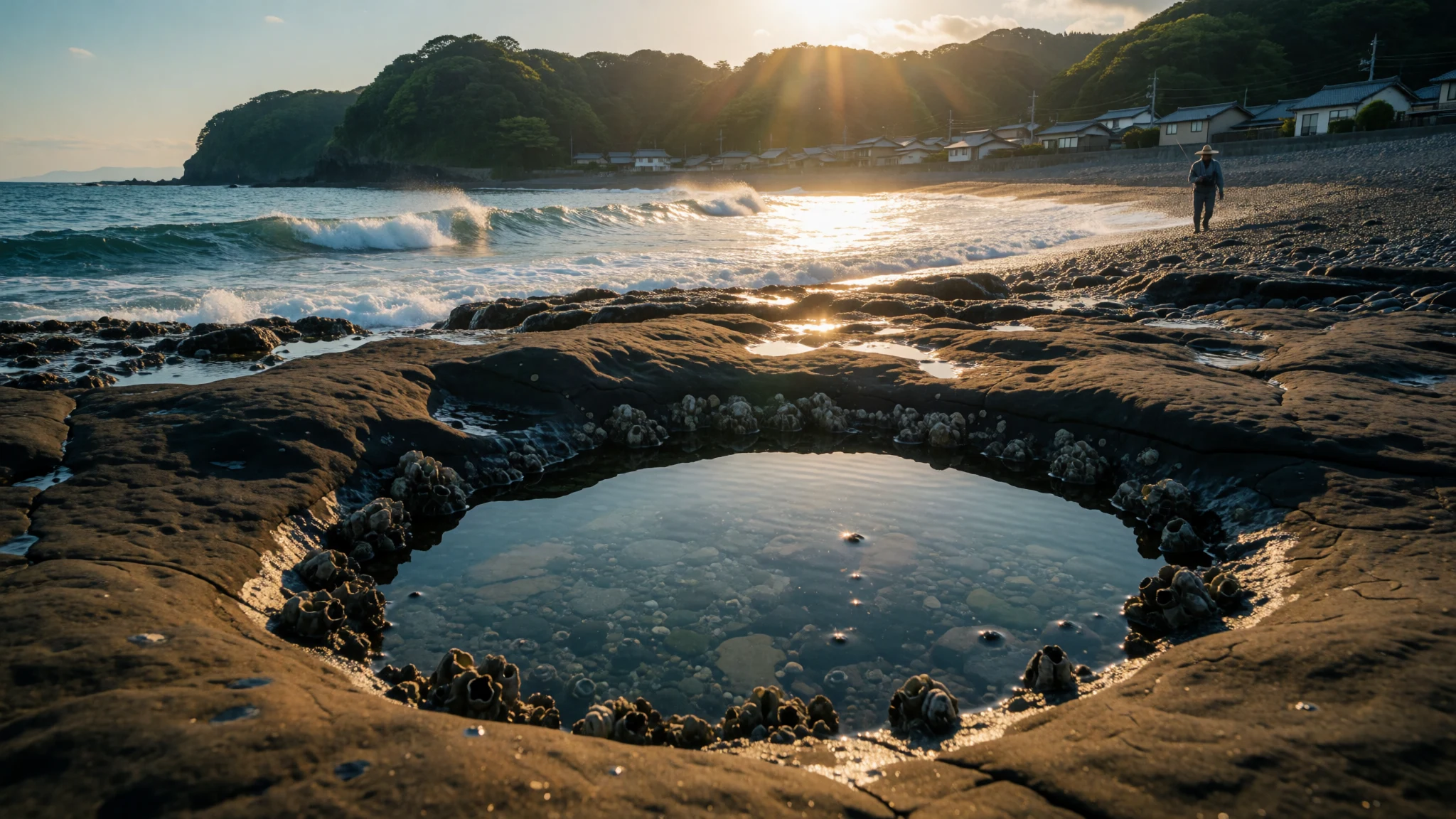
Izu Peninsula packs volcanic hills, hot springs, surf beaches and fresh wasabi into a short train ride from Tokyo.
The place
Izu Peninsula is a hilly thumb of land poking into the Pacific south-west of Tokyo, on Honshu, and it belongs administratively to Shizuoka Prefecture. It was once its own province, Izu, and the name still suggests a world apart from the capital's sprawl. The peninsula covers about 1,421 sq km, and most of its towns cluster along the north and east sides, while the south and west stay far quieter.
The land is shaped by volcanoes and by colliding plates. Izu sits on the Philippine Sea Plate, which presses against its neighbours, and the result is a spine of worn-down volcanic peaks, the Amagi range, running through the middle. Mount Amagi reaches 1,406 metres, with lower summits such as Mount Atami and Mount Daruma on either side. Further south the rock is mostly breccia, a jumble of fused fragments, which helps explain the ragged cliffs and tucked-away coves of the coast.
That same restless geology gives Izu its hot springs, found in the hills, beside rivers, on beaches and even at a waterfall in Kawazu. It also means earthquake swarms and tsunamis are a known part of life here, and locals plan for them without fuss.
For Tokyo residents, Izu is the classic weekend escape, two to three hours away by train, so Saturdays and holidays on the east coast are busy. Weekdays and the west coast are calmer. Seaside resort towns, surf beaches, dive sites and old inns share the peninsula with farms that grow real wasabi, which gives even a short trip surprising range.
Its story
The story of Izu Peninsula begins offshore. The land rides on the Philippine Sea Plate, which has been shoving against the plates under Honshu along the Nankai Trough, and the collision has pushed the ground up into a peninsula. Geologists describe the south as largely breccia and the centre and north as a cluster of volcanoes that have been heavily worn down. The Kano River in the north runs through a valley that dropped between faults, a graben, which is why the flattest ground lies there.
People settled around that low ground and along the coast. For much of Japanese history the area was Izu Province, a place within reach of the capital yet hemmed in by mountains and sea. The hot springs gave it a second identity as somewhere to rest and recover, and towns such as Shuzenji grew up around bathing. The Zen temple that gave Shuzenji its name goes back to 807, and the same town also hosts the headquarters of World Divine Light, completed in 1987, which looks nothing like a Zen hall. Izu keeps layering new ideas over old ones.
Today the peninsula lives largely off visitors: resort towns on the coast, inns beside springs, surf schools, dive shops and farms. The ground has not finished moving, and the forces that built Izu still set off its tremors.
What to see
- Amagi Mountains — Central Izu
The Amagi Mountain Range is the backbone of Izu Peninsula, with Mount Amagi at 1,406 metres. These are old, heavily eroded volcanoes rather than sharp cones, and the range's eastern and western ends carry on beneath the sea into Sagami Bay and Suruga Bay. Hikers who want a quieter side of the peninsula head inland here; check trail and weather conditions locally first.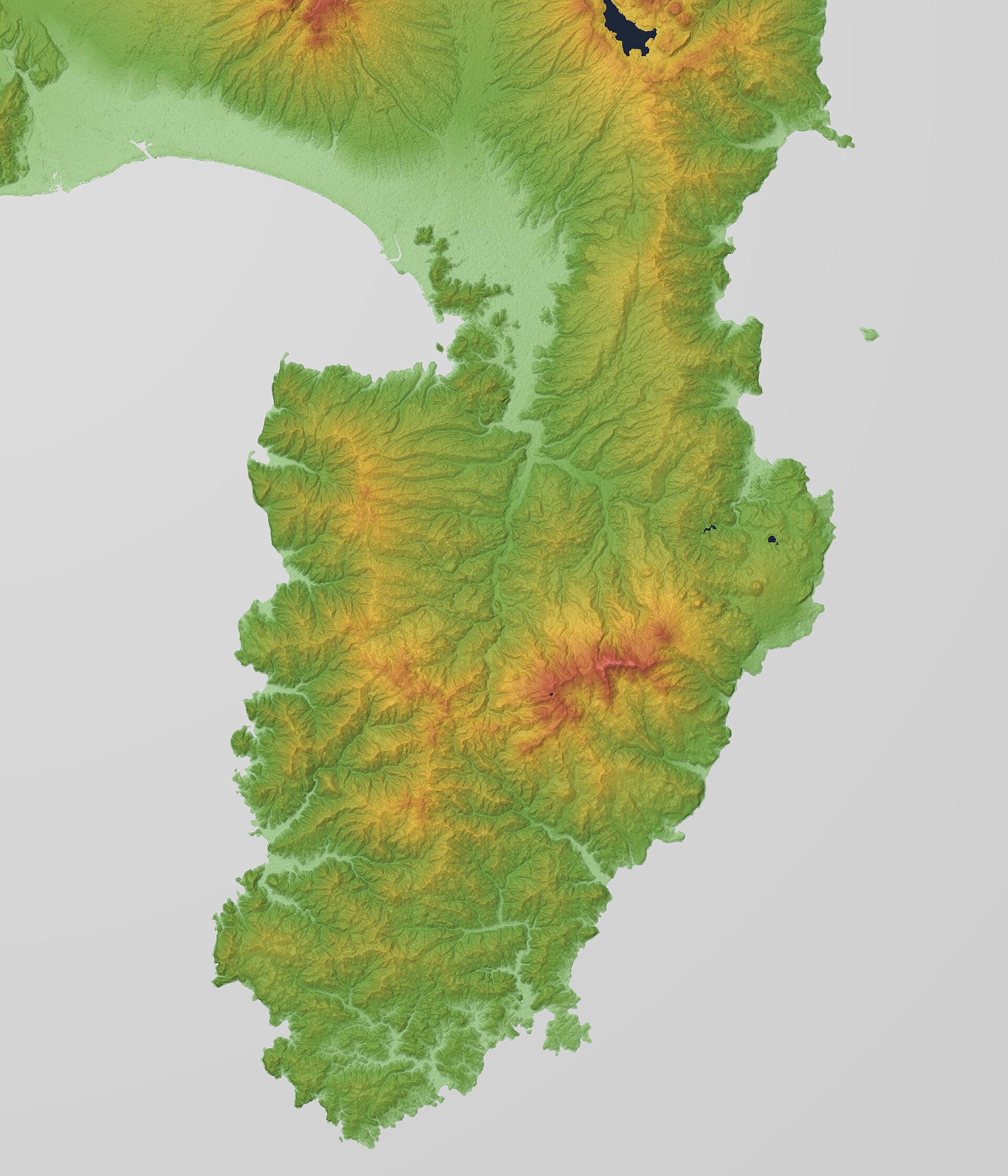
- Shuzenji — Shuzenji, northern Izu
Shuzenji is an onsen town in the north-centre of the peninsula, named after its Zen temple, which dates to 807. In the same town stands the headquarters of World Divine Light, built in 1987 in a style quite unlike a Zen hall. Shuzenji is also where Baird Brewing runs its public brewery, handy for a break between baths. - Kawazu hot-spring waterfall — Kawazu, east coast
Kawazu, on the east side of Izu Peninsula, is the place to look for a hot spring beside a waterfall, one of the more unusual settings for an onsen in a region full of them. Across Izu many inns and spas admit day visitors, so a soak does not always require an overnight stay. Check each bathhouse's own site for arrangements. - Atami and the east coast — Atami, north-east Izu
Atami, at the north-eastern corner of Izu Peninsula, is where many dive operators work because getting there is easy and the services are well developed. It is also where some Shinkansen services stop, so it is an easy door into the peninsula. The town is densely built up and busy at weekends, so many visitors treat it as a gateway rather than a stay. - Shirahama beach — Near Shimoda, southern Izu
Shirahama is a sandy beach near Shimoda, in the south of the peninsula, where surf competitions are held regularly and schools teach beginners. Swell and currents change with the season, so ask a local school about conditions before paddling out. Away from the surf, the quieter west coast has few train stations and far thinner weekend crowds. - West coast near Matsuzaki — Matsuzaki, west coast
The west coast of Izu Peninsula faces Suruga Bay and has few train stations, which keeps weekend crowds thin and leaves some dive sites little developed. The shore around Iwachi, near Matsuzaki, suits slow drives and short walks along the water. Buses and cars are the practical way to reach it, so plan transport in advance.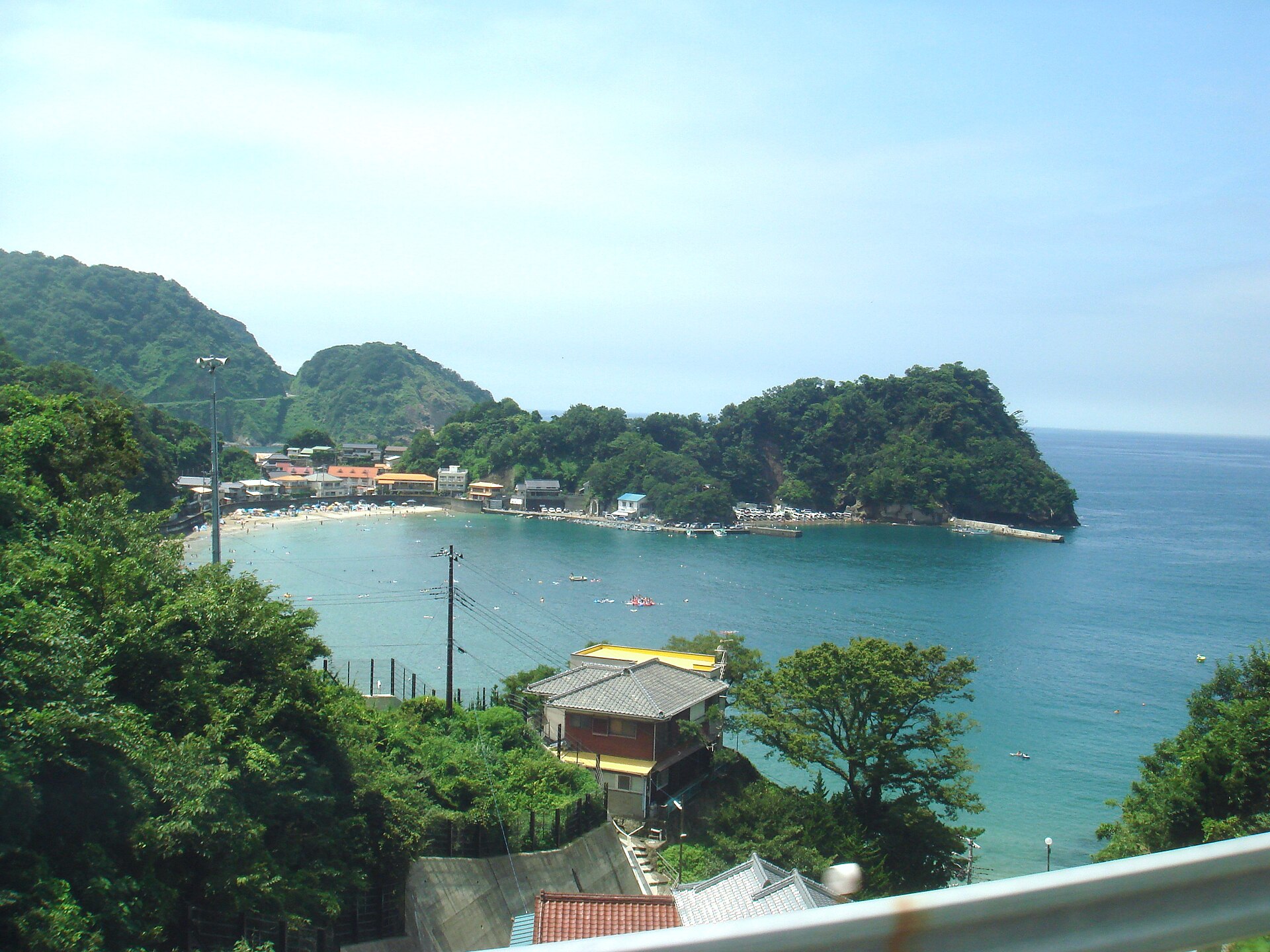
Culture
Izu Peninsula's culture is built around bathing. Onsen are the main draw for Japanese visitors, and the habit of going away for a night or two at a ryokan, a traditional inn, is woven into the way Tokyo residents use the place. A stay typically revolves around the bath, a multi-course evening meal, and sleeping on futons laid over tatami mats. Weekdays feel noticeably more relaxed than weekends.
Religion here is varied. Shuzenji has the Zen temple that gave the town its name, dating to 807, and also the headquarters of World Divine Light, a modern movement housed in a building very different from any Zen hall. Shrines and smaller temples are scattered along the coast and through the hills, and are usually part of daily life rather than set-piece attractions.
Living on top of active geology shapes attitudes too. Earthquake swarms and tsunamis are accepted risks, and it is sensible to ask at any accommodation about evacuation routes. Food culture leans on the land: wasabi is grown here and eaten freshly grated, never as an afterthought. Microbrewing has taken root as well, with British-style beer served alongside local seafood.
At any onsen, wash and rinse thoroughly before getting into the shared bath, and keep towels and hair out of the water.
What to wear
Izu Peninsula has no widely known regional costume, so the clothing story is the wider Japanese one, seen most clearly in its hot-spring towns. The yukata, a light unlined cotton robe, is the garment of the onsen: many ryokan lend one to guests for wearing between the bath, dinner and an evening stroll, tied with a sash and worn with simple sandals. The kimono, traditionally of silk, is kept for weddings, tea ceremonies and festivals, and is rare as everyday dress. Happi, short cotton coats, turn up at local festivals.
What people actually wear is practical. Weekenders from Tokyo arrive in casual layers, walking shoes and sun hats; surfers and divers around Shirahama and the east coast live in wetsuits and rash vests; inn staff often wear a simple uniform.
Visitors need little formality. Pack light clothes that dry quickly, a rain jacket, sun protection and comfortable shoes with grip for coastal paths and hill trails. Bring swimwear for the beaches, and socks without holes, since shoes come off at inns, temples and many eateries. At temple grounds such as Shuzenji, cover shoulders and leave beachwear for the sand. Slip-on shoes save time, and in winter extra layers matter on exposed coasts and in the hills.
What to eat
- Wasabi-don (わさび丼) — Eateries and roadside stops across the peninsula
In Izu, wasabi-don is rice under a layer of dried bonito shavings (katsuobushi), served with a fresh wasabi root and a small grater so diners can prepare their own just before eating. The heat is sharp but clean, quite unlike the powder sold in tubes. - Wasabi-zuke (わさび漬) — Souvenir shops and station stalls
Wasabi stems and leaves pickled, usually in sake lees, to make a pungent relish eaten in small dabs with hot rice or alongside drinks. It also travels well, so it is a common edible souvenir from Izu. - Wasabi soft (わさびソフト) — Roadside stalls and shops near the main sights
Soft-serve ice cream flavoured with wasabi. The heat is gentle, more a green, herbal note against the cream than a burn, which makes it a popular cold treat after a hot walk or beach day. - Kurofune Porter — Shops and bars across Izu; the brewery in Shuzenji
A dark, British-style porter from Baird Brewing, a microbrewery that began in Izu. Roasted malt notes suit a cool evening after a hot bath. Bottles turn up in shops and bars up and down the peninsula, and the Shuzenji brewery welcomes visitors. - Fresh fish rice bowl (kaisen-don) — Eateries around the harbour towns
Fresh local fish over rice, a standard order at harbour towns where boats land the catch. The exact fish depends on the season and the day's catch, so ask what is fresh rather than expecting a fixed menu.
Plan it
Best time. April–May and October–November suit hill walks and onsen hopping, while July–August is the season for beaches, surfing and diving, though busier. Rain and sea conditions vary, so check forecasts, and aim for weekdays in any month to avoid the weekend crowds.
How long. 2–3
Getting there. Most visitors fly into Tokyo, then take the Tokaido Shinkansen (Kodama and some Hikari services) from Tokyo to Atami in about 40 minutes or to Mishima in about 50. From Atami, the JR Ito Line or Izu Kyuko runs down the east coast through Itō to Shimoda; from Mishima, the Izuhakone Sunzu line goes to Shuzenji. The JR Odoriko limited express runs three times a day from Tokyo Station direct to Shimoda and Shuzenji, and express buses also serve the peninsula.
Budget. mid
Tips
- Stay on a weekday if possible; Atami and the east coast fill up at weekends
- Look past Atami to Shuzenji or Itō for a ryokan stay with a quieter feel
- The west coast has few train stations, so plan buses or a car in advance
- Carry some cash for small bathhouses and roadside stalls, and check each site for day-visit arrangements
- Ask your accommodation about evacuation routes, as earthquakes and tsunamis are a known risk here
Etiquette
- Wash and rinse before entering any shared bath, and keep towels out of the water
- Some baths restrict visible tattoos, so ask before you go
- Keep voices low in ryokan corridors and baths in the evening
Nearby
Sources
- Wikidata Q822822 (CC0)
- Wikipedia: Izu Peninsula (rev 1382632667) (CC BY-SA 4.0)
- Wikivoyage: Izu Peninsula (rev 5385164) (CC BY-SA 4.0)
- Photo: West coast of Izu Peninsula (PHGCOM) (CC BY 3.0)
- Photo: Numazu and Mount Fuji (Alpsdake) (CC BY-SA 4.0)
- Photo: Iwachi, Matsuzaki (PHGCOM) (CC BY 3.0)
- Photo: C-130J Super Hercules along the coast of the Izu Peninsula (Senior Airman Natalie Doan) (Public domain)
- Photo: Eastern Shizuoka Prefecture (Ray Swi-hymn) (CC BY-SA 2.0)
- Photo: Fujinomiya and Fuji from Mount Ama (Alpsdake) (CC BY-SA 4.0)
- Photo: Izu Peninsula 3D (Batholith) (Public domain)
- Photo: Izu Peninsula from Mount Echizen (Alpsdake) (CC BY-SA 4.0)


