Izamal
Izamal, Mexico
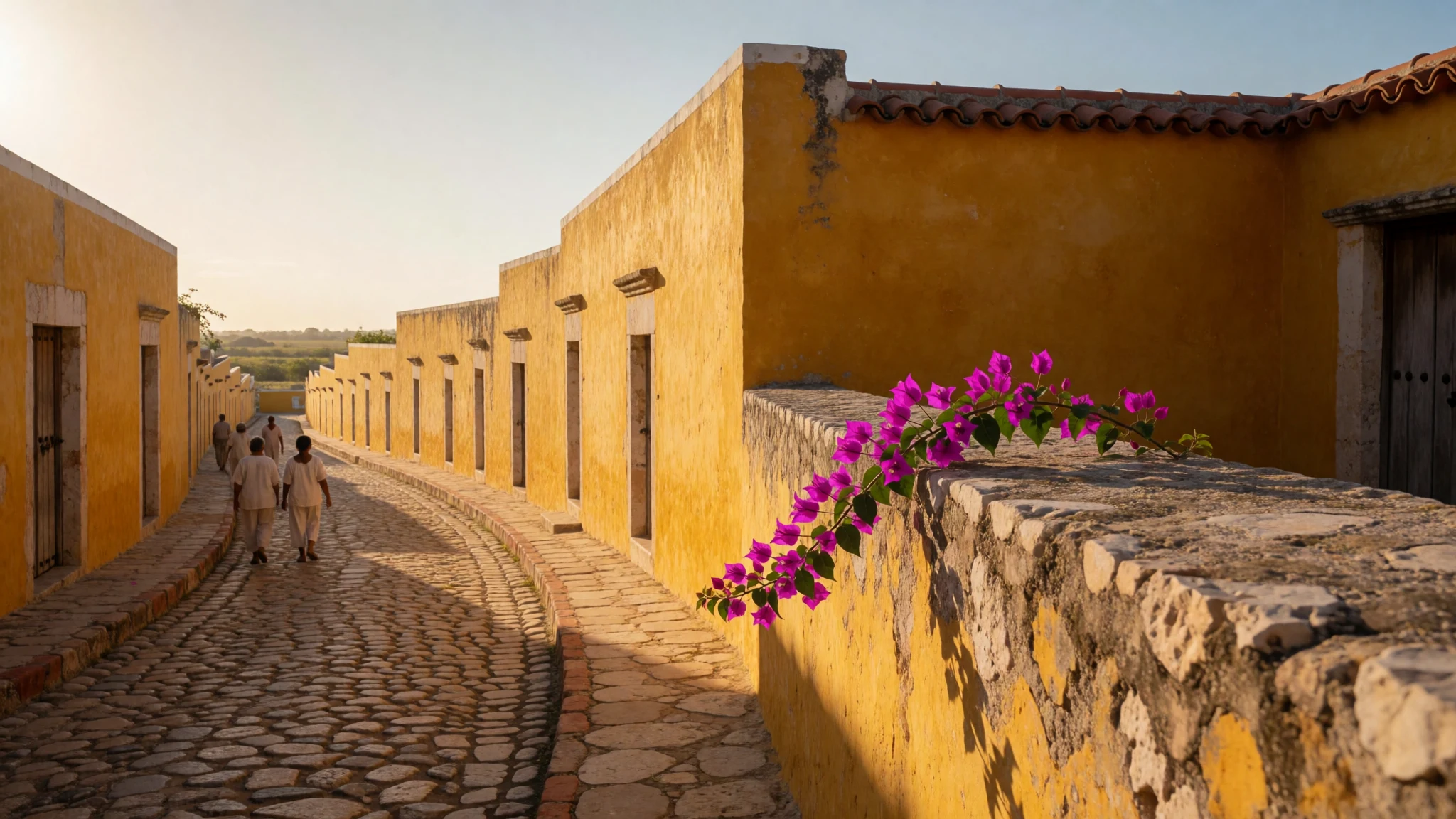
Izamal is a yellow-painted Yucatán town where a Franciscan convent rests on a Maya platform and pilgrims still arrive.
The place
Izamal is a small town in the Mexican state of Yucatán, east of the state capital Mérida on the flat limestone plain that covers most of the peninsula. About 17,800 people live here, and the ground sits only 15 m above sea level, so the horizon is wide and the heat is steady. Locals call it the Yellow City, because the colonial façades, the church walls and many of the houses are washed in the same warm ochre. It is also called the City of Hills, a name that sounds like geography but is really archaeology: the grassy mounds between the streets are the remains of Maya pyramids, slowly covered by soil and trees. The layout is easy to read. A big arcaded convent rises over the central squares, small parks fan out around it, and low streets of single-storey houses run off in a grid. Horse-drawn carriages wait near the main square for visitors, though the town is small enough to cover on foot in the morning cool. Maya is still heard in the markets and doorways, with Spanish alongside, and the mix of old stone, painted plaster and daily life feels lived-in rather than staged. Crowds are modest most of the year. Day-trippers from Mérida and the coast arrive late morning, and once they leave in the afternoon the streets go quiet and the evenings are calm. Midday is hot and shade is scarce, so the sensible plan is an early start and a long lunch.
Its story
Izamal was a sacred centre long before any Spaniard saw it. The Maya honoured Itzamná, the creator deity, and Kinich Ahau, the sun god, here, and people travelled from across the Maya world to visit the temples. The huge platforms still scattered through the town are what remains of that age. When the Spanish took Yucatán, their habit was to plant a colonial town directly over the Maya one, reusing the stone and the sacred sites. Izamal, which the facts date as a Spanish foundation from 1543, followed the pattern, with a twist: some of the Maya structures were too vast to be worth pulling down. The Franciscans therefore built their convent of San Antonio de Padua on top of an existing platform instead of clearing it, which is why the monastery looks as though it sits on a natural hill. Pilgrimage never stopped, it only changed its object. Today the devotion centres on the Virgin of the Immaculate Conception, known locally as Our Lady of Izamal, whose statue draws worshippers from around the region. A visit by Pope John Paul II in the late twentieth century left the statue with a silver crown, and the town still mentions it with pride. What makes Izamal's history unusual is that nothing was fully erased. Maya mounds, Spanish arches and modern streets stand within a few minutes' walk of each other, and the layering is visible on the ground rather than something to be read from a plaque.
What to see
- Convento de San Antonio de Padua — Town centre
The Franciscan convent is the town's anchor, a vast yellow complex with a deep arcaded atrium. It stands on a Maya platform rather than a natural hill. Go early for the cool and the light on the arches, and step inside the church, where the Virgin's statue is kept. Services take priority over sightseeing.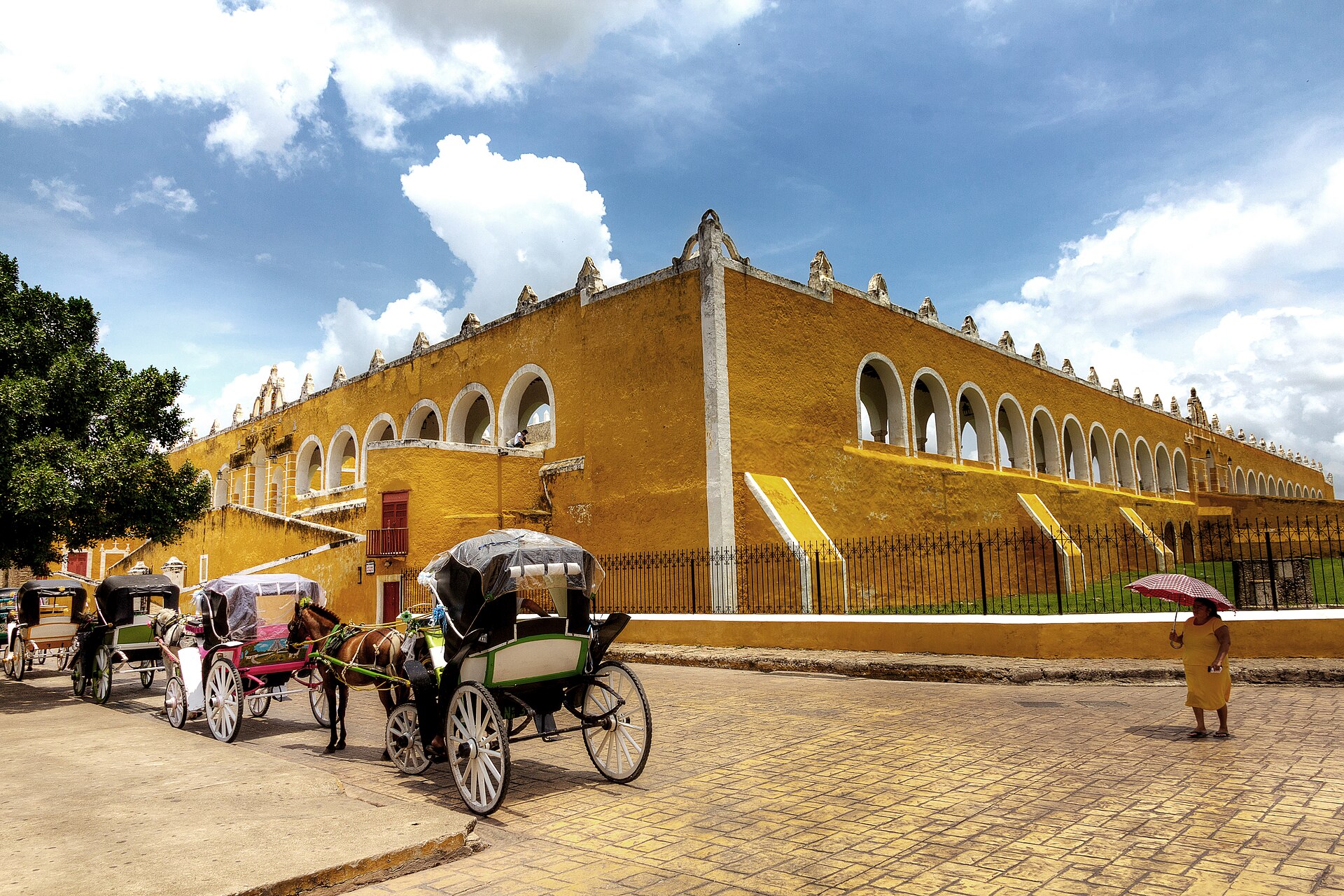
- Maya mounds: Kinich Kakmó, Chaltún Há and Itzamatul — Around the town centre
Several Maya ruins sit among the streets, including Kinich Kakmó, Chaltún Há and Itzamatul. They are grassy, partly restored platforms rather than polished archaeological parks, and they suit a slow wander more than a checklist. Kinich Kakmó is a good first stop. Bring a hat, as shade is thin, and ask the tourist office about access. - Parque Itzamná — Town centre
Parque Itzamná is a small public park named for the Maya creator deity, set among the colonial streets. It is a good place to sit in the shade, watch the town go about its day and see how the Maya and Spanish layers sit side by side. Families drift in as the afternoon cools.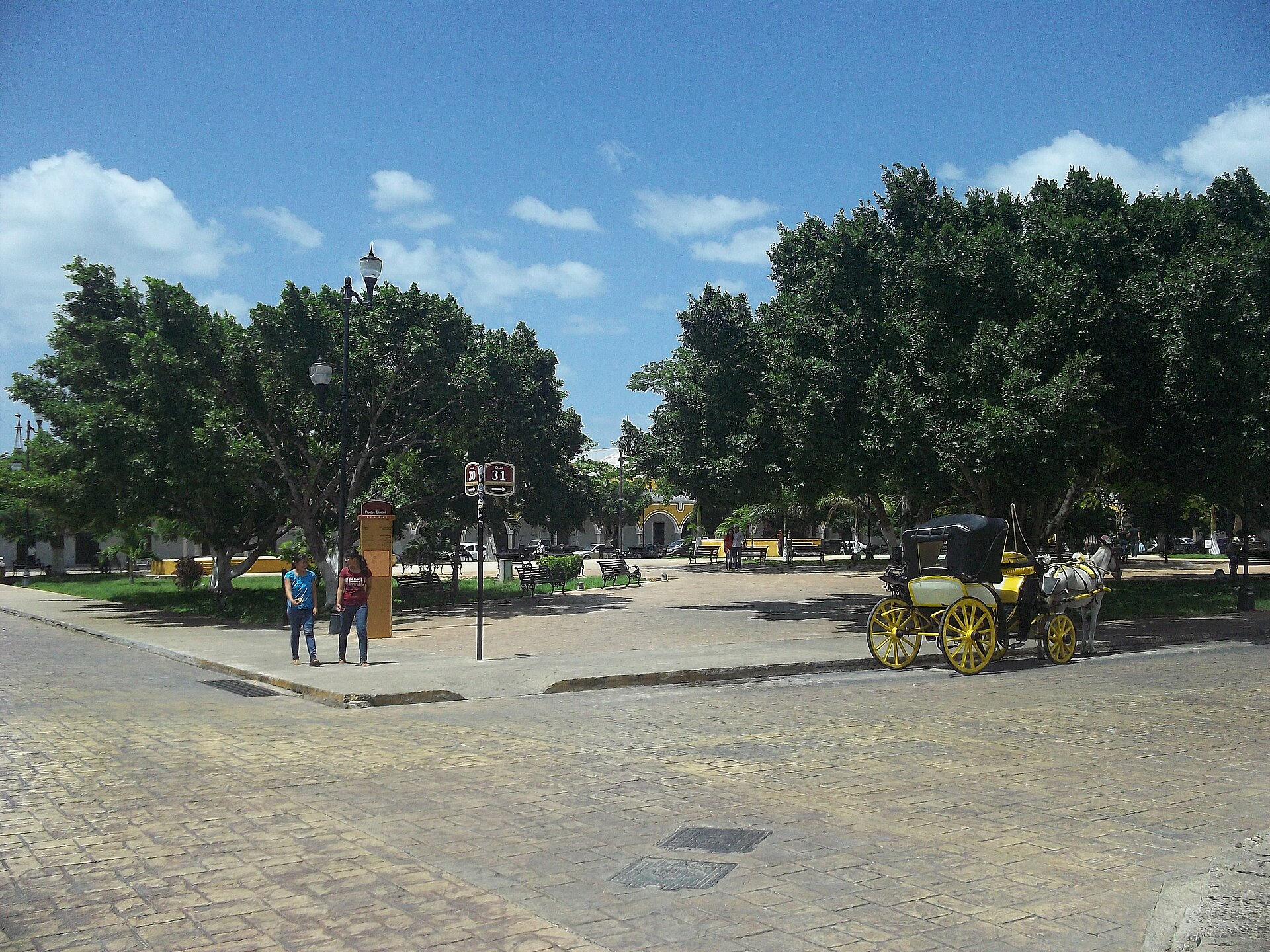
- Centro Cultural and Palacio Municipal — Beside the convent, around the main park
Beside the convent, the Centro Cultural has displays on local handicrafts and a café, a useful half hour out of the sun. Across the park, the Municipal Palace holds tourist information and historical models of the town, which help in understanding how the mounds, convent and street grid fit together. - Sunday paseo and the evening light show — North side of the convent and the convent atrium
On Sundays, residents gather in Parque Zamna, on the north side of the convent, for a paseo with live music, stalls and refreshments, a lively way to see the town socially. On other evenings a sound-and-light show runs in the convent atrium; confirm the schedule with the tourist office.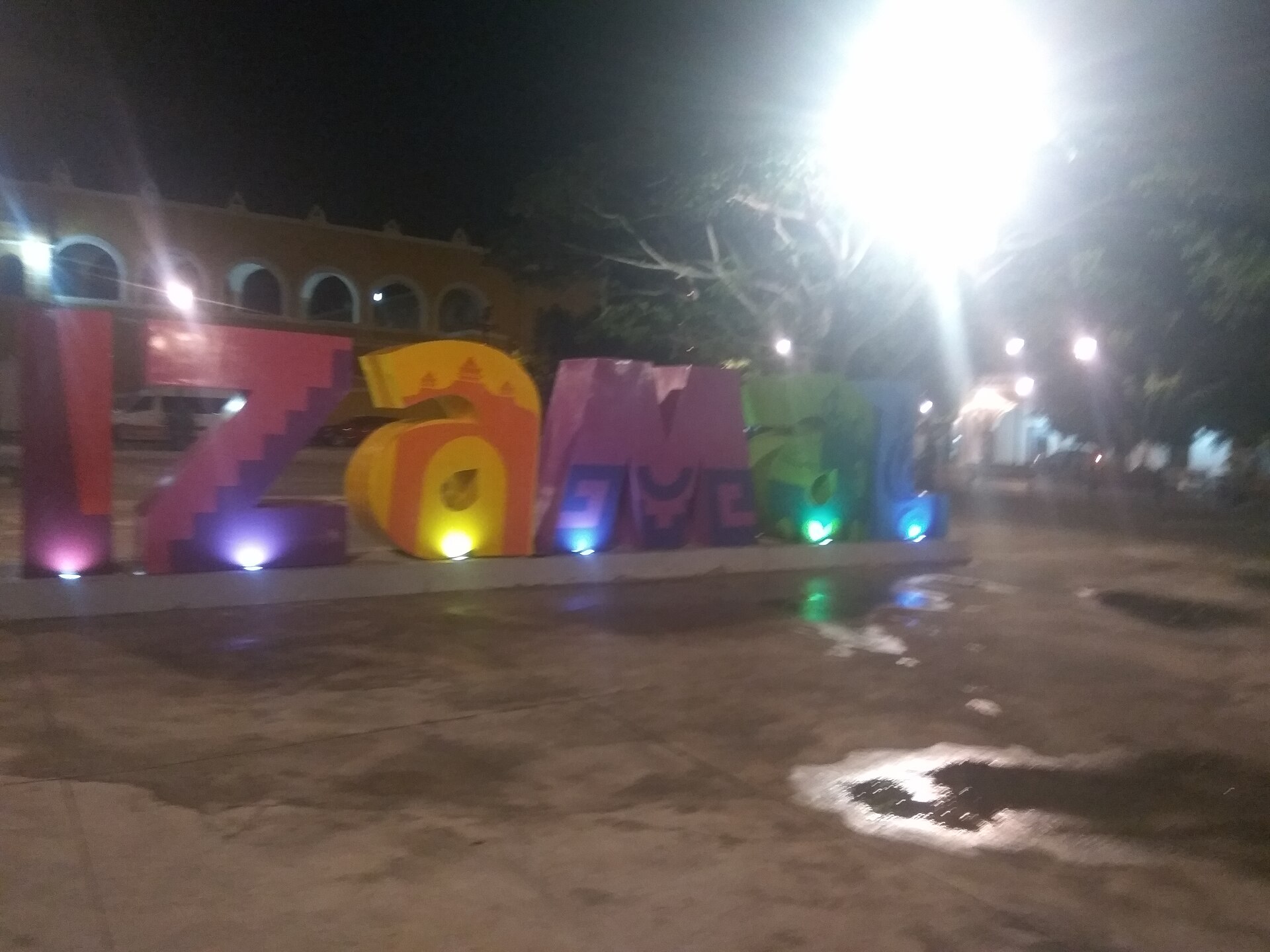
Culture
Izamal's culture is Maya at its roots, Catholic in its public rhythm and Mexican in the everyday. Maya is still spoken at home and in the market, and local handicrafts remain a living tradition rather than a museum display. Faith is not a relic here: the convent is an active place of worship, and pilgrims arrive to honour Our Lady of Izamal, some travelling long distances. Festivals bring music, processions and food stalls to the squares, and the Sunday paseo gives a quieter weekly version of the same community life. The Maya past shows in place names, in the mounds that interrupt the streets, and in the name of Itzamná, the creator deity, which appears on parks and local businesses. Spanish is the common language of business, and a few words of greeting, such as buenos días, gracias and por favor, are appreciated, as is any attempt at Maya. The pace is slow by design: lunch is long, afternoons are hot, and many places close for a break in the middle of the day. Evenings are when the squares fill. Visitors will find people friendly and curious, but this is a small town, not a stage set, and residents and worshippers are going about their lives. In the convent and church, keep your voice low, cover bare shoulders and knees, and ask before photographing anyone who is praying.
What to wear
Traditional dress in Izamal and across Yucatán centres on the huipil, a loose white cotton dress with a square neckline and bands of bright cross-stitched flowers around the yoke and hem. The festive version, the terno, is worn with a lace-edged underskirt and often a rebozo shawl at fiestas and processions. Men's festive wear is white cotton trousers and a guayabera, the pleated, pocketed shirt, often with a straw hat. Day to day, most people in Izamal dress for the heat: T-shirts, light shirts, jeans or cotton trousers, sandals and trainers, and caps against the sun. Some older women still wear huipiles for daily use and on feast days. For a visitor, pack light, loose cotton or linen that dries quickly, a wide-brimmed hat, sunglasses and high-factor sunscreen. Closed comfortable shoes or sandals with grip suit the uneven cobbles and the grassy mounds. Cover shoulders and knees for the convent and church, and carry a light scarf or shirt for that. A thin rain layer helps in the wetter months, and a light jumper is rarely needed except on air-conditioned buses.
What to eat
- Cochinita pibil — Family-run eateries and the market stalls, best at weekend lunch
Pork marinated in sour orange and achiote, wrapped in banana leaf and slow-cooked until it falls apart. It is served in tacos or on a plate with pickled red onion. Look for it at weekend lunch, when local families fill the eateries. - Sopa de lima — Simple restaurants around the central squares
A bright chicken broth with lime, fried tortilla strips and a gentle citrus tang. It is a good first dish in hot weather, light enough for midday, and it appears on most menus at simple restaurants. - Panuchos and salbutes — Market counters and evening stalls near the park
Fried corn tortillas topped with shredded turkey or chicken, lettuce, tomato and pickled onion. Panuchos are stuffed with refried black beans; salbutes are puffier and plain. Cheap, filling snacks for a walking day. - Poc chuc — Grill-focused eateries, often busy with locals at weekends
Thin slices of pork marinated in sour orange, grilled over charcoal and served with onion, beans and tortillas. Smoky and sharp, it suits a long, unhurried lunch under a fan. - Papadzules — Traditional kitchens and family eateries
Tortillas dipped in a pumpkin-seed sauce, rolled around chopped boiled egg and topped with tomato sauce. It is a dish with Maya roots that happens to be meat-free, and it is worth ordering for that reason.
Plan it
Best time. November to March is the drier, cooler stretch and the easiest for walking. April to October is hot and humid with afternoon downpours, so keep sightseeing to the mornings.
How long. 1–2
Getting there. Fly into Mérida, the nearest major airport, then take a bus from Mérida's Noreste terminal or a shared colectivo for the last leg; the Tren Maya also stops at Izamal. Buses from Cancún and Valladolid run less often, so check current schedules, and note that the last returns leave in the early evening.
Budget. low
Tips
- Start early: the convent and the mounds are coolest and quietest in the morning, before the day-trippers arrive
- Carry a hat, sunscreen and water, as shade is limited and midday is hot
- Bring some cash for small eateries and market stalls, and eat lunch early because many places close in the evening
- Stay a night if possible to see the town after the day-trippers leave, and plan around the Sunday paseo; for events, check the municipal site at http://www.izamal.gob.mx
Etiquette
- Cover shoulders and knees in the convent and church, and keep your voice low during services
- Ask before photographing people, especially worshippers and market vendors
- Do not climb on restored or fenced Maya structures, and follow any local guidance at the mounds
Nearby
Sources
- Wikidata Q1020762 (CC0)
- Wikipedia: Izamal (rev 1377389797) (CC BY-SA 4.0)
- Wikivoyage: Izamal (rev 5191981) (CC BY-SA 4.0)
- Photo: Parque Itzamná en Izamal, Yucatán (Inri) (CC0 1.0)
- Photo: Collage of Izamal, Yucatan (Addicted04) (CC BY-SA 4.0)
- Photo: Convento de San Antonio, Izamal, 2012 (Martinbeaulne) (CC BY 4.0)
- Photo: Izamal Streets (Public domain)
- Photo: Blasón de la Ciudad de Izamal (Comvaser) (CC BY 3.0)
- Photo: Escudo de Izamal Yucatán (Yodigo) (CC BY-SA 2.5)
- Photo: Izamal de noche (Yazmin Lara) (CC BY-SA 4.0)
- Photo: Schematic plan of Izamal (HJPD) (CC BY-SA 2.5)


