Hongcun
Hongcun, People's Republic of China
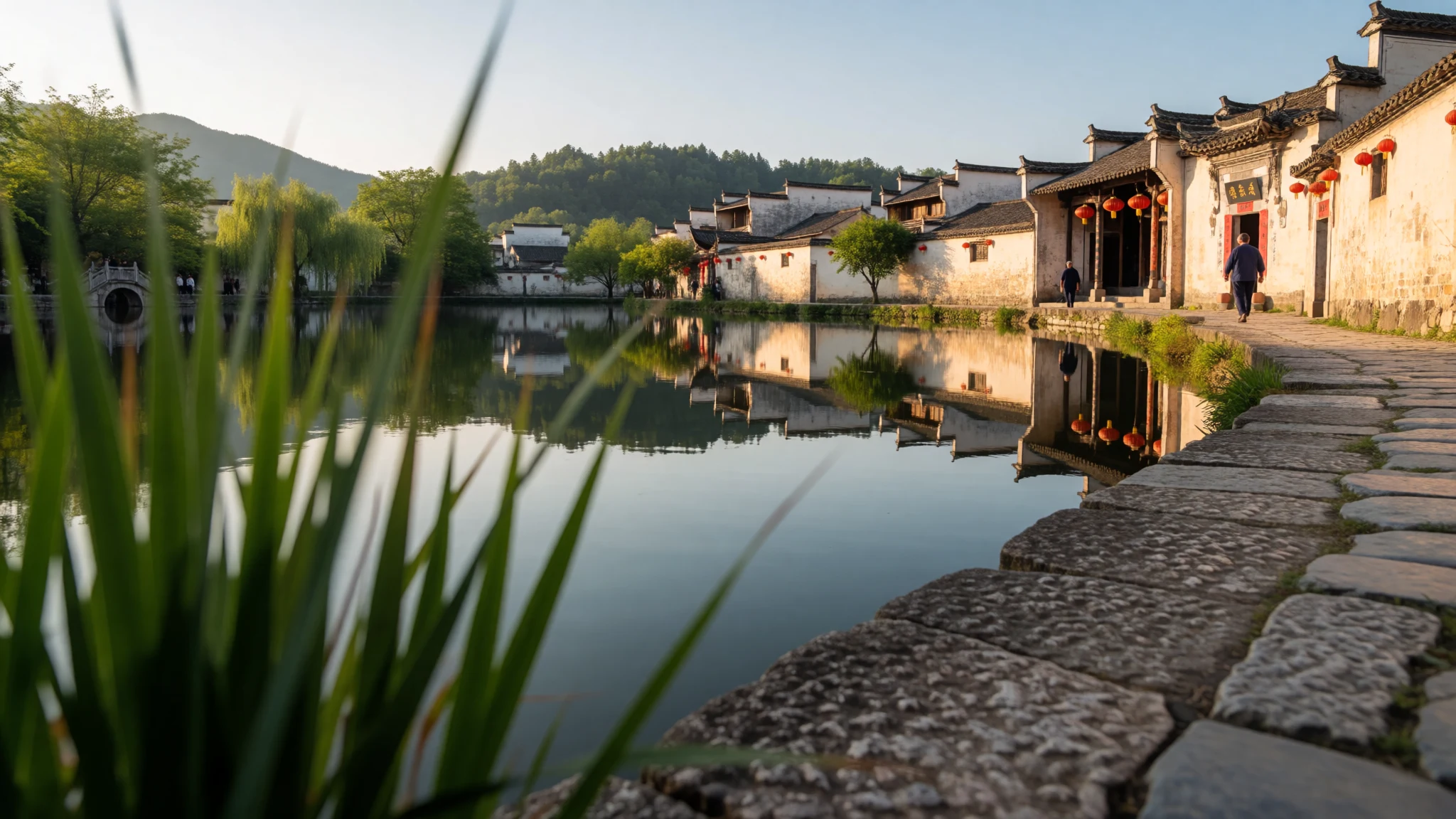
Hongcun is a living Huizhou merchant village of whitewashed houses, carved halls and a stone-lined water system laid out like an ox.
The place
Hongcun sits in Yi County, in the Huangshan area of southern Anhui, on the south-western slope of Mount Huangshan. It belongs to the old Huizhou region, long known for its merchant families and for the white-walled, dark-roofed houses they built. The village is on UNESCO's World Heritage list, together with nearby Xidi, for the way its original plan and architecture survive intact. It is also a Chinese AAAAA-rated tourist attraction, which tells you something about the crowds.
The core is a tight web of narrow lanes, paved in local granite and running beside a channel of clear water. Houses face inward onto courtyards, so from the street the village reads as a long run of blank white walls broken by small doorways and carved lintels. At the southern edge a curved lake wraps around the houses like a drawn bow, and the reflections here are what most photographs show. Behind the village a wooded hillside rises, and nearly every lane on the eastern side ends in a path up into trees and bamboo.
The film Crouching Tiger, Hidden Dragon used Hongcun as a location, and some visitors come for that alone. The village is still lived in, so alongside the ticket-holders there are residents hanging washing, cooking and selling snacks from doorways. Expect it to be busy at weekends and on public holidays, and much calmer at first light.
Its story
Hongcun was founded in 1131 by Wang Wen, a general serving the Southern Song court. His descendants, the Wang family, turned to trade and grew wealthy, much as the Hu family did in neighbouring Xidi. The village flourished under the Ming and Qing dynasties, and the money from commerce went into houses, ancestral halls and the water system that still defines the place. Around 150 residences from those centuries survive, many of them richly carved in wood and stone.
The layout is the village's best-known story. Locals and writers read the plan as an ox. Leigang Hill, with two trees on top, is the head and horns. Four bridges over the Jiyin stream are the legs, and the houses form the body. The stream is cast as the intestines, and the lakes, including South Lake, as the other organs. Whether this was a deliberate design from the start or a reading added later is hard to settle, but the water engineering behind it is real. A waterway about 400 years old brings water to every household from two sources, and most streets were built alongside it. That supplied drinking water, washing, fire protection and a little cooling in summer.
The wealth eventually moved on, but the village was never rebuilt. That neglect is why the houses survive in such good order, and why UNESCO inscribed Hongcun in 2000.
What to see
- South Lake — Southern edge of the village
South Lake is the Ming-era artificial lake curving along the southern edge of Hongcun, shaped like an archer's bow. The classic view is across the water to the white houses and their reflections. Early morning and late afternoon give the softest light and fewer tour groups on the lakeside path.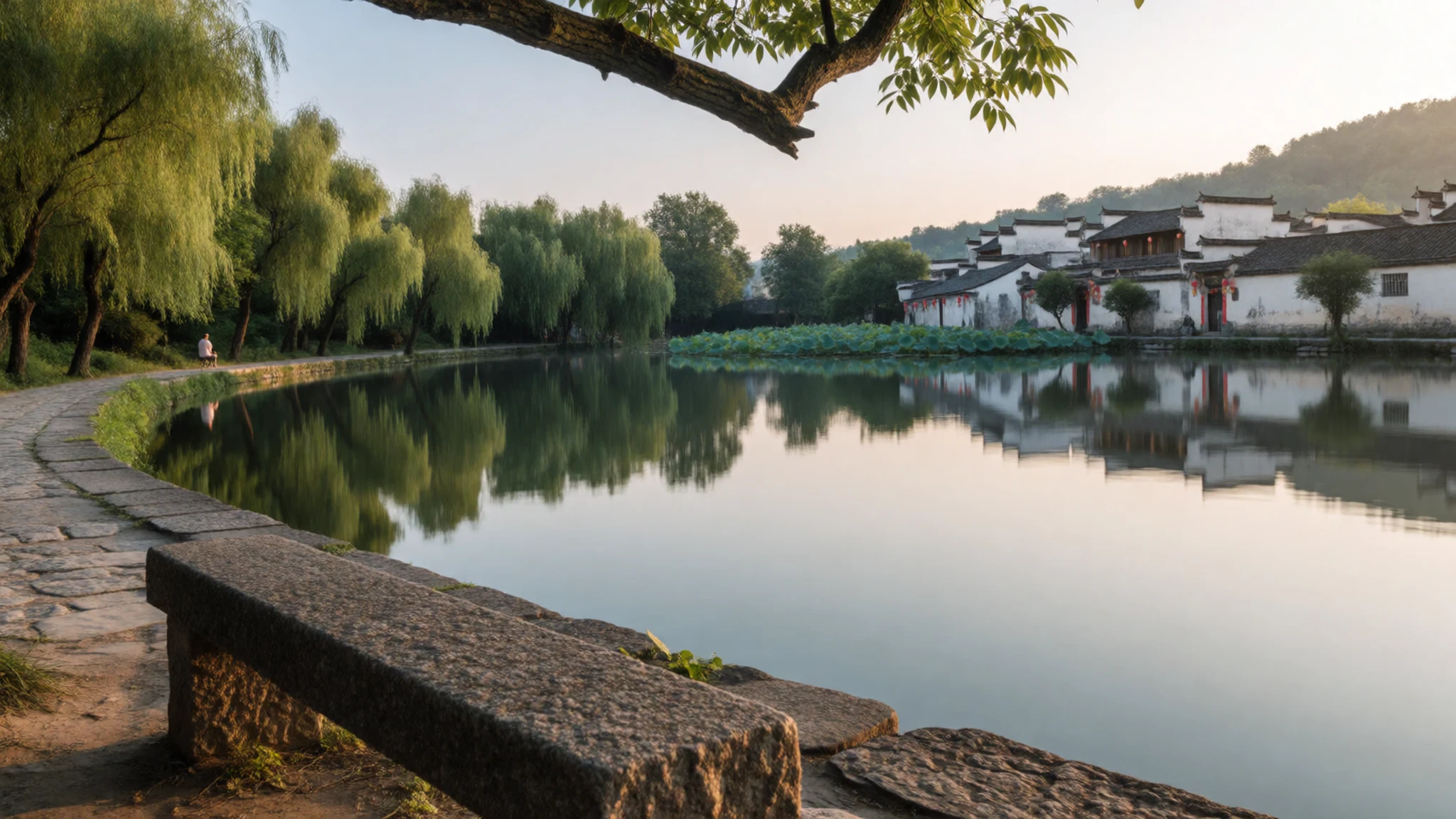
- Moon Pond — Centre of the village
Moon Pond is the half-moon pool at the heart of the village, ringed by houses and a stone-paved walkway. Residents have long used it for washing and gathering, and it is a good place to sit and watch village life. Art students often set up easels here in mild weather.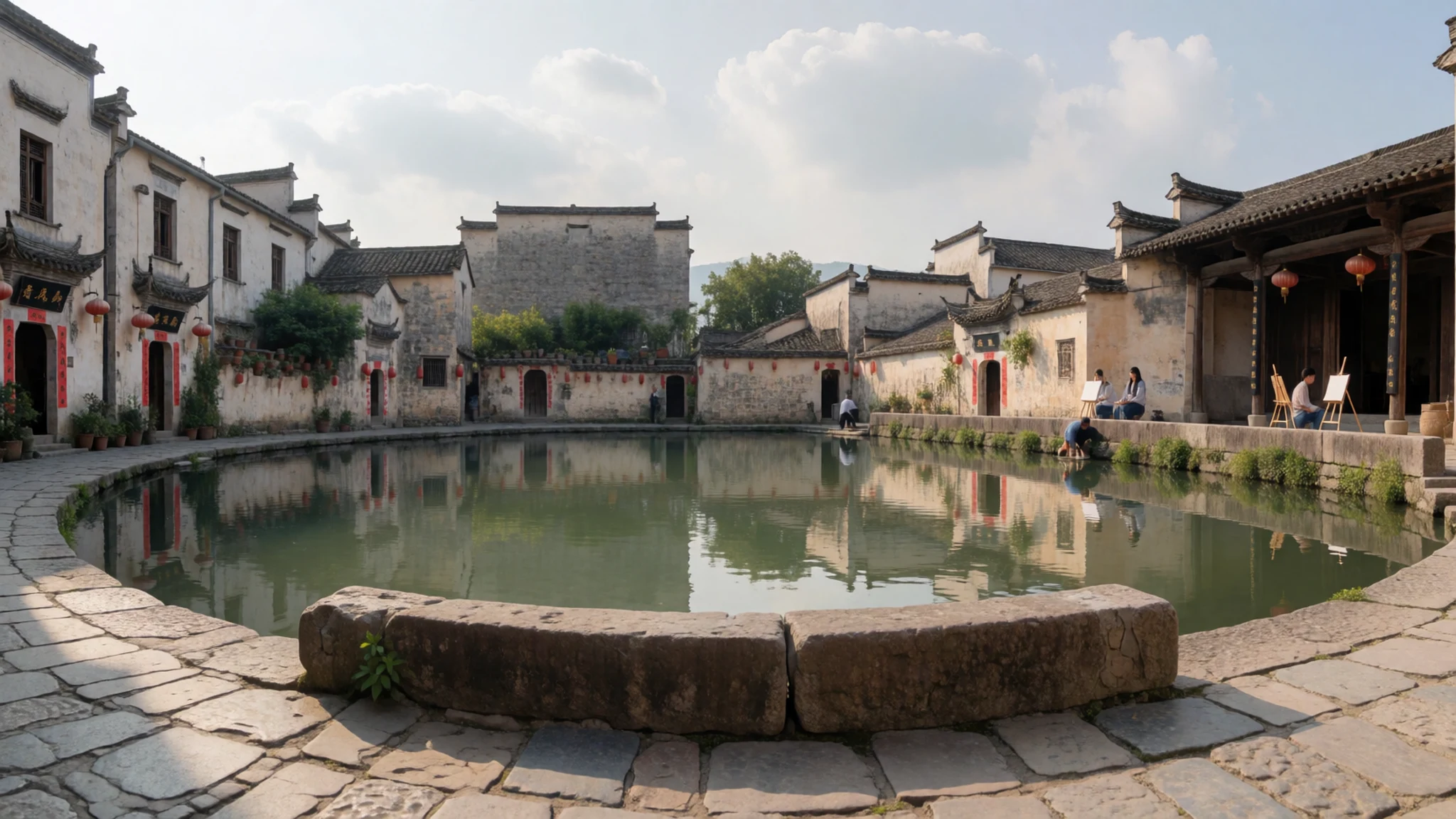
- Chengzhi Hall — Inner lanes, near Moon Pond
Chengzhi Hall is a large late-Qing house built for a wealthy salt merchant. It has many rooms and several open courtyards, and its beams and panels are crowded with gilded carvings of landscapes, myths and daily life. Faded political slogans from a later era are still visible on some walls.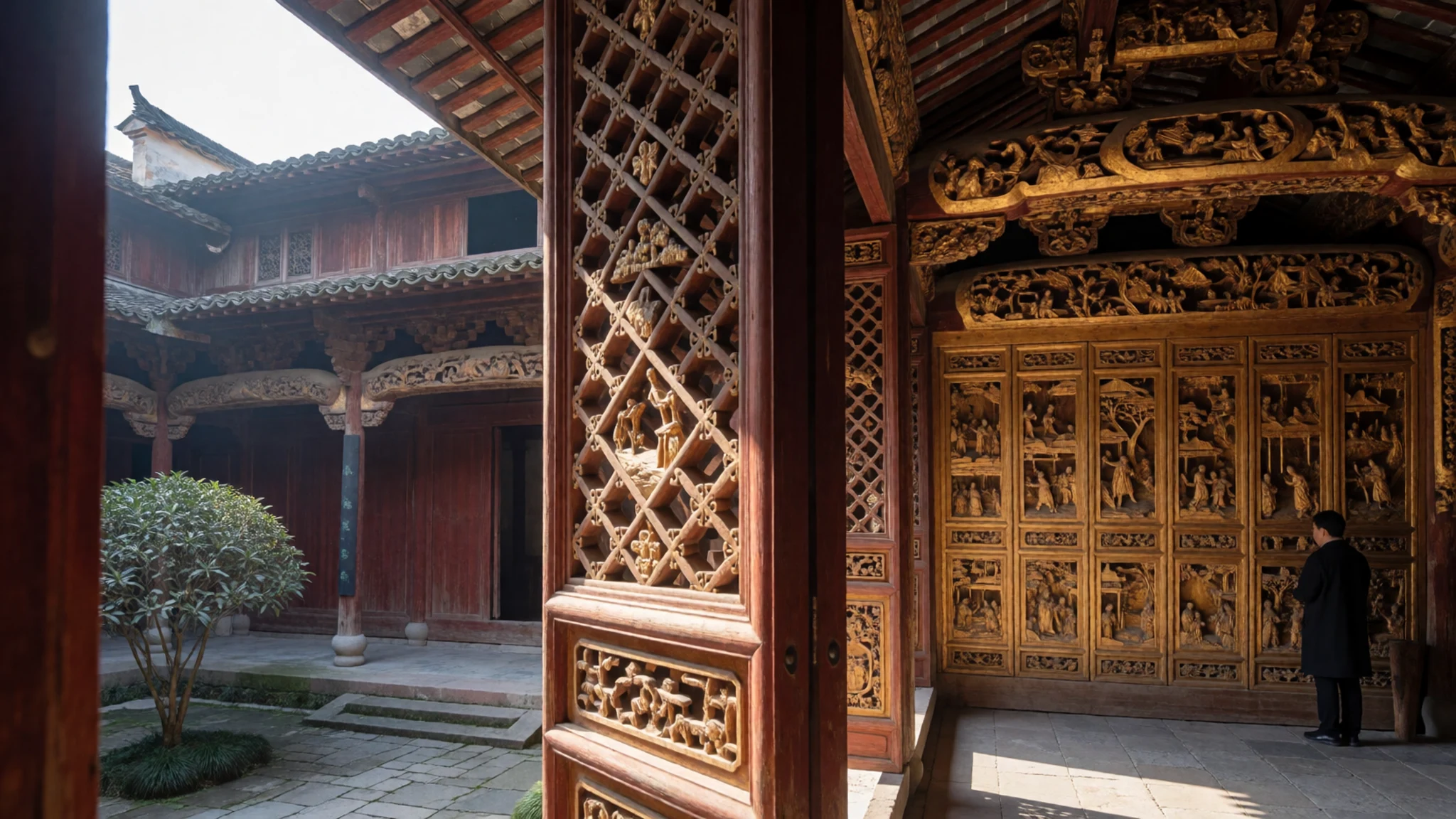
- The Jiyin stream and its lanes — Throughout the old village
A day can pass just wandering the maze of lanes beside the narrow Jiyin water channel. Granite paving, small bridges, carved doorways and tiny courtyard shops reward wrong turns. Most sights along the way are free, though a few ask for an entry fee, so check the official site.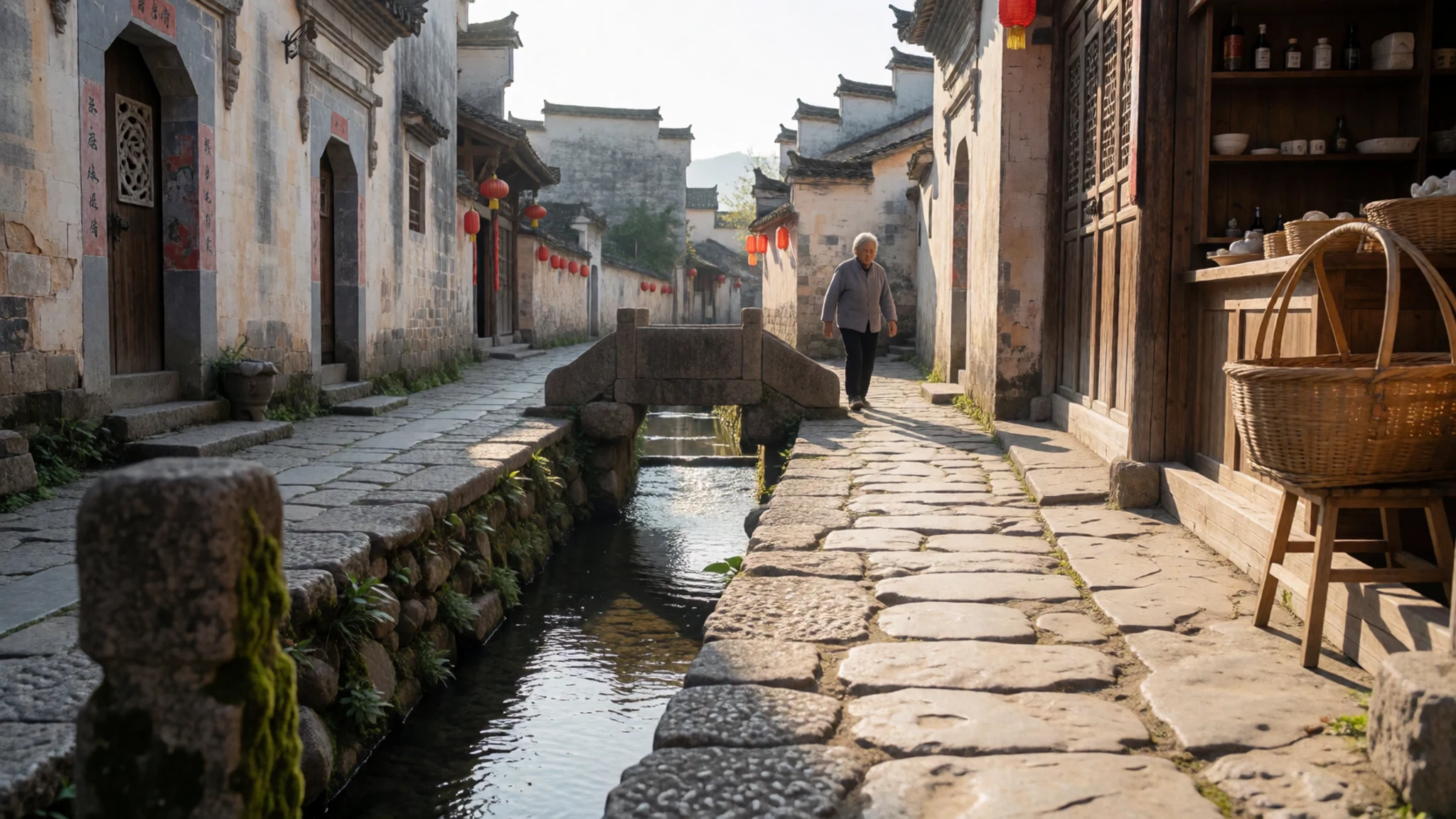
- Leigang Hill — Hillside behind the village
Leigang Hill rises behind the village and is read as the ox's head. Lanes on the eastern side lead up through trees and bamboo on easy paths. The walk gives a quieter side of Hongcun and a view back over the grey roofs, with far fewer people than the lake.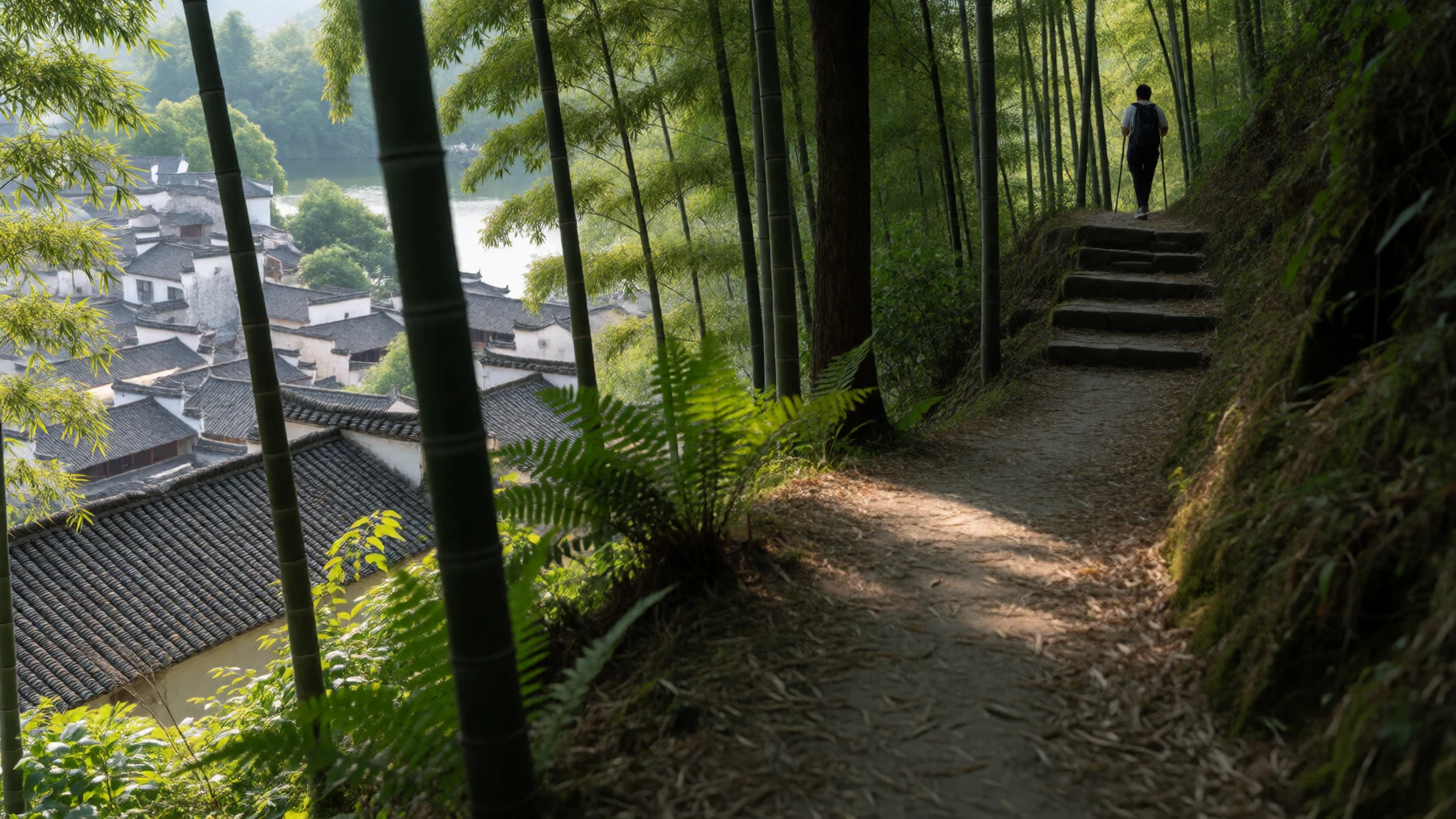
Culture
Hongcun's culture comes from the Huizhou merchant tradition, in which trade money was matched by a strong belief in scholarship and family honour. That is why houses carry so much carved wood and stone: scenes of study, harvests, myths and good-luck symbols were a way of showing status and teaching children. Ancestral halls are central to the village, and the Wang lineage still shapes how people talk about its past.
Feng shui, the Chinese practice of reading land and water for good fortune, runs through the village plan. The ox shape, the placement of the lakes and the course of the stream were all meant to bring prosperity and keep fire and ill luck away. Locals still point these out with pride.
Today Hongcun is also an art village. Painters and photographers have worked here for decades, and the lakeside is often lined with students sketching the view. Residents run small shops, tea rooms and guesthouses from their family homes, and older women sell snacks from portable ovens. Tourism supports many households, but it has also changed the rhythm of the place, so the quiet hours of early morning and evening are when daily life is easiest to see.
If you enter a family home or courtyard that is not clearly open to visitors, ask first, and always ask before photographing residents at close range.
What to wear
Traditional dress in the Huizhou area followed the wider Chinese pattern of its day. Merchant families in the Ming and Qing periods wore long robes in silk for formal occasions and in cotton or hemp for everyday work, while women's clothes included jackets and skirts with embroidered trim. Such clothing now appears mainly in museum displays, on stage and in costume photo shoots offered to visitors.
What people wear in Hongcun today is ordinary modern clothing: jeans, T-shirts, light jackets, and practical fleeces in cooler months. Residents working in shops and eateries dress for the weather and the job, and you will see aprons and rain jackets more than costumes. Tour groups often wear matching caps and carry umbrellas against sun or drizzle.
For a visit, dress for walking rather than for ceremony. The lanes are paved with granite that can be slick after rain, so shoes with grip matter more than style. Layers work well, since the valley can be cool and damp in winter and hot and humid in summer, and a compact umbrella is useful in either. There is no strict dress code, though shoulders and knees covered is a courteous choice when entering ancestral halls and private homes. In colder months bring a warm jacket, because old courtyard houses are drafty and often unheated.
What to eat
- Preserved vegetable (xuecai) — Almost any village eatery
Salted, pickled mustard greens are the local seasoning and turn up in nearly everything, from stir-fries to fillings. The flavour is savoury and a little sharp, and it can be quite salty, so ask for lighter seasoning if you prefer.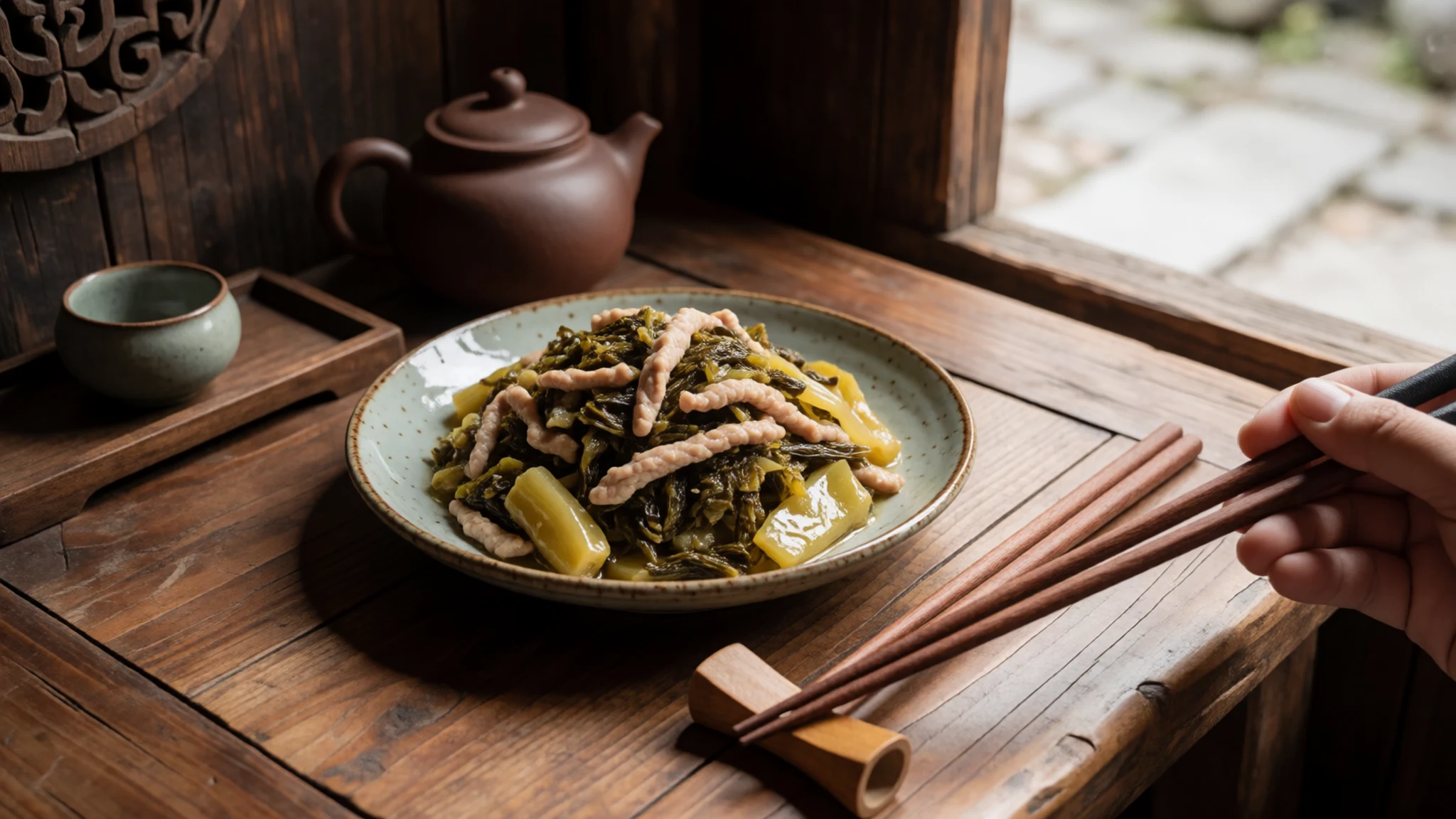
- Filled flat bread (bing) — Portable drum ovens along the village lanes
A crisp, flaky flat bread filled with preserved vegetable, baked against the wall of a drum-shaped oven. Older women make them to order, and they are best eaten hot as a snack while walking the lanes.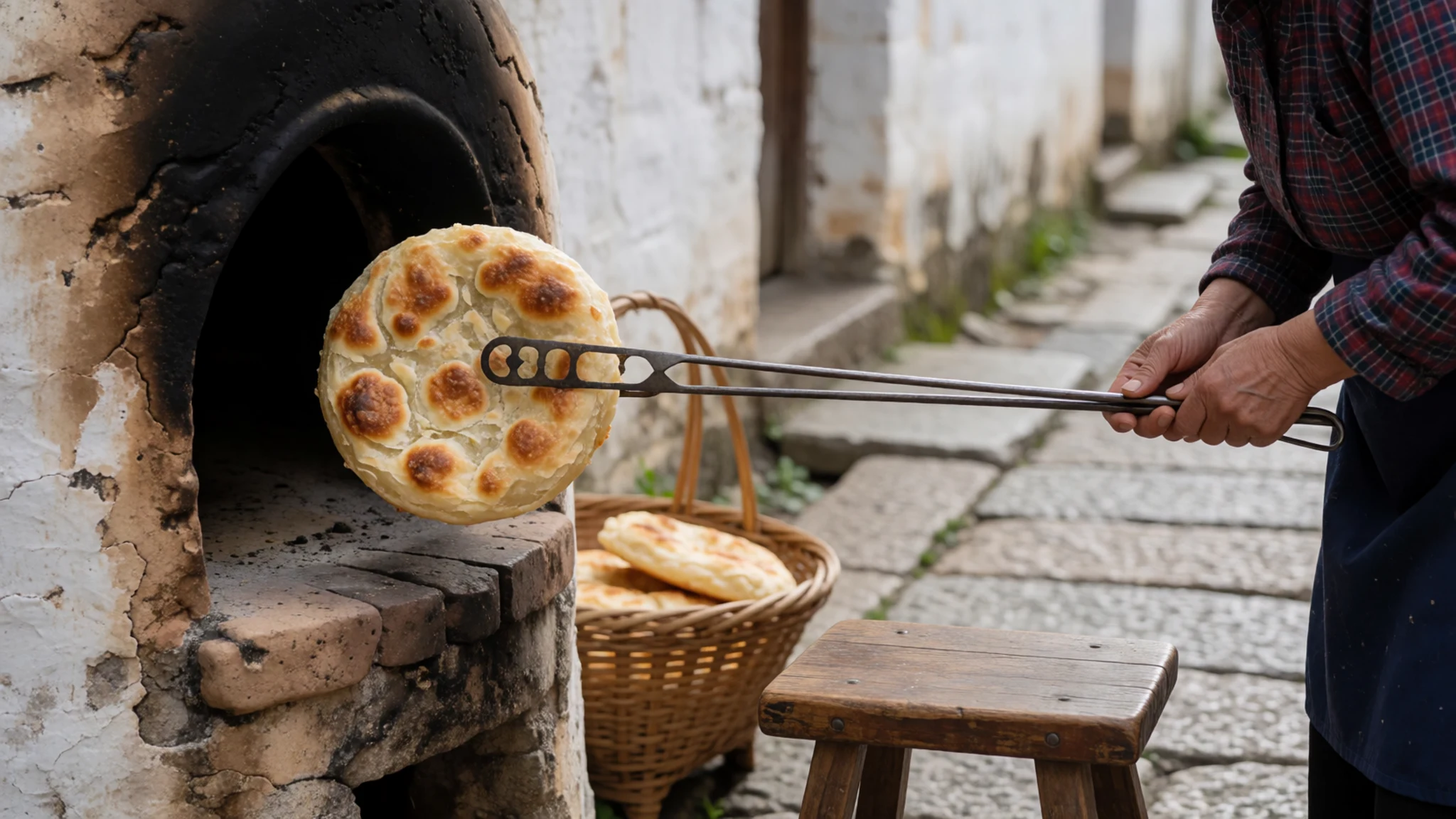
- Noodles — Small noodle shops outside the village near the south bridge
Simple bowls of noodles in broth are the cheap and filling option, and the small places outside the village near the south bridge are the practical choice for budget meals. Good for a quick lunch between sights. - Baozi (steamed buns) — Morning stalls near the village entrance
Soft steamed buns with meat or vegetable fillings, usually available only in the morning. They make a handy breakfast before the lanes fill up, and are easy to eat on the move. - Local fish dishes — Family restaurants inside the village
Restaurants inside the village often push a fresh fish dish that is not on the menu. It can taste good, but ask the price before agreeing, because it costs far more than the standard vegetable or meat plates.
Plan it
Best time. March–April and October–November, when the weather is mild and the light is soft over the lake; summer is hot and humid, and winter is cold and damp. Spring rain can bring mist that photographs well but makes the granite slippery.
How long. 1–2
Getting there. The nearest main transport points are Tunxi (Huangshan city), about 85 km away, and Yixian, about 11 km away. From Tunxi or Huangshan North station take a bus or taxi towards Hongcun; from Yixian a local bus or taxi covers the last stretch. Check current timetables locally.
Budget. low
Tips
- Arrive early in the morning or stay until evening for quieter lanes and better light on the lake
- Carry some cash for snacks, small shops and buses, as card acceptance can be patchy
- Check the official site (http://www.hongcun.com.cn) for entry details before you go
- Wear shoes with good grip, since the granite is slippery when wet
- Avoid public holidays and weekends if you can, when the village is very crowded
Etiquette
- Ask before photographing residents or entering private courtyards
- Keep voices down in family homes and ancestral halls
- Do not touch or lean on the carvings
Nearby
Sources
- Wikidata Q4008 (CC0)
- Wikipedia: Hongcun (rev 1385249713) (CC BY-SA 4.0)
- Wikivoyage: Hongcun (rev 4994814) (CC BY-SA 4.0)
- Photo 01: South Lake of Hongcun (CC BY-SA 4.0)
- Photo 02: Yixian Hongcun 17-27-03 (CC BY-SA 1.0)
- Photo 03: Hongcun village in Anhui province (CC BY-SA 1.0)
- Photo 04: Yixian Hongcun 18-21-34 (CC BY-SA 1.0)
- Photo 05: Yixian Hongcun 17-49-42 (CC BY-SA 1.0)
- Photo 06: Yixian Hongcun 08-22-47 (CC BY-SA 1.0)
- Photo 07: Hongcun, central clearing (CC BY 3.0)
- Photo 08: Ancient Villages in Southern Anhui – Xidi and Hongcun (CC BY-SA 3.0 igo)


