Hluhluwe–iMfolozi Park
Hluhluwe–iMfolozi Park, South Africa
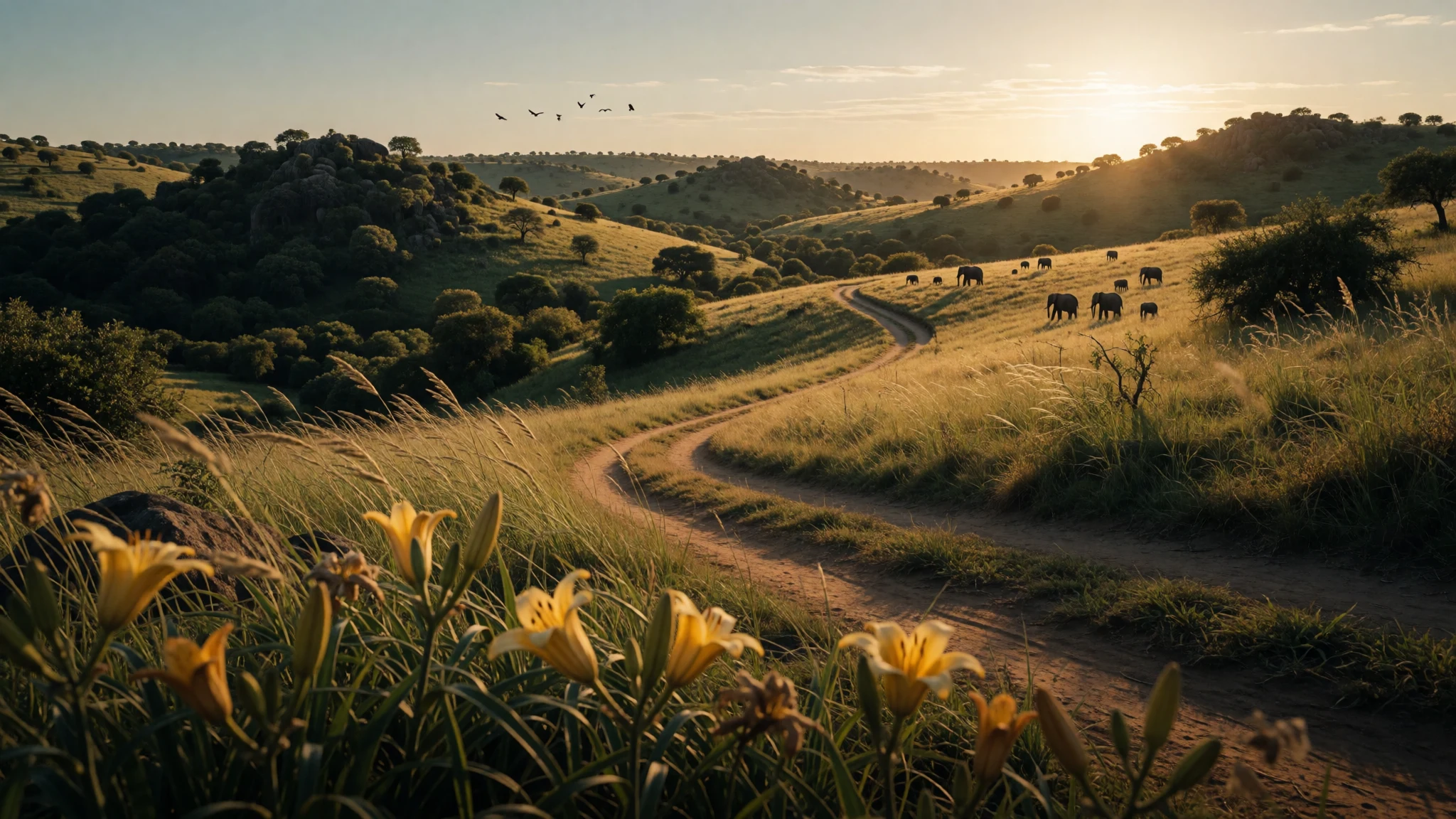
Hluhluwe–iMfolozi Park pairs forested hills with open savanna, and its white rhinos, brought back from near extinction here, are the reason to come.
The place
Hluhluwe–iMfolozi Park is a game reserve in central KwaZulu-Natal, on South Africa's east coast, managed by Ezemvelo KZN Wildlife. Its centre sits about 399 metres above sea level, but the ground never stays flat for long, so a day's driving is a sequence of climbs, ridgelines and valley floors. The park is really two landscapes stitched together. The northern Hluhluwe section is steep and rugged, with forest on the slopes and grassland along the crests. The southern Umfolozi section is more open savanna, laid out around the Black Umfolozi (Mfolozi emnyama) and White Umfolozi (Mfolozi emhlophe) rivers. Summers in the south run hot, while winters are mild to cool, with the occasional cold snap. The nearest towns are Mtubatuba and the villages of Hluhluwe and Hlabisa, all within reach of the N2 highway that runs up the coast from Durban. Hluhluwe is pronounced roughly 'shloo-shloo-wee', and locals are patient with first attempts. Among the province's state-run parks, this is the one where all of the big five occur: lion, leopard, elephant, buffalo and rhino. Southern white rhino are the signature animal, and the park is closely tied to their recovery. Honest expectations help. Dense northern cover makes sightings harder than on open plains, and no ranger can promise a leopard. Part of the park lies in a low-risk malaria zone, so travellers should ask a doctor or pharmacist about precautions before they come.
Its story
Hluhluwe–iMfolozi Park carries a long human history in its soil, with stone age settlements and iron smelting sites found across the reserve. Local tradition holds that the land was a royal hunting ground of the Zulu kingdom in Shaka's time. Colonial hunters were slow to arrive, partly because tsetse flies carrying the cattle disease nagana made the country dangerous for livestock and horses. That same fly later turned the reserves into a battleground. As white farmers settled Zululand, wildlife was blamed for sheltering the insect, the reserves became testing grounds for eradication schemes, and farmers pressed for game to be slaughtered. A vast number of animals died in the decades that followed, though the rhinos were spared. The rhinos' own story is the park's real claim on history. The southern white rhino was first described by the naturalist William John Burchell, then hunted so hard through the nineteenth century that it was believed extinct by the century's end. A small remnant survived in this part of Zululand and was protected by two reserves, Umfolozi Junction and Hluhluwe, which are now parts of the combined park. From there, breeding programmes helped bring the species back across southern Africa. The threat has not gone away. Poaching has hit the park hard in recent years, and managers have added drones, infrared cameras and rapid-response units to a system called Smart Park. An attempt to reintroduce African wild dogs, begun by the old Natal Parks Board, shows how long this land has been a laboratory for conservation.
What to see
- Hilltop and the northern hills — Hluhluwe section, north
The Hluhluwe section around Hilltop Camp is the park's green, steep side, where roads climb through forest and over grassy ridges with long views across folded valleys. Thick cover makes animals harder to spot than on open plains, so drive slowly, scan the clearings and stop at the viewpoints. Mornings and late afternoons are the better hours.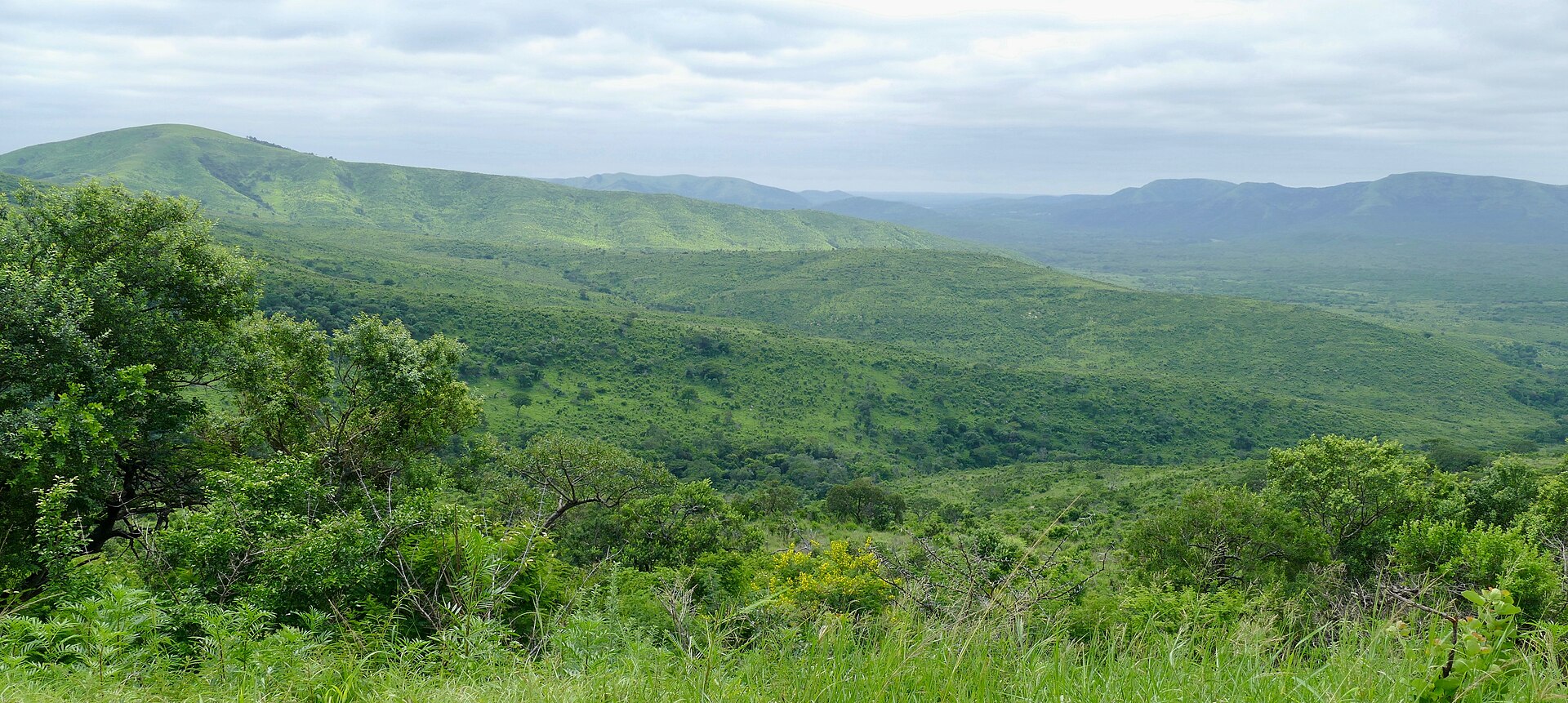
- Umfolozi river bends — Umfolozi section, south
In the southern Umfolozi section, the Black and White Umfolozi rivers shape open savanna with wide views and sandy bends where animals come to drink. One semi-dry bend can hold rhinos, antelope and a resting pride of lions in the same frame. Pull up quietly, switch off the engine and wait; patience pays better than speed.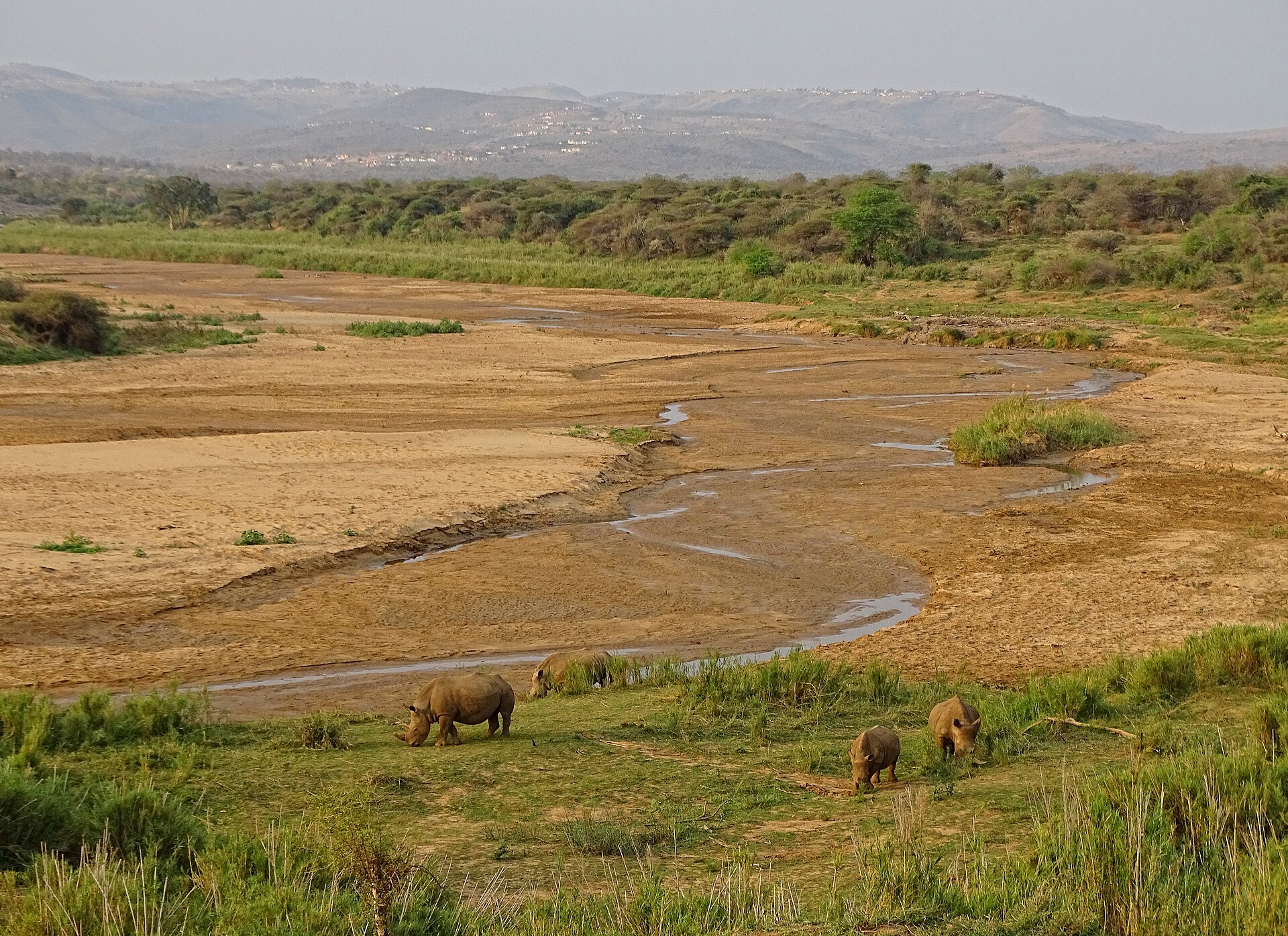
- White rhino country — Open grassland, mainly Umfolozi
Southern white rhinos are the park's calling card, and the reserve helped breed the species back from the brink. They usually graze short grass on open ground, often in small groups and sometimes with calves. Keep a respectful distance and use binoculars. Every sighting is a conservation success that is still under pressure from poachers. - Elephants on the road — Both sections
Elephants roam both sections, and a herd can cross the road with no warning. Buffalo, another of the big five, tend to move in groups near water and fresh grass. Switch off the engine, give them space and let them pass. Nervous drivers who rush to reverse cause more trouble than the animals do.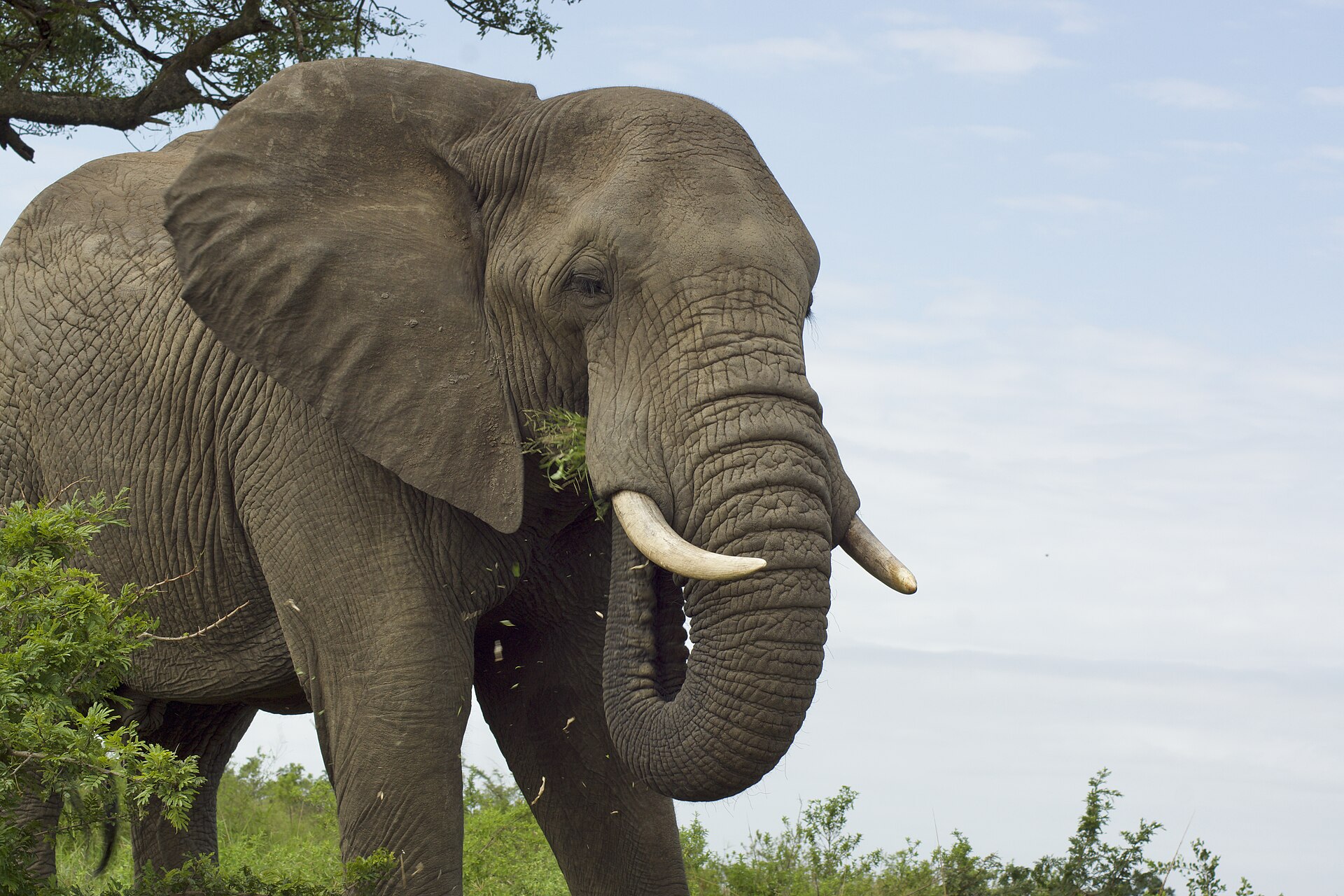
- Cheetah on the open grass — Umfolozi section, south
Cheetah are among the park's rarer sightings and favour the open southern savanna, where their speed has room to work. Luck matters more than skill, but dawn and dusk improve the odds. A ranger on a guided drive will know which tracks are worth the patience.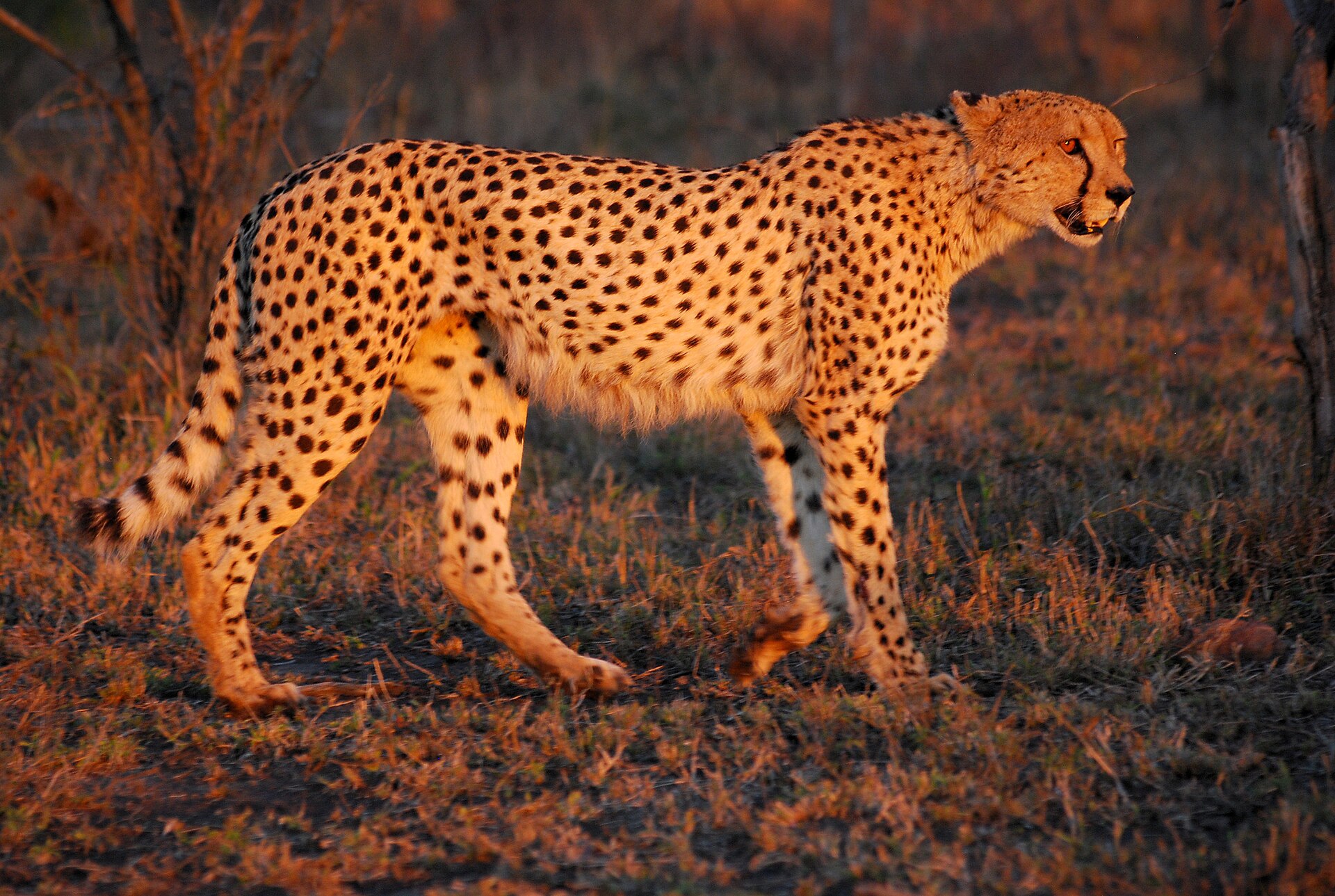
- Guided drives and wilderness trails — Umfolozi section, south
Walking with a ranger changes the scale of the park, turning tracks, dung, birdsong, insects and plants into the main attraction. Rangers also lead guided drives, and one day with a guide is time well spent. Multi-day wilderness trails exist but are popular, so book well ahead through Ezemvelo KZN Wildlife.
Culture
Hluhluwe–iMfolozi Park lies in Zululand, the heartland of the Zulu kingdom, and the culture around its gates is Zulu. IsiZulu is the everyday language in the villages near the park, and a friendly 'Sawubona' (hello) is always welcome. The reserve holds that history in the ground itself, from stone age sites to old iron smelting places, and tradition names it as a royal hunting ground in Shaka's day. Rangers and guides are the best way into local knowledge, since they can name birds, trees and tracks and explain how conservation fits into life in the surrounding communities. The protection of rhinos shapes the park too. Security feels more visible here than at many reserves, with checks at gates and anti-poaching technology in the background, and visitors should treat that as part of the place rather than an inconvenience. Evenings in camp are social, with braai fires, shared tables and sightings compared over a drink. Outside the park, towns such as Mtubatuba and Hluhluwe village revolve around markets, minibus taxis, Sunday church and football. Roadside stalls selling beadwork and carvings are worth stopping at, and buying directly from the maker is the simplest way to put money into local hands. Stay inside your vehicle except at signed viewpoints and in camps, keep your voice low near animals, and ask permission before photographing people in nearby villages.
What to wear
Hluhluwe–iMfolozi Park sits in Zulu country, where traditional dress is built from beadwork, hide and cloth. Zulu beadwork uses colour and pattern as a kind of visual language, worn as necklaces, collars, belts and headbands. Men's ceremonial dress includes the ibheshu, an apron of animal hide, with a headband, feathers and a shield. Married women have traditionally worn the isidwaba, a pleated leather skirt, and the isicholo, a broad, flat-topped hat. Printed cloth wraps and blankets are also worn at weddings and ceremonies. These outfits appear at festivals, weddings and cultural events rather than on an ordinary weekday. Day to day, people in the towns and villages near the park wear jeans, T-shirts, football shirts, school uniforms and smart church clothes, while rangers wear olive or khaki uniforms with sturdy boots. Visitors should dress for the bush. Neutral colours such as khaki, olive, sand and brown are sensible, and bright colours or white show up too easily. A hat, sunglasses and sunscreen matter in the heat of summer, while winter game drives start cold, so bring layers that can come off by midday. Closed shoes with good grip suit camps and trails. Long sleeves and trousers in the evening help against mosquitoes. In villages, cover shoulders and knees as a courtesy.
What to eat
- Braai and boerewors — Camp braai areas and village grill stalls
A braai is South Africa's open-fire barbecue, and boerewors is the coiled spiced sausage at its centre, usually beef or a beef and pork mix. Camp braai areas make this the natural evening meal, and grills in nearby villages sell the same style. - Pap with chakalaka — Home-style eateries in Mtubatuba and Hluhluwe village
Pap is a stiff maize porridge, eaten with grilled meat or stew and a spicy vegetable relish called chakalaka. It is filling, cheap by local standards and served at almost any home-style eatery, as well as at many braais. - Amasi — Small shops and roadside stalls near the gates
Amasi is soured milk with a tangy, yoghurt-like taste, a long-standing staple in Zulu households. It is drunk cold or stirred into pap. Newcomers should try a small glass first, since the sourness takes some getting used to. - Samp and beans — Local eateries in the towns around the park
Samp is dried, cracked maize cooked slowly with beans until soft and creamy, sometimes with a little meat or stock for flavour. It is plain, hearty food that suits a day of driving and is often cooked in big pots for gatherings. - Vetkoek — Roadside stalls and bakeries on the approach roads
Vetkoek, also called amagwinya, is a golden fried dough bun, often split and filled with curried mince or simply eaten hot with a drink. It is a standard roadside snack and a good fuel stop before a long afternoon on the N2.
Plan it
Best time. May to September, the cooler winter months, when mornings can be cold but days are mild and the Umfolozi lowlands avoid their hot summer. Summer is hotter, especially in the south, and the northern forest is leafy and harder to see through.
How long. 2–3
Getting there. Fly to Durban, the nearest larger airport, and hire a car for the N2 north; turn west at Mtubatuba and follow the road to the park gate. Durban is also the nearest main railway station. Public buses along the N2 are limited, but the Baz Bus runs via Hluhluwe and St Lucia, so a transfer or car hire from either town is needed for the last leg.
Budget. mid
Tips
- Book camps, guided drives and wilderness trails ahead through Ezemvelo KZN Wildlife, and check the official site for gate times and current rules
- Start drives at first light, when animals are most active and the air is cooler
- Spend at least one day with a ranger, who knows where animals are likely to be
- Carry water, snacks, sunscreen and a hat, as food and drink inside the park are limited
- Ask a doctor or pharmacist about malaria precautions, since part of the park is in a low-risk area
Etiquette
- Stay in your vehicle except at signed viewpoints and camps
- Keep engine and voices low near animals and never feed them
- Ask before photographing people in nearby villages
Nearby
Sources
- Wikidata Q129867 (CC0)
- Wikipedia: Hluhluwe–Imfolozi Park (rev 1385093859) (CC BY-SA 4.0)
- Wikivoyage: Hluhluwe-iMfolozi Park (rev 5060999) (CC BY-SA 4.0)
- Photo: Road near Hilltop Camp — Frans-Banja Mulder (CC BY 3.0)
- Photo: Hilltop Resort, Hluhluwe green hills — Bernard DUPONT (CC BY-SA 2.0)
- Photo: Cheetah in Umfolozi — Wegmann (CC BY 3.0)
- Photo: HluHluwe-Umfolozi Game Reserve — PhilippN (CC BY-SA 2.0)
- Photo: Rhinos and lions at a river bend — Bjørn Christian Tørrissen (CC BY-SA 4.0)
- Photo: Impala's, Hluhluwe-Imfolozipark reserve — Guus Gorter (CC BY-SA 4.0)
- Photo: Mierenhoop, Hluhluwe-Imfolozipark reserve — Guus Gorter (CC BY-SA 4.0)
- Photo: African elephant in Hluluwe Imfoluzi NP — C. Brück (CC BY-SA 4.0)


Wildlife
- Southern white rhinoceros (animal)
The southern white rhino is a heavy, powerful giant, and the most numerous and widespread rhino in the world. Hluhluwe–iMfolozi Park is a rugged sanctuary famous for the remarkable comeback of these animals, so they are a real highlight for anyone tracking the big five. Keep a respectful distance, speak softly, and go with a trained guide who can read the bush and the animal's mood. Never feed wildlife; let the rhino carry on undisturbed.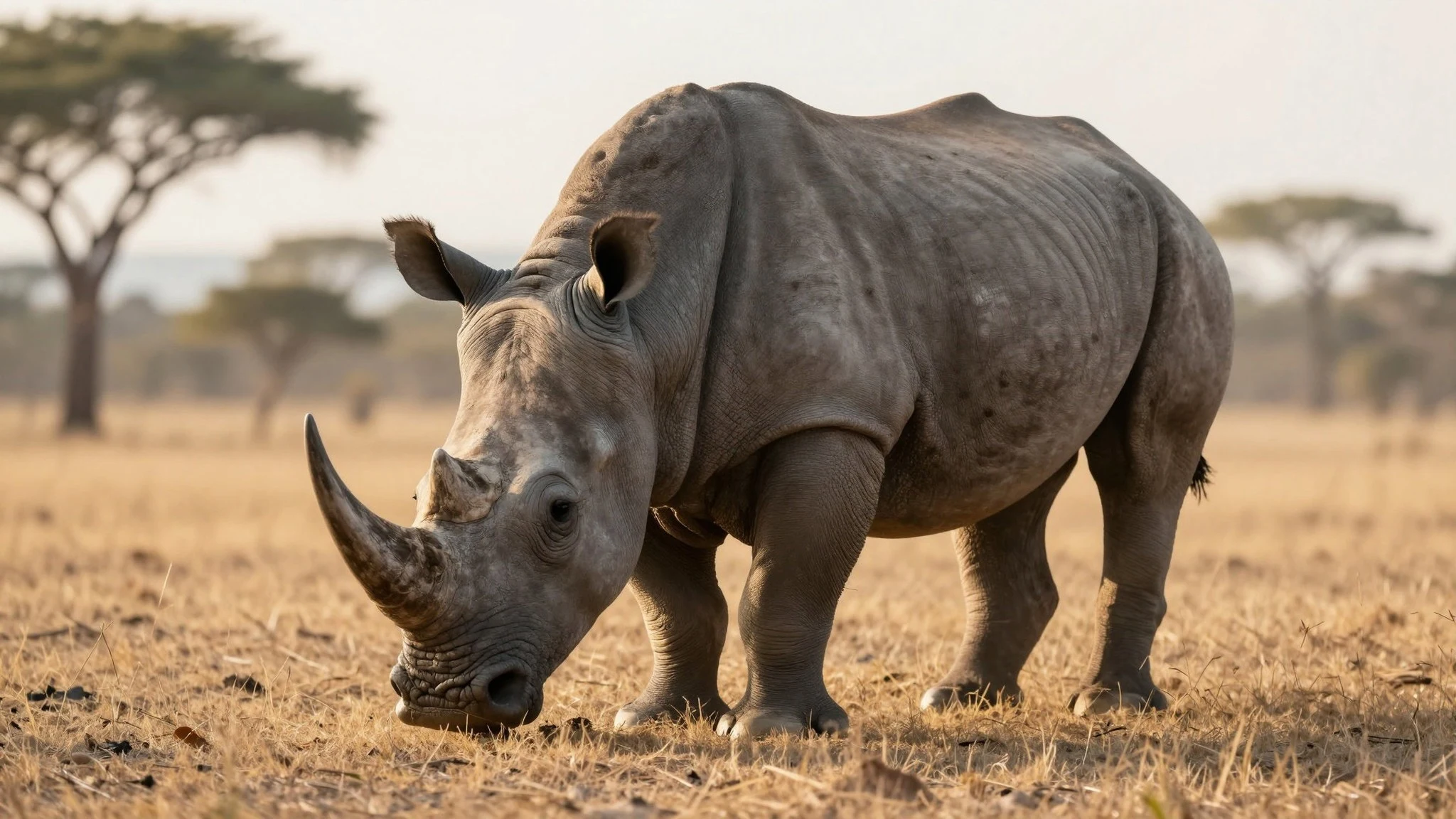
- Lion (animal)
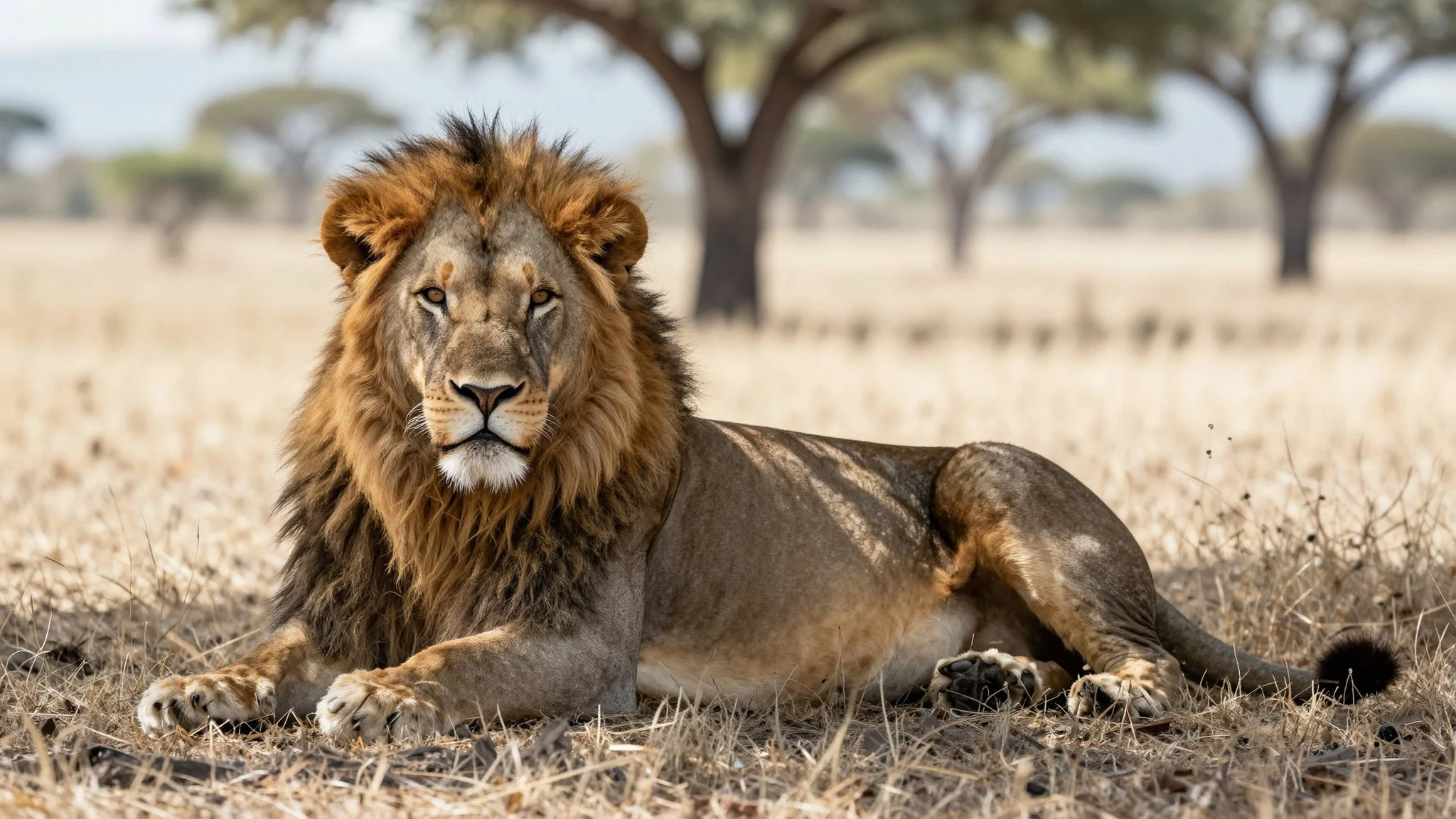
The lion is a big, muscular cat, and the male is easy to spot because he wears a shaggy mane like a crown. In Hluhluwe–iMfolozi Park, lions share the dusty tracks of the thorny, acacia-dotted plains with elephants and buffaloes. Watch from a vehicle at a safe distance, keep your voice low, and ride with a guide who knows where to look. Never feed or call to a lion; simply enjoy watching it.