Hiva Oa
Hiva Oa, France
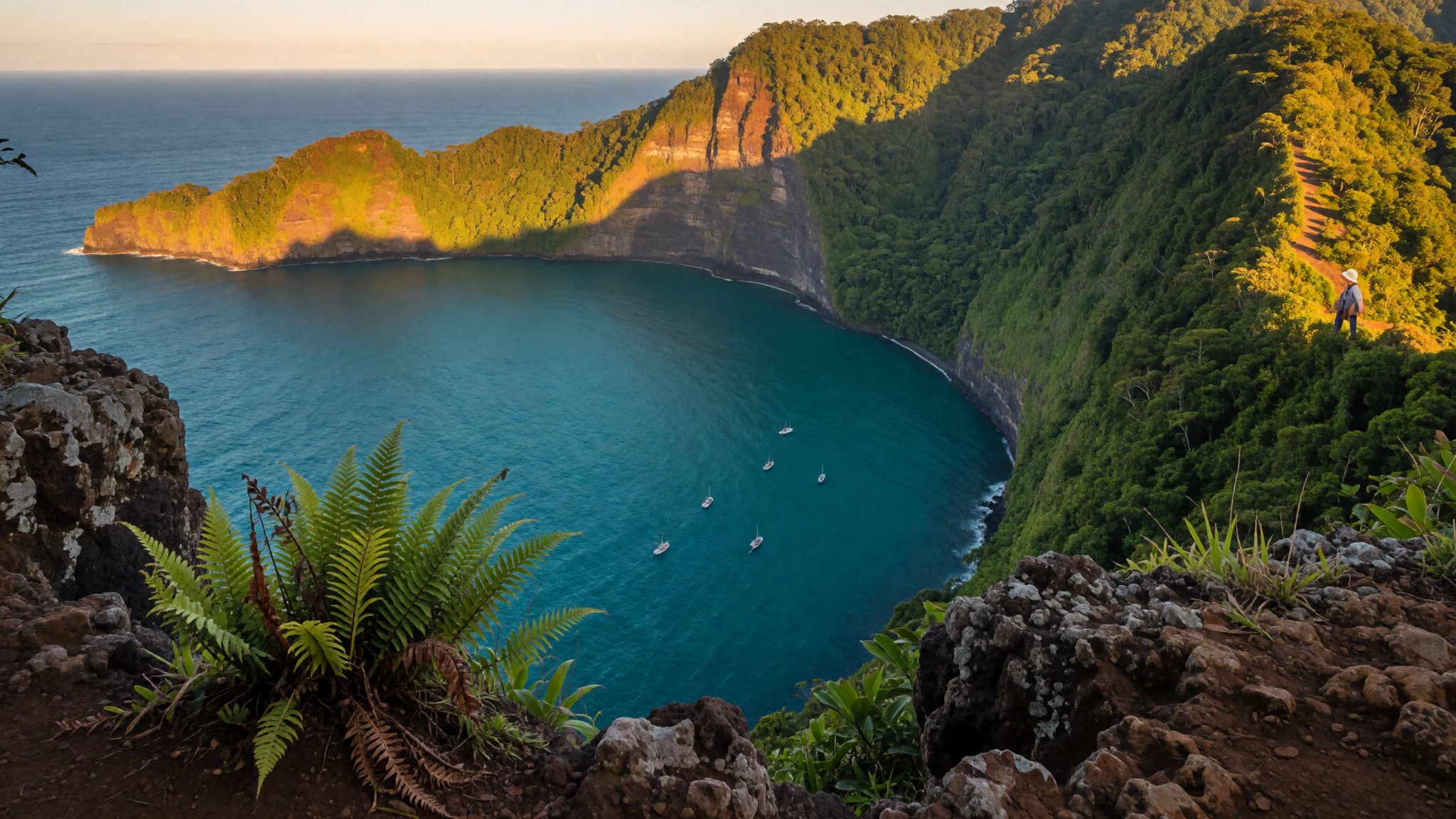
Hiva Oa is a remote, rugged Marquesan island of stone tikis, forested valleys and the graves of Gauguin and Brel, for slow travellers.
The place
Hiva Oa is a volcanic island in the southern Marquesas, part of French Polynesia, a French overseas territory in the Pacific. Roughly 2,400 people live here, mostly in Atuona and a scattering of coastal villages. The land rises to about 1,213 metres, and the high point is Temetiu, the remains of a collapsed volcano. Cliffs drop almost straight into the sea, and behind them runs a rugged spine of ridges and deep, isolated valleys. Unlike many Pacific islands nearer the equator, Hiva Oa has no fringing coral reef to calm the water, so the swell hits the shore directly and sandy beaches are few and small. Anyone expecting a lagoon will be disappointed; what the island offers is relief, forest and archaeology. Much of the coast is too steep for roads, so some journeys are made by boat, while a handful of dirt roads cross the interior and join the villages. The airstrip sits on a plateau near the centre, with daily links to Tahiti and other Marquesan islands. Taʻa Oa bay, also called the Bay of Traitors, fills part of the old crater, with walls climbing steeply from the water. Subsistence farming and fishing still carry the economy, with breadfruit, coconut, yam, taro, sweet potato and banana grown, and pigs and chickens kept. Copra is dried and some of it is exported. Tourism is small but matters, because without it there would be few jobs. The currency is the CFP franc, pegged to the euro. Expect a quiet island where distances look short on the map and feel long on the road.
Its story
Hiva Oa's story starts with fire and collapse. The island is the eroded remnant of a volcano, and the semicircular Taʻa Oa bay marks where part of the crater gave way to the sea. People settled here long before any ship from Europe appeared. Their legacy lies on the ground, in stone platforms called marae, carved tiki figures and petroglyphs cut into rock, much of it now half-reclaimed by forest in the valleys. The first recorded European sighting came in 1595, when a Spanish expedition led by Álvaro de Mendaña charted the island under the name Dominica. That label faded, and the Marquesan name Hivaʻoa survived. In time the island came under French control, and it remains part of France's Pacific territory today. One odd footnote belongs to 1914, when German forces under Admiral von Spee briefly occupied Hiva Oa, a sign that the First World War reached even this remote corner of the ocean. In the twentieth century the island drew two famous exiles. The painter Paul Gauguin made his last home at Atuona, and the Belgian singer Jacques Brel settled here as well; both are buried in the small Calvaire cemetery on the hill above the village. Their names bring many of the island's visitors, though the older story, told by the marae and tikis, rewards anyone who walks inland with a local guide.
What to see
- Calvaire Cemetery — Atuona
Calvaire Cemetery is a small burial ground on a hill above Atuona, and the resting place of both Paul Gauguin and Jacques Brel. It is a short, quiet visit rather than a major sight, and the hill gives a useful view over the village and bay. Keep voices low; this is a working cemetery.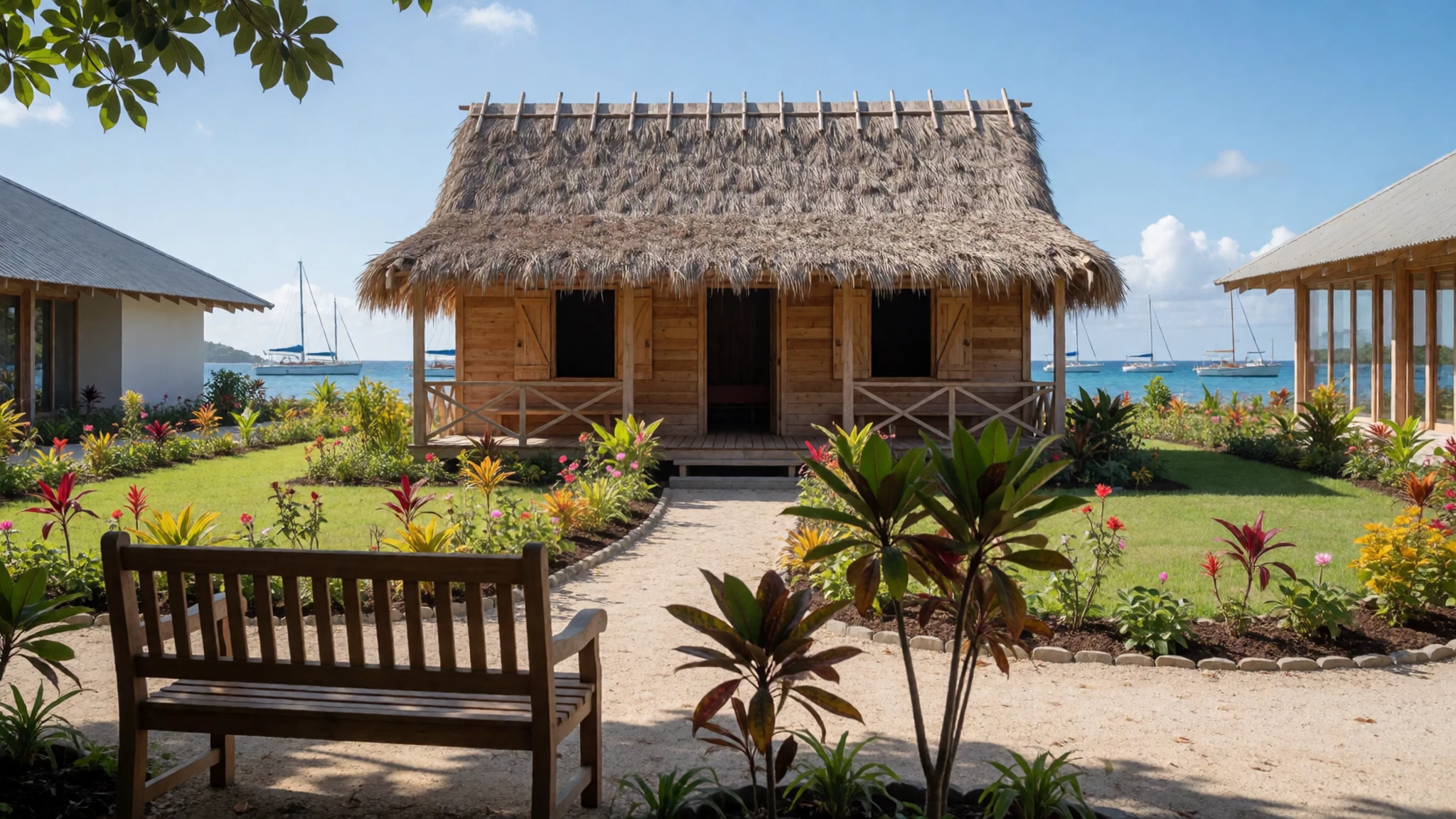
- Espace Culturel Paul Gauguin — Atuona
The Espace Culturel Paul Gauguin in Atuona shows copies of the painter's work, including scanned and printed reproductions, rather than originals. It also displays a few archaeological finds from the grounds and a rebuilt version of his house, the Maison du Jouir. Ask locally about opening times before planning around it.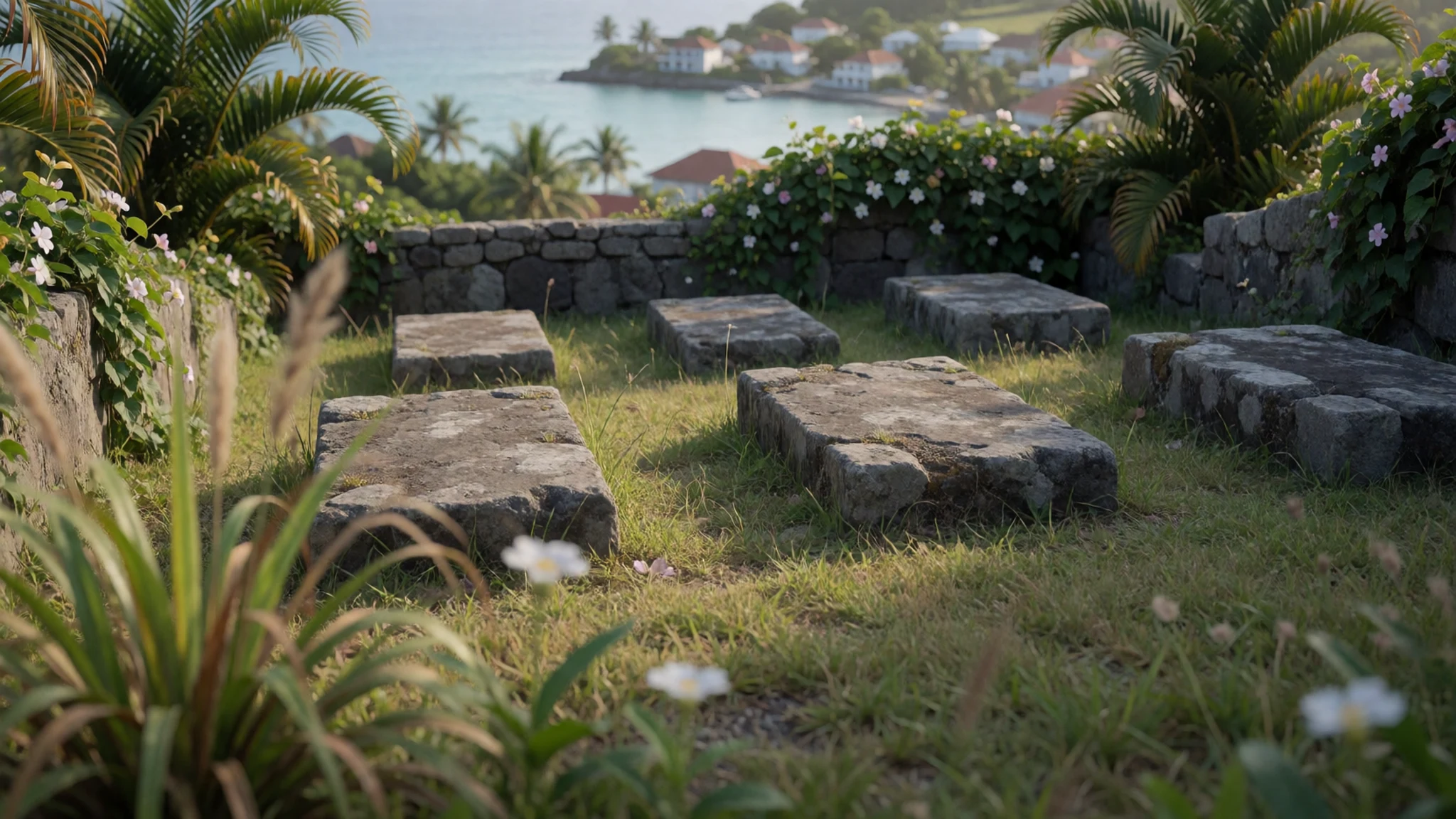
- Iipona archaeological site — Puamau, north-east Hiva Oa
Iipona, in the Puamau valley on the island's north-east side, preserves marae platforms and several tikis in a forest clearing. It is well worth the long drive on the dirt road from Atuona, which takes time and is best done in dry weather. Allow a full day and ask about conditions locally.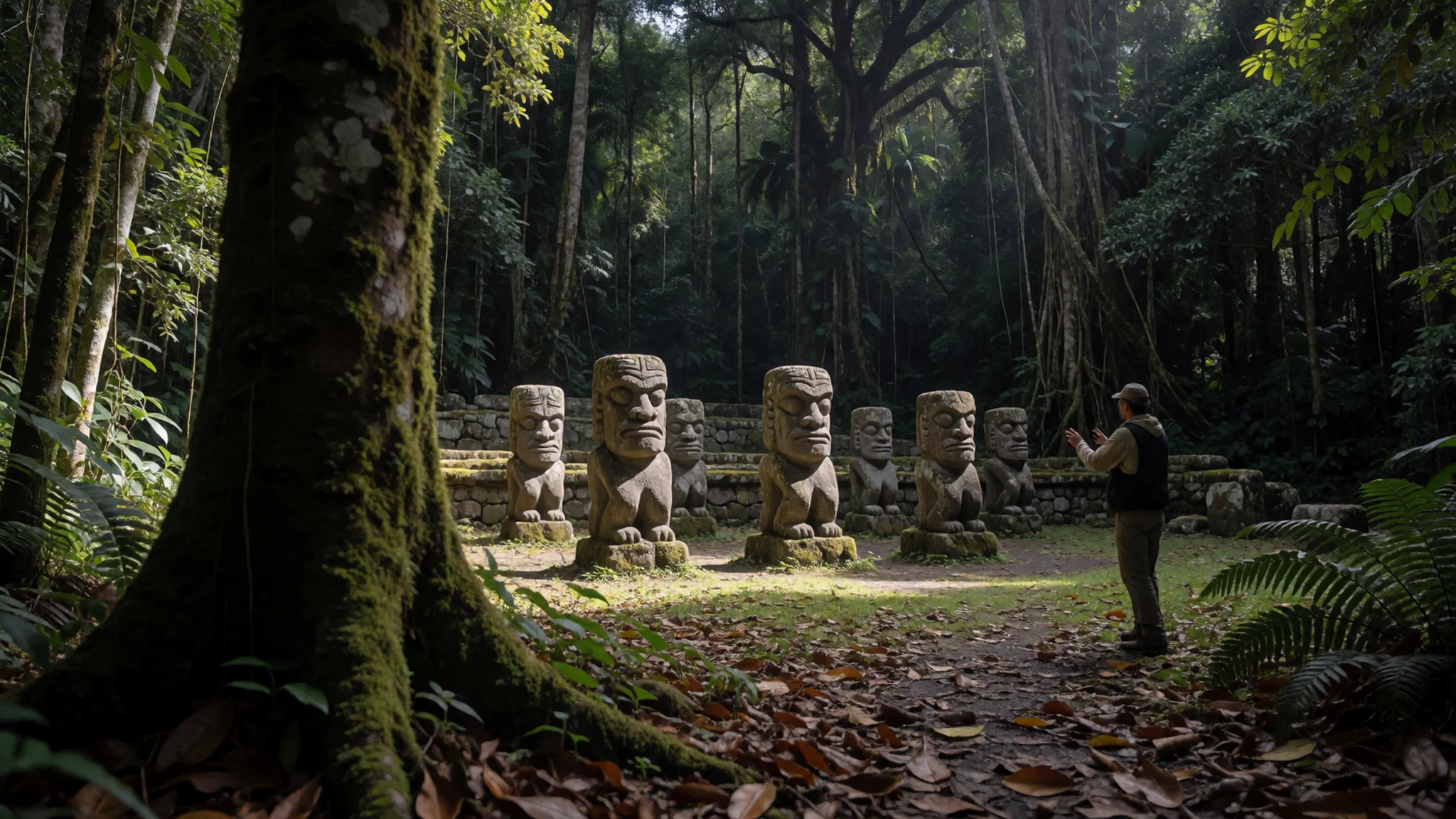
- Taaoa archaeological site — Taʻa Oa bay, south Hiva Oa
Taaoa lies by the crater bay also called the Bay of Traitors, and holds the remains of a large marae. The setting matters as much as the stones, with steep walls rising from the water behind. Reaching it takes some planning on rough tracks, so ask locally about road conditions or arrange a guide.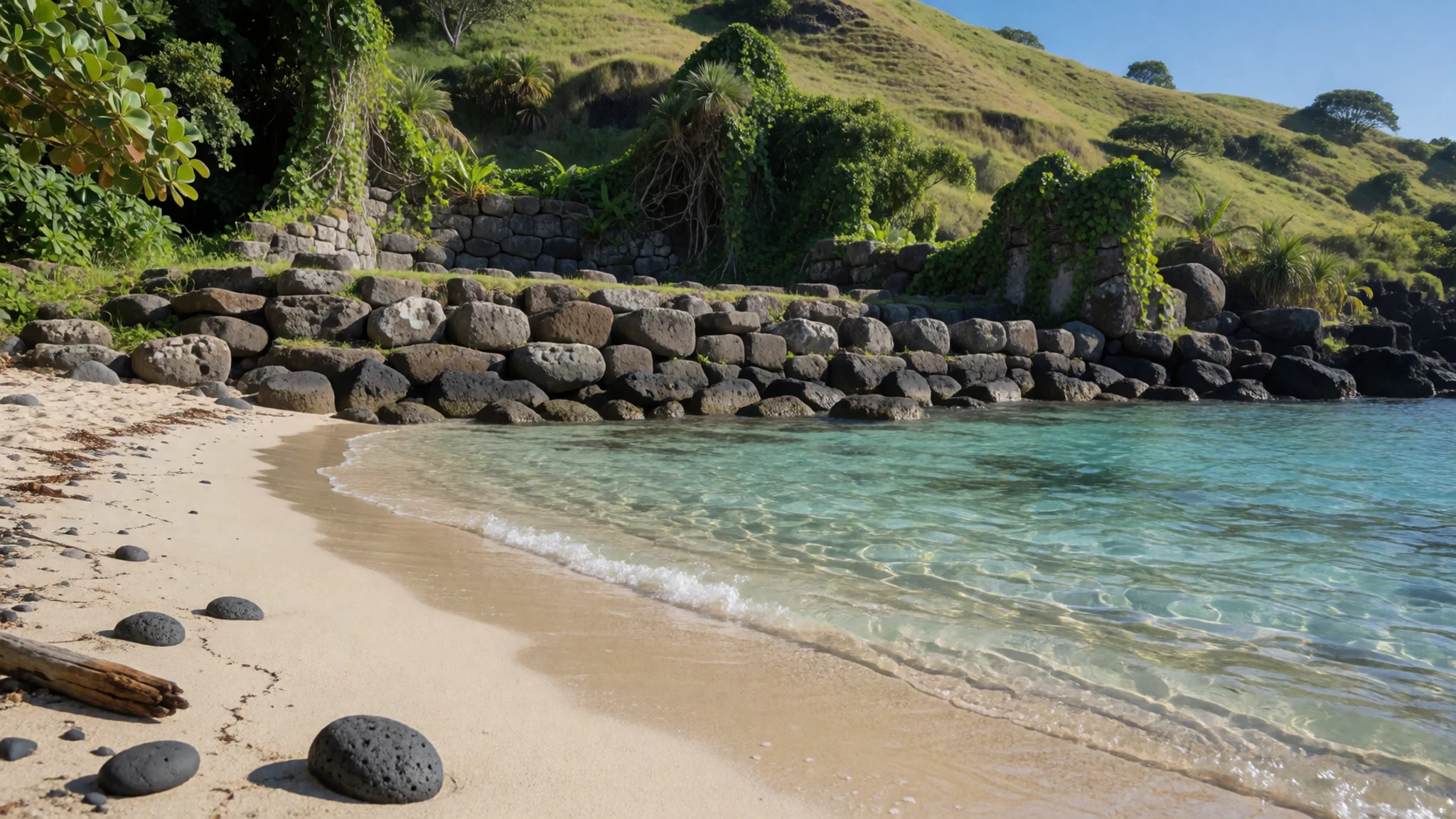
- Tikis and petroglyphs with a guide — Interior valleys and villages
Many of Hiva Oa's best carvings are hidden: the crowned Tiki Moeone in forest, the Tehueto petroglyphs high in the Tahauku valley, and rock carvings near the village of Hanatekuua. None is easy to find alone and paths are unmarked, so hire a local guide, who will also know about access to private land.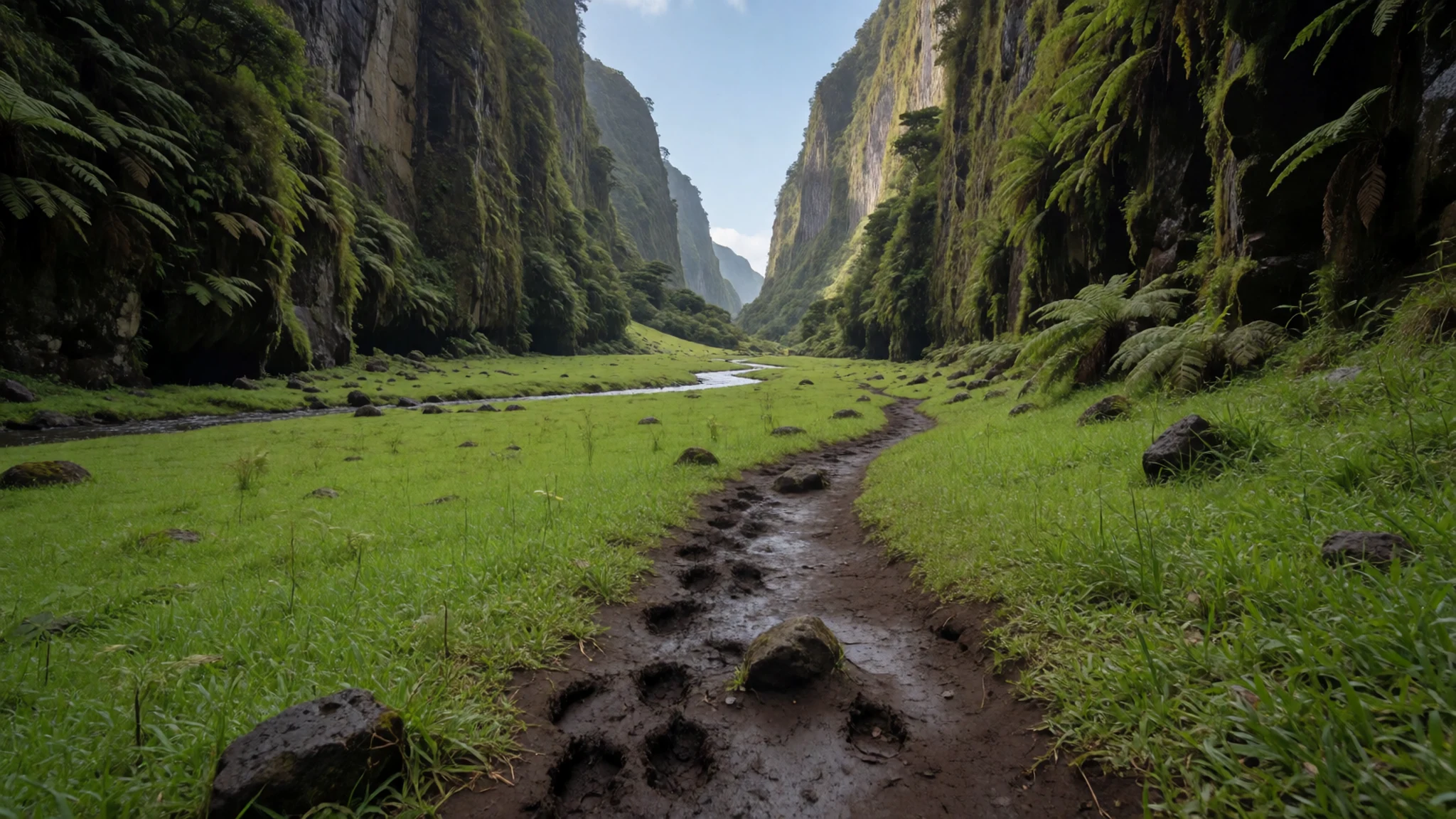
- Hiking and horse riding — Interior hills
Trails on Hiva Oa are largely unmarked apart from the 4WD tracks, so walkers and riders go with a guide. Horses are part of island life, and Hamau Ranch arranges rides in the hills. Expect mud after rain, steep ground and views over the valleys and the Pacific.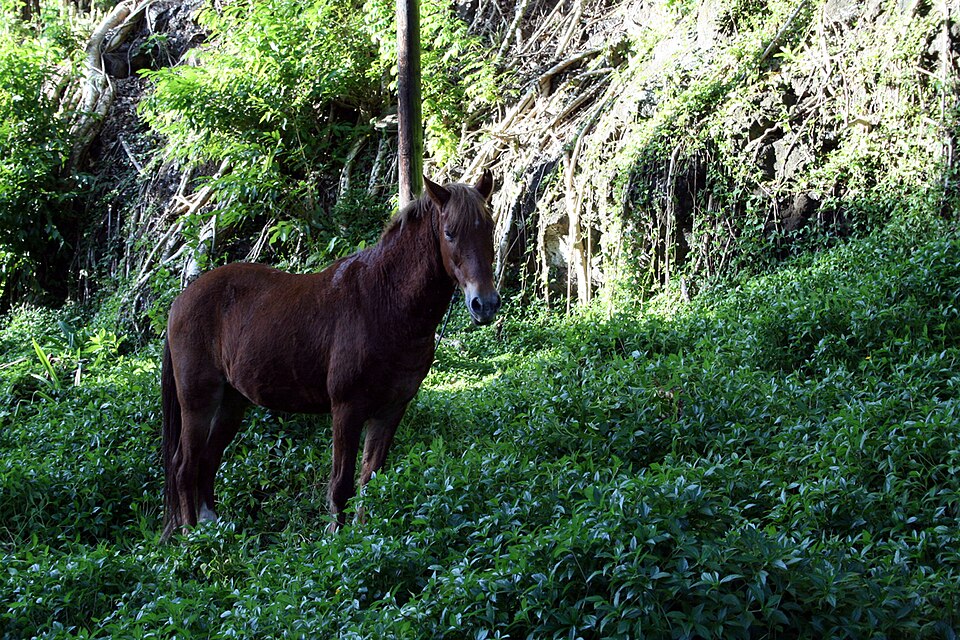
Culture
Hiva Oa's culture is Marquesan at its core, with French and Catholic influences laid over it. Marquesan is spoken alongside French, and village life still turns on fishing, farming and family. The older heritage is physical: marae, the stone platforms where communities once gathered for ceremonies, and tikis, the carved human figures that stand on or near them. Many islanders still regard these places with respect, even where forest has swallowed them. Carving in wood and stone, and tattooing, are strong Marquesan traditions that artists continue today. Churches are well kept and central to community life, and Sunday is a quiet day in the villages. The island also carries the afterglow of Gauguin and Brel, who both chose to spend their last years here, and Atuona keeps their memory without letting it crowd out the island's own story. Because tourism is small, visitors tend to meet people rather than crowds, and a simple bonjour and a smile go a long way. Pace is unhurried, and boats and flights shape the week more than clocks do, so patience is part of the trip. Treat every marae and tiki as a sacred place by not climbing on or moving stones, and ask before photographing people or entering village land.
What to wear
In Hiva Oa, traditional dress draws on tapa, a cloth beaten from tree bark, together with plaited plant fibres, flowers, shells and bone for ornament, and tattooing was itself a form of dress. These are worn mainly for festivals and dance performances now. The pareu, a wrap of printed cotton tied at the waist or chest, is the Polynesian garment seen most often. Day to day, islanders wear what suits heat, rain and farm work: T-shirts, shorts, pareu, rubber sandals, and boots or sturdy shoes for the hills. People dress more neatly for church on Sunday. A visitor should pack light cotton or quick-dry clothes, a hat and a light rain jacket, as showers arrive quickly. Closed shoes with good grip are best for unmarked, often muddy trails and for stony archaeological sites; sandals are fine around Atuona. Keep swimwear for the beach, and cover shoulders and knees at church, in the cemetery and when walking through villages. Evenings are casual, so smart clothes are unnecessary.
What to eat
- Fish pizza — Relais Moehau, Atuona
A pizza topped with local fish is a favourite at Relais Moehau in Atuona, which also serves fish and meat dishes. It is a relaxed meal that shows how French and island tastes mix in a place where supplies arrive by air and sea.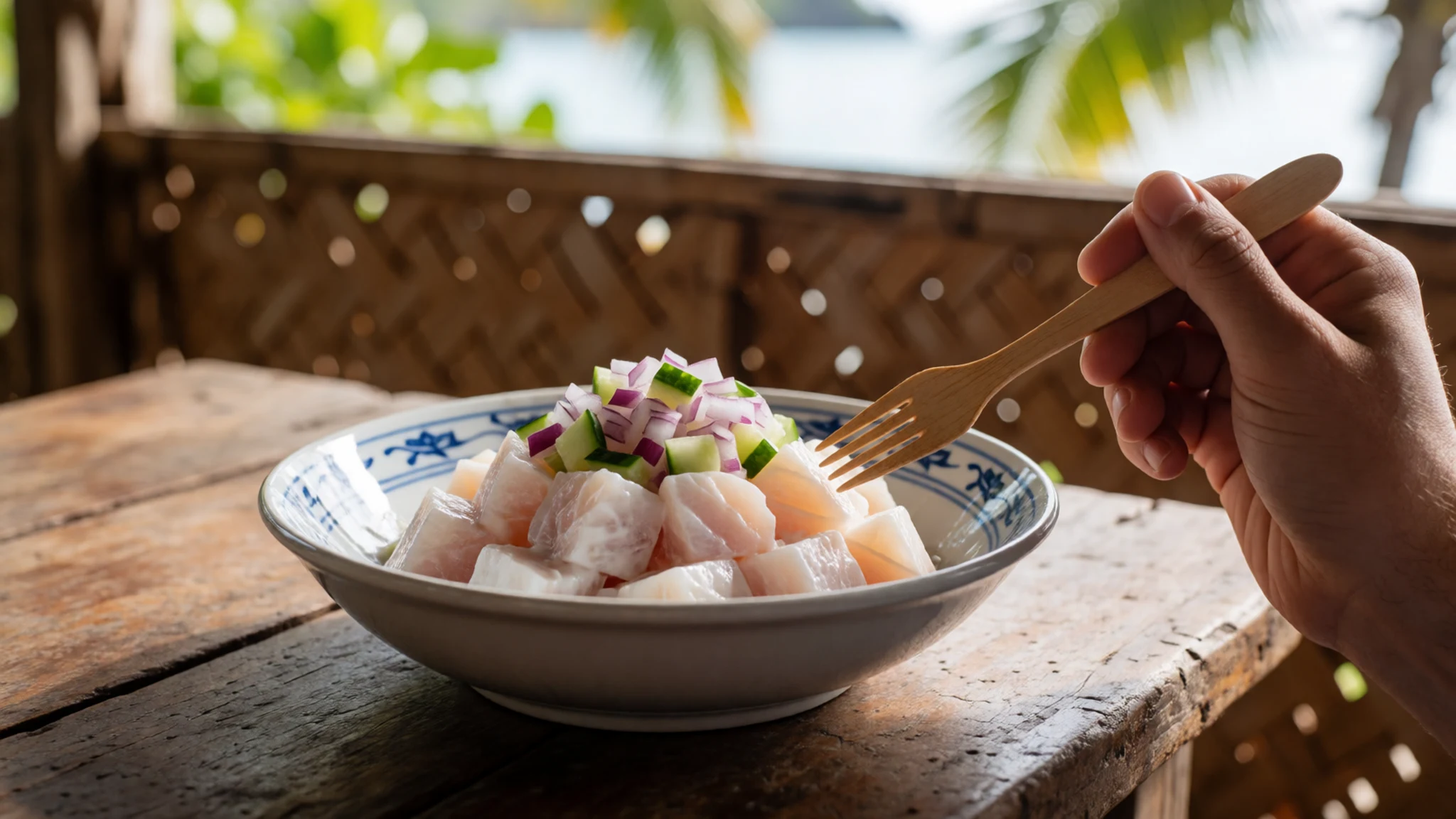
- Raw fish in coconut milk — Restaurants in pensions (guesthouses)
Fresh fish marinated in lime and coconut milk is a Polynesian staple and turns up on the menus of island guesthouses. The fish is caught locally, so the choice depends on the day's catch. Ask what came in that morning.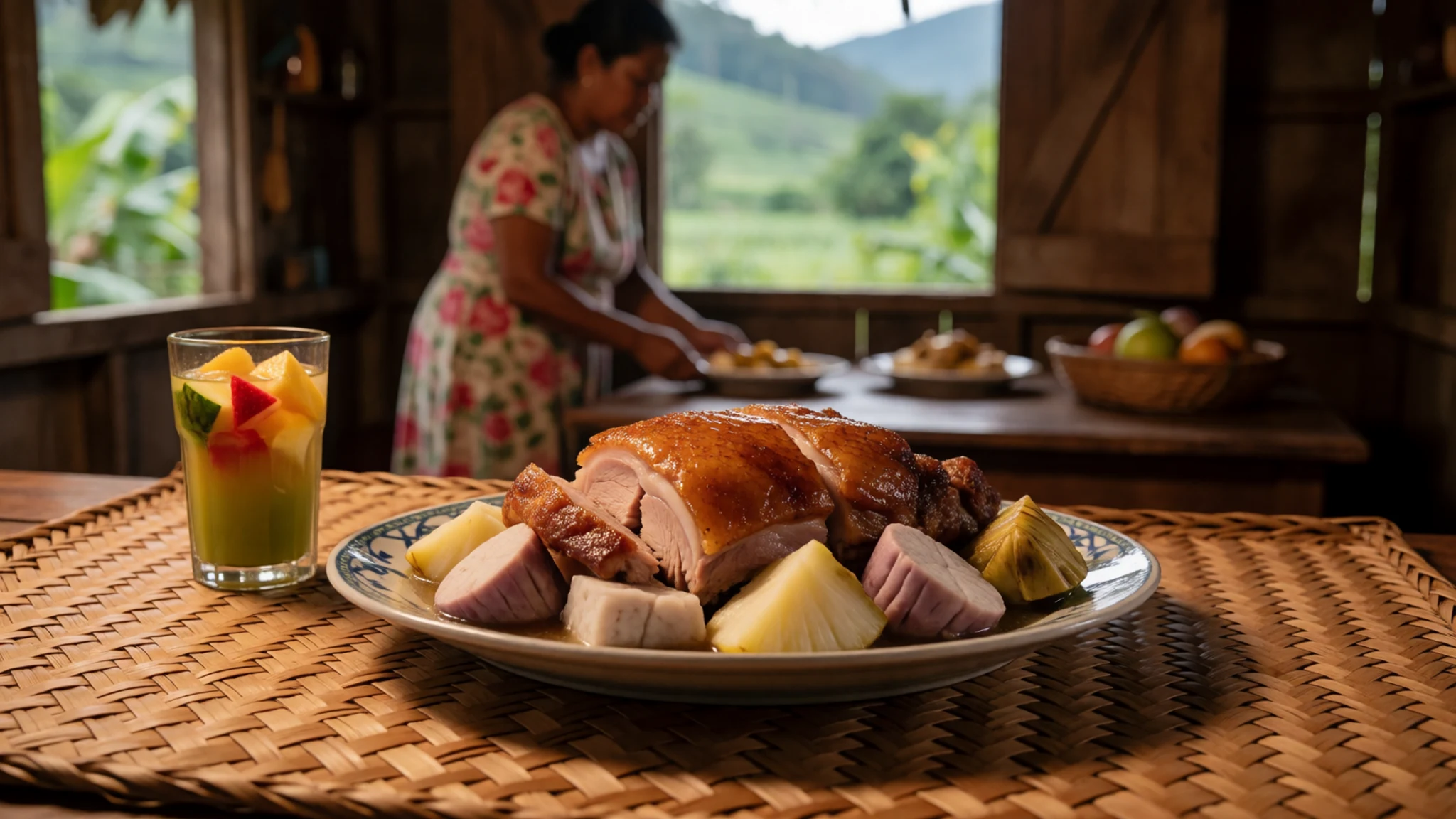
- Goat and mussels — Snack Makemake, Atuona
Snack Makemake offers a wide menu, from Chinese-style dishes to fish, and from goat to mussels. Goat is a local meat on an island with little other grazing, and the snack bar is a casual place to try it. - Breadfruit — Guesthouse restaurants and village meals
Breadfruit is one of the island's staple crops, roasted, boiled or fried as a starchy side to fish and meat. Served in guesthouse meals, it works rather like potato, with a mild, slightly sweet taste. - Taro and yam — Village kitchens and guesthouse meals
Taro and yam are grown in the valleys and eaten boiled or baked alongside fish and pork. They are plain, filling food that keeps farmers going, and a good way to taste what the island actually grows. - Bananas and other fruit — Atuona grocery stores and village gardens
Bananas, coconut and other tropical fruit are grown across the island and sold in Atuona's grocery stores or offered at guesthouses. Ripe fruit is a simple breakfast, and a useful snack for long days on the dirt roads.
Plan it
Best time. Hiva Oa is warm all year, and showers can fall in any month. The drier months are generally May to October, which suits walking and driving the dirt roads; heavy rain makes tracks muddy and slow.
How long. 4–5
Getting there. Air Tahiti flies from Tahiti to Atuona Airport daily, some days directly and some days via Nuku Hiva. The airstrip is on a plateau near the island's centre, and the last leg is a road transfer down to Atuona, usually arranged through your guesthouse. The Aranui III, a passenger-and-cargo ship from Tahiti, also calls at Hiva Oa on its voyages around the Marquesas.
Budget. high
Tips
- Book flights and guesthouses well ahead, as seats and rooms are limited
- Hire a local guide for petroglyphs, hidden tikis and any hike, because trails are unmarked
- Carry cash in CFP francs, as card use is limited outside Atuona
- Bring a rain jacket, sturdy shoes and drinking water for day trips on dirt roads
- Do not count on beach days; the coast has no protective reef and swell is strong
Etiquette
- Do not climb on marae stones or touch tikis
- Ask before photographing people or entering village land
- Greet people with bonjour and keep voices low in churches and cemeteries
Nearby
Sources
- Wikidata Q937908 (CC0)
- Wikipedia: Hiva Oa (rev 1386042685) (CC BY-SA 4.0)
- Wikivoyage: Hiva Oa (rev 5404118) (CC BY-SA 4.0)
- Southern coastline of Hiva Oa — American at de.wikipedia (CC BY 3.0)
- NASA astronaut image of Hiva Oa and Tahuata — NASA Johnson Space Center (Public domain)
- Map of the commune of Hiva-Oa — Godefroy (CC BY 3.0)
- Road from Atuona to Puamau — Sémhur (CC BY-SA 2.5)
- Cheval à Hiva Oa — Remi Jouan (CC BY 3.0)
- View of Atuona — Sémhur (CC BY-SA 2.5)
- Marae with tikis on Hiva Oa — American at de.wikipedia (CC BY 3.0)
- Copra drying in Hanaiapa — Sémhur (CC BY-SA 1.0)


