Hitachi Seaside Park
Hitachi Seaside Park, Japan
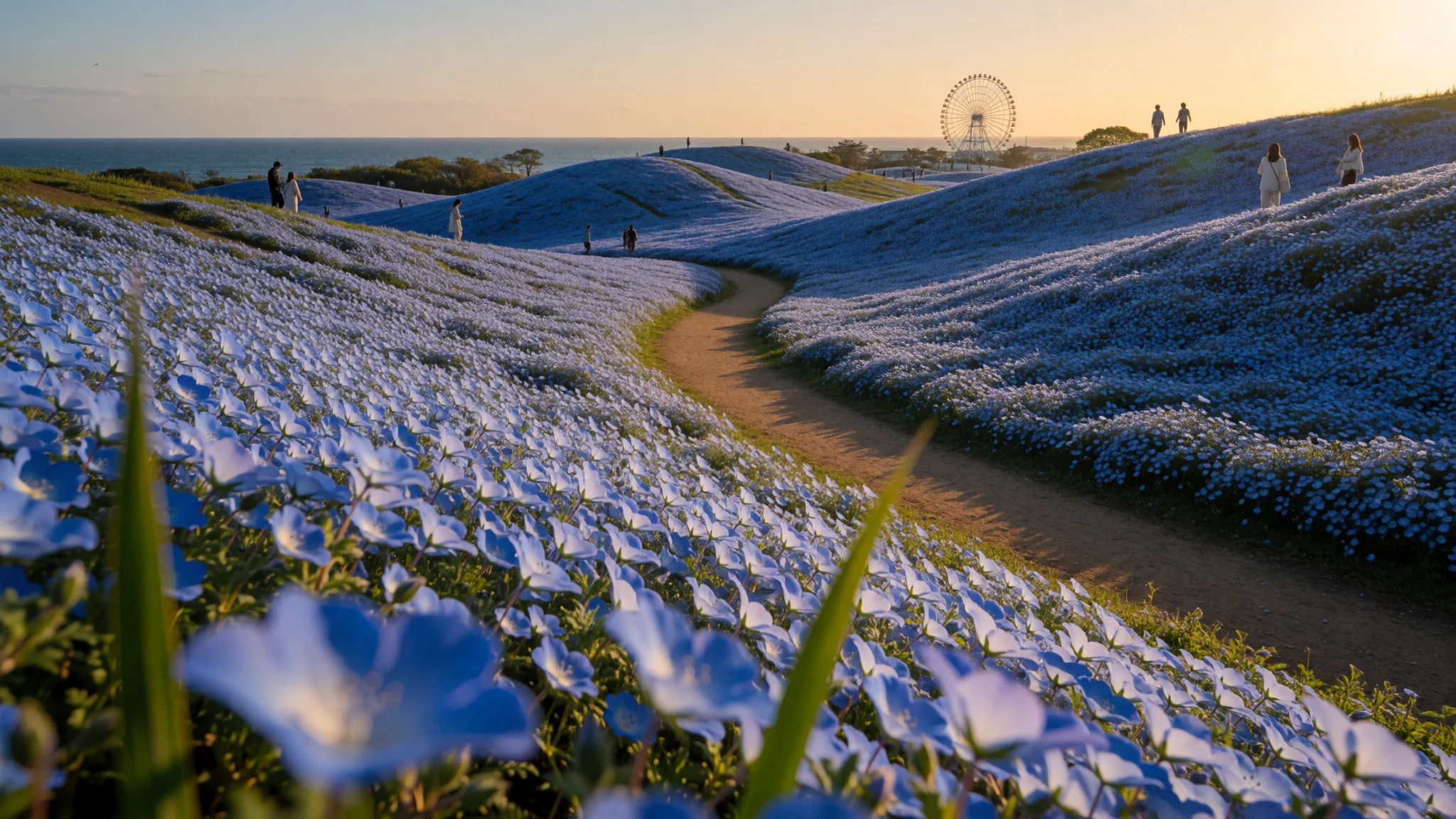
Visit for the surreal, rolling carpets of blue nemophila in spring and crimson kochia shrubs in autumn.
The place
Hitachi Seaside Park is a sprawling public space in Hitachinaka, located in the Ibaraki prefecture. For those used to the dense, concrete corridors of Tokyo, this park offers a necessary breath of fresh air. It is designed as a National Government Park, where the landscape is meticulously managed to create high-impact floral displays that change with the seasons. The terrain is undulating, providing views that merge the vivid colours of the flowerbeds with the blue of the Pacific coast.
While Ibaraki is sometimes overlooked by international tourists in favour of the historical weight of Kyoto or the subtropical draw of Okinawa, Hitachi Seaside Park proves why the region is a favourite for domestic day-trippers. The park is vast, and moving between the different themed gardens often requires a bicycle or a shuttle. It can feel intensely crowded during the peak bloom windows, with queues forming for the best vantage points, but the sheer scale of the vistas usually compensates for the press of people. The wind coming off the ocean can be sharp, even in spring, so the open spaces require a bit of preparation regarding clothing.
Its story
The origin of Hitachi Seaside Park is a curious footnote in Japanese theme park history. Before it became the floral sanctuary known today, the land was considered for a very different kind of attraction. The site narrowly missed out on becoming the location for Japan's first Disneyland. Instead of mouse-eared castles and synthetic fantasies, the Japanese government opted for a public park that celebrated the natural beauty of the coast and the discipline of horticulture.
Founded in 1991, the park evolved into a destination that balances mass tourism with botanical art. The most famous chapters of its story are written in blue and red. In the spring, the Nemophila (baby blue eyes) create a sea of azure that mimics the horizon. In autumn, the Kochia shrubs turn a deep, fiery red, looking like giant puffs of wool scattered across the hills. This transition from one extreme colour to another has turned the park into a global symbol of Japan's seasonal precision. It is a place where the landscape is treated as a living canvas, carefully curated to provide a specific emotional response to the passing of the year.
What to see
- Miharashi Hill
The park's most iconic spot, where millions of Nemophila flowers bloom in spring and Kochia shrubs turn red in autumn. The rolling slopes offer a panoramic view of the ocean and the floral carpets.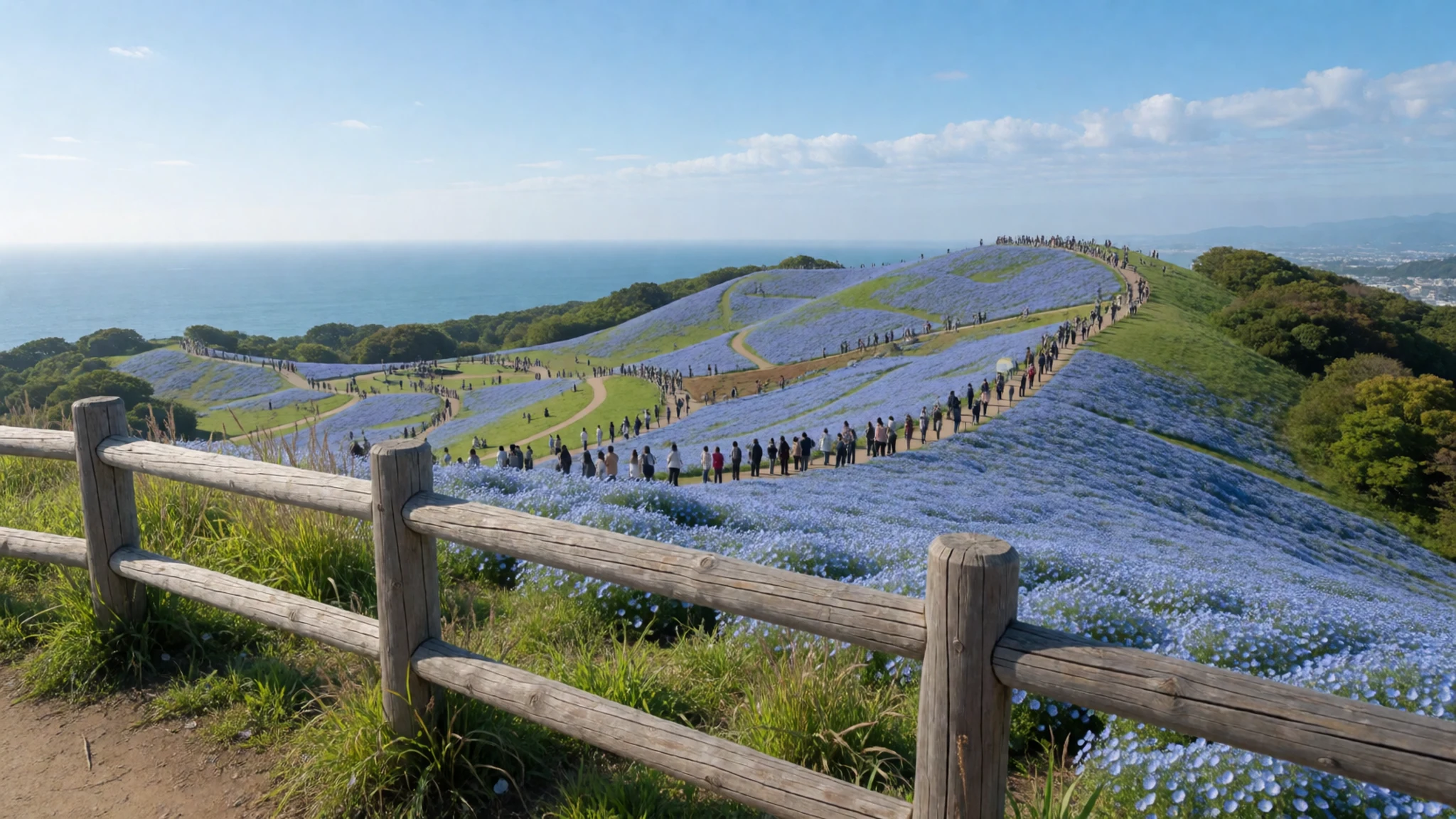
- Oarai Isosaki Shrine
A striking Shinto shrine featuring a torii gate perched precariously on a rocky outcrop over the crashing waves of the Pacific, located a short trip from the park.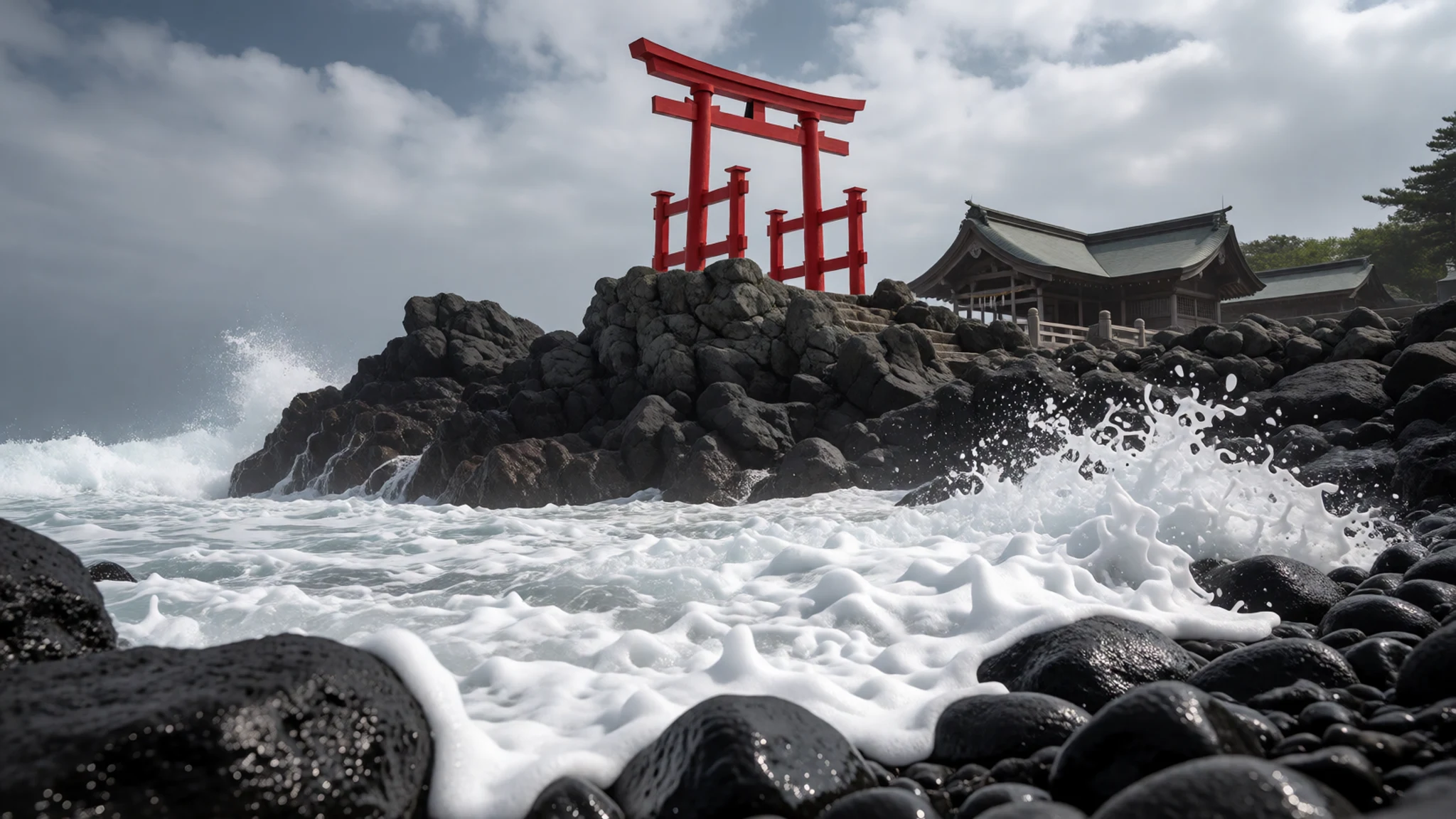
- Aqua World Oarai
A major coastal aquarium famous for its sunfish and dolphin shows. It is one of the country's top marine facilities and a popular stop for families visiting the area.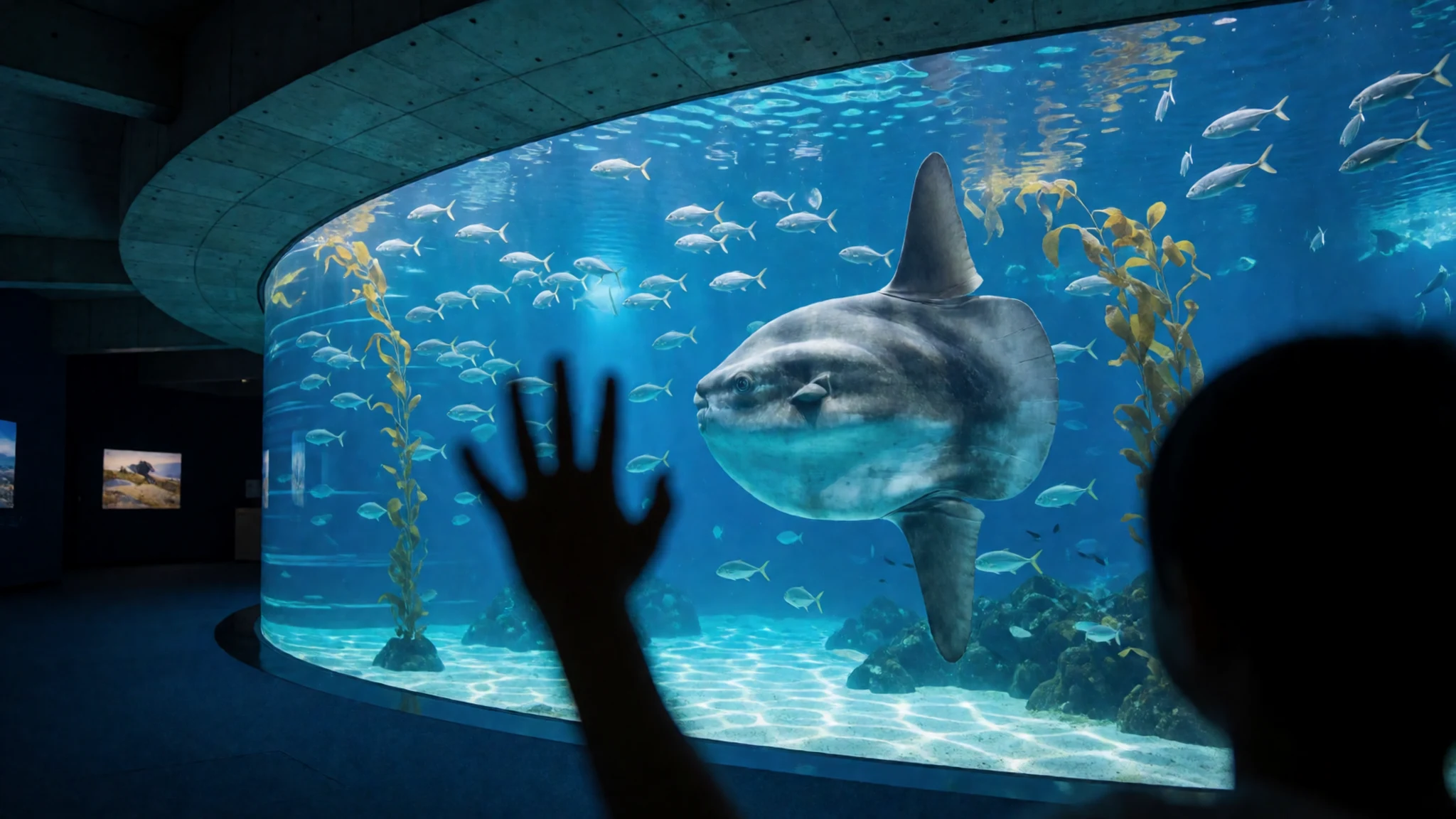
- Ushiku Daibutsu
One of the world's tallest statues of Buddha, standing as a massive bronze monument to the founder of Jōdo Shinshū. Its scale is humbling when viewed from the base.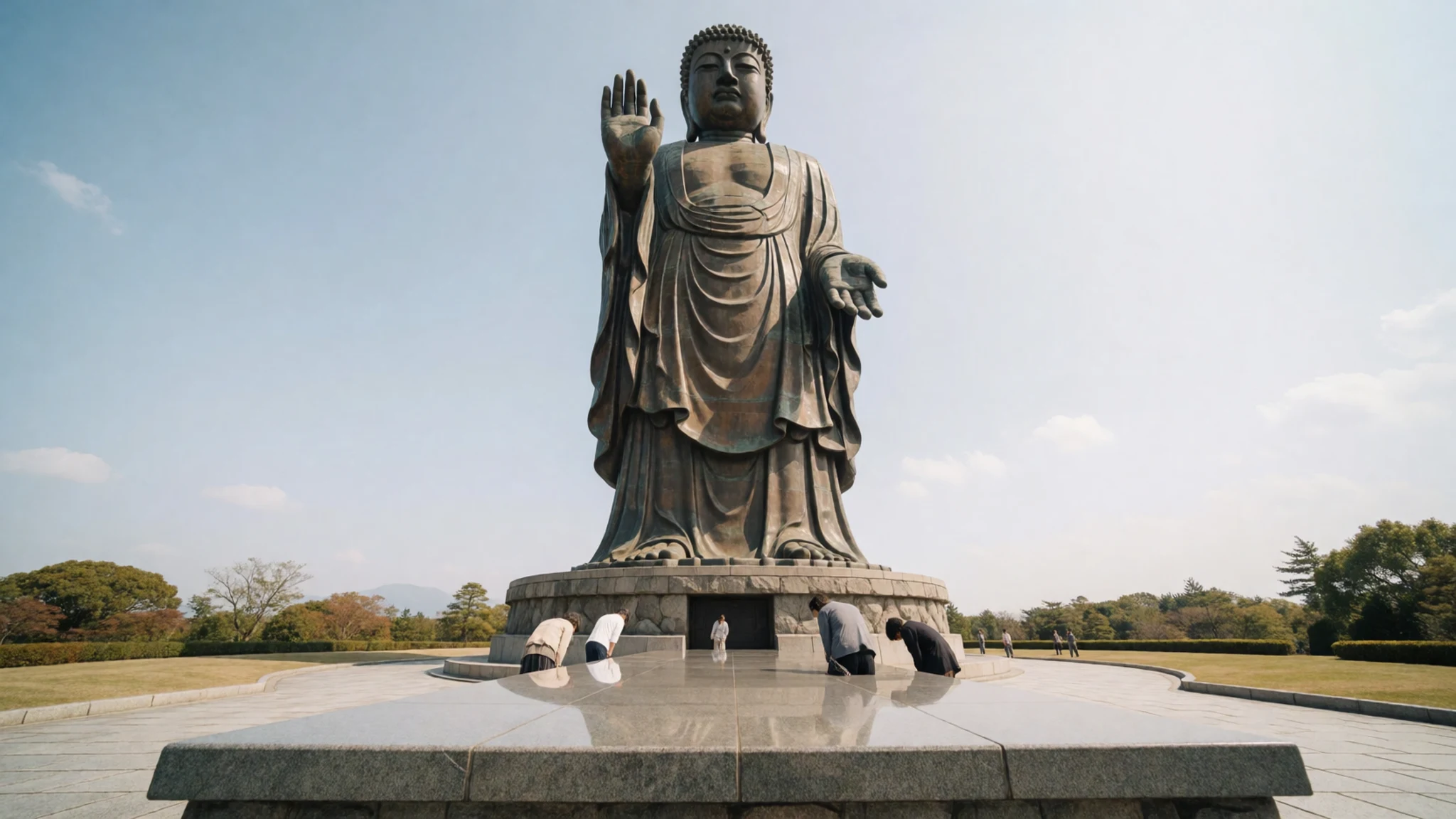
- Ryūjin Suspension Bridge
A long pedestrian bridge spanning the Ryūjin Gorge. It offers views of the forested valley and is one of the longest bridges of its kind in Japan.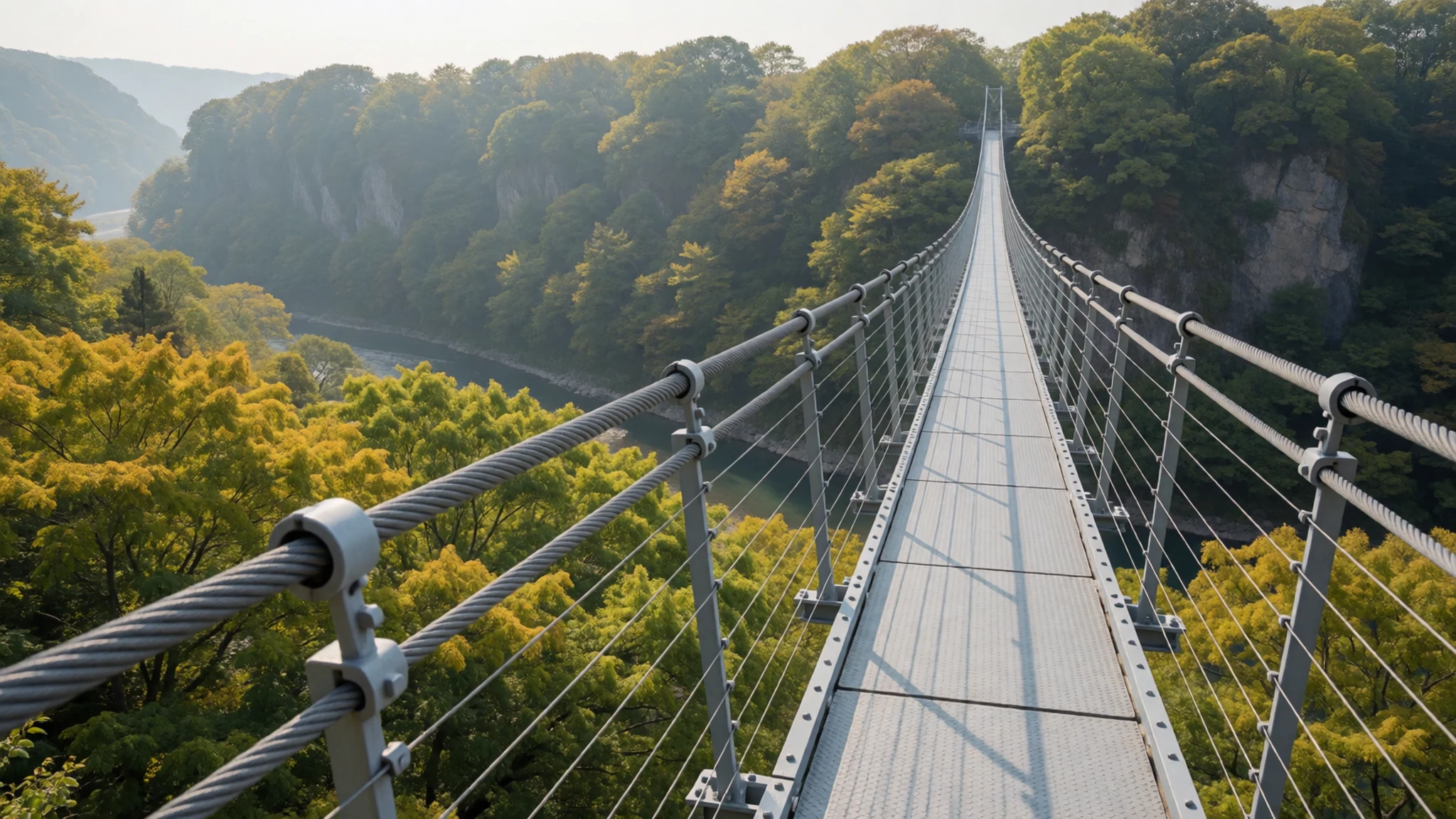
Culture
The culture surrounding Hitachi Seaside Park is deeply tied to the Japanese concept of 'hanami' or flower viewing. While usually associated with cherry blossoms, the park extends this tradition to a variety of species throughout the year. There is a shared social ritual here: the pursuit of the perfect photograph. Visitors from across Japan arrive with professional cameras and tripods to capture the exact moment of peak bloom, reflecting a national obsession with the fleeting nature of beauty.
Beyond the flowers, the region of Ibaraki is known for a more rugged, coastal identity. It is a hub for surfing and beach sports, providing a relaxed counterpoint to the curated perfection of the park. The local pride is often tied to the land's productivity, from the famous melons to the pungent fermented beans of the interior. When visiting the gardens, please stay on the designated paths to avoid crushing the delicate flowerbeds.
What to wear
Traditional dress in the Ibaraki region often involves textiles suited for agricultural and coastal life, though during festival seasons, you will see visitors in yukata (light cotton kimonos) during the summer months. In the modern day, the park's crowds are dominated by 'Instagrammable' fashion; many visitors wear bright white or pastel colours to contrast with the blue and red flower fields.
For a visitor, the priority is practical footwear. Hitachi Seaside Park is enormous, and you will be walking on gravel, grass, and paved paths for several hours; sturdy trainers are essential. Because the park is located on the coast, the wind can be surprisingly biting even in late April or October. Layering is key—a light windbreaker or a fleece is recommended regardless of the forecast. For those visiting nearby shrines like Kashima Jingū, modest dress is appreciated, though there are no strict requirements for general park visitors.
What to eat
- Natto — local breakfast eateries and markets
Fermented soy beans with a pungent smell and sticky texture, typically eaten with rice for breakfast. A local staple and a common conversation starter in Ibaraki.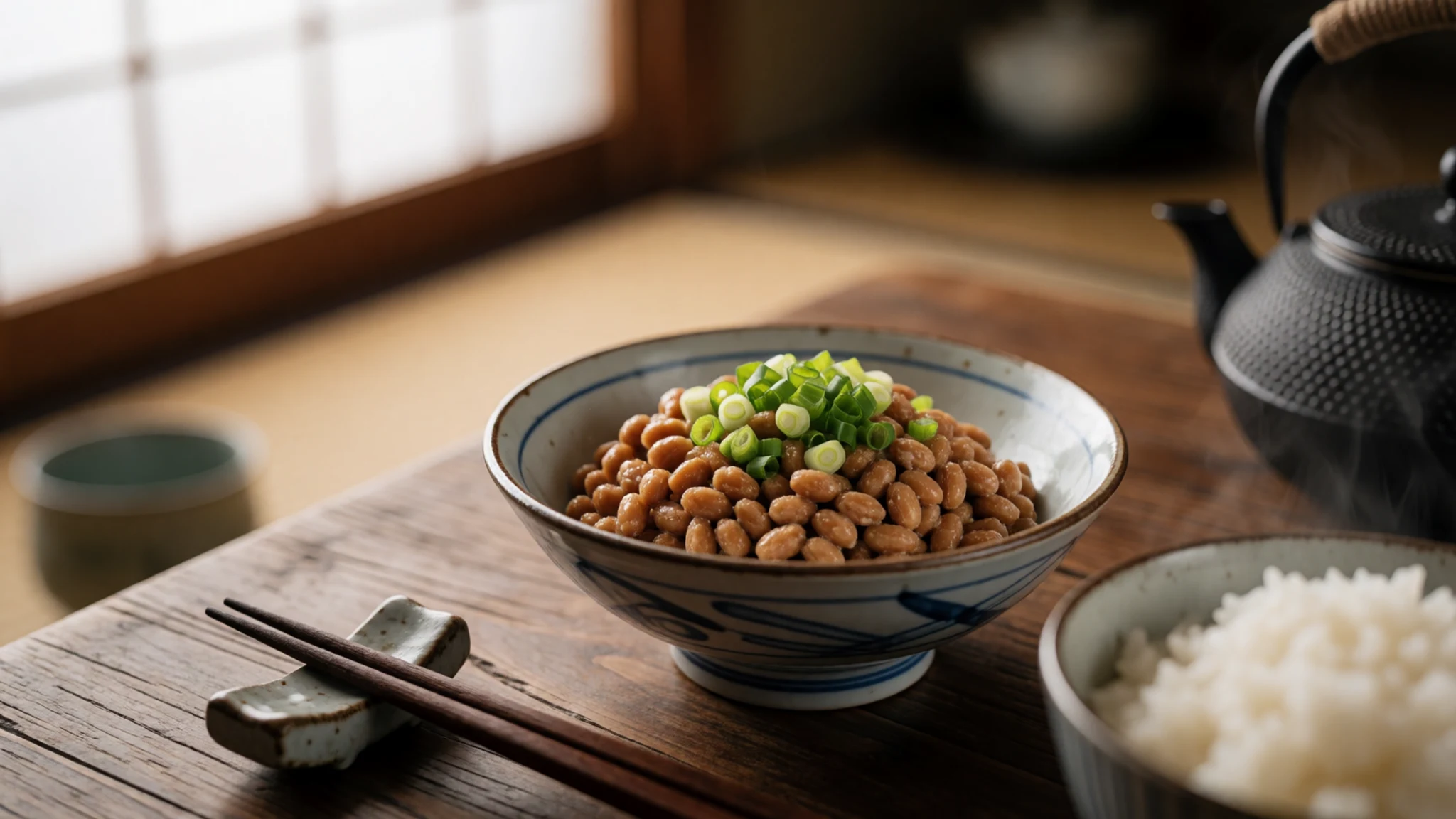
- Ibaraki Melons — roadside stations and fruit stands
Succulent, sweet melons that are a point of regional pride and widely available during the warmer months.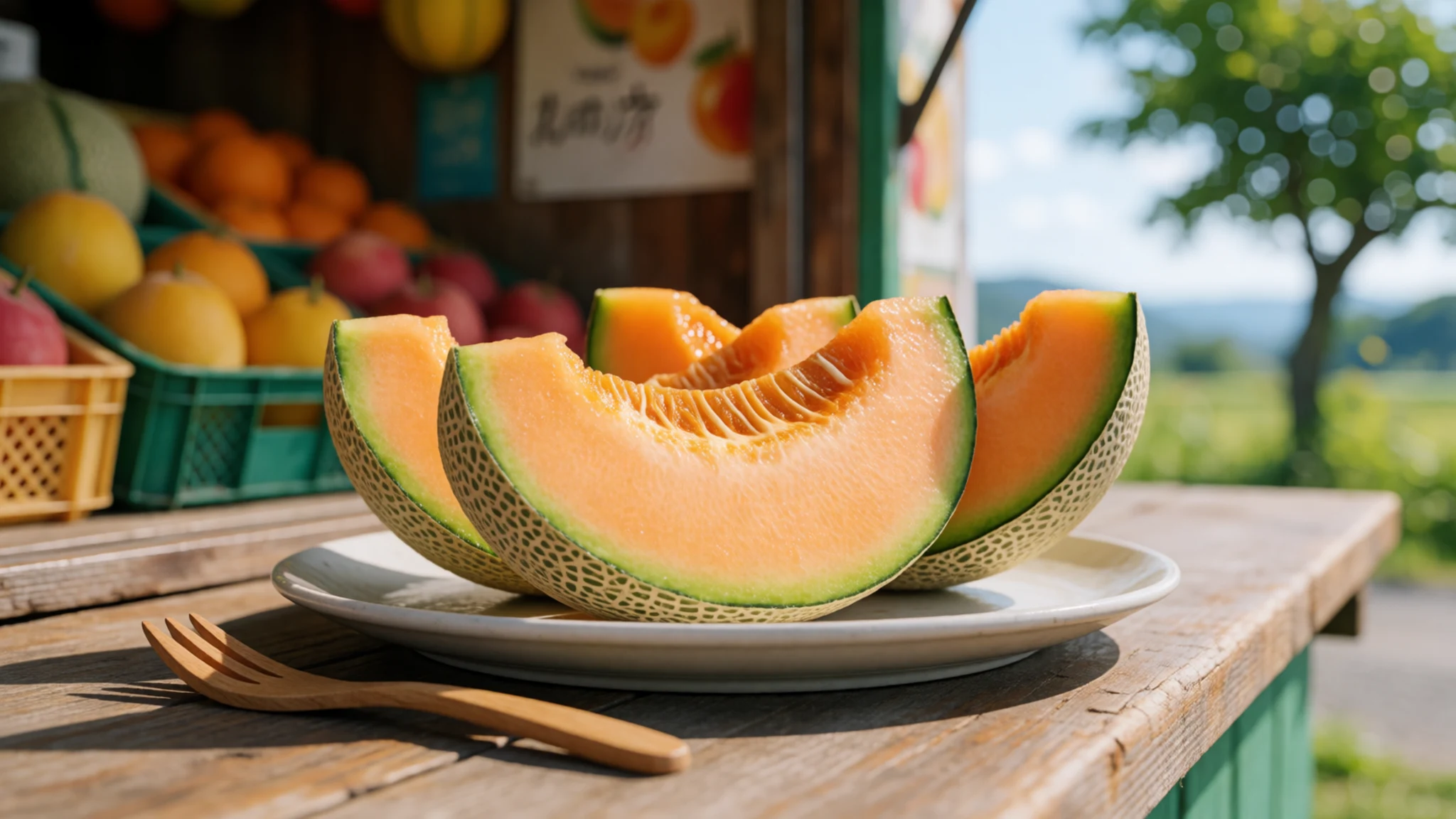
- Chestnuts — autumn festivals and local markets
Rich, roasted or candied chestnuts, which are among the most famous produce of the prefecture. - Nest Beer — speciality shops and izakayas in Hitachinaka City
A locally microbrewed craft beer from Hitachinaka, offering a refreshing way to end a day of walking.
Plan it
Best time. April to May for the blue nemophila, and October for the red kochia. Summer is hot and humid, while winter is quiet.
How long. 1–2
Getting there. From Tokyo, take the JR Kanto Highway bus from Tokyo or Shinjuku Stations; alternatively, fly into Ibaraki Airport and take a coordinated Kantetsu Bus to the city center.
Budget. mid
Tips
- Rent a bicycle at the park entrance to navigate the vast grounds
- Arrive as early as possible to avoid the heaviest crowds on Miharashi Hill
- Check the official website for the 'bloom forecast' before booking
- Carry a windbreaker even in spring due to the coastal breeze
- Bring cash for small stalls and local transport within the city
Etiquette
- Do not step into the flowerbeds for photos
- Keep noise levels moderate in the garden areas
- Dispose of your litter in the designated bins provided
Nearby
Sources
- Wikidata Q10855585 (CC0)
- Wikipedia (CC BY-SA 4.0)
- Wikivoyage (CC BY-SA 4.0)