Hiraizumi
Hiraizumi, Japan
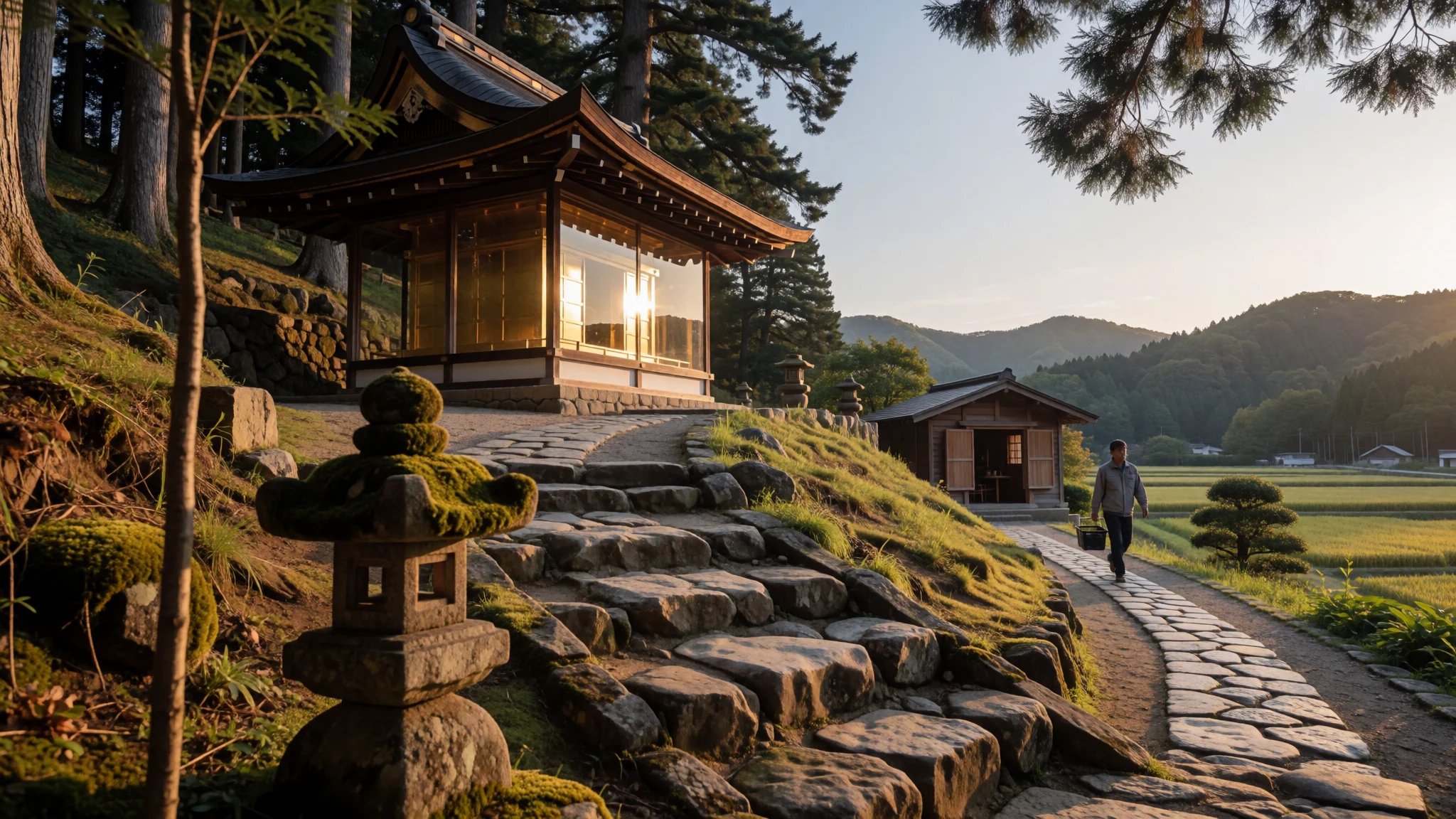
Hiraizumi is a quiet farming town in northern Japan where a medieval golden capital survives as one glittering hall, still ponds and grassy foundations.
The place
Hiraizumi sits in a basin in southern Iwate Prefecture, in the Tōhoku region of northern Honshu, ringed by the Kitakami Mountains. It is a farming town of 7,178 people, a municipality since 1953, and it feels more like countryside than a destination: rice fields, low wooded hills, a short main street and a quiet railway station. Two temple complexes, Chūson-ji and Mōtsu-ji, anchor the visit, with the grassy remains of palaces and gardens scattered between them. The ground is flat enough for a bicycle, though Chūson-ji sits on a hillside and needs a walk up a tree-lined slope. The climate is humid, with mild summers and cold winters. Snow is normal in the cold months, January averages just below freezing, September is the wettest month and February the driest. Cherry blossom arrives in spring and maples colour the temple slopes in autumn, and those are the busiest weeks, though the crowds here are thin beside Kyoto's. The local economy rests on farming and tourism, so the mood is unhurried and rural. Matsuo Bashō passed through and wrote of summer grass growing over the dreams of warriors. The image still works: much of what made Hiraizumi important survives as ponds, foundations and open ground, and the visit is as much about imagining as seeing.
Its story
Hiraizumi was the seat of the Northern Fujiwara clan for about a century in the late Heian era, and in that time it acted as the de facto capital of Ōshū, a vast northern territory. Estimates of its population at the height of the clan's power vary widely, but all describe a city that could rival Kyoto in size and refinement. The earliest building here may have been Hakusan Shrine on Mount Kanzan, which a chronicler writing centuries later already called ancient. It has been rebuilt many times yet still stands on the same spot. Fujiwara no Kiyohira, the clan's first ruler here, moved his base to Kanzan from Fort Toyoda, and the choice was shrewd. Kanzan lies where the Kitakami and Koromo rivers meet. The Koromo had long been the line between Japan to the south and the Emishi peoples to the north, and Kiyohira, who was himself half Emishi, built his home on its southern bank, signalling that he meant to govern the north without the court's blessing. The site also stood on the Ōshū Kaidō, the road that carried travellers from Kyoto into the northern lands as they opened up. Temples, gardens and palaces followed, shaped by Pure Land Buddhism, which pictures a paradise reached through devotion. Most of the wooden buildings are gone, which is why Bashō's lament about summer grass suits the place so well.
What to see
- Chūson-ji Temple — Northern Hiraizumi, on the hillside
Chūson-ji is the temple most closely tied to Hiraizumi's name, reached by a path through old trees on a hillside. The draw is the Golden Hall (Konjiki-dō), a gilded building kept inside a glass case, unlike Kyoto's Golden Pavilion, which stands in the open. Go early in blossom and autumn weeks. Small halls and teahouses line the slope.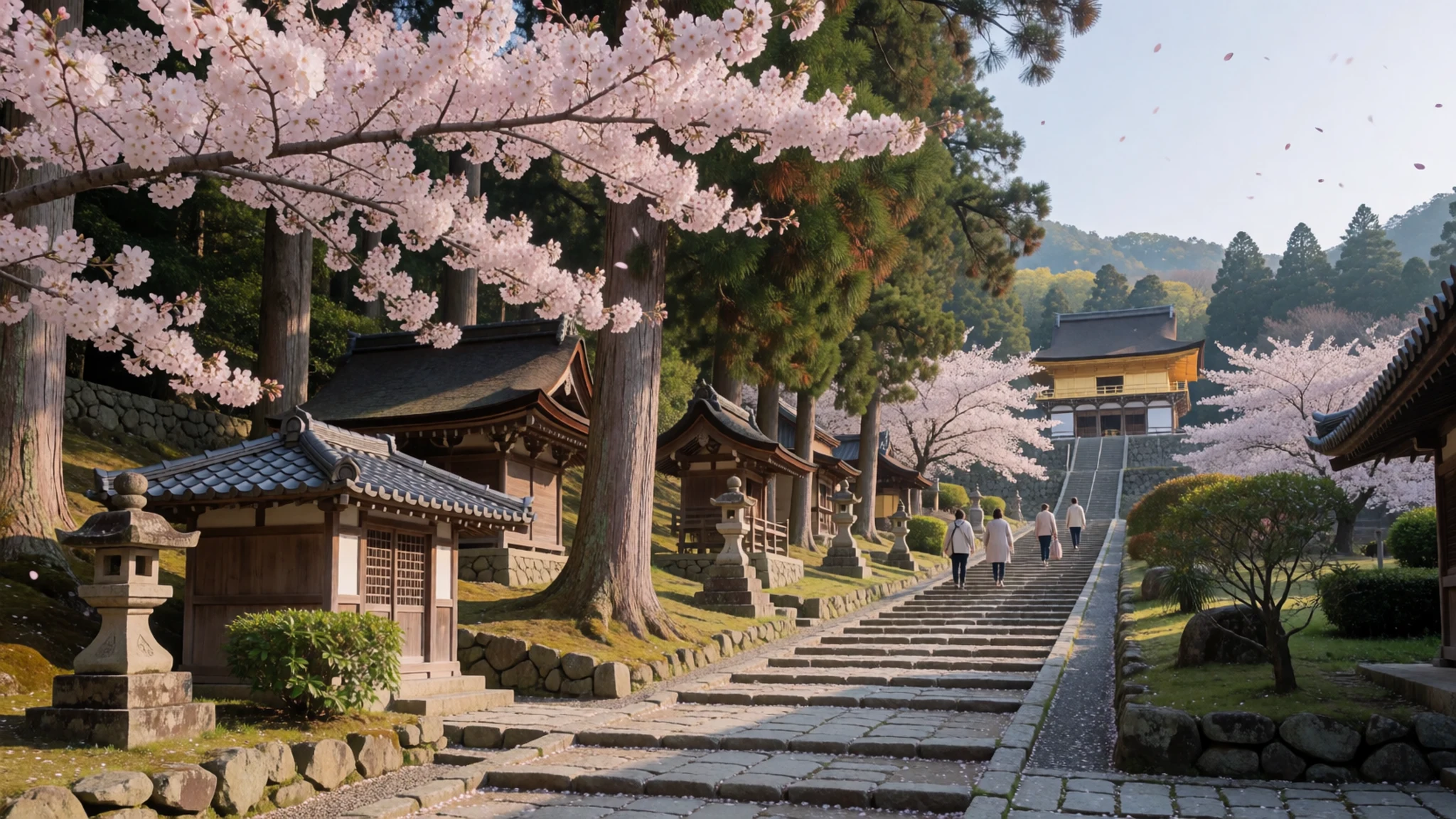
- Mōtsu-ji Temple — Central Hiraizumi, near the station
Mōtsu-ji is the second big temple compound, and its appeal is the Pure Land garden (Jōdo-en) laid out around a pond in the Heian era. Most of the original halls are gone, so the pleasure lies in the water, the stones and the open sky, best on a calm morning. A bell tower stands among the trees.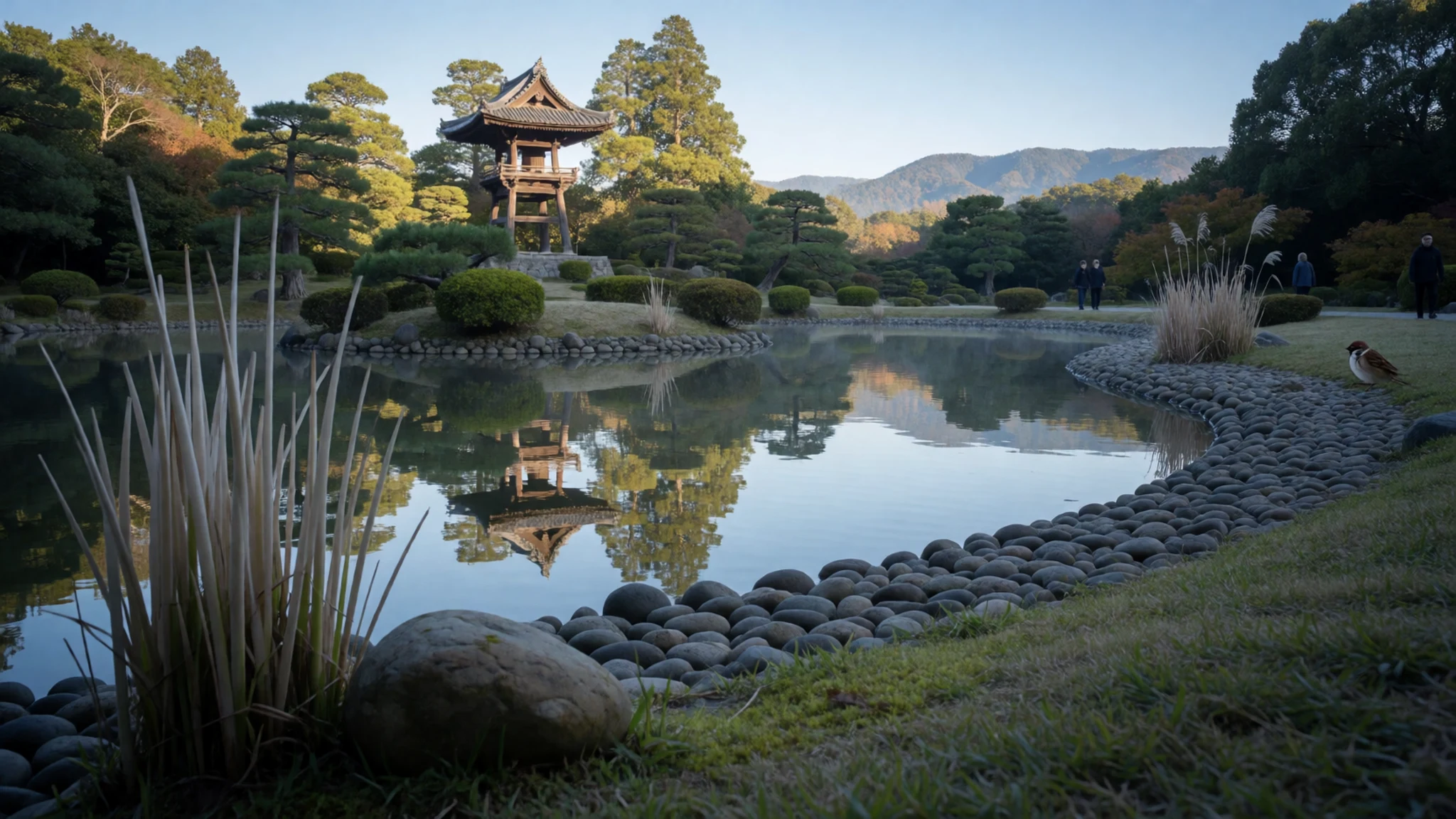
- Takkoku no Iwaya Bishamon-dō — Southwest of the town centre
This cave temple lies west of the main cluster, so reaching it takes a longer ride or a taxi. It is dedicated to Bishamon, the god of war, yet it is known as a place to pray for peace. The building has been replaced several times since its founding, and the rock face behind it is the real attraction.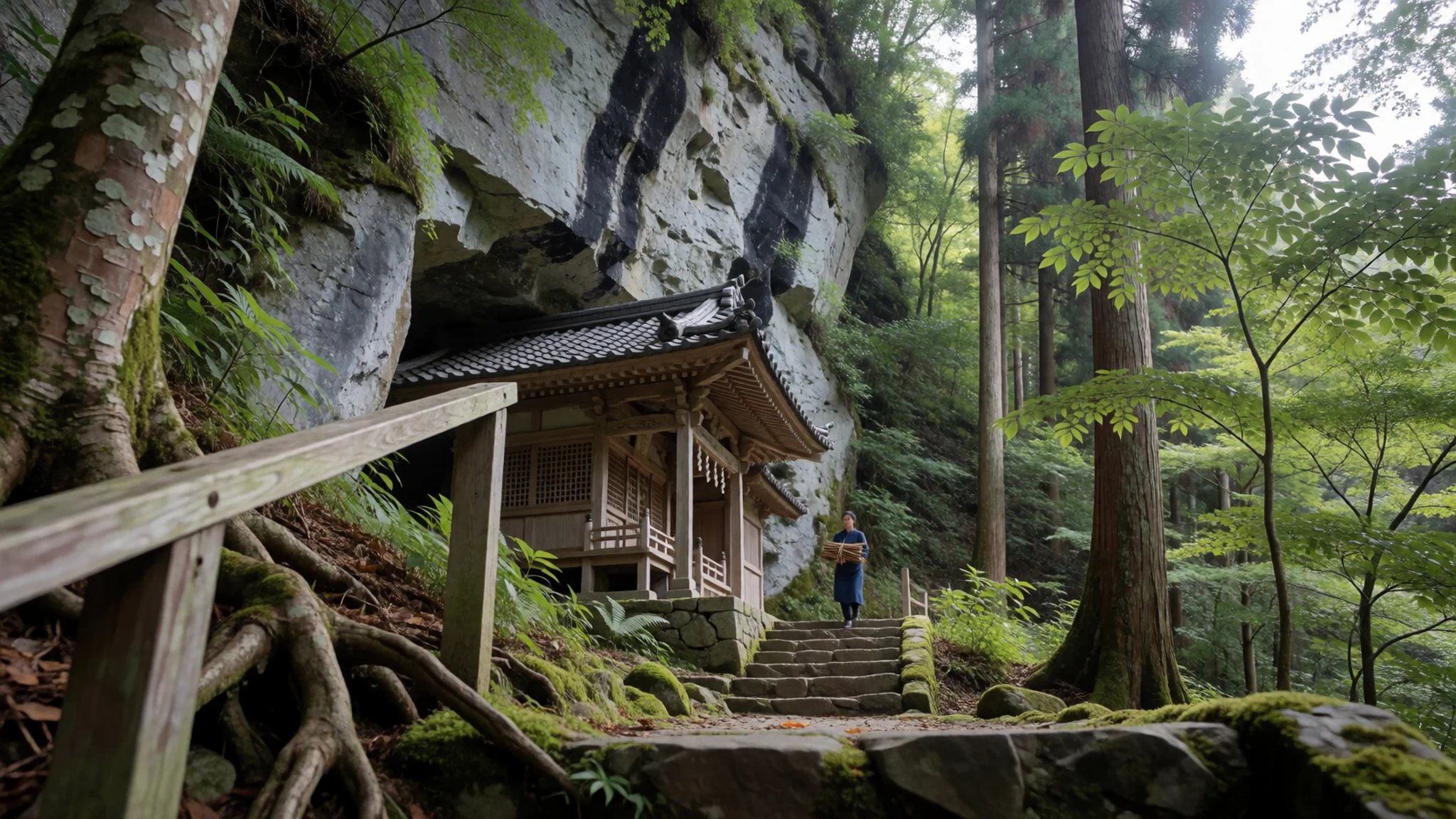
- Kanjizaiō-in Ato — Central Hiraizumi, beside Mōtsu-ji
Kanjizaiō-in was a temple and garden built by the wife of Fujiwara Motohira. A fire destroyed it long ago, but the garden has been restored and some structures rebuilt. It is a calm, short stop beside Mōtsu-ji, useful for understanding how large these Fujiwara pleasure grounds once were.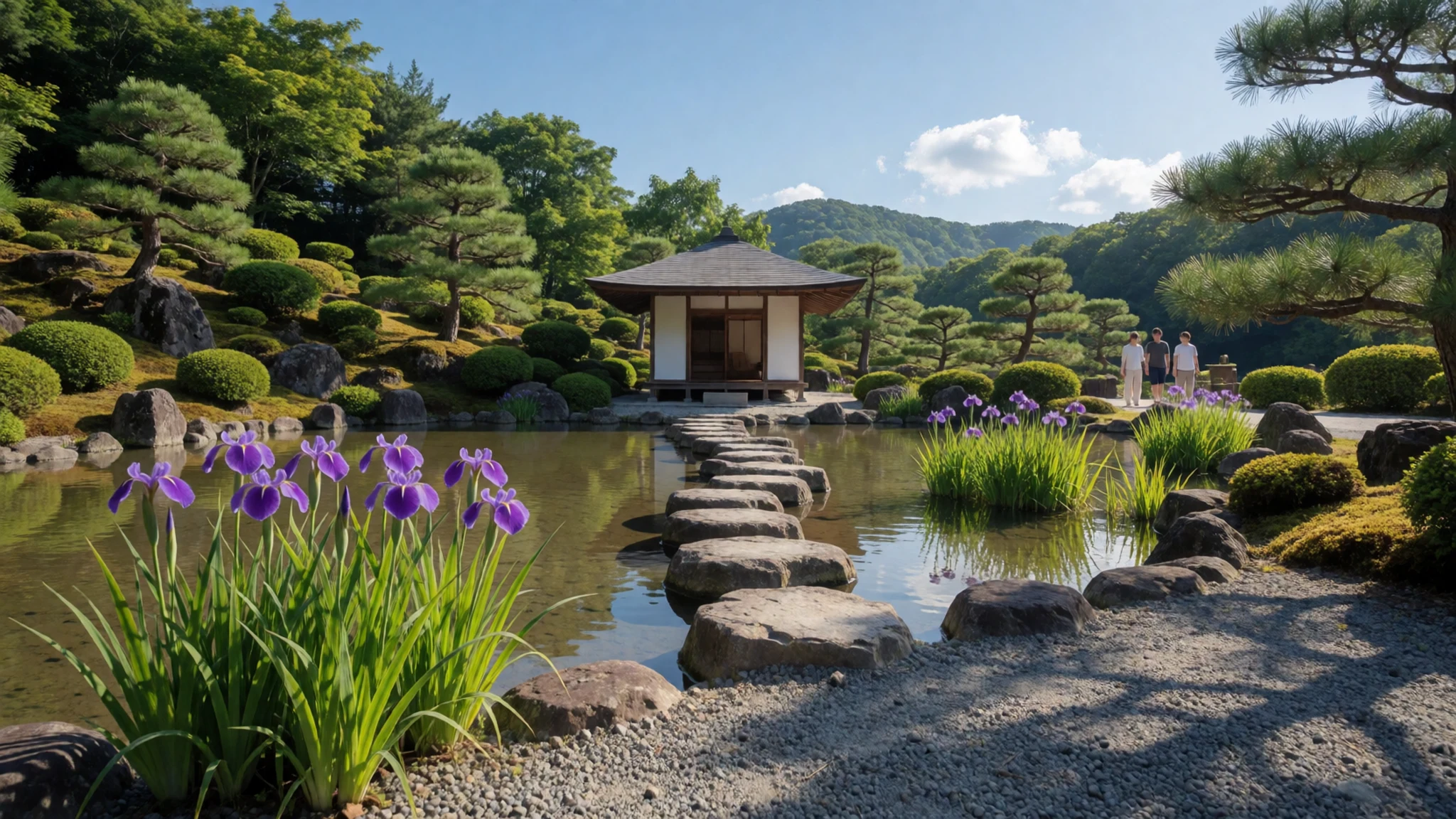
- Yanaginogosho Iseki — Northeast of the station
Yanaginogosho was the site of the former palace. No buildings remain, but the pond and the stone foundations give a sense of how grand it once was. Informative signs help, and the open grass is a fitting place to read Bashō's famous verse about summer grass and warrior dreams.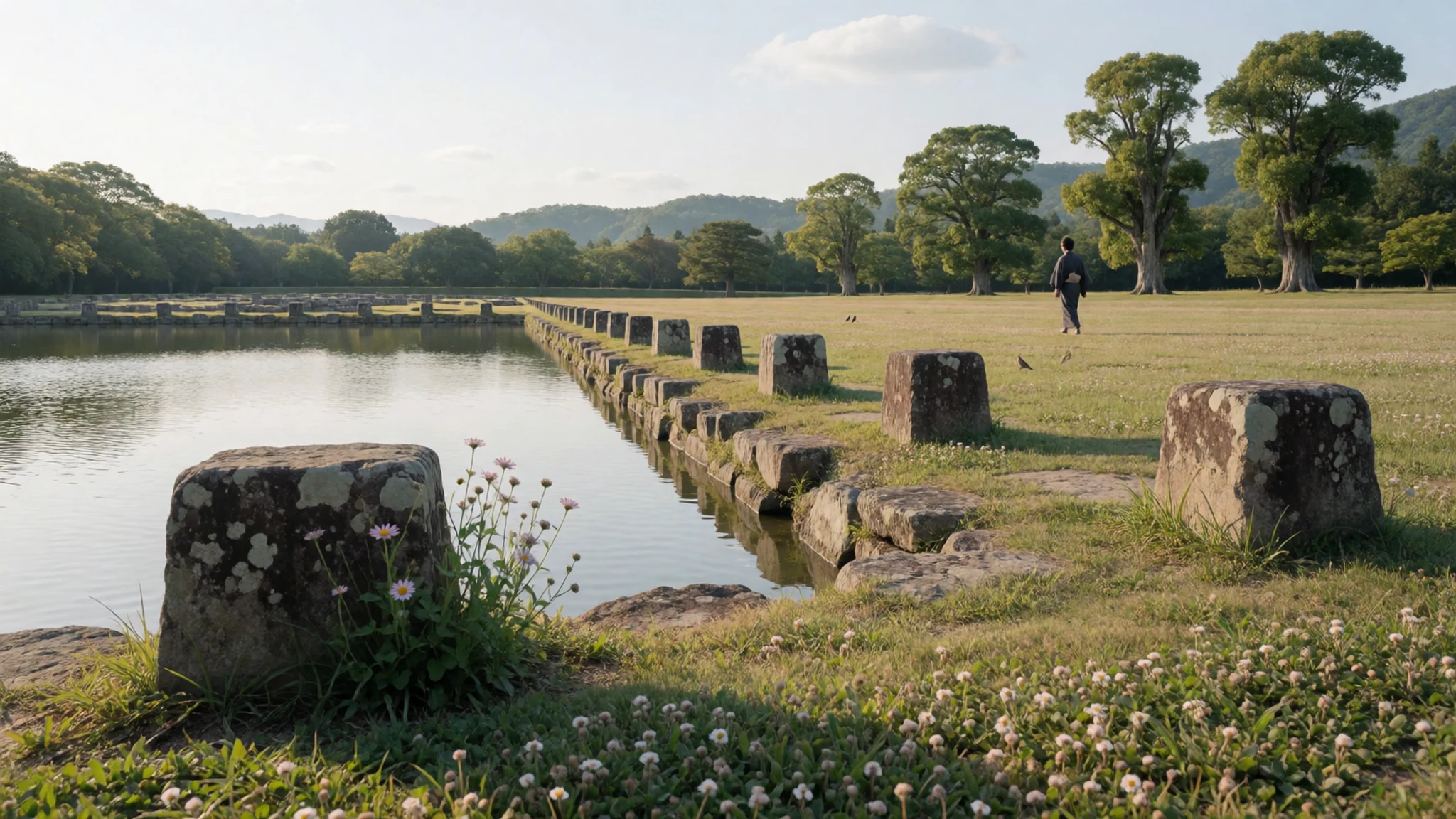
Culture
Hiraizumi's culture is Buddhist at its core, shaped by the Pure Land tradition, which treats paradise as something a devout person can hope to reach. The Fujiwara rulers built halls and gardens to bring that idea down to earth, and the Golden Hall and the pond gardens are the surviving evidence. Alongside the temples, Hakusan Shrine on Mount Kanzan is a reminder that Shinto and Buddhism have long shared the same landscape, with shrine and temple often a short walk apart. The north also carries the memory of the Emishi peoples, whose frontier country this once was and to whom Kiyohira himself was partly related. Local life today is modest: rice farming, seasonal festivals and small shops that serve temple visitors. Poetry matters here too, since Bashō's verse about summer grass is quoted on signs and in guidebooks, and it gives a visit to the empty palace and temple sites a quiet purpose. Most visitors come in small groups, speak softly and move slowly between the sites, which suits the place. Keep your voice low in temple halls, and do not photograph inside any building where a sign or attendant says photography is not allowed.
What to wear
In Hiraizumi, traditional dress means the kimono and its seasonal relatives, made of silk for formal wear, cotton for the light summer yukata and hemp in the past for farm and everyday clothing. The Heian court that the Fujiwara rulers imitated favoured layered silk robes, and these costumes still appear at festivals and in historical displays. Northern farming regions also have a tradition of indigo-dyed cotton and stitched work clothes, made to keep out the cold. Kimono now appear mainly at weddings, tea ceremonies and festivals. Day to day, people in town wear practical casual clothes: jeans, fleeces, rain jackets and, on farms, rubber boots. Winter calls for padded coats. Visitors should dress for weather and for walking. Temple grounds mean gravel paths, stone steps and a hillside climb, so comfortable shoes that slip on and off easily are best, with clean socks for halls where shoes come off. Summer is mild but humid, so light cotton and a hat help. Autumn and spring need layers, as mornings are cool. In winter bring a warm coat, gloves and grippy soles for snow. September brings the most rain, so pack a compact umbrella. There is no strict dress code, but shoulders and knees covered is a sensible default.
What to eat
- Soba noodles — Restaurants in the grounds of Chūson-ji and eateries near the station
Buckwheat noodles served hot or cold are a staple of the north and an easy lunch between temples. The restaurant in the grounds of Chūson-ji serves soba alongside udon and desserts.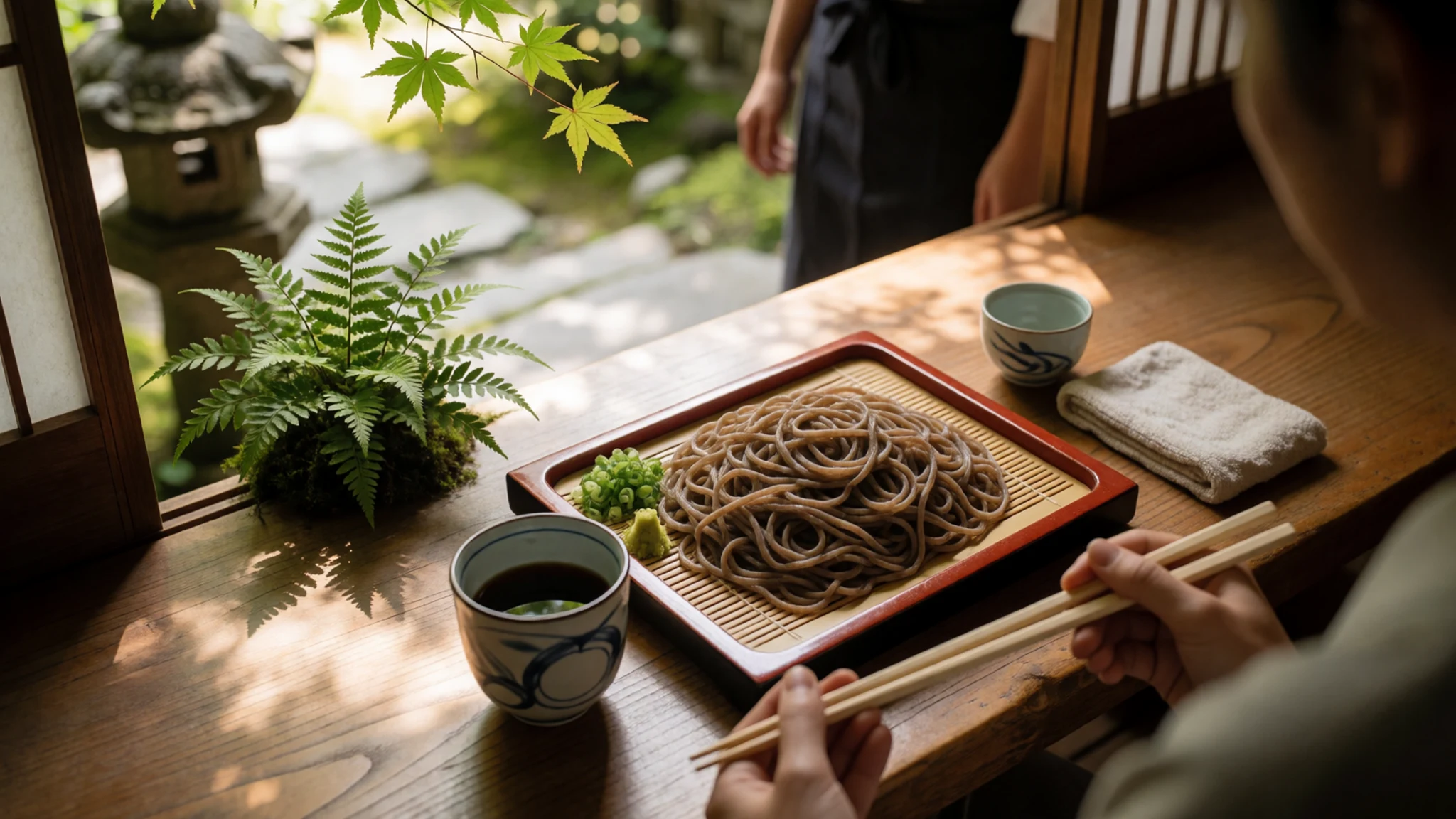
- Wanko soba — Noodle eateries in Hiraizumi and across Iwate
An Iwate speciality: small bowls of soba refilled by an attendant until the diner puts the lid on. It is as much a game as a meal, and best shared with friends.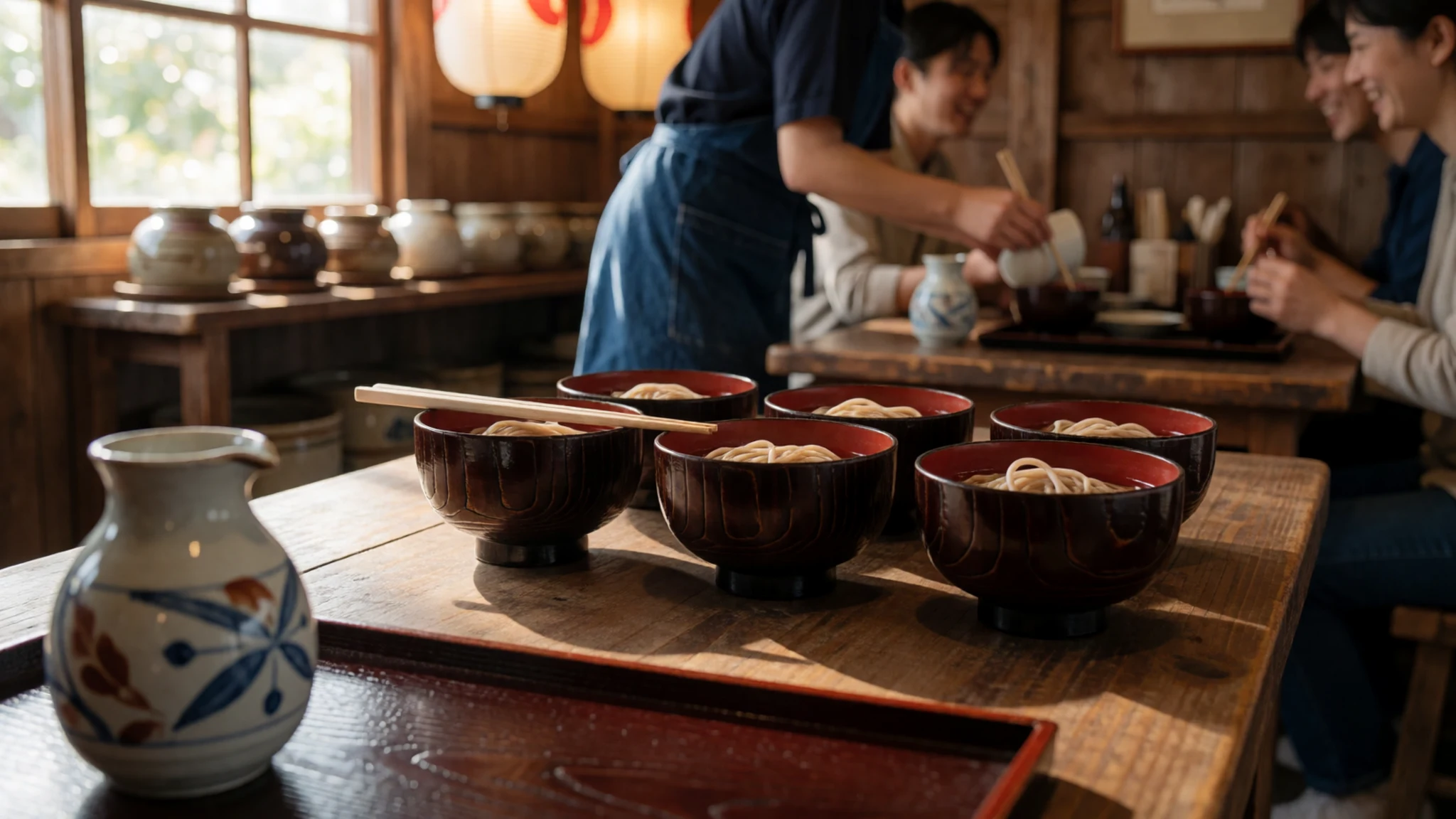
- Mochi dishes — Traditional local eateries in Hiraizumi and nearby Ichinoseki
Pounded rice cake is a regional favourite, eaten with savoury toppings such as grated radish or sweet bean paste. It is filling and well suited to a cold day. - Maesawa beef — Steakhouse-type restaurants in Ōshū and larger nearby towns
Beef from the nearby city of Ōshū is a regional pride, usually served grilled or as a steak. It costs more than noodles, but is worth considering after a long day. - Tea and sweet snacks — Teahouses and stands in the grounds of Chūson-ji
Small teahouses and souvenir stands in the temple grounds sell green tea with sweet bean cakes or rice dumplings, ideal for a rest after the hillside climb.
Plan it
Best time. Late April to May for cherry blossom and October to November for autumn colour. Summers are mild but humid, September is the wettest month, and winters are cold with snow.
How long. 1–2
Getting there. The nearest Shinkansen stop is Ichinoseki, a short ride on the JR Tohoku Main Line from Hiraizumi station; Tokyo to Ichinoseki takes about two and a half hours. Sendai is the usual airport and rail hub to the south, and Morioka lies to the north on the same line.
Budget. mid
Tips
- Check the official site (https://www.town.hiraizumi.iwate.jp/) and the Hiraizumi Navi guide for opening hours, fees and festival dates
- Reach Chūson-ji early in blossom and autumn weeks to avoid queues at the Golden Hall
- Check local train times in advance, as small stations can have gaps between services
- Carry some cash for teahouses and souvenir stands
- Bring layers, as the basin is cold in winter and mornings are cool in spring and autumn
Etiquette
- Remove shoes where there is a step up and slippers or shoe racks are provided
- Keep voices low in temple halls and gardens
- Follow photography signs, especially inside halls
Nearby
Sources
- Wikidata Q1203004 (CC0)
- Wikipedia: Hiraizumi (rev 1373629683) (CC BY-SA 4.0)
- Wikivoyage: Hiraizumi (rev 5351747) (CC BY-SA 4.0)
- Photo: Chūson-ji Konjiki-dō, 663highland (CC BY-SA 4.0)
- Photo: Hiraizumi town office, Bakkai (CC BY 3.0)
- Photo: Bell tower of Motsuji, Japanexperterna.se (CC BY 3.0)
- Photo: First blossom in Hiraizumi, KimonBerlin (CC BY-SA 2.0)
- Photo: Decorative gable (chidori hafu), lumoplank (CC0 1.0)
- Photo: Hiraizumi – Temples, Gardens and Archaeological Sites, Vesna Vujicic-Lugassy (CC BY-SA 3.0 igo)
- Photo: Hiraizumi's surroundings (01), Steffen Flor (CC BY-SA 2.0)
- Photo: Hiraizumi's surroundings (02), _steffen (CC BY-SA 2.0)


