Helan Mountains
Helan Mountains, People's Republic of China
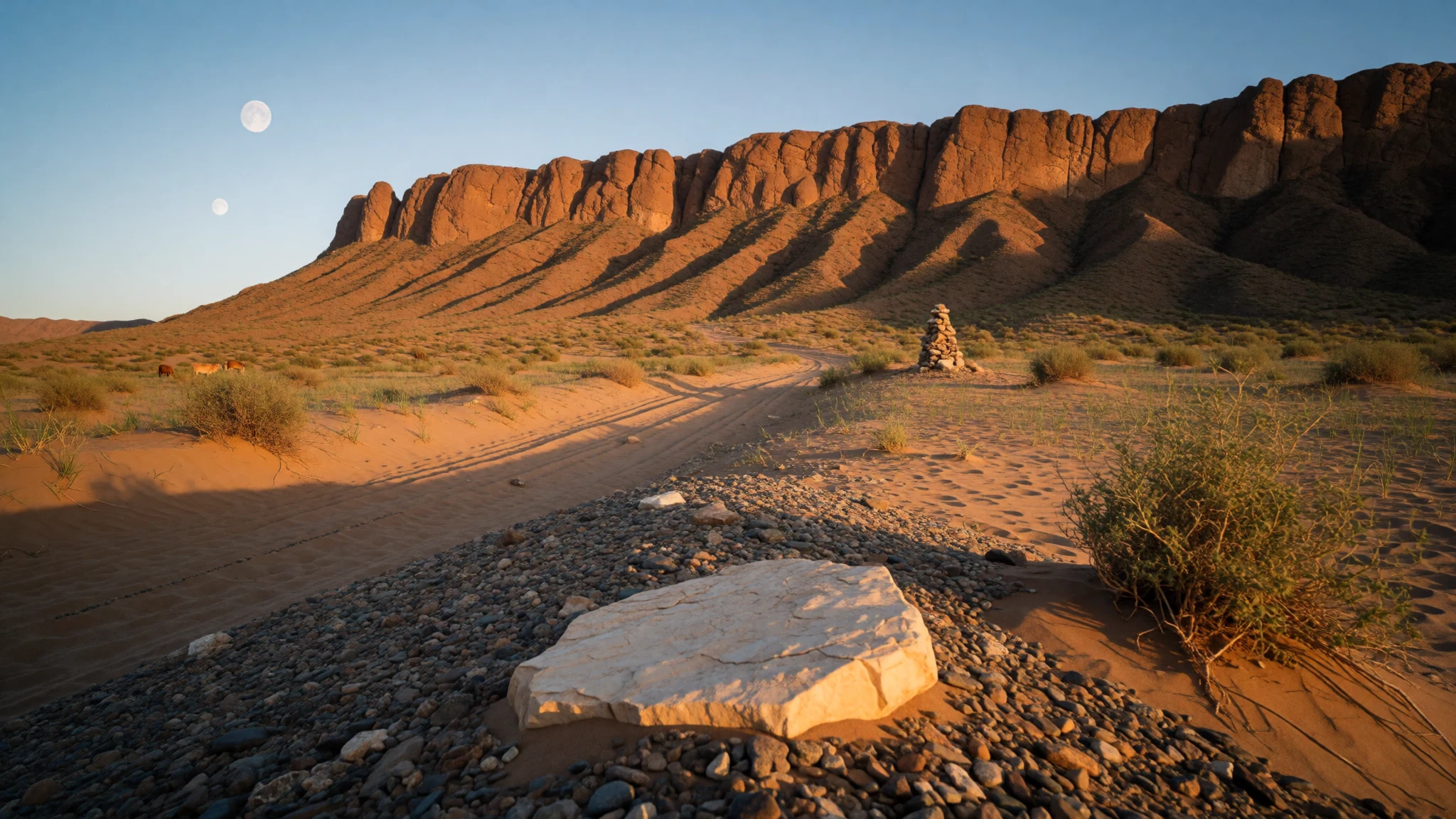
The Helan Mountains rise from the desert edge of Inner Mongolia and Ningxia, with monasteries, rock art and wine country on their slopes.
The place
The Helan Mountains are a dry, north–south range on the border between Inner Mongolia's Alxa League and Ningxia in north-west China, and the highest point reaches 3,556 m. Older sources often call them the Alashan Mountains, and the Mongolian form, Alshaa, still turns up on maps and photo captions. The range stands almost alone, and the contrast on either side is what defines it. To the west lies the Tengger Desert, extremely arid and thinly settled. To the east the land drops to the irrigated plain of the Yellow River, where the cities of Yinchuan and Shizuishan sit among canals and fields, with the Mu Us part of the Ordos Desert further on. Wuhai, in Inner Mongolia, lies to the north. The Yellow River runs roughly parallel to the range, mostly on its eastern side, and crosses to the western side near the northern end without cutting a deep gorge. The ridge catches what little moisture the desert winds carry, so the eastern slopes hold gullies, patches of forest and meadow flowers, while the western flank fades into stony plateau. The range is also a nature reserve, so access to some areas is controlled. Most visitors come from Yinchuan, whose eastern foothills hold wineries, tombs and gullies, or from Alxa Left Banner on the Inner Mongolian side, where Tibetan Buddhist and Mongolian monasteries sit in the folds of the hills. Two regional administrations share the range, so signage, rules and the feel of the towns change depending on which side is used.
Its story
The Helan Mountains have long worked as a frontier, a wall of rock between grazing land to the west and farmland to the east. Early herding peoples pecked and painted images onto cliff faces here, and this rock art is a record of who passed through. Later the range sheltered a Tangut state, Western Xia, whose rulers were buried on the plain at the eastern foot near present-day Yinchuan; the tomb mounds still stand there, eroded and low. Mongol conquest ended that kingdom, and in time Mongol groups settled the country beyond the ridge. Tibetan Buddhism took root among them, which is why monasteries such as Guangzong Temple and the Western Monastery (Baruun Hiid) sit in these hills. Older English-language sources call the range the Alashan Mountains, a form of the same Mongolian name. The Yellow River made the east a zone of irrigated farming and trade, while the desert side stayed sparsely populated. Modern borders follow the ridge, with Ningxia to the east and Inner Mongolia's Alxa League to the west. In recent decades the eastern foothills have gained another life as vineyards and hiking and day-trip country, and the range is protected as a nature reserve. The old divide between steppe and plough has not disappeared. It now simply includes tour buses, wine tastings and park gates.
What to see
- Helan rock paintings — Eastern and central Helan range
The Helan Mountains hold many carved and painted images on cliff faces, among them a face-like figure often described as a sun or god image, set high on a vertical wall. Binoculars help. Some sites sit inside controlled areas, so ask locally which are open before travelling.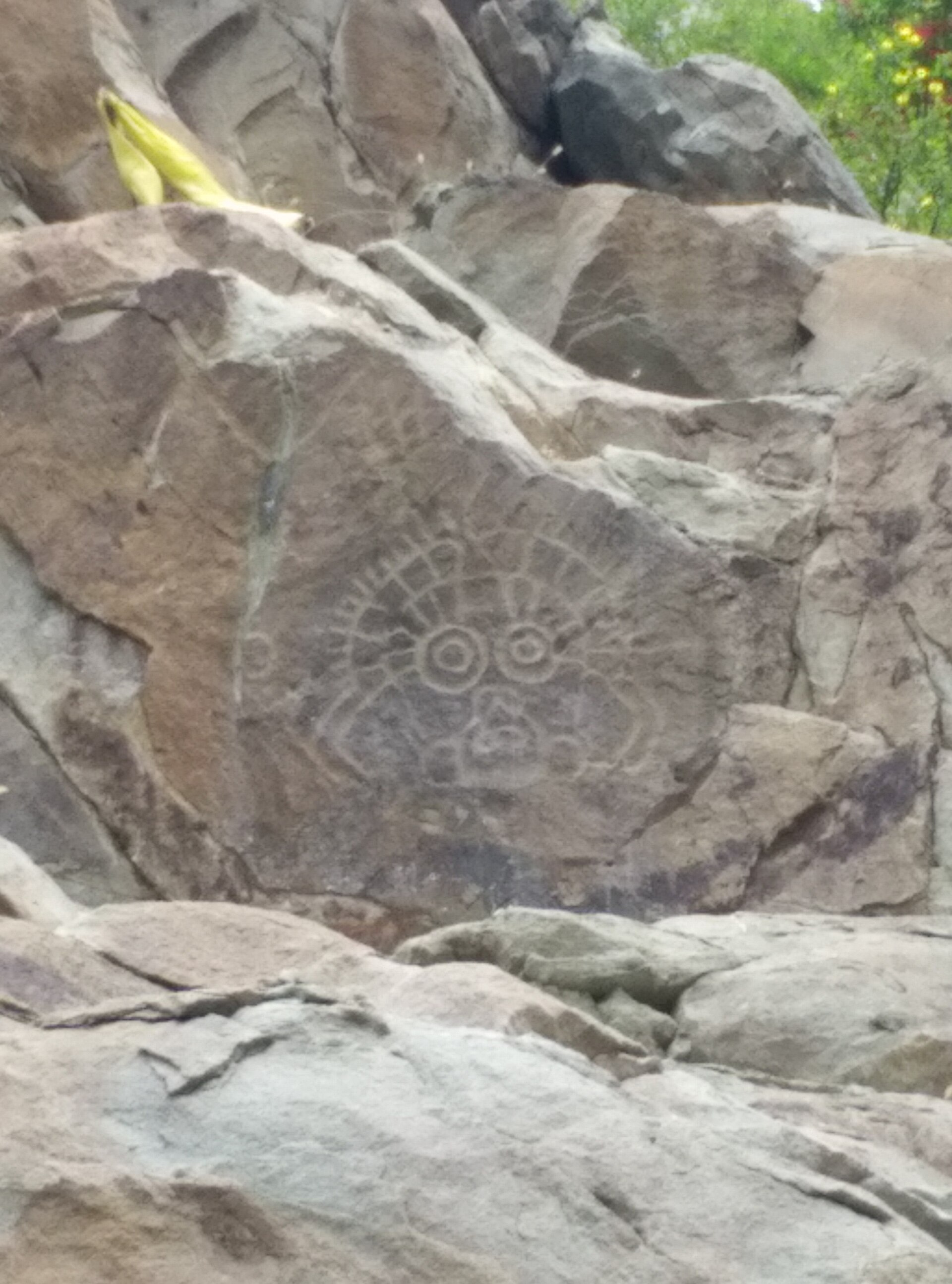
- Alshaa Baruun Hiid (Western Monastery) — Alxa League, Inner Mongolia
Alshaa Baruun Hiid is a Buddhist monastery in the Alxa part of Inner Mongolia, set against dry hills. It shows how Mongolian religious life persists on the desert side of the range. Check locally whether it is open and which buildings can be entered.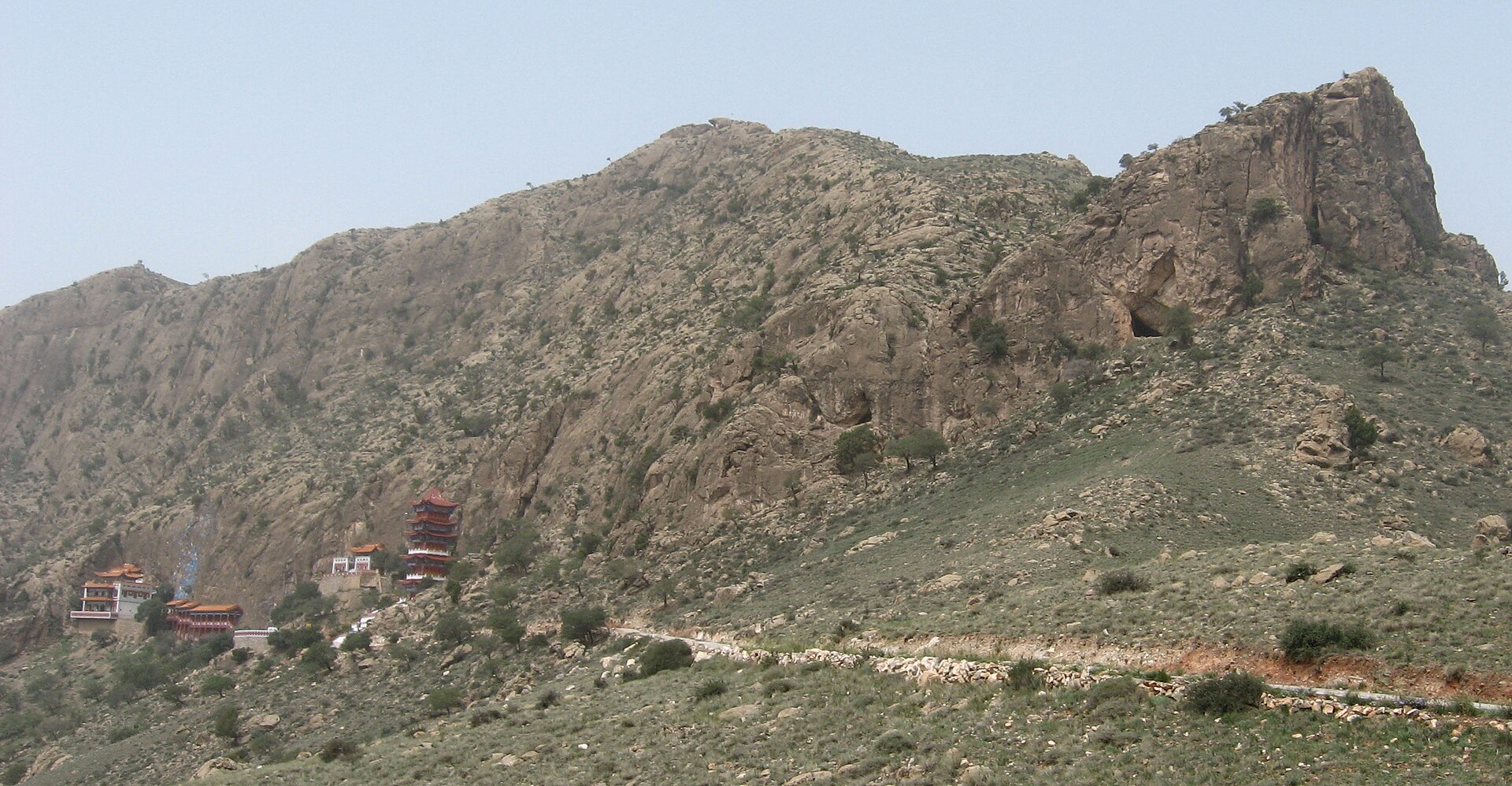
- Guangzong Temple — Alxa Left Banner
Guangzong Temple is a Tibetan Buddhist temple in Alxa Left Banner, lit warmly at the right hour against bare slopes. It suits a slow visit at the edge of the desert: whitewashed walls, prayer flags and long views over the dry plain. Ask about access before setting out.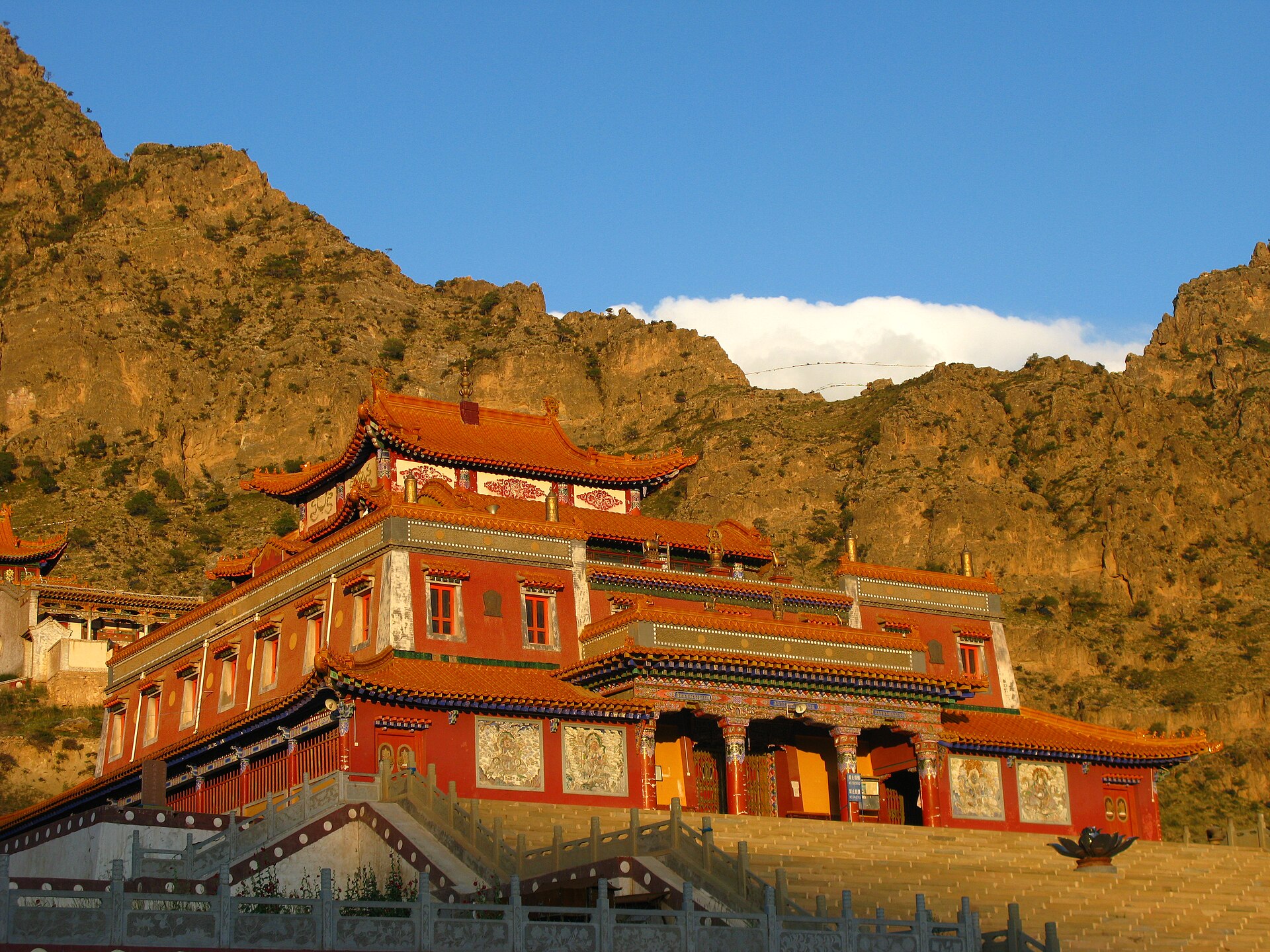
- Upper ridges of the Alshaa mountains — High Helan range
The upper Helan Mountains are rocky and open, with thin cover and sudden changes in weather. Ridge walks give wide views over desert to the west and farmland to the east. The top of the range reaches 3,556 m, so altitude and wind matter.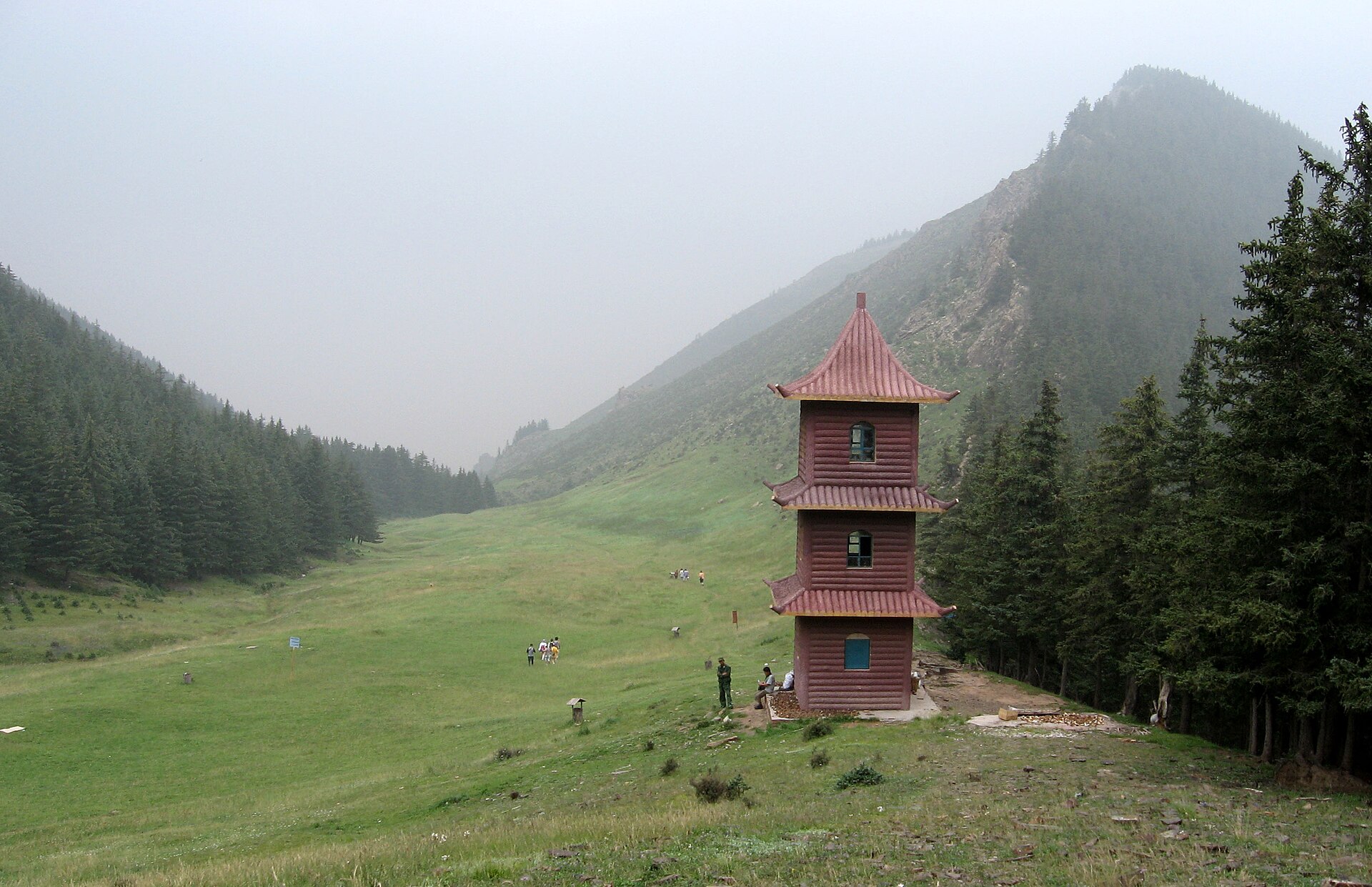
- Eastern foothill gullies — Eastern foot, near Yinchuan
Gullies on the eastern side, such as Dashuigou, hold streams, scrub and seasonal wildflowers, including the red lily known locally as shandandan (山丹丹). These valleys are the gentlest way into the range and make a good day trip from Yinchuan.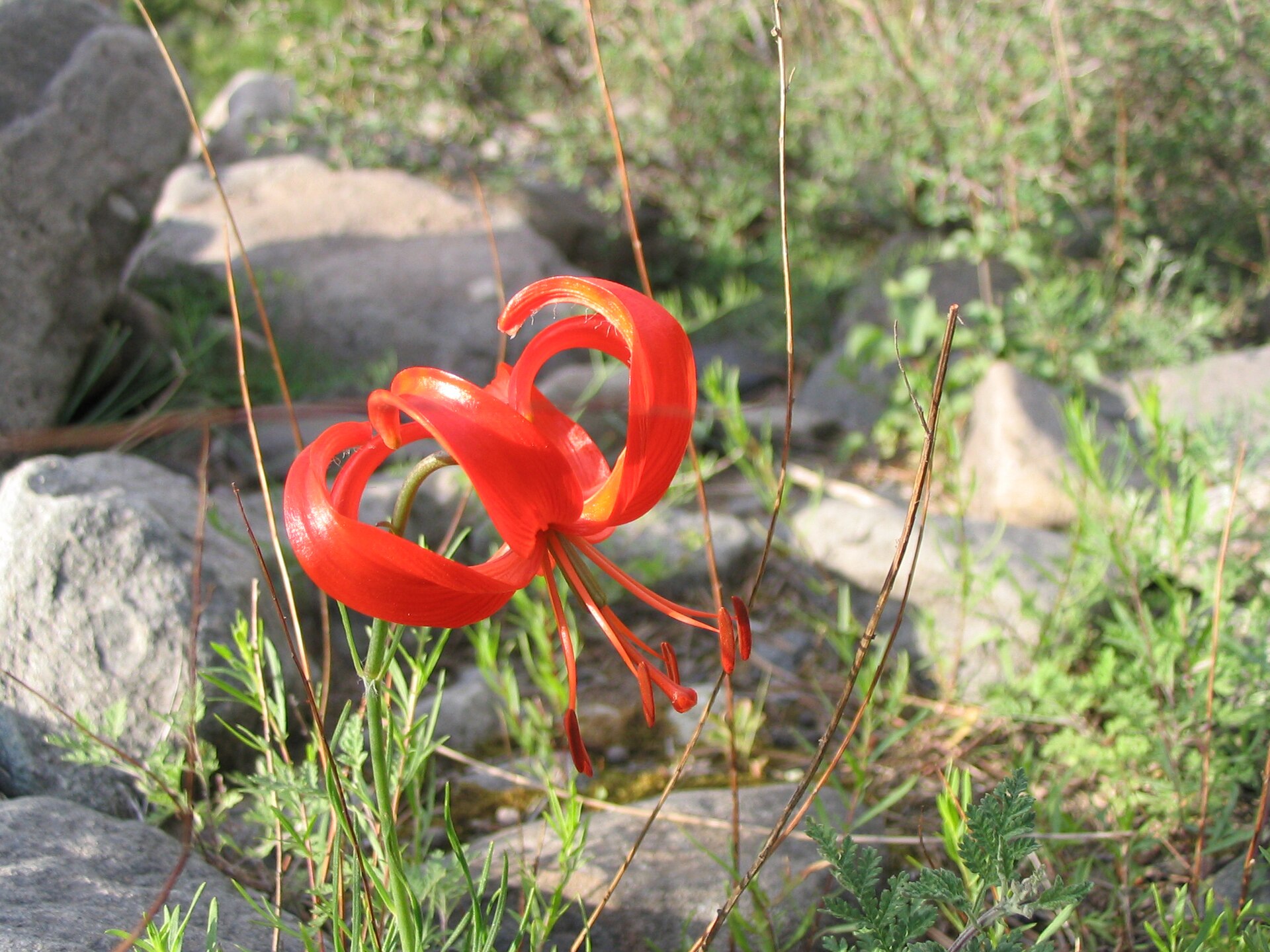
- Western Xia tombs — Plain at the eastern foot, near Yinchuan
Beneath the Helan Mountains on the Ningxia side stand the eroded tomb mounds of the Tangut rulers of Western Xia. The site is stark and open, best seen with the ridge behind it. Allow time for the site museum, and check the official notices for opening arrangements.
Culture
The Helan Mountains sit where Mongol, Han Chinese and Hui communities meet. On the Inner Mongolian side, Mongolian culture shows in monasteries, felt, horse and herding traditions, and milk tea served as a matter of course. Tibetan Buddhism is the main monastic tradition of the Alxa area. On the Ningxia side, Hui Muslim communities shape the food and the rhythm of towns, with halal eateries and mosques. The range itself is regarded as a marker between steppe and farmland, and people on both sides have long used it that way. Vineyards on the eastern foothills are a newer part of local life. Politics also frames how places are talked about. Inner Mongolia is an autonomous region within China, and although it shares much with the country of Mongolia, treating the two as one can cause offence and may be read as a political statement. Travellers meeting ethnic Mongols are better served by curiosity about local customs than by comparisons with Mongolia. Hosts often offer tea or dairy snacks, and accepting with both hands and a smile is polite. At monasteries and mosques, quiet and modest dress matter more than any rule on a sign. At monasteries, walk clockwise around stupas and prayer wheels, ask before photographing monks or interiors, and avoid describing Inner Mongolia as part of Mongolia in conversation.
What to wear
In the Helan Mountains region, traditional dress belongs to its communities. Mongolian people wear the deel, a long wrapped robe of wool, silk or cotton, tied with a bright sash and often worn with felt or leather boots and a brimmed or peaked hat. It appears at weddings, festivals and monastery events more than on ordinary days. Hui men in Ningxia may wear a small white cap, and many Hui women wear a headscarf, with colours and fabrics varying by occasion. Day to day, most people wear what is common across northern China: jackets, fleeces, jeans and sportswear, with padded coats in cold months. Herders and farmers favour hard-wearing, windproof clothes. A visitor should dress for a dry climate with large swings between warm sun and cold shade or wind. Layers work best, along with a hat, sunglasses and sun cream. The terrain is stony, so sturdy shoes or light hiking boots are better than sandals, and they should be broken in before walking in the gullies or ridges. At monasteries and mosques, cover shoulders and knees, and carry a scarf that can cover the head if needed. In winter, add a windproof outer layer, gloves and warm socks, since cold dry wind on exposed ridges feels harsher than town temperatures suggest.
What to eat
- Mongolian milk tea — Served with breakfast in lodgings and in Mongolian eateries on the Alxa side
Mongolian milk tea is a warm, mildly savoury tea made with milk, often drunk through the day. It is a gentle introduction to local taste and is usually offered to guests. Dairy such as yoghurt and cheese often appears alongside. - Roast lamb — Mongolian restaurants in Alxa Left Banner and Yinchuan
Lamb is the centre of many meals, usually roasted with a spice coating that gives a strong, distinct flavour. It is rich and filling, best shared among a group, and often paired with flatbread or plain rice. - Mongolian hotpot — Hotpot restaurants in Yinchuan and Wuhai
Mongolian hotpot is a pot of well-flavoured broth, usually lacking the heavy chilli heat of central China, with thin lamb, vegetables and noodles cooked at the table. It suits cold evenings after a day on the hills. - Hand-grabbed lamb — Hui eateries in Yinchuan
Shouzhua yangrou, or hand-grabbed lamb, is boiled lamb served on the bone and eaten with the fingers, often with dips and bread. It is typical of Hui-run eateries in Ningxia and is generally halal. - Helan foothill wine — Wineries on the eastern foothills
The eastern foothills of the range are known for wine growing. Many estates offer tastings, and some offer meals. Booking ahead is wise, and a driver is needed since distances between estates are long.
Plan it
Best time. May–June and September–October are the most comfortable months, when days are usually mild and the ridge views are clear. Winters are cold and dry, and midsummer can be hot on the plains and exposed slopes.
How long. 2–3
Getting there. Foreign visitors normally fly to a major Chinese city first. Yinchuan is the usual gateway for the Ningxia side, and Wuhai (WUA) is the nearest airport in the north. From Yinchuan, a taxi or arranged driver takes you to the eastern foothills, and Alxa Left Banner is reachable by road from the city.
Budget. mid
Tips
- Carry your passport; checks happen at entrances and on some roads
- Hire a driver for the foothills and monasteries, as public transport is limited
- Take water, sun protection and warm layers, because exposed ridges are windy and the top of the range reaches 3,556 m
- Foreign bank cards are not always accepted, so carry some cash and install a payment app if possible
- Check local notices for nature reserve access before planning a long hike
Etiquette
- Dress modestly and keep quiet at monasteries and mosques
- Ask before photographing monks, worshippers or interiors
- Do not describe Inner Mongolia as part of Mongolia
Nearby
Sources
- Wikidata Q13770 (CC0)
- Wikipedia: Helan Mountains (rev 1347731389) (CC BY-SA 4.0)
- Wikivoyage: Inner Mongolia (rev 5293903) (CC BY-SA 4.0)
- Photo 01: Alshaa Baruun Hiid, Yaan (CC BY 3.0)
- Photo 02: WWF Ecoregion PA1302, Every-leaf-that-trembles (CC BY-SA 4.0)
- Photo 03: Alshaa Uul, Yaan (CC BY 3.0)
- Photo 04: Helan rock painting, 霧島聖 (CC BY-SA 4.0)
- Photo 05: Lost temples, Carsten Ullrich (CC BY-SA 2.0)
- Photo 06: Guangzong Temple, Carsten Ullrich (CC BY-SA 2.0)
- Photo 07: Shandandan, Caaat (Public domain)
- Photo 08: Helanshan, unknown author (CC BY 3.0)


