Hasankeyf
Hasankeyf, Turkey
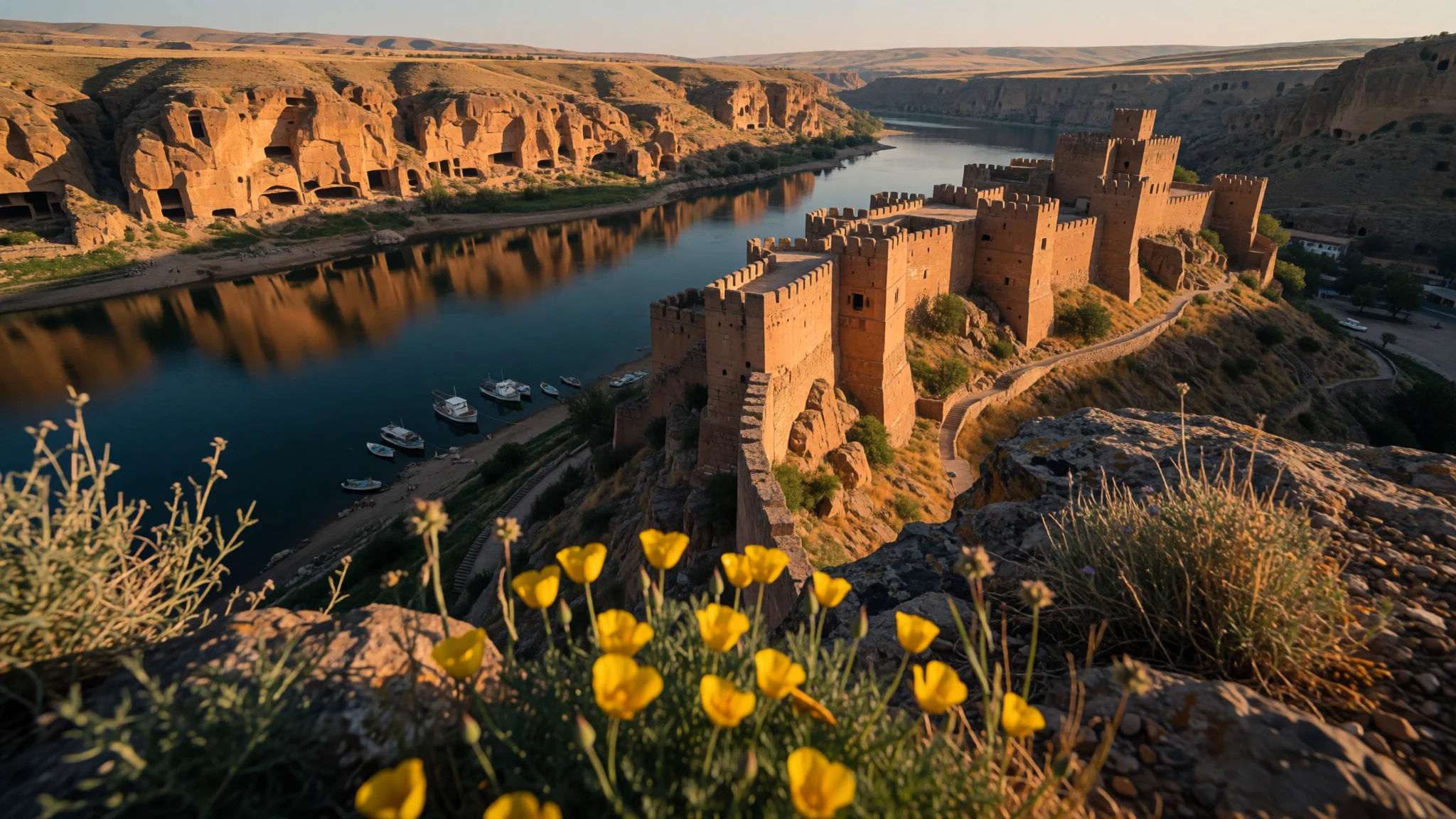
Hasankeyf is an ancient Tigris town half drowned by a dam, where a citadel on a cliff now looks out over a lake.
The place
Hasankeyf is a small town on the Tigris in Batman Province, in south-eastern Turkey, with a population of 6,724. It was declared a natural conservation area in 1981, but the story of the place now starts with what changed. The Ilısu Dam reservoir rose over the old town beside the river, and the lower streets, the bridge piers and a great many caves lie under water. What a visitor finds today is therefore not the town described in older guidebooks. The limestone bluff and its citadel still stand about 100 m above the old river crossing, and the lake laps at the foot of the walls. Nearby, a newer settlement has cafes along a promenade to a footbridge, and an archaeology park on higher ground holds monuments that were lifted and moved before the water arrived: a bathhouse, mosques, a medressa and a small museum. The surroundings are dry, pale and open, with Kurdish and Arab communities in the villages of the province. Summers are fierce, while winters are softened by the river. Most people come for a day from Batman or Mardin, walk the citadel, take a boat on the reservoir and eat beside the water. The town suits those curious about how a heritage landscape gets rearranged, and it asks for a willingness to feel the loss as well as the survival. Anyone hoping for untouched ruins along a living river will be disappointed.
Its story
Hasankeyf has been settled for a very long time, and the layers are hard to separate. Bronze Age tablets from the city of Mari mention a walled town on a large river called Ilānṣurā, and some scholars tentatively link it to Hasankeyf, though sites in north-east Syria have also been suggested. Later the area passed through the hands of the Hurrian kingdom of Mitanni, the Neo-Assyrians and the Medes. In Roman times the town was known as Kepha and served as a frontier base facing Persia. After the emperor Julian died, a treaty in 363 pushed the border to the Tigris, so the legionaries at Kepha found themselves right on the line. Islamic forces took the town from the Byzantines, and a bridge over the river is first recorded around then. Later dynasties, among them the Ayyubids, rebuilt the citadel and added mosques, palaces and tombs, and the later Aq Qoyunlu rulers left the tiled mausoleum that survives today. For centuries the town was a river crossing, with homes cut into the cliffs. Then came the Ilısu Dam project, opposed locally and abroad. Some monuments were moved to higher ground, the rest went under the rising lake, and the old bridge, stone by stone, can no longer be seen through the murky water.
What to see
- The Citadel (Kale) — The bluff above the reservoir
Hasankeyf's citadel crowns the bluff, with rough masonry that looks older than the fourteenth-century rebuild suggests. It was built high enough to escape the flooding, so the lake now touches its bastions. Boats from the modern village land at its jetty. Entry to the site is free, and the boat ride is paid.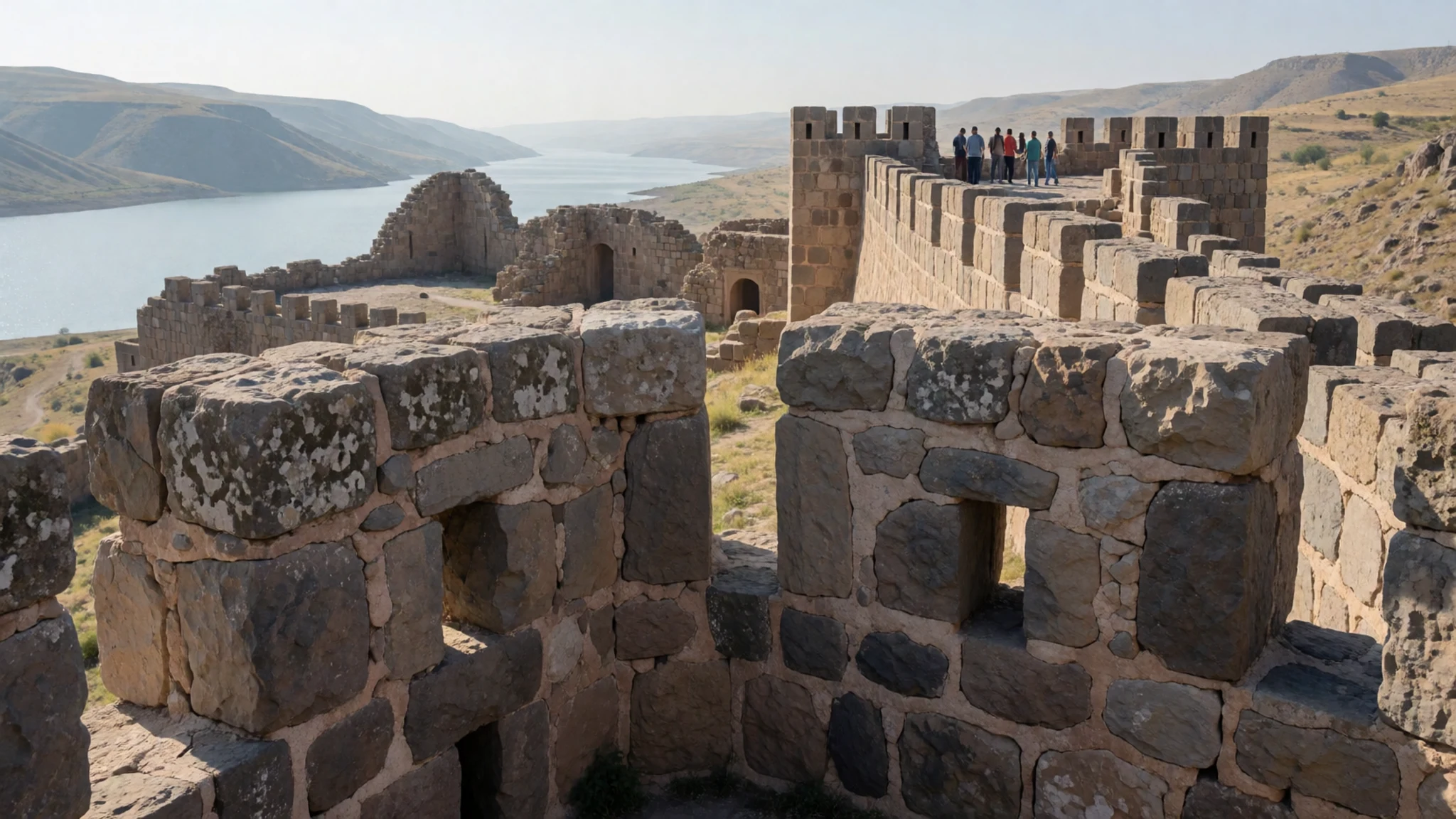
- Great Mosque and palaces — Within the citadel
Inside the citadel walls, the Great Mosque occupies the highest point and probably stands over an earlier Roman temple. The Great Palace sits in the western corner, and the Small Palace on the southern edge had its foundations reinforced against the rising water. Expect ruins and wind rather than interpretation boards.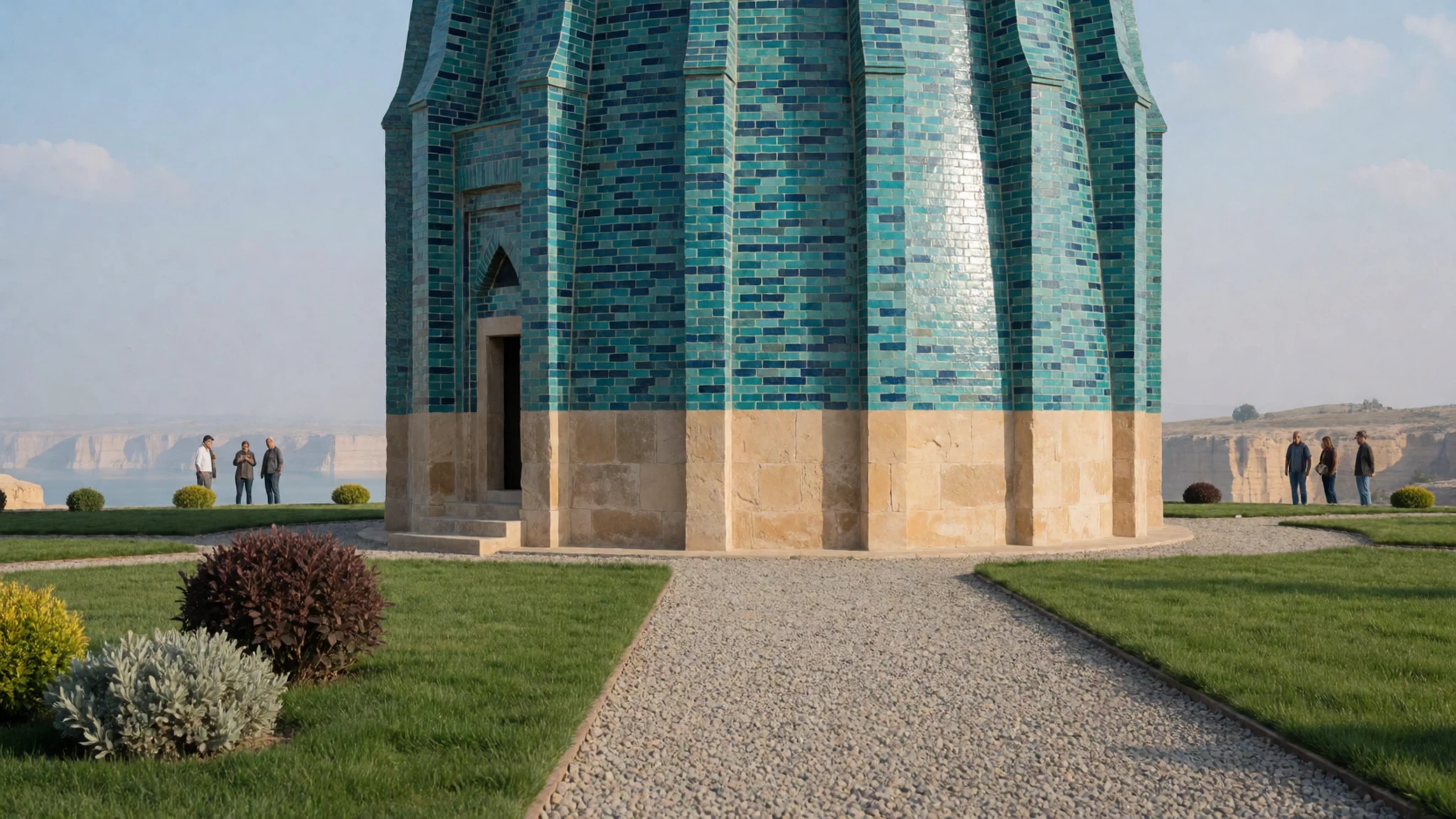
- Zeynel Bey Mausoleum — Archaeology park
This kiosk-style tomb, a kümbet, was built in 1473 for the son of a regional ruler. Its outer walls carry attractive tilework, while the inside is plain. It is among the best-known images of Hasankeyf and a rewarding stop for photographs and a quiet look at the craftsmanship.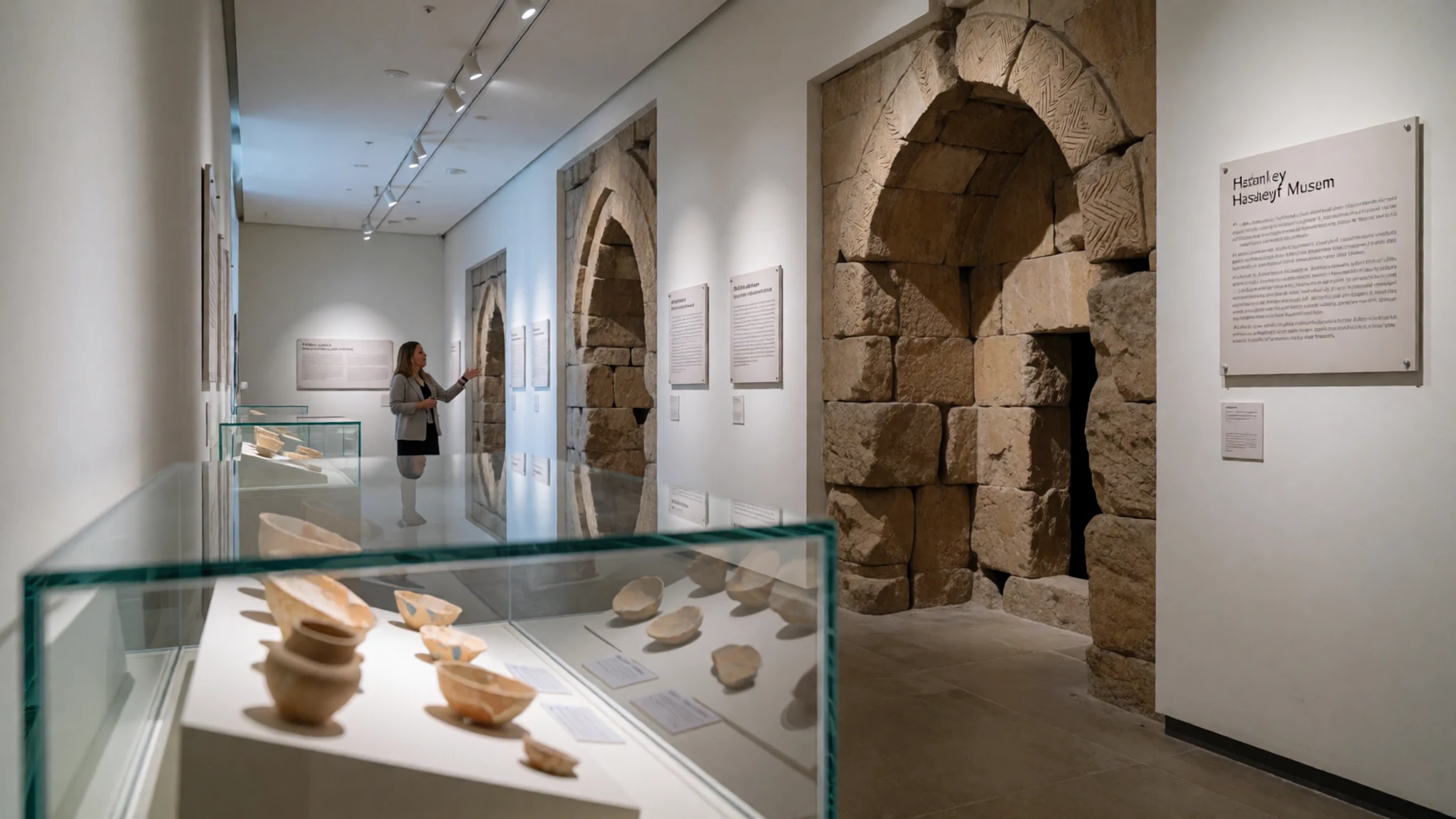
- Hasankeyf Museum — Archaeology park
A small museum of local archaeology and history. Its main interest is the group of ancient buildings that were moved here before the flooding, which gives a sense of the scale of the rescue effort. It pairs well with the nearby relocated bathhouse and mosques.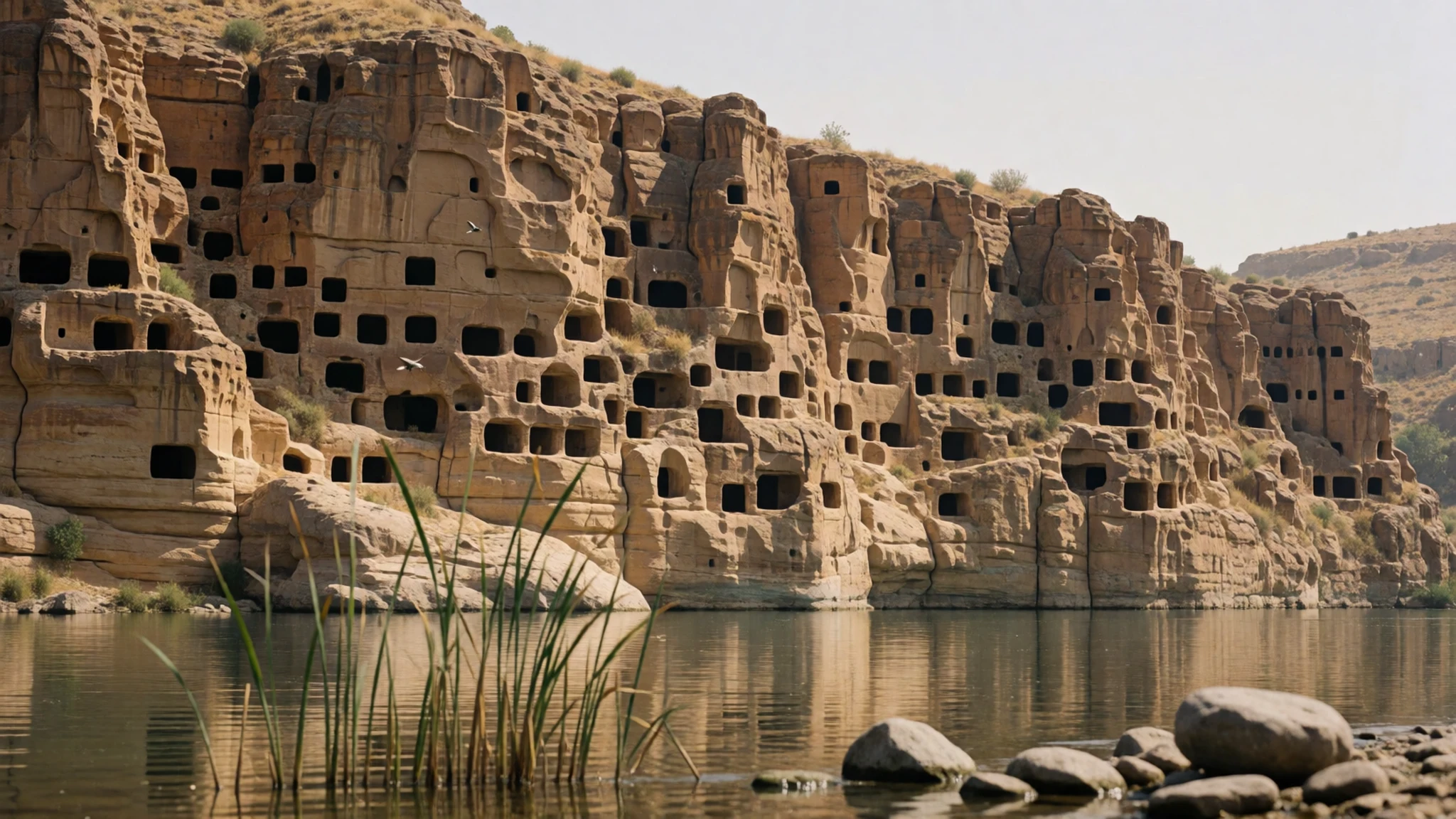
- Relocated mosques and medressa — Archaeology park
The Koç Mosque, the Kizlar Mosque, the El Rizk Mosque and the Şihabiye Medressa were all re-erected in the park. The medressa was the only part saved from a ruined complex. Seen together, they show the layered styles of a medieval river town. - Imam Abdullah Tomb — Reservoir shore
Close to the edge of the reservoir, this tomb honours Abdullah, a descendant of a relative of the Prophet Muhammad, said to have died in the Muslim conquest of the town. An inscription records a later restoration under the Ayyubids. It is a place of pilgrimage as well as history.
Culture
Hasankeyf sits in a mixed part of Turkey, where Kurdish, Arab and Turkish communities share the towns and villages of Batman and Mardin provinces. Conversation is often warm and unhurried, and tea is offered freely. The town's Islamic heritage is easy to see in its mosques, tombs and medressas, several of which are still treated as places of respect rather than just ruins. The Imam Abdullah Tomb draws pilgrims, and visitors may meet people praying nearby. Family life is central, and local people often take pride in the town's long history while carrying real feelings about the dam and the move of residents to the new settlement. Many people lost homes, workshops and cave dwellings, and some will speak openly about it. Listening matters more than pushing for opinions. Cafes by the water are social places, busy in the evening, and some serve alcohol while others do not, so check before assuming. Hospitality is a point of honour, and refusing a first offer of tea may be taken lightly if done politely. The region's complicated recent history means that political topics are best left to the locals to raise. When visiting any tomb or mosque in Hasankeyf, cover your shoulders and knees, remove your shoes before stepping onto prayer areas, and ask before photographing people, especially women and worshippers.
What to wear
In the Hasankeyf area, traditional dress varies with community. Kurdish men have long worn the şal u şapik, a jacket and wide trousers made of wool or coarse cotton, often with a sash and a patterned headscarf, and women wear layered long dresses in bright, embroidered fabrics with headscarves and sometimes gold-coloured trim. Arab families in the wider region favour loose cotton robes and head coverings suited to heat. These outfits are mostly brought out for weddings, festivals and family occasions, and are rare in daily life. What most people wear now is ordinary modern clothing: trousers, shirts, long skirts and light jackets, with many women choosing headscarves and long sleeves, and some older men still wearing baggy trousers. Visitors should dress for strong sun and a conservative setting. In summer, when temperatures can reach 43 °C, light loose cotton or linen with long sleeves and trousers or long skirts works well, with a hat and sunglasses. Winters are mild but can dip to about 6 °C, so a light jacket helps. Shoes need grip, since the citadel path is uneven and rocky, and the ground in the archaeology park can be dusty and hot. Women are not required to cover their hair for the town in general, though a scarf is useful when entering mosques or tombs, and everyone should keep shoulders and knees covered.
What to eat
- Kebab and grilled meat — Riverside promenade cafes
Grilled lamb or chicken with flatbread, onions and sumac is the standard meal in south-eastern Turkey. In Hasankeyf, look for it at the cafes along the promenade towards the footbridge, where it is usually served with salad and tea.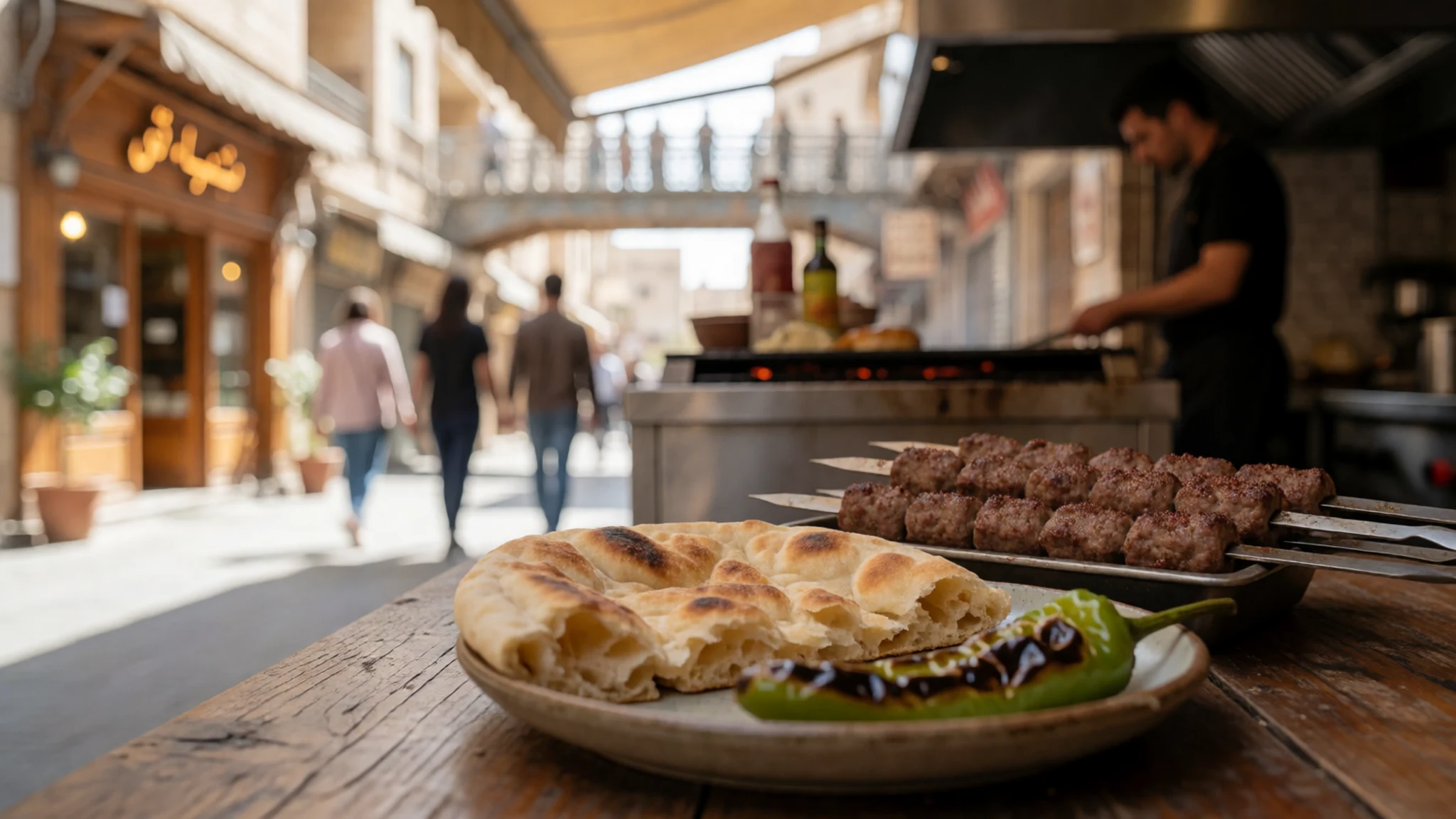
- Mercimek çorbası — Cafes and small eateries
Red lentil soup, thick and lightly spiced, served with lemon and bread. It is an easy, cheap start to a meal and welcome on a cool evening. Most cafes and small eateries in town and in nearby Batman will have it.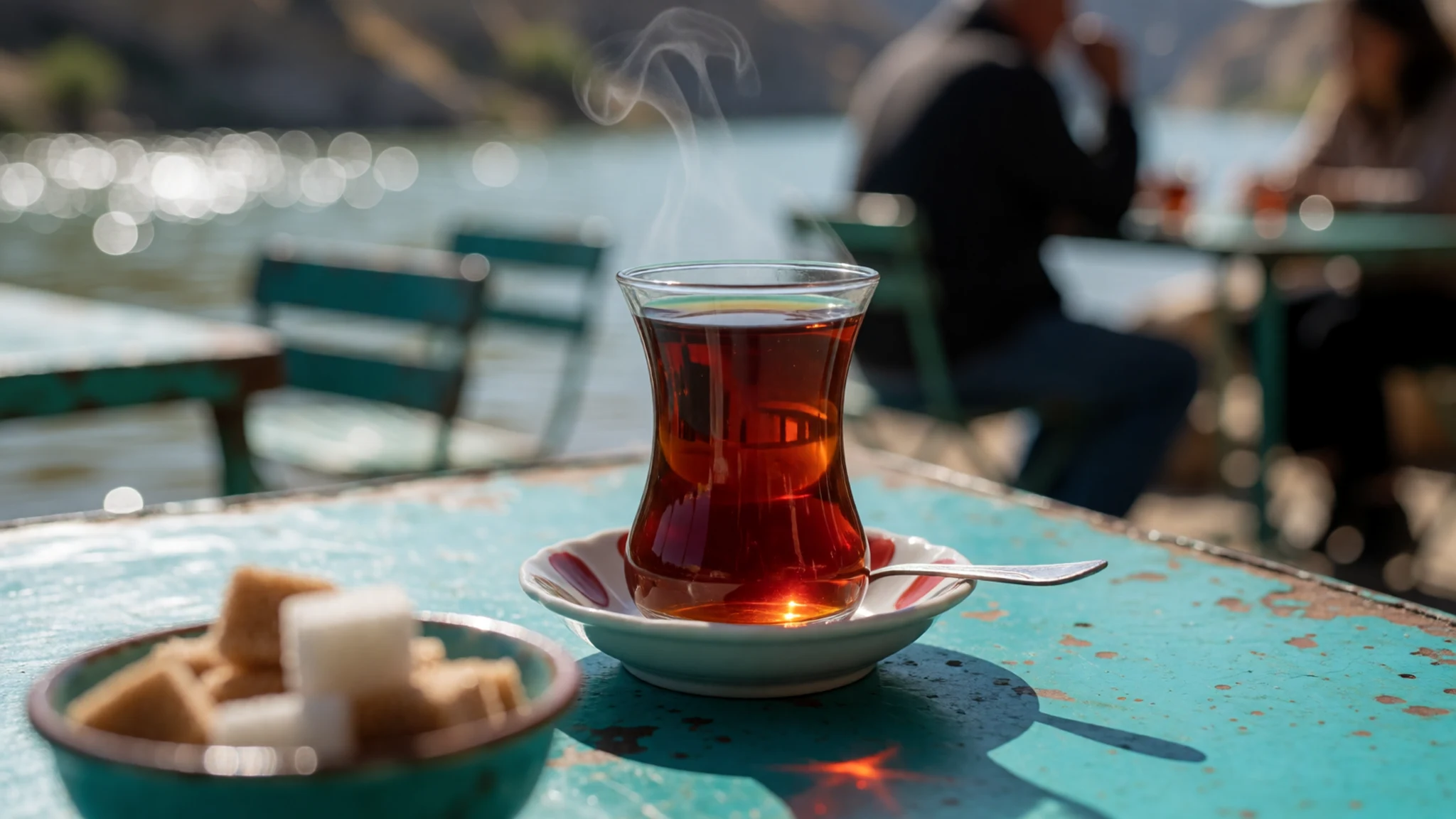
- İçli köfte — Local restaurants, and Mardin or Midyat
A shell of fine bulgur wheat filled with spiced minced meat and fried or boiled. It is a regional speciality from the wider Mardin and Midyat area, so it appears on menus here and is easier to find in bigger towns nearby. - Perde pilavı — Sit-down restaurants in Batman
Rice, chicken and nuts or dried fruit baked inside a pastry crust and cut at the table. It is a celebratory dish in this part of Turkey and usually needs to be ordered ahead, so ask early when planning a longer meal. - Çay — Any cafe along the water
Strong black tea in small tulip glasses is how any meal or conversation begins and ends. Sitting with a glass beside the reservoir at the end of the day is as good a way as any to take in the view.
Plan it
Best time. March–April and October–November, when days are warm rather than hot. Summer heat can reach 43 °C, and winters are mild, with lows around 6 °C.
How long. 1
Getting there. Fly to Batman, which has connections from Istanbul, or take the train from Ankara. Hasankeyf is about 38 km south-east of Batman, and shared minibuses (dolmuşes) cover the last leg in around an hour. They continue towards Midyat and Mardin.
Budget. low
Tips
- Go early in the day to avoid midday heat on the exposed citadel
- Carry water, a hat and sun protection, as shade is limited
- Take the boat from the village to see the citadel from the water, and ask the price before boarding
- Carry some cash for boats, snacks and small cafes
- Check the official site, hasankeyf.gov.tr, for current opening arrangements before travelling
Etiquette
- Dress modestly at tombs and mosques, and remove shoes where asked
- Ask before photographing people
- Be gentle when discussing the dam, as many locals were directly affected
Nearby
Sources
- Wikidata Q756957 (CC0)
- Wikipedia: Hasankeyf (rev 1384458769) (CC BY-SA 4.0)
- Wikivoyage: Hasankeyf (rev 5403743) (CC BY-SA 4.0)
- Hasankeyf Castle, Omer Unlu (CC BY 2.5)
- Zeynel Bey Mausoleum, Htkava (CC BY 3.0)
- Hasankeyf panorama, Areed145 (CC0 1.0)
- Tigris River, Hasankeyf, Htkava (CC BY 3.0)
- Bajarê Heskîfê piştî bin avbûnê, VOA (Public domain)
- Bajarê Heskîfê (2020), VOA (Public domain)
- BATMAN HASANKEYF, taylan44 (CC BY 3.0)
- Tarih, Memo erol (CC BY-SA 4.0)


