Halmahera
Halmahera, Indonesia
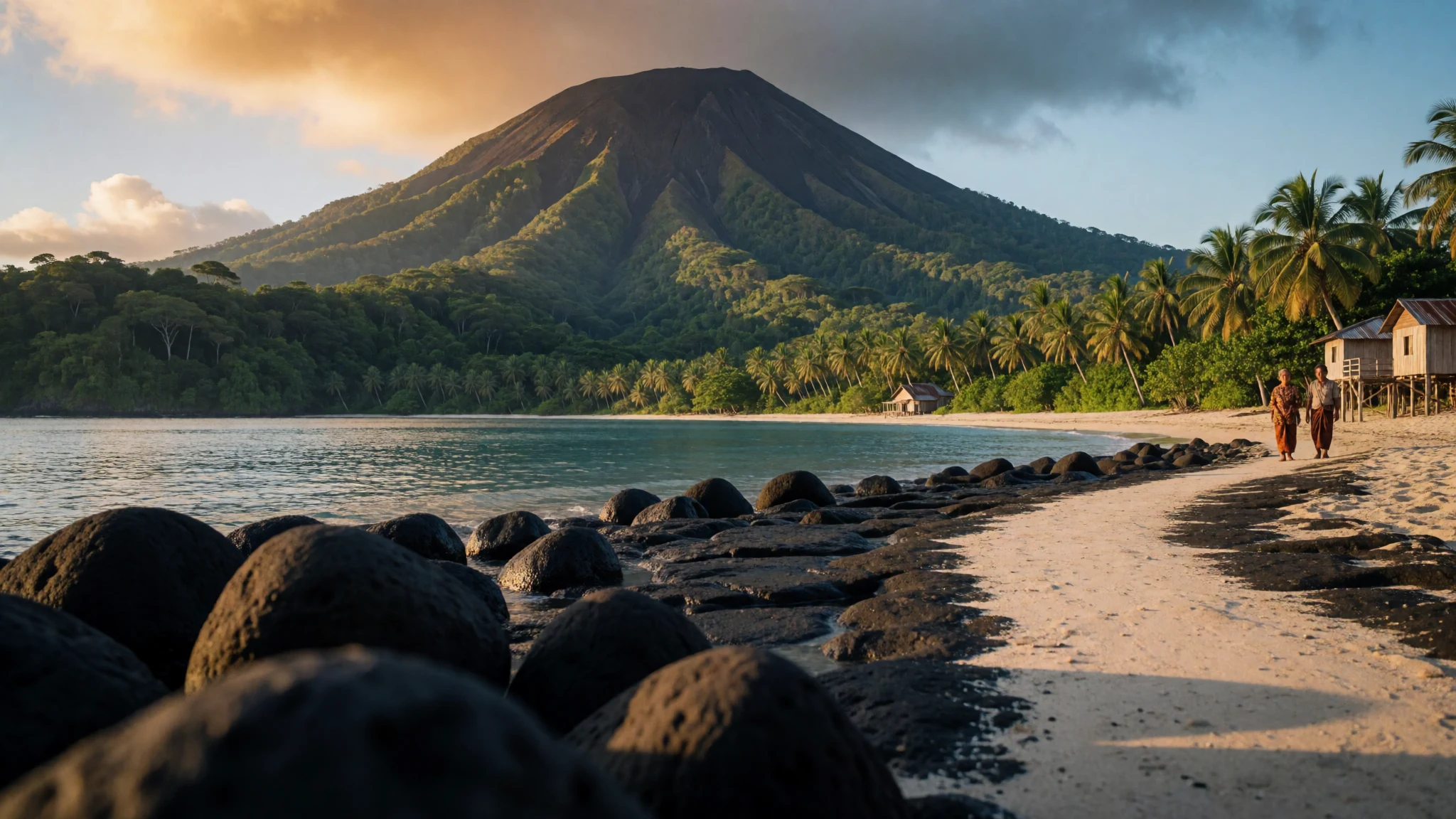
Halmahera is a wild, forested volcanic island in North Maluku, for travellers who want quiet coasts, rainforest birds and few other visitors.
The place
Halmahera is the largest island in the Maluku Islands, part of Indonesia's North Maluku province. Its odd shape, with four long peninsulas radiating from a central core, gives it a coastline far longer than its size suggests. Sofifi, the provincial capital, sits on the west coast, facing the smaller islands of Ternate and Tidore. The island is volcanic. Dukono smokes in the north, and Mount Ibu rises on the northwest coast. The highest ground reaches 1,635 metres, and much of the interior is steep, forested and thinly settled. In the eastern peninsula the bedrock is ultramafic, a dark, metal-rich rock that shapes both the soils and the mining interests now arriving. The island's own population in the facts is about 180,000, though larger figures are quoted when the wider island group is counted, so treat any number as a loose guide. Roughly half the people are Muslim and half Christian, and the two communities often live in neighbouring villages. Roads are limited, ferries matter, and distances take longer than a map suggests. Tourism is small and informal: guesthouses, boat charters arranged by phone, and local guides found through word of mouth. That is the appeal, and also the challenge. Halmahera rewards patience, flexible plans and a willingness to travel slowly, and it offers little in the way of polish. Heat and humidity are constant, and rain can arrive in any month.
Its story
Halmahera's history has long been entangled with its two small neighbours, Ternate and Tidore, just off the west coast. Before the Dutch East India Company took control of the archipelago, Maluku was organised around four kingdoms: Ternate, Tidore, Bacan and Jailolo. Halmahera was home to the Sultanate of Jailolo, which is why the island was formerly called Jilolo or Gilolo on old maps. In the north, the Loloda kingdom dates from the thirteenth century, though it was not counted among the four great courts. These were spice-world polities, living off trade in cloves and nutmeg that drew in Portuguese, Spanish, Dutch and English ships. During the Second World War, Kao Bay on Halmahera served as a Japanese naval base, and the nearby island of Morotai became an important Allied position; wartime photographs of both islands survive. More recently the island passed through a painful period. In 1999 and 2000 a local dispute between neighbouring districts widened into sectarian conflict across the North Moluccas, and thousands of people on Halmahera died. A ferry carrying refugees sank in June 2000, with great loss of life. Today the two communities live side by side again, and visitors will find the past discussed carefully, if at all. It is a history worth knowing before arriving, and worth approaching with tact.
What to see
- Dukono volcano — Northern Halmahera
Dukono is an active volcano at the island's northern end, and it is the clearest reminder that Halmahera sits on a volcanic arc. Treat it as something to see from a distance. Local guides and the authorities can advise on whether any approach is allowed, and conditions change.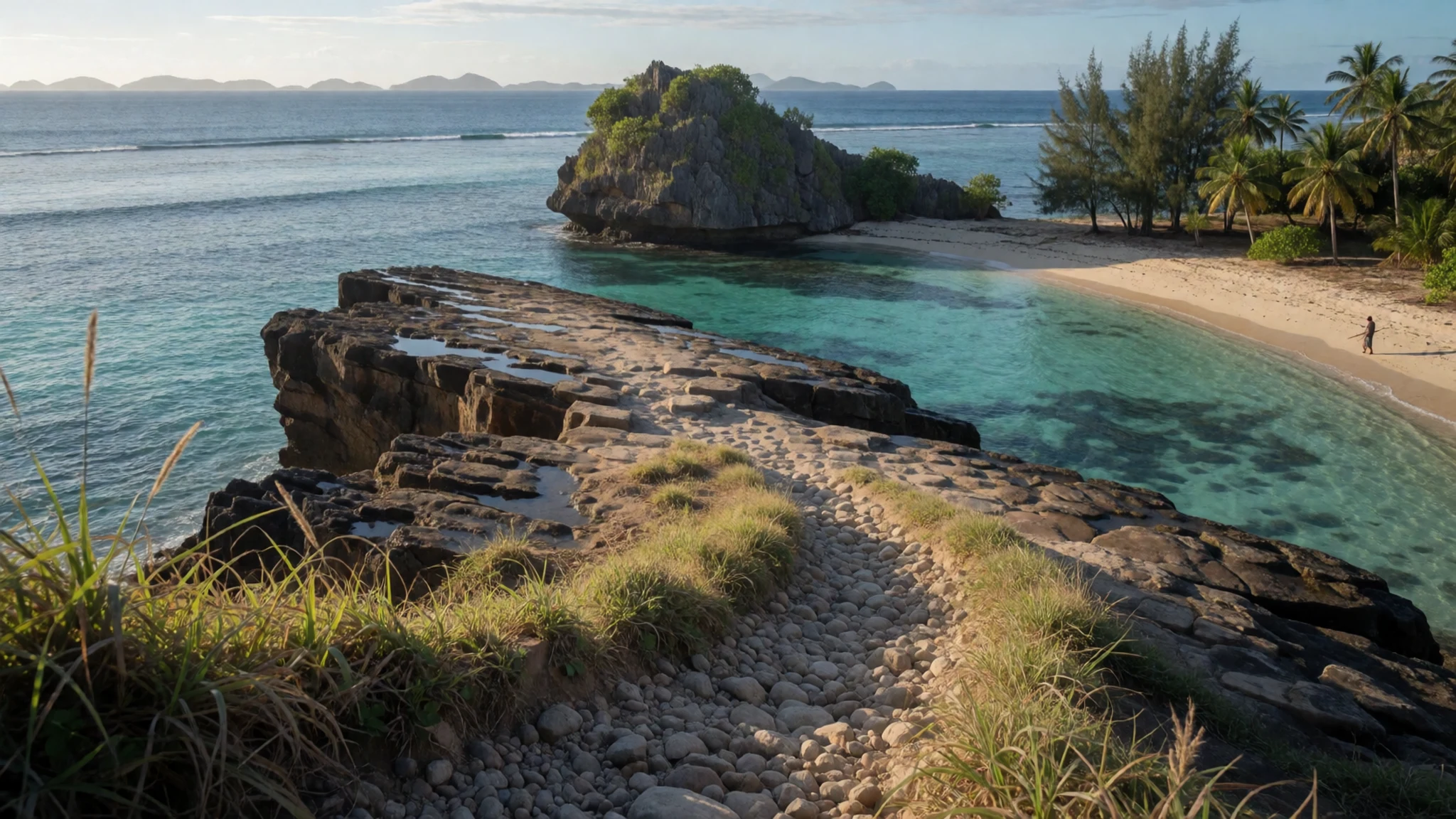
- Mount Ibu — Northwest coast
Mount Ibu rises on the northwest coast and is also active. The surrounding coast has black volcanic soil and small farming villages. Viewing it from the shore or from a boat is the sensible option; check current restrictions with local officials before planning anything closer.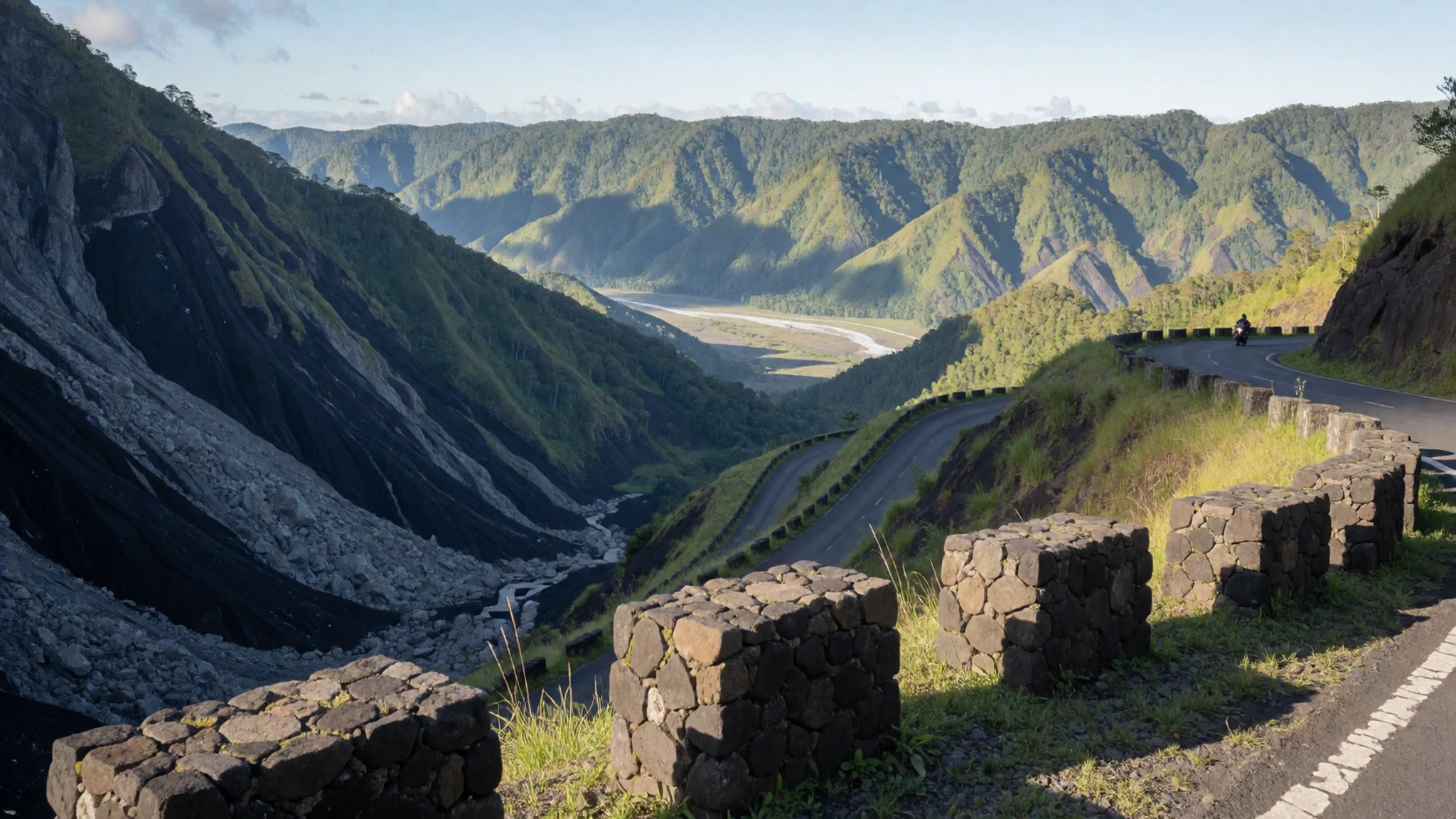
- Aketajawe-Lolobata National Park — Interior and eastern Halmahera
This national park protects lowland and hill rainforest in the island's interior and east. It is the place for birdwatching, including the endemic species that draw specialists to Maluku. Trails are basic, so go with a local guide, start early and expect mud, leeches and heat.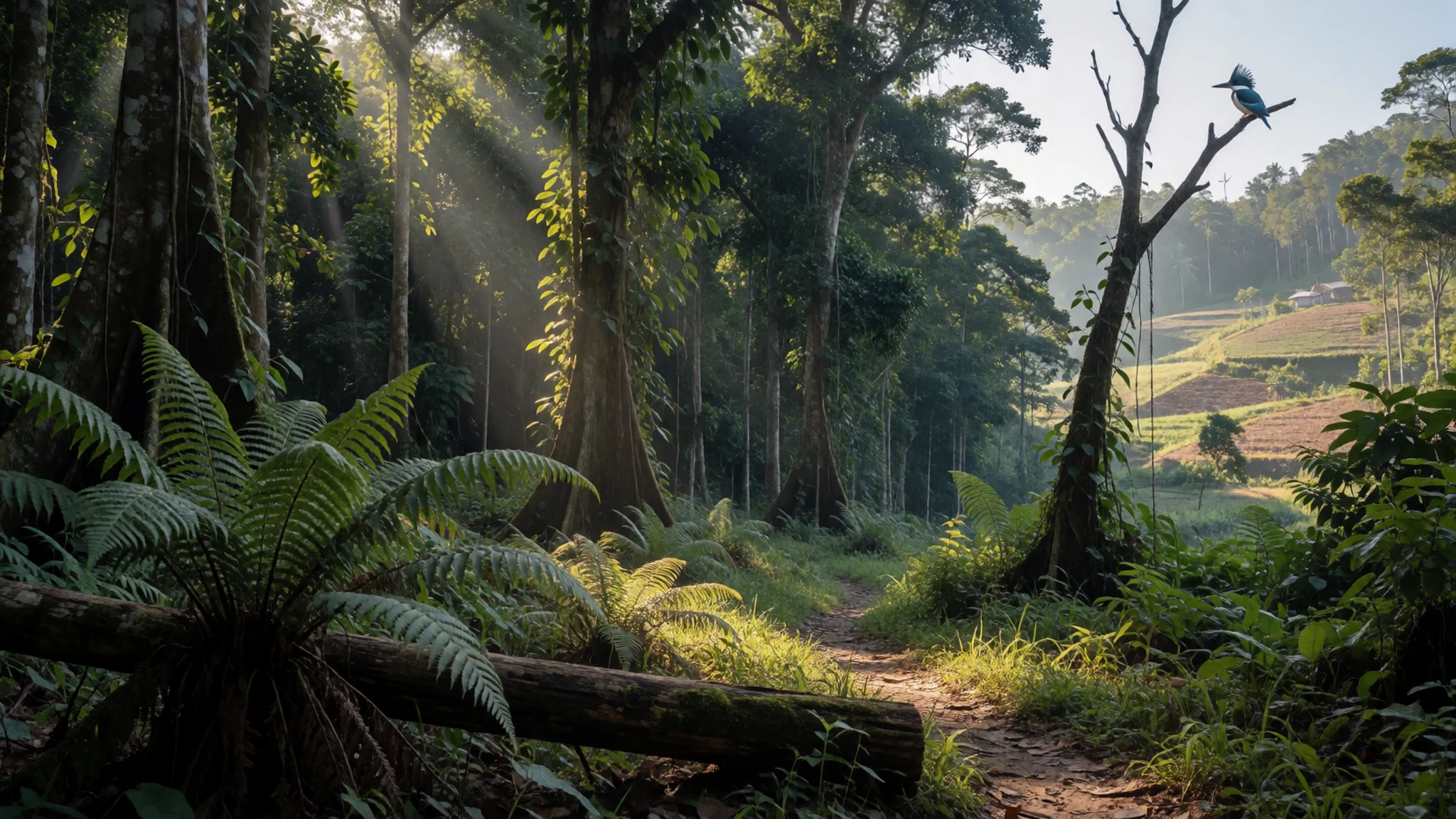
- Sofifi and the west coast — West coast
Sofifi is the provincial capital and the practical gateway, with ferry links across to Ternate and Tidore. It is more administrative than charming, but the surrounding coast has quiet beaches and fishing villages. Use it as a staging point for onward travel by road or boat.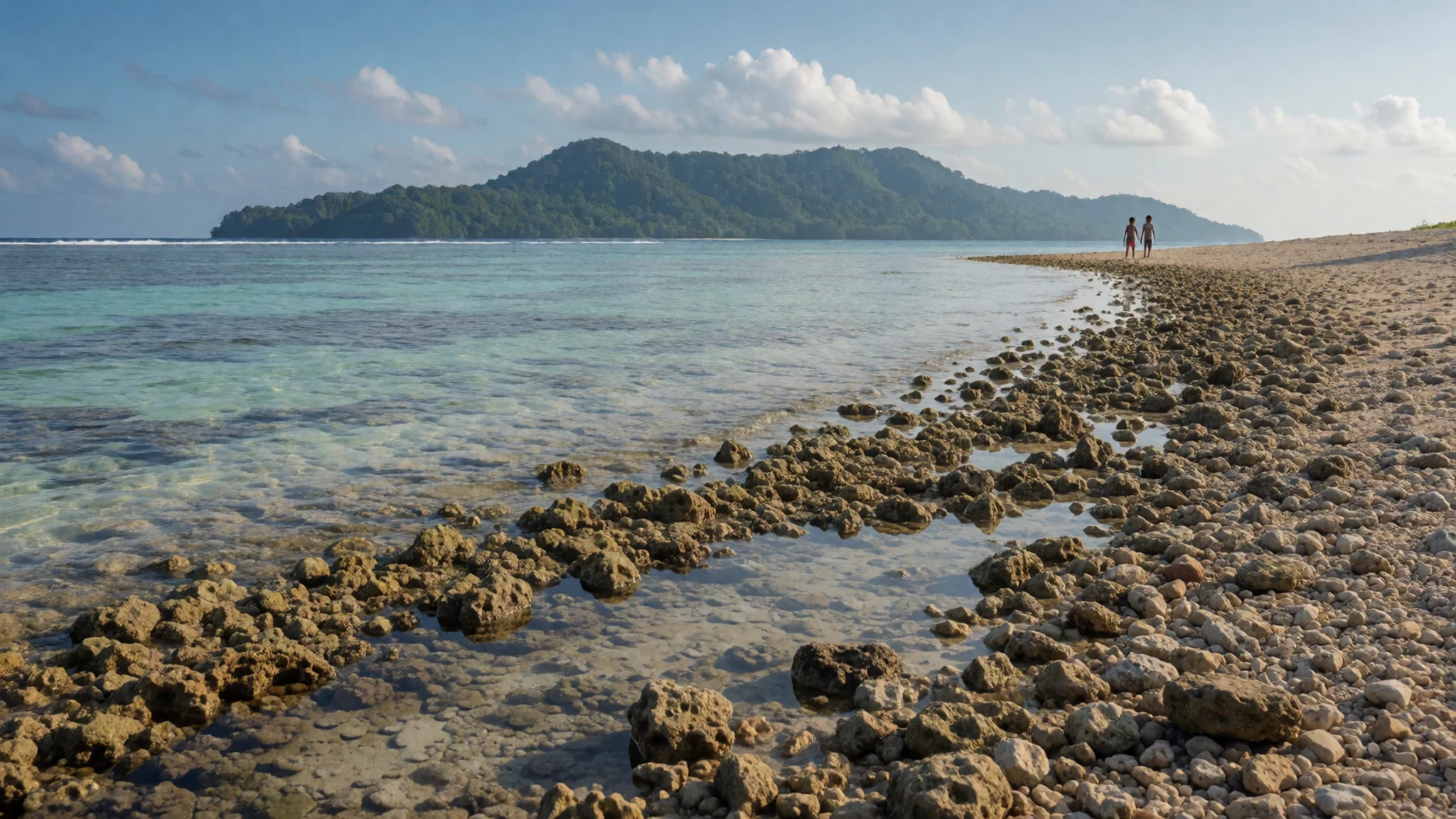
- Morotai and Kao Bay — Northern Halmahera and Morotai
Kao Bay on the north-eastern side was a Japanese naval base in the Second World War, and the neighbouring island of Morotai holds further wartime remains. Both reward travellers with an interest in history, and the water around them is clear and calm. Arrange boats locally.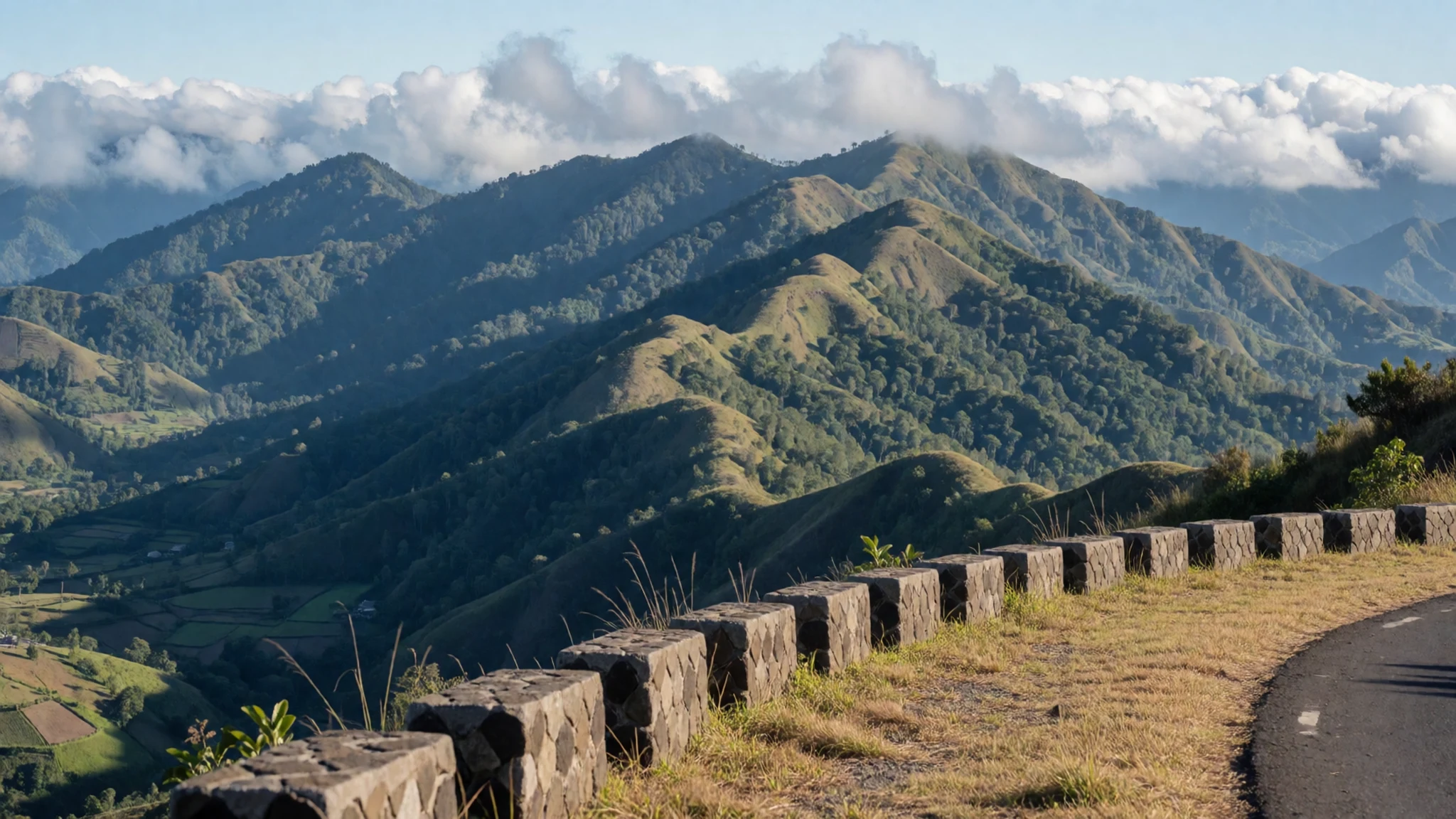
Culture
Halmahera's culture reflects its mixed population: about half the islanders are Muslim and half Christian, and mosques and churches stand within a short walk of each other in many places. Village life revolves around family, fishing, small-scale farming of coconut and spices, and the church or mosque calendar. The old Maluku sultanates still shape identity, and heritage from the courts of Jailolo, Ternate and Tidore is remembered in names, stories and ceremony. Hospitality is warm. In smaller communities, foreigners are rare, and curiosity can be direct. People may stare, call out, laugh with delight, ask where you are from, or want a photograph with you. This is rarely meant unkindly, and a smile and a few words of Indonesian go a long way. Because recent history includes sectarian violence, it is wise to avoid raising religion or the conflict unless a local brings it up first, and to listen rather than comment. Religious festivals, Friday prayers and Sunday services set the rhythm of the week, and shops and transport can slow accordingly. Indonesia is a conservative country in general, and Halmahera is far from the beach-resort norms of Bali. Ask before photographing people, houses of worship or ceremonies, and when invited into a home or a place of worship, remove your shoes at the door and dress modestly.
What to wear
Traditional dress in North Maluku is tied to the old sultanate courts and to church and mosque occasions. Ceremonial clothing often uses woven cloth and embroidered or gold-threaded trim, worn at weddings, festivals and court-related events, while many communities also keep their own woven textiles. Details vary between Ternate, Tidore and the Halmahera villages, so ask locally rather than assume a single style. In daily life, people dress simply and for the heat: cotton shirts and T-shirts, long trousers or sarongs, and headscarves for many Muslim women. On Sundays, churchgoers wear their best, often neat shirts and dresses. Fishermen and farmers favour old shirts, shorts and rubber sandals. Visitors should dress modestly. Pack light, loose cotton or linen that covers shoulders and knees, since this is a conservative region and swimwear belongs on the beach only, ideally with shorts or a T-shirt over it. Women will feel more comfortable with legs and necklines covered in villages and towns, and a light scarf is useful for entering a mosque. For forest walks bring long sleeves, quick-drying trousers and sturdy shoes with good grip, as trails are muddy. Add a rain jacket, a hat and sandals for boats and beaches.
What to eat
- Grilled fresh fish — Waterfront eateries and harbour stalls
Fish caught that day is grilled over coconut husk and served with rice, sambal and lime. Skipjack tuna and reef fish are common choices. It is the simplest and most reliable meal on the island's coast.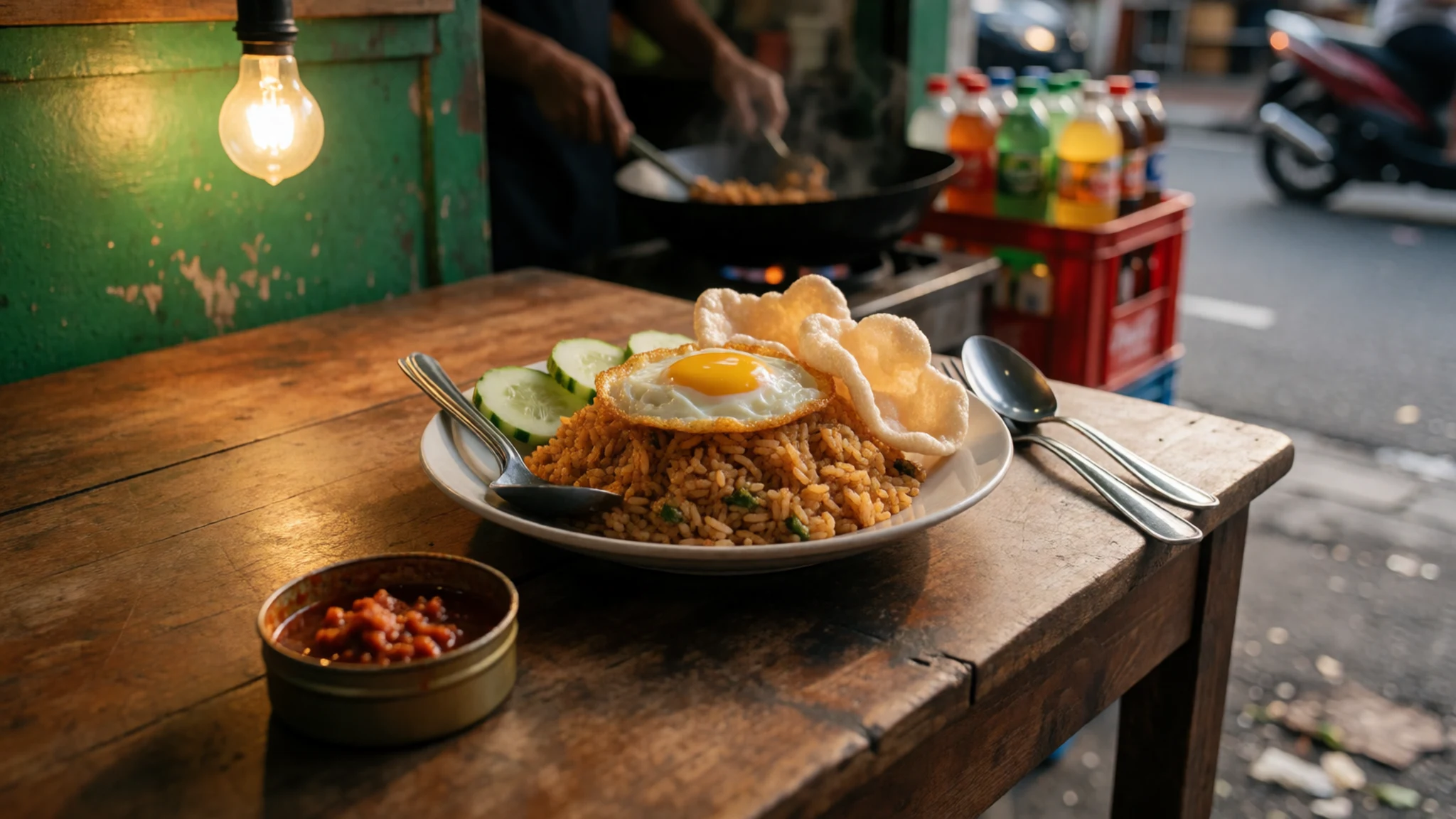
- Papeda — Local family eateries and markets
A glutinous sago porridge, pale and slippery, eaten with a sour-spicy yellow fish soup. It is a staple of eastern Indonesia and tastes mild, with the soup supplying the flavour. Locals twist it onto chopsticks.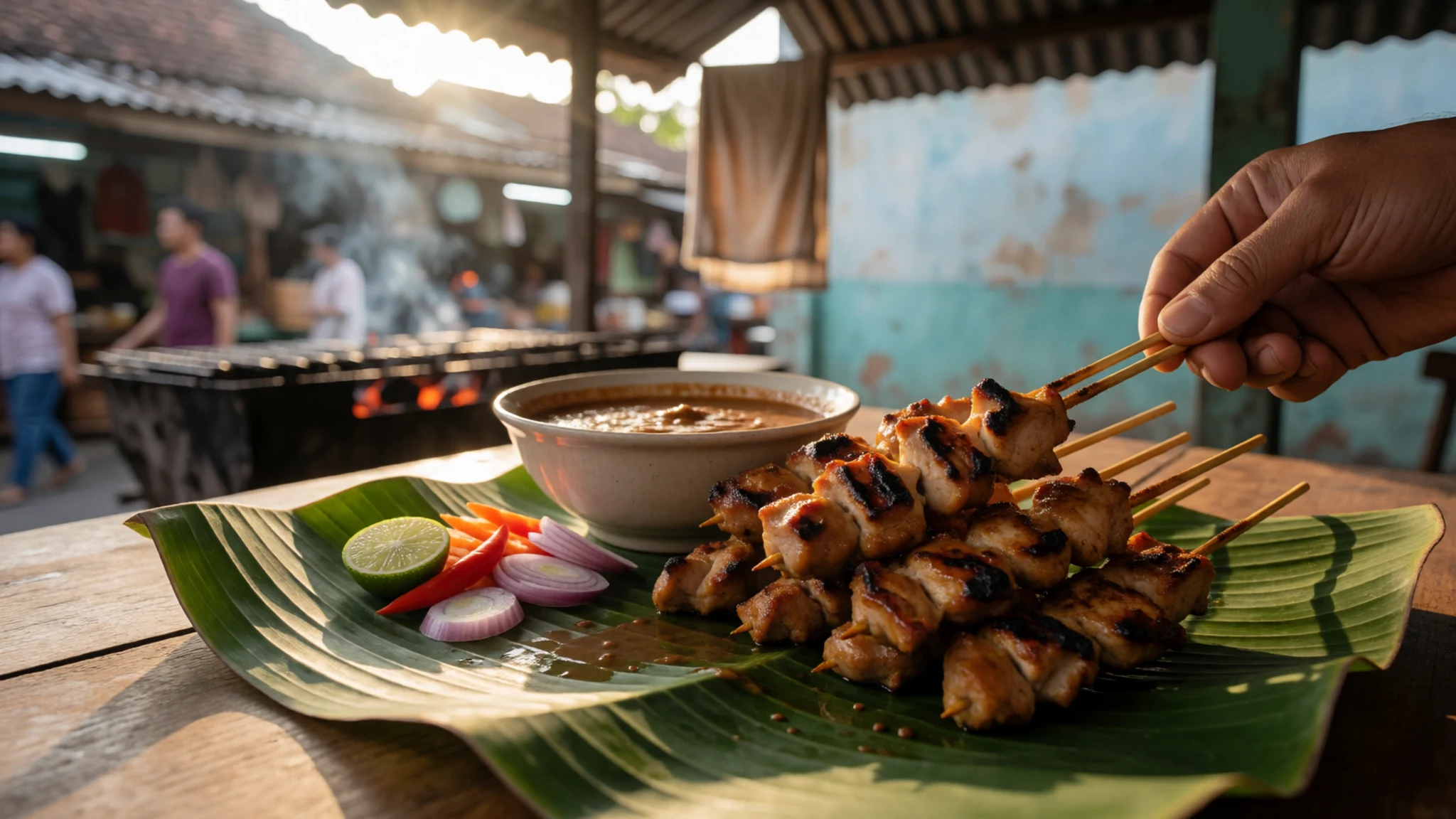
- Sago in other forms — Village markets and general stores
Sago is baked into dry biscuits and flatbreads that keep well and are eaten with tea or coffee. They are a practical snack for long boat journeys and are sold in many small shops. - Nasi goreng and mie goreng — Night stalls and small eateries in Sofifi
Fried rice and fried noodles are available almost everywhere, usually topped with an egg. They are a safe fallback when little else is open, though the region offers more interesting options if you ask. - Spiced coconut and clove drinks — Roadside stalls and morning markets
Maluku's spice history shows in warm drinks flavoured with ginger, cloves or nutmeg, often sweetened with palm sugar. They are comforting after a wet day in the hills.
Plan it
Best time. September to November is generally the more settled stretch for sea crossings and forest walks, though rain can fall in any month near the equator. Heat and humidity are constant, so allow slack in your schedule for delayed boats.
How long. 4–6
Getting there. Fly to Ternate (Sultan Babullah Airport) via Jakarta, Makassar or Manado, then take the short ferry or speedboat to Sofifi on Halmahera; some routes also reach the island by air directly. Onward travel is by road or chartered boat, and the last leg can be slow.
Budget. mid
Tips
- Check the Indonesian e-Visa site and the All Indonesia arrival card before flying
- Carry plenty of cash, as card machines and cash points are scarce outside towns
- Hire a local guide for the national park and bring insect repellent
- Build spare days in, because ferries and flights change with weather
- Carry bottled or purified water and sun protection
Etiquette
- Dress modestly in villages and cover up for mosques and churches
- Ask before photographing people, ceremonies or places of worship
- Avoid raising religion or the 1999–2000 conflict unless a local does so first
Nearby
Sources
- Wikidata Q201398 (CC0)
- Wikipedia: Halmahera (rev 1369521672) (CC BY-SA 4.0)
- Wikivoyage: Indonesia (rev 5427177) (CC BY-SA 4.0)
- Halmahera Island, North Maluku, Indonesia 4 — Eustaquio Santimano (CC BY 2.5)
- Corner of Halmahera Island — Muhammad ECTOR Prasetyo (CC BY 2.5)
- Morotai and Halmehera Islands — US Bureau of Yards and Docks (Public domain)
- Halmahera Topography — Sadalmelik (CC BY-SA 2.5)
- Rig Crew on Halmahera Island — Muhammad ECTOR Prasetyo (CC BY 2.5)
- Halmahera Island — Eustaquio (CC BY 2.5)
- Edge of Aketajawe-Lolobata National Park — exploreplants (CC BY-SA 2.0)
- Admiralty Chart No 2575 — UK Hydrographic Office (Public domain)


