Haiphong
Haiphong, Vietnam
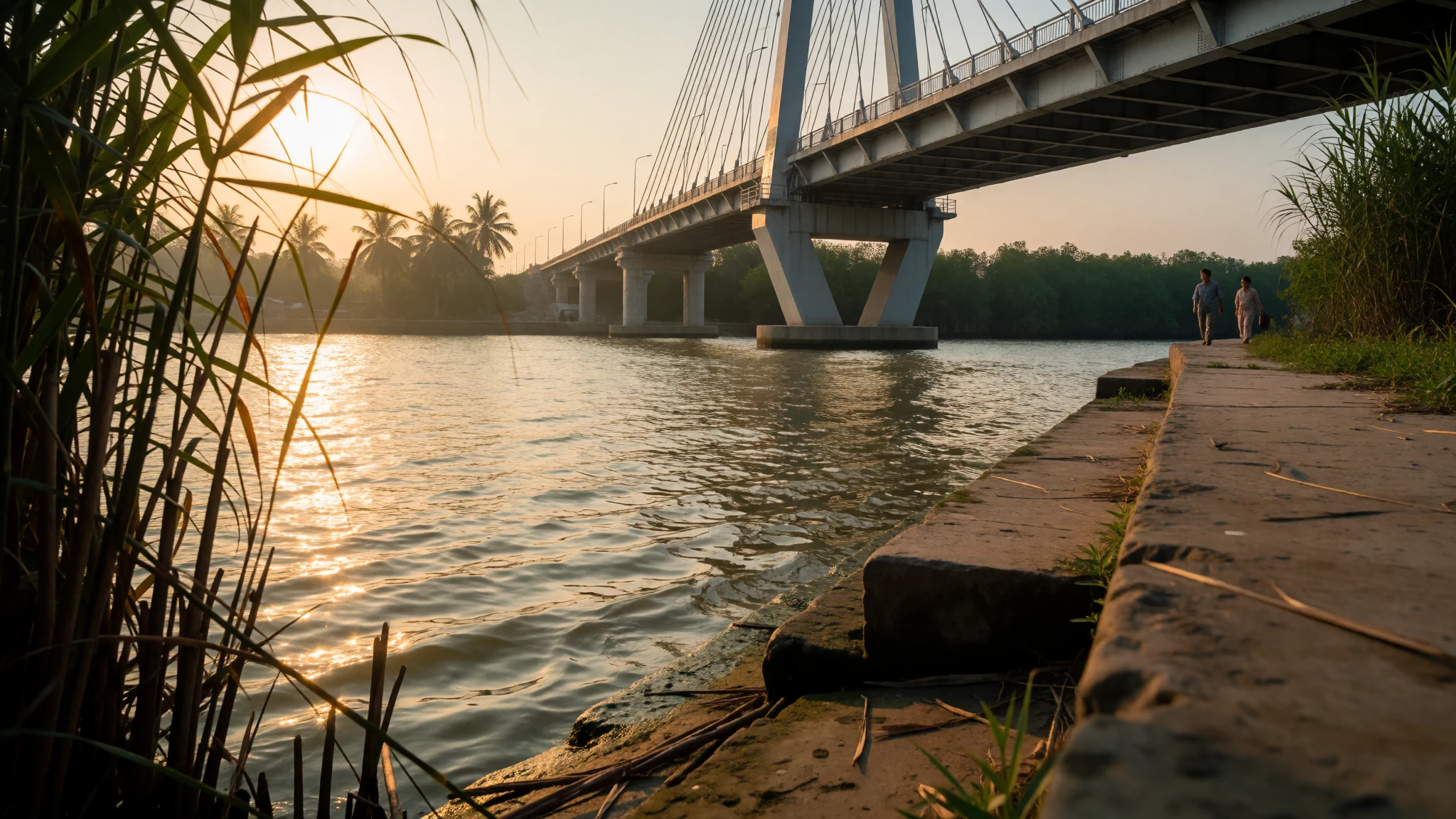
Haiphong is a working port city of French-era streets, crab noodle soup and ferries to Cát Bà, with few tourists and plenty of character.
The place
Haiphong lies at the mouth of the Cấm River in north-eastern Vietnam, where the delta's flat farmland gives way to tidal flats and the Gulf of Tonkin. It is a centrally governed city of about 2.1 million people, and it stands only about 12 metres above sea level. The administrative area is much larger than the urban core. It takes in Cát Bà and Bạch Long Vĩ, islands out in the gulf, so the same city covers container docks, rice fields and limestone shores.
The feel on the ground is that of a port first and a destination second. Cranes and ships dominate the riverside, and the Bính Bridge carries traffic across the water towards Thủy Nguyên. Away from the docks, the centre has tree-lined boulevards, yellow-washed colonial buildings such as the Opera House and the Post Office, and busy pavements where much of daily life happens on low plastic stools.
The climate is humid subtropical. Summers are hot and sticky, and most of the year's rain, roughly 1,700 millimetres in total, falls between April and October. Winters are drier and mild: January and February highs average about 20 °C, with lows around 14 °C, and the damp can make that feel cooler. Haiphong is a short run from Hanoi, yet it moves at its own pace, and it is more interested in trade and local appetite than in visitors.
Its story
Haiphong's best-loved founding figure is Lê Chân, a woman general who served under the Trưng Sisters when they rose against Chinese rule in 40 AD. Tradition credits her with organising coastal defence, and her statue now looks over the port. The story still matters locally, and she is honoured as a protector of the city.
The modern city grew from the river's value as a gateway. By the nineteenth century the area already had administrative weight, and under French rule the port became the main sea outlet for the north, which explains the grid of broad streets and the colonial architecture still standing in the centre.
The twentieth century was harder. After the Second World War, Vietnamese nationalists pushed for independence as France tried to return. A clash in Haiphong left French soldiers dead, and French warships answered by shelling the city, setting it ablaze. House-to-house fighting followed, and the episode is widely seen as the spark of the First Indochina War.
During the Vietnam War the port was bombed and, in May 1972, the American navy mined the harbour to seal it. Because the United States kept a self-imposed restriction around the city itself, its buildings largely survived. That is why Haiphong still has much of its old streetscape, tangled with newer towers and industrial growth.
What to see
- Haiphong Opera House — City centre
Haiphong's Opera House is a French-era theatre in the middle of the city, and its pale façade and columns anchor the central square. It is best admired from outside, in the evening light, and then paired with a walk past the nearby Post Office and other colonial buildings. Check what is on if you want to go in.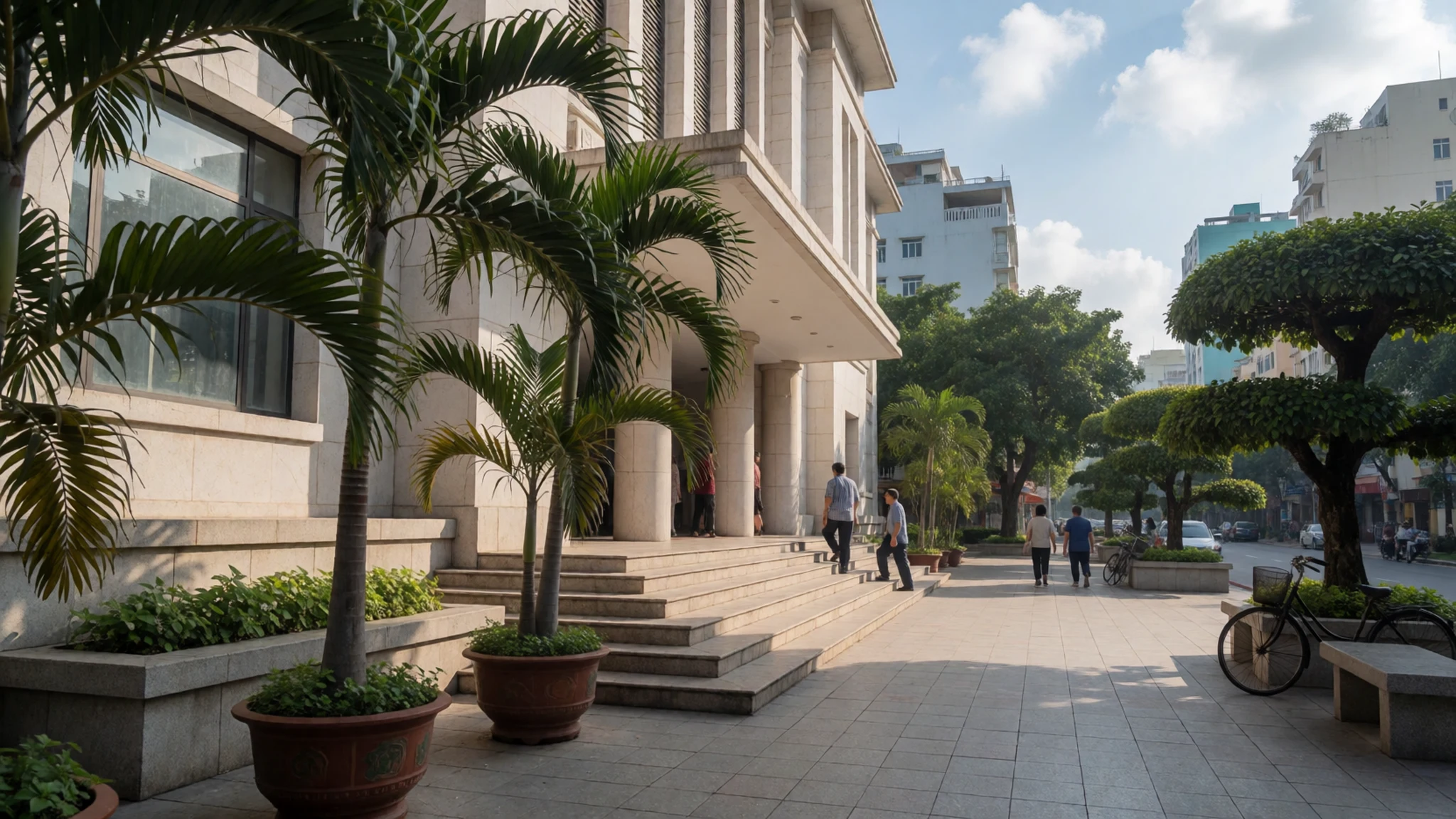
- Hai Phong City Museum — Central Haiphong
Haiphong's city museum is a sensible first stop for the local story, from Lê Chân and the river trade to the French period and the wars. It helps to know these threads before walking the streets. Check the official city website for opening arrangements before making a special trip.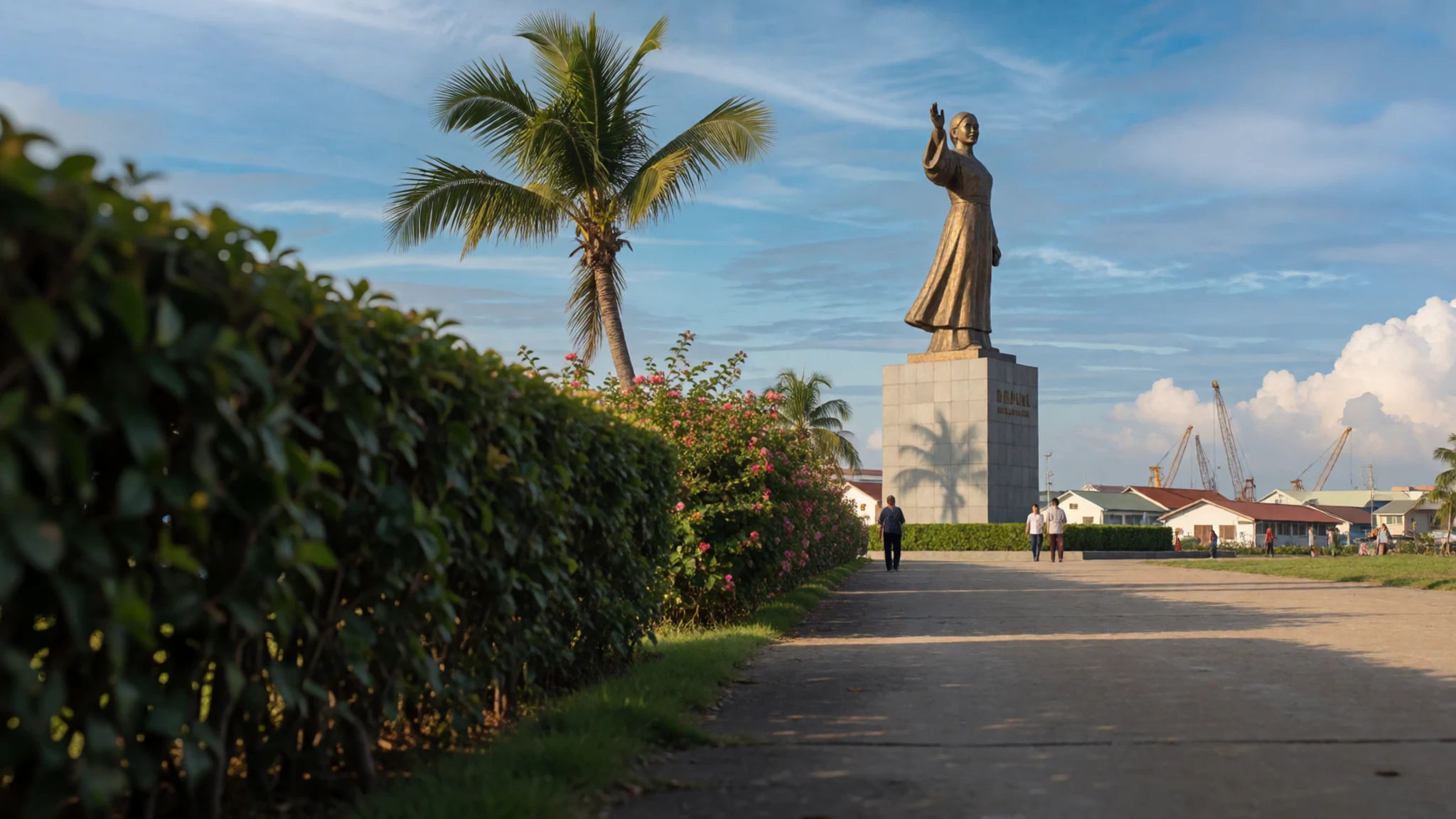
- Naval Museum — Near the port
Haiphong's Naval Museum looks at the country's maritime defence and the history of the Gulf of Tonkin and the Bạch Đằng river tradition. It suits anyone interested in how the sea has shaped this coast. Expect a straightforward, state-run museum with outdoor exhibits as well as indoor galleries.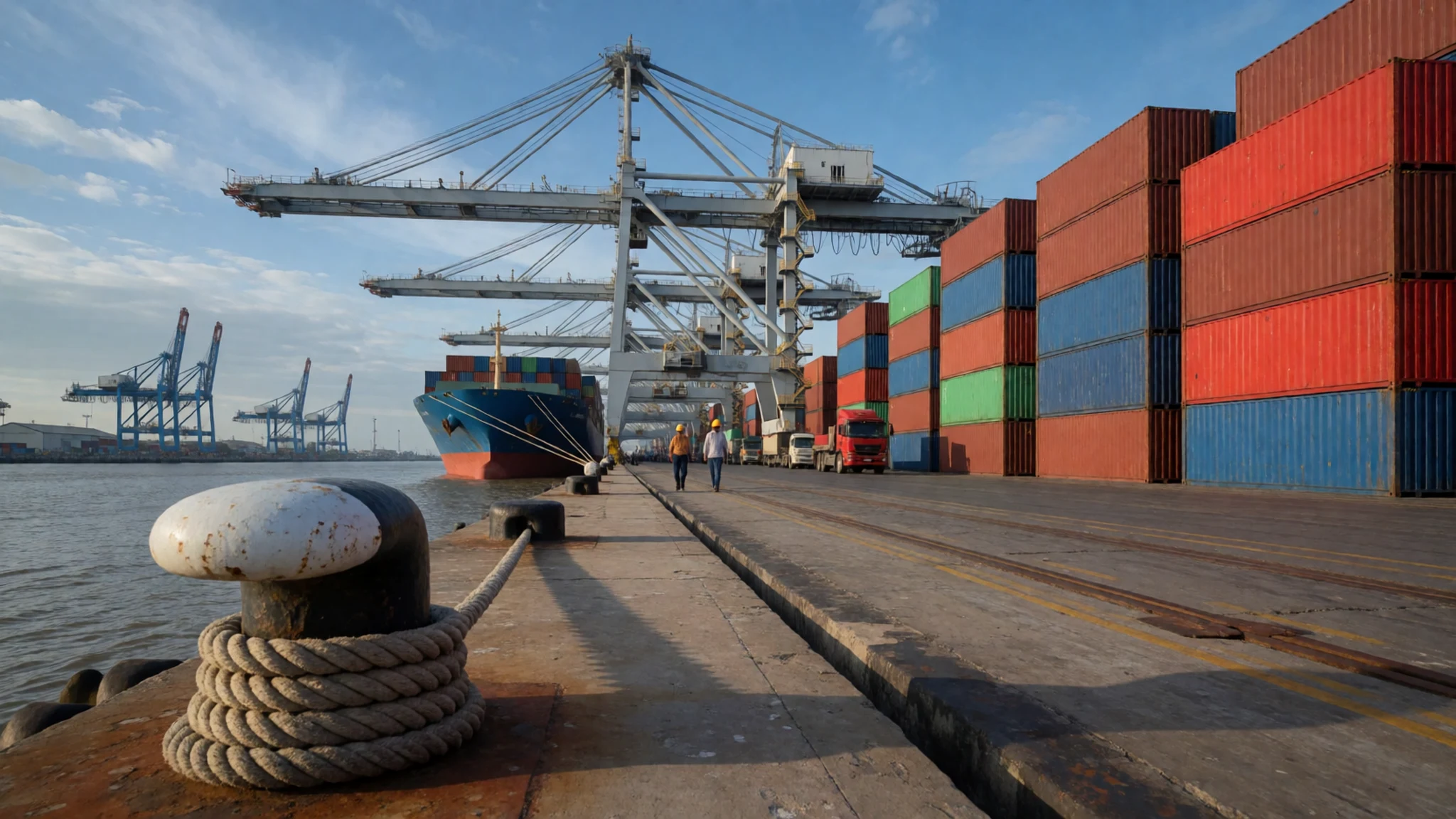
- Statue of Lê Chân — Port area
Haiphong's monument to Lê Chân stands by the port and honours the woman general of the first-century uprising. It is a quick, free stop and a good way to connect the modern docks with the city's oldest legend. Locals often leave offerings, so be quiet and respectful.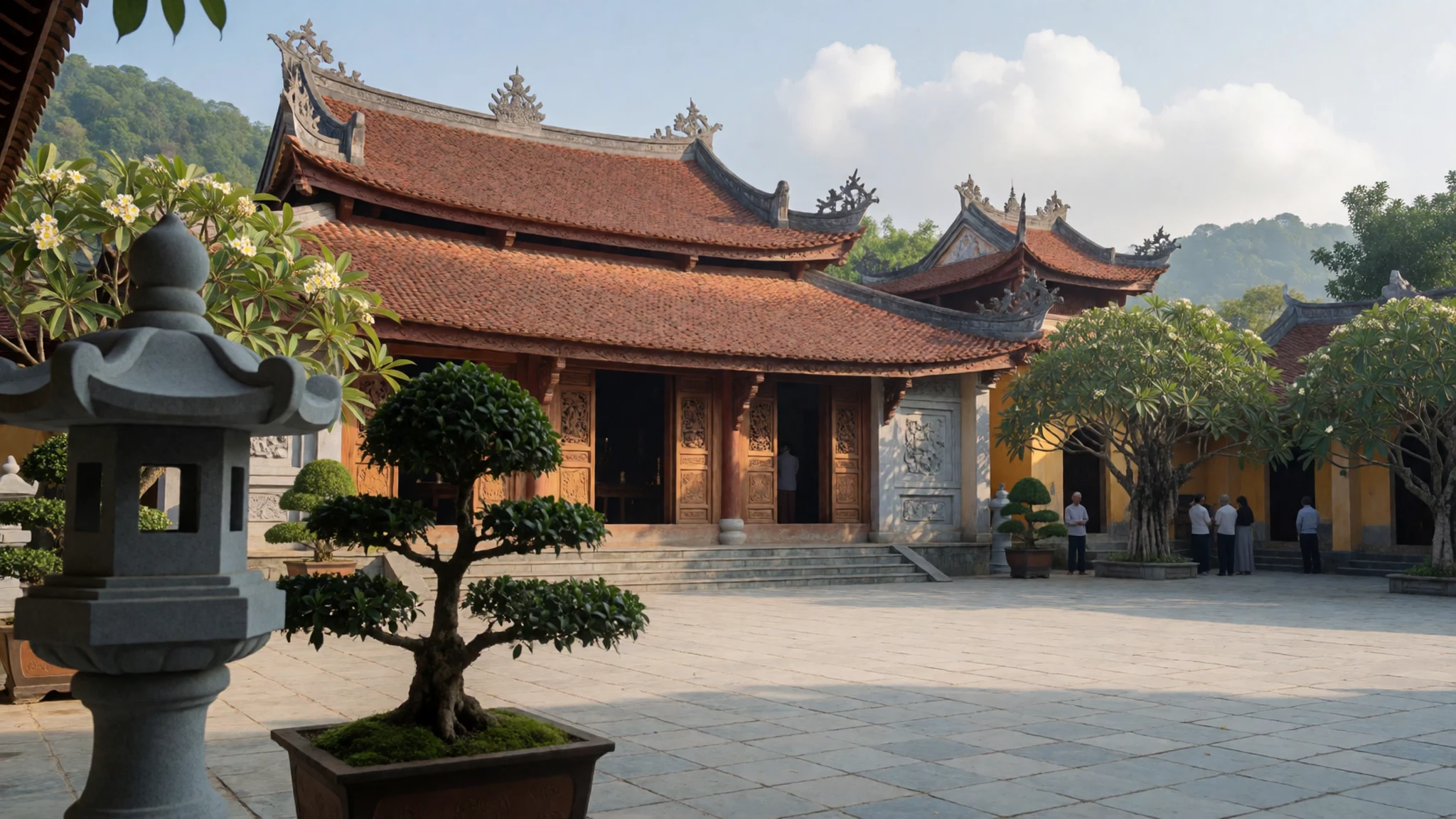
- Đồ Sơn — Đồ Sơn peninsula
Đồ Sơn is the peninsula resort south-east of Haiphong, and the city's usual weekend escape for sea air and beaches. Expect busy local crowds in summer, with modest, family-style seaside fun rather than polished luxury. It is an easy half-day away from the port's noise.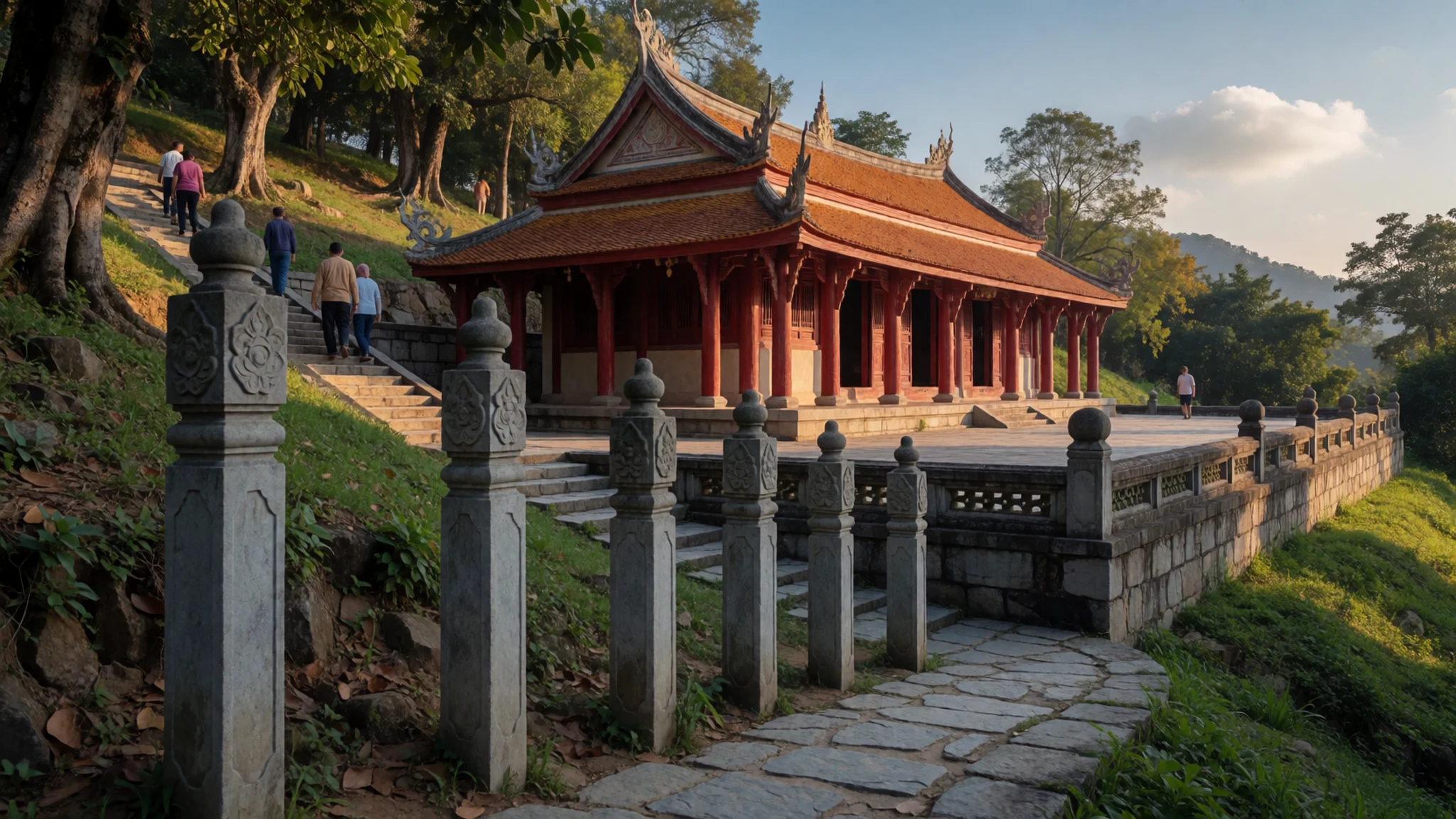
- Kiếp Bạc Temple — Inland, towards the Yên Tử area
Kiếp Bạc is a temple complex inland from Haiphong, associated with a thirteenth-century military hero and set among quiet grounds. Combined with the nearby pagoda sites, it offers a cooler, slower day beyond the city. Plan transport in advance, as it is not on a convenient bus line.
Culture
Haiphong's culture is that of a trading city with a strong sense of its own identity. People here take pride in being practical, direct and a little bit tough, and there is a local saying-style humour that visitors pick up quickly in cafés and on the street. The city's Vietnamese character is strongest in family life, shared meals and temple visits.
Religion is a mix of Buddhism, ancestor worship and the cult of local heroes. Lê Chân is honoured as a protector, and many temples and communal houses in the area, called đình, are tied to village guardian spirits. Around the lunar new year, Tết, the city slows, families return home, and flowers and kumquat trees fill the streets. Seaside festivals and boat races are also part of the local calendar, especially around Đồ Sơn.
The colonial past is visible but not romanticised. French-era villas, the Opera House and the Post Office are used and loved as civic buildings rather than treated as relics. Rapid industrial growth, with factories and the port, gives the city a modern, working-class energy that is different from the tourist rhythm of Hanoi or Hội An.
Cafés are social centres, and pavement drinks are a long-standing habit. Beer from the local brewery is a point of local pride.
When you enter a pagoda or temple, take off your shoes at the door if others have, dress modestly with shoulders and knees covered, and keep your voice low.
What to wear
Haiphong's traditional dress is the Vietnamese áo dài, a fitted long tunic worn over loose trousers, usually in silk or lighter synthetic fabrics. It appears at Tết, weddings, school ceremonies and formal occasions. Older women may wear the áo bà ba or simple cotton clothes, and conical nón lá hats still shade people working outdoors, especially around the markets and fields.
Day to day, people dress for heat and humidity. Light cotton shirts, jeans or loose trousers, and trainers or sandals are normal. Motorbike riders add long sleeves, face masks, gloves and sun sleeves to guard against dust and sun. In offices and at the port, shirts and smart trousers are common, and younger people follow the same casual fashion seen across Vietnamese cities.
For a visitor, pack breathable, quick-drying clothes for the summer months, and a warm layer plus a light rain jacket for the cooler, damp winter, when it can feel chillier than the numbers suggest. Between April and October, an umbrella or poncho is useful. At pagodas and temples, cover shoulders and knees, and wear shoes that slip off easily. Comfortable sandals or trainers suit the busy pavements, and sturdier footwear helps on island trails or temple steps. Beachwear belongs on the beach, not in town.
What to eat
- Bánh đa cua — Small noodle shops and street stalls across the city
Haiphong's signature noodle soup, made with flat red-brown rice noodles, crab, greens and fried toppings in a crab-based broth. It is a local breakfast and lunch habit, and worth trying once.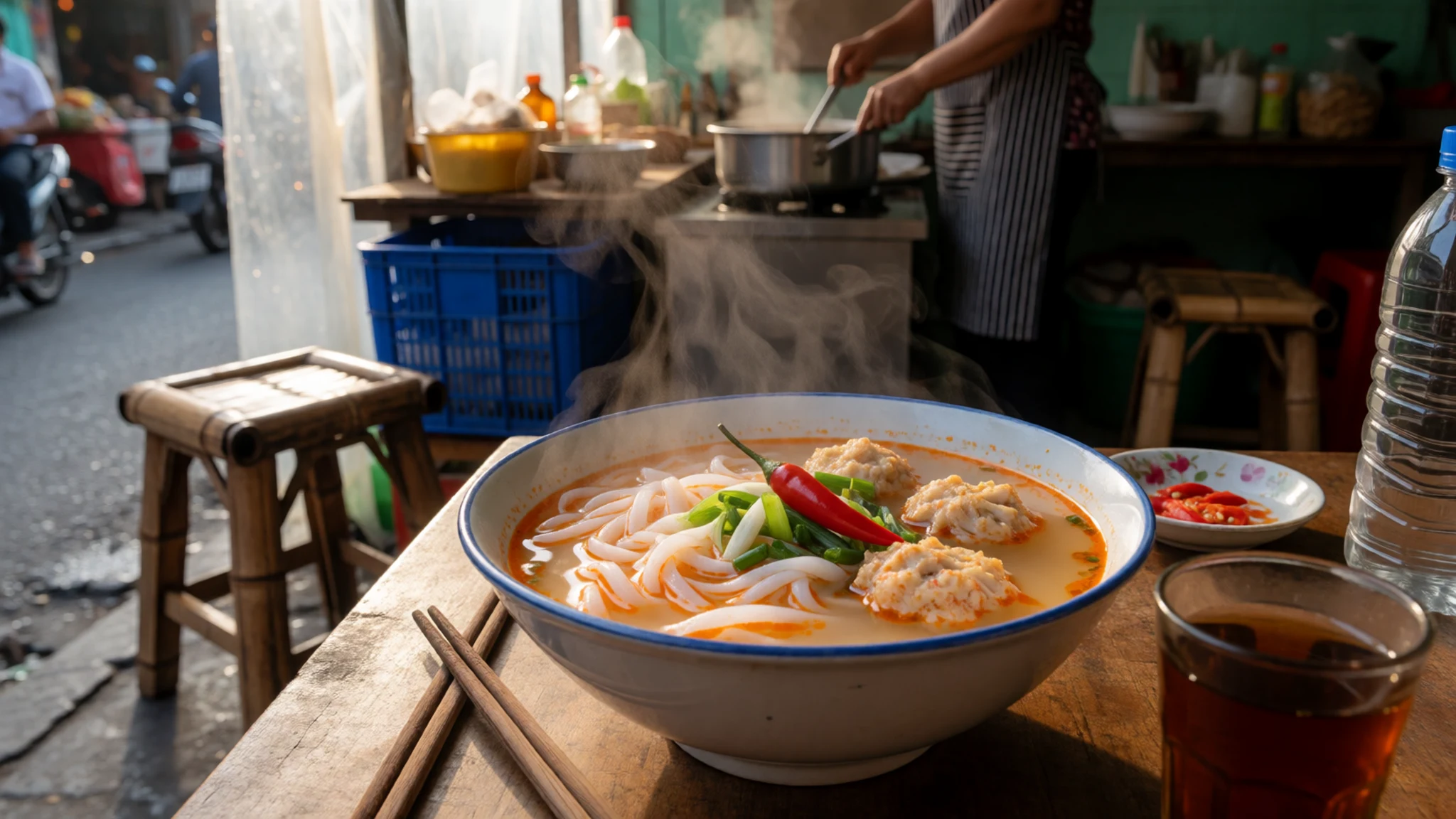
- Bánh mì que — Pavement stalls and street corners
A very thin, crisp mini-baguette stuffed with pork pâté and dipped in a chilli, tomato and garlic sauce. It is a cheap, spicy snack, widely associated with Haiphong.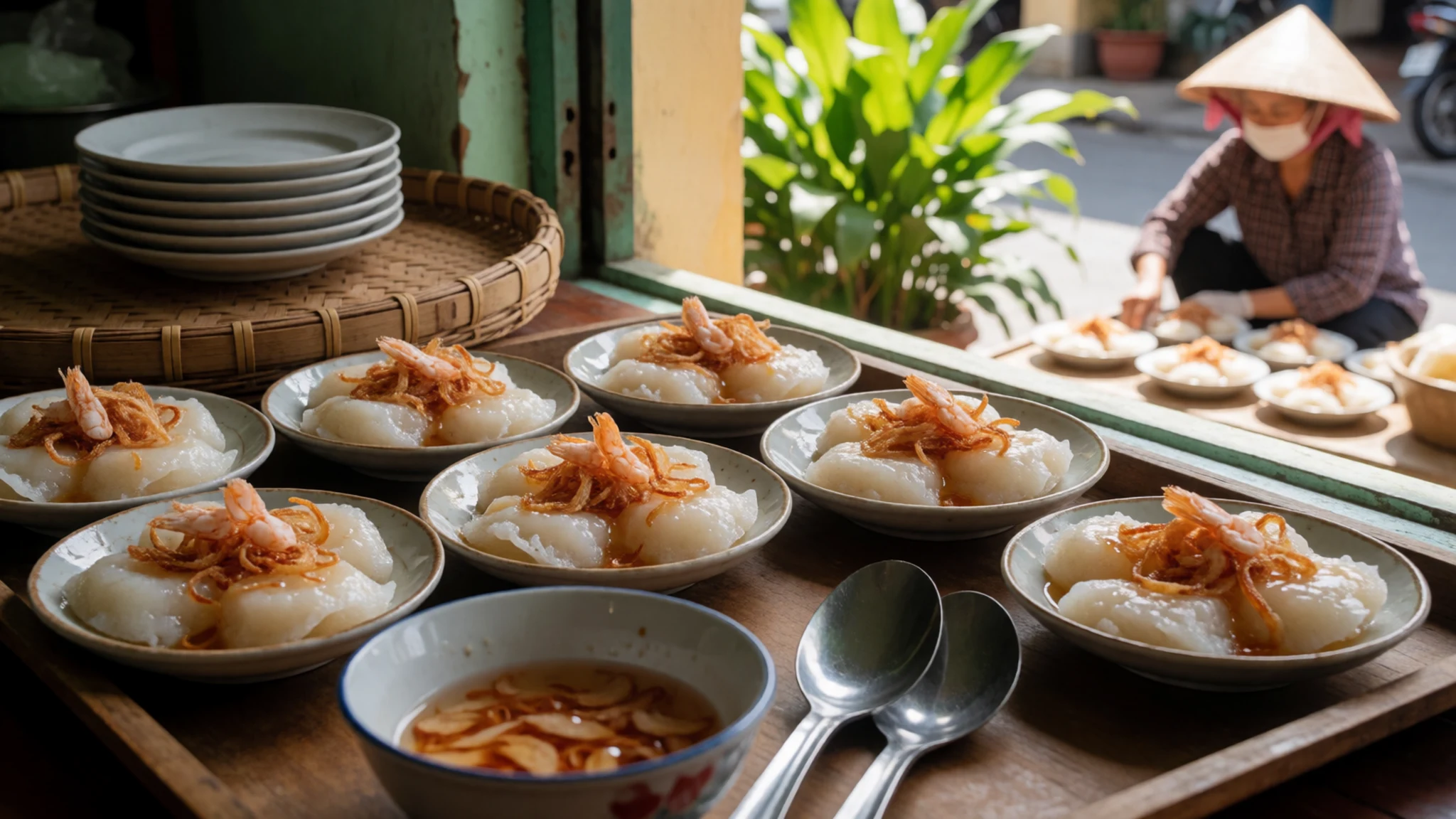
- Bún tôm — Local noodle eateries and markets
A noodle soup with shrimp, a simple and light dish that shows how much the sea shapes local cooking. Good for those who want something gentler than the spicier street snacks. - Bánh bèo — Market food stalls and snack shops
A small, soft cake made from rice, topped with minced meat and eaten with a seasoned dipping sauce. It is a light snack more than a full meal, and best shared. - Chè bưởi — Dessert stalls and pavement vendors
A sweet dessert of beans, glutinous rice and grapefruit pieces, often finished with coconut. It is refreshing in the humid summer and a good way to end a street-food walk. - Bia hơi — Beer stands near the local brewery and in pavement bars
Fresh draught beer, light and low in strength, poured at brewery-side stands and street corners. It pairs well with grilled seafood, and is more about the social scene than a fine drink.
Plan it
Best time. October to November and March to April. Winters are dry and mild, with January and February the coolest months, while summers are hot and humid and most rain falls between April and October.
How long. 2–3
Getting there. Fly to Cát Bi airport if there is a convenient route, or fly to Hanoi and continue by road, which is the more common route. Buses and private cars link the two cities, and trains also run. The last leg into town is by taxi, ride-hailing or local bus. Ferries and hydrofoils connect the port with Cát Bà Island.
Budget. low
Tips
- Book ferries to Cát Bà from official ticket offices and beware of touts selling inflated tickets
- Carry some cash for street food, markets and small shops, as many stalls do not take cards
- Start early for temple visits and island trips, as summer afternoons are hot and humid
- Use a ride-hailing app or a trusted taxi company, as taxis in some districts can be unreliable
- Check the official city site, haiphong.gov.vn, for events, museum arrangements and transport updates
Etiquette
- Take off your shoes and dress modestly at pagodas and temples
- Ask before photographing people, especially at religious sites and in markets
- Keep valuables out of sight in busy areas and stay alert at night
Nearby
Sources
- Wikidata Q72818 (CC0)
- Wikipedia: Haiphong (rev 1381256871) (CC BY-SA 4.0)
- Wikivoyage: Haiphong (rev 5403562) (CC BY-SA 4.0)
- Photo 01: Sông Cấm Hải Phòng Về Đêm năm 2025, HP1992 (CC BY-SA 4.0)
- Photo 02: Statue of Madam Lê-Chân, HoangTuanAnh (CC BY 3.0)
- Photo 03: Chùa Vẽ Terminal, Phó Nháy (Public domain)
- Photo 04: Hải Phòng City, Minhvnhp (CC BY-SA 4.0)
- Photo 05: Haiphong Opera House, Tran Anh Khoa (CC BY-SA 2.0)
- Photo 06: Haiphong Post Office, Nguyễn Hoài Sơn (CC BY-SA 4.0)
- Photo 07: Khu du lịch Đồ Sơn, duymanh.do89 (CC BY 3.0)
- Photo 08: Rue chinoise, Haiphong, Lai Afong (Public domain)


