Hac Sa Beach
Hac Sa Beach, People's Republic of China
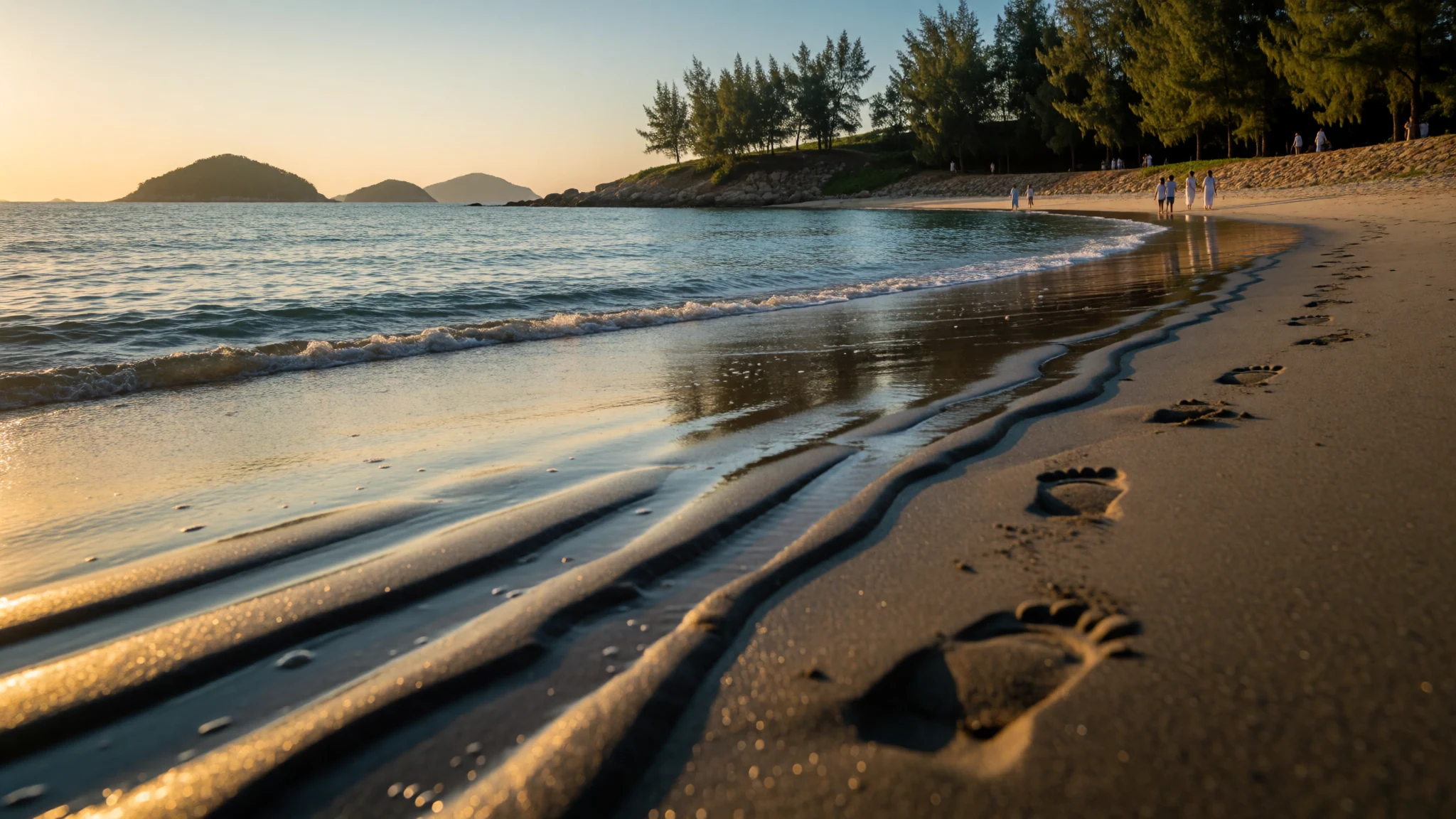
Hac Sa Beach is Coloane's yellow-sand bay, a public shore for swimming with islands on the horizon.
The place
Hac Sa Beach sits on the southern edge of Coloane, the green island at the quiet end of Macau. Its Cantonese name means black sand, from a mineral colour once lighter than Hawaii's volcanic beaches, though yellow sand now covers the shore to limit erosion. The strand curves around Hac Sá Bay, with an embankment on the landward side and open water on the other. From the sand, the Guishan Islands and the Wanshan Islands sit low on the horizon, so the outlook is always more than empty sea. Behind the beach the hills rise quickly, and from Coloane Alto the arc of sand, the bay and the buildings of the Grand Coloane Resort read as one small coastal bowl. A short ride north, the peninsula and the Cotai reclamation are dense and vertical; this corner still behaves like a shoreline. People swim, walk the firmer sand near the water, picnic and let children play in the shallows. The yellow grains cling to towels and shoes, and on a bright day the surface still warms, so shade and a slow circuit of the bay matter more than a long barefoot wander at noon. Wind off the South China Sea keeps the afternoon moving. Roads and a bus stop sit close by. Hac Sa Beach is a city beach that has kept its name, its island outlook and a little room to breathe.
Its story
Hac Sa Beach takes its name from the sand itself. In Cantonese the words are hak sa, black sand, and Portuguese maps kept the sound as Hac Sá, the form English still uses. People identified the bay by its colour long before it became a weekend outing from the city. Coloane, the island beneath the beach, stood apart from the Macau peninsula for most of its life, a parish of fishing families, small chapels and a coast that sailors treated carefully when piracy still troubled the islands of the Pearl River mouth. The beach was a working edge of that parish as well as a place of leisure, a dark line between village hills and open water. Through Portuguese administration and Macau's later life as a special administrative region of China, the name held, but the sand was refilled yellow to limit erosion. The land around it changed. Reclamation joined Taipa to Coloane and raised the Cotai strip of hotels and casinos on the new ground between them, drawing the city's noise north of the hills. Hac Sa Beach stayed on the outer shore, south-facing, looking toward the Guishan Islands and the Wanshan Islands. Families from the peninsula and from Taipa took it up as their sea: swimming, barbecues, games on the sand, a bus ride that ends in salt air. The Grand Coloane Resort rose beside the bay, and the public sand stayed public. A colour became a name, the name became a village shore, and the shore outlasted the city's habit of making new land.
What to see
- The black sand — the shore, Coloane
Hac Sa Beach is named for an older shore: mineral grains once lighter than Hawaii's volcanic black, now yellow sand laid in to limit erosion. The yellow fill is what people cross before they swim; the black-sand name is the unusual part, and loose grains still cling to towels and footprints. At midday the surface heats quickly, so walkers stay on the damp strip beside the wash.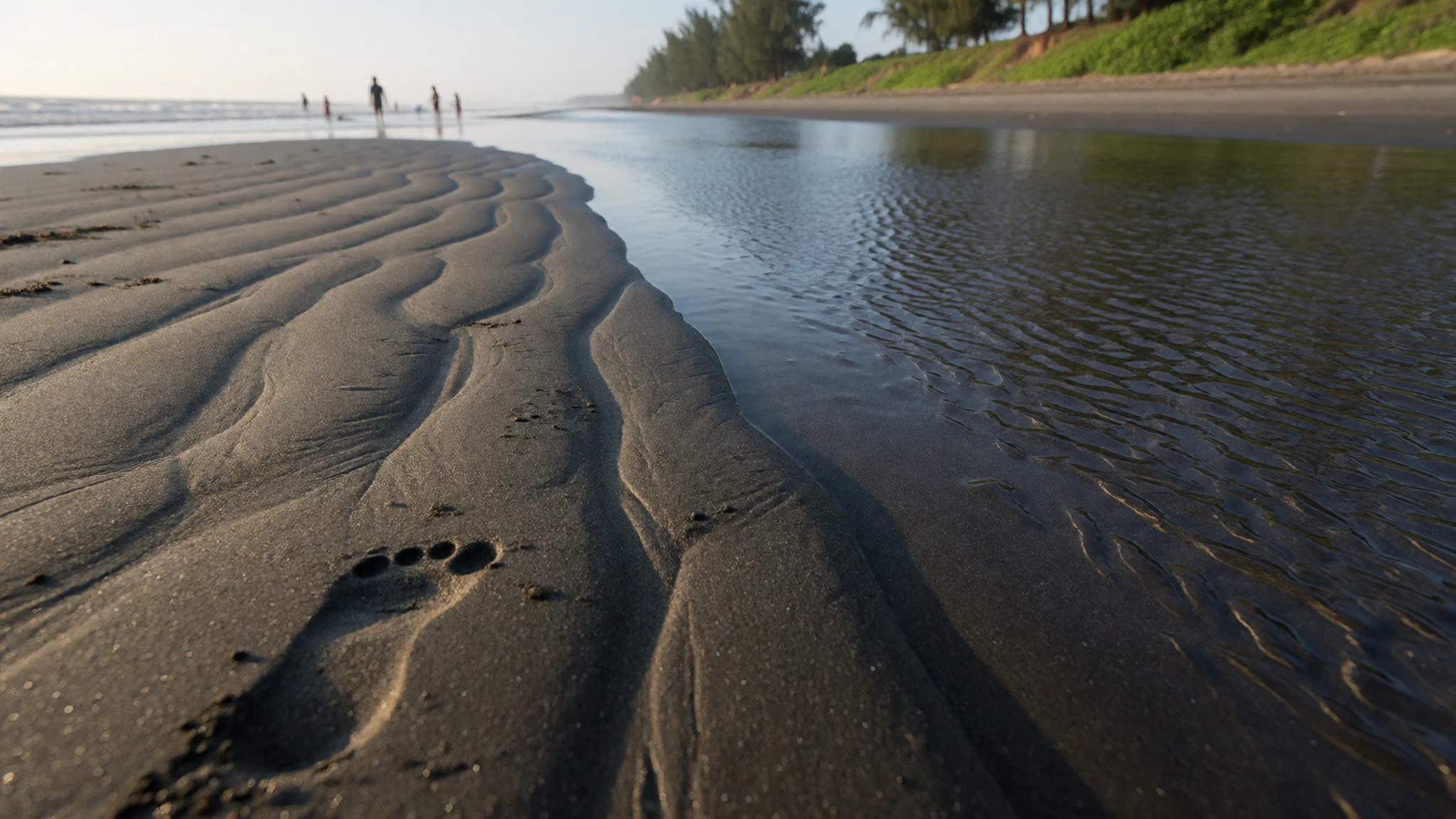
- Hac Sá Bay — Hac Sá Bay, Coloane
Hac Sá Bay is the water held in the curve of Hac Sa Beach, and it is where people swim. Near the shore the bottom shelves gently enough for wading, then it opens toward the channel between Coloane and the islands offshore. A still morning leaves the bay like a sheltered bowl. When the wind rises, swimmers follow the lifeguard flags.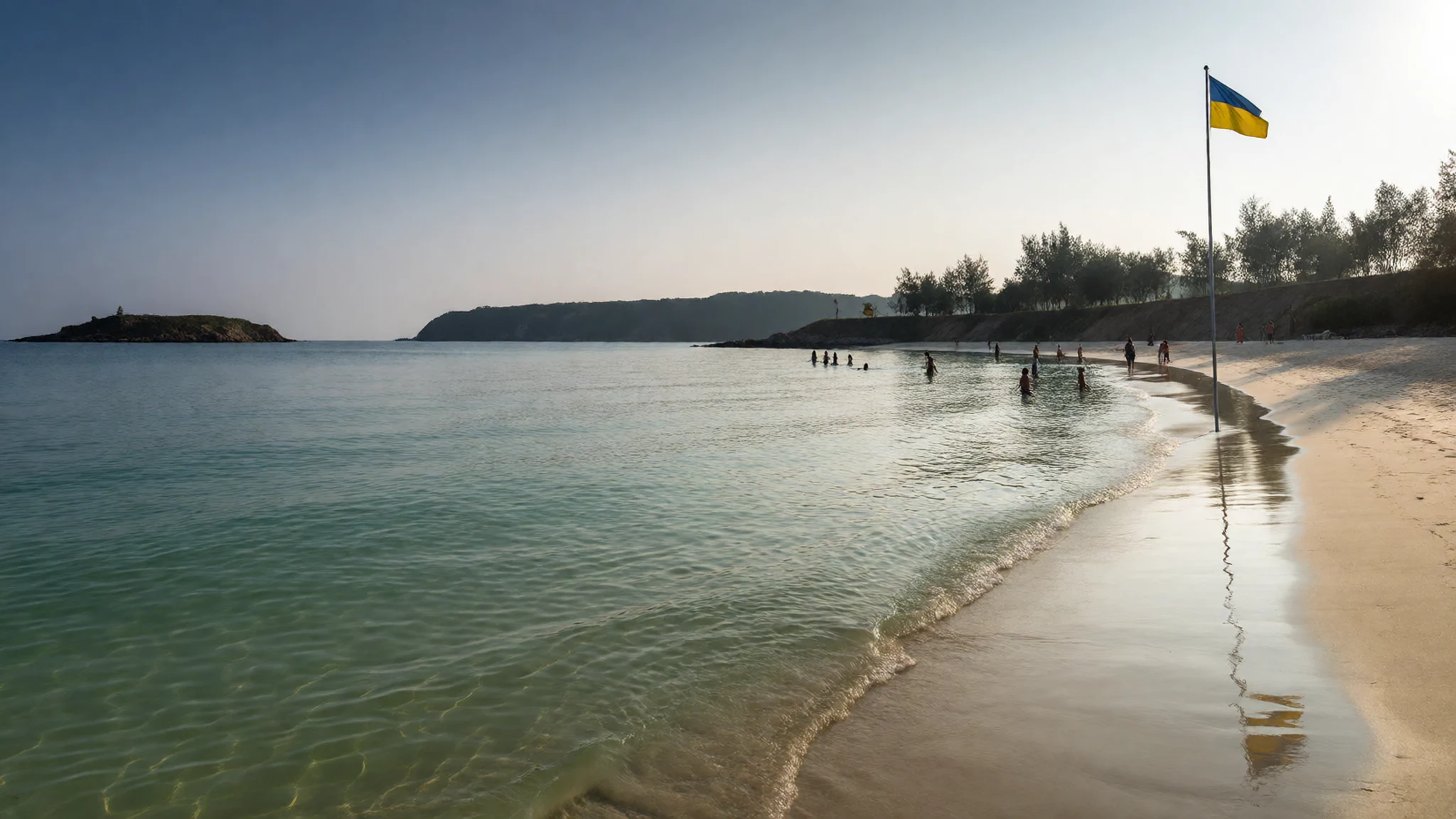
- Guishan Islands — offshore, seen from the beach
The Guishan Islands stand on the horizon of Hac Sa Beach, low and dark beyond the bay on a clear day. They belong to the scatter of islands at the mouth of the Pearl River, and from the sand they read as a ridge rather than a shore to wade to. Haze hides them in humid weather, and a dry north wind brings the outline up sharp.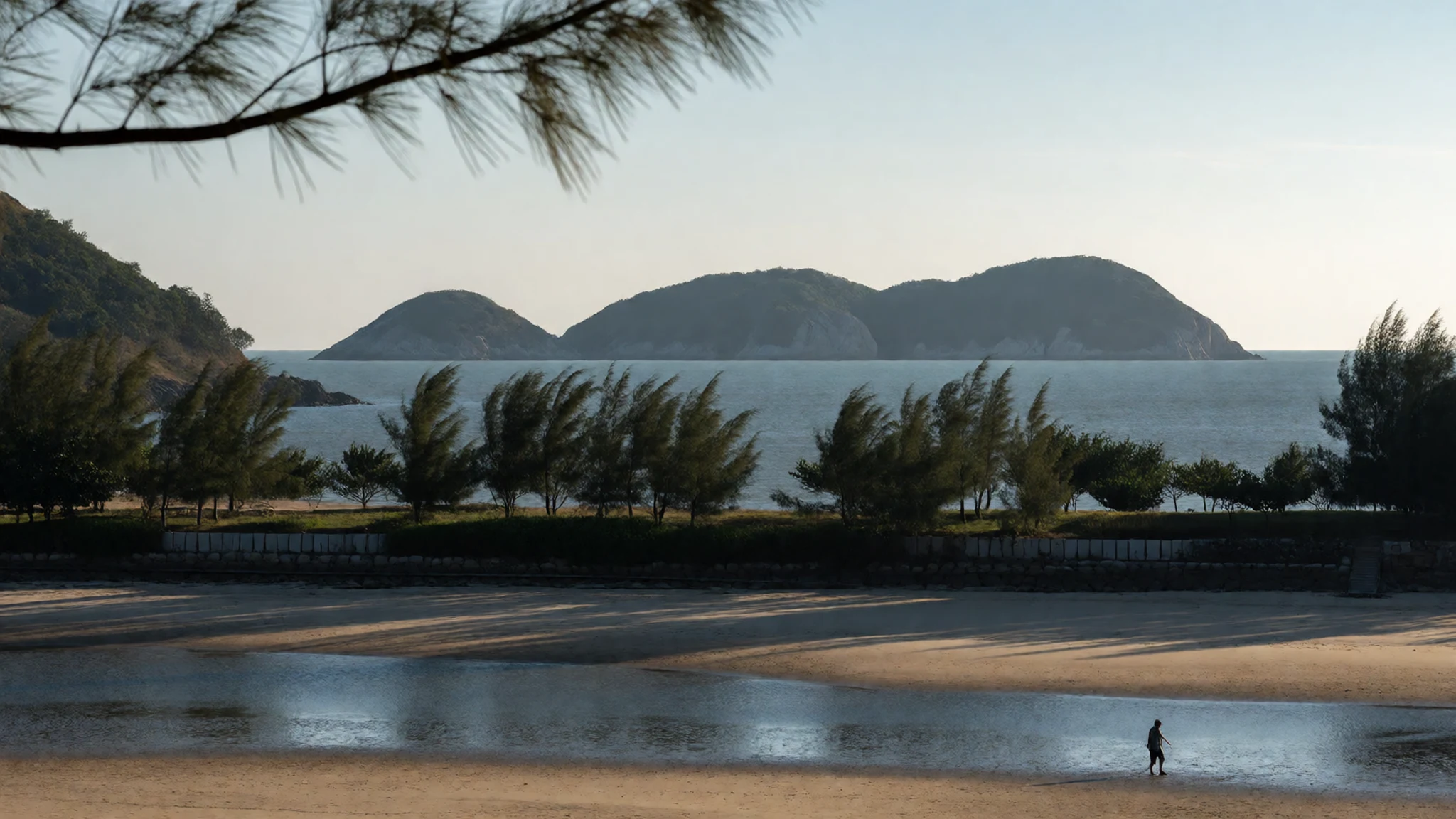
- Wanshan Islands — offshore, seen from the beach
The Wanshan Islands lie along the horizon of Hac Sa Beach, a loose chain of humps beyond Hac Sá Bay. From the sand their shape changes with the light, flat at noon and clearer late in the day. The view shows that the bay opens onto a working seaway, with cargo ships far out and fishing boats closer in.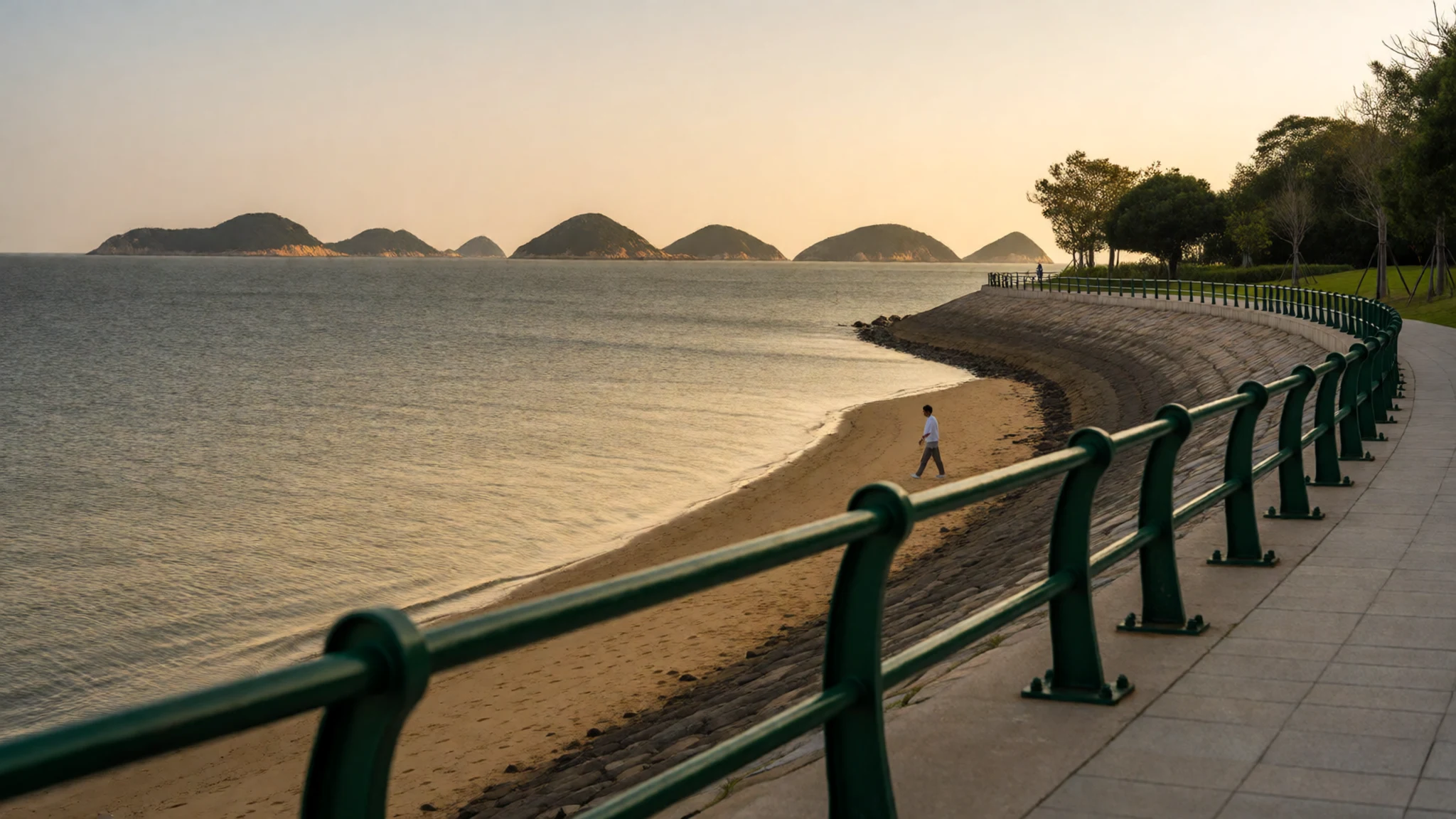
- The embankment — landward edge of the beach
The embankment of Hac Sa Beach is the raised rim between the sand and the parkland behind it. It is the place to walk when the grains are too hot or spray is blowing off the bay. The path follows the curve of the shore and lifts the view just enough to take in swimmers, islands and hills together. Steps drop down to the sand at intervals.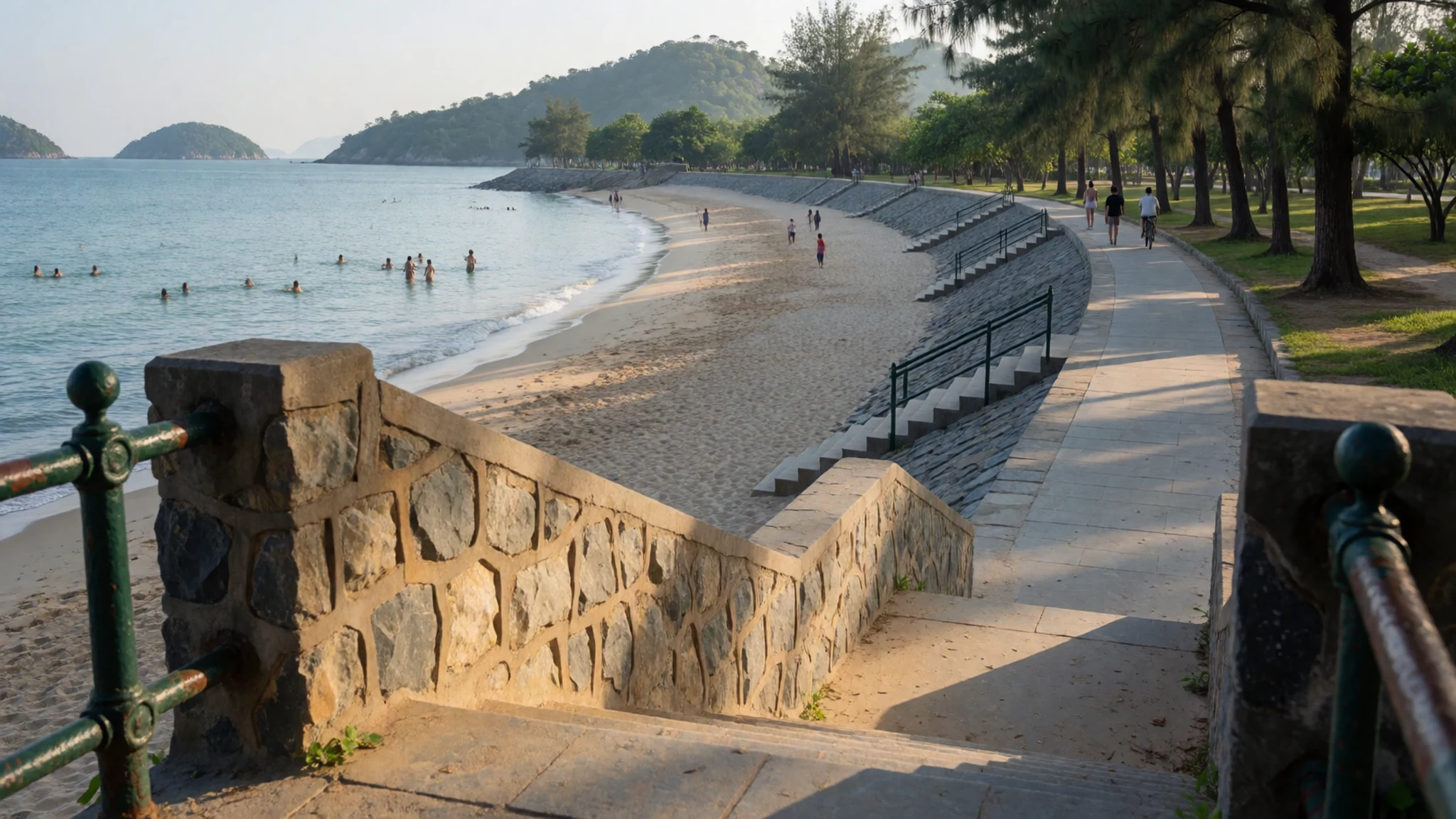
- Coloane Alto — Coloane Alto
Coloane Alto is the high hill above Hac Sa Beach. From the top the bay sits in one frame: yellow sand, the embankment, open water and the islands beyond. The way up runs through green slopes, with shade and birdsong after the glare of the shore. Seen from there, the beach is a thin yellow crescent, a clear sense of its scale before or after a swim.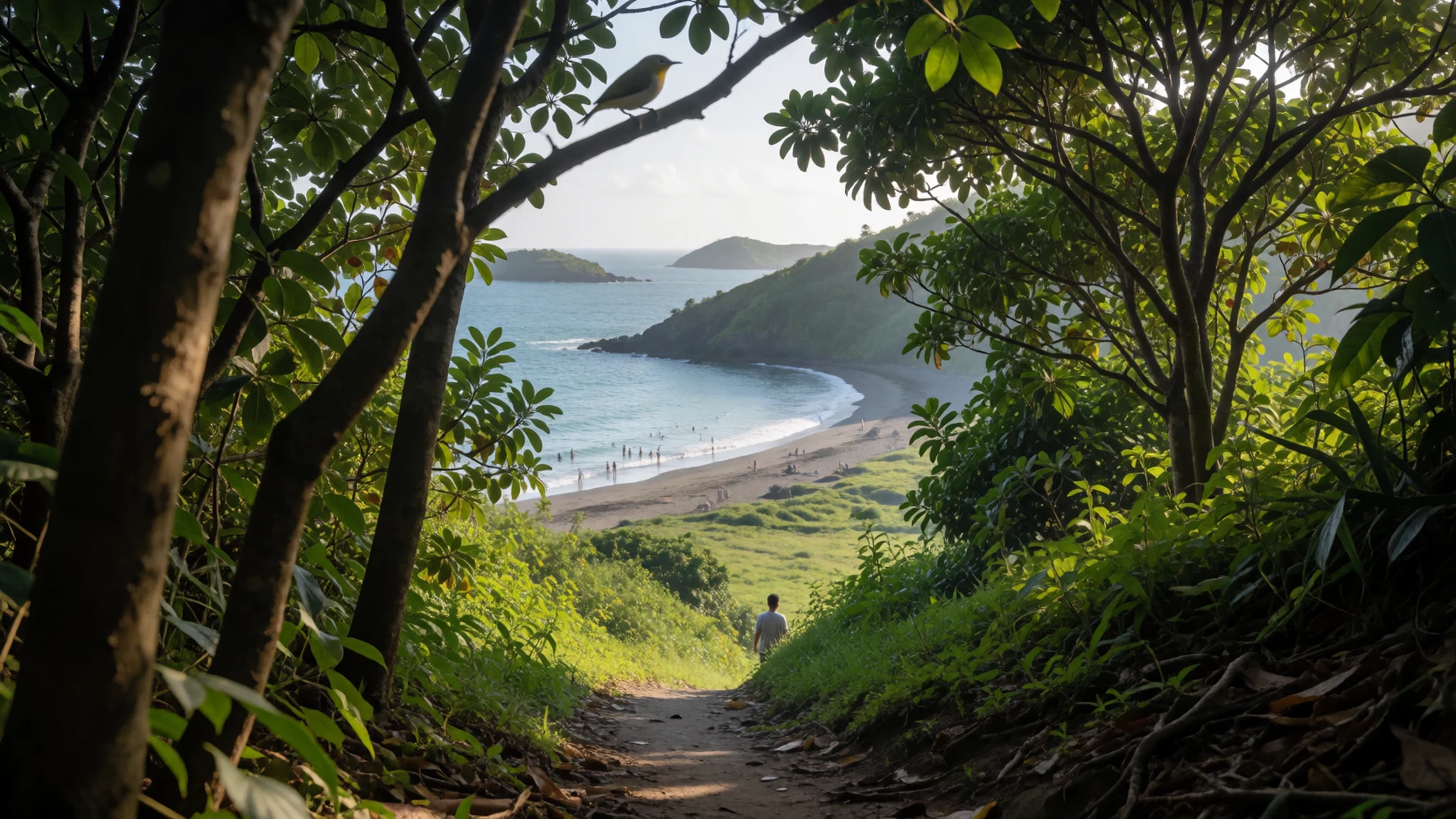
Culture
Hac Sa Beach belongs to Coloane's slower version of Macau life, where Cantonese habits and a long Portuguese parish history share the same streets. At weekends families treat the sand as extra park: mats, a ball game, a radio kept low, and a barbecue when the public pits are open. Cantonese is the language on the sand. Portuguese lingers in place names, in the chapels of Coloane Village and on Macanese menus. The short walk from the embankment into the village passes a square that still feels like a small Iberian parish set on a South China island, and that pairing is the local culture in a single stroll. The year follows the Cantonese calendar. Lunar New Year, the grave-sweeping of Ching Ming and the Dragon Boat gatherings of early summer all bring more people to the water, because the shore fills whenever the city is on holiday. Residents tend to swim early or late in the hot months and leave the middle of the day for shade. On Hac Sa Beach, use the barbecue pits only where they are provided, carry your litter away, and cover swimwear before you walk into Coloane Village or a chapel.
What to wear
Hac Sa Beach brings three kinds of dress into one day. The formal traditional garment of Macau is the cheongsam, or qipao, cut close in silk or brocade, with a high collar and side fastenings, and worn for weddings, banquets and festival portraits rather than for swimming. The older everyday Cantonese set is the samfu, a cotton tunic and trousers, now mostly kept for ceremonies and family photographs. On the sand itself people wear what the heat suggests: T-shirts, shorts, sundresses, a swimsuit under a shirt, and sandals that can be rinsed when the yellow grains stick. A visitor should plan for humid subtropical sun. Swimwear is expected on the beach; a shirt, a hat and sandals that can cope with hot yellow sand matter more than a matching outfit. Away from Hac Sa Beach, in Coloane Village or inside a chapel or temple, visitors cover shoulders and swimwear with a shirt and shorts or a light dress, and keep footwear that comes off easily at a doorway. In the wet months a thin waterproof is worth the space, and a spare bag stops the yellow sand travelling through the rest of the day.
What to eat
- Portuguese egg tart — bakeries in Coloane Village
The Portuguese egg tart, pastel de nata, is the Coloane snack that follows a morning at Hac Sa Beach: flaky pastry, soft custard and a blistered top. Bakeries in Coloane Village sell them warm, and the walk up from the sand is part of the same outing.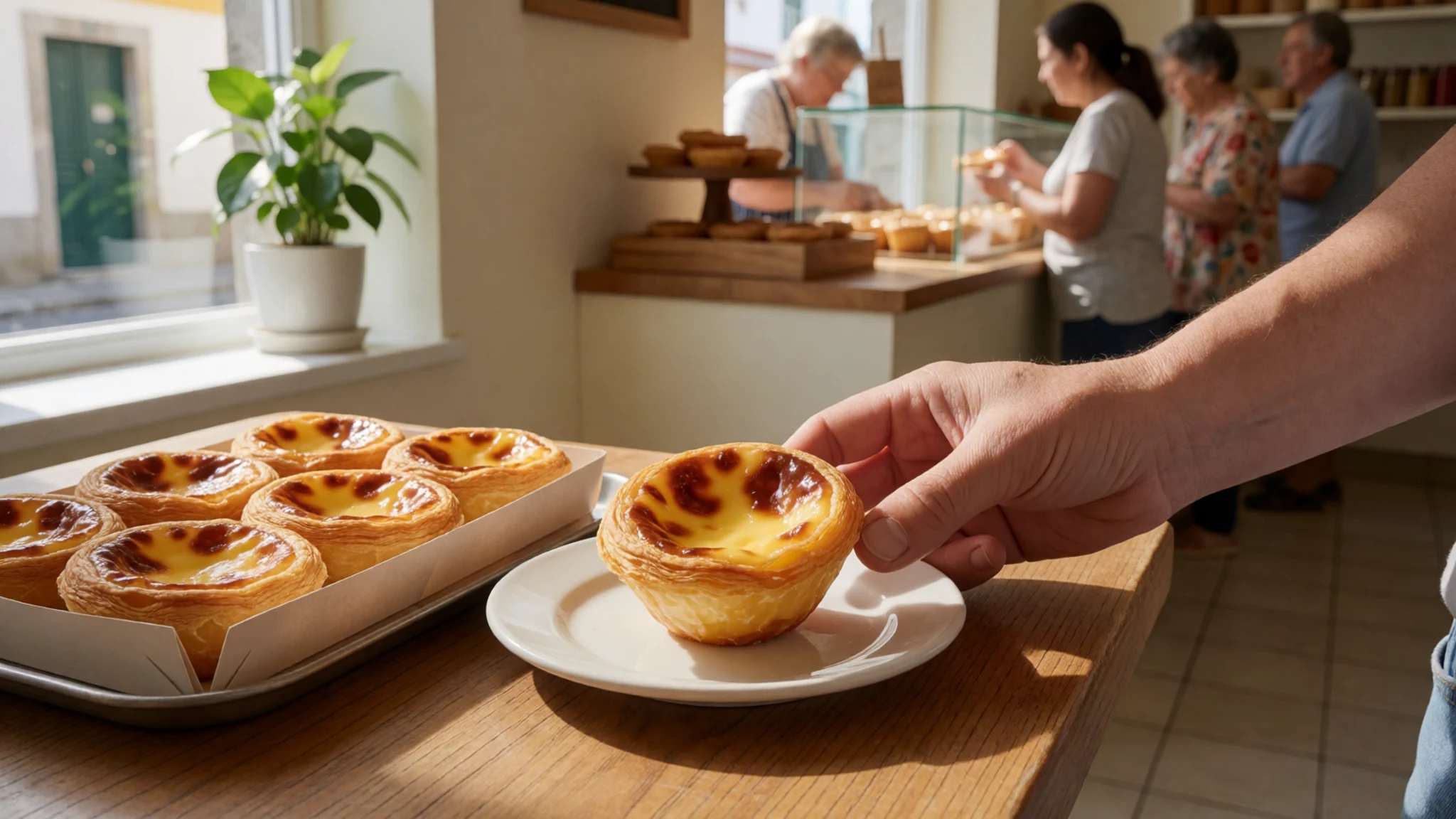
- African chicken — Macanese restaurants in Coloane
African chicken, galinha à africana, is a Macanese roast: a bird in a thick, gently spiced sauce that draws on Portuguese cooking and on coconut. Restaurants serving Macanese food in Coloane plate it with rice, which makes a solid lunch after swimming at Hac Sa Beach.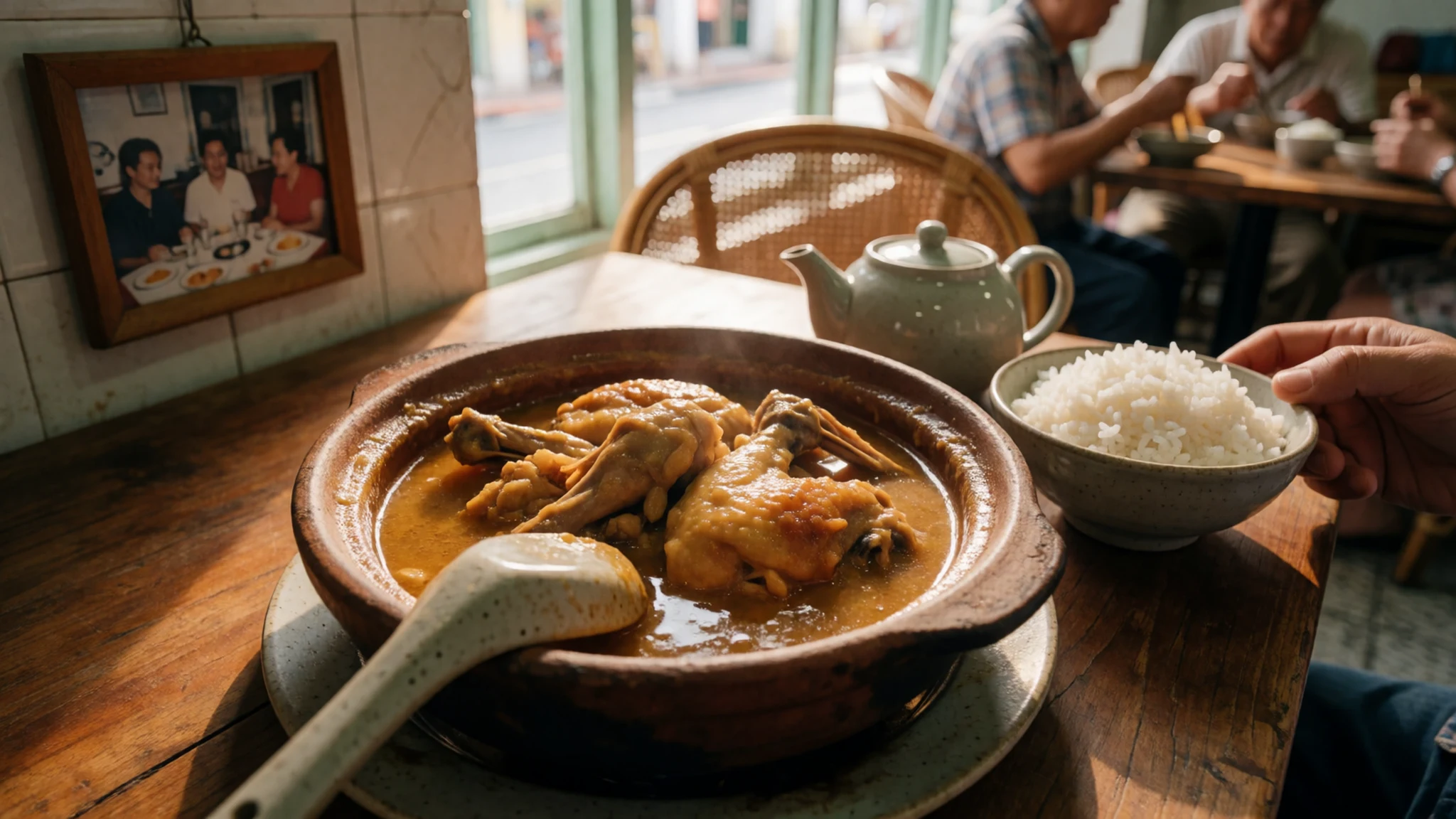
- Minchi — cafés in Coloane
Minchi is Macanese comfort cooking, minced meat and diced potato topped with a fried egg and served with rice. Soy and a splash of Worcestershire sauce season the hash, a small record of Cantonese and Portuguese kitchens sharing a pan. Cafés in Coloane serve it as lunch. - Pork chop bun — snack shops around Coloane Village
The pork chop bun is Macau's walking snack: a fried chop inside a soft roll. It is eaten with the hands, which suits a sandy afternoon at Hac Sa Beach when a full meal can wait. Snack shops around Coloane Village sell them through the day. - Salt and pepper prawns — seafood eateries in Coloane
Prawns, steamed or tossed with salt and pepper, are the seafood plate that fits a day at Hac Sa Beach. Seafood eateries in Coloane cook them so the sweetness shows, with rice or noodles on the side. A shared dish is the right size, and the cooking should stay light.
Plan it
Best time. March, April, October and November are the comfortable months at Hac Sa Beach, when the heavy humidity eases and the sea is still kind for a swim. Summer is very hot and wet, and typhoons move through; winter is milder and drier, though the water is cooler for a long stay in the bay.
How long. 1–2
Getting there. Macau International Airport stands on Taipa, and ferries from Hong Kong arrive at the Outer Harbour or the Taipa terminal. From the peninsula, Taipa or Cotai, city buses run south to Coloane and stop near Hac Sa Beach. A taxi covers that same last leg. Confirm the live route with the operator before you go.
Budget. mid
Tips
- Come in the morning at weekends and on public holidays, before local families spread out along the sand.
- Wear sandals at midday. The yellow sand at Hac Sa Beach still warms under the midday sun.
- Carry cash for bakeries and snack shops in Coloane Village, and a bank card for larger eateries.
- Rinse off the yellow sand before you board a bus. It clings to skin, towels and shoes.
- In summer, heed typhoon warnings and obey lifeguard flags if the bay is rough.
Etiquette
- Light barbecues only in the pits provided, and make sure every fire is fully out.
- Put a shirt over swimwear before you enter a chapel or temple in Coloane Village.
- Take all litter away with you. Do not bury it in the sand.
- Keep music low and leave room between family groups on the shore.
Nearby
Sources
- Wikidata — Hac Sa Beach (CC0)
- Wikipedia — Hac Sa Beach (CC BY-SA 4.0)
- Wikivoyage — Macau (CC BY-SA 4.0)