Gyeryongsan National Park
Gyeryongsan National Park, South Korea
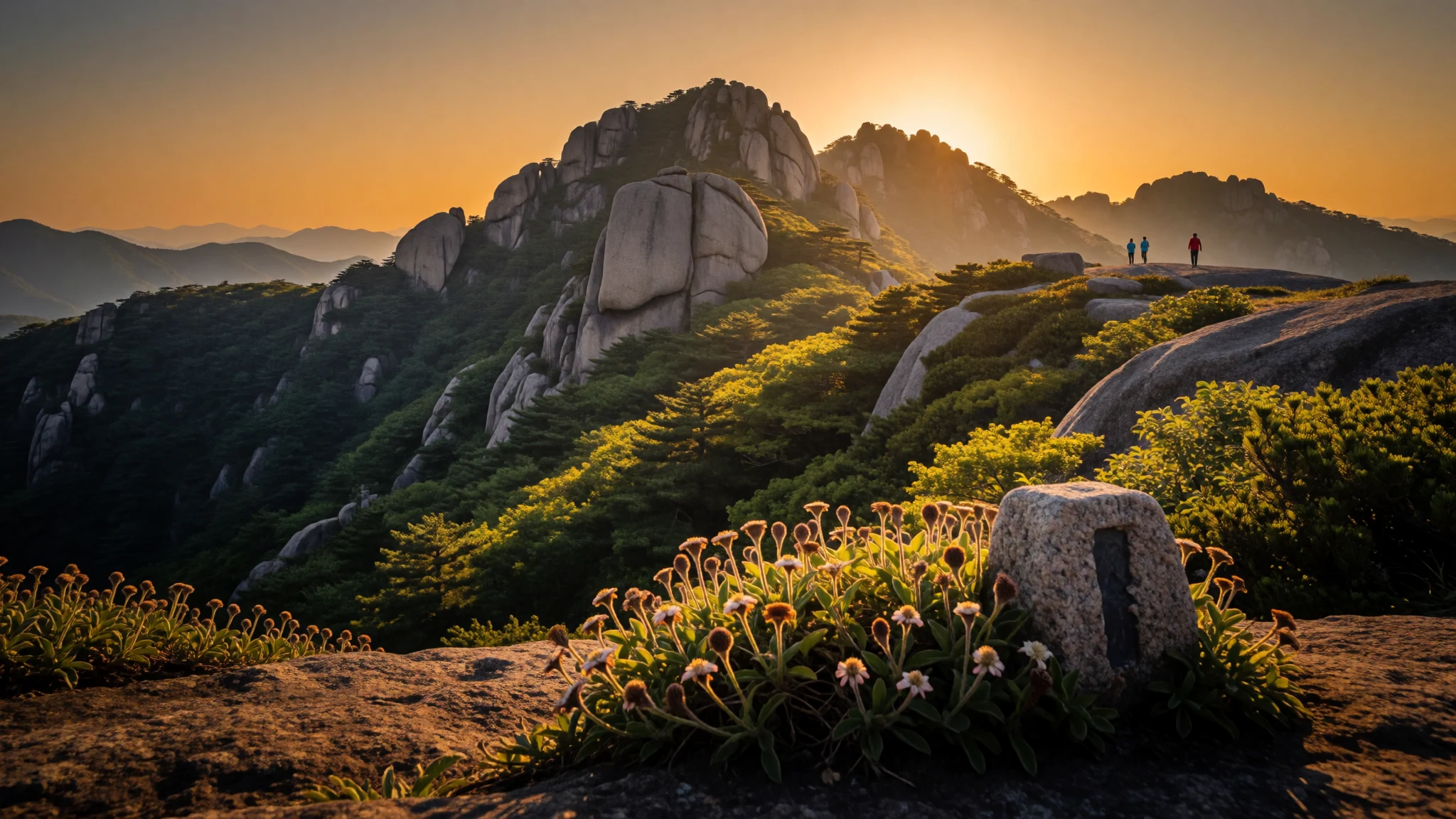
Experience a spiritual sanctuary where rugged granite peaks meet ancient temples and extraordinary biodiversity in the heart of South Korea.
The place
Gyeryongsan National Park is a sprawling natural sanctuary that serves as a cornerstone of South Korea's protected wilderness. Established in 1968 as the country's second national park, it preserves a dramatic landscape defined by steep ridges and deep, forested valleys. The park is dominated by a central mountain peak that rises to a height mentioned in official records, offering a challenging ascent for hikers and a peaceful retreat for those seeking quietude. Across its varied terrain, the park protects a staggering array of life, including over a thousand plant species and nearly two thousand types of insects. This biological richness makes the park a vital corridor for wildlife, supporting hundreds of animal species. Visitors will find the atmosphere here distinct from the more tourist-heavy peaks near Seoul, as it retains a sense of spiritual gravity. The mix of sheer rock faces and lush canopy creates a visual contrast that changes sharply with the seasons. Whether navigating the well-marked trails or resting by a mountain stream, the feeling in Gyeryongsan National Park is one of profound stillness. It is a place where the natural world is not just observed but felt, provided one is willing to brave the steep climbs and the humidity of the summer months.
Its story
The story of Gyeryongsan National Park is woven from threads of nature and mysticism. In Korean tradition, the mountain is viewed as a sacred site, believed to possess a powerful energy that has drawn practitioners of various spiritual paths for centuries. This reputation for holiness is mirrored in the mountain's name, which evokes the imagery of a chicken and a dragon, blending the earthy and the celestial. Long before it became a formal national park in 1968, the slopes were dotted with secluded hermitages and temples where monks sought enlightenment away from the distractions of city life. This legacy of spiritual seclusion persists today, as the park remains a centre for meditation and traditional Korean beliefs. The landscape itself tells a story of geological endurance, with its weathered granite spires standing as silent witnesses to the passage of time. There is a recurring theme of harmony here—between the jaggedness of the peaks and the softness of the forests, and between the physical exertion of the climb and the mental clarity found at the summit. For many locals, a trip to Gyeryongsan National Park is less about the distance covered and more about a ritual of reconnection with the earth and the ancestral spirits of the land.
What to see
- The Main Peak — Central Ridge
The highest point in Gyeryongsan National Park offers a panoramic view of the surrounding province. Reaching the top requires a steady climb through mixed forests, but the reward is a stark, wind-swept landscape of rock and sky that feels isolated from the world. - Mountain Temples — Park Valleys
Tucked into the folds of the valleys, the temples of Gyeryongsan National Park provide a glimpse into Buddhist architecture. These sites are often surrounded by ancient pines and offer a quiet space for reflection, with the sound of temple bells echoing through the trees. - Biodiversity Trails — Lowland Forest
These paths in Gyeryongsan National Park are designed for nature watchers. Keep a keen eye out for rare wildlife, including the Black woodpecker or the Common buzzard, which inhabit the dense canopy and rocky outcrops of the park's protected zones. - Granite Formations — Upper Slopes
The geological heart of Gyeryongsan National Park is found in its massive granite cliffs. These towering grey walls provide a dramatic backdrop for hikers and are a testament to the volcanic and tectonic forces that shaped the Korean peninsula. - Seasonal Foliage Paths — Valley Floor
During autumn, the trails in Gyeryongsan National Park transform into a corridor of vivid reds and golds. These specific routes are curated to highlight the most spectacular maple and ginkgo trees, drawing crowds of photographers and nature lovers. - The Heritage Gateways — Park Entrances
The entrances to Gyeryongsan National Park are marked by traditional architectural elements that signal the transition from the secular world to a sacred natural space, setting the mood for the journey ahead with their curved tiled roofs.
Culture
Culture in Gyeryongsan National Park is deeply intertwined with Korean shamanism and Buddhism. The park is not merely a site for recreation but a living temple where people come to pray for health, prosperity, and spiritual guidance. You will often see visitors leaving small offerings or tying ribbons to branches as a form of prayer. This blending of institutional religion and folk belief creates a unique atmosphere of reverence. The local community also maintains a strong connection to the mountain, celebrating seasonal festivals that honour the spirits of the peaks. There is a shared understanding among visitors that the park is a place of healing and contemplation, and the pace of life slows down considerably once you step onto the trails. Respect for the silence of the forest is considered a virtue here, and the interaction between the hikers and the resident monks is usually one of quiet, mutual respect. When visiting the temples within the park, please keep your voice low and avoid walking directly in front of meditating practitioners.
What to wear
Fashion in Gyeryongsan National Park reflects a blend of spiritual tradition and modern outdoor utility. Traditionally, you may see practitioners wearing Hanbok—the national dress of Korea—made from breathable ramie or silk in the summer and quilted hemp in the winter, particularly during religious ceremonies. In contemporary times, however, the 'hiking culture' of South Korea is in full swing. Local hikers often wear high-end, brightly coloured technical gear, including professional-grade trekking trousers and moisture-wicking shirts. For a visitor, the priority is practical footwear; the granite terrain is slippery when wet and steep in sections, making sturdy hiking boots with good ankle support essential. Depending on the season, layers are key. In autumn and spring, a light fleece or windbreaker is necessary for the cooler altitudes. During the humid summer, lightweight, breathable fabrics are best, though long sleeves are recommended to protect against insects in the denser forest areas. Modesty is appreciated near temple sites, so avoid overly revealing gym wear when entering sacred precincts.
What to eat
- Sanchae Bibimbap — Park entrance restaurants
A nourishing bowl of rice topped with an assortment of mountain vegetables foraged from the local region, mixed with gochujang paste and sesame oil. Find this at eateries near the park entrances. - Pajeon — Trailhead kiosks
A savoury Korean pancake loaded with green onions and sometimes seafood, fried until crisp. It is the perfect salty accompaniment to a hike, typically served at small kiosks by the trailheads. - Doenjang Jjigae — Village eateries
A hearty, fermented soybean paste stew with tofu and zucchini, providing a warming, salty broth that is a staple for hikers recovering from a long climb in the mountains. - Fresh Persimmons — Roadside stalls
Depending on the season, these sweet, honey-like fruits are sold by local farmers along the roads leading into the park, offering a refreshing sugar boost for the journey. - Wild Mushroom Soup — Traditional tea houses
A creamy or clear broth featuring earthy mushrooms gathered from the forest floor, highlighting the seasonal bounty of the park's diverse fungal life.
Plan it
Best time. March–April for spring blossoms and May for greenery; October–November for the peak autumn colours. June is rainy and August is intensely hot and humid.
How long. 2–3
Getting there. Fly into Seoul (Incheon or Gimpo), then take a bus or rental car south towards the Gongju or Nonsan areas to reach the park gateways.
Budget. mid
Tips
- Start your ascent early to avoid the midday heat and weekend crowds
- Carry plenty of water as some of the higher ridges have no springs
- Wear boots with strong grip for the granite sections
- Bring cash for the small family-run eateries near the gates
- Check local weather alerts for heavy rain during the summer monsoon
Etiquette
- Stay on marked trails to protect the endangered plant species
- Carry all your rubbish out of the park
- Keep noise levels down when passing through temple grounds
Nearby
Sources
- Wikidata Q5624093 (CC0)
- Wikipedia (CC BY-SA 4.0)
- Wikivoyage (CC BY-SA 4.0)
Wildlife
- Black woodpecker (animal)
The black woodpecker is the giant of the woodpecker world, a big dark bird that raps on tree trunks like a carpenter at work. In Gyeryongsan National Park it is a rare treat, said to live among the thick treetops and craggy rock faces of the protected areas. It does not migrate, and it favours old, mature woodland, where it carves a roomy nest hole and dines mostly on carpenter ants. Watch from a good distance, stay very quiet, consider going with a guide, and never feed it.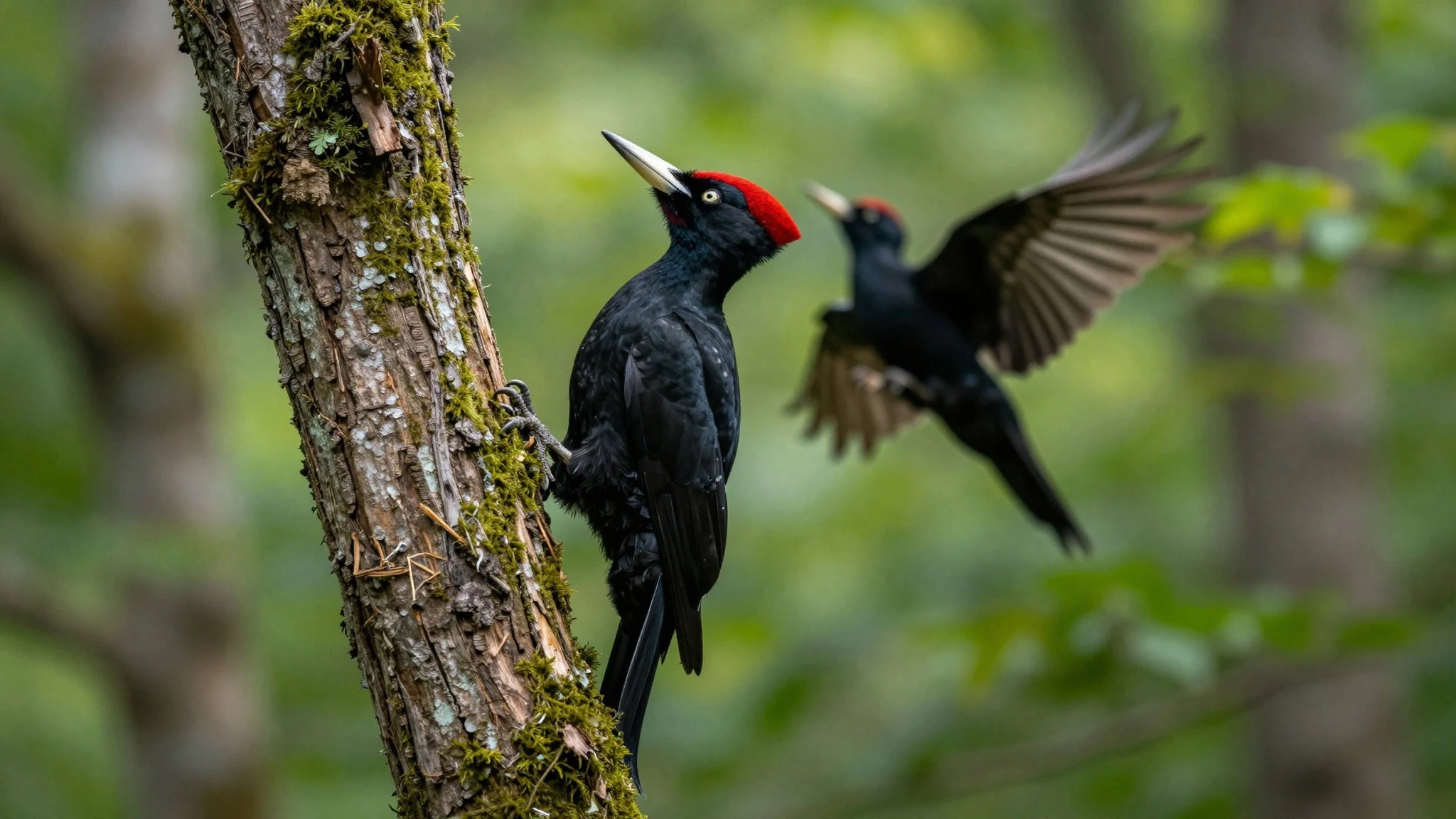
- Black woodpecker (bird)
Remember the black woodpecker as the biggest, blackest tree-tapper in the forest. In Gyeryongsan National Park it is a rare find, said to dwell among the thick treetops and craggy rock faces of the protected areas. It stays in one place all year rather than migrating, and it likes old woodland, where it digs a large nest hole and mostly eats carpenter ants. Watch from far enough away not to disturb it, stay quiet, think about hiring a guide, and never feed it. - Common buzzard (animal)
The common buzzard is a hunting bird of middling size, a feathered hunter that watches the world below. In Gyeryongsan National Park it counts among the rarer sights, linked with the thick treetops and craggy rock faces of the guarded areas. Over much of its wide range it stays put all year, though some buzzards fly south for winter. Keep well back, speak softly, let a local guide help you find it, and never offer it food. - Common buzzard (bird)
The common buzzard is a hunting bird of middling size, a sharp-eyed hunter of the open air. In Gyeryongsan National Park it is one of the rarer sights, tied to the thick treetops and craggy rock faces of the guarded areas. In much of its wide range it lives there all year, though buzzards from colder places fly south for winter. Keep a respectful distance, move and speak quietly, ask a guide to help you spot it, and never feed it.