Grand Terre
Grand Terre, France
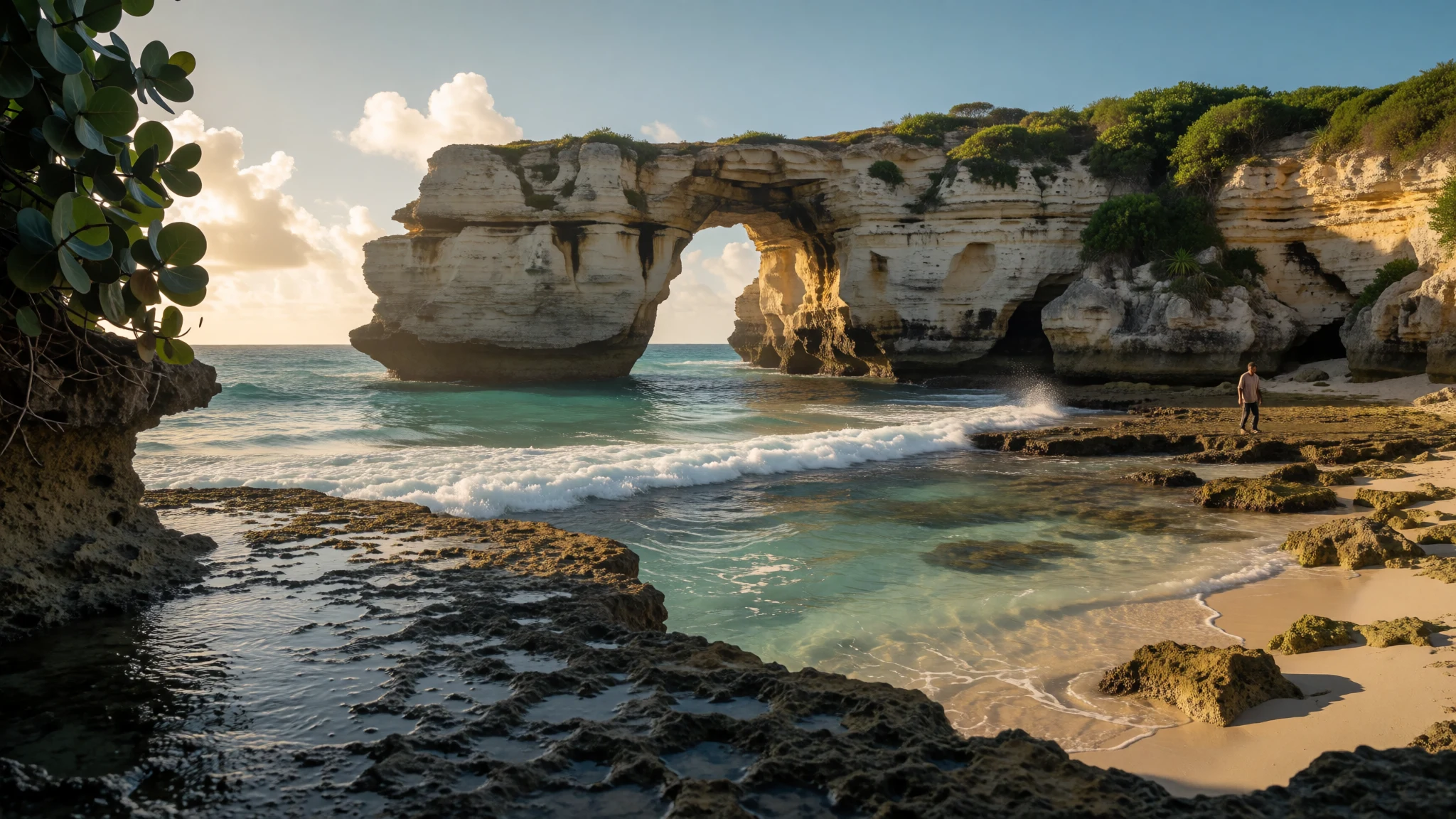
Grande-Terre is Guadeloupe's flatter, drier half: limestone cliffs, reef-fringed beaches, cane fields, rum distilleries and the heavy history of Pointe-à-Pitre.
The place
Grande-Terre is the eastern half of Guadeloupe, in the Lesser Antilles, and politically part of France. Despite the name, which means 'big land', it is the smaller of the two main islands. It is separated from Basse-Terre by the Rivière Salée, a narrow sea channel that looks more like a river of mangroves than a strait.
The landscape is the opposite of its mountainous neighbour. Grande-Terre is a limestone plateau of rolling hills, with the highest ground reaching about 130 metres. Its indented coast is ringed by coral reefs, which keep the water calm and clear along the southern shore. Beaches come in white, golden and black sand, and the northern and eastern coasts turn rugged, with cliffs taking the full force of the Atlantic.
The island is home to about 197,000 people and carries most of Guadeloupe's farmland and tourist resorts. Sugar cane still shapes the interior, and the rum it feeds is a living local industry. Pointe-à-Pitre, with its suburbs, is the economic capital of Guadeloupe and the usual arrival point, since the international airport is close by.
The resort strip runs along the south coast through Gosier and Saint-François, with nightlife concentrated around Gosier. Out east, the land ends at the Pointe des Châteaux, where rock and sand break into castle-like shapes. Pointe de la Grande Vigie in the north is the northernmost point of Guadeloupe. Out at sea, La Désirade lies to the east and Marie-Galante to the south, both reachable as add-ons.
Its story
Grande-Terre carries layers of names and owners. Before Europeans arrived, the island's Caribbean-speaking inhabitants called it Cibuqueira, usually translated as the island of gum trees. Its neighbour Basse-Terre was Karukera, said to mean the island of beautiful waters, a name Guadeloupe still uses poetically today.
The French name that replaced them is a little misleading. 'Grande' sounds like a claim to size, yet the island is smaller than Basse-Terre. The names probably say more about flat, farmable ground than about area, and that is the key to the island's later history. Its plateau suited plantation agriculture, and sugar cane turned Grande-Terre into a place built on enslaved labour brought across the Atlantic.
That history is not tucked away. Forts above Pointe-à-Pitre, among them Fort Louis and Fort Fleur d'Épée, were built to defend the harbour approaches, and the Fleur d'Épée fort dates from 1759, when the island was being contested with the English. In the city, the Mémorial ACTe stands on the site of an old sugar factory and tells the story of slavery and the slave trade. The Schoelcher Museum honours Victor Schoelcher, who campaigned to abolish slavery in French territories.
The pre-Columbian period is kept alive too, in the Edgar Clerc archaeological museum near Le Moule, which shows ceramics and shell tools. Together these places make the island's story legible: first peoples, colonial forts, cane and rum, abolition, and a modern Creole society.
What to see
- Pointe de la Grande Vigie — Northern Grande-Terre
The northernmost point of Guadeloupe, where limestone cliffs drop to a wild Atlantic sea. It is reached by a walk across open scrub, and it is windy and exposed, so bring water and a hat. The views along the cliff line are the reason to come.
- Porte d'Enfer — Near Le Moule
A narrow cleft in the rock near Le Moule, where the sea surges into a sheltered inlet between cliffs. Calm days make it look inviting, but the Atlantic here is strong, so treat the water with care and enjoy the setting from the path above.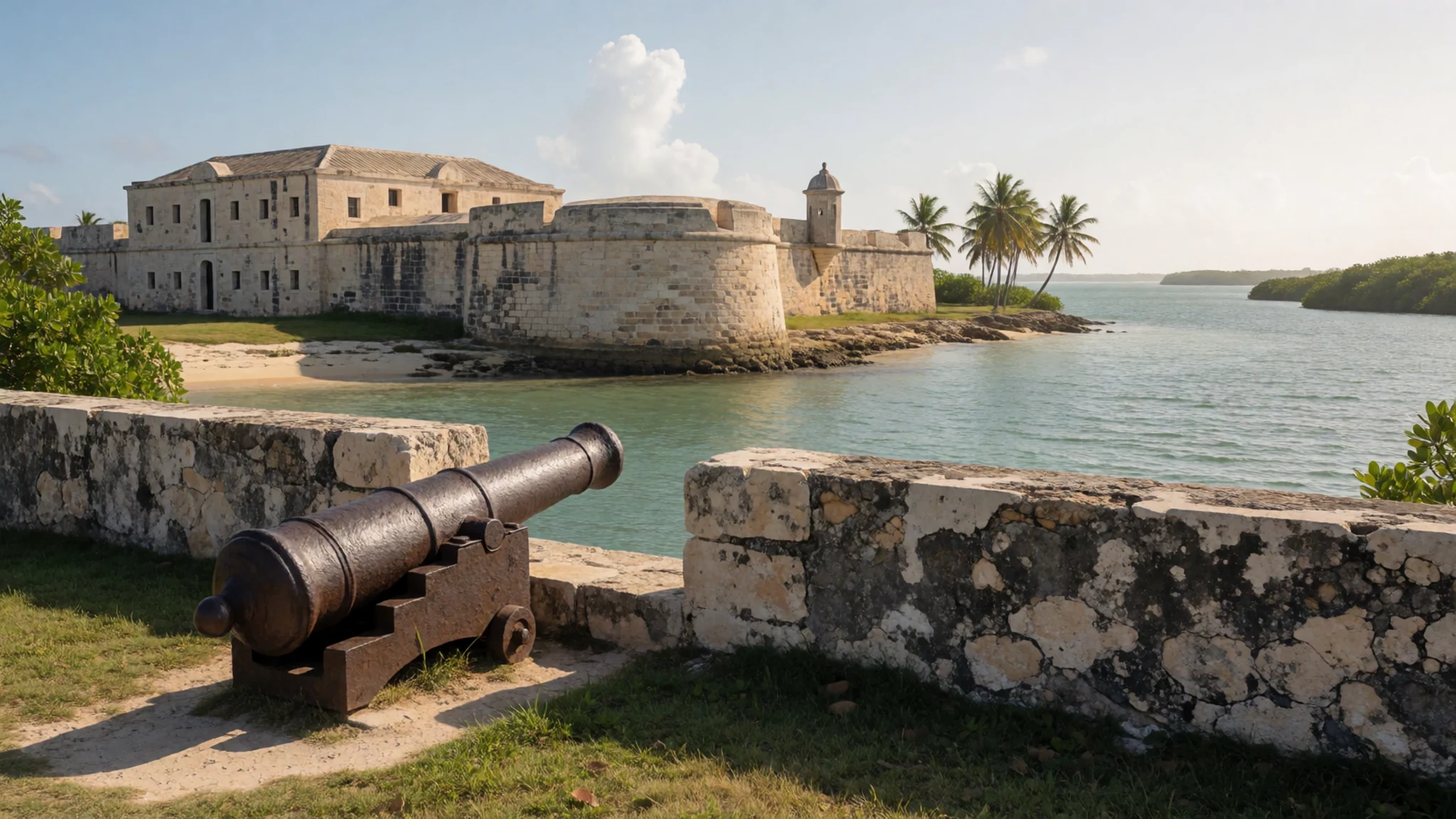
- Pointe des Châteaux — Saint-François
The eastern tip of Guadeloupe near Saint-François, where sand and eroded rock make shapes like castle walls. Wind and waves are constant. Go early or late for softer light and fewer visitors, and expect a steady stream of day-trippers at midday.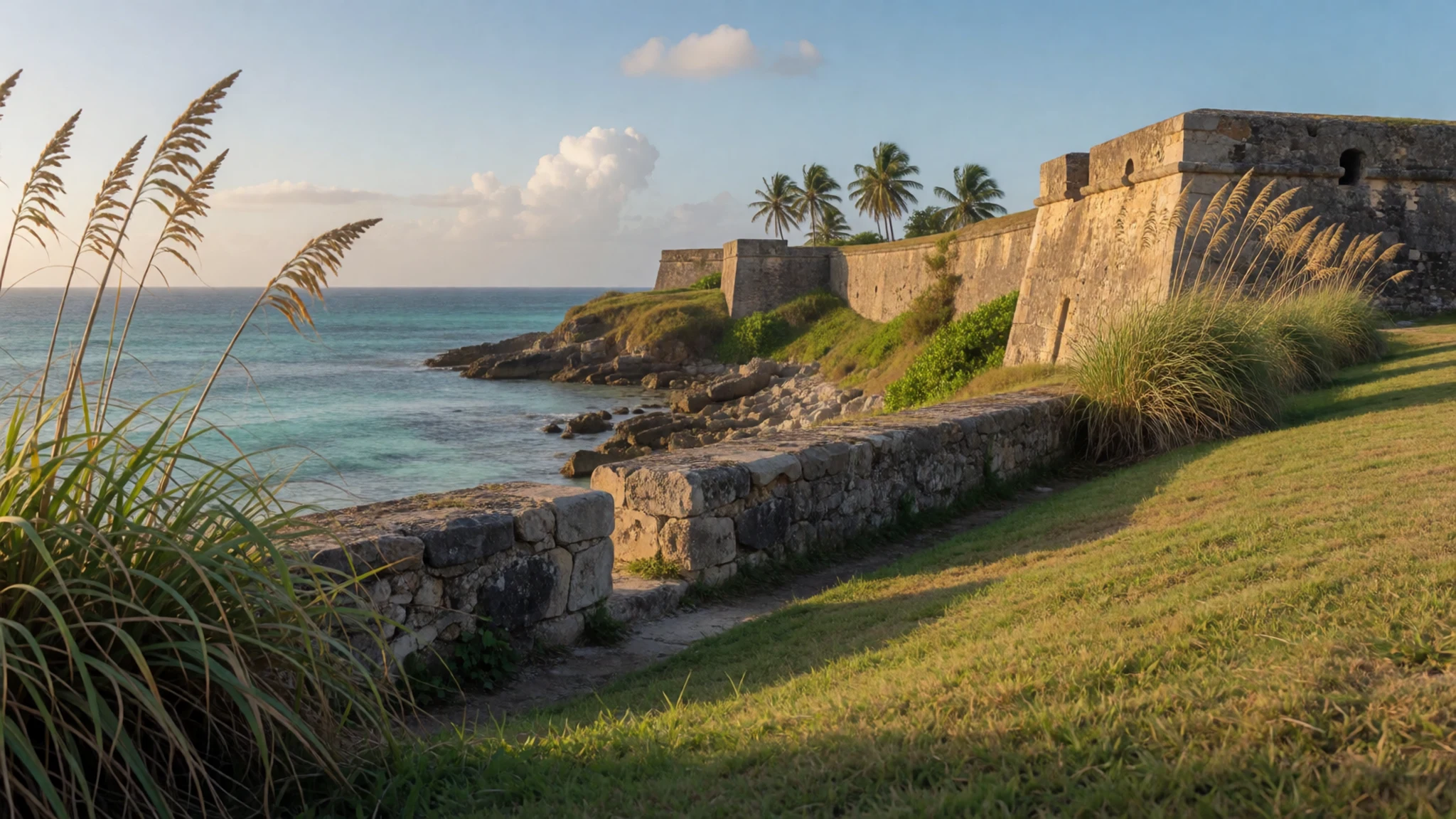
- Mémorial ACTe — Pointe-à-Pitre
A museum in Pointe-à-Pitre on the site of an old sugar factory, covering the Atlantic slave trade and slavery from ancient times to the present, with particular attention to the Caribbean. Audioguides are available, including in English. Allow a good half-day.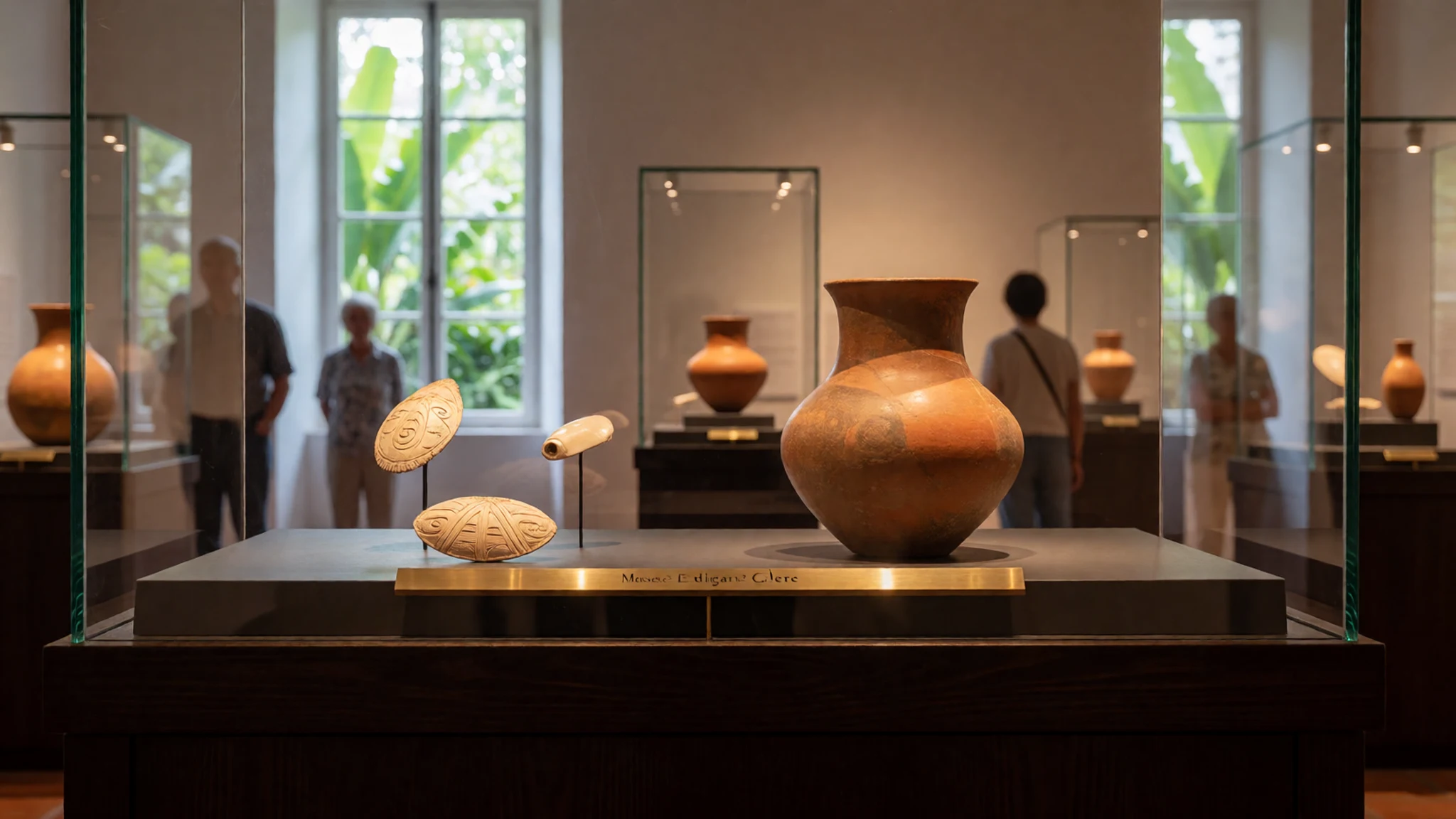
- Fort Louis and Fort Fleur d'Épée — Bas du Fort, near Gosier
Two colonial forts guarding the approaches to the harbour. Fort Fleur d'Épée, in the Bas du Fort area, dates from 1759 and was built against English attack. The hilltop positions give a useful sense of how the coast was defended.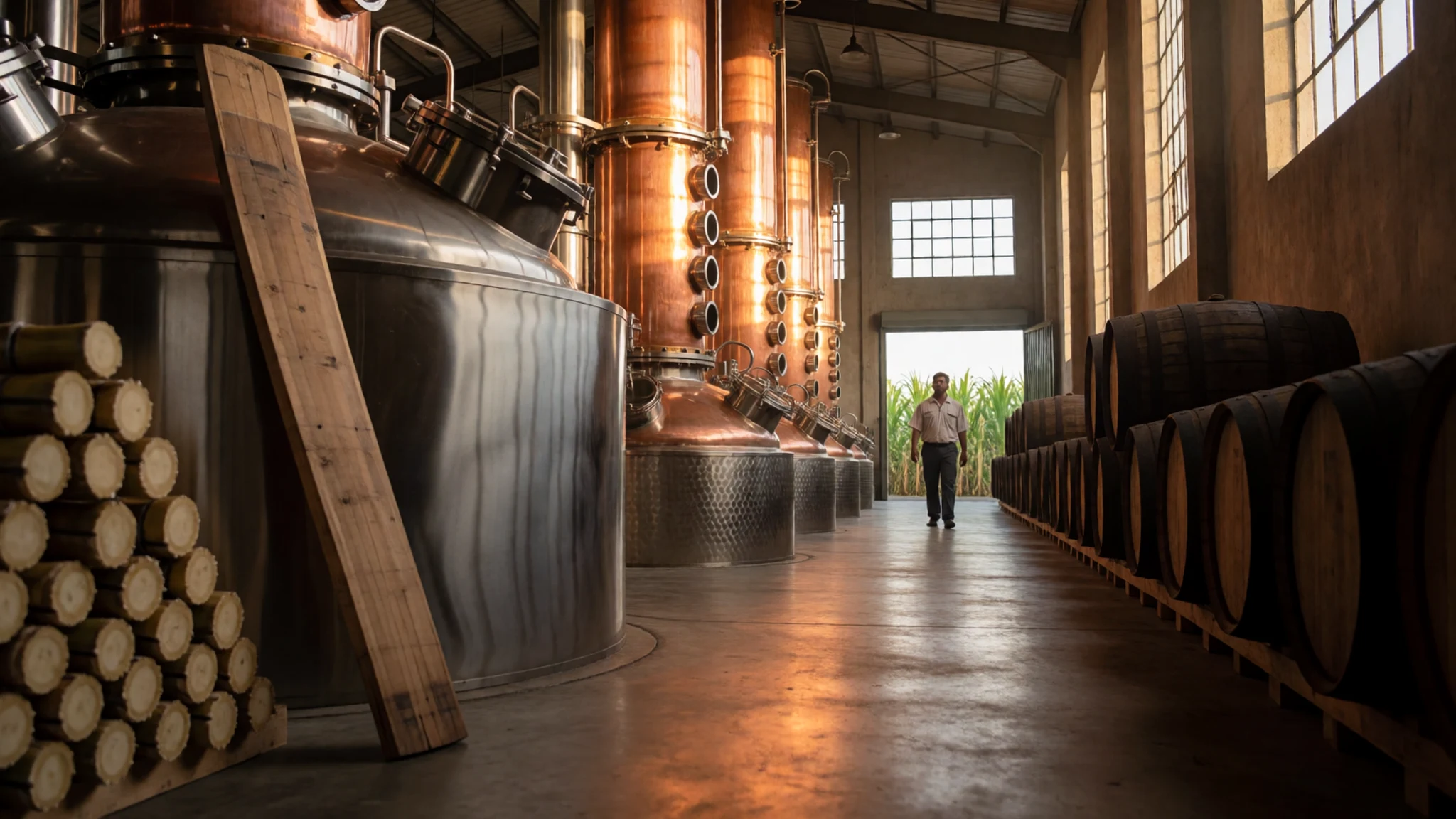
- Distillerie Damoiseau — Near Le Moule
A working rum distillery near Le Moule with a self-guided tour that explains how cane becomes rum, ending with a tasting. It is a good way into the island's agricultural economy. Check the official site for current opening arrangements.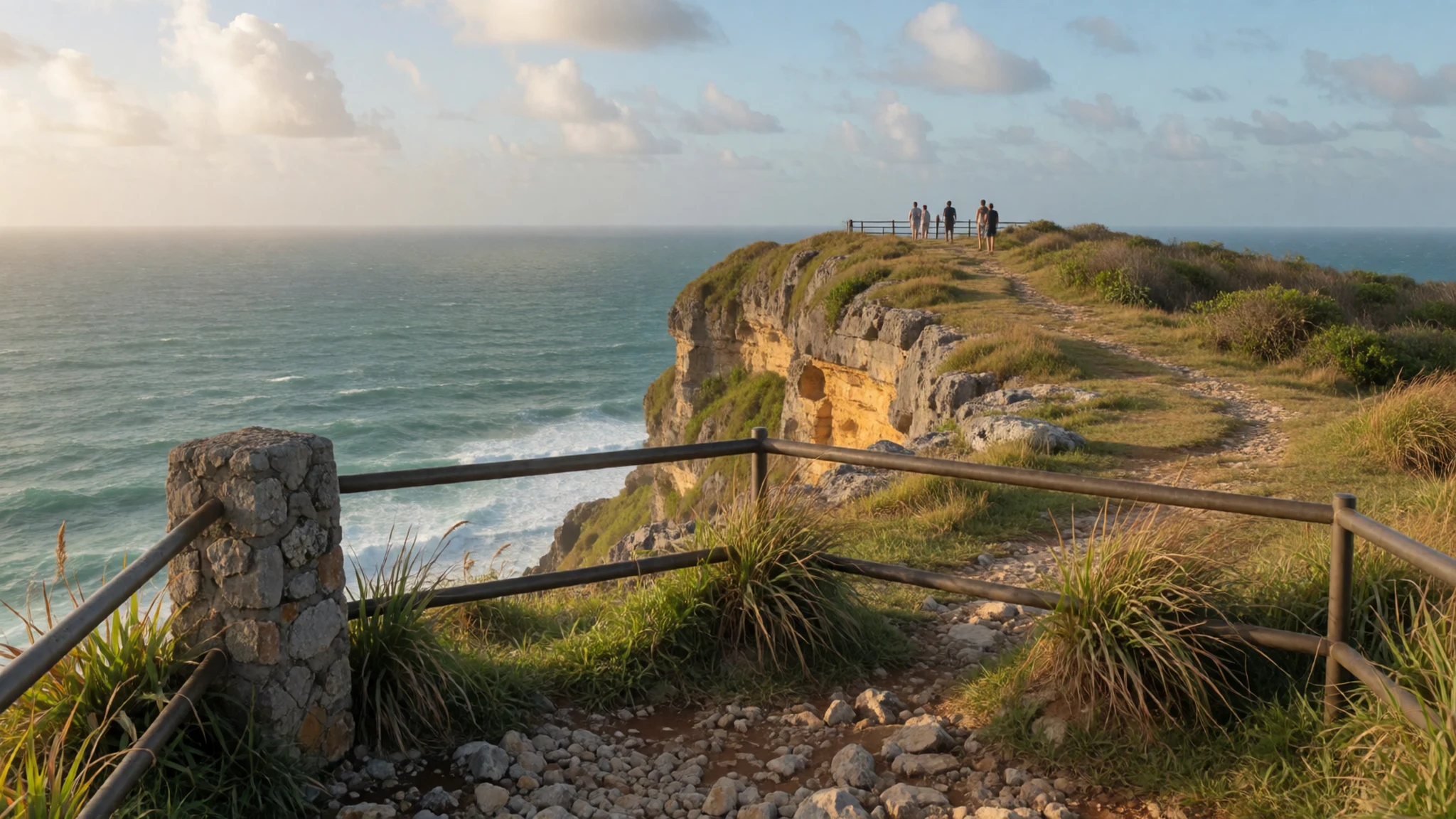
Culture
Grande-Terre is French in its administration and Creole in its daily life. Language is the first sign: French is used officially, while Guadeloupean Creole, known locally as Granntè for this island, is the language of many conversations, music and jokes. Even a few words of French in greeting are noticed and appreciated.
The island's culture grows from the plantation economy and the people who were enslaved to work it. That legacy shows in food, music, storytelling and the strong sense of local identity. Zouk and other Caribbean rhythms fill bars and beach shacks, and Latin styles such as merengue, bachata and salsa are popular in Gosier's nightlife. Markets in Pointe-à-Pitre are where Creole atmosphere is easiest to feel, with spices, produce and chatter.
Sugar and rum remain part of the rhythm of the year, and distilleries are both industry and heritage. Museums in Pointe-à-Pitre treat slavery and abolition seriously, and visitors should approach them in that spirit. The writer Saint-John Perse, born in Guadeloupe, is remembered with a museum in the city.
Daily manners follow French habits. A greeting before asking for anything is expected in shops, taxis and eateries, and meals are unhurried. In Gosier, some nightclubs expect proper clothes, so sneakers and shorts may be refused at the door.
When you enter a shop, market stall or eatery, say 'bonjour' first and wait for a reply before you ask for anything.
What to wear
Grande-Terre has a traditional Creole dress, worn today mainly for festivals, folklore groups and formal celebrations. Women's costume is built from layered skirts, a fitted bodice, a shawl and a headtie, often in madras, a brightly checked cotton cloth. The way the headtie is folded has historically carried meaning, and the full outfit is a point of pride at carnival and cultural events.
Everyday clothing is far simpler and shaped by heat and humidity. People wear light cotton and linen, T-shirts, shorts, sundresses and sandals, with a more polished look for church, work and evenings out. French style influences how people dress up: neat, relaxed and put together rather than flashy.
Visitors should pack for sun and warmth. Light, breathable clothes, a wide-brimmed hat, sunglasses and reef-safe sun protection are sensible. Swimwear belongs on the beach, so cover up with a shirt or wrap when walking into towns, markets and eateries. A light layer helps against sea wind on the exposed northern cliffs, and a rain jacket is useful in the wetter months.
For footwear, sandals work for resorts, but bring closed shoes with grip for cliff paths such as the Grande Vigie walk, where the ground is rocky and uneven. Water shoes help on reef-edged beaches. For an evening in Gosier, pack one smarter outfit with proper shoes, since some clubs turn away sneakers and shorts.
What to eat
- Accras de morue — Beach snack stands and Pointe-à-Pitre market
Crisp salt-cod fritters, seasoned with chilli and herbs. They are a standard Creole starter or snack, eaten hot with a drink. Look for them at beach snack stands, market stalls and almost any Creole eatery.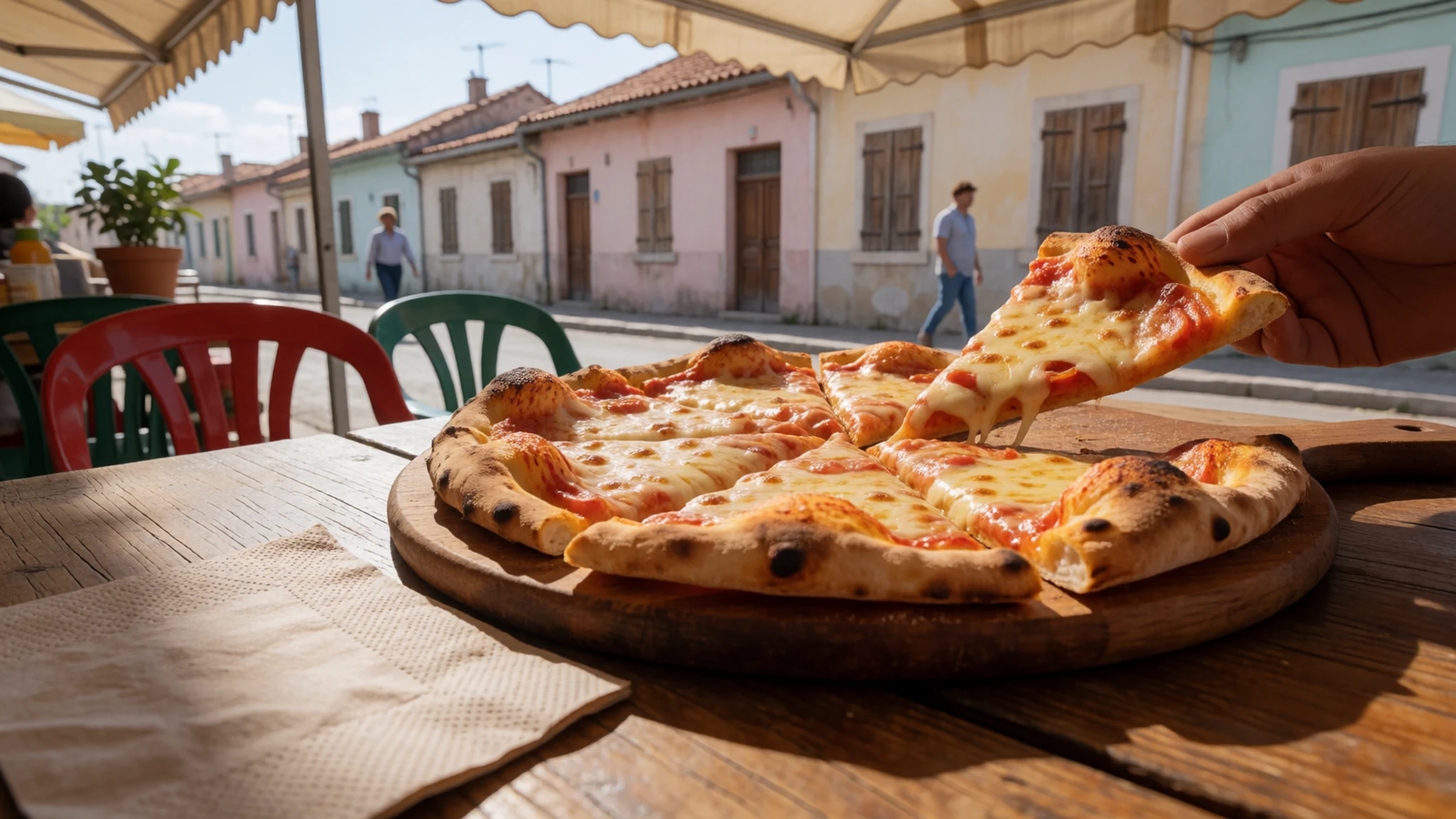
- Colombo — Family-run Creole eateries across the island
A Creole curry of chicken, goat or pork, flavoured with a local spice blend and served with rice. It reflects the South Asian influence on Caribbean cooking and suits visitors from India and the UK who like mild, aromatic curries.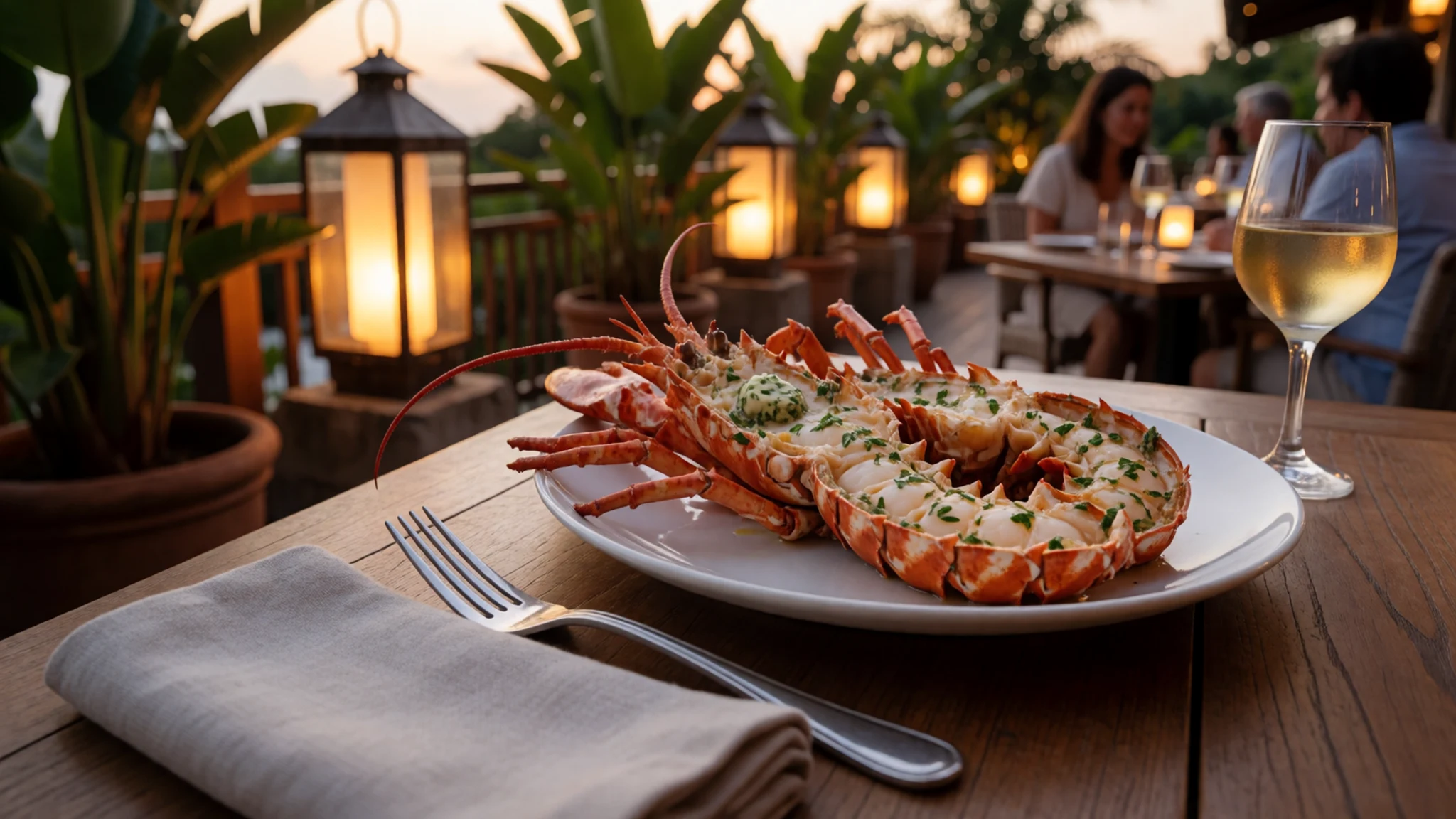
- Grilled lobster — Seafront restaurants in Saint-François and Le Moule
Local lobster, grilled and served with Creole sauce, rice or vegetables. Freshness matters, so ask what came in that day. It is a treat rather than an everyday meal, and prices vary a lot, so check before ordering. - Fresh fish and conch — Harbour-side eateries and fishing villages
Reef and sea fish are grilled or stewed with lime, chilli and herbs, and conch appears in stews and salads. Coastal eateries serve whatever the boats landed, so the choice changes through the week. - Rum and ti' punch — Distilleries near Le Moule and beach bars
The local drink is rhum agricole, made from fresh cane juice and used in ti' punch, a simple mix of rum, lime and cane syrup. Distilleries offer tastings, and bars pour it neat or mixed. Sip slowly, as it is strong.
Plan it
Best time. December to April is the drier, cooler part of the year, with sunshine and gentle trade winds. The summer and autumn months are hotter and more humid, with more rain, and the hurricane season runs through them, so check forecasts and insurance cover.
How long. 3–5
Getting there. Fly to Pointe-à-Pitre international airport, which is on Grande-Terre. From there, buses, taxis and hire cars reach Gosier, Saint-François and Le Moule. A car is the easiest way to reach the cliffs and points in the north and east.
Budget. mid
Tips
- Hire a car for the north and east, where public transport is limited
- Visit cliff viewpoints such as Grande Vigie early, before the heat and wind build
- Carry some cash for markets and small snack stands, and cards for larger places
- Check sea conditions before swimming, as Atlantic-facing coasts can be rough
- Book accommodation early for the dry season, when demand is highest
Etiquette
- Greet people with 'bonjour' before asking for anything
- Treat memorial and museum sites on slavery with quiet respect
- Keep swimwear for the beach and cover up in towns
Nearby
Sources
- Wikidata Q527799 (CC0)
- Wikipedia: Grande-Terre, Guadeloupe (rev 1379363273) (CC BY-SA 4.0)
- Wikivoyage: Grande-Terre (rev 5429919) (CC BY-SA 4.0)
- Caribbean - Grande Terre.PNG (Public domain)
- Pointe de la Grande Vigie - Guadeloupe.jpg (CC BY 3.0)
- Côte sous le vent, au niveau de la Porte d'Enfer (Antoine Cupial) (CC BY-SA 4.0)
- Depuis la Pointe de la Grande Vigie (Mart.wain) (CC BY-SA 4.0)
- Guadeloupe (13).JPG (Zivax) (CC BY-SA 2.5)
- Pointe du Capucin (Enrevseluj) (CC BY-SA 4.0)


