Gramado
Gramado, Brazil
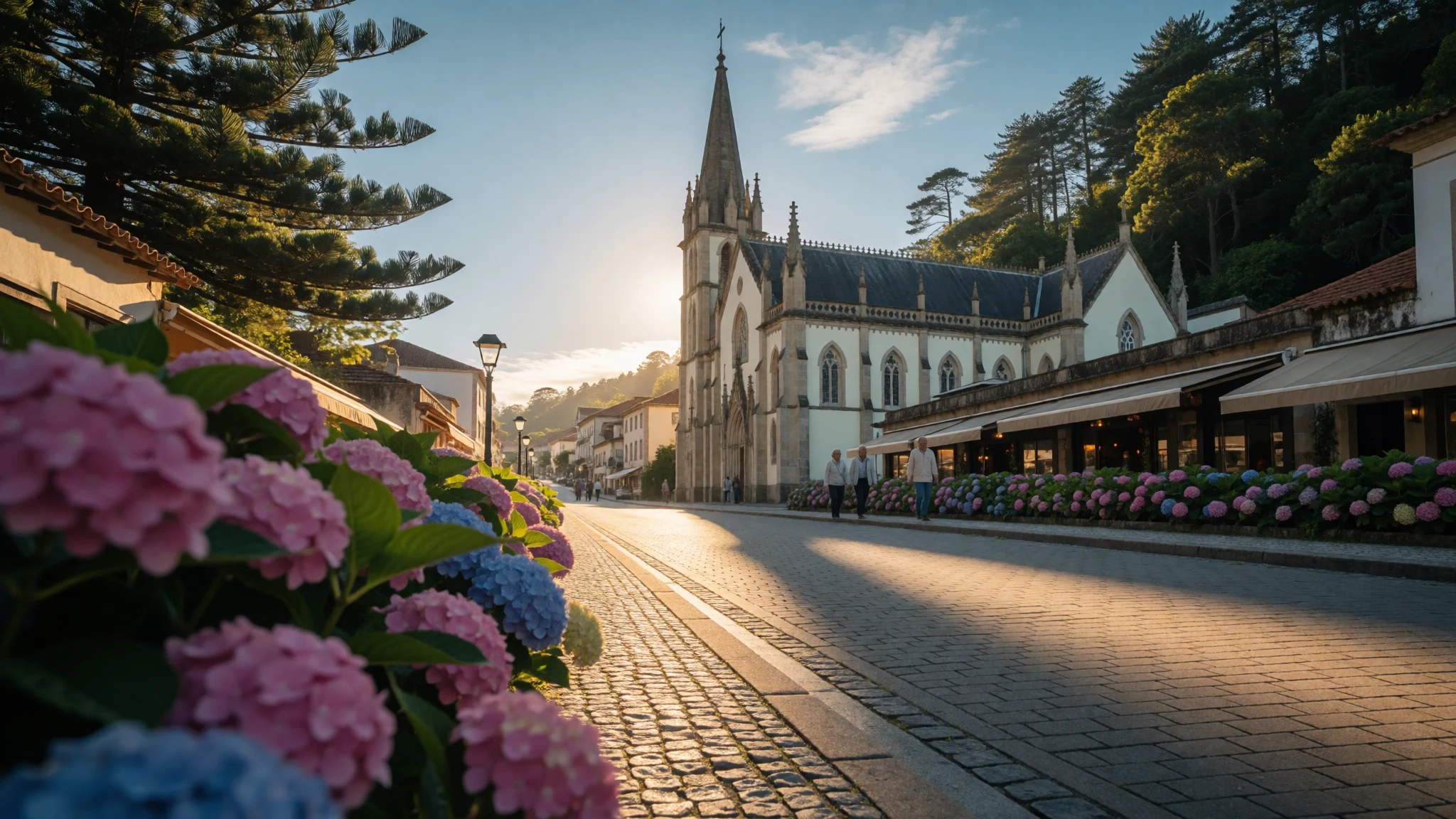
Gramado is a cool highland town of pines, hydrangeas and Christmas lights, where Brazil's German and Italian settler heritage meets its film festival.
The place
Gramado sits in the Serra Gaúcha, the upland part of Rio Grande do Sul in southern Brazil, at about 850 metres above sea level. That height gives it cooler, damper air than the lowlands, and the town makes the most of it with timber-framed buildings, hydrangea borders and pine-lined paths that feel closer to central Europe than to the tropics most people picture for Brazil. About forty thousand people live here, yet weekends and school holidays bring crowds that make the centre feel far busier than the resident count suggests.
The tourist heart is Avenida Borges de Medeiros, where St Peter's church, the Festivals Palace, the covered shopping street, restaurants and small squares all lie within a short walk of each other. Away from the avenue the streets climb and dip, so even a modest stroll involves hills. Green space is generous: Lago Negro, Knorr Park, Orchard Park, Roses Square and Communications Square are all in or near the centre.
Gramado is one stop on the Rota Romântica, a scenic route through towns shaped by German and Italian settlers, and that blend of Portuguese, German and Italian heritage shows in the architecture, the menus and the festivals. It is a town built for visiting, which brings polish and also a certain theme-park gloss; people who want something quieter and less staged often head for smaller neighbours such as Nova Petrópolis. Fog and rain can roll in at any time of year, so the weather is worth planning around.
Its story
Gramado's story begins in 1875, when Portuguese settlers took up land in this part of the Serra Gaúcha. German families followed about five years later, and Italian settlers came soon afterwards, many of them from the colonies around Caxias do Sul. That mix still defines the town's food and festivals.
For decades the settlement was a district of neighbouring Taquara. In 1913 its centre of gravity shifted to Linha Nova, the site of today's town centre. The turning point came in 1921, when a railway arrived. The line was the work of José Nicoletti Filho, the town's founder and first administrator, and it opened the area to trade and to holidaymakers escaping the summer heat of the lowlands. By 1937 Gramado had formal town status and a name as a summer resort, and the municipality itself was created on 15 December 1954.
Lago Negro has its own short history. In 1953 Leopoldo Rosenfeld dammed a creek to make a U-shaped lake in an area thick with hydrangeas, which had been burned by fire in 1942. He planted pine seedlings brought from Germany's Black Forest around the rim, and the lake took its name from those trees. The lake and its woods are now one of the calmer corners of town, and a reminder that much of Gramado's alpine look was a deliberate mid-twentieth-century creation rather than something inherited from the first settlers.
What to see
- Lago Negro — Near the town centre
Lago Negro is a small U-shaped lake ringed by pines and hydrangeas, a short distance from the town hall. A path circles the water, swan-shaped pedal boats can be hired at the boathouse, and a modest craft fair and refreshment stands sit nearby. Come early or on a weekday for quiet; opening hours change, so check the official site.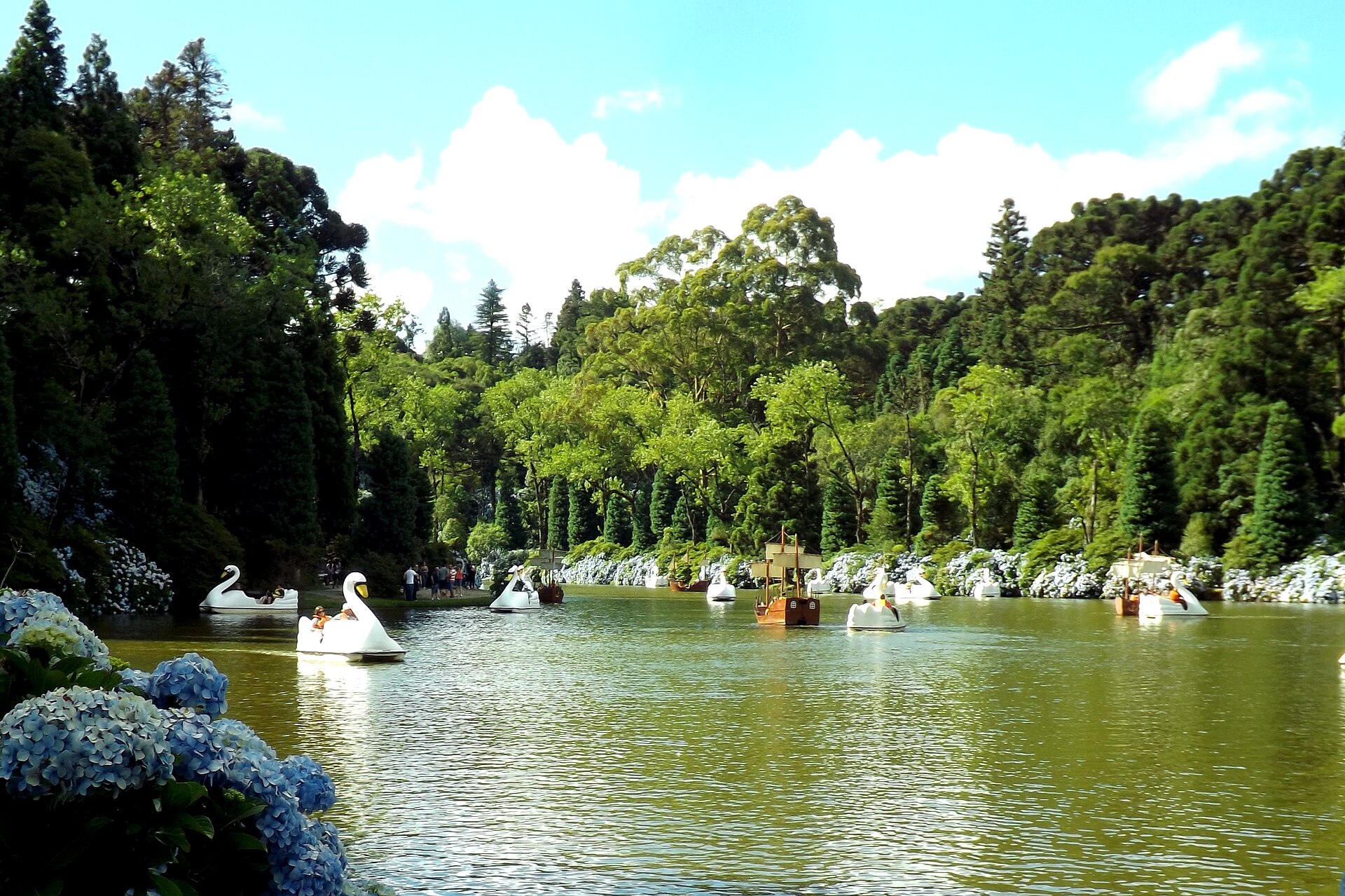
- Avenida Borges de Medeiros and the Covered Street — Town centre
Avenida Borges de Medeiros is the town's main tourist strip, running past St Peter's church, restaurants, shops and squares. The covered street off it has a transparent roof, which keeps rain off shoppers and shows the Christmas lights to good effect after dark. Expect slow-moving crowds in the evenings and at weekends.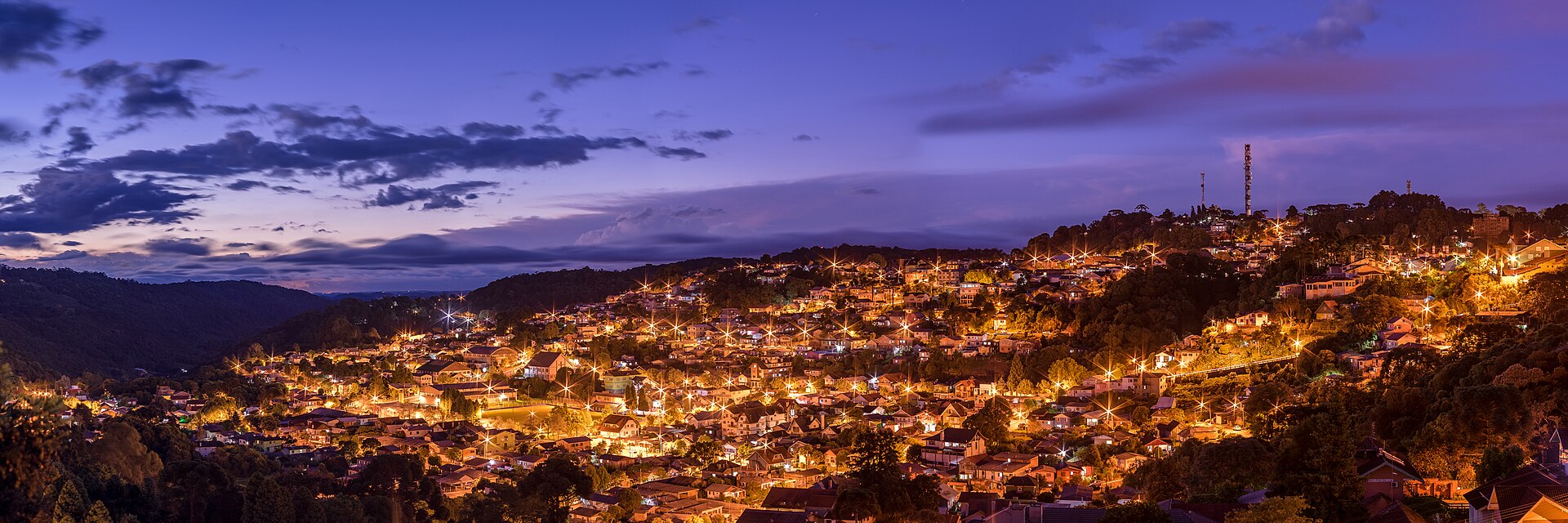
- Parque Knorr — Gramado
Parque Knorr is a Christmas-themed park with a Santa's grove, a toy factory, a wish tree and a bear cottage set among gardens. It suits families and is at its most atmospheric in the festive season, which is also when queues are longest. Opening times and entry arrangements change, so check the official site before going. - Festivals Palace — Avenida Borges de Medeiros
The Festivals Palace is the venue for the Festival de Gramado film festival and also runs regular cinema sessions through the year. Even outside festival week it is worth a look as a landmark on the main avenue, and a seat at a screening makes a dry-weather alternative on a foggy day. - Miniworld — Gramado
Miniworld is an outdoor park of scale models of famous buildings and sights, from a Bavarian castle to a Brazilian colonial mining town. It is light-hearted and works best with children or as a gentle hour between meals. Like most paid attractions here, it is busiest during school holidays. - Cultural Centre — Town centre
The Cultural Centre gathers the city hall, the Elisabete Rosenfeld Theatre, the Municipal Historic Archives and the Prof. Hugo Daros Municipal Museum in one complex. It is the place to look for the local-history side of Gramado, away from the Christmas displays. Check the official site for current opening arrangements.
Culture
Gramado's culture is layered: Portuguese beginnings, then German and Italian settlers, all folded into the wider gaúcho identity of Rio Grande do Sul. The result is a town where an alpine-style façade can stand beside a churrasco grill and a shared gourd of chimarrão, the bitter herbal mate drink that southern Brazilians carry almost everywhere.
Three events set the calendar. The Festival de Gramado is a major South American film festival, centred on the Festivals Palace. Natal Luz is the Christmas festival, which fills the town with lights, parades and shows for weeks. Festa da Colônia marks the immigrant history of the region, with music, dance and food from the settler traditions.
Outside festival periods the town is calmer, though weekends stay lively. Locals are used to visitors and are generally relaxed and friendly, and a few words of Portuguese, such as bom dia and obrigado (obrigada if you are a woman), go a long way. Much of what visitors see is polished for tourism, so conversations with shopkeepers, guesthouse owners and guides about the settler families and the town's growth are often the best route to something less staged.
At Christmas attractions, cinema screenings and church services in Gramado, wait your turn in queues, keep your voice low inside St Peter's church, and ask before photographing strangers, especially children.
What to wear
Gramado has no single town costume. Its dress traditions come from the settlers and from the wider gaúcho culture of Rio Grande do Sul. Heritage groups at events such as Festa da Colônia wear German- and Italian-inspired folk outfits: embroidered bodices and aprons, full skirts, waistcoats and felt hats, mostly in cotton and wool. Gaúcho dress, seen at rural festivals and among folk dancers, centres on bombachas, loose trousers gathered at the ankle, with wool ponchos, leather boots and a neckerchief.
Day to day, residents dress for the cool highland climate: jeans, knitwear, fleeces and padded jackets in winter, light layers in summer. People dress smartly for dinner but rarely formally, except around the film festival, when evening wear appears near the Festivals Palace.
Visitors should pack layers whatever the month, since mornings and evenings are cool at about 850 metres and rain can arrive quickly. A waterproof jacket and a scarf help in winter, and sun protection matters in summer. Comfortable shoes with good grip suit the sloping streets and the lake paths. No strict dress code applies in town, but covering shoulders and knees is courteous when stepping into a church such as St Peter's.
What to eat
- Cheese fondue — Restaurants along Avenida Borges de Medeiros
Cheese fondue is the town's signature cold-weather order, a pot of melted cheese eaten with bread and sometimes potatoes or cured meats. Many restaurants in the centre serve it, often with a chocolate version to follow. - Chocolate — Chocolate shops around the covered street and town centre
Gramado is full of small chocolate makers selling truffles, bars and hot chocolate, a fitting treat in cool weather. Shops often offer tastings, so sample before buying a box to carry home. - Café colonial — Cafés and guesthouses, especially in the surrounding countryside
A café colonial is a lavish afternoon spread of breads, cakes, cheeses, cold cuts, preserves and hot drinks, rooted in German and Italian settler habits across the Serra Gaúcha. Go hungry, and treat it as a meal rather than a snack. - Galeto with polenta — Family-style restaurants in and around town
Galeto is young chicken, grilled or roasted, usually served with polenta and salad in the Italian-Brazilian style of the Serra Gaúcha. Portions are generous and well suited to sharing at a long table. - Pinhão — Street stalls and markets in the cooler months
Pinhão, the seed of the araucaria pine, is boiled or roasted and eaten in the cooler months across southern Brazil. It tastes a little like chestnut and turns up as a snack and in cooking.
Plan it
Best time. April–May and September–October bring mild days and lighter crowds. December–January is warm, with hydrangeas in bloom and Christmas lights, but is the busiest period. June–August is cold, often foggy and sometimes frosty, so pack warm layers.
How long. 2–3
Getting there. Fly to Salgado Filho International Airport (POA) in Porto Alegre, the main gateway for southern Brazil, then continue by road, either by coach or a hire car. Hugo Cantergiani Airport (CXJ) in Caxias do Sul is smaller, with few routes. Canela Airport (CEL), 8 km away, takes some flights from Porto Alegre and private aircraft; check airlines for current schedules.
Budget. mid
Tips
- Book accommodation well ahead for the Christmas season, the film festival and school holidays
- Walk Avenida Borges de Medeiros early in the morning, before the crowds arrive
- Carry a waterproof layer and a warm jacket, since fog and showers come quickly at this altitude
- Keep a little cash for craft stalls and small snack stands, and check the official site (http://www.gramado.rs.gov.br/) for attraction hours
- Gramado is relatively safe for a Brazilian town, but keep valuables and jewellery out of sight to avoid pickpockets
Etiquette
- Queue patiently at busy attractions, especially in the festive season
- Keep voices low and shoulders covered when entering a church
- Ask before photographing strangers, especially children
Nearby
Sources
- Wikidata Q694833 (CC0)
- Wikipedia: Gramado (rev 1375953599) (CC BY-SA 4.0)
- Wikivoyage: Gramado (rev 5402980) (CC BY-SA 4.0)
- Photo: Gramado collage (Valentim0106) (CC BY 3.0)
- Photo: Gramado, Rio Grande do Sul (Augusto Janiski Junior) (CC BY 2.5)
- Photo: Gramado, Lago Negro (Larissa Fraga) (CC BY 3.0)
- Photo: Le Jardin Lavender Park (Lúcia Bischoff) (CC BY-SA 4.0)
- Photo: Gramado, Joaquina Bier (Marcelo Alves) (CC BY-SA 2.0)
- Photo: Panorama of Centro de Gramado at night (Felipe Valduga) (CC BY 2.5)
- Photo: Flag of Gramado (Prefeitura de Gramado) (Public domain)
- Photo: Coat of arms of Gramado (Public domain)


