Nazaré
Nazaré, Portugal
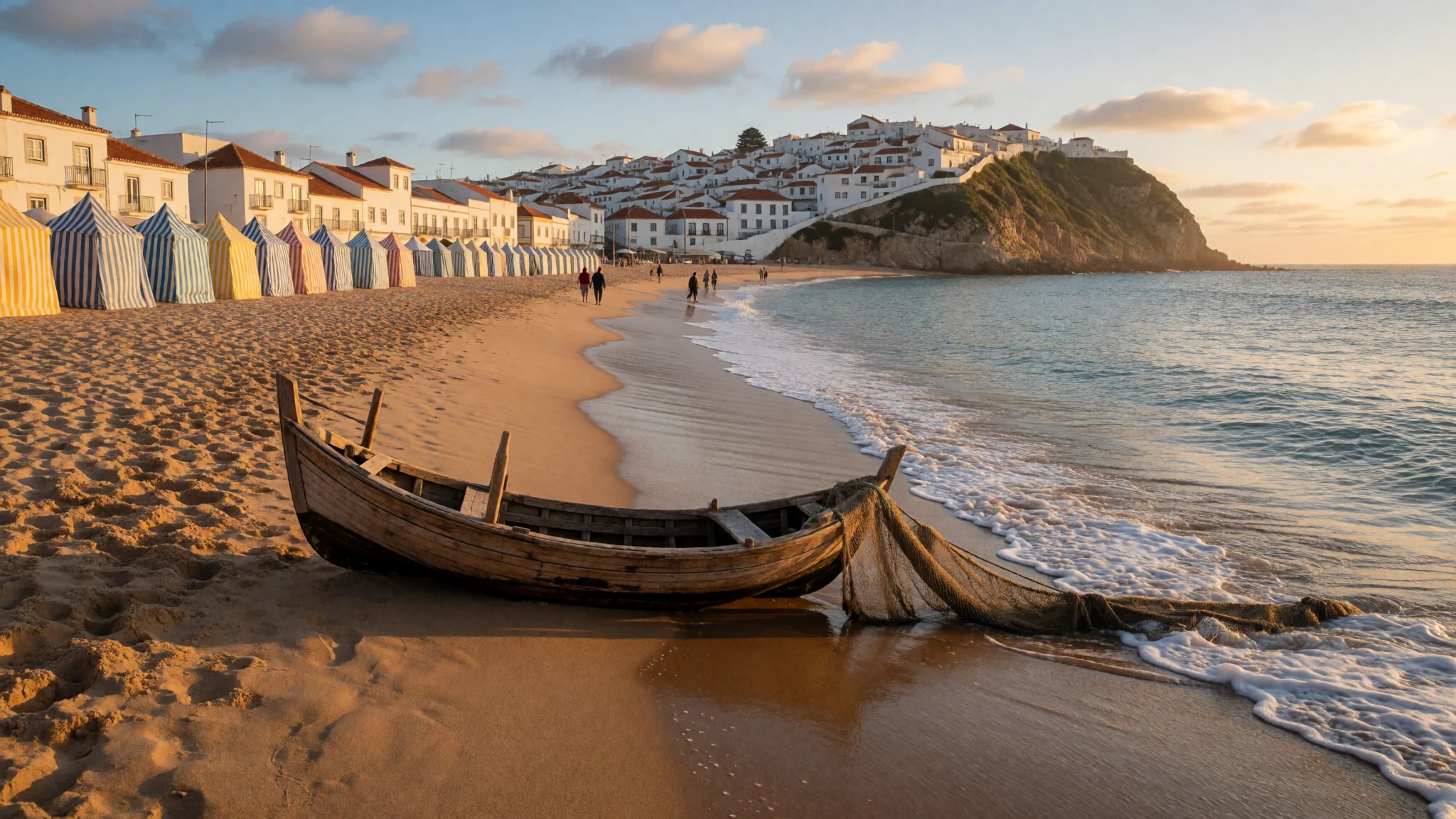
Visit Nazaré to witness monstrous Atlantic waves breaking against dramatic cliffs and experience a historic coastal resort town.
The place
Nazaré is a coastal resort town situated in the Oeste region of Portugal, within the historical province of Estremadura and the Leiria District. Overlooking the Atlantic Ocean, the municipality is home to a population of roughly 15,000 residents across an area of about eighty square kilometres. The settlement is physically divided into three distinct neighbourhoods that reflect its complex topography and maritime heritage. Down on the coast lies Praia, the bustling modern centre and beachfront area where visitors find sandy shores and restaurants. Perched high above the water on a clifftop is Sítio, an old historic village that commands sweeping views of the coastline. Further inland sits Pederneira, another historic hilltop village that completes the municipal triad. Linking the lower beach district of Praia with the lofty vantage point of Sítio is a historic funicular railway, carrying passengers up and down the steep incline. Nazaré forms part of the Silver Coast, known locally as the Costa de Prata, and serves as an important seaside destination. While summers bring warm, dry weather and holidaymakers to the shore, the town is globally famous for its colossal winter waves, which draw extreme surfers from around the planet to test the limits of the Atlantic. The municipality is bordered by the Atlantic to the west and is surrounded by the municipality of Alcobaça on its remaining sides.
Its story
The earliest settlements of Nazaré took root safely away from the crashing surf, established in the elevated locations of Pederneira and Sítio to afford inhabitants protection. For centuries, these hilltop sanctuaries offered refuge against persistent raids by Viking fleets and, later, French, English, and Dutch pirates, a maritime threat that persisted until the early nineteenth century. Only as maritime piracy gradually faded away did the local population venture down to the shore to begin occupying Praia, which eventually grew into the modern town centre. According to local lore, the Legend of Nazaré links the town's origins to a carved wooden figure of the Virgin Mary carried from the Holy Land to Spain by a monk in the fourth century. In the eighth century, another monk named Romano and Roderic, the last Visigoth king of modern Portugal, brought the sacred image to the seaside. Upon arrival, the pair chose to live as hermits in a natural grotto on top of the coastal cliff. Following Romano's passing, the king buried him inside the grotto in accordance with his wishes, planting deep spiritual roots that endure in local tradition to this day.
What to see
- Ermida da Memória — O Sítio
Perched on the cliffs of O Sítio, this small Marian chapel commemorates the miraculous intervention associated with Our Lady of Nazaré. Visitors reach the clifftop site via the historic funicular tramway to enjoy sweeping panoramic views across the sweeping beach below.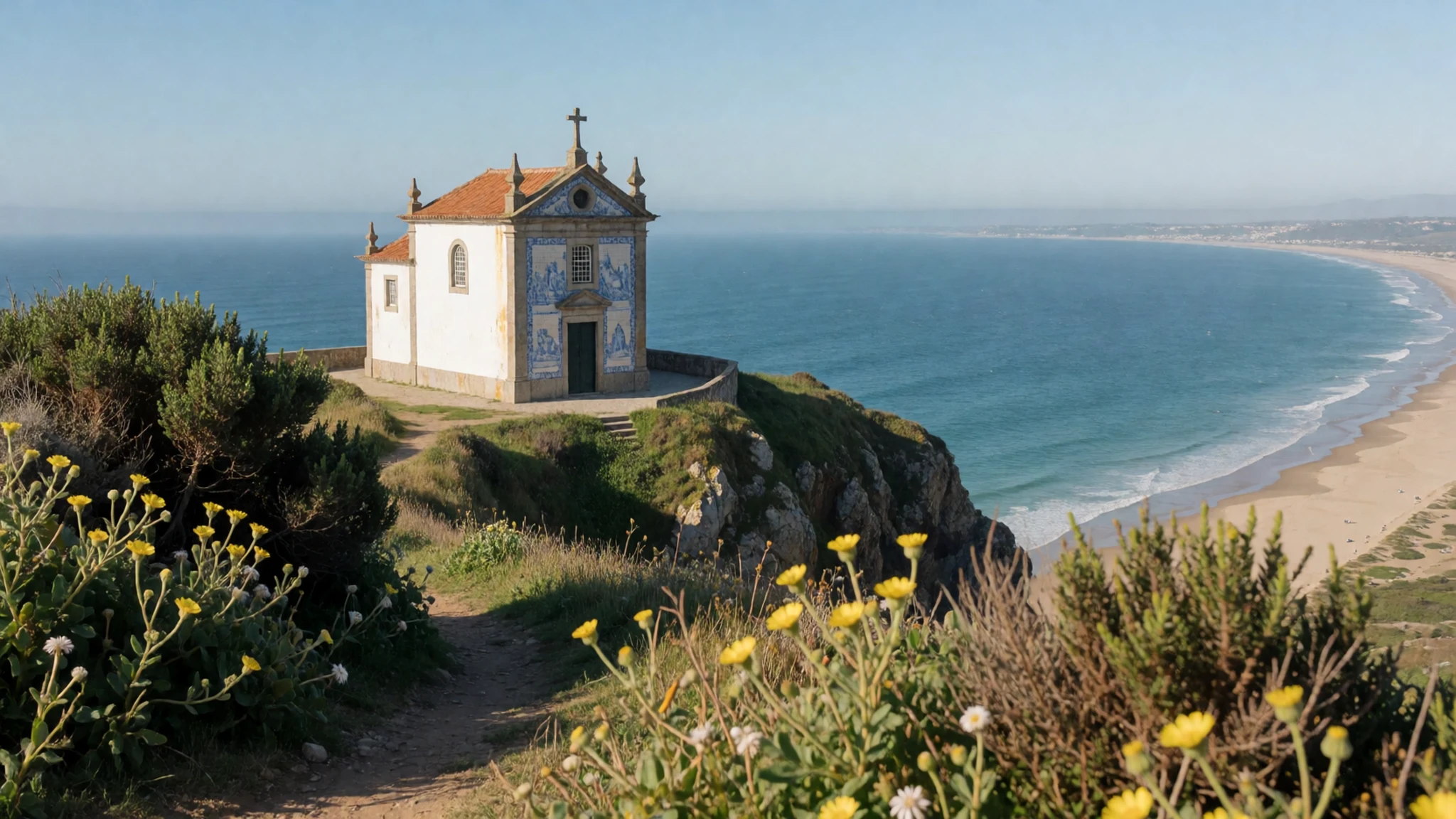
- Santuário de Nossa Senhora da Nazaré — O Sítio
An important Marian shrine located in O Sítio that houses the revered original sacred image of Our Lady of Nazaré. The basilica serves as a focal point for religious pilgrims and anchors the historic square where traditional festivals take place.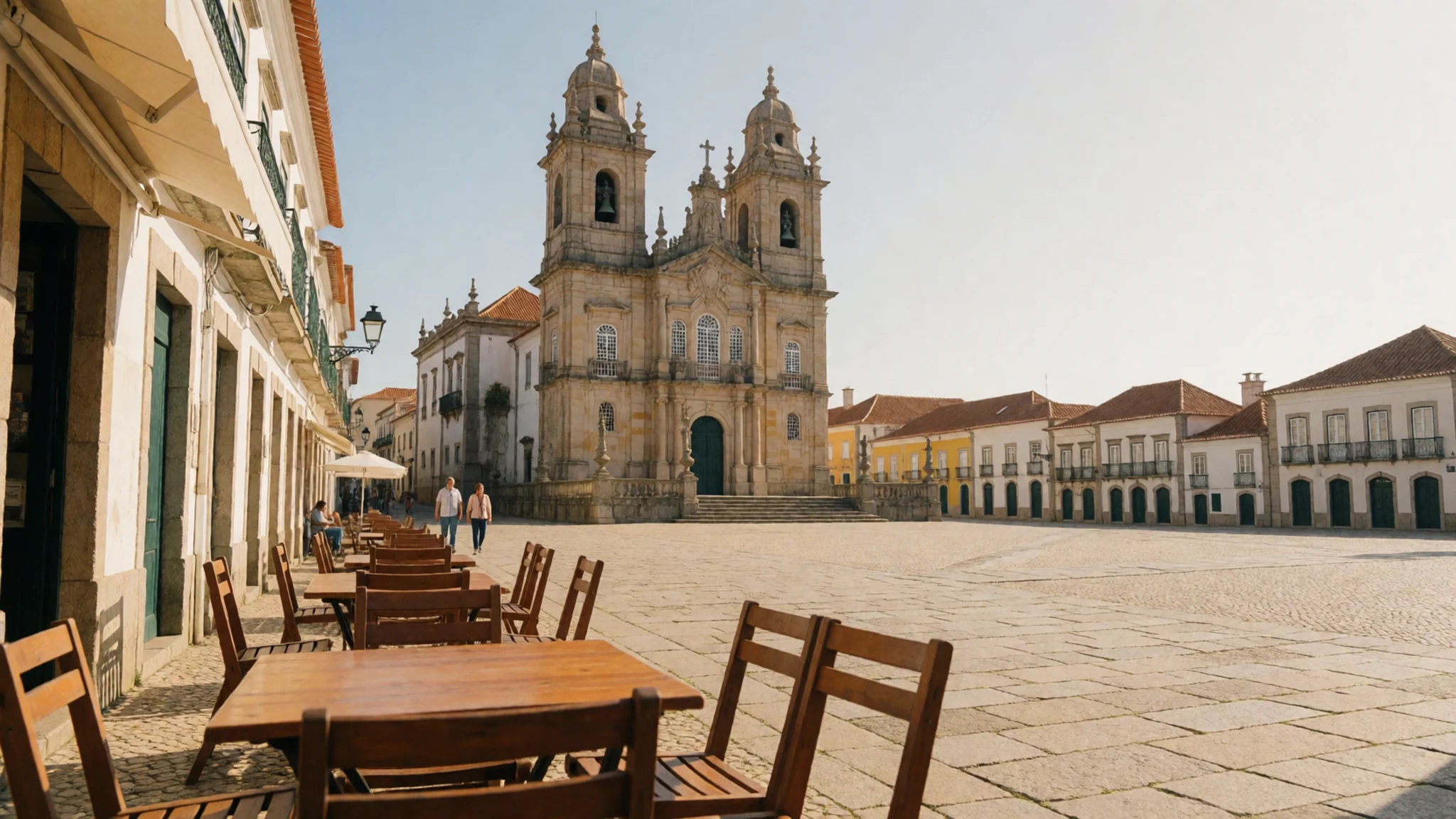
- Forte de São Miguel Arcanjo — Praia do Norte
Walk out along the stone path to this coastal fortification and lighthouse to watch the raw power of the Atlantic Ocean. This spot offers a dramatic vantage point for observing giant waves crashing against the rocky headlands during the heavy swell season.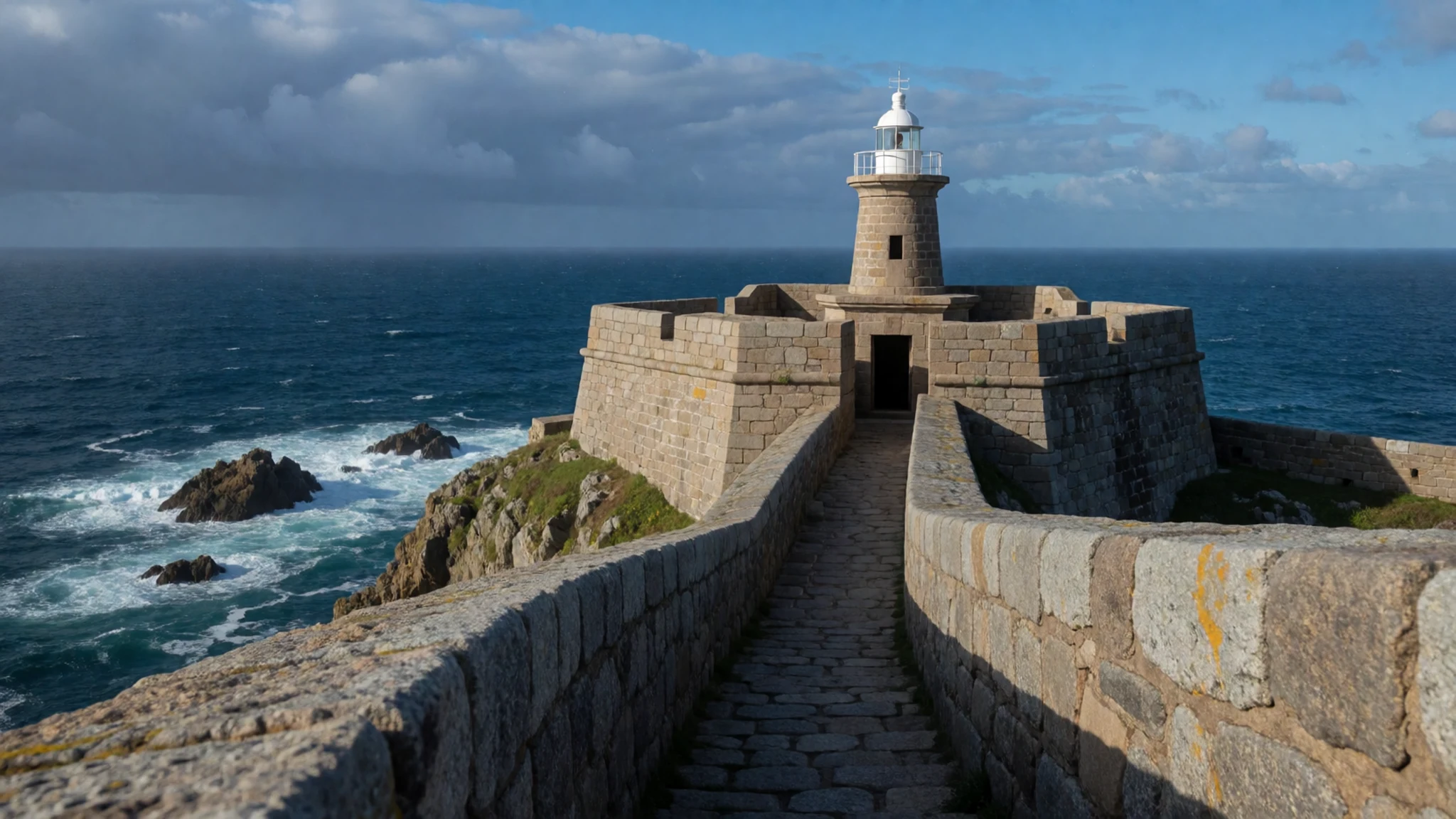
- Praia da Nazaré — Praia
A wide sandy beach curving gracefully along the town centre of Praia, offering excellent conditions for swimming, sunbathing, and leisure during the warmer summer months. Colourful canvas tents traditionally line the sand, recalling the town's long fishing heritage.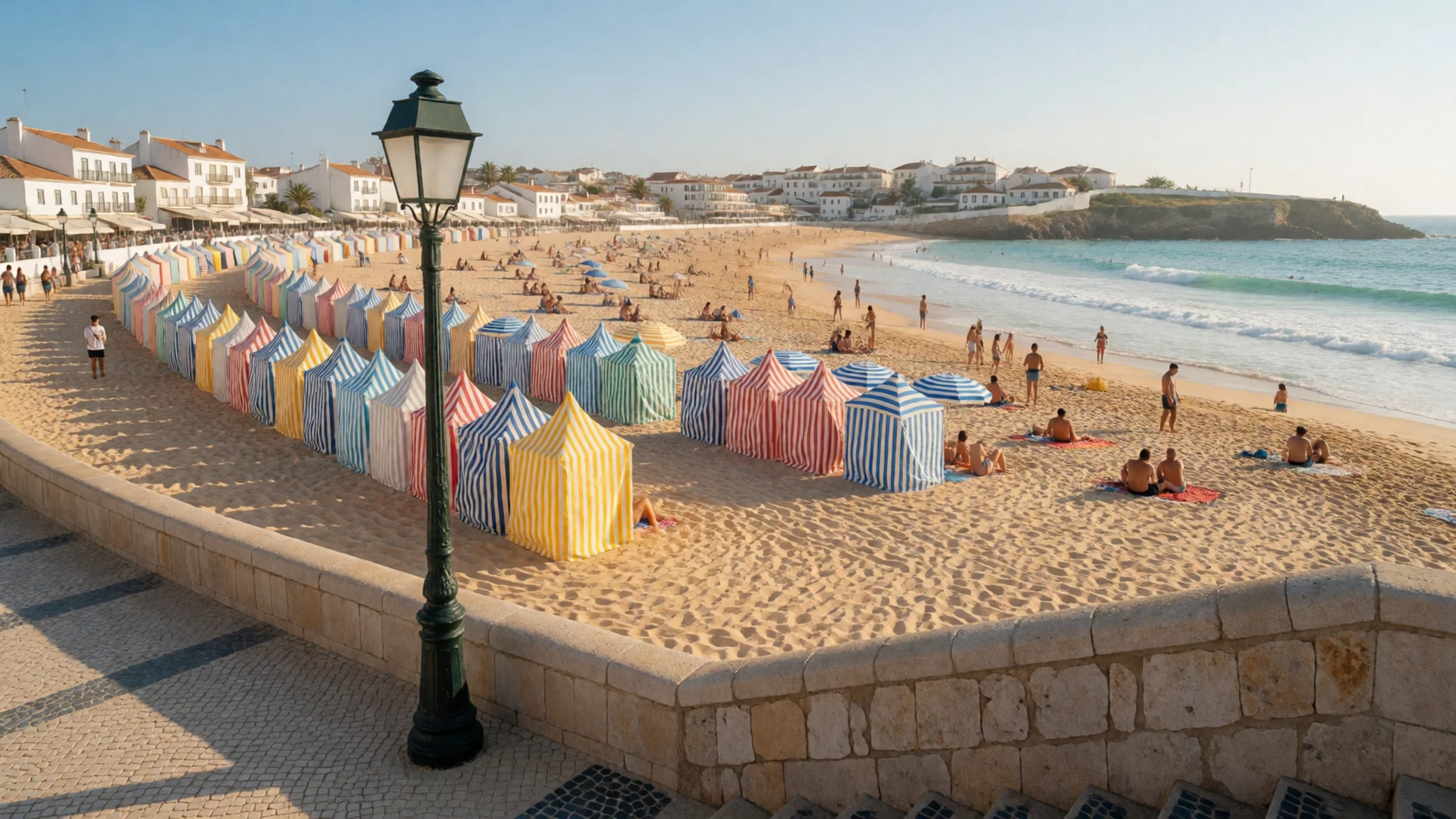
- Praia do Norte — North Coast
A vast, wild expanse of sand stretching north of the headland, famous for generating the largest surfable waves in the world. Swimming here is extremely dangerous due to violent undercurrents and powerful shore breaks, making it a place to watch rather than wade.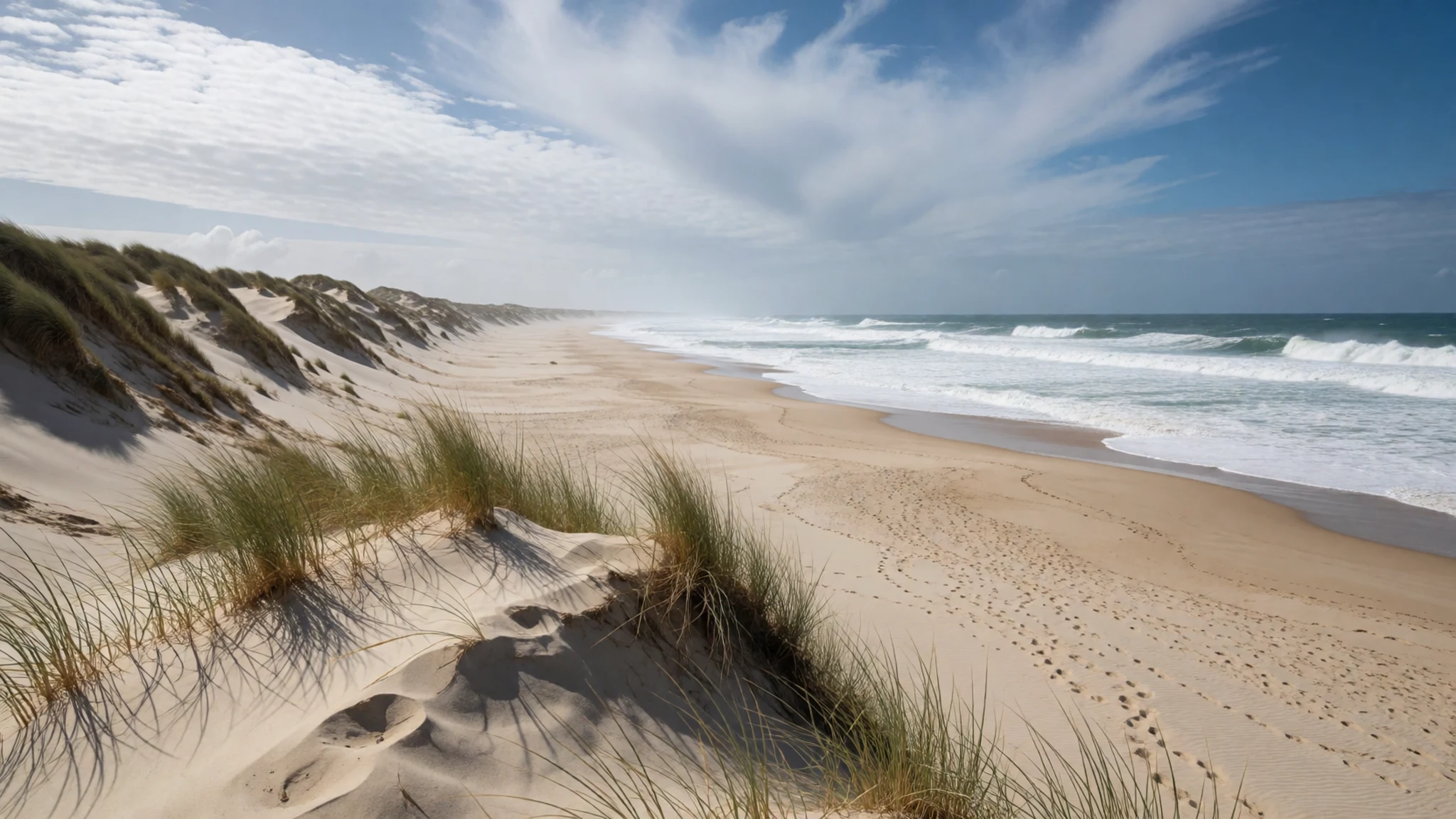
Culture
Throughout the twentieth century, Nazaré evolved gradually from an isolated fishing community into a vibrant destination for both Portuguese and international travellers. Despite its modern popularity as a seaside resort, the town retains strong ties to its maritime past and Catholic traditions. The community comes alive during the Our Lady of Nazaré Festival, a major ten-day celebration held every September featuring religious processions, folk dancing, fireworks, and a traditional fair. Many visitors combine a trip to the town with visits to the nearby Sanctuary of Fátima, drawing a steady stream of pilgrims to the region. While everyday life follows a relaxed coastal rhythm, traditional customs persist through local gatherings and seasonal events. When entering churches or religious shrines such as the sanctuary in O Sítio, dress respectfully with covered shoulders and knees.
What to wear
Traditional dress in Nazaré remains among the most distinctive in Portugal, historically rooted in the daily lives of the local fishing families. Women traditionally wore a heavy woolen headscarf paired with a flannel skirt carefully embroidered in seven different vibrant colours. While these elaborate traditional costumes are rarely worn for daily chores today, women occasionally don them for special festivals, cultural displays, and holiday processions. For everyday life, residents dress in practical, contemporary European casual wear suited to a coastal climate with warm summers and breezy Atlantic air. Visitors should pack light, breathable layers for warm summer days, along with a windproof jacket or fleece for cooler evenings by the ocean. Comfortable walking shoes are essential for navigating the steep cobbled streets of Sítio, the steps around the headland, and the sandy stretches of the beaches.
What to eat
- Grilled Sardines — Backstreets of Praia
Freshly caught sardines grilled simply over hot coals outside small local eateries, served with boiled potatoes and bread. Find these at small traditional restaurants located in the backstreets away from the main waterfront promenade.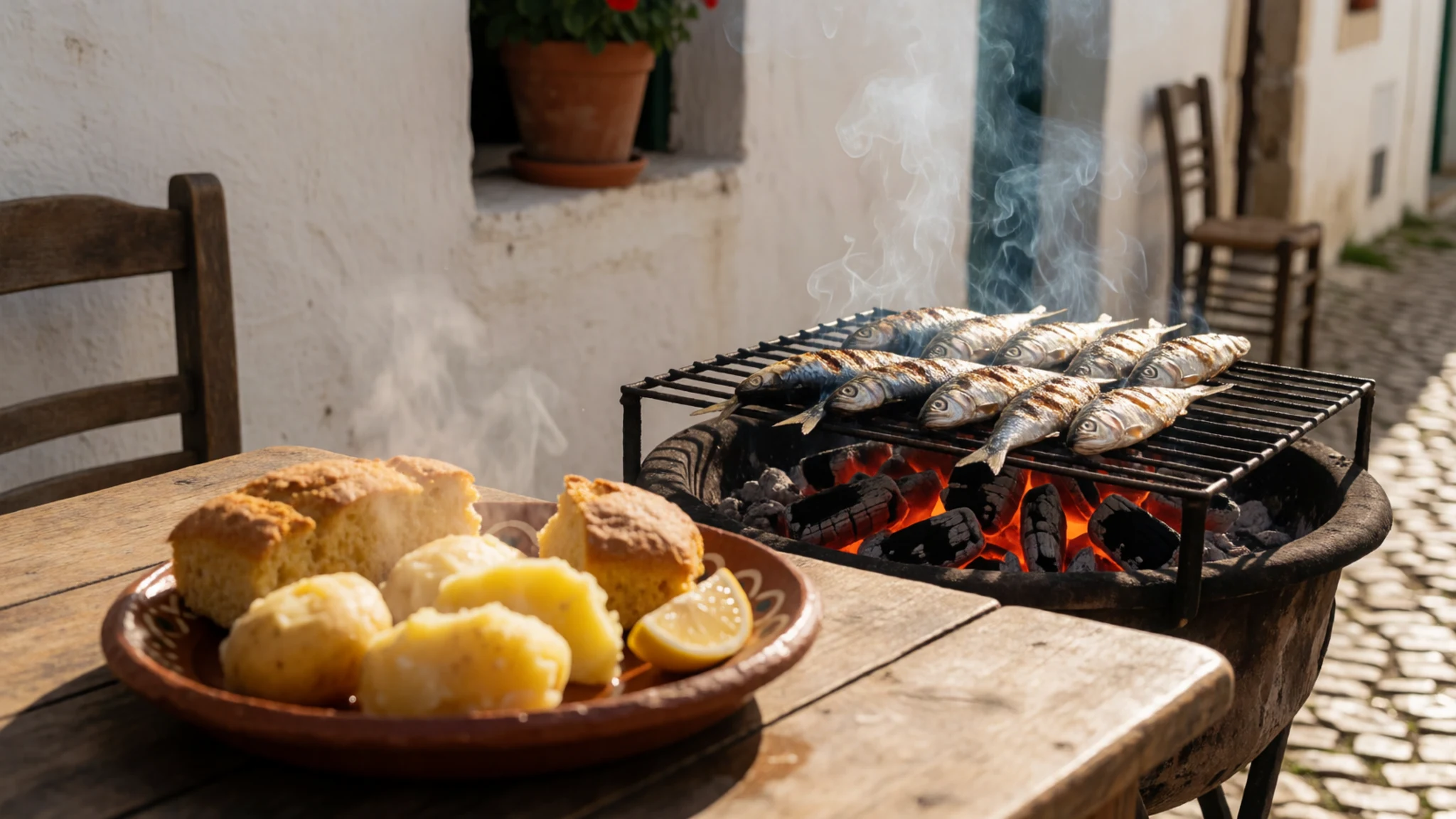
- Seafood Rice — O Sítio
A hearty traditional Portuguese rice dish loaded with fresh catches from the Atlantic, including prawns, clams, and fish cooked in a rich tomato and herb broth. Enjoy this at traditional seafood restaurants overlooking the basilica in O Sítio.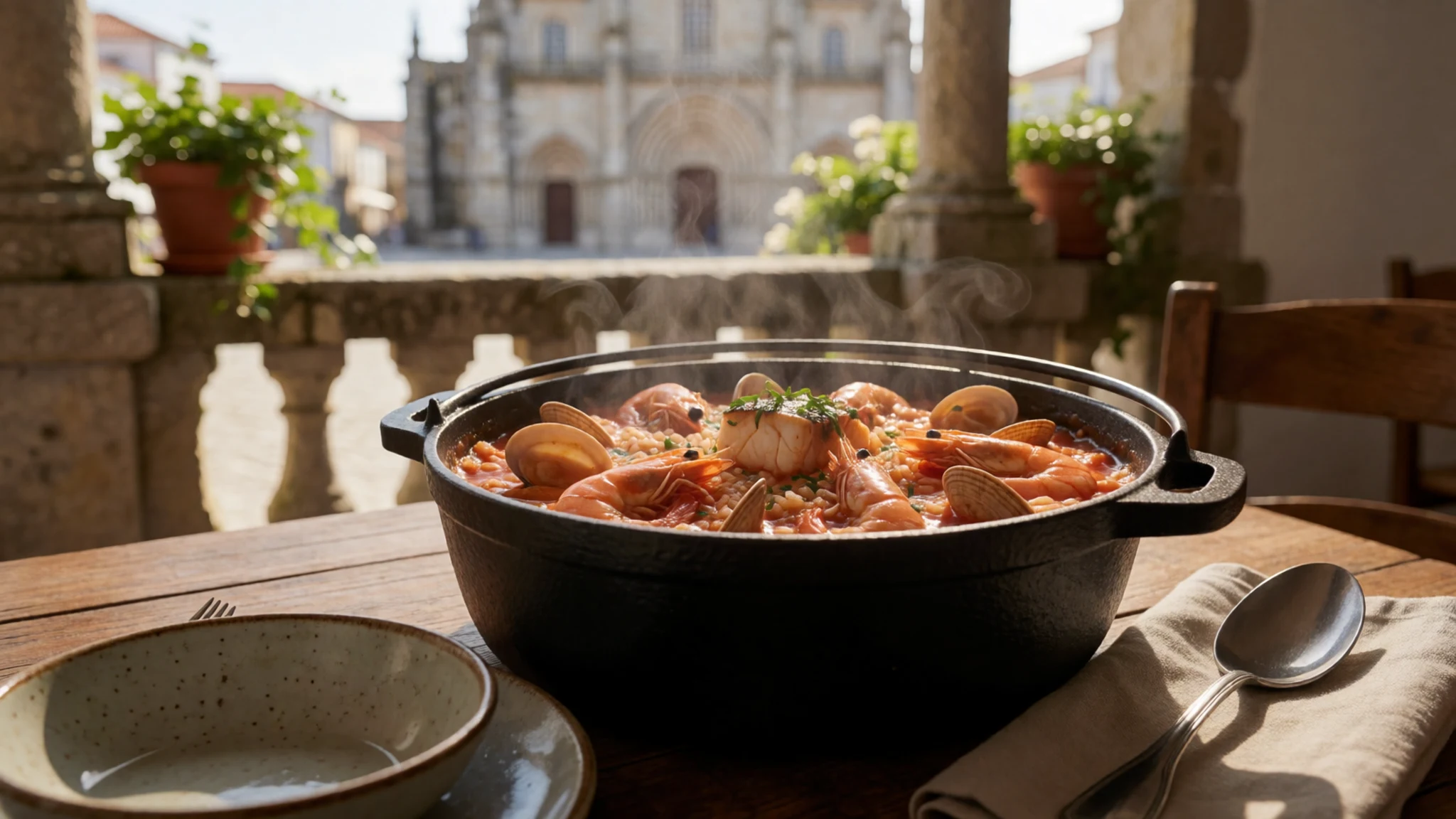
- Grilled Fish Platter — Quiet side streets near the centre
A selection of the day's catch—such as seabass or mackerel—grilled over charcoal and seasoned lightly with olive oil, garlic, and sea salt. Look for unpretentious local spots situated along the quieter residential lanes. - Fresh Seafood Stew — Waterfront eateries in Praia
A warming coastal stew featuring an assortment of shell-fish and local fish simmered with onions, peppers, and tomatoes. Order a bowl at traditional seafood taverns located right along the beachfront.
Plan it
Best time. May to September offers warm, dry weather ideal for enjoying the beaches and exploring the cliffs, while late autumn and winter bring the famous giant waves for spectators.
How long. 2–3
Getting there. Take a long-distance bus from Lisbon directly to the Nazaré bus station, or drive north from Lisbon via the A8 motorway.
Budget. mid
Tips
- Be prepared when arriving at the bus station, where local women frequently offer private rooms in family homes.
- Take the funicular railway between Praia and O Sítio to save your legs and enjoy the view.
- Explore the smaller side streets away from the main waterfront for better-value dining.
- Wear sturdy walking shoes to cope with steep hills and uneven cobblestones.
Etiquette
- Dress respectfully with covered shoulders when visiting churches and religious shrines.
- Ask permission before taking photographs of locals in traditional attire.
Nearby
Sources
- Wikidata Q497179 (CC0)
- Wikipedia (CC-BY-SA 4.0)
- Wikivoyage (CC-BY-SA 4.0)