Gökçeada
Gökçeada, Turkey
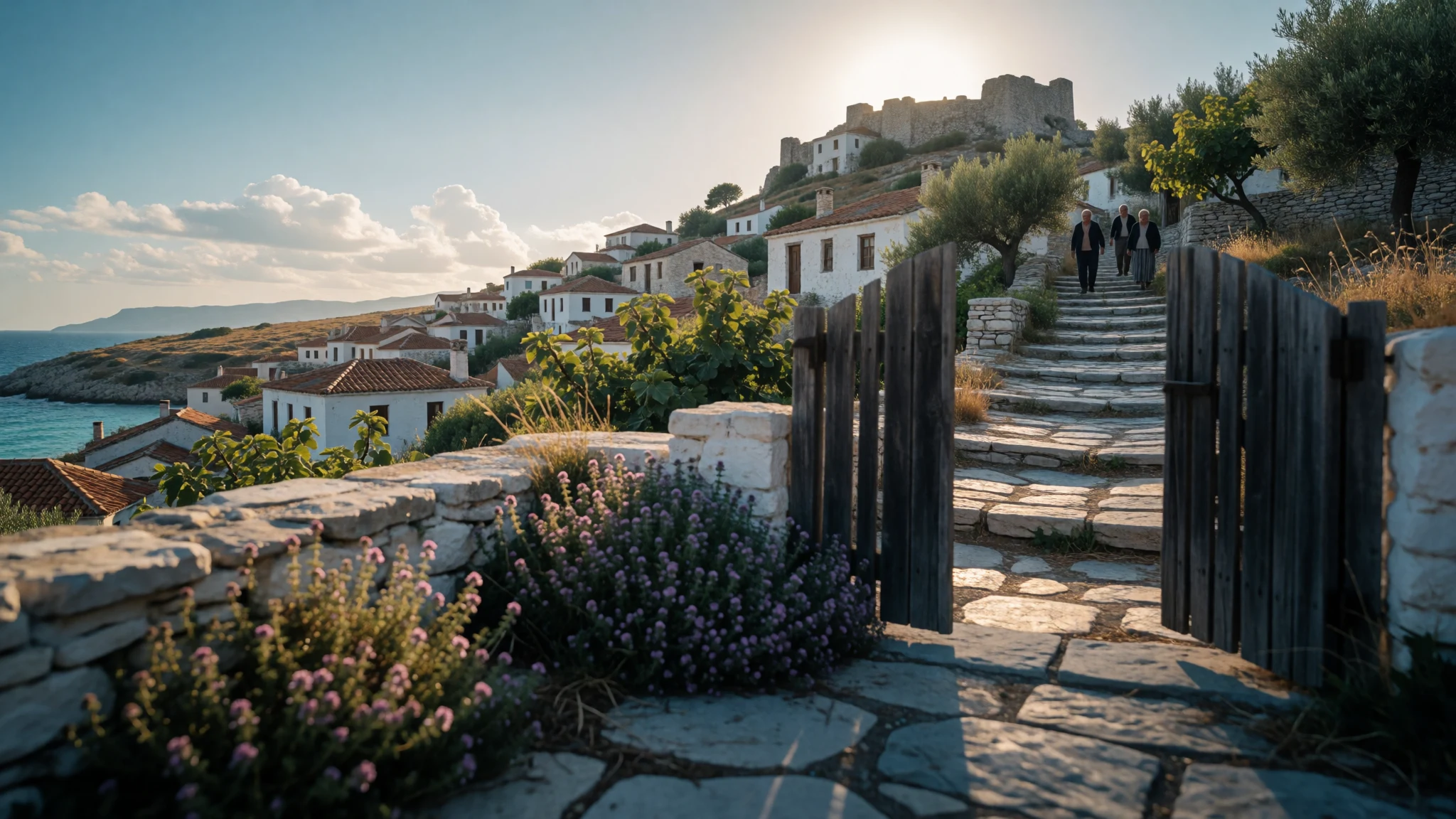
Gökçeada is a quiet Aegean island of stone villages, olive groves and Greek-Turkish layers, reached only by ferry, for walkers and slow eaters.
The place
Gökçeada, known to Greeks as Imbros, is a Turkish island in the northern Aegean, at the mouth of Saros Bay and part of Çanakkale Province. Its western tip, Cape İncirburnu, is the westernmost point of Turkey. The Turkish name means 'heavenly island'. About 9,800 people live here, and the economy rests on fishing, farming and a short tourist season. The landscape is open and unhurried: bare ridges, patches of woodland, olive groves on the slopes and small coves along the coast. The island rises to 672 metres at its highest. The administrative centre, Merkez, is low-rise and practical rather than pretty. The charm lies in the old stone villages such as Bademli, Kaleköy, Zeytinli and Tepeköy, where Greek-built houses, churches and taverns still stand. On clear days the Greek island of Samothrace shows across the water. There is an airstrip but no airline service, so arriving means a ferry from the Gallipoli peninsula, which keeps numbers modest outside summer. Expect wind, hot dry summers and quiet roads. Two communities shape the place: settlers from the mainland who arrived mostly in recent decades, and a small indigenous Greek community, with a larger Imbriot diaspora living abroad. Anyone after nightlife will be disappointed. Those who like walking, swimming and long lunches will do well, and the island rewards a hired car or a patient relationship with the dolmuş minibuses.
Its story
Gökçeada's story begins in myth. Homer places a cave of Poseidon's horses between Imbros and Tenedos, and the Iliad names Eëtion as a ruler of the island who ransomed a captive son of Priam. The palace of Thetis, mother of Achilles, was said to lie between Imbros and Samothrace. In antiquity the early inhabitants are described as Pelasgians, who worshipped the Cabeiri and Hermes. The island, together with Lemnos, was sacred to Hephaestus, god of metalworking, and he appears on its ancient bronze coins, examples of which are now in museum collections in Berlin and Paris. Greek speakers lived here from the Iron Age, and the island passed through Byzantine, Ottoman and, briefly, Greek hands before becoming Turkish. Ímvros in Greek became İmroz in Turkish, and later the official name Gökçeada. The modern chapter is painful. In the 1960s government policy pushed many Greek islanders to leave, for Greece, Western Europe, the United States and Australia, while settlers from the mainland took their place. By the start of this century only about 300 indigenous Greeks remained. The diaspora abroad is thought to number around 15,000 and keeps a distinct Imbriot identity. The documentary Rüzgarlar (Winds) and the film My Grandfather's People both deal with this history, and the latter was partly shot on the island.
What to see
- Merkez — Merkez, central island
Merkez, also called Çınarlı for its plane trees, is the island's main town: low-rise, practical and useful for supplies, buses and the small town museum on İnönü Caddesi. Check opening times locally. Fatih Mosque stands on the same street. Treat Merkez as a base and a coffee stop rather than a sight in itself.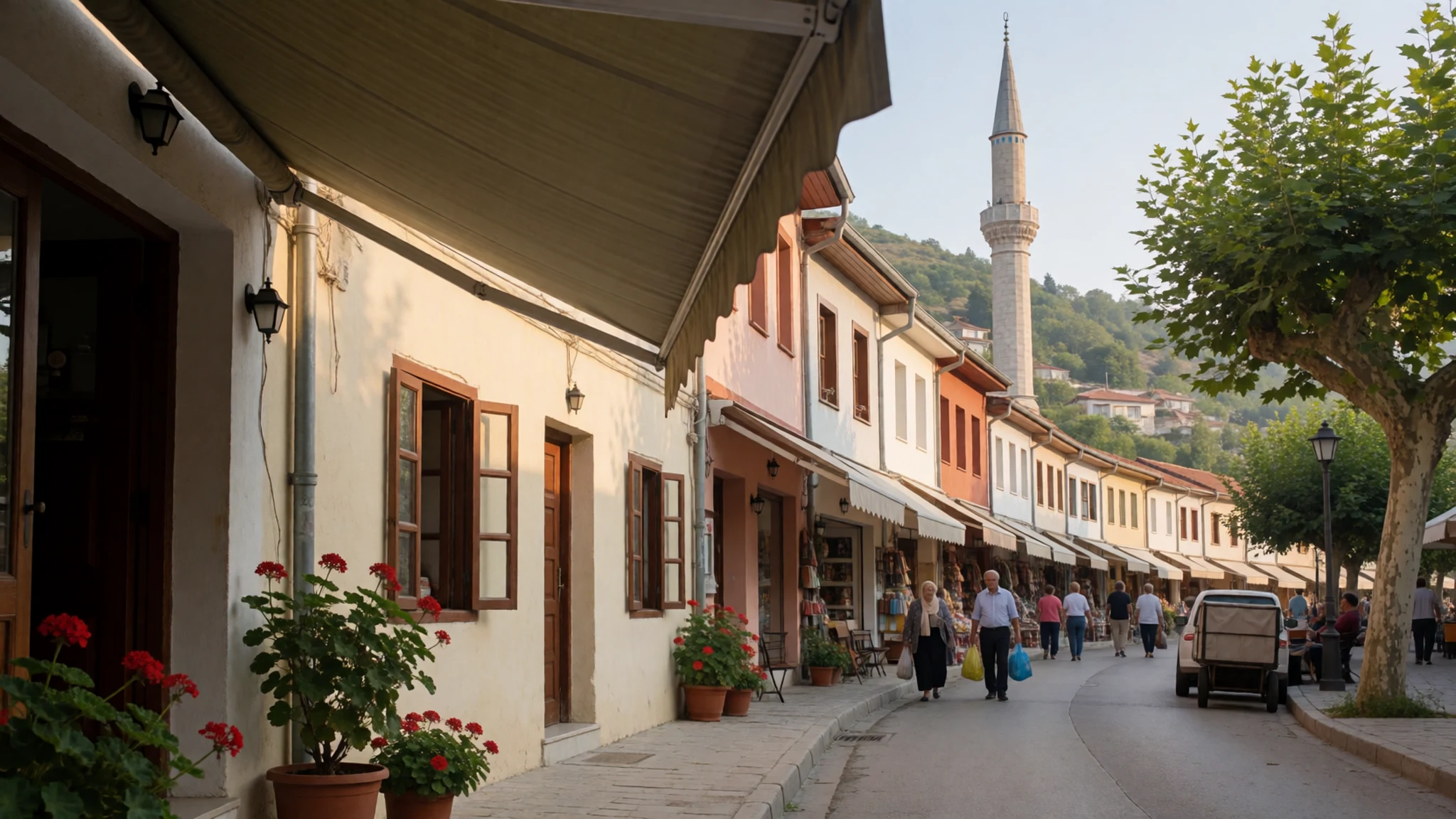
- Old Bademli — Bademli, west of Merkez
Old Bademli, once the Greek village of Gliki, 'sweet', sits high enough for wide views over the island, the sea and Samothrace. Stone houses line narrow lanes. Go in late afternoon, when the light softens and the heat drops, and wear shoes with grip for the sloping, uneven paving.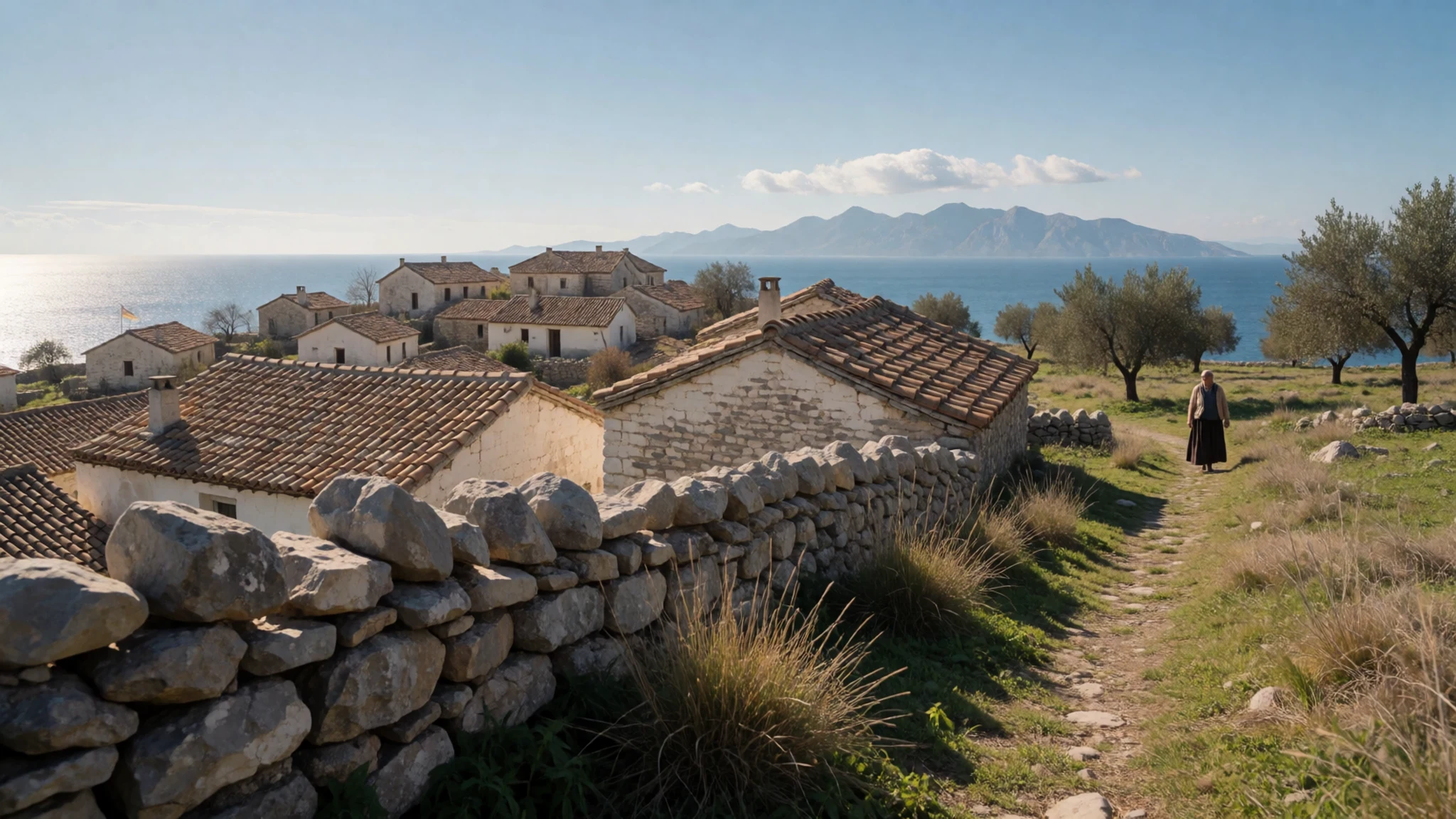
- Yukarı Kaleköy — Kaleköy, north coast
Kaleköy, 'castle village', was Kastron in Greek. Skip the newer lower part and climb to Yukarı Kaleköy, the old village on a hill sloping from the sea. The Genoese and Ottoman citadel survives only in fragments, so come for the lanes and views. Yıldız Koyu, a cove a short way east, begins the marine park.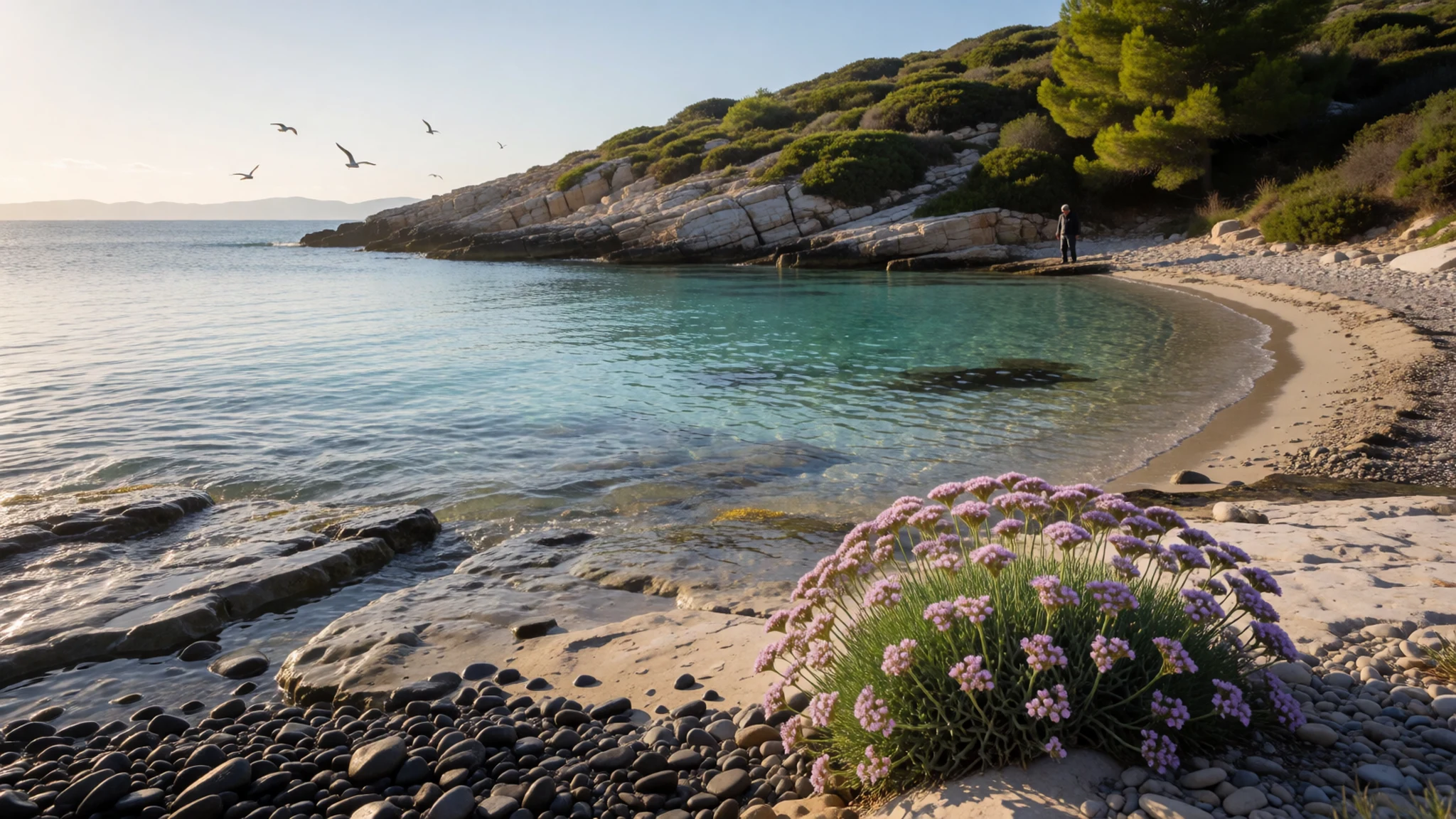
- Zeytinli — Zeytinliköy, southern slopes
Zeytinli, 'olives', lies among groves on the slopes and is where the island's rural pace is easiest to feel. Walk between the trees, look at the old Greek houses, and stop for Turkish coffee at a village café. Carry water, because drinkable sources are scarce between villages.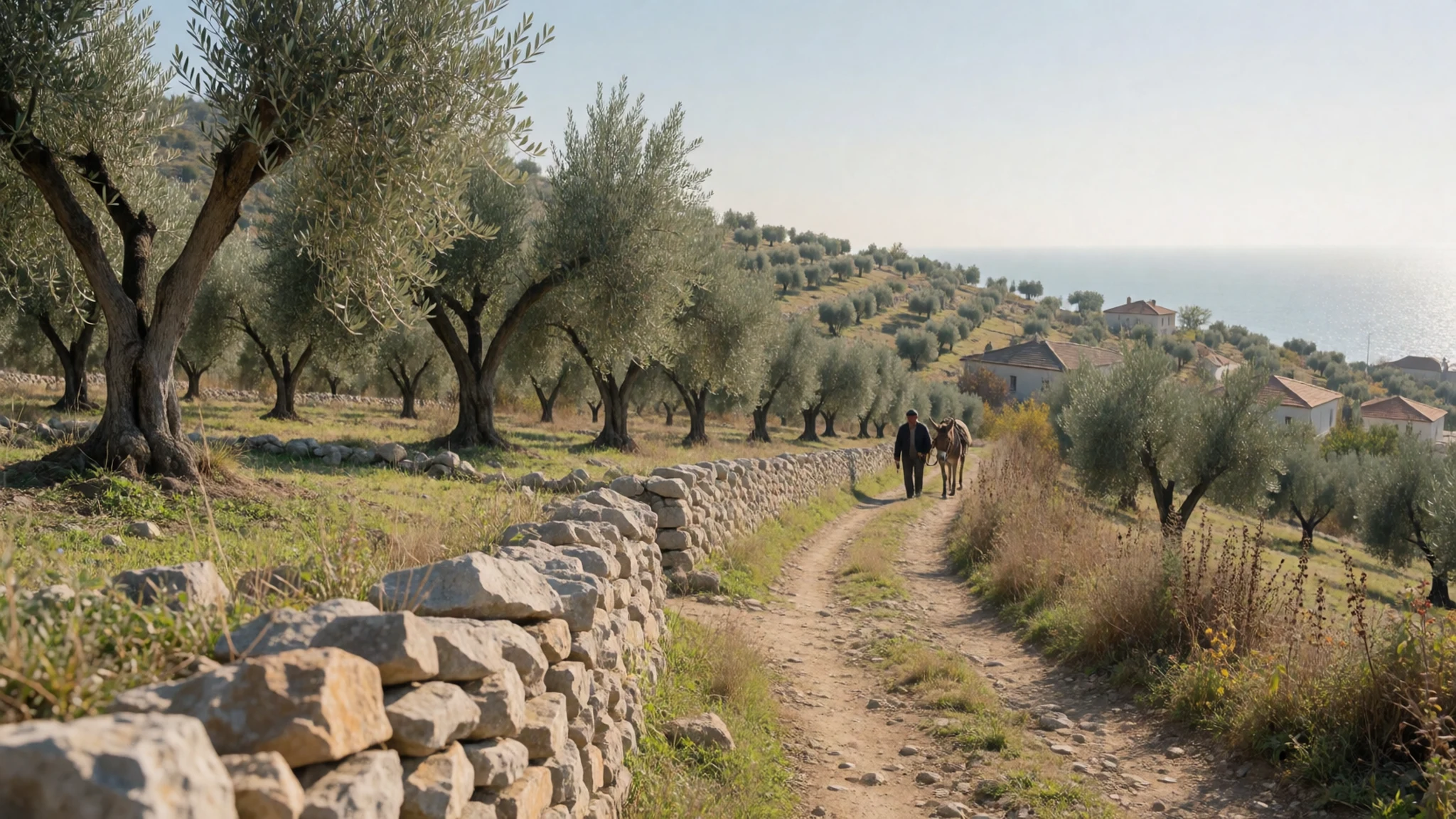
- Tepeköy — Tepeköy, inland
Tepeköy is another old inland village, known for its taverns and for a quiet that is rare in summer. It suits an unhurried afternoon of walking followed by a long meal. Anyone with a car and time can continue west towards Cape İncirburnu, the westernmost point of Turkey.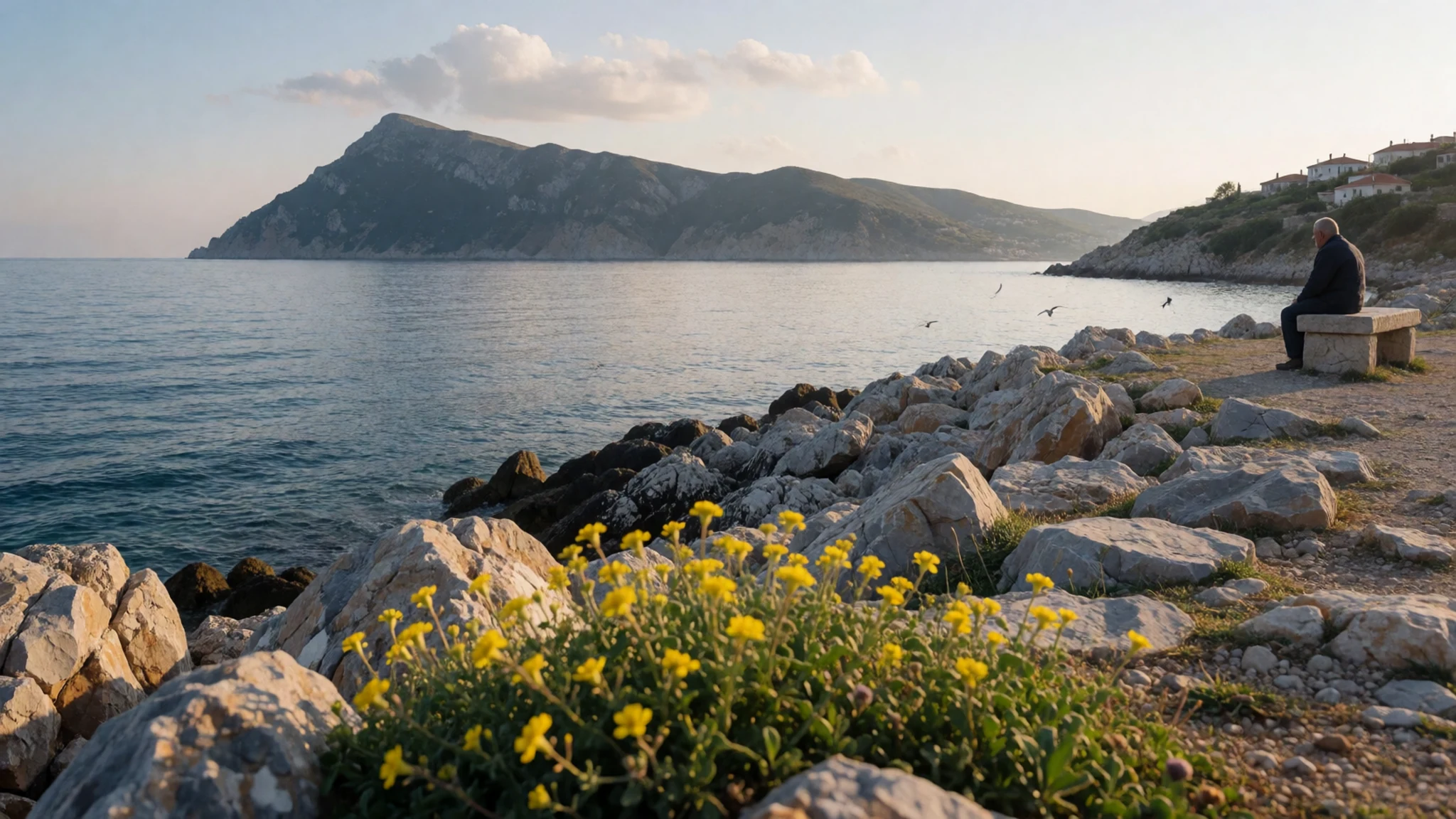
Culture
Gökçeada's culture is layered, and the layers are not equally visible. The older Greek Imbriot world survives in village churches, stone houses, taverns and a small community that still speaks Greek, while the diaspora abroad keeps the memory alive. Newer settlers from the mainland brought Turkish village habits, so Merkez feels like any small Turkish town, with tea houses, mosques and a market. Fishing and farming set the rhythm: olives, figs, mulberries, goat and mutton. Rather than shows or festivals, culture here lives in meals, coffee and conversation. History is sensitive. The 1960s pressure on Greek families, told in the documentary Rüzgarlar and in the film My Grandfather's People, is part of how many islanders, of both backgrounds, understand their home. Listen more than you opine, and ask before assuming anyone's story. Hospitality is warm and unforced; expect to be asked where you are from and whether you have eaten. Evenings are social and outdoors, with meze and long sittings, and villages go quiet early outside high summer. Cover shoulders and knees for mosques and village churches, and take your shoes off before entering a mosque.
What to wear
Gökçeada has no single costume that defines it today. In the past, village life on the island mixed Greek Imbriot and Turkish rural dress, and older women in some villages still wear loose trousers (şalvar) and headscarves, made from cotton, wool and linen. Embroidered and woven cloths are more likely to appear at weddings, festivals and in family chests than in daily life. Day to day, islanders wear what suits farm and fishing work: practical shirts, hats against the sun, sturdy shoes. Younger locals and summer residents dress like anywhere on the Turkish Aegean coast, in shorts, linen and sandals. Visitors should pack for strong sun and wind. Light, loose cotton or linen works in summer, with a windproof layer for evenings and ferry crossings, which can be breezy even in July. Bring a hat and sunglasses. Footwear matters more than fashion, since old villages have steep, uneven stone lanes and walking tracks are dusty. Swimwear is fine on beaches but not in villages or Merkez, where shoulders and knees should be covered. Carry a scarf or light wrap for mosque and church visits.
What to eat
- Kokoreç — Small grill shops in Bademli and Kaleköy
Grilled seasoned offal wrapped on a skewer and chopped into bread, a street-food favourite in Turkey. On the island it is easy to find around Bademli and Kaleköy, where small grill shops serve it as a quick, filling lunch.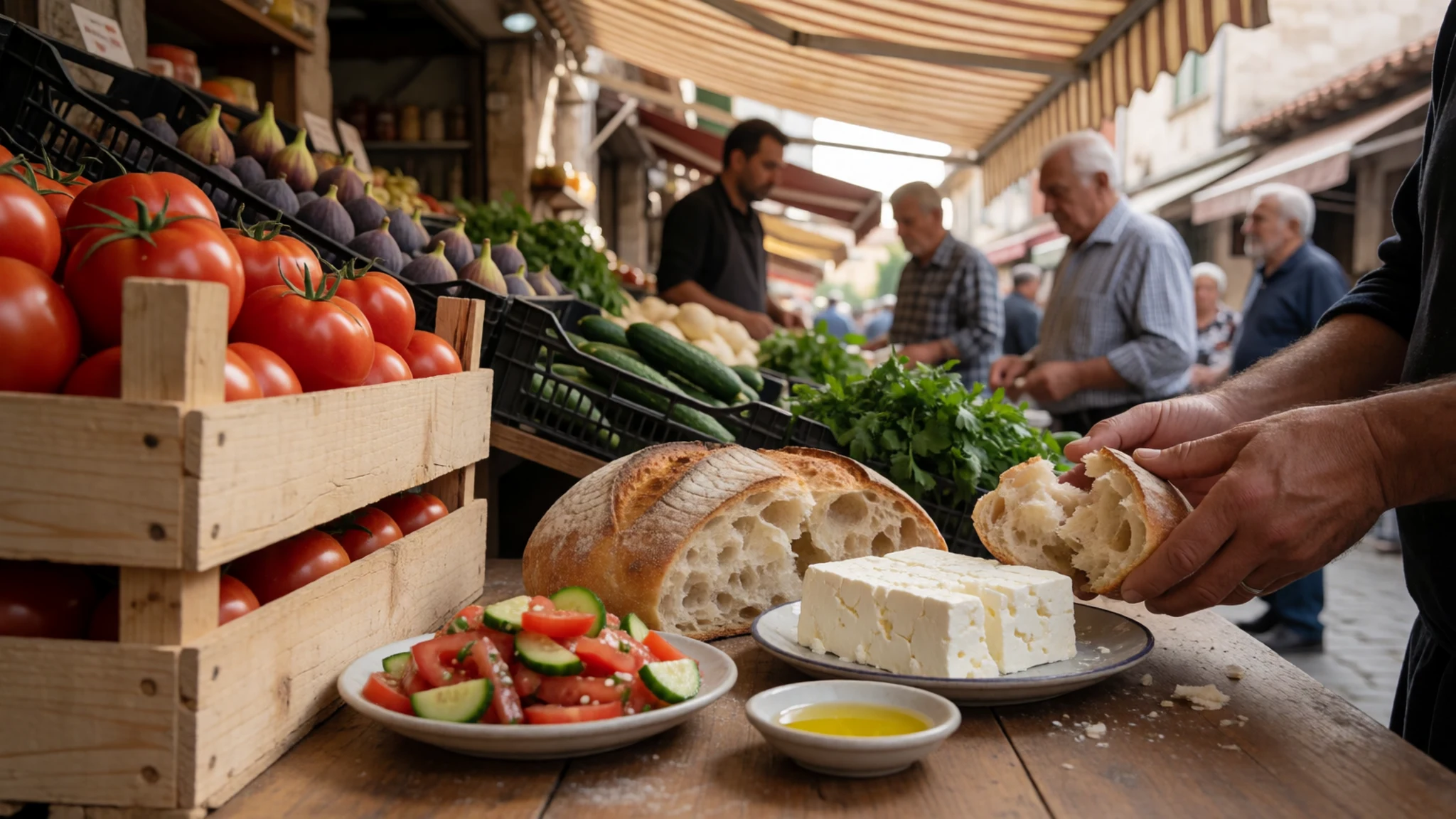
- Mutton and goat — Village taverns in Zeytinliköy and Tepeköy
Islanders prefer mutton to fish, and meat is the heart of a village menu. Expect grilled or slow-cooked mutton and goat, served with salad and bread. Zeytinliköy has restaurants that specialise in island goat.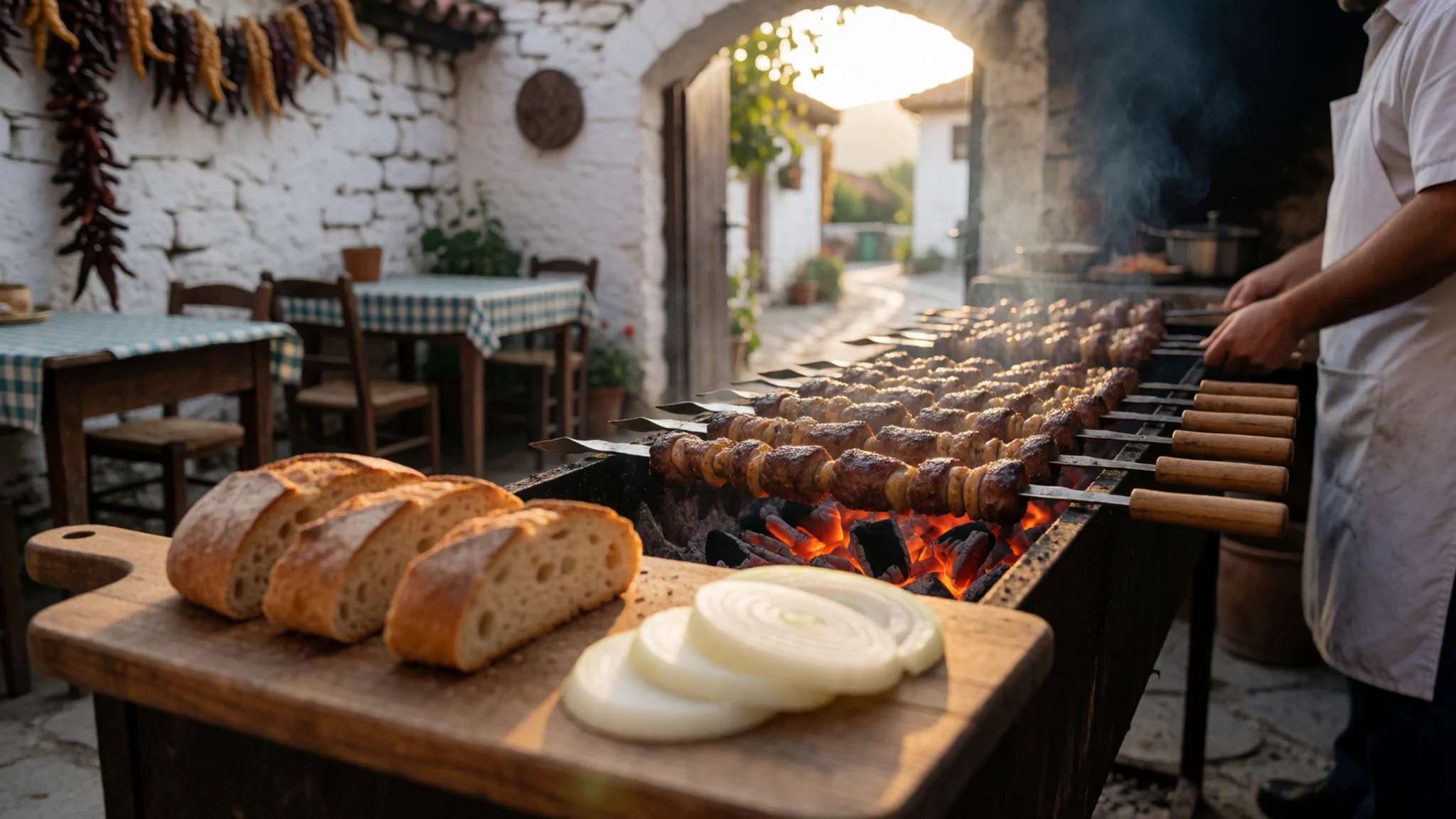
- Fresh fish — Seaside restaurants beyond Dereköy and at Kaleköy
Fish is neither abundant nor cheap here, so treat it as an occasional treat rather than the default. Go to the beach restaurants towards the west of the island and ask what was caught that day. - Picnic breakfast — Village shops and roadside trees
Buy bread, feta and salad vegetables from a village shop, then pick mulberries and figs from an unowned tree. It is the island's easiest meal, cheap and exactly as local as anything on a menu. - Turkish coffee and meze — Village cafés in Zeytinli; taverns in Tepeköy and Merkez
Strong Turkish coffee, served small and sweet, restores energy on a hot walk, and the villages' cafés take it seriously. In the evening, Greek-style taverns serve meze plates that stretch into a long, slow meal.
Plan it
Best time. May–June and September–October: warm enough for swimming, with fewer crowds than July and August, when the sun is hot and the old villages have little shade. Winters are quiet and some places close.
How long. 3–4
Getting there. There is no air service. Fly to Istanbul, take a bus to Eceabat, then a dolmuş across the Gallipoli peninsula to Kabatepe. From there the ferry takes about 90 minutes to the island's port at Kuzu Limanı, 4 km east of Merkez, where dolmuşes meet the boats. In summer a foot-passenger waterbus runs from Çanakkale. Check the ferry operator's schedule before travelling, and bad weather can cancel crossings.
Budget. mid
Tips
- Check ferry times in advance and carry cash, since fares are paid in cash
- Hire a car or arrange transport, because villages are spread out and buses are infrequent
- Bring plenty of water when hiking or exploring the old villages, as drinking sources are scarce
- Book summer accommodation early; July and August are the busiest months
- Allow slack in your return plan in case wind disrupts the ferry
Etiquette
- Cover shoulders and knees in villages, mosques and churches
- Ask before photographing people, especially older residents
- Be sensitive when discussing the island's Greek-Turkish history
Nearby
Sources
- Wikidata Q658437 (CC0)
- Wikipedia: Imbros (rev 1383151539) (CC BY-SA 4.0)
- Wikivoyage: Gökçeada (rev 5403465) (CC BY-SA 4.0)
- Photo: Gokceada5.JPG (CC BY-SA 2.5)
- Photo: Gökçeada Manzarası (CC BY-SA 4.0)
- Photo: Gokceada3.JPG (Public domain)
- Photo: Imbros, Münzkabinett Berlin 5491184 (Public domain)
- Photo: Bronze coin of Imbros (BnF btv1b8587863z) (Public domain)
- Photo: Bronze coin of Imbros (BnF btv1b10310760x) (Public domain)
- Photo: Imbros, Münzkabinett Berlin 5702582 (Public domain)
- Photo: Gökçeada by Sentinel-2 Cloudless (CC BY-SA 4.0)


