Enoshima
Enoshima, Japan
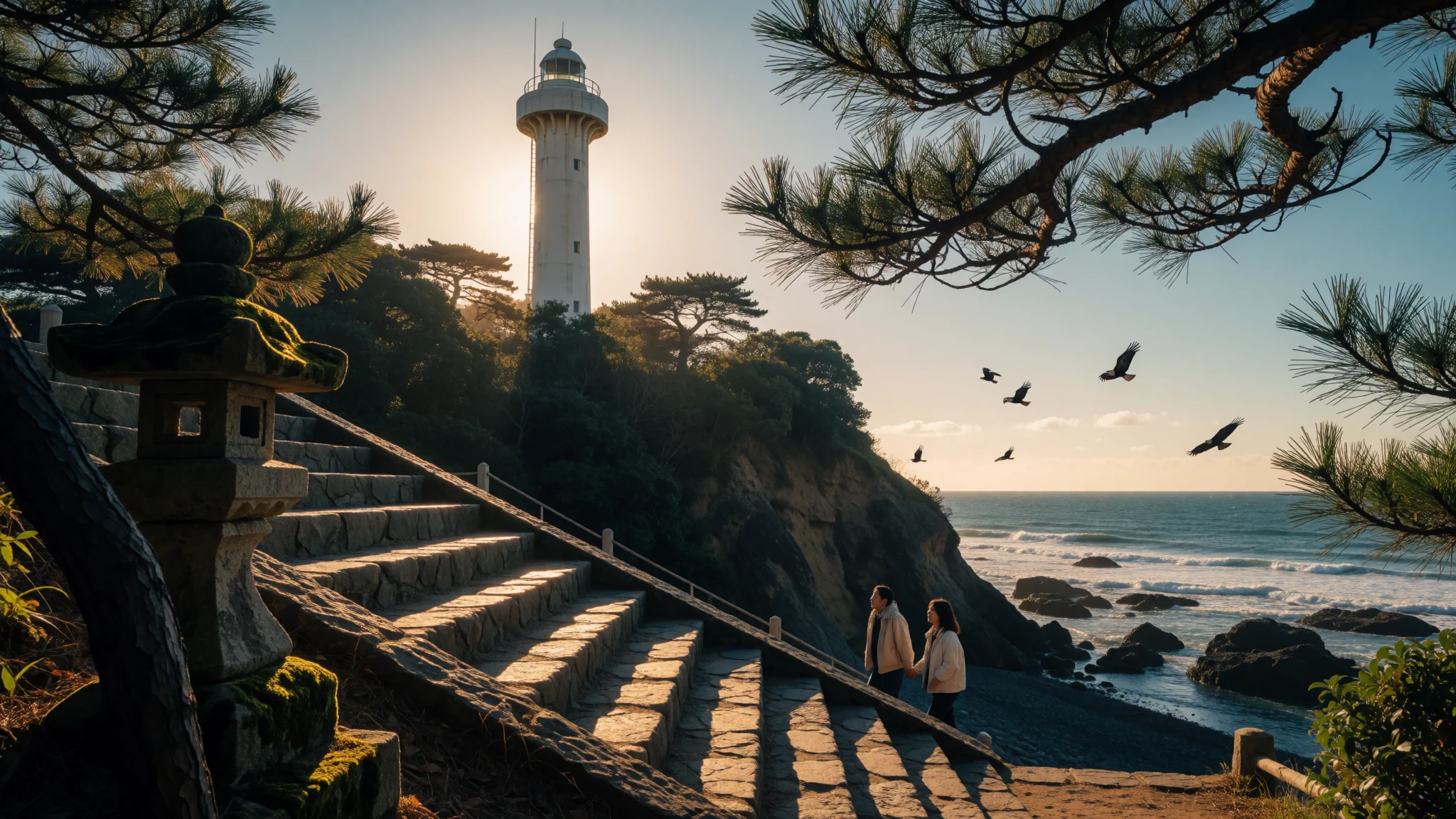
Enoshima is a small sacred island on the Shōnan coast, a day trip from Tokyo with shrines, sea caves, tidal pools and winter views of Mount Fuji.
The place
Enoshima is a small island in Sagami Bay, tied to the mainland city of Fujisawa by a bridge over the mouth of the Katase River, with a second walkway beside the road for people on foot and bicycles. Only 354 people live on it, yet it draws day-trippers from Tokyo and Yokohama all year, because the beaches beside it are within easy reach of both cities. The island rises to about 60 m, and almost everything of interest is strung along one climbing path: a lane of souvenir and seafood shops near the bridge, a sequence of shrines, a botanical garden and lighthouse at the top, then a quieter stretch down to rocky ledges and sea caves on the far side. The walk involves more stairs than the map suggests, which is why paid escalators exist for tired legs. The surrounding coast is known as Shōnan, a loose resort strip of surf shops, cafés and small local trains. Summer weekends bring crowds to the sand and a very busy bridge, while winter is calmer and often clearer, with Mount Fuji sometimes standing over the water to the west. Black kites circle constantly and will take food from careless hands. The sea around the island is rough and rocky, so the water here is for looking at, with swimming kept to the beaches on the mainland side. Enoshima works best as an unhurried half-day or full day by the sea rather than a list of sights to tick off.
Its story
Enoshima's story begins with a goddess. Local tradition holds that Benzaiten, patron of music and the arts, raised the island from the seabed in the sixth century, and the whole island has been treated as hers ever since. A monk named Kōkei set down the shrine histories of the island in the Enoshima Engi in 1047, and for centuries the sea caves at the back drew pilgrims who came to pray at the place where her worship began. In the Edo period the pilgrimage became a leisure outing, and artists took up the island: Hokusai and Hiroshige both set it against Mount Fuji, and those prints are why the view still feels familiar. A turn came in 1880, when the Meiji government's order to separate Shinto from Buddhism released much of the high ground from religious holdings. A British merchant, Samuel Cocking, bought it in his Japanese wife's name and built a power plant and a large greenhouse among extensive botanical gardens. The earthquake of 1923 destroyed the greenhouse, but the garden survived, carries his name today and still draws visitors in large numbers. Now Enoshima sits at the centre of the Shōnan resort coast, a place where a mythic birthplace, woodblock-print scenery and a foreign merchant's planting all share one small hill.
What to see
- Enoshima Shrine — Along the main path up the island
The island's shrines are dedicated to Benzaiten and are spread along the climb rather than gathered in one compound. The one most talked about holds a statue of the goddess unclothed, a rare way to portray her. Go early, when the steps and courtyards are quiet and the sea air is cool.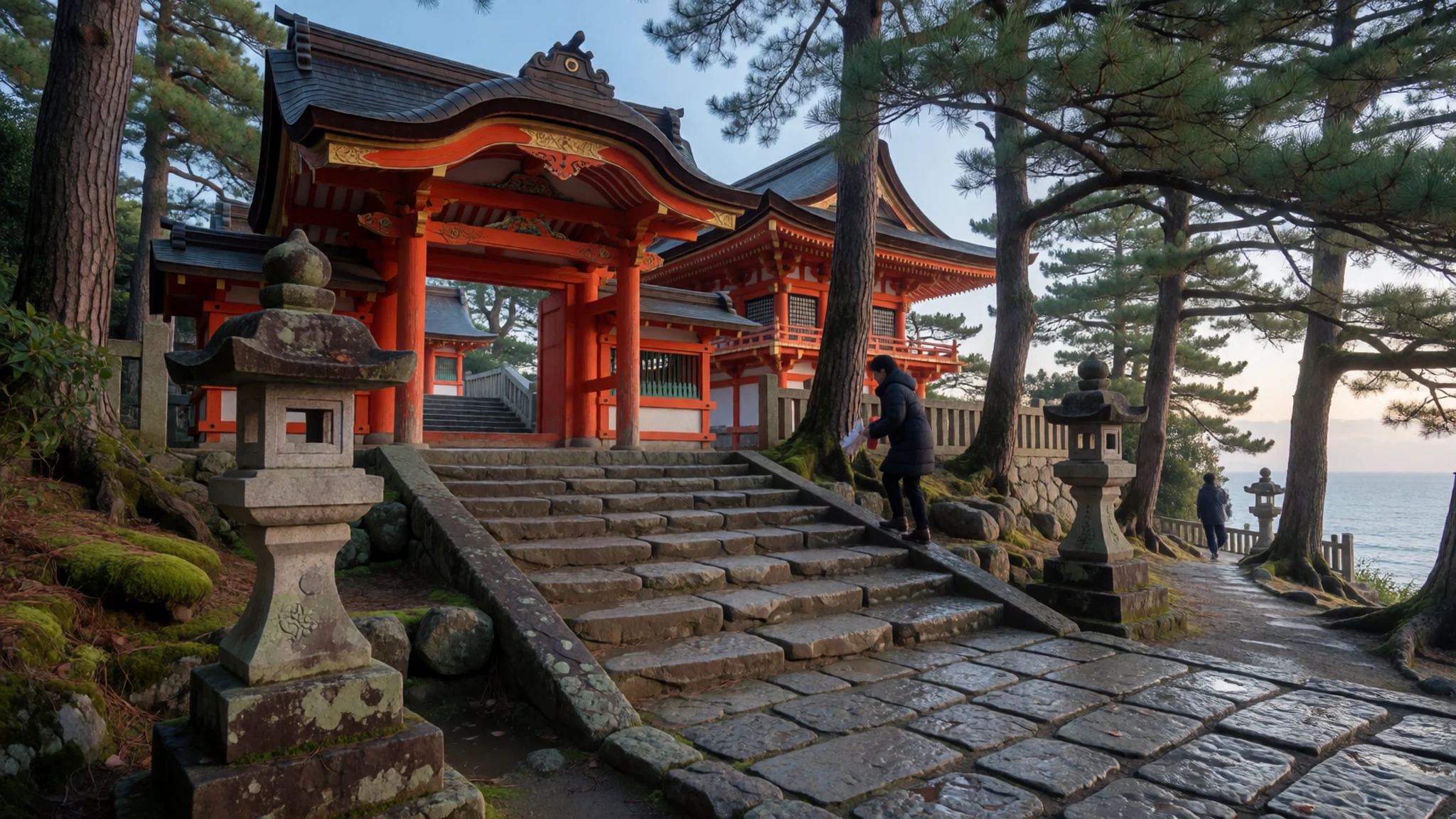
- Iwaya Caves — Far side of the island
Two caves cut by the sea sit at the end of the path, long regarded as the spiritual source of the island's worship. Pilgrims came here for centuries, and Hiroshige drew them. Inside it is dark, damp and low in places, so bring a sense of balance and wear shoes with grip.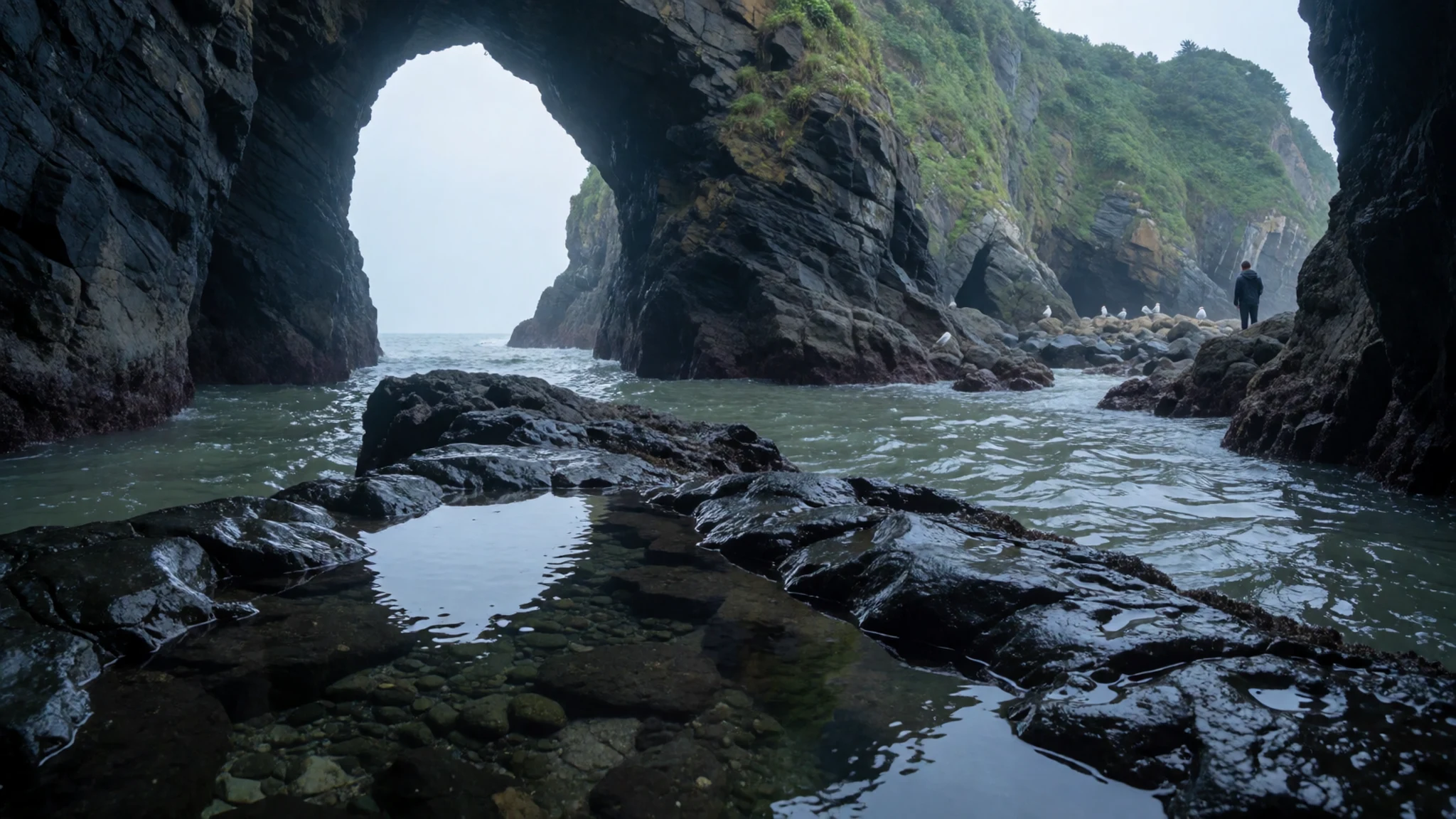
- Samuel Cocking Garden and Sea Candle — Summit of the island
The garden at the top has seasonal planting, small plazas, cafés and shops, and keeps the memory of the British merchant who developed it. The lighthouse beside it, called the Sea Candle, has an observation floor with views over the bay, the surrounding towns and, on a clear day, Mount Fuji.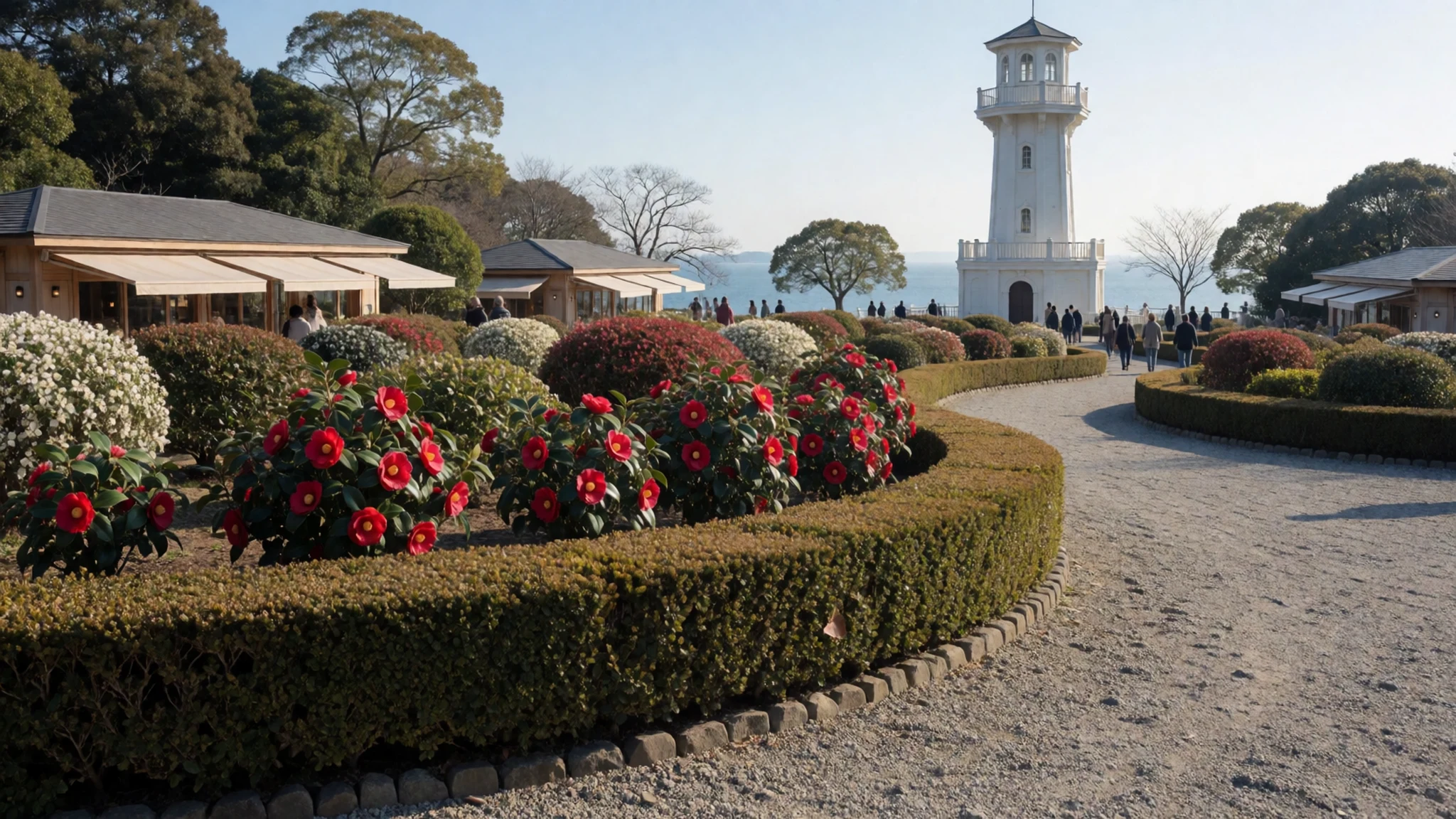
- The back of the island and its tidal pools — Rocky shoreline below the caves
The seaward side is all cliffs, ledges and tidal pools, where small crabs and stranded fish can be watched at low tide. Local anglers know it well. Waves can be heavy and the rock is wet, so keep back from the edge and check the sea before stepping out.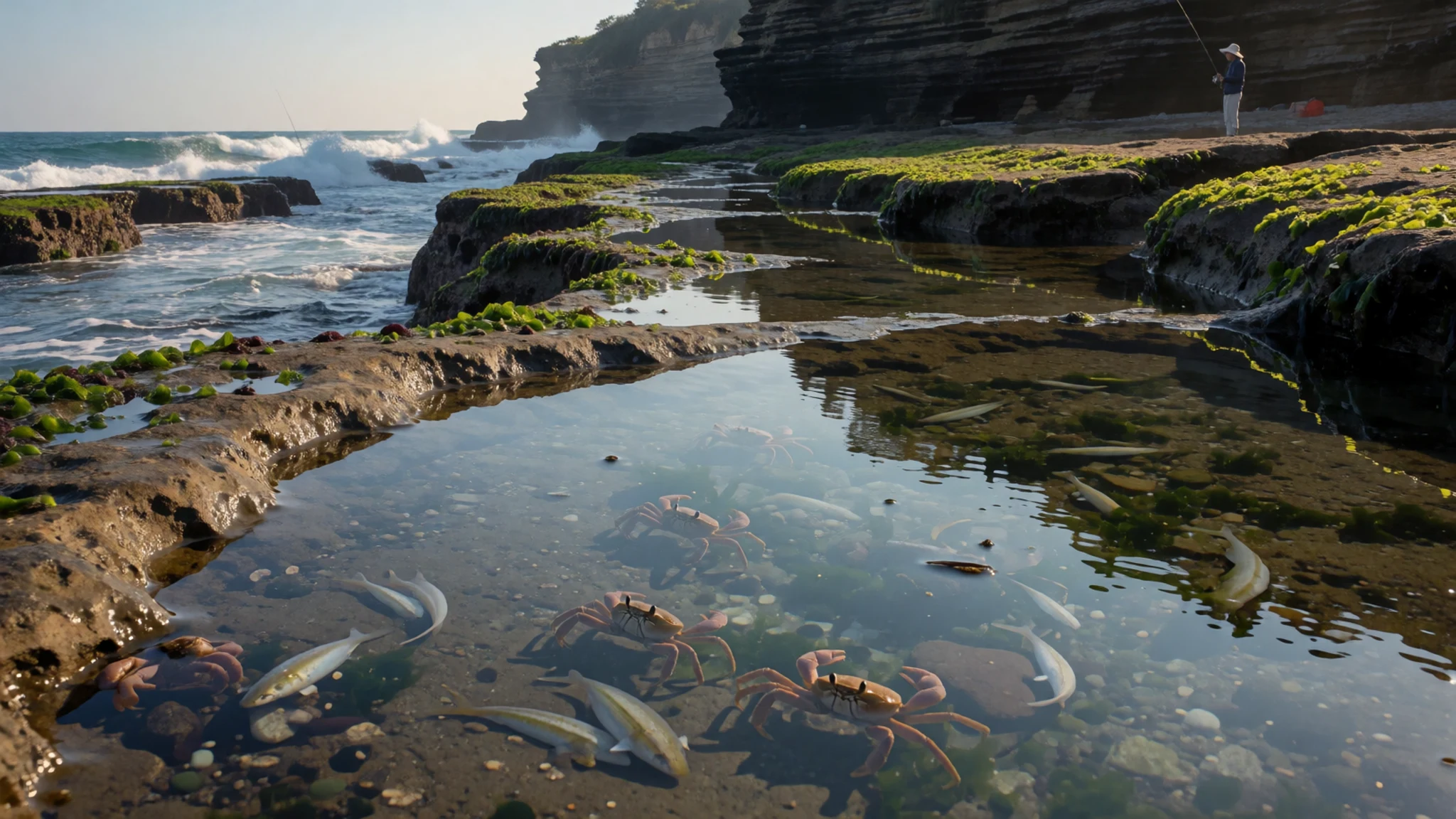
- Lovers Bell and the red bridge — West side of the island, near the ravine
Couples ring the bell and fix padlocks to the railings nearby, which makes it busy at weekends. The reward is a broad view across Sagami Bay. Close by, the Bell of Ryuren stands as one of the most photographed corners of the island.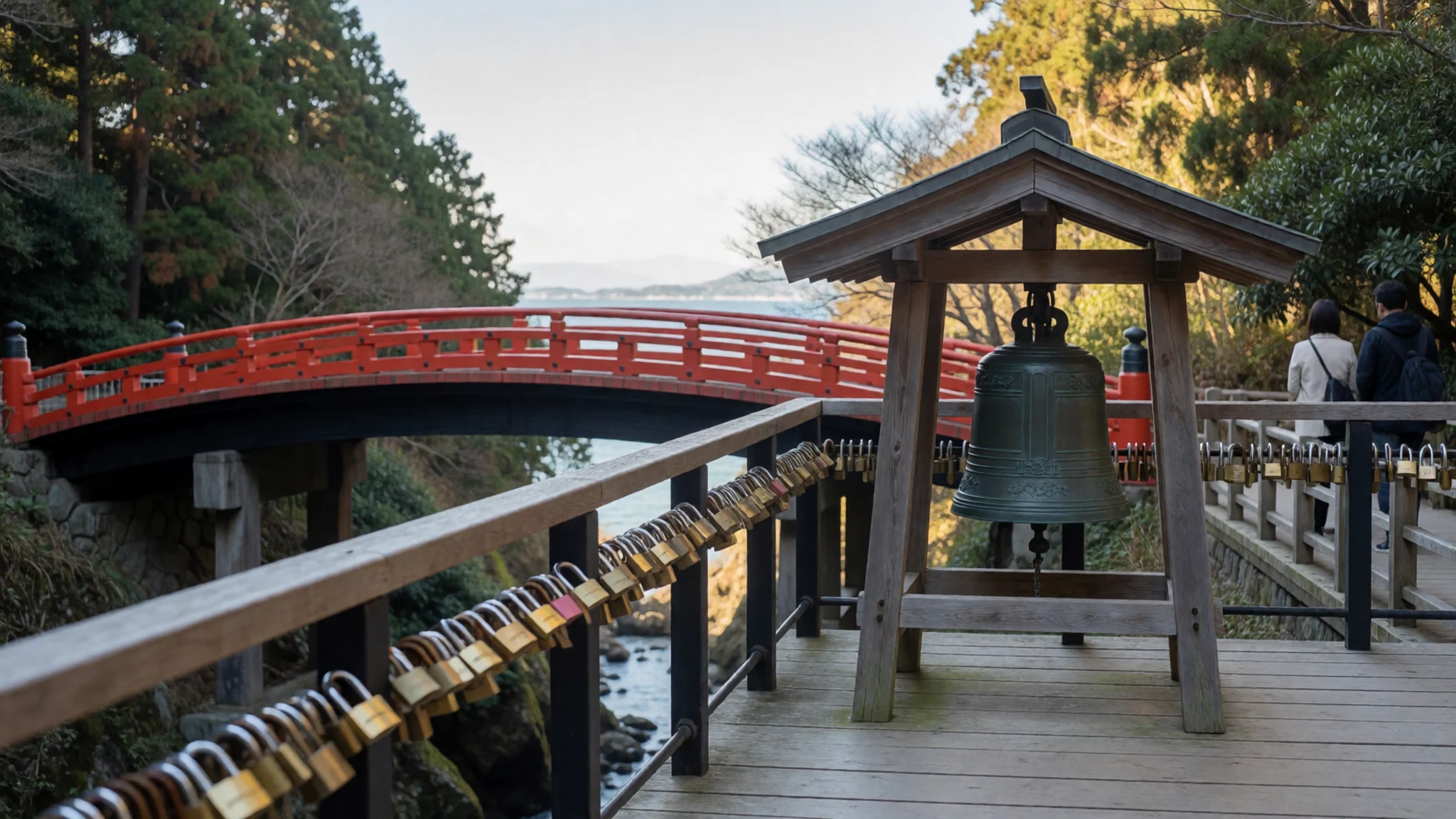
Culture
Enoshima is a working place of worship as much as a seaside outing, and the two sit comfortably together. Benzaiten, the goddess of music, eloquence and the arts, is the island's patron, and her shrines are set along the main climb, so a stroll to the viewpoint often passes small offerings and visitors pausing to pray. The old link between Shinto and Buddhism, separated by order in the nineteenth century, still shows in the mix of shrine and temple customs on the hill. The sea shapes everything else: fishing families, shellfish stalls and seafood eateries have long fed pilgrims, and the daily catch decides what is on the menu. In summer the mood shifts to festival and beach, with food stalls along the streets and a large fireworks display over the water on one evening in late July or early August, announced by a local radio presenter. The surf scene of the wider Shōnan coast adds a relaxed, casual character that sits oddly well beside incense and bells. Prints by Hokusai and Hiroshige show that Japanese artists have been enjoying this view for centuries, and many visitors still arrive hoping for the same Fuji outline. At shrines, bow lightly at the gate, keep your voice low and your food wrapped while walking, since the black kites overhead will dive for snacks.
What to wear
Enoshima's traditional dress follows the wider Japanese pattern: the kimono, woven from silk for formal occasions, and the lighter cotton yukata, which is the garment of summer. Yukata appear at fireworks nights and local festivals, often worn with wooden geta sandals, and fishing communities have long used loose cotton happi coats for festival days. Few people dress that way on an ordinary day. What locals and day-trippers actually wear is beach-town casual: shorts, linen shirts, sandals and sun hats in summer, with surf brands and board bags common on the mainland side, and light jackets or windproof layers in the cooler months. Visitors should dress for a walk that is part stair-climb, part sea-spray. Choose shoes with a proper grip rather than flip-flops, since the path is steep and the rocks at the back are slick. Bring sun protection in summer and a wind layer in winter, when the breeze off the bay is sharp. Shrines do not demand formal clothing, but swimwear belongs on the beach, so carry a shirt or wrap for the climb. A small bag that closes properly is useful, because the kites are bold around open food. Carry a light rain layer in the wet months.
What to eat
- Shirasu-don — Seafood eateries along the main approach street
A bowl of rice topped with tiny whitebait, served raw or lightly boiled depending on the day's catch. It is the dish most associated with this coast. Order it at a seafood restaurant near the bridge and expect it to taste clean and delicate rather than strong.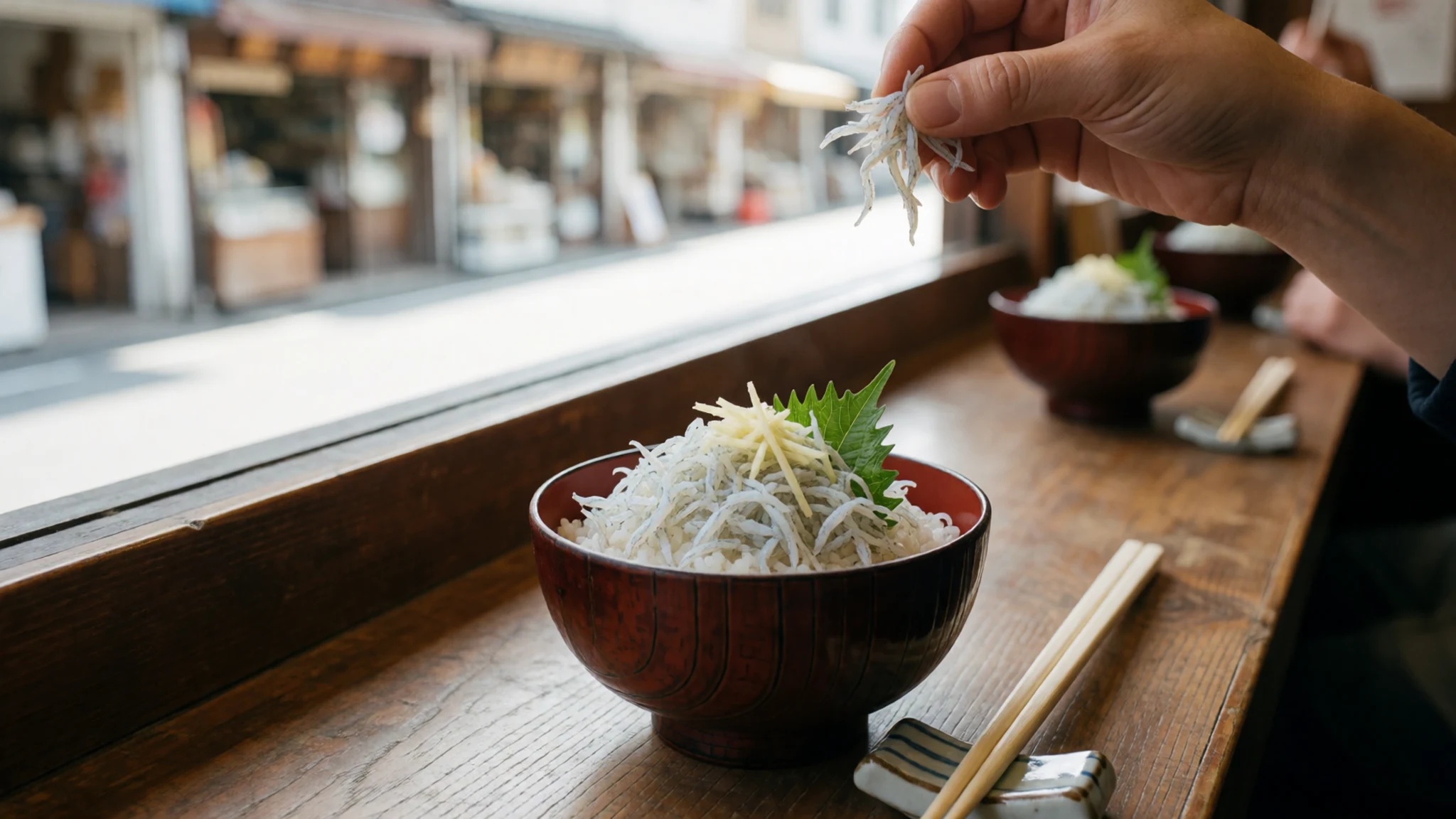
- Sazae — Grill stalls and seafood eateries on the island
The turban shell is cooked in its own spiral casing, usually grilled over heat so the juices stay inside. The meat is chewy and slightly sweet, with a faint bitterness from the innards. It is popular as a snack to share while walking uphill.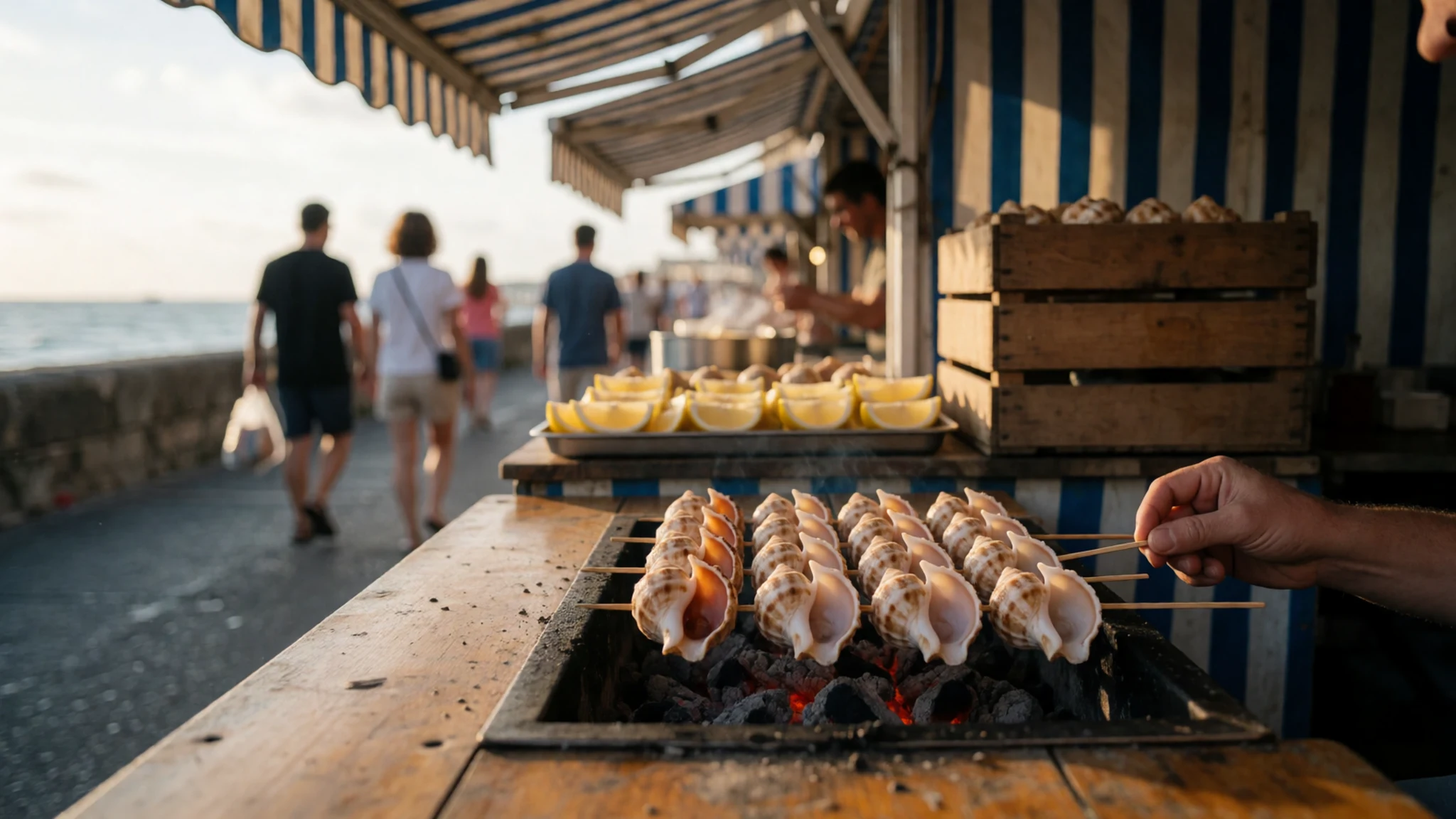
- Fresh seafood sets — Restaurants on the main street and near the shore
Many visitors come for fish landed nearby, served as sashimi, fried fish or grilled catches with rice and miso soup. The best guide is the board of the day. Queues form at lunchtime on weekends, so arriving before noon saves a long wait. - Enoden-shaped sweets — Traditional confectionery shops near the island entrance
Local confectioners make cakes and biscuits shaped like the Enoden, the small train that runs along this coast. They are light, not too sweet and easy to carry, which makes them a practical gift for people back home. - Café rice bowls and fresh juice — Beachside cafés on the mainland shore
The Shōnan café scene leans towards Hawaiian-style plates such as rice bowls with avocado salad and loco moco, alongside fresh juices and hot dogs. It suits a slow lunch after the walk, with a view of surfers rather than shrines.
Plan it
Best time. April–May and October–November suit walking, with the most comfortable temperatures and calmer crowds. Winter, from November to February, gives the best chance of seeing Mount Fuji from the island. July and August are the hottest months and bring beach crowds and summer fireworks, so go on a weekday or expect queues. September and October are the wettest months, and typhoon-season weather can close sea-facing paths, so check the forecast.
How long. 1
Getting there. Fly to Haneda or Narita and take a train towards Ofuna, then ride the Shonan Monorail to Enoshima. Alternatively, local lines from Tokyo run to Katase-Enoshima, near the bridge. From any of these stations, walk across the pedestrian bridge to the island. Check the operators' official sites for current timetables.
Budget. mid
Tips
- Go on a weekday, and aim to reach the shrines before the day-trip crowds.
- On a clear winter morning, climb to the lighthouse first for the best chance of a Fuji view.
- Wear grippy shoes: the path has many steps, and the rocks at the back are slippery.
- Escalators on the climb are paid; check the official site for current fares and whether a combined ticket with the lighthouse is available.
- Carry some cash for small stalls, and keep snacks covered because of the kites.
Etiquette
- Bow lightly at shrine gates, and keep voices low near prayer areas.
- Do not swim from the rocks, and keep well back from the waves at the back of the island.
- Take your litter with you or use the bins provided, especially near the beach.
Nearby
Sources
- Wikidata Q989803 (CC0)
- Wikipedia: Enoshima (rev 1380459986) (CC BY-SA 4.0)
- Wikivoyage: Enoshima (rev 5401715) (CC BY-SA 4.0)
- Photo: Enoshima Island, Fujisawa City, Kanagawa, Japan (Σ64) (CC BY 4.0)
- Photo: Enoshima in Sagami Province (Katsushika Hokusai) (Public domain)
- Photo: Pilgrimage to the Cave Shrine of Benzaiten (Utagawa Hiroshige) (Public domain)
- Photo: Enoshima by Takahashi Yuichi (Public domain)
- Photo: Lucky Gods' visit to Enoshima (Utagawa Yoshiiku) (Public domain)
- Photo: Sagami Shichirigahama (Utagawa Hiroshige) (Public domain)
- Photo: A red arched bridge at Enoshima (lumoplank) (CC0 1.0)
- Photo: Enoshima eastside beach (Quercus acuta) (CC BY-SA 4.0)


Wildlife
- Black kite (animal)
Think of the black kite, sometimes named the fire kite, as a middle-sized hunting bird that glides above everyone's heads. Few of its relatives are as widespread, although some groups have dwindled. You will notice it sweeping in loops again and again. Enjoy it from a calm, comfortable distance, keep your food out of sight, and never offer it a morsel, for it will swoop at a careless hand. - Black kite (bird)
Think of the black kite, sometimes named the fire kite, as a middle-sized hunting bird that glides above everyone's heads. Few of its relatives are as widespread, although some groups have dwindled. You will notice it sweeping in loops again and again. Enjoy it from a calm, comfortable distance, keep your food out of sight, and never offer it a morsel, for it will swoop at a careless hand.