El Capitan
El Capitan, United States
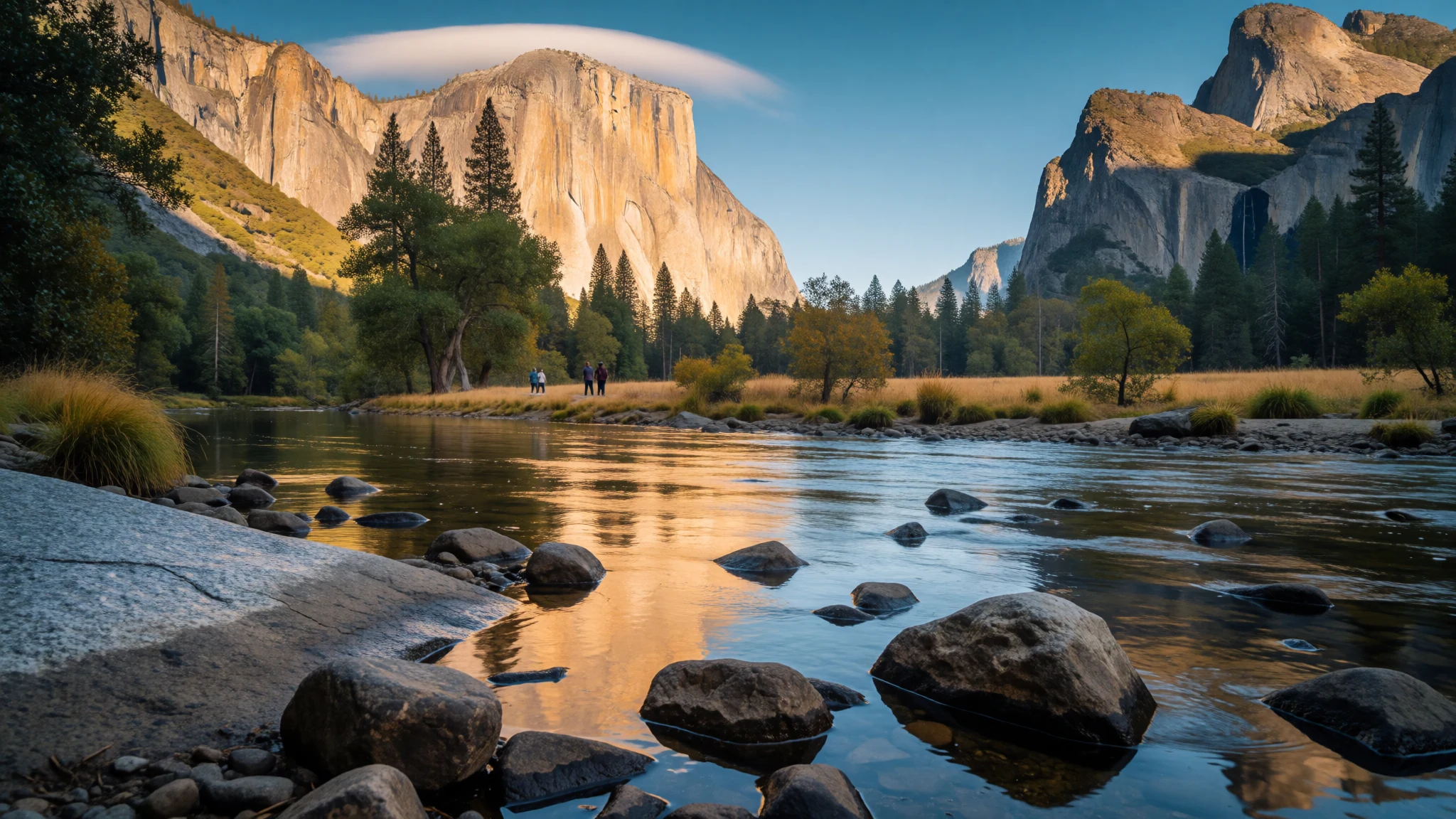
El Capitan is a sheer granite wall beside Yosemite Valley's meadows, where its scale is easiest to grasp watching tiny climbers inch up it.
The place
El Capitan stands on the north side of Yosemite Valley, close to its western end, inside Yosemite National Park in California. The summit sits at 2307 m above sea level, and the tallest face drops about 914 m to the valley floor, a blank grey-gold cliff that dominates the view from the road and the meadows beneath it. The rock is mostly pale, coarse-grained granite, formed roughly 100 million years ago, the same stone that makes up much of the valley's western cliffs. A younger intrusion called Taft Granite caps the upper part of the face, and dark veins of diorite thread through the older rock, most visibly across the section climbers call the North America Wall. Glaciers shaped the valley over several cold spells, but this granite has few cracks, so the ice found little to prise loose and the wall survived relatively whole. Even so, the stone is under heavy internal stress, which produces loose features such as the Texas Flake, a big slab easing away from the wall roughly mid-height. The cliff is a working climbing area as much as a landmark, with routes named Iron Hawk and Sea of Dreams, all of them demanding. The top is a long walk rather than a climb: a trail starting near Yosemite Falls rises out of the valley, and a westward track follows the rim. From below, the face looks flat and close, and its size only registers when a speck of colour, a tent or a rope, shows up against it.
Its story
El Capitan took its Spanish name, 'the Captain', from newcomers who arrived long after the rock itself was finished. Glaciers did the carving. The Sherwin glaciation, between about 1.3 and 1 million years ago, is credited with most of the sculpting. Long before maps, the Ahwahneechee people lived in the valley below, and the cliff was part of their home landscape. For outsiders, the wall became known through pictures first. Charles Leander Weed photographed the valley in 1864 on huge glass plates, carrying the view to people who would never make the journey, and William Henry Jackson photographed the cliff again in 1899. Climbing came later and changed what the rock meant. The face became a proving ground for big-wall climbing in three styles: aid climbing, where equipment bears the climber's weight; free climbing, where hands and feet do the work and ropes only catch a fall; and, most recently, free soloing, with no rope at all. Lines such as the Harding/Caldwell route up the tallest section carry the names of climbers who stretched ideas of what was possible. The story continues quietly today. Parties spend days on the face, sleeping in hanging camps, while watchers in the meadow follow them with binoculars, and the granite carries on its own slow story as stress in the rock loosens flakes.
What to see
- El Capitan Meadow — Valley floor, opposite the wall
The open grass and roadside pull-outs facing the wall are the standard place to look up at El Capitan. The full height reads clearly from here, and with binoculars the gear and figures of climbers can be picked out. Mornings are quieter, and afternoon light turns the granite pale gold.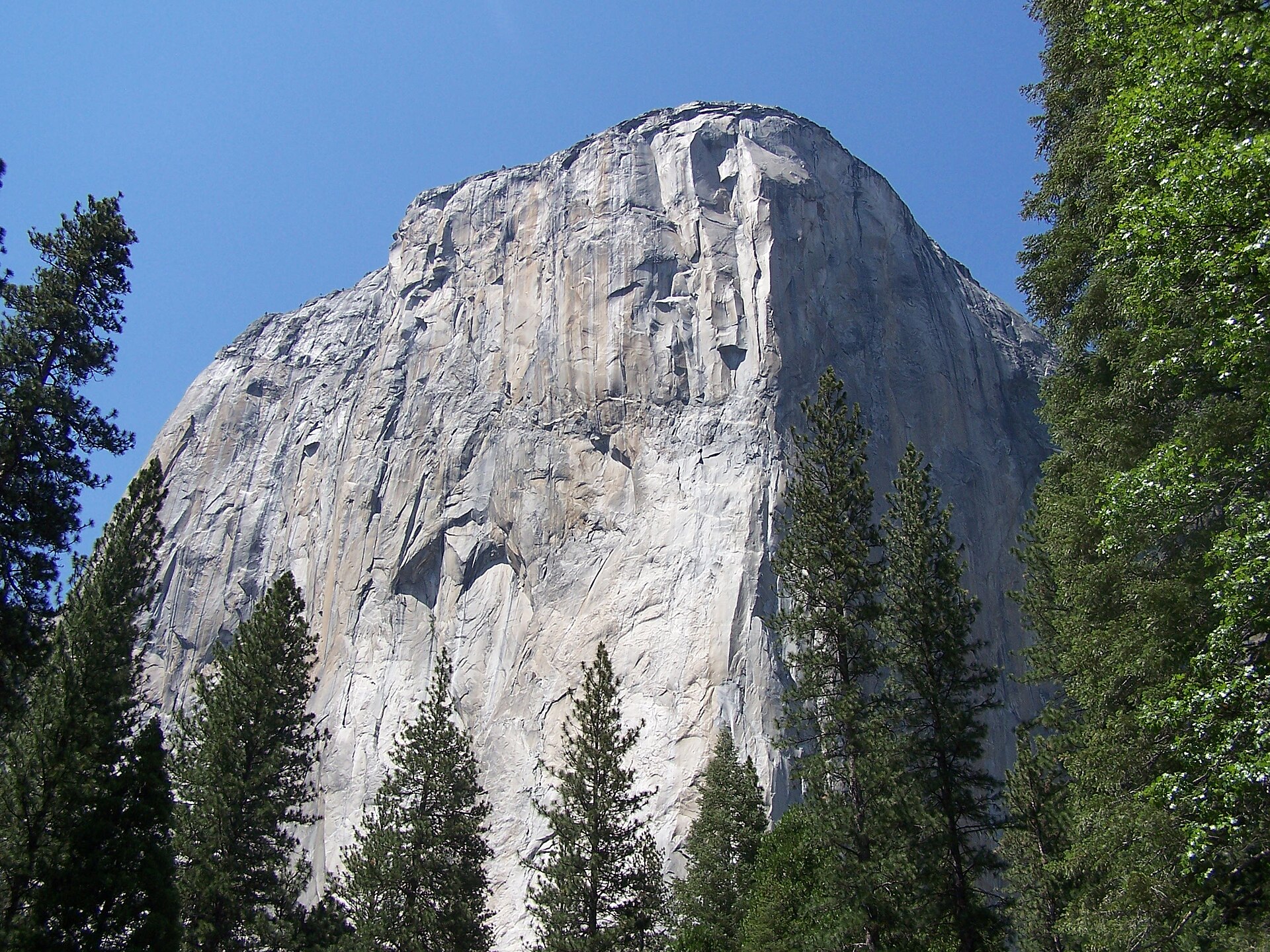
- Tunnel View — Western entrance to Yosemite Valley
Tunnel View is the roadside viewpoint just outside a tunnel on the way into the valley, with El Capitan on one side, a waterfall on the other and the valley opening between them. It draws crowds and tour groups, so go early or late and treat it as a short stop.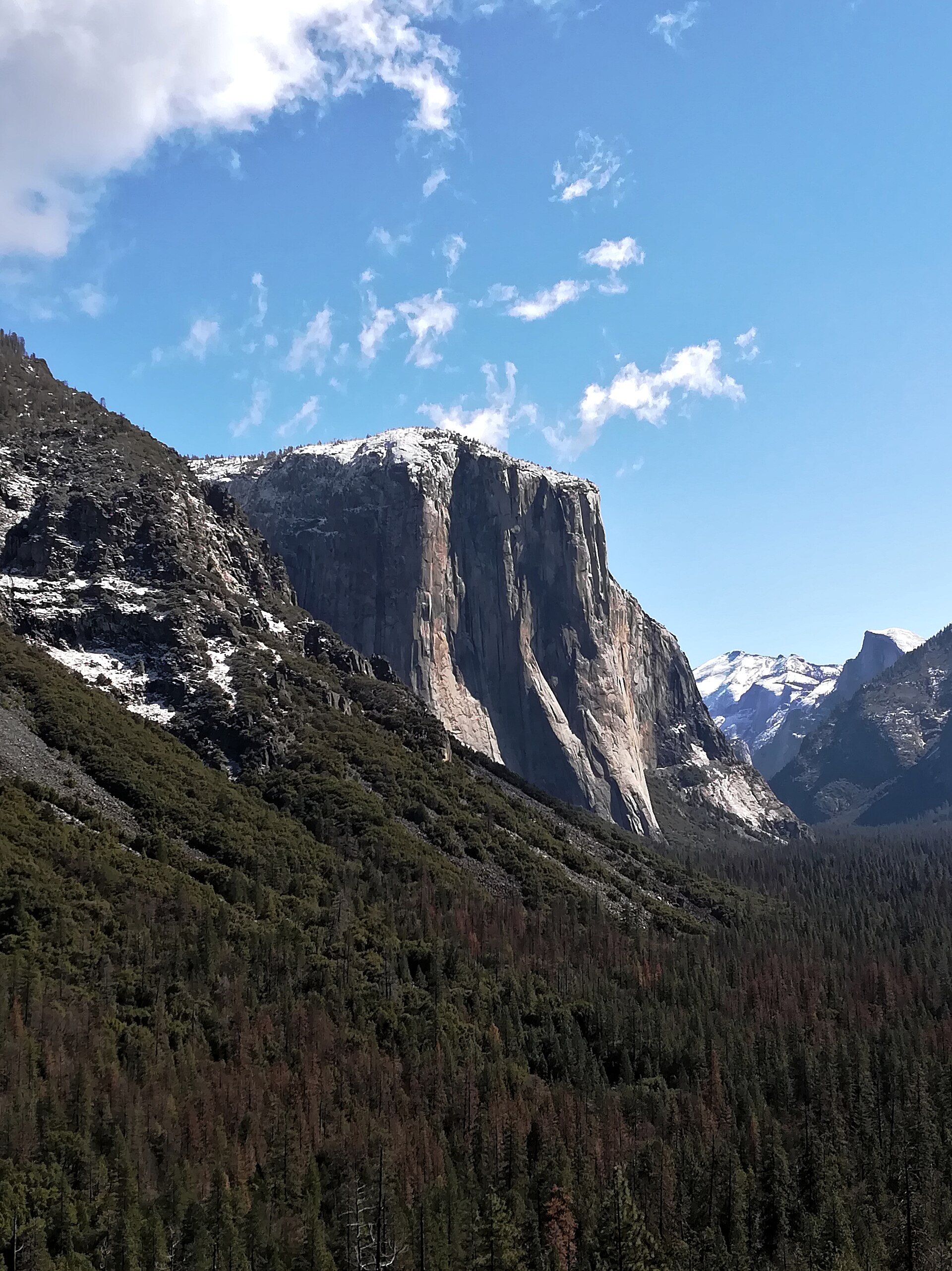
- Merced River below the wall — Valley floor
The Merced River runs across the valley floor not far from the base of the cliff, and its gravel banks make a calm place to sit with the wall overhead. Snowmelt runs cold and fast in late spring, so ask a ranger about conditions before wading or floating.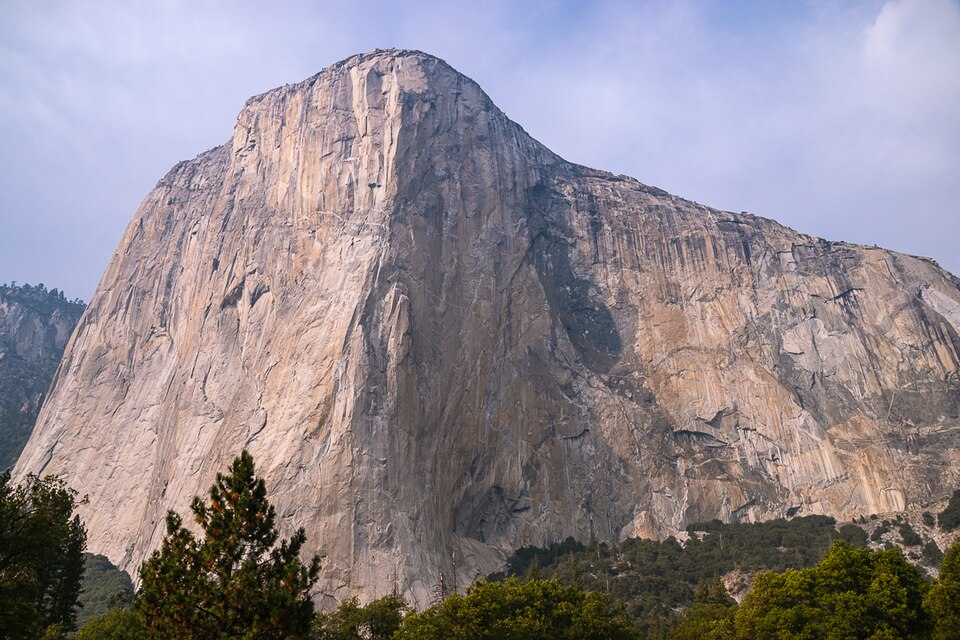
- Climbers on the wall — Meadow viewing areas
Climbers on the big routes spend several days on the face and sleep in hanging camps, and at nightfall their headlamps show as slow points of light. Watching from the meadow with binoculars, or a camera on a tripod, turns the cliff into a long-running drama. Rangers can say which routes are busy.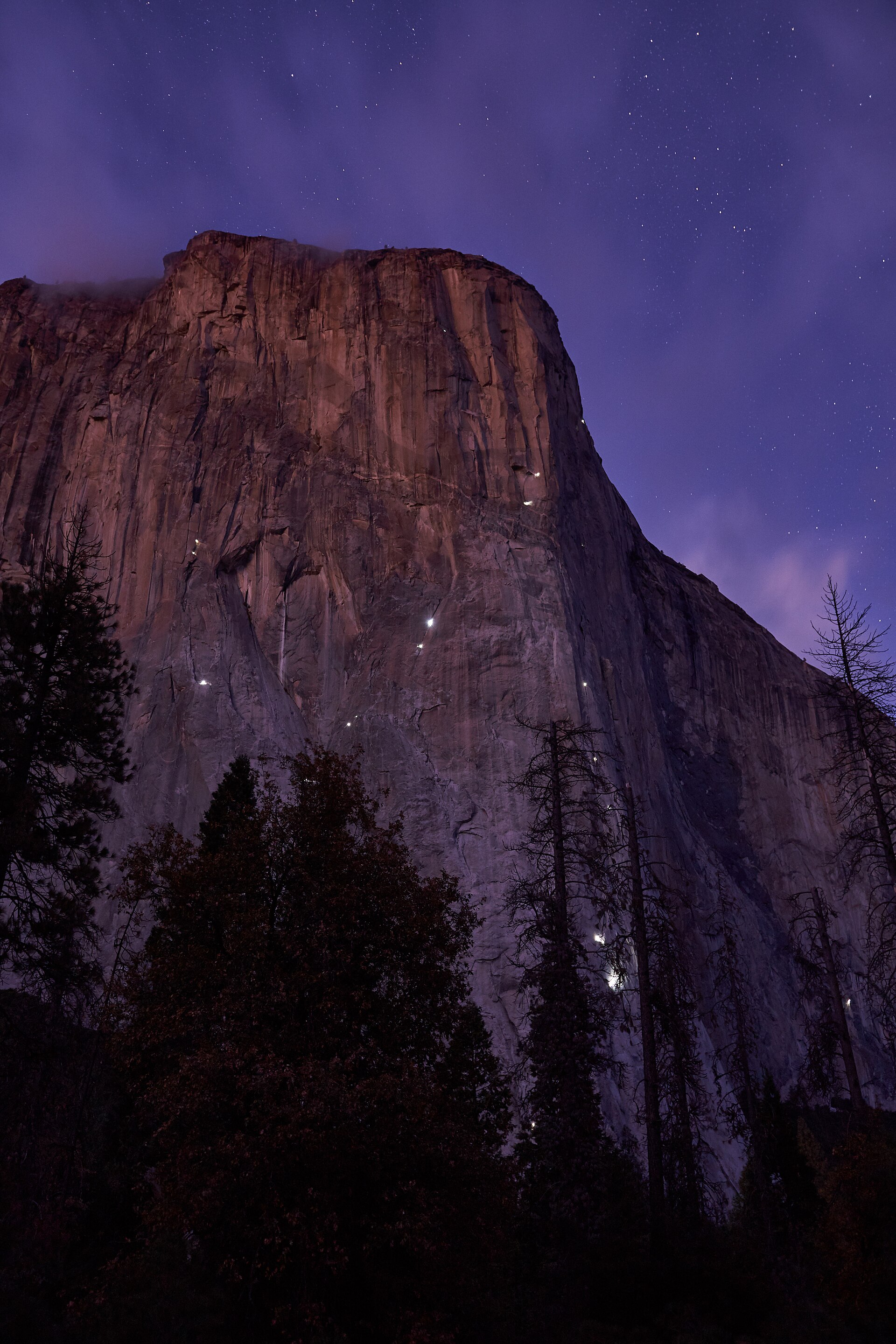
- The summit by the Yosemite Falls trail — North rim, above the valley
The top of El Capitan can be reached on foot with no ropes: a long trail beside Yosemite Falls climbs out of the valley, and a westward route follows the rim. It is a full-day effort with steep sections, little shade and no quick exit, so start early and carry plenty of water and food.
Culture
El Capitan carries two cultures at once: the long Indigenous connection to Yosemite Valley and the climbing tradition that grew up beneath the wall. The valley is the homeland of the Ahwahneechee, and the park's museums and ranger talks are the best places to hear that history in its own voice. Climbing culture is easier to stumble into. It shows in campgrounds and cafes where people sort ropes, chalk their hands and swap advice about routes that can take days. Patience counts for more than bravado, and a climber who turns back is respected. Watching is part of the scene too. Families set up folding chairs in the meadow with binoculars, and a hush falls when a figure moves on a hard section. The wider park ethic is plain and practical: stay on trails, carry rubbish out and treat wildlife, especially black bears, as wild animals. Most visitors come in the busy months, so shared spaces fill early and a little patience helps everyone. In the meadow below El Capitan, keep voices low and stay on the marked paths while climbers are overhead, and never leave food in a car or unattended at a campsite, where bears will find it.
What to wear
Fashion around El Capitan means three things: the older dress of the valley's first peoples, the working clothes of climbers, and what suits a mountain visit. Historic Sierra Miwok and Ahwahneechee clothing drew on local materials such as deer hide, plant fibres and feathers for ceremonial regalia, and the region's fine basketry is a living craft. Museum displays and cultural demonstrations in the park show examples, and ceremonial dress is worn at gatherings rather than daily. What people wear now is largely outdoor kit: trail shoes, quick-dry shirts, fleece and padded jackets, and sun hats. Climbers add chalk-dusted trousers, harnesses and helmets, which are as much part of the view as the rock. Park rangers wear a distinctive uniform with a flat-brimmed hat. For a visitor, there is no dress code, and modesty norms are relaxed. Layers matter more, since mornings and evenings are cool even when midday is hot, and snow is possible in colder months. Wear closed shoes with grip, because granite is slippery and the paths can be rough. Carry a sun hat, sunscreen and a light rain jacket in spring and autumn. A warm hat and gloves are worth packing outside summer, particularly for dawn and dusk watching.
What to eat
- Almonds — Roadside farm stands and shops in the Central Valley on the way to the park
Almonds grow in huge orchards across the Central Valley, and travellers heading east pass through the region. Shops and stands sell them raw, roasted and flavoured. A bag makes sturdy trail food for the summit walk, and the harvest season gives the landscape its character. - Seasonal stone fruit and berries — Farm stands in the foothills and valley towns in summer
Peaches, plums, cherries and berries are sold at farm stands on roads toward the mountains in the warmer months. Ripe fruit travels badly, so it is best bought on the day and eaten at a picnic with the wall in view. - Burgers and sandwiches — Cafes and food courts in Yosemite Valley village
Simple, filling meals are the norm inside the park: burgers, sandwiches, pizza and salads served quickly to hungry hikers. Queues build at midday, so eat early or late, and expect plain cooking over refinement. - Tacos and burritos — Casual eateries in Mariposa and other gateway towns
Mexican-style tacos and burritos are everyday food in California's small towns, and the gateway towns have plenty of casual eateries serving them. They suit the end of a long hike, with fresh salsa, beans and grilled meat or vegetables. - Picnic lunch — Delis and grocery stores in Mariposa and shops in the park
Many visitors build a picnic from bread, cheese, fruit and nuts bought at a deli or grocery store, then eat it in El Capitan Meadow. It is cheaper than café meals, though food must be stored carefully against bears.
Plan it
Best time. May–June for high waterfalls and mild days, and September–October for calmer crowds and clear light. July and August are hot and busy, and winter can bring snow and closed roads, so check conditions first.
How long. 1–2
Getting there. Fly into Fresno, Sacramento or San Francisco, then drive east into the park through Mariposa County, a drive of a few hours depending on the airport. Seasonal bus services serve the valley from nearby towns, so check the official park site. The last leg is a short walk or shuttle from a valley car park to El Capitan Meadow.
Budget. mid
Tips
- Check the official park site for entry or parking reservations before travelling, since rules change with the season
- Arrive early: valley car parks fill by mid-morning in busy months
- Book lodging or campsites well ahead, as inside-park places go fast
- Carry water and food on the summit hike, which has little shade
- Bring binoculars to watch climbers from the meadow
- Store food in bear-proof lockers, never in a car or tent
Etiquette
- Keep voices low in the meadow while climbers are on the wall
- Stay on marked trails and carry all rubbish out
- Keep a safe distance from wildlife and never feed animals
Nearby
Sources
- Wikidata Q1124852 (CC0)
- Wikipedia: El Capitan (rev 1368970907) (CC BY-SA 4.0)
- Wikivoyage: Mariposa County (rev 4834091) (CC BY-SA 4.0)
- Fernando Guachiak, Capitanyose.jpg (CC BY-SA 4.0)
- Clementp.fr, El Capitan en Californie.jpg (CC BY-SA 4.0)
- Charles Leander Weed, El Capitan, River View, 1864 (Public domain)
- William Henry Jackson, El Capitan 1899 (Public domain)
- Alexander Migl, Yosemite Nationalpark Tunnel View (CC BY-SA 4.0)
- Little Mountain 5, El Capitan 2009.jpg (CC BY 3.0)
- Meros Felsenmaus, El Capitan 'Wall of Early Morning Light' (CC BY 3.0)
- C-M, Elcapitanclimbers.jpg (CC BY-SA 4.0)


Wildlife
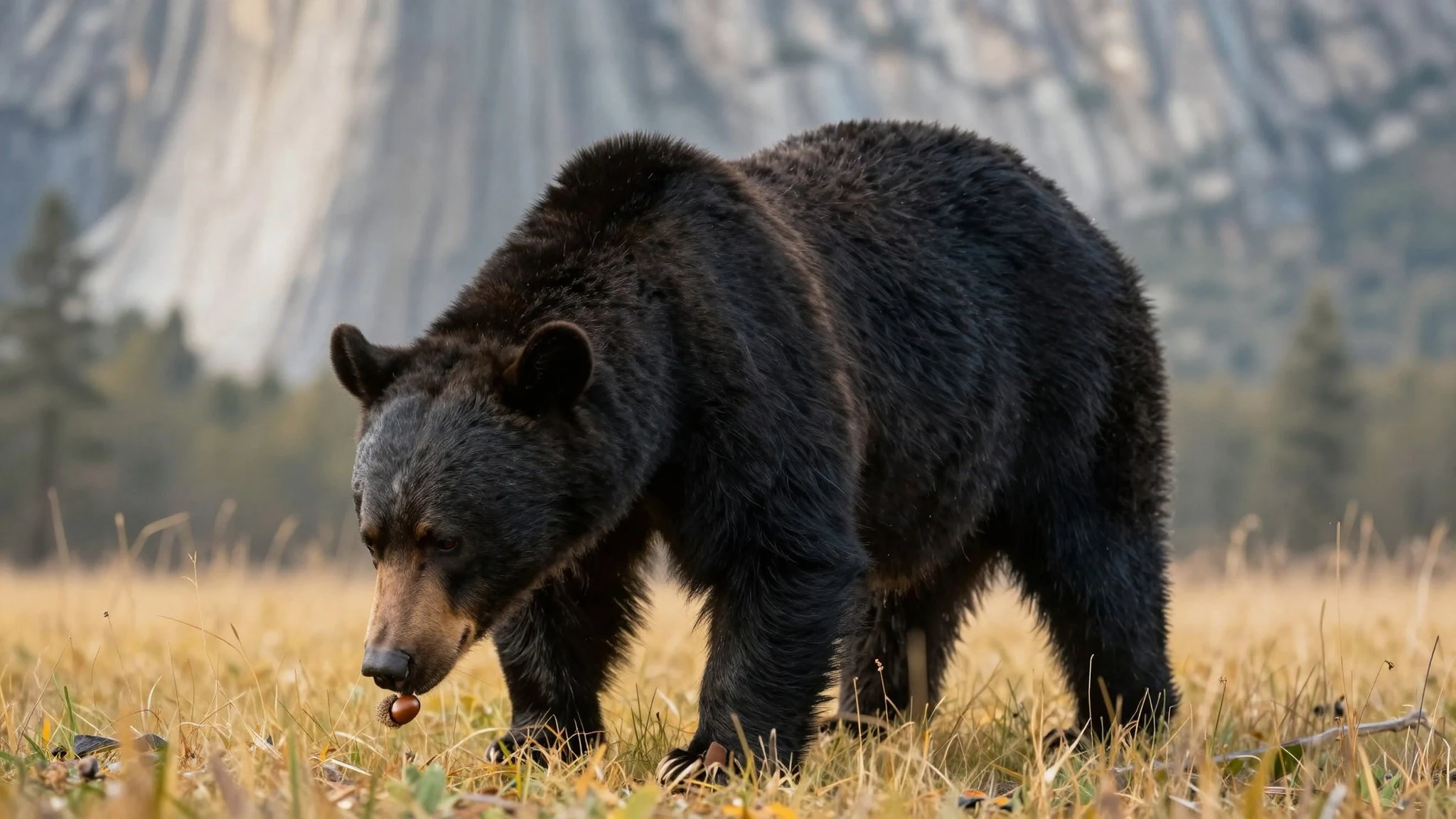
- American black bear (animal)
The black bear is the smallest and most widespread bear in North America, a forest-loving animal that eats a bit of everything, depending on the season. When hungry it may wander out of the trees, and sometimes towards people's food. Watch it the way the park asks: treat it as a wild animal, stay on the trails and carry your rubbish out so nothing tempts it closer. Never feed a bear, and enjoy it from a respectful distance.