Dieng Plateau
Dieng Plateau, Indonesia
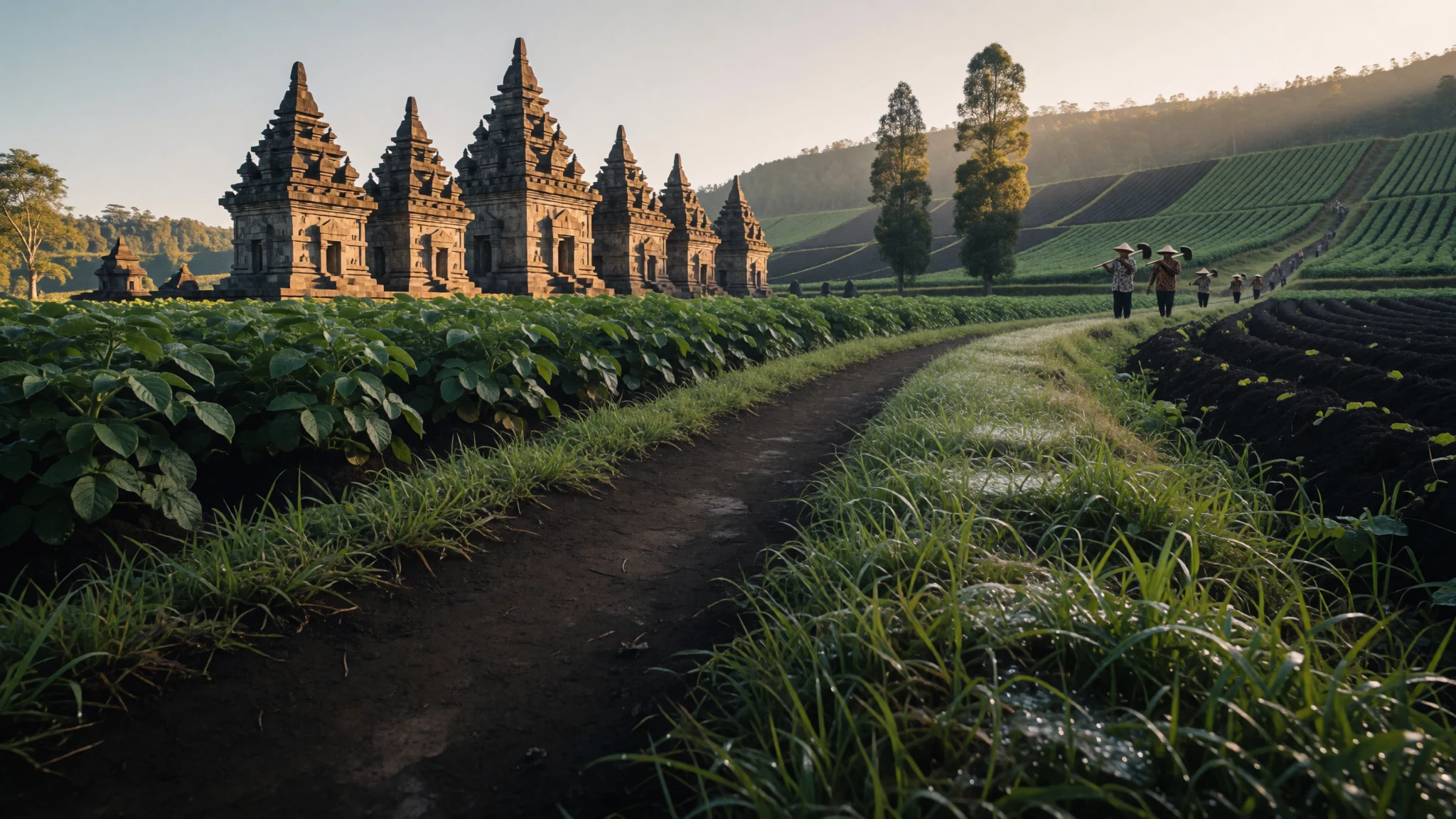
On the Dieng Plateau, Hindu temples, steaming craters and potato fields share a cold Central Java morning.
The place
The Dieng Plateau is a high volcanic basin in Central Java, Indonesia, a cooled caldera where temples, farmland and steaming ground share the same mist. The air is sharp beside the memory of the hot lowlands, and mornings often open under a white lid of cloud that lifts to show ridgelines, crater lips and a patchwork of potato fields. Stone temples sit in the grass as if the fields had grown around them. Farmers walk the paths at first light, and the soil is dark, wet and constantly worked.
This is a living volcanic complex. Craters breathe sulphur, and mineral lakes shift colour with the light and the chemistry of the water. The smell of the vents rides the wind, strong and unpleasant up close, then gone again over the fields. Roads climb to the plateau in long bends; the last stretch is the journey itself, with drops, hairpins and villages tucked into the slope.
Dieng is also a farming landscape. Potatoes are the crop people talk about, grown in rows that run almost to the temple yards, and the plateau feeds markets in the towns below. Life here follows the cold: jackets at dawn, schoolchildren in beanies, stalls steaming with sweet drinks. By midday the sun can be fierce even while the shade stays cool, and by evening the mist returns.
Visitors come for the temples and the sunrise ridges, and both fill up when the sky is clear. Cloud can sit on the plateau and cancel the view without warning. The appeal is that mix of stone, steam, fields and weather, and the way it has become ordinary for the people who plant, sell and worship here.
Its story
The name Dieng is linked to Di Hyang in old Javanese, a name the highland still carries as a dwelling-place of deities. On the plateau that idea is built in stone. Hindu temples stand in the open, named for figures from the wayang shadow-puppet world and the Mahabharata that wayang retells: Arjuna, Semar, Srikandi and their companions. The shrines are small, squat and precise, made for a highland sky rather than a royal capital, and they read as a sacred campus rather than a fortress.
The plateau's history runs through building, burial and return. Early Hindu kingdoms of Java raised these shrines when the worship of Shiva and the Indian epics had taken root in the interior. Ash, landslides and neglect then covered much of the complex, so later generations farmed over ground that still held sanctuaries. Surveyors of the colonial era began to clear and record what the soil gave back, and Indonesian conservation has continued that work, setting the temples in trimmed lawns while the fields press against the fence.
Local belief never fully left. Craters and coloured lakes are spoken of with respect, and some children born with tangled, uncut hair are regarded as carrying a sacred burden that a ceremony must release. That rite, held within the Dieng Culture Festival, binds the temple landscape to the villages around it. Wayang, offerings and processions are how the plateau explains itself.
The stones recall an early Hindu Java, while most people who live here now are Muslim farmers who keep the temples as ancestors of the place. Dieng's story is that coexistence: gods in the building names, potatoes in the furrows, and a festival that still asks the land for balance.
What to see
- Candi Arjuna complex — Dieng Kulon
The Arjuna complex on the Dieng Plateau is a tight group of Hindu shrines in a lawn among potato fields. Buildings named for Arjuna and for wayang companions share the grass, with Candi Semar set a little apart, more pavilion than tower. Farmers walk past at dawn, when the stone is clear and the yard is still quiet.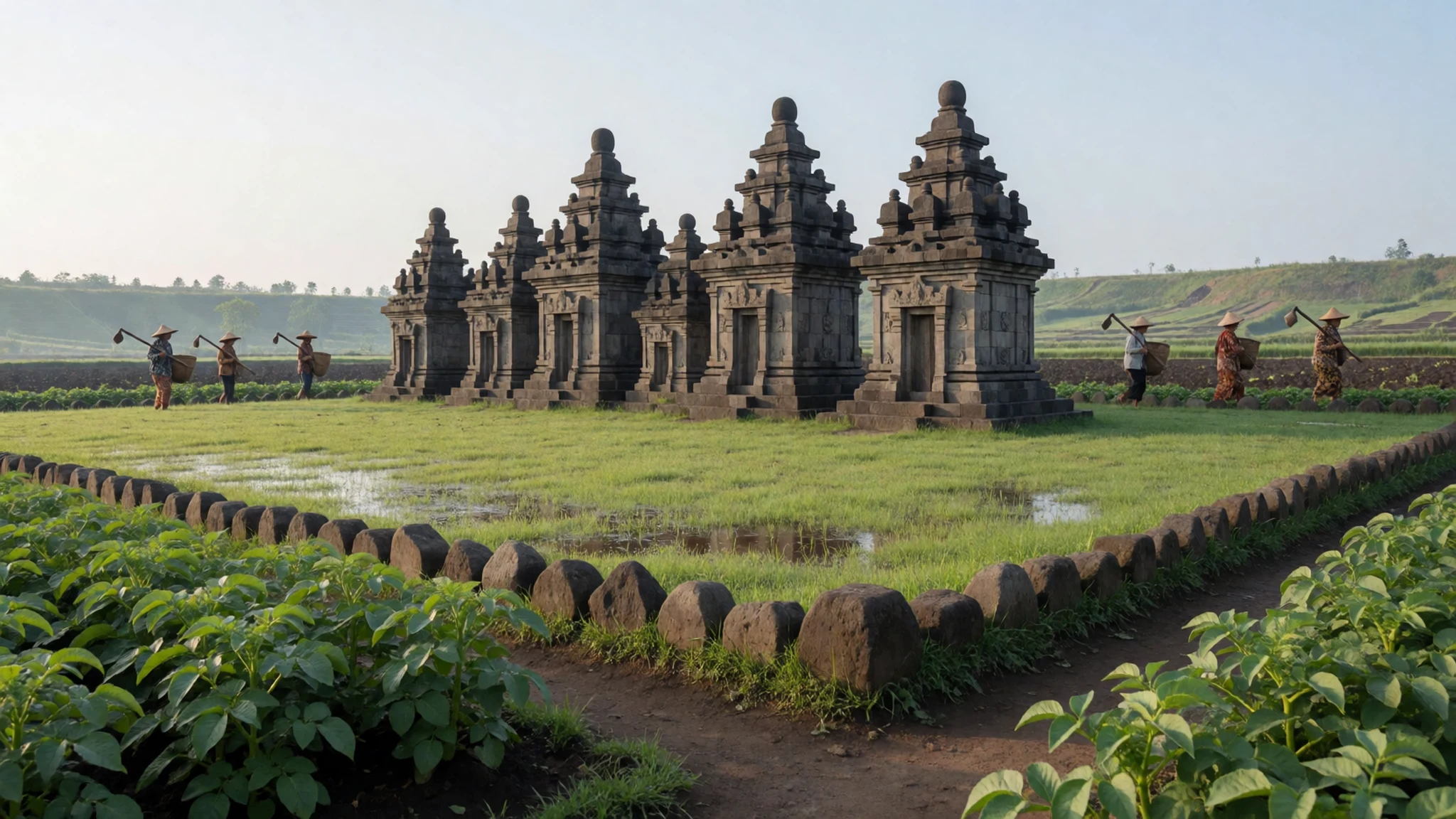
- Candi Bima — East of the Arjuna complex, Dieng
Candi Bima stands apart from the Arjuna lawn on the Dieng Plateau, a single shrine with a sculpted body that rises above the low pavilions nearby. Kala faces and dense reliefs cover the stone, and the building reads as a tower. The path crosses open ground, with fields and mist around it. Clear weather shows the carving; cloud swallows it.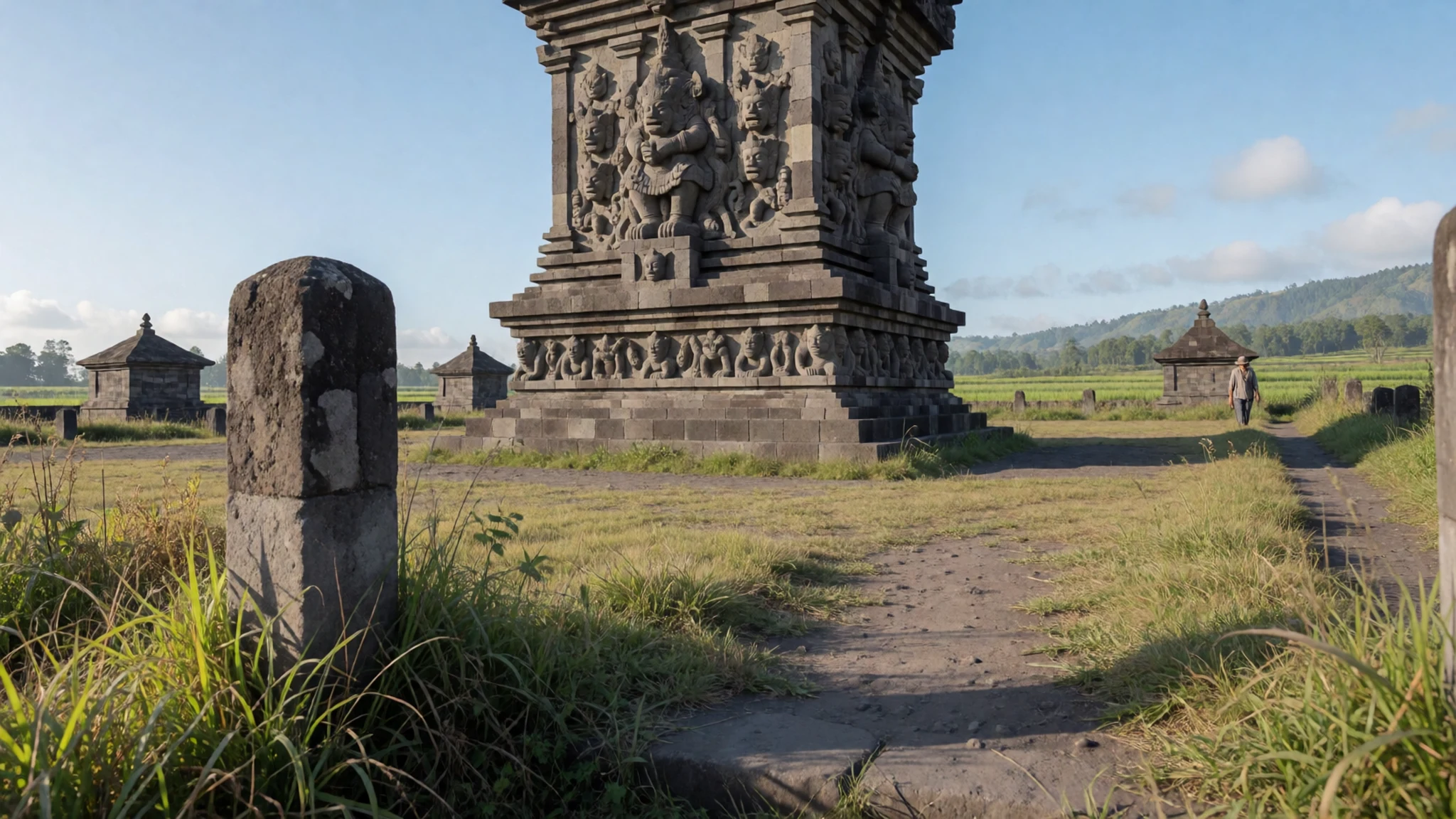
- Telaga Warna — Dieng volcanic complex
Telaga Warna sits in a crater bowl on the Dieng Plateau, a mineral lake whose surface moves between green, blue, rust and milky white. Wooden decks follow the rim, and the sulphur smell arrives before the view. A quieter pool lies under the same fumes nearby. The hue changes with the light, so a bright hour shows more of it.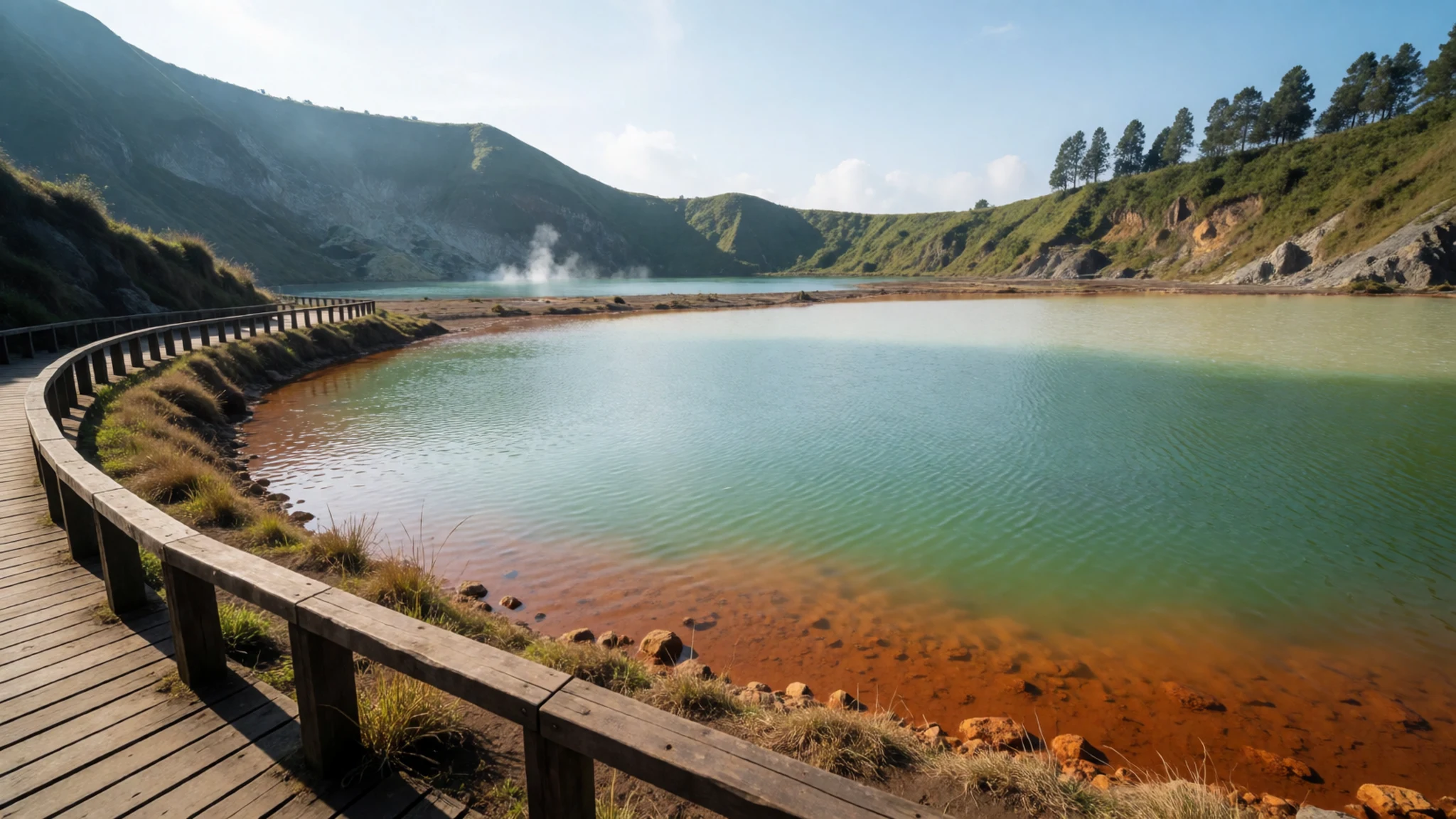
- Kawah Sikidang — Dieng volcanic complex
Kawah Sikidang is a crater walk on the Dieng Plateau, a pale bowl of mud pots and steaming vents edged by a boardwalk. The name refers to a deer that leaps from place to place, which suits a vent field that refuses to stay still. The ground is hot, the smell is strong, and the planks can be slippery. Stay on the walkway and keep clear of the steam.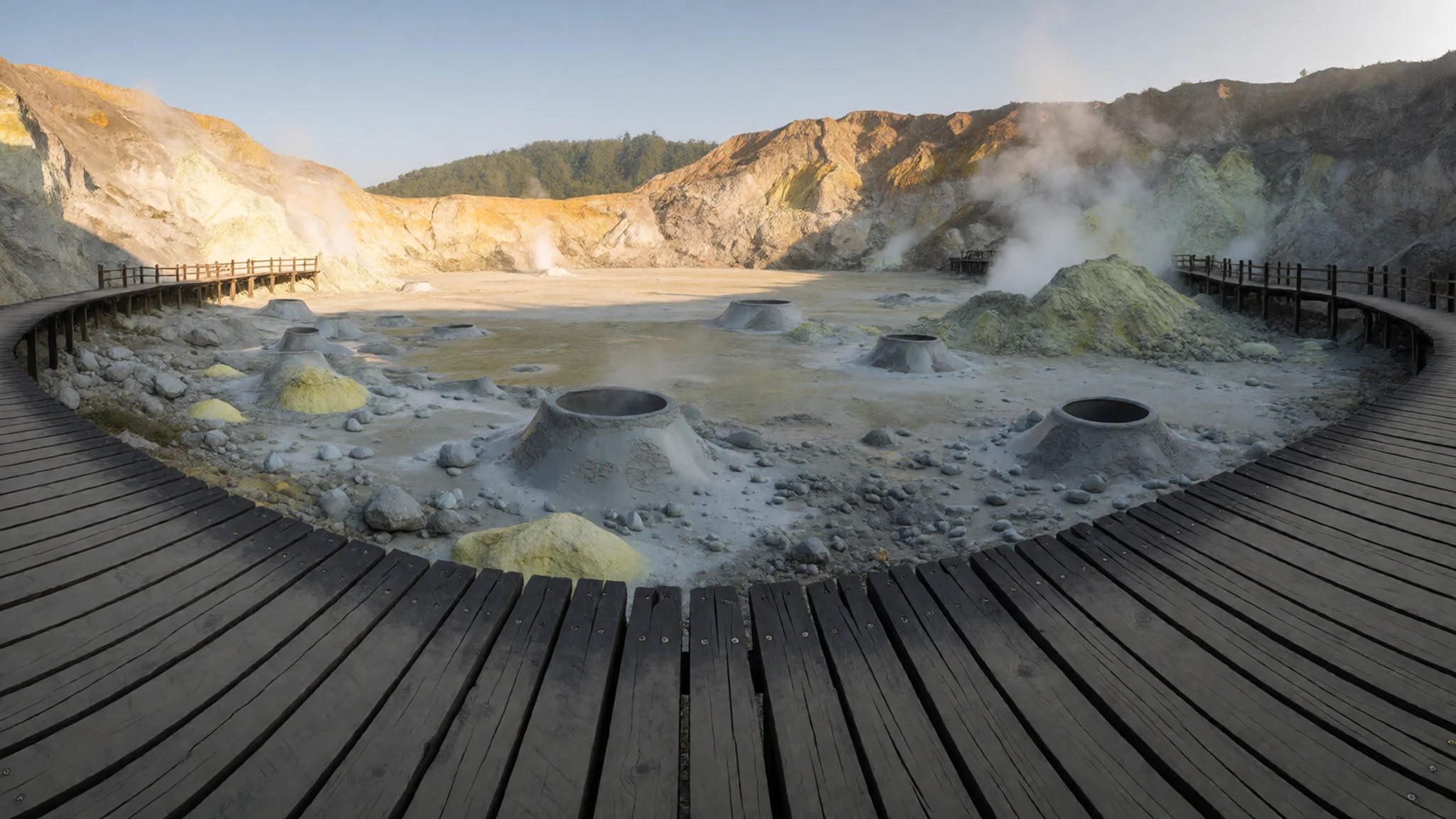
- Bukit Sikunir — Eastern rim of the Dieng Plateau
Bukit Sikunir is a sunrise ridge on the eastern rim of the Dieng Plateau, a grassy slope where people gather in the dark to watch the highland emerge. On a clear morning the peaks, craters and field-grid appear in bands of gold. Cloud is common and can erase the view. The climb from the village road is short and steep, so warm clothes matter.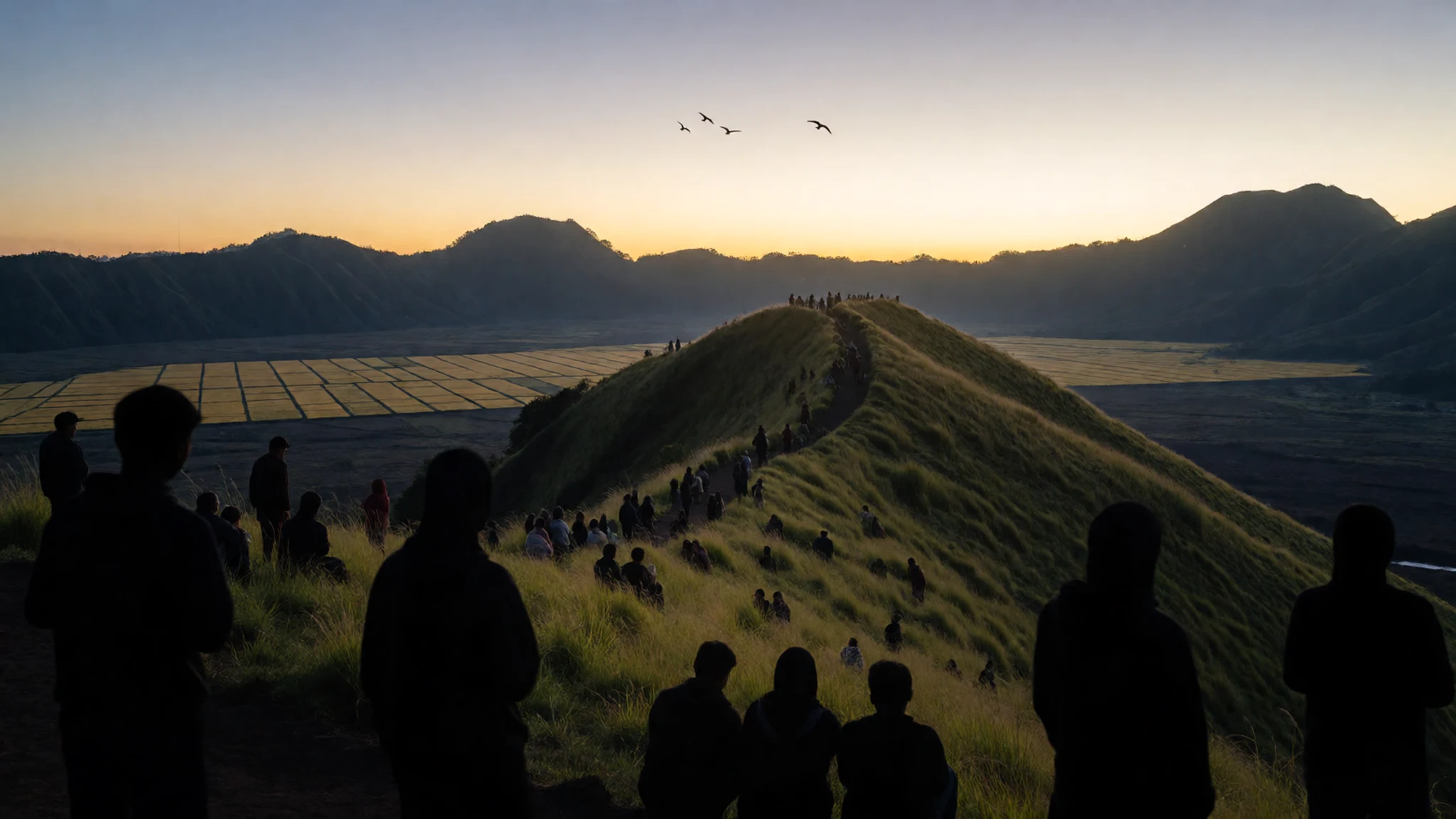
Culture
Dieng Plateau culture sits between an old Hindu sacred geography and the daily life of a Javanese highland community. Temple names follow the wayang cast, so Arjuna and Semar stand as epic heroes who have become neighbours in the grass. Offerings, gamelan and shadow-puppet performance still frame the year, above all at the Dieng Culture Festival, when villages stage rites that tie the temples to the fields.
A widely talked-about rite concerns rambut gembel, the tangled hair some local children are born with. Custom treats that hair as a spirit's charge, released in a ceremony of prayer and procession. Visitors who happen upon it are guests at a family rite.
Everyday culture is agricultural. Harvest, fog and the walk to the fields shape a day here. Potatoes, carica and market days organise time as much as any monument does. People are direct and used to guests, and a greeting in Bahasa Indonesia is returned warmly. Mosques call the villages to prayer even while the stones on the hill remain Hindu.
At Dieng's temples and during village ceremonies, cover shoulders and knees, stay off the stonework, and ask before photographing people.
What to wear
On the Dieng Plateau, traditional dress is Javanese. Women wear the kebaya with a batik kain, and men the beskap or a plain shirt over a batik sarong, with a blangkon headcloth for ceremony. The cloth is cotton batik, dyed in the wax-resist patterns of Central Java, in deep browns, indigos and the softer sogan palette. It comes out for weddings, Friday prayers in the villages, and the Dieng Culture Festival, when performers and some residents dress in full classical costume. Wayang-inspired festival dress, with gilt ornaments and wrapped skirts, belongs to the stage and the procession.
Day to day, the plateau dresses for cold and mud. Farmers wear padded jackets, knitted caps, tracksuits and rubber boots in the potato rows. Teenagers layer hoodies under windcheaters. At the market, batik is more often a shirt than full court costume, and the morning crowd looks like a highland town.
Visitors do well to follow the layers. A warm jacket, a hat and closed shoes with grip matter at dawn viewpoints and on crater paths, where the air is cold and the stone is wet. At temples, shoulders and knees should be covered, and a scarf is enough to adjust. Leave sandals for the lowlands. Festival costume is for watching, unless a host has invited a guest into a ceremony and explained what to wear.
What to eat
- Mie ongklok — Warungs in Wonosobo and stalls on the road up to Dieng
Wonosobo's well-known noodle bowl, widely served in the highland towns around Dieng as a full meal. Thick yellow noodles come with shredded chicken, cabbage and a sweet, spiced gravy. Look for it at warungs in Wonosobo and at stalls along the road up to the plateau.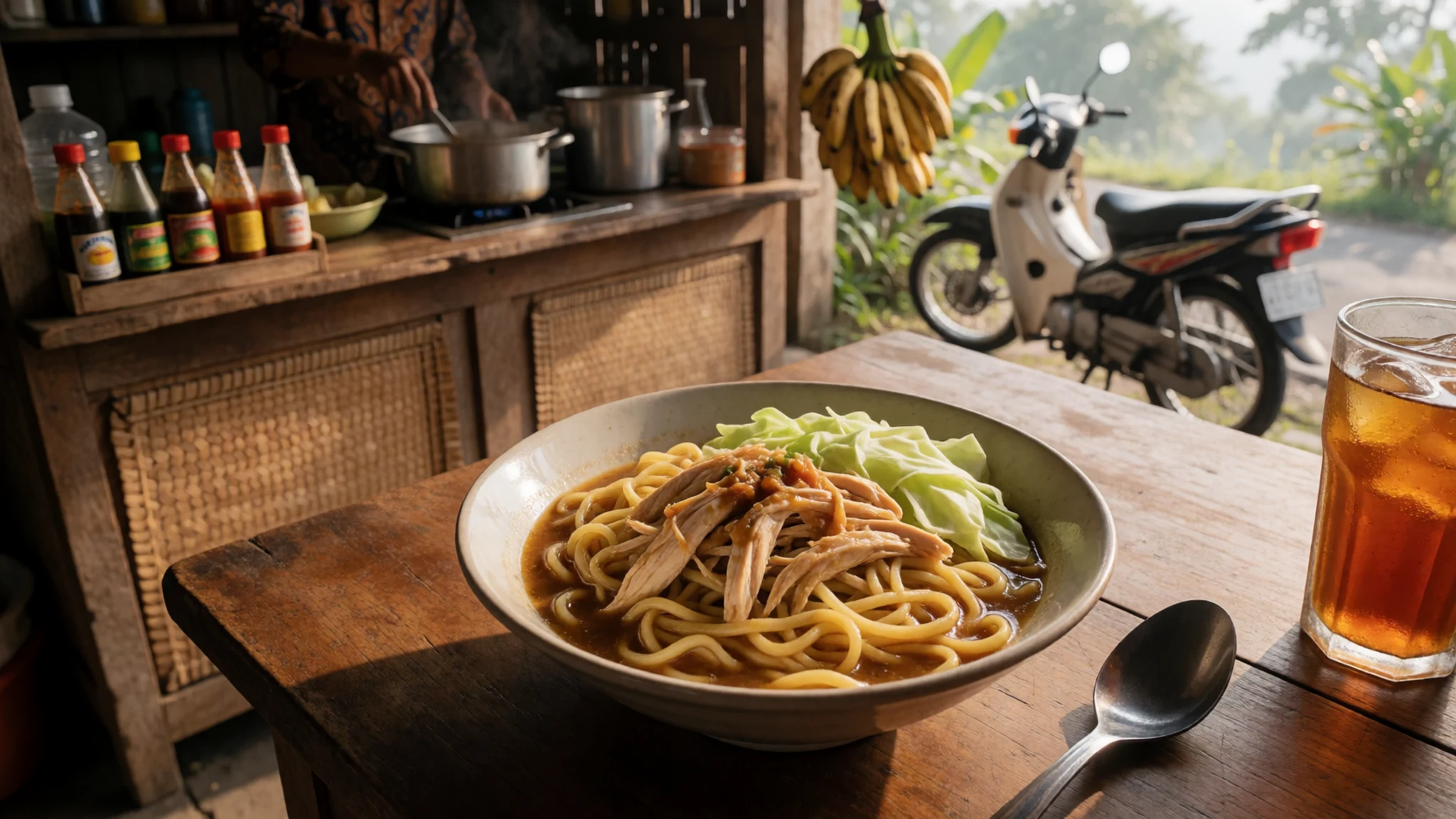
- Carica — Stalls by the temple complexes and the Dieng village markets
Carica is the fruit of the Dieng Plateau, a highland relative of papaya sold preserved in syrup. The flesh is pale and perfumed, spooned from jars or poured over ice as a cold drink. Stalls beside the temple complexes and the markets in Dieng village keep jars of it.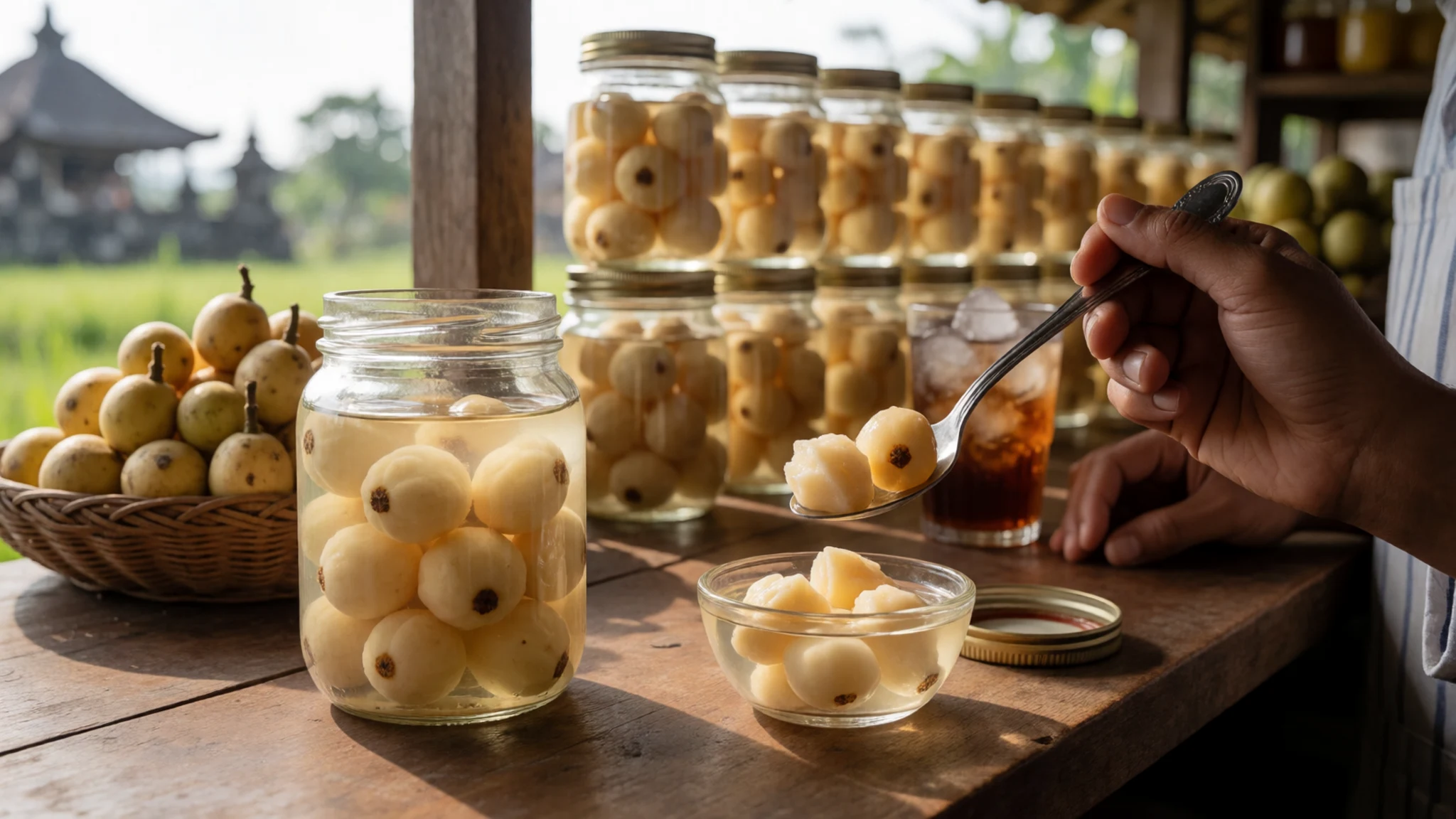
- Kentang Dieng — Roadside warungs and the morning market on the plateau
Potatoes are the crop the Dieng Plateau is farmed for, and they turn up fried and stewed at stalls across the villages. A paper cone of hot potato sticks, salted and chilli-dusted, is the usual snack between temples. Roadside warungs and the morning market sell them through the day. - Tempe kemul — Warungs around the Arjuna complex and in Dieng village
Tempeh wrapped in seasoned batter and fried until the coat is crisp, a Dieng snack that becomes a meal with rice and sambal. The inside stays nutty and soft. Warungs around the Arjuna complex and in Dieng village serve it hot, beside a glass of sweet tea. - Kopi purwaceng — Cafes and gift stalls in Dieng village and Wonosobo
Coffee brewed with purwaceng, a small mountain herb grown around the Dieng Plateau and taken as a warming tonic. The cup is bitter, earthy and strong. Cafes and gift stalls in Dieng village and Wonosobo pour it for people coming in from the cold.
Plan it
Best time. On the Dieng Plateau, April to October is the drier stretch, when mornings are more often clear. Nights are cold in every month. November to March brings heavier rain, thicker mist and slick hairpin roads.
How long. 2–3
Getting there. For the Dieng Plateau, the nearest practical airports are Yogyakarta and Semarang. From either city a road transfer via Wonosobo climbs a long run of hairpins, and that mountain road is the final approach.
Budget. low
Tips
- Book a bed in Dieng village or Wonosobo ahead of a clear weekend; sunrise ridges fill early.
- Carry a warm layer for dawn and evening; the plateau stays cold after dark in every season.
- Bring cash for village stalls and parking; card machines are uncommon away from town.
- Walk the Arjuna complex early, before coach groups arrive.
- On crater paths, keep to the boards, and skip the vents if breathing is difficult.
Etiquette
- Cover shoulders and knees at the temples, and stay off the stonework.
- Ask before photographing farmers, children or anyone taking part in a ceremony.
- At the craters and lakes, stay on marked paths and keep off the mineral crust.
Nearby
Sources
- Wikidata (CC0)
- Wikipedia: Dieng Plateau (CC BY-SA 4.0)
- Wikivoyage: Dieng Plateau (CC BY-SA 4.0)