Danau Sentarum National Park
Danau Sentarum National Park, Indonesia
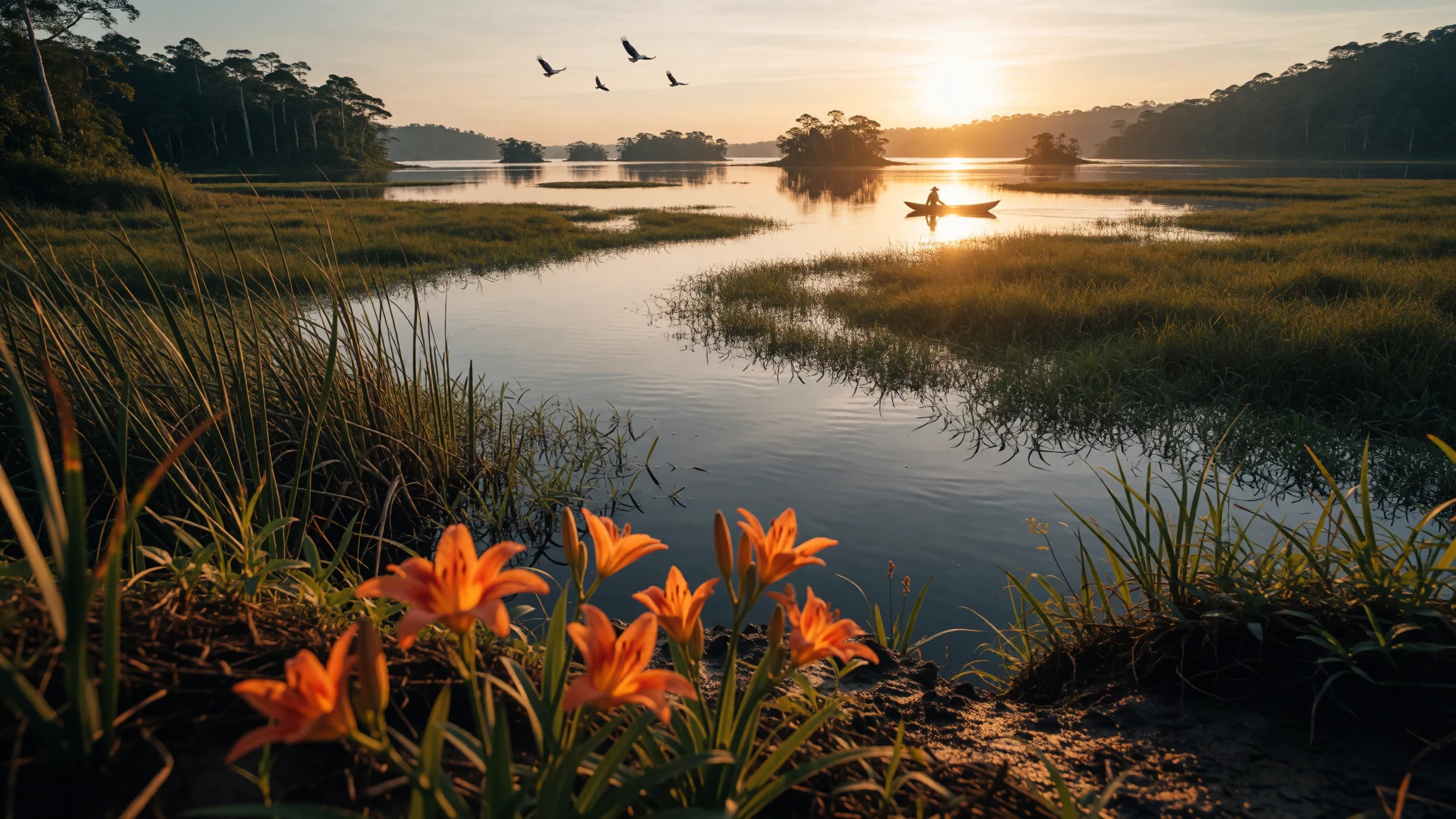
Danau Sentarum National Park is a Bornean floodplain where lakes, forest and stilt villages rise and fall with the water, reached only by slow boat.
The place
Danau Sentarum National Park sits in the heart of Borneo, in Kapuas Hulu Regency, West Kalimantan, Indonesia. It is less a single lake than a floodplain in the upper Kapuas basin, about 700 km upstream from the river's delta. Some 20 seasonal lakes are scattered across it, and roughly half the park is open water while the rest is freshwater swamp forest, with peat swamp forest in places. Local people call the whole floodplain lebak lebung. What defines the place is the swing between wet and dry. When the river backs up, water spreads deep into the forest and the villages stand on stilts or float above it. When levels fall, the lakes shrink into channels and mud, boats can be stranded, and the routes people use to fish and travel change. Dry-season photographs show pale flats and thin channels, a very different scene from the flooded forest of high water. Life here is organised around that rhythm. About 3,000 people live in around 20 village enclaves inside the boundary, and the lakes support a large traditional fishery. Wildlife is the other draw, with around 240 recorded fish species, 237 bird species, proboscis monkeys and a population of orangutans. Reaching the park takes effort. Travel is by river and lake in boats arranged locally, and the pace follows the water.
Its story
Danau Sentarum National Park has a layered history of settlement and protection. Dayak peoples are regarded as the original inhabitants of West Kalimantan. Malay communities later built sultanates along the rivers, and Malay families still make up most of the fishing population around these lakes. Chinese miners also shaped the province: they set up the Lanfang Republic, which won power from local Malay sultans before the Dutch takeover ended it in 1884. Those layers explain the mix of peoples across the wider region. Formal protection came in stages. In 1982 an area of 800 square kilometres was gazetted as a wildlife reserve. In 1994 it was enlarged to 1,320 square kilometres and listed as a Ramsar wetland. National park status followed in 1999, although a park authority was not set up until 2006, so for years the rules were easier to write than to enforce. That gap still shapes the place. The park is a working landscape with about 20 village enclaves inside its boundary, so conservation here means negotiating with fishing families rather than fencing them out. Biological expeditions have also recorded new fish species in these waters, which is part of why the wetland matters well beyond Indonesia.
What to see
- The lookout tower over the lakes — Inside the park, Kapuas Hulu
Danau Sentarum has a viewing tower that gives the clearest sense of scale: lake after lake, ribbons of channel and a flat green horizon of swamp forest. Go early, when the light is soft and the air is cooler. Seen from above, the floodplain explains itself better than any map.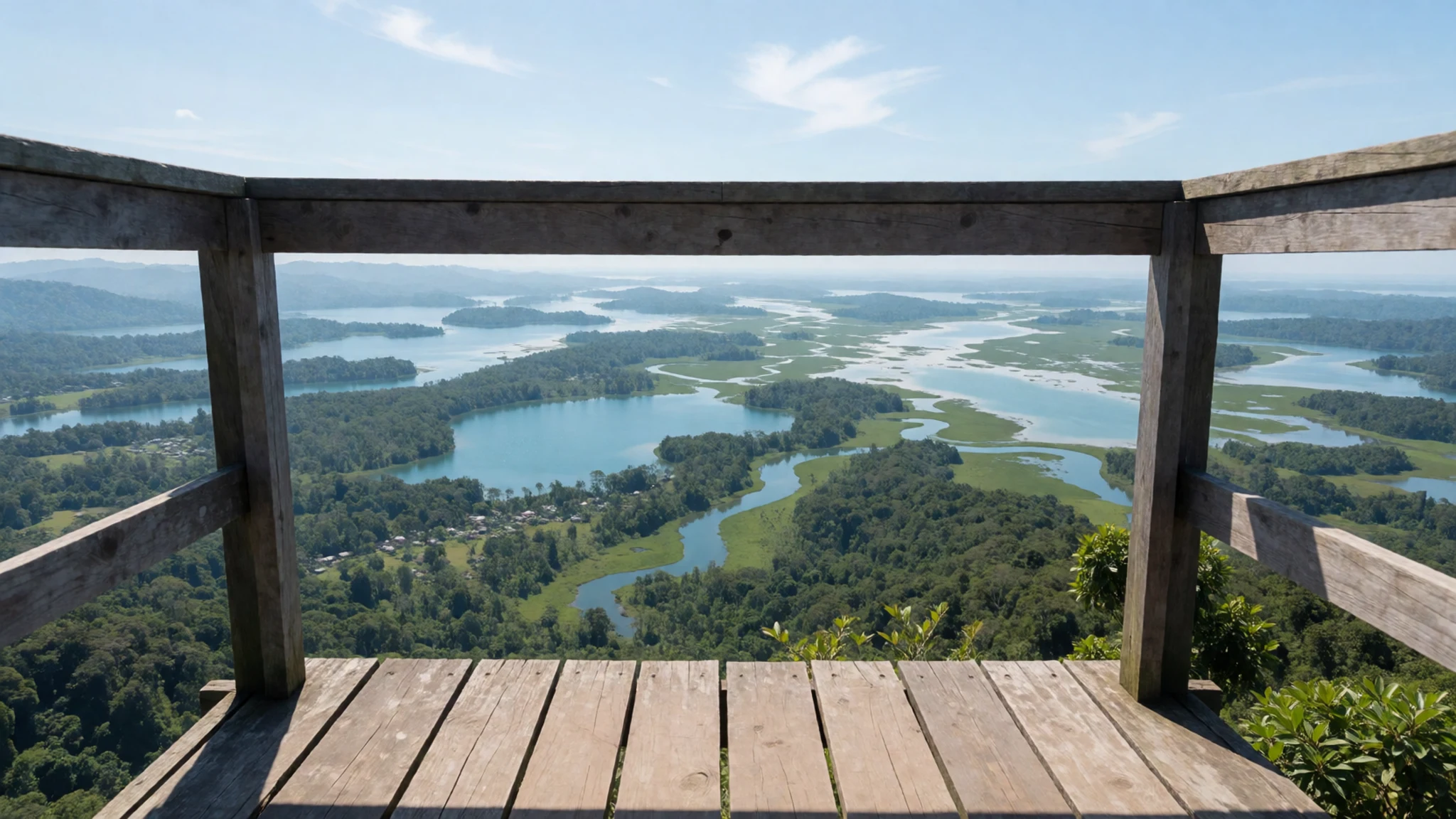
- Dry-season lake flats at Tekenang — Tekenang, West Kalimantan
Tekenang is a hamlet in the park, and its dry-season scenes show lakes drawn down to pale flats and narrow channels. This is the time of year for wide skies, long walks on firm ground and boats threading shallow water. Ask locally which channels are passable, as depth changes week to week.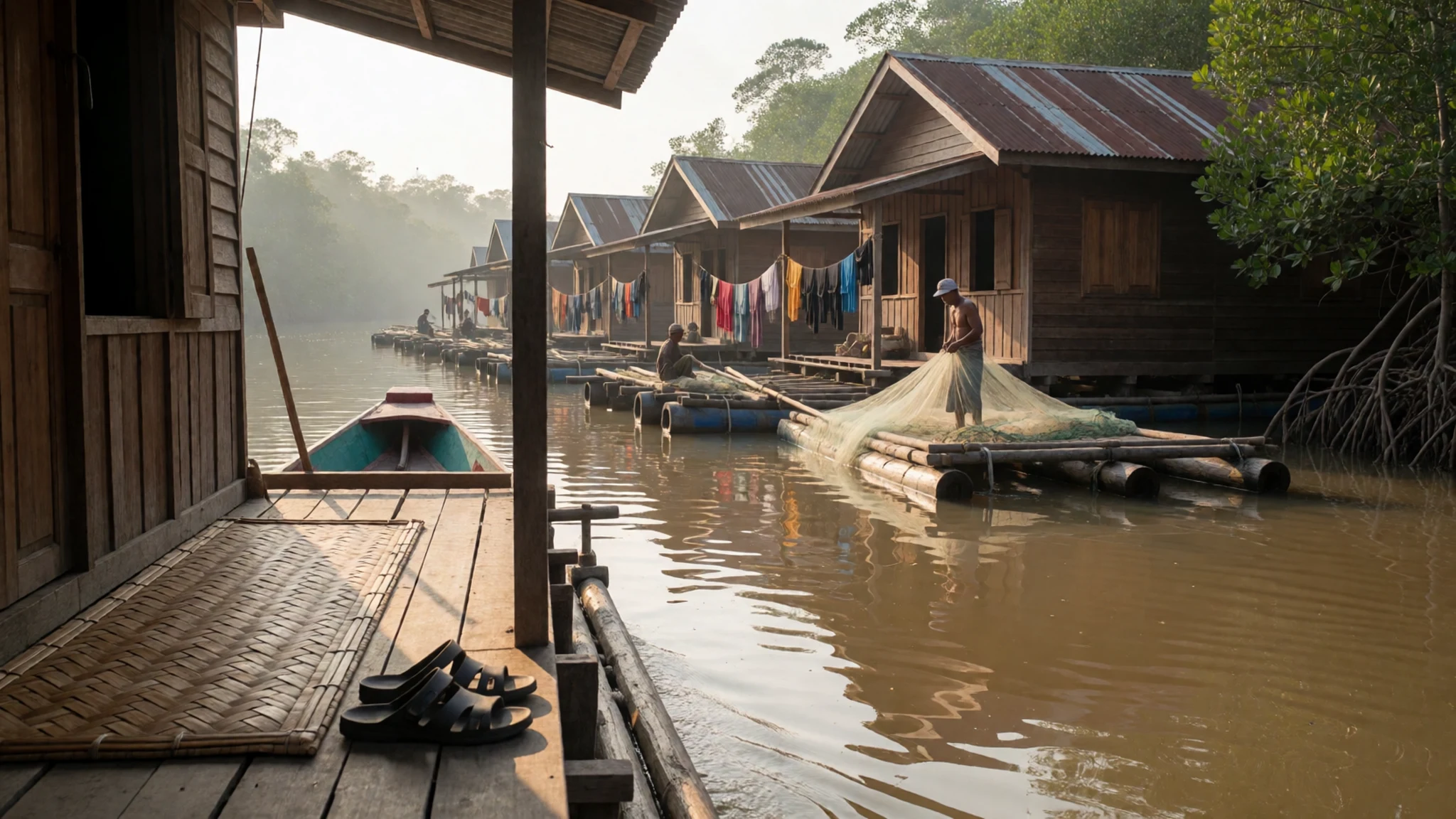
- Swamp forest channels by boat — Forest edge, Kapuas Hulu
Narrow waterways wind through the swamp forest at the lake edges, with roots and low branches close on both sides. A small boat with a local guide is the way to see it, drifting quietly. Mornings are best for birds and for the occasional monkey in the canopy.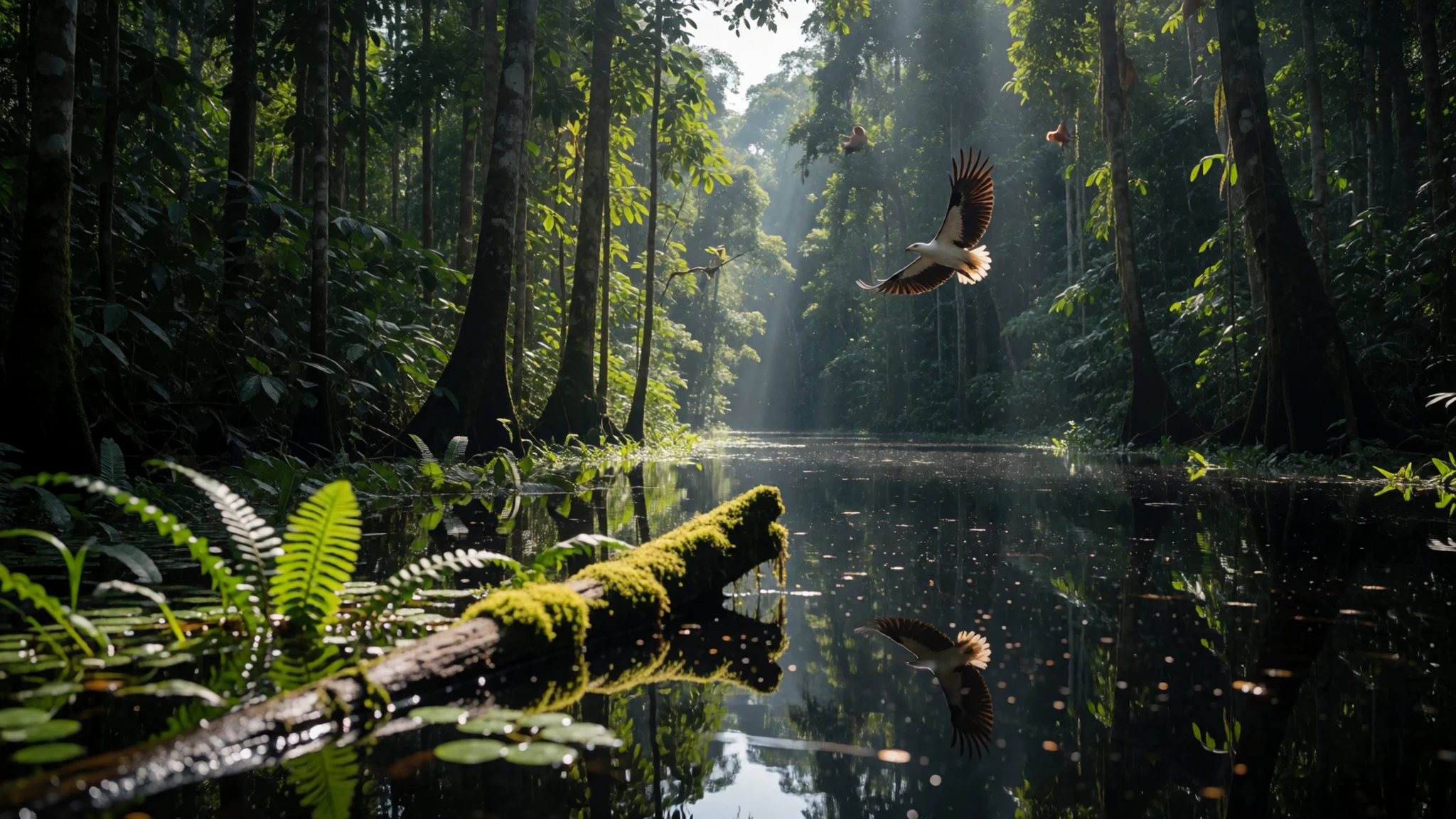
- Raptors over the water — Lake margins and shallows
Danau Sentarum records 237 bird species, and open water suits birds of prey. The brahminy kite, with its pale head and chestnut body, often patrols the shallows, and the grey-headed fish eagle hunts along quieter stretches. Binoculars matter more than a long lens, and patience matters more than either.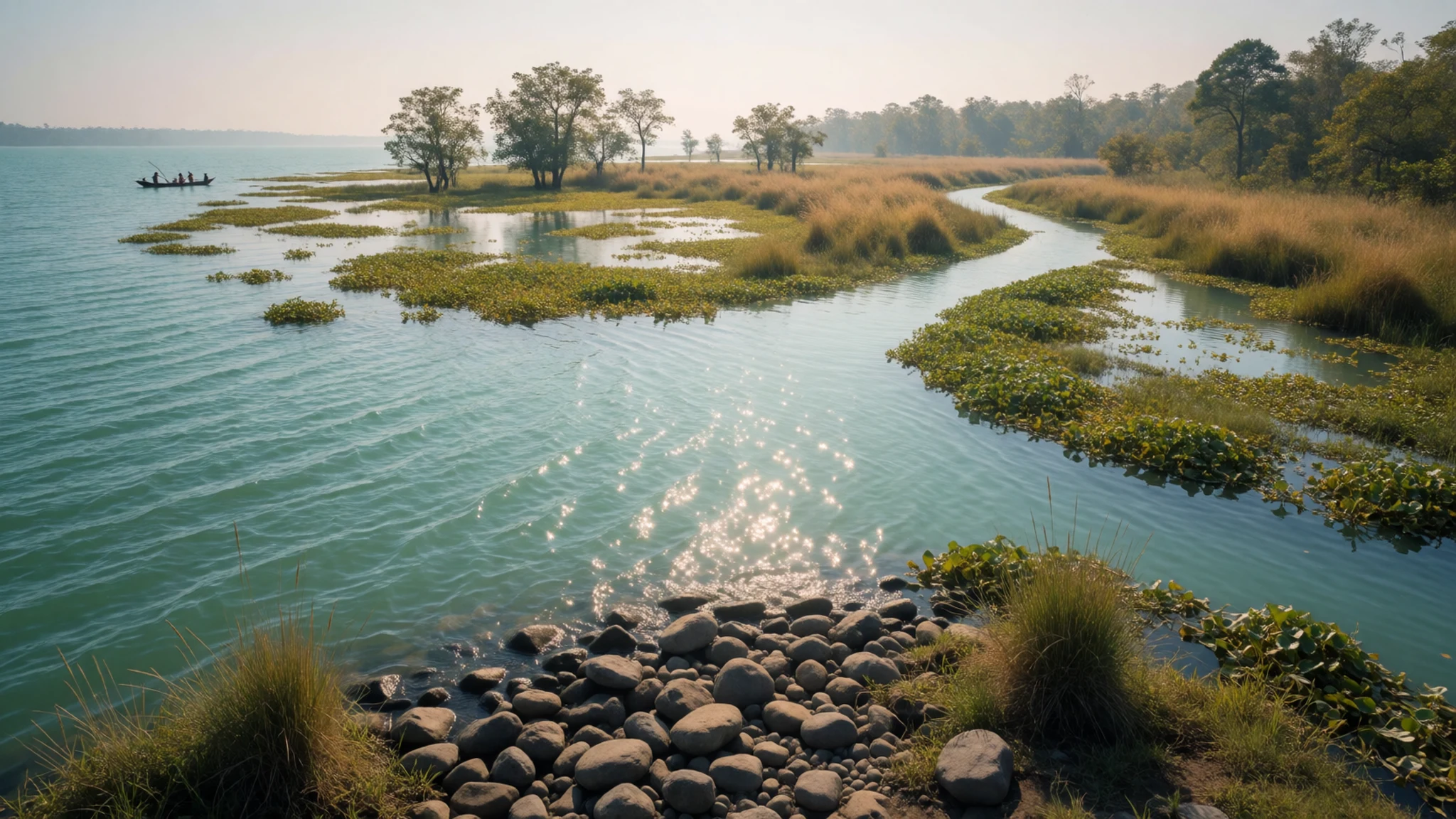
- Stilt villages and the fishing day — Village enclaves inside the park
Danau Sentarum's villages are built to cope with the water, on stilts or on floats, and the working day is fishing. Boats leave early and nets are mended in the afternoon. A visit works best through a village host, so that the time spent is welcome and the money stays local.
Culture
Danau Sentarum National Park is a living, working landscape rather than a wilderness. Most of the people around the lakes are Malay fishing families, and the local word lebak lebung describes both the floodplain and the way of life that depends on it. Fishing is the centre of the year: when and where nets go out follows the water, and knowledge of channels, fish and weather is passed between generations. Dayak communities, regarded as the original inhabitants of West Kalimantan, belong to the wider region, and their traditions of longhouses, festivals and forest use sit alongside Malay and Chinese influences found across the province. Village life is quiet and sociable. Visitors are usually hosted in a family home, offered tea or something sweet, and expected to take part in small courtesies before business. Boats are the roads here, so a boatman is both driver and guide, and the relationship is worth treating with respect. Conservation matters locally too, because the people who fish these waters are also the ones who see first when something changes. Spending money in villages, with local guides and homestays, is the most direct way for a visit to support the place. Greet people and ask before photographing anyone, their homes or their nets, and take your shoes off at a house door if others have left theirs outside.
What to wear
Traditional dress around Danau Sentarum follows the Malay and Dayak heritage of West Kalimantan. Malay men wear a loose shirt with a sarong and a peci cap for celebrations and prayer, and women wear the baju kurung, a long tunic over a matching skirt, often with a headscarf. Songket, woven cloth with gold or silver thread, is kept for weddings and festivals. Dayak communities are known for beadwork, woven cloth and feather headdresses, worn mainly at ceremonies and harvest festivals rather than every day. Day to day, people on the lakes wear what suits the heat and the water: cotton T-shirts, long trousers or sarongs, wide-brimmed hats or cloth wraps against the sun, and rubber sandals or bare feet on boats. In villages, women usually dress modestly, with covered shoulders and knees. A visitor should pack light, quick-drying clothes with long sleeves and long trousers, which protect against sun and insects. Bring a hat, a light rain jacket and sandals with grip for wet boat decks and wooden walkways, plus closed shoes for forest walks. Keep swimwear for private moments and cover shoulders and knees when walking through a village.
What to eat
- Lemang — Roadside stalls and village celebrations
Glutinous rice cooked inside a length of bamboo over an open fire, giving a soft, slightly smoky, sticky result. It is made for festivals and family occasions, and is sold at roadside stalls and village celebrations around Kapuas Hulu and Pontianak.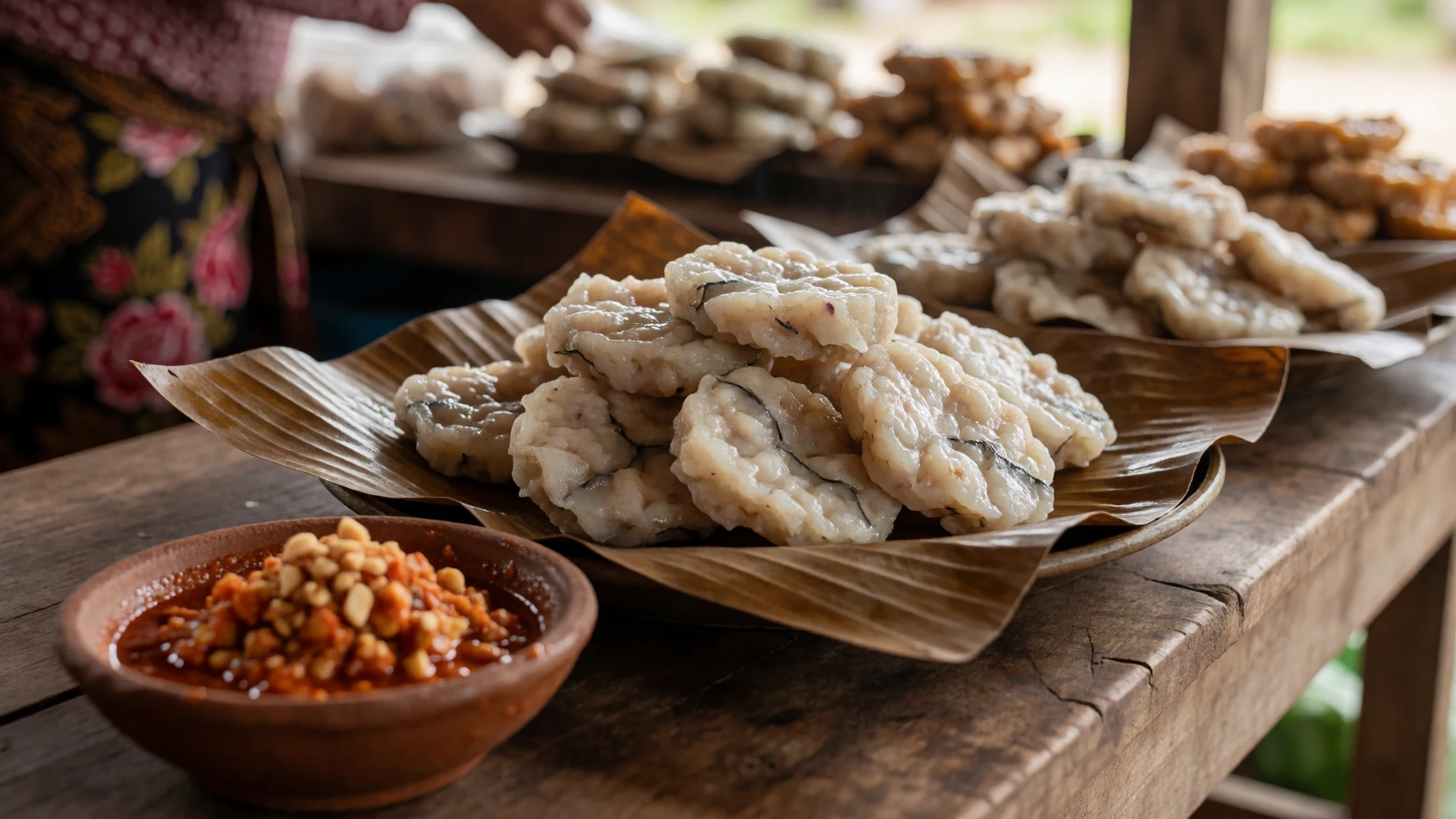
- Kerupuk basah — Markets and small eateries in Kapuas Hulu
A soft, fish-based cracker typical of Kapuas Hulu, often eaten with a sweet-sour, spicy sauce. It shows how much of the local diet comes from the lakes and rivers. Look for it in market stalls and small eateries in the district.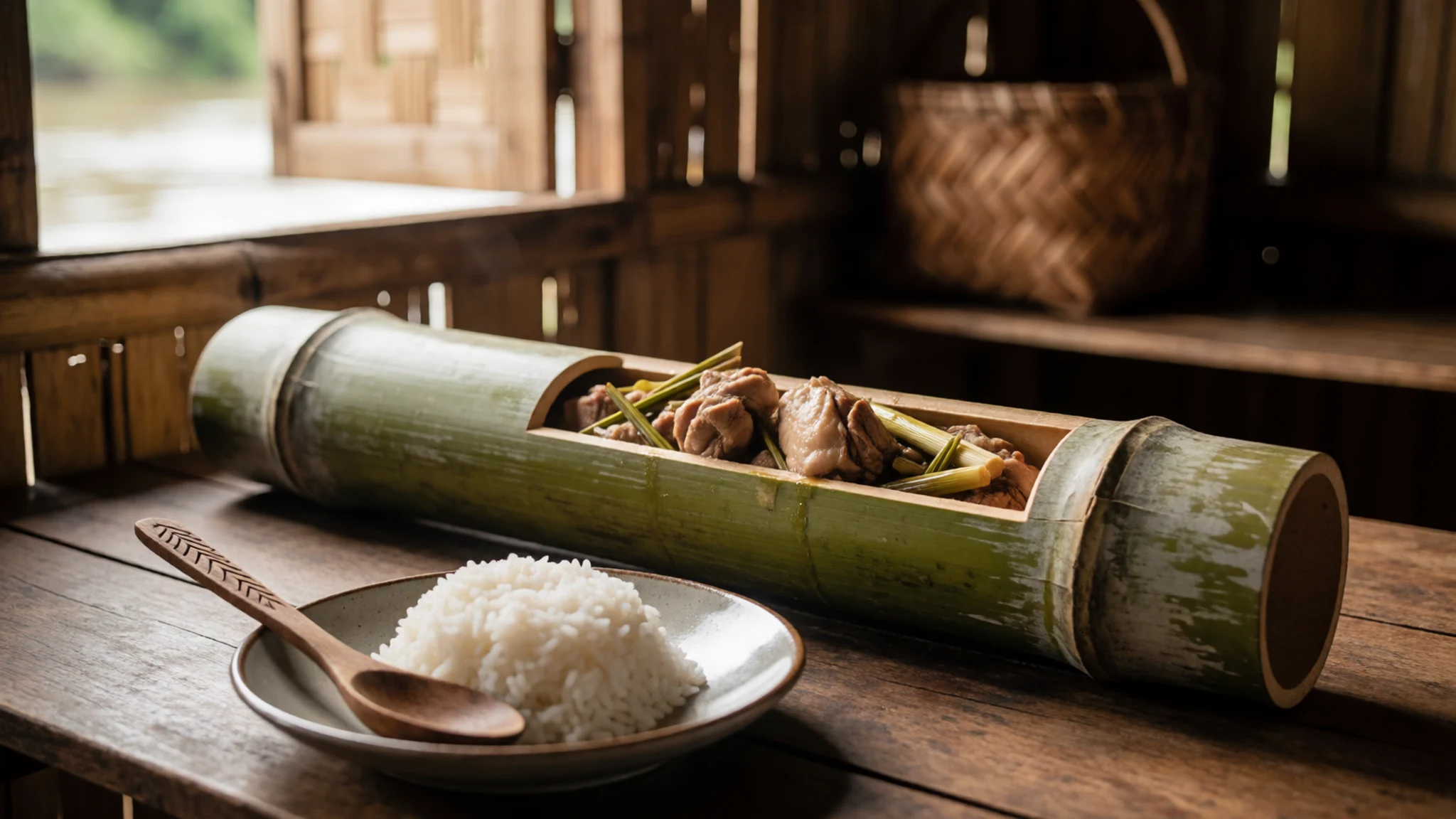
- Manok pansoh — Dayak village meals and homestays
Chicken cooked inside bamboo with herbs and spices, a Dayak speciality, so the meat stays moist and picks up a faint woody aroma. It is served at community gatherings and at village homestays that cook in the traditional way. - Lempok durian — Local markets and snack counters
A dense, sticky sweet made by cooking durian pulp down into a dodol-like toffee. It travels well and suits people who like the fruit but not the smell fresh. Buy it at local markets and snack counters. - Asam pedas — Malay eateries in Pontianak
A sour, spicy fish stew with tamarind and chilli, and a signature of Pontianak, the gateway city. It is a good first meal on the way in or last meal on the way out, found in most eateries serving local Malay food. - Lepat and lulun — Morning market stalls in towns near the park
Steamed cakes wrapped in leaf, with lepat filled with banana and lulun with brown sugar. They are everyday snacks and tea-time treats, sold early in the day at markets and morning stalls in towns around the park.
Plan it
Best time. June to September is the drier part of the year, when lake levels fall, the flats show and birdlife concentrates. Water levels vary through the year, and boat routes change with them, so confirm conditions locally before booking.
How long. 3–4
Getting there. Fly to Supadio Airport (PNK) at Pontianak, which has frequent flights from Jakarta and links from other Indonesian cities, plus international services to Kuching and Kuala Lumpur. Buses also reach Pontianak, including from Kuching. The last leg to Kapuas Hulu and into the park is overland and by boat, so arrange it through a local operator or the park authority.
Budget. mid
Tips
- Arrange guides, boats and homestays through the park authority or a local operator well before travel, since access is limited and depends on water levels
- Carry enough cash from Pontianak or a larger town, as cards and cash machines are unlikely in the villages
- Start boat trips early for cooler air, calmer water and more birds
- Bring drinking water or a filter, insect repellent and sun protection
- Pack electronics in dry bags, as boats are open and weather can turn quickly
Etiquette
- Ask before photographing people, homes or fishing gear
- Take shoes off when entering a house, and dress modestly in villages
- Do not feed or disturb wildlife, and take all rubbish back out with you
Nearby
Sources
- Wikidata Q239494 (CC0)
- Wikipedia: Lake Sentarum National Park (rev 1362786269) (CC BY-SA 4.0)
- Wikivoyage: West Kalimantan (rev 5366135) (CC BY-SA 4.0)
- RaiyaniM, Lahan basah Taman Nasional Danau Sentarum, Kalimantan Barat (CC BY-SA 4.0)
- Sadalmelik, Borneo Locator Topography (CC BY 3.0)
- Rendika Wijayanto, Danau Sentarum musim kemarau 2 (CC BY-SA 4.0)
- Rendika Wijayanto, Danau Sentarum musim kemarau (CC BY-SA 4.0)
- Bundany, Elang Bondol (Haliastur indus) di Taman Nasional Danau Sentarum (CC BY-SA 4.0)
- Bundany, Elang ikan kepala-kelabu (Ichthyophaga ichthyaetus) di Taman Nasional Danau Sentarum (CC BY-SA 4.0)
- Lo2asinamura, Mangrove Taman Nasional Danau Sentarum (CC BY-SA 4.0)
- Lo2asinamura, Menara Pandang Taman Nasional Danau Sentarum (CC BY-SA 4.0)


Wildlife
- Proboscis monkey (animal)
The proboscis monkey is the tree-living monkey with the enormous nose, reddish-brown skin and a long tail, and it lives only on Borneo. In Danau Sentarum National Park you may spot one resting among the branches, which makes the park a rewarding place to look. Keep a respectful distance and stay quiet so it is not disturbed. Going with a local guide helps you find it and watch kindly. Never offer food; wild monkeys should find their own meals.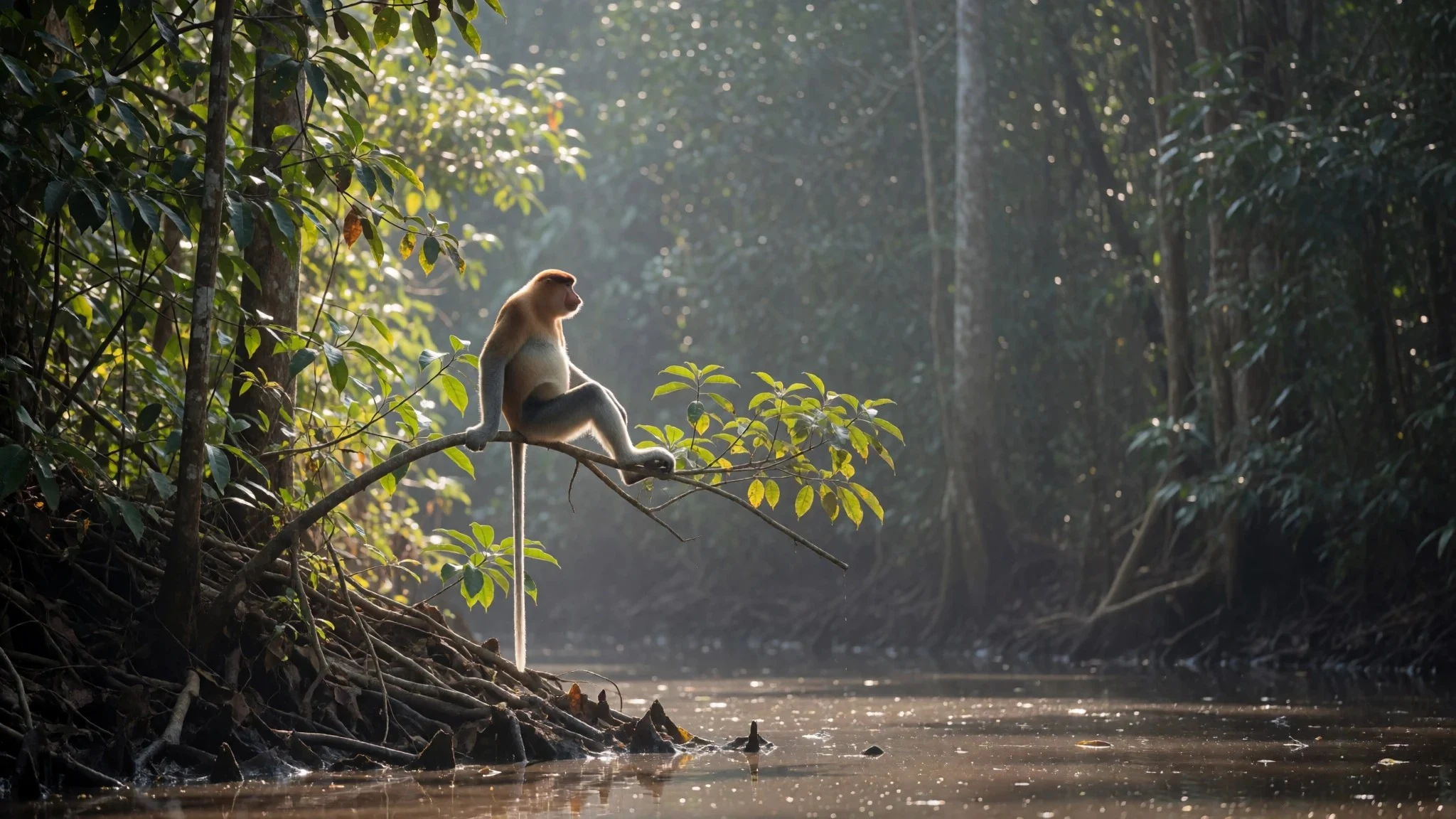
- White-bellied sea eagle (animal)
Picture a huge bird with a white head and tail, grey wings and a honk like a goose: that is the white-bellied sea eagle, a hunter of the daytime skies. At Danau Sentarum National Park it is best watched circling high above the landscape, so look up during daylight hours. Keep your distance, stay calm and quiet, and ask a guide to help you find good viewpoints. Never feed it; a wild eagle should stay wild.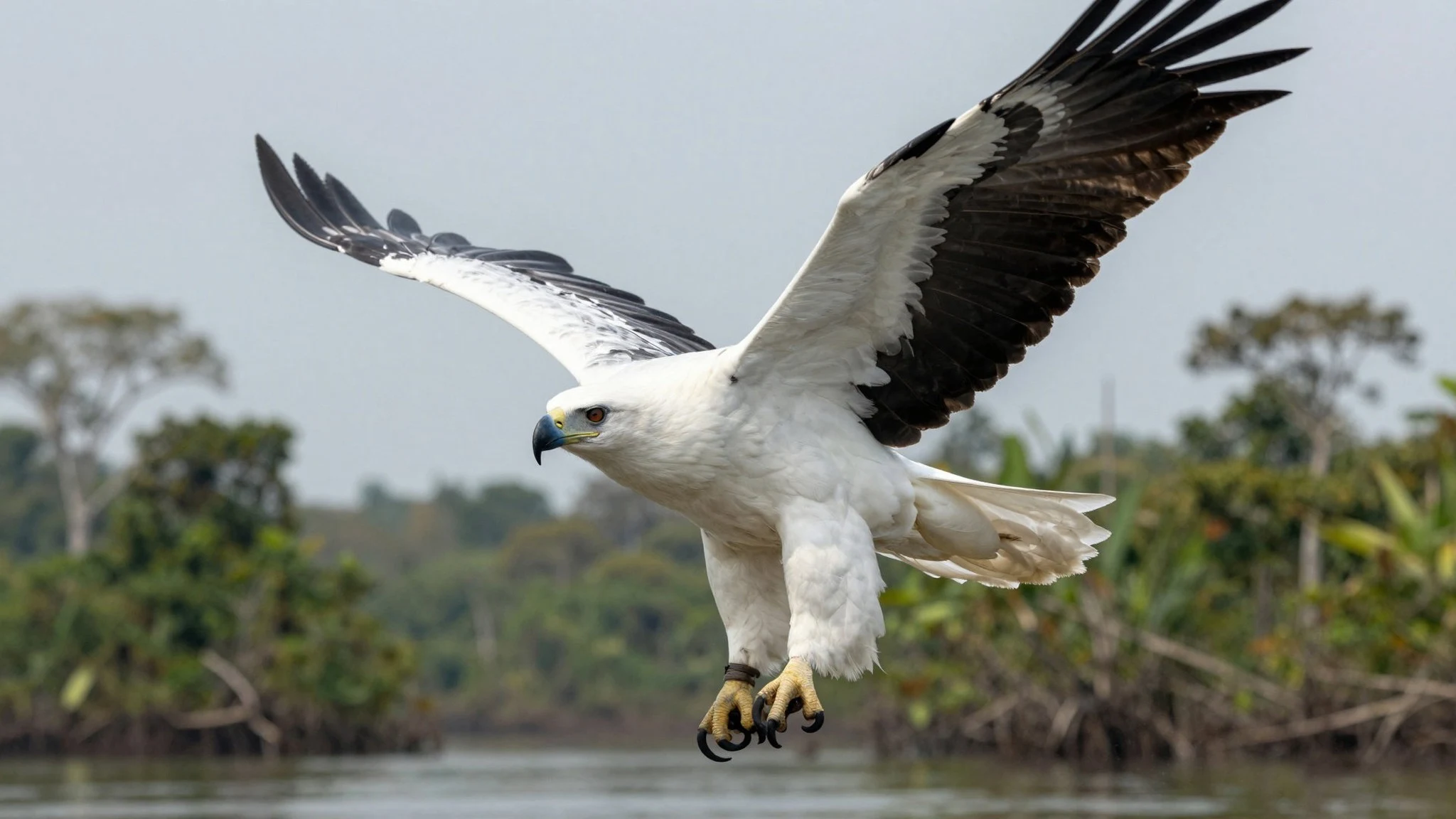
- White-bellied sea eagle (bird)
Picture a huge bird with a white head and tail, grey wings and a honk like a goose: that is the white-bellied sea eagle, a hunter of the daytime skies. At Danau Sentarum National Park it is best watched circling high above the landscape, so look up during daylight hours. Keep your distance, stay calm and quiet, and ask a guide to help you find good viewpoints. Never feed it; a wild eagle should stay wild.