Cudillero
Cudillero, Spain
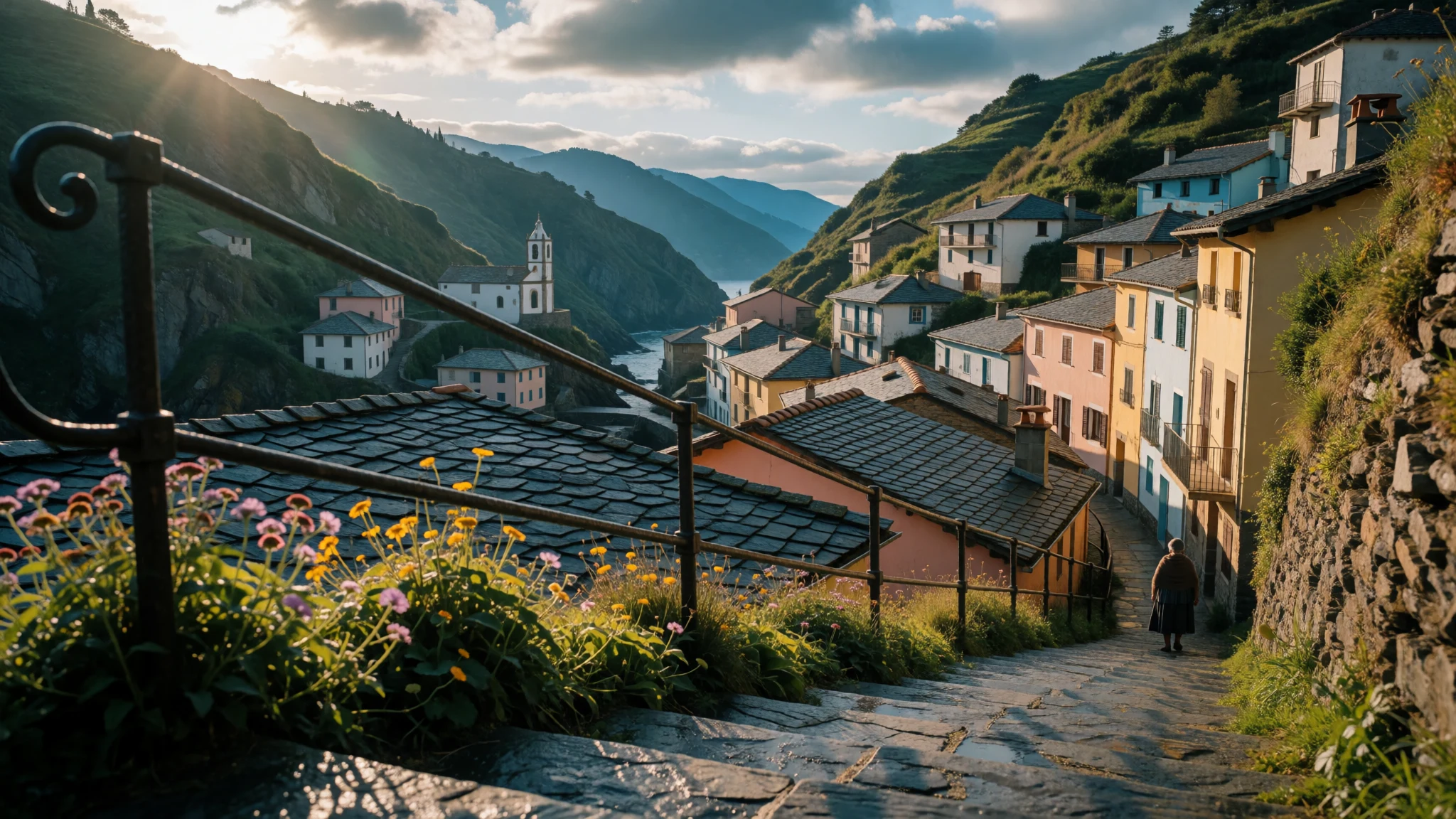
Cudillero is a working fishing harbour on Asturias's green, Atlantic coast, with houses stacked up a ravine and a cool, cloudy summer climate.
The place
Cudillero is a fishing port and municipality on the Asturian coast of northern Spain, with about 4,900 people. Its houses are stacked up the sides of a steep, narrow ravine that opens onto a small harbour, so the village reads like an amphitheatre with the boats at the bottom. Tourism now carries much of the local economy, but the harbour still works, and fishing boats come and go beside the cafés. The village's Asturian name is Cuideiru, and some residents still speak a local dialect called Pixueto alongside Castilian. A local legend credits Vikings with founding the place, though the documents point to a medieval port. The setting matters as much as the village. The Cantabrian Mountains run parallel to the coast and pull in cloud and rain from the Atlantic, so Asturias is cool, green and wet, nothing like the dry centre or the sunbaked south. Summer is the gentlest season, and even then the region is not overrun. Cudillero itself gets busy on fine weekends and in August, mostly with day-trippers, and the lanes fill by late morning. Early and late in the day it is quieter, and the light on the painted façades is at its best. Beyond the harbour, cliffs, small beaches and headlands give walkers plenty to do. Fog can arrive on a sunny afternoon, so the coast is best treated as changeable. Places to stay in the village are small and fill up in high season; larger resort-style options sit along other stretches of the coast. Crime is low in Asturias, though valuables are safest out of sight.
Its story
Cudillero's recorded history begins late and quietly. No prehistoric remains have been found inside the municipality itself, although neighbouring areas have them. The earliest traces are two pre-Roman hillforts of the Castro culture, La Garita and La Cavona, with a third site, Gurión, identified more recently. Roman remains are scarce and poorly understood. The port proper dates to the 13th century. The oldest surviving document naming it is a deed of 1285, in which a landowner gave the Monastery of Obona a plot by the harbour for selling bread, plus a hut with access to the sea, free of any lord's interference. That small detail shows a place already trading and fishing. The Viking founding story told locally is a legend; no document supports it. Politically, Cudillero belonged to Pravia, the larger town that grew up in the same century and governed a wide district. Church affairs were split between two parishes. For centuries this dependence makes Cudillero hard to trace on its own, because its records sit inside Pravia's. By the 15th century the port had settled into its role as a fishing hub and was trying to take over the salt trade, which Pravia controlled. Salt mattered because it preserved the catch. The two places stayed linked until the 18th century, and Cudillero only gained full administrative autonomy in the century that followed.
What to see
- The harbour front — Harbour, Cudillero
The harbour is the village's main stage. Boats are moored at the foot of the ravine, cafés line the quay, and the painted houses rise behind. Sitting outside with a drink in the late afternoon is the classic way to take it in. Mornings are quieter and better for photographs.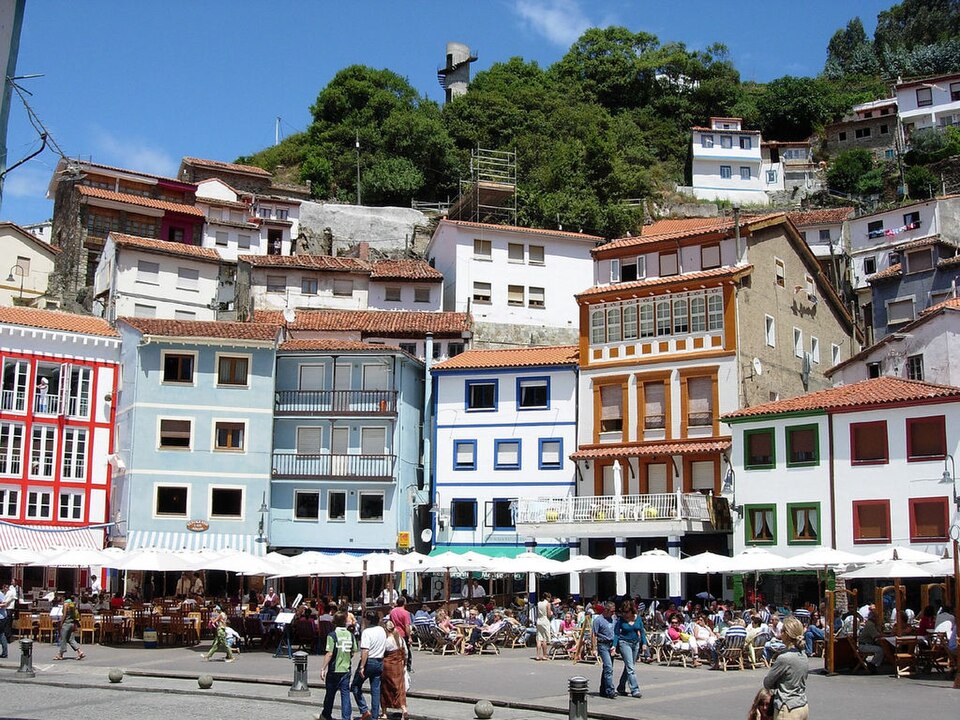
- Hillside lanes and viewpoints — Upper village, Cudillero
Narrow stepped lanes climb both sides of the ravine, past painted houses and small chapels. The climb is steep, but each turn gives a new angle down onto the roofs and the water. Go early or late to miss the day-trip crowd, and keep to the public paths.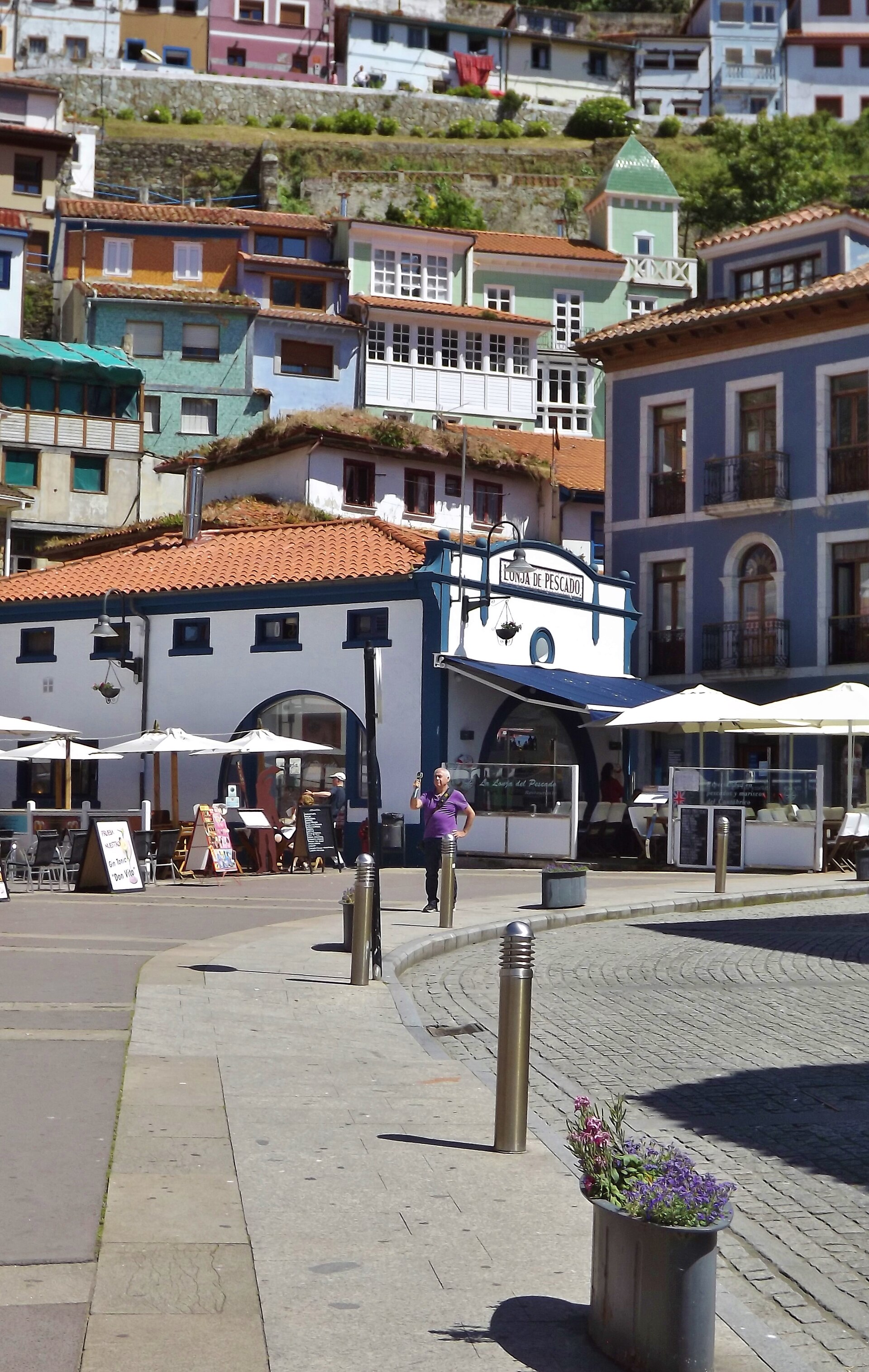
- Cabo Vidio — Coast near Cudillero
Cabo Vidio is a headland on the coast near the village, with cliff-top views over the Atlantic. It suits a clear day, because fog and wind can arrive quickly, so carry a layer. It shows how exposed this coast is compared with the sheltered harbour below.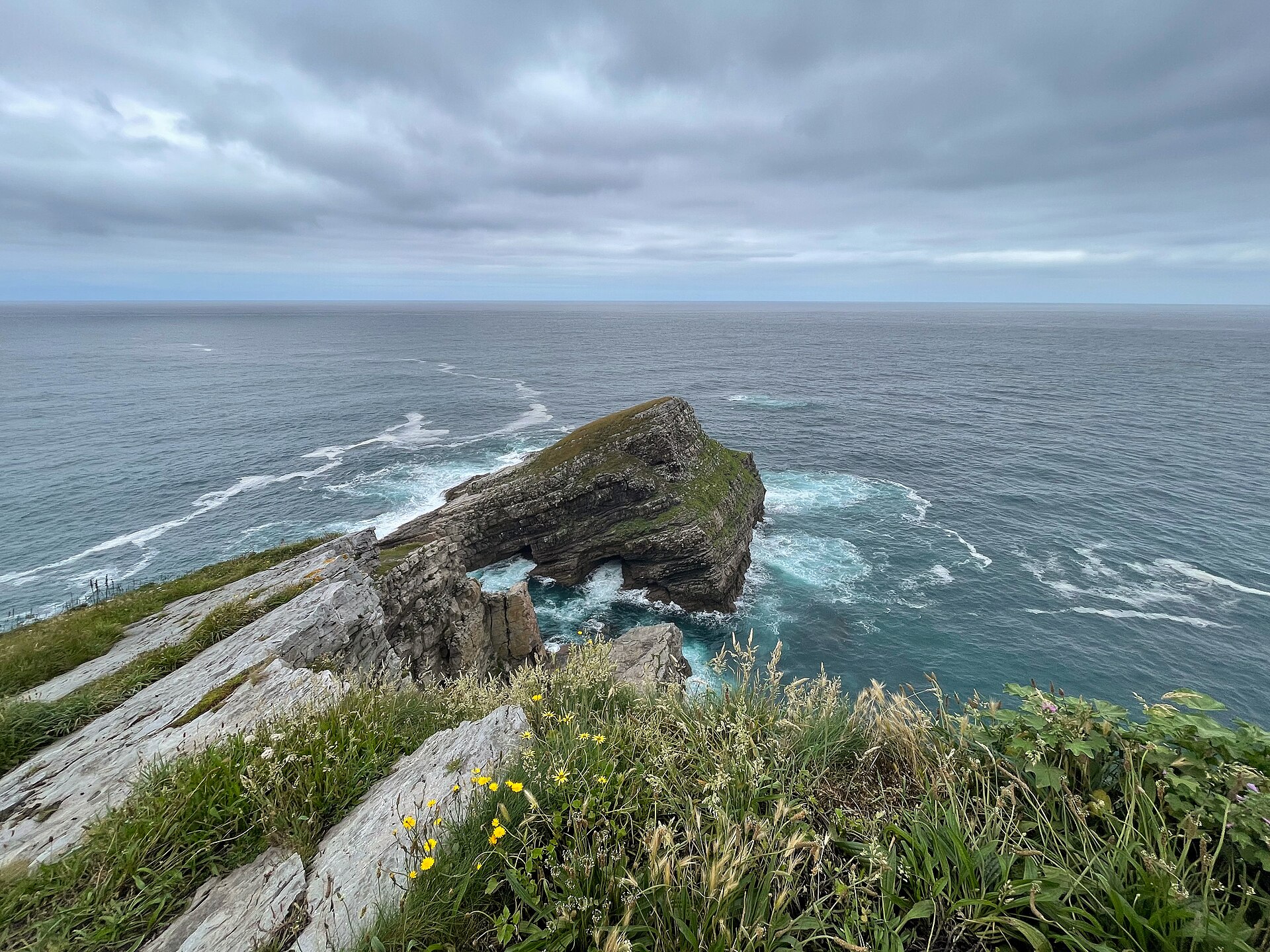
- Playa del Silencio — Coast west of Cudillero
Playa del Silencio is a quiet pebbly cove west of the village, set below cliffs. Reaching it can involve a steep path, and the Atlantic here is cold and can be rough, so it is better for walking and looking than a long swim. Check conditions locally first.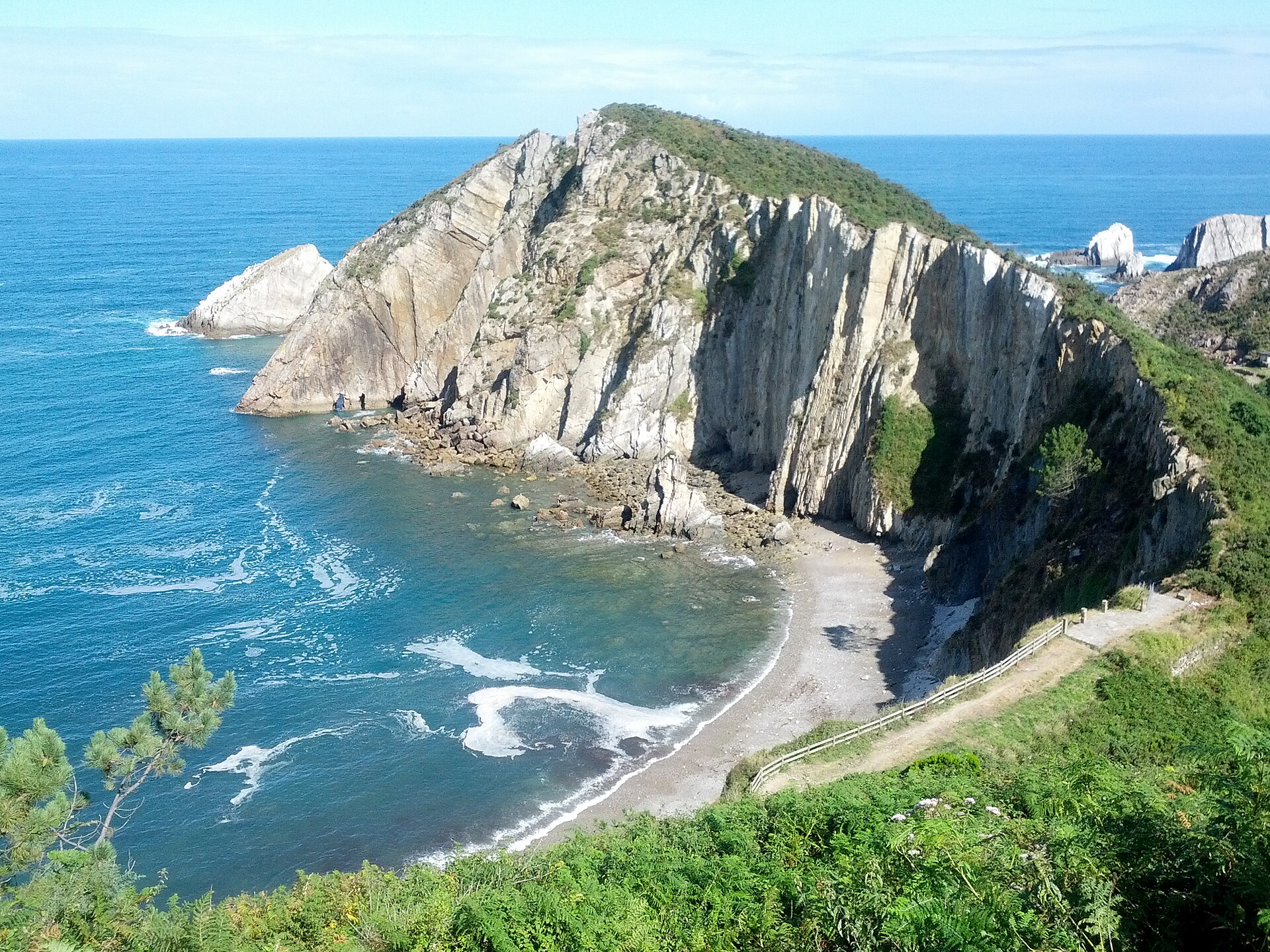
- La Peña de Candamo cave — Hills above Pravia
La Peña de Candamo is a cave in the hills above nearby Pravia, part of a regional tradition of Stone Age material that survived by being sealed away underground. It makes a sensible wet-day addition to a Cudillero stay. Access rules change, so check official sources before setting out.
Culture
Cudillero's culture is that of a northern Spanish fishing community: close-knit, weather-wise and proud of its own ways. The village has its own dialect, Pixueto, which some residents still speak alongside Castilian, and the Asturian language sits behind the village's local name, Cuideiru. The Viking-founding legend is told with affection even though nothing documents it, and it fits a wider sense that Asturias, cut off by its mountains, has always done things a little differently. Life has long turned on the sea: the harbour, the boats and the catch set the rhythm of the day. Beside it sits the cider house tradition. Cider is the staple drink of the region, and pouring it from a height, with the bottle raised and the glass held low, is both a skill and a social ritual, with bottles shared round a table. Asturias also keeps a strong inheritance of early Christian architecture, and in Cudillero the church and chapels are working parish buildings first and sights second. As fishing has given way to tourism, residents now live with visitors daily, and small courtesies are noticed. A simple greeting of buenos días in shops and cafés goes a long way. When photographing the lanes, stay out of doorways and do not aim cameras into windows, because people live in every one of these houses.
What to wear
Cudillero's traditional dress belongs to rural and fishing Asturias and is now mostly seen at festivals, folk events and in museums. The garments were hard-wearing, built from wool and linen, and the best-known regional footwear is the madreña, a wooden clog raised on blocks to keep feet out of wet mud. Fishermen worked in oilskins and thick knitwear, and some of that look survives in jerseys and caps around the harbour. Day to day, locals dress like most of northern Spain: jeans, jerseys, practical waterproofs and trainers. Summer weekends bring shorts and sandals, but evenings cool quickly on the coast. For a visit, layers matter more than style. Bring a light waterproof jacket in any season, since rain and fog arrive from the Atlantic, and a warm layer for evenings and windy headlands. Shoes with good grip are essential for the steep, often damp stepped lanes and the cliff paths; smooth-soled sandals are a poor choice. In summer add a hat and sunglasses for sunny spells on the quay and beaches. Beachwear is fine at the shore, but shoulders and knees should be covered when stepping into a church, and a light scarf is handy for that. Smart-casual clothes suit any restaurant dinner.
What to eat
- Fabada — Cider houses and family-run eateries in the village
A slow-cooked stew of white beans with chorizo, morcilla (black pudding) and bacon, rich enough to be a full meal on a damp day. Order it at a traditional cider house or any family-run eatery in the village, and expect to be full afterwards. - Cachopo — Cider houses and eateries near the harbour
Breaded veal cutlets, fried and commonly wrapped around a filling such as ham and cheese. It is large and heavy, so sharing is sensible. Look for it on menus at cider houses and eateries near the harbour. - Cabrales and Gamoneu cheese — Delicatessens and harbour-side eateries
Blue cheese from the mountain villages of eastern Asturias, with a sharp, salty bite; the milk is traditionally goat's but can vary. Gamoneu is a similar relation with a light smoke flavour. Buy at a delicatessen in the village or order a cheese board at a harbour-side eatery. - Sidra (Asturian cider) — Any sidrería (cider house) in the village
Asturian cider is tart and poured with ceremony: the bottle is held high and the glass low, to aerate it (escanciar). Servings are small and drunk quickly, so the bottle gets shared round. Try it at a sidrería, a cider house, in the village. - Frixuelos and arroz con leche — Traditional eateries and cider houses
Frixuelos are thin Asturian pancakes, close to crêpes, served as a dessert, often sugared or with a sweet filling. Arroz con leche is creamy rice pudding, sometimes finished with caramelised sugar on top. Both turn up on the dessert list at most traditional eateries and cider houses.
Plan it
Best time. June to September is the best window: Asturias is cool and wet for much of the year, so the summer months give the best odds of dry weather, though fog and drizzle can still roll in off the Atlantic. Winters are mild but rainy, and weekends in July and August are the busiest.
How long. 1–2
Getting there. Asturias airport (OVD), west of Avilés, has frequent domestic flights from Madrid but no international ones, with buses to Avilés, Oviedo and Gijón. Santander has international budget flights and a long bus link west. Renfe trains and ALSA buses run from Madrid to Oviedo and Gijón; high-speed rail takes about 3 hours to Oviedo. The last leg to Cudillero is by regional bus or hire car, so check current timetables.
Budget. mid
Tips
- Arrive early or stay late: the lanes fill with day-trippers from late morning, and the harbour is calmer at both ends of the day
- Carry a waterproof layer even in summer, because fog and drizzle can arrive on a sunny day
- Wear shoes with grip for the steep stepped lanes and cliff paths
- Book places to stay ahead for July and August, and check the council website (http://www.ayuntamientodecudillero.com) for local information
- Keep a little cash for small cafés and shops, though cards are widely accepted
Etiquette
- Greet people with a simple buenos días in shops and cafés
- Stay out of doorways and do not photograph into windows, since people live in these houses
- At a cider house, wait for the pour and drink the small serving promptly rather than sipping
Nearby
Sources
- Wikidata Q818372 (CC0)
- Wikipedia: Cudillero (rev 1383218083) (CC BY-SA 4.0)
- Wikivoyage: Asturias (rev 5378529) (CC BY-SA 4.0)
- Photo: Cudillero (Asturias, Spain), Markus Bernet (CC BY 3.0)
- Photo: Postal de Cudillero, Jose Luis Martinez Alvarez (CC BY-SA 2.0)
- Photo: Beach playa de silencio, C.lingg (CC BY 3.0)
- Photo: Cabo Vidio 3, Einaz80 (CC BY-SA 4.0)
- Photo: 166 Cudillero, Wolffoxylady (CC BY-SA 4.0)
- Photo: 167 Cudillero, Wolffoxylady (CC BY-SA 4.0)
- Photo: 168 Cudillero, Wolffoxylady (CC BY-SA 4.0)
- Photo: 169 Cudillero, Wolffoxylady (CC BY-SA 4.0)


