Crested Butte
Crested Butte, United States
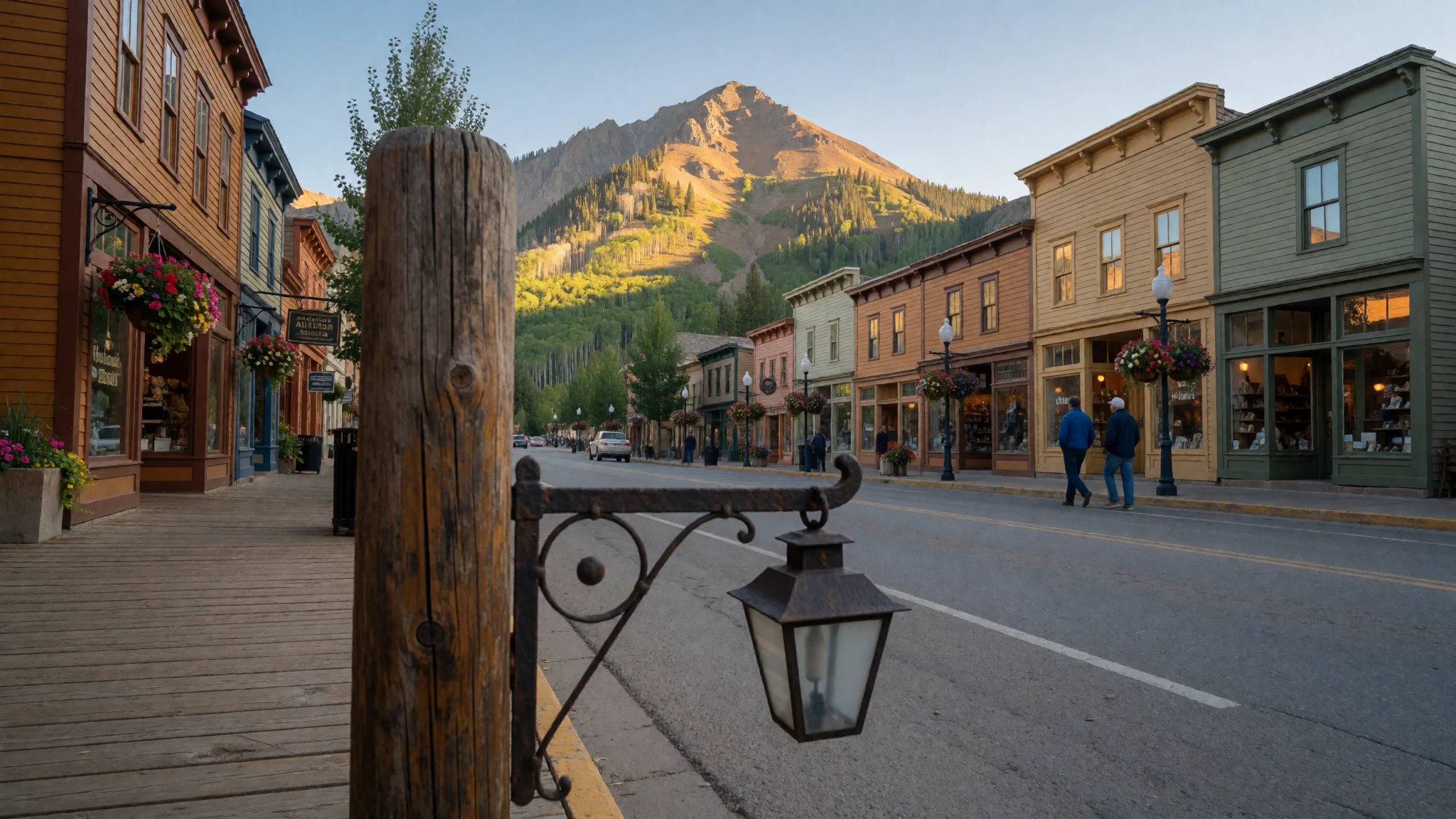
Crested Butte is a former coal town high in the Colorado Rockies, now loved for deep winter snow, summer wildflowers and a relaxed, walkable main street.
The place
Crested Butte is a small town in Gunnison County, Colorado, standing at 2715 metres in the Rocky Mountains. Its population is 1639, and it feels as compact as that sounds: a tidy grid of painted wooden houses, a main street of shops, cafés and bars, and mountains pressing in on every side. Coal Creek runs along the town's edge, and the broad Slate River valley opens out beside it.
Above the town rises the cone of Mt. Crested Butte, the peak that gave the place its name and now carries its ski area. A single state highway links the town south to Gunnison, the county seat. Beyond that, Denver is a long drive away, which is a large part of why the place still feels remote.
The climate is continental subarctic, and winter dominates the year. Days are short and clear, the air is dry, and snow falls in enormous quantities; the local record winter total is well over four hundred inches. Summers are gentler. Meadows fill with flowers, and the town styles itself the Wildflower Capital of Colorado.
The old mining settlement is now a base for skiing, mountain biking, hiking, horse riding and fly fishing. The altitude is real: visitors from lowland India or the UK often feel breathless on the first day, and the sun is strong even when the air is cold. Mornings are crisp in every season, and evenings cool quickly once the sun drops behind the ridges. The town is small enough to cross on foot in minutes, and most visitors leave their cars parked for much of the stay.
Its story
Before settlers arrived, the valleys around Crested Butte were used by the Ute people as a summer home. They were pushed out quickly once outsiders moved in, first beaver trappers and then surveyors. Captain John Gunnison, who gave his name to the county, led one of the early expeditions through the region.
Prospectors followed, and coal and silver mines opened across the surrounding hills. Many small camps sprang up around them. The post office and then the town's formal incorporation arrived within a couple of years of each other, in the closing decades of the nineteenth century.
Silver did not last, and plenty of mining towns died with it. Crested Butte held on because it worked as a supply point for the whole district, serving miners and ranchers alike. Ranching and coal kept the local economy turning for a long time.
Then the coal mines shut, and the town slowly emptied. Even the high school closed. For years the public school taught only the youngest children, and older pupils had to travel to Gunnison for their lessons.
The turnaround came in the 1960s, when lifts and runs were built on the mountain above the town. Skiers brought money and new residents, and the old wooden buildings, once a sign of decline, became an asset. Today the historic core is listed as a national historic district, and its Victorian-era storefronts are a reminder that the town was a working settlement long before it was a resort.
What to see
- Elk Avenue — Town centre
The main street is the heart of Crested Butte, lined with historic wooden storefronts now holding shops, galleries, cafés and bars. It is best walked slowly, with the mountain visible at the end of the road. Festival parades pass along it, and it is lively in both ski and summer seasons.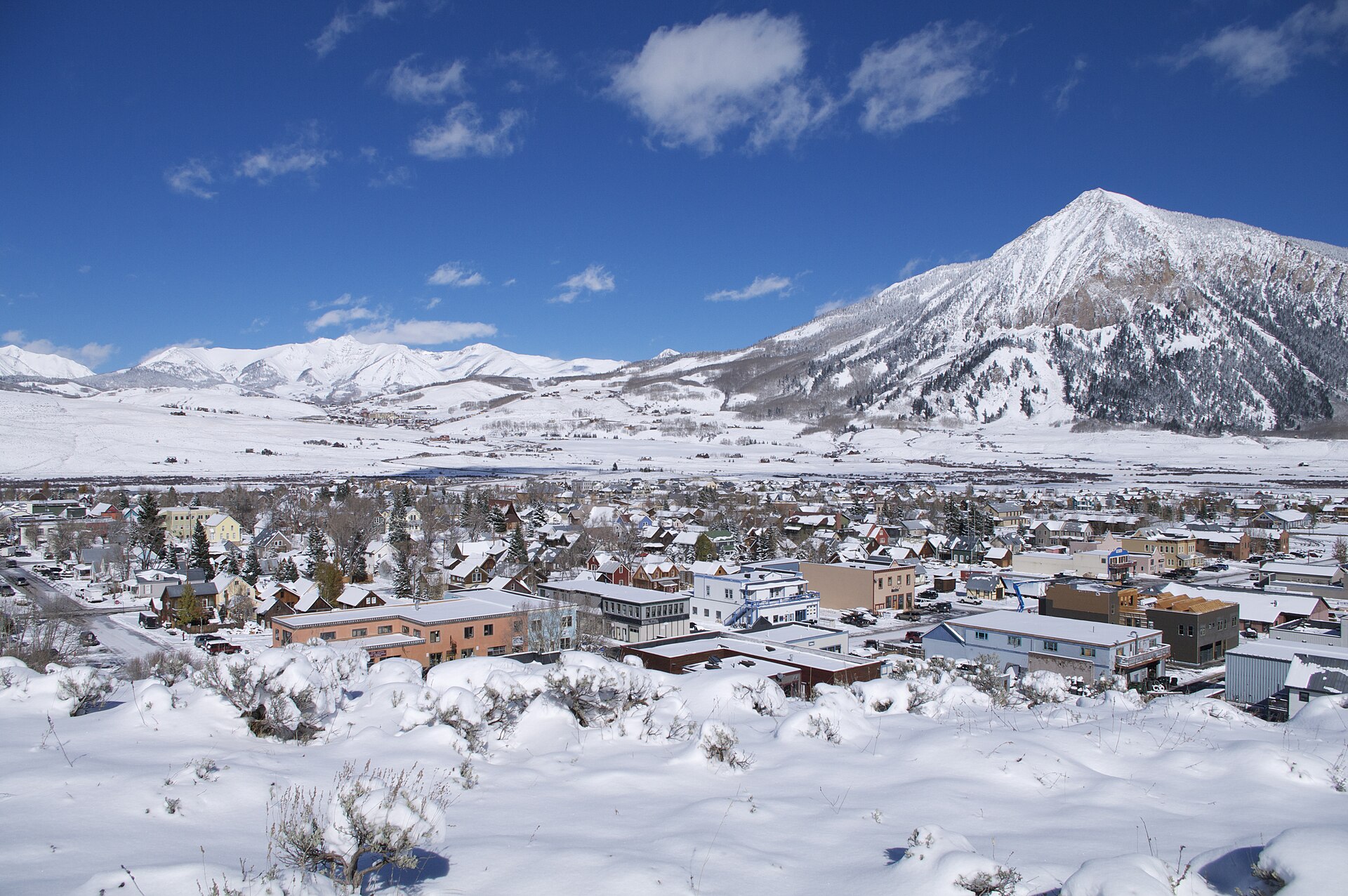
- Mt. Crested Butte ski area — Mt. Crested Butte, north of town
The mountain above the town is the reason Crested Butte revived. In winter it draws skiers and snowboarders, and in summer the slopes serve walkers and mountain bikers. Check the official resort site for lift operations and conditions, which change by season and weather.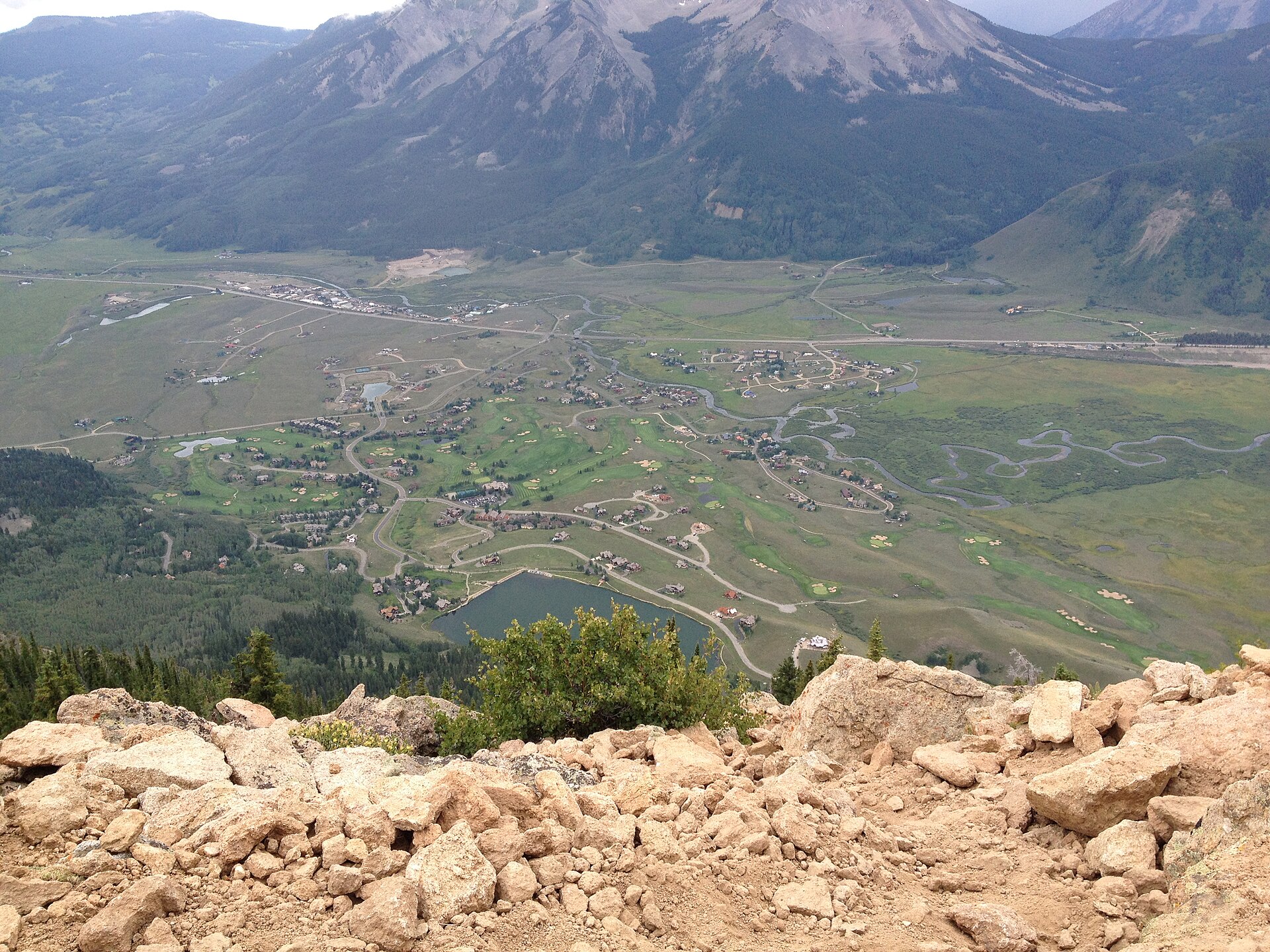
- Slate River valley — North of town
North of town, the Slate River valley is open meadow and river bend, framed by peaks. In summer it is the place to look for wildflowers, which the town makes much of. Paths and dirt roads suit walkers and cyclists, and early mornings are quietest.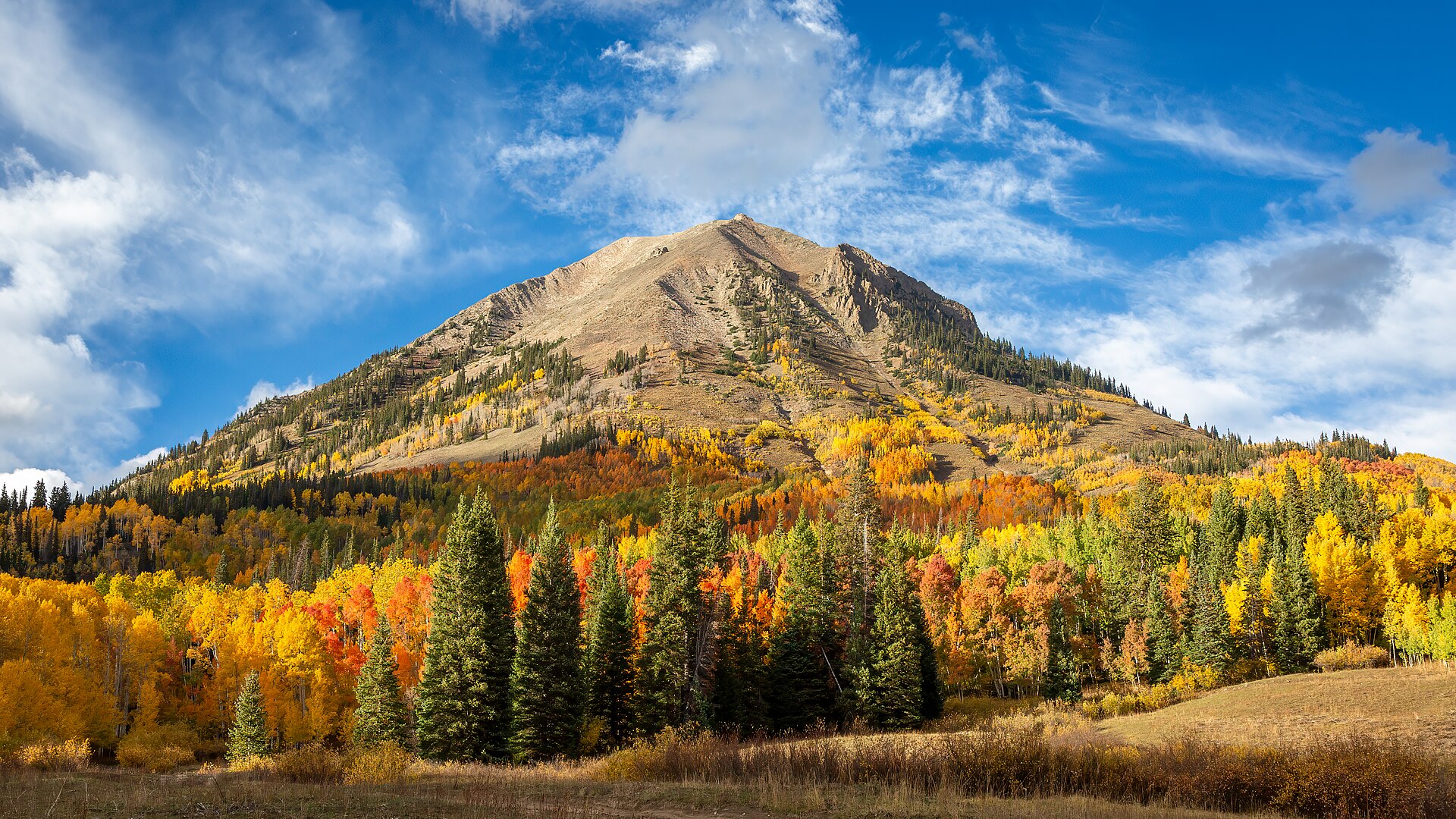
- Heritage museum — Elk Avenue area
A small local museum on the main street tells the mining, ranching and skiing story that the streets only hint at. It is a good first stop on a wet or snowy afternoon. Opening times vary by season, so check locally before planning around it. - Kebler Pass road — West of town
West of town, a mountain road climbs through high forest and meadow. In early autumn the aspen stands turn yellow and orange, drawing photographers and drivers. The road is a seasonal route and can be closed by snow, so ask locally about conditions before setting off.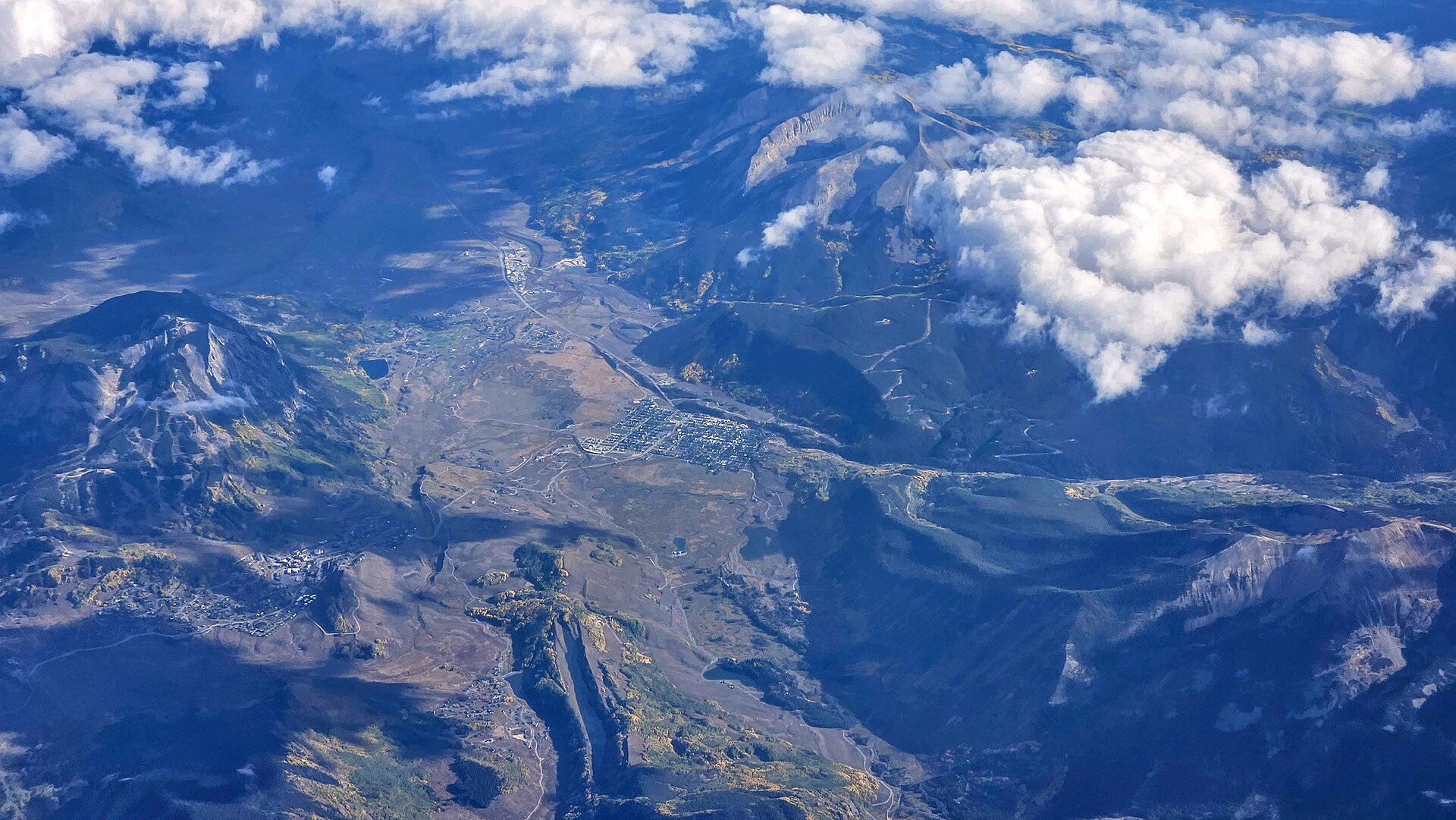
Culture
Crested Butte has the culture of a small mountain community that chose to stay small. Locals are proud of the town's mining past, and many describe themselves as outdoor people first. Cycling, skiing and hiking shape daily life as much as any workplace, and the pace is relaxed, with plenty of dogs, bicycles and casual conversation on the main street.
The festival calendar is the best window into the town's character. Winter brings Torchlight, New Year celebrations, Winter Carnival and a Mardi Gras parade. Spring has the Extreme Board Fest, Slushuck and Flauschink. Summer fills with Bike Week, the music and film festivals, Fourth of July events, the Wildflower Festival, outdoor concerts and an arts festival. Autumn closes the year with Fall Fest, Vinotok and the Paragon Peoples' Fair. Many involve costumes, parades and a good deal of local humour, and visitors are welcome to join in as spectators.
The Ute people lived in these valleys long before the mining camps, and the area's earlier history is part of the story even though little of it is visible in the streets. Today the town is predominantly English-speaking, tipping in restaurants and bars is the norm in the United States, and service is friendly but unhurried.
Visitors will notice a strong environmental awareness. People carry reusable bottles, respect trail closures and take wildlife seriously. On Elk Avenue and the trails alike, keep to marked paths, give bikes and animals room, and take every scrap of litter back with you.
What to wear
Crested Butte has no single traditional costume, and it is more honest to say so than to invent one. The Ute people who first used these valleys traditionally wore clothing of tanned hide, often decorated with beadwork, and some of that heritage is still seen in craft and ceremony today. The mining era left a different legacy: sturdy wool, denim and canvas work clothes that suited cold, hard labour.
What people wear now is practical mountain wear. In winter, locals live in insulated jackets, wool hats, snow boots and fleece layers, and the ski-town look is more about function than fashion. In summer, shorts, cycling kit, trail shoes and sun hats are everywhere, and a dusty bike is as common as a car. Evenings in bars and restaurants are casual; nobody dresses up. Festival days are the exception, when costumes, face paint and wigs appear for Mardi Gras, Vinotok and other parades.
Visitors should dress for altitude and changeable weather. Layers matter most: a warm base layer, a fleece and a windproof or waterproof outer shell work in every season. Winter needs insulated waterproof boots, gloves and a hat, and good sunglasses and sun cream, because the high-altitude sun reflects strongly off snow. Summer mornings can be cold even when afternoons are warm, so keep a light jacket in the bag. Sturdy walking shoes suit the trails. There are no religious dress codes to worry about in town, and modest, comfortable clothing is fine anywhere.
What to eat
- Italian pasta — Italian restaurants around Elk Avenue
Italian cooking is a staple of the town's dining scene, and a plate of pasta is a sensible way to end a cold day on the mountain. Look for Italian restaurants along the main street, and book ahead on busy festival weekends. - Green chile stew — Casual restaurants and pubs in the town centre
Green chile is a regional comfort dish across Colorado and the south-west, usually a thick, warming stew of chilli and meat served with a tortilla. Ask about the heat level before ordering, as the spice can be stronger than expected. - Mountain trout — Sit-down restaurants in the town centre
With fly fishing a local passion, trout often appears on menus in the warmer months, usually pan-fried or grilled. Ask the server whether it is locally sourced, since supply varies, and expect it to come with seasonal vegetables. - Pub burgers and après-ski plates — Pubs and bars along the main street
After skiing or riding, locals head for bars serving burgers, fries, wings and similar hearty food alongside local beer. Portions are generous and the mood is relaxed, making this the easiest budget-friendly meal in a pricey resort town. - Coffee and baked goods — Cafés and bakeries in the town centre
Small cafés and bakeries keep the town fuelled before early starts on the slopes or trails. Expect strong coffee, pastries, breakfast burritos and sandwiches to take away, and plan to arrive early, because the best-known spots fill quickly.
Plan it
Best time. Late December to March for deep snow and skiing; July for wildflowers, hiking and biking; September for quieter trails and autumn aspen colour. Winters are long, cold and dry with heavy snowfall, so mid-seasons can be muddy and quiet.
How long. 3–4
Getting there. Fly to Denver and drive south-west across the Rockies to Gunnison, or check for seasonal flights into the small regional airport at Gunnison. The last leg is the state highway north from Gunnison to Crested Butte. Winter driving needs care, so check road conditions and the official town site (https://www.crestedbutte-co.gov) before setting out.
Budget. high
Tips
- Give yourself a day or two to adjust to the altitude: drink plenty of water, go easy on alcohol and pace the first hike
- Book accommodation well ahead for ski season and big festival weekends, when the town fills quickly
- Carry sun cream, sunglasses and a warm layer in every season, because the sun is strong and the weather changes fast
- Check road and pass conditions locally before driving, especially in winter and shoulder seasons
- Cards are widely accepted in town, but carry a little cash for small stalls and tips
Etiquette
- Tip restaurant and bar staff, as is customary across the United States
- Stay on marked trails and close gates behind you in ranch country
- Give wildlife, cyclists and other trail users plenty of room
Nearby
Sources
- Wikidata Q592729 (CC0)
- Wikipedia: Crested Butte, Colorado (CC BY-SA 4.0)
- Wikivoyage: Crested Butte (CC BY-SA 4.0)
- Photo: Crested Butte, Colorado (Ron Raffety) (CC BY-SA 4.0)
- Photo: The town of Crested Butte with Mt. Crested Butte behind it (Chris Segal) (CC0 1.0)
- Photo: Crested Butte as seen from above in 2023 (Murphpics) (CC BY-SA 4.0)
- Photo: 2011 Road Odyssey (cogdogblog) (CC BY 2.5)
- Photo: 2011 Road Odyssey (cogdogblog) (CC BY 2.5)
- Photo: 2011 Road Odyssey (cogdogblog) (CC BY 2.5)
- Photo: 2011 Road Odyssey 2011/365 (cogdogblog) (CC BY 2.5)
- Photo: A view from the summit of Mt. Crested Butte (Yanjipy) (CC BY-SA 4.0)


