Coorong
Coorong, Australia
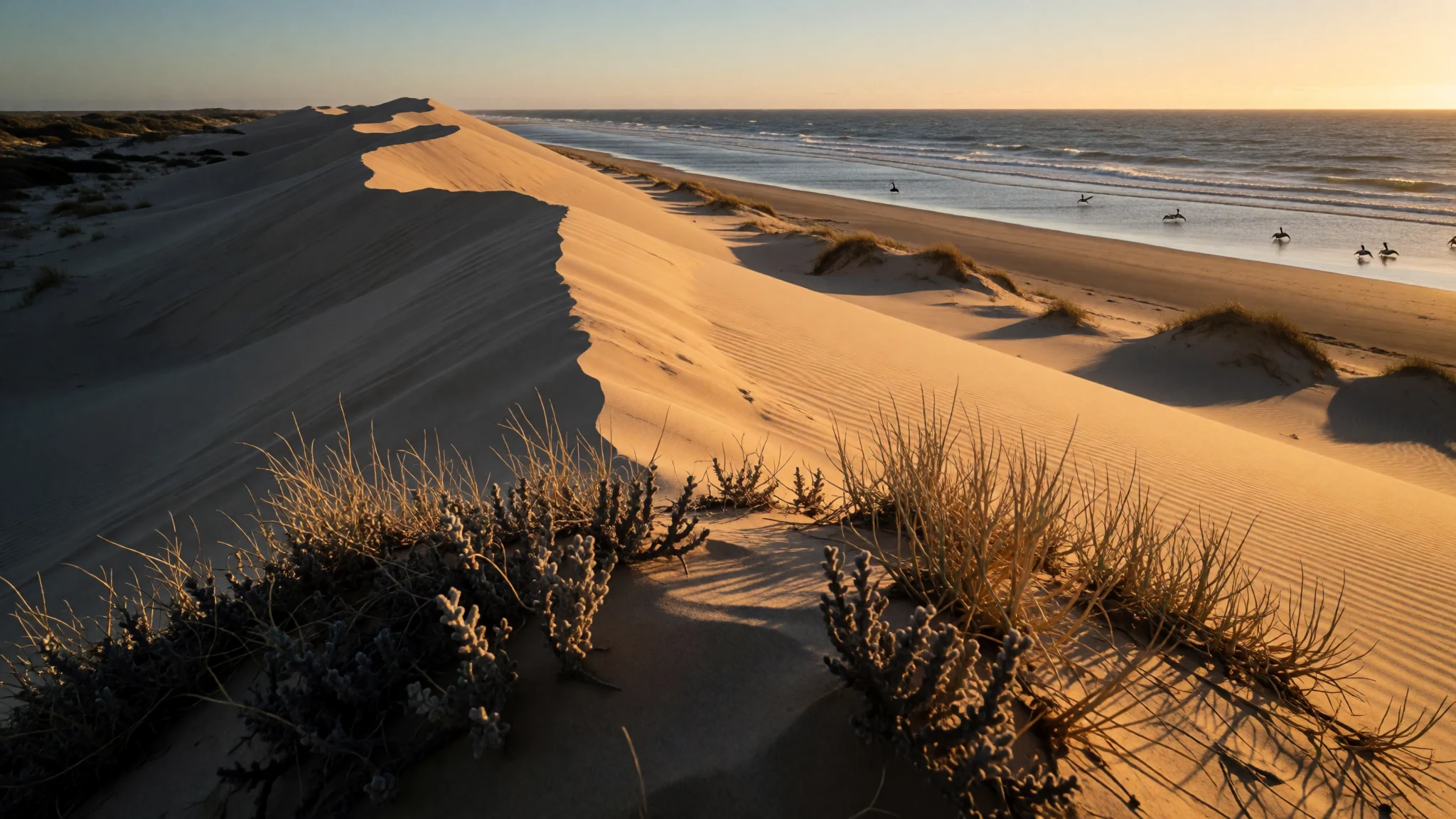
Coorong is a quiet, flat lagoon where pelicans, black swans and huge skies replace crowds, for slow mornings with binoculars rather than ticking off sights.
The place
Coorong National Park is a strip of shallow lagoon, samphire flat and sand dune in South Australia, lying almost at sea level, with an elevation of about 1 m. A narrow barrier of high dunes, the Younghusband Peninsula, separates the calm lagoon from the surf of the Southern Ocean, so the park has two moods within walking distance of each other: still, glassy water on one side and a wild, empty beach on the other. The water changes character along its length. Near the Murray mouth it is brackish and fairly fresh; towards the south it can turn saltier than the sea in dry years, and the edges crust white. Birdlife follows that gradient. Pelicans, black swans and ducks gather on the mudflats, and in the right season migratory waders arrive from the Arctic. The landscape is flat and open, with big skies, low scrub and the occasional salt lake glowing pink or milky white. It is not a place of dramatic peaks or tumbling waterfalls; the appeal is space, quiet and birds. Small towns such as Goolwa, Meningie and Salt Creek serve as bases, and a long unsealed track runs along the ocean beach for suitably equipped four-wheel-drive vehicles. Distances are large, shade is scarce and mobile signal can fade. Anyone expecting a quick photo stop tends to leave underwhelmed; a slow morning with binoculars is what people remember.
Its story
Coorong National Park sits on Ngarrindjeri Country, and the lagoon has fed people for far longer than it has been a protected area. The name is generally traced to a Ngarrindjeri word, and families fished, gathered pipis and reeds, hunted waterbirds and moved with the seasons along the lagoon and the nearby river mouth. Shell middens in the dunes record that long use. In the colonial era, settlers brought sheep and cattle, and the mouth of the River Murray became a difficult but important gateway for river trade, with shifting sandbars making passage hazardous. The park was established in 1967, partly to protect the wetlands and their birdlife. Later chapters have been harder. Upstream irrigation and dry spells reduced the fresh water reaching the lagoon, barrages near Goolwa were built to hold back the sea, and in long drought years the southern lagoon grew far too salty for much of its plant and fish life. Rain and better water management have brought some recovery, though the system remains fragile and its health is still debated. Many Australians first met the Coorong through Colin Thiele's children's novel Storm Boy, about a boy, a pelican and the dunes, and the film that followed. The story is gentle, but the landscape behind it is a working argument about water, farming and wildlife.
What to see
- Goolwa and the Murray barrages — Goolwa, northern end of the Coorong
At Goolwa, where the River Murray approaches the sea, a line of barrages holds back tidal water from the lakes upstream. The walkways show the plumbing behind the Coorong's story: gates, channels and sandbars that decide how much fresh water reaches the lagoon. Pelicans and cormorants often work the edges, and the mood is quiet and a little industrial.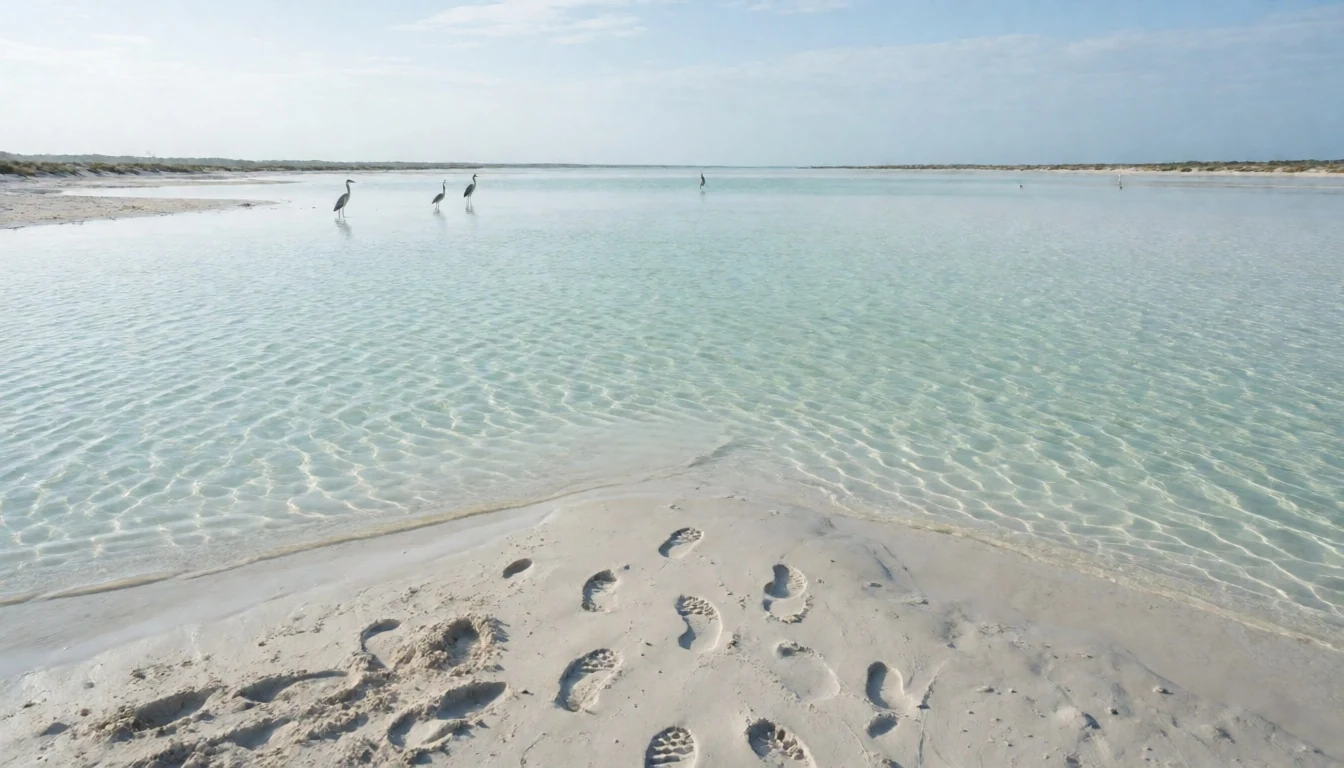
- Ocean beach on the Younghusband Peninsula — The dune barrier between lagoon and ocean
The ocean side of the Younghusband Peninsula is a long, wind-scoured beach backed by high dunes, with surf that is rough and often unsuitable for swimming. Vehicle access is by four-wheel-drive track, where tides, soft sand and recovery gear all matter. Walkers can reach the dunes from marked points and find solitude, shell fragments and the odd washed-up seabird.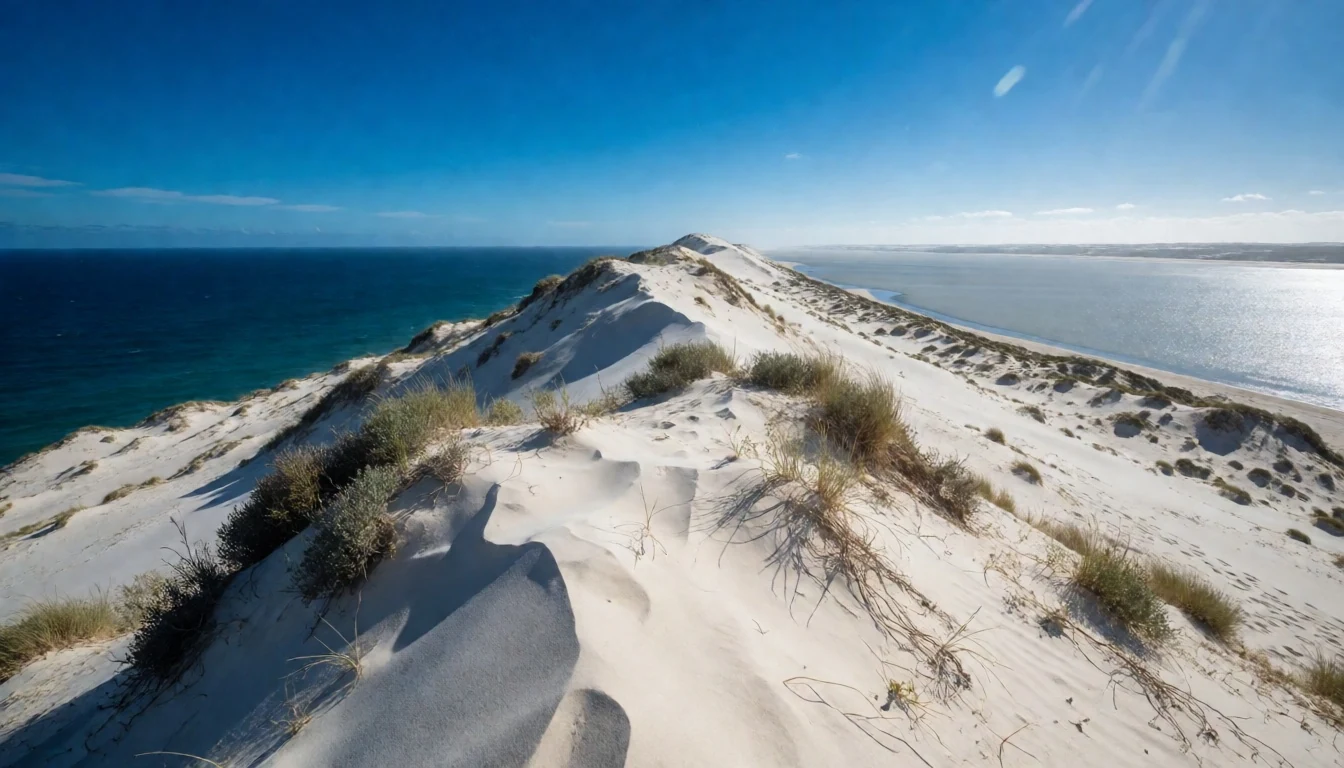
- Lagoon birdwatching at Salt Creek and Policeman Point — Southern Coorong, along the lagoon shore
The southern lagoon is where the birds are easiest to watch from the shore. Short tracks and lookouts lead to open mudflats where pelicans, swans, terns and, in season, migratory waders feed. Early morning and late afternoon give the best light and the calmest water. Binoculars matter far more than a long lens here.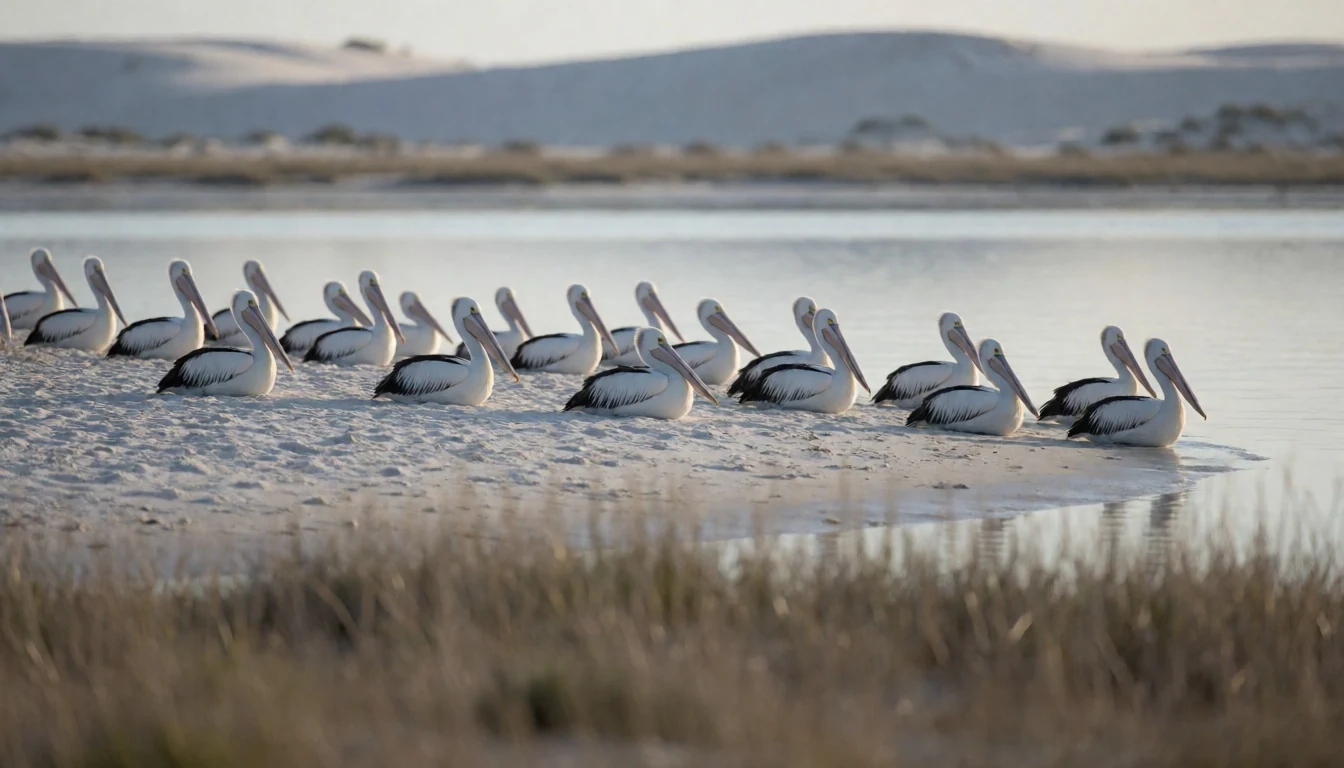
- Meningie and Lake Albert — Northern Coorong
Meningie is the park's main northern town, on the edge of Lake Albert, a broad shallow lake beside the lagoon. Its lakeside foreshore is a pleasant place to watch pelicans, and the town is the practical stop for fuel, groceries and local advice about track conditions before heading south into the park.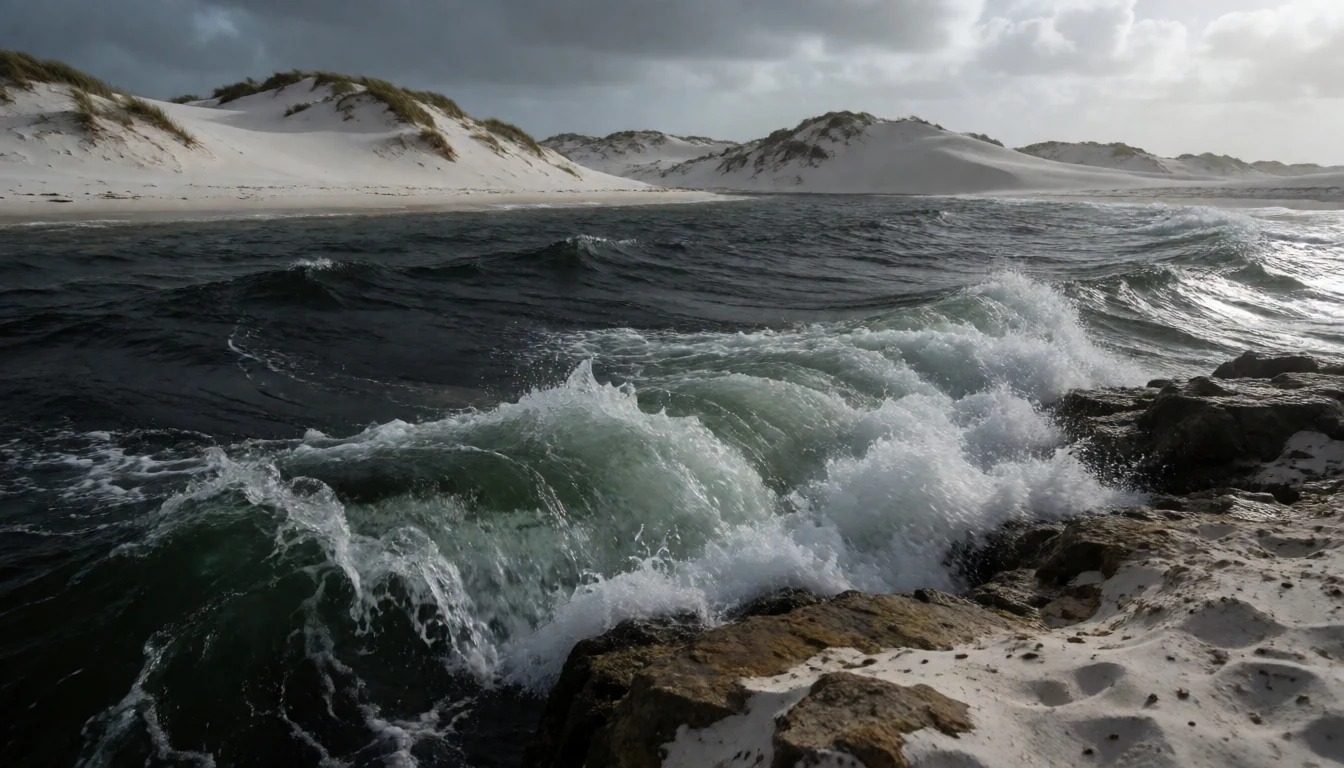
- Ngarrindjeri-guided experiences — Around the lagoon, arranged in advance
Some Ngarrindjeri guides offer tours on the lagoon and shoreline, sharing history, bush foods and weaving. Availability varies by season and operator, so check official tourism pages and book ahead. A guided visit gives the landscape a human context that a lookout alone cannot, and it puts money directly into the community whose Country this is.
Culture
Coorong National Park lies within Ngarrindjeri Country, and the culture of the area is inseparable from the water. Ngarrindjeri people speak of a deep relationship with land, river and sea, in which fish, birds, reeds and shellfish are relatives and resources to be cared for, not simply harvested. Pipis, mullet and waterbirds have long been food, and sedge rushes from the wetlands are woven into baskets, mats and cord. Weaving is still practised and taught, and contemporary Ngarrindjeri artists show their work in galleries across South Australia. Stories tie features of the lagoon and dunes to ancestral beings, so the landscape is read as a record of events, not just scenery. The middens along the dunes are the remains of meals eaten over a very long time and are sensitive sites. Colonial history is part of the picture too: the pressure on the river and lagoon affects Ngarrindjeri livelihoods directly, and conversations about water management are also conversations about cultural survival. Beyond Aboriginal heritage, the area has a rural character, with farming families, small-town fishing and a strong habit of waving at passing drivers. Visitors will meet this most easily in Meningie and Goolwa, in local events, markets and conversations at the counter. Stay on marked tracks, leave shell middens and any artefacts exactly where they lie, and check local rules before collecting pipis or fishing.
What to wear
Coorong National Park sits in Ngarrindjeri Country, where traditional dress included cloaks sewn from animal skins, especially possum, worn for warmth in the cool, windy months. Skins were softened and marked on the inner side with incised designs. Other items included woven rush baskets and bags, and necklaces of reed segments, shells and feathers. Many of these skills continue through weaving workshops and cultural revival projects, and cloaks and baskets may be worn or displayed at ceremonies and community events. Everyday dress today is practical rural South Australia: work shirts, jeans, fleeces, sturdy boots and wide-brimmed hats, with bright high-visibility jackets on farm and road work. Contemporary Ngarrindjeri artists and designers also use traditional motifs on fabric and jewellery. Visitors should dress for sun, wind and sand. A broad-brimmed hat, sunglasses, long sleeves and high-factor sunscreen matter even on cloudy days because there is little shade. Closed shoes with grip suit the dunes, boardwalks and muddy shoreline; sandals are fine for the beach but not for walking tracks. A windproof layer is useful in every season, since the ocean side can be cold and blustery, and a light waterproof is sensible in winter. Insect repellent helps at dusk. No special clothing is required for towns or cultural visits beyond ordinary modest, tidy dress.
What to eat
- Goolwa pipis — Eateries and fish shops around Goolwa and the Murray mouth
Pipis are small wild shellfish from the surf beaches, known locally for their sweet, briny flavour. They are usually steamed in white wine, garlic and chilli, or served in a seafood pasta. Look for them on menus in Goolwa; regulations on collecting them yourself are strict.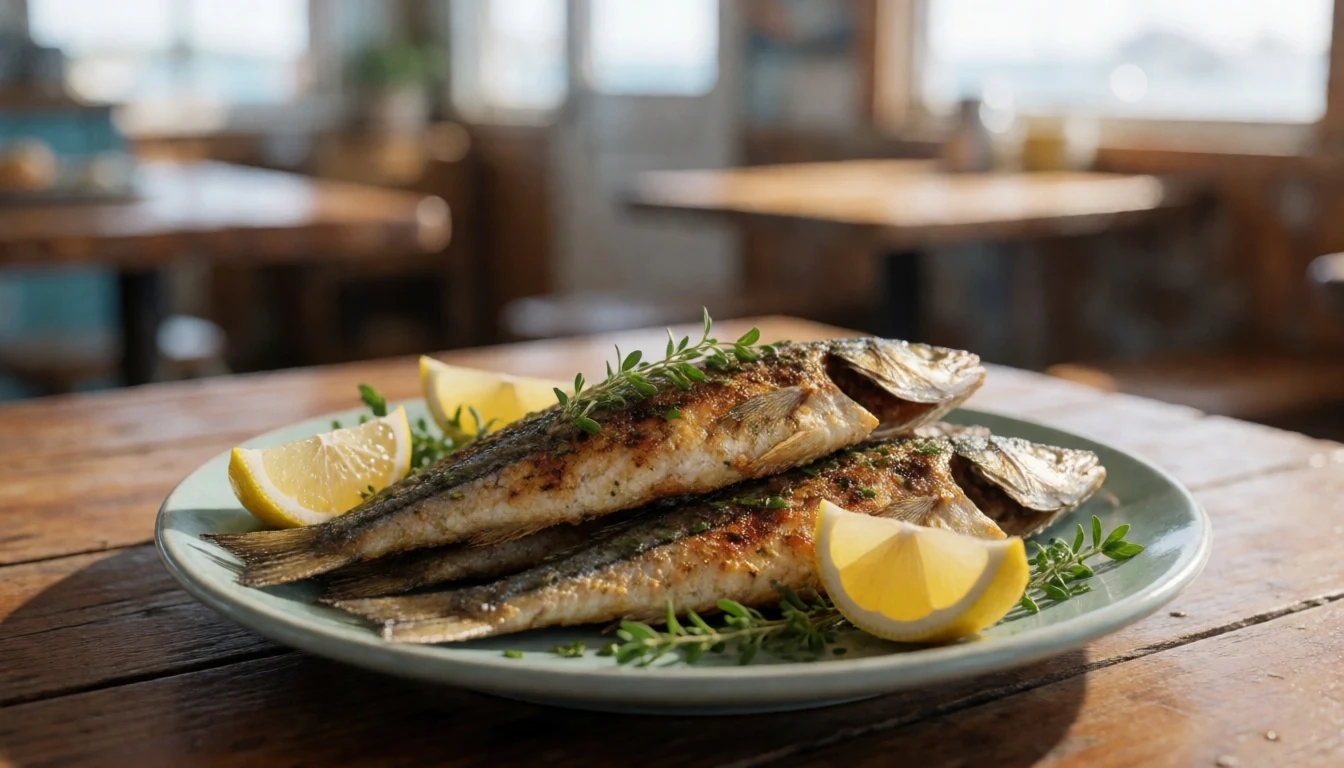
- Yellow-eye mullet — Fish-and-chip shops and waterfront eateries in Goolwa and Meningie
Yellow-eye mullet is a local lagoon and estuary fish with a mild, slightly sweet flavour. It is typically pan-fried or battered, served with chips and lemon. Availability depends on local seasons and fishing conditions, so ask what is being caught rather than expecting it everywhere.
- Southern rock lobster — Seafood counters and eateries in Kingston SE and nearby coastal towns
Southern rock lobster is a regional speciality from the cold southern waters. It is served simply, grilled with butter or chilled with salad. It is a treat rather than an everyday meal, and best ordered from a place that keeps its own catch fresh. - Country bakery pies — Bakeries in Meningie and other small towns
A meat pie is the standard road-trip lunch: flaky pastry around beef, curry or vegetable fillings, often eaten from a paper bag by the lake. Bakeries tend to open early and sell out of favourites by midday, so go soon after morning. - Local lamb and beef — Pub dining rooms and country cafes around the Coorong
The farmland beside the park supports sheep and cattle, so roast lamb, steak and burgers appear on most town menus. Portions are generous. Vegetarians should ask in advance, as small kitchens often have limited options beyond salads and chips.
Plan it
Best time. March–April and October–November. Autumn and spring bring mild days and good light for birds, while summer is hot, dry and exposed with little shade, and winter is cool, windy and often wet.
How long. 1–2
Getting there. Fly to Adelaide Airport, then drive south-east towards Goolwa, Meningie and Salt Creek. Public transport is limited, so a hire car is the practical choice; the last leg onto the ocean beach needs a suitable four-wheel-drive and local track advice.
Budget. mid
Tips
- Fill the fuel tank and buy water and food in Meningie or Goolwa, as services thin out in the park
- Go early or late for birds and calm water; midday light is harsh and the wind often rises
- Check the official park website for track and beach conditions, fire restrictions and closures before leaving
- Carry a hat, sunscreen and insect repellent, and expect patchy mobile signal
- Book camping or accommodation ahead in school holidays and long weekends
Etiquette
- Stay on marked tracks and keep clear of shell middens and dune vegetation
- Keep distance from nesting and feeding birds, and do not feed wildlife
- Check licensing and catch rules before fishing or collecting pipis, and respect cultural signage
Nearby
Sources
- Wikidata Q1129899 (CC0)
- Wikipedia: Coorong (CC BY-SA 4.0)
- Wikivoyage: Coorong (CC BY-SA 4.0)
Wildlife
- Pelican (animal)
The Australian pelican is a big white waterbird with black wings and a pink bill, said to be the longest of any bird, which it uses to catch fish. Along the Coorong's park roads, many roadside spots without signs make lovely lookouts for pelicans. Keep a respectful distance and stay quiet so the birds carry on undisturbed. Pelicans will happily snatch scraps, but please never feed them. Simply enjoy watching them go about their day. - Swan (animal)
The black swan is a large, graceful waterbird with dark feathers and a bright red bill, and each pair shares the care of eggs and chicks. In the Coorong, try the many roadside stopping places without signs along the park roads. Swans wander with the weather, so sightings cannot be promised. Watch from a respectful distance, keep your voice low, and never offer food, so families can raise their cygnets in peace. - Pelican (bird)
The Australian pelican is a big white waterbird with black wings and a pink bill, said to be the longest of any bird, which it uses to catch fish. Along the Coorong's park roads, many roadside spots without signs make lovely lookouts for pelicans. Keep a respectful distance and stay quiet so the birds carry on undisturbed. Pelicans will happily snatch scraps, but please never feed them. Simply enjoy watching them go about their day. - Swan (bird)
The black swan is a large, graceful waterbird with dark feathers and a bright red bill, and each pair shares the care of eggs and chicks. In the Coorong, try the many roadside stopping places without signs along the park roads. Swans wander with the weather, so sightings cannot be promised. Watch from a respectful distance, keep your voice low, and never offer food, so families can raise their cygnets in peace.