Cap de Creus
Cap de Creus, Spain
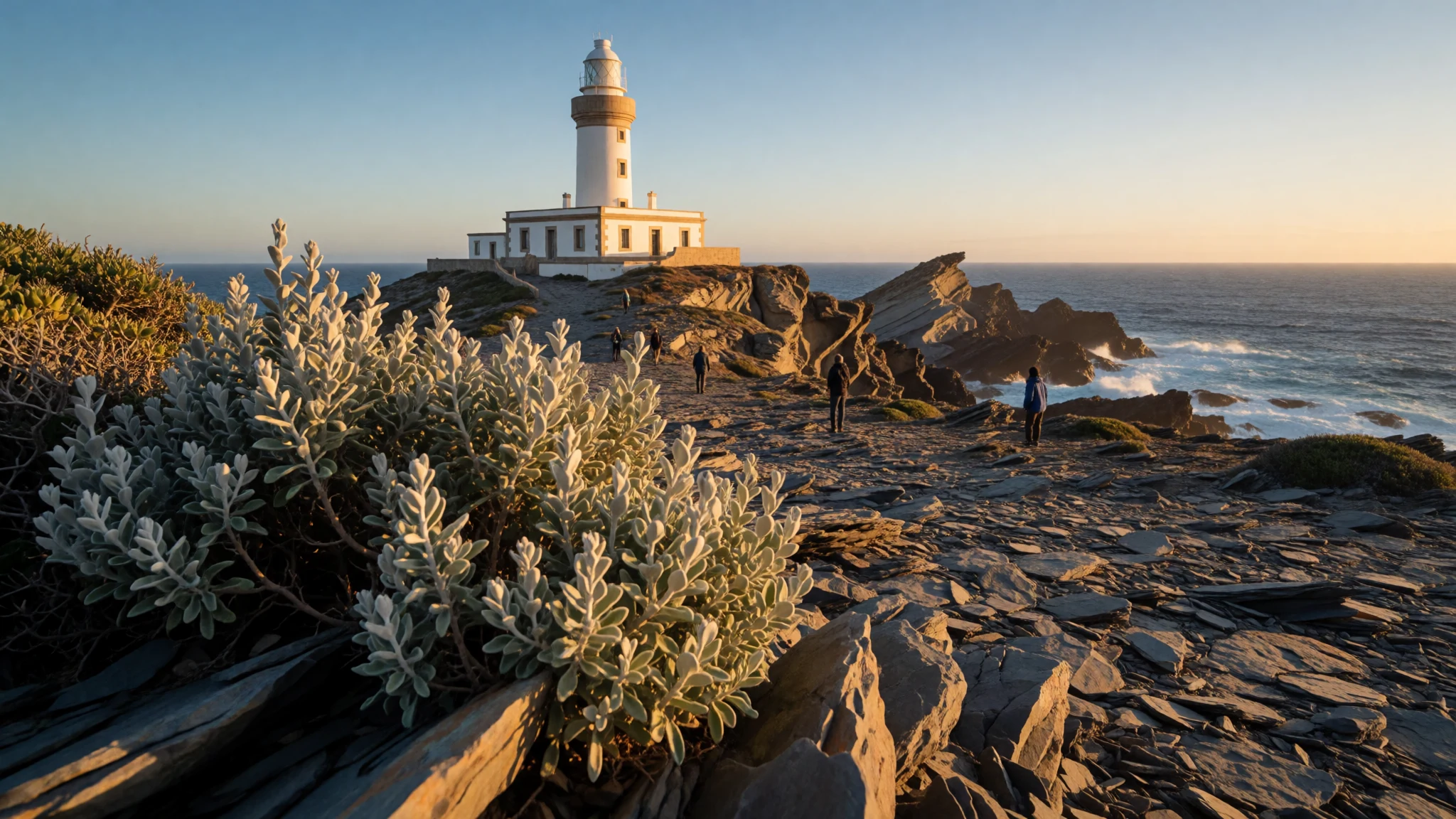
Cap de Creus is where the Pyrenees end in wind-scoured rock and blue coves, at the eastern tip of mainland Spain.
The place
Cap de Creus is the rocky headland where the Pyrenees run out into the Mediterranean, in the far north-east corner of Catalonia. Administratively it belongs to Cadaqués, and the whole peninsula is now protected as Cap de Creus Natural Park. It marks the easternmost point of mainland Spain, which is why a signpost recording the fact draws a steady trickle of photographers. The land is bare and wind-scoured: low scrub, dry-stone walls, hardly a tree, and grey-green rock folded and streaked like old cloth. Below it the coast breaks into small coves where the water turns a deep blue, and sailors have long used them for shelter. The tramontana, a cold, dry northerly wind, can blow for days and has a record of wrecking ships, so the weather shapes a visit more than the calendar does. Cadaqués, the white village on its bay, has attracted artists and writers for generations, and nearby Port Lligat is where Salvador Dalí made his home. Further north, El Port de la Selva is a quieter fishing harbour with terraces for long lunches. Figueres, Dalí's birthplace, is the nearest large town. French visitors cross the border in numbers, and the lighthouse car park is the busiest spot on the peninsula. There is no accommodation at the cape itself, so most people stay in Cadaqués or El Port de la Selva and drive out.
Its story
Cap de Creus carries three stories at once: a myth, a geological record and a painter's obsession. The myth says Hercules hacked the headland out of the mountains himself, which is a fair description of how the rock looks, jagged and wrenched into odd shapes. The geology is more precise. Geologists come to read the contorted bands and pale veins in the stone, because the cape exposes how deep rock was squeezed, sheared and partly melted when the Pyrenean mountain chain formed. Few places let a student see that process laid bare on the surface. Then there is Dalí. He grew up inland at Figueres but built his life around this coast, and the weathered stones and empty horizons of the cape turn up again and again in his canvases, including The Persistence of Memory. Standing among the rocks, it is easy to see where the melting, sagging forms came from. Layered over all this is the long history of seafarers rounding the cape, and of the tramontana punishing those who misjudged it. Up on the hillside, the medieval monastery of Sant Pere de Rodes looks down on the whole scene, a reminder that people have lived with this wind and this stone for a very long time.
What to see
- Cap de Creus Lighthouse — Cap de Creus headland
The lighthouse stands at the tip of the cape and is the obvious first stop. A signpost nearby marks the easternmost point, and the view south along the rocky coast is the one most photographs use. There is a restaurant inside the building. Parking is tight, but cars turn over quickly.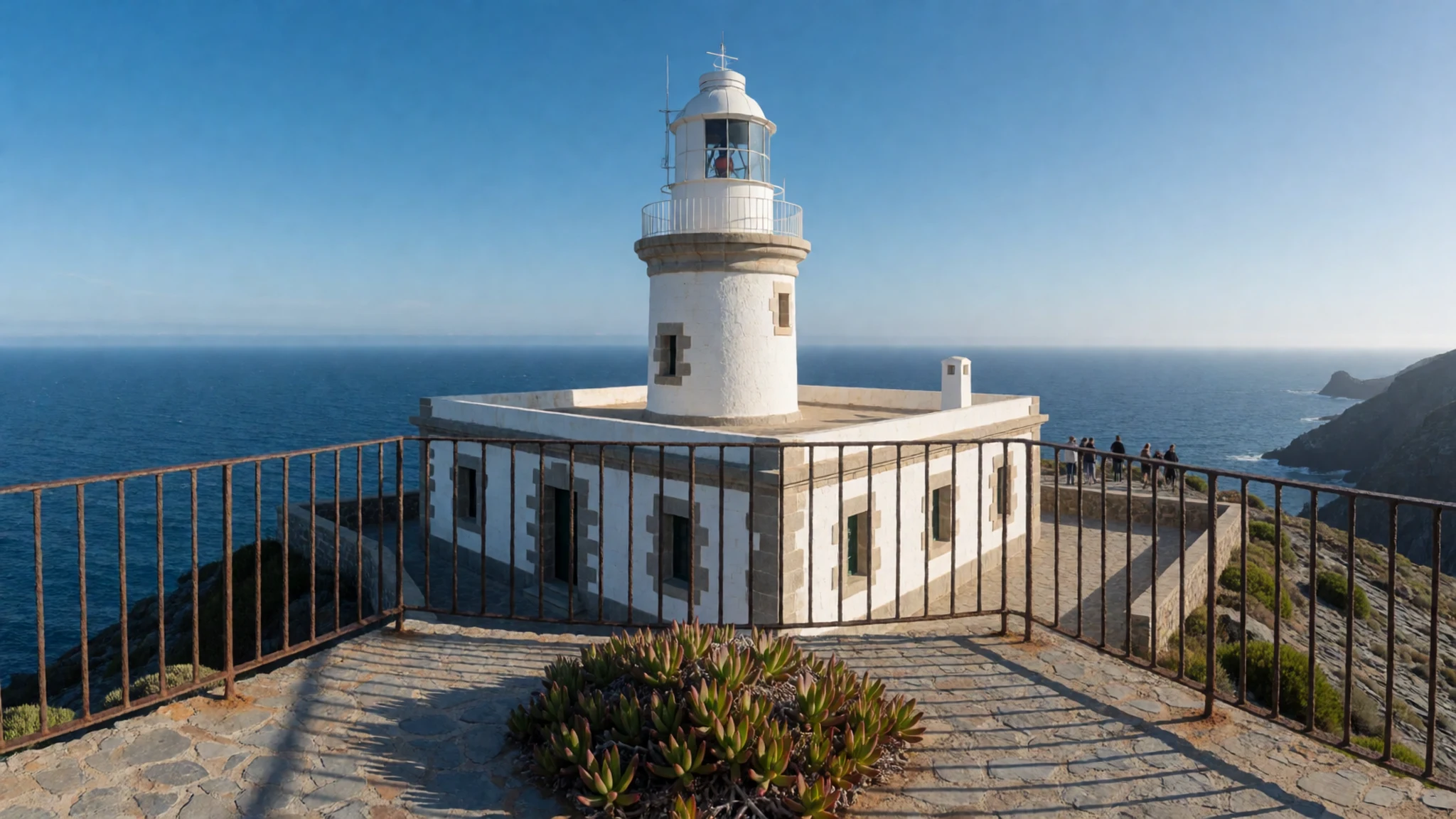
- El Golfet and Cap Gros — Cap Gros, Cap de Creus Natural Park
Cap Gros gives a view down onto El Golfet, a small cove with water of an almost unreal blue held between dark arms of rock. It rewards a slow walk along the paths, ideally away from the car park, where the noise of the wind replaces the noise of engines.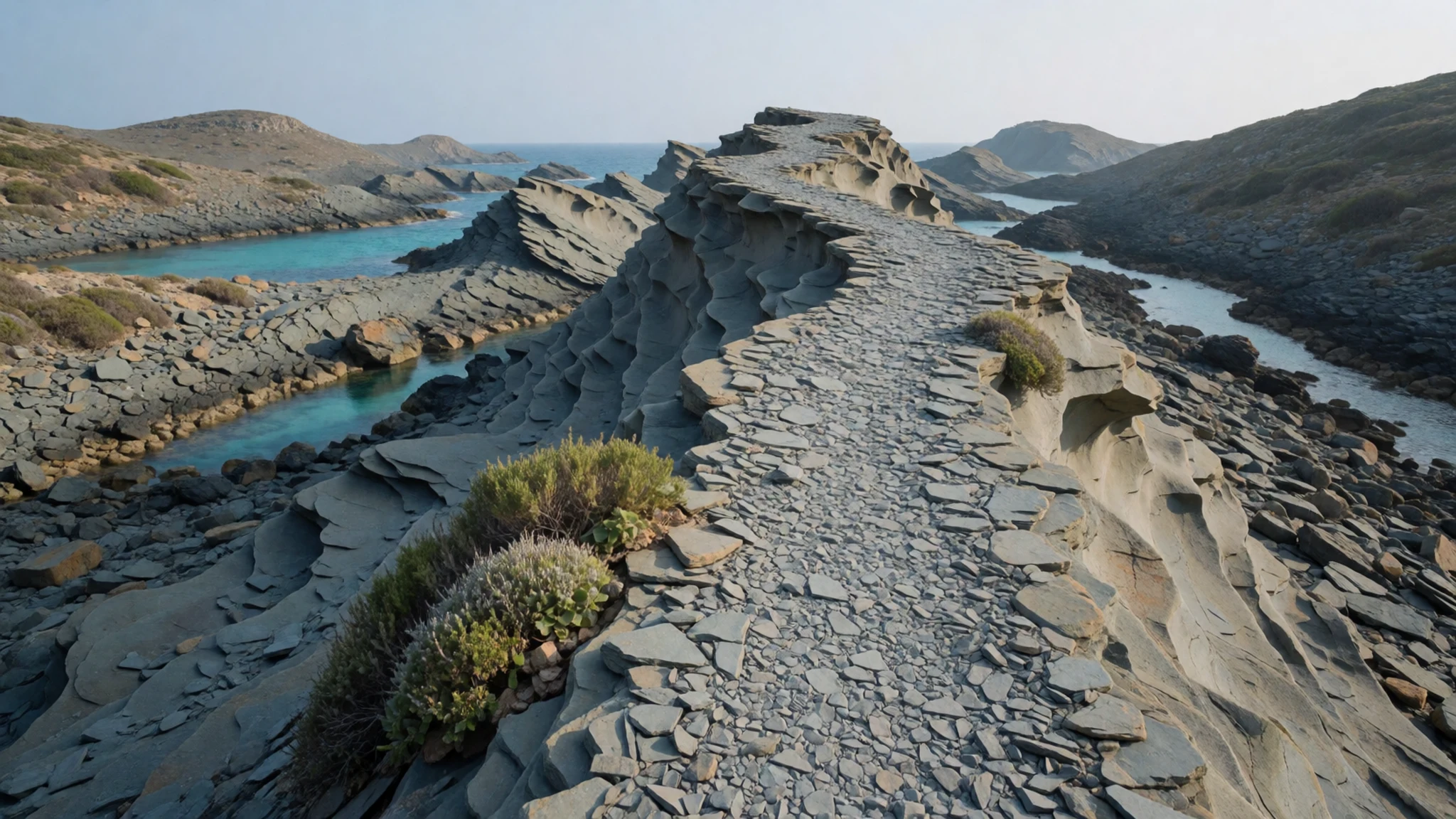
- The rock formations — Natural park, around the cape
Across the park, the stone is twisted into bands, swirls and pale veins, some of it looking almost molten. Wind and salt have carved it into the odd shapes that Dalí painted. Wander the paths near the cape slowly, and look closely at the pale streaks running through the darker rock.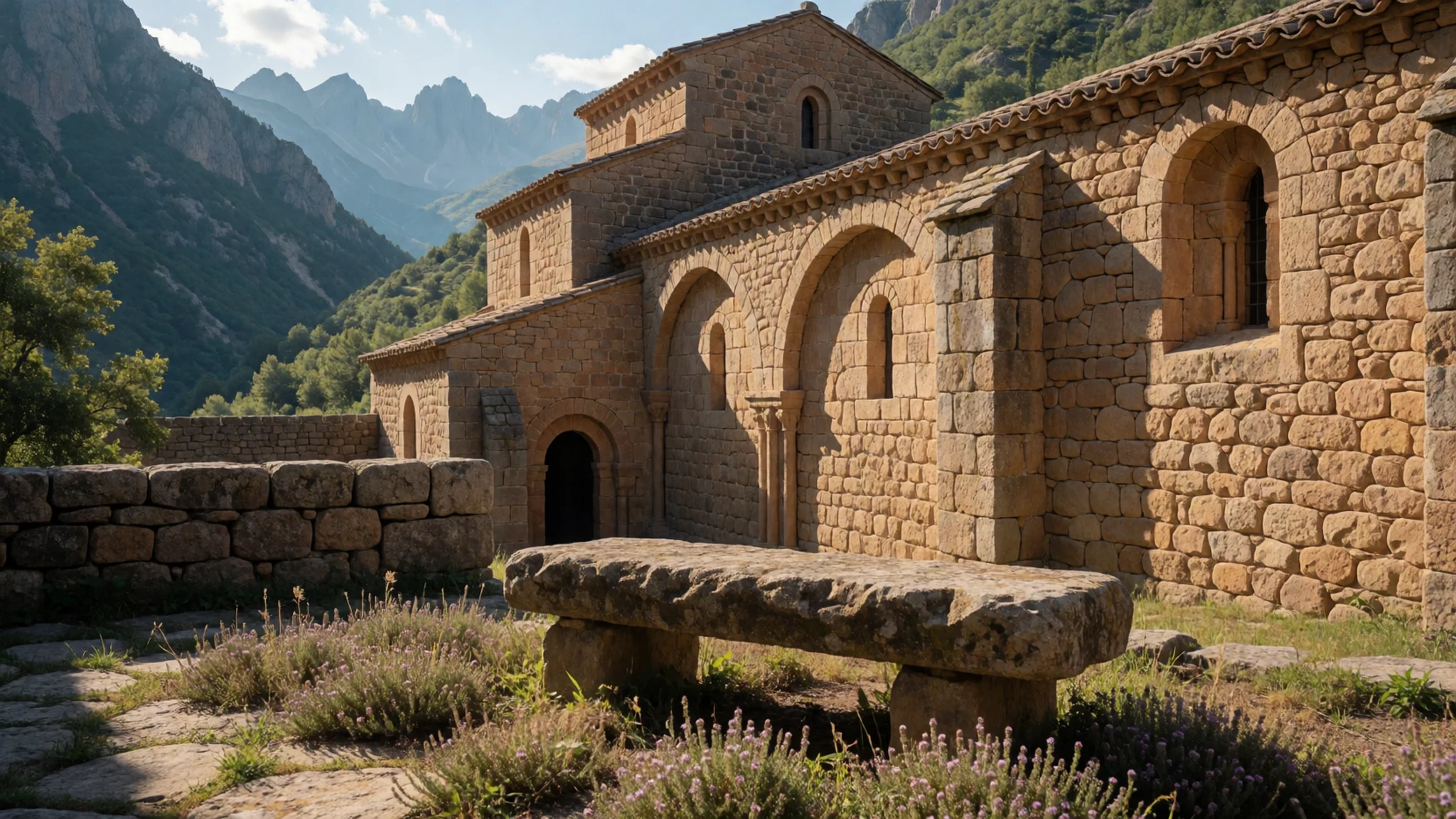
- Illa Encalladora — Offshore, eastern end of the peninsula
This long, low island lies off the end of the peninsula, its rock formed from very old geological layers. It is best seen from the shore paths rather than visited. On a calm day the sea around it glows turquoise, and on a tramontana day it is a good lesson in why sailors respected this coast.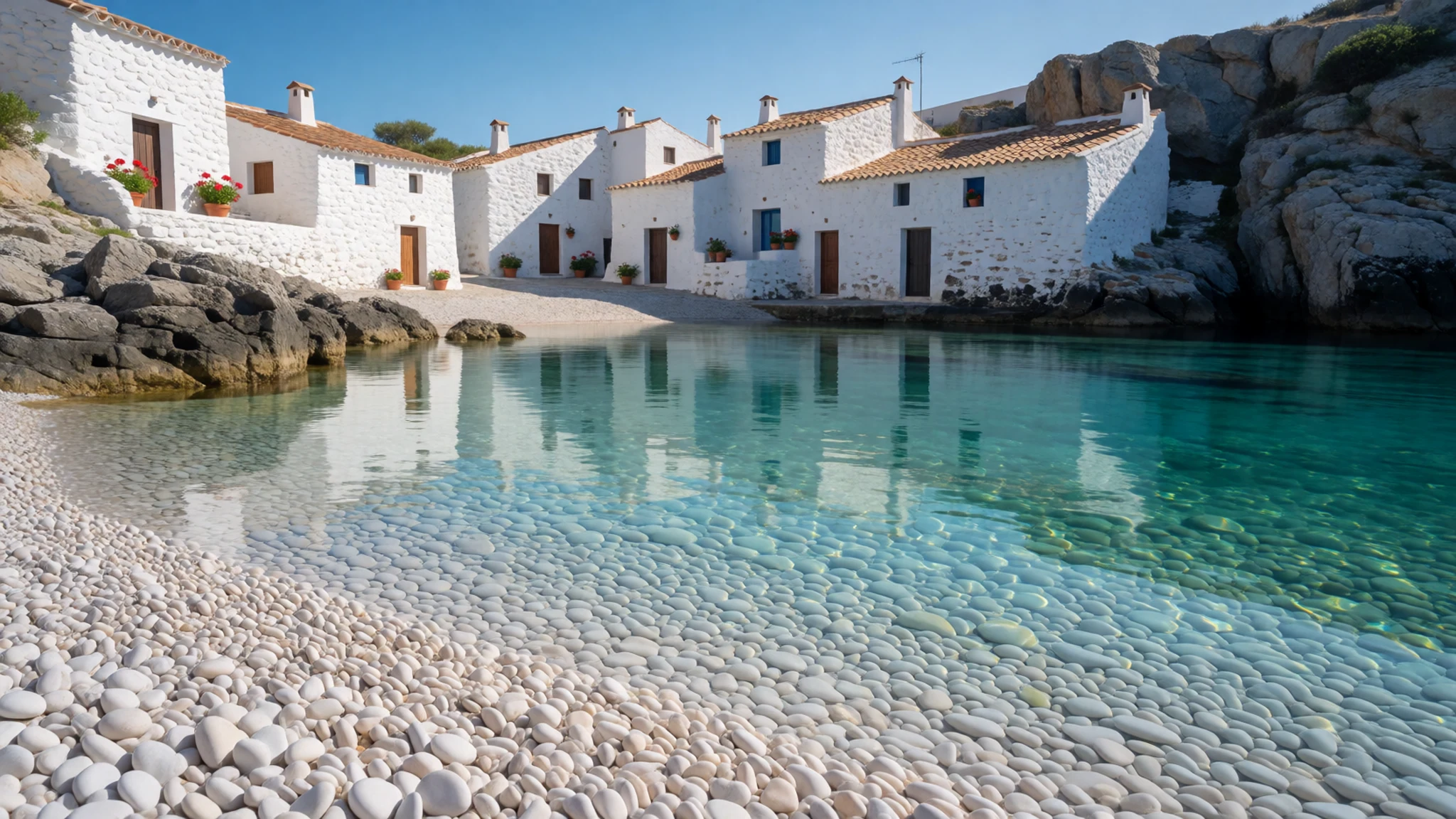
- Cadaqués and Port Lligat — Cadaqués
Cadaqués is a whitewashed village on a sheltered bay, with a church above the waterfront and narrow lanes behind. Port Lligat, a short walk or drive away, is the small bay where Dalí built his house. Both are busy in summer, so aim for mornings or the shoulder months.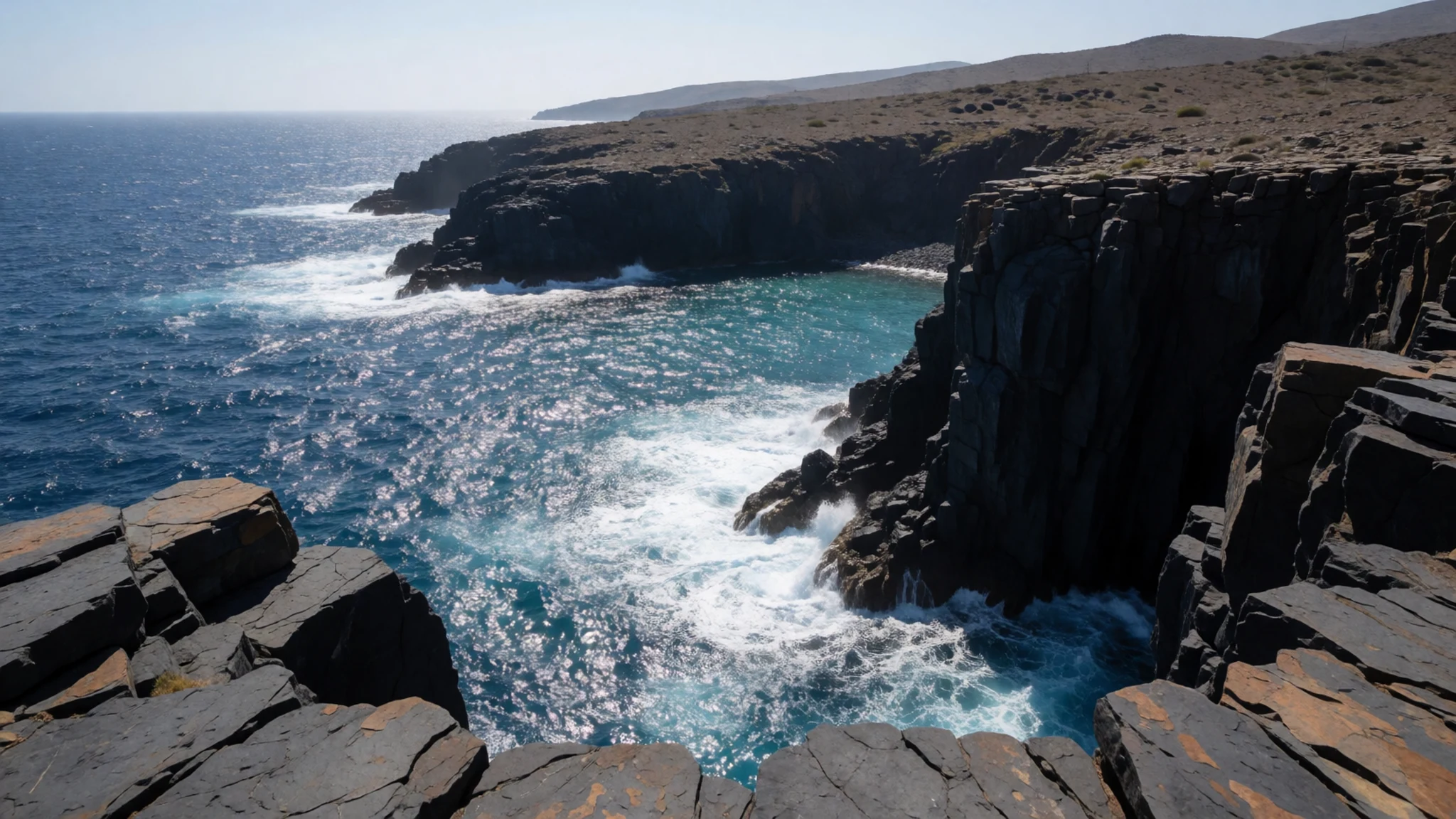
- Sant Pere de Rodes — Hills above El Port de la Selva
This medieval monastery sits high on the hillside above the coast, with long views over the headland, the sea and the Pyrenees. Its stonework dates from the early Middle Ages onwards. Reaching it involves a winding drive, and the wind can be sharp on the open terraces, so bring a layer.
Culture
Cap de Creus sits in Catalonia, and the culture here is Catalan first. Street signs, menus and village notices are in Catalan, and even a few words such as bon dia (good morning) and gràcies (thank you) are noticed and appreciated. The area has long been home to fishing families, and the working harbours at El Port de la Selva and Cadaqués still feel like that, with boats pulled up, nets mended and the day starting early. Artists changed the character of Cadaqués in particular. Dalí's presence drew painters, writers and later holiday-makers from across Europe, and the village keeps a relaxed, slightly bohemian atmosphere that is quite different from the packed resorts further south on the Costa Brava. Lunch is the main meal, usually late and unhurried, and many kitchens close between lunch and evening service. French is widely understood because visitors from across the border are so common. The landscape itself is treated as something shared and fragile: the natural park exists to protect the rock, the scrub and the birdlife, and locals take it seriously. The wind is part of local life too, and people plan their days around the tramontana rather than complaining about it. Stay on the marked paths inside Cap de Creus Natural Park, take your rubbish with you, and never chip, climb or carve the rock formations.
What to wear
Cap de Creus has no single costume of its own, but the wider Catalan tradition shows up in a few places. The barretina is a soft, long woollen cap, traditionally red and worn by fishermen and farmers, now mostly seen at festivals and folk dances. Espardenyes, flat espadrilles with canvas uppers and rope or jute soles, were everyday footwear for working people and are still sold in the villages. Festival clothing is local cotton and wool, often in dark colours with bright sashes. What people wear now is simple coastal clothing: linen shirts, striped tops, shorts, canvas shoes and plenty of sunglasses. Cadaqués has a stylish edge, so smart-casual is common in the evening, but nothing is formal. Visitors should dress for wind and rock more than for the beach. A windproof jacket is useful even in summer, because the tramontana can turn a sunny day cold. Wear sturdy shoes with a good grip for the paths, as the rock is sharp and uneven and flip-flops are a poor idea. Bring a hat and sun protection, since there is almost no shade on the headland. Swimwear is fine at the coves but should be covered up in villages and the monastery.
What to eat
- Suquet de peix — Harbour restaurants in Cadaqués and El Port de la Selva
A Catalan fish stew of potatoes, tomato and garlic, cooked with whatever the boats brought in. It is a good test of a kitchen's honesty. Look for it at harbourside restaurants in Cadaqués and El Port de la Selva.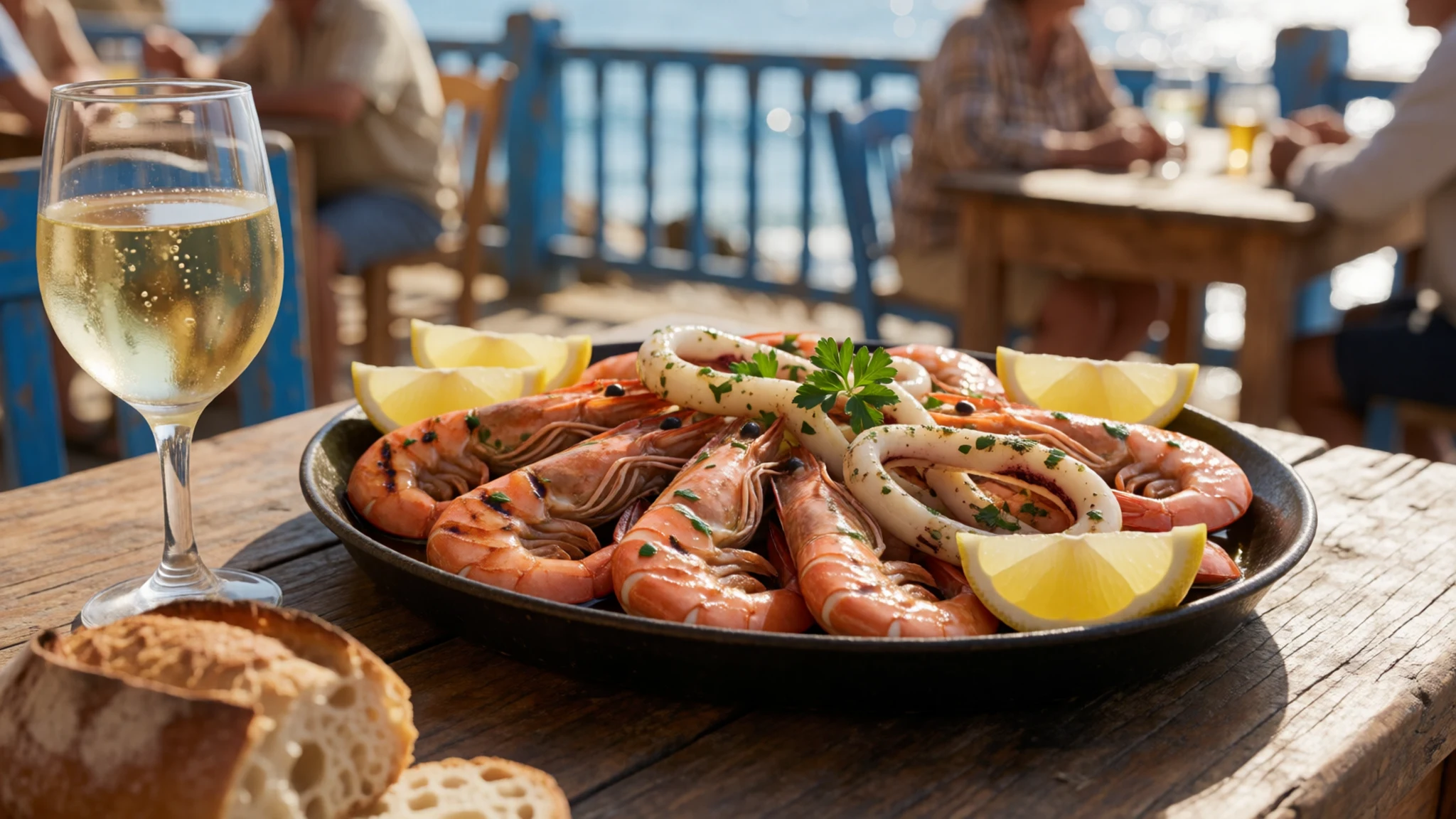
- Arròs de marisc — Seafront restaurants, especially at lunchtime
Rice cooked in a rich shellfish stock, usually served in a wide pan for sharing and often a little soupy. It takes time to prepare, so expect to wait and make it a long lunch.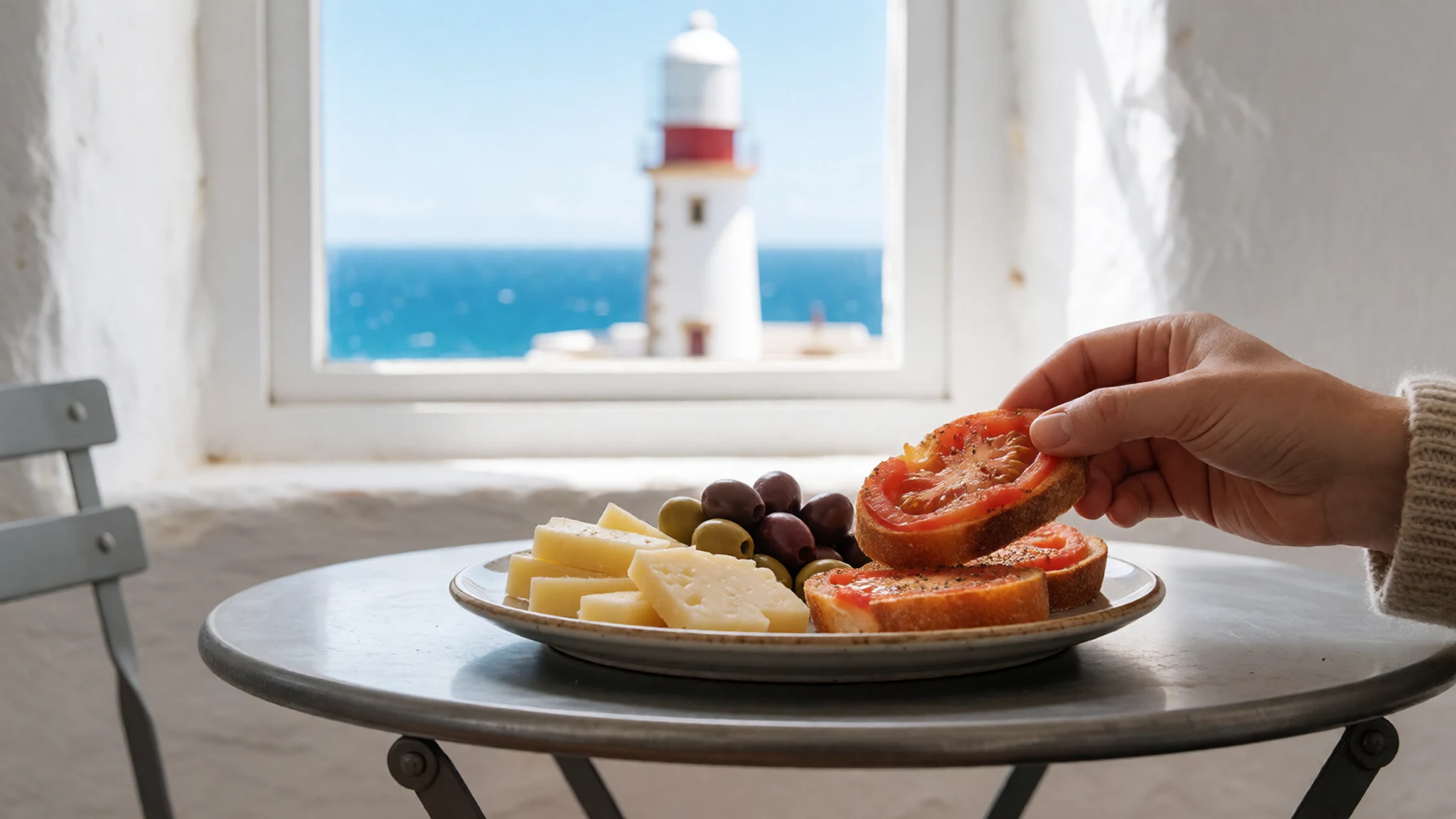
- Pa amb tomàquet — Almost any bar or restaurant in the villages
Bread rubbed with ripe tomato, garlic and olive oil. It is the base of Catalan tables and arrives with almost everything, from cured meats to grilled fish. Simple, but dependent on good ingredients. - Anchovies — Tapas bars and delicatessens in Cadaqués and nearby towns
The anchovies of this stretch of Costa Brava are salted and cured by hand and served on bread or alone with olive oil. They are salty and intense, so order a few rather than a plate. - Crema catalana — Traditional restaurants and café terraces
A chilled custard flavoured with lemon or cinnamon, with a thin crust of burnt sugar on top. It is a traditional way to end a meal and appears on nearly every dessert menu.
Plan it
Best time. May–June and September–October, when the days are warm but not fierce and the crowds are thinner. July and August are hot, dry and busy, with the lighthouse car park under pressure. Winter is quiet and bare, and the tramontana can blow in any season.
How long. 2–3
Getting there. Girona airport is the closest, with Barcelona airport the larger alternative; both are a few hours' journey by road or by train and bus. The last leg is by car, via Cadaqués, to the lighthouse car park. There is no accommodation at the cape itself.
Budget. mid
Tips
- Go early or late in the day, because the lighthouse car park is small and fills in summer
- If the car park is jammed, park along the road before it and walk the rest
- Bring a windproof layer and a hat, as there is little shade and the tramontana can be strong
- Carry water and snacks, since facilities on the headland are limited to the lighthouse restaurant
- Book Cadaqués or El Port de la Selva rooms well ahead for July and August
Etiquette
- Stay on marked paths in the natural park and do not climb or damage the rock
- Take all rubbish with you and keep noise low in the quiet coves
- Greet shopkeepers and waiters in the villages before asking for anything
Nearby
Sources
- Wikidata Q1034193 (CC0)
- Wikipedia: Cap de Creus (rev 1363405809) (CC BY-SA 4.0)
- Wikivoyage: Cap de Creus (rev 5256214) (CC BY-SA 4.0)
- Photo: Cabo de Creus desde el faro, César J. Pollo (CC BY-SA 4.0)
- Photo: Localització Cap de Creus, Pdg (CC BY 3.0)
- Photo: El Golfet from Cap Gros, Jullag (CC BY-SA 2.5)
- Photo: El Golfet from Cap Gros, Julien Lagarde (CC BY-SA 2.5)
- Photo: Illa Encalladora, Alan Mattingly (CC0 1.0)
- Photo: Parc de Cap de Creus 083, Grey Geezer (Public domain)
- Photo: Parc Cap de Creus 084, Grey Geezer (CC0 1.0)
- Photo: Parc de Cap de Creus 090, Grey Geezer (CC0 1.0)


