Cadaqués
Cadaqués, Spain
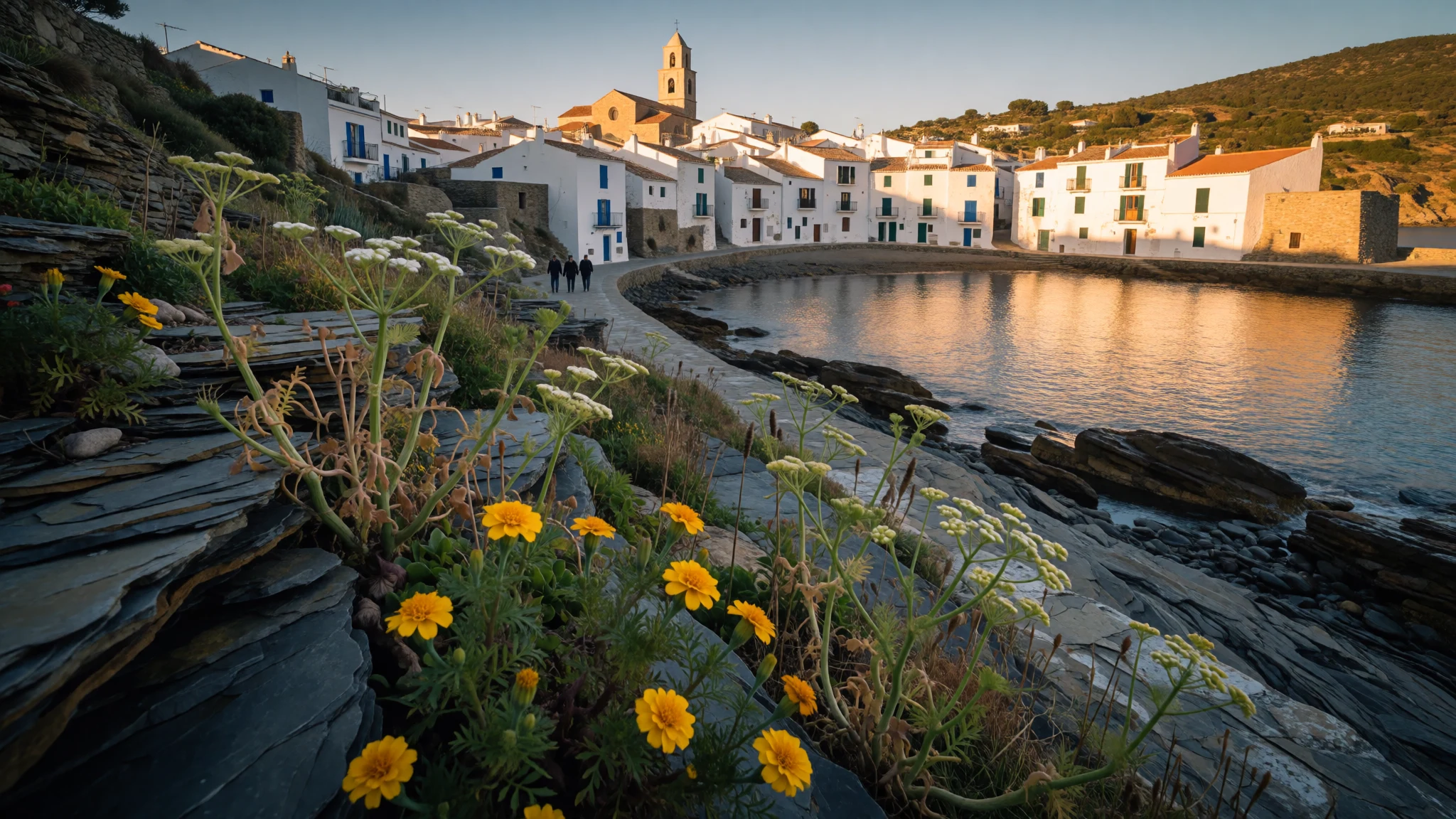
Cadaqués is a whitewashed Catalan bay town at the end of a long road, where Dalí's Port Lligat and quiet coves sit close.
The place
Cadaqués sits on a sheltered bay in the middle of the Cap de Creus peninsula, on the Costa Brava in the province of Girona, Catalonia. It is a municipality of the Alt Empordà comarca, officially home to 2,918 people and standing 24 m above sea level. The road in is long and winding, and that isolation shaped the place: for centuries it looked to the sea rather than to the interior. Whitewashed houses step up from a pebbly waterfront, a church crowns the old quarter, and narrow lanes run between walls that hold the afternoon heat. Fishing boats still pull up on the small beaches in front of town. Barcelona is a little over two hours away by road, which makes Cadaqués a favourite for weekend and summer houses; in high summer the population swells several times over, and the lanes and waterfront feel it. Outside July and August the town is much calmer. The tramontane, the north wind, often decides whether the bay is glassy or streaked with whitecaps. Beyond the last houses the land turns to dry scrub, terraced slopes and bare rock, cut by coves that are reached on foot. Port Lligat, a small bay next to the town, is a short walk away and is tied closely to Salvador Dalí. Art has long been part of the town's identity, and the centre is small enough to cross on foot in minutes.
Its story
Cadaqués has a history shaped by water and wind. Its position near the French border, with poor roads inland, made smuggling a way of life for many families, and the Catalan writer Josep Pla wrote a number of books set in and around the town. In the early twentieth century a large share of the villagers left for Cuba; estimates suggest around a third of the community made the crossing. Some prospered and came home, and they were nicknamed Americanos. They spent their money on big, decorated houses, several of which survive, and the Casa Blava, the Blue House, is the one most often pointed out. Artists followed. Eliseu Meifrèn, a local painter, made charcoal studies of the town battered by winter wind and is remembered as the first modern painter to settle here. Picasso spent the summer of 1910 in the area, and Joan Miró was a regular guest of the Pitxot family. Dalí came as a child, and a holiday in 1916 spent with the Pichot household is counted a turning point in his career. Marcel Duchamp played chess in a village café and, according to Richard Hamilton, rated the fishermen as serious opponents. Dalí later made his home in Port Lligat, the bay next door.
What to see
- Dalí's House, Port Lligat — Port Lligat, a short walk from the centre
Salvador Dalí built his home among the fishermen's cottages of Port Lligat, a bay beside Cadaqués, and it is now a museum. The walk from the centre takes roughly a quarter of an hour along the shore. Visits are managed, so check the town website, cadaques.cat, before travelling and book ahead in summer.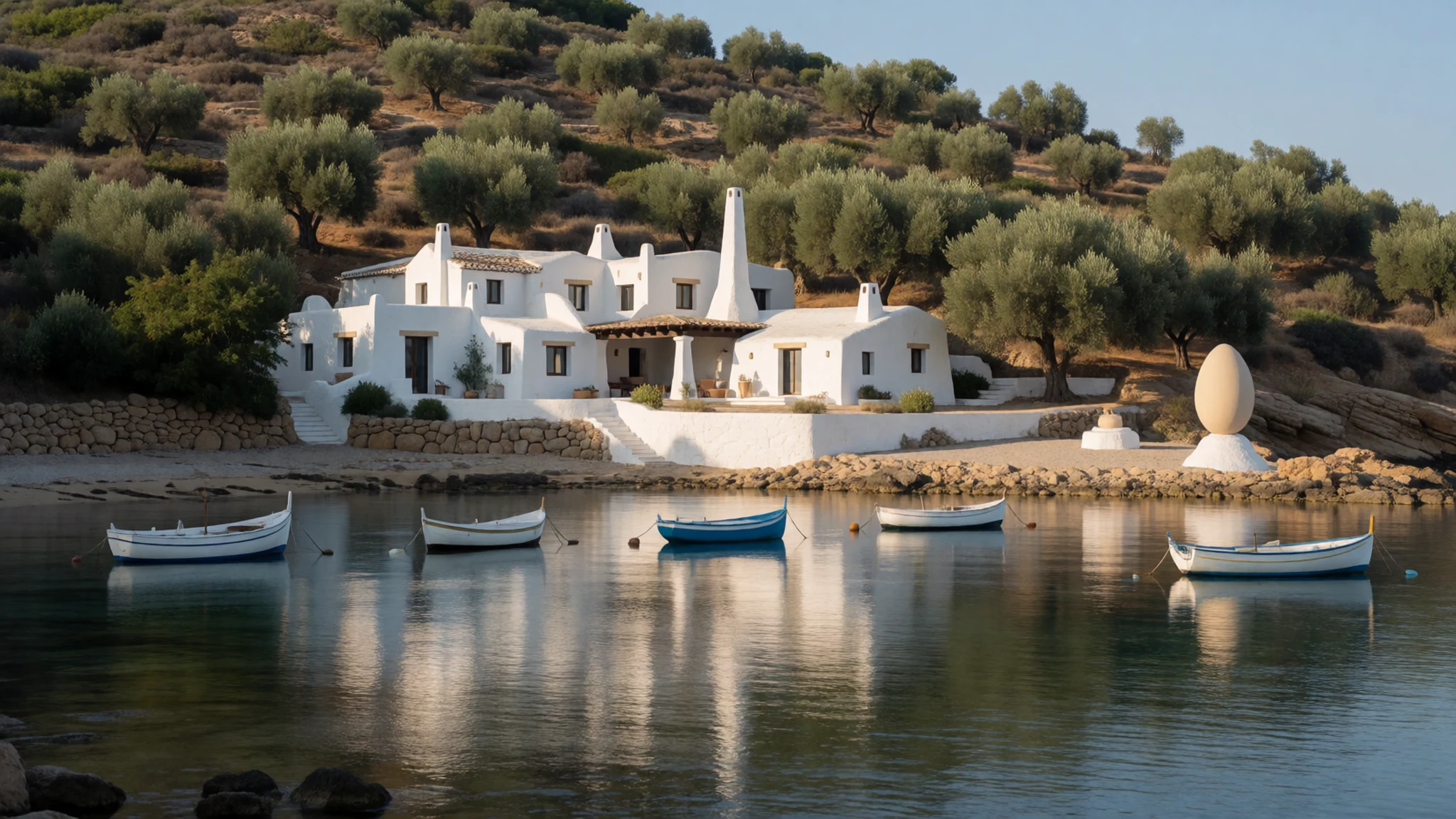
- Church of Santa Maria and the old quarter — Old town, above the waterfront
The Church of Santa Maria stands above the waterfront, and the lanes around it are a good place to see Cadaqués as locals live it: whitewashed walls, stone steps, flowerpots and glimpses of the bay between roofs. Wander without a map, go early or late when day visitors thin out, and dress modestly if you step inside.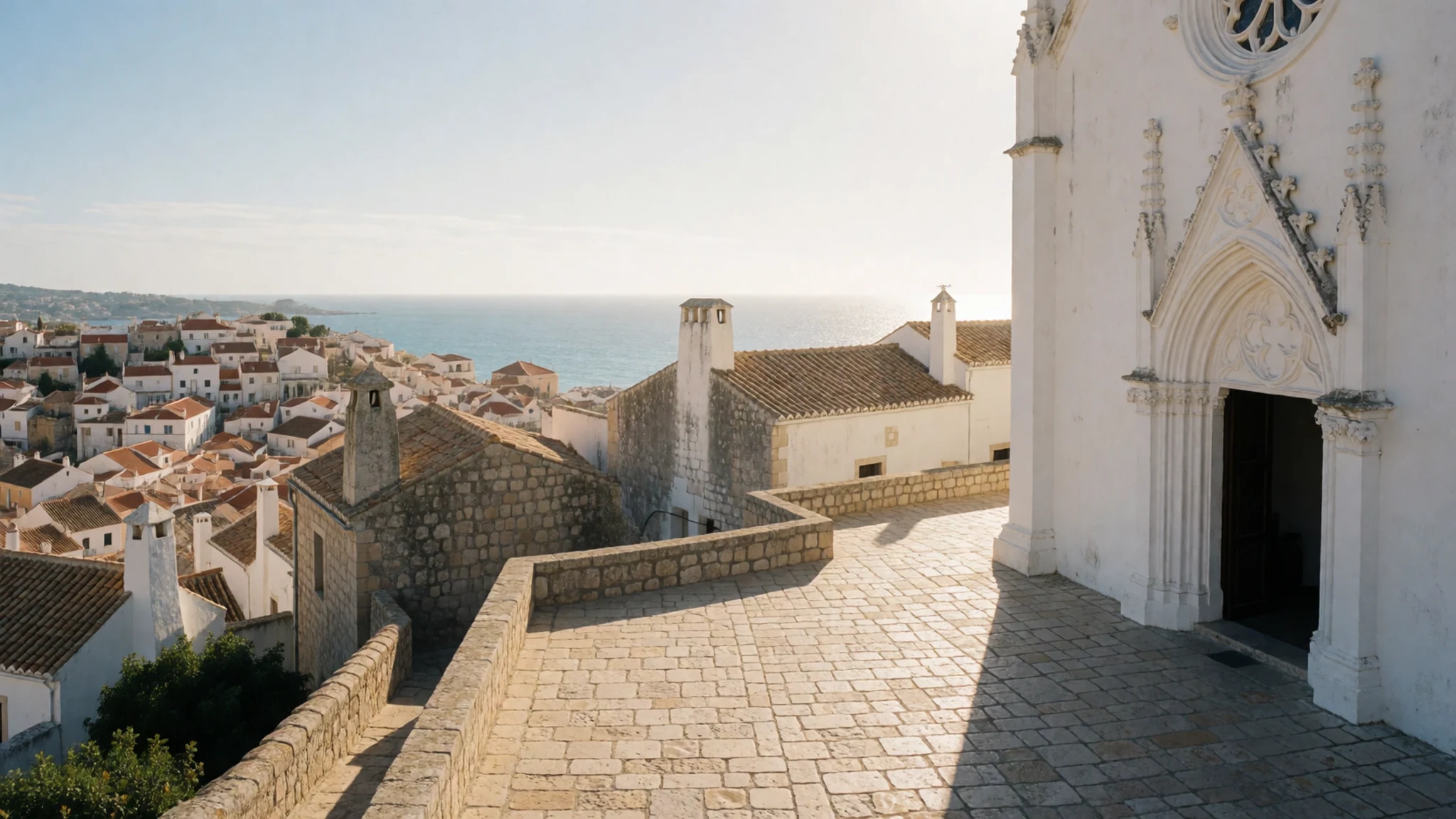
- Casa Blava (the Blue House) — Town centre
The Casa Blava is one of the grand houses built with money brought back from Cuba. Its colour and size set it apart from the plainer fishermen's homes around it, and it makes a useful clue to how emigration changed the town. Treat it as a building to admire from the street as part of a slow walk.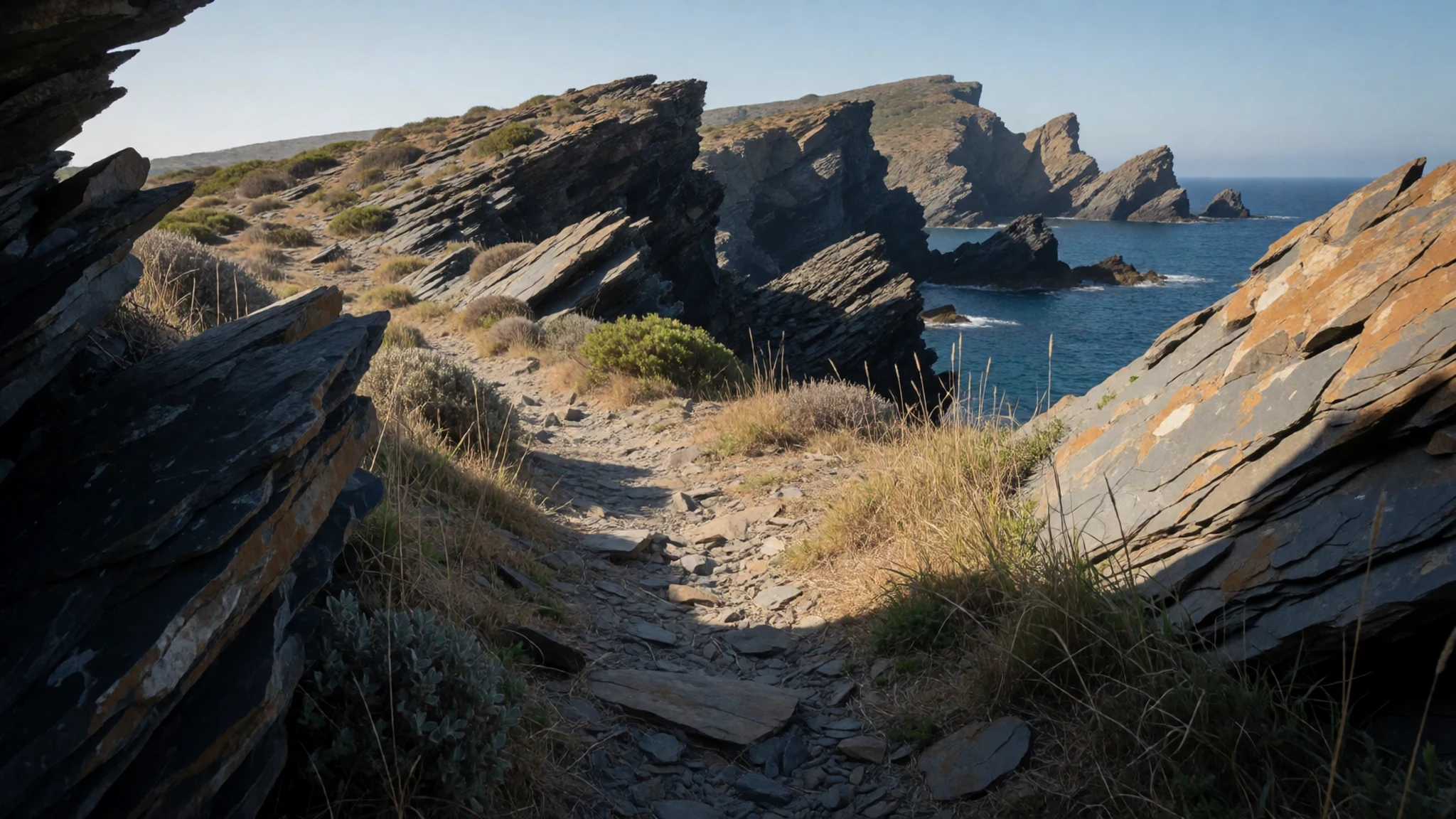
- Es Llaner Gros and Es Llaner Petit — Beaches at the edge of the old town
These two neighbouring beaches lie right beside the town and are made of sand, gravel and pebbles. Es Llaner Petit is usually dotted with small boats drawn up on the shore, while Es Llaner Gros is a little longer. They suit a paddle, a swim and watching the bay rather than a long beach day.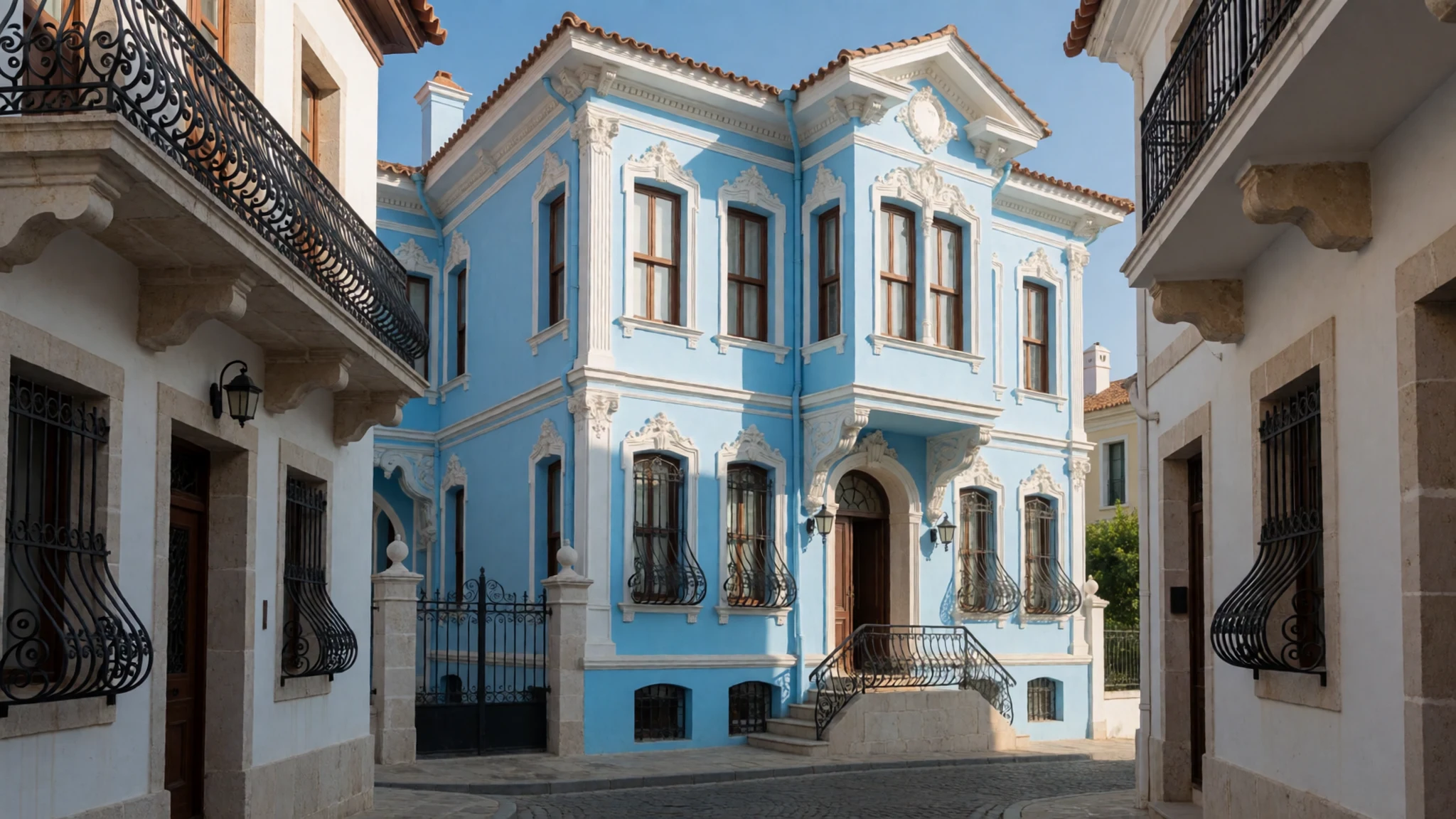
- The GR 92 coastal path — Hills and headland around the bay
The GR 92 long-distance path follows the Catalan coast and gives a view down over Cadaqués and the Cap de Creus headland. Even a short stretch shows the dry scrub, bare rock and small coves behind the town. Wear proper shoes, carry water, and walk in the cooler hours of the day.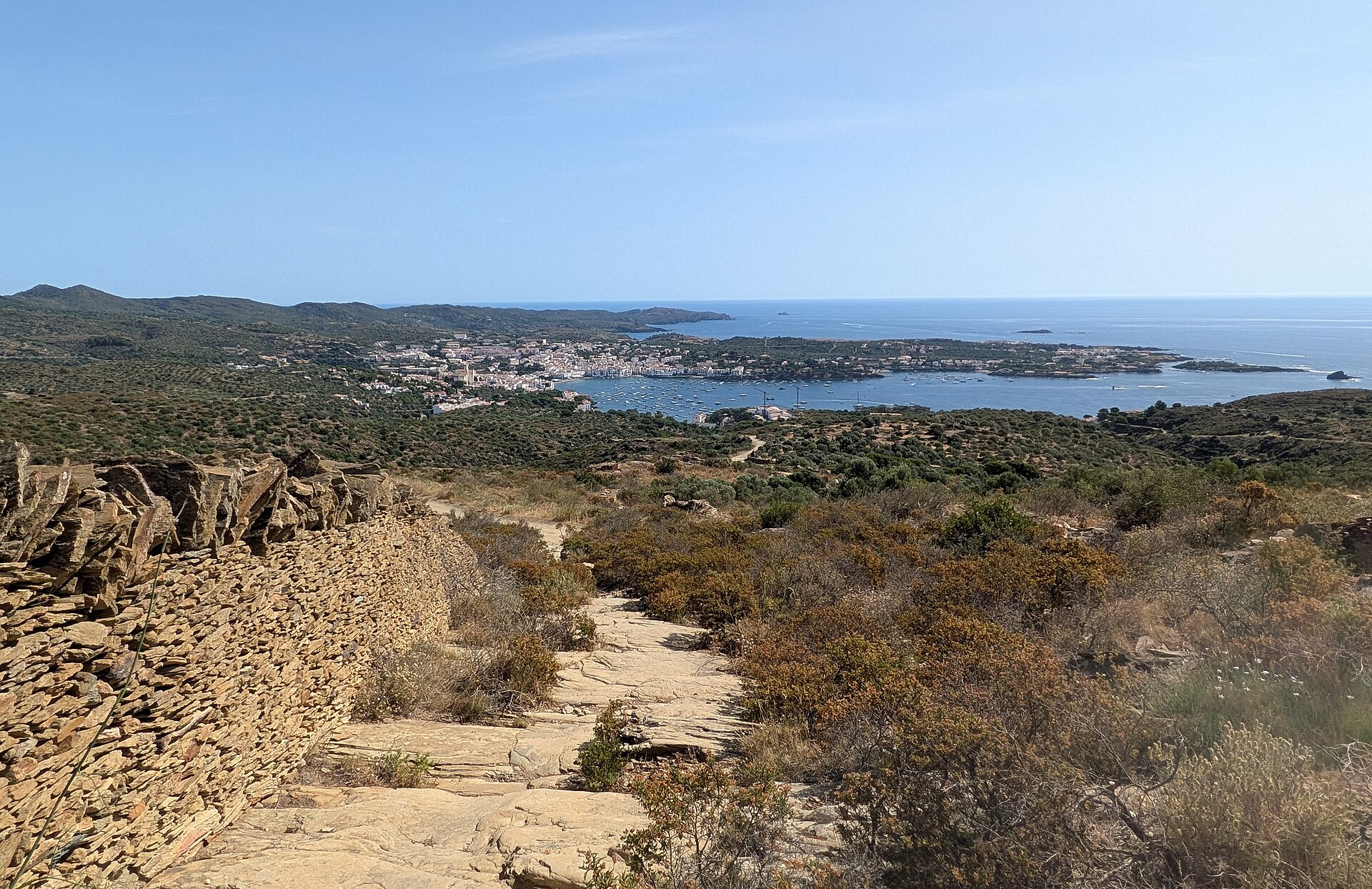
Culture
Cadaqués keeps a strongly Catalan character. Catalan is the everyday language of the town, with Spanish widely understood, and a few words of greeting in Catalan are noticed and appreciated. The place has a long artistic reputation: painters, writers and film people came for the light, the isolation and the sense of being slightly apart, and residents have lived with that attention for a century and tend to be unfussy about it. Daily life follows the Mediterranean rhythm of a late lunch, a quiet afternoon and a long evening on the waterfront, and many kitchens close between services. The sea still matters more than the road. Boats are hauled onto the small beaches, and the tramontane shapes plans and moods, sometimes keeping people indoors for days. Smuggling across the French border was once an open secret, and stories of it still circulate in bars and family kitchens. Older families remember the Americanos, the returnees from Cuba, whose houses define parts of the streets. In summer, second-home owners and day visitors overlap with a permanent community of under three thousand, so lanes are crowded and patience helps. Keep your voice low in the old streets at night, and cover your shoulders and knees when you step into the Church of Santa Maria.
What to wear
Cadaqués has no single costume that visitors will see worn today, but the older village wardrobe was practical and marine. Fishermen wore rope-soled canvas espadrilles (espardenyes) and cotton or linen shirts, and in Catalan tradition the woollen barretina cap was a common sight. Women who fetched water in glazed green earthenware jugs carried them on the head under a protective cloth, as old photographs show. These things now appear as decoration or at festivals rather than in daily life. Today people dress for sun, salt and wind: linen shirts, cotton dresses, striped tops, canvas shoes, straw hats and a light jacket for the tramontane. The look is relaxed and slightly artistic, shaped by decades of second-home owners from Barcelona and beyond, and few people dress up beyond a clean shirt for dinner. A visitor should pack for a hot, dry summer and a breezy, cool winter: sun hat, sunglasses, sunscreen and swimwear for the coves, plus sandals with a firm grip for pebbly beaches and sturdy walking shoes for the coastal paths. Carry a shawl or light shirt to cover shoulders in the church, and keep swimwear for the beach rather than the lanes.
What to eat
- Fish and seafood of the day — Small restaurants along the waterfront and in the lanes behind it
Cadaqués is a fishing town, and the most reliable order is whatever came in that morning, grilled or simply fried. Some small restaurants serve a daily catch with no fixed menu, so ask what is fresh and let the kitchen guide you.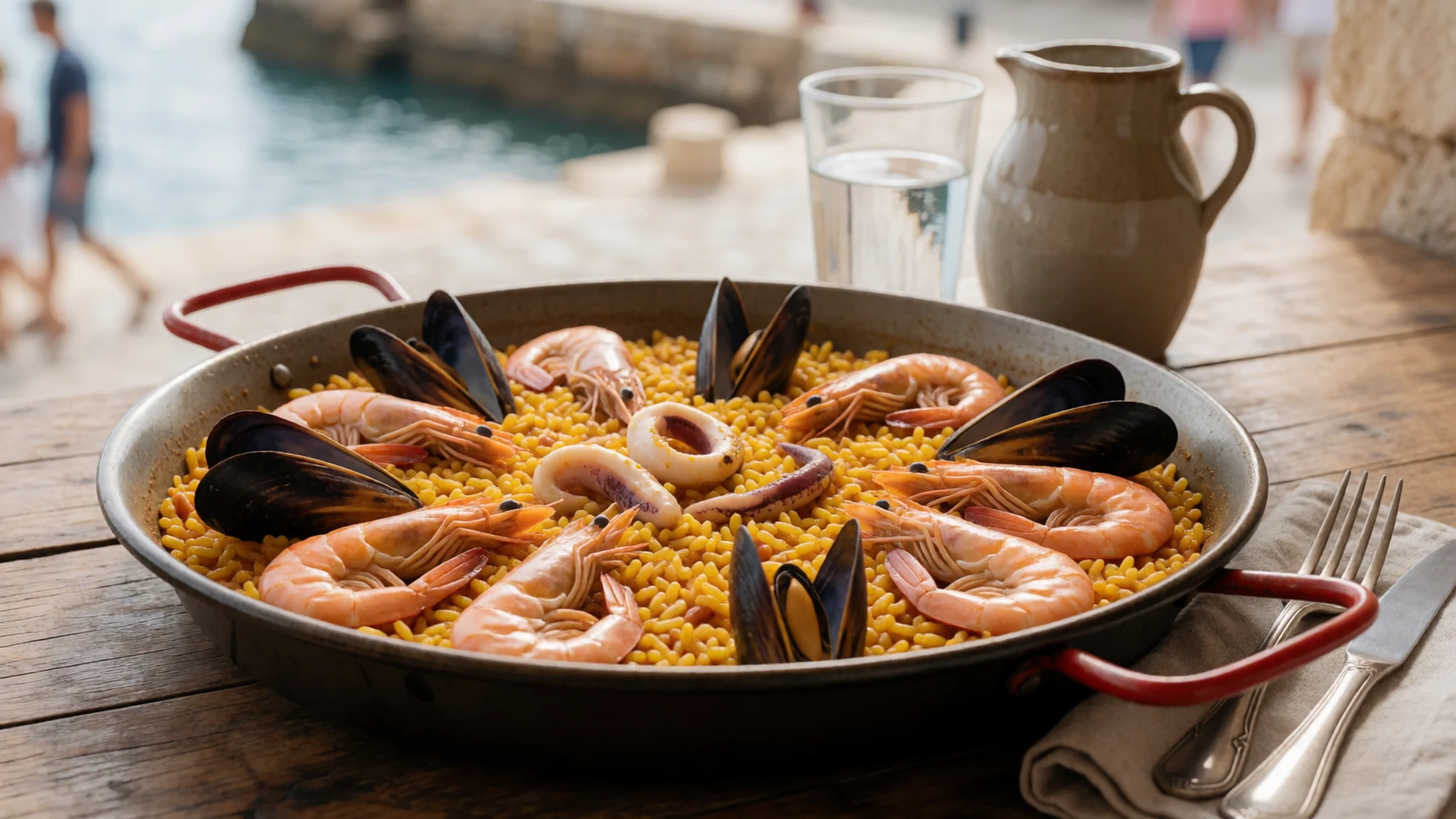
- Paella — Seafood restaurants near the bay
Rice with shellfish and fish is a standard order at waterfront restaurants. It is cooked to order and takes time, so treat it as a slow lunch, usually for two or more people, and ask whether the kitchen has a seafood version.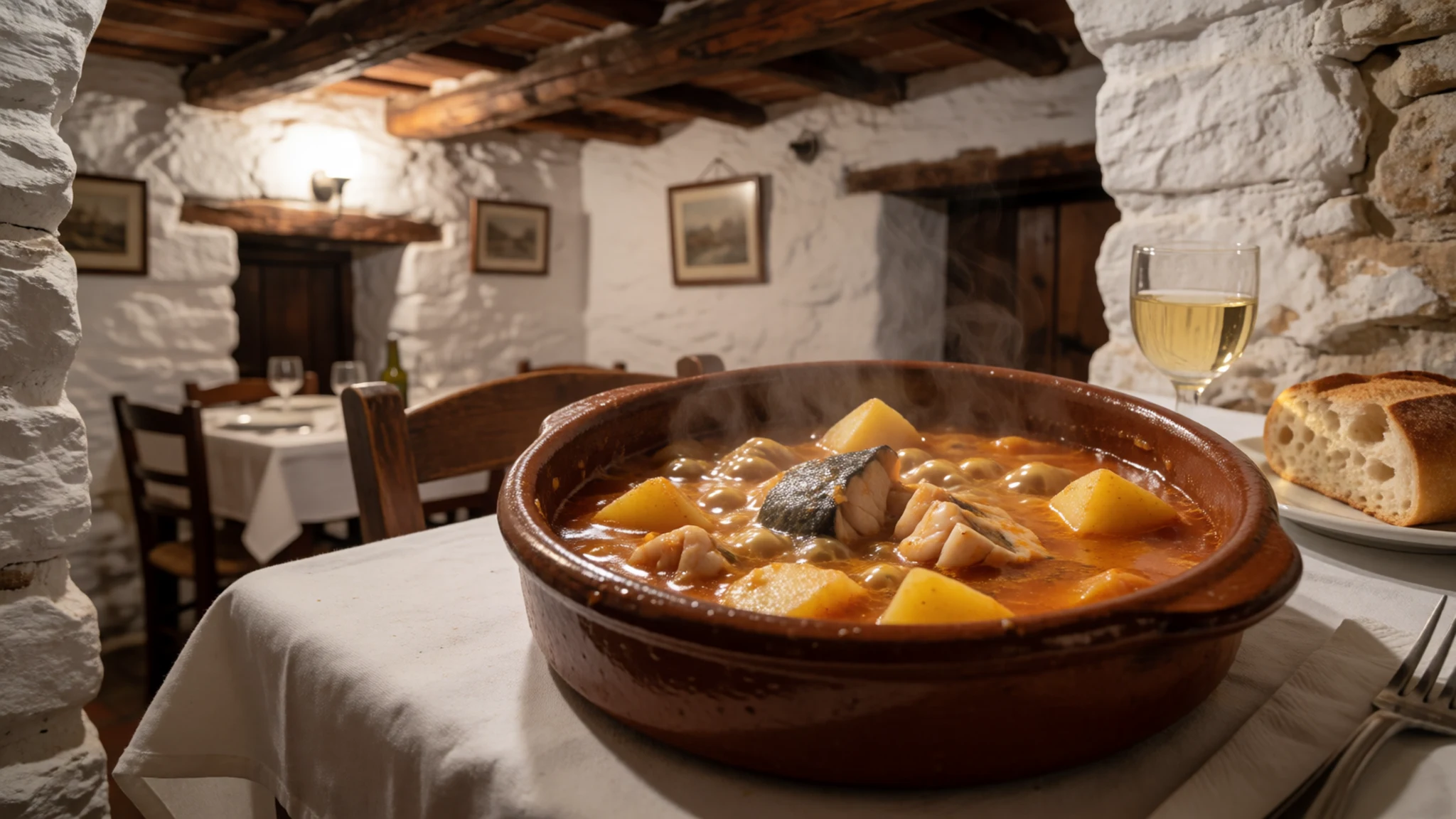
- Suquet de peix — Traditional Catalan kitchens in the old town
A Catalan fish stew of potatoes, tomato and fish in a rich broth, it is the dish fishermen's families built on whatever the boats landed. Look for it on local menus, particularly outside the busiest summer weeks. - Gazpacho — Cafés and waterfront restaurants in warm months
The chilled tomato soup is a sensible starter on a hot day and appears on many menus in summer. It is light, quick to arrive, and pairs well with bread and a view of the boats. - Pa amb tomàquet — Almost any bar or café
Bread rubbed with ripe tomato, olive oil and salt is the everyday Catalan accompaniment. It comes with cured meats, cheese or anchovies, and makes a simple snack between the long gaps of lunch and dinner. - Crema catalana — Restaurants and cafés serving traditional desserts
A cold custard with a thin burnt-sugar crust, flavoured with citrus and cinnamon, finishes many Catalan meals. Order it after seafood, when something light and sweet is welcome, and crack the top with the spoon.
Plan it
Best time. May–June and September–early October, when the sea is warm enough to swim and the lanes are quieter than in July and August. Summer is hot, dry and very busy; winter brings cool days and the wind known as the tramontane, which can be strong.
How long. 2–3
Getting there. Barcelona is the usual gateway. A direct coach runs from Barcelona's Nord station, near the Arc de Triomf, with a timetable that changes by season. Alternatively take the train from Barcelona to Figueres (about an hour and a half) and then a local bus over the hills, about an hour. Drivers go via Figueres and Roses, then follow the signs.
Budget. mid
Tips
- Check the coach timetable in advance, since services change with the season
- Visit Dalí's House early in the season or book ahead, and check cadaques.cat for current arrangements
- Arrive in summer by bus rather than car; parking is limited and lanes are narrow
- Carry water and sun protection for the coastal paths, which have little shade
- Bring some cash as well as a card for small cafés and beach bars
Etiquette
- Cover up when entering the church and keep swimwear for the beach
- Keep noise down in the old town in the evening, when many people live above the lanes
- Do not take boats or gear from the beaches, as many belong to working fishermen
Nearby
Sources
- Wikidata Q11263 (CC0)
- Wikipedia: Cadaqués (rev 1375325697) (CC BY-SA 4.0)
- Wikivoyage: Cadaqués (rev 5270201) (CC BY-SA 4.0)
- Photo: Cadaques Pueblo Marinero, Anthiro 57 (CC BY-SA 3.0 es)
- Photo: GR 92 Cadaqués, Alan Mattingly (CC0 1.0)
- Photo: Cadaqués's Blue House, Cliché Online (Yan.) (CC BY 3.0)
- Photo: Cadaques shoreline at night, Ruuy lestrade 79 (Public domain)
- Photo: Cadaqués typical back street, Cliché Online (Yan.) (CC BY 3.0)
- Photo: Cadaques shoreline, unknown author (CC BY-SA 2.0)
- Photo: Cadaques stiched, unknown author (CC BY 3.0)
- Photo: Panorámica de Cadaqués, Elemaki (CC BY 3.0)


