Cabo de Gata
Cabo de Gata, Spain
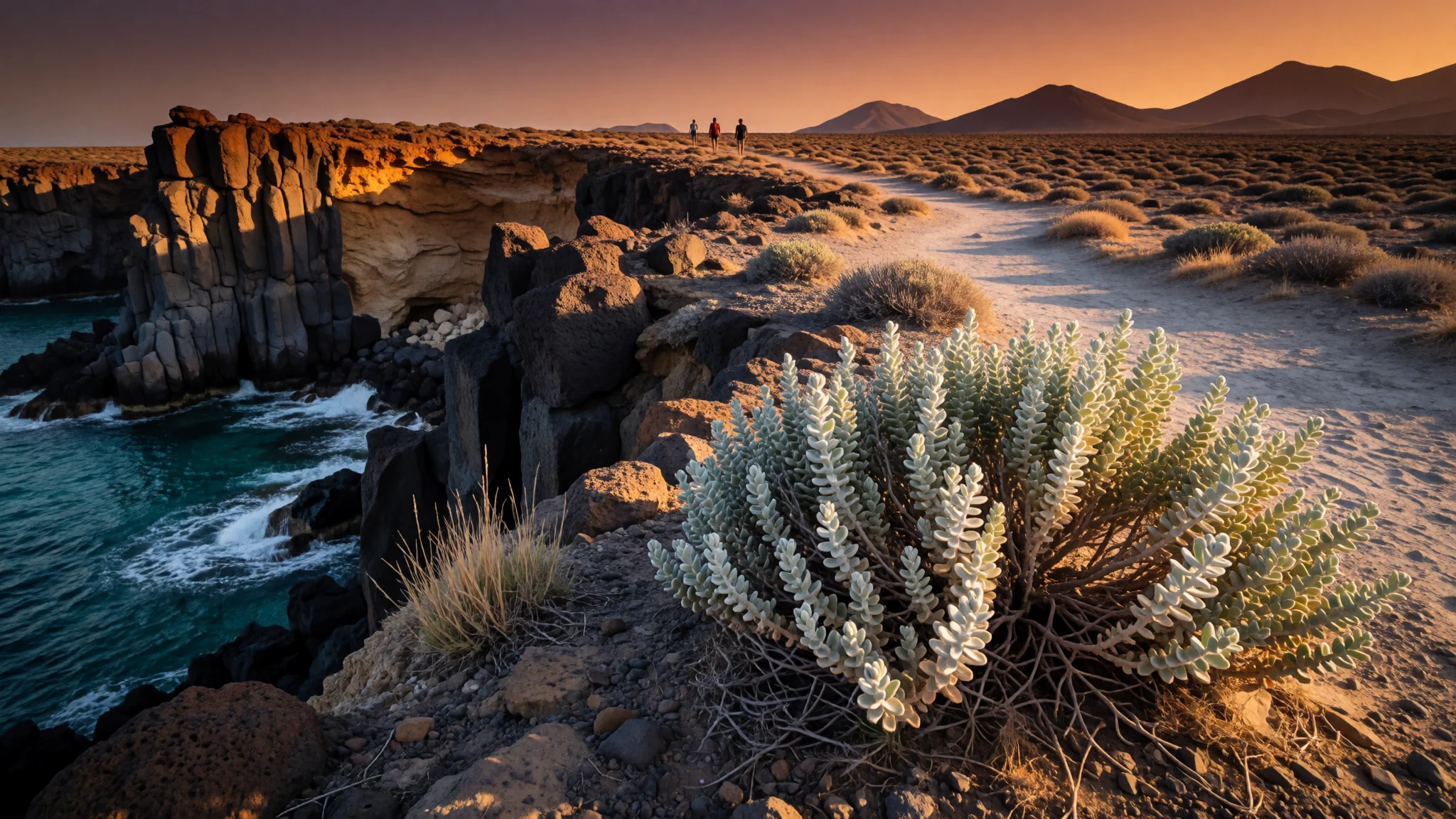
Cabo de Gata is Andalusia's dry volcanic coast: empty coves, salt flats, whitewashed fishing villages and wide night skies, far from the resort towers.
The place
Cabo de Gata is the dry, wind-scoured southeastern corner of Andalusia, in the province of Almería, where old volcanic hills drop straight into the Mediterranean. Most of the coast is protected as a natural park, which is why it has stayed much quieter than the resort strips further along the Spanish shoreline. The landscape feels closer to North Africa than to the green Spain of postcards: ochre cliffs, grey-brown scree, agave and palmetto scrub, and sea that turns turquoise over pale sand. Villages are small, low-rise and whitewashed, with a handful of cafés and dive shops rather than tower blocks. San José is the busiest base, Las Negras and Agua Amarga are calmer, and the old mining hamlet of Rodalquilar sits inland among the hills. Between them run rough tracks, coastal paths and a few beaches reached only on foot or by bumpy road. Summer is hot, shade is scarce and wind can whip sand across the beaches; spring and autumn are kinder. Public transport is thin, so a car makes everything easier, though walking or cycling between neighbouring coves is realistic for the reasonably fit. Rain is rare and skies are often clear, which suits stargazing as much as swimming. Crowds build in July and August at the best-known beaches, while winter feels almost empty and some businesses close.
Its story
The story of Cabo de Gata begins underground. Volcanic activity long ago pushed up the dark ridges and cliffs that now frame the coast, and the colours of the rock, from rust to grey to cream, are the legacy. The cape's name is often linked to agate, the banded stone found in the area, though the origin is debated. People here lived by fishing, by raking salt from shallow pans near the cape, and by farming thin, thirsty soil. Stone watchtowers along the shore date from centuries when raiders from the sea were a real threat, and several still stand on headlands. In the twentieth century the hills around Rodalquilar were mined for gold, and the abandoned works are still visible. Poverty drove many families to leave for cities and abroad, which left the coast so empty that it escaped the building boom that reshaped much of Spain's south. Protection as a natural park then fixed that quiet in law, and slow tourism grew around it. Cinema also found the scenery: the arid hills around Almería stood in for the American West and the Middle East in many films. Inland, the contrast is stark, as vast plastic greenhouses supply vegetables to much of Europe. The park's edge is a visible line between two very different ways of using the same dry land.
What to see
- Playa de los Genoveses — Near San José
Playa de los Genoveses is a broad, curving beach backed by dunes, with shallow water and no buildings behind it. It is popular, so the sand fills by midday in high summer. Early morning or late afternoon is calmer. Bring shade and water, as there is little cover and a long walk from the car park.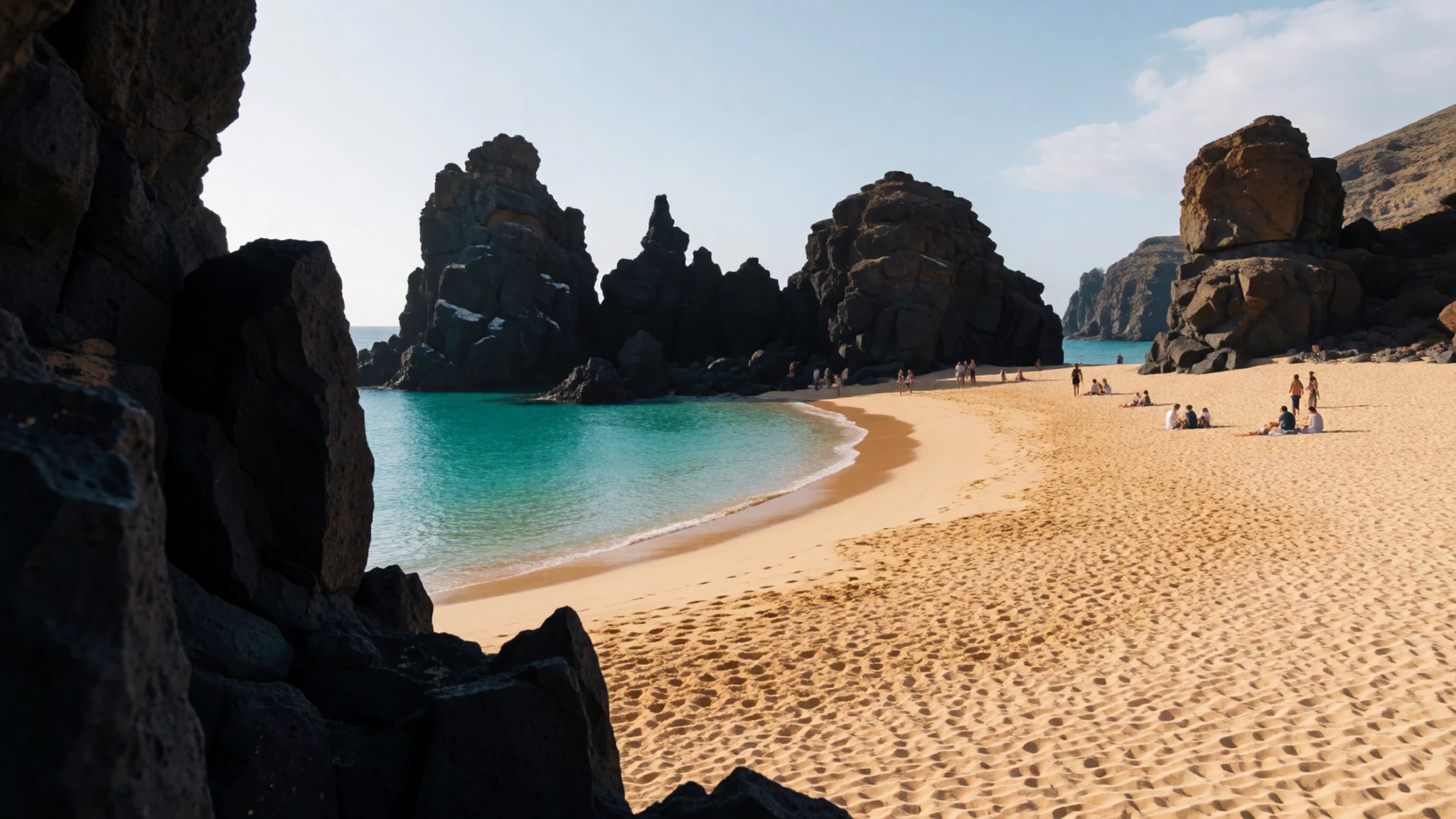
- Mónsul beach — Near San José
Mónsul beach is a pale cove closed in by a frozen-looking slope of volcanic lava, with a dune sweeping down to the water. It suits snorkelling and photographs in low light. Parking is limited, and in summer access by road can be restricted, so check current park rules before setting out.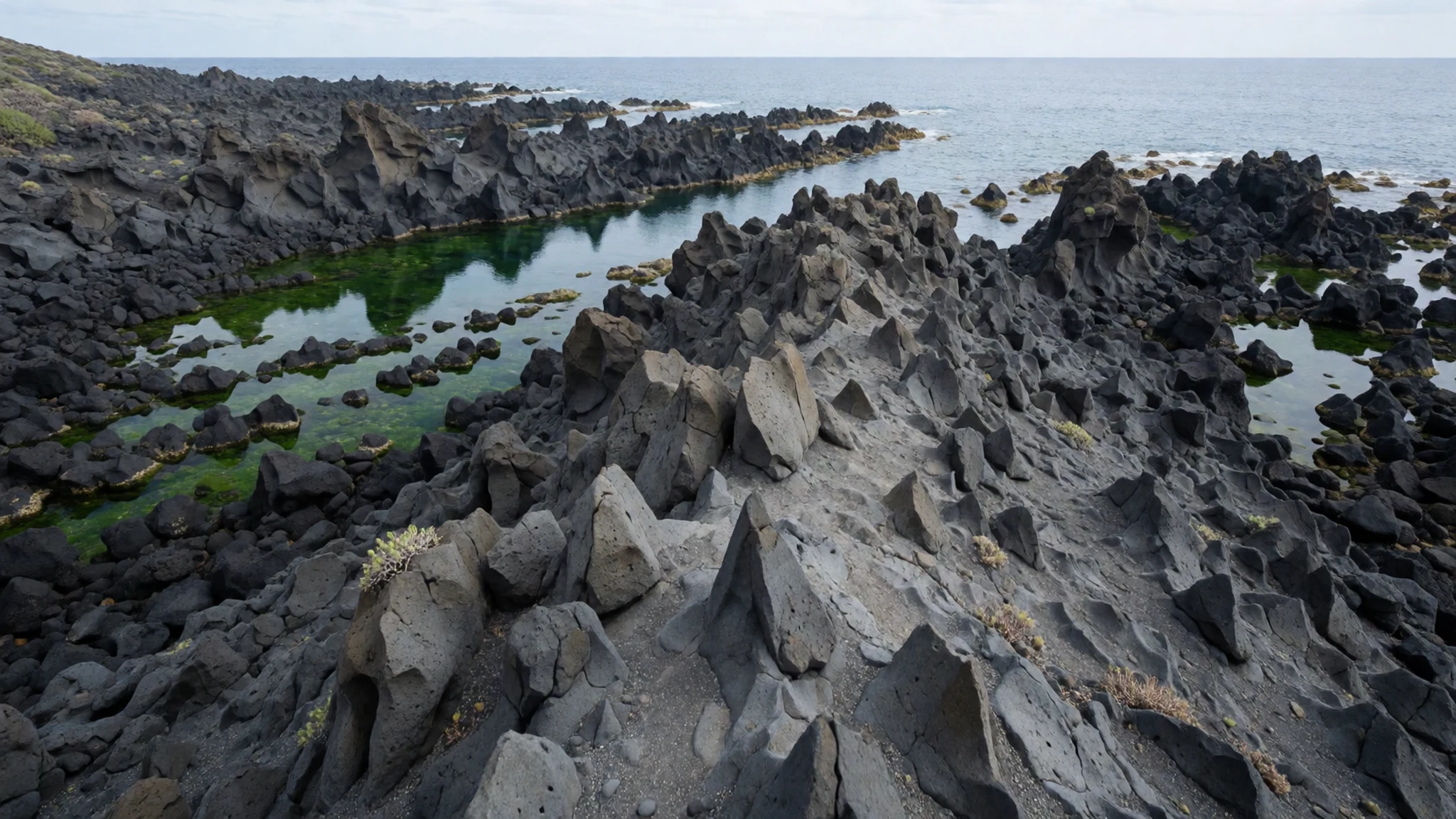
- Salt flats and flamingo hides — Cabo de Gata village
The salt flats beside Cabo de Gata village are shallow lagoons where migrating and resident birds feed, including flamingos at the right times of year. Simple hides along the road let visitors watch without disturbing them. Binoculars help a great deal, and the light is best early or late.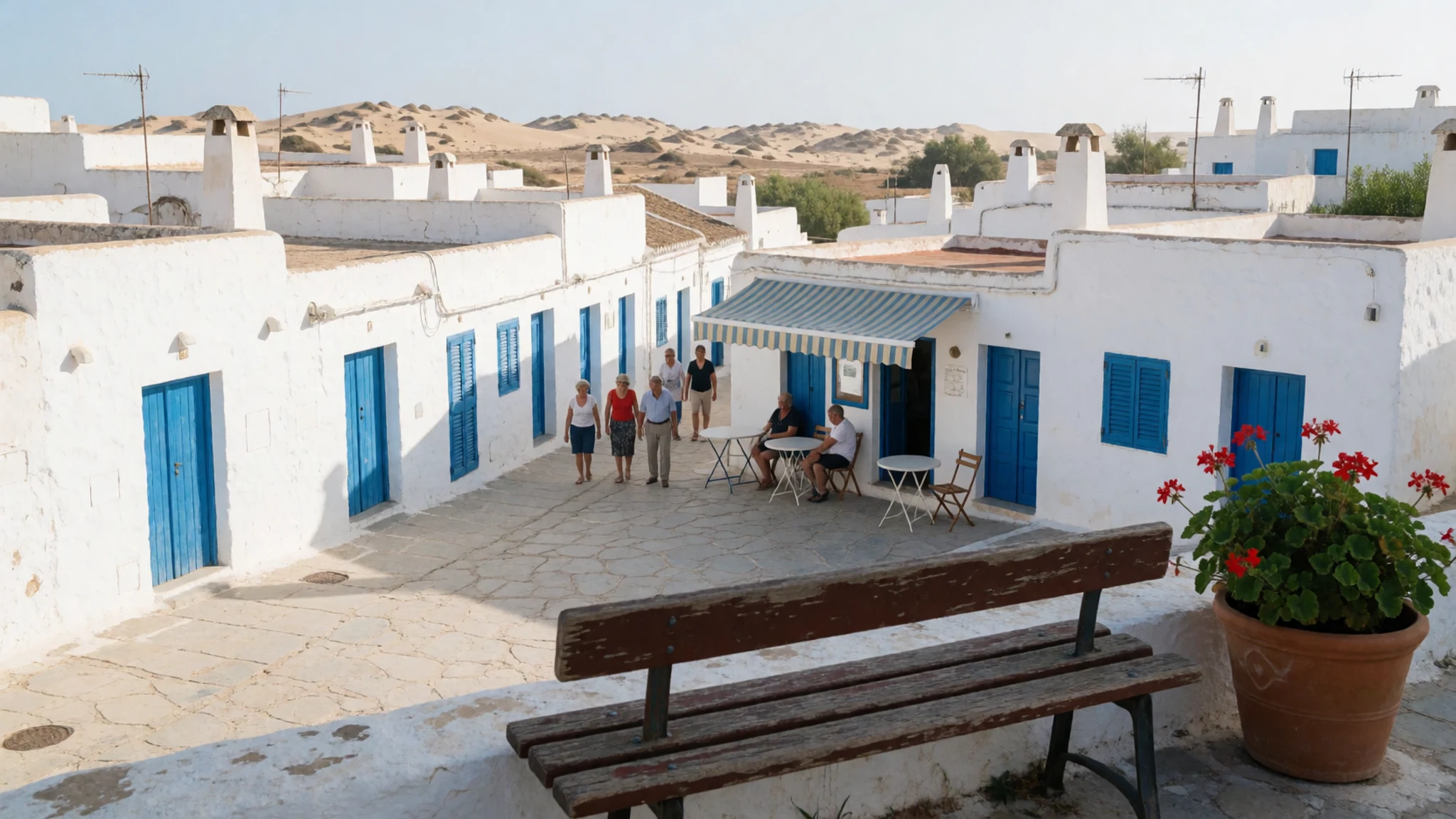
- Cabo de Gata lighthouse — Cape tip, south of the village
The lighthouse stands on the cape's tip, reached by a road along the coast past reefs and rock pools. Nearby is a lookout over jagged volcanic stacks and clear water. It is windy and exposed, so a layer is useful even on warm days, and sunsets draw small crowds.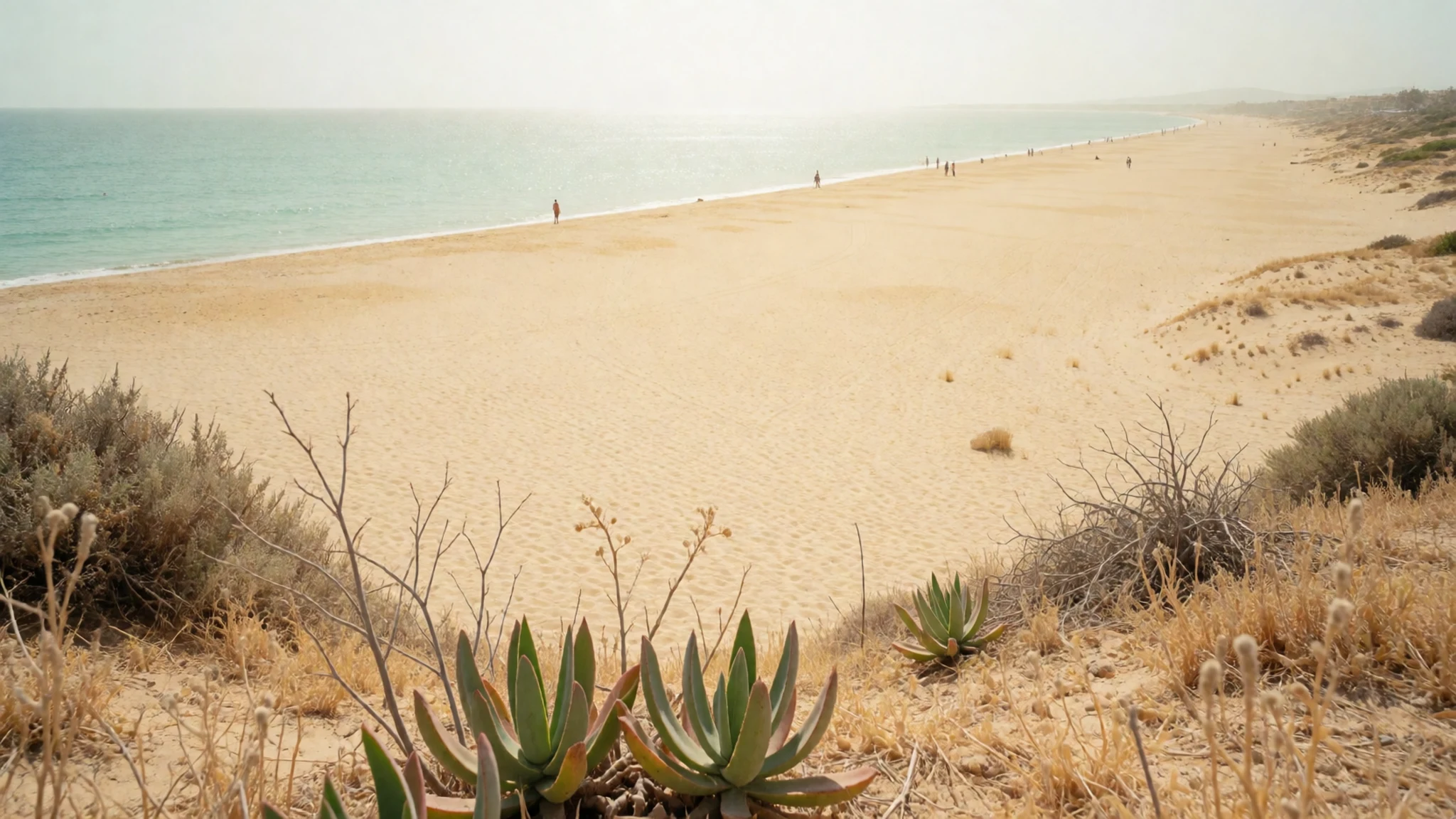
- Rodalquilar — Inland, north of San José
Rodalquilar is a quiet inland village whose hills were once mined for gold. The ruined processing plant on the slope is a stark industrial relic, and a botanical garden in the village shows off drought-tolerant plants. It makes a good change of pace from the beaches on a hot afternoon.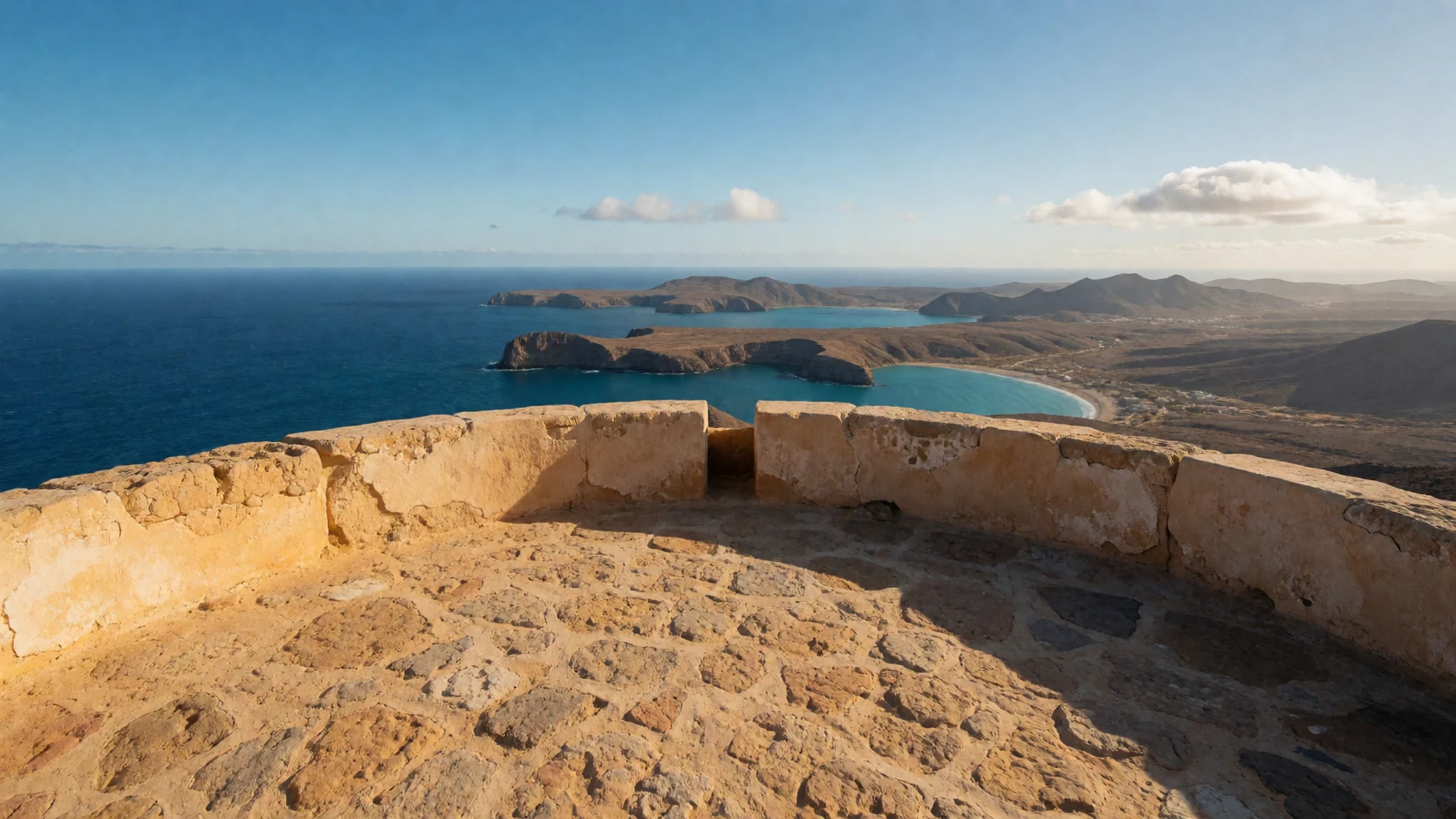
Culture
Cabo de Gata sits in Almería, which belongs culturally to Andalusia but has its own quieter, more reserved character than Seville or Granada. Life follows the heat: mornings start slowly, lunch is late, and village streets empty in the afternoon, then fill again in the evening with families, children and conversation outside bars. Fishing remains part of local identity, and small boats still land the catch on beaches and at harbours. The coast also has a long alternative streak: since the late twentieth century, artists, hikers and people seeking a simpler life have settled in places like Las Negras and the cove of San Pedro, giving some villages a relaxed, slightly bohemian air. Village fiestas, usually tied to a patron saint, bring processions, music and food in summer, and they are for residents first, with visitors welcome to watch politely. Spanish is spoken everywhere, and Andalusian speech can be fast, dropping consonants, so even confident learners may struggle at first. English is common in tourist businesses and thinner elsewhere, so a few Spanish greetings go a long way. Residents also care about the park itself, since water is short and the landscape is fragile. Pack out rubbish, stay on marked paths, and never take sand, stones or shells from the beaches, as removal from the protected coast is discouraged and can be penalised.
What to wear
Cabo de Gata's traditional dress is the Andalusian tradition, most visible in the traje de flamenca, a fitted dress with ruffled skirts, usually cotton or light synthetic fabric, often with polka dots, worn for fairs and festivals. Older men in villages sometimes wear flat caps, and espadrilles (alpargatas), made with rope soles of woven esparto grass, were once everyday working footwear. Esparto craft, braided into baskets and mats, is a regional skill. Day to day, however, most people wear what suits heat and sea: shorts, linen shirts, cotton dresses, sandals and sun hats, with practical fishing and farm clothes for work. Villages are casual, and swimwear is normal on the beach but not on the street or in shops. A visitor should pack light, breathable clothing in neutral colours, a wide-brimmed hat, sunglasses and strong sun protection, as the exposed coast offers little shade. Sturdy walking shoes or trainers with good grip are essential for volcanic paths, where loose stones are sharp and slippery. Sandals suit the beach only. A light jacket or windproof layer helps at the cape and in the evening, especially outside summer. Cover shoulders and knees when stepping into a village church. Some quiet coves are used by naturists, so expect that and be discreet with photographs.
What to eat
- Caldero — Seafront restaurants in San José and Las Negras
Caldero is a rice dish cooked with fish stock, local fish and a paste of dried peppers and garlic, traditionally prepared by fishermen. It arrives rich and fragrant. Order it at seafront restaurants in the fishing villages, and allow time, as it is often cooked to order.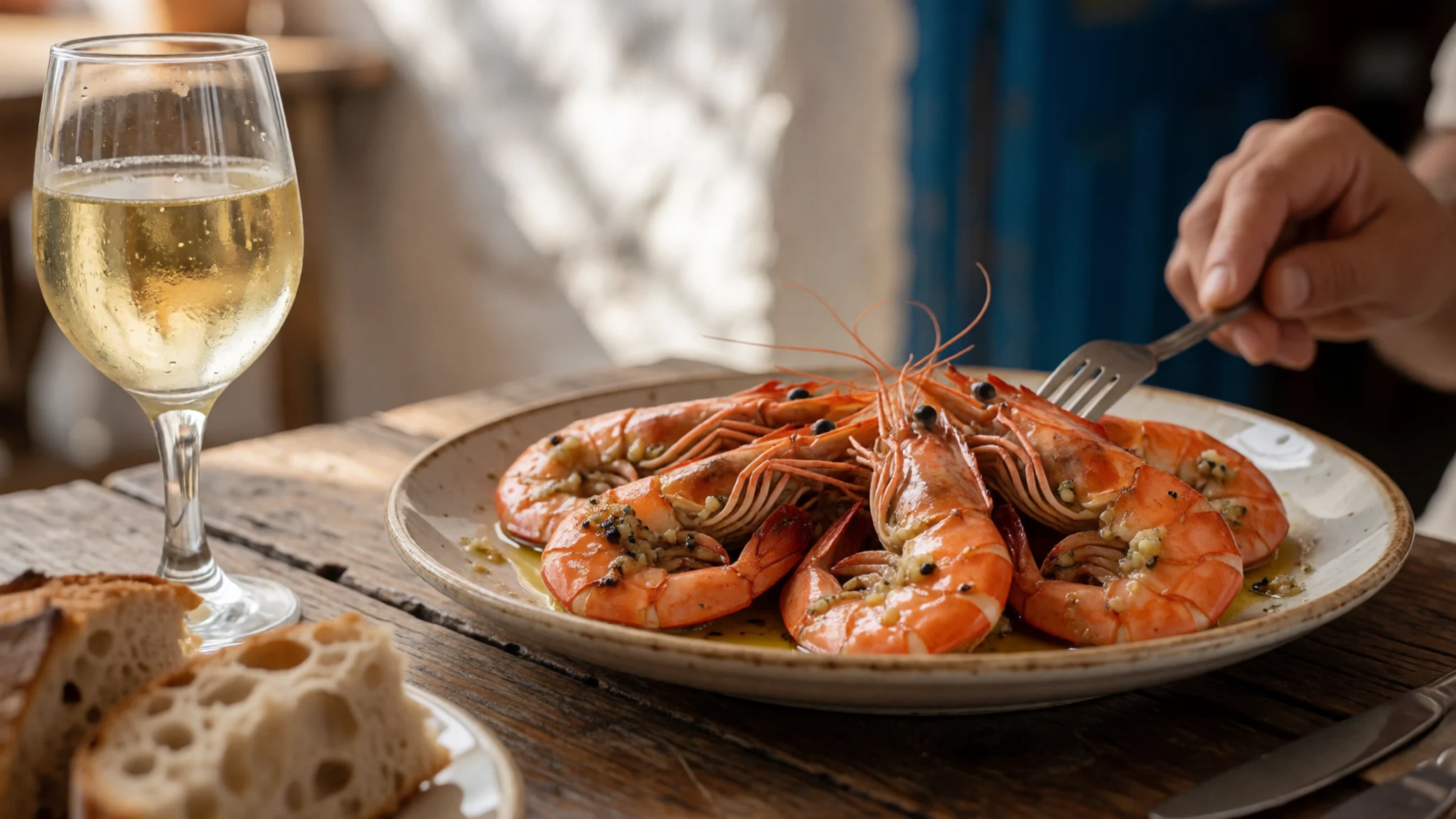
- Pescaíto frito — Harbour-side bars and casual fish restaurants
Pescaíto frito is a plate of small fish, squid and anchovies lightly floured and fried until crisp, eaten with lemon. It is a classic Andalusian lunch and goes well with cold beer or dry white wine from a nearby region.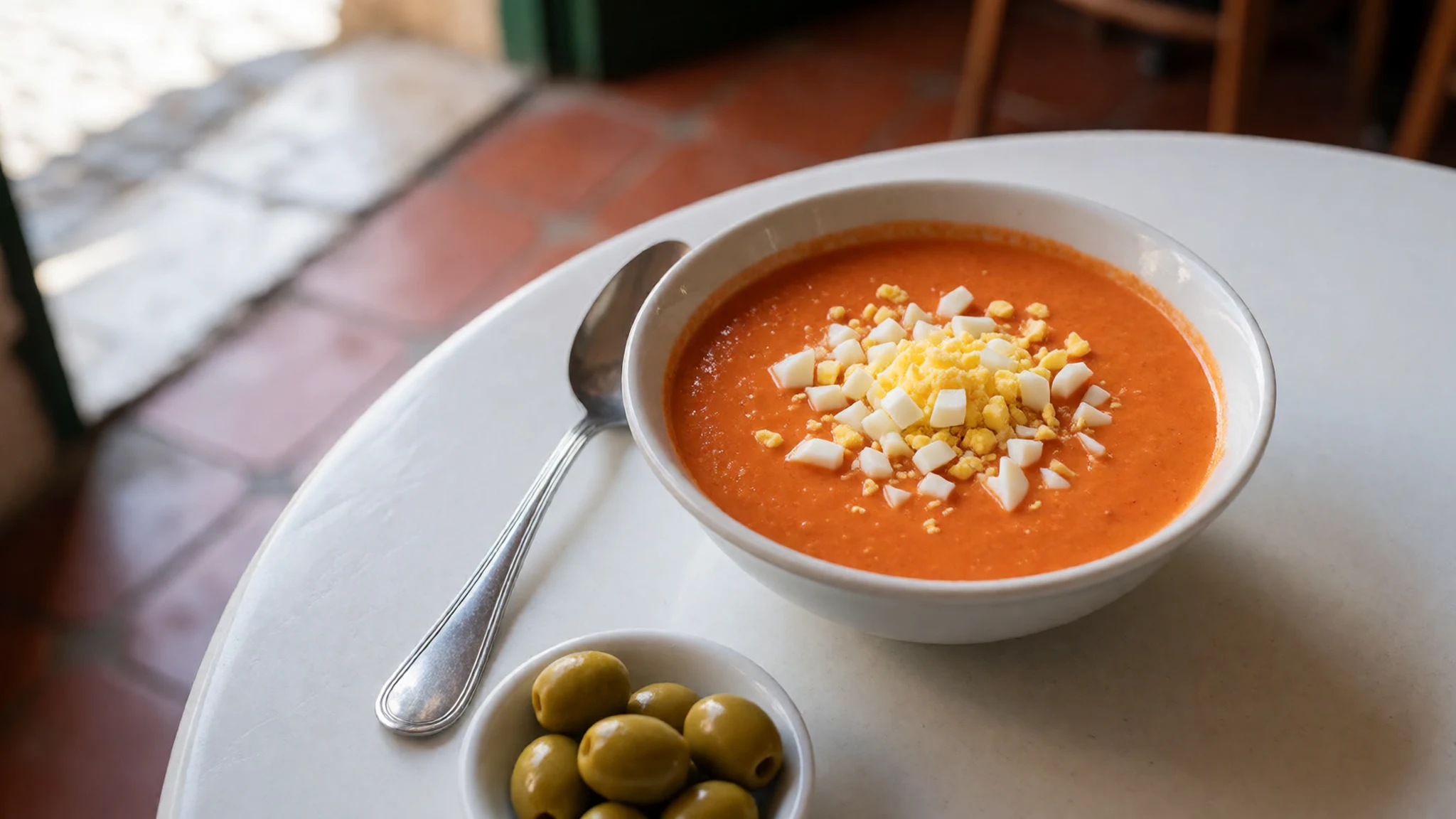
- Gambas rojas — Garrucha harbour and fish restaurants along the coast
Red prawns from the Almería coast are prized for their sweetness and are usually grilled or boiled in salt and eaten with the fingers. They are seasonal and not cheap, so ask what is fresh before ordering. - Gurullos con conejo — Village restaurants in Rodalquilar and inland Almería
Gurullos are small hand-rolled pasta shapes simmered in a hearty stew, traditionally with rabbit, peppers and tomatoes. It is inland comfort food, filling and best in cooler months, and a reminder that the region's cooking is not only about fish. - Tapas with a drink — Tapas bars in Almería city and larger villages
In Almería, bars traditionally serve a small free tapa with each drink, and the portions grow with every round. It is an easy way to try local ham, fried fish and seasonal vegetables without planning a full meal.
Plan it
Best time. May–June and September–October, when the sea is warm, the days are sunny but not punishing and crowds are lighter than in July and August. Summer is hot with little shade, while winter is mild but can be breezy and some businesses close.
How long. 3–4
Getting there. Fly to Almería airport, the nearest, then hire a car for the drive to San José and the villages; buses run from Almería city but are limited, so check timetables with the operator. Málaga and Granada are alternatives with a longer road journey.
Budget. mid
Tips
- Hire a car if possible, as villages and beaches are spread out and public transport is thin
- Carry plenty of water and sun protection, because shade and shops are scarce on the trails and beaches
- Reach popular beaches early in July and August, and check current park access rules before driving to remote coves
- Bring some cash for small village bars and beach kiosks, as card acceptance can be patchy
- Book accommodation ahead for summer weekends and school holidays, as places are small
Etiquette
- Stay on marked paths and take all rubbish with you
- Do not remove sand, stones or shells from the protected coast
- Keep swimwear for the beach and cover up in villages and churches
Nearby
Sources
- Wikidata (CC0)
- Wikipedia — Cabo de Gata (CC BY-SA 4.0)
- Wikivoyage — Cabo de Gata (CC BY-SA 4.0)