Aspen
Aspen, United States
Aspen is a former silver camp turned mountain town where skiing, music and golden autumn aspens share a valley at 2405 metres.
The place
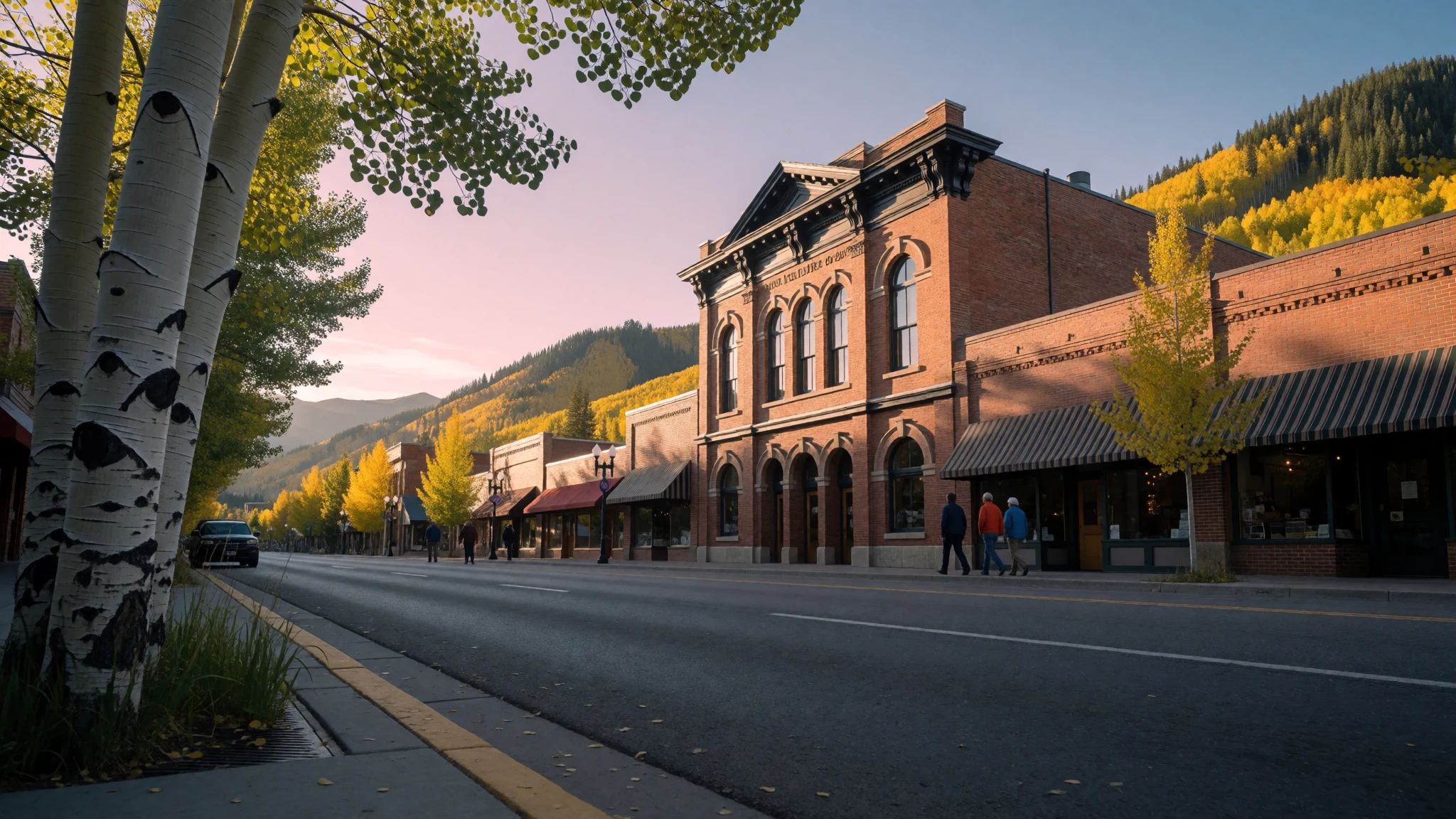
Aspen is a small mountain town in Colorado, tucked into the Elk Mountains on the western side of the Rocky Mountains. The Roaring Fork River runs through it at an elevation of 2405 metres, and the population is 7004, a figure that swells noticeably in ski season and again in high summer. The Continental Divide lies a short drive to the east, and steep forested slopes close in on every side, so downtown is compact and easy to cross on foot. Brick Victorian buildings, converted cabins and a few bold modern galleries share the same handful of streets, and the lifts of Aspen Mountain begin almost where the pavement ends. The town is the seat of Pitkin County and the largest municipality in it, yet it feels remote, reached by long mountain roads and a small airport that is easily upset by weather. Three institutions give Aspen an importance well beyond its size: the Aspen Music Festival and School, the Aspen Institute and the Aspen Center for Physics. Celebrities have favoured the town for decades, which explains the designer shops and the prices, and the honest verdict from most visitors is that Aspen is expensive and crowded at peak times. Against that, the air is thin and clean, trails and rivers start at the edge of town, and the mix of mining heritage, culture and mountain sport is unusual. Winter is the main season, but summer and early autumn bring hikers, cyclists, concerts and, in September, aspen leaves turning yellow.
Its story
Aspen began in 1879, when a band of prospectors crossed the Continental Divide into the Roaring Fork valley despite warnings from Colorado's governor, Frederick Pitkin, that conflict with the Ute people made the area dangerous. The Utes were defending their land and communities, and the settlers' arrival added to the pressure that eventually drove them out. The camp was first called Ute City, then renamed Aspen after the trees that crowd the surrounding slopes. Silver made the place. Within a few years it had a post office, a county government and a newspaper, and by the early 1890s its mines were out-producing Leadville, the older silver rival. Banks, a hospital, theatres, an opera house and electric light followed. The crash came in 1893, when Congress repealed the federal law that had propped up silver purchases. Mines closed within weeks and thousands of miners lost their work. Davis Waite, an Aspen newspaperman, rode the silver cause into the governor's office, but the movement faded. For decades afterwards the town shrank, falling to under a thousand residents, and locals later called this stretch the quiet years. Recovery came with skiing on Aspen Mountain and with the industrialist Walter Paepcke, who bought and restored many buildings in the 1950s and helped found the music and ideas institutions that still define the town.
What to see
- Maroon Bells — Maroon Creek valley, southwest of town
The Maroon Bells are a pair of steep, layered peaks reflected in a small lake a short drive from Aspen. Photographers queue for the view at dawn, so go early or expect company. Check the official site for how access and parking are managed in the season you visit.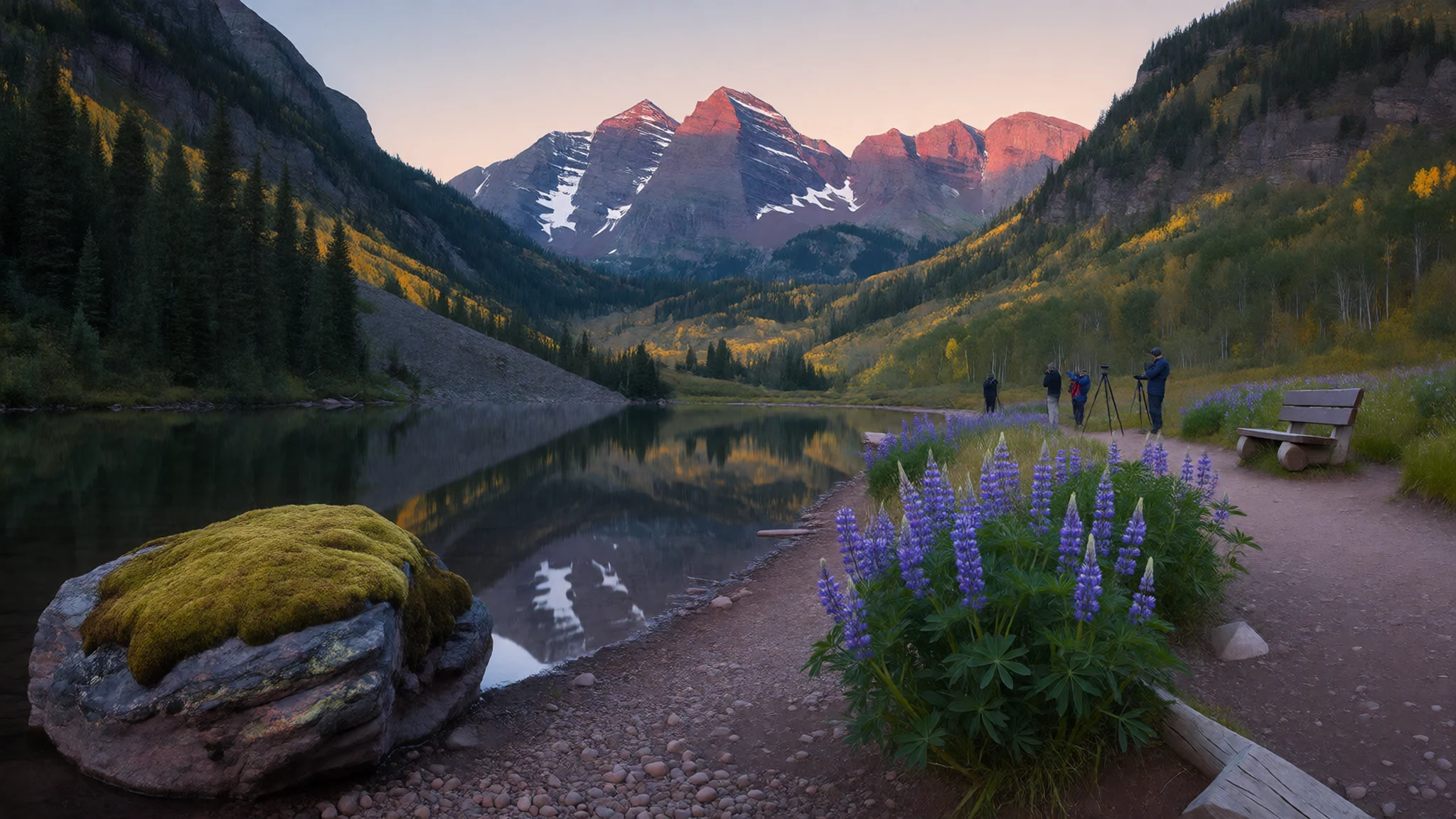
- Independence Pass — East of Aspen, on the road to the Divide
This mountain road climbs from the Roaring Fork valley to the Continental Divide and is open to traffic only in the warmer months. Stops along the way give long views over tundra and rock, and an old mining ghost town sits beside the road. Drive carefully and allow time for the thin air.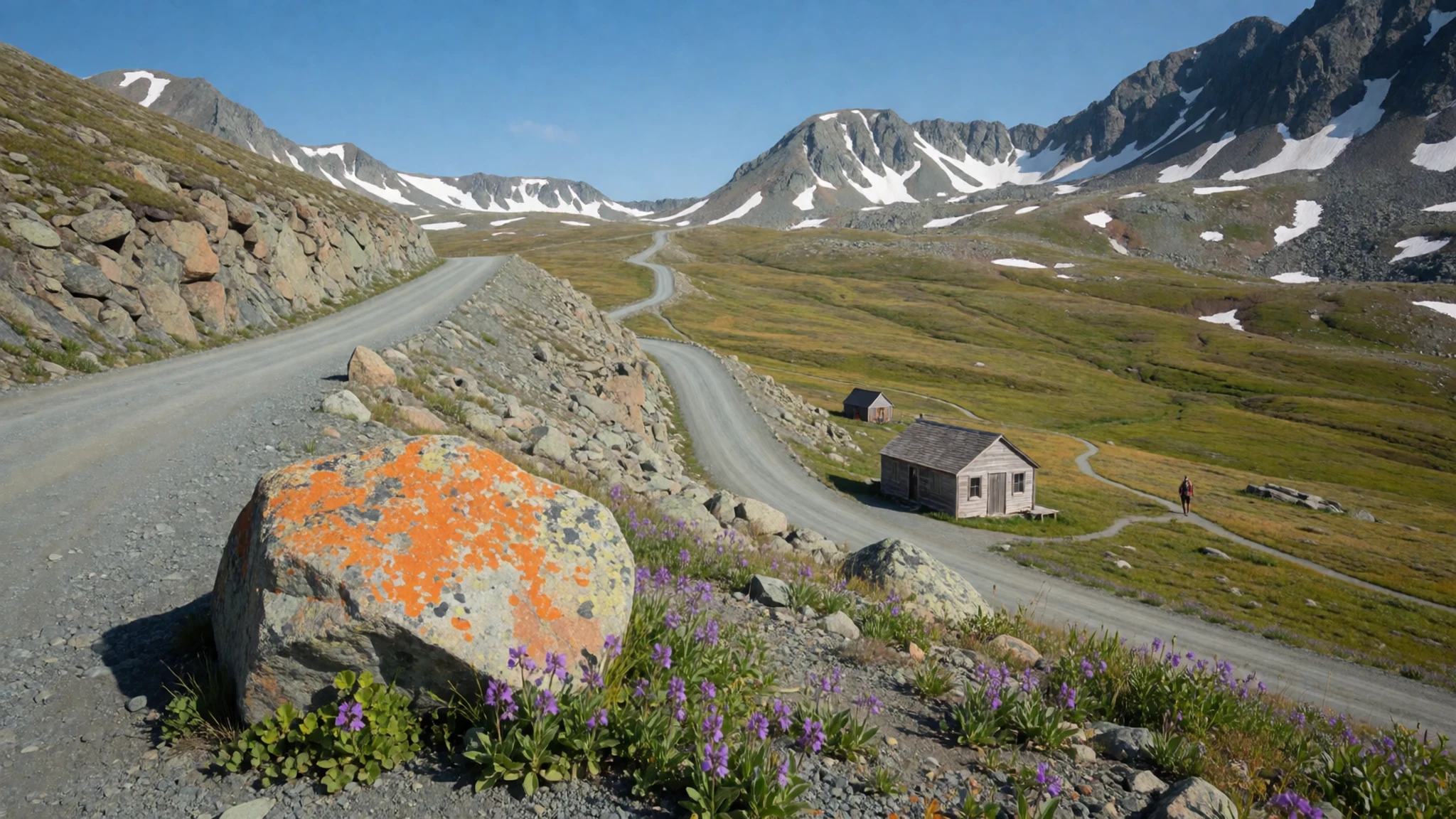
- John Denver Sanctuary — Rio Grande Park, central Aspen
A quiet riverside garden in Rio Grande Park honours the singer who settled in Aspen and wrote songs about it. Boulders carry lyrics, and the Roaring Fork flows alongside. It is an easy, free stop on foot from downtown, and a calm place to sit after a busy morning.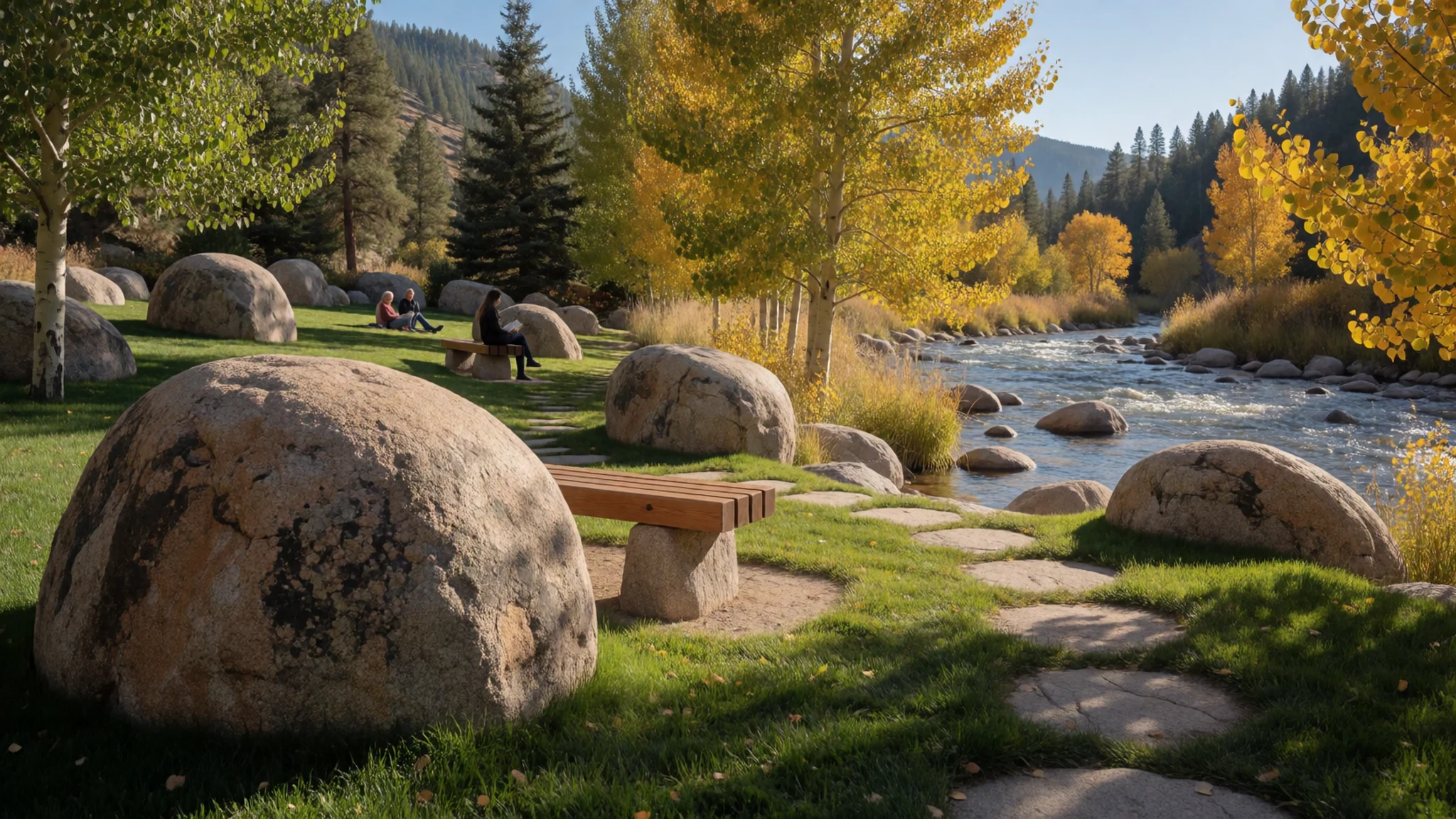
- Aspen Art Museum — Downtown Aspen
The museum is a modern building by the architect Shigeru Ban, with a woven timber screen on its façade and a rooftop terrace looking toward the slopes. It shows contemporary art in changing exhibitions. Check the official site for opening times and current shows before planning a visit.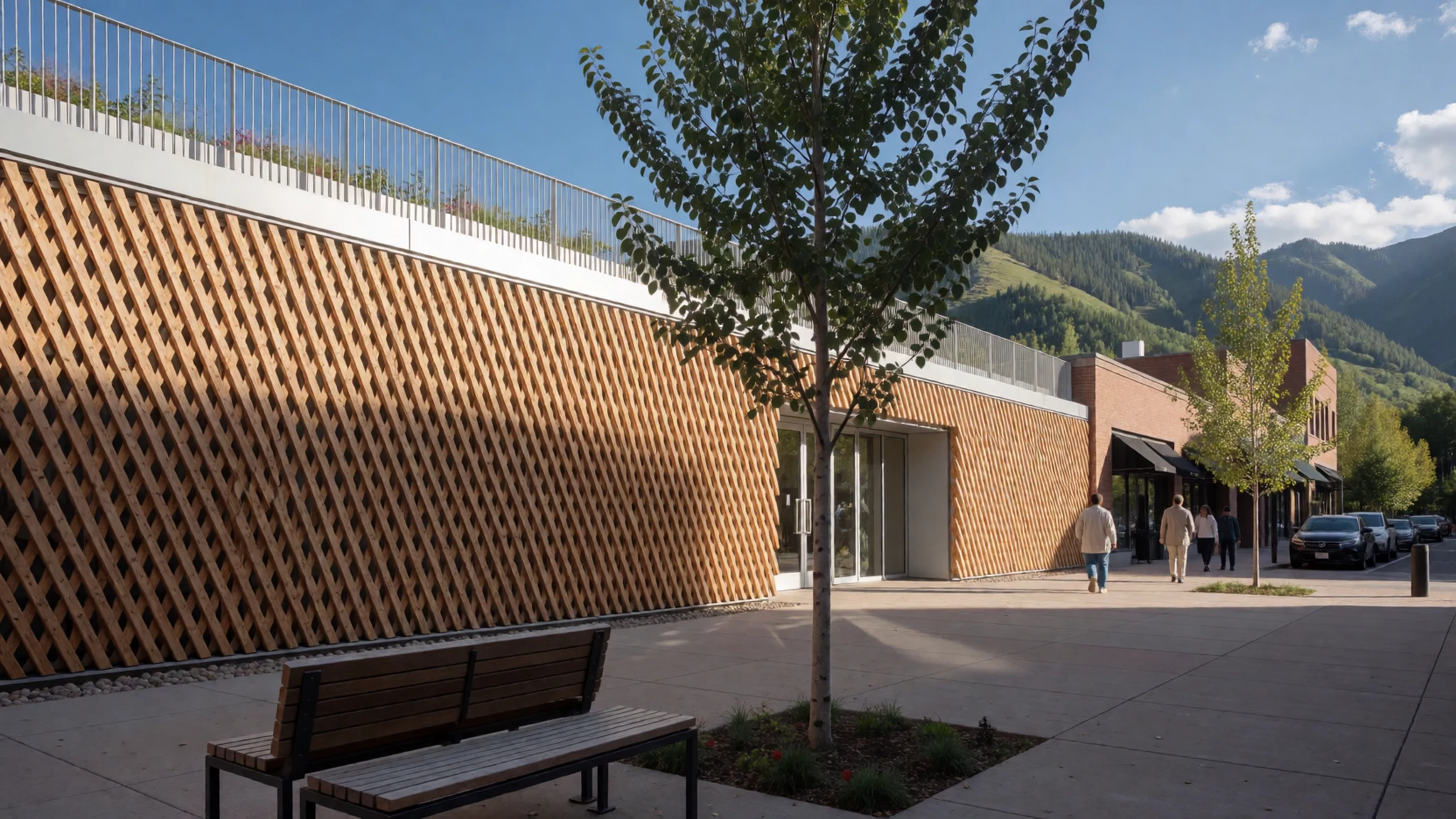
- Aspen Mountain — Above downtown Aspen
The ski slopes rise directly above downtown and have hosted World Cup racing. In winter the lifts carry skiers from the edge of town, and in summer the same mountain offers walking and views across the valley. Ski conditions vary through the season, so check snow reports before booking.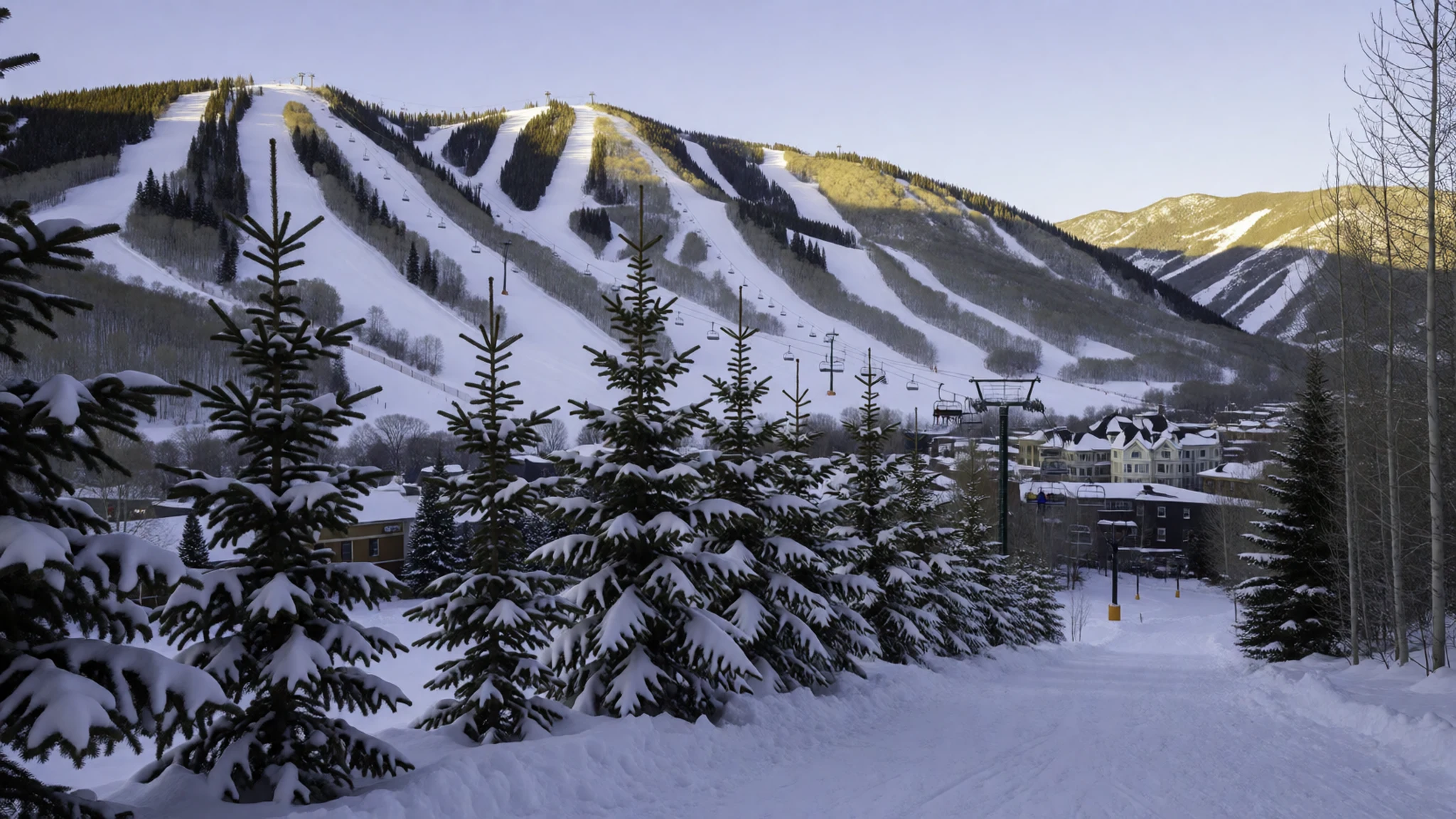
Culture
Aspen's culture rests on three layers: mining-camp grit, mid-century idealism and celebrity money. The silver camp left Victorian brick streets and a habit of working hard and playing harder. Walter Paepcke's postwar vision added music and ideas, so every summer the Music Festival and School fills tents and halls with concerts, while the Institute hosts talks and seminars on public affairs. Writers and musicians have long found the valley congenial: Hunter S. Thompson lived nearby at Woody Creek, and John Denver wrote songs about the area and is remembered with a sanctuary beside the river. Outdoor life is the common language. Locals ski before work, cycle in summer and discuss snow and trail conditions the way others discuss the weather. Wealth is highly visible in the shops and the houses on the hillsides, yet many people who serve the town live down the valley and commute in. Care for the surrounding mountains is taken seriously, from recycling to rules about wildlife on the trails. Aspen is also a place where conversation drifts easily from skiing to politics to physics, and strangers at a bar or on a chairlift tend to chat. When walking in the hills around Aspen, give bears and moose a wide berth, keep noise down on quiet trails and carry all your litter out.
What to wear
Aspen has no single national costume, and its working heritage is the miners' wardrobe: wool shirts, canvas and denim trousers, oiled leather boots and felt hats. The Ute people, who lived in this country long before the silver camp, have their own tradition of buckskin clothing and beadwork, which is best seen in museums and at events organised by Ute communities rather than on the street. Today the town dresses for the mountains first. In winter that means insulated jackets, ski shells, fleece and woollen base layers, with fur-trimmed boots and designer outerwear for evenings out. In summer locals wear trail shoes, shorts, light fleeces and cycling kit, and cowboy boots still turn up at concerts and bars. Dress codes are relaxed almost everywhere, including churches, though smart casual clothes suit the better restaurants. A visitor should plan on layers because mornings and evenings are cold even in July, and the sun at 2405 metres is fierce, so pack sunglasses, a hat and sunscreen. A waterproof jacket helps with afternoon storms in summer. Sturdy walking boots or trail shoes are needed for paths around Maroon Creek, and winter visitors need warm gloves, a hat and boots with proper grip for icy pavements.
What to eat
- Colorado barbecue — Main Street, on the way into town
Slow-smoked ribs, brisket and pulled pork come with beans and cornbread in generous portions. Look for the barbecue places along Main Street at the entrance to town, where locals eat as readily as visitors and queues form at lunch.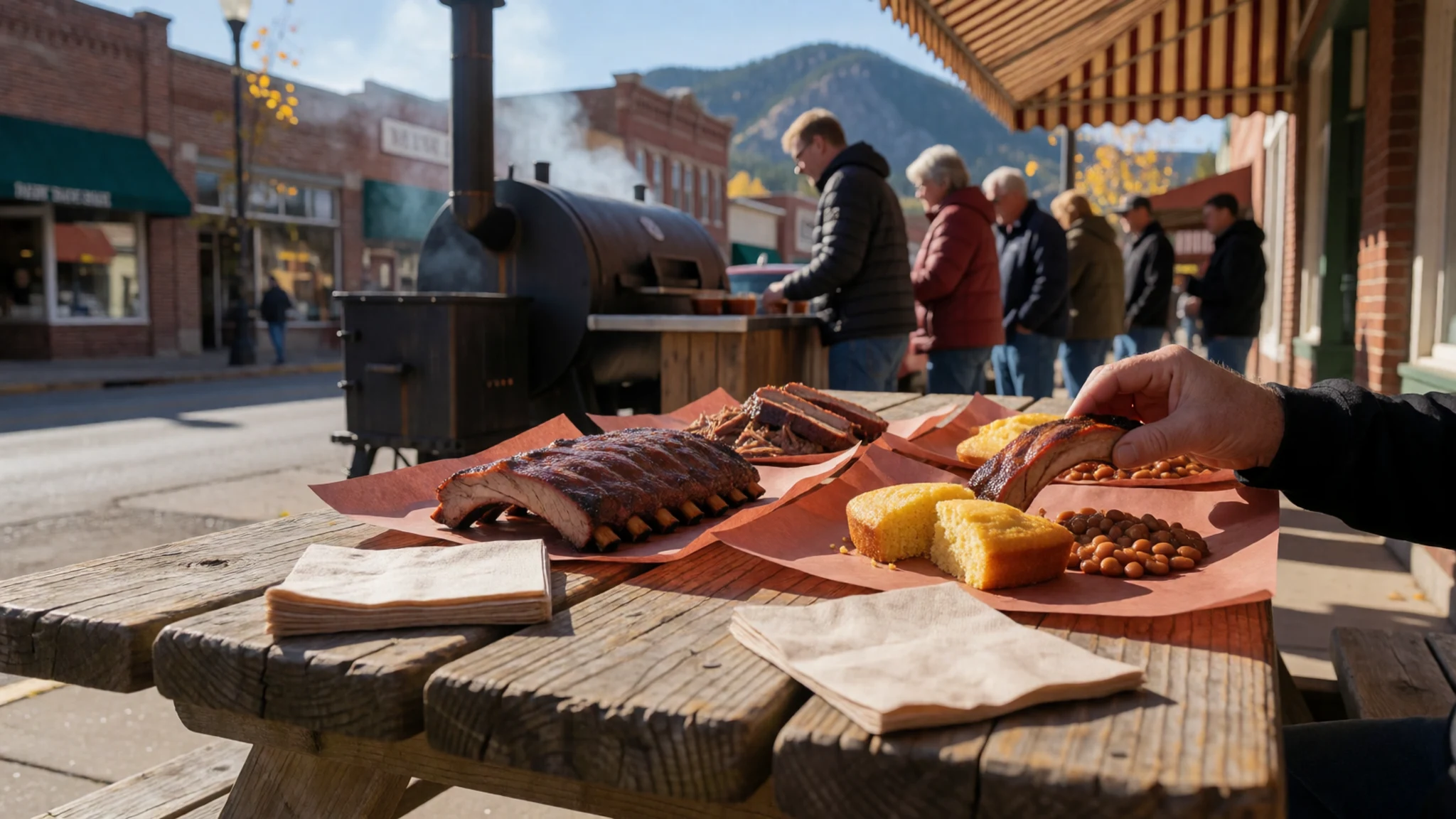
- Après-ski sharing plates — Slopeside restaurants at the foot of Aspen Mountain
After the lifts close, skiers settle on sunny decks with burgers, fries, wings and warming drinks. It is a social meal as much as a dish, and a good way to watch the slopes empty as the light drops.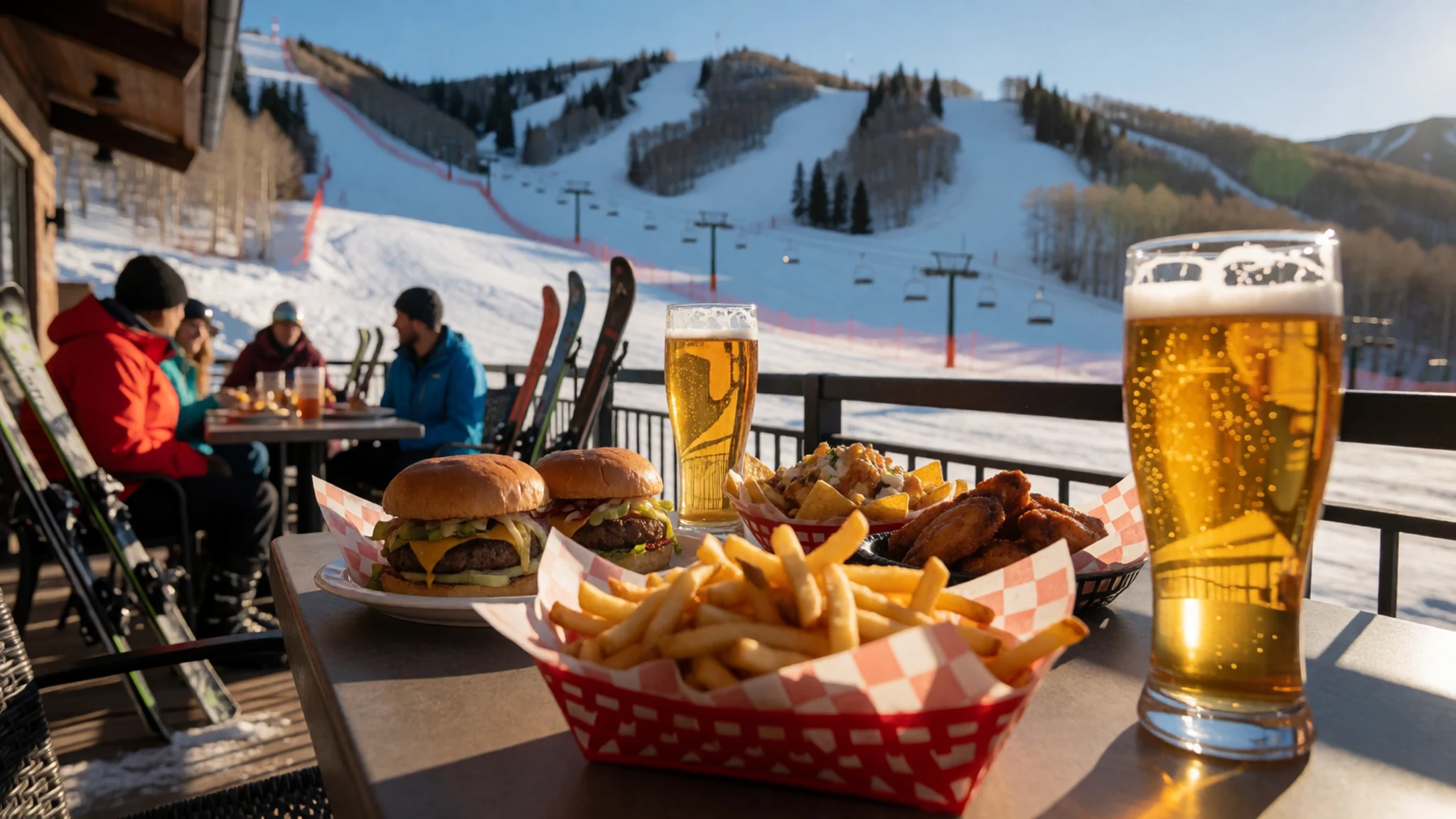
- Modern Colorado cooking — Restaurants in downtown Aspen
Several kitchens in town cook local produce, game and mountain-valley ingredients with an alpine influence, in tasting menus or small plates. This is the place for a smart dinner. Book ahead in ski season and check each restaurant's own site. - Rocky Mountain trout — Valley restaurants and log-cabin dining rooms along the Roaring Fork
Trout from Colorado rivers is usually served pan-fried or roasted with herbs and lemon, sometimes with potatoes or local greens. It suits a lighter lunch after a morning of walking or fishing. - Woody Creek lunch — The village of Woody Creek, down the valley from Aspen
The old roadside tavern at Woody Creek, a short drive from Aspen, was a favourite of Hunter S. Thompson and serves generous, casual plates such as burgers and Mexican-style dishes. It is busy at midday, so go early or expect to wait.
Plan it
Best time. Late June to September for hiking, cycling, festivals and, in the last weeks of September, yellow aspen leaves; December to March for skiing, with the deepest snow usually in January and February. Spring and late autumn are quiet, and many businesses close or shorten their days.
How long. 3–4
Getting there. Aspen-Pitkin County Airport (ASE) is small, served by regional flights, and delays in poor weather are common. Eagle County Regional Airport (EGE) is the usual alternative, about an hour and a half by road via Glenwood Springs. Denver is about four hours by car. Independence Pass is open only in summer, so winter traffic goes through Glenwood Springs. The Aspen airport is due to close for runway work from April to November 2027, so check the official site, aspen.gov, before booking.
Budget. high
Tips
- Book lodging and flights early for ski season and for summer festival weekends
- Allow a day or so to adjust to the altitude, drink plenty of water and go easy on alcohol at first
- Start early for Maroon Bells and other popular trails to avoid the crowds
- Carry layers and sun protection, because the weather changes fast in the mountains
- Cards are accepted almost everywhere, but carry a little cash for small stalls
Etiquette
- Keep a safe distance from bears, moose and other wildlife and never feed them
- Stay on marked trails and carry out all your litter
- Ask before photographing people, especially at private events and performances
Nearby
Sources
- Wikidata Q205842 (CC0)
- Wikipedia: Aspen, Colorado (rev 1376533733) (CC BY-SA 4.0)
- Wikivoyage: Aspen (rev 5433602) (CC BY-SA 4.0)
- Silver mines, Aspen, Colorado, 1898 — Detroit Publishing Co. (Public domain)
- Aspen, 1962, Kodachrome — Chalmers Butterfield (CC BY 3.0)
- Aspen Art Museum by Shigeru Ban — Bkthomson16 (CC BY-SA 4.0)
- Henry Webber House, Aspen, CO — Daniel Case (CC BY 3.0)
- The John Denver Sanctuary in Rio Grande Park — Whoisjohngalt (CC BY-SA 4.0)
- 2017 World Cup Ski Run, Aspen — Richardmouser (CC BY-SA 4.0)
- Aspen City Hall — Daniel Case (CC BY 3.0)
- Aspen Community Church south façade — Wolfgang Moroder (CC BY 3.0)


Wildlife
- Black bear (animal)
The American black bear is a middling-sized bear, the smallest of North America's bears and the one found across the most ground, and it eats almost anything, changing its menu with the seasons. In the hills around Aspen, it may wander out of the trees when hunting for food. Give it plenty of room, keep your voice low on quiet paths, and carry every scrap of litter home, since bears are tempted by easy meals.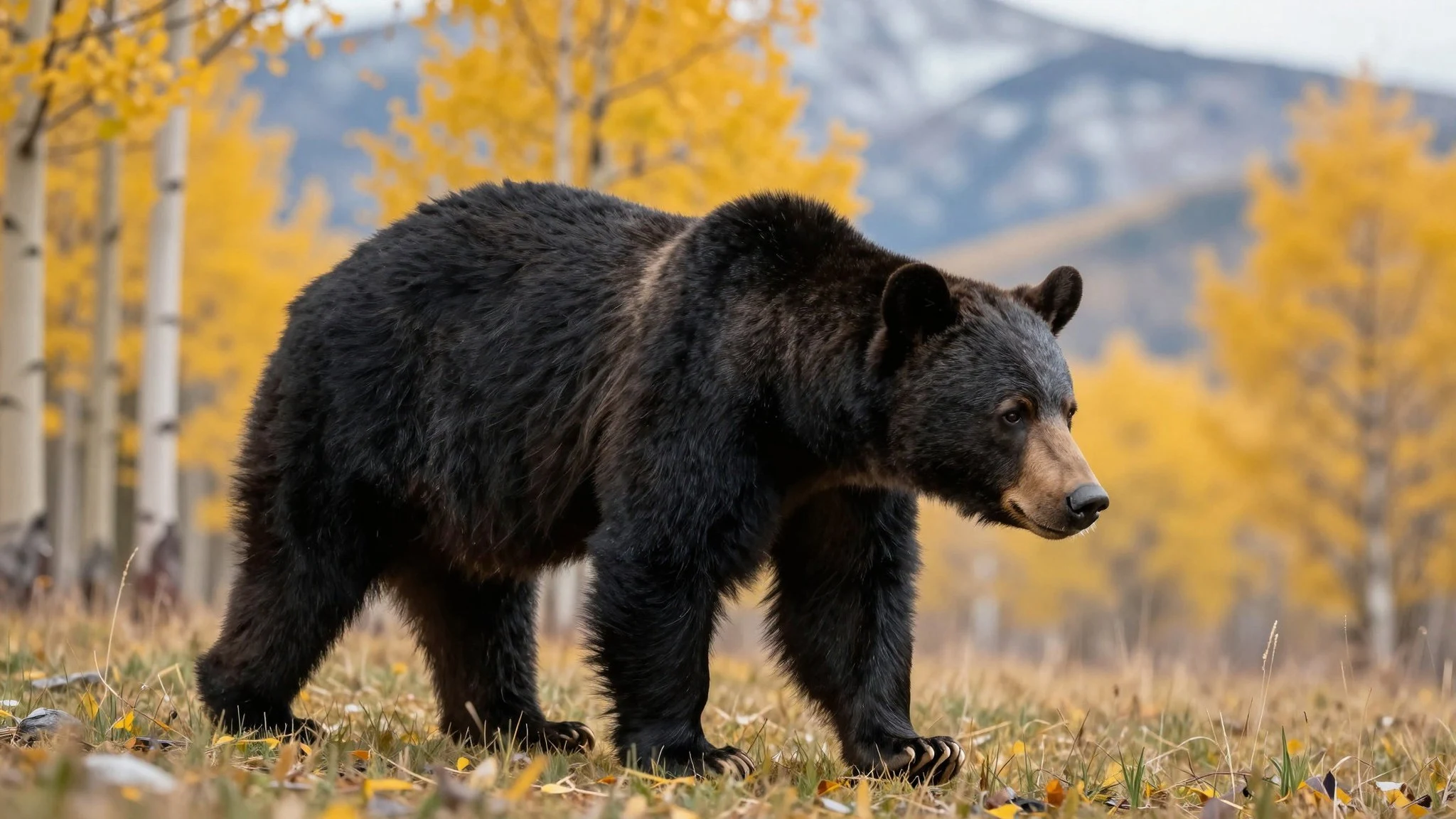
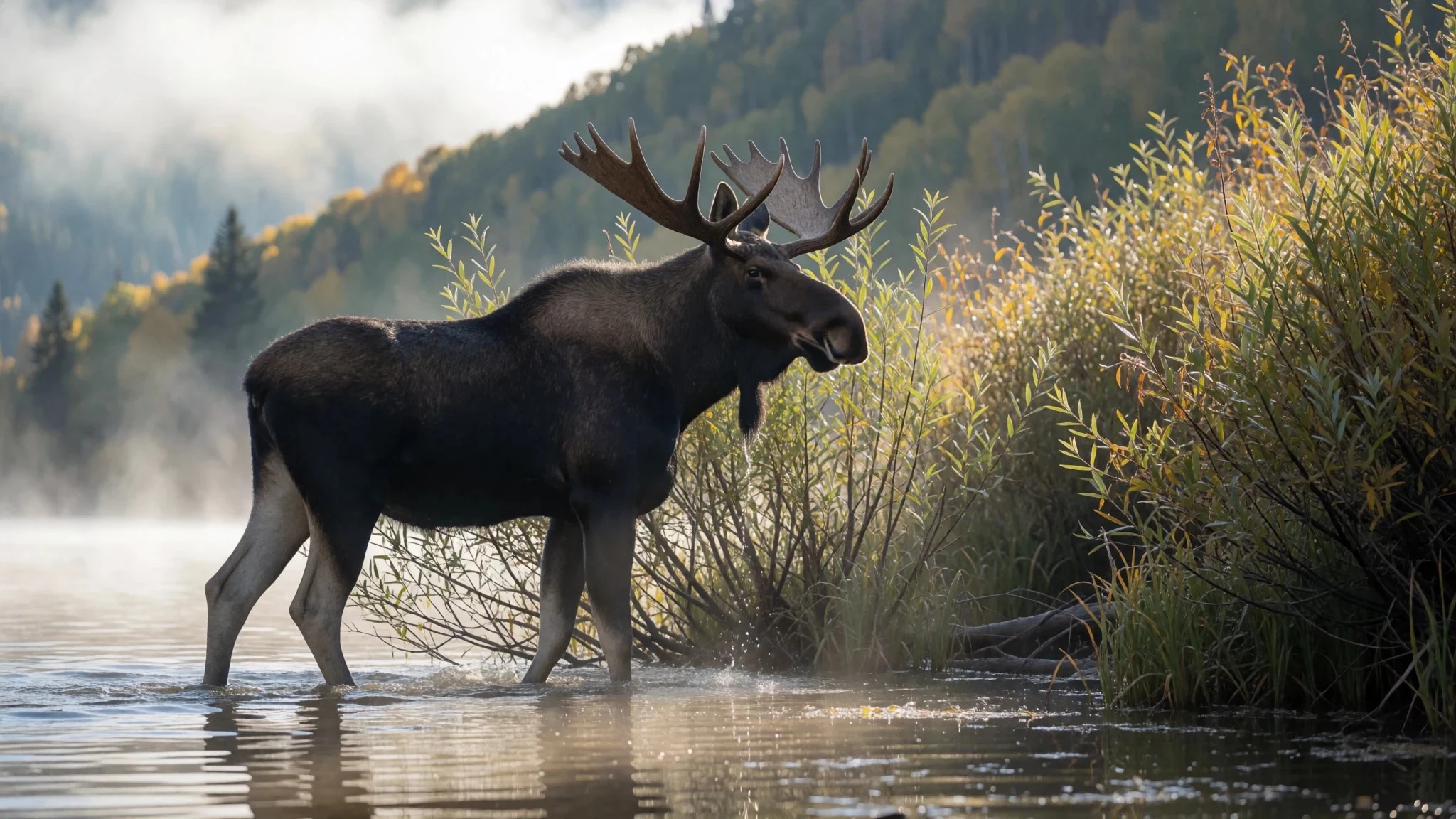
- Moose (animal)
The moose is the giant of the deer family, so tall and heavy that only the bison outweighs it among North America's land animals. Bulls usually carry wide, flat antlers rather than slim, pointed ones. Around Aspen, you may meet one while walking in the hills. Keep a generous distance, speak softly on quiet trails, and take all your litter away with you, so the animal is left undisturbed.