Fairy Tale Canyon
Fairy Tale Canyon, Kyrgyzstan
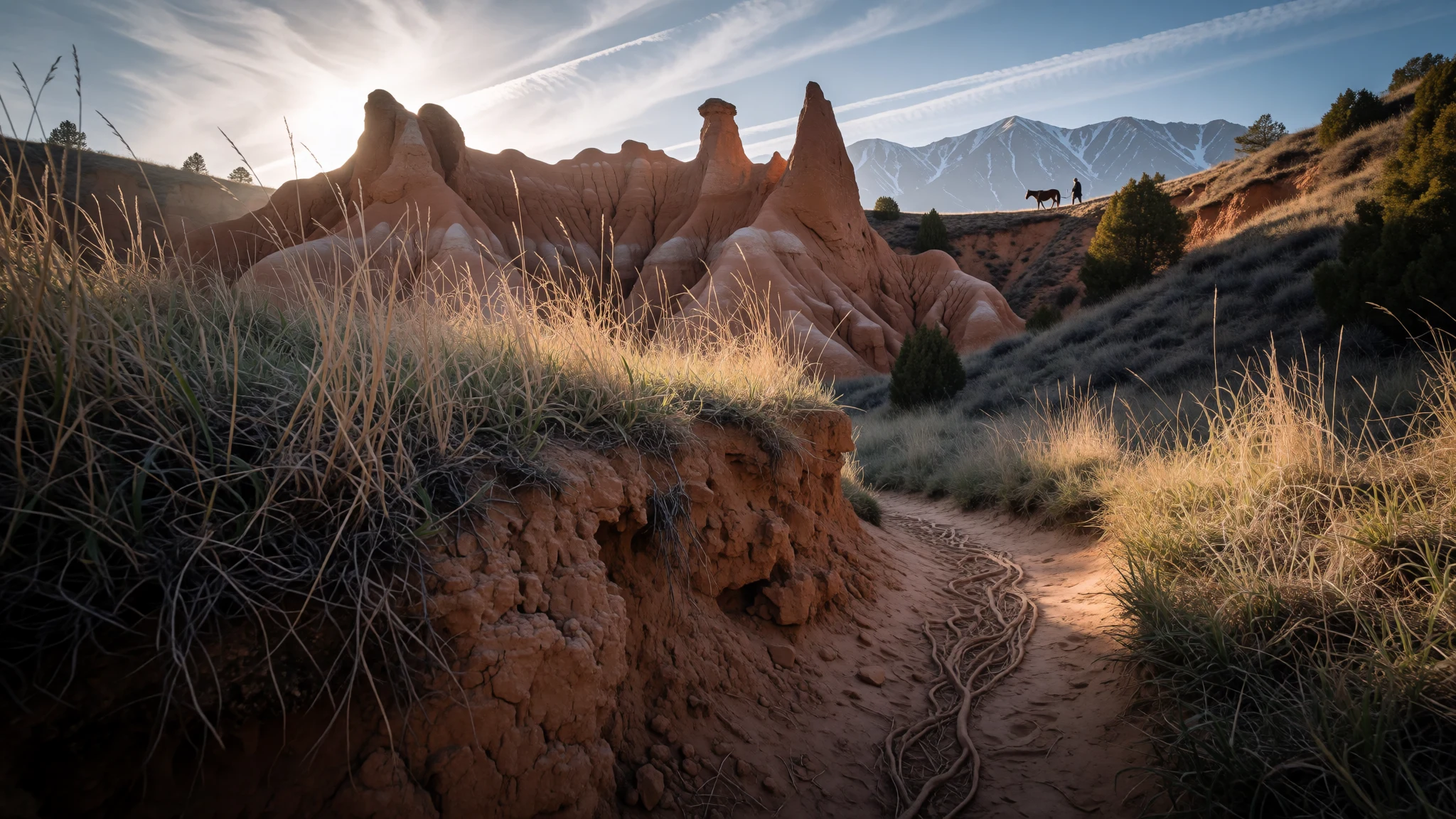
Fairy Tale Canyon is a maze of wind-carved red clay ridges in Kyrgyzstan, best explored slowly on foot beside the Issyk-Kul mountains.
The place
Fairy Tale Canyon lies in the Jeti-Oguz District of Kyrgyzstan's Issyk-Kul Region, at the eastern end of the Teskey Ala-Too range. The district's administrative centre is Kyzyl-Suu, but most visitors base themselves in Karakol, the nearest town of any size, and come out for the day. Locally the canyon is called Skazka, the Russian word for a fairy tale, and the name fits. It is less a single gorge than a tangle of eroded ridges, gullies, pinnacles and small amphitheatres cut into soft clay in tones of rust, orange and ochre, with mountains standing behind. Wind, rain and frost do the carving, slowly, so the shapes shift a little from year to year and an old photograph may not match what is there now. The appeal is scale. Everything is low enough to scramble over and odd enough to feel like a stage set, so it suits families, photographers and anyone who wants a few hours of easy wandering rather than a summit. There is little shade and not much shelter, so the weather decides the day: clear light makes the colours glow, while rain turns the clay greasy and slow going. It combines naturally with the other sights of the Jeti-Oguz valley, which has its own red cliffs, a hot-spring sanatorium and trails into the high mountains. Expect a short, scenic stop with basic facilities, not a wilderness expedition.
Its story
The story of Fairy Tale Canyon is part geology and part folklore borrowed from its neighbourhood. The geology comes first. The soft sedimentary layers here were laid down long ago and later lifted as the Teskey Ala-Too range rose. Streams, meltwater and wind have since cut into them, leaving the ridges and spires that people walk among today. None of this happens on a human timescale, yet every storm and freeze-thaw cycle nudges the shapes along, which is why the canyon always looks slightly unfinished. The name Skazka belongs to the Russian-speaking era of the region, and it describes what visitors do on the spot: read castles, animals and sleeping giants into the rock. The older tales belong to the nearby Jeti-Oguz valley. Locals have named a section of weathered red rock the Seven Bulls because erosion has carved seven blunt shapes into the facade; this name comes from Kyrgyz, where oguz translates to bull and jeti translates to seven. Close by stands a red formation shaped like a cleft heart, known as Broken Heart. The best-known legend tells of a wealthy ruler with many wives who, out hunting, fell for a poor girl with long dark hair. She was already promised to another, and her family fled. The ruler caught up with them, and the fiancé and relatives died. Her grief, the story says, tore the rock into the shape that stands there now. Several versions circulate, and the canyon itself has no single legend of its own.
What to see
- The canyon floor and ridgelines — Jeti-Oguz District, Issyk-Kul Region
The core of the visit is a loose loop through the gullies and along the lower ridgelines of Fairy Tale Canyon. Paths are informal, braided by many feet, and the ground is crumbly clay, so slow steps and good grip matter more than fitness. Allow a couple of hours to wander, climb a little for views, and stop often to look back at the colours.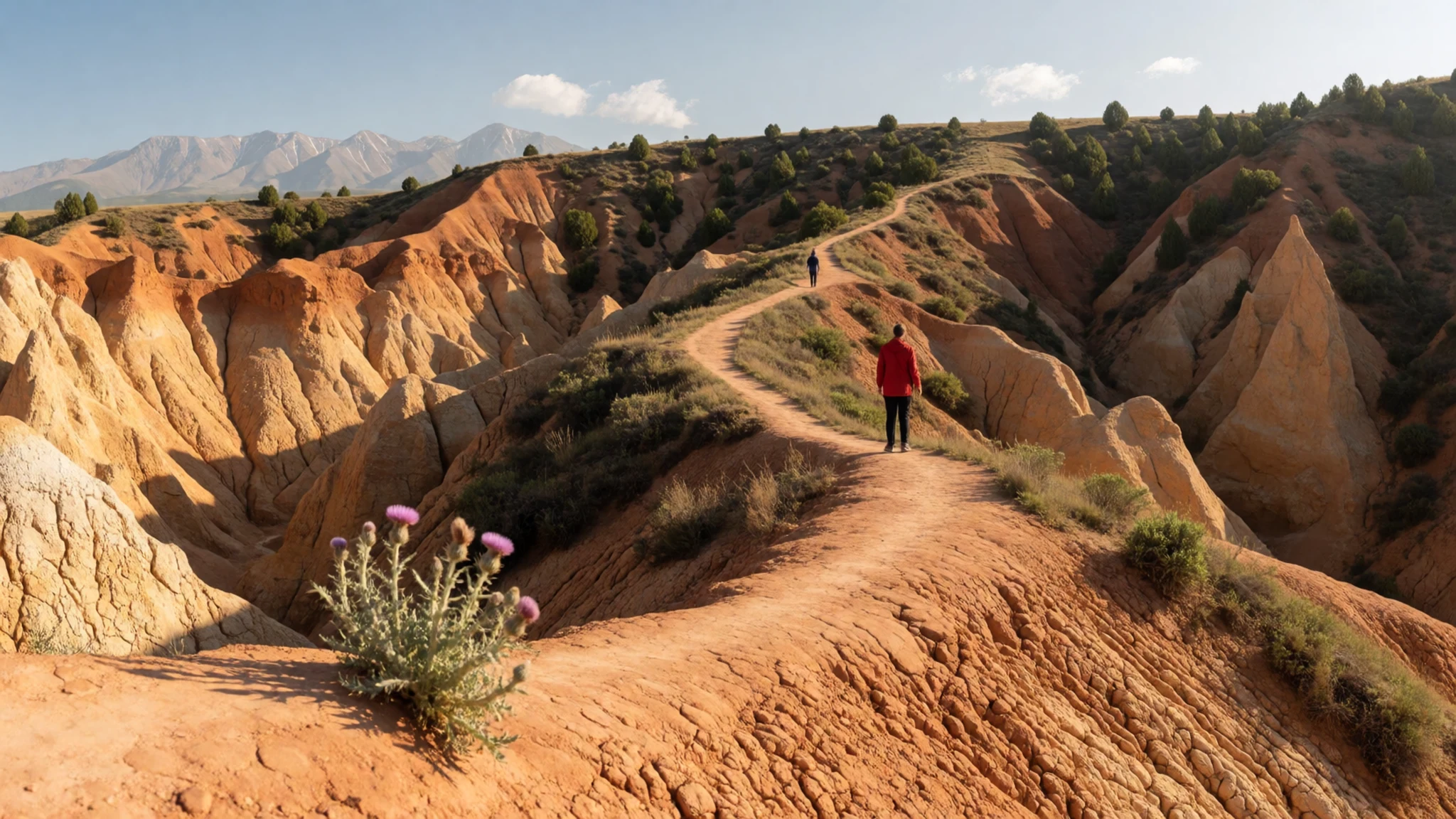
- Low-sun light on the red walls — Jeti-Oguz District, Issyk-Kul Region
Early morning and late afternoon are the best times to see the canyon, when the red and orange walls deepen and long shadows make the spires look taller than they are. Both are usually quieter too. Midday light flattens the colour and bakes the open ground, so it is worth planning the walk around the ends of the day.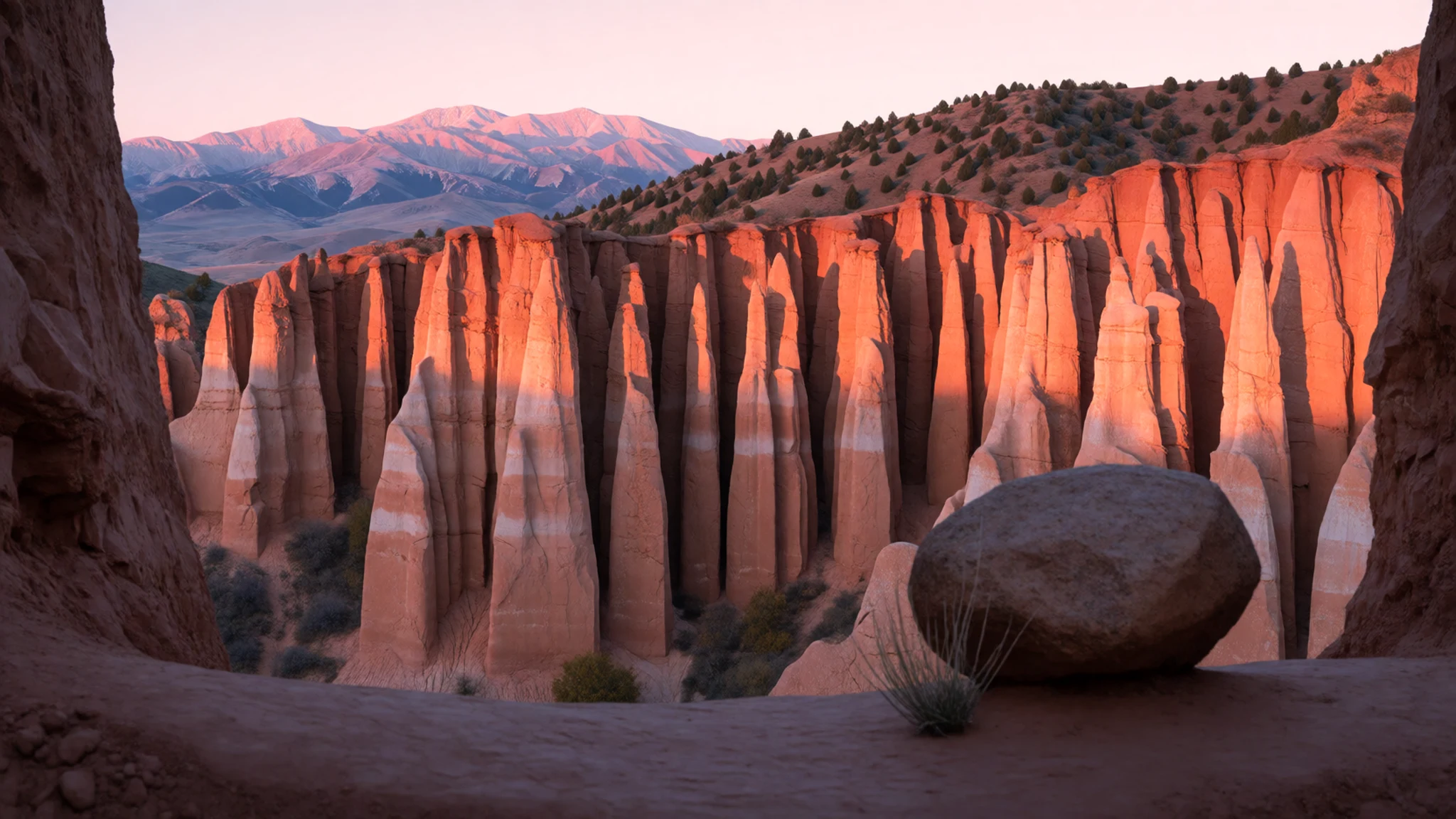
- Seven Bulls cliffs — Jeti-Oguz valley
On the way up the Jeti-Oguz valley stand the Seven Bulls, a wall of red sedimentary rock that weathering has split into blunt, horned-looking heads. The name comes from Kyrgyz, where jeti is seven and oguz is bull. They make a natural second stop after the canyon, especially in clear afternoon light when the red looks richest.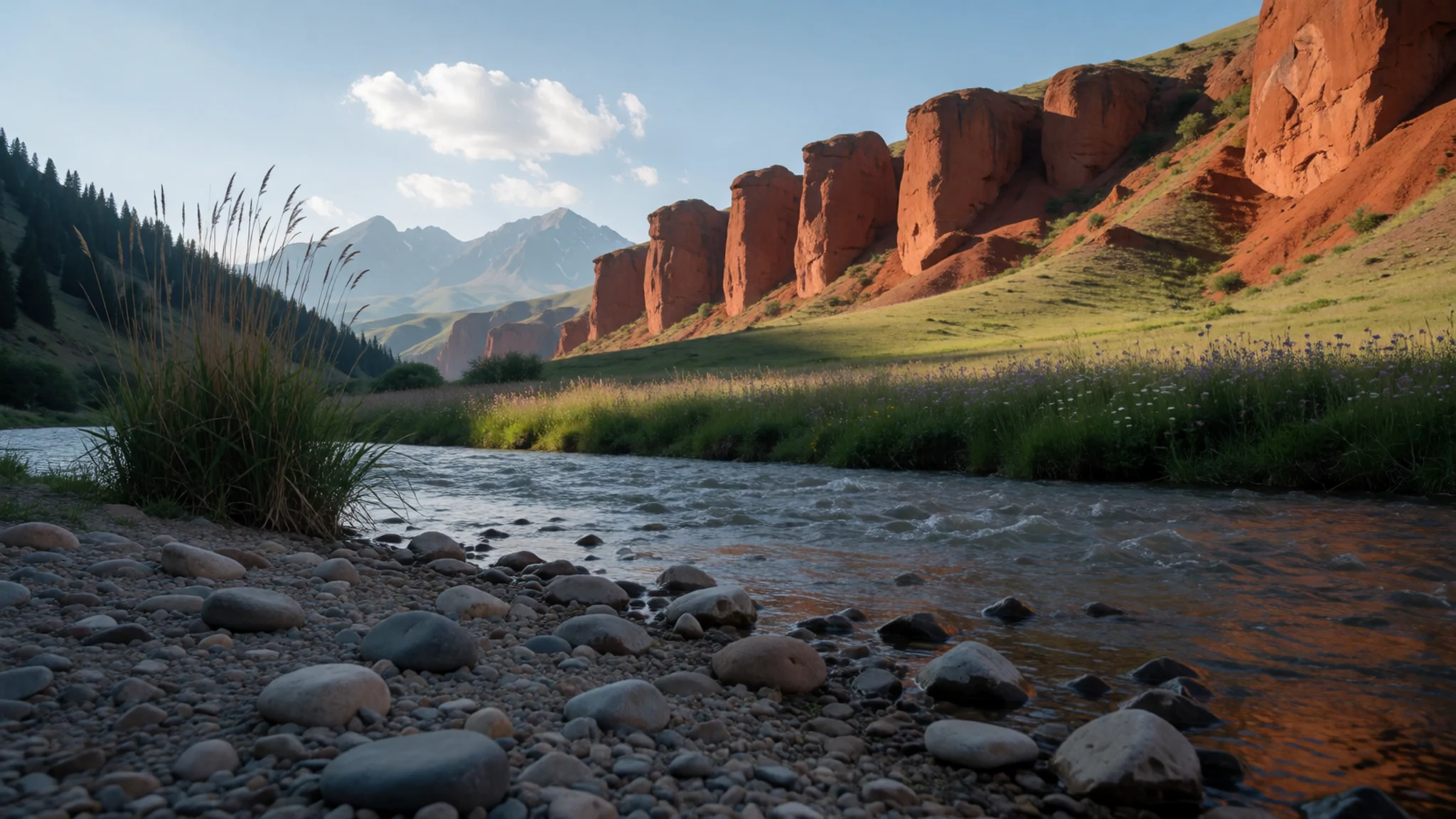
- Broken Heart rock — Jeti-Oguz valley
Next to the Seven Bulls, a reddish rock is shaped like a split heart, and local tradition attaches a sad love story to it. It is a short stop rather than a long one, but hearing the legend from a guide or homestay host beforehand gives the photograph a little more weight than a rock alone.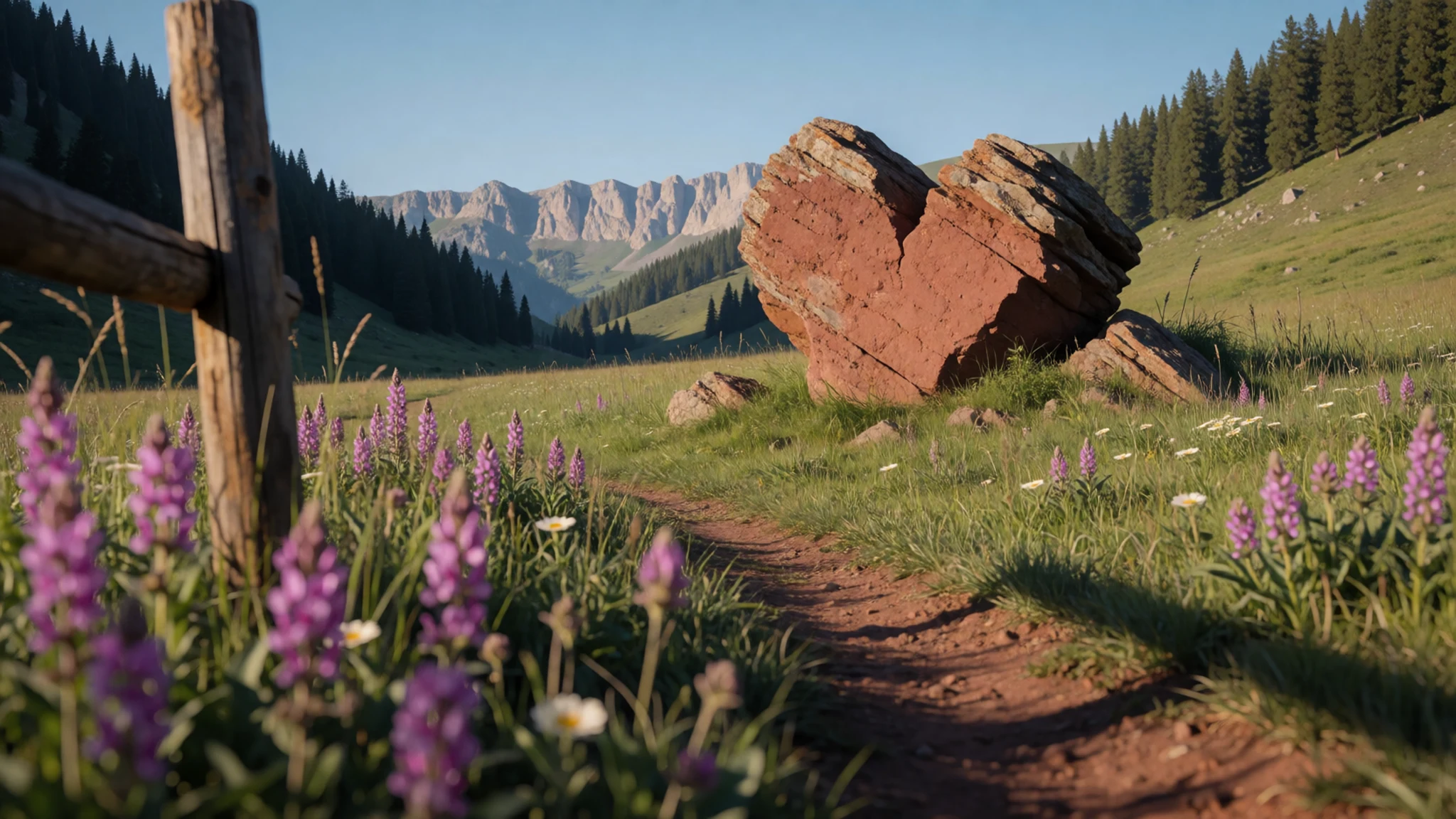
- Jeti Ögüz sanatorium and the Kyzyl Suu valley — Jeti-Oguz valley, above Jeti Ögüz village
Higher up, an ageing hot-spring sanatorium marks the head of the road. Signs call it a kurort, as at many such places across the former Soviet countries. From the Kyzyl Suu valley, hiking routes climb over high passes, and glacier lakes can be reached on foot in about three hours.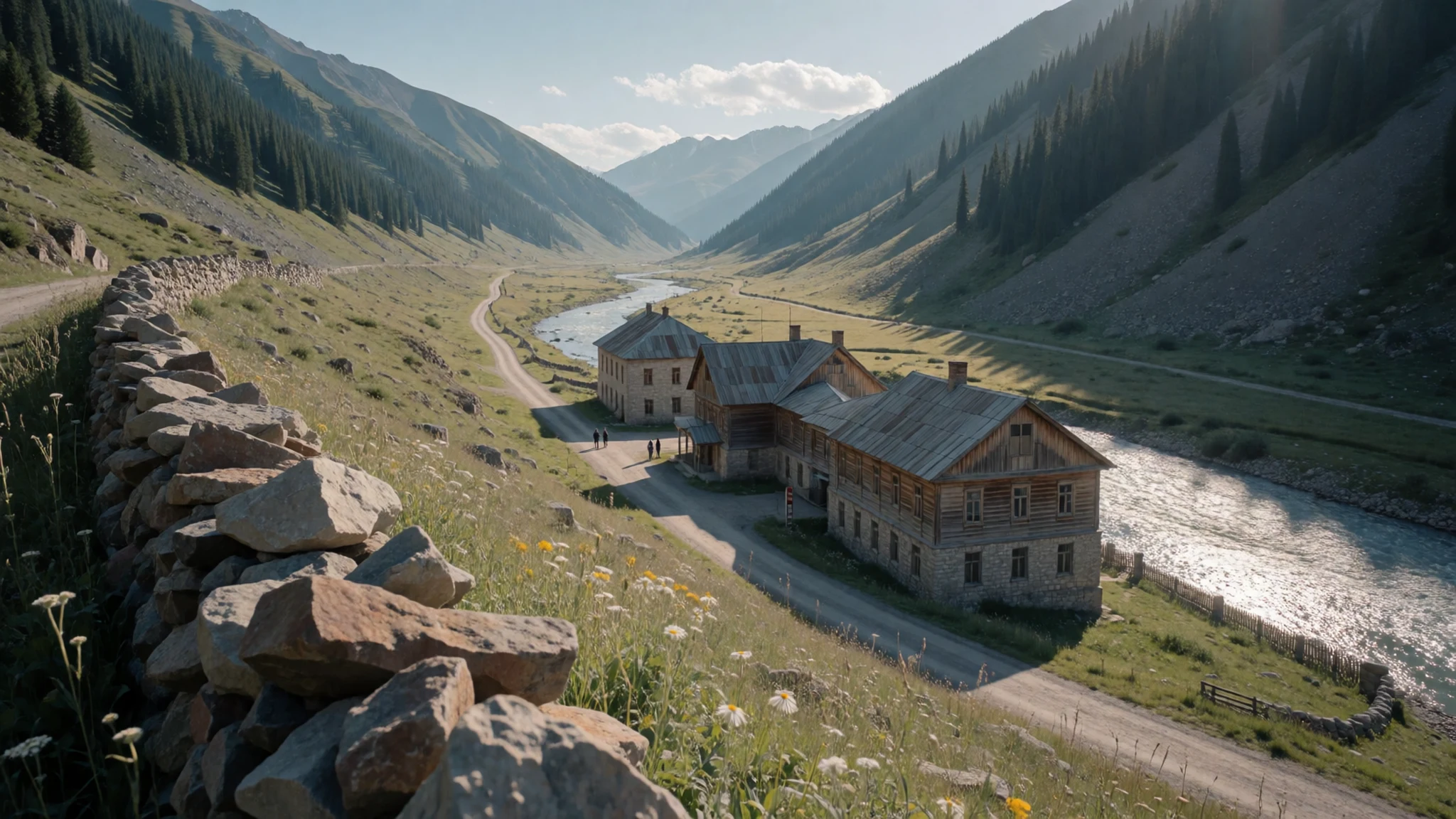
Culture
Culture around Fairy Tale Canyon is shaped by Kyrgyz traditions of herding and hospitality, layered with Russian influence from the Soviet years. Kyrgyz and Russian are both spoken across the Issyk-Kul Region, and in Karakol visitors meet Kyrgyz, Russian and Dungan families, each with their own kitchens and festivals. Summer pastures, called jailoo, draw families up the valleys with their animals, and a yurt is still a common sight in the high meadows, whether as a family home, a homestay or a tourist camp. Guests are expected to be welcomed with tea, bread and conversation, and refusing everything outright can come across as cold; accepting a little is the polite course. The region has a Muslim heritage but is relaxed in everyday practice, with a mix of dress and habits that changes between village and town. The Soviet legacy is visible in the sanatorium at Jeti Ögüz, where, in the past, taking the waters was a state-organised kind of holiday and the habit has lingered. Storytelling matters too: hosts and guides often have their own version of the Broken Heart legend, and asking for it is a good way to start a conversation. Take your shoes off before entering a yurt or a family home, and step over the threshold rather than on it.
What to wear
Traditional Kyrgyz dress around Fairy Tale Canyon is built on felt, wool, velvet and embroidery, materials suited to a herding life at altitude. The best-known piece is the ak kalpak, a tall white felt hat with black trim worn by men, which appears at weddings, festivals and national days. Felt is also pressed and stitched into shyrdak, the patterned rugs found in yurts. Women's festive dress includes embroidered velvet waistcoats, long dresses and headwear such as the elechek, a white wrap associated with older women, while a padded coat, the chepken, is a traditional cold-weather layer. These are mostly worn for celebrations and performances now. Day to day, people in Karakol and the villages wear jeans, fleeces, jackets, trainers and caps or headscarves: practical, a little Russian-influenced, and layered for swings in mountain temperature. Visitors should dress for open, sun-exposed ground: a sun hat, sunglasses, and shoes with real grip, since the clay is crumbly when dry and slippery when wet. Bring a windproof layer and a warm one even in summer, as evenings can turn cool. Cover shoulders and knees in villages and when entering a mosque, and women may want a light scarf to hand.
What to eat
- Beshbarmak — Family homestays and traditional restaurants in Karakol
Boiled meat, traditionally mutton or horse, laid over broad flat noodles with onion broth served alongside. The name means five fingers, from the old way of eating it by hand. It is a dish for guests and celebrations, and very filling after a day outdoors.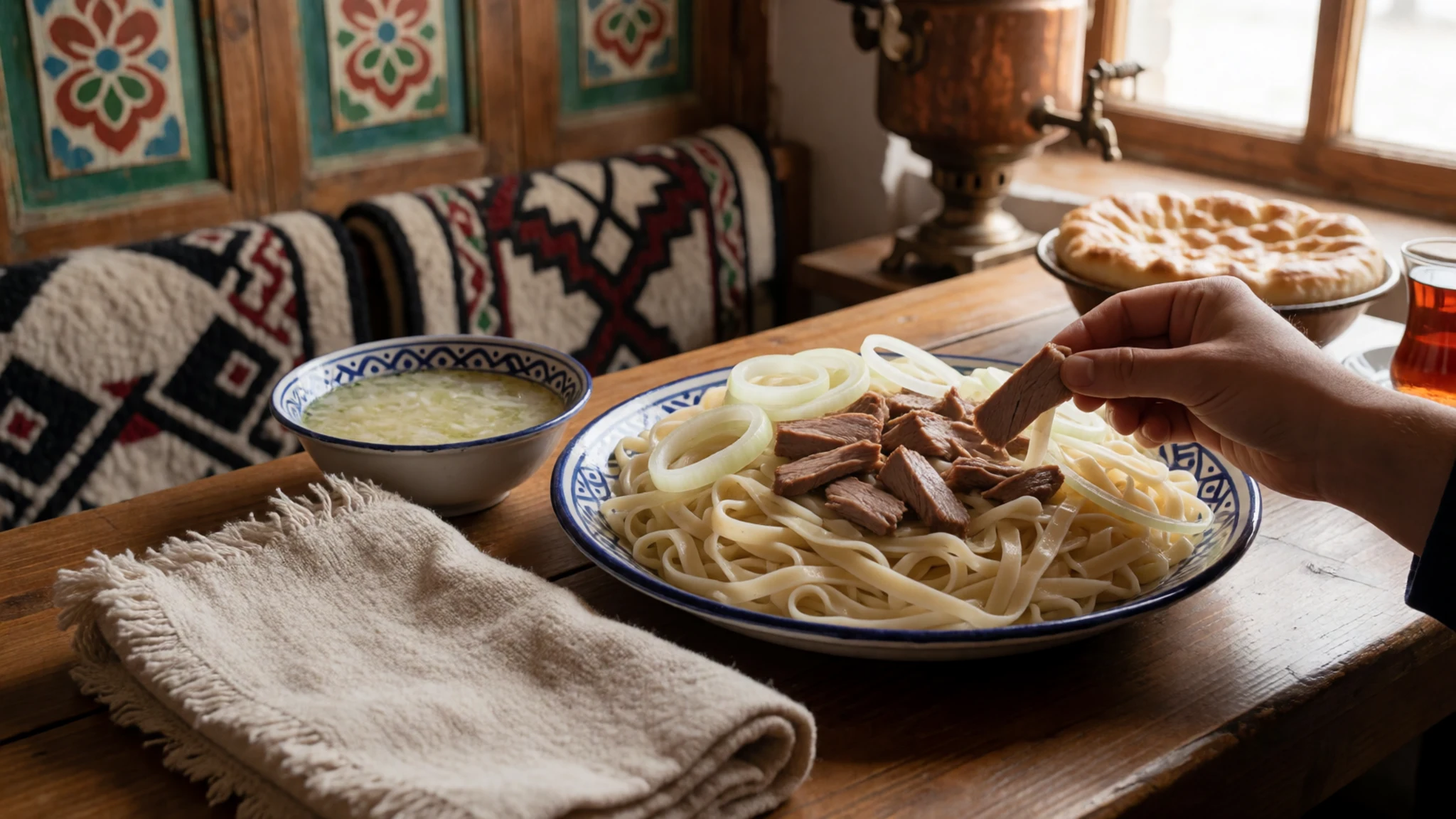
- Laghman — Cafés around Karakol's bazaar and roadside eateries
Hand-pulled noodles in a spiced sauce of meat and vegetables, served either as a soup or stir-fried. It arrived through Uyghur and Dungan cooking and is a staple order at almost any eatery in the region, easy to find and easy to like.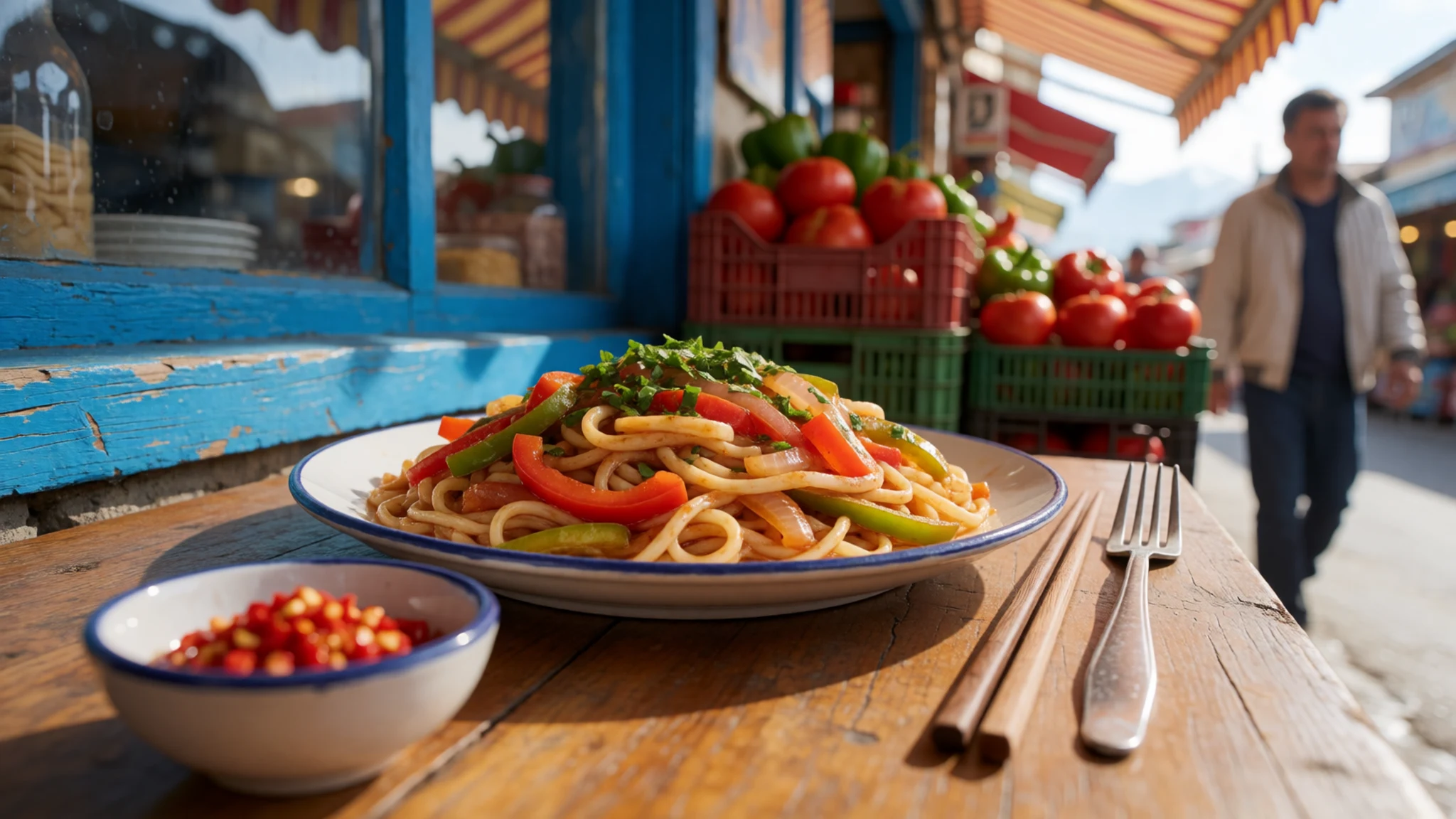
- Ashlyan-fu — Small cafés and stalls near Karakol's bazaar
A cold, sharp noodle dish associated with Karakol's Dungan community, with starch jelly, noodles and a vinegary chilli broth. It is refreshing in summer heat and a little startling at first taste, which makes it a good local order. - Boorsok — Homestays, yurt camps and bakery stalls in local bazaars
Squares of fried dough, crisp outside and soft within, eaten with tea, jam or honey. Hosts often put a plate on the table as soon as a guest sits down, and they travel well as a picnic snack for the canyon walk. - Kymyz — Roadside stalls and yurt camps in the summer pastures
Fermented mare's milk, lightly sour and a little fizzy, drunk in summer when the herders' mares are in milk. The flavour is an acquired one, but a small cup offered by a host is worth trying, and polite to accept.
Plan it
Best time. June to September is the easiest window, when the valley roads and trails are generally open and the weather is mildest for walking. July and August are the busiest. Mountain weather changes fast and rain makes the clay slippery, so check the forecast on the day, and expect it to be cold and snowy in winter.
How long. 1–2
Getting there. Fly into Bishkek's Manas airport, then continue by road around Lake Issyk-Kul to Karakol, the usual base. For the wider Jeti Ögüz area, bus 355 runs from Karakol's Big Bazaar Bus Station to Jeti Ögüz village, about 35 km and 35 minutes. For the canyon itself, arrange a taxi or a tour from Karakol and agree the stop with the driver beforehand.
Budget. low
Tips
- Go early or late in the day for softer light, cooler air and fewer people
- Carry water, a hat and sun cream, as there is little shade or shelter
- Wear shoes with proper grip and avoid the clay when it is wet
- Bring some cash in local currency for taxis, stalls and homestays, as card use is patchy outside Karakol
- Pair the canyon with the Seven Bulls and Broken Heart in the Jeti-Oguz valley to make a full day
Etiquette
- Take your shoes off before entering a yurt or a home
- Ask before photographing people, especially older residents and herders
- Stay on worn paths, take your rubbish away and do not climb on fragile ridges
Nearby
Sources
- Wikipedia: Skazka Canyon (CC BY-SA 4.0)
- Wikidata Q140681143 (CC0)
- Wikivoyage: Jeti Ögüz (rev 5285316) (CC BY-SA 4.0)
- Photo: Skazka Fairy Tale canyon near Karakol, Bruno Rijsman (CC BY 2.5)
- Photo: Fairy Tale Canyon (100), Incall (CC BY-SA 4.0)
- Photo: Fairy Tale Canyon (101), Incall (CC BY-SA 4.0)
- Photo: Fairy Tale Canyon (102), Incall (CC BY-SA 4.0)
- Photo: Fairy Tale Canyon (103), Incall (CC BY-SA 4.0)
- Photo: Fairy Tale Canyon (104), Incall (CC BY-SA 4.0)
- Photo: Fairy Tale Canyon (105), Incall (CC BY-SA 4.0)
- Photo: Fairy Tale Canyon (106), Incall (CC BY-SA 4.0)


