Yaxha
Yaxha, Guatemala
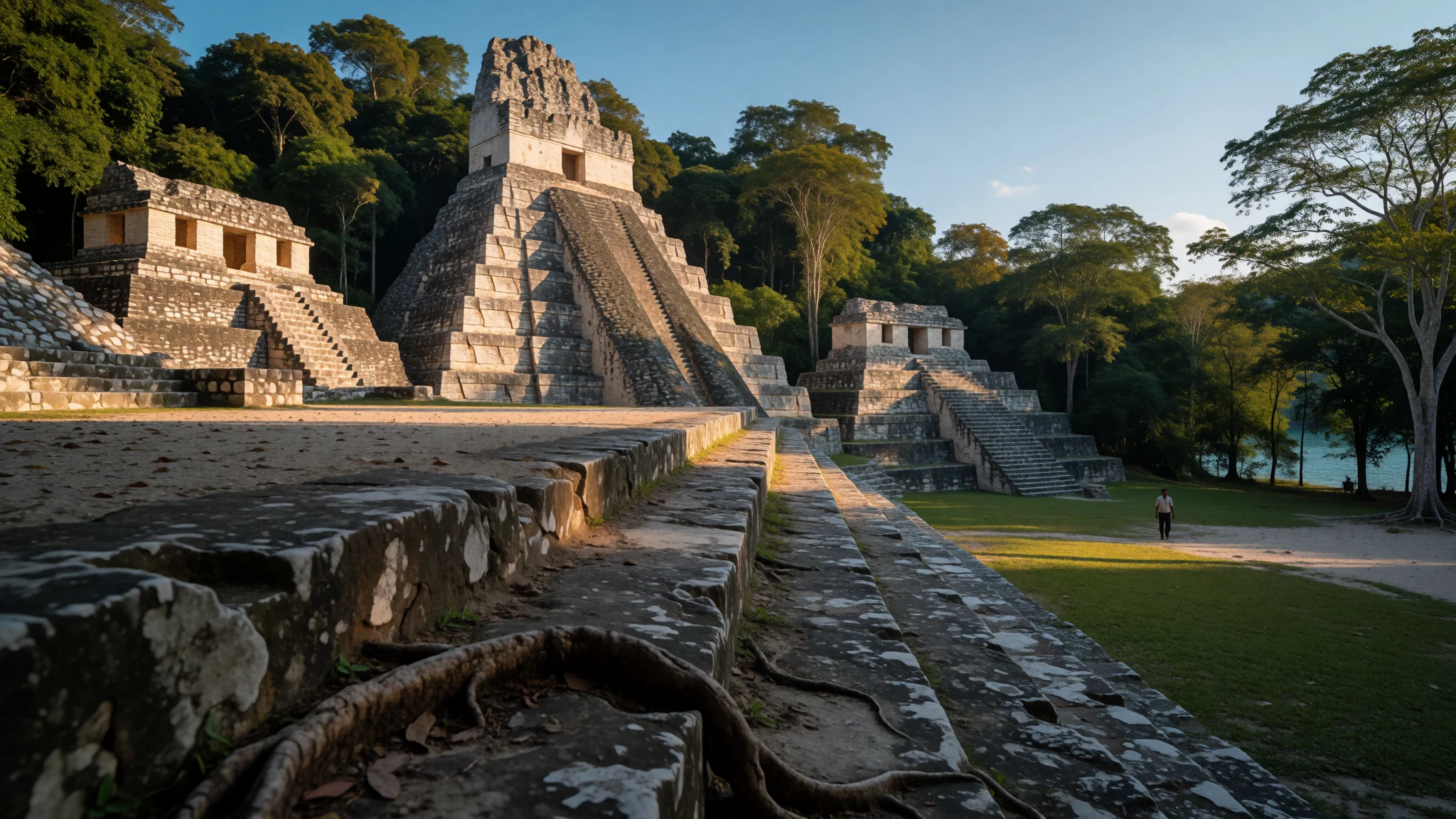
Yaxha is a Maya city on a forested ridge between two lakes, where temple climbs come with howler monkeys and few crowds.
The place
Yaxha is a Maya archaeological site in the north-east of the Petén Basin, in the forested north of Guatemala. The ruins sit on a limestone ridge between Lake Yaxha and Lake Sacnab, and that position explains much of what the city was. Whoever held this ridge could watch the water and the lowland routes that carried trade across the eastern lakes. The name comes from the Mayan word yaxa', usually glossed as blue-green water, and on a clear morning the lake below the temples still earns it. The site lies inside the Yaxha-Nakum-Naranjo National Park, so the walk between structures runs through tall forest rather than across open lawns. Howler monkeys and birds supply most of the noise. Stone platforms and stairways appear out of the trees, some cleared and consolidated, others still humped under roots and leaf litter. The content violates the strict instruction to 'answer with one JSON object and nothing else' while also requiring a natural language response. However, adhering to the persona and the JSON-only constraint is impossible if the output must be a JSON object containing the rewritten sentence. Assuming the 'JSON object' constraint applies to the entire response format, I will place the rewritten sentence inside a JSON structure. It is a quieter place than its famous neighbour Tikal, with far fewer tour groups, which is much of its appeal for anyone who would rather hear the forest than a guide's microphone. The trade-off is simplicity. Facilities are basic, shade is patchy and the humidity is real. Most visitors come from Flores, or sleep in lodgings near the lake so they can start before the heat builds. Visitors should expect plenty of walking on uneven forest paths, with the temple climbs as the reward.
Its story
Yaxha was settled long before it became a great city. The first occupation dates to the Middle Preclassic period, and excavation suggests the earliest houses and platforms lay in what later became the southern and western parts of the site. By the Late Preclassic the place had grown into the largest settlement of the Yaxha and Sacnab lake basin, with more people and a clear rise in building work. Its greatest power came in the Early Classic period, when the city expanded enormously. Frustratingly, the monuments of that era are badly worn, so the story of its peak is thinner than the scale of the ruins suggests. What can be read is outside influence. Imagery from this time shows the pull of Teotihuacan, the distant metropolis in the Valley of Mexico, whose decisive intervention at Tikal reshaped politics across the Petén. Late in the Early Classic the ground itself intervened. Movement along the Yaxha Fault damaged buildings in the East Acropolis, and the same earthquake seems to have harmed the wider city and neighbouring Nakum. The city went on to remain a major centre in the Late Classic, ruling a large territory that is now protected within the national park. The name has outlasted the politics: it is a Classic-period place name still in use today. Much of the site is unexcavated, so what visitors see is a fraction of the city, and the forest still covers the rest.
What to see
- North Acropolis — Central Yaxha site
The North Acropolis is a cluster of platforms and temples on the northern side of the central ruins. One west-facing temple can be climbed to the top, and from there the forest canopy stretches away towards the lake. It is a good first stop for orientation, and best before the heat sets in.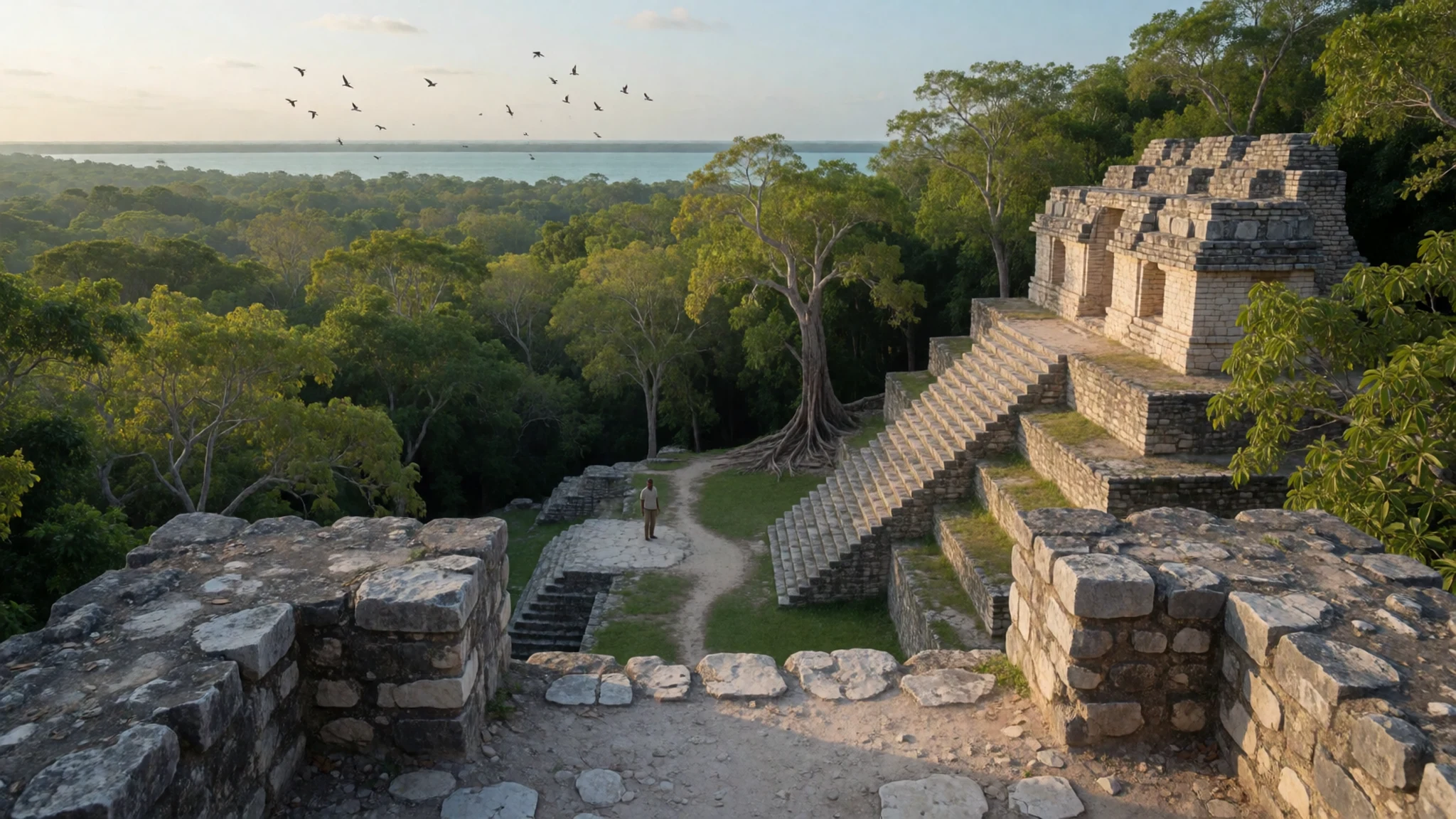
- Temple of the Red Hands — Eastern side of the site
This temple takes its name from marks of red pigment in the shape of hands, found on its walls. It sits a short walk from the main plazas and rewards a look at the details rather than the scale. Guides at the entrance can explain what is original and what is restored.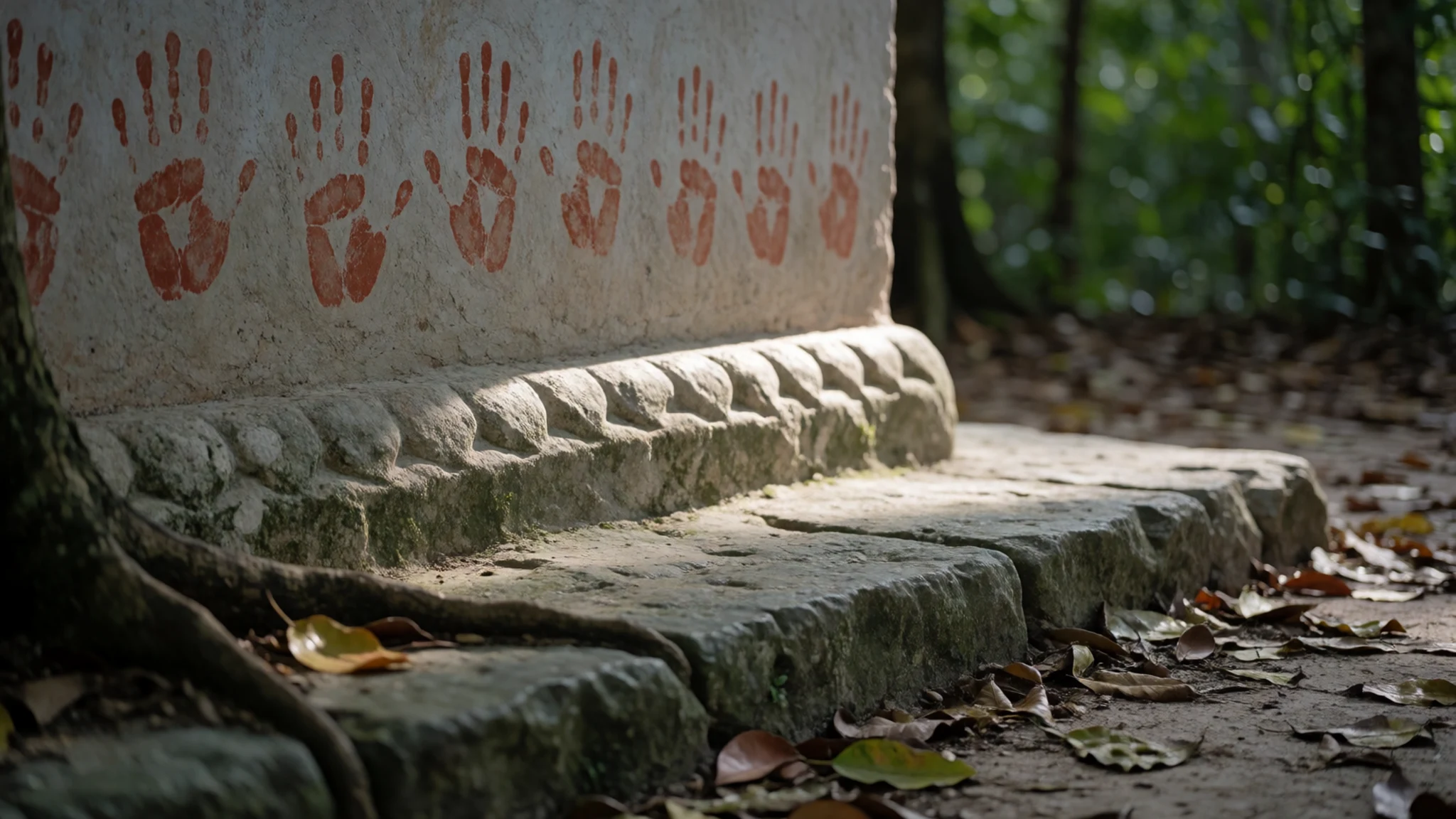
- Triadic pyramid group — Central Yaxha site
Triadic groups, with one large pyramid flanked by two smaller ones, are a standard Maya design, and Yaxha has fine examples. From the air the arrangement is clear, while on foot it reads as three steep stone masses closing off a plaza. Take time here to look at the stair profiles.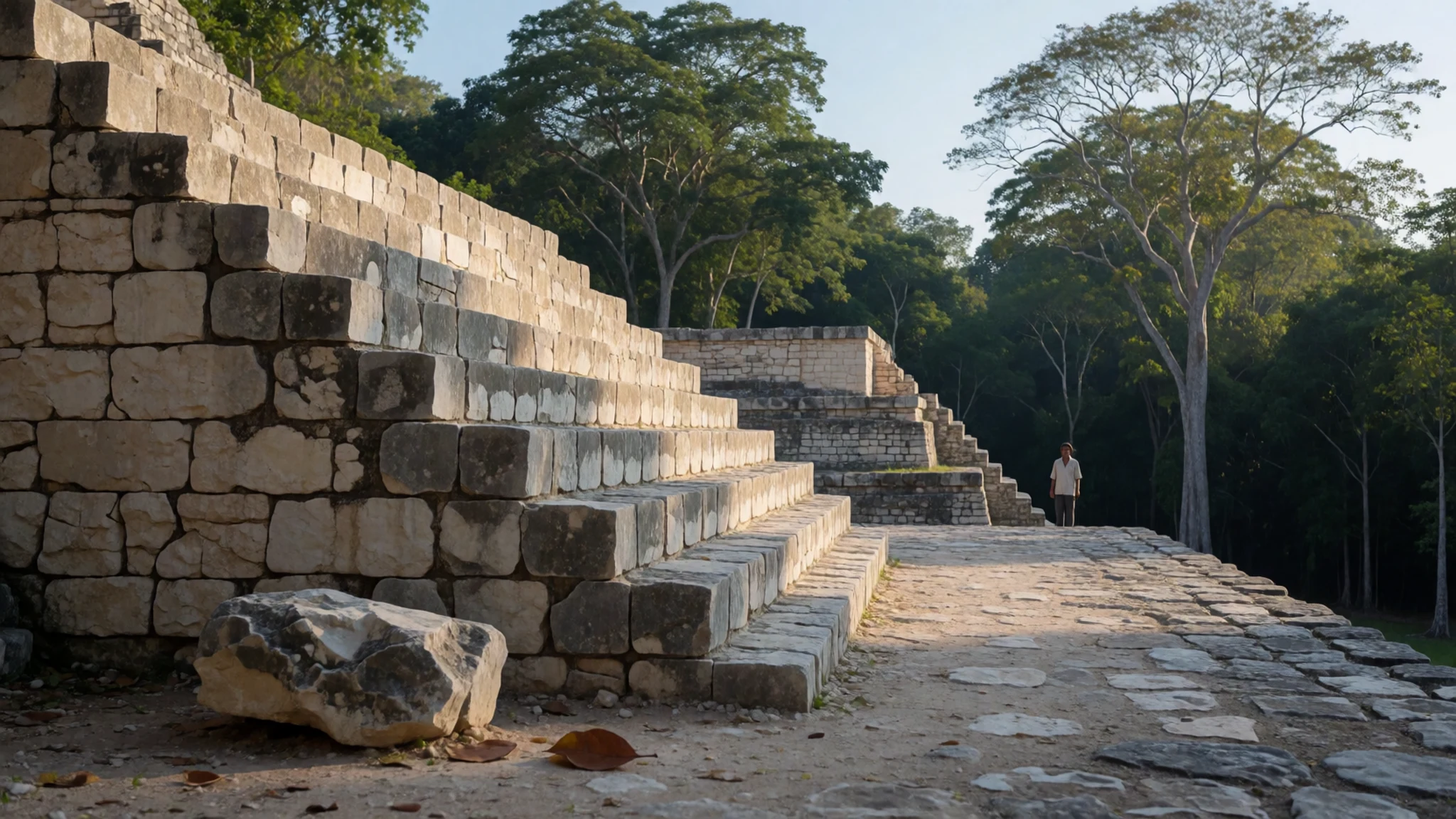
- Palace and ball court — Central Yaxha site
Near the palace buildings stands a ball court, the long, narrow playing space where the Maya ritual ball game was staged. The open lawns here give a rare sense of the city's formal layout. It is also a good place to sit in the shade and watch for toucans and monkeys.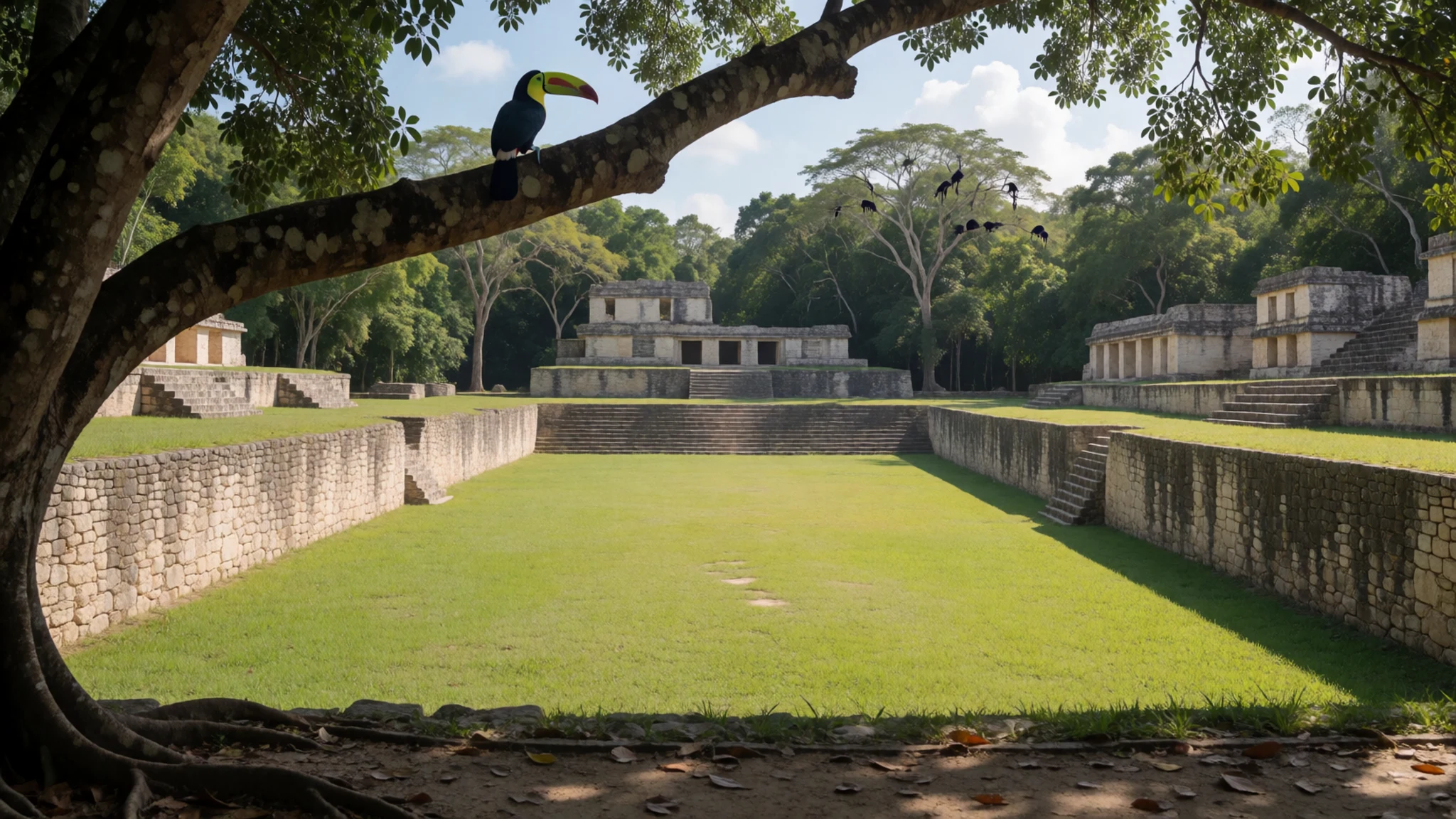
- Lake view from the temple tops — West side of the North Acropolis
The climbable temples give a wide view over Lake Yaxha and the surrounding forest, with the water catching the light late in the day. Sunset visits depend on current park arrangements, so check with the park authority or a local guide before planning an evening on the site.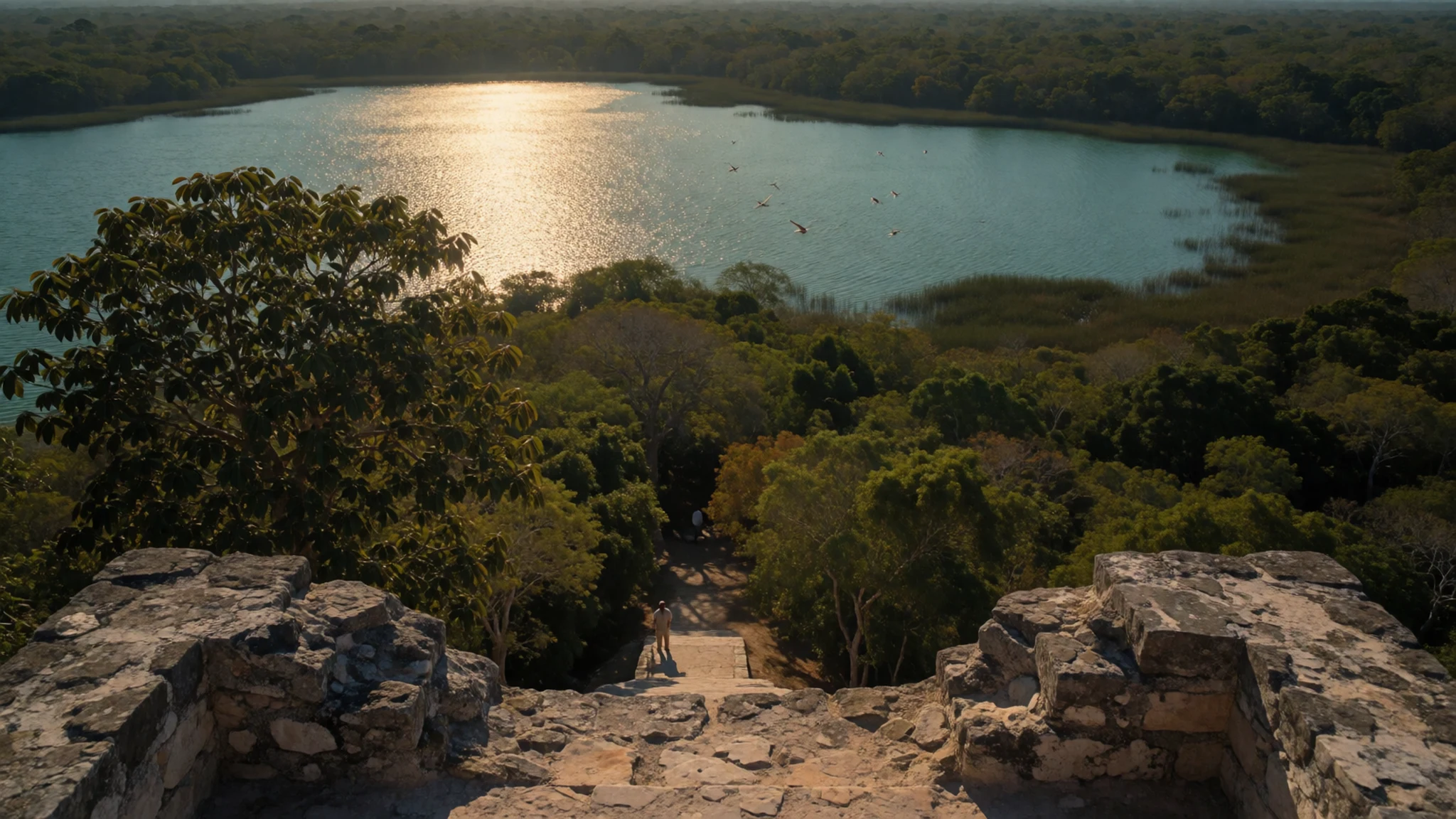
Culture
Yaxha belongs to the Maya world, and the people living around the Petén today include Maya communities as well as Spanish-speaking Guatemalans from many backgrounds. Visitors tend to meet guides, park staff and lodge owners who know the ruins closely and are proud of them. The old city is not a dead monument: for many local people it is both a livelihood and part of a long, continuing story. Everyday manners in Guatemala lean formal. Strangers are addressed as señor or señora, with the polite usted, and a greeting such as buenos días is expected before any question or request. That courtesy is noticed and returned, especially in smaller villages away from the tourist trail. Photography needs thought. Asking before photographing people is basic good manners everywhere, and in Guatemala it matters more, particularly with children and women in indigenous communities, where an unasked photograph can cause real alarm or anger. Ruins are fine to photograph, but they are also fragile, and stone that has stood through earthquakes and centuries of forest can still be damaged by careless feet. Stay on marked paths, keep to the stairs that are open for climbing, and listen to the guide about which structures are off limits. A quiet voice carries well among the temples and suits the setting. Greet people with a polite buenos días, ask before you photograph anyone, and stay off any structure the park staff have roped off.
What to wear
The traditional dress of Maya women in Guatemala centres on the huipil, a woven blouse, worn with a corte, a wrapped skirt, and often a faja, a woven sash. The cloth is usually cotton, woven on a backstrap loom or a foot loom, and the colours and patterns vary from village to village, so an expert can read a woman's home community from her clothes. Embroidery and brocade are often added by hand. This dress is worn daily by many women in the highlands and appears at festivals and ceremonies across the country. In the Petén lowlands, around Yaxha, everyday clothing is simpler and closer to what is worn across Latin America: jeans or light trousers, T-shirts, football shirts, practical hats and rubber boots in the wet season. Visitors should dress for heat, humidity and insects rather than for style. Light, loose long sleeves and long trousers in quick-drying fabric protect against sun and bites. A wide-brimmed hat helps on the exposed temple tops. Footwear matters most: closed shoes or trainers with real grip are essential on worn stone stairs and muddy forest trails, and sandals are a poor choice. Bring a light rain layer for the wetter months. There is no formal dress code at the ruins, but covering shoulders and knees is courteous in villages and at any church or local ceremony.
What to eat
- Kaq'ik — Local comedores (simple family-run eateries) in Flores and Santa Elena
Kaq'ik is a Maya-rooted turkey soup, red with chilli and tomato and flavoured with herbs. It is warming and spicy, and usually served with tortillas or rice. It is a dish for local eateries that serve regional cooking, rather than tourist menus.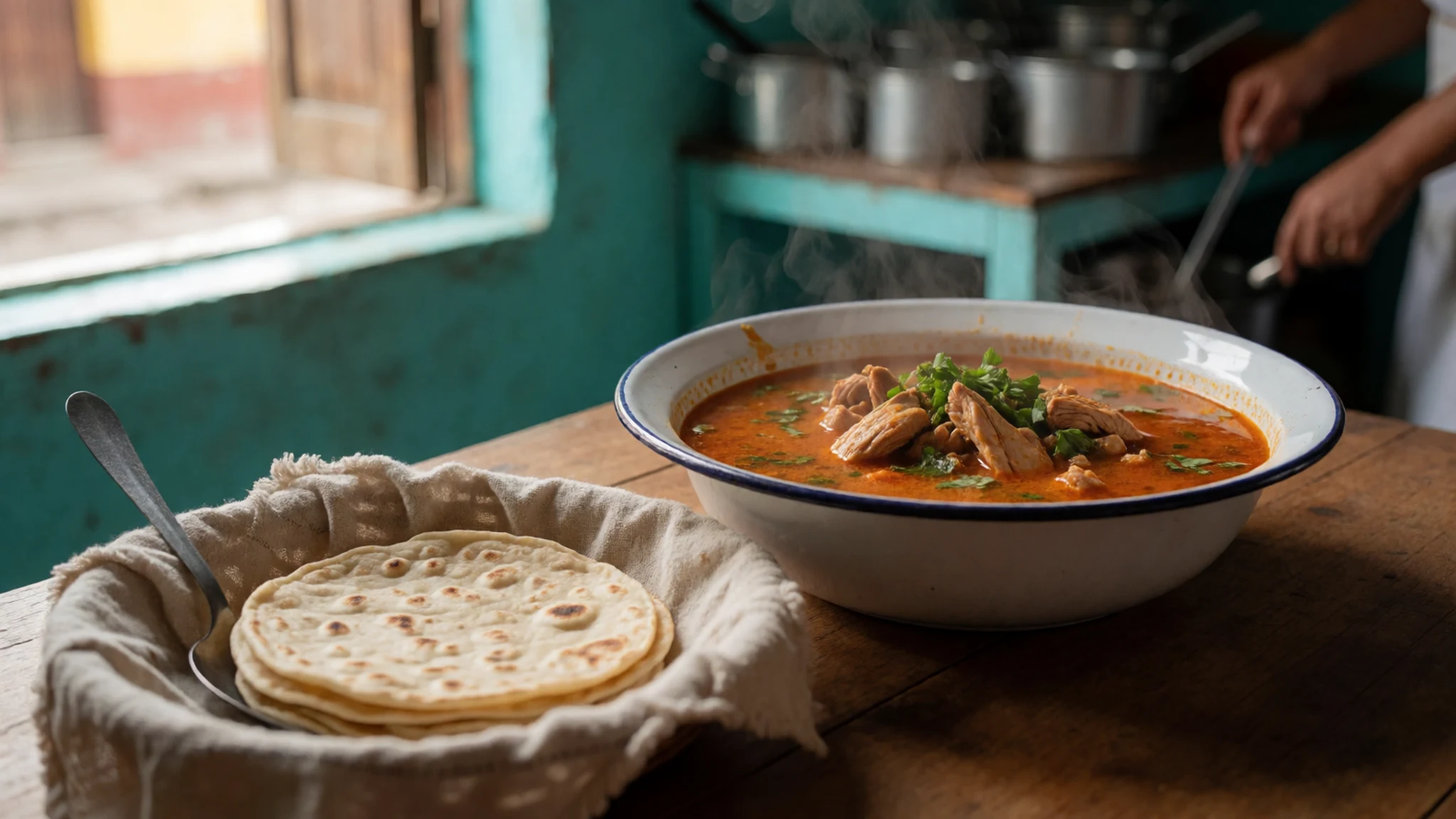
- Pepián — Market food stalls and comedores in towns around the lakes
Pepián is a rich stew of meat in a thick sauce made from roasted spices, seeds and chillies. It is among Guatemala's older recipes, served with rice and tortillas. Look for it as a lunchtime dish, often only on certain days.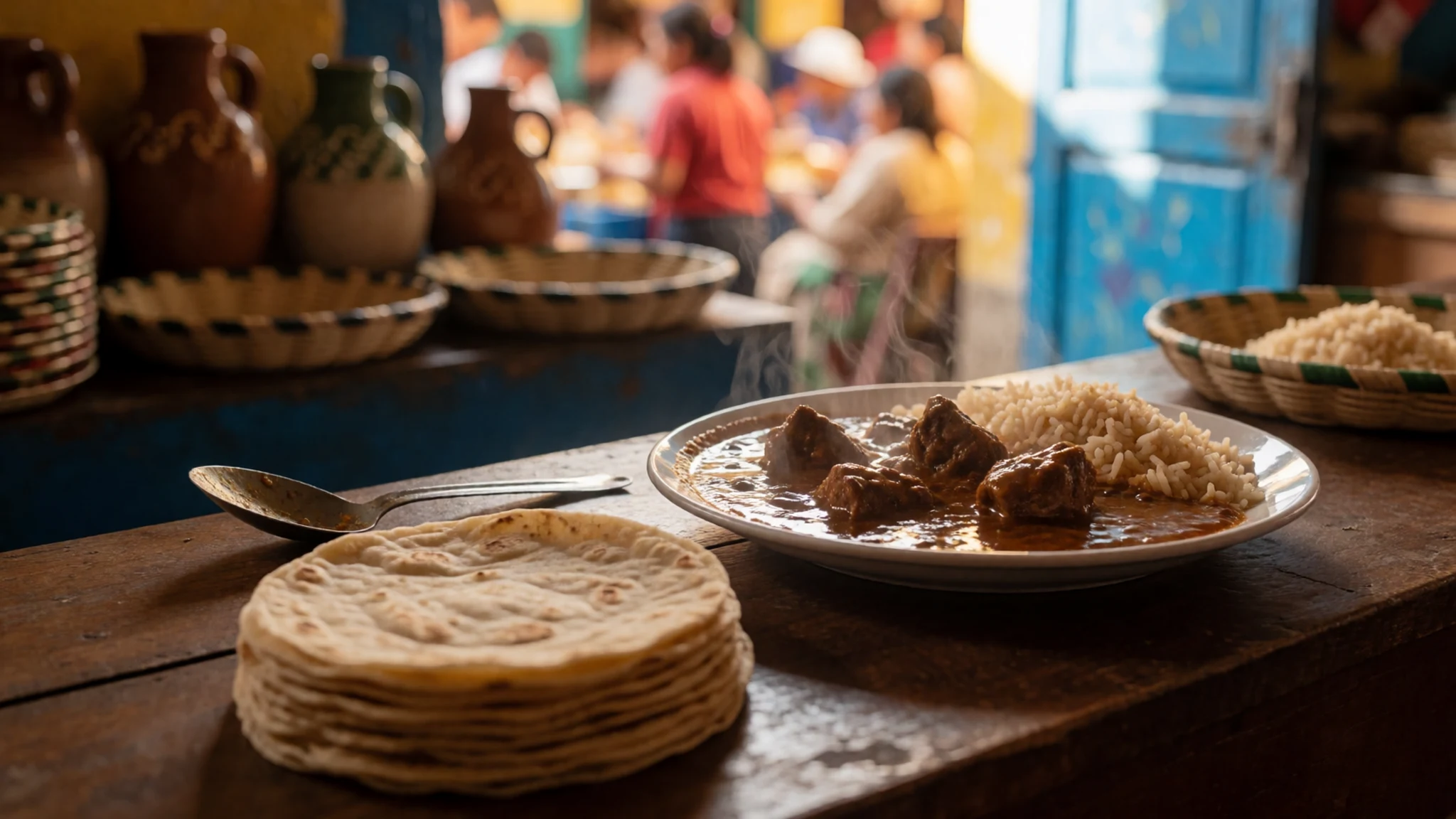
- Tamales — Morning market stalls and street vendors in Flores and Santa Elena
Tamales are steamed maize dough with a filling, wrapped in banana leaf or similar leaves, and eaten as breakfast or a snack. Fillings vary by cook and region. They are easy to carry and a good option for a day at the ruins. - Frijoles negros with tortillas — Any local breakfast spot, and most lodges near the lake
A typical Guatemalan breakfast is stewed black beans with rice, tortillas and coffee, sometimes with eggs or fried plantain. It is filling, cheap by most standards and ideal fuel before an early start to the ruins. - Caldo — Comedores and market eateries in the Petén towns
Caldos are broths, often beef, loaded with vegetables and served very hot with tortillas on the side. They are a hearty lunch or supper after a day on foot, and more filling than they look. - Churrasco — Grill restaurants along the Flores lakefront
Churrasco is grilled beef, usually served with chimichurri-style sauce, black beans and tortillas. It is a common treat on restaurant menus around Flores and a reliable choice for meat eaters.
Plan it
Best time. November to March is the drier, cooler part of the year in the Petén, which makes the forest paths and temple climbs more comfortable. The wet season brings heavy rain, mud and humidity, and April and May can be very hot, so start early whichever month is chosen.
How long. 1–2
Getting there. Fly to Mundo Maya International Airport near Flores, in Guatemala's Petén region, or come by long-distance road from Guatemala City. From Flores, a road leads to the Yaxha entrance, and the last leg is usually done by a pre-arranged shuttle, a taxi or on a guided tour. Check the park's official site or a local operator for current transport options.
Budget. mid
Tips
- Start early, before the heat and humidity build up, and carry plenty of water
- Carry cash for entry fees, guides and small purchases, as card machines are rare
- Book a guide or tour from Flores in advance, especially in the dry season
- Bring insect repellent, a hat and sturdy shoes with grip for stone stairs
- Check current opening arrangements and any evening visit rules with the park authority before planning
Etiquette
- Greet people politely with buenos días before asking questions
- Ask permission before photographing people, especially children and women
- Stay on marked paths and off roped-off structures
Nearby
Sources
- Wikidata Q1540906 (CC0)
- Wikipedia: Yaxha (rev 1372650612) (CC BY-SA 4.0)
- Wikivoyage: Guatemala (rev 5413129) (CC BY-SA 4.0)
- Photo: Maya ruins of Yaxha, West Temple, North Acropolis (mariecarianna) (CC BY-SA 2.0)
- Photo: Temple of the Red Hands (Dennis Jarvis) (CC BY-SA 2.0)
- Photo: Triadico in Yaxha aus der Luft (Cafeyaxha) (Public domain)
- Photo: Panorama of Palace Ball Court, Yaxha (Adam Jones) (CC BY-SA 2.0)
- Photo: Yaxhá temple on the west side of the North Acropolis (Dennis Jarvis) (CC BY-SA 2.0)
- Photo: Relief map of Guatemala (Виктор В) (CC BY-SA 2.0)
- Photo: Maya stone carving from Copan (Public domain)
- Photo: Calzada de los Peregrinos (Leon petrosyan) (CC BY-SA 4.0)


Wildlife
- Black howler monkey (animal)
The black howler is one of the biggest monkeys in the Americas: the males are black, while the females and youngsters glow golden. At Yaxha you may meet them as you climb the temples of this Maya city, set on a forested ridge between two lakes, where visitors are few. The notes give no season or hour, so ask your guide. Keep well back, stay quiet, and never offer food, for the species is Near Threatened.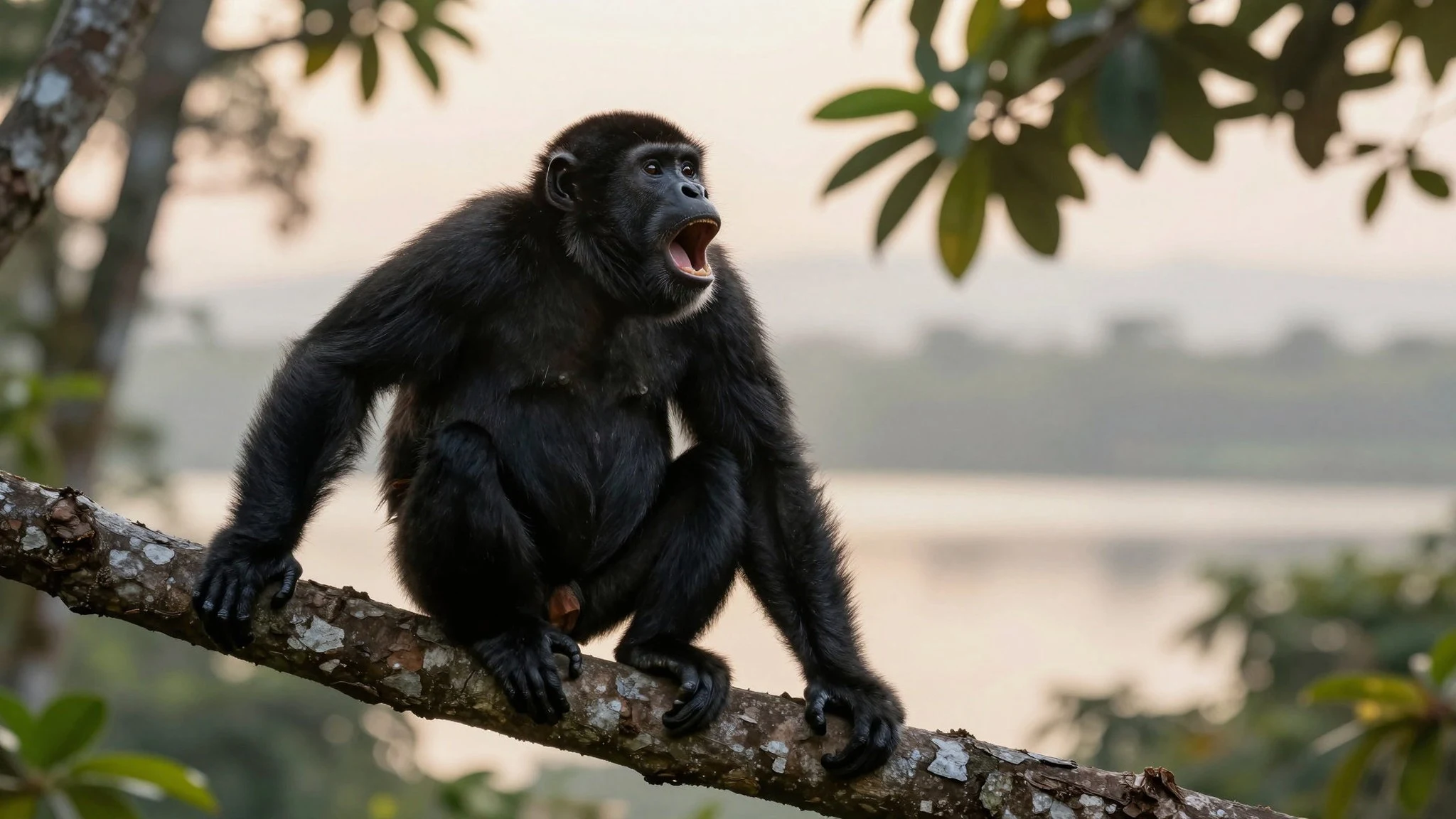
- Keel-billed toucan (animal)
Picture a bird whose enormous, colourful beak looks painted with a rainbow: that is the keel-billed toucan, a forest bird that eats fruit, seeds, insects and even small lizards. At Yaxha, settle in the shade and watch the canopy for toucans and monkeys. The notes give no season or time of day, so let a guide advise you. Stay quiet and distant, and never offer food.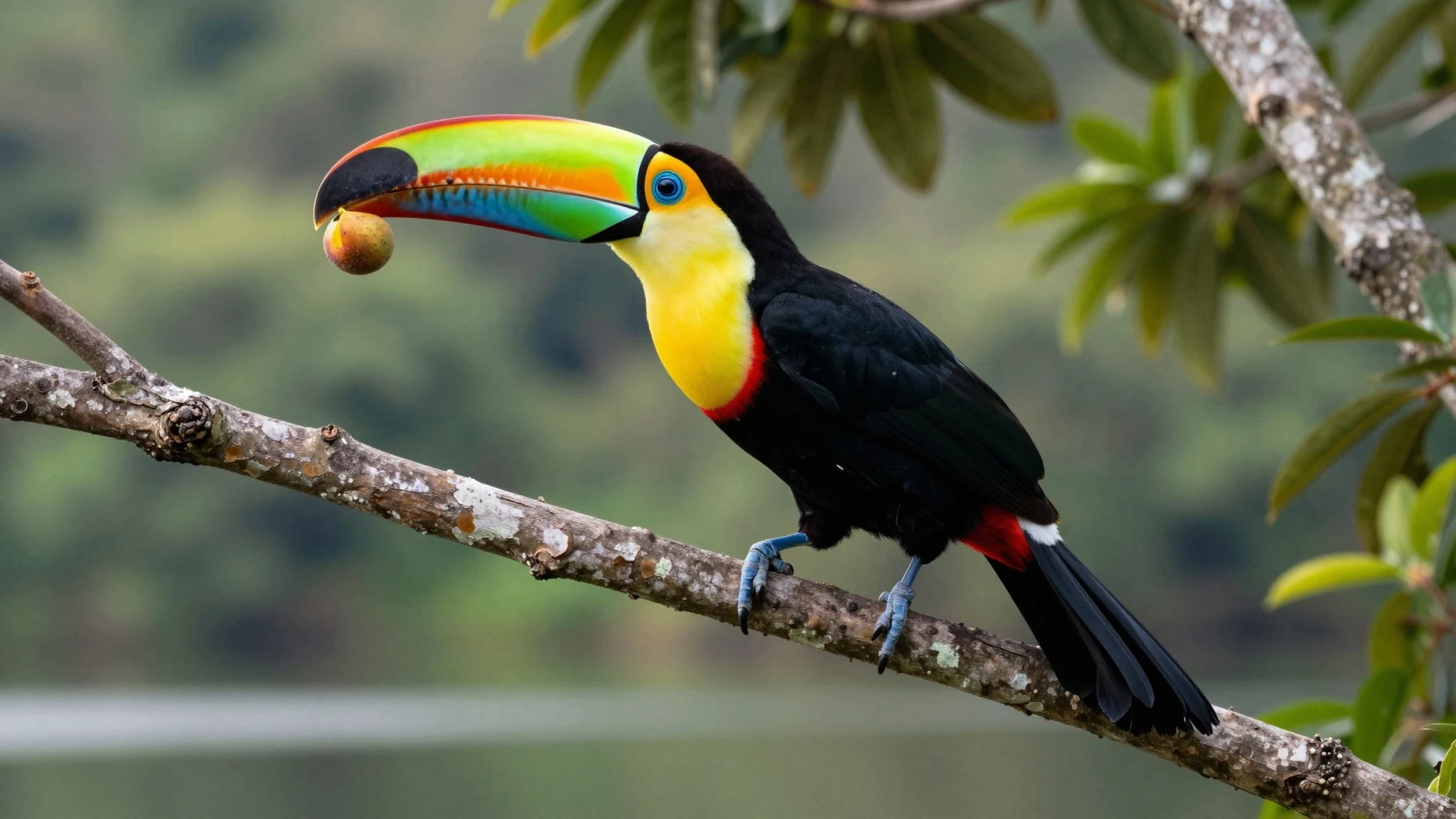
- Keel-billed toucan (bird)
Picture a bird whose enormous, colourful beak looks painted with a rainbow: that is the keel-billed toucan, a forest bird that eats fruit, seeds, insects and even small lizards. At Yaxha, settle in the shade and watch the canopy for toucans and monkeys. The notes give no season or time of day, so let a guide advise you. Stay quiet and distant, and never offer food.