Livingston
Livingston, Guatemala
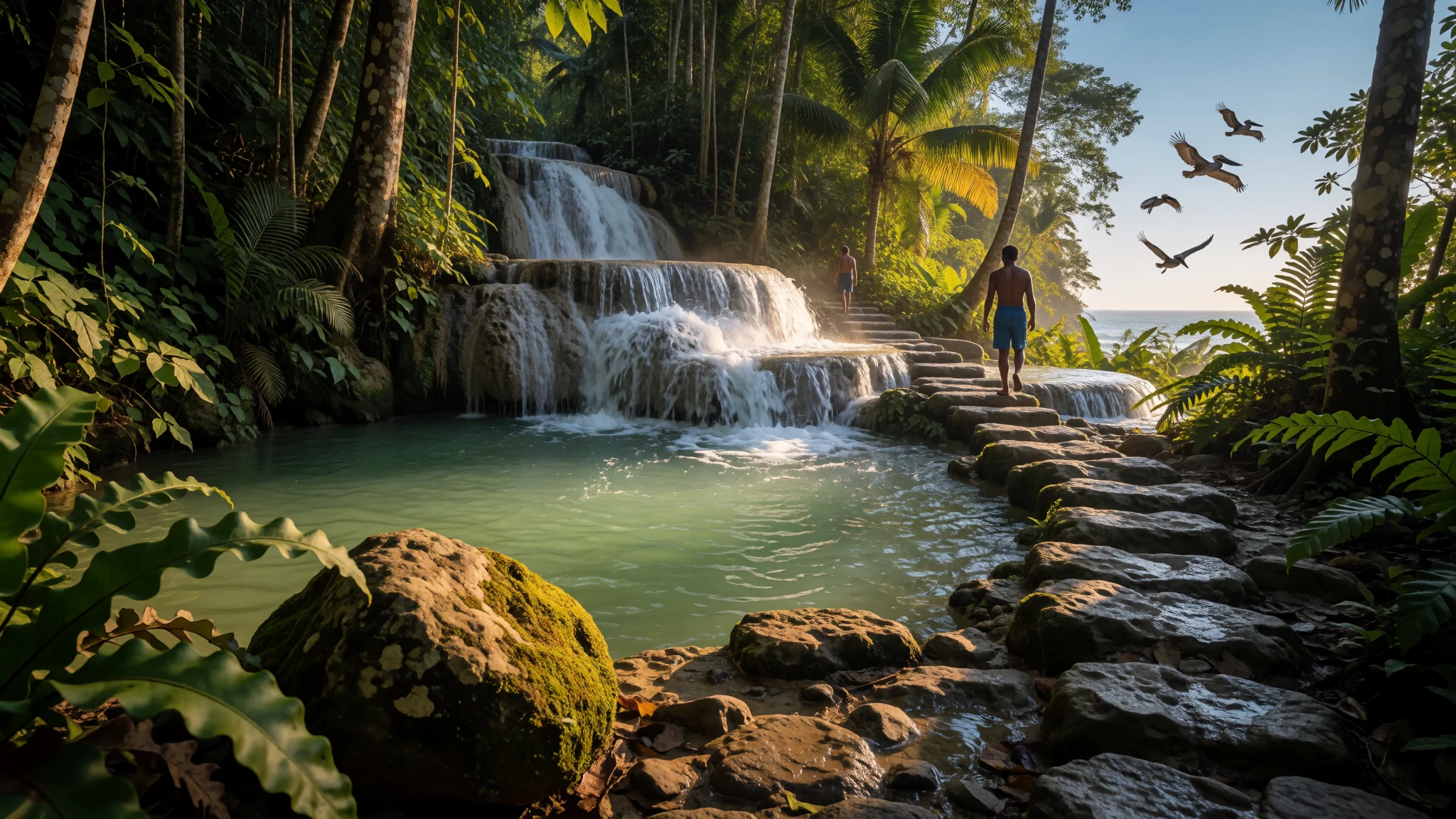
Livingston is a roadless Caribbean town where Garífuna music, coconut-rich seafood and boat rides down the Río Dulce replace the usual beach-resort script.
The place
Livingston sits where the Río Dulce meets the Gulf of Honduras, on the short Caribbean coast of Guatemala in the department of Izabal. About 80,000 people live in the municipality, but the town itself feels far smaller, because no road reaches it. Everything and everyone arrives by water, either down the river from Río Dulce town or across the bay from Puerto Barrios, and the municipal dock works as the town's front door, crowded with water taxis, fishing boats and the occasional pelican. Before Puerto Barrios was built nearby, Livingston was Guatemala's main port on the Caribbean, and some of that harbour looseness has outlasted the trade. Calle Principal climbs from the landing past small restaurants, tour offices and shops, with side streets dropping towards the sea. The population is a blend of Garífuna, Afro-Caribbean, Maya and Ladino families, so Spanish, Garifuna and often English are all heard within a few steps of one another. The climate is tropical rainforest: warm, humid and wet in any month, with clothes that dry slowly and sudden downpours that pass as quickly as they arrive. The town's own beaches are modest, with grass reaching into the water in places and plastic washing in after storms, so the draw is less sand than atmosphere: music in the evenings, seafood, boat trips on the river, and rides or walks along the coast to waterfalls and quieter shores. Tourism has grown here in recent decades, yet the town still runs on fishing and ferrying as much as on visitors.
Its story
Livingston carries the name of Edward Livingston, an American lawyer and politician whose legal codes were translated into Spanish by the Guatemalan liberal José Francisco Barrundia. Those codes were meant to underpin the laws of the liberal government of the United Provinces of Central America, so naming a Caribbean port after their author was a statement of political hope. The town was founded in 1831, while the federation was still trying to hold together. It did not hold. A conservative and clerical uprising led by Rafael Carrera overthrew the liberal governor Mariano Gálvez, and Guatemala moved into decades of Catholic, conservative rule that left the town's name pointing at an idea the country had abandoned. Livingston carried on regardless as a port. Its people were shaped by the Garífuna, whose roots lie in West African and Indigenous Caribbean ancestry and whose communities line much of this coast, living alongside Maya and Ladino neighbours. Later, as Puerto Barrios took over the heavy shipping, Livingston lost its commercial edge and settled into life as a fishing and river town. In the later twentieth century the state also opened the northern lands of Izabal and neighbouring departments to farming, timber and settlement, drawing new settlers and companies into the wider region. Since then the story has been one of reinvention: a place named for a foreign lawyer's codes, built by migration and sea trade, and now known mostly for its mixed culture and for visitors who arrive by boat.
What to see
- Los Siete Altares — North coast, beyond the town
A string of freshwater pools and small waterfalls running down towards the Caribbean, a short boat ride north of Livingston, or a long beach walk for the energetic. Wear sturdy footwear, because litter collects along the sand. The water is best in the wetter months of July and August and thinner in the spring dry spell.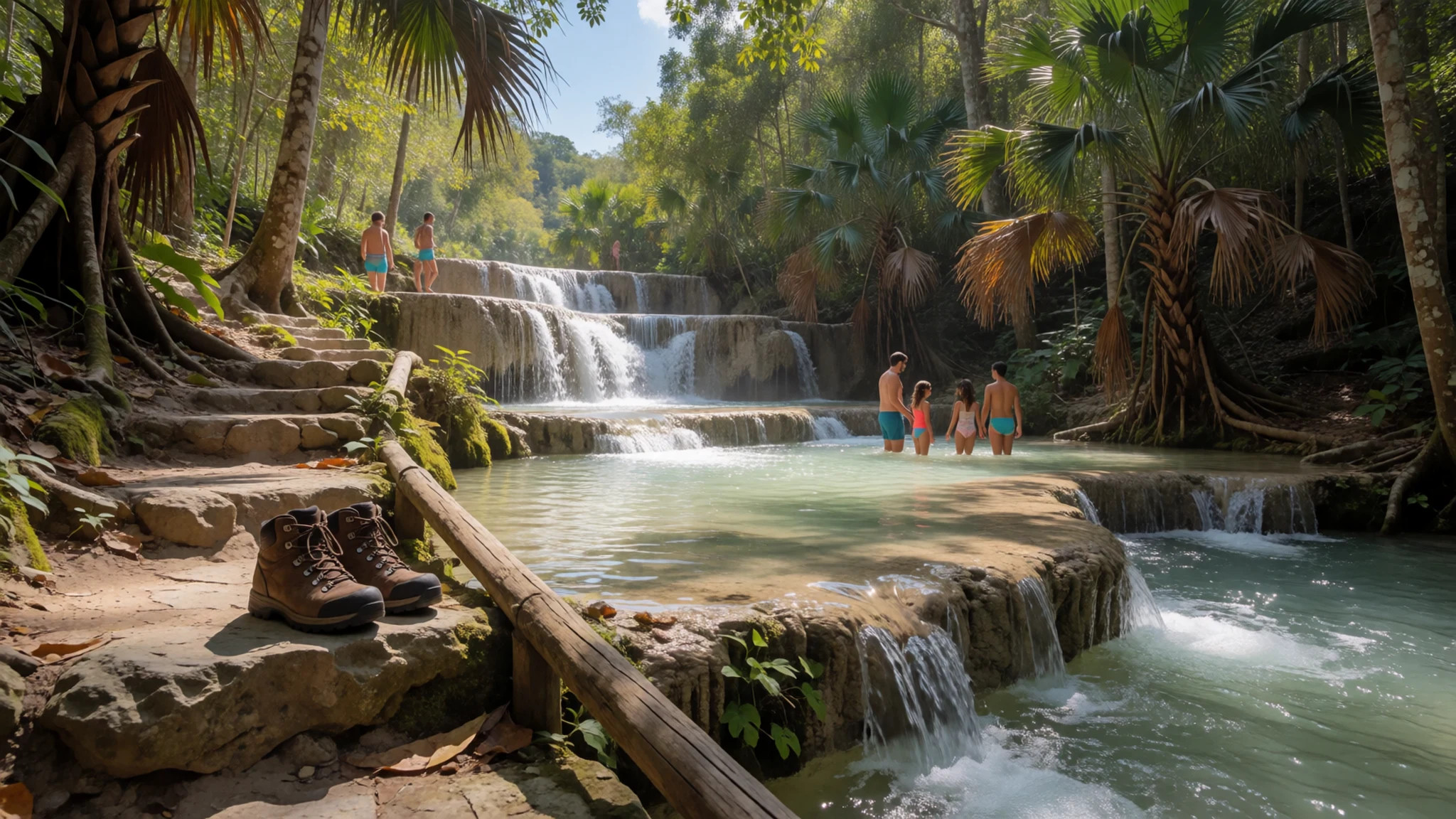
- The dock and Calle Principal — Town centre
Livingston's life gathers at the municipal dock and along Calle Principal, which climbs away from it. Boats unload, tour operators chat with arrivals, and small eateries open straight onto the street. The walk is short but rewards slow wandering, with side lanes dropping to the sea and music drifting from bars in the evenings.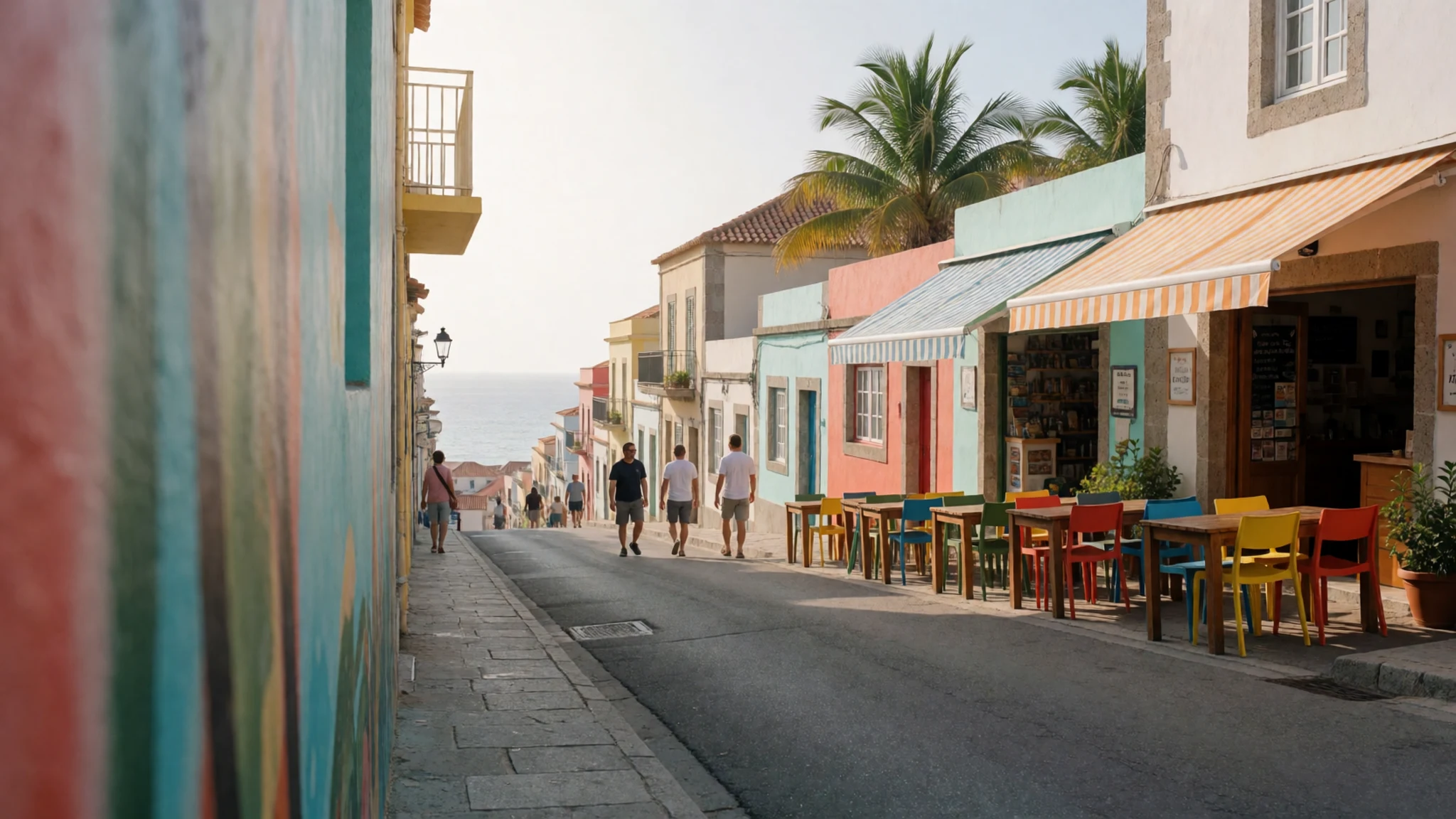
- The central beach — Seafront, central Livingston
The central beach is where Livingston swims and plays, and children fly kites there most evenings. It is not a resort strand: grass grows into the water in places and plastic can wash in after bad weather. It is still a friendly spot for watching the light change over the Caribbean. Ask locally before walking the beach north of town.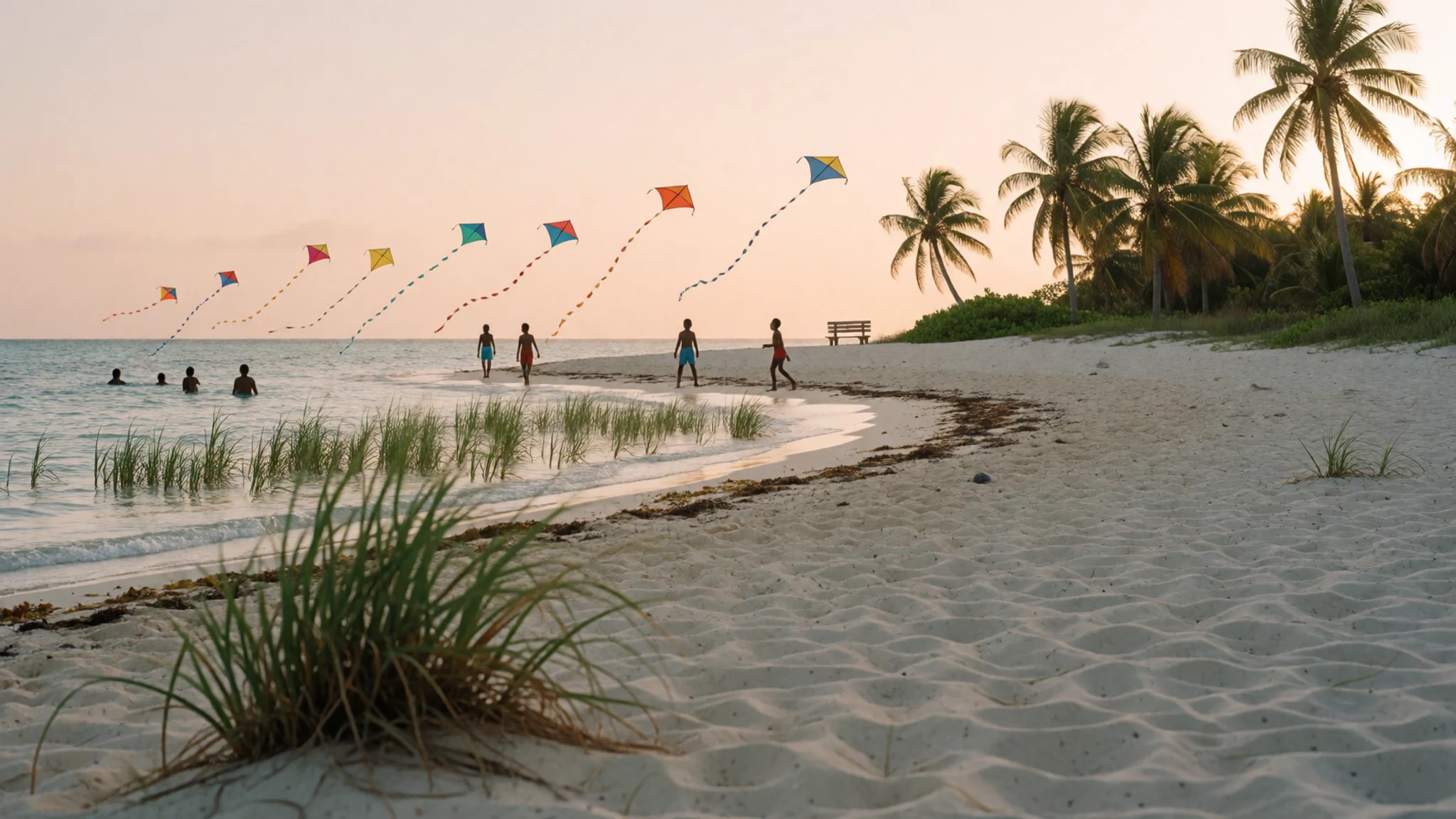
- The fish dryers — Fishing quarter near the shore
Fish-drying racks in Livingston show the town's older trade, with catches split and cured in sun and sea air. They are working places rather than attractions, so look from a respectful distance and ask before taking photographs of the people at work. The smell is part of the experience.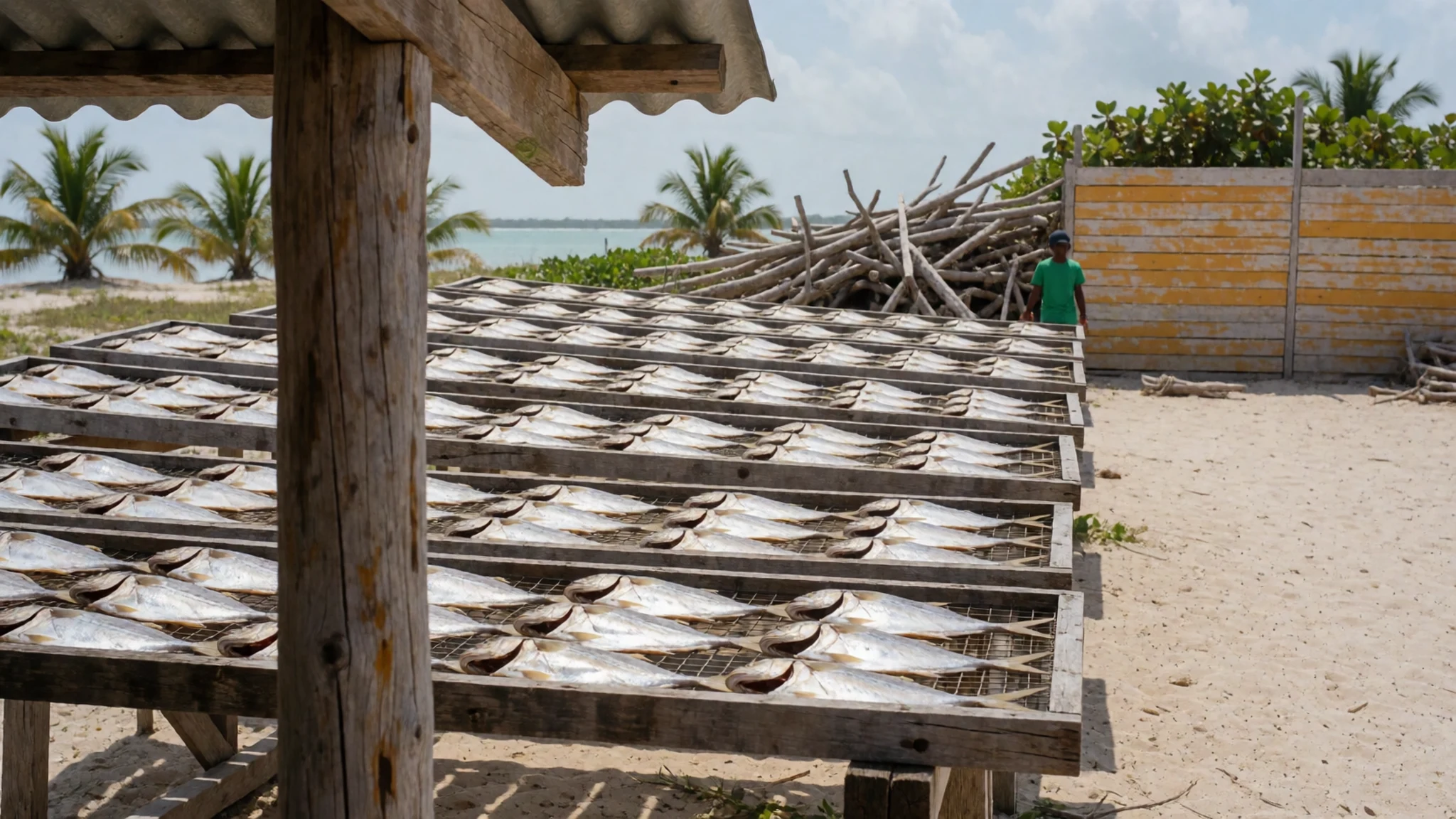
- The Río Dulce by boat — River between Río Dulce town and Livingston
The journey between Río Dulce town and Livingston is a sight in itself, with wooded banks, birdlife and pelicans nearer the mouth. Some boat operators add stops and turn the trip into a tour, which can stretch the time considerably, so ask whether a boat is a straight ferry or a sightseeing run.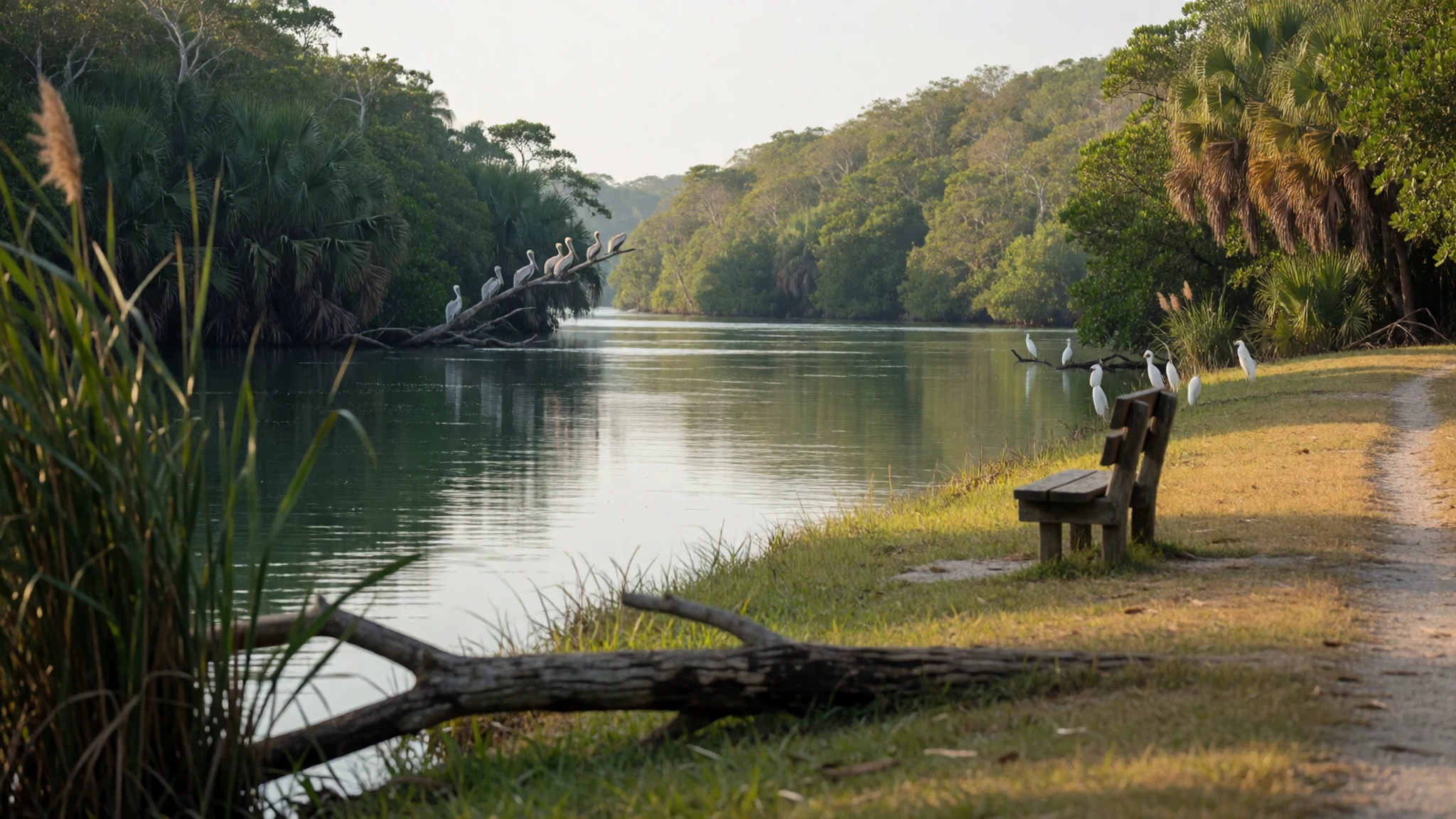
Culture
Livingston's culture blends Garífuna, Afro-Caribbean, Maya and Ladino influences, and the Garífuna thread is the one most visitors notice first. It shows in language, with Garifuna spoken beside Spanish and often English, and above all in music. Live bands play in many bars most nights, and local musicians walk between restaurants with large drums, a turtle shell, a conch and maracas, the traditional line-up. The rhythms are percussive and driven by call and response, and dancing is rarely left to the musicians alone. Food tells the same mixed story: coconut, fish and rice from the Caribbean kitchen sit beside corn dishes from the Maya and Salvadoran pupusas sold at evening stalls. Because no road reaches the town, goods, water and people all arrive by boat, and the rhythm of the day follows the dock more than the clock, so plans slip and nobody minds much. Fishing still shapes family life, and the sea is both workplace and neighbourhood. Mornings are for boats and the fish dryers, afternoons slow with the heat, and evenings bring people back to the streets, the beach and the music. Visitors who stay a few days tend to leave understanding that this is a community with its own identity, not simply a gateway to the river. Ask before photographing people, musicians and anyone working at the fish dryers, and a small tip is the polite way to thank musicians who play at your table.
What to wear
In Livingston, traditional dress follows the town's mixed communities. Garífuna women wear brightly coloured, loose cotton dresses and head wraps for celebrations and community events, while Maya women in the wider region wear the huipil, a hand-woven cotton blouse, with a wrapped skirt, mostly in villages away from the coast. Day to day, most people in town dress for the heat in shorts, T-shirts, vests, football shirts and sandals, with rubber boots or a rain jacket when storms arrive. Church and formal occasions bring out smarter shirts and dresses. Visitors should pack light, quick-drying cotton or linen, a hat and sun protection, and a thin waterproof for sudden rain, since the climate is tropical rainforest and showers can come in any month. Footwear should cope with wet docks, sandy lanes and muddy tracks: strapped sandals are better than loose flip-flops, and trainers or closed shoes suit the waterfall trail. Swimwear is for the beach and boats; put on a shirt or wrap to walk through town, and carry something with sleeves for church visits. Damp clothes dry slowly here, so bring a spare set, and keep phones, cards and passports in a waterproof bag on every boat journey.
What to eat
- Tapado — Restaurants along Calle Principal and near the dock
A coconut-milk soup of fish, prawns and shellfish, finished with coriander and served with crusty bread. It is a signature Garífuna dish, rich and gently spiced, and suits a wet afternoon. Order it hot and expect to be given a spoon and plenty of napkins.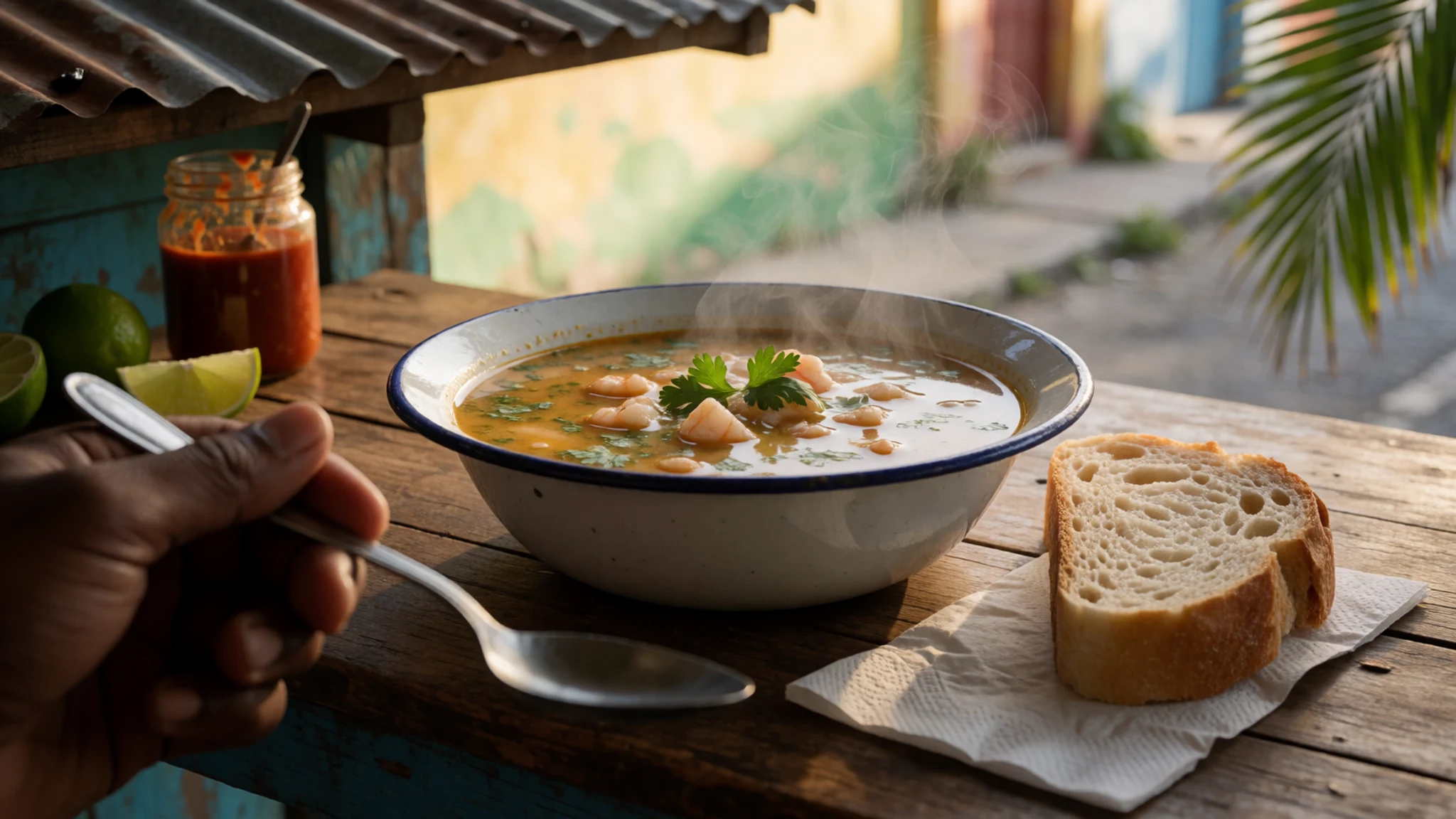
- Coconut rice and beans with stew chicken — Small family-run eateries in the town
Rice and beans cooked in coconut milk, served with stewed chicken, a staple of Caribbean home cooking. Some small family eateries serve nothing else, and the plate is filling, mild and comforting after a day of boats and sun.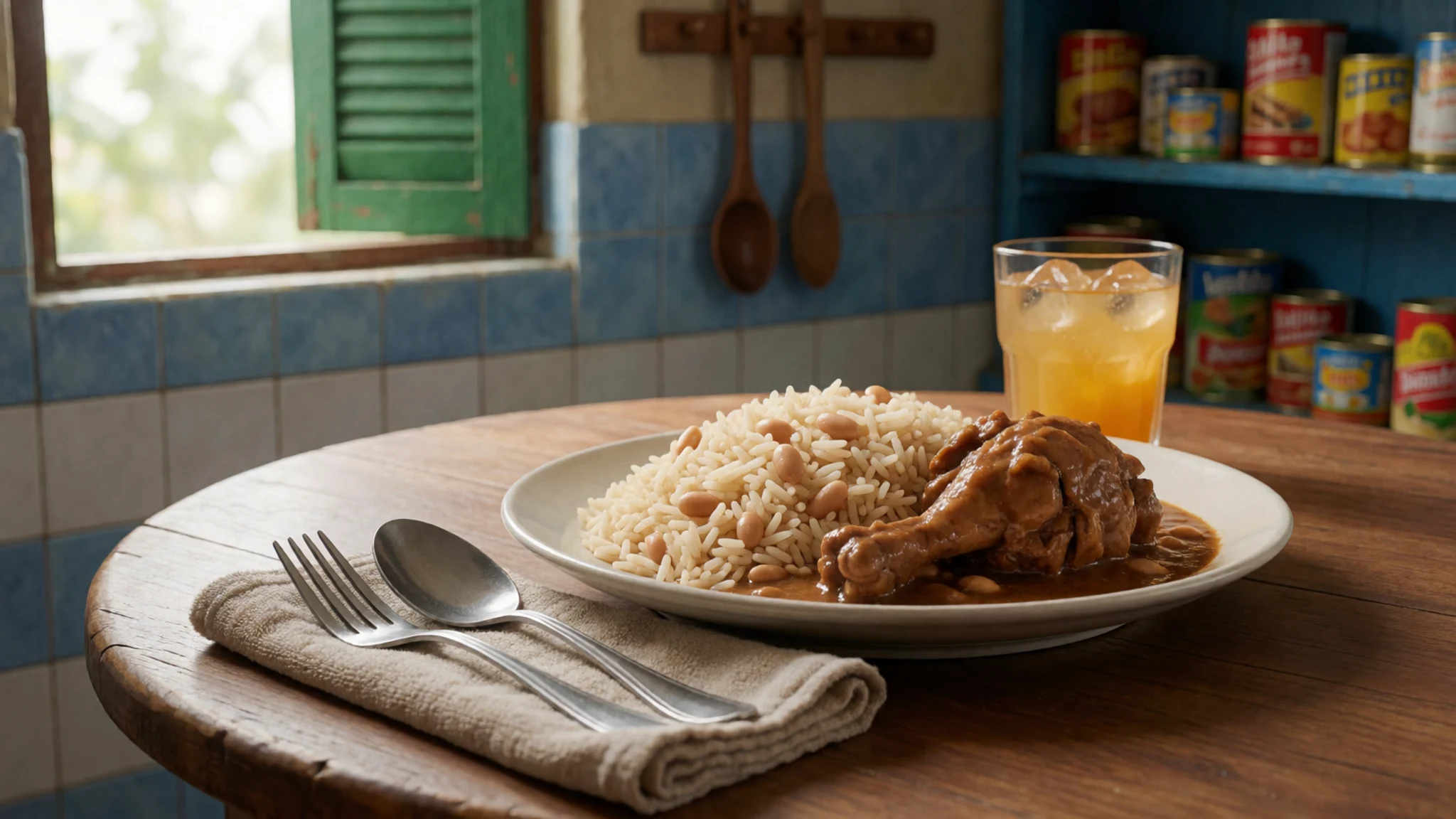
- Garlic fish — Waterside restaurants just south of the dock
Whole fish cooked with plenty of garlic and served with rice or fried plantain. The catch is local, so the choice depends on the day's boats. It is a simple dish, best eaten with a view of the water and a cold drink. - Grilled shrimp — Restaurants on and around Calle Principal
Livingston began as a fishing town, so shrimp is plentiful and often simply grilled, which lets the sweetness come through. It is a good lunch order, and many places serve it with rice, salad or crusty bread. - Pupusas — Evening stalls and small pupuserías
Thick corn cakes from El Salvador, stuffed with fillings such as beans or cheese and cooked on a griddle. They make a cheap, quick evening meal, usually eaten by hand with a tangy cabbage relish. - Coco loco — Bars on Calle Principal and along the seafront
The town's signature drink is a coconut with the top cut off and a very generous measure of rum poured in. It is sweet, easy to drink and surprisingly strong, so sip slowly, especially in the heat.
Plan it
Best time. July–August, when the waterfalls at Los Siete Altares run best; April–June is the weak season for them. The climate is tropical rainforest, so expect heat, humidity and showers in any month.
How long. 2–3
Getting there. Fly into Guatemala City, then travel overland to Río Dulce town or Puerto Barrios, the two main boat departure points. From Río Dulce, shared and private boats run down the river, taking from about an hour to a couple of hours depending on tour stops; from Puerto Barrios the bay crossing is shorter. A boat service also runs from Punta Gorda in Belize on certain days. Confirm times and fares at the dock, and check the official site (http://www.inforpressca.com/livingston).
Budget. low
Tips
- Confirm boat times and fares at the dock the day before, as schedules shift with weather and demand
- Carry cash, because small eateries and boat operators may not take cards
- Pack a rain jacket and a waterproof bag for boat rides
- Ask your lodging before walking the northern beach or any quiet stretch of coast
- Visit Los Siete Altares in the wetter months rather than April to June
Etiquette
- Ask before photographing people, musicians or workers at the fish dryers
- Greet shopkeepers and boat crews before asking for prices or directions
- Cover up with a shirt or wrap away from the beach, and dress modestly for church
Nearby
Sources
- Wikidata Q1192713 (CC0)
- Wikipedia: Livingston, Guatemala (rev 1378733633) (CC BY-SA 4.0)
- Wikivoyage: Livingston (Guatemala) (rev 5217899) (CC BY-SA 4.0)
- Carrer de Livingston.JPG (CC BY 3.0)
- Livingston, Izabal - Guatemala (Exploraguate) (CC BY-SA 4.0)
- Relief map of Guatemala (Виктор В) (CC BY-SA 2.0)
- View from Livingston, Guatemala, towards Caribbean Sea (BBCLCD) (CC BY-SA 4.0)
- Assecador de peix.JPG (CC BY 3.0)
- Fish dryer in Livingston, Guatemala, december 2015 (Pitxiquin) (CC BY-SA 4.0)
- Welcoming Brown Pelicans on boat in Livingston, Guatemala (johrling) (CC BY 2.5)
- Camió aigua Salvavidas.JPG (CC BY 3.0)


Wildlife
- Brown pelican (animal)
Think of the brown pelican as a seabird with a built-in fishing pouch, which it uses when it dives for food. Travelling by boat between Río Dulce town and Livingston, look for pelicans nearer the mouth, where the wooded banks open out. In breeding dress the head is white and the neck dark brown, while resting adults have a white head and neck. Keep your distance, stay quiet, follow your guide's lead, and never offer food.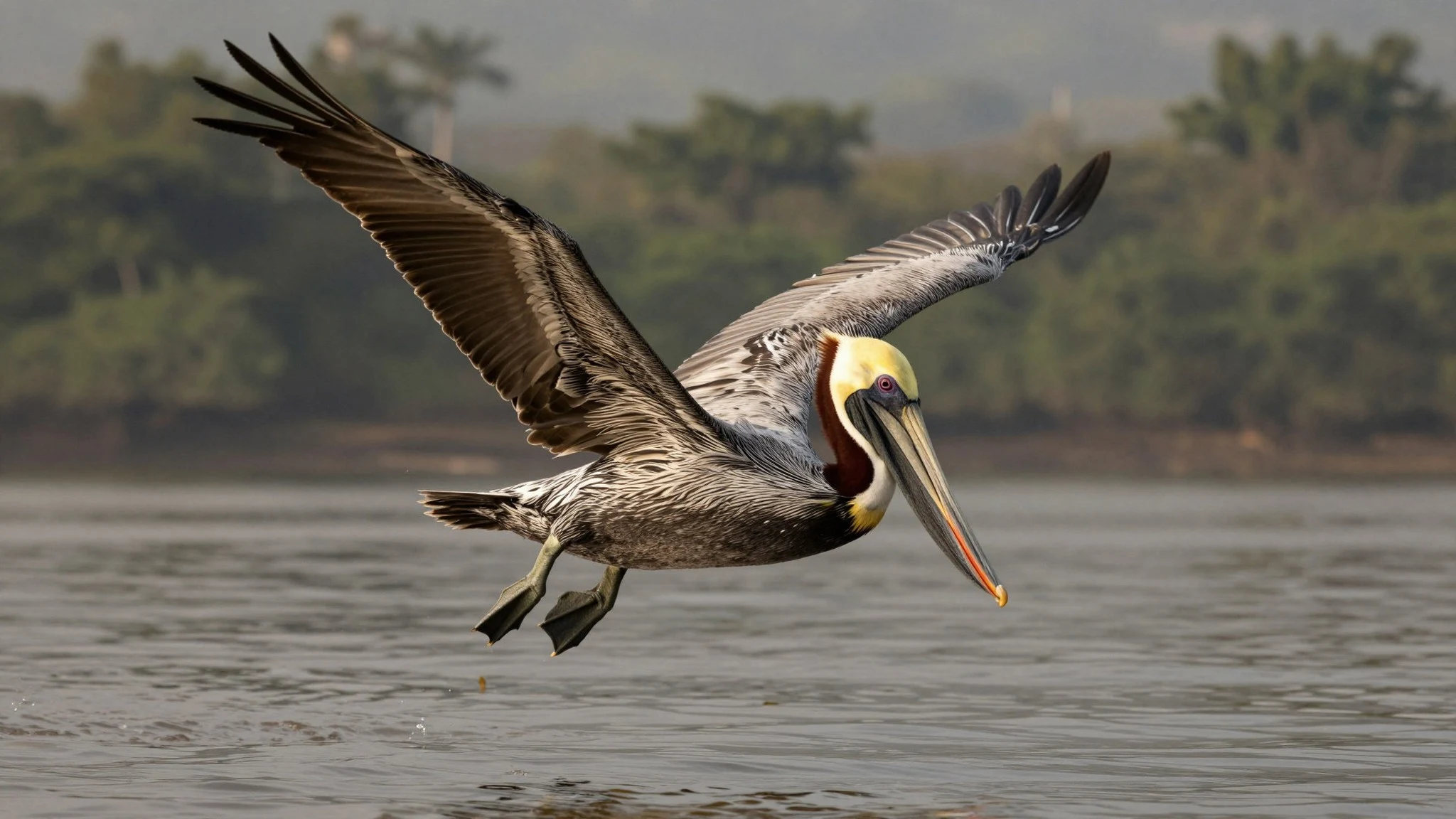
- Pelican (bird)
Think of the brown pelican as a seabird with a built-in fishing pouch, which it uses when it dives for food. Travelling by boat between Río Dulce town and Livingston, look for pelicans nearer the mouth, where the wooded banks open out. In breeding dress the head is white and the neck dark brown, while resting adults have a white head and neck. Keep your distance, stay quiet, follow your guide's lead, and never offer food.