Yapahuwa
Yapahuwa, Sri Lanka
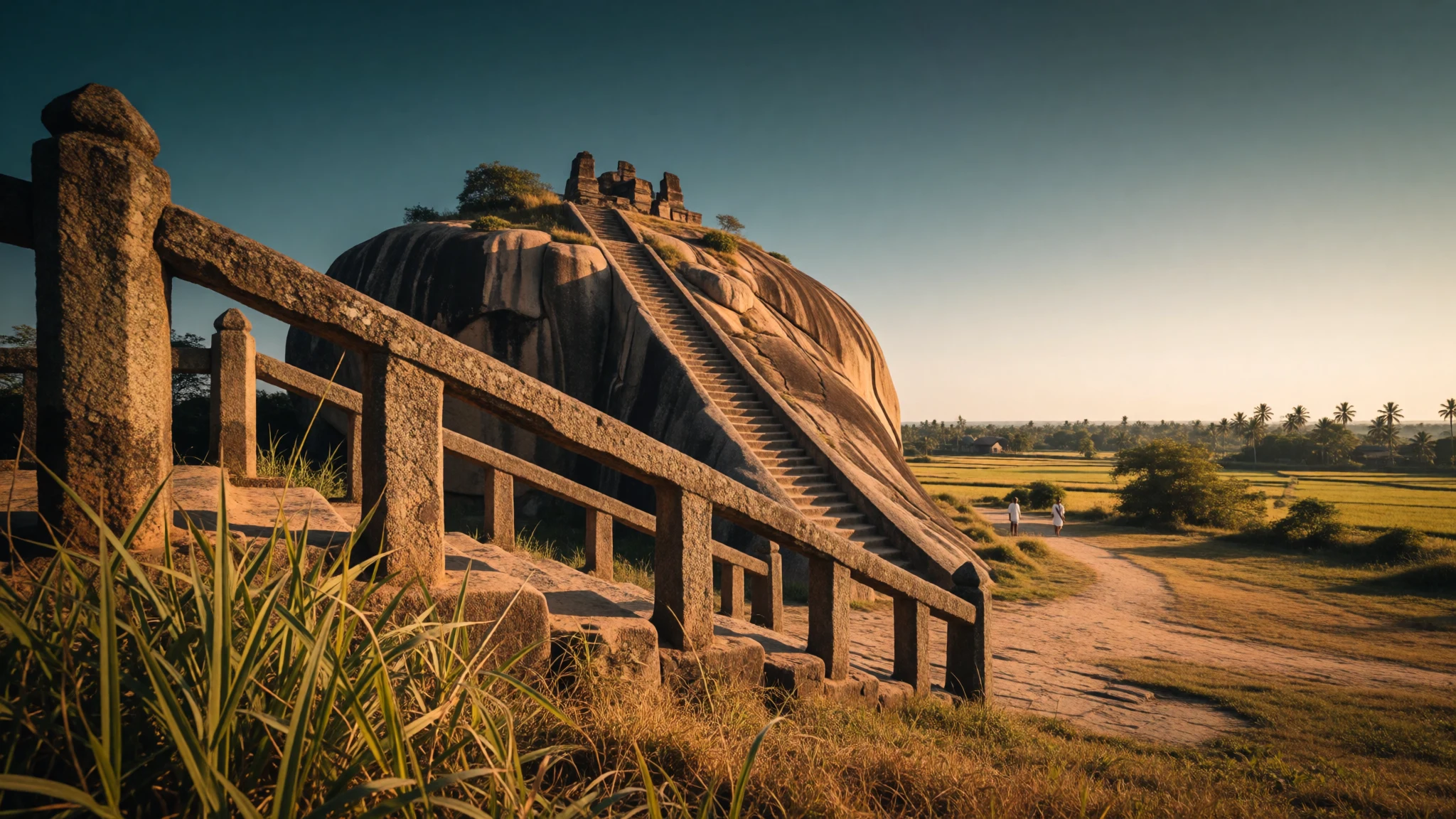
Yapahuwa is a granite rock fortress where a medieval king briefly kept the Buddha's tooth, reached by a steep, lion-guarded stone stairway.
The place
Yapahuwa is a rock fortress in Sri Lanka's North Western Province, roughly midway between the city of Kurunegala and the ancient capital Anuradhapura, close to the village of Maho. The site is a granite boulder that rises abruptly out of flat lowland, about 90 m above its surroundings, and the medieval citadel was built around and into it. From the top the country spreads out in every direction, which makes it obvious why anyone wanted to hold this spot. It was one of several short-lived capitals of medieval Sri Lanka, a kingdom that kept relocating its court as invasions from South India pressed on. Its time as the seat of power lasted only about a decade, but the rock was never just a palace. Buddhist monks and ascetics used boulders like this across the region as retreats, and they inherited the place once the court left. That layering is still easy to read on the ground. At the southern foot, two moats and ramparts enclose the ground where royal buildings once stood. Above them climbs a carved stairway, then caves, a shrine, and ruined stupas near the summit. The name has drifted as well: the older form was Yapawwa, and Yapahuwa is a later distortion. Heat is the main hardship, because the rock offers little shade and the steps store the sun. A small shop at the entrance sells drinks and snacks, and the cave temple's door is usually kept closed, so the guard on site matters. Some details, notably the lions on the stairway, look Chinese in style, a hint of how far the island's contacts reached.
Its story
Yapahuwa became the seat of the Sri Lankan crown in 1273 under King Buvanekabahu I, who ruled until 1284. He moved his court here from Dambadeniya as armies from South India, the Pandyans among them, kept pushing into the island, and he brought the Sacred Tooth Relic of the Buddha with him. Holding the relic mattered politically, since a ruler who possessed it had a stronger claim to rule. The rock gave him a ready-made stronghold, planned in the manner of Sigiriya. Its stairway climbs at about 70 degrees, a pitch usually read as military: attackers labouring upwards would be at the mercy of defenders above. A tooth temple was built at the head of the third flight to house the relic. The protection did not last. After Buvanekabahu died in 1284, the Pandyans invaded again and carried the relic off to South India. Parakkramabahu III recovered it in 1288 and placed it, for safety, at Polonnaruwa. With the relic gone, the reason for living on the rock went too, and Yapahuwa was left largely to monks and ascetics. A temple, the Yapahuwa Rajamaha Vihara, was added in the Kandyan period, so worship never fully left. Traces of the old battle defences survive, and a Brahmi-script inscription in one of the caves shows that monks were using the rock alongside, or around, the royal years. The story is of a monastic hill borrowed by a king in a hurry, then handed back.
What to see
- The ornamental stairway — Southern foot of the rock
Yapahuwa's carved stairway is the site's showpiece: about a hundred steps in several flights, rising at a steep angle towards the old tooth temple. Stone lions with a distinctly Chinese look stand near the top. Climb early, before the stone heats up, and take it slowly.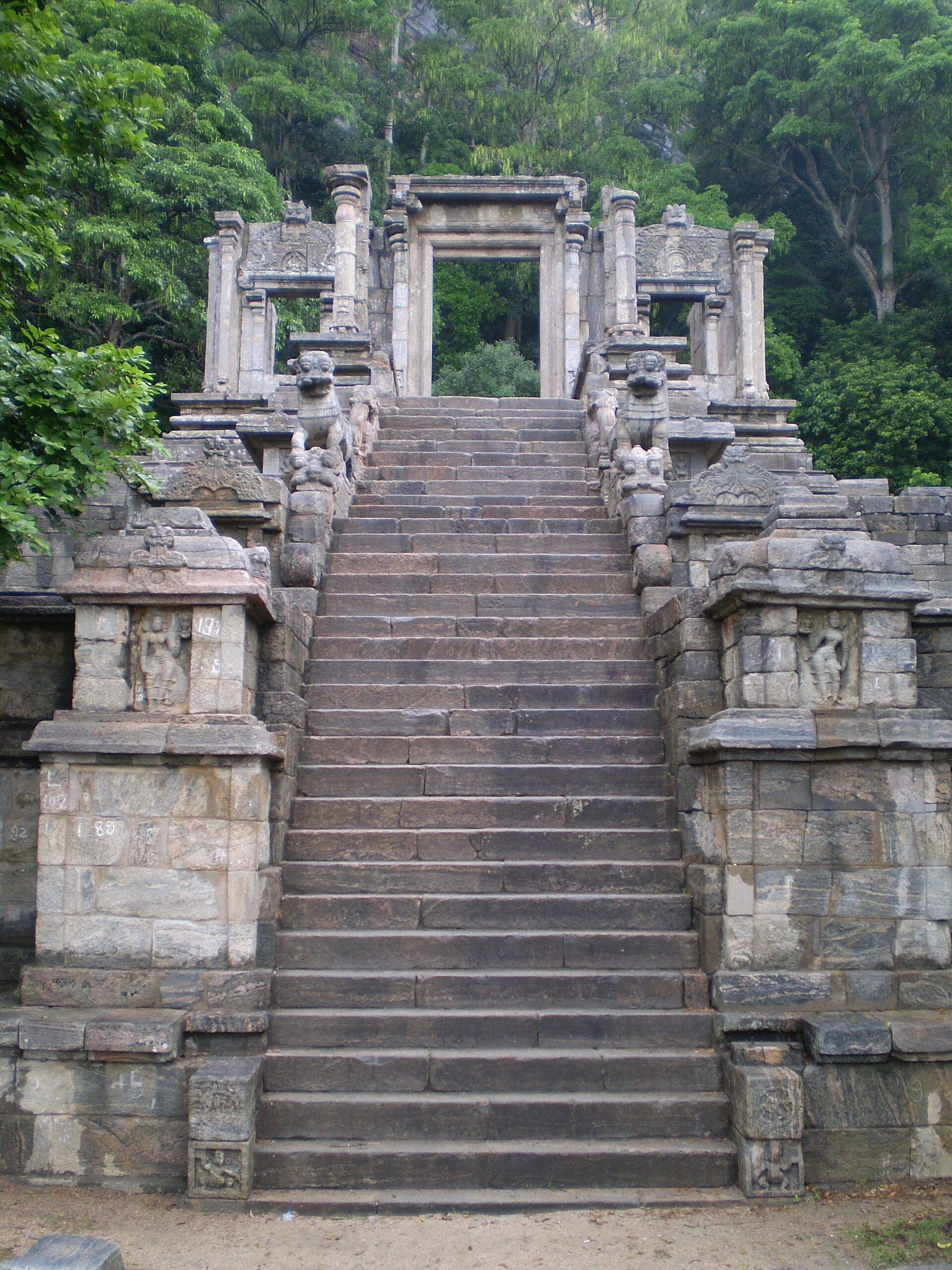
- The rock top — Summit of the rock
The summit path starts to the left of the doorway at the head of the stairway, and parts of it are awkward scrambling. Up top are the ruins of two stupas and a wide view over the plain, a good place to understand why a king chose this rock.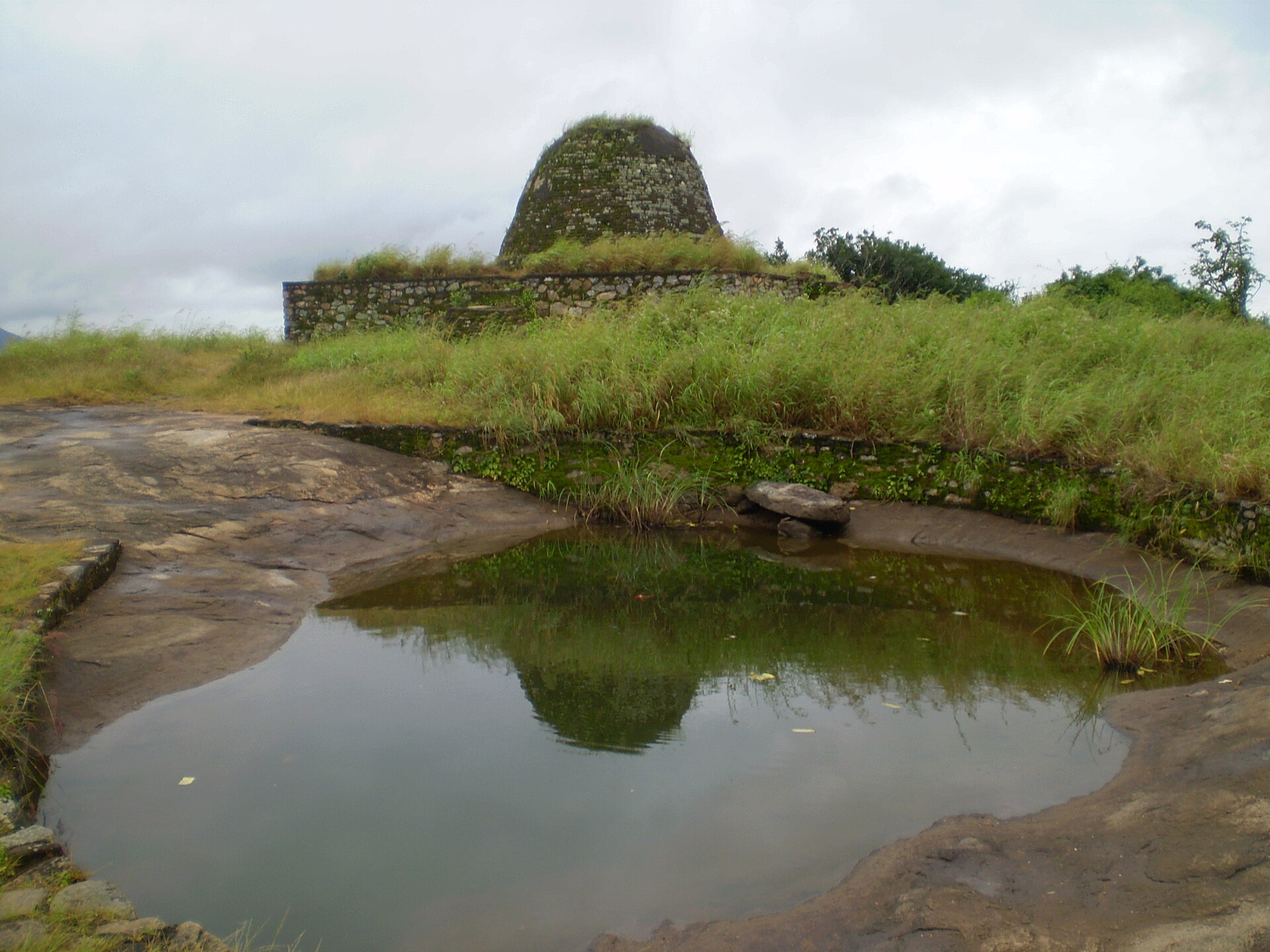
- The cave temple — Base of the rock
A small cave shrine holds Buddha statues and painted frescos. The door is usually shut, so ask a guard to open it. Go in quietly, shoes off, and give the paintings a few minutes for your eyes to adjust to the dim light.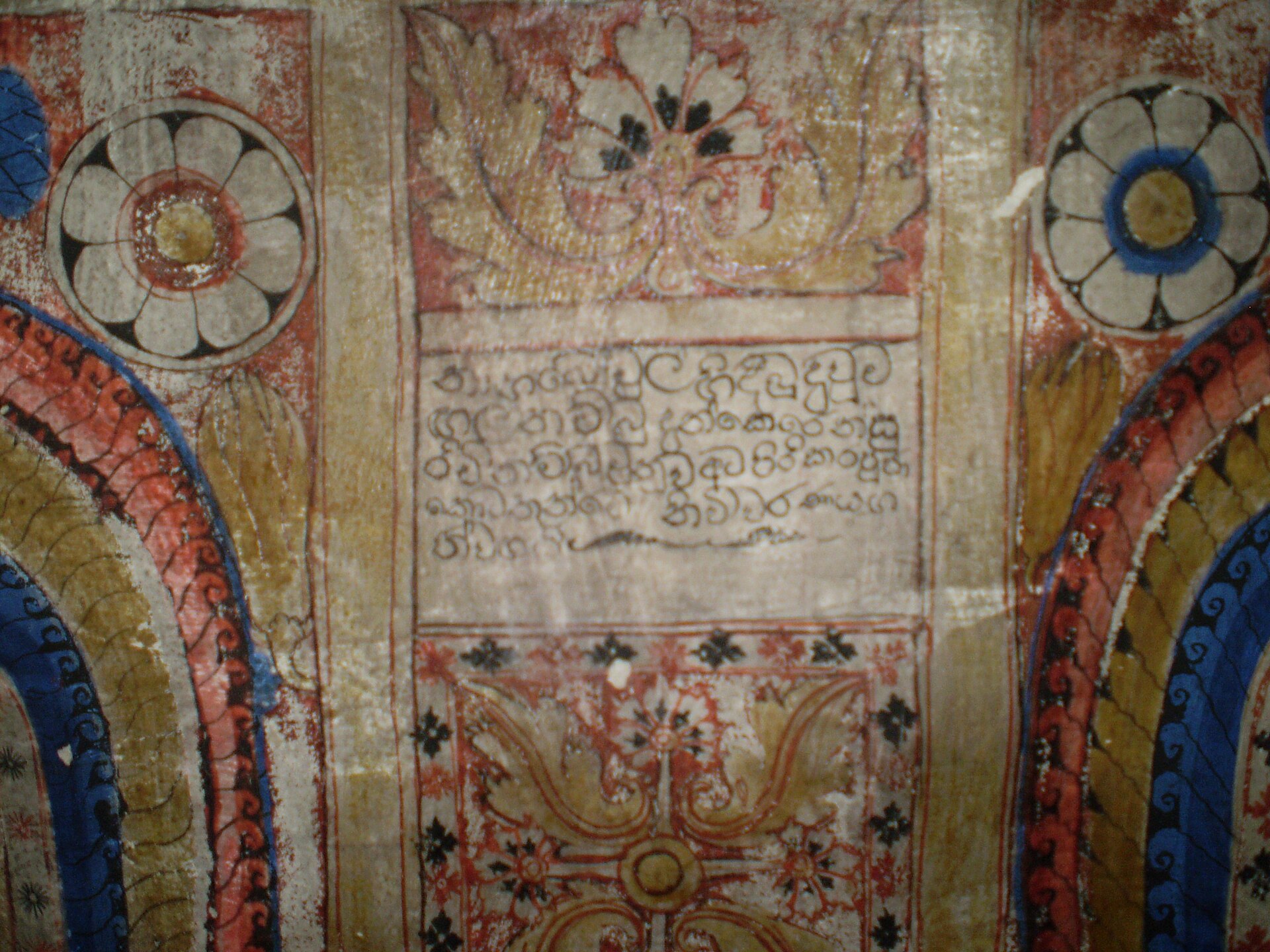
- Ramparts and moats — Southern base of the rock
A well-preserved wall encircles the site, and at the southern base two moats and ramparts mark out the royal enclosure. Foundations of several buildings, including a shrine, lie inside. It is an easy, flat walk and helps explain how the whole citadel was organised. - Yapahuwa Rajamaha Vihara — Inside the fortified enclosure
Within the old fortified ground stands a Buddhist temple from the Kandyan period, still in use. It shows that Yapahuwa did not simply fall silent after the court left. Visit respectfully, as a place of worship rather than only a ruin.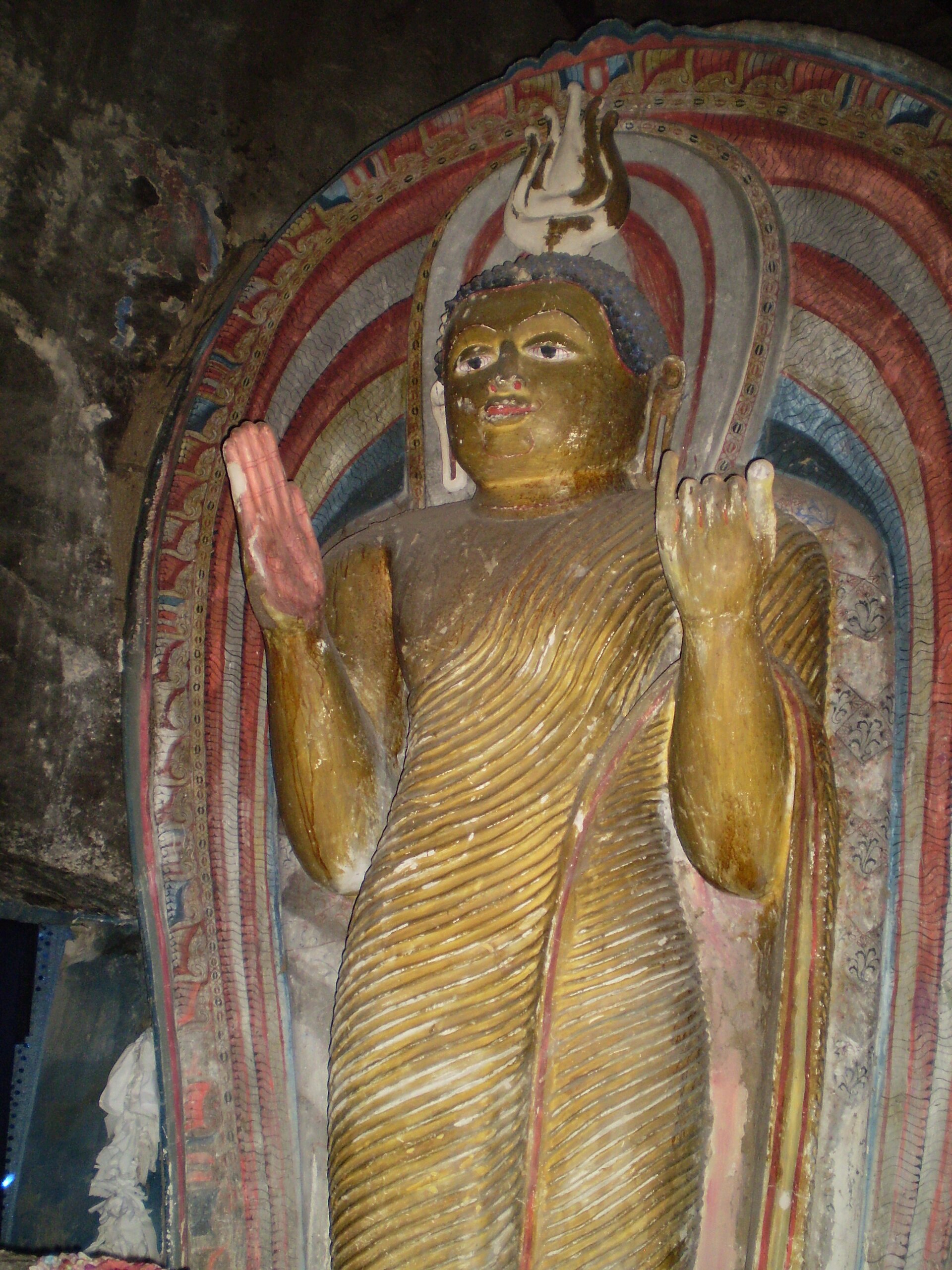
Culture
Yapahuwa is a Buddhist place first and an archaeological site second, and that shapes how it is used. Monks lived in the caves around the rock before and after its short spell as a capital, and a working temple, the Yapahuwa Rajamaha Vihara, still stands within the old fortified ground. The Sacred Tooth Relic, kept here for a few years in the thirteenth century, is the reason the site is remembered. Sri Lankan rulers long treated possession of the relic as proof of their right to rule, and the tooth temple at the head of the third flight of steps was built with that idea in mind. Sri Lankan visitors often come as pilgrims as much as sightseers, bringing flowers, lighting lamps and sitting quietly before the Buddha images. Full Moon Poya days, the monthly Buddhist observance, are kept as days of devotion, and the site is closed then, so check locally before travelling. Inside the cave shrine the painted Buddha figures and frescos are the focus, and the stone lions on the stairway are the other great draw. Nothing here is loud or showy, and the place rewards slow walking and long pauses. Monks may be present, and the courteous habit is to give them space. Take off your shoes and hat before entering the cave temple or any shrine, keep your shoulders and knees covered, and never pose with your back to a Buddha image for a photograph.
What to wear
Around Yapahuwa, traditional dress follows the wider Sri Lankan pattern. Men wear the sarong (sarama) in handloom or machine-woven cotton, often with a white shirt, and a white outfit is usual for temple visits and Poya days. Women wear the sari, and the Kandyan style, the osari, is wrapped with a pleated fan at the back and a short jacket. Cotton and batik are common, and festival wear leans on brighter silks. Day to day in the villages near Maho, most people wear plain shirts, trousers, skirts, cotton dresses and saris, with sarongs at home and in the fields, and school and office uniforms are common on weekdays. A visitor should dress for heat and for a Buddhist site. Choose light, loose cotton or linen that covers shoulders and knees, which keeps the sun off and is respectful at the cave temple and the Vihara. White or soft colours are a good choice for shrines, while black is usually avoided. A wide-brimmed hat and sunscreen help on the exposed rock. Footwear needs thought: closed shoes or trainers with grip suit the steep, worn steps, but they will come off at every shrine, so slip-ons or sandals and clean socks are easier. Carry water and expect stone that is hot underfoot by midday.
What to eat
- Rice and curry — Simple eateries in Maho village
The everyday Sri Lankan meal: rice with several small curries, usually dhal, a vegetable or two, a sambol and often fish or chicken. Order it at the plain eateries in Maho village near Yapahuwa; portions are generous and the spice is real. - Kottu — Roadside eateries in Maho, mostly evenings
Chopped flatbread stir-fried on a hot griddle with egg, vegetables and sometimes chicken or cheese, to the clatter of metal blades. It is a filling, cheap evening meal. Look for it at roadside eateries in Maho after the day's climbing is done. - Hoppers — Small breakfast eateries in Maho and nearby towns
Bowl-shaped, lacy-edged pancakes made from a fermented rice-flour batter, often with an egg cooked in the middle and eaten with a hot onion sambol. They are a breakfast or early-dinner dish, found at small local eateries rather than at the site itself. - Short eats — The shop at the site entrance and bakeries in Maho
Fried or baked snacks such as patties, cutlets, rolls and vegetable buns, sold for pocket-money prices and good fuel for the climb. The small shop at the entrance has drinks and snacks, but bakeries in Maho have a wider choice. - King coconut (thambili) — Roadside stalls on the approach to the site
A bright orange coconut, hacked open with a machete and served with a straw, sweet and lightly mineral. It is the sensible answer to the heat after the rock top. Look for stalls along the road to Maho and near the entrance.
Plan it
Best time. December to March is generally the more comfortable stretch, with lower rainfall and less punishing heat than the hotter months that follow. The rock has little shade at any time of year, so go early in the morning whatever the month, and avoid the heaviest rains, when steps can be slippery.
How long. 1
Getting there. Most visitors arrive at Bandaranaike International Airport near Colombo. Yapahuwa is 147 km from Colombo, a little over two hours by car. By train, Maho Junction is the nearest station, about 6 km away, and a tuk-tuk covers the last leg. Anuradhapura is 98 km away, roughly two hours by road.
Budget. low
Tips
- Arrive when the site opens and climb before the midday heat; the rock has almost no shade
- Carry water and a hat, as the only refreshments at the entrance are a small shop's drinks and snacks
- Ask a guard to unlock the cave temple, since its door is usually closed
- Check opening times and ticket prices locally before going, and note that the site closes on Full Moon Poya days and public holidays
- Eat in Maho village, which is the nearest place for a proper meal
Etiquette
- Remove shoes and hats before entering any shrine or the cave temple
- Cover shoulders and knees at religious spots
- Ask before photographing monks, and never turn your back on a Buddha image for a photo
Nearby
Sources
- Wikidata Q3522473 (CC0)
- Wikipedia: Yapahuwa (rev 1379276559) (CC BY-SA 4.0)
- Wikivoyage: Yapahuwa (rev 4305206) (CC BY-SA 4.0)
- Photo: Yapahuwa Staricase 2 (Chindemaya) (Public domain)
- Photo: Yapahuwa Staricase 3 (Chindemaya) (Public domain)
- Photo: Yapahuwa rock top 1 (Chindemaya) (Public domain)
- Photo: Yapahuwa Staircase 1 (Chindemaya) (Public domain)
- Photo: Yapahuwa rock top 2 (Chindemaya) (Public domain)
- Photo: Yapahuwa temple 1 (Chindemaya) (Public domain)
- Photo: Yapahuwa temple 2 (Chindemaya) (Public domain)
- Photo: Yapahuwa temple paintings 1 (Chindemaya) (Public domain)


