Yap
Yap, Federated States of Micronesia
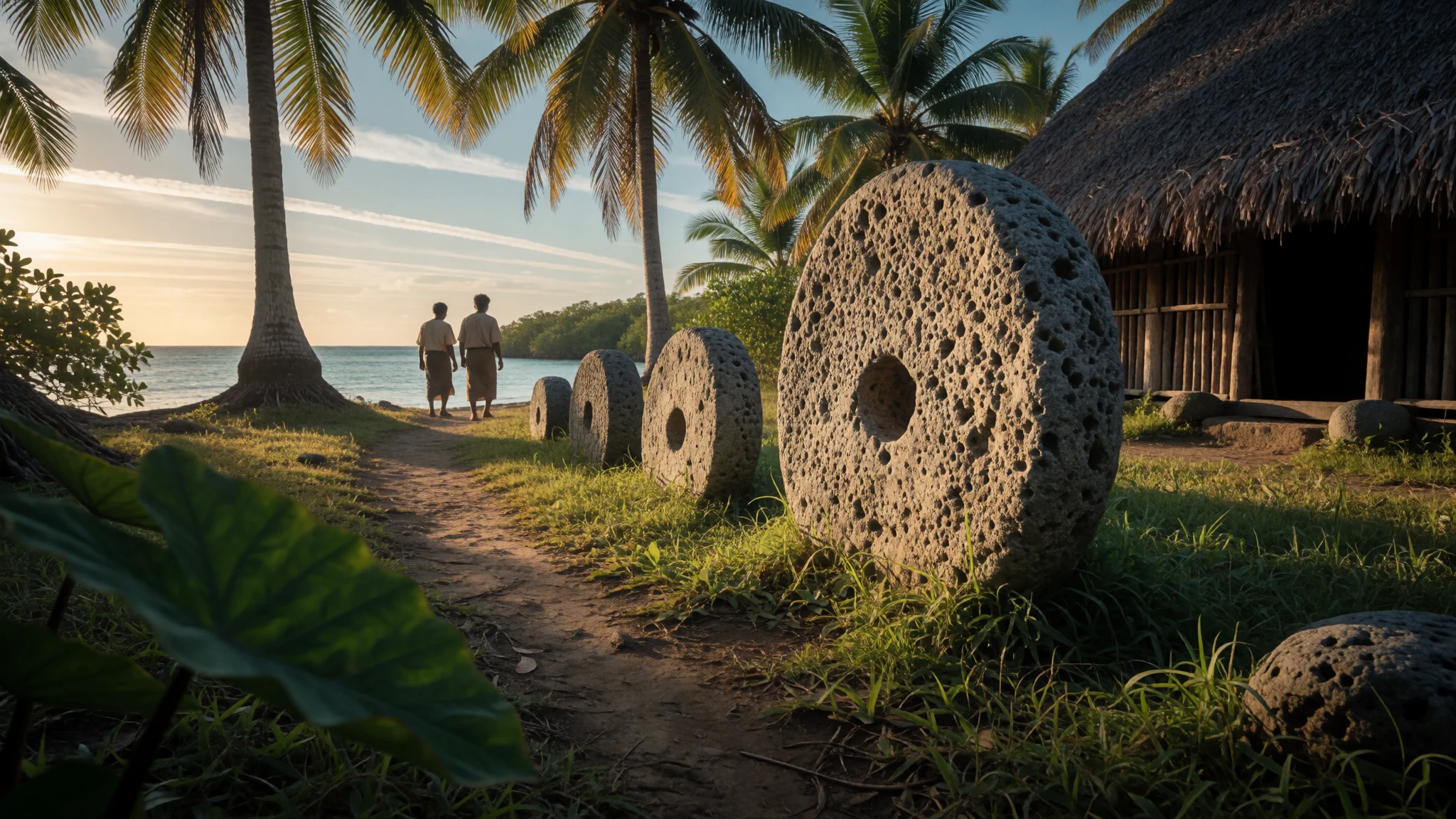
Yap keeps stone money standing in its villages and a lagoon within reach of almost every shore.
The place
Yap is a small island group in the western Caroline Islands, in Yap State of the Federated States of Micronesia. The inhabited land sits inside one wide lagoon of raised coral, mangrove creeks and a reef rim. Colonia is the centre, where government offices, the harbour and the shops gather. A road links the airport to that centre, and from there paths lead out to villages that still organise daily life.
Stone money is the object people come to understand. The discs were cut in the past on Palau and brought home by canoe. They now stand in village clearings and in front of community houses; Gachpar is one place where they can be seen in situ. A disc is not spent in a shop. It stays where it was set, and its meaning depends on its history: who quarried it, which estate holds the right, what obligations are attached. Wealth here is remembered in public.
Away from Colonia the ground is gardens. Taro pits, breadfruit and coconut fill the space between family compounds. The lagoon is worked as steadily as the land: people fish, cross to other villages and read the channels. Visitors come for those channels too, because reef life lies close to shore.
The islands feel remote without being empty. Planes and ships bring rice, fuel and mail, while the villages keep a pace set by custom, church and the tide. Squalls build on the ocean side and then leave the lagoon bright. What remains in view, municipality after municipality, is a meeting house with stones before it, a landscape of obligation as much as of greenery.
Its story
Yap's story is carried as much by stone as by archives. Islanders quarried the discs on Palau and brought them home across open ocean by canoe. Stones that reached a village and stood by a house signalled wealth, because the voyage itself was the cost. Rights could pass by agreement while the stone stayed put, so a village path became a ledger everyone could see.
Village order grew around that memory. Estates and chiefs held rights in land, lagoon and stone. The large community houses still standing beside the discs were where men met and where decisions were spoken in front of the objects that recorded rank. Women held authority in the taro gardens and in the exchanges that bound families. Calling the discs money misses how little they behave like coins.
Foreign rule arrived in layers. Spain claimed the Carolines, Germany administered the group, and Japan later governed it as part of the Nan'yō through the Pacific war. Afterwards the islands lay in the US-administered Trust Territory, and Yap became a state of the independent Federated States of Micronesia. Each layer left a church, a school, a dock or a road. Colonia grew into the small centre where the plane meets the lagoon. None of those changes retired the stones.
The present holds both habits at once. People use the airport, the shops and the phone network, and they still settle weighty matters with reference to estates and to discs that have not been shifted. The lagoon was always a road. Its older purpose was to bring obligations home.
What to see
- Stone money at Gachpar — Gachpar
On Yap, Gachpar is a village where stone money still stands in the open, discs set in the grass beside houses and paths. The pieces were quarried on Palau and brought by canoe, and they remain markers of estate and history rather than objects for sale. Visitors keep to the path and leave every disc where it stands.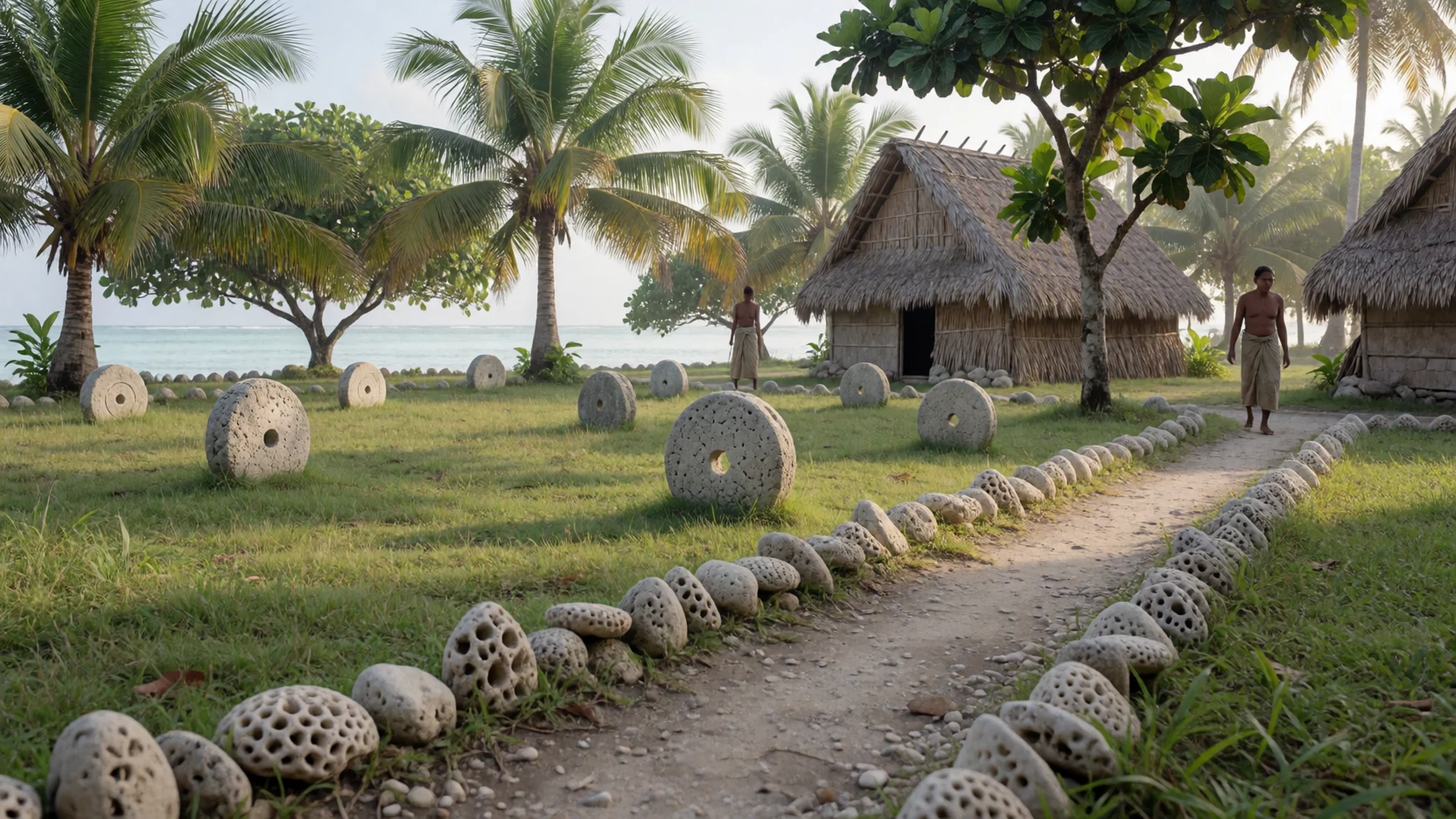
- Community houses — Yorlap and other villages
Yap's community houses are large raised buildings set beside the stone money, and the pairing is the point: the house for meeting, the discs for memory. At Yorlap, photographs show a dwelling with stones in front of it as a sign of standing. They belong to a village, and a stranger does not climb the platform or enter unasked.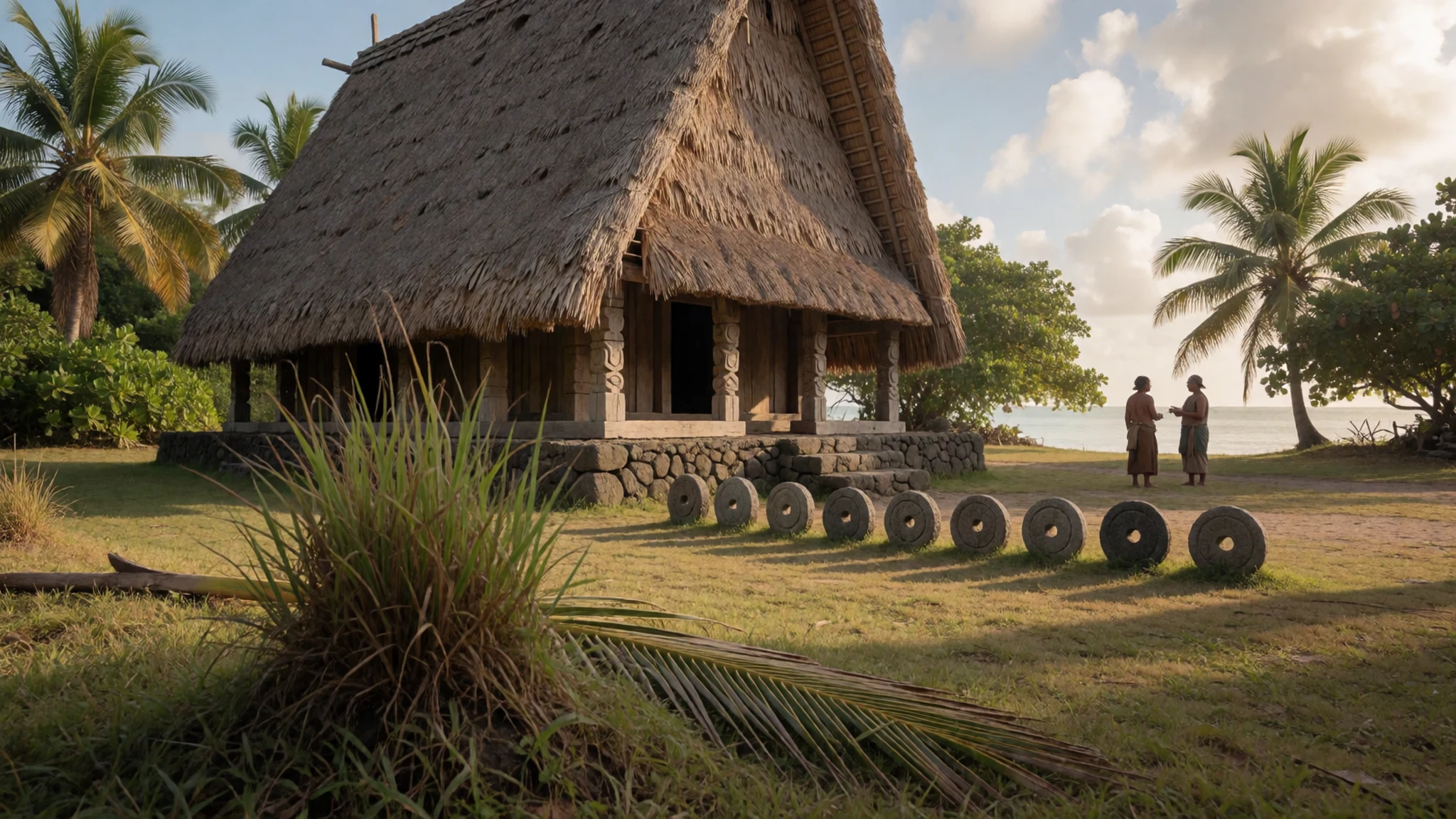
- Colonia — Colonia
Colonia is Yap's small centre, stretched along the harbour where government, a few shops and the boat landing sit close together. Arriving passengers end up here after the airport road, and rice, fuel and hardware come ashore nearby. It is not a nightlife district. The useful stroll is the waterfront, lagoon on one side and village roads on the other.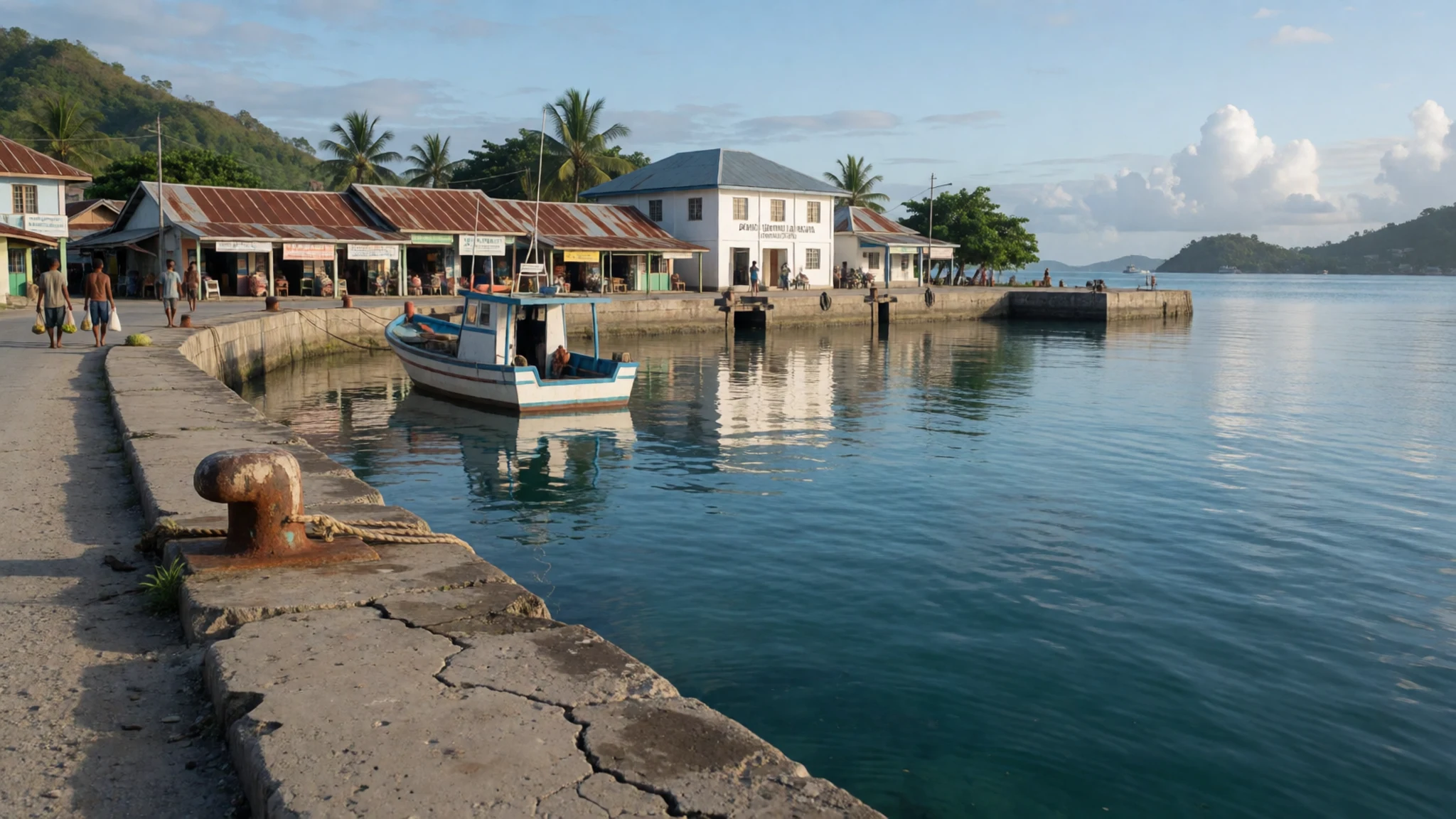
- Yap Airport — the airport road into Colonia
Yap Airport is a small strip close enough to Colonia that arrival is a short last leg rather than an expedition. The building is modest, and the first view is grass, palms and light aircraft. For most visitors this is the usual way in, so the week's shape depends on the days the plane actually calls.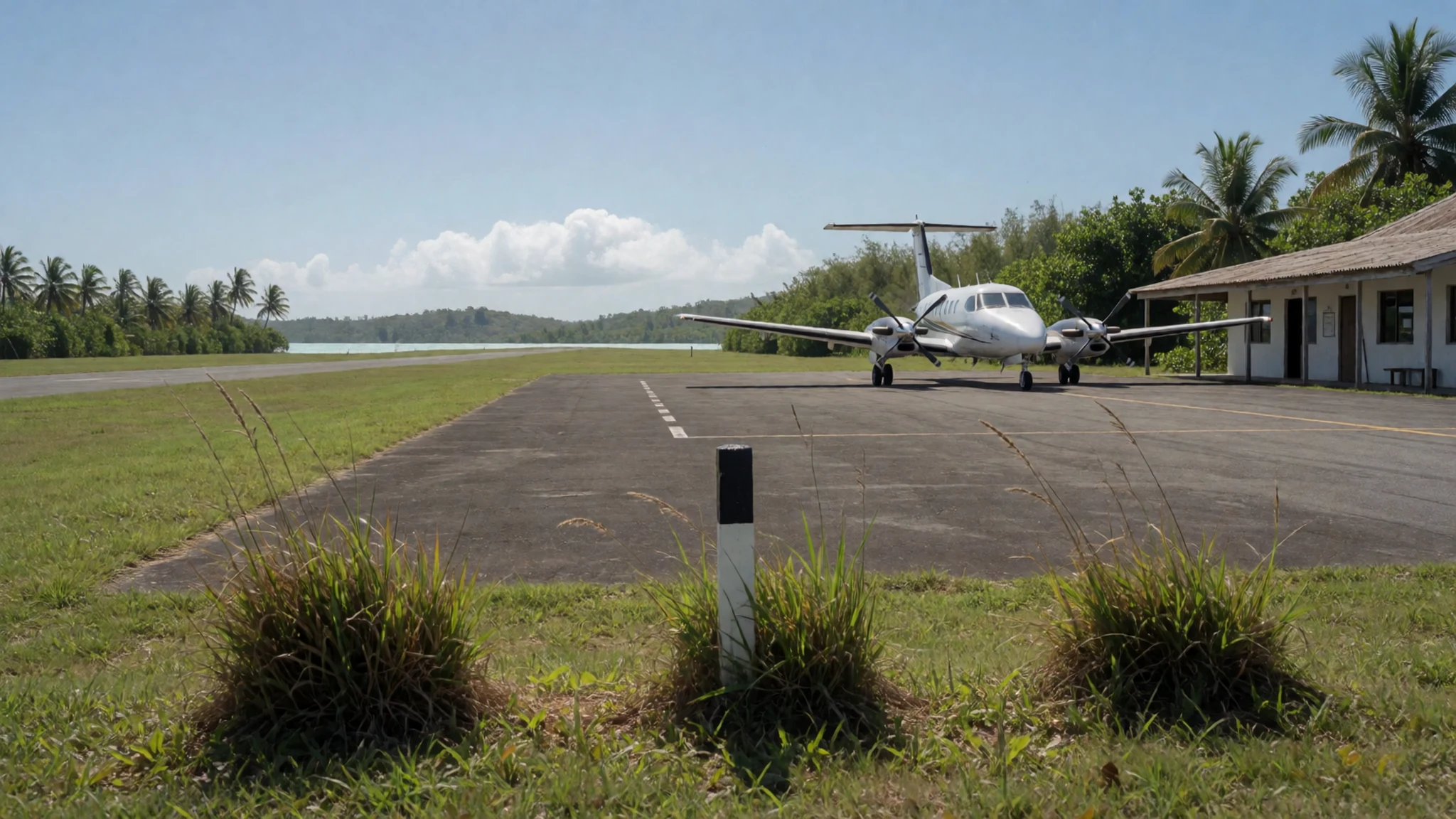
- The lagoon — channels around the main islands
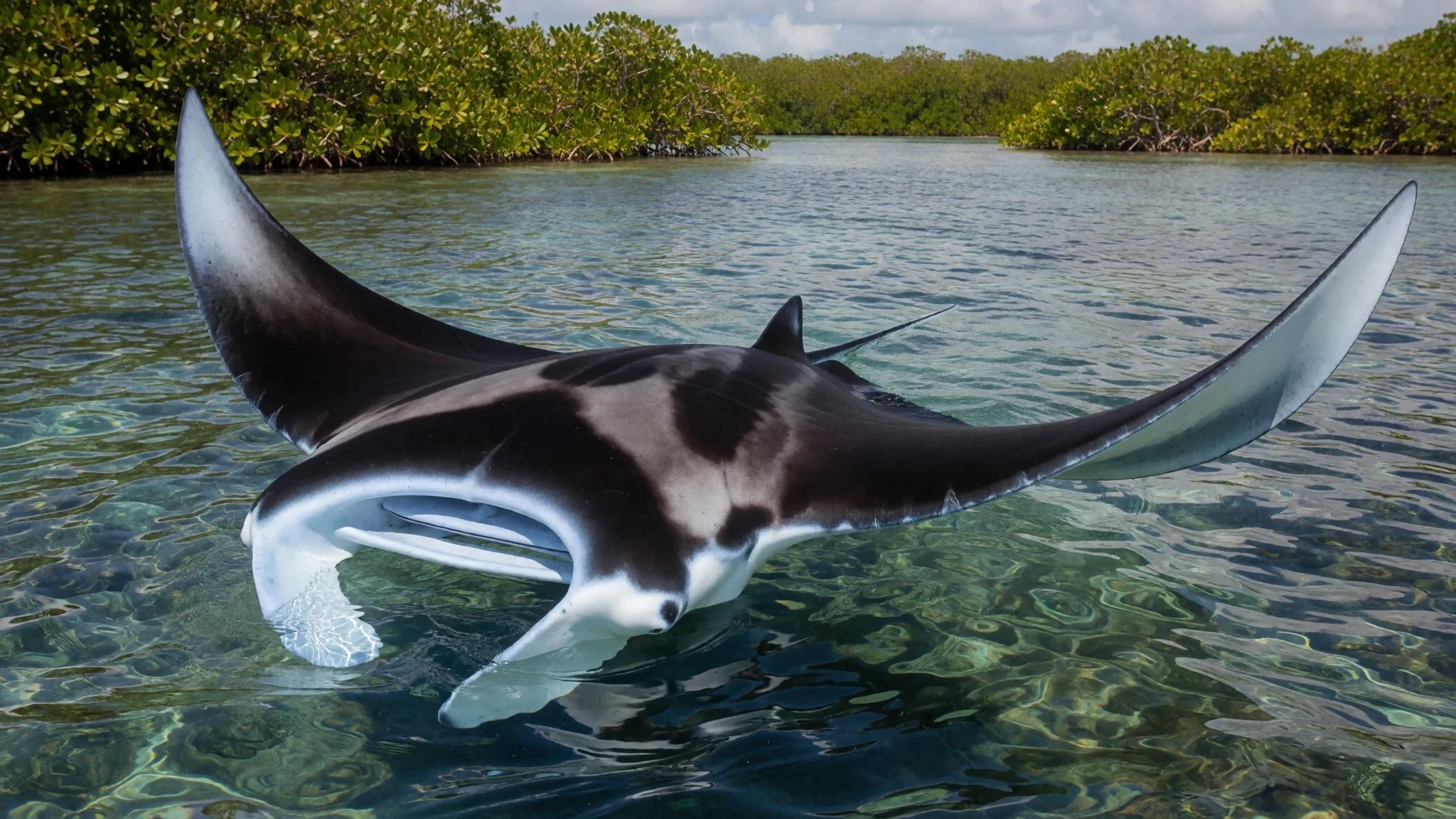
Yap's lagoon is a sheltered reach of channels, mangrove inlets and reef edge within sight of the villages. Fishing boats cross it, and travellers snorkel or dive the clearer cuts, manta rays being a common reason for a booking. Conditions change with the tide and with squalls off the ocean.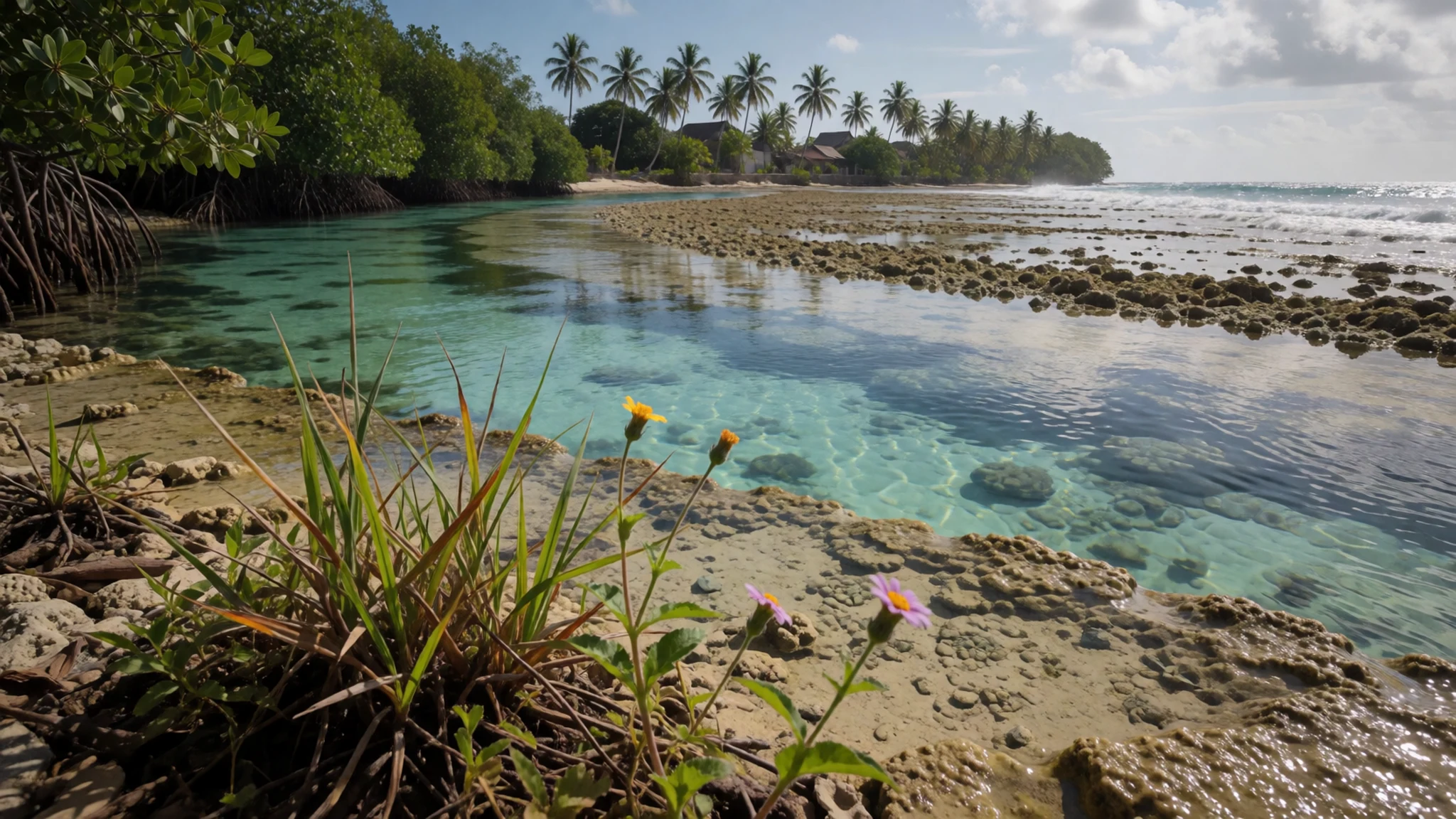
Culture
Yap's culture is a village culture before it is a state culture. People belong to estates and municipalities, and the serious business of rank, marriage and land is still discussed in those terms, even when the day's errands happen in Colonia. Stone money remains part of that conversation. A disc is a witness to obligation: it can be named in a settlement without ever being rolled down the path. Community houses continue to mark the men's side of village space, while taro gardens and household exchange mark responsibilities that women carry.
The public manners are quiet. Betel nut is widely chewed, and a stain on the ground or a pause to offer a nut is ordinary, not a performance for outsiders. English is widely understood in Colonia, and Yapese remains the language of the villages, with a formality around chiefs that a casual greeting does not cancel. Visitors are guests of a village, not customers of a viewpoint.
Ask before you photograph people or enter a community house, and do not touch or climb on the stone money.
What to wear
Yap's traditional dress is built for heat, work and ceremony rather than for tailoring. Men wore the thu, a loincloth of cotton or of local fibre, and on important days added combs and flower garlands. Women wore layered skirts of hibiscus, banana fibre or later trade cloth. It was everyday clothing, and it is still worn for dances, welcomes and events where estate and village are on show.
What people wear now, on an ordinary day in Colonia, is the same practical dress seen across the tropical Pacific: T-shirts, shorts, simple dresses, sandals and a cap against the sun. Older men may still wear a thu in the village when the day calls for it. School and office clothes are neat and unshowy.
A visitor should dress for humidity and for modesty at once. Light cotton that covers shoulders and knees is appropriate in villages and at church; bare chests and very short shorts read as beachwear, not as visiting clothes. Visitors need shoes that can come off easily, because floors of houses and some meeting spaces are barefoot places, and they need footwear that survives coral paths and rain.
What to eat
- Reef fish — small eateries and household meals in Colonia and the villages
On Yap, grilled or simmered reef fish is the ordinary protein, salted and served with taro or rice. The catch depends on the tide and the weather, so the fish on a plate in Colonia is whatever came in, not a fixed menu item.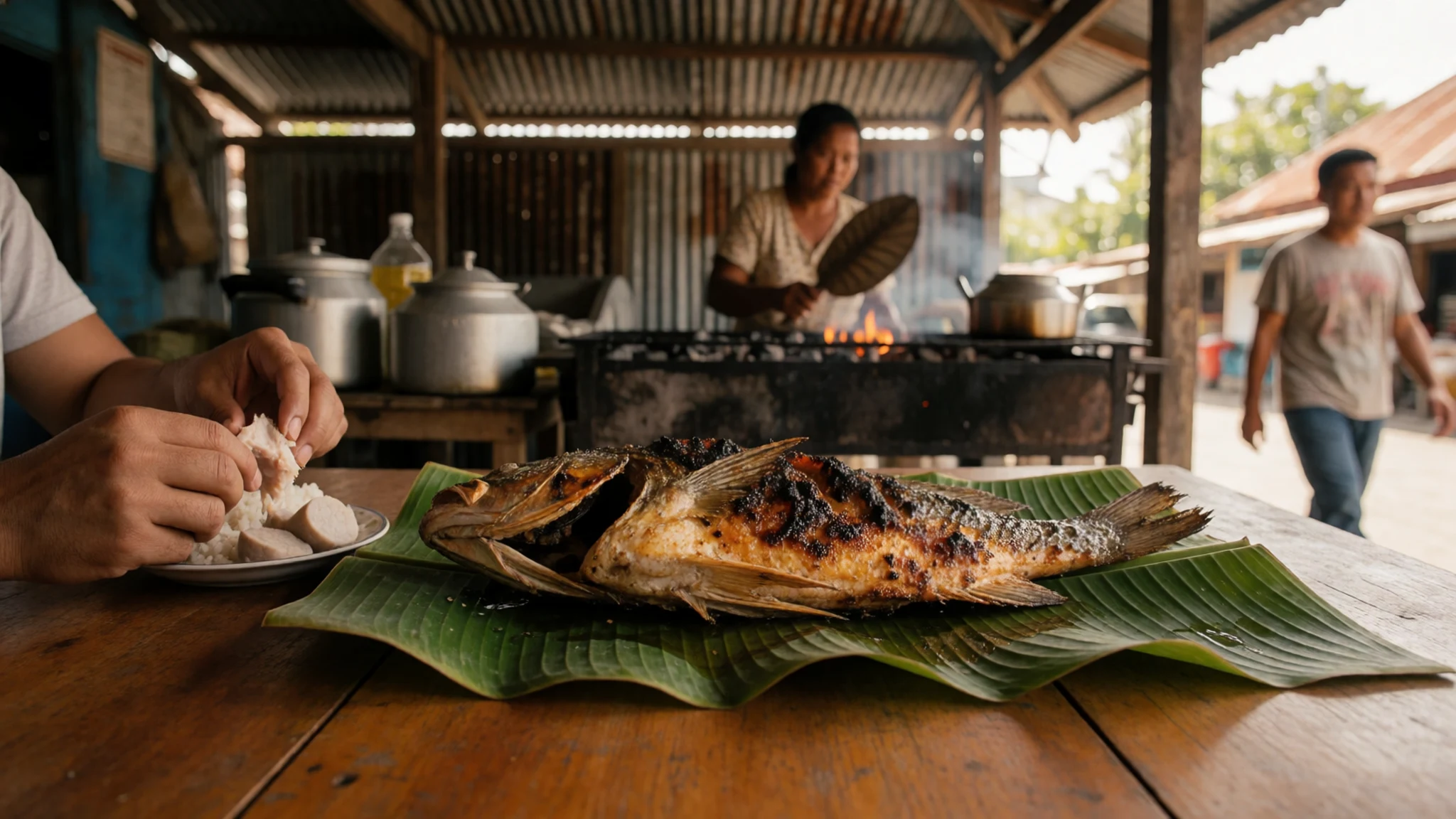
- Taro — village gardens and household meals
On Yap, taro, including the large swamp taro grown in wet pits, is the starch that predates imported rice and still anchors a proper meal. It is boiled, mashed or sliced, and it appears beside fish at home more often than on a printed menu.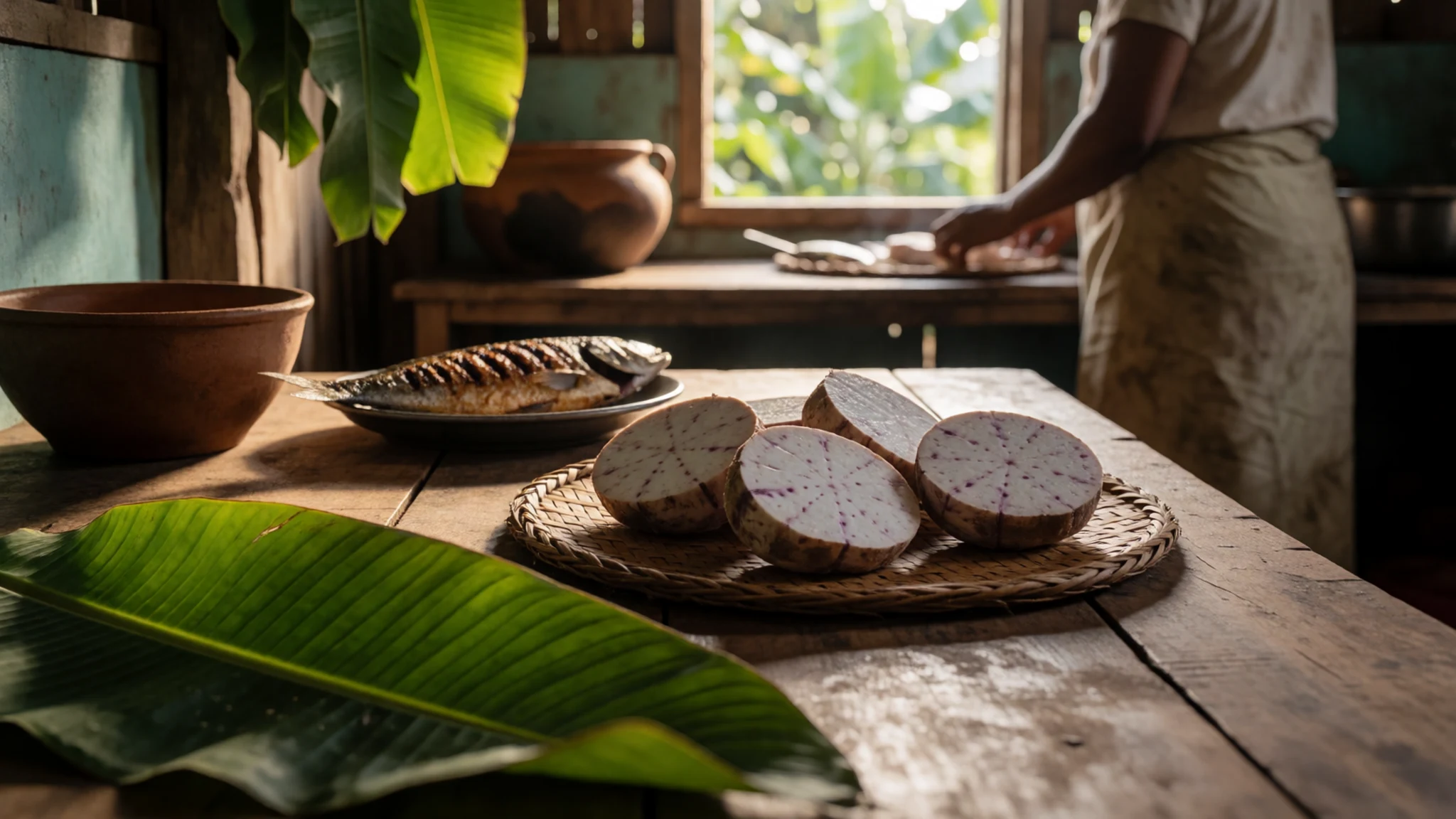
- Breadfruit — village cookhouses when the trees are bearing
On Yap, breadfruit is roasted, boiled or turned into a soft staple when the trees are bearing, and a village smells of it when the pots are going. It is filling, mildly sweet and eaten with fish or coconut. - Coconut — roadsides where nuts are cut, and household cooking
On Yap, the coconut is drunk green, grated into cooking and pressed for cream that softens taro and fish. It is the ingredient that links a garden lunch to a pot in town. Green nuts are a roadside refreshment when someone is cutting. - Raw fish with coconut — household tables and small eateries in Colonia
On Yap, fish eaten raw, dressed with lime, onion and coconut, is a common way to use a fresh catch. It is closer to a home dish than to a restaurant special, and the balance of acid and coconut changes from cook to cook. - Rice and noodles — Colonia shops and casual eateries
On Yap, rice, tinned fish and noodle dishes are the imported half of eating, and they matter because supply runs depend on the plane and the ship. A casual meal in Colonia is often rice with whatever protein is to hand.
Plan it
Best time. On Yap, January to April brings the drier, more settled weather and is the easier time for days on the lagoon. May to November is wetter and more humid, with a higher chance of tropical storms across the wider region.
How long. 4–5
Getting there. Yap is reached by air, most often through Guam and then into Yap Airport. There is no road from another country, and ships are occasional. Check the airline for which days the plane flies, then take the short road from the airport into Colonia.
Budget. high
Tips
- Reserve both the inbound and outbound flights before booking a room; seats on the island service are limited
- Carry US dollars in cash, because small shops and village transactions often cannot take a card
- Treat a village path as private until a host says otherwise
- Plan time on the water for the morning, before wind and cloud tend to build
Etiquette
- Do not touch, sit on or climb the stone money
- Take shoes off before going inside a house
- Keep shoulders and knees covered in villages and at church
- Go into a men's house only when the village has invited you
Nearby
Sources
- Wikidata (CC0)
- Wikipedia — Yap (CC BY-SA 4.0)
- Wikivoyage — Yap (CC BY-SA 4.0)
Wildlife
- Manta ray (animal)
The giant manta ray is the biggest ray in the world, a gentle, wide-winged glider of the sea. Around Yap, it is a well-loved reason for travellers to book a snorkel or a dive, and the clearer channels cut through the reef are where people look for it. The notes do not give a season or time of day, so ask a local guide. Keep a respectful distance, move quietly and calmly, never chase or touch it, and never feed it.