Mwoakilloa Atoll
Mwoakilloa Atoll, Federated States of Micronesia
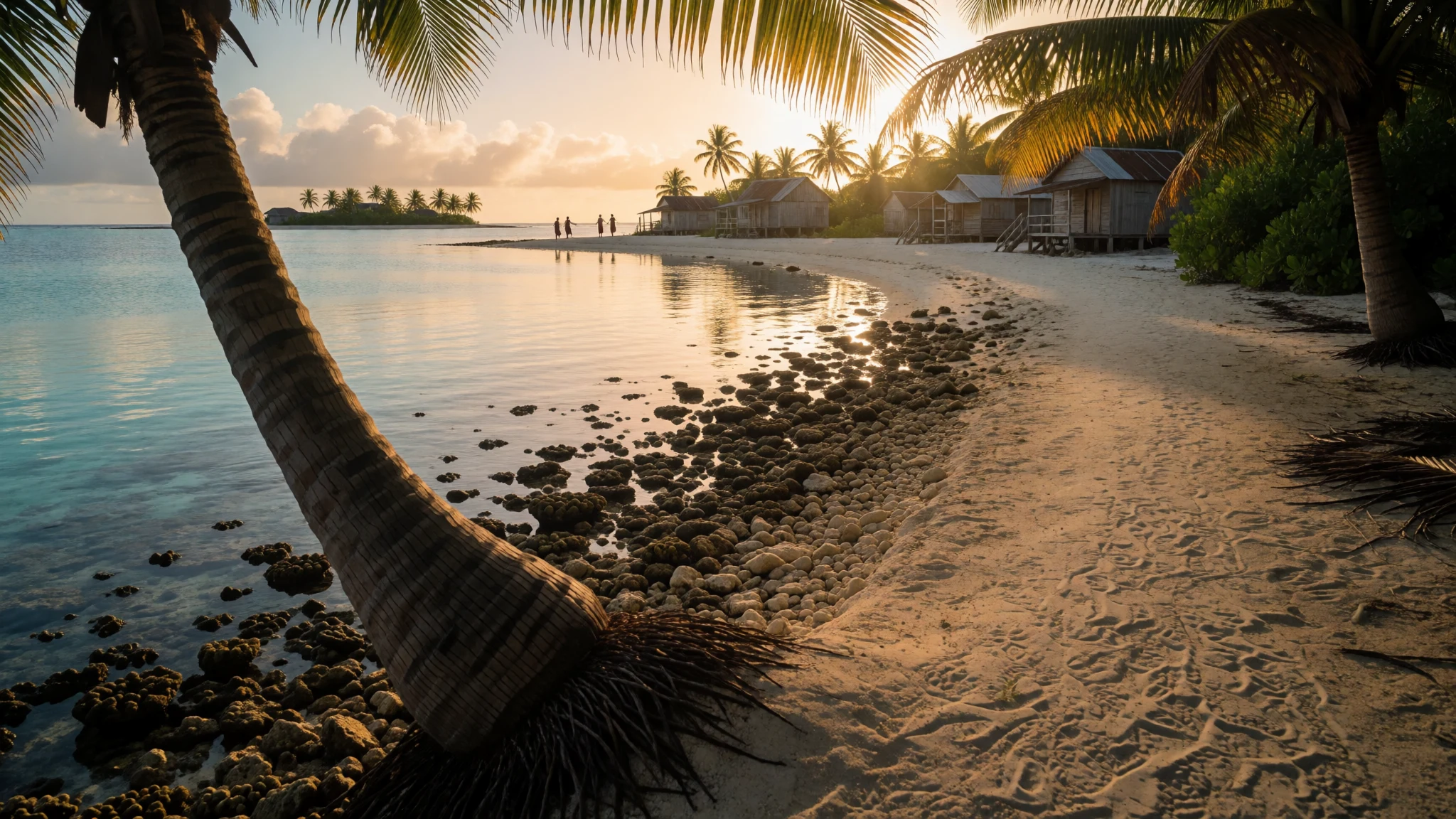
Mwoakilloa Atoll is a tiny, lagoon-ringed Pacific home island for travellers who want remoteness, patience and a village welcome rather than facilities.
The place
Mwoakilloa Atoll, shown as Mokil Atoll on most maps, is a ring of low coral land in the central Pacific. It belongs to the Caroline Islands and is a municipality of Pohnpei State in the Federated States of Micronesia. It lies about 150 kilometres east of Pohnpei island, and its nearest neighbour, Pingelap, is a little over 100 kilometres to the south-east. The ring is roughly rectangular, a few kilometres along each side, and it encloses a shallow lagoon of about two square kilometres. Three islets make up the land: Uhrek, Kahlap and Mwandohn. Only Kahlap, in the north-east, has people living on it, and its village faces the lagoon rather than the open ocean, the more sheltered choice on an island exposed to storms. All the land together adds up to little more than a square kilometre, so the sea is never far away on either side. The community is small, with fewer than two hundred people counted in the 2000s. The language is Mokilese, which is close to Pohnpeian. The climate is tropical and wet through the year, with the eastern islets catching the heaviest rain. The atoll sits on the southern edge of the typhoon belt, and the typhoon season runs from June to December, so damage is occasional but can be severe. Earlier European names were Wellington Island and Duperrey Island. For a traveller the practical picture is simple. This is a working home island, not a resort, with no tourism industry to speak of, and any visit depends on arrangements made through Pohnpei and on the goodwill of the community.
Its story
The story of Mwoakilloa Atoll is told in two voices: the oral tradition of the islanders and the logbooks of passing ships. Islanders tell of Princess Eti, a woman said to have spoken many tongues, who talked with the first French explorers to reach the atoll. That French link survives in the name Duperrey Island, given for Louis Isidore Duperrey. The English name Wellington Island has a stranger origin. A captain named the atoll after his own ship, the Marquis of Wellington, which was bound for China after delivering convicts from Britain to Port Jackson in Australia. A small Pacific atoll ended up carrying the name of a convict transport, which says something about how Europeans charted the region, by whatever vessel happened to sight land first. Beneath those layers lies a far longer settlement. Austronesian seafarers reached the islands of what is now Micronesia thousands of years ago, crossing open ocean by reading stars, swells and birds. Later, political orders arose elsewhere in the region, such as the Saudeleur dynasty on Pohnpei, whose stone city of Nan Madol still stands. Mokil's own early history is thinly recorded in the sources, so questions about it are best put to the community itself. Modern contact has been occasional. Photographs from US Air Force crews show residents waving to a transport aircraft after a supply drop, a reminder of how remote the atoll is. Daily life still revolves around the lagoon, the reef and the village on Kahlap.
What to see
- Kahlap village — North-east of the atoll
Kahlap is the only inhabited islet, and the village looks inward to the lagoon. A visit here is about ordinary island life: houses along the shore, boats pulled up on the sand, people going about their day. Come as a guest, ask before wandering or photographing, and expect to be introduced by someone local.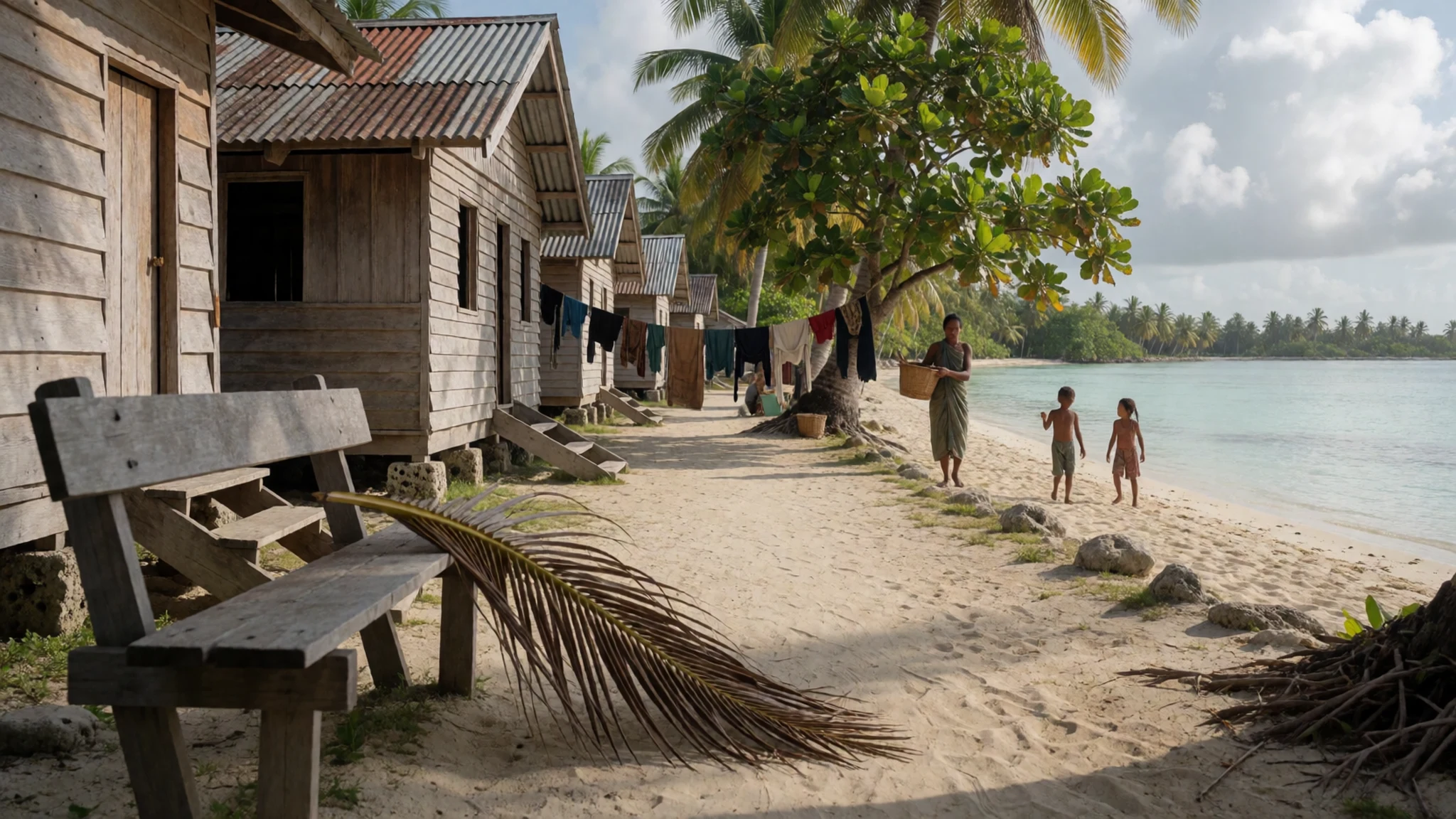
- The central lagoon — Middle of the atoll
The lagoon covers about two square kilometres, small enough to cross in a short boat ride. The water is more sheltered than the open ocean, and snorkelling over coral is the obvious pleasure, though conditions depend on rain, wind and local advice. Ask which areas are safe, which are fishing grounds and which are off limits.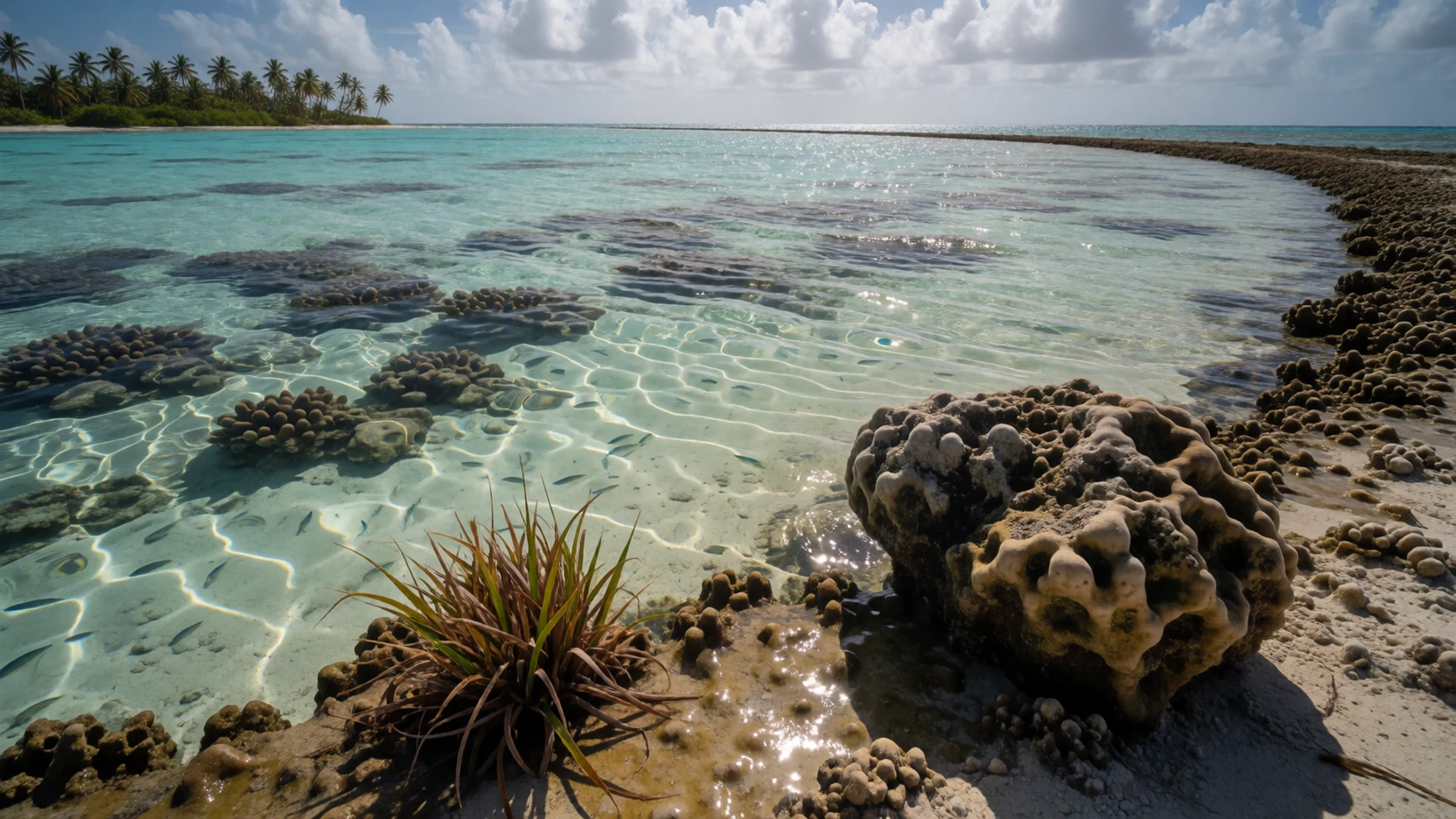
- Uhrek and Mwandohn — Elsewhere on the atoll rim
These two uninhabited islets are low strips of coral land on the atoll's rim. They are not formal attractions, and use of the land belongs to families and the community, so a visit needs permission and usually a boatman. The reward is quiet shoreline and a clear sense of how small and flat the atoll is.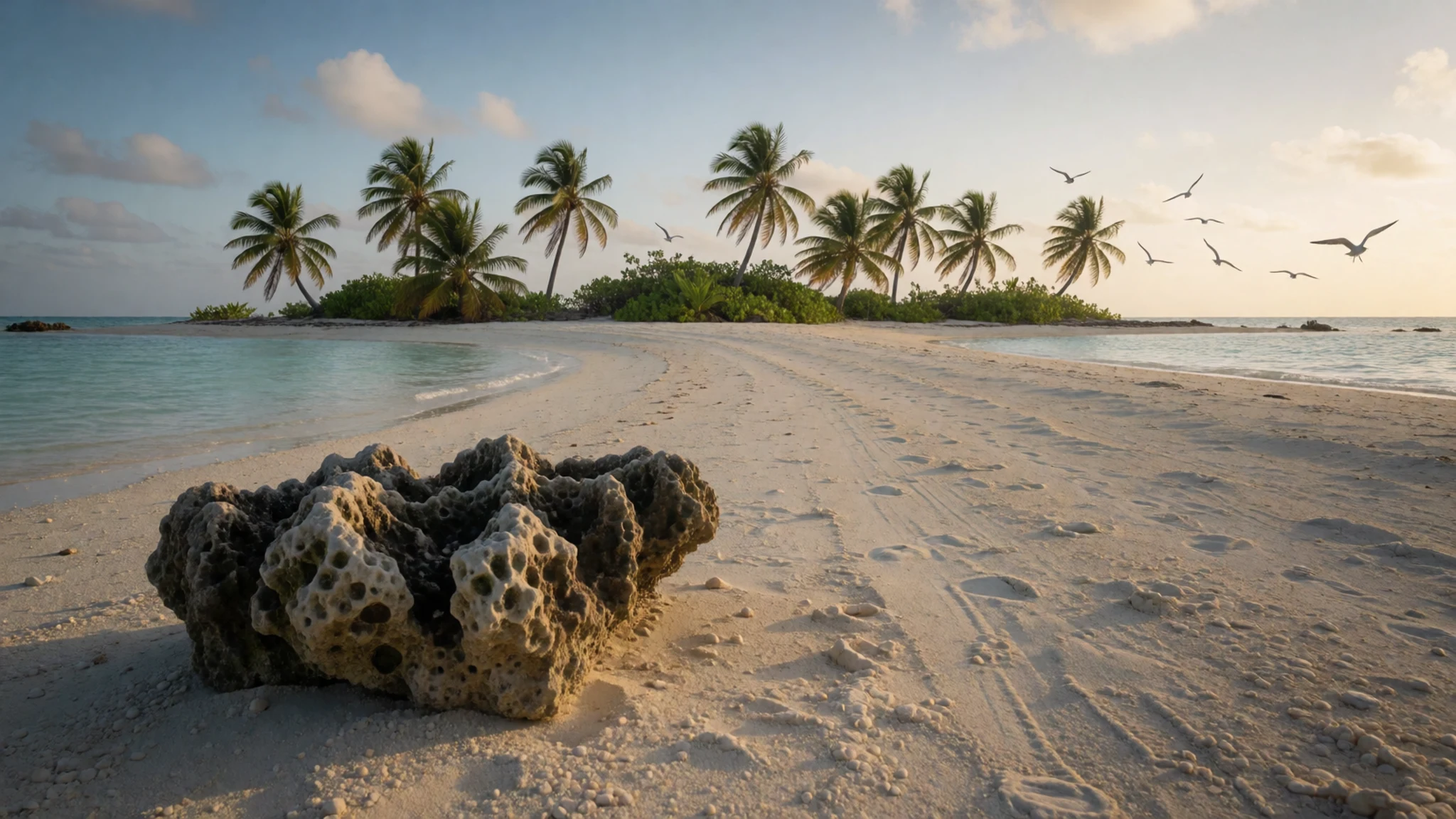
- The outer reef and horizon — Ocean side of the atoll
On the ocean side the reef drops away to deep Pacific water, and this is where the remoteness of Mokil really registers. Seas can be rough and the reef edge is not a place for casual swimming. Go only with islanders who know the passages and the swell, and treat the sunrise and sunset horizons as the main show.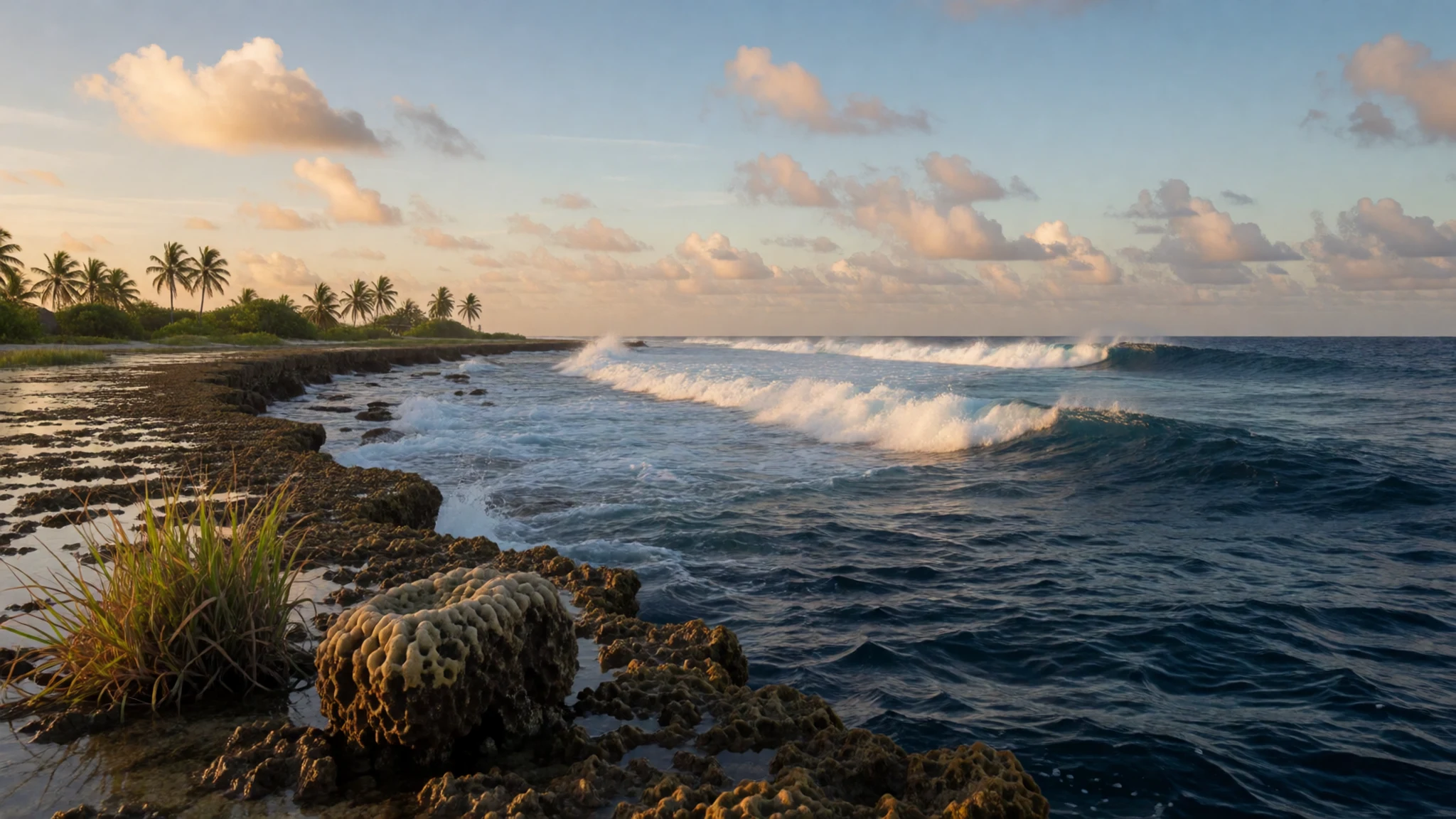
- Nan Madol, Pohnpei — Pohnpei island, east coast
Nan Madol on Pohnpei island is the natural companion to a trip to Mokil, since every journey passes through Pohnpei. It is a ruined city of artificial islets linked by tidal canals, built under the Saudeleur dynasty, with huge basalt stonework partly reclaimed by vegetation. Arrange a local guide and check access arrangements on the spot.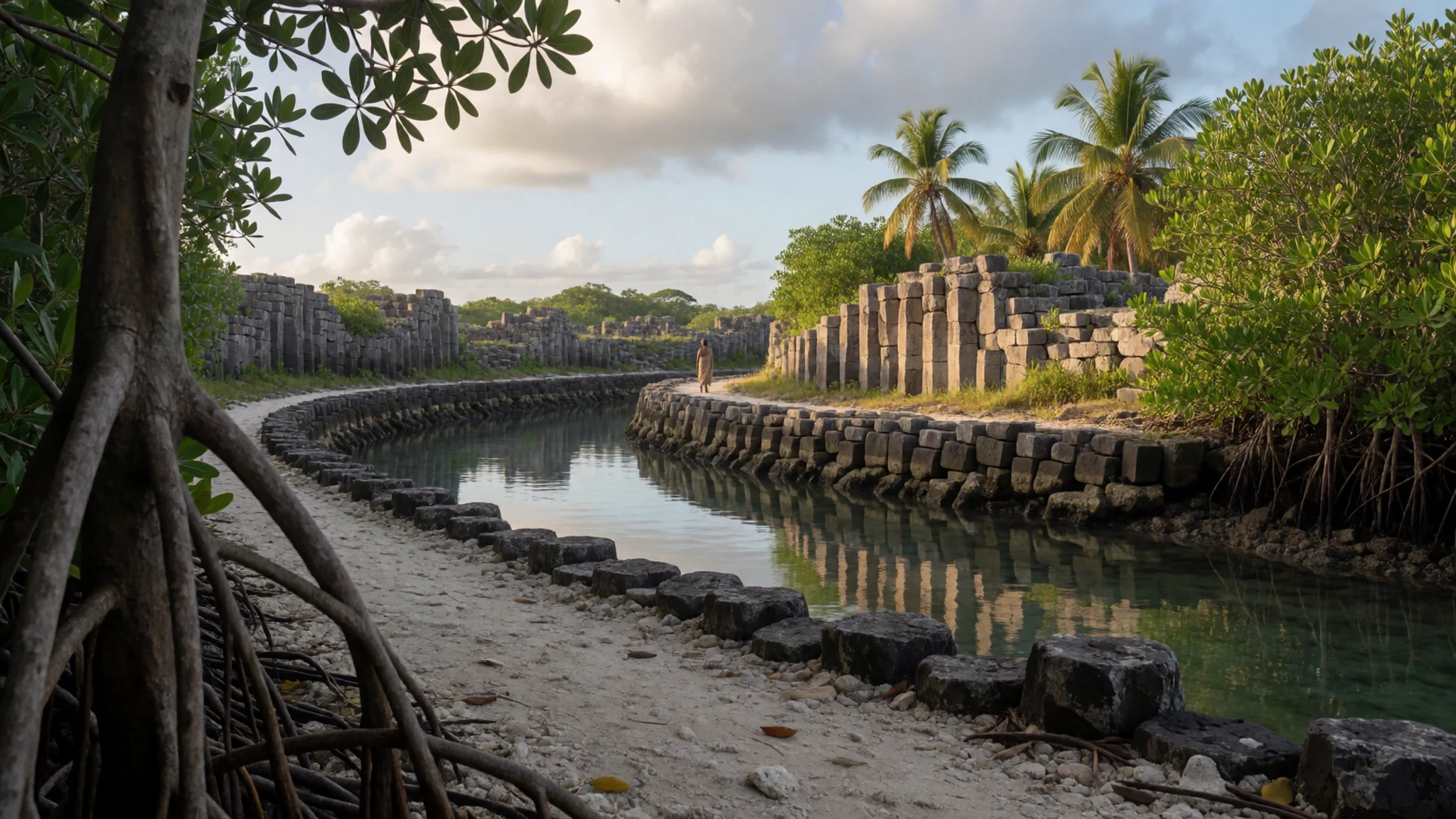
Culture
Culture on Mwoakilloa Atoll is that of a very small, close community where nearly everyone is related and decisions are shared. Mokilese, a language close to Pohnpeian, is spoken every day. The islanders' stories, including the tale of Princess Eti and her conversations with early French explorers, are kept alive by retelling rather than by guidebooks. Pohnpei State administers the atoll, but in practice hospitality and access are settled by village leaders and families. Fishing, family obligations and, very likely, church life shape the rhythm of the week. With fewer than two hundred people counted in the 2000s, a single visitor is noticed and a group would be an event. Gifts for a host household are customary across much of Micronesia, and practical food staples bought on Pohnpei are the safest choice, though it is wise to ask in advance what would help. Supplies arrive slowly, so waste little and do not assume any shop will be open. Travel advice for the country as a whole stresses that some islands remain very traditional and that respect for local custom is expected, and that applies fully here. Photography, drones and walking onto private land all depend on consent. Introduce yourself to the village leaders on arrival, and ask before photographing people, entering private land or flying a drone.
What to wear
Fashion on Mwoakilloa Atoll is shaped by heat, rain and a close-knit community. Traditional dress across the Caroline Islands centres on wraparound cloths worn at the waist, woven mats, garlands of flowers and leaves, and, in some islands, skirts of plant fibre. Records specific to Mokil are thin in the sources, so treat this as the regional picture and ask islanders what is worn for their own occasions. Garlands and formal wraps are most likely to appear at feasts, church celebrations and holidays. Day to day, people dress for a wet tropical island: T-shirts, shorts, wraparound lavalava cloths and rubber sandals, with hats or head cloths against the sun. Clothes dry slowly in the humidity, so light cotton and quick-drying fabrics make sense. A visitor should pack the same way. Bring light clothing that covers shoulders and knees for the village, and a lavalava or similar wrap, which works for men and women alike. Keep swimwear for the beach or lagoon, with a shirt or shorts over it on the walk back. Add a brimmed hat, sunscreen, a thin rain jacket and reef shoes or sturdy sandals for coral and rough paths. Leave anything flashy or skimpy behind, as modesty is the safer default.
What to eat
- Breadfruit — Family kitchens and village feasts
Breadfruit is a staple across the Caroline Islands, roasted in embers or boiled until soft and starchy, a little like potato. It is eaten with fish or coconut. Expect it at a family meal, and at any community feast on Pohnpei.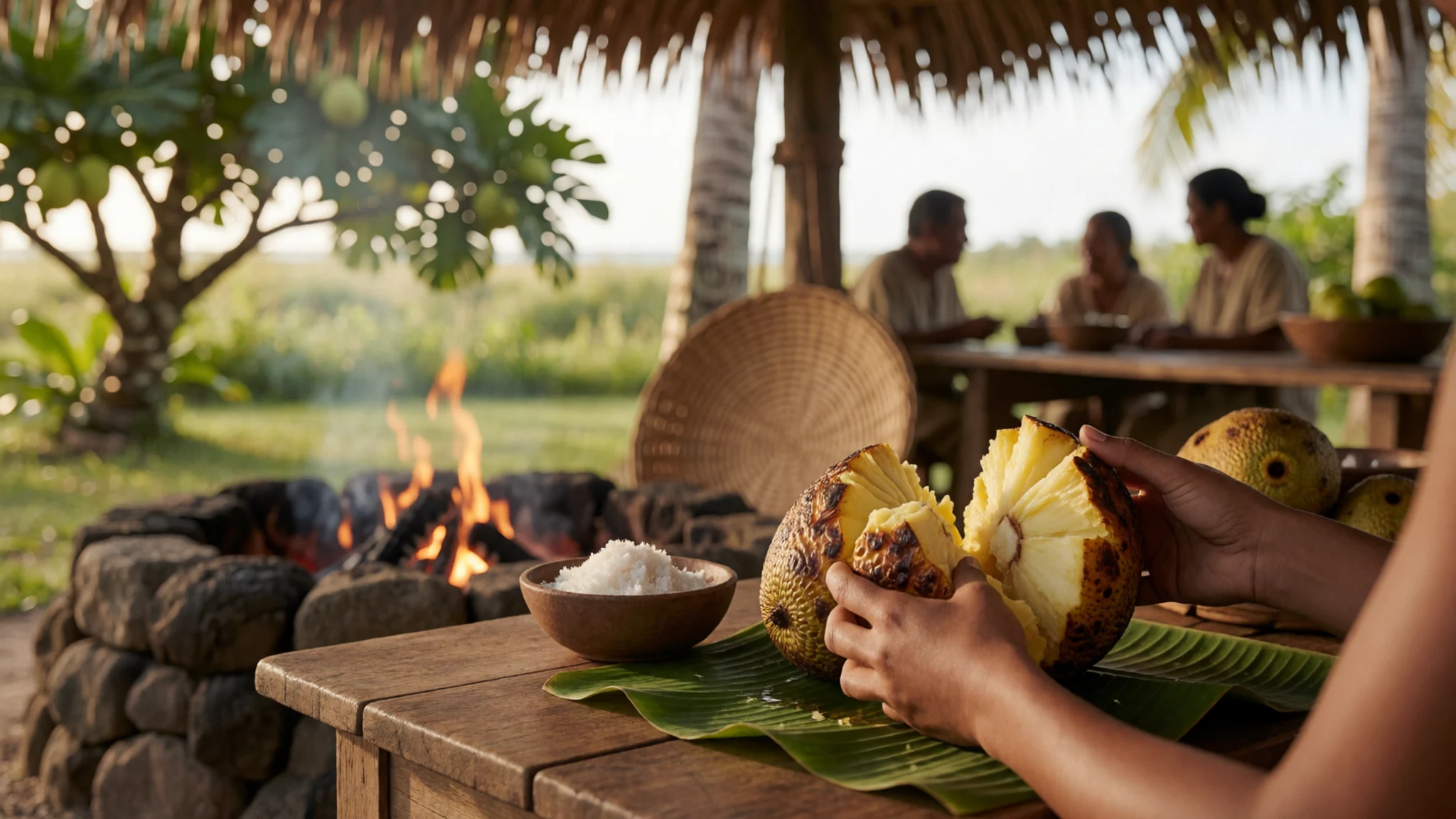
- Reef fish and tuna — Village homes on the atoll; fish sellers near Pohnpei's main harbour
Fish is the main protein on an atoll, and the catch comes straight from the lagoon, reef or open water. It is typically grilled over a fire, boiled or served raw with citrus. Eating it means sharing a meal with the household that caught it.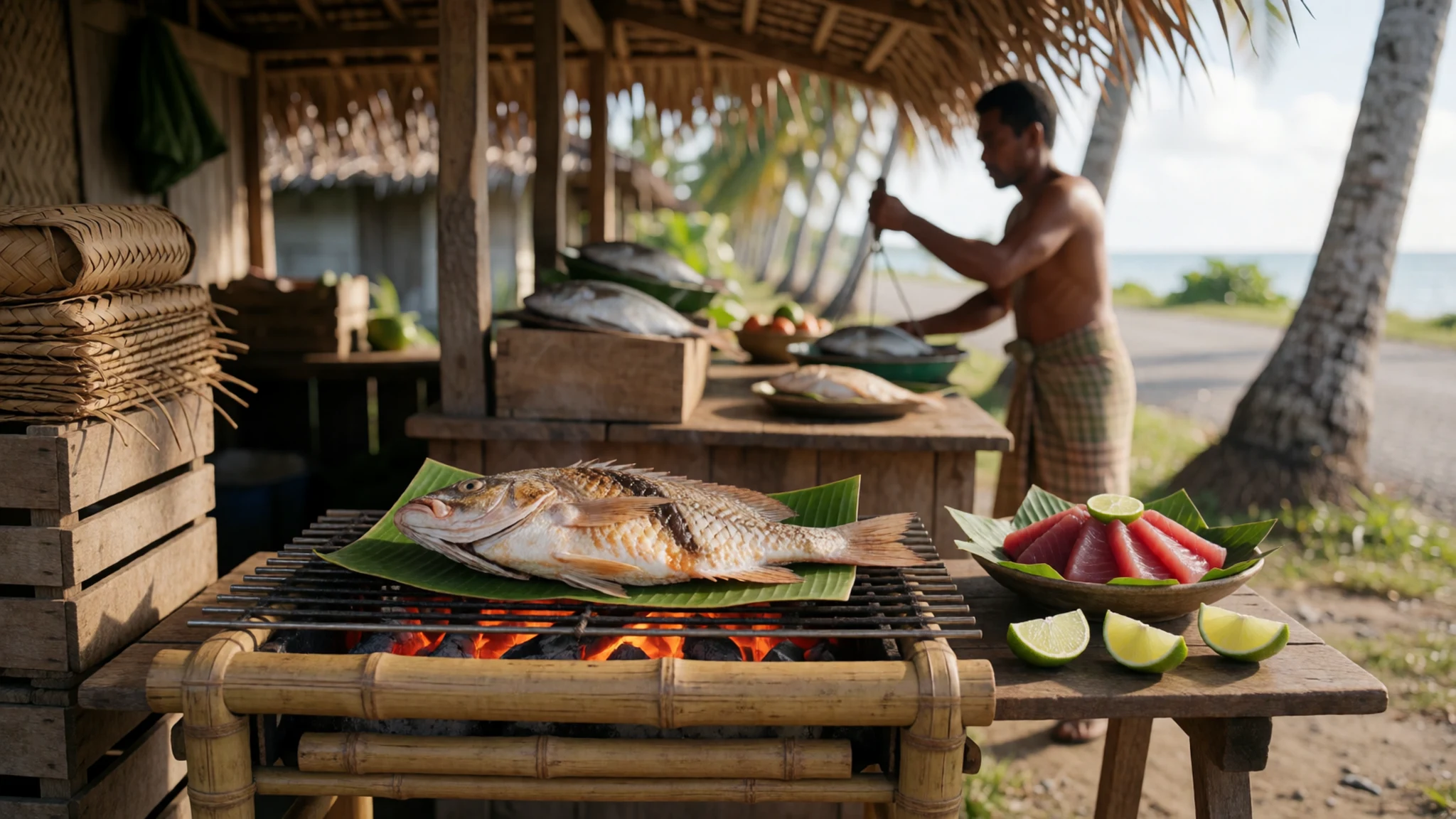
- Taro — Family meals and feasts
Taro is a starchy root grown in pits and gardens on Pacific islands, usually boiled or baked and sometimes pounded. It has a mild, slightly nutty taste and fills the plate alongside fish. Ask what is in season, as supplies depend on weather and gardens. - Fresh coconut — Anywhere on the atoll
Coconut is everywhere on the atoll. Green nuts are cut open for a cool, lightly sweet drink, and mature flesh is grated or pressed into cream for cooking. A drinking coconut is often the first thing a host offers, and it is safer than untreated water. - Kelaguen — Local eateries on Pohnpei, not on Mokil itself
Kelaguen is a dish of grilled meat or fish, marinated with lemon juice, salt and hot peppers, then finished with coconut and spring onion. Travel guides list it for Micronesia generally, and it is not a Mokil speciality we can confirm, so look for it in eateries on Pohnpei.
Plan it
Best time. January to May, which falls outside the typhoon season of June to December. Rain is heavy all year, especially on the eastern islets, so pack for wet weather whatever the month.
How long. 4–6
Getting there. Fly to Pohnpei, which is on the United Airlines island-hopper route between Honolulu and Guam. Mokil lies about 150 kilometres east of Pohnpei across open sea. We could not confirm any regular passenger service, so ask the Pohnpei State offices and the outer-island ship operators about field-trip ships or charters, and arrange a host on the atoll before you set out.
Budget. mid
Tips
- Contact the community and Pohnpei State before booking anything, since a visit depends on an invitation and on transport that can be irregular.
- Allow slack in the schedule for delayed boats and for weather, and check typhoon forecasts if travelling near the June to December season.
- Carry a passport valid for at least 120 days. Stays of under 30 days need no entry permit, but check the current rules before you travel.
- Bring cash in US dollars, water-purification supplies, basic medicines and sun and rain protection, as shops are unlikely.
- Pack staple foods or useful supplies from Pohnpei as a gift for your host household.
Etiquette
- Ask permission from village leaders before photographing people, flying a drone or walking onto private land.
- Dress modestly in the village, with shoulders and knees covered, and keep swimwear for the beach or lagoon.
- Follow local guidance on the reef, the lagoon and the sea, and respect fishing grounds and any areas that are off limits.
Nearby
Sources
- Wikidata Q518320 (CC0)
- Wikipedia: Mokil Atoll (rev 1376778492) (CC BY-SA 4.0)
- Wikivoyage: Federated States of Micronesia (rev 5400968) (CC BY-SA 4.0)
- Photo: Mokil airdrop 2, U.S. Air Force photo by Senior Airman Carlin Leslie (Public domain)
- Photo: Mokil, Imperial German (Public domain)
- Photo: Mokil airdrop, U.S. Air Force photo by Senior Airman Carlin Leslie (Public domain)


