Ulithi
Ulithi, Federated States of Micronesia
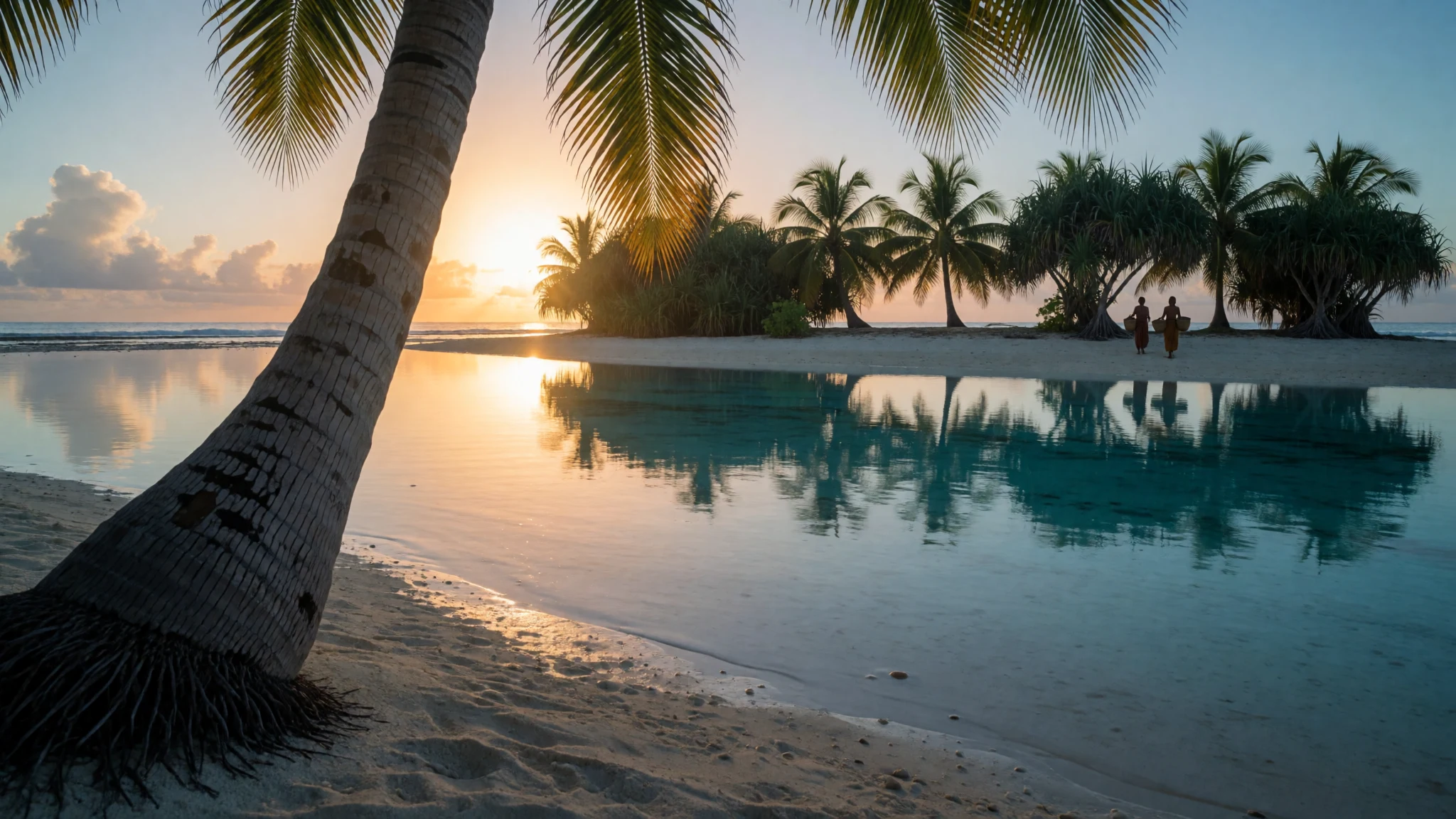
Ulithi is a remote Pacific atoll of 40 islets around a wide lagoon, where chiefs, canoes and reef still shape daily life.
The place
Ulithi is an atoll in the western Caroline Islands, part of Yap State in the Federated States of Micronesia. Its 40 islets form a broken ring around a very wide lagoon, and none of them is more than a short walk across. The space here is water, not land. Four islands are inhabited: Falalop, Asor, Mogmog and Fedarai, each with an Ulithian name that differs from the spelling on most maps. Falalop is the practical way in, because it has the airstrip, a small resort, a shop and one of the state's public high schools. Mogmog is home to the atoll's paramount chief, though every inhabited island also keeps a chief of its own. Losiap, Sorlen and Potangeras are among the other islets that matter in local life.
The setting is what the postcards promise: coral reef, pale sand and coconut palms, all very flat against the sea. The distances are the other thing to grasp. Yap lies to the west, Guam to the north-east, the Philippines far across open ocean to the west, and Tokyo much farther to the north. Ulithi sits well away from any busy route, so a visit means planning around a thin transport schedule rather than dropping in.
The climate is tropical and wet all year, with warm air, warm water and showers that can arrive at any hour. Facilities are modest, and electricity, food and water vary from island to island. Visitors are guests of small communities, not customers in a resort district. Those who come tend to be divers, sailors, researchers and travellers curious about outer-island Micronesia. Evenings are quiet, nights are early, and the pace is set by weather and tides.
Its story
Ulithi entered European records in the early sixteenth century, when the Portuguese navigator Diogo da Rocha is credited with finding it. Soon afterwards the Spanish captain Álvaro de Saavedra arrived and claimed the group for the Spanish crown. He named it the Islands of the Kings, because the date fell close to the feast of Epiphany. Later Spanish charts used a plainer label, the Chickpea Islands, and another Spanish expedition called in around the middle of that century. Then contact thinned out. The atoll stayed largely to itself until Captain Bernardo de Egoy explored it in detail in the early eighteenth century, and Jesuit missionaries led by Juan Antonio Cantova arrived with a small party of soldiers some years after.
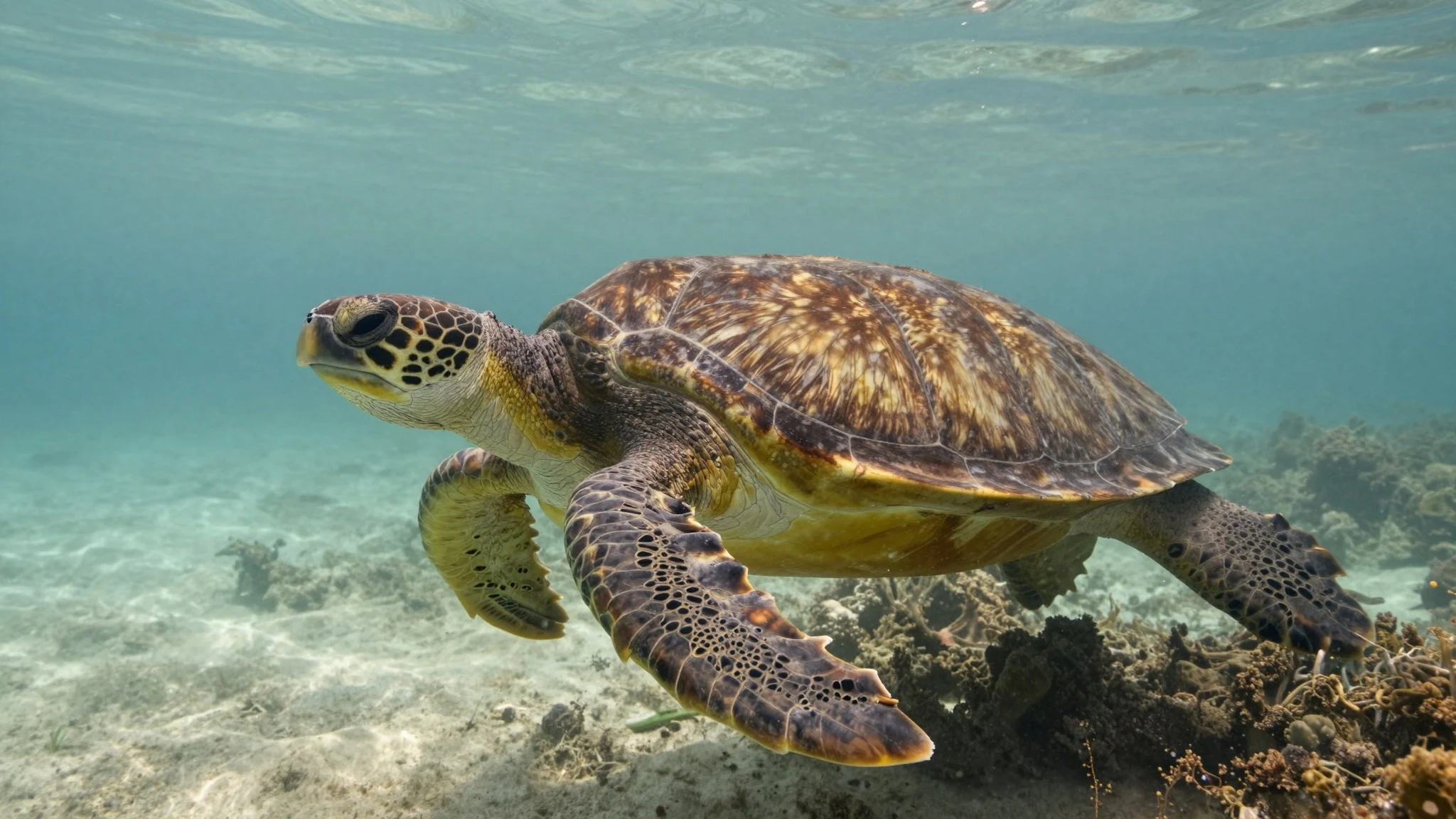
Germany extended its protection over the Carolines in the later nineteenth century, partly at the urging of missionaries who wanted to safeguard trade. During the Japanese period, monitor lizards were brought in to deal with rats, and they still threaten native wildlife today. A conservation group has worked with the community since 2018 to remove invasive species so that green sea turtles and seabirds can recover.
The chapter best known to outsiders is the Pacific war. The lagoon's size made it a sheltered gathering place for American warships, and archive photographs show destroyers passing task forces assembling for the Okinawa operation, as well as troops receiving mail and watching touring bands. American naval officials returned in 2019 aboard a submarine tender while studying Pacific supply routes, and a press release suggested the atoll could serve as a fleet hub again. For residents, the lagoon remains first of all a fishing ground and a sea road between islands.
What to see
- Falalop — Falalop, northern Ulithi Atoll
Falalop is the practical base on Ulithi, with the airstrip, a small resort, a shop and a public high school. Time is best spent walking its lanes slowly, watching school life, boats on the lagoon side and fishing along the reef edge. Ask the host first about swimming spots, and before photographing houses or people.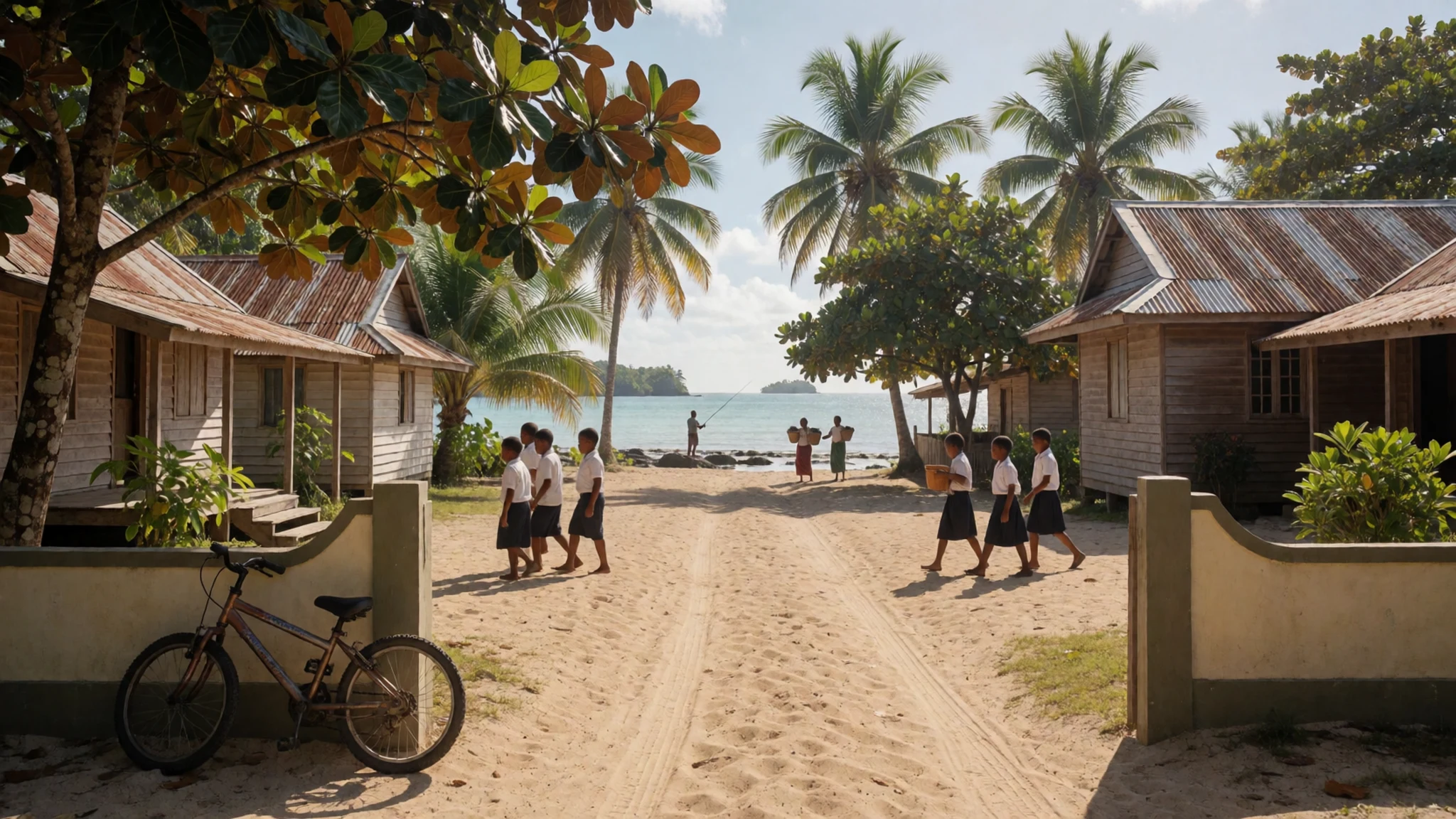
- Mogmog — Mogmog, northern Ulithi Atoll
Mogmog is home to the atoll's paramount chief, and a visit is a matter of protocol rather than sightseeing. Arrangements go through local people, usually via a host on Falalop, and permission comes before landing. Those welcomed see a small, orderly community whose lineage and chiefly system still guides decisions across the whole atoll.
- The lagoon — Ulithi Lagoon
The lagoon is the atoll's main attraction: wide, sheltered water with coral reef along its edge and islets scattered across it. Snorkelling and diving may be possible with local arrangements, and a trip in a traditional sailing canoe is sometimes offered. Weather and tides decide everything, so keep plans loose and check conditions with boat owners.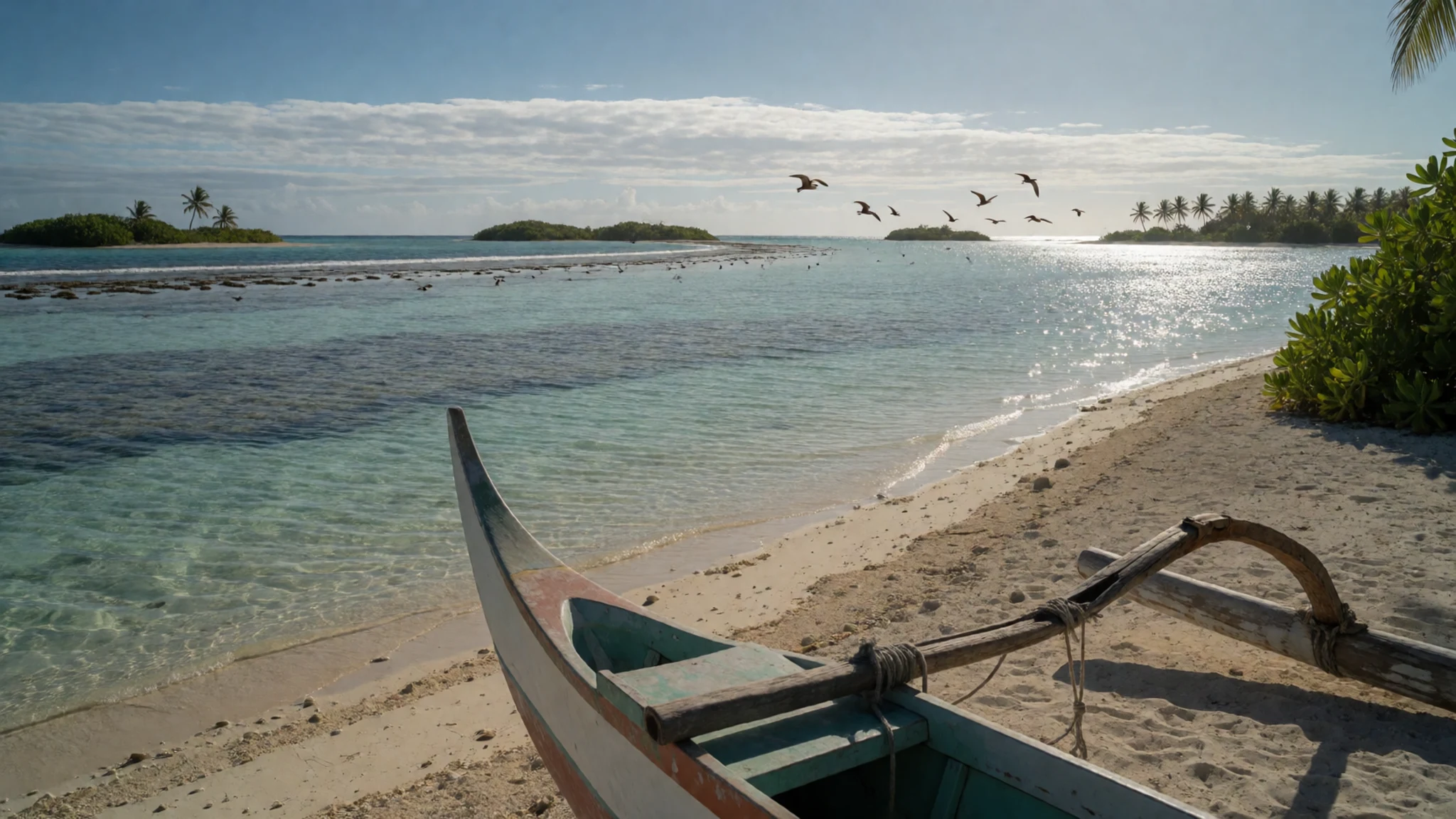
- The wartime anchorage — Western Ulithi Lagoon
The lagoon was where American ships gathered during the Pacific campaign, and that story still colours the place. Archive photographs show destroyers passing task forces, and troops enjoying mail call and concerts. Local elders can say what the war years meant to families, if they choose to talk about it.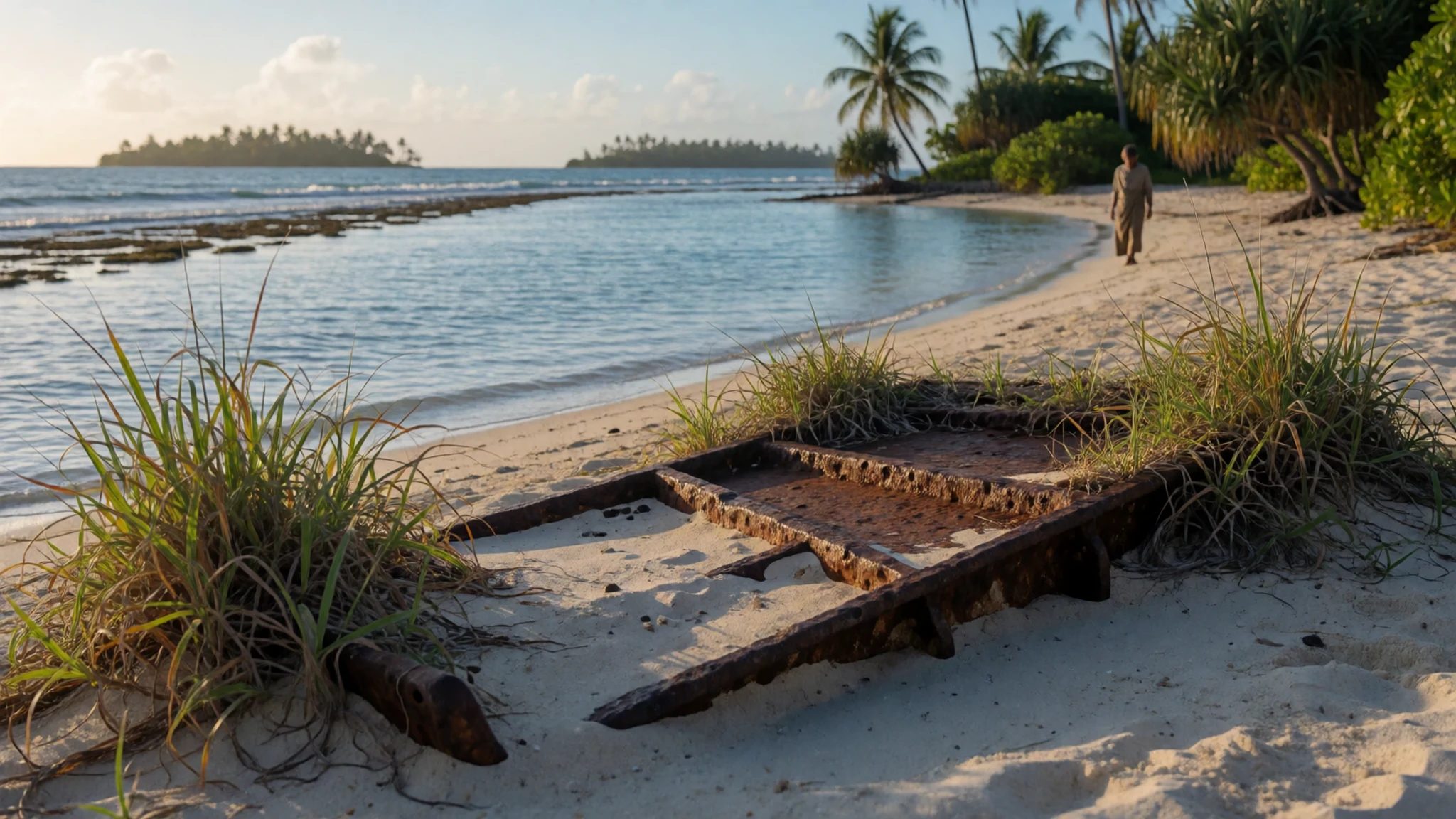
- Colonia, Yap — Colonia, Yap
Colonia, on Yap, is the gateway most visitors pass through before reaching Ulithi. It has the restaurants, shops and guesthouses, and it is the place to ask about boats, flights and home stays on the outer atolls. Spend a day here sorting onward plans and learning about Yapese custom before heading east.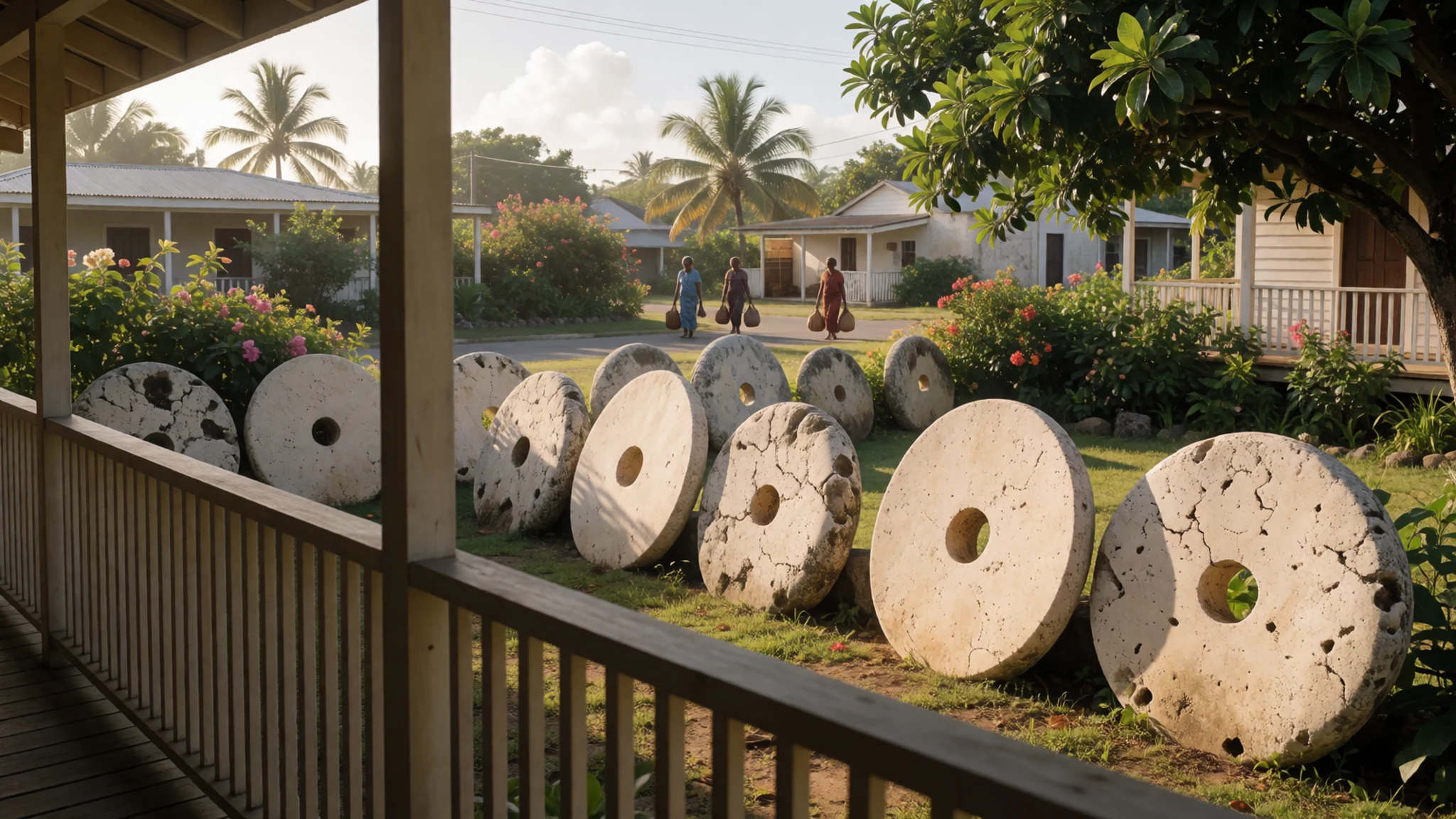
Culture
Ulithi's traditional society was organised around matrilineal families, with land held by the lineage and shared out for gardens, houses and other uses. Each lineage was led by a male chief chosen by seniority, while village councils handled everyday matters and decisions that affected the whole atoll. That structure still shapes who speaks for whom, and it is why visitors are expected to arrive through a host. Work was divided: women generally looked after the gardens and men fished the reef and lagoon. Older belief centred on spirits and ancestral ghosts, and magic ran through medicine, navigation, weather and fishing. By the middle of the twentieth century, Christianity had largely replaced the old religion, though seafaring knowledge remains part of how the community sees itself.
Yap State as a whole keeps a firm sense of rank, and it reaches the outer islands too. Courtesy to elders and chiefs counts for more than any sightseeing list. Life moves at the speed of boats and weather, and a visitor who accepts that will be welcomed far more warmly than one who tries to hurry it. Speak quietly, accept food and drink graciously, and expect church and community events to take priority over any plans.
Ask your host before landing on any island, keep your thighs covered away from the beach, and always ask before photographing people.
What to wear
Traditional dress in Ulithi and the neighbouring outer islands of Yap State centres on wrapped cloth. Men wore a loincloth called a thu, and women wore wrap skirts made from plant fibre such as banana or hibiscus, later joined by trade cotton. Cloth was woven on small backstrap looms, often with bands of colour. These garments now appear at festivals, dances and important occasions rather than in daily life.
Everyday clothes today are simple: T-shirts, cotton dresses, wraparound skirts and sandals, with bare feet common around the house and neat church clothes on Sundays. Modesty matters, and showing the thighs in public is considered immodest.
Visitors should pack light, loose, quick-dry clothing that covers the knees, plus a long-sleeved top against sun and insects, a wide-brimmed hat and a sarong that doubles as a cover-up. Swimwear belongs on the beach or in the water only, so wear a T-shirt over it in the village. Reef shoes protect feet from coral and sharp shells, while sandals are enough for sandy lanes. Everything dries slowly in humid air, so bring dry bags for phones and cameras, and keep a spare set of clothes sealed in plastic.
What to eat
- Grilled reef and open-water fish — home stays and family meals on Falalop and the outer islands
Tuna, wahoo and snapper are caught around the atoll and usually grilled over a fire or cooked with coconut. Fish is eaten fresh, often the same day it is landed, with rice or a starchy root crop alongside.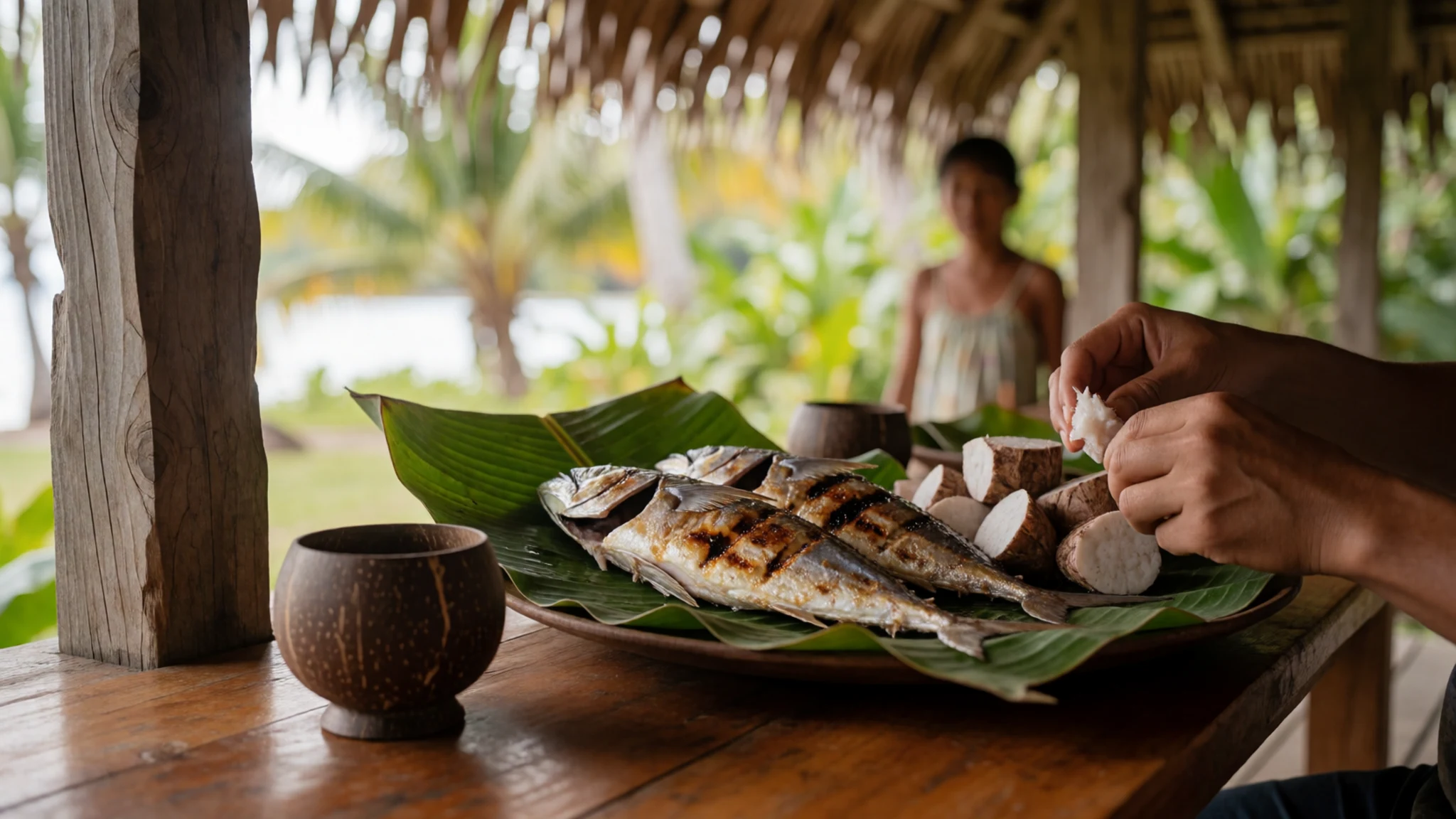
- Local crab — village tables and home stays across Yap State
Crab is a prized catch in the Yap islands, with three kinds eaten locally. It is normally boiled or cooked in coconut milk, and served plainly so the sweetness of the meat comes through. Ask what is in season.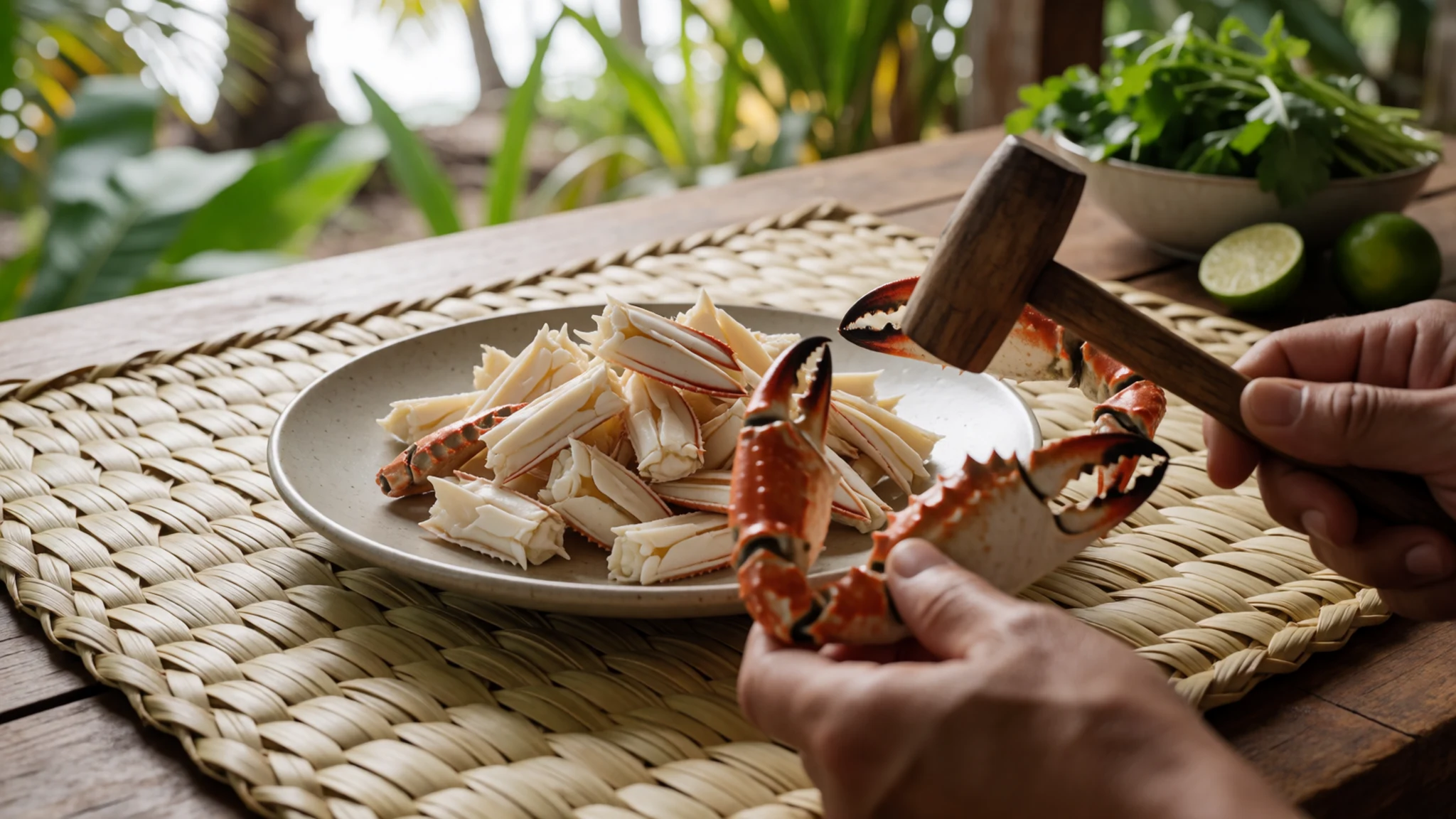
- Lobster and shrimp — home stays and island kitchens near the lagoon
Lobster and shrimp turn up when the catch allows, cooked simply over a fire or boiled. Availability depends on weather and fishing, so treat them as a pleasant surprise, not something to count on. - Taro, breadfruit and coconut — village meals on the inhabited islands
Garden crops, traditionally tended by women, supply the starch for most meals. Taro and breadfruit are boiled, baked or roasted, and coconut adds richness and moisture. They are filling, mild and the usual companions to fish. - Fruit bat — village tables on Yap, when offered by a host
Yapese people do eat fruit bats, and some hosts will offer them as a local speciality. Ask what the dish is before accepting, and decline politely if it is not for you. Hosts will understand.
Plan it
Best time. The climate is tropical with heavy rain all year, so no month is truly dry. Many visitors aim for roughly December to May, when showers tend to be lighter and seas calmer, and avoid the wetter, stormier months of high summer.
How long. 4–6
Getting there. Fly to Yap from Guam or Palau with United; services are not daily, so check the airline's schedule. From Yap, reach Ulithi by small plane to the airstrip on Falalop or by boat, and ask in Colonia about both because timetables shift.
Budget. mid
Tips
- Book flights to Yap well ahead and build a spare day or two into the trip, because onward links to Ulithi depend on boat and small-plane timing.
- Tourist stays of up to a month need no visa, but carry a passport and an onward or return ticket; longer stays need advance authorisation from FSM immigration.
- Arrange a home stay or the Falalop resort before travelling, and ask hosts about boats and permission to visit other islands.
- Bring cash, sunscreen, insect repellent and a refillable water bottle, since shops are small and cards may not work.
- Pack dry bags, because showers arrive without warning.
Etiquette
- Keep your thighs covered in public and wear shorts only at beaches or swimming areas.
- Ask your host before visiting another island, especially Mogmog.
- Ask permission before photographing people, houses or ceremonies.
Nearby
Sources
- Wikidata Q1350219 (CC0)
- Wikipedia: Ulithi (rev 1384623913) (CC BY-SA 4.0)
- Wikivoyage: Yap (rev 5267915) (CC BY-SA 4.0)
- Photo: map of Ulithi Atoll (Public domain)
- Photo: USS Shannon (DM-25) underway in Ulithi Atoll (Public domain)
- Photo: USS Iowa in a floating drydock (Public domain)
- Photo: Mail Call, Ulithi, 1944 (USMC Archives) (CC BY 2.5)
- Photo: Tune Toppers perform for troops, Ulithi, 1944 (USMC Archives) (CC BY 2.5)
- Photo: Ulithi, Micronesia, 12 Sept 2017 (National Museum of the U.S. Navy) (Public domain)
- Photo: Atolón Ulithi (Fobos92) (CC BY-SA 4.0)
- Photo: Ulithi atoll (Public domain)


Wildlife
- Green sea turtle (animal)
The green sea turtle is a big sea reptile that eats only seagrass; its name comes from the green fat beneath its shell, not the olive-to-black shell itself. Since 2018 the Ulithi community and a conservation group have been clearing invasive species to help turtles and seabirds bounce back. Watch from a respectful distance, keep quiet, go with a local guide, and never feed it.